What 道 Really Means and Why It Matters
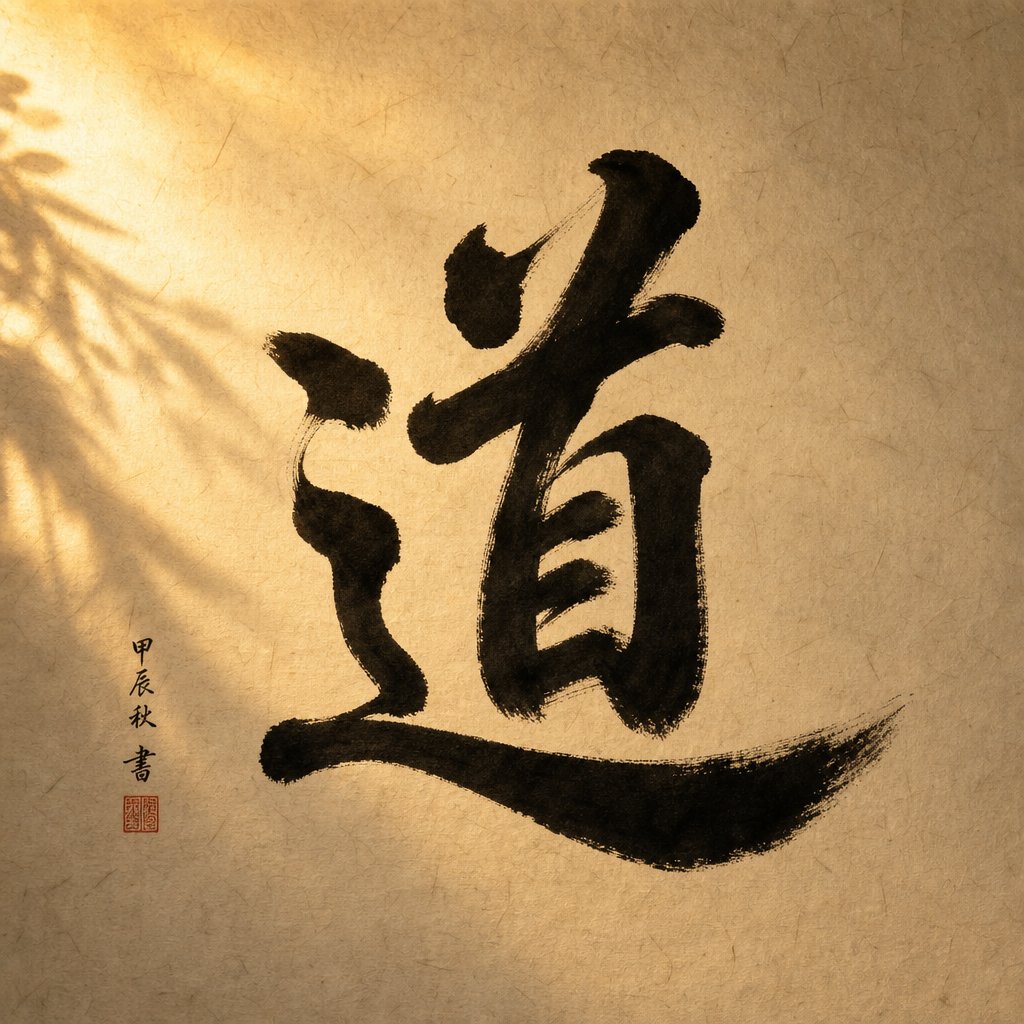
Look at this character: 道. If you have ever wondered what is the dao, you are staring at one of the most layered, most frequently used characters in the entire Chinese writing system. It appears on street signs, in philosophy books, inside everyday conversation, and across multiple East Asian languages. Yet most learners only scratch the surface of its meaning.
This guide takes a character-first approach. Instead of jumping straight into abstract philosophy, you will start with the physical shape of 道 itself, understand how its parts fit together, and then build outward through four distinct layers of meaning, from a literal road beneath your feet to the cosmic principle that Laozi declared unnameable.
道 (dao): a Chinese character meaning road, path, method, principle, or the Way — the foundational concept in Daoist philosophy representing the natural order of the universe.
What Is the Dao Character
At its most basic, the dao chinese meaning is "way" or "path." The character 道 is pronounced dao in the fourth tone (dao) in Mandarin and carries a remarkable range of definitions depending on context. It can refer to a physical road, a method of doing something, a moral truth, or the ineffable cosmic principle at the heart of Daoism. Few characters in any language pack this much semantic range into a single written form.
Why 道 Matters Beyond Philosophy
When people ask what is the tao, they often expect a purely spiritual answer. The reality is far more practical. 道 shows up in words for "to know" (知道), "morality" (道德), "reason" (道理), and even "TV channel" (频道). It functions as a noun, a verb, and a measure word in modern Chinese. Understanding the meaning of dao unlocks not just a philosophical tradition but an entire web of everyday vocabulary.
Think of 道 as a single doorway into four rooms. The first room is concrete: pavement, dirt paths, highways. The second is practical: methods, techniques, approaches. The third is ethical: moral reasoning and human virtue. The fourth is vast and abstract: the dao as the unnamed source behind all things. Each layer grew from the one before it, and context tells a reader which room they have stepped into.
What makes this character so rewarding to study is exactly that range. The physical strokes on the page, the radical components hidden inside, and the historical evolution from oracle bone carvings to modern print all tell a single coherent story about how meaning expands over time.
Breaking Down the Radicals of 道
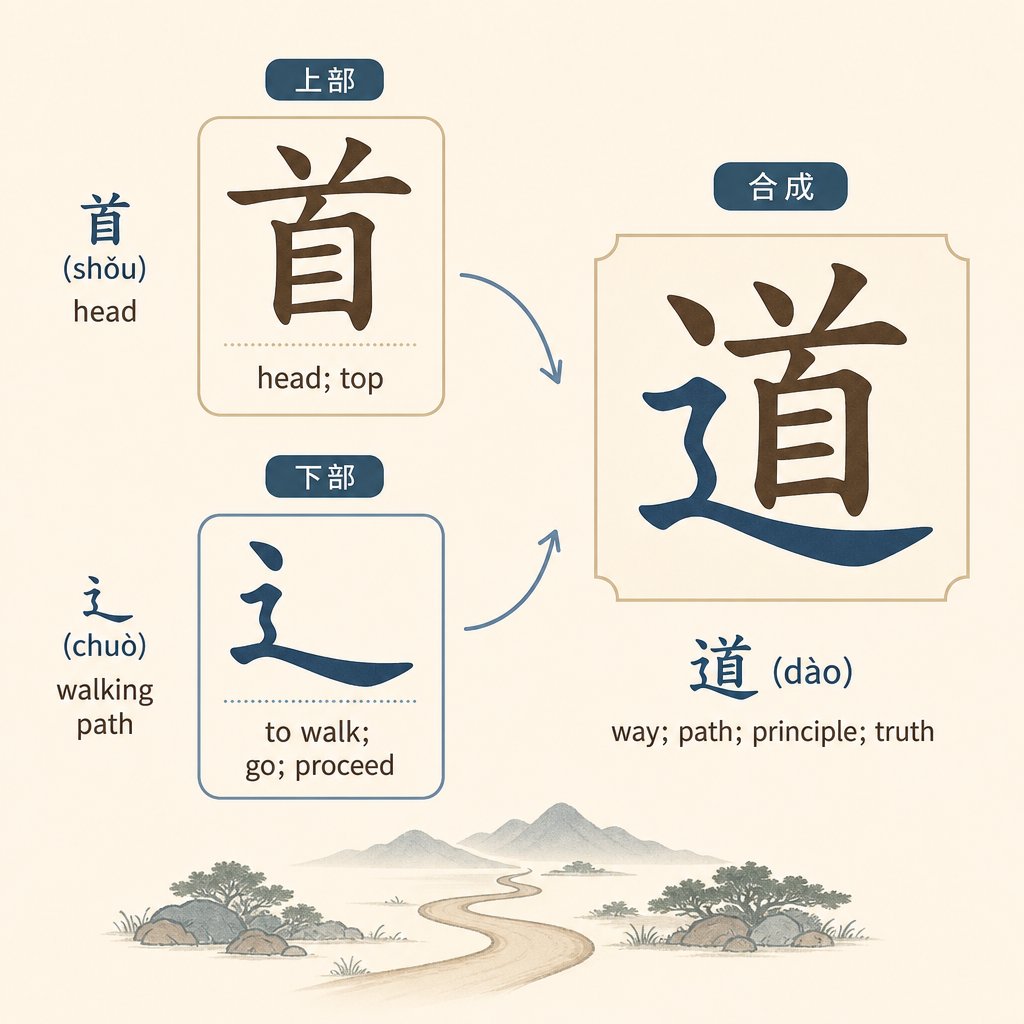
Every Chinese character tells a small visual story, and the dao chinese character is one of the clearest examples. When you look at 道, you are not seeing a single indivisible symbol. You are seeing two meaningful parts stacked and wrapped together, each contributing a piece of the overall meaning. Pull them apart, and the logic of the character clicks into place.
The Two Radicals Inside 道
The character 道 is composed of two structural elements:
- 首 (shǒu) — positioned in the upper-right portion of the character. It means "head," "leader," or "first."
- 辶 (chuò) — the walking radical, sometimes called the "movement" or "road" radical. It wraps around the bottom and left side of the character like a path curving beneath a traveler.
Together, these two components paint a picture: a head moving forward along a path. Imagine someone leading the way, stepping out onto a road with intention and direction. That image is baked right into the character's structure.
| Component | Character | Pinyin | Meaning | Role in 道 |
|---|---|---|---|---|
| Upper element | 首 | shǒu | Head, leader, first | Suggests direction, intention, and leading the way forward |
| Lower/outer element | 辶 | chuò | Walking, movement, road | Provides the sense of motion, travel, and physical path |
| Full character | 道 | dào | Way, path, principle | A head leading forward along a road — the Way |
How the Parts Build the Meaning
This is where dao in chinese becomes easy to remember. The mnemonic practically writes itself: wherever your head leads, your feet follow a path. Or flip it around — the way forward always starts with a decision at the top. Either reading captures the essence of 道 as both a physical road and a guiding principle.
The radical 辶 appears in dozens of movement-related characters: 进 (to enter), 远 (far), 过 (to pass), 还 (to return). Whenever you spot that sweeping stroke curving beneath a character, you know motion or travel is involved. The radical 首, meanwhile, carries weight as "the first" or "the leader" — it shows up in words like 首先 (first of all) and 首都 (capital city). Combine a leader with a road, and you get the concept of a guided path, a directed way forward.
One practical detail worth noting: 道 looks exactly the same in both traditional and simplified Chinese. Unlike many characters that were streamlined during China's script reforms in the 1950s and 1960s, this one survived unchanged. Whether you are reading a classical text from Taiwan, a modern novel from mainland China, or a sign in a Japanese temple, the character appears in the same twelve-stroke form.
For learners, this radical breakdown does more than explain etymology. It gives you a hook for memory. Instead of memorizing 道 as an arbitrary shape, you can see a head on a road and recall both the form and the meaning in a single mental image. That kind of structural understanding compounds quickly as you encounter 道 inside compound words, philosophical texts, and everyday speech.
How to Write 道 Stroke by Stroke
Knowing what dao means and recognizing its radicals is one thing. Putting brush to paper (or stylus to screen) and writing it correctly is another challenge entirely. The character 道 contains 12 strokes, and their sequence follows a logic that applies across thousands of other Chinese characters. Master this order once, and you will carry the pattern forward into every new character you learn.
Twelve Strokes in the Correct Order
Chinese stroke order follows consistent rules: top before bottom, left before right, outside before inside, and enclosing strokes last. For 道, you write the 首 component first (strokes 1 through 9), then finish with the 辶 walking radical (strokes 10 through 12). The walking radical always comes last because it wraps around and "carries" the inner component forward.
Here is the full sequence:
- Stroke 1 — Short horizontal stroke (横) at the very top of 首, drawn left to right.
- Stroke 2 — Short vertical stroke (竖) dropping down from the center of that horizontal line.
- Stroke 3 — Horizontal stroke forming the top edge of the enclosed box below.
- Stroke 4 — Left vertical stroke (竖) dropping down to form the left wall of the box.
- Stroke 5 — First short horizontal stroke inside the enclosed area, drawn left to right.
- Stroke 6 — Second short horizontal stroke inside the enclosed area, below stroke 5.
- Stroke 7 — Third short horizontal stroke inside the enclosed area, below stroke 6.
- Stroke 8 — Right vertical stroke (竖) forming the right wall of the box, drawn top to bottom.
- Stroke 9 — Bottom horizontal stroke closing the box at the base of 首.
- Stroke 10 — A dot (点) at the upper-left area of the 辶 radical.
- Stroke 11 — A short horizontal-turning stroke (横折弯) curving to the lower left.
- Stroke 12 — The long sweeping stroke (捺) that extends from left to right beneath the entire character, giving 辶 its distinctive flowing tail.
That final sweeping stroke is the signature move of the walking radical. You will notice it in every character that uses 辶 — it always finishes the character like a road stretching out ahead. Practice it with a smooth, confident motion rather than a hesitant drag.
From Oracle Bones to Modern Script
The dao meaning has remained remarkably stable across more than three thousand years of written history, but the character's visual form has transformed dramatically. In dao china's earliest writing — the oracle bone inscriptions of the Shang Dynasty (roughly 1200 BCE) — 道 appeared as a pictograph showing a crossroads with a human figure or a foot, clearly depicting someone walking along a path. The image was literal and immediate.
During the Zhou Dynasty, bronze vessel inscriptions refined the shape. The human figure became more stylized, and the "head" element grew more prominent, hinting at the idea of intentional, directed movement rather than simple walking.
By the time of seal script (used during the Qin Dynasty's standardization around 221 BCE), the character settled into a more geometric form. The 首 and 辶 components became clearly distinguishable as separate radicals, though still rendered with the rounded, flowing lines typical of seal carving.
The transition to clerical script (隶书) during the Han Dynasty flattened those curves into the angular strokes familiar today. From there, the standard script (楷书) locked in the 12-stroke form that has remained unchanged through traditional and simplified systems alike. What started as a sketch of feet at a crossroads became an elegant composition of a head above a path — the visual story evolved, but the core meaning of a guided way forward never drifted far from its origin.

Four Layers of Meaning From Road to Cosmic Principle
So what does dao mean? The honest answer is: it depends entirely on context. Over three millennia of use, 道 accumulated four distinct layers of meaning, each one growing out of the layer beneath it like branches from a trunk. Understanding these layers is the single most useful framework for reading 道 correctly wherever you encounter it.
Imagine a ladder. The bottom rung is something you can touch — a dirt road. The top rung is something no one can name. Every rung in between represents a step from the physical toward the abstract. Here is how that ladder works.
The Literal Road and Physical Path
The oldest and most concrete sense of 道 is simply a road or path. When ancient Chinese speakers said 道, they meant the actual ground you walked on to get from one place to another. This meaning survives in modern compounds like 道路 (daolu, road), 铁道 (tiedao, railway), 隧道 (suidao, tunnel), and 走道 (zoudao, corridor or aisle).
In this layer, 道 functions as a synonym for way in its most physical sense — a route carved through landscape. You can see it, measure it, and stand on it. The physical sense of 道 as a path you traverse remains the base meaning from which all metaphorical extensions radiate. Every later meaning of the character traces back to this image of a traveler on a road.
Method and Principle
Roads solve problems. They answer the question "how do I get there?" That practical logic pushed 道 into its second layer: a method, technique, or way of doing something. When someone asks for the 道 to solve a math problem, they are not asking for a highway. They want the approach, the procedure, the path through the difficulty.
This is where what does dao mean in chinese starts to get interesting. At this layer, 道 becomes a synonym for way in the sense of manner, mode, or means — the by way of meaning that English speakers use when they say "by way of explanation" or "there is more than one way to skin a cat." The character still carries the flavor of directed movement, but the road is now metaphorical. You are navigating a problem rather than a landscape.
The third layer deepens this further. 道 expands into moral truth and rational principle. The compound 道理 (daoli) means reason, logic, or the way things ought to work. 道德 (daode) means morality or ethics — literally "the Way and its Virtue." At this level, 道 answers not just "how do I get there?" but "how should one live?" It becomes the principle that separates right from wrong, the underlying logic that governs fair behavior. When Chinese speakers say 讲道理 (to be reasonable) or 没道理 (that makes no sense), they are invoking this ethical-rational layer.
The Cosmic Way in Philosophy
The fourth and most abstract layer is the one that made 道 famous worldwide. In Daoist philosophy, what does the dao mean transcends any single road, method, or moral rule. It becomes the unnamed, unnameable source behind all things — the natural order of the universe before humans impose categories on it. Laozi's opening line declares that any 道 you can put into words is not the eternal 道. The moment you define it, you have reduced it to one path among many.
This philosophical leap was not random. It grew organically from the layers below. If a road guides your feet, and a method guides your actions, and a principle guides your ethics, then the ultimate 道 guides reality itself — silently, without effort, without needing to be named. The progression from pavement to cosmology follows a single thread: guidance.
One character, four layers: 道 begins as the dirt road beneath your feet, becomes the method in your hands, rises into the moral principle in your mind, and finally dissolves into the cosmic Way that no language can contain.
Context is what tells you which layer applies. A street sign uses Layer 1. A cooking tutorial uses Layer 2. A courtroom argument uses Layer 3. A passage from the Dao De Jing uses Layer 4. Native speakers shift between these meanings effortlessly, the same way English speakers shift between "way" as a road and "way" as a manner without conscious thought. For learners, recognizing which layer is active in a given sentence is the key to reading 道 accurately — and it all starts with asking whether the path in question is made of stone or made of ideas.
Taoism or Daoism and Why Both Spellings Exist
If 道 has only one pronunciation in Mandarin, why do English sources spell it two different ways? You will see "Tao" in older books and "Dao" in newer ones. You will find "Taoism" on one shelf and "Daoism" on the next. The character has not changed. The Chinese pronunciation has not changed. What changed is the system Western scholars used to convert Chinese sounds into Roman letters.
Wade-Giles Versus Pinyin Explained
The confusion traces back to two competing romanization systems, each developed in a different era with different goals.
The Wade-Giles system came first. Developed by British diplomats Thomas Francis Wade and Herbert Giles in the mid-to-late 19th century, it became the standard way English-language scholars transcribed Chinese for over a hundred years. Under Wade-Giles, the character 道 is written as "tao." This is where the familiar spellings Tao, Taoism, and Tao Te Ching originate. If you have ever tried to define tao using an older encyclopedia or a mid-20th-century philosophy textbook, you encountered Wade-Giles romanization.
The catch? Wade-Giles uses "t" to represent an unaspirated sound that English speakers naturally hear and produce as a "d." In this system, an aspirated "t" (the one that actually sounds like the English letter T) is written as "t'" with an apostrophe. Without that apostrophe, "t" in Wade-Giles is phonetically closer to the English "d." Most English readers never learned this rule, so they pronounced "Tao" with a hard T — creating a gap between the spelling and the actual Mandarin sound.
China's Pinyin system resolved this problem. Officially adopted by the People's Republic of China in 1958 and recognized as the international standard by the ISO in 1982, Pinyin maps Chinese sounds to Roman letters in a way that feels more intuitive for modern readers. Under Pinyin, 道 is spelled "dao" — which immediately signals the correct initial consonant to anyone reading English. No apostrophe rules to memorize, no silent conventions to decode.
Which Spelling Should You Use
So when someone asks what does tao mean, they are asking about the exact same character and concept as someone searching for the tao meaning under its Pinyin spelling. The difference is purely orthographic. Both "Daoism" and "Taoism" point to the same philosophical and religious tradition rooted in the teachings of Laozi and Zhuangzi.
In practice, modern academic writing overwhelmingly favors Pinyin. University press publications, peer-reviewed journals, and contemporary translations typically use "Dao," "Daoism," and "Dao De Jing." The tao definition you find in a 2020s textbook will almost certainly use the "D" spelling. Older works, popular culture references, and some established proper nouns (like the book title The Tao of Pooh) retain the Wade-Giles form out of tradition and name recognition.
For pronunciation, here is a simple English approximation: say the word "dow" (rhyming with "cow") in a firm, falling tone. That gets you close to the Mandarin fourth-tone pronunciation. The initial sound is a clean, unaspirated "d" — your tongue taps the ridge behind your upper teeth without a puff of air. If you can pronounce tao this way, you are already saying "dao" correctly regardless of which spelling you prefer on the page.
The bottom line: use whichever spelling fits your context. If you are writing an academic paper or studying modern Chinese, Pinyin's "Dao" is the standard. If you are referencing a classic English translation or a well-known title, "Tao" remains perfectly understood. Neither is wrong. They are two maps of the same territory — which, fittingly, is exactly what 道 itself is all about.
道 at the Heart of Daoist Philosophy
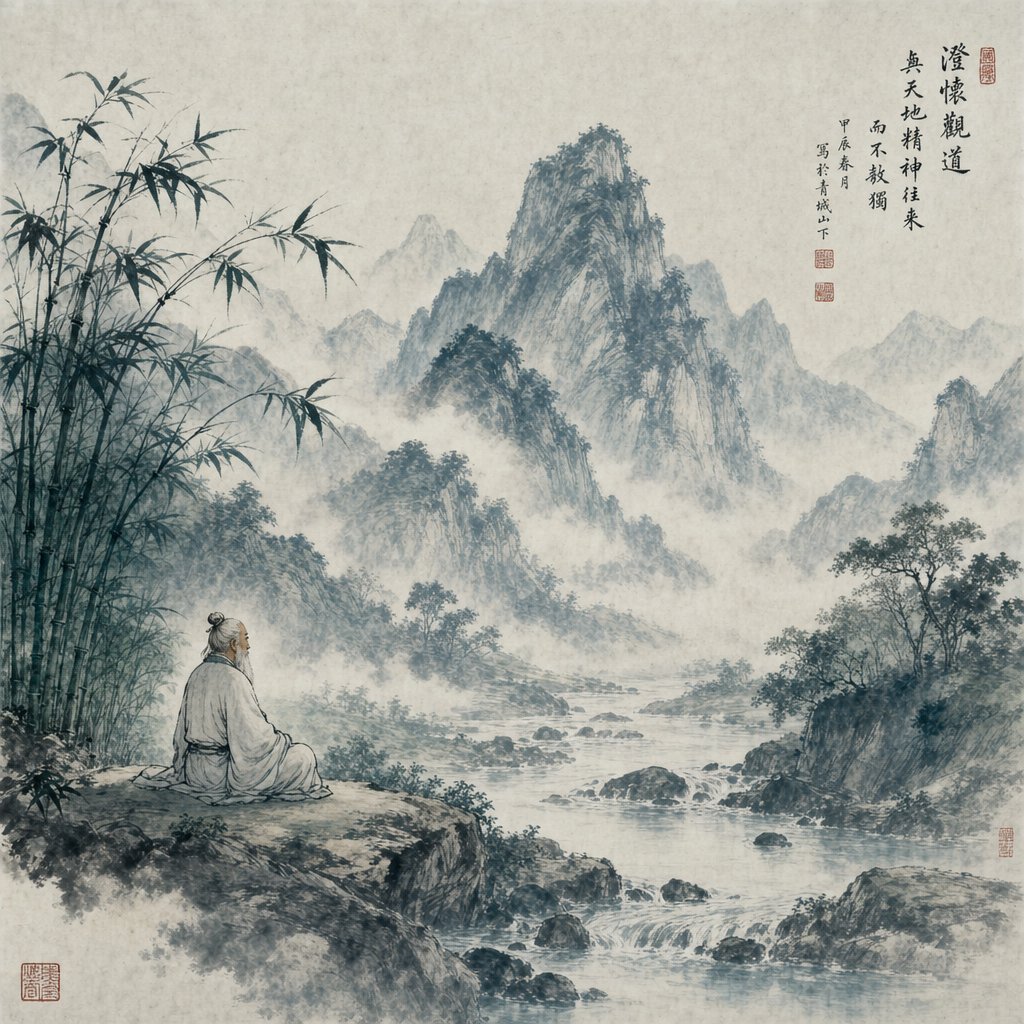
Two different spellings point to the same tradition, but what is dao in daoism at its philosophical core? The character 道 does not merely appear in Daoist texts — it is the central axis around which the entire tradition revolves. The very name of the philosophy comes from this single character. Daoism, by definition, is the study and practice of the Way. And the most famous sentence ever written about it uses 道 three times in six characters, each time with a different meaning.
The Opening Line of the Dao De Jing Decoded
The Dao De Jing (道德经), attributed to the legendary sage Laozi, opens with what may be the most analyzed sentence in Chinese philosophy:
道可道,非常道。
Pronounced dao ke dao, fei chang dao, this six-character line demonstrates something remarkable about the character 道 itself. The same written form carries completely different grammatical roles and meanings within a single breath. Here is the breakdown:
| Character | Pinyin | Meaning in Context | Grammatical Role |
|---|---|---|---|
| 道 | dao | The Way, the cosmic principle | Noun (subject) |
| 可 | ke | Can, is able to be | Auxiliary verb |
| 道 | dao | Spoken, told, expressed in words | Verb (to say/tell) |
| 非 | fei | Is not | Negation |
| 常 | chang | Eternal, unchanging, constant | Adjective |
| 道 | dao | The Way, the true/eternal principle | Noun (complement) |
Read it as: "The Way that can be spoken is not the eternal Way." The first 道 names the cosmic principle. The second 道 functions as a verb meaning "to speak" or "to tell." The third 道 returns to its noun form, now qualified as the unchanging, ultimate reality. One character, three appearances, two different parts of speech, and a philosophical paradox packed into six syllables.
This is not a translation quirk. As a comparative study of ten scholarly translations demonstrates, competent translators of Classical Chinese produce strikingly different English renderings of this line — not because they disagree on the grammar, but because the Chinese text is "inherently unclear" by design. Laozi is using language to point at the limits of language. The tao that you can pin down with definitions is, by that very act of pinning, no longer the real thing.
Imagine trying to describe silence. The moment you speak about it, you have broken it. That is the paradox Laozi builds into his opening line. Daoist texts use 道 to gesture toward something that exists before words, before categories, before the human mind slices reality into named pieces. The Cosmic Dao is the source of all things — "spontaneously and incessantly generating the ten thousand things," as Britannica's overview of Daoism describes it — yet it remains imperceptible and indeterminate, not any particular thing you can isolate and label.
道 in Daoism Versus Confucianism
Here is where the contrast between tao vs confucianism becomes sharp. Both traditions use the character 道 constantly. Both consider it essential. But they point it in very different directions.
In Daoism, 道 refers to the natural, spontaneous order of the universe — something that exists independent of human society. The Daoist ideal is to align yourself with this cosmic flow, practicing wuwei (non-action, or effortless action) rather than imposing artificial structures on the world. Daoism characteristically contrasts the Cosmic Dao in its naturalness and spontaneity with the artificiality and constraint of human institutions. Humanity flourishes only when the human way is attuned to the Cosmic Dao.
Confucianism takes 道 in a social and moral direction. For Confucius, the tao is the proper way of human conduct — the path of virtue, ritual propriety, and harmonious relationships. It is not a force beyond language but a set of principles you can study, teach, and practice within family, community, and government. Where Daoism says "step back and let nature guide," Confucianism says "step forward and cultivate moral excellence through learning and self-discipline."
Both traditions originated in the 6th to 5th century BCE in neighboring Chinese provinces, and over 2,500 years they have influenced and borrowed from each other. The character 道 sits at the center of both — but in Daoism it points upward toward the unknowable source, while in Confucianism it points outward toward ethical life among other people. Same character, same strokes, radically different philosophical weight depending on who is writing.
This philosophical richness is precisely what makes 道 so alive in modern Chinese. It is not a museum piece locked inside ancient daoist texts. The character carries its philosophical resonance into everyday compounds and casual speech — a topic that reveals just how deeply 道 is woven into the fabric of the living language.
Common Words and Daily Uses of 道 in Modern Chinese
Philosophical weight aside, 道 is one of the hardest-working characters in daily Mandarin. It shows up in text messages, news broadcasts, restaurant menus, and classroom exams. If you only associate it with ancient sages and cosmic mysteries, you are missing the china way this character actually lives in the mouths of over a billion speakers every day.
The versatility is striking. 道 functions as a noun component in compound words, as a standalone verb in literary contexts, and as a measure word for counting certain objects and abstract items. Each role draws on a different shade of its core meaning — path, speech, or passage — but all trace back to the same twelve strokes.
Everyday Compound Words With 道
The fastest way to see how 道 operates in modern Chinese is to look at the compounds it forms. These are words you will encounter in your first year of study and continue using at every level of fluency:
- 知道 (zhīdào) — to know. Literally "to know the way." This is one of the most common verbs in spoken Mandarin. 你知道吗? (Do you know?) is a phrase you will hear dozens of times a day in any Chinese-speaking environment.
- 道路 (dàolù) — road, path. A straightforward compound where both characters reinforce the meaning of a physical route. Used in traffic reports, GPS navigation, and urban planning discussions.
- 道理 (dàolǐ) — reason, logic, sense. The "way" of how things work or should work. 讲道理 means "to be reasonable"; 没道理 means "that makes no sense." This compound bridges the gap between path synonyms and abstract reasoning.
- 道德 (dàodé) — morality, ethics. Literally "the Way and Virtue" — the same two characters that title Laozi's classic text. In modern usage, it refers to moral standards and ethical behavior in society.
- 道歉 (dàoqiàn) — to apologize. Here 道 carries its verbal sense of "to express" or "to say," combined with 歉 (regret). You are literally "speaking your regret."
- 频道 (píndào) — channel (TV, radio, or communication). Think of it as a "frequency path" — the route a signal travels. 换个频道 means "change the channel."
- 报道 (bàodào) — news report, to report. The "way" information is delivered to the public. You will see this word on every Chinese news website and broadcast.
- 街道 (jiēdào) — street, neighborhood. A compound pairing "street" with "way" to describe both the physical road and the administrative district surrounding it.
- 隧道 (suìdào) — tunnel. A path that passes through something — a mountain, the earth, or underwater.
- 跑道 (pǎodào) — track, runway. Whether athletes are sprinting or planes are landing, the running path is a 跑道.
Notice the pattern. When 道 appears as the second character in a compound, it usually leans toward its noun meaning of "path" or "channel." When it appears first, it often carries a more abstract or verbal flavor — expressing, reasoning, or moralizing. This positional habit is not a strict rule, but it gives you a useful reading shortcut.
道 as a Verb and Measure Word
Beyond compound words, 道 plays two grammatical roles that surprise many learners: it works as a verb and as a measure word.
道 as a verb: to say, to speak, to tell. You already saw this in the opening line of the Dao De Jing, where the second 道 means "to speak." In classical and literary Chinese, 道 frequently functions this way. The expression 说三道四 (to gossip, literally "say three, speak four") preserves this verbal usage in a modern idiom. So does 道谢 (to express thanks) and the formal 道别 (to say farewell). In this way, 道 serves as a synonym for speaking — not just any speech, but speech that conveys something meaningful, that points toward truth or intention.
The meaning of by the way also connects here: when you "say" something in passing, you are offering a small verbal path to a side thought. Chinese captures this same logic through 道's verbal function.
道 as a measure word. This is where 道 gets genuinely surprising. In Chinese, measure words (量词) are classifiers placed between a number and a noun — similar to English phrases like "a piece of paper" or "a slice of bread." The character 道 serves as the measure word for long, narrow objects; barriers like doors and walls; orders or commands; questions on a test; courses in a meal; and beams of light.
Here are the most common examples:
- 一道门 (yī dào mén) — a door (a barrier you pass through, like a gate on a path)
- 一道题 (yī dào tí) — a question or problem (on a test or assignment)
- 一道菜 (yī dào cài) — a dish, a course of food (one "stage" in a meal's progression)
- 一道光 (yī dào guāng) — a beam of light (a narrow streak cutting through space)
- 一道墙 (yī dào qiáng) — a wall (a barrier across your path)
- 一道命令 (yī dào mìnglìng) — an order or command (a directive sent along a chain)
What ties these together? Each item measured by 道 involves something that either crosses a path, follows a linear trajectory, or represents a stage in a sequence. A beam of light streaks forward like a road. A door is a threshold you pass through. A course of food is one stop along the meal's journey. A test question is one hurdle on the path to a final score. The measure word 道 quietly preserves the character's original meaning — a way, a passage, a progression — even in the most mundane counting contexts.
This triple life as noun-component, verb, and measure word is what makes 道 so pervasive. You cannot spend a single day reading or speaking Chinese without encountering it multiple times in multiple roles. It is not a relic sealed inside philosophy books. It is a living, breathing piece of the modern language — one that still carries echoes of its ancient meaning every time it appears.
That frequency, though, introduces a practical challenge. Because 道 is pronounced dào (fourth tone), learners often confuse it with other common characters that share the same sound. Mandarin is full of homophones, and the "dao" syllable alone maps to half a dozen distinct characters across all four tones — each with completely unrelated meanings.
Other Characters Pronounced Dao and How to Tell Them Apart
Say the syllable "dao" out loud. Depending on which of Mandarin's four tones you attach to that sound, you could be talking about a knife, an island, a road, or a robbery. The consonant and vowel stay identical. Only the pitch contour changes. For learners wondering how do you pronounce dao, the answer is straightforward — but the consequences of getting the tone wrong range from mildly confusing to genuinely awkward.
Every Character Pronounced Dao by Tone
Mandarin uses four tones (plus a neutral tone) to distinguish meaning. The syllable "dao" maps to at least six common characters spread across three of those tones. Here is the full picture:
| Character | Tone | Pinyin | Meaning | Example Word |
|---|---|---|---|---|
| 刀 | 1st (high, flat) | dāo | Knife, blade | 菜刀 (caidao) — kitchen knife |
| 岛 / 島 | 3rd (dip then rise) | dǎo | Island | 海岛 (haidao) — sea island |
| 倒 | 3rd (dip then rise) | dǎo | To fall over, to collapse | 摔倒 (shuaidao) — to fall down |
| 倒 | 4th (sharp fall) | dào | To pour, to reverse | 倒水 (dao shui) — to pour water |
| 到 | 4th (sharp fall) | dào | To arrive, to reach | 到达 (daoda) — to arrive |
| 盗 | 4th (sharp fall) | dào | To steal, thief | 盗窃 (daoqie) — theft |
| 道 | 4th (sharp fall) | dào | Way, path, principle | 道路 (daolu) — road |
Notice that 倒 appears twice. This character is what linguists call a polyphonic character — same written form, different tones, different meanings. When pronounced in the third tone (dǎo), it means to topple or fall. When pronounced in the fourth tone (dào), it means to pour or to move in reverse. Context and tone together resolve the ambiguity.
The character 刀 (dāo) also shows up as a common Chinese surname, which is relevant for anyone researching the last name dao. While less common than surnames like Wang or Li, 刀 exists as a family name primarily among certain ethnic minorities in Yunnan province.
Why Tones Change Everything
Imagine telling a friend you arrived at the island. In Mandarin, "arrived" is 到 (dào, fourth tone) and "island" is 岛 (dǎo, third tone). Swap those tones and you might accidentally say you "poured" something onto a "knife." The sentence structure stays the same. The vowels stay the same. Only pitch distinguishes meaning.
This is why mastering dao in mandarin requires more than memorizing the correct consonant and vowel. English speakers tend to treat pitch as emotional coloring — a rising voice signals a question, a falling voice signals certainty. In Mandarin, pitch is lexical. It carries the same weight as the difference between "b" and "p" in English. Mixing up tones is not an accent issue; it is a vocabulary issue.
For the character 道 specifically, the fourth tone (a sharp, decisive drop from high to low) is essential. Think of it as the tone of certainty — firm and downward, like a judge's gavel. Practice it alongside 到 (to arrive) and 盗 (to steal), which share the same tone but carry wildly different meanings. Your ear will learn to rely on surrounding words for disambiguation, just as native speakers do instinctively.
The good news? Once you lock in the fourth-tone pronunciation of 道, you have also trained your ear for 到 and 盗. And once you can hear the difference between dāo (knife) and dào (way), you have crossed one of the biggest hurdles in Mandarin listening comprehension. Tones stop being obstacles and start being signposts — each one pointing you down a different path of meaning.
How 道 Shaped Japanese and Korean Culture
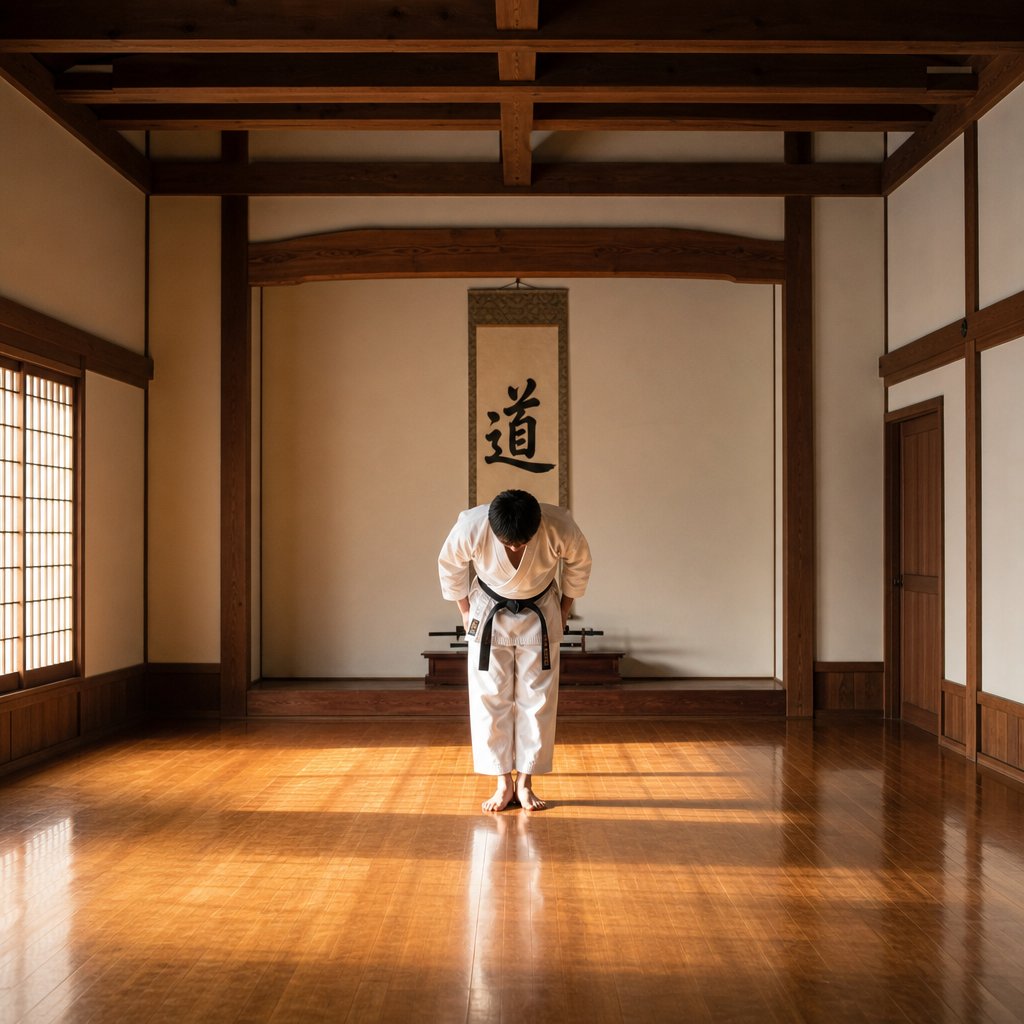
Tones and homophones are challenges within Mandarin, but the character 道 itself traveled far beyond China's borders. As Chinese writing, philosophy, and religion spread across East Asia over centuries, 道 embedded itself deeply into Japanese and Korean language, culture, and identity. The character kept its written form intact. Its philosophical weight — the idea of a disciplined path toward mastery — not only survived the journey but became a defining feature of martial arts, fine arts, and spiritual practice in both countries.
You have likely encountered 道 in Japanese or Korean contexts without realizing it. Every time you hear the word "judo," "kendo," or "taekwondo," you are hearing 道 pronounced in a different language. The character sits at the end of each term, quietly transforming a physical skill into something larger: a way of life.
道 in Japanese Language and Martial Arts
In Japanese, 道 carries two distinct readings. The native Japanese reading (kun'yomi) is みち (michi), meaning a road or path in the everyday physical sense. The Sino-Japanese reading (on'yomi) is どう (do) — and this is the reading that appears in the names of Japan's great disciplinary traditions.
The concept of do in Japanese culture draws from both Zen Buddhism and Daoist philosophy. It reframes any practice — fighting, writing, pouring tea — as a vehicle for inner transformation. The outer technique is not the goal. The goal is what happens to the practitioner through years of repetition, attention, and refinement. As The Wabi Sabi Shop's exploration of do puts it: "mastering the outer form of something is not the point. The point is what happens to you in the process."
Here are the most recognized 道 disciplines in Japanese culture:
- 柔道 judo (juudo) — the gentle way. A martial art focused on throws and grappling, where yielding to an opponent's force becomes the path to victory.
- 剣道 kendo (kendoo) — the way of the sword. Practitioners train with bamboo swords and protective armor, but the real work is cultivating composure, respect, and decisiveness.
- 茶道 sado / chado — the way of tea. Every movement in a tea ceremony — how the bowl is turned, how water is poured — is a form of meditation in action.
- 書道 shodo (shodoo) — the way of writing. Calligraphy practiced not for beautiful output alone, but as a discipline of breath, posture, and presence.
- 武士道 bushido — the way of the warrior. The samurai code of honor, courage, loyalty, and self-restraint that shaped Japanese values far beyond the warrior class itself.
- 弓道 kyudo (kyuudoo) — the way of the bow. Japanese archery where hitting the target matters less than the archer's inner state during the draw.
- 華道 kado / ikebana — the way of flowers. Arranging branches and blooms with attention to space, balance, and seasonal awareness.
- 香道 kodo (koodoo) — the way of incense. Participants "listen" to heated wood in small, unhurried gatherings — one of the oldest and least known 道 disciplines outside Japan.
What connects every item on this list is not the specific skill but the orientation toward practice. The elaborate protocols — the bow before entering a dojo, the precise way a brush is held, the formal sequence of a tea gathering — are not arbitrary rituals. They are the structure through which inner discipline takes shape. Do the outer form correctly, repeatedly, with full attention, and something shifts inside the practitioner over time.
The tao symbol most Westerners recognize — the black-and-white yin-yang circle — is often associated with these Japanese arts as well, appearing on dojo walls and in martial arts literature. While the taoism symbol originates in Chinese cosmology, its presence in Japanese practice spaces reflects how thoroughly 道 carried its philosophical associations across cultures. The daoism symbol and the disciplines of do share a common root: the belief that harmony comes through alignment with a natural way rather than through brute force.
道 in Korean Culture and Beyond
In Korean, 道 is read as 도 (do), and it carries the same philosophical resonance. Korean martial arts adopted the character with the same intent: to signal that a fighting system is also a path of personal development.
- 태권도 taekwondo — the way of the fist and foot. Korea's most internationally recognized martial art, combining kicks, punches, and forms into a disciplined practice that emphasizes mental fortitude alongside physical technique.
- 합기도 hapkido — the way of coordinated energy. A self-defense art focused on redirecting an attacker's force through joint locks, throws, and circular motion.
- 유도 yudo — the Korean reading of judo, practiced widely in Korea with its own competitive tradition.
- 검도 kumdo / geomdo — the Korean reading of kendo, the way of the sword.
Beyond martial arts, 道 appears in Korean as a geographic and administrative term. The country's provinces are called 도 (do) — Gyeonggi-do, Gangwon-do, Jeolla-do — using the character's original meaning of "road" or "region" (a territory connected by paths). This mirrors an older Chinese usage where 道 referred to administrative circuits during the Tang Dynasty.
The taoist and buddhist philosophical streams that carried 道 into Korea also shaped Korean temple culture, traditional medicine, and the concept of self-cultivation through disciplined practice. The character became a cultural bridge — one symbol linking Chinese philosophy, Japanese martial tradition, and Korean identity into a shared East Asian vocabulary of purposeful living.
What makes this cross-cultural journey remarkable is how stable the core meaning remained. Whether you encounter 道 in a Chinese philosophy text, on a Japanese dojo sign, or in the name of a Korean martial art, the underlying message is the same: this is not just a skill. It is a path. Walking it with intention and persistence transforms the walker. The character that began as a picture of feet at a crossroads three thousand years ago still points people forward — across languages, across borders, and across centuries of practice.
Frequently Asked Questions About the Dao Chinese Character
1. What does dao mean in Chinese?
The character 道 (dao) carries four layers of meaning in Chinese. At its most basic, it refers to a physical road or path. Beyond that, it means a method or way of doing something. At a deeper level, it represents moral truth and rational principle. In its most abstract philosophical sense, it refers to the cosmic Way — the unnamed natural order of the universe central to Daoist thought. Context determines which meaning applies in any given sentence.
2. Why is it spelled both Tao and Dao?
Both spellings represent the same character 道 with the same pronunciation. The difference comes from two romanization systems. Wade-Giles, developed by British scholars in the 19th century, uses 'Tao.' Pinyin, adopted by China in 1958 and now the international standard, uses 'Dao.' The actual Mandarin pronunciation starts with an unaspirated 'd' sound (rhyming with 'cow'), making Pinyin more phonetically intuitive for English speakers. Modern academic writing generally prefers 'Dao,' while older texts and popular titles often retain 'Tao.'
3. What are the radicals that make up the character 道?
The character 道 consists of two components: 首 (shou, meaning head or leader) in the upper portion, and 辶 (chuo, the walking or movement radical) wrapping around the bottom and left side. Together they create a visual mnemonic of a head leading forward along a path — representing intentional, directed movement. This structure helps learners remember both the character's form and its meaning as 'the way forward.'
4. How is 道 used in everyday modern Chinese?
Far from being limited to philosophy, 道 appears in dozens of common modern words. It forms part of 知道 (to know), 道路 (road), 道理 (reason), 道德 (morality), 道歉 (to apologize), 频道 (channel), and 报道 (news report). It also functions as a verb meaning 'to say' in literary contexts and as a measure word for doors, test questions, dishes of food, and beams of light. Most Mandarin speakers encounter this character multiple times daily.
5. What does 道 mean in Japanese martial arts like judo and kendo?
In Japanese, 道 is read as 'do' and carries the philosophical meaning of a disciplined path toward mastery. It appears at the end of martial arts and cultural practice names: judo (the gentle way), kendo (the way of the sword), bushido (the way of the warrior), and sado (the way of tea). The character signals that these practices are not merely physical skills but vehicles for inner transformation through sustained, attentive repetition. Korean martial arts like taekwondo and hapkido use the same character with the same intent.