What Dynasty Names Are and Why They Matter
Imagine you're building a sprawling fantasy world, and you need a ruling family that feels like it has ruled for centuries. The name you choose for that bloodline shapes everything: the culture, the tone, and the reader's gut reaction. That's exactly where a dynasty name generator becomes indispensable.
What Is a Dynasty Name Generator
A dynasty name generator is a tool that produces fictional ruling-family names by combining linguistic roots, cultural phonetics, and historical naming patterns. You feed it parameters like region, era, or tone, and it outputs names that sound like they belong in a specific world. A random dynasty name generator might pull from databases of real-world suffixes, ancestral roots, and phoneme libraries to create results like "Valdorath," "Sunjeon," or "Korvashid" in seconds.
These tools work by mimicking the same linguistic rules that gave us real dynasties like the Romanovs, the Ming, and the Plantagenets. They aren't just random letter mashups. The best ones encode actual naming logic: patronymic suffixes, aspirational word roots, and culture-specific syllable structures.
Who Uses Dynasty Name Generators
The audiences are broader than you might expect:
- Novelists and screenwriters crafting multi-generational sagas where each ruling family needs a distinct identity.
- Tabletop RPG players running campaigns in systems like D&D or Exalted, where noble houses drive political intrigue.
- Video game worldbuilders designing lore for titles like Crusader Kings or custom mods that demand hundreds of culturally consistent names.
- Fantasy sports enthusiasts searching for a dynasty team names generator to brand their leagues. Even a fantasy football dynasty team name generator serves the same core need: a name that sounds powerful and sticks in people's memory.
A dynasty name isn't just a label. It's compressed worldbuilding. In two or three syllables, it tells your audience whether a family conquered through war, inherited through blood, or rose through commerce.
This article goes beyond pointing you toward a tool and clicking "generate." You'll learn the actual naming patterns behind real empires, the phonetic science that makes certain names feel authoritative, and a step-by-step method for crafting your own from scratch. Whether you need a single name for a novel's antagonist family or hundreds for a game's procedural generation system, the principles stay the same.
The real power isn't in the tool itself. It's in understanding why "Ashenvald" sounds like northern conquerors while "Luminara" feels like desert scholars. That understanding starts with history.
How Real Dynasties Got Their Names Throughout History
History didn't generate dynasty names at random. Every ruling family earned its name through a specific mechanism: a founding ancestor, a fortress, a virtue, or a conquest. Understanding these mechanisms is what separates a forgettable fictional name from one that feels rooted in centuries of tradition. If you've ever wondered what logic a chinese dynasty name generator tries to replicate, or why European dynasty names sound so different from East Asian ones, the answer lives in etymology.
Patronymic and Ancestral Dynasty Names
Most European dynasties trace their names directly to a person or a place. The Romanovs took their name from an ancestor called Roman, a boyar whose descendants eventually claimed the Russian throne. The Habsburgs? Their name derives from Habsburg Castle in modern-day Switzerland, a fortress built around 1020 CE. The Tudors owe their dynasty name to Owen Tudor, a Welsh courtier whose grandson Henry VII seized the English crown in 1485.
You'll notice a pattern here. These names weren't chosen for their sound or meaning. They were inherited, almost accidentally, from whoever founded the line or wherever that founder lived. The name gained prestige only after the family gained power. That's a useful insight for worldbuilding: a dynasty name doesn't need to sound grand at its origin. It becomes grand through association with power.
Meaningful Word Dynasties in East Asia
Chinese dynasties followed a completely different logic. Rather than inheriting a surname, founding emperors selected a single character loaded with aspirational meaning. The Ming dynasty chose a character meaning "bright" or "brilliant," signaling a return to native Han Chinese rule after Mongol domination. The Tang dynasty's name carried connotations of "grand" or "magnificent." The Song dynasty used a character associated with a historical state, connecting the new regime to ancient legitimacy.
This is why a tang dynasty name generator or a song dynasty name generator operates on different rules than a European one. You're not corrupting an ancestor's name. You're selecting a concept, a single powerful word, and letting it represent an entire era. A ming dynasty name generator would draw from characters embodying virtues like clarity, strength, or renewal rather than personal names.
Conquest and Title-Based Dynasty Names
Some dynasties wore their origin stories in their names. The Mughals derived their name from "Mongol," reflecting their Central Asian Turco-Mongol heritage even as they ruled the Indian subcontinent. The Ottoman dynasty took its name from Osman I, its founder, but the name itself became synonymous with an entire imperial system spanning three continents. The Ptolemaic dynasty of Egypt carried the Greek personal name Ptolemy, marking it immediately as a foreign ruling class imposed after Alexander the Great's conquests.
These names function as compressed histories. They tell you where a family came from, how they justified their rule, and what cultural world they belonged to.
| Dynasty Name | Origin Type | Meaning/Source | Region |
|---|---|---|---|
| Romanov | Patronymic (ancestor name) | From the ancestor "Roman" | Russia |
| Ming | Meaningful word | "Bright" or "brilliant" | China |
| Tudor | Patronymic (surname) | From Owen Tudor's Welsh family name | England/Wales |
| Mughal | Ethnic/conquest origin | Derived from "Mongol" | Indian Subcontinent |
| Ptolemaic | Founder's personal name | From the Greek name Ptolemy | Egypt |
Four distinct formation rules emerge from this survey: patronymic inheritance, territorial association, aspirational word selection, and ethnic or conquest identity. Every dynasty name generator worth using encodes at least one of these rules. The question for worldbuilders isn't just "what sounds good" but "what origin story does this name imply?" A name rooted in a place tells a different story than one rooted in a virtue, and your audience will feel that difference even if they can't articulate why.
These formation rules don't exist in isolation, though. They interact with broader cultural naming conventions, phonetic traditions, and linguistic structures that vary dramatically from one civilization to the next.
Dynasty Names vs House Names vs Clan Names vs Kingdom Names
When you search for a dynasty names generator, you probably have a specific creative need in mind. But here's the problem: dynasty, house, clan, and kingdom are four distinct concepts that get tangled together constantly. A writer might need a clan name but search for a royal dynasty name generator. A game master might want a kingdom name but label it a dynasty. Getting these terms straight saves you from naming something incorrectly and breaking your world's internal logic.
Dynasty vs House vs Clan Explained
These four terms describe different scales and functions of power. They overlap in practice, especially in fiction, but each carries a distinct meaning:
- Dynasty — A succession of rulers from the same family who hold power across multiple generations. The emphasis is on continuity of rule. Example: the Plantagenet dynasty ruled England for over 300 years through fourteen kings. In fiction, the Atreides in Dune function as a dynasty spanning millennia.
- House — A noble family unit defined by shared lineage, heraldry, and political identity. A house doesn't need to rule to exist. It simply needs recognized noble status. Example: House Medici wielded enormous influence in Florence without always holding formal titles. In fiction, House Stark governs the North but isn't always the ruling dynasty of the entire realm.
- Clan — A broader kinship group united by a common ancestor, real or mythological, often encompassing multiple family branches. Clans tend to be larger and less hierarchical than houses. Example: Clan Campbell in Scotland included dozens of cadet branches across a wide territory. In fiction, orcish or dwarven societies often organize by clan rather than house.
- Kingdom name — The name of the realm itself, which may or may not share a name with its ruling family. Example: the Kingdom of Prussia wasn't named after a dynasty. It was named after the Baltic Prussian people. In fiction, Gondor is a kingdom name entirely separate from its ruling houses.
Here's where it gets interesting for worldbuilders. These categories frequently collapse into each other. House Targaryen is simultaneously a noble house and a dynasty because its members ruled the Seven Kingdoms for nearly three centuries. The Ottoman dynasty gave its name to the Ottoman Empire, merging family identity with kingdom identity. A fictional dynasty names generator might produce a name that works as both a house name and a dynasty name depending on how you deploy it in your story.
When to Use Each Name Type in Worldbuilding
Picking the right term depends on what role the name plays in your narrative or game:
Use dynasty when you need to emphasize a bloodline's grip on power over time. If your story spans generations and the central conflict involves succession, inheritance, or the rise and fall of a ruling family, you're working with a dynasty. The name should feel weighty and historical.
Use house when multiple noble families compete for influence within the same political system. Houses work best in stories with factional politics, alliances, and betrayals. Think of a royal court with six rival houses, only one of which currently holds the throne.
Use clan when your culture is tribal, decentralized, or kinship-driven rather than feudal. Clans suit settings where loyalty flows through blood ties and shared ancestry rather than formal titles. Norse, Celtic, Mongolian, and many African and Native American-inspired settings lean toward clan structures.
Use kingdom name when the realm's identity matters more than any single family. Kingdoms outlast dynasties. If your world has seen three different families rule the same throne, the kingdom name stays constant while dynasty names change.
In practice, you'll often need all four. A single fictional world might feature the Kingdom of Valdenmarch, currently ruled by the Korvath dynasty, which belongs to House Korvath, one of several noble houses descended from the ancient Korvathi clan. Each layer adds depth, and a good naming tool or manual process should produce names that feel distinct at every level.
These structural distinctions matter because they determine which cultural naming conventions apply. A clan name drawn from Norse traditions follows completely different phonetic rules than a Chinese-inspired dynasty name or a French-influenced house name, and those cultural patterns are where the real craft begins.
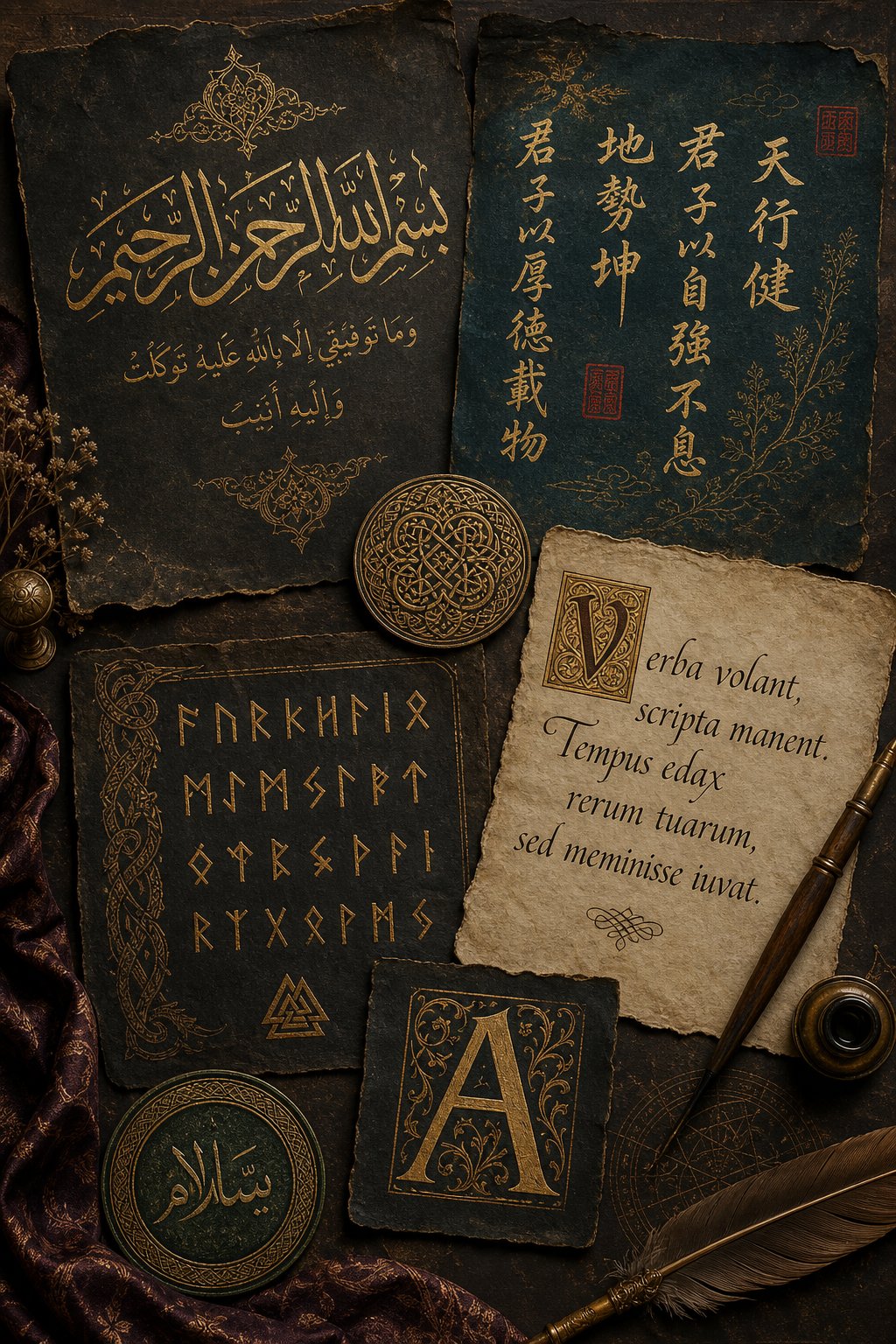
Cultural Naming Patterns Across World Civilizations
Every civilization developed its own grammar for naming ruling families. These aren't arbitrary differences. They reflect how each culture thought about lineage, power, and identity. When you understand these patterns, you can reverse-engineer them for any creative project, essentially doing what a french dynasty name generator or an asian dynasty name generator does, but with full control over the cultural logic behind each name.
European Dynasty Naming Conventions
European dynasty names lean heavily on patronymic and territorial roots. The suffixes change depending on the language, but the underlying logic stays consistent: attach a marker to an ancestor's name or a place of origin.
In medieval Western Europe, patronymic bynames took three forms: unmarked (the father's name used unchanged), implicitly marked (the name placed in a genitive case), and explicitly marked (adding a word like filius, son, or mac to specify the relationship). These same mechanics produced dynasty names. German dynasties favored territorial suffixes like -burg (fortress) and -stein (stone), giving us names like Habsburg and Lichtenstein. Slavic dynasties used -ov or -ovich, tying the family to a male ancestor: Romanov from Roman, Rurikovich from Rurik.
French patronymics worked differently. Old French distinguished nominative and oblique cases, and the oblique form became the default. A name like Martin could function as an unmarked patronymic meaning "child of Martin" without any added suffix. This subtlety is why French noble house names often sound cleaner and shorter than their German counterparts: Valois, Capet, Bourbon. Spanish dynasties used the implicitly marked -ez suffix (Sanchez from Sancho, Rodriguez from Rodrigo), creating a distinctive Iberian sound that any worldbuilder can replicate.
East Asian and Middle Eastern Patterns
Chinese dynasty naming operates on a completely different axis. Rather than deriving from ancestors, Chinese dynasty names are single characters chosen for aspirational meaning. The character selection follows strict phonetic and symbolic logic: it must sound authoritative when spoken, carry positive connotations, and often reference a historical state or virtue. This is why an asian dynasty name generator needs a fundamentally different algorithm than a European one. You're selecting concepts, not corrupting surnames.
Japanese clan structures (uji) combined family identity with occupational or geographical markers. The Fujiwara clan name means "wisteria field," blending a plant symbol with a landscape element. The Minamoto and Taira clans received their names as imperial grants, a top-down naming process unlike the bottom-up European model.
Middle Eastern dynasties follow yet another pattern. The Arabic naming system layers multiple identity markers: the ism (given name), nasab (patronymic using "ibn" for "son of"), nisbah (origin adjective), and laqab (honorific title). Dynasty names in this tradition often use the -id suffix, derived from the Arabic plural form indicating "descendants of." The Abbasids descend from Abbas, the Fatimids from Fatimah, the Ayyubids from Ayyub. A persian dynasty name generator would draw from similar Persianized forms: the Safavids from Safi al-Din, the Timurids from Timur.
Norse and African Kingdom Naming
Norse clan naming followed a patronymic system that remains alive in Iceland today. The -son and -dottir suffixes attached directly to the father's given name: Eiriksson, Torgilsdottir. But Viking dynasty-level names used a different mechanism. Clan names featured endings like -ing or -ung to indicate descent from a legendary ancestor. The Skjoldungar were "descendants of Skjoldr," the Ynglingar traced their line to the god Freyr. A norse dynasty name generator replicates this by combining a mythic or heroic root with these collective suffixes, producing names that sound like they belong in a saga.
West African royal naming traditions deserve attention that most generators overlook entirely. Kingdoms like the Keita dynasty of Mali took their name from the founding clan. The Mansa title (meaning "king of kings") functioned similarly to a laqab in Arabic tradition, an earned honorific that became inseparable from the dynasty's identity. The Askia dynasty of Songhai derived from a title that usurper Muhammad Ture adopted, which then became the hereditary dynasty name. In many West African traditions, praise names and totemic animal associations layered onto the dynasty's identity, creating compound naming systems where a single ruling family might be known by its clan name, its title, and its symbolic animal simultaneously.
| Culture | Naming Convention | Common Suffixes/Prefixes | Example Names |
|---|---|---|---|
| Germanic/Central European | Territorial or ancestral fortress | -burg, -stein, -berg | Habsburg, Hohenstaufen, Wittelsbach |
| Slavic/Eastern European | Patronymic from male ancestor | -ov, -ovich, -ski | Romanov, Rurikovich, Piast |
| French/Iberian | Unmarked patronymic or territorial | -ez (Spanish), de- (French) | Valois, Bourbon, Sanchez |
| Chinese | Single aspirational character | N/A (standalone characters) | Ming (bright), Tang (grand), Song (historic state) |
| Arabic/Persian | Descendants-of patronymic | -id, -iyya, Al- | Abbasid, Fatimid, Safavid |
| Norse/Scandinavian | Legendary ancestor + collective suffix | -ing, -ung, -son | Skjoldungar, Ynglingar, Fairhair |
| West African | Clan name or adopted title | Mansa-, Askia-, clan root | Keita, Askia, Sundiata |
You'll notice something striking in this comparison. Each culture's naming convention encodes a different theory of legitimacy. Germanic names say "we hold this land." Chinese names say "we embody this virtue." Arabic names say "we descend from this person." Norse names say "we trace back to this legend." West African names say "we earned this title." When you pick a cultural model for your fictional dynasty, you're not just choosing a sound palette. You're choosing a philosophy of power.
These cultural patterns give you the raw material. But raw material alone doesn't explain why certain combinations of sounds feel warlike while others feel scholarly, or why a two-syllable name lands differently than a four-syllable one. That's where phonetics takes over.
Phonetic Principles Behind Powerful Dynasty Names
Say the name "Korvath" out loud. Then say "Luminara." You felt something different with each one, right? The first hits like an armored fist. The second floats like silk. That gut reaction isn't random. It's phonetics at work, and it's the same science that separates a forgettable generated name from one that lodges in your audience's memory. Whether you're using a german dynasty name generator for harsh northern conquerors or a byzantine dynasty name generator for decadent imperial courts, the underlying phonetic logic determines whether the output actually feels right.
Sound Symbolism in Dynasty Names
Linguists call it sound symbolism: the phenomenon where certain phonemes carry emotional weight independent of meaning. Writers have exploited this for centuries. As Electric Literature notes, hard consonants like the T's and R's in "Victor Frankenstein" give a name an unmistakably menacing sound. The same principle scales up from character names to dynasty names.
Here's how it breaks down by consonant type:
Stops (K, T, D, G, B, P) create percussive, forceful sounds. They interrupt airflow completely before releasing it, which the ear registers as impact. A dynasty called "Kragoth" or "Taldrek" sounds martial because every syllable punches. Germanic and Mongol-inspired names lean heavily on these sounds, which is why a caliphate dynasty name generator pulling from Turkic roots produces names that feel militaristic.
Liquids and nasals (L, M, N, R) allow air to flow continuously, producing sounds the ear interprets as smooth, refined, or ancient. "Melindor" and "Navareth" feel scholarly or elegant because nothing in the name stops your breath. Romance-language dynasties and Chinese-inspired names often favor these consonants.
Fricatives and sibilants (S, Z, SH, TH, F, V) partially obstruct airflow, creating a hissing or whispering quality. They suggest secrecy, exoticism, or danger. "Shazareth" and "Zolvani" carry an inherently mysterious tone. Persian and Arabic-inspired dynasty names use these sounds extensively, which is partly why they register as "exotic" to English-speaking audiences.
Fantasy author A.K. Larkwood describes this principle in practical terms: when building her naming languages, she selected consonant palettes from a phonetic table based on the cultural feel she wanted to achieve. Stops, fricatives, nasals, and liquids each occupy distinct positions in that table, and choosing which categories to emphasize is the single biggest decision shaping how a dynasty name lands.
Syllable Structure and Memorability
Sound choice matters, but so does architecture. How many syllables a dynasty name contains, and where the stress falls, determines whether it sticks in memory or slides right past.
Two to three syllables hit the sweet spot for most dynasty names. One syllable ("Krath") feels like a grunt, not a legacy. Four or more syllables ("Valorimethian") become unwieldy and hard to recall. The names that dominate real history and popular fiction cluster in that middle range: Tudor, Bourbon, Romanov, Targaryen, Atreides. Each lands in two or three syllables with a clear stress point.
Stress placement shapes perception too. Front-stressed names (VAL-dor, KOR-vath) feel decisive and commanding. Back-stressed names (val-DOR, kor-VATH) carry a more exotic or mysterious quality to English-speaking ears, since English naturally front-loads stress. Mixing stress patterns across different dynasties in your world creates instant auditory contrast between cultures.
Larkwood's approach to syllable structure reinforces this: she defines strict rules about which consonants can cluster together and how syllables assemble, then generates names within those constraints. The result is names that feel internally consistent, like they belong to the same language, while remaining distinct from names built on different structural rules.
Here's a practical breakdown of phonetic formulas by dynasty archetype:
- Warrior dynasties — Heavy stops (K, T, G, D) + short vowels + front stress. Consonant clusters at syllable starts. Examples: "Kragmar," "Tolvek," "Gundrath." Think Germanic warlords and steppe conquerors.
- Scholarly dynasties — Liquids and nasals (L, M, N) + long vowels + flowing syllable transitions. Avoid harsh clusters. Examples: "Lumineth," "Navarion," "Melendar." Think Alexandrian libraries and Confucian courts.
- Merchant dynasties — Mix of voiced fricatives (V, Z) + open vowels + moderate syllable count. A cosmopolitan blend that borrows from multiple sound palettes. Examples: "Vezari," "Salvanto," "Baziran." Think Venetian traders and Silk Road magnates.
- Mysterious or ancient dynasties — Sibilants (SH, S, Z) + back vowels (O, U) + unusual clusters or glottal stops. Examples: "Shul'varen," "Ozymakh," "Tsa'zuran." Think pre-human civilizations and forgotten empires.
These aren't rigid rules. They're starting palettes. The real trick is consistency within a single dynasty's cultural context and contrast between rival dynasties in the same world. If every noble family in your setting uses the same phonetic palette, they'll blur together. Give your northern conquerors their stops and clusters. Give your southern scholars their liquids and long vowels. Your audience will feel the cultural divide before they consciously register it.
Phonetic principles tell you which sounds to use. The next challenge is assembling those sounds into a complete name using repeatable formulas and structural templates.
Build Your Own Dynasty Name Step by Step
Knowing which sounds convey power and which suggest elegance is valuable, but it's only half the equation. You still need a repeatable system for assembling those sounds into finished names. Think of it like cooking: phonetics gave you the ingredient list, and now you need the recipe. What follows is a hands-on methodology that works whether you're naming a single ruling family for a novel or populating an entire medieval dynasty name generator with hundreds of culturally consistent results.
Naming Formulas and Suffix Templates
The fastest path to a convincing dynasty name is combining a meaningful root with a culturally coded suffix. The root carries identity (an ancestor, a place, a virtue), while the suffix signals cultural origin to the reader's ear. Here are the core formulas:
- [Ancestor Root] + [-ov / -ev] — Slavic patronymic. Take a short personal name and attach the possessive suffix. "Vorek" becomes "Vorekov." "Daren" becomes "Darenov."
- [Ancestor Root] + [-id / -iyya] — Arabic descendants-of pattern. "Rashad" becomes "Rashadid." "Fatir" becomes "Fatirid."
- [Virtue Word] + [-ian / -ien] — Romance or Armenian-influenced. "Valor" becomes "Valorian." "Lumen" becomes "Luminien."
- [Place/Fortress] + [-burg / -stein / -heim] — Germanic territorial. "Raven" becomes "Ravenheim." "Grau" becomes "Graustein."
- [Legendary Ancestor] + [-ing / -ung] — Norse collective descent. "Skjald" becomes "Skjalding." "Thoren" becomes "Thorenung."
- [Concept Character] + [standalone] — East Asian aspirational. Select a single word with strong meaning: "Jian" (sword), "Huo" (fire), "Yong" (eternal).
These formulas aren't arbitrary. They mirror the exact mechanisms real civilizations used, compressed into plug-and-play templates. Mix a Germanic root with an Arabic suffix and you get something that sounds like a crossroads culture, a dynasty born where trade routes collide.
| Cultural Origin | Suffix/Pattern | Signals To Reader | Example Output |
|---|---|---|---|
| Slavic | -ov, -ev, -ovich | Eastern European, cold-climate empires | Keldrov, Vasirev |
| Arabic/Persian | -id, -iyya, Al- | Desert kingdoms, caliphates | Harunid, Al-Savari |
| Romance/Latin | -ian, -ien, -us | Classical empires, scholarly lineages | Valorian, Aurelien |
| Germanic | -burg, -stein, -heim, -rath | Northern fortresses, feudal lords | Dunrath, Korvenstein |
| Norse | -ing, -ung, -gar | Viking clans, saga-era rulers | Valdungar, Thorning |
| Celtic/Gaelic | Mac-, O'-, -ach | Tribal highlands, ancient kingdoms | MacVeldran, Dorvannach |
The Five-Step Dynasty Name Creation Process
Formulas give you speed. But if you want names that feel truly original and internally consistent across an entire world, you need a structured process. Here's the method that works for both manual creation and feeding parameters into an exalted dynasty name generator or any similar tool:
- Choose your dynasty archetype. What role does this family play in your world? Warrior conquerors, merchant princes, scholar-priests, shadowy manipulators? Your archetype determines the phonetic palette from the previous section. A warrior dynasty gets hard stops. A merchant dynasty gets voiced fricatives and open vowels.
- Select a cultural base. Pick one or two real-world naming traditions to draw from. You're not copying a culture. You're borrowing its linguistic skeleton. A dynasty inspired by Moorish Spain might blend Arabic -id suffixes with Iberian vowel patterns. A dynasty inspired by Kievan Rus might combine Norse roots with Slavic endings.
- Apply phonetic rules consistently. Define which consonant clusters are allowed, how syllables assemble, and where stress falls. If your culture permits initial "Kr-" clusters but never "Tl-" clusters, stick to that rule across every name in that culture. Consistency is what makes invented names feel like they belong to a real language rather than random generation.
- Add your suffix or structural marker. Attach the culturally appropriate suffix from your formula chart. Test how it sounds spoken aloud. Does "Keldrov" roll off the tongue? Does "Keldrovian" feel too long? Trim or extend until the name hits that two-to-three syllable sweet spot.
- Test for uniqueness and unintended associations. Search your finished name online. Check that it doesn't accidentally match an existing brand, a slur in another language, or a famous fictional dynasty that would break immersion. If it does, swap a vowel or shift a consonant. "Korvath" too close to something? Try "Karveth" or "Kurvath."
This process scales. Run through it once for a single antagonist family, or repeat it dozens of times with different cultural bases to populate an entire exalted name generator dynasty list. The key is that each pass through the five steps produces names that feel intentional rather than random.
Adapting Real Names for Fiction
Sometimes the most efficient path isn't building from scratch. It's taking a historical dynasty name and transforming it into something original. This technique, which worldbuilding author Randy Ellefson describes as breaking known words apart and recombining syllables, produces names that carry the weight of real history without directly copying it.
Here's how to do it without crossing into lazy imitation:
- Vowel substitution. Swap vowels to shift the name's cultural feel while preserving its rhythm. "Romanov" becomes "Rumenov." "Bourbon" becomes "Barovan." As Ellefson notes, changing vowels or adding silent letters can give familiar words an exotic new appearance without sacrificing pronounceability.
- Syllable extraction. Pull one or two syllables from a real dynasty name and graft them onto a different root. The "-burg" from Habsburg plus a new root gives you "Valdburg." The "Ming-" sound plus a suffix gives you "Mingrath."
- First-letter swaps. Change the opening consonant to shift the entire feel. "Tudor" becomes "Kudor." "Valois" becomes "Salois." This simple trick, which Ellefson highlights as one of his go-to methods, produces surprisingly fresh results from familiar starting points.
- Cultural transplant. Take a name's meaning and re-express it through a different culture's naming rules. "Ming" means bright, so a Germanic equivalent might be "Lichtrath" (light + counsel). A Norse equivalent might be "Skinnung" (shining + collective suffix). Same concept, completely different sound.
The goal, as editor Payton Hayes emphasizes, is to use existing names and cultures as a starting point and tweak them until they become as original as possible while fitting the characters and setting of your story. Always cross-check your results to confirm you haven't accidentally landed on a real name or something too close to a famous fictional one.
One final caution: be consistent within each culture you build. If one dynasty in your northern region uses Germanic suffixes, the other northern families should follow similar phonetic rules. A single outlier name without explanation breaks the illusion of a coherent world. Create two or three naming conventions per region, use them repeatedly, and your world will feel linguistically alive.
These formulas and processes give you the mechanical toolkit. But naming conventions shift dramatically depending on genre. A dynasty name that works perfectly in a gritty medieval setting would feel absurd in a space opera, and vice versa. Genre expectations shape which rules to follow and which to deliberately break.
Genre-Specific Dynasty Naming Conventions
A dynasty name that sounds perfect in a medieval political thriller might feel completely wrong in a far-future galactic empire. Genre isn't just a marketing label. It's a set of audience expectations about how names should sound, how exotic they should feel, and how much linguistic invention is acceptable before immersion breaks. Whether you're feeding parameters into a fantasy dynasty name generator or crafting names by hand for a sci-fi manuscript, the genre you're writing in determines which phonetic rules to lean into and which to avoid entirely.
High Fantasy and Grimdark Dynasty Names
High fantasy gives you the widest creative latitude. Readers of epic fantasy expect invented languages, unfamiliar syllable structures, and names that feel like they belong to a world with its own linguistic history. The key constraint, as fantasy editor Richelle Braswell emphasizes, is that names must be memorable, unique, and consistent. Long, complex words tend to be forgotten while simple words with connecting thoughts stick in a reader's mind.
For high fantasy dynasties, that means you can invent freely, but you still need internal logic. A dnd dynasty name generator built for a homebrew campaign world should produce names that feel like they share a parent language. Apostrophes and diacritical marks work when used sparingly to suggest glottal stops or tonal shifts, but overuse creates the "Rixxomth'o'eio" problem where readers can't pronounce or remember anything.
Grimdark flips the palette. Where high fantasy might reach for flowing elvish vowels, grimdark favors blunt Germanic roots, guttural clusters, and names that sound like they were carved into stone with a knife. Short syllables. Hard stops. Minimal ornamentation. The dynasty names should feel like they've survived something brutal.
- Vel'Andarion (high fantasy) — Flowing liquids and a soft apostrophe suggest an ancient elven ruling line. The four syllables push the upper limit but work because the sounds connect smoothly.
- Thornwald (grimdark) — Two blunt syllables, both front-stressed, both packed with stops and harsh consonants. Sounds like a family that earned its throne through violence.
- Kaelindros (high fantasy) — Greek-influenced ending with a soft K opening. Suggests a dynasty of scholar-kings or dragonlords. Memorable because "Kael" anchors the name with a familiar sound.
Space Opera and Sci-Fi Dynasty Naming
Futuristic dynasties face a unique challenge: they need to sound both ancient and advanced. The solution most successful space operas use is blending classical roots (Latin, Greek, Persian) with invented or alien phonemes. As SFWA's worldbuilding guide notes, the best space monarchies use historical references as inspiration rather than a mirror, drawing from multiple civilizations to create something that feels both familiar and otherworldly.
Arkady Martine's Teixcalaanli Empire blends Byzantine, Aztec, and Mongolian influences. John Scalzi's Interdependency uses the gender-neutral title "emperox" to signal a society that has evolved beyond historical norms. These approaches work because they layer recognizable cultural DNA into something new. Your space dynasty names should do the same: take a Latin root, shift a vowel, add an unfamiliar suffix, and you get something that reads as "human but far-future."
Then there's the Warhammer 40K approach. A necron dynasty name generator draws from ancient Egyptian phonetics filtered through an alien lens: harsh sibilants, repeated vowel patterns, and names that sound like they were spoken by beings older than human civilization. The Sautekh, Nihilakh, and Mephrit dynasties all share a phonetic DNA of clipped syllables and back-of-throat consonants. If you're building a necron lost dynasty name generator for a custom campaign, lean into those Egyptian-adjacent sounds (KH, TH, PH) combined with abrupt two-syllable structures.
- Aurelicarn (space opera) — Latin "Aureli-" root fused with an invented ending. Suggests a dynasty that traces its lineage to Old Earth aristocracy.
- Szekhari (necron/ancient alien) — Sibilant opening, guttural middle, open ending. Feels pre-human and vaguely Egyptian without directly copying anything.
- Voss-Meridian (sci-fi corporate dynasty) — Hyphenated compound name suggesting a merger of two powerful families. The Germanic "Voss" paired with Latin "Meridian" implies a dynasty built on commerce rather than conquest.
Historical Fiction and Alternate History
Historical fiction demands the tightest constraints. Your dynasty names need to pass a plausibility test: could this name have existed in the period and region you're writing about? A medieval English dynasty name that uses Japanese phonemes will shatter immersion instantly, no matter how good it sounds in isolation.
The rule here is period-accurate phonology. If you're writing alternate-history medieval France, your invented dynasties should follow Old French naming conventions: short names, minimal suffixes, vowel-heavy endings. If you're writing Renaissance Italy, lean into the -ini, -etti, and -aldi patterns that dominated Florentine and Venetian noble families. The name doesn't need to be real, but it needs to sound like it could be real within its historical context.
Alternate history gives you slightly more room. You can invent a dynasty that diverges from our timeline, but the phonetic DNA should still match the era. Imagine a world where the Byzantine Empire never fell. Your invented successor dynasties should use Greek-influenced names with -os, -akis, or -ides endings, not Germanic suffixes that would be linguistically impossible in that context.
- Beauvraine (alternate medieval France) — French phonetic structure with a compound of "beau" (beautiful/noble) and an invented territorial root. Passes the plausibility test for a 14th-century noble house.
- Komnenos-Doukas (alternate Byzantium) — Hyphenated Greek dynastic name suggesting a marriage alliance between two historical families, extended into a fictional timeline.
- Aldovisi (alternate Renaissance Italy) — Italian suffix pattern (-isi) applied to a Germanic root (Aldo-), suggesting a Lombard-descended family that assimilated into Italian culture. Historically plausible for northern Italy.
Genre awareness prevents the most common naming mistake: using a name that sounds great in a vacuum but clashes with its fictional context. A name is never just a sound. It's a promise to your audience about what kind of world they're entering. Match that promise, and the name disappears into the world. Break it, and the name becomes a distraction that pulls readers out of the story.
These genre conventions apply broadly to fiction and tabletop campaigns. But specific gaming systems add another layer of constraints, with their own procedural generation logic, culture-group rules, and community expectations that shape what a "correct" dynasty name looks like within that system.
Dynasty Names in Video Games and Tabletop RPGs
Gaming systems don't just use dynasty names for flavor. They encode naming logic directly into their mechanics, generating thousands of culturally consistent names through algorithms that mirror the real-world patterns covered above. If you've ever wondered what generates dynasty names CK2 uses for its sprawling medieval sandbox, or how Warhammer 40K's Necron overlords got names that sound like they predate human language, the answer is structured procedural systems built on the same linguistic principles you'd apply manually.
Understanding how these systems work gives you two advantages: you can create custom names that fit seamlessly into existing games, and you can borrow their generation logic for your own worldbuilding projects.
Crusader Kings Dynasty Names and How They Work
Crusader Kings is arguably the most sophisticated dynasty name generator ever built into a commercial game. Both CK2 and CK3 generate names by tying them directly to culture group definitions stored in moddable text files. Each culture specifies its own name lists, patronymic rules, dynasty prefixes, and even the probability of a child being named after a grandparent.
Here's what actually happens under the hood. According to Paradox's culture modding documentation, each culture defines male and female name pools, patronymic suffixes (like "sson" for Swedish or "ez" for Spanish), dynasty prefix formats (like "of" for English cultures), and naming chance percentages that determine whether a character inherits a grandparent's name. The system even supports the founder_named_dynasties flag, which makes dynasties take their name from whoever founded the line, and grammar_transform rules that handle language-specific patronymic mutations like Spanish "Rodrigo" becoming "Rodriguez."
This is why ck2 dynasty name generator accuracy depends entirely on which culture group you're working with. A Norse character gets patronymic "-son" suffixes and saga-era name pools. An Arabic character draws from a completely different phonetic library with "ibn" patronymics and the "Al-" dynasty prefix. The game doesn't use one universal algorithm. It runs dozens of parallel naming systems, each calibrated to a specific cultural tradition.
Players often ask ck2 which dynasty names are used by randomly generated characters. The answer lies in those culture files: the game pulls from the male_names and female_names lists defined for each culture, applies patronymic rules, and uses the founder_named_dynasties or territorial naming conventions to assign dynasty names. Characters flagged with used_for_random = no in their culture definition won't appear in random generation at all.
CK3 expanded this system with a more granular culture-creation toolkit. Players can now blend cultural traditions, mixing naming conventions from multiple heritage groups. If you're building a custom ck3 dynasty name generator for a mod, you're essentially writing culture definitions that specify which phonetic pools to draw from, which suffix rules to apply, and how names inherit across generations. The game handles the rest procedurally.
For players creating custom dynasties within the game's existing framework, the key insight is matching your invented name to the phonetic patterns of your chosen culture group. A custom Norse dynasty should use short, front-stressed names with hard consonants. A custom Byzantine dynasty should lean into Greek endings like -os or -akis. The game's AI and other players will subconsciously register whether your name "fits" based on these patterns.
Warhammer 40K Necron Dynasty Naming
Necron dynasty names operate on a completely different philosophy. Where Crusader Kings aims for historical plausibility, Warhammer 40K's Necrons need to sound ancient, alien, and vaguely threatening. The naming convention draws heavily from ancient Egyptian phonetics filtered through a science-fiction lens: clipped two-syllable structures, back-of-throat consonants (KH, PH, TH), and vowel patterns that feel ritualistic rather than natural.
Look at the canonical dynasty names: Sautekh, Nihilakh, Mephrit, Novokh, Nephrekh, Szarekhan. Several patterns emerge immediately:
- Most names are two syllables, occasionally three. Never one, never four.
- The consonant palette favors voiceless fricatives and aspirated stops: KH, PH, TH, SZ, and hard K sounds.
- Vowels tend toward E, A, and I in short, clipped positions. Long O and U sounds are rare.
- Many names end in a consonant cluster (-kh, -th, -kh) rather than an open vowel, creating an abrupt, mechanical feel.
If you're building a necron dynasty name generator for a custom army or campaign, follow this formula: choose an Egyptian-adjacent root syllable (Neph-, Khem-, Sek-, Akh-), pair it with a second syllable ending in a voiceless fricative (-rekh, -teph, -lakh), and you'll produce names that slot naturally alongside the official ones. A necron lost dynasty name generator might push further into obscurity by using more unusual consonant clusters (Tsz-, Pht-) to suggest a dynasty so ancient that even other Necrons have forgotten its phonetic conventions.
Dynasty Warriors and Historical Chinese Naming
The Dynasty Warriors franchise takes the opposite approach from procedural generation. Its character names are drawn directly from historical Chinese records of the Three Kingdoms period (220-280 CE), using authentic family names (xing) and given names (ming) from figures like Cao Cao, Liu Bei, and Sun Quan. A dynasty warriors name generator replicates this by drawing from the actual pool of Chinese surnames associated with the Three Kingdoms era and pairing them with period-appropriate given names.
The naming logic here is straightforward but culturally specific. Chinese dynasty and clan names in this context are single-character surnames (Cao, Liu, Sun, Sima) that identify the entire family line. The given name adds individuality, but the surname carries all the dynastic weight. For worldbuilders inspired by this tradition, the lesson is that East Asian dynasty names gain their power through brevity and tonal precision rather than elaborate suffixes.
Fantasy Sports Dynasty League Names
Fantasy sports dynasty leagues occupy a completely different naming space, but the underlying psychology is the same: you want a name that communicates dominance, longevity, and identity. A diamond dynasty team name generator or a dynasty league names generator serves players who need something memorable enough to intimidate opponents across multiple seasons.
The conventions here blend sports culture with the same power-naming principles that govern fictional dynasties. Effective dynasty league names tend to combine a strong noun (Throne, Crown, Empire, Legion) with a modifier that suggests permanence or dominance. They work best when they're short enough to fit in a league interface and punchy enough to stick in other managers' minds across years of competition.
| Game/Context | Naming Style | Cultural Inspiration | Example Names |
|---|---|---|---|
| Crusader Kings 3 | Culture-based procedural generation with patronymic rules | Historical European, Middle Eastern, Asian cultures | Jimena, af Munso, Rurikovich |
| Crusader Kings 2 | Culture file name pools with weighted selection and founder-naming flags | Same as CK3 with moddable text definitions | de Normandie, Karling, Makedon |
| Warhammer 40K (Necrons) | Egyptian-adjacent phonetics with alien consonant clusters | Ancient Egyptian filtered through sci-fi alienness | Sautekh, Nihilakh, Mephrit |
| Dynasty Warriors | Historical Chinese surnames paired with period given names | Three Kingdoms era Chinese records | Cao, Liu, Sun, Sima |
| Fantasy Sports Leagues | Power nouns + dominance modifiers, brevity-focused | Sports culture blended with imperial imagery | Iron Throne FC, Dynasty Kings, Crown Empire |
Each of these systems proves the same point from a different angle: effective dynasty naming isn't random. It's rule-based. Whether those rules live in a game's culture files, a tabletop army's lore bible, or a fantasy league's chat channel, the names that feel right are the ones that follow consistent internal logic. The CK2 modding community figured this out years ago. What generates dynasty names CK2 players remember isn't complexity. It's cultural coherence applied systematically.
These gaming contexts give you ready-made naming frameworks to study and reverse-engineer. But if you want raw inspiration rather than systems to analyze, nothing beats a curated list of examples organized by the cultural traditions that produced them.
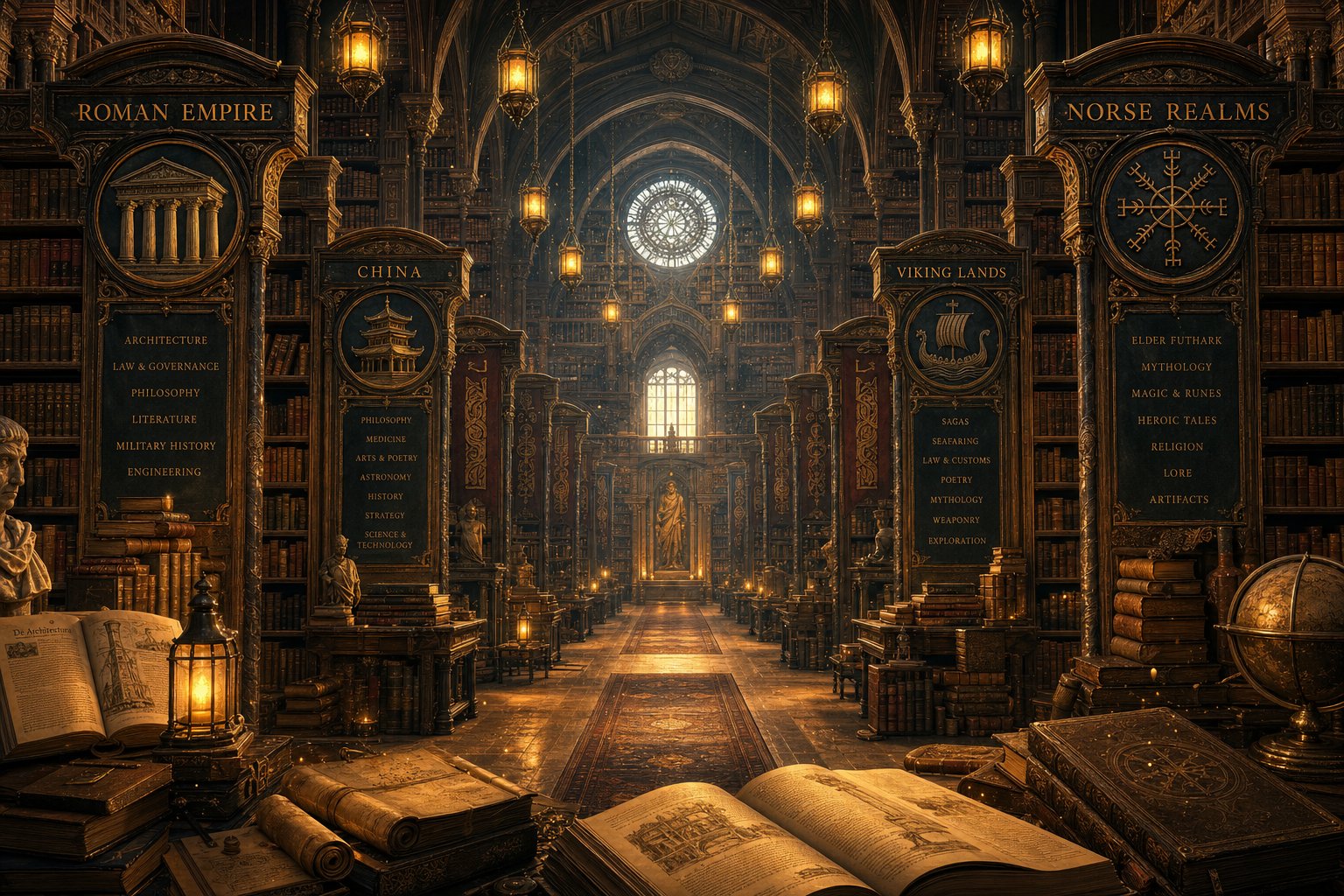
Curated Dynasty Name Examples by Culture and Era
Systems and formulas are powerful, but sometimes you just need a spark. A name that catches your eye, triggers an association, and sends your worldbuilding in a direction you hadn't considered. What follows is a browsable collection of dynasty name examples grouped by cultural tradition, each with enough context that you understand why it sounds the way it does and how to riff on it for your own projects.
Ancient and Classical Dynasty Name Examples
Mediterranean dynasty names carry the weight of marble columns and imperial bureaucracy. Roman names favor strong terminal consonants and Latin vowel patterns. Greek names lean into flowing -os and -ides endings. Byzantine names, drawn from a documented corpus of aristocratic family names, blend Greek roots with descriptive or patronymic origins that often encoded personal traits or ancestral occupations.
If you're looking for what a roman dynasty name generator or greek dynasty name generator would produce, these examples capture the phonetic DNA:
- Aurelian — From Latin "aureus" (golden). Suggests wealth and solar imagery. A classic Roman imperial sound.
- Komnenos — Historical Byzantine dynasty. The -enos ending signals Greek aristocratic lineage.
- Palaiologos — The last Byzantine imperial dynasty. Compound Greek meaning "ancient word" or "antiquarian."
- Kantakouzenos — Byzantine aristocratic name attested from 1100 CE. The length and Greek compound structure convey old-money prestige.
- Philanthropenos — A real Byzantine family name meaning "lover of mankind," documented from 1158. Shows how virtue-encoding worked in Greek naming.
- Valerix — Invented. Latin "valer-" (strength) plus a hard terminal. Feels Roman without copying a real gens.
- Drakonides — Greek patronymic pattern. "-ides" means "descendant of," so this reads as "line of the dragon."
The pattern to steal here: Latin-inspired names gain authority from short, punchy roots with clear vowels. Greek-inspired names gain gravitas from compound construction and the -os, -ides, or -enos endings that signal lineage.
East Asian Dynasty Name Examples
Chinese and Japanese dynasty names operate on brevity and symbolic density. Where Mediterranean names sprawl across four or five syllables, East Asian names compress entire philosophies into one or two. A japanese dynasty name generator draws from clan-name traditions (uji) that blend nature imagery with aspirational meaning, while Chinese-inspired names select single characters for their tonal and symbolic weight.
- Jian (剑) — "Sword." A single-character dynasty name suggesting a military founding. Sharp, monosyllabic, unmistakable.
- Yonghua (永华) — "Eternal splendor." Two characters combining permanence with cultural flourishing. Suits a dynasty known for arts patronage.
- Tenmei (天明) — Japanese reading: "heavenly brightness." Blends celestial authority with the clarity associated with just rule.
- Kurosawa — "Black marsh." A Japanese clan-style name using landscape imagery. The dark element adds an edge without sounding villainous.
- Xuliang (旭良) — "Rising sun" + "virtuous." Aspirational compound suggesting a dynasty that restored order after chaos.
- Fujihara — Riff on the historical Fujiwara ("wisteria field"). Swapping one syllable creates something original but culturally grounded.
The principle at work: East Asian dynasty names gain power through meaning density. Every syllable carries semantic weight. When building names in this tradition, choose your characters for what they mean first and how they sound second.
Northern European and Fantasy Dynasty Names
Norse and Germanic names hit differently. They're built from compound roots where each element contributes a concrete image: a weapon, an animal, a landscape feature, a divine attribute. A viking dynasty name generator combines these elements with collective suffixes (-ing, -ung) to create names that sound like they were shouted across a mead hall. Germanic roots, as documented in onomastic research on ancient Germanic naming, frequently combine elements meaning "brave," "bright," "peace," "battle," or "God" with secondary roots indicating rulership or protection.
- Valdungar — "Descendants of Valdun" (power-hill). Norse collective suffix creates instant saga-era authenticity.
- Eisenrath — Germanic compound: "eisen" (iron) + "rath" (counsel). A dynasty known for pragmatic, unyielding governance.
- Thornbjording — Norse patronymic-collective hybrid. "Thor's bear" + descent marker. Sounds like a family that claims divine ancestry.
- Godevald — From Germanic roots "God" + "wald" (rule/power). Echoes historical theophoric names like Gottwald while remaining fictional.
- Kunibert — Historical Germanic name meaning "bright family." Works directly as a dynasty name suggesting a lineage defined by kinship bonds.
- Ashenvald — Pure fantasy. Combines the English "ashen" (suggesting fire, destruction, or grey northern landscapes) with Germanic "-vald" (power). Immediately evokes a northern warrior dynasty.
- Skjaldmeren — Norse-inspired invention. "Skjald" (shield/poet) + an invented suffix. Ambiguous enough to suggest either a warrior or bardic lineage.
The strongest dynasty names match their phonetic texture to the world's tone. A grim northern kingdom demands names built from hard consonants and short vowels. A sun-drenched empire calls for open syllables and flowing liquids. Pick your sound palette before you pick your syllables.
These lists aren't meant to be copied wholesale. They're starting points. Take a name that resonates, identify which phonetic element hooks you, whether it's the suffix, the vowel pattern, the consonant palette, or the syllable count, and use that element as the seed for your own variations. One name from this list can spawn an entire culture's worth of dynasty names once you understand the linguistic rule it follows.
Frequently Asked Questions About Dynasty Name Generators
1. How does a dynasty name generator work?
A dynasty name generator combines linguistic roots, cultural phonetics, and historical naming patterns to produce fictional ruling-family names. It draws from databases of real-world suffixes (like -ov, -id, -burg, -ing), ancestral roots, and phoneme libraries. You typically input parameters such as region, era, or tone, and the tool applies formation rules like patronymic inheritance, territorial association, or aspirational word selection to output culturally consistent names.
2. What is the difference between a dynasty name and a house name?
A dynasty refers specifically to a succession of rulers from the same family who hold power across multiple generations, emphasizing continuity of rule. A house is a noble family unit defined by shared lineage and political identity that does not necessarily need to rule. In fiction, these categories often overlap. For example, House Targaryen functions as both a noble house and a dynasty because its members ruled for centuries. The distinction matters for worldbuilding because it determines how you deploy the name in your narrative.
3. What makes a dynasty name sound powerful and memorable?
Phonetic science drives how dynasty names land emotionally. Hard consonants like K, T, D, and G convey martial strength, while liquids and nasals like L, M, and N suggest elegance or scholarship. Sibilants like S, Z, and SH create an exotic or mysterious tone. Syllable count also matters: two to three syllables hit the memorability sweet spot. Front-stressed names feel commanding, while back-stressed names sound more exotic to English speakers. Consistency within a cultural sound palette is what separates professional worldbuilding from random generation.
4. How do Crusader Kings games generate dynasty names?
Crusader Kings generates dynasty names through culture-group definitions stored in moddable text files. Each culture specifies its own name pools, patronymic suffixes, dynasty prefixes, and naming probability rules. The system uses flags like founder_named_dynasties to determine whether a dynasty takes its name from its founder, and grammar_transform rules handle language-specific mutations. Norse characters get -son suffixes, Arabic characters get ibn patronymics and Al- prefixes, and Spanish characters get -ez endings, all running as parallel naming systems calibrated to specific cultural traditions.
5. Can I create my own dynasty names without using a generator tool?
Yes, and the process follows five repeatable steps. First, choose your dynasty archetype (warrior, merchant, scholar, etc.) to determine your phonetic palette. Second, select a cultural base to borrow linguistic structure from. Third, apply phonetic rules consistently, defining allowed consonant clusters and stress patterns. Fourth, attach a culturally appropriate suffix from established patterns like -ov, -id, -ian, -burg, or -ing. Fifth, test for uniqueness by searching online to avoid unintended matches with real brands or slurs. You can also adapt real historical names through vowel substitution, syllable extraction, or cultural transplant techniques.