What Makes Fantasy Chinese Names So Powerful for Storytelling
You want a name that sounds right. Something that carries weight, hints at destiny, and feels rooted in a living culture. A fantasy Chinese name generator can get you started, but most tools stop at random syllable combinations, missing the deeper architecture that makes Chinese names resonate.
Chinese names are built from Hanzi, characters that each carry their own meaning, tone, and cultural history. A single character like 雪 (xue, snow) evokes coldness, purity, and solitude. Pair it with the right surname and you have a character whose identity readers feel before they finish the first chapter. This layered construction is what separates authentic Chinese fantasy names from hollow imitations.
Why Fantasy Chinese Names Require More Than Random Generation
Unlike Western fantasy naming, where invented words like "Eldrin" or "Vaelith" can stand on sound alone, a Chinese name generator for fantasy needs to respect how meaning, phonetics, and symbolism interlock. As Temple University's Center for Chinese Language Instruction explains, the basic unit of written Chinese consists of three parts: the character, the pronunciation, and the meaning. All three come into play when constructing a name.
Chinese names are constructed from meaningful components rather than arbitrary syllables. Every character chosen carries cultural, philosophical, and sometimes spiritual significance that shapes how a character is perceived.
A poorly chosen name can shatter immersion instantly. Imagine naming a fearsome warrior "Ai He" (爱和, Love and Harmony) or a wise grandmaster "Sha Ben" (傻笨, Idiot and Clumsy). In Chinese fantasy fiction, a name functions as prophecy, foreshadowing a character's cultivation path, moral alignment, and ultimate fate.
Who Benefits From Authentic Chinese Fantasy Naming
The demand for a reliable chinese fantasy name generator has surged alongside the global popularity of xianxia novels, danmei fiction, and Chinese-inspired video games. Writers crafting wuxia epics, game developers building cultivation worlds, and tabletop players seeking a fitting chinese anime name all face the same challenge: creating names that feel genuine rather than decorative.
Whether you need a single protagonist name or an entire clan roster, a generic asian name generator will not give you the depth this genre demands. This guide teaches you the underlying logic of Chinese naming so you can generate unlimited authentic names yourself, from surname selection through tonal pairing to title systems that evolve with your characters.
How Chinese Names Are Structured From Surname to Given Name
Every Chinese name follows a consistent formula: surname first, given name second. The total length is typically two or three characters. That is the entire skeleton. But within that compact frame, writers can encode clan loyalty, elemental affinity, and personal destiny all at once.
The chinese for name splits into two distinct concepts: 姓 (xing, family name) and 名 (ming, given name). The surname anchors a character to lineage and history. The given name expresses individuality, aspiration, or fate. Understanding this split is the first real step toward generating chinese names that feel grounded rather than decorative.
Surname Selection and Clan Identity in Fantasy Fiction
A chinese surname does more than identify a family. In fantasy fiction, it signals political allegiance, regional origin, and even supernatural bloodline. China has roughly 400 active surnames, but the most common chinese last names like Li, Wang, and Zhang alone cover more than 270 million people. For worldbuilders, each of these chinese family names carries narrative potential rooted in real history.
Surnames are derived from titles of nobility, ancient kingdoms, occupations, and ethnic groups. Wang (王) literally means "king," making it a natural fit for royal lineages. Li (李) connects to the Tang dynasty emperors who bestowed the name on loyal subjects. Zhang (张) contains the radical for "bow" and traces back to the legendary inventor of the bow and arrow. These common chinese last names already tell stories before you add a single given-name character.
Here is a breakdown of fantasy-appropriate chinese surnames and meanings matched to character archetypes:
| Surname (Character) | Pinyin | Meaning | Historical Association | Best Suited Archetype |
|---|---|---|---|---|
| 王 | Wang | King | Nobility titles, royal clans | Rulers, sect leaders, emperors |
| 李 | Li | Plum tree | Tang dynasty imperial family | Protagonists, wandering heroes |
| 张 | Zhang | Draw a bow | Inventor of the bow and arrow | Warriors, archers, generals |
| 陈 | Chen | Ancient kingdom | Kingdom of Chen in Henan | Scholars, strategists, old clans |
| 刘 | Liu | Kill (archaic) | Han dynasty founders | Antiheroes, conquerors |
| 慕容 | Murong | Admire glory | Xianbei royal clan | Exiled nobles, tragic figures |
| 司马 | Sima | Master of horses | Military officials, Jin dynasty | Tacticians, court advisors |
| 金 | Jin | Gold | Jurchen ethnic group | Wealthy merchants, cultivators |
Compound chinese surnames like Murong and Sima immediately signal aristocratic or foreign-blooded characters. Single-character surnames feel more common and grounded. Choosing between them sets the social register of your character before readers learn anything else.
Given Name Characters and Their Layered Meanings
The given name is where personal identity lives. Parents in Chinese culture select characters that reflect hopes, virtues, or natural imagery. Fantasy writers can use the same logic: pick one or two characters whose meanings align with the character's role or arc.
Common given-name characters for fantasy include 云 (yun, cloud), 剑 (jian, sword), 瑶 (yao, precious jade), and 霜 (shuang, frost). Each carries both a literal image and an emotional register. A character named 李云剑 (Li Yunjian) evokes a swordsman who moves like clouds, free and untethered. Someone named 陈瑶霜 (Chen Yaoshuang) suggests cold elegance and rare beauty.
The interplay between surname weight and given-name imagery is where chinese names gain their storytelling power. A heavy, martial surname paired with a delicate given name creates instant tension. A noble surname paired with a humble given name hints at a fall from grace. These contrasts give readers subconscious information about who a character is and where their story might lead.
Wuxia vs Xianxia vs Xuanhuan Naming Conventions
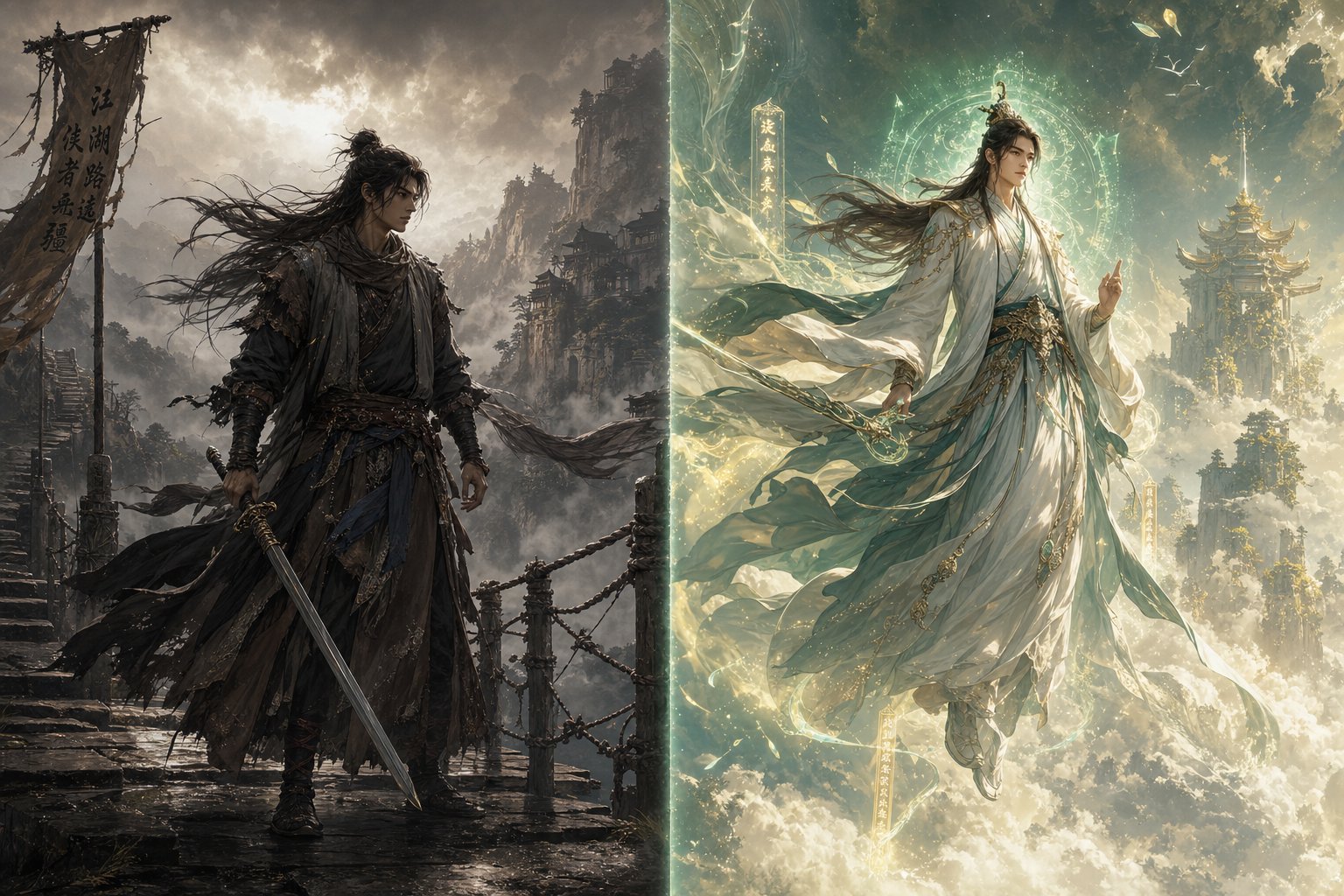
Surname and given name form the skeleton of any Chinese fantasy name, but the genre you are writing in determines the flesh. A wuxia name generator will produce something fundamentally different from a xianxia name generator because the two genres draw from separate philosophical wells. Xuanhuan adds a third layer entirely. Knowing which tradition you are working within shapes every character choice you make.
Think of it this way: wuxia names feel like weathered steel. Xianxia names shimmer like celestial jade. Xuanhuan names bend the rules of both. The distinction matters because readers steeped in these genres will sense immediately whether a name belongs in the jianghu or among the heavens.
Wuxia Names and the Martial World Aesthetic
Wuxia (武侠, martial heroes) is grounded in human-scale conflict. Its characters are swordsmen, assassins, wandering knights, and sect leaders operating within the jianghu, the lawless underworld of martial artists that exists outside imperial authority. Wuxia names reflect this earthbound intensity. They favor Confucian virtues, martial imagery, and poetic naturalism over anything supernatural.
The naming patterns in wuxia fiction lean toward characters that evoke physical prowess, moral conviction, or poetic solitude. A jianghu legend like Jin Yong's Linghu Chong (令狐冲, Lonely Fox Soaring) carries a rare compound surname that adds mystique, paired with a given name suggesting unrestrained forward motion. The name tells you everything about the character before you read a single chapter.
Characteristic elements of wuxia names include:
- Martial imagery: 剑 (jian, sword), 刀 (dao, blade), 拳 (quan, fist), 影 (ying, shadow)
- Natural forces: 风 (feng, wind), 岳 (yue, mountain peak), 河 (he, river), 石 (shi, stone)
- Confucian virtues: 义 (yi, righteousness), 信 (xin, trust), 忠 (zhong, loyalty), 勇 (yong, courage)
- Rare or compound surnames for mystique: 独孤 (Dugu, Solitary), 令狐 (Linghu), 上官 (Shangguan)
- Poetic states: 寂 (ji, solitude), 傲 (ao, proud), 狂 (kuang, wild), 冲 (chong, soaring)
If you are looking for cool chinese names jianghu style, the formula is straightforward: pair a surname that signals social position with a given name that evokes either a warrior's temperament or a natural force. Zhang Wuji (张无忌, Zhang Without Taboo) uses a common surname grounded in ordinary origins, then subverts expectations with a given name meaning "fearless." The contrast between humble lineage and extraordinary destiny is classic wuxia storytelling compressed into three characters.
Xianxia and Xuanhuan Naming for Immortal Characters
Xianxia (仙侠, immortal heroes) elevates the stakes from human martial arts to cosmic cultivation. Characters in xianxia pursue immortality, battle demons, and ascend through heavenly tribulations. Their names reflect this vertical ambition. Where wuxia draws from Confucian ethics and earthly nature, xianxia pulls from Daoist cosmology, Buddhist transcendence, and the mythology of chinese myth gods who shaped the celestial order.
Xianxia naming conventions favor characters that signal spiritual attainment, elemental mastery, or cosmic scope:
- Celestial imagery: 天 (tian, heaven), 仙 (xian, immortal), 神 (shen, divine), 星 (xing, star)
- Daoist concepts: 玄 (xuan, profound/mysterious), 道 (dao, the Way), 虚 (xu, void), 无 (wu, nothingness)
- Spiritual elements: 灵 (ling, spirit), 魂 (hun, soul), 禅 (chan, zen), 悟 (wu, enlightenment)
- Eternal qualities: 永 (yong, eternal), 恒 (heng, constant), 不灭 (bumie, indestructible)
- Cosmic forces: 日 (ri, sun), 月 (yue, moon), 雷 (lei, thunder), 冥 (ming, dark/underworld)
A character named Tianxu Zhenren (天虚真人, Celestial Void True Person) could never exist in a wuxia story. The name signals someone who has transcended mortal concerns entirely. Cultivation novels often use names that foreshadow a character's spiritual progression. Ye Fan (叶凡, Leaf Ordinary) from a popular xianxia novel carries deliberate irony: his name means "ordinary," but his destiny is anything but.
Xuanhuan (玄幻, mysterious fantasy) blends Chinese mythology with broader fantasy elements, sometimes incorporating Western magic systems or entirely invented cosmologies. Naming in xuanhuan is more flexible. Writers can mix Daoist terminology with invented concepts, creating names that feel Chinese in structure but push beyond strict historical or philosophical grounding. A xuanhuan character might carry a name referencing both traditional Five Elements theory and a fictional power system unique to that world.
The Five Elements (五行, wuxing) provide one of the most practical naming frameworks across all three subgenres. Each element carries specific associations that map directly onto character traits:
| Element | Chinese | Pinyin | Associated Qualities | Name Characters |
|---|---|---|---|---|
| Wood | 木 | mu | Growth, flexibility, compassion | 林 (lin, forest), 松 (song, pine), 柏 (bai, cypress) |
| Fire | 火 | huo | Passion, destruction, transformation | 炎 (yan, flame), 焱 (yan, blaze), 烈 (lie, fierce) |
| Earth | 土 | tu | Stability, endurance, loyalty | 坤 (kun, earth), 岩 (yan, rock), 峰 (feng, peak) |
| Metal | 金 | jin | Precision, justice, sharpness | 锋 (feng, blade edge), 铁 (tie, iron), 钧 (jun, weight) |
| Water | 水 | shui | Adaptability, wisdom, mystery | 渊 (yuan, abyss), 泽 (ze, marsh), 澜 (lan, waves) |
In xianxia, a cultivator's elemental affinity often appears directly in their name. A fire-aligned character might be named Xiao Yan (萧炎, Xiao Flame), while a water-aligned healer could carry the character 泽 (ze, nourishing marsh). This is not decoration. It is worldbuilding encoded at the character level, telling readers what kind of power this person wields before any cultivation scene begins.
The key difference between wuxia vs xianxia naming comes down to scope. Wuxia names point inward toward human virtue and martial skill. Xianxia names point upward toward heaven, immortality, and cosmic law. Xuanhuan names point outward, borrowing freely from both traditions while inventing new symbolic vocabularies. Whichever subgenre you choose, the naming logic must stay internally consistent, or readers familiar with these traditions will feel the dissonance immediately.
Building Names by Character Archetype and Role
Genre sets the tone, but archetype determines the specific characters you pull from. A villain in a xianxia novel and a villain in a wuxia story both need names that inspire dread, yet the vocabulary they draw from differs. The real power of a chinese warrior name generator lies in matching character pools to narrative roles so that every name feels inevitable rather than random.
Imagine you are casting a story. Your swordsman needs a name that sounds like sharpened steel. Your healer needs something that flows like water over stone. Your villain needs syllables that land heavy and dark. Chinese characters make this possible because each one carries visual, phonetic, and symbolic weight simultaneously.
Warrior and Hero Name Components
A chinese warrior name draws from characters associated with weapons, fierce animals, and unyielding natural forces. The tradition runs deep. In classical fiction, warriors who wielded ancient chinese weapons like the tang dao sword or the guandao carried names that mirrored their fighting style. A chinese swordsman name typically includes characters evoking sharpness, speed, or indomitable will.
For heroes, the naming logic shifts slightly toward destiny and moral weight. A hero's name often contains tension: a common surname suggesting humble origins paired with a given name hinting at greatness. This contrast is what makes names like Zhang Wuji (Without Taboo) or Xiao Feng (Peak) resonate. The name promises something the character must grow into.
When building a name for warrior female characters, you will find that the strongest female warrior names in Chinese fantasy blend martial imagery with elegance rather than softening the character entirely. A name for warrior female roles might pair 凌 (ling, soaring above) with 霜 (shuang, frost) to create someone cold, precise, and elevated. The china warrior name tradition does not require femininity to mean fragility.
Villain and Antagonist Naming Patterns
Villain names in Chinese fantasy operate on a different frequency. They favor characters associated with darkness, destruction, and forbidden power. Where heroes get names suggesting potential, villains get names that declare what they already are. A well-crafted villain name like Mo Tianlie (魔天烈, Demonic Sky Fury) leaves no ambiguity about the character's alignment.
Common villain naming elements include 魔 (mo, demon), 暗 (an, dark), 血 (xue, blood), 冥 (ming, underworld), and 煞 (sha, malevolent). Surnames for antagonists often lean toward rare or imposing options: 独孤 (Dugu, Solitary), 墨 (Mo, Ink/Dark), or 殷 (Yin, a surname associated with the ancient Shang dynasty and its darker legacy).
Trickster characters occupy a middle ground. Their names carry ambiguity, often using characters with double meanings. 幻 (huan, illusion), 隐 (yin, hidden), and 狐 (hu, fox) all signal deception without declaring outright villainy.
Scholar and Healer Character Names
Scholars and healers draw from an entirely different character pool. Their names favor wisdom, gentleness, and natural imagery associated with growth and nourishment. Characters like 文 (wen, literature), 书 (shu, book), 远 (yuan, far-reaching), and 慧 (hui, wisdom) signal intellectual depth. Healers lean toward 泽 (ze, nourishing marsh), 兰 (lan, orchid), 清 (qing, clear), and 慈 (ci, compassion).
This is where understanding radicals becomes a practical tool. Radicals are the building blocks within Chinese characters, and they carry their own symbolic weight that readers subconsciously register:
- 玉 (jade radical, yu): Appears in characters related to precious things, purity, and nobility. The jade radical shows up in 473 characters in the Kangxi Dictionary, many connected to treasure, beauty, and refinement. Characters containing it, like 瑶 (yao, precious jade) or 琳 (lin, fine jade), immediately signal elegance and value. Use these for noble heroines, cultivators of high status, or characters associated with purity.
- 火 (fire radical, huo): Signals passion, destruction, and transformation. Characters built on this radical, such as 炎 (yan, flame), 烈 (lie, fierce), and 焰 (yan, blaze), suit warriors, antagonists, or anyone whose arc involves consuming intensity.
- 氵(water radical, shui): Evokes adaptability, depth, and healing. Characters like 渊 (yuan, abyss), 澜 (lan, waves), and 泽 (ze, marsh) work for scholars, healers, strategists, and anyone whose power lies in patience rather than force.
By selecting radicals intentionally, you encode a character's nature at the deepest structural level of their name. A reader who knows Chinese will see the radical and feel the association before they even parse the full character's meaning.
Here is a comprehensive reference table mapping archetypes to their naming components:
| Archetype | Recommended Surnames | Given Name Characters (Meaning) | Example Full Name (Pinyin) |
|---|---|---|---|
| Warrior / Hero | 萧 (Xiao), 李 (Li), 张 (Zhang) | 峰 (peak), 傲 (proud), 无忌 (fearless) | 萧战峰 (Xiao Zhanfeng) |
| Female Warrior | 凌 (Ling), 叶 (Ye), 花 (Hua) | 霜 (frost), 剑心 (sword heart), 飞 (soaring) | 凌霜剑 (Ling Shuangjian) |
| Swordsman | 独孤 (Dugu), 风 (Feng), 萧 (Xiao) | 剑 (sword), 锋 (blade edge), 寒 (cold) | 风寒锋 (Feng Hanfeng) |
| Villain | 墨 (Mo), 独孤 (Dugu), 殷 (Yin) | 魔 (demon), 煞 (malevolent), 血 (blood) | 墨天煞 (Mo Tiansha) |
| Scholar | 陈 (Chen), 苏 (Su), 白 (Bai) | 文 (literature), 远 (far), 慧 (wisdom) | 苏文远 (Su Wenyuan) |
| Healer | 林 (Lin), 白 (Bai), 沈 (Shen) | 泽 (marsh), 清 (clear), 兰 (orchid) | 白清泽 (Bai Qingze) |
| Trickster | 令狐 (Linghu), 狐 (Hu), 柳 (Liu) | 幻 (illusion), 隐 (hidden), 影 (shadow) | 柳幻影 (Liu Huanying) |
| Immortal / God | 天 (Tian), 玄 (Xuan), 上官 (Shangguan) | 永 (eternal), 仙 (immortal), 昊 (vast sky) | 玄永仙 (Xuan Yongxian) |
Notice how each archetype draws from a distinct vocabulary. A chinese warrior name generator that understands these pools will never accidentally give a healer a name dripping with blood imagery, or saddle a villain with characters suggesting compassion. The archetype determines the palette. Your creative choices happen within those boundaries, combining characters in ways that feel fresh while remaining internally coherent.
The real craft emerges when you layer these archetype-specific characters with the genre conventions from the previous section. A wuxia swordsman named Feng Hanfeng carries earthbound sharpness. Transplant that same archetype into xianxia and you might get Xuan Jianxian (玄剑仙, Mysterious Sword Immortal), where the martial core remains but the cosmic scope expands. Archetype stays constant. Genre shifts the register.
Courtesy Names and Title Systems in Chinese Fantasy
A single character in Chinese fantasy fiction does not carry just one name. They accumulate names the way they accumulate power, each new title marking a shift in status, relationships, or spiritual attainment. This layered naming ecosystem is one of the most distinctive features of the genre, and it gives writers a tool that Western fantasy rarely exploits: the ability to signal exactly how two characters relate to each other based solely on which name they use.
In historical and imperial Chinese culture, a single person could carry up to five different names, each governed by strict social rules about who could use it and when. Fantasy fiction inherits this system and expands it further with sect titles, cultivation ranks, and posthumous honors that track a character's entire journey from mortal to immortal.
Courtesy Names and When Characters Receive Them
The progression of name acquisition follows a character's life arc. Each layer unlocks at a specific narrative milestone, giving you built-in moments of transformation to dramatize:
- Birth name (名 ming) — Given by parents, used only by family and elders. In ancient tradition, these were sometimes deliberately plain or even crude, since beautiful names were believed to attract misfortune. In fantasy fiction, a humble birth name creates dramatic contrast with later grandeur.
- Courtesy name (字 zi) — Received around age twenty or upon completing a significant trial. Peers and equals use this name as a sign of respect. Using someone's birth name in public was considered a grave insult, essentially declaring them beneath respect. The courtesy name often connects to the birth name through synonyms, antonyms, or thematic expansion. Zhuge Liang's courtesy name Kongming (孔明) mirrors his given name since both 亮 and 明 mean "bright."
- Art name (号 hao) — Self-chosen, functioning like a personal brand or nickname royal figures and scholars adopted to express their philosophy. The poet Tao Yuanming called himself Mr. Five Willows (五柳先生) after the trees near his home. In fantasy, this is where characters declare their identity on their own terms.
- Sect title or cultivation name — Bestowed by a master or earned through advancement. This name signals rank within a power structure and often replaces all previous names in formal address.
- Posthumous name or immortal title — Granted after death or ascension, summarizing a character's legacy in one or two characters. A chinese emperor received a posthumous name that judged his entire reign. In xianxia, ascended cultivators receive titles that echo through eternity.
This system means that how one character addresses another instantly communicates intimacy, hostility, or hierarchy. A lover uses the birth name. A rival uses the courtesy name with cold formality. A disciple uses the sect title. Readers familiar with these conventions extract relationship data from every line of dialogue without a single word of exposition.
Title Systems From Sect Disciple to Immortal Emperor
Beyond personal names, Chinese fantasy employs a rich honorific system that tracks power level and moral alignment. Four key suffixes define the upper echelons of any cultivation world:
- 仙 (xian, immortal) — Marks someone who has transcended mortality. A spirit empress or spiritual empress figure in xianxia might carry the title 仙后 (Xianhou, Immortal Empress), signaling both her gender and her achieved divinity.
- 帝 (di, emperor) — The imperial meaning here extends beyond political rule into cosmic sovereignty. A chinese empress or chinese emperor in fantasy is not merely a ruler of land but often a sovereign of an entire realm of existence. Titles like 天帝 (Tiandi, Heavenly Emperor) or 魔帝 (Modi, Demon Emperor) define the scope of their dominion.
- 尊 (zun, venerable) — Indicates supreme mastery within a domain. 剑尊 (Jianzun, Sword Venerable) tells you this character has reached the absolute peak of blade cultivation.
- 魔 (mo, demon/devil) — Signals alignment with heterodox or forbidden paths. Unlike Western "evil" labels, 魔 in Chinese fantasy often carries moral ambiguity. An empress of china in a demonic sect might hold the title 魔后 (Mohou), feared but not necessarily villainous.
A character who begins as outer disciple Li Changqing, receives the courtesy name Mingxuan from his master, earns the sect title Qingyun Sword Child, and eventually ascends as Sword Venerable Eternal Sky has undergone a complete identity transformation. Each name is a chapter marker. Each transition gives you a scene worth writing. The nickname royal courts and immortal hierarchies bestow carries weight precisely because it was earned, not inherited.
This accumulation of names also solves a practical problem for writers: it lets you vary how a character is referenced without repetition, while simultaneously encoding plot progression into the text itself. Every time a new name appears, readers know something has changed.
A Name Construction Workshop for Writers and Creators
Knowing the theory behind Chinese naming is one thing. Sitting in front of a blank page and actually building a name from scratch is another. Most writers hit this wall: they understand that surnames carry clan weight, that given names encode destiny, and that titles accumulate over time, but they still freeze when it is time to generate chinese names for a new character.
The solution is not to rely on a random chinese name generator every time you need a character. It is to internalize a repeatable method that lets you function as your own chinese name creator. What follows is a step-by-step construction process you can use for every character in your story, from background NPCs to your central protagonist.
Step-by-Step Name Construction Method
This process works whether you are building a single name or populating an entire sect roster. Each step narrows your options until the right name emerges naturally:
- Define the character's narrative role and genre. Before touching any characters, decide what this person does in your story and which subgenre you are writing. A wuxia assassin and a xianxia healer pull from entirely different vocabularies. Write down three adjectives that describe this character's essence.
- Select a surname based on social position. Common single-character surnames like Li or Zhang ground a character in ordinary origins. Rare compound surnames like Shangguan or Murong signal aristocracy or outsider status. Match the surname's weight to your character's starting position in the story.
- Choose one or two given-name characters aligned with your adjectives. Cross-reference your three adjectives against the archetype character pools and elemental associations covered earlier. A character described as "cold, precise, and solitary" might draw from 寒 (han, cold), 锋 (feng, blade edge), or 孤 (gu, alone). As AL Language Cafe notes, Chinese people can combine any characters in the dictionary to create unique names, so the combination possibilities are limitless.
- Check for unintended homophones. This is where many writers stumble. A name that looks elegant on paper might sound identical to an embarrassing word when spoken aloud. The characters 诗 (shi, poetry) and 死 (si, death) sit dangerously close in pronunciation. Common homophone traps include combinations that accidentally sound like "death" (死亡, siwang) or vulgar slang. Say the full name out loud and search for near-homophones before committing.
- Verify tonal flow across the full name. Read the complete name in pinyin and check that the tone sequence feels musical rather than monotonous. Three consecutive fourth tones sound aggressive and choppy. Three first tones feel flat and robotic. Aim for variety.
- Test against cultural taboos. Avoid using characters from the names of widely revered historical figures unless you intend the reference. A character named 孔明 (Kongming) will immediately invoke Zhuge Liang, which may or may not serve your story. Also avoid characters associated with death, bodily functions, or numbers like 四 (si, four) that carry negative superstitions.
This method replaces the need for a random name generator chinese tools provide. Instead of accepting whatever a china names generator spits out, you are making deliberate choices at every stage. The result is a name that carries meaning a reader can feel, even if they cannot consciously decode every character.
Tonal Pairing and Phonetic Aesthetics for Character Personality
Mandarin has four tones plus a neutral tone, and the sequence of tones across a name creates an auditory personality before meaning even registers. This is the dimension most writers ignore entirely, yet it is what makes certain names feel inherently powerful, gentle, or sinister when spoken aloud.
Here is how tone combinations map to character impressions:
| Tone Combination (Surname + Given Name) | Auditory Effect | Best Suited For | Example |
|---|---|---|---|
| 4th + 2nd (falling then rising) | Commanding start, upward resolution | Heroes, leaders, protagonists | 赵云 Zhao Yun (4+2) |
| 4th + 4th (falling + falling) | Heavy, forceful, relentless | Villains, warriors, tyrants | 墨煞 Mo Sha (4+4) |
| 1st + 3rd (high flat + low) | Ethereal start, grounded landing | Scholars, sages, mentors | 苏远 Su Yuan (1+3) |
| 2nd + 1st (rising + high flat) | Ascending, bright, optimistic | Young heroes, disciples | 林风 Lin Feng (2+1) |
| 3rd + 1st (low + high) | Quiet beginning, soaring finish | Hidden masters, late bloomers | 柳星 Liu Xing (3+1) |
As Hacking Chinese explains, Mandarin's four tones are high, rising, low, and falling, and the way they combine in pairs creates distinct auditory patterns. A name like Xiao Yan (萧炎, 1st + 2nd) rises from a steady high tone into an ascending flame, mirroring the character's upward cultivation journey. Compare that to Mo Sha (墨煞, 4th + 4th), where both syllables crash downward like a hammer strike, perfect for an antagonist whose presence feels oppressive.
When you are working as your own ancient chinese name generator, say each candidate name aloud at least three times. You will notice that some combinations roll off the tongue while others feel awkward or clumsy. This is not random. Mandarin speakers naturally avoid certain tone sequences in names because they sound unpleasant or create confusion with common words.
A few practical guidelines for tonal pairing:
- Avoid three consecutive third tones. They trigger mandatory tone sandhi (the first third tone shifts to a second tone), which can make the name sound different from how it reads in pinyin.
- Two fourth tones in a row create intensity. Use this deliberately for aggressive characters, not accidentally for gentle ones.
- A second tone followed by a first tone creates a sense of lift and brightness, ideal for optimistic or youthful characters.
- Mixing a fourth tone surname with a first or second tone given name produces a strong-then-open feeling that suits protagonists well.
Chinese name interpretation goes beyond dictionary definitions. The sound of a name is its first impression, arriving before meaning. A reader encountering "Ling Shuangjian" processes the sharp, descending tones before they register "frost" and "sword." That phonetic first impression either reinforces or contradicts the semantic meaning. When both align, the name feels inevitable.
Cultural sensitivity matters here too. If you are not a native speaker, run your final name choices past someone who is. What sounds exotic and beautiful to an English-speaking ear might sound comical, dated, or accidentally vulgar to a Chinese speaker. The goal is not perfection but respect: showing that you took the time to understand the system rather than grabbing syllables at random. A chinese name gen tool can suggest options, but only a human ear can confirm that a name lands the way you intend it to.
Pronunciation Guide for Western Writers and Readers
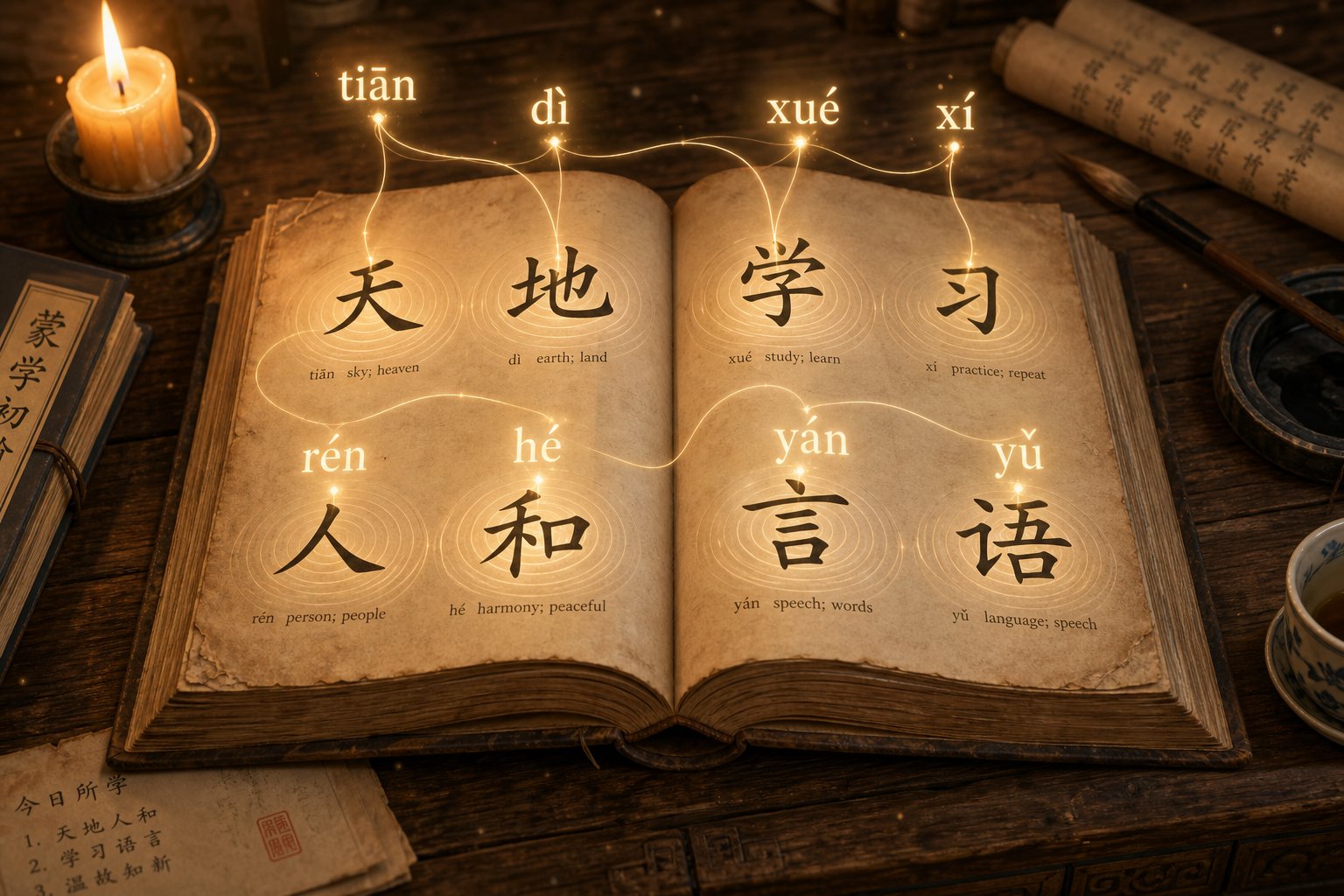
You have built a name with the right meaning, the right tones, and the right archetype. But here is the uncomfortable question: can your English-speaking readers actually say it? A name that looks beautiful in chinese hanzi and reads elegantly in pinyin can still trip up Western audiences if it contains sounds that do not exist in English. This gap between written beauty and spoken accessibility is where many fantasy writers lose their readers.
Pinyin, the standard romanization system for han mandarin, uses familiar Latin letters to represent unfamiliar sounds. The problem is that those letters do not map to English the way readers expect. The letter "x" does not sound like "x" in "box." The letter "q" has nothing to do with "queen." Without guidance, readers will mangle your carefully crafted names into something unrecognizable.
Pinyin Pronunciation Shortcuts for English Speakers
The good news is that most pinyin sounds have reasonable English approximations. A pinyin cheatsheet developed by Peng Qi emphasizes that while there is not a perfect one-to-one mapping between Latin letters and Chinese sounds, focusing on the most challenging consonants first gets you most of the way there. Here are the sounds that cause the most confusion when rendering english in mandarin chinese romanization:
| Pinyin Sound | English Approximation | Think of It Like... | Example Name |
|---|---|---|---|
| x | "sh" in "she" (tongue low and flat) | A softer, hissing "sh" | Xiao = "shee-ow" |
| q | "ch" in "cheap" | A sharp "ch" with tongue forward | Qing = "ching" |
| zh | "j" in "jerk" (tongue curled back) | A harder, retroflex "j" | Zhang = "jahng" |
| z | "ds" in "woods" | The buzzing end of "kids" | Zhao = "jow" (rhymes with cow) |
| c | "ts" in "bits" or "pizza" | A sharp "ts" at the start | Cai = "tsai" |
| r | "r" in "leisure" or "pleasure" | French "j" with curled tongue | Ren = "run" (roughly) |
| -ang | "ahng" (not "ang" as in "bang") | Open "ah" plus nasal ending | Wang = "wahng" |
| -ian | "yen" (not "ee-an") | Like the Japanese currency | Tian = "tyen" |
| u (after j, q, x, y) | Say "ee" with rounded lips | German u-umlaut | Xu = "shyu" |
As ASU's School of International Letters and Cultures notes, the pinyin system was officially adopted in China in 1958 and uses Latin letters to transcribe Mandarin Chinese sounds, but the letter-to-sound relationships often diverge from English expectations. The consonants b, d, and g, for instance, are voiceless in Chinese, making them sound slightly softer than their English counterparts.
Worth noting: not all Chinese names are romanized from Mandarin. Some come from Cantonese or other Chinese languages, and questions like "is taiwanese a language" highlight how complex the linguistic landscape really is. Taiwanese mandarin has its own pronunciation quirks that differ from mainland standard, and names romanized under older systems like Wade-Giles (common in Taiwan) will look different from pinyin. For fantasy writing purposes, pinyin remains the most accessible and widely recognized system.
Choosing Names Your Readers Can Actually Say
Accessibility does not mean dumbing things down. It means making strategic choices about which sounds you ask readers to learn. Here are practical strategies for balancing authenticity with readability:
- Front-load familiar sounds. Names starting with L, M, W, or Y feel immediately approachable because those consonants work the same in English and pinyin. Lin, Mei, Wei, and Yan require zero explanation.
- Limit unfamiliar initials to one per name. A name like "Qiu Xizhen" stacks three difficult consonants. "Li Xuan" gives readers one new sound to manage.
- Use shorter names for major characters. Two-syllable names like Ye Fan or Su Li are easier to remember and say than three-syllable constructions. Save longer names for formal titles readers encounter less frequently.
- Provide a phonetic guide on first appearance. A brief parenthetical like "Xiao (rhymes with 'cow')" on first use removes the guessing entirely without breaking immersion.
The goal is not to avoid all challenging sounds. Readers of Chinese-inspired fantasy expect some unfamiliarity, and that unfamiliarity is part of the genre's appeal. The trick is giving them enough footholds to feel confident rather than lost. A name they can say is a name they will remember, and a name they remember is a character they will care about.
Dynasty-Era Naming Patterns for Historical Fantasy Settings
Pronunciation gets your readers through the door, but historical grounding is what makes a name feel like it belongs to a specific world rather than floating in a generic "ancient China" void. Every dynasty on the chinese dynasty timeline carried its own naming aesthetics, shaped by the politics, philosophy, and cultural mood of its era. Anchoring your fantasy setting in a particular dynastic period gives names an internal consistency that readers sense even if they cannot articulate why.
The dynasty meaning here is not just political. Each era represents a distinct flavor of civilization. When you study a list of chinese dynasties, you are really looking at a menu of worldbuilding templates, each with its own naming vocabulary, social structures, and narrative possibilities.
Tang and Song Dynasty Naming Elegance
The Tang dynasty (618-907 AD) is the golden age most wuxia and xianxia writers draw from. If you have ever studied a tang dynasty map, you will notice an empire at its territorial peak, cosmopolitan and confident. Tang-era names reflect this expansiveness. They favor poetic elegance, literary allusion, and bold imagery. Characters like 明 (ming, bright), 玄 (xuan, profound), and 龙 (long, dragon) appear frequently. Given names often reference classical poetry or Daoist philosophy. The Tang naming style suits stories about wandering swordsmen, powerful sects, and courts brimming with intrigue.
The Song dynasty (960-1279 AD) shifted toward scholarly refinement. Where Tang names feel broad and heroic, Song names lean introspective and cultured. Characters like 文 (wen, literature), 清 (qing, clear), and 远 (yuan, distant) dominate. Song-era naming works best for stories centered on scholars, strategists, and political drama rather than raw martial power. The chinese dynasties list positions the Song as a period of artistic flourishing but military vulnerability, and names from this era carry that tension between intellectual brilliance and fragility.
Ming and Qing Era Naming Conventions
The Ming dynasty (1368-1644) brought a return to Han Chinese rule after Mongol occupation. The ming meaning, "bright" or "brilliant," set the tone for an era that valued clarity and directness. If you examine a ming dynasty map, you see a consolidated, inward-looking empire. Ming names tend toward straightforward virtue characters: 忠 (zhong, loyalty), 义 (yi, righteousness), 国 (guo, nation). Generation naming became systematic during this period, with entire clan branches sharing a character across siblings. Fantasy settings inspired by the Ming suit stories about dynastic restoration, secret societies, and rigid hierarchical sects.
The Qing dynasty (1644-1912) introduced Manchu naming conventions alongside Chinese ones. Qing dynasty chinese characters in names often blend Manchu transliterations with traditional Han naming. Manchu rulers carried names like Aixinjueluo (a clan name) followed by Chinese-style given names. This bilingual quality makes Qing-era naming ideal for fantasy worlds where multiple cultures coexist under a single empire. Names from this period suit stories exploring cultural tension, assimilation, and identity.
Here is a comparison of how each dynasty's naming style maps to fantasy subgenres:
| Dynasty | Period | Naming Style | Common Characters | Best Fantasy Subgenre |
|---|---|---|---|---|
| Tang | 618-907 AD | Poetic, bold, cosmopolitan | 龙 (dragon), 玄 (profound), 云 (cloud), 天 (heaven) | Wuxia, xianxia, martial epics |
| Song | 960-1279 AD | Scholarly, refined, introspective | 文 (literature), 清 (clear), 书 (book), 远 (distant) | Political intrigue, scholar protagonists |
| Ming | 1368-1644 AD | Direct, virtue-driven, systematic | 忠 (loyalty), 义 (righteousness), 国 (nation), 光 (light) | Secret societies, dynastic restoration |
| Qing | 1644-1912 AD | Bilingual, formal, multicultural | 福 (fortune), 寿 (longevity), 瑞 (auspicious), 恩 (grace) | Cross-cultural conflict, court drama |
Choosing a dynastic anchor does not mean you need to write strict historical fiction. It means borrowing the aesthetic palette of a specific era so your names feel cohesive. A sect full of Tang-style names signals a world of poetic warriors and open horizons. A court using Ming-style naming tells readers to expect rigid hierarchy and moral absolutes. The dynasty you choose becomes the invisible grammar of your world, and names are where readers feel it first.
Gendered and Unisex Naming in Chinese Fantasy Fiction
Dynastic aesthetics shape the era your story inhabits, but gender expression shapes how individual characters move through that world. Chinese naming carries strong gendered conventions, certain characters read as unmistakably feminine, others as masculine, and skilled writers use these expectations as tools. Sometimes you lean into them. Sometimes you deliberately break them. Either way, understanding the baseline is essential before you can subvert it with purpose.
Traditional chinese female names draw from a specific pool of imagery: flowers, jade, beauty, grace, and the moon. Traditional chinese male names favor strength, ambition, vastness, and moral weight. But here is where it gets interesting for fantasy writers: the genre has been dismantling these boundaries for decades, and modern xianxia and danmei fiction have accelerated that process dramatically.
Female Fantasy Names With Strength and Grace
When building chinese girl names for fantasy, you are working with two traditions simultaneously. The classical feminine naming vocabulary includes characters like:
- 瑶 (yao) — Precious jade. Signals beauty, rarity, and high status. Example: 林瑶 (Lin Yao)
- 婉 (wan) — Graceful, gentle. Evokes elegance without fragility. Example: 苏婉清 (Su Wanqing, Graceful Clarity)
- 兰 (lan) — Orchid. Classical symbol of refined femininity. Example: 白兰 (Bai Lan)
- 月 (yue) — Moon. Carries associations with yin energy, mystery, and beauty. Example: 叶月华 (Ye Yuehua, Moon Radiance)
- 雪 (xue) — Snow. Cold beauty, purity, and emotional distance. Example: 陈雪凝 (Chen Xuening, Frozen Snow)
- 凤 (feng) — Phoenix. The empress among birds, signaling supreme feminine power. Example: 凌凤 (Ling Feng)
But chinese names for girls in fantasy do not need to stay within this soft register. Female warriors, sect leaders, and demonic cultivators often carry names that blend traditionally feminine characters with martial or elemental ones. A name like 凌霜剑 (Ling Shuangjian, Soaring Frost Sword) keeps the cold elegance associated with femininity while adding unmistakable sharpness. The character 凌 (ling, to rise above) appears frequently in female chinese names for powerful characters because it carries both grace and dominance.
Modern xianxia fiction has pushed this further. Female protagonists now carry names that would have read as exclusively masculine a generation ago, using characters like 战 (zhan, battle), 傲 (ao, proud), or 天 (tian, heaven) without apology. The shift reflects changing expectations about what strength looks like in a female character.
Male and Unisex Naming Options for Diverse Characters
Traditional chinese boy names lean toward ambition, natural grandeur, and moral authority. Chinese male names in fantasy typically draw from:
- 峰 (feng) — Mountain peak. Suggests someone who stands above others. Example: 萧峰 (Xiao Feng)
- 浩 (hao) — Vast, grand. Carries a sense of boundless potential. Example: 李浩然 (Li Haoran, Vast and Righteous)
- 轩 (xuan) — Lofty, dignified. A classic choice for noble or scholarly men. Example: 陈轩 (Chen Xuan)
- 战 (zhan) — Battle, war. Direct and aggressive. Example: 张战 (Zhang Zhan)
- 墨 (mo) — Ink. Signals scholarly depth or darkness depending on context. Example: 苏墨 (Su Mo)
- 昊 (hao) — Vast sky. Cosmic scope and ambition. Example: 天昊 (Tian Hao)
Chinese names for boys in fantasy often pair these power characters with a softening element to create complexity. A warrior named 李墨远 (Li Moyuan, Ink Distant) carries both martial darkness and scholarly distance, suggesting someone whose strength is intellectual rather than purely physical.
The unisex meaning in Chinese naming is particularly rich for fantasy writers. Several characters sit comfortably between gendered expectations, making them ideal for characters whose gender is ambiguous, fluid, or deliberately concealed:
- 云 (yun) — Cloud. Ethereal and free, suits any gender. Example: 白云 (Bai Yun)
- 清 (qing) — Clear, pure. Scholarly and serene regardless of gender. Example: 林清 (Lin Qing)
- 寒 (han) — Cold. Emotional distance reads as neither masculine nor feminine. Example: 叶寒 (Ye Han)
- 玄 (xuan) — Mysterious, profound. Carries Daoist weight without gendered associations. Example: 苏玄 (Su Xuan)
- 影 (ying) — Shadow. Perfect for assassins, spies, or hidden identities of any gender. Example: 柳影 (Liu Ying)
Danmei fiction has been especially influential in reshaping how readers interpret gendered naming. Male protagonists in danmei often carry names with traditionally feminine beauty characters like 瑾 (jin, fine jade) or 琅 (lang, jade-like stone), signaling refinement without undermining their masculinity. This convention has trained a generation of readers to see beauty-associated characters as gender-neutral rather than exclusively feminine. A character named Wei Wuxian (魏无羡, Wei Without Envy) from one of the genre's most popular works carries no gendered markers at all, letting personality rather than naming convention define him.
For writers building diverse casts, the practical takeaway is this: gendered naming in Chinese is a spectrum, not a binary. You can place any character anywhere on that spectrum by adjusting the ratio of traditionally masculine, feminine, and neutral characters in their name. A female general might carry an entirely masculine name to signal how she has had to erase her femininity to survive in a martial world. A male scholar might carry soft, jade-associated characters that hint at his sensitivity. The name becomes a statement about how the character relates to their world's gender expectations, whether they conform, resist, or transcend them entirely.
Frequently Asked Questions About Fantasy Chinese Name Generators
1. How do Chinese fantasy names differ from Western fantasy names?
Western fantasy names like 'Eldrin' or 'Vaelith' can rely on invented sounds alone, but Chinese fantasy names are built from Hanzi characters that each carry specific meaning, tone, and cultural history. A single character like 雪 (snow) evokes coldness, purity, and solitude. The name construction process interlinks meaning, phonetics, and symbolism so that every character chosen shapes how readers perceive the character's identity, moral alignment, and narrative destiny before the story even begins.
2. What is the basic structure of a Chinese fantasy name?
Every Chinese name follows a surname-first, given-name-second formula, typically totaling two or three characters. The surname (姓 xing) anchors a character to lineage, clan identity, and social position. The given name (名 ming) expresses individuality, aspiration, or fate through one or two carefully selected characters. Single-character surnames like Li or Zhang feel grounded and common, while compound surnames like Murong or Sima immediately signal aristocratic or foreign-blooded characters.
3. What is the difference between wuxia and xianxia naming conventions?
Wuxia names reflect human-scale martial arts conflict, favoring Confucian virtues, weapon imagery, and poetic naturalism. They feel like weathered steel, grounded in the jianghu underworld. Xianxia names incorporate celestial and immortal imagery drawn from Daoist cosmology and Buddhist transcendence, using characters like 天 (heaven), 仙 (immortal), and 玄 (profound). The key distinction is scope: wuxia names point inward toward human virtue, while xianxia names point upward toward cosmic law and immortality.
4. How do courtesy names and title systems work in Chinese fantasy fiction?
Characters in Chinese fantasy accumulate multiple names throughout their journey. They start with a birth name (名 ming) given by parents, receive a courtesy name (字 zi) around age twenty or after a trial, may adopt a self-chosen art name (号 hao), earn a sect title through advancement, and potentially receive a posthumous or immortal title after death or ascension. Each name layer signals different relationships and status, so how one character addresses another instantly communicates intimacy, hostility, or hierarchy.
5. How can I make Chinese fantasy names pronounceable for English-speaking readers?
Start by front-loading familiar sounds like L, M, W, or Y that work identically in English and pinyin. Limit unfamiliar initials such as q, x, or zh to one per name. Use shorter two-syllable names for major characters and save longer constructions for formal titles. Providing a brief phonetic guide on first appearance, like 'Xiao (rhymes with cow),' removes guessing without breaking immersion. The goal is giving readers enough footholds to feel confident rather than avoiding all challenging sounds entirely.