What Makes Chinese Names Meaningful and How to Approach Generating One
In English, picking a name is mostly a one-dimensional exercise. Does it sound good? Does it remind you of someone you like? That is largely the extent of the analysis. But when you generate a Chinese name, you are working across multiple dimensions at once: sound, visual form, literary meaning, and cultural resonance. Every single character carries its own independent definition, so a two-character given name is not just a label but a compressed statement of identity, aspiration, or heritage.
Every character in a Chinese name carries independent meaning. Name generation is a deliberate creative act, not random selection from a list.
The chinese for name is "mingzi" (名字), and the word itself hints at the weight the culture places on naming. "Ming" refers to the name given at birth, while "zi" historically referred to a courtesy name received in adulthood. Even the vocabulary surrounding names reflects layers of intention that most Western naming traditions simply do not require.
Why Chinese Names Are Built Differently
Consider the difference this way. If you name a child "Oliver" in English, the sound is pleasant, but most parents are not actively thinking about its Latin root meaning "olive tree." In Chinese, a name like Li Jinze (李金泽) is read character by character: Li is the ancestral surname, Jin means gold or integrity, and Ze means grace or benevolence. Native speakers perceive all three meanings simultaneously. A name that succeeds on one dimension but fails on another is considered incomplete, like a song with a beautiful melody but clashing lyrics. This is why a random chinese name generator that simply pairs characters together often produces results that sound awkward or carry unintended connotations to native ears.
Who Needs to Generate a Chinese Name
You might be wondering, "what is my chinese name?" The answer depends on who you are and why you need one. This guide serves several audiences:
- Fiction writers building authentic characters who need names that signal personality, social class, or historical period to Chinese-speaking readers
- Language learners and expats who want a name that native speakers can remember and pronounce naturally
- Parents choosing meaningful chinese names for children with cross-cultural backgrounds
- Anyone reconnecting with heritage who wants to understand the chinese name meaning behind family naming traditions
Whatever brings you here, the goal is the same: understanding the system well enough to make intentional choices. The structure of a Chinese name, from surname placement to character selection, follows rules that have evolved over thousands of years. Those rules are what make the difference between a name that feels authentic and one that makes native speakers smile politely while internally cringing.
The Structure and Anatomy of a Chinese Name
Those thousands of years of evolution produced a naming architecture that is remarkably compact. A full Chinese name is typically just two or three characters long, yet it encodes family lineage, personal identity, and often generational position all at once. Understanding this structure is the first real step when you want to generate a Chinese name that holds up under scrutiny.
Surname First and Given Name Second
In English, you introduce yourself as "Sarah Chen." In Chinese, the order flips: the family name always leads. Chen Sarah becomes 陈 (Chén) followed by the given name. This is not a stylistic preference. It reflects a cultural worldview where family identity precedes individual identity. When you see a three-syllable Chinese name like Wang Xiaoming, the single syllable "Wang" is the surname and "Xiaoming" is the given name.
This convention matters practically. Among asian names and surnames, the family-name-first structure is shared across Chinese, Korean, Vietnamese, and Japanese traditions. Confusion between given names and surnames has historically caused real problems, from immigration paperwork errors to generations of families ending up with the wrong recorded surname in countries like New Zealand. When generating a name, always build surname-first.
Why Most Names Are Two or Three Characters
A standard Chinese name contains either two or three total characters: one character for the surname plus one or two characters for the given name. Three-character names (like 王小明) are the most common today. Two-character names (like 李明) do exist, but single-character given names have grown rarer over the decades. Why? With a population exceeding 1.4 billion and a limited pool of common chinese surnames, single-character given names create too many duplicates. Adding a second given-name character exponentially increases uniqueness while also allowing richer layered meaning.
Think of it this way: if you only have one given-name character to work with, you are limited to expressing a single quality. Two characters let you combine ideas, like pairing "bright" with "grace" or "mountain" with "river," creating a name that tells a small story.
The Hundred Family Surnames Tradition
Here is where the math gets interesting. China has roughly 6,000 recorded surnames, but the distribution is wildly uneven. The top 100 chinese family names cover approximately 85 percent of the population. A classic text called the Baijiaxing (百家姓), or "Hundred Family Surnames," compiled during the Song Dynasty, catalogued these common chinese last names and became a standard children's primer for centuries.
Compare that narrow surname pool to the thousands of characters available for given names, and you will see why the given name carries most of the creative weight. Among asian last names, Chinese surnames are distinctive for being overwhelmingly monosyllabic. Only a handful of compound surnames like Ouyang (欧阳) or Zhuge (诸葛) break this pattern.
Below are the most common chinese last names ranked by population share, based on recent census data:
| Rank | Chinese Surname | Pinyin | Approximate % of Population | Character Meaning |
|---|---|---|---|---|
| 1 | 王 | Wáng | 7.25% | King |
| 2 | 李 | Lǐ | 7.19% | Plum tree |
| 3 | 张 | Zhāng | 6.83% | To stretch (a bow) |
| 4 | 刘 | Liú | 5.38% | Royal lineage |
| 5 | 陈 | Chén | 5.10% | To display |
| 6 | 杨 | Yáng | 3.08% | Poplar tree |
| 7 | 黄 | Huáng | 2.40% | Yellow |
| 8 | 赵 | Zhào | 2.29% | Ancient state name |
| 9 | 吴 | Wú | 2.10% | Ancient kingdom name |
| 10 | 周 | Zhōu | 2.10% | Circumference |
Notice that even the surnames carry meaning. Wang literally means "king," Zhang derives from the image of drawing a bow, and Huang references the imperial color yellow. When you select a chinese surname as the foundation of a generated name, you are already choosing a character with historical weight. The given name that follows needs to complement it in sound, stroke balance, and meaning, which is exactly what the step-by-step process in the next section breaks down.
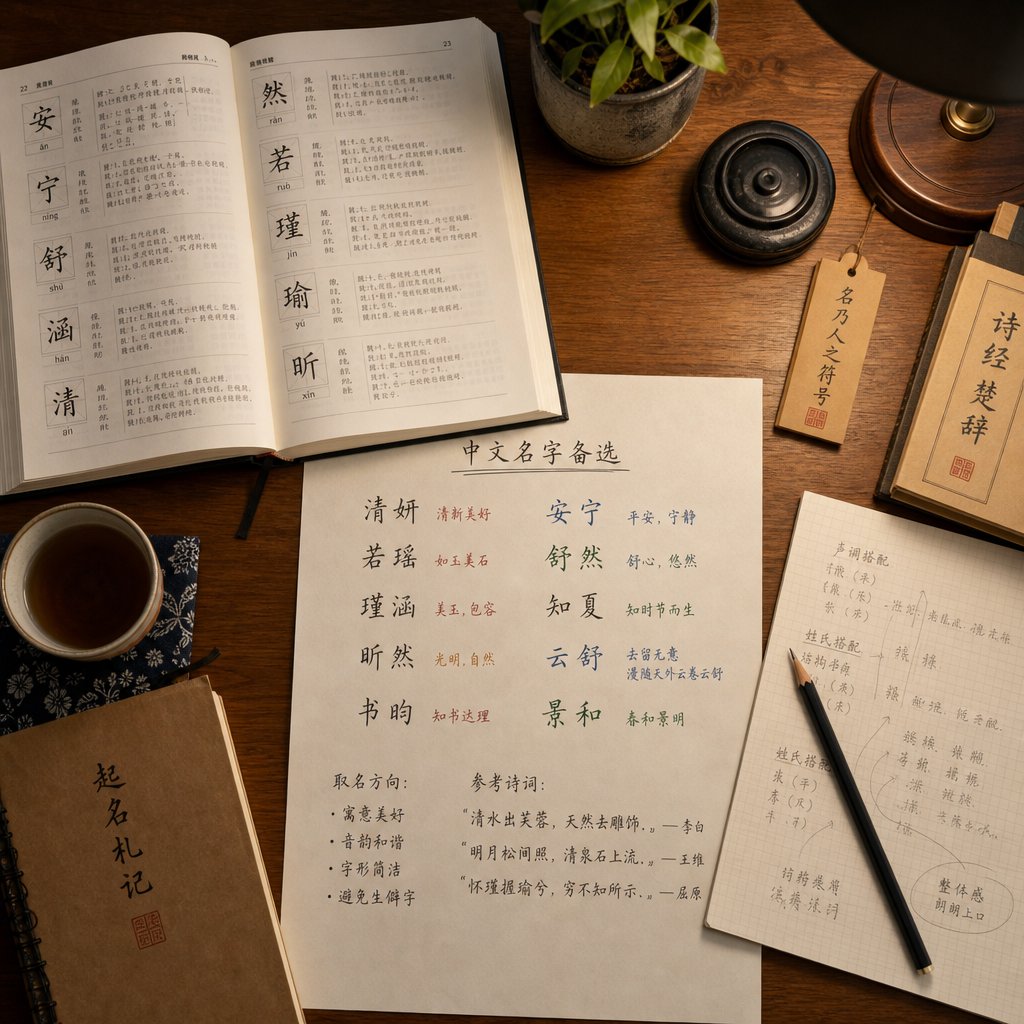
How to Generate a Chinese Name Step by Step
Most online tools marketed as a china names generator or mandarin name generator work by matching English syllables to Chinese characters that sound vaguely similar. The result is a name chosen for phonetics alone, with meaning left entirely to chance. That is the equivalent of picking a tattoo based on how the ink looks without asking what the words say.
A better approach treats name creation as a structured craft. The following process walks you through building a name from the inside out, starting with intention and ending with verification. Whether you are doing a chinese name translation of your existing name's meaning or constructing something entirely new, these six steps keep you from landing on a name that confuses or amuses native speakers.
- Decide on the meaning or quality you want to express. What do you want your name to say about you? Strength, gentleness, ambition, connection to nature? Write down two or three core qualities before touching any character dictionary.
- Select a surname. If you have a family surname, use it. If you are choosing freely, pick a common Chinese surname that either echoes the sound of your existing last name or simply appeals to you. Sticking to the top 100 surnames avoids raising eyebrows.
- Choose given-name characters based on meaning. Search for characters that express your chosen qualities. Pair two characters whose meanings complement rather than repeat each other. "Bright" plus "ambition" creates a richer name than "bright" plus "shining."
- Check tone harmony between characters. Say the full name aloud. Mandarin has four tones, and a name where all characters share the same tone sounds flat and monotonous. Aim for tonal variety, ideally alternating between rising and falling tones for a natural rhythm.
- Verify stroke count balance. A surname with three strokes followed by a given-name character with twenty-three strokes looks visually lopsided when written. Balanced stroke counts create names that are aesthetically pleasing on paper and practical to write quickly.
- Test for unintended homophones. This is the step most people skip and later regret. Say the full name quickly and check whether it sounds like an existing word or phrase with negative meaning. A name that looks elegant in characters but sounds like a word for death, suffering, or a vulgar term will overshadow any good intention behind it.
Start With the Meaning You Want to Express
Imagine you value resilience. You could reach for characters like 韧 (ren, tenacity) or 松 (song, pine tree, which symbolizes endurance through harsh winters). If wisdom matters more, characters like 哲 (zhe, philosophy) or 慧 (hui, intelligence) become your building blocks. The point is that meaning drives every subsequent decision. Without this anchor, you are just browsing a dictionary at random, which is exactly what a basic chinese name gen tool does and why its output often feels hollow.
Select Characters That Complement Each Other
Two given-name characters should work like words in a short poem. They can contrast (pairing something soft like 雨, rain, with something strong like 峰, peak), build on each other (明 bright + 远 far-reaching), or create a scene (林 forest + 溪 stream). What you want to avoid is redundancy. Two characters that both mean "beautiful" waste one slot and make the name feel one-dimensional. A good english to chinese name converter accounts for this by mapping the meaning of your English name rather than just its sound, then finding complementary characters that expand on that meaning.
Test for Tone Flow and Homophone Conflicts
Sounds complex? It is simpler than it seems once you try it aloud. Take a candidate name and speak it at conversational speed five or six times. Does it flow, or does your tongue stumble? Three consecutive fourth-tone characters (all falling sharply) sound harsh and abrupt. A mix of tones, say second tone rising into fourth tone falling, creates the musical quality that makes Chinese names pleasant to hear.
Homophone testing requires a native speaker or at minimum a thorough dictionary check. The character 诗 (shi, poetry) is lovely in a name, but paired with certain surnames it can produce a full-name sound identical to an unfortunate phrase. Chinese name translation tools that only work character-by-character miss these full-name collisions entirely. Always test the complete name as a spoken unit, not just its individual parts.
With these six steps, you have a repeatable framework for building names that hold up across all dimensions: meaning, sound, visual balance, and cultural safety. The next question is which characters to actually choose, and that depends on the thematic direction you want your name to take.
Choosing Characters by Meaning and Theme
Thematic direction is where a name stops being a technical exercise and starts becoming personal. The six-step process gives you the framework, but the characters you select within that framework determine whether your name evokes a mountain landscape, a scholar's study, or a spring morning. Chinese names cluster naturally around recurring themes, and understanding these categories helps you narrow thousands of possible characters down to a focused shortlist.
Below, you will find names in chinese and meanings broken down character by character across four major thematic families. Each example shows how individual characters combine to produce layered significance that native speakers perceive immediately.
Nature-Inspired Chinese Names and Their Characters
Nature imagery is one of the oldest and most enduring sources for chinese girl names and chinese boy names alike. Mountains suggest steadfastness, rivers imply adaptability, flowers signal beauty or transience, and seasons carry their own emotional weight. When you draw from nature, you are tapping into a symbolic vocabulary that Chinese poetry has refined for over two thousand years.
Here are examples of chinese female names rooted in the natural world:
| Characters | Pinyin | Character 1 Meaning | Character 2 Meaning | Combined Name Meaning |
|---|---|---|---|---|
| 雨桐 | Yǔ Tóng | Rain | Paulownia tree | Rain falling on paulownia leaves, evoking gentle elegance |
| 春华 | Chūn Huá | Spring | Splendor, flower | The flourishing beauty of springtime |
| 冬梅 | Dōng Méi | Winter | Plum blossom | Resilience and beauty that blooms in hardship |
| 语汐 | Yǔ Xī | Speech, language | Night tide | Soft-spoken like the murmur of evening waves |
And nature-themed chinese male names that carry weight and presence:
| Characters | Pinyin | Character 1 Meaning | Character 2 Meaning | Combined Name Meaning |
|---|---|---|---|---|
| 浩洋 | Hào Yáng | Vast, grand | Ocean | Boundless as the open sea |
| 沐阳 | Mù Yáng | To bathe in | Sunlight | Bathed in sunshine, warmth and vitality |
| 天阔 | Tiān Kuò | Sky, heaven | Vast, broad | As expansive as an open sky |
| 林溪 | Lín Xī | Forest | Stream | A stream winding through the woods, quiet strength |
Notice how 冬梅 (Winter Plum) works on two levels. Literally, it names a season and a flower. Culturally, the plum blossom is one of the "Four Gentlemen" of Chinese art, symbolizing perseverance because it blooms when everything else is dormant. A native speaker reads both the literal image and the cultural subtext simultaneously.
Virtue and Wisdom Names for Boys and Girls
Virtue-based names express qualities the parents hope the child will embody, or qualities an adult wants to project. This category is especially popular among chinese woman names that emphasize inner character over appearance, and among chinese boy names that signal moral strength rather than physical power.
Examples from a chinese names list female focused on virtue and wisdom:
| Characters | Pinyin | Character 1 Meaning | Character 2 Meaning | Combined Name Meaning |
|---|---|---|---|---|
| 慧颖 | Huì Yǐng | Wisdom, intelligence | Clever, outstanding | Sharp intellect and distinguished talent |
| 欣怡 | Xīn Yí | Joyful, vitality | Harmony, contentment | A joyful and contented spirit |
| 一诺 | Yī Nuò | One | Promise | A person of their word, unwavering integrity |
| 妍雅 | Yán Yǎ | Beauty, grace | Elegance, refinement | Graceful refinement inside and out |
Virtue-themed chinese male names that carry moral weight:
| Characters | Pinyin | Character 1 Meaning | Character 2 Meaning | Combined Name Meaning |
|---|---|---|---|---|
| 俊德 | Jùn Dé | Handsome, outstanding | Virtue, morality | A person of outstanding moral character |
| 浩然 | Hào Rán | Vast, grand | Righteous, natural | Possessing a vast and righteous spirit |
| 明哲 | Míng Zhé | Bright, clear | Philosophy, wisdom | Clear-minded wisdom and philosophical depth |
| 博文 | Bó Wén | Broad, abundant | Literature, culture | Broadly learned and culturally refined |
The name 浩然 (Hào Rán) is worth pausing on. It appears in the writings of Mencius, who described a "vast, righteous qi" (浩然之气) as the energy of someone who lives with moral courage. Parents who choose this name are not just picking pleasant sounds. They are referencing a specific philosophical tradition, and educated Chinese speakers will recognize the allusion instantly. This is the difference between a name that works and a name that resonates.
Poetic Names Drawn From Classical Literature
The richest source material for generating meaningful names comes from classical Chinese poetry and philosophy. The Book of Songs (诗经), Chu Ci (楚辞), and Tang Dynasty poetry have supplied naming inspiration for centuries. A name drawn from a famous poem carries the weight of that entire literary context, much like naming a child "Juliet" in English evokes Shakespeare whether you intend it or not.
Literary chinese girl names and meanings drawn from classical sources:
| Characters | Pinyin | Literary Source | Combined Name Meaning |
|---|---|---|---|
| 婵娟 | Chán Juān | Su Shi's "Water Melody" (水调歌头) | The moon's beauty, grace and elegance |
| 芷若 | Zhǐ Ruò | Chu Ci (楚辞), fragrant herbs imagery | Two aromatic plants symbolizing purity and virtue |
| 诗云 | Shī Yún | Evokes the phrase "诗云" (the poems say) from Confucian classics | Poetic as drifting clouds, literary grace |
Literary chinese male names with classical roots:
| Characters | Pinyin | Literary Source | Combined Name Meaning |
|---|---|---|---|
| 子墨 | Zǐ Mò | Evokes the scholar-ink tradition and Mozi philosophy | A refined person of letters, scholarly elegance |
| 望舒 | Wàng Shū | Chu Ci: the charioteer who drives the moon | Hope and comfort, mythological grace |
| 明煜 | Míng Yù | Classical imagery of radiant light | Brilliant and luminous, shining with inner fire |
When you pull from classical literature, you are doing what traditional Chinese naming practice has always done: searching through the Book of Songs, Chu Ci, and Tang and Song dynasty poetry to find characters that satisfy meaning, sound, and cultural resonance simultaneously. The name 望舒 (Wàng Shū) comes directly from the Chu Ci, where it refers to the mythological figure who drives the moon chariot. A child named Wangshu carries an entire mythological scene in two syllables.
You will notice that many of these examples blur the line between "male" and "female" categories. Names like 子墨 or 诗云 could work for any gender depending on the surname pairing and family preference. This flexibility is part of what makes thematic character selection so powerful. You are not locked into gendered name lists. You are building meaning from components, and the same components can serve different identities depending on context.
The real depth of Chinese naming, though, extends beyond individual choice. Many families do not select characters in isolation. They work within a generational system that connects siblings, cousins, and even ancestors through shared characters passed down across decades.
Generational Names and Family Naming Traditions
That generational system has a name: zibei (字辈). It is one of the most distinctive features of Chinese naming, and it fundamentally changes how you approach generating a name if family heritage is part of the equation.
Understanding Generational Names and Zibei
Here is how it works. A clan selects a shared character that every member of the same generation carries in their given name. Brothers, sisters, and patrilineal cousins all share this character, making it immediately obvious where someone sits in the family hierarchy. The generational character typically occupies the first position of the given name (the chinese name first name slot after the surname), though some families place it second. The remaining character is the personal one, unique to the individual.
So if you encounter three people named 李耀明 (Li Yaoming), 李耀华 (Li Yaohua), and 李耀国 (Li Yaoguo), you can reasonably guess they are siblings or cousins. The shared 耀 (yao, radiance) marks their generation. This practice, which FamilySearch documents extensively, dates back to at least the Jin Dynasty (265-420 CE) and reached its height during the Ming and Qing periods.
How Family Naming Poems Work Across Generations
Families did not just pick generational characters at random. They composed entire poems, called zibei shi (字辈诗), where each successive character in the poem becomes the generational marker for the next generation. These poems typically run in lines of five or seven characters and can span forty or more generations into the future.
The generation poem of Mao Zedong's family, established in 1737 and extended in 1881, reads: 立显荣朝士, 文方运际祥. 祖恩贻泽远, 世代永承昌 — meaning "Celebrity and eminence glorify government officials; knowledge extends the good luck of the state. Ancestral kindness reaches far; prosperity endures through following generations."
Each of the forty characters in that poem provides the generational name for one generation. Mao Zedong belonged to the fourteenth generation, sharing the character 泽 (ze, grace) with his brothers Mao Zemin and Mao Zetan. If you are searching for the meaning of chinese last names and generational characters in your own family, even a few known characters from the poem can act like a fingerprint, helping you trace your lineage back to a specific clan branch and geographic origin.
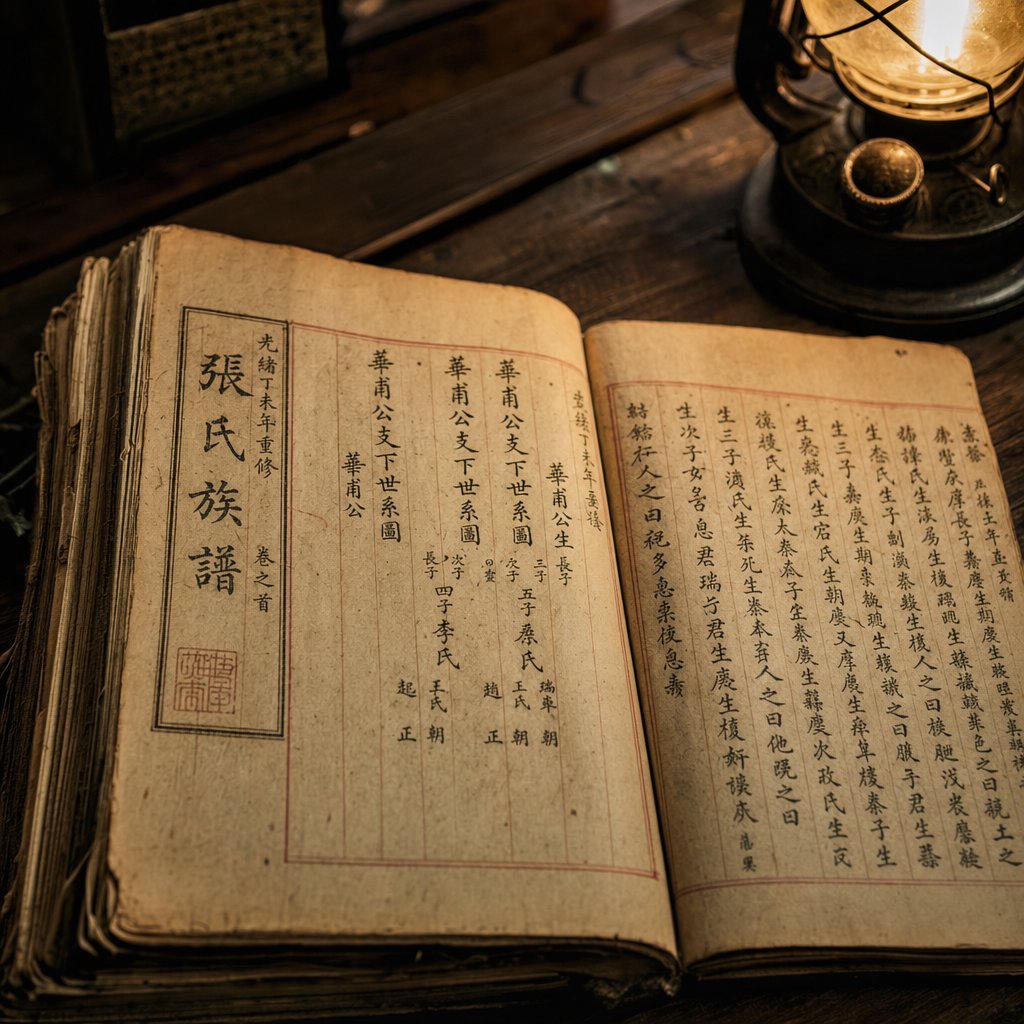
This matters practically. If you are reconnecting with heritage and want to generate a name that honors your family line, you may need to incorporate a specific generational character. No family name generator or automated tool accounts for this. You will need to consult family records, a jiapu (家谱, genealogy book), or older relatives who remember the poem. Even searching for your surname中文 in genealogical databases can surface clan-specific poems that reveal which character belongs to your generation.
Sibling Names That Share Radicals or Themes
Not every family follows a formal poem. A simpler but related tradition gives siblings names that share a common radical, the structural component within a Chinese character. For example, three sisters might receive names where each given-name character contains the water radical (氵): 清 (qing, clear), 澜 (lan, waves), and 沛 (pei, abundant). The characters mean different things, but the shared radical visually and semantically links the siblings together, signaling that they belong to the same family unit.
Other families use thematic connections instead of shared radicals. Siblings might all receive characters drawn from the same classical phrase, or names built around synonyms for a single virtue. Among common chinese names today, you will still find sibling sets where the first name chinese speakers immediately recognize as coordinated: one child named 文博 (broadly learned) and another named 文哲 (philosophically wise), sharing 文 as their generational marker while expressing distinct individual qualities.
These traditions are declining in urban China but remain strong in rural communities, overseas Chinese families, and among those actively maintaining genealogical records. Whether you follow a formal poem or simply coordinate sibling names through shared radicals, the principle is the same: a Chinese name is never just about the individual. It positions a person within a living web of family relationships stretching backward and forward through time.
That web, however, only functions if the name can be spoken correctly. Pronunciation is not a secondary concern in Chinese naming. It is structural, because the same syllable pronounced with a different tone becomes an entirely different character with an entirely different meaning.

Mastering Pinyin Pronunciation for Your Generated Name
Pronunciation is not a secondary concern in Chinese naming. It is structural. The syllable "ma" spoken with a high flat pitch means mother. Spoken with a falling pitch, it means to scold. Spoken with a low dipping pitch, it means horse. Same letters on paper, completely different mandarin characters, completely different name. When you generate a Chinese name, you are not just selecting characters for their visual meaning. You are selecting sounds that carry meaning through pitch.
This is where pinyin comes in. Pinyin is the standard romanization system that maps Chinese sounds to Latin letters, with small marks above vowels indicating which of the four tones to use. If you have ever seen a Chinese word written as "zhōngwén" or "běijīng," you have already encountered pinyin. Those accent marks are not decorative. They are the difference between saying a name correctly and accidentally calling someone something embarrassing.
The Four Tones and Why They Change Everything
Mandarin in chinese is called "zhōngwén" or "pǔtōnghuà," and both terms require precise tones to be understood. The language uses four primary tones plus a neutral (unstressed) tone:
- First tone (high and flat): Your pitch stays steady at the top of your range, like the sound you make saying "aah" at the dentist. Marked with a flat line: ā.
- Second tone (rising): Your pitch rises from middle to high, like the inflection on a one-word question in English: "What?" Marked with a rising line: á.
- Third tone (low and dipping): Your pitch drops low and stays there. In connected speech, it rarely completes the full dip-and-rise pattern textbooks describe. Marked with a curved line: ǎ.
- Fourth tone (falling): Your pitch drops sharply from high to low, like a firm "No!" said to a child reaching for something dangerous. Marked with a falling line: à.
Why does this matter for naming? Because a single pinyin syllable can represent dozens of different characters depending on its tone. The table below shows how one common name syllable produces entirely different name characters and meanings based solely on tone:
| Pinyin | Tone | Character | Meaning in Names | Example Name |
|---|---|---|---|---|
| yù | 4th (falling) | 煜 | Radiant, brilliant light | 明煜 (Míng Yù) |
| yǔ | 3rd (low) | 雨 | Rain, gentle nourishment | 雨桐 (Yǔ Tóng) |
| yú | 2nd (rising) | 瑜 | Fine jade, flawless virtue | 瑜然 (Yú Rán) |
| yū | 1st (high) | 迂 | Roundabout, impractical | Rarely used (negative connotation) |
Imagine choosing the character 雨 (rain, third tone) for your name but consistently pronouncing it with the fourth tone. Native speakers would hear 煜 (radiance) or possibly 遇 (to encounter) instead. Your carefully chosen meaning vanishes the moment the tone shifts. As Hacking Chinese puts it, tones in Mandarin are roughly as important as vowels in English. You cannot ignore them any more than you could ignore vowels and expect to be understood.
How to Read Pinyin Tone Marks on Generated Names
When you see a generated name written in pinyin, the tone mark always sits above the main vowel. For the name 李明哲 (Lǐ Míng Zhé), you read it as: Lǐ with a low third tone, Míng with a rising second tone, Zhé with a rising second tone. The marks tell you exactly where your pitch needs to go.
A few practical rules for reading pinyin to chinese pronunciation:
- When a syllable has two vowels, the tone mark goes on the more "open" vowel (a and e always win; in "ou" it goes on the o; in "iu" it goes on the u).
- The third tone changes in context. Two third tones in a row cause the first one to rise like a second tone. The name 李雨 (Lǐ Yǔ) is actually pronounced closer to "Lí Yǔ" in natural speech.
- Some characters have a neutral tone in compound words, but given-name characters almost always retain their full tone.
If you are unfamiliar with the sounds and want to verify your pronunciation, a phonetic pronunciation generator or pinyin chart with audio can help you hear each syllable spoken by a native speaker. These tools let you input any pinyin syllable and hear all four tonal variations, making it possible to confirm that your name in characters sounds the way you intend.
Making Your Chinese Name Sound Natural When Spoken
Beyond getting individual tones right, a well-constructed name has tonal flow. Say your candidate name aloud several times at conversational speed. You are listening for two things: variety and rhythm.
A name where all characters share the same tone sounds monotonous. Three consecutive fourth tones (all falling sharply) feel abrupt and aggressive. Three consecutive first tones (all high and flat) sound robotic. The most pleasing names alternate between tones, creating a natural rise-and-fall pattern that mirrors how Mandarin sounds in everyday speech.
Consider these contrasts:
- 王明远 (Wáng Míng Yuǎn) — tones 2, 2, 3. The two rising tones flow into a low tone, creating a gentle arc. Pleasant and easy to say.
- 赵世志 (Zhào Shì Zhì) — tones 4, 4, 4. Three sharp falls in a row. Sounds harsh and choppy, like three commands barked in sequence.
The ideal is not a rigid formula but a general principle: mix your tones. A second tone followed by a fourth tone, or a first tone followed by a third tone, creates the kind of melodic contrast that makes a name memorable and comfortable to speak.
There is one more practical consideration. When you romanize my name in mandarin for use on business cards, email signatures, or social media profiles in English-speaking contexts, you will typically drop the tone marks and write plain pinyin. "Lǐ Míngzhé" becomes "Li Mingzhe." This is standard practice, but it introduces ambiguity. Without tone marks, readers unfamiliar with Chinese cannot distinguish between characters that share the same base pinyin. For this reason, always keep a toned-pinyin version of your name alongside the plain romanization. The toned version is your pronunciation key. The plain version is your practical label for contexts where diacritics are not supported.
One common pitfall in transliterating English names into Chinese: forcing English syllables into Chinese sound blocks produces names that sound neither English nor authentically Chinese. The syllable "Matt" becomes 马特 (mǎ tè), which native speakers hear as "horse-special" rather than a name. If your goal is a name that functions naturally in Chinese conversation, build from meaning rather than sound. Let the pronunciation emerge from well-chosen characters rather than trying to reverse-engineer Chinese syllables that approximate English ones.
Tonal awareness also protects you from a subtler danger. Certain tone combinations, when spoken quickly, produce sounds identical to common words or phrases. A name that reads beautifully on paper might, at conversational speed, collapse into a homophone for something unfortunate. This is exactly the kind of cultural landmine that the next section addresses: the naming taboos and sensitivities that separate a respectful name from an inadvertent insult.
Naming Taboos and Cultural Pitfalls to Avoid
A name can carry all the right meaning on paper and still land badly in practice. Chinese naming culture has accumulated centuries of rules about what not to do, and violating them signals either ignorance or disrespect. When you understand chinese symbols and meanings well enough to choose characters intentionally, you also need to understand which combinations cross invisible lines.
Characters and Sounds to Avoid in Chinese Names
Some pitfalls are obvious. No one deliberately puts 死 (death) or 病 (illness) in a name. But the subtler traps catch people constantly. Here are the major categories of naming taboos to check your generated name against:
- Characters with directly negative meanings: Avoid anything associated with misfortune, decay, or suffering. Characters like 败 (defeat), 衰 (decline), and 丧 (mourning) are never appropriate regardless of how they sound.
- Homophone collisions: Two perfectly fine characters can combine into a full name that sounds identical to an unfortunate word. The characters 思 (to think) and 旺 (prosperous) both carry positive meanings individually, but 思旺 (sī wàng) sounds dangerously close to 死亡 (sǐ wáng), meaning death. Always say the complete name aloud quickly and listen for unintended echoes.
- Number-related sounds: The number four (四, sì) sounds like death (死, sǐ), making any character pronounced "si" worth extra scrutiny. In northern China, characters evoking the number two (二, èr) can carry connotations of stupidity.
- Dialect-specific vulgarities: A character that is perfectly neutral in standard Mandarin may carry vulgar meaning in Cantonese, Hokkien, or regional dialects. The character 日 (rì, sun) is a common example. Its chinese name definition is innocent, but in certain regions it doubles as profanity. Similarly, 草 (grass) can take on crude slang meanings in colloquial speech.
- Overly grandiose characters: Naming yourself 帝 (emperor), 圣 (sage), or 天 (heaven) as a standalone given name comes across as presumptuous. These chinese word symbols carry so much weight that using them without careful pairing feels like claiming a status you have not earned. They work in combination (天明, dawn; 圣哲, sagely wisdom) but rarely alone.
The Elder Name Taboo and Historical Naming Rules
One of the most important rules in Chinese naming has nothing to do with meaning or sound. It is relational. You do not use the same characters as your living elders. Not the same character, and in traditional families, not even a different character with the same pronunciation. This reflects a rigid family hierarchy where repeating an elder's name character is perceived as an act of disrespect, as though you are placing yourself on their level.
This taboo has deep historical roots. In imperial Chinese society, the practice of bihui (避讳) made it illegal to write or speak characters from the reigning chinese emperor's name. Scribes rewrote entire documents to avoid the forbidden character. If a common word happened to share a character with the emperor's name, people invented substitutes for everyday use. The name in chinese meaning was so powerful that it could reshape the language itself.
Today, no law enforces bihui. But the family version persists. If your grandfather's name contains the character 明 (bright), using 明 in your own name would raise eyebrows in most Chinese families. This applies even if you are a non-Chinese person generating a name with help from Chinese friends. Ask whether your chosen characters overlap with anyone in their family before finalizing.
A related caution: avoid using the full names of major political figures or historical leaders. Naming yourself 泽东 or 恩来 is not illegal, but it invites uncomfortable comparisons and can seem either satirical or grandiose depending on context.
Generating a Chinese Name With Cultural Respect
If you are not ethnically Chinese, adopting a Chinese name is welcomed in most contexts, particularly if you are living in China, studying the language, or building professional relationships with Chinese colleagues. The key is approaching it as a learner rather than a tourist collecting souvenirs.
A few principles that signal respect:
- Choose a common surname: Picking an obscure or historically loaded surname (like a former imperial chinese dynasty name) when you have no connection to it can feel performative. Stick to the top 100 surnames unless you have a specific reason.
- Let meaning guide you, not novelty: Avoid choosing characters purely because they look exotic or complex. A simple, well-constructed name earns more respect than an elaborate one that a native speaker would never actually use.
- Get feedback from native speakers: Before committing to a name, ask at least two or three Chinese speakers from different regions to read it aloud and share their honest reaction. They will catch dialect issues, homophone problems, and connotations that no dictionary reveals.
- Do not copy a friend's name: In Western cultures, using a friend's name for your child is flattering. In Chinese culture, it is the opposite. Repeating someone's name or even their characters can be perceived as disrespectful.
The chinese name definition you settle on should feel like something you can carry with confidence, not something you need to explain or defend. A name built with awareness of these taboos will not just avoid offense. It will signal to native speakers that you took the time to understand the system, and that respect is often the first thing people notice.
These cultural rules are not static, though. Like everything in a living language, Chinese naming conventions have shifted dramatically in recent decades, shaped by policy changes, pop culture, and globalization.
Modern Chinese Naming Trends That Shape Generation Choices
Policy changes, pop culture, and the internet have reshaped Chinese naming in ways that would have been unrecognizable just two generations ago. If you are trying to generate a Chinese name that feels contemporary rather than archaic, understanding these shifts helps you calibrate your choices. A name that follows every classical rule but ignores modern sensibilities can sound dated, like naming an American child Gertrude in 2025.
How the Single-Child Era Changed Chinese Naming
For roughly three decades, most urban Chinese families had one shot at naming. One child meant one name to carry the full weight of parental aspiration, family legacy, and cultural identity. The result? Parents invested extraordinary effort into that single name. Where previous generations might have named three or four children with simple, practical names like 建国 (Build the Nation) or 强 (Strong), single-child parents pored over classical texts, consulted fortunetellers, and debated character combinations for months.
This intensity produced a measurable shift in naming patterns. Single-character given names, once common for their simplicity, declined sharply. Why settle for one character when you only have one child to name? Two-character given names became the overwhelming standard, allowing parents to layer multiple meanings into a single name. A child named 思远 (Sī Yuǎn, thinking far) carries both intellectual aspiration and a sense of ambition that a single character could not express alone.
The policy also concentrated naming creativity. With no siblings to name, parents did not need to save good characters for future children or coordinate generational themes. Every appealing character was available for that one name. This partly explains why chinese names girl and boy alike became more elaborate and literary during this period, drawing from poetry and philosophy rather than simple descriptive qualities.
Four-Character Names and Breaking Convention
One of the most visible breaks from tradition is the rise of four-character names. Traditionally, Chinese names are two or three characters total. Four-character names were reserved almost exclusively for compound surnames like 司马 (Sīmǎ) or 欧阳 (Ōuyáng) followed by a two-character given name. But starting in the early 2000s, some parents began creating four-character names with single-character surnames, effectively giving their children three-character given names.
Why? Uniqueness. In a country where nearly 290,000 newborns in a single year shared the name Zhang Wei, parents grew desperate to differentiate their children. Adding a fourth character exponentially reduces the chance of duplication. A name like 王子睿轩 (Wáng Zǐ Ruì Xuān) is statistically unlikely to be shared by anyone else in the country.
These names remain controversial. Older generations sometimes view them as pretentious or confusing, since four characters traditionally signal a compound surname. School registration systems and official forms occasionally struggle with the extra character. Still, the trend reflects a real cultural shift: individual uniqueness now competes with tradition as a naming priority.
Pop Culture and Global Influences on Modern Names
Chinese naming has always reflected the spirit of its era. Names from the 1950s echo patriotic fervor. Names from the 1980s favor characters like 伟 (great) and 强 (powerful), reflecting the ambition of China's reform period. Names from the 1990s lean toward romanticized characters like 梦 (dream) and 雨 (rain), influenced by Hong Kong and Taiwanese pop culture.
Today, the influences are more diverse than ever. Recent newborn name data from provinces like Sichuan and Yunnan shows names like 锦程 (Jǐnchéng, splendid prospects) and 砚舟 (Yànzhōu, inkstone boat) trending among new parents. These names draw from classical idioms and Song Dynasty poetry, reflecting a broader cultural revival where young parents treat naming as an expression of traditional aesthetic identity. As cultural sociologist Xu Shumin noted, this is not merely a pursuit of uniqueness but a sign that post-1990 parents are reclaiming traditional culture as a living practice in everyday life.
At the same time, global exposure introduces new patterns. Some parents select female chinese names like 安琪 (Ānqí), a phonetic approximation of "angel" in English. Others choose characters that translate well across cultures, picking names that sound natural in both Mandarin and English conversation. For chinese names boy options, characters with strong cross-cultural resonance like 凯 (kǎi, triumph) or 瑞 (ruì, auspicious) have grown popular partly because they pair well with English names.
The preference for gender-neutral names is another modern development worth noting. Instead of defaulting to traditionally masculine characters for boys or delicate floral imagery for girls, many parents now select names with unisex meaning. Characters like 晨 (chén, morning), 熙 (xī, bright), and 安 (ān, peace) work across genders. The name 晨熙 (Chénxī, morning sun) appeared on both male chinese given names and female chinese names trending lists in recent years, reflecting a deliberate move away from rigid gender signaling.
Here are the key emerging trends shaping how people generate names today:
- Classical revival: Post-1990 parents draw heavily from ancient poetry and philosophy, producing names like 扶苏 (Fúsū, from the Book of Songs) and 砚舟 (Yànzhōu, from Song Dynasty verse) that carry deep literary resonance.
- Algorithmic assistance: Online platforms let parents input a surname, expected birth date, and preferences to receive computer-generated suggestions within minutes, a modern version of consulting a fortuneteller.
- Uniqueness verification: Public security bureaus in provinces like Guangdong now offer name-search tools that show how many residents share a given name, helping parents avoid the most common combinations.
- Cross-cultural compatibility: Parents increasingly consider how a name will function internationally, choosing characters whose pinyin romanization is easy for non-Chinese speakers to pronounce.
- Gender fluidity: The binary of "strong" male names and "beautiful" female names is softening, with chinese names male and female categories increasingly sharing characters that emphasize universal qualities like wisdom, light, and resilience.
- Maternal surname inclusion: With the relaxation of the one-child policy, some families give a second child the mother's surname, creating four-character names that honor both family lines.
These trends do not invalidate the traditional rules covered earlier. They layer on top of them. A name like 砚舟 still follows classical principles of tonal harmony, meaningful character pairing, and literary allusion. It simply draws from a broader palette of acceptable choices than previous generations would have considered. The fundamentals of stroke balance, homophone avoidance, and complementary meaning remain as relevant as ever, even when the specific characters trending in nurseries shift from decade to decade.
What all these trends share is a common thread: intentionality. Whether parents are consulting ancient poetry or checking a database for uniqueness, the act of generating a name remains deeply deliberate. The tools and references have changed, but the underlying belief that a name shapes identity has not. That belief is exactly what makes practical guidance so valuable, especially when the person generating the name has a specific use case in mind.

Practical Use Cases for Your Generated Chinese Name
Intentionality looks different depending on why you need the name in the first place. A novelist building a Tang Dynasty character has completely different constraints than an expat preparing for a first day at a Shanghai office. The structural rules, tonal principles, and cultural taboos covered so far apply universally, but how you weight them shifts based on your specific situation. Below is tailored guidance for the four most common reasons people set out to put their name in chinese or create one from scratch.
Generating Chinese Names for Fiction and Worldbuilding
Fiction writers face a unique challenge. You are not just picking a name that sounds pleasant. You are encoding information for readers. A Chinese-speaking audience reads character last names and given names the way English readers read "Lord Ashworth" versus "Billy Joe." The name signals era, class, education, and personality before the character speaks a single line of dialogue.
- Signal time period through naming conventions: Characters set in imperial China should have style names (zi) alongside their given names. A Three Kingdoms-era warrior might be addressed by peers using his style name as a sign of respect, while superiors use his given name to assert authority. Modern characters would not have style names at all.
- Use surname rarity to indicate social class: Common surnames like Wang or Li suggest ordinary backgrounds. Compound surnames like Sima or Zhuge immediately evoke aristocratic or scholarly lineage. An unusual single-character surname like Qi or Zuo can suggest regional specificity.
- Match character complexity to education level: A peasant farmer in historical fiction would carry a simple, earthy name with common characters. A scholar-official would have a name drawn from classical poetry with characters that require education to recognize. Readers notice this instantly.
- Avoid anachronistic naming patterns: A character born in 1940s China named 梓涵 (Zǐhán) breaks immersion immediately for Chinese readers, since that name belongs to the 2010s naming trend. Research which characters were popular in your story's era.
- Use meaning as foreshadowing: Chinese readers will pick up on a villain named 暗锋 (dark blade) or a doomed character named 落霞 (falling sunset). Subtler choices like 守拙 (guarding simplicity) reward attentive readers without being heavy-handed.
An asian name generator can give you raw material to start with, but it cannot make these narrative decisions for you. The best approach is to build a shortlist of characters appropriate to your story's period and setting, then select combinations that do double duty as both realistic names and narrative tools.
Choosing a Chinese Name as a Language Learner or Expat
When you are living in China or Taiwan and introducing yourself dozens of times a week, your Chinese name becomes a practical tool. It needs to be easy to remember, easy to pronounce, and ideally a conversation starter rather than a conversation stopper. The question "what is my name in chinese" has a different answer depending on whether you want a phonetic approximation of your English name or something built entirely from meaning.
- Prioritize pronounceability over cleverness: A name you cannot say confidently defeats its own purpose. As one expat in Taiwan discovered after choosing Shi Zhenkang, even a well-constructed name can trip you up if the tone combinations are difficult for your current skill level. Practice saying your candidate name fifty times before committing.
- Keep it to two or three characters total: Resist the temptation to pack in meaning. A three-character name (surname plus two-character given name) is standard and expected. Anything longer draws unnecessary attention.
- Choose characters with personal resonance: Your name in chinese language should reflect something genuine about you. If you value curiosity, a character like 探 (tàn, to explore) says more than a generic "beautiful" or "strong" character. Locals will ask what your name means. Having a real answer builds connection.
- Avoid direct transliteration of your English name: Forcing English syllables into Chinese characters almost always produces something that sounds foreign to native ears. "Matthew" becoming 马修 (mǎ xiū, horse-repair) is functional but carries no meaning a Chinese speaker would associate with a name. Building from meaning produces names that feel native.
- Test across dialects if possible: If you will spend time in both Mandarin-speaking and Cantonese-speaking regions, check that your name does not carry negative connotations in either dialect system.
The practical payoff is real. A well-chosen Chinese name removes a barrier in every interaction. Forms that cannot accommodate long Western names suddenly work. Colleagues remember you more easily. And the act of choosing the name itself, especially if you involve Chinese friends in the process, becomes a relationship-building exercise that signals genuine investment in the culture.
Naming a Child With Cross-Cultural Considerations
Parents navigating two cultures face the most complex version of this challenge. You are not just picking a name for today. You are choosing something your child will carry through school in one country, family gatherings in another, and professional life that may span both. The question of how to name your asian baby when the family bridges Chinese and Western cultures requires balancing multiple competing priorities.
- Decide early whether the Chinese name will be the legal name: In some countries, you can register a Chinese name as the official legal name. In others, you will need a romanized version for documents and a character version for family use. This decision affects how much weight you place on cross-linguistic compatibility.
- Consult grandparents before finalizing: In Chinese families, grandparents traditionally have significant input on naming. Even if you ultimately choose something different, asking first shows respect and avoids family friction. They may also know the generational poem (zibei) that determines which character your child's generation should carry.
- Consider how the name sounds in both languages: Some names work beautifully in both contexts. 凯文 (Kǎiwén) sounds close to "Kevin" while meaning "triumphant culture" in Chinese. 安娜 (Ānnà) approximates "Anna" while carrying the meaning of peace and grace. These bridge names let a child move between cultures without constantly switching identities.
- Avoid characters that create awkward romanizations: The pinyin "Shi" looks straightforward but gets mispronounced constantly in English-speaking countries. Characters whose pinyin romanization reads naturally in English (like Kai, Lin, or Ming) reduce friction in international contexts.
- Balance uniqueness with usability: A highly unusual name stands out, but it also means your child will spend a lifetime spelling and explaining it. The sweet spot is a name that is distinctive without being bizarre, meaningful without being obscure.
For families where one parent is not Chinese, the english to chinese name process often works best as a collaborative exercise. One parent contributes cultural knowledge and character literacy. The other contributes perspective on how the name will function in English-speaking environments. The result is stronger than either could produce alone.
There is one more audience that deserves specific attention: people reconnecting with Chinese heritage after a generational gap. If your grandparents emigrated decades ago and the family naming traditions were not passed down, generating a name becomes an act of recovery rather than creation. Start by gathering whatever family records exist, even partial ones. A single known generational character can unlock an entire clan poem. Genealogical databases indexed by surname can surface naming poems specific to your family's region of origin. And if no records survive, choosing characters that honor the values your family carried forward, even without the formal system, is itself a meaningful act of connection.
Whatever your use case, the underlying principle remains the same. A Chinese name built with understanding, whether for a fictional character, a new life abroad, a child, or a reconnection with roots, carries weight that a randomly assembled string of characters never will. The time you invest in learning the system is the time that separates my name is in chinese as a curiosity from my name in chinese as an identity.
Frequently Asked Questions About Generating Chinese Names
1. How do I generate a Chinese name that sounds natural to native speakers?
Start by choosing a meaning or quality you want to express, then select characters that complement each other in both meaning and tone. A natural-sounding Chinese name alternates between Mandarin's four tones rather than repeating the same tone across all characters. After selecting characters, say the full name aloud at conversational speed multiple times to check for tonal flow, and ask native speakers from different regions to confirm it does not produce unintended homophones or carry negative connotations in any major dialect.
2. What is the structure of a Chinese name?
A Chinese name typically consists of two or three total characters. The surname (family name) always comes first and is usually a single character, followed by a one or two-character given name. Three-character names are the most common today because they allow richer layered meaning and reduce duplication in a population of over 1.4 billion. The top 100 surnames cover roughly 85 percent of the Chinese population, so the given name carries most of the creative and personal weight.
3. Can a non-Chinese person adopt a Chinese name without being disrespectful?
Yes, adopting a Chinese name is welcomed in most contexts, especially for expats, language learners, and professionals working with Chinese colleagues. The key is approaching it with genuine understanding rather than novelty. Choose a common surname from the top 100, let meaning guide your character selection rather than visual complexity, and get honest feedback from multiple native speakers before committing. Avoid copying someone else's name or choosing historically loaded characters like imperial dynasty names without a personal connection to them.
4. Why should I avoid transliterating my English name directly into Chinese?
Direct transliteration forces English syllables into Chinese sound blocks, producing names that sound foreign and often carry unintended literal meanings. For example, 'Matthew' becomes ma xiu (horse-repair), which native speakers hear as random words rather than a proper name. Building a Chinese name from meaning instead of sound produces something that functions naturally in conversation, is easier for Chinese speakers to remember, and carries intentional significance rather than accidental absurdity.
5. What are generational names (zibei) and do I need one?
Generational names are a tradition where all family members of the same generation share one character in their given name, determined by a family poem that can span forty or more generations. You need to consider a generational character if you are reconnecting with Chinese heritage or naming a child within a family that maintains this practice. Consult older relatives or family genealogy records (jiapu) to find out whether your family has an active generational poem and which character belongs to your generation.