What the Harmony Chinese Character 和 Really Means
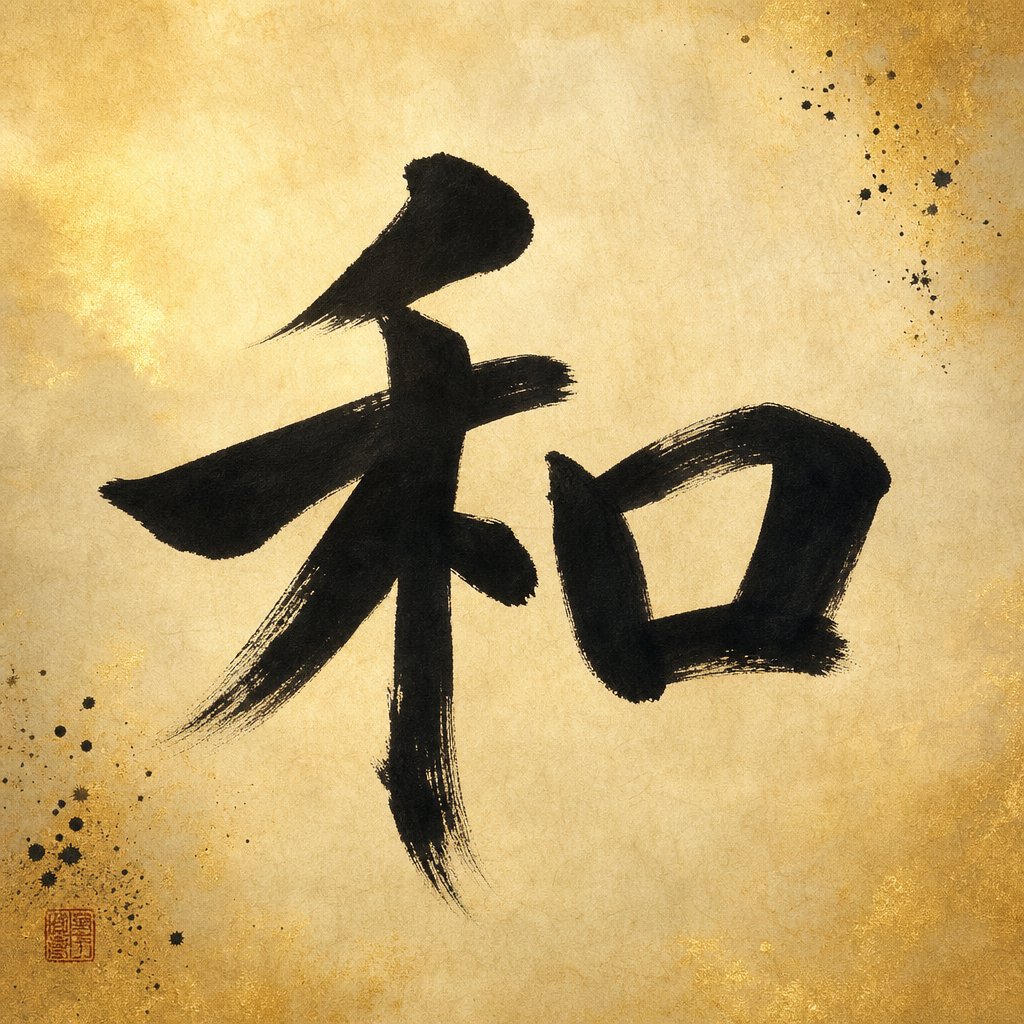
If you've ever searched for the Chinese character for harmony, one answer rises above the rest: 和 (hé). It's the character you'll find in philosophy texts, political slogans, personal names, and everyday greetings. But its meaning runs far deeper than a single English translation can capture.
Character: 和 | Pinyin: hé | Core Meaning: harmony, peace, gentle | Radical: 口 (mouth) | Stroke Count: 8 | HSK Level: HSK 1
Defining 和 as the Chinese Character for Harmony
At its most basic level, 和 means harmony, peace, or gentleness. It functions as a noun, an adjective, a conjunction (similar to "and"), and even a verb depending on pronunciation. You'll encounter it in compounds like 和平 (peace), 和谐 (harmonious), and 温和 (mild or gentle). For language learners, it's one of the first characters introduced in HSK 1 vocabulary, yet its full depth takes years to appreciate.
The 和 meaning extends well beyond "harmony" in the Western sense. Where English treats harmony as a musical or social concept, 和 in Chinese carries philosophical weight rooted in thousands of years of Confucian, Daoist, and Buddhist thought. It describes a state where differences coexist without conflict, where opposing forces find balance rather than dominance.
Why One Character Carries So Many Layers
Imagine a single word that works as a greeting, a political ideal, a cooking instruction, and a winning call in mahjong. Sounds impossible? That's exactly what 和 does in Mandarin Chinese. It holds five distinct pronunciations, each unlocking a different meaning and grammatical role.
This layered richness isn't accidental. The harmony chinese character evolved over millennia, absorbing cultural values at every stage. Its very structure, built from two radicals representing grain and mouth, tells a story about what ancient Chinese society considered essential for peaceful coexistence.
Understanding 和 means understanding a core value that shapes Chinese communication, relationships, and worldview. The character's physical composition offers the first clue to why it carries so much meaning, and that story begins with what's hidden inside its eight strokes.
Etymology and Radical Breakdown of 和
Every Chinese character tells a visual story, and the he chinese character 和 is one of the most elegant examples. Strip away the modern brushstrokes and you'll find two ancient pictures fused together, each carrying a message about what humans need to live in peace.
The Two Radicals Inside 和
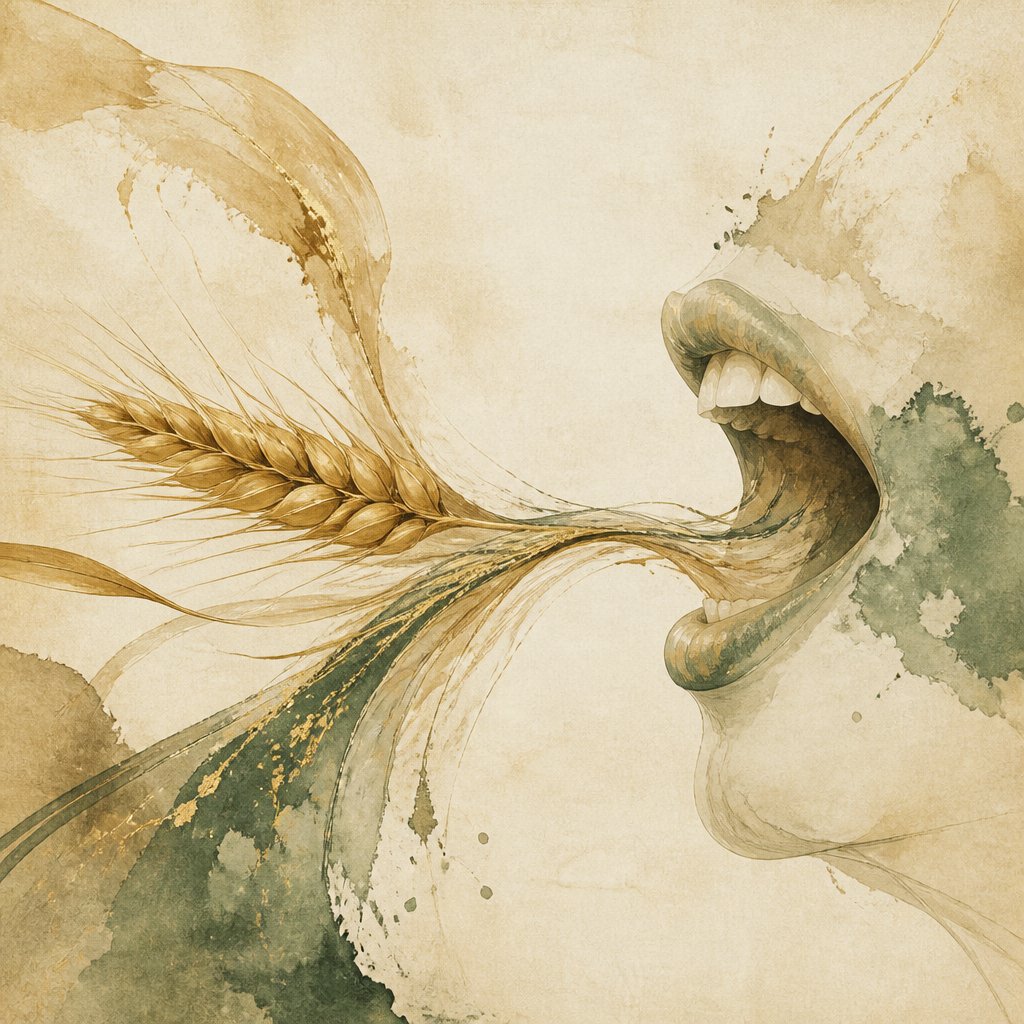
Look closely at 和 and you'll notice it splits neatly into two parts. On the left sits 禾 (hé), the radical for grain or cereal crops. On the right stands 口 (kǒu), the character for mouth. As a phono-semantic compound, 禾 serves double duty here: it provides both the phonetic hint (hé) and a layer of meaning.
Picture it this way. Grain represents food, sustenance, and a stable harvest. Mouth represents speech, expression, and the ability to communicate. Put them together and you get a powerful idea: when people have enough to eat and the freedom to speak, harmony naturally follows. That's the etymological logic baked into this chinese character for he.
- Total stroke count: 8 strokes
- Left radical: 禾 (hé) — grain, cereal, rice plant (5 strokes)
- Right component: 口 (kǒu) — mouth (3 strokes)
- Character category: Phono-semantic compound
- Phonetic component: 禾 (hé), which gives the character its primary pronunciation
- Stroke order sequence: horizontal, vertical, short left-falling, dot, horizontal (禾), then vertical, horizontal-turn, horizontal (口)
This structure reveals something about ancient Chinese priorities. Harmony in chinese writing wasn't an abstract philosophical ideal first. It was grounded in material reality: a fed community that can talk through its problems is a community at peace.
From Oracle Bones to Modern Strokes
The character 和 didn't always look the way it does in modern print. Its earliest ancestors appeared on oracle bone inscriptions during the Shang Dynasty (roughly 1600-1046 BCE), where characters were carved into turtle shells and animal bones for divination. In these archaic forms, the grain radical appeared as a more literal sketch of a drooping cereal plant, and the mouth component was a simple square opening.
By the time bronze inscriptions and seal script emerged during the Zhou Dynasty, the character had become more stylized. The grain stalk grew more angular, and the mouth settled into its familiar box shape. Through clerical script (隶书) in the Han Dynasty, the flowing curves gave way to the flatter, more efficient strokes we recognize today in standard script (楷书).
What stayed constant across every era was the pairing of grain and mouth. No matter how scribes reshaped the brushwork, the core visual metaphor survived: sustenance plus expression equals coexistence. That consistency across three thousand years of writing evolution tells you how deeply this concept is wired into Chinese cultural memory.
The physical form of 和 gives you its origin story. But the character's real complexity emerges when you hear it spoken aloud, because those same eight strokes produce not one, not two, but five completely different pronunciations, each unlocking a separate meaning.
Five Pronunciations and Multiple Meanings of 和
Most learners meet 和 as he in Mandarin, pronounced with a rising second tone (hé), meaning "and" or "harmony." That's the version textbooks introduce in week one. What they rarely mention is that this single character has four additional pronunciations, each carrying a completely different meaning and grammatical role. Same strokes, same ink, five separate words.
This isn't a quirk or an exception. Chinese is full of characters with multiple readings, but 和 stands out because its five pronunciations span such wildly different contexts, from poetry to cooking to mahjong. Understanding all five gives you a much richer grasp of how this character actually lives in the language.
All Five Pronunciations of 和 Explained
Here's the full picture. Each pronunciation changes the tone, the meaning, and the part of speech. Think of them as five different words that happen to share the same written form.
| Pinyin | Tone | Meaning | Part of Speech | Example Sentence |
|---|---|---|---|---|
| hé | 2nd (rising) | harmony, peace, gentle; "and" | Noun, Adjective, Conjunction, Preposition | 我和你是朋友。(You and I are friends.) |
| hè | 4th (falling) | to compose a poem in reply; to chime in | Verb | 他和了一首诗。(He composed a poem in reply.) |
| huó | 2nd (rising) | to mix with liquid; to knead | Verb | 请帮我和面。(Please help me knead the dough.) |
| huò | 4th (falling) | to mix, to blend (dry ingredients or medicine) | Verb | 把药和一下。(Mix the medicine.) |
| hú | 2nd (rising) | to win a hand (in mahjong) | Verb | 我和了!(I won! [in mahjong]) |
Notice how the first pronunciation (hé) does the heavy lifting. It's the one you'll encounter in 95% of daily reading and conversation. The others are specialized, but they appear often enough that ignoring them creates real confusion, especially huó in cooking contexts and hú at any mahjong table.
Grammatical Functions from Conjunction to Noun
What makes he in chinese mandarin particularly tricky for learners is that even within its primary pronunciation (hé), the character shifts between grammatical roles depending on context. The same sound, the same tone, but a different function in the sentence.
- Conjunction ("and"): 我和你 (wǒ hé nǐ) — you and I. This is the most common use in modern Mandarin, connecting nouns or noun phrases.
- Adjective ("gentle, mild"): 温和 (wēnhé) — gentle, mild. Describes a person's temperament or weather conditions.
- Noun ("harmony, peace"): 和平 (hépíng) — peace. Here 和 contributes its core meaning as a concept.
- Preposition ("with"): 我和他说了 (wǒ hé tā shuō le) — I spoke with him. Functions similarly to "with" in English.
- Verb ("to mix"): Only in the huó and huò readings, where it becomes an action word for blending ingredients.
The conjunction role deserves special attention. When you see 和 connecting two nouns, it works like English "and," but with a key difference: it typically links only nouns and pronouns, not verbs or clauses. You wouldn't use 和 to say "I ran and jumped." That's a common mistake learners make when treating it as a direct equivalent of "and."
The hè pronunciation opens up a literary world. In classical Chinese poetry, poets would write response poems to each other, matching the rhyme scheme and tone pattern of the original. This practice, called 唱和 (chànghè), was a form of intellectual dialogue. When you "hè" a poem, you're harmonizing with another poet's voice, echoing the character's deeper meaning even in this specialized usage.
Then there's hú, the mahjong call. When a player completes a winning hand, they shout 和了 (hú le). It might seem disconnected from harmony, but the logic is there: a winning hand means all tiles have come together in a complete, balanced set. Everything fits. That's harmony expressed through a game.
These five readings reveal something fundamental about how Chinese characters work. A single written form can encode an entire family of related concepts, connected by a thread of meaning that stretches from cosmic balance to kneading bread dough. The philosophical weight of 和 doesn't exist in isolation. It grew from centuries of thinkers who built entire ethical systems around this one idea of harmonious coexistence.
和 in Classical Chinese Philosophy
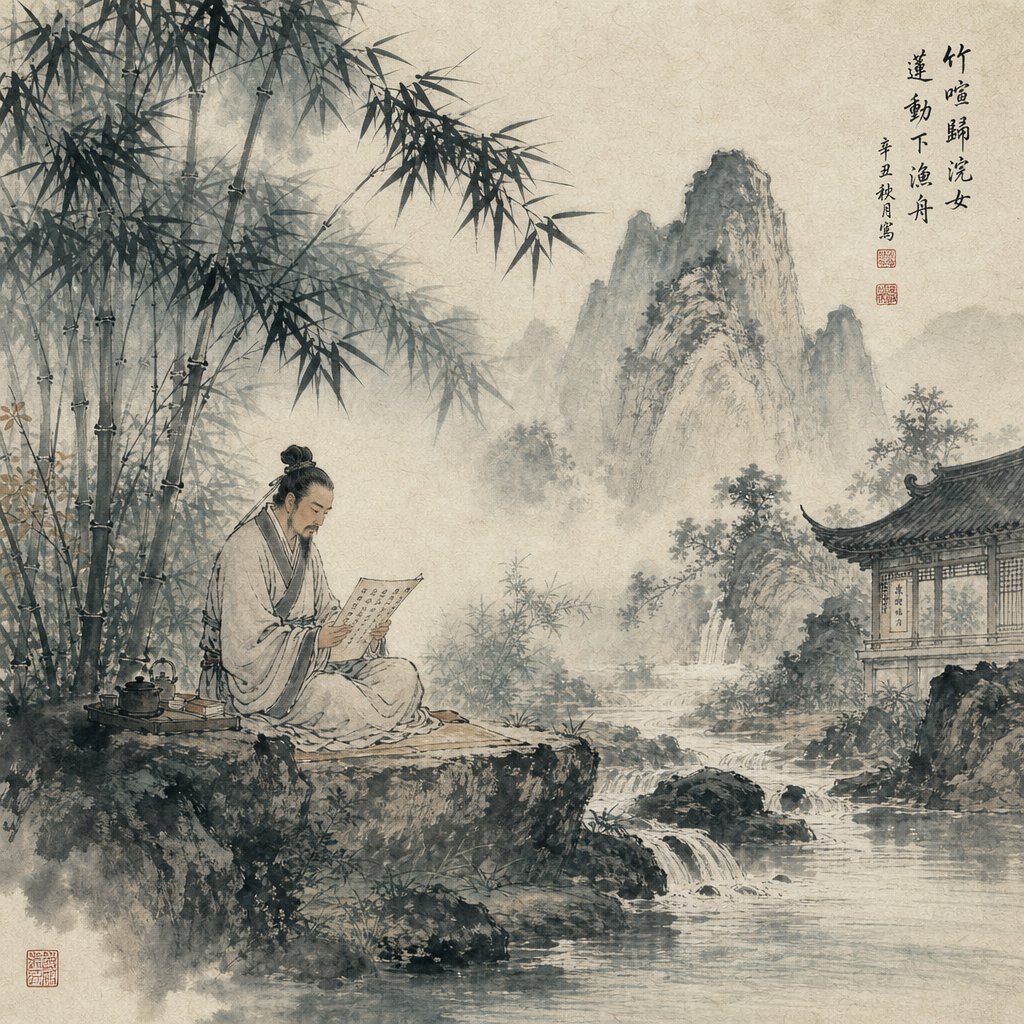
The five pronunciations of 和 show how the character functions in language. But language doesn't exist in a vacuum. The reason 和 carries such weight in modern Chinese is that philosophers spent centuries building entire ethical and cosmological systems around it. Three foundational texts, the Analects, the Liji (Book of Rites), and the Daodejing, each approach harmony in chinese thought from a different angle, yet all treat 和 as something close to a universal principle.
和 in Confucian Thought and the Liji
The most quoted Confucian statement on harmony comes from Analects 13.23, where Confucius draws a sharp line between genuine harmony and mere agreement.
子曰:君子和而不同,小人同而不和。(Zi yue: junzi he er bu tong, xiaoren tong er bu he.) "The gentleman harmonizes, and does not merely agree. The petty person agrees, but he does not harmonize."
Read that again slowly. Confucius isn't saying harmony means everyone thinks the same thing. He's saying the opposite. A person of integrity maintains their own perspective while coexisting respectfully with differing views. Someone who simply goes along with the crowd, nodding at everything, isn't harmonious at all. They're just compliant. This concept, 和而不同 (he er bu tong, harmony without uniformity), remains one of the most influential ideas in Chinese political and social discourse.
The Analects also contains an earlier passage (1.12) where Master You states that in the practice of ritual, "harmonious ease" (和为贵, he wei gui) is what matters most. Ritual without warmth becomes rigid formality. Harmony chinese thinkers argued, gives ceremony its life.
The Liji takes this further by connecting 和 to cosmic order through music. In the Yue Ji (Record of Music) chapter, the text describes how music functions as a mirror of governance and natural balance.
乐者,天地之和也。(Yue zhe, tiandi zhi he ye.) "Music is an echo of the harmony between heaven and earth."
This isn't a metaphor about pleasant melodies. The Liji's Yue Ji chapter argues that when a ruler governs well, the music of his era sounds composed and joyful. When governance fails, music turns angry and sorrowful. Harmony in this framework isn't just interpersonal. It's structural. It connects the ruler's virtue to the sounds people produce, and those sounds to the rhythms of heaven and earth.
The Yue Ji states it plainly: "Ceremonies afforded the defined expression for the people's minds; music secured the harmonious utterance of their voices." In other words, ritual (礼, li) creates order through distinction, while music (乐, yue) creates unity through 和. The two work as complementary forces. Distinction without harmony leads to coldness and separation. Harmony without distinction collapses into chaos. Together, they produce what the text calls the "method of kingly rule."
Daoist Harmony as Natural Balance
Where Confucian thought locates harmony in social relationships and ritual practice, Daoism finds it in the structure of nature itself. The Daodejing, attributed to Laozi, presents 和 as the equilibrium that emerges when opposing forces (yin and yang) interact without one dominating the other.
万物负阴而抱阳,冲气以为和。(Wanwu fu yin er bao yang, chong qi yi wei he.) "All things carry yin and embrace yang; through the blending of qi, they achieve harmony." — Daodejing, Chapter 42
This passage frames harmony 中文 speakers still reference today as something that isn't imposed from outside. It arises naturally when opposing energies find their balance. You don't force harmony into existence. You create the conditions for it to emerge. That's a fundamentally different approach from the Confucian model, which relies on education, ritual, and conscious moral effort.
Daoist philosophy emphasizes living in accordance with the Dao, the fundamental principle underlying all things. The concept of "unity of heaven and humanity" (天人合一, tian ren he yi) captures this idea: humans aren't separate from nature's patterns but embedded within them. When people stop forcing outcomes and align with natural rhythms, 和 appears on its own.
These two philosophical streams, Confucian and Daoist, don't contradict each other so much as address different scales of the same question. Confucius asks: how do individuals live together harmoniously in society? Laozi asks: how does the universe itself maintain balance? Both answers point back to 和 as the central principle, whether achieved through cultivated virtue or through yielding to natural flow.
The philosophical depth behind this single character explains why it appears in so many modern compounds and idioms. It's not just a word. It's a condensed argument about how the world should work. And that argument becomes even clearer when you compare 和 to the other Chinese characters that also translate as "harmony," each capturing a slightly different shade of the same ideal.
Comparing Chinese Characters for Harmony
If you look up the chinese word for harmony in a dictionary, you won't find just one result. Mandarin has several characters that orbit the concept of harmony, each illuminating a different facet of togetherness. Knowing which one to use, and when, separates a textbook understanding from genuine fluency.
Think of it this way. English has "harmony," "unity," "accord," "concord," and "rapport." They overlap, but you wouldn't swap them freely. The same logic applies in Chinese, except the distinctions are encoded at the character level, visible in the radicals and compounds each one forms.
和 vs 合 vs 谐 — Distinct Nuances
Five characters appear most often when expressing harmony-related ideas in Chinese. Each carries a unique emotional texture and fits into different social, political, or interpersonal contexts. The table below breaks down their core differences.
| Character | Pinyin | Core Meaning | Usage Context | Example Compound |
|---|---|---|---|---|
| 和 | hé | Gentle coexistence; peace through balance | Philosophy, diplomacy, everyday speech ("and") | 和平 (hépíng) — peace |
| 合 | hé | Combination; coming together as one unit | Teamwork, business partnerships, physical joining | 合作 (hézuò) — cooperation |
| 谐 | xié | Coordinated rhythm; things working in sync | Music, social systems, humor (homophonic wordplay) | 和谐 (héxié) — harmonious |
| 睦 | mù | Neighborly goodwill; friendly relations | Family bonds, community ties, diplomatic friendliness | 和睦 (hémù) — amicable, harmonious (of relationships) |
| 融 | róng | Melting together; dissolving boundaries | Cultural integration, finance, blending of ideas | 融合 (rónghé) — fusion, integration |
Notice something interesting? Several of these characters pair with 和 to form compound words. The chinese character harmony concept is so central that other harmony-adjacent characters lean on it to complete their meaning. 和谐 combines gentle coexistence (和) with coordinated rhythm (谐). 和睦 pairs balance (和) with neighborly warmth (睦). The character 和 acts as a gravitational center that pulls related concepts into its orbit.
When to Use Each Harmony Character
Choosing the right chinese symbol for harmony depends entirely on what kind of togetherness you're describing. Here's how to think about each one in practice:
- 和 (hé) — Use when describing a state where different elements coexist peacefully without losing their individual identity. It's the philosopher's harmony: diversity held in balance. You'll see it in 和平 (peace), 温和 (gentle), and 平和 (placid).
- 合 (hé) — Use when separate things merge into a functional whole. It emphasizes the act of joining rather than the quality of coexistence. Think 合作 (cooperation), 合同 (contract), 合并 (to merge). Where 和 preserves difference, 合 erases it in favor of unity.
- 谐 (xié) — Use when things move in coordinated rhythm, like instruments in an orchestra or gears in a machine. It implies synchronization and proportion. Beyond 和谐 (harmonious), you'll find it in 谐音 (homophone) and 诙谐 (humorous), where the "coordination" is between sound and meaning.
- 睦 (mù) — Use for warm, personal relationships between neighbors, family members, or nations on friendly terms. It's harmony with a human face. 和睦相处 (hémù xiāngchǔ) means "to get along harmoniously," and 睦邻 (mùlín) means "good-neighborly."
- 融 (róng) — Use when boundaries dissolve completely. Originally meaning "to melt," it describes integration so thorough that the original parts become indistinguishable. 融合 (fusion), 融洽 (harmonious rapport), and 金融 (finance, where capital flows and merges) all carry this sense.
A practical example makes the distinction clearer. Imagine a multicultural neighborhood. If families maintain their own traditions while respecting each other, that's 和. If they form a joint community council, that's 合. If their festivals naturally complement each other's calendar without clashing, that's 谐. If they share meals and watch each other's children, that's 睦. And if, over generations, their customs blend into something entirely new, that's 融.
These five characters don't compete with each other. They describe different stages and styles of togetherness, from respectful distance to complete dissolution of boundaries. Together, they map the full spectrum of what harmony means in Chinese thought, a spectrum far richer than any single English translation can capture.
The characters themselves tell you how deeply harmony is woven into the language. But characters don't live in isolation. They combine into four-character idioms, the building blocks of eloquent Chinese speech, where 和 takes on even more vivid life.
Idioms and Expressions Built on 和
Characters form words. Words form compounds. But in Chinese, the real magic happens at the four-character level. Chengyu (成语) are fixed idiomatic expressions, usually four characters long, that pack entire stories and moral lessons into a single phrase. The he chinese character 和 anchors some of the most frequently used chengyu in daily conversation, business settings, and family life.
What makes these expressions powerful is their density. A native speaker can drop a four-character idiom into a sentence and communicate a complex idea instantly, no explanation needed. For learners, recognizing these phrases unlocks layers of meaning that dictionary definitions alone can't provide.
Essential Four-Character Idioms with 和
The following idioms are ranked roughly by how often you'll encounter them in modern spoken and written Chinese. Each one reveals a different dimension of how chinese he (和) functions as a cultural value, not just a vocabulary word.
- 和气生财 (héqì shēng cái)
Literal translation: "Harmonious energy produces wealth."
Figurative meaning: A pleasant, cooperative attitude in business leads to prosperity. Conflict drives customers away; friendliness attracts them.
Context: 做生意要记住和气生财,别跟顾客吵架。(In business, remember that harmony brings wealth — don't argue with customers.) - 家和万事兴 (jiā hé wàn shì xīng)
Literal translation: "When the family is harmonious, all affairs flourish."
Figurative meaning: A peaceful household is the foundation for success in every other area of life. Internal conflict drains energy that could go toward growth.
Context: 爷爷常说家和万事兴,所以我们从不在饭桌上吵架。(Grandpa always says family harmony brings prosperity, so we never argue at the dinner table.) - 心平气和 (xīn píng qì hé)
Literal translation: "Heart level, breath harmonious."
Figurative meaning: To be calm, composed, and free of agitation. Describes someone who handles stress or conflict without losing their temper.
Context: 她心平气和地解释了整件事情。(She explained the whole situation calmly and peacefully.) - 和而不同 (hé ér bù tóng)
Literal translation: "Harmonize yet do not conform."
Figurative meaning: Maintain unity and respect while preserving individual differences. Genuine harmony doesn't require everyone to think alike.
Context: 我们团队的文化是和而不同,每个人都可以表达不同意见。(Our team culture is harmony in diversity — everyone can express a different opinion.) - 天人合一 (tiān rén hé yī)
Literal translation: "Heaven and humanity unite as one."
Figurative meaning: Humans and nature are not separate but form an integrated whole. Actions should align with natural principles rather than fight against them.
Context: 中国园林设计追求天人合一的境界。(Chinese garden design pursues the ideal of unity between heaven and humanity.)
How These Expressions Appear in Daily Conversation
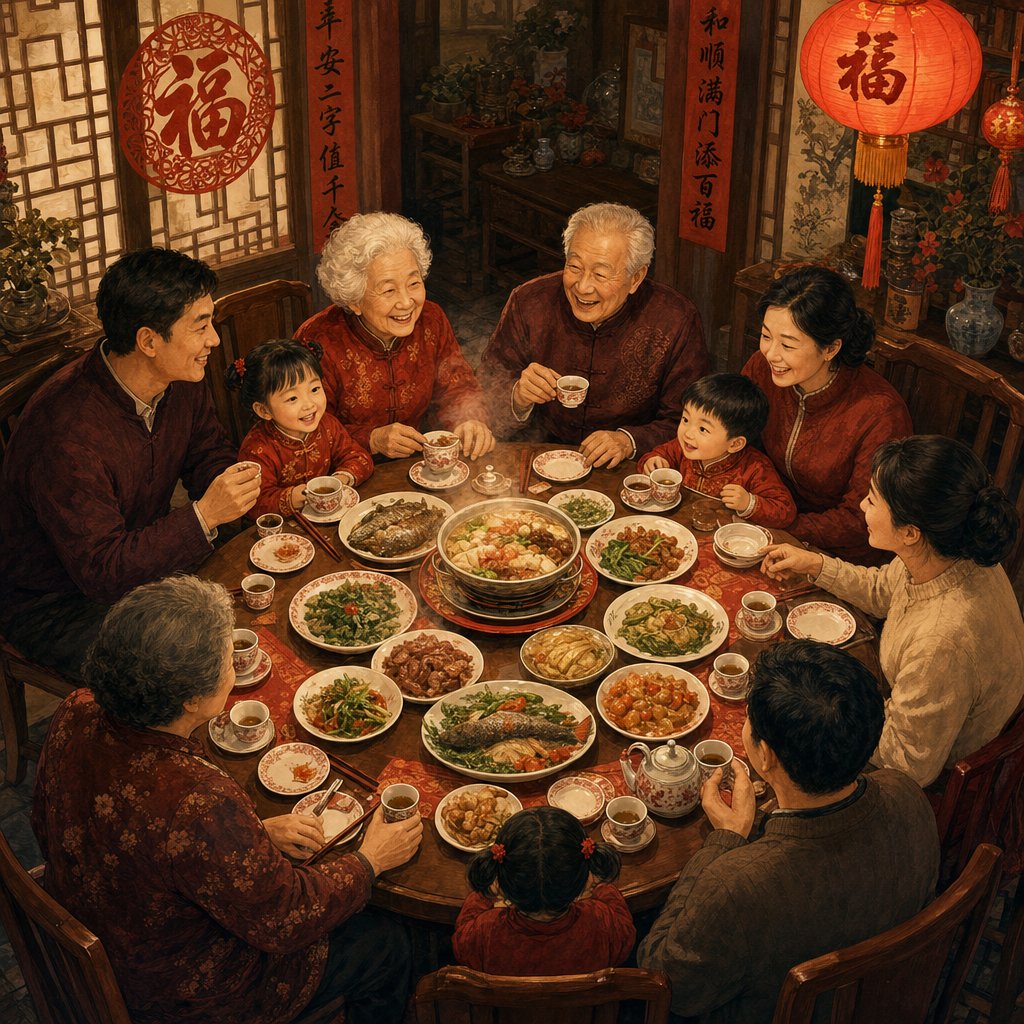
You might assume chengyu belong only to formal writing or classical literature. In reality, these he and chinese idioms show up constantly in casual speech. A shopkeeper reminds her new employee about 和气生财 on the first day of work. A mother texts her adult children 家和万事兴 in the family group chat after a holiday disagreement. A manager praises a colleague for staying 心平气和 during a tense meeting.
The phrase 和而不同 has taken on particular relevance in modern discourse. It appears in diplomatic speeches, corporate mission statements, and university mottos. Its appeal is obvious: it validates diversity without abandoning cohesion. You can disagree and still belong.
天人合一 leans more philosophical, but it surfaces in discussions about environmental policy, traditional medicine, and architectural design. When someone argues for sustainable development by invoking 天人合一, they're drawing on thousands of years of Daoist and Confucian thought condensed into four syllables.
These idioms do something remarkable. They take the abstract concept encoded in 和 and ground it in specific life situations: running a business, raising a family, managing emotions, respecting differences, living within nature. The character stops being a dictionary entry and becomes a practical guide for navigating relationships. And nowhere is that practical dimension more visible than in the way 和 connects to another concept searchers frequently ask about: peace.
和 and the Chinese Character for Peace
People searching for the chinese character for peace almost always land on 和 first. That's not a mistake, but it's not the full picture either. Peace in Chinese isn't expressed by a single character. It's built from two: 和 (hé, harmony) and 平 (píng, flat/level/calm). Each contributes a distinct idea, and together they form 和平 (hépíng), the standard modern word for peace.
Why does this matter? Because understanding the relationship between 和 and 平 reveals how Chinese constructs abstract concepts. Peace isn't treated as a single, indivisible state. It's a compound idea: harmony plus evenness. Balance plus gentleness. Two conditions that must both be present for true peace to exist.
How 和 Connects to Peace in Chinese
On its own, 和 leans toward harmony, gentleness, and cooperative coexistence. It describes the quality of relationships between people or elements. On its own, 平 means flat, level, equal, or calm. It describes a surface without bumps, a situation without extremes, a mind without agitation.
When you combine them into 和平 (hépíng), you get something richer than either character alone: a state where relationships are harmonious (和) and conditions are stable and even (平). Unlike the English word "peace," which can simply mean the absence of war, 和平 carries a proactive connotation of mutual respect and sustained balance.
This is why searchers looking for peace in chinese letters keep encountering 和. The character is structurally embedded in the word for peace. You can't write peace in Chinese without first writing harmony.
和平 and Other Peace-Related Compounds
The character 和 appears in a family of compounds related to peace, reconciliation, and resolution. Each one captures a different stage or style of peaceful interaction:
- 和平 (hépíng) — Peace. The broadest term, used for everything from world peace (世界和平) to peaceful coexistence (和平共处). Functions as both a noun and an adjective.
- 和解 (héjiě) — Reconciliation. Literally "harmony + untangle." Used when two parties resolve a dispute, whether in personal relationships or legal contexts like out-of-court settlements (庭外和解).
- 和约 (héyuē) — Peace treaty. A formal agreement ending conflict between nations. You'll find this in historical texts discussing treaties like the Treaty of Versailles (凡尔赛和约).
- 和好 (héhǎo) — To make up, to reconcile. More informal and personal than 和解. Used when friends or couples patch things up after a fight. 和好如初 (héhǎo rúchū) means "to reconcile as if nothing happened."
- 和谈 (hétán) — Peace talks. Literally "harmony + discuss." Refers to formal negotiations aimed at ending a conflict, commonly used in news coverage of diplomatic efforts.
Notice the pattern. In every compound, 和 contributes the idea of restored balance and cooperative spirit, while the second character specifies the form that restoration takes: a stable state (平), an untangling (解), a formal agreement (约), a return to closeness (好), or a conversation (谈).
For anyone wondering how to write peace in chinese, the answer starts with learning to write 和 correctly. Here's the stroke order breakdown. You write the left radical 禾 first (five strokes: horizontal, vertical, left-falling stroke, dot, horizontal), then the right component 口 (three strokes: vertical, horizontal-turning, horizontal to close the box). Eight strokes total, always left before right, top before bottom.
Getting the stroke order right matters beyond penmanship. It affects how you look up characters in handwriting-based dictionaries and input methods, and it builds muscle memory that makes the next 禾-radical character easier to learn. The physical act of writing 和, grain before mouth, left before right, mirrors the logic of the character itself: secure the foundation first, then add expression.
The connection between 和 and peace runs deeper than vocabulary. It shapes how Chinese speakers think about conflict resolution, diplomacy, and social cohesion. That influence extends well beyond classical texts and into the fabric of contemporary life, where 和 appears in political slogans, personal names, and the everyday language of getting along.

The Harmony Chinese Symbol in Modern Culture and Names
Classical philosophy gave 和 its intellectual weight. Diplomatic language gave it political reach. But the character's most revealing life happens in the everyday spaces where ordinary people encounter it: on storefronts, in baby name discussions, across social media, and embedded in the unspoken rules of how Chinese society manages disagreement.
和谐社会 and Political Significance
No discussion of the harmony symbol chinese speakers encounter daily is complete without addressing 和谐社会 (hexie shehui, harmonious society). Introduced by Hu Jintao at the Fourth Plenary Session of the Sixteenth Central Committee in September 2004, the concept was a direct response to rising social tensions caused by rapid economic growth and widening inequality. The full original phrase was "socialist harmonious society" (社会主义和谐社会), and it described a state where all social groups and classes would work together to resolve underlying contradictions.
The slogan carried real policy ambitions: sustainable development, better social safety nets, and reduced income gaps. But it also took on an unintended second life online. As internet censorship intensified during the same period, Chinese netizens began using "to be harmonized" (被和谐, bei hexie) as slang for having posts deleted. The word "river crab" (河蟹, hexie), a homophone of "harmony," became a satirical symbol for censorship itself. To be "river crabbed" meant your content had been scrubbed in the name of social order.
This dual existence captures something essential about the harmony chinese symbol in contemporary China. It functions simultaneously as a sincere cultural ideal and as a target of ironic commentary. The character's meaning hasn't been diminished by this tension. If anything, the satire proves how deeply the concept resonates: you can only subvert something that people take seriously.
和 in Names, Brands, and Everyday Life
Chinese parents choose characters for their children's names with extraordinary care. Each character carries phonetic, visual, and semantic weight, and the selection process often reflects the family's hopes for the child's future. The character 和 appears in given names precisely because of what it promises: a gentle temperament, a life of balanced relationships, and an ability to get along with others. Names like 志和 (Zhihe, "aspiring toward harmony"), 和平 (Heping, "peace"), and 永和 (Yonghe, "eternal harmony") are common across generations.
As Temple University's Center for Chinese Language Instruction notes, Chinese names are more than labels. They carry culturally rich meanings reflecting philosophical traditions and social customs, telling the story of parents' ideals and hopes. When a family names their child with 和, they're embedding a Confucian and Daoist value directly into the child's identity, an aspiration the name's bearer often embraces throughout life.
Beyond personal names, 和 saturates brand names and place names across the Chinese-speaking world. The historic Beijing pharmacy 同仁堂 (Tongrentang) built its reputation on the principle of 和 in traditional medicine. 永和豆浆 (Yonghe Soymilk), a ubiquitous breakfast chain, borrows the character's connotation of timeless balance. Place names like 永和区 (Yonghe District in New Taipei) and 中和 (Zhonghe, "central harmony") embed the concept into geography itself.
In daily interaction, 和 shapes how people navigate conflict. The preference for 和解 (reconciliation) over confrontation, for 和气 (amiability) over bluntness, reflects a communication style where preserving relational harmony often takes priority over being right. You'll hear phrases like 以和为贵 (yi he wei gui, "value harmony above all") invoked during family disputes, workplace disagreements, and neighborhood conflicts.
Here are the modern compounds where 和 appears most frequently in contemporary Chinese life:
- 和谐社会 (hexie shehui) — harmonious society; political slogan and social ideal
- 和解 (hejie) — reconciliation; used in legal, personal, and diplomatic contexts
- 温和 (wenhe) — gentle, mild; describes personality, climate, or tone
- 柔和 (rouhe) — soft and gentle; used for light, colors, music, or voice
- 和蔼 (he'ai) — affable, kindly; describes an approachable demeanor, often used for elders
- 和气 (heqi) — amiable, friendly; the social lubricant of everyday interactions
- 缓和 (huanhe) — to ease, to moderate; used for tensions, symptoms, or atmospheres
Each compound takes the core meaning of 和 and applies it to a specific texture of modern life: the softness of a voice (柔和), the approachability of a grandparent (和蔼), the de-escalation of a tense situation (缓和). The chinese harmony symbol isn't locked in ancient texts. It's alive in how people describe weather, evaluate leaders, name their children, and resolve arguments.
What began as a pictographic fusion of grain and mouth, a visual argument that fed people who can speak freely will coexist in peace, has traveled through oracle bones, philosophical treatises, imperial edicts, political slogans, and internet memes to arrive at the same destination: the center of Chinese cultural identity. Understanding 和 doesn't just give you a vocabulary word. It gives you a lens for reading how Chinese society thinks about difference, balance, and what it means to live well together.
Frequently Asked Questions About the Harmony Chinese Character
1. What is the Chinese character for harmony?
The primary Chinese character for harmony is 和 (he, second tone). It consists of 8 strokes and combines two radicals: 禾 (grain) on the left and 口 (mouth) on the right. The etymological logic suggests that when people have food and can speak freely, harmony follows. It is classified as an HSK 1 character, making it one of the first characters Mandarin learners encounter, though its philosophical and cultural depth extends far beyond basic vocabulary.
2. How many pronunciations does 和 have in Mandarin Chinese?
The character 和 has five distinct pronunciations in Mandarin: he (second tone, meaning harmony or 'and'), he (fourth tone, meaning to compose a reply poem), huo (second tone, meaning to knead dough), huo (fourth tone, meaning to mix dry ingredients), and hu (second tone, meaning to win in mahjong). Each pronunciation changes the character's meaning and grammatical function entirely, ranging from a conjunction to a verb to a game-specific exclamation.
3. What is the difference between 和 and 平 in Chinese?
While both relate to peace, they carry different core meanings. 和 (he) emphasizes harmony, gentleness, and cooperative coexistence between people or elements. 平 (ping) means flat, level, equal, or calm, describing stability without extremes. Together they form 和平 (heping), the standard Chinese word for peace, combining relational harmony with stable conditions. You cannot write peace in Chinese without first writing the character for harmony.
4. What does 和而不同 mean in Chinese philosophy?
和而不同 (he er bu tong) translates to 'harmonize yet do not conform' and originates from Analects 13.23. Confucius used it to distinguish genuine harmony from mere agreement. A person of integrity maintains their own perspective while coexisting respectfully with differing views, rather than simply going along with the crowd. This concept remains influential in modern Chinese political discourse, corporate culture, and diplomatic language as a framework for unity that preserves diversity.
5. Why do Chinese parents use 和 in children's names?
Chinese parents select 和 for names because it embodies aspirations for a gentle temperament, balanced relationships, and an ability to get along with others. Common names include 志和 (Zhihe, aspiring toward harmony), 和平 (Heping, peace), and 永和 (Yonghe, eternal harmony). The practice reflects Confucian and Daoist values, embedding a philosophical ideal directly into a child's identity. Beyond personal names, 和 also appears widely in brand names, place names, and business names across the Chinese-speaking world.