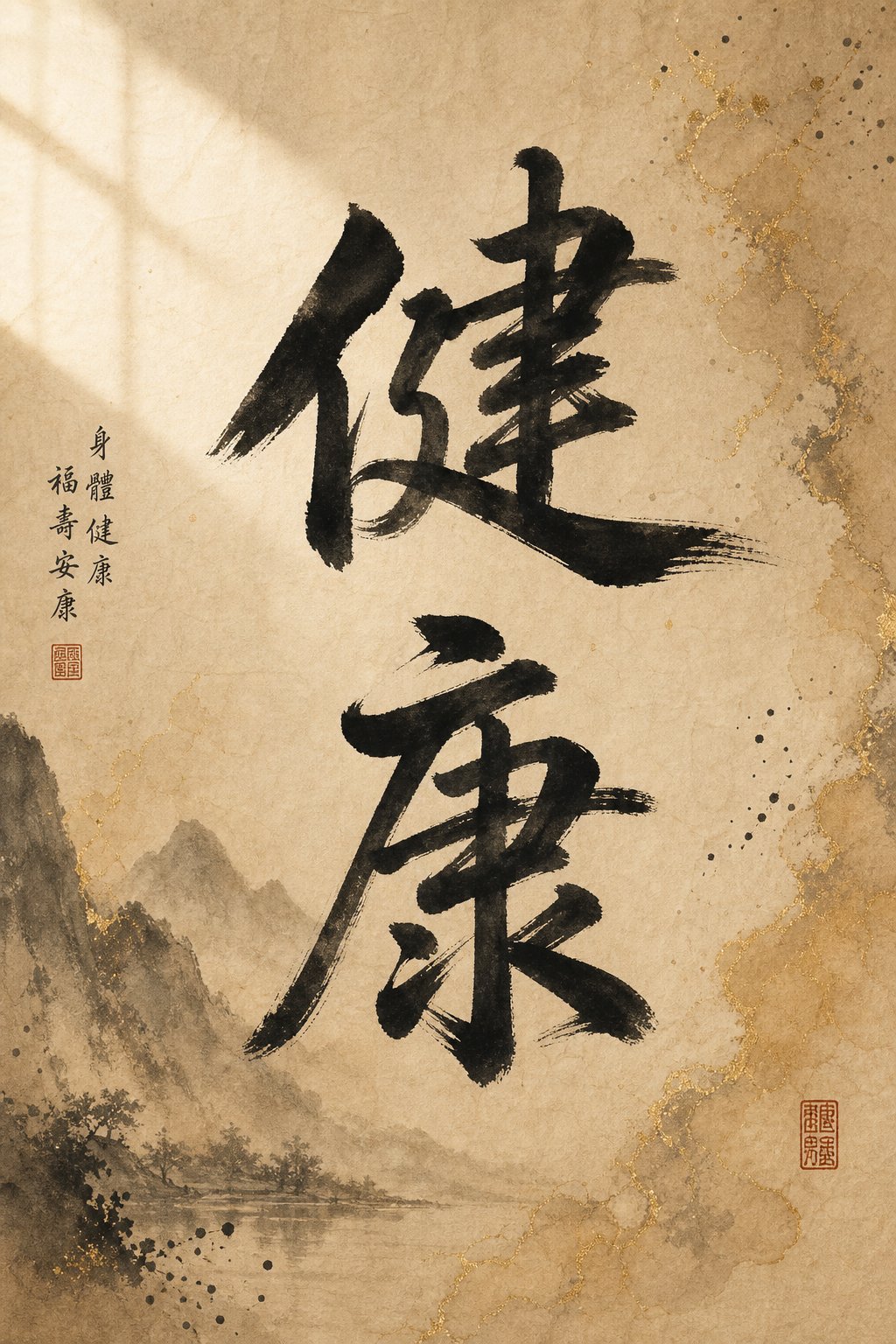
Understanding the Health Chinese Character 健康
When you search for the health Chinese character, you'll find one compound everywhere: 健康 (jiànkāng). But most sources stop at a one-line definition. This guide goes deeper, breaking down each radical, tracing the character's history, and unpacking the cultural philosophy built into its strokes.
What Does the Health Chinese Character Mean
健康 combines the concepts of physical strength and peaceful well-being to express holistic health.
The word for healthy in Chinese is not a single character but a two-character compound. The first character, 健 (jiàn), is a pictophonetic construction built from the radical for "person" and a component meaning "to build," conveying physical vigor and strength. The second, 康 (kāng), is an ideogrammic compound rooted in images of grain abundance, carrying connotations of peace, prosperity, and inner well-being. Together they form a concept that treats health as the simultaneous fulfillment of body and mind, not just the absence of disease.
This dual structure reflects something fundamental about how health in Chinese culture has been understood for thousands of years: true wellness requires both external strength and internal harmony working together.
Who This Guide Is For
This article serves several audiences at once:
- Language learners who need accurate pronunciation, stroke order, and usage examples
- Tattoo researchers verifying correct character form before committing to permanent ink
- Cultural enthusiasts exploring how Chinese philosophy encodes meaning into written symbols
- Anyone curious about the deeper layers hidden inside everyday Chinese vocabulary
In the sections ahead, you'll find a full radical breakdown of both characters, their historical evolution through ancient script styles, pronunciation and writing guides, common phrases, regional differences, and mistakes to avoid. Each piece builds on the last, moving from the visual logic of the strokes all the way to how 健康 lives in modern conversation.
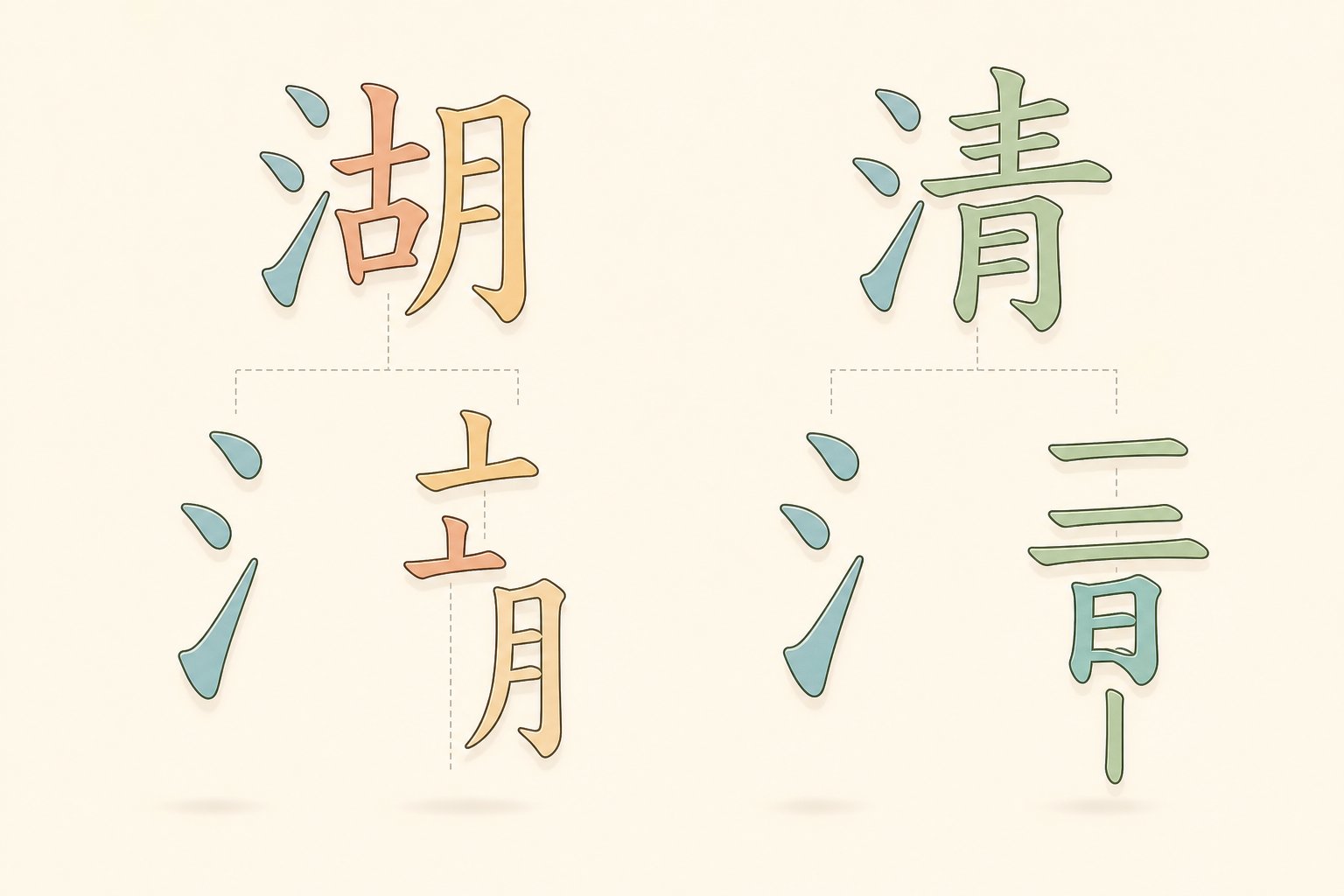
Radical Breakdown of 健 and 康: A Chinese Health Symbol Breakdown
Every Chinese character is a small architecture project. Radicals act as building blocks, each carrying its own meaning, and when you stack or combine them, a new concept emerges. Understanding the health character radical meaning requires looking at these internal parts the way you'd examine the beams and walls of a house. Let's take each character apart.
Breaking Down 健: The Strong Person Radical
Look at 健 (jiàn) and you'll notice it splits cleanly into two sections. On the left sits 亻, the "person" radical, a simplified form of 人 (ren, meaning person or human). On the right stands 建 (jiàn), which means "to build" or "to establish." Imagine the visual logic here: a person who has been built up, constructed into something solid and vigorous.
The 建 component itself contains 廴 (a long stride radical suggesting forward motion) and 聿 (a hand holding a writing brush, historically linked to creation and action). So the right side of 健 carries a sense of active construction, of something being deliberately made strong. Pair that with the person radical, and you get a character that literally encodes the idea of a human being who is physically established, robust, and full of vitality.
This is not accidental. Chinese characters were designed so that even an unfamiliar reader could extract partial meaning from the components. If you recognize 亻as "person" and sense the building energy of 建, you're already halfway to understanding this chinese symbol for health without a dictionary.
Breaking Down 康: The Shelter and Abundance Radical
The second character, 康 (kāng), tells a different but complementary story. Its top component is 广 (guang), the "shelter" or "roof" radical, representing a structure that provides protection. Beneath it sits a component historically linked to 隶, associated with grain threshing or harvest abundance.
Picture this: grain stored safely under a roof. What does that scene represent? Security. Prosperity. Peace of mind. When your harvest is protected and plentiful, you experience a state of ease and well-being. That is exactly what 康 conveys: not muscular strength, but the calm contentment that comes from having enough and being safe.
In ancient agrarian China, few things signaled wellness more clearly than a full granary under a solid roof. The character 康 captures that cultural memory in its very structure, encoding peaceful prosperity into every stroke.
How the Radicals Combine to Form Complete Health
Here is where the chinese character health concept becomes elegant. Neither 健 nor 康 alone captures the full picture. One speaks to the body's vigor, the other to the spirit's peace. Together, they define health as something that requires both dimensions simultaneously.
| Character | Radical Components | Radical Meanings | Combined Meaning |
|---|---|---|---|
| 健 (jiàn) | 亻+ 建 | Person + To build/establish | A person built up; strong, vigorous, physically healthy |
| 康 (kāng) | 广 + 隶 (grain-related) | Shelter/roof + Grain abundance | Abundance under protection; peaceful, prosperous, at ease |
| 健康 (jiànkāng) | Both combined | Strength + Well-being | Holistic health: physical vigor and inner peace together |
This structural logic is what makes the chinese health symbol breakdown so rewarding. You're not just memorizing a word; you're reading a tiny philosophical statement about what it means to be well. The characters argue that strength without peace is incomplete, and comfort without vitality is equally insufficient. True health lives at the intersection of both.
Each character, though, carries its own independent life beyond this compound. They appear in dozens of other words, lending their specific energy to entirely different contexts.
Individual Meanings of 健 and 康 as Separate Characters
A single Chinese character can live many lives. Before 健 and 康 join forces as the chinese symbol for healthy, each one works independently across dozens of compound words, carrying its distinct energy into different contexts. Understanding the jian Chinese character meaning and the kang Chinese character meaning on their own reveals why their pairing is so powerful.
健 as a Standalone Character Meaning Strong
On its own, 健 (jiàn) means strong, vigorous, or robust. It points outward, toward the physical, the visible, the immediately felt. When Chinese speakers want to describe something that involves active bodily power or dynamic capability, 健 is often the character they reach for.
You'll find it in everyday vocabulary that revolves around physical vitality:
- 健身 (jiànshēn) - fitness or working out; literally "building the body strong"
- 健壮 (jiànzhuàng) - robust, sturdy; describes someone with visible physical power
- 健步 (jiànbù) - walking with vigorous strides; a brisk, energetic gait
- 健将 (jiànjiàng) - a top athlete or master; someone whose physical skill stands out
Notice the pattern. Every compound built with 健 carries a sense of active strength, something you can see, measure, or feel in the body. The character conveys physiological vigor, something external, immediate, and concrete, grounded in the aesthetic presence of physical form. It is the outward-facing half of wellness: muscles that work, lungs that fill, legs that carry you forward without strain.
康 as a Standalone Character Meaning Peaceful Well-Being
Where 健 flexes, 康 (kāng) settles. This character carries implications that are more abstract, inward, and understated. It speaks to psychological ease, emotional contentment, and a broader existential sense of being at peace. Its connotations grew from agricultural abundance into a wide family of positive meanings: smoothness, joy, prosperity, and stability.
Here are common compounds where 康 operates independently:
- 小康 (xiǎokāng) - moderate prosperity; a comfortable, stable standard of living
- 康复 (kāngfù) - recovery or rehabilitation; returning to a state of well-being
- 康乐 (kānglè) - happiness and ease; recreation that brings peace of mind
- 安康 (ānkāng) - safe and well; a common blessing wishing someone peace and health
Each of these words leans on 康 for its sense of inner calm and sufficiency. You won't find raw muscular energy here. Instead, 康 provides the emotional and spiritual foundation: the feeling that life is stable, that needs are met, that the mind rests easy.
Why the Combination Creates Complete Health
Here is the insight that makes the compound 健康 so elegant. Chinese linguistic tradition did not privilege physical fitness over psychological well-being, or the reverse. Classical texts frequently used both characters together, and even reversed their order as 康健, suggesting that ancient thinkers saw these two dimensions as equally essential and inseparable.
Think of it this way: 健 without 康 is a strong body carrying an anxious mind. 康 without 健 is inner peace trapped in a fragile frame. Neither state qualifies as true health. Only when bodily vigor and mental ease exist simultaneously does the full meaning of 健康 come alive. This is a holistic concept baked directly into the vocabulary itself, not imposed by modern wellness trends but encoded in the language for centuries.
That body-mind dialectic did not stay locked inside a dictionary. It flowed outward into philosophy, medicine, and daily practice, shaping how Chinese culture understood wellness across thousands of years of history.
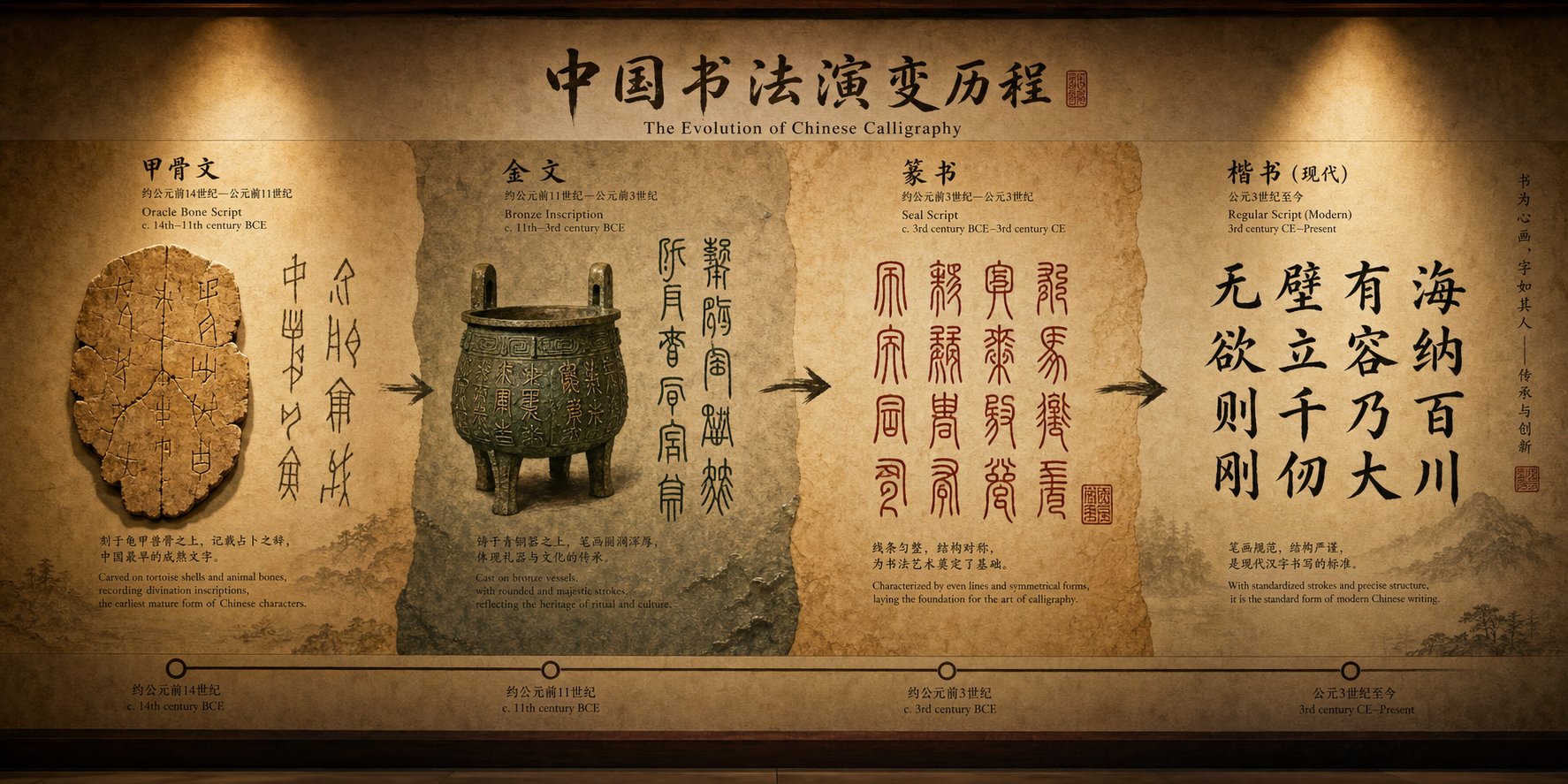
Historical Evolution Through Chinese Script Styles
Characters are not frozen artifacts. They have biographies, shaped and reshaped by the hands of scribes across dynasties. The history of the Chinese health character stretches back thousands of years, and tracing its visual journey reveals how deeply the concept of wellness is embedded in Chinese civilization.
From Oracle Bones to Modern Script
Not every character can be traced to the earliest known writing. Of the two characters in 健康, it is 康 (kāng) that appears in the oldest records. Oracle bone inscriptions from the Shang Dynasty (roughly 1200-1050 BCE) show an early form of 康 depicting what scholars interpret as a frame or rack associated with grain threshing, reinforcing its connection to harvest abundance and ease. The character 健 (jiàn), however, is a later formation. Its phonetic component 建 appears in bronze inscriptions, but the full character with the person radical likely emerged during the Warring States period or the Qin-Han era, when the written language expanded rapidly to meet administrative and literary demands.
This timeline matters. It tells us that the concept of peaceful well-being (康) entered the written record before the concept of physical vigor (健) received its own dedicated character. The ancient Chinese character for health, in its earliest traceable form, prioritized inner stability over outward strength.
How the Character Form Evolved Over Millennia
As Chinese script moved through its major phases, both characters transformed visually while preserving their core meanings. Here is how that progression unfolded:
| Script Style | Approximate Era | Visual Description |
|---|---|---|
| Oracle Bone Script (甲骨文) | ~1200-1050 BCE (Shang Dynasty) | 康 appears as a pictographic frame with grain elements; 健 not yet attested as a standalone character |
| Bronze Inscriptions (金文) | ~1100-256 BCE (Zhou Dynasty) | 康 becomes more structured with clearer radical separation; 建 (the phonetic base of 健) appears in ceremonial texts |
| Seal Script (篆书) | ~221 BCE (Qin standardization) | Both characters take on rounded, symmetrical forms; 健 emerges as a distinct character with the person radical clearly visible on the left |
| Clerical Script (隶书) | ~206 BCE - 220 CE (Han Dynasty) | Strokes flatten and widen; curves become angular; both characters gain the horizontal emphasis familiar in Han-era documents |
| Regular Script (楷书) | ~200 CE - present | The modern standard form solidifies; 健 (10 strokes) and 康 (11 strokes) reach the shapes used today in print and handwriting |
What stays constant across every era is the semantic core. Whether carved into tortoise shell or printed on a smartphone screen, 康 always points toward ease and sufficiency, and 健 always carries the energy of a person made strong. The visual packaging changed; the philosophical message did not.
This persistence reflects something broader about the chinese symbol for culture itself. Chinese writing does not discard old meaning when it updates form. Each script style is a new coat of paint on the same structural frame, preserving continuity across millennia. For the health character, that continuity confirms a cultural conviction: the intertwining of physical and spiritual well-being is not a modern wellness invention. It has been written into the language since its earliest recoverable layers.
Of course, knowing what a character means and where it came from is only part of the picture. Saying it correctly and writing it with proper stroke order brings the character fully to life in practice.
How to Pronounce and Write 健康 Correctly
Knowing the meaning behind a character is one thing. Producing it accurately with your voice and your hand is another skill entirely. The jiankang pronunciation trips up many English speakers because both syllables contain sounds that don't map neatly onto English phonetics. And writing the characters demands a specific stroke sequence that, once learned, makes every future character easier to approach.
Pinyin Pronunciation and Tone Guide for 健康
In pinyin, the compound is written as jiànkāng. Let's break that into its two syllables:
健 = jiàn (tone 4)
The fourth tone starts high and drops sharply, like the curt pitch of saying "Stop!" in English. According to DigMandarin's pronunciation guide, it is a "total falling tone which starts very high and falls short and strong." Think of it as a quick, decisive downward slash in pitch.
The initial j- is where most English speakers stumble. It is not the English "j" as in "jump." Instead, position the middle of your tongue against the hard palate (the roof of your mouth, just behind the ridge). The airflow is unaspirated, meaning no puff of breath escapes. Imagine a softer, flatter version of the English "j" blended with a "dz" quality. The final -ian sounds close to "yen" but with a slight "ee" glide at the start: ee-en, compressed into one smooth syllable.
康 = kāng (tone 1)
The first tone is high and level, held steady without rising or falling, like sustaining a single musical note. It should feel naturally prolonged and flat across its duration.
The initial k- is aspirated, meaning a clear puff of air should escape when you produce it. Hold your palm in front of your mouth and say "kāng." You should feel a burst of breath on the "k." This distinguishes it from the unaspirated "g-" initial. The final -ang rhymes with the English word "song" but with a wider, more open "ah" vowel at the front.
Common mistakes to avoid:
- Pronouncing jiàn with a soft English "j" (too much voice, not enough tongue-palate contact)
- Letting the fourth tone trail off instead of cutting it short and sharp
- Swallowing the "-ng" ending on kāng, making it sound like "ka" instead of a full nasal finish
- Dropping the first tone flat instead of keeping it genuinely high; many learners pitch it too low
When you say the full compound jiànkāng, the pitch pattern moves from a sharp high-to-low drop on the first syllable directly into a sustained high note on the second. The transition should feel like a quick dip followed by a steady plateau.
Stroke Order for Writing 健康 Correctly
Learning how to write health in Chinese means respecting stroke order. Chinese characters follow consistent rules: top to bottom, left to right, outside to inside, and horizontal before vertical. These rules aren't arbitrary. They create rhythm, balance, and legibility in handwriting.
健 (jiàn) - 10 strokes:
- Left vertical stroke of 亻(person radical): a short downward-left stroke (piě)
- Right vertical stroke of 亻: a straight vertical (shù)
- Horizontal stroke at the top of 建's upper section (héng)
- Horizontal stroke below it
- Horizontal stroke below that (three horizontal lines stacked)
- Short vertical connecting the horizontals
- Short left-falling stroke (piě) at the lower section
- Vertical stroke (shù) dropping down
- Short turning stroke
- Long sweeping stroke extending to the lower right (the 廴 radical's signature "long stride" stroke, called zhé)
康 (kāng) - 11 strokes:
- Dot at the top of 广 (diǎn)
- Horizontal stroke of 广 (héng)
- Left-falling long stroke of 广 (piě)
- Short left-falling stroke inside the shelter
- Vertical stroke (shù)
- Horizontal stroke crossing through
- Vertical stroke
- Short left-falling stroke
- Dot (diǎn) on the right
- Long left-falling stroke at the bottom (piě)
- Dot or right-pressing stroke (nà) completing the base
A practical tip: practice each character in large format first, using grid paper or a digital writing app that shows stroke order animations. Speed comes naturally after the sequence is memorized. Rushing before the order is internalized leads to characters that look subtly wrong to native readers, even if every stroke is technically present.
With pronunciation and writing mechanics in hand, the next natural step is seeing how 健康 actually functions in real conversation, where it appears in greetings, idioms, and the everyday language of modern Chinese life.
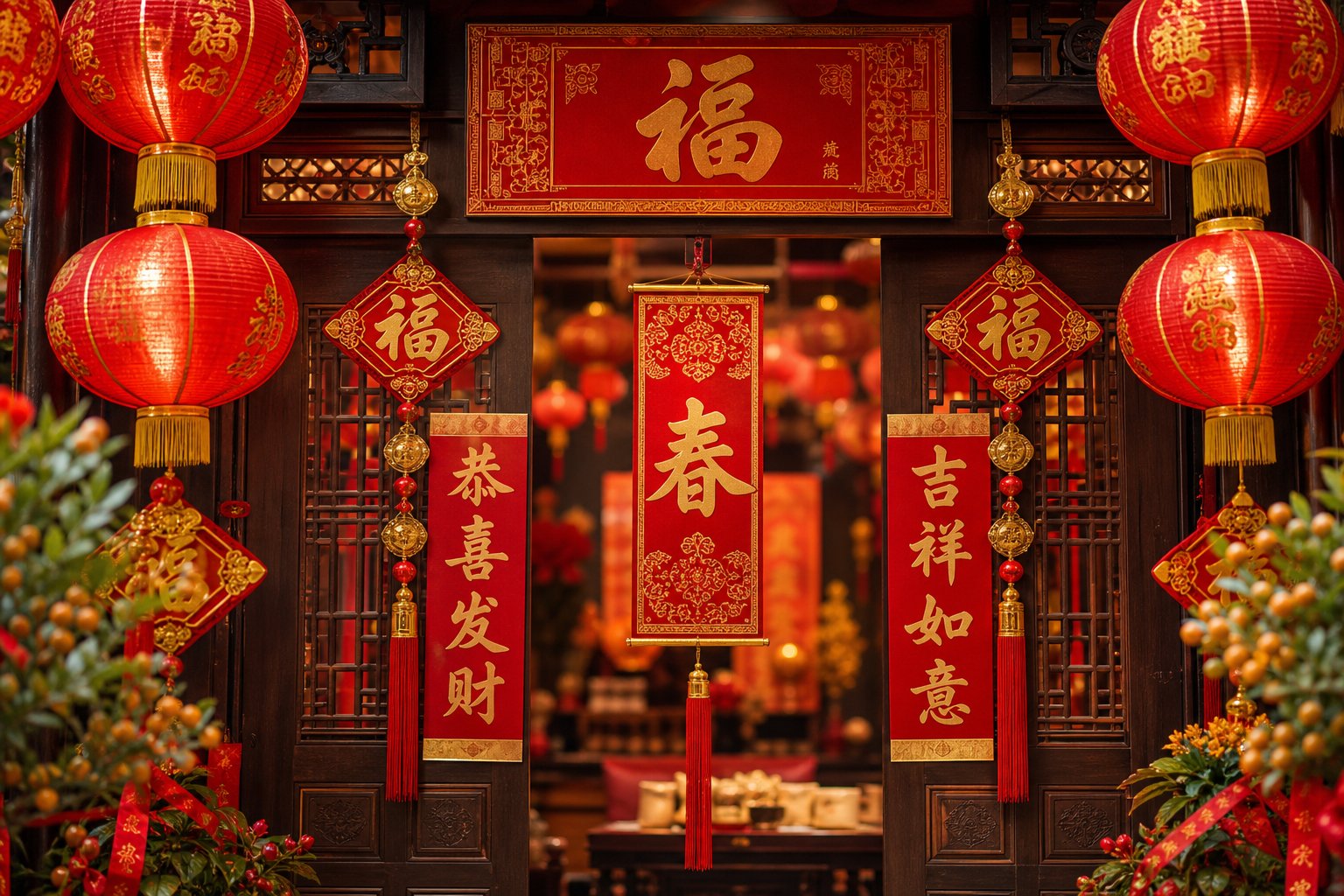
Common Phrases and Idioms with the Health Character
Characters don't live in dictionaries. They live in the mouths of people wishing each other well at New Year dinners, in hospital signs, on government apps, and in birthday messages sent to grandparents. The real power of 健康 shows up when you hear it woven into daily Chinese life, where it carries emotional weight far beyond its literal definition.
Everyday Phrases and Greetings Using 健康
Chinese health greetings tend to be direct and warm. You won't find vague pleasantries here. Instead, speakers name exactly what they wish for the other person: a healthy body, a long life, peace in the family. The phrase 祝你身体健康 (zhù nǐ shēntǐ jiànkāng) is one of the most widely used blessings in Mandarin. It translates literally as "wish you body healthy" and functions the way "wishing you good health" does in English, except it appears far more frequently in Chinese social life.
Here are the most common health phrases in Chinese you'll encounter in greetings, toasts, and written messages:
| Chinese Phrase | Pinyin | English Meaning |
|---|---|---|
| 身体健康 | shēntǐ jiànkāng | Good health (literally: body healthy) |
| 祝你身体健康 | zhù nǐ shēntǐ jiànkāng | Wishing you good health |
| 健康长寿 | jiànkāng chángshòu | Health and longevity |
| 健康快乐 | jiànkāng kuàilè | Healthy and happy |
| 保重身体 | bǎozhòng shēntǐ | Take care of your health |
| 幸福安康 | xìngfú ānkāng | Happiness, peace, and well-being |
| 恭贺新禧,祝身体健康 | gōnghè xīnxǐ, zhù shēntǐ jiànkāng | Happy New Year, wishing you good health |
Notice how 身体健康 appears as a standalone blessing and also as part of longer sentences. According to China Highlights, this phrase can be said to all people but is especially common when addressing elders, where wishing for physical wellness carries deep respect. During Chinese New Year, you'll often hear it paired with other blessings in a single breath: "祝你新年快乐,身体健康,家庭幸福,工作顺利" (wishing you a happy new year, good health, a happy family, and smooth work).
The phrase 健康长寿 deserves special attention. It links health directly to longevity, reflecting a cultural value where the two concepts are nearly inseparable. You'll hear it at birthday celebrations for older relatives, inscribed on gifts, and written in cards. It carries the implicit belief that genuine health naturally extends life.
健康 in the Context of Health, Wealth, and Happiness
In Chinese tradition, the most valued blessings cluster around three pillars: health, wealth, and happiness. The chinese symbol health wealth happiness trio appears constantly during festivals, especially Chinese New Year. A typical greeting might stack these wishes together: 身体健康 (health), 恭喜发财 (wealth and prosperity), and 万事如意 (may everything go as you wish). That's Mandarin notes that health and wealth are considered the most important elements in Chinese people's lives, which is why New Year wishes almost always include both.
This isn't just social politeness. It reflects a philosophical ordering. Health comes first because without it, wealth and happiness lose their foundation. You'll notice that in formal toasts and written blessings, 身体健康 typically appears before financial or career wishes. The sequence itself communicates a value system.
健康 vs. 身体好: Understanding the Nuance
If you're learning Mandarin, you might wonder why people don't just say 身体好 (shēntǐ hǎo, "body is good") instead of using 健康. Both express that someone is in good physical condition, but they operate differently.
- 身体好 is colloquial and descriptive. It states a current condition: "Your body is good" or "You're in good shape right now."
- 健康 is more formal and conceptual. It describes a state of holistic wellness, not just a momentary physical condition.
Imagine the difference between saying "you look well" and "you are in good health." The first is casual observation; the second implies a deeper, more sustained state. In blessings and formal wishes, 健康 is almost always preferred because it carries more gravity and encompasses both physical and psychological dimensions.
健康 in Modern Chinese Life
The compound hasn't stayed locked in traditional greetings. It has expanded into modern vocabulary in ways that reflect contemporary concerns. Two examples stand out:
健康码 (jiànkāng mǎ) - Health Code: This term exploded into daily use during the COVID-19 pandemic. A linguistic study published in MDPI's Languages journal documented how 健康码 was initially created by local governments in China as a digital health certificate and rapidly became a nationwide requirement. The term ranked among the top five media new words of 2020 and generated an entire word family of XX-码 compounds. Its three-morpheme structure (2+1 pattern) follows the most productive word-formation pattern in contemporary Chinese. The term demonstrates how a classical concept like 健康 can be repurposed for entirely modern technological contexts without losing its core meaning.
心理健康 (xīnlǐ jiànkāng) - Mental Health: This compound pairs 心理 (psychology, mental) with 健康 to name a concept that has gained enormous visibility in Chinese public discourse. It shows the flexibility of 健康 as a modifier target. The character compound doesn't resist being applied to the mind; in fact, its original structure already implied psychological well-being through the 康 component. Modern usage simply makes that dimension explicit.
Other modern compounds include:
- 健康饮食 (jiànkāng yǐnshí) - healthy diet
- 健康保险 (jiànkāng bǎoxiǎn) - health insurance
- 亚健康 (yà jiànkāng) - sub-health (a state between healthy and sick, widely discussed in Chinese wellness culture)
The term 亚健康 is particularly interesting because it names a condition that English doesn't have a clean equivalent for. It describes people who aren't clinically ill but aren't thriving either, a gray zone that Traditional Chinese Medicine has long recognized and that modern Chinese speakers now have a concise label for.
From ancient blessings to pandemic-era QR codes, 健康 adapts without breaking. Its meaning stretches to cover new realities while its core philosophy, that true wellness spans body and mind, remains intact. That adaptability, however, doesn't mean the character is used identically everywhere Chinese is spoken. Regional differences in how people deploy health-related vocabulary add another layer of complexity.
Regional Usage Across Chinese-Speaking Cultures
Chinese is not a monolith. Mandarin speakers in Beijing, Cantonese speakers in Hong Kong, and Hokkien-influenced communities in Southeast Asia all share the written character 健康, yet the cultural weight they place on it and the vocabulary they build around it can differ in subtle but meaningful ways. Understanding the chinese health character traditional vs simplified distinction, and the broader regional landscape, gives you a fuller picture of how this compound lives in the real world.
Simplified vs Traditional Usage Across Regions
Here is a fact that surprises many learners: 健康 looks identical in both simplified and traditional Chinese. Neither character underwent simplification during the script reforms of the 1950s and 1960s in Mainland China. Whether you're reading a newspaper in Taipei, a menu in Hong Kong, or a government notice in Shanghai, the characters are written exactly the same way, stroke for stroke.
This makes 健康 one of the easier health-related terms to recognize across all Chinese-speaking regions. No conversion is needed. No variant forms exist. The compound is universally legible regardless of which script system a reader uses.
Where regional differences do appear is in the surrounding vocabulary and phrasing preferences:
| Region | Preferred Health Phrasing | Notes |
|---|---|---|
| Mainland China | 身体健康, 健康码, 亚健康 | Frequent use in government and public health contexts; modern compounds proliferate |
| Taiwan | 身体健康, 健康检查 (health checkup) | Traditional script; slightly more formal register in written health communication |
| Hong Kong | 身体健康, 健康院 (health clinic) | Cantonese pronunciation: gin6 hong1; some English loanwords coexist in medical contexts |
| Overseas Chinese communities | 身体健康, 保重身体 | Often preserved in greetings and festival wishes; daily medical vocabulary may borrow from local languages |
In Mainland China, you'll encounter 健康 embedded in bureaucratic and technological vocabulary more frequently. Terms like 健康码 (health code) and 国民健康 (national health) reflect the state's active role in public health messaging. Taiwan tends to favor 健康检查 over Mainland China's more common 体检 (tǐjiǎn) for medical checkups, though both are understood everywhere. Hong Kong's bilingual environment means speakers sometimes code-switch, using "health" in English conversation while reserving 健康 for written Chinese or formal Cantonese speech.
For overseas Chinese communities in Malaysia, Singapore, or North America, 身体健康 remains a staple in festival greetings and family conversations. The phrase travels well because it carries emotional resonance that transcends dialect boundaries. A Cantonese grandmother in Vancouver and a Mandarin-speaking uncle in Taipei both recognize and value the same blessing.
Cultural Nuances in Different Chinese-Speaking Communities
The deeper regional variation isn't in the characters themselves but in the philosophical framework people bring to the concept of health. This is where Traditional Chinese Medicine (TCM) enters the picture, and its influence is not evenly distributed across all Chinese-speaking populations.
In Mainland China and Taiwan, TCM philosophy remains deeply woven into everyday health thinking. The symbolism of health in these communities extends far beyond the absence of disease. It encompasses balance between opposing forces, harmony between the individual and their environment, and the smooth flow of vital energy (气, qì) through the body. The character 康, with its connotations of peaceful abundance, resonates strongly with TCM's emphasis on internal equilibrium rather than aggressive intervention.
Core TCM principles that connect directly to the meaning encoded in 健康 include:
- 阴阳 (yīnyáng) balance - Health requires equilibrium between opposing forces: hot and cold, active and restful, external and internal. The pairing of vigorous 健 with peaceful 康 mirrors this duality.
- Harmony (和谐, héxié) - The body is a system where organs, emotions, and energy channels must work in concert. Disruption in one area affects the whole.
- Holistic wellness (整体观, zhěngtǐ guān) - TCM does not separate body from mind, or individual from environment. Health in chinese symbols has always implied this interconnection.
In Hong Kong, TCM coexists with Western medicine in a particularly visible way. Many residents consult both a Western-trained doctor and a TCM practitioner, viewing them as complementary rather than contradictory. The concept of 健康 in this context becomes genuinely bilateral: it accommodates both biomedical metrics (blood pressure, cholesterol) and TCM diagnostics (pulse quality, tongue coating, qi flow).
Taiwan maintains a robust TCM infrastructure integrated into its national health insurance system, meaning the holistic interpretation of 健康 isn't just philosophical but also institutional. When a Taiwanese speaker says 健康, the word implicitly includes the possibility of acupuncture, herbal formulas, and dietary therapy alongside conventional treatment.
Overseas communities show more variation. Second and third-generation Chinese speakers in Western countries may use 健康 primarily in its greeting function (祝你身体健康) without carrying the full TCM philosophical layer. For them, the term might align more closely with Western biomedical definitions of health. Meanwhile, communities with strong ties to traditional culture, particularly older generations, maintain the fuller interpretation where health in chinese symbols encompasses spiritual, emotional, and energetic dimensions alongside the physical.
What remains consistent everywhere is the compound's refusal to reduce health to a single dimension. Whether filtered through TCM philosophy in Taipei or used in a birthday card in Toronto, 健康 still insists, structurally and semantically, that wellness means both strength and peace working together. The regional differences are a matter of degree and emphasis, not of fundamental meaning.
That universality, however, doesn't protect the character from being misused. When 健康 crosses into contexts like tattoo design or decorative art, where non-Chinese speakers encounter it without linguistic training, a different set of problems emerges entirely.

Common Mistakes and Misconceptions to Avoid
A single misplaced stroke can turn a health symbol chinese speakers recognize instantly into a completely different word. And when that mistake is permanently inked onto skin, it becomes a story you didn't intend to tell. Whether you're a language learner writing characters for the first time or someone researching a chinese health character tattoo, knowing the most common errors saves you from embarrassment or worse.
Characters Commonly Confused with 健康
The character 健 (jiàn) shares its right-side component 建 with several other characters. Because Chinese characters are built from modular parts, swapping one radical on the left side produces an entirely different word with an entirely different meaning. This is where chinese characters commonly confused with each other become a real problem.
Consider this: 健 and 键 have identical pinyin (jiàn) and share the same right-side phonetic component. The only visual difference is the left radical. A learner writing quickly, or a tattoo artist copying from a low-resolution image, can easily grab the wrong one. As noted in a detailed analysis of Chinese character similarities, 关键 (guānjiàn, crucial point) uses 键 while 健康 (jiànkāng, health) uses 健, and the two left-hand radicals look nothing alike once you know what to look for.
| Character | Pinyin | Left Radical | Meaning | How to Distinguish |
|---|---|---|---|---|
| 健 | jiàn | 亻(person) | Strong, vigorous, healthy | Two strokes on the left forming a simplified "person" |
| 键 | jiàn | 钅(metal) | Key, keyboard key | Left side has the metal/gold radical with angular strokes |
| 建 | jiàn | None (standalone) | To build, to establish | No left radical; this IS the right component of 健 used alone |
| 腱 | jiàn | 月 (flesh/body) | Tendon | Left side is the "meat moon" radical used for body parts |
| 犍 | jiān | 牜(ox/cattle) | Castrated bull | Left side shows the cattle radical |
The pattern is clear. Every character in this family shares 建 on the right, which provides the pronunciation hint. The left radical determines the meaning. For the health symbol chinese readers expect, you need 亻, the person radical, and nothing else. Metal gives you a keyboard key. Flesh gives you a tendon. Cattle gives you a bull. Only "person" gives you health.
A similar issue exists with 康. While fewer look-alikes cause confusion here, learners sometimes mix up 康 with 庸 (yōng, mediocre) because both contain the 广 shelter radical on top. The internal components are entirely different, but at a glance, especially in small font sizes or handwritten notes, the similarity can trip people up.
Tattoo and Design Mistakes to Avoid
The stakes rise dramatically when characters move from notebook paper to permanent body art. A comprehensive guide on Chinese tattoos identifies several predictable failure categories that apply directly to anyone considering a chinese health character tattoo:
Mirrored or inverted characters. A tattoo stencil transfers a reversed image onto skin. If the artist doesn't verify orientation before starting, the final result reads backwards to every native Chinese speaker. Chinese characters are not symmetrical. A mirrored 健 is not 健. It's visual nonsense.
Incorrect stroke proportions. Even when the right character is chosen, poor proportions make it look wrong. The person radical 亻 on the left of 健 should occupy roughly one-third of the character's width. If it's too wide or too narrow, the character loses its structural balance. As tattoo experts note, copying a character from a reference image without understanding its stroke order often produces components at wrong sizes with incorrect spacing.
Font-based designs that lack calligraphic energy. Pulling 健康 from a computer font and handing it to a tattoo artist produces flat, mechanical letterforms. Chinese characters are brushwork. They carry variation in stroke width, pressure, and flow. A font-based tattoo looks sterile and inauthentic to anyone familiar with the calligraphic tradition.
Simplified and traditional confusion. Fortunately, 健康 is identical in both systems, so this particular trap doesn't apply here. But people who want to add surrounding characters (like 祝你身体健康) need to commit to one script system throughout. Mixing simplified and traditional characters in a single design signals unfamiliarity with the writing system.
Japanese kanji variants. Japanese uses many of the same characters as Chinese (kanji), and 健康 exists in Japanese with the same meaning. However, some characters have diverged between the two languages over time. If you're sourcing reference images, make sure you're looking at Chinese calligraphy, not Japanese shodo, as subtle stroke differences can exist in surrounding characters even when the core compound is identical.
How to Verify Before Committing
Whether you're getting a tattoo, designing artwork, or simply want to write the character correctly in a card, follow this verification process:
- Ask a native speaker to write it from scratch. Don't show them your design and ask "is this right?" People tend to see what they expect. Instead, tell them the meaning you want and ask them to handwrite it independently. Compare their version to yours.
- Cross-reference with a reputable dictionary. Use established resources like MDBG, Pleco, or Yabla that show stroke order animations. Avoid random image searches where errors propagate unchecked.
- Check orientation on the stencil. If working with a tattoo artist, verify the character reads correctly on the transfer paper before it touches skin. Hold it up to a mirror if needed.
- Confirm stroke order, not just final shape. A character drawn in the wrong sequence often has subtly incorrect proportions even if every stroke is present. Learning the order, even briefly, helps you evaluate whether a design looks structurally sound.
- Avoid auto-translated phrases. If you want more than just 健康, don't feed an English sentence into a translation tool and tattoo the output. Commission a native speaker to compose the phrase naturally in Chinese.
The health character carries thousands of years of cultural meaning in its strokes. Getting it right honors that history. Getting it wrong, whether through a swapped radical, a mirrored stencil, or a lifeless font, turns a profound symbol into an unintentional punchline. A few minutes of verification is all it takes to ensure the character on your skin, your wall, or your page says exactly what you mean it to say.
Frequently Asked Questions About the Health Chinese Character
1. What is the Chinese character for health?
The Chinese word for health is 健康 (jiankang), a two-character compound. It is not a single character but a pairing where 健 (jian) represents physical strength and vigor, while 康 (kang) conveys peaceful well-being and abundance. Together they express holistic health that encompasses both bodily fitness and mental ease. This compound is identical in both simplified and traditional Chinese writing systems, making it universally recognizable across all Chinese-speaking regions.
2. How do you write and pronounce health in Chinese?
Health in Chinese is written as 健康 and pronounced jiankang in pinyin. The first character 健 (jian, tone 4) has 10 strokes and uses a sharp falling tone. The second character 康 (kang, tone 1) has 11 strokes and uses a high, level tone. Common pronunciation mistakes include using the English 'j' sound instead of the correct palatal initial, and failing to sustain the high flat pitch on kang. Both characters follow standard stroke order rules: left to right, top to bottom.
3. What do the radicals in 健康 mean individually?
The character 健 contains the person radical (亻) on the left and 建 (to build) on the right, visually encoding 'a person who is built up strong.' The character 康 features the shelter radical (广) on top with grain-related components beneath, representing abundance stored safely under a roof. This structural logic means the compound literally reads as 'strong person plus protected abundance,' creating a philosophical statement that true health requires both physical vigor and inner peace simultaneously.
4. Is the health character the same in simplified and traditional Chinese?
Yes, 健康 is written identically in both simplified and traditional Chinese. Neither character was altered during China's script simplification reforms in the 1950s-60s. This means whether you encounter the compound in Mainland China, Taiwan, Hong Kong, or overseas Chinese communities, it appears exactly the same way. Regional differences exist only in surrounding vocabulary preferences and pronunciation (Mandarin jiankang vs. Cantonese gin6 hong1), not in the written form itself.
5. What characters are commonly confused with the health character 健?
The most common confusion is between 健 (healthy, with the person radical 亻) and 键 (key/keyboard key, with the metal radical 钅). Both share the same right-side component 建 and identical pinyin (jian), but their left radicals differ completely. Other look-alikes include 腱 (tendon, with the flesh radical) and 犍 (castrated bull, with the cattle radical). For tattoo or design purposes, always verify the left radical is the two-stroke person radical to ensure you have the correct health character.