Why Getting Chinese Names and Titles Right Changes Everything
Imagine meeting a new colleague named Wang Xiaoming. You confidently call him "Xiaoming" thinking that's his last name. It's not. You just used his given name like you'd call a close friend, and you've known him for thirty seconds. That small mix-up? It shifts the entire tone of the interaction.
Knowing how to address Chinese people properly isn't about memorizing vocabulary flashcards. It's a social skill, one that communicates whether you see someone as worthy of respect or just another name on a list. In Chinese culture and customs, the way you address a person reveals your understanding of hierarchy, relationship closeness, and social awareness all at once.
Why Proper Address Matters in Chinese Culture
Chinese naming conventions flip the Western order entirely. The family name comes first, the given name follows. Titles carry real weight, and the wrong one can feel dismissive or overly familiar. A Chinese person evaluates respect in part through what you call them, and that judgment happens fast.
In Chinese society, how you address someone isn't just politeness. It defines the relationship itself, signaling whether you see the other person as a superior, an equal, or a stranger deserving of courtesy.
Context matters just as much as the words themselves. The way you greet a CEO in Shanghai differs from how you'd address your partner's mother at a family dinner, which differs again from how you'd open a WeChat message to a new contact. Chinese etiquette around names shifts depending on whether you're in a boardroom, a living room, or a group chat. Business settings demand formal titles. Social gatherings may call for kinship terms even with non-relatives. Digital communication has its own evolving rules.
What This Guide Covers and Who It Helps
This guide walks through real-life scenarios rather than handing you a phrase book. Whether you're navigating han china etiquette for the first time, working alongside Chinese colleagues in a Western office, or meeting your partner's family, you'll find practical guidance here. We cover name structure, formal titles, business norms across Mainland China, Taiwan, and Hong Kong, casual social situations, English-language contexts, digital communication, and how to recover when you inevitably slip up.
Chinese customs around address aren't rigid rules designed to trip you up. They're a system built on showing respect in chinese interactions, and once you understand the logic behind them, the choices become intuitive. The real skill isn't perfect pronunciation. It's reading the room and choosing the right level of formality for the moment you're in.
That logic starts with one fundamental difference from Western naming: the family name always leads.
Step 1 - Understand How Chinese Names Are Structured
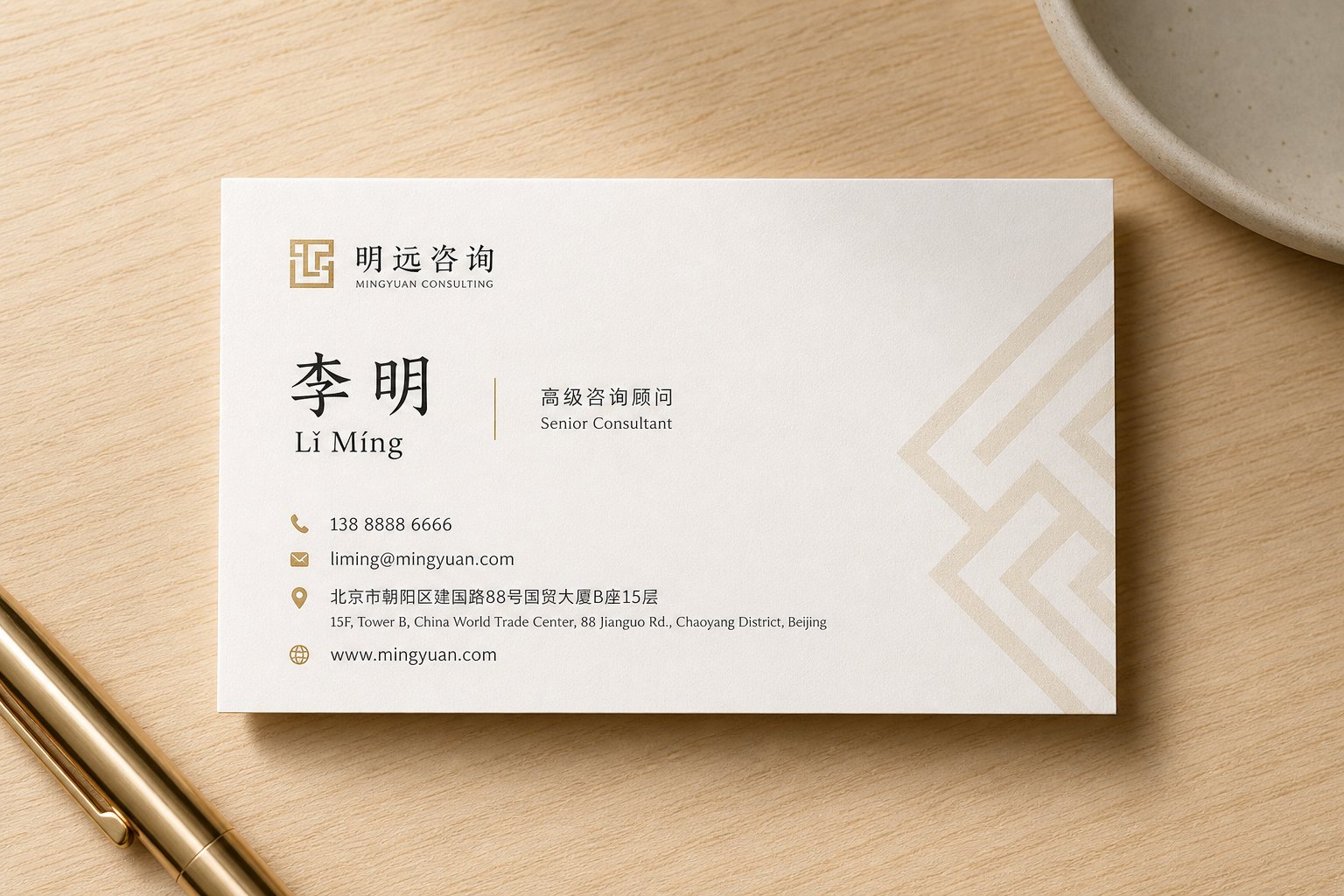
A Chinese name typically has two or three syllables total, and the order is the reverse of what English speakers expect. The family name (surname) sits at the front, followed by the given name. Getting this structure wrong is the single most common mistake when trying to address someone in Chinese, and it's one that can make a conversation awkward before it even starts.
Family Name First and How to Identify It
When you see a three-syllable Chinese name like Li Weijun, the first syllable (Li) is the surname and the remaining two syllables (Weijun) form the given name. The vast majority of Chinese surnames are just one character, one syllable. The Asia Media Centre notes that the top 100 Chinese family names all have a single syllable and cover roughly 85 percent of China's population.
So here's a reliable shortcut: if you see a three-syllable name, the first syllable is almost always the surname. The three most common surnames in mainland China are Wang, Li, and Zhang, shared by over 270 million people. Recognizing even a handful of common surnames helps you quickly identify which part of a name is which.
Why does this matter for proper address? Because when you meet someone named Chen Meiling and mistakenly call her "Ms. Meiling," you've just used her given name as though it were her family name. That's the equivalent of someone calling you by your middle name and treating it as your last name. It signals unfamiliarity with basic conventions, and it's easily avoidable once you understand the structure.
One-Character vs Two-Character Given Names
Given names in Chinese can be either one or two characters. A person named Wang Lei has a single-character given name (Lei), making the full name just two syllables. A person named Wang Xiaoming has a two-character given name (Xiaoming), totaling three syllables. Both formats are common among people in Mandarin-speaking communities.
Two-character given names are slightly more prevalent and easier to distinguish from the surname. With a two-syllable name like Liu Yang, it can be trickier since both the surname and given name are one character each. Context and familiarity with common surnames become your guide. Here's a quick address in China example showing how names break down:
| Full Name | Surname | Given Name | Pinyin |
|---|---|---|---|
| Wang Xiaoming | Wang (王) | Xiaoming (小明) | wáng xiǎo míng |
| Li Weijun | Li (李) | Weijun (伟军) | lǐ wěi jūn |
| Zhang Mei | Zhang (张) | Mei (美) | zhāng měi |
| Chen Yufei | Chen (陈) | Yufei (宇飞) | chén yǔ fēi |
Notice how the surname is consistently one syllable in each address in China example above. That pattern holds for the overwhelming majority of Chinese names you'll encounter.
Romanized Names and Pinyin Basics
Pinyin is the official romanization system used in mainland China to spell out Mandarin sounds using Latin letters. Each syllable in pinyin has an initial (consonant), a final (vowel or vowel combination), and a tone mark that indicates pitch. Mandarin has four main tones: a high flat tone (first), a rising tone (second), a dipping tone (third), and a falling tone (fourth).
Here's why tones matter for names: the syllable "mei" pronounced in the third tone means "beautiful," while the same syllable in the second tone means "plum blossom." Mispronouncing a tone won't usually cause offense, but it can create confusion about which person Mandarin speakers are referring to.
A few pinyin letters trip up English speakers consistently. The "x" sounds closer to "sh" with the tongue forward. The "q" is like "ch" but lighter. And "zh" sounds like the "j" in "jar." You don't need perfect tones to show respect, but making an effort with pronunciation signals that you take the person seriously enough to try.
With name structure clear, the next question becomes what to actually call someone. A surname alone feels incomplete, and a given name alone can feel too intimate. That gap is where titles and honorifics step in.
Step 2 - Learn Key Honorifics and Formal Titles
A surname on its own sounds abrupt. A given name on its own sounds overly familiar. Chinese honorifics solve this by pairing the surname with a title that signals the right level of respect and social distance. Think of them as the connective tissue between knowing someone's name and actually addressing them appropriately.
Essential Formal Titles With Pinyin and Characters
The most universal honorifics in Chinese map loosely onto English equivalents, but they carry slightly different weight. Here are the core titles you'll encounter across formal and semi-formal situations:
- 先生 (xiansheng) - Mr. or sir in Chinese. Used for adult men in professional, formal, or unfamiliar contexts. This is the safest default for any man whose specific title you don't know.
- 女士 (nushi) - Ms. or Madam. A respectful, neutral term for women regardless of marital status. This is the standard choice in business and formal settings.
- 太太 (taitai) - Mrs. in Chinese. Used specifically for married women, though less common in professional contexts than 女士. You'll hear this more in social introductions where marital status is known.
- 老师 (laoshi) - Teacher. Extends well beyond classrooms. Anyone with expertise or mentorship status may be addressed this way, from professors to film directors to respected colleagues.
- 医生 (yisheng) - Doctor. Used for medical professionals in clinical settings.
- 经理 (jingli) - Manager. Common in business environments for mid-level and senior staff.
- 总 (zong) - General manager, CEO, or boss. Originally short for 总经理 (general manager), this title has expanded to address anyone holding a high rank in government, state-owned enterprises, or commercial businesses.
- 师傅 (shifu) - Master or skilled worker. Used respectfully for taxi drivers, craftspeople, and tradespeople.
You'll notice that mr in Chinese (先生) and mrs in Mandarin (太太) function similarly to their English counterparts, but the professional titles carry more everyday weight. Calling someone "Teacher Zhang" or "Manager Li" isn't stiff or overly formal in Chinese. It's simply how people communicate respect through language.
The Surname Plus Title Pattern
The formula is straightforward: surname first, title second. If someone's surname is Wang and they hold a managerial position, you address them as 王经理 (Wang jingli), meaning "Manager Wang." A teacher named Zhang becomes 张老师 (Zhang laoshi). A Mr. Chen is 陈先生 (Chen xiansheng).
This pattern applies universally across honorifics in Chinese. Whether you're using a gendered title like mister in Mandarin or a professional one like doctor, the surname always leads. The structure works the same way for every title in the list above, making it easy to apply once you've identified someone's surname and their role or appropriate formality level.
One practical note: if you know someone's professional title, use it over a generic one. Calling a doctor "Chen xiansheng" isn't wrong, but "Chen yisheng" shows you recognize their professional standing. The more specific the title, the more respect it conveys.
Generational Differences in Title Expectations
Here's where context reading becomes essential. Older Chinese people, particularly those over 50, generally expect formal titles and may feel disrespected without them. A senior executive addressed by their given name alone could interpret it as a lack of awareness or even rudeness.
Younger professionals under 35 often operate differently. In tech companies and international firms, many staff address each other by English names or given names to flatten hierarchy and create a more egalitarian atmosphere. Some younger Chinese colleagues may actively prefer you skip the formality.
Between close acquaintances of similar age, two informal prefixes replace formal titles entirely:
- 小 (xiao) - meaning "young" or "little." Used affectionately for someone younger or of similar age. 小王 (Xiao Wang) feels warm and familiar, like a friendly nickname.
- 老 (lao) - meaning "old" or "veteran." Used with respect for someone older or more experienced. 老李 (Lao Li) suggests familiarity and fondness, not actual old age.
These prefixes only work among people who already have a relationship. Using 小 or 老 with someone you just met would feel presumptuous. When in doubt, default to the formal title. You can always relax formality later once the other person signals it's welcome, but recovering from being too casual is harder than stepping down from being too polite.
Titles establish the right tone for a first interaction. But professional environments layer additional expectations on top of these basics, especially when hierarchy, regional norms, and cross-cultural workplaces enter the picture.

Step 3 - Navigate Business and Professional Settings
Professional environments amplify the stakes. In a casual social setting, a minor address mistake might earn a polite smile. In a boardroom or during a first business meeting, the same mistake can undermine your credibility before you've even presented your ideas. Chinese social norms around hierarchy run deep in professional life, and the way you address people signals whether you understand the power dynamics in the room.
First Business Meetings and Introductions
When you meet a Chinese business contact for the first time, default to the most formal option available. If you know their title, use surname plus title: Wang Zong (General Manager Wang), Li Jingli (Manager Li), or Chen Nushi (Ms. Chen). If you're unsure of their position, surname plus xiansheng or nushi is always safe.
Imagine walking into a meeting with a Chinese CEO. You'd address them as their surname plus 总 (zong), which signals recognition of their authority. For a mid-level colleague you're meeting through an introduction, surname plus their department title works well. A new business contact whose role you don't yet know? Stick with surname plus 先生 or 女士 until they offer something less formal.
One key rule in China's business culture: let the senior person set the tone for informality. If a director tells you to call them by their given name or English name, follow their lead. But never assume that level of familiarity on your own, especially in a first meeting where others are present. Manners in China's professional world are closely tied to face, and addressing someone too casually in front of their subordinates can cause embarrassment for everyone involved.
Mainland China vs Taiwan vs Hong Kong Business Norms
Chinese norms around professional address aren't uniform across all Chinese-speaking regions. The cultural norms in China's mainland differ noticeably from those in Taiwan and Hong Kong, shaped by different histories, languages, and levels of Western business influence.
| Context | Mainland China | Taiwan | Hong Kong |
|---|---|---|---|
| Default formal address | Surname + professional title (王总, 李经理) | Surname + professional title, with slightly softer tone; 先生/小姐 common | English first name or surname + Mr./Ms. in English |
| Use of English names | Common in international firms and tech; less so in state-owned enterprises | Less common; Mandarin names preferred in most settings | Very common across industries; many professionals use English names exclusively at work |
| Hierarchy sensitivity | High. Titles reflect organizational rank and are expected | Moderate. Respectful but slightly less rigid than mainland | Lower in daily use. Flat structures and English names reduce visible hierarchy |
| Transition to informal | Slow. Requires explicit invitation from the senior party | Moderate pace. Relationship-building (guanxi) accelerates it | Faster. Colleagues often move to first names within days |
In Hong Kong, decades of British influence created a business culture where English names dominate professional interactions. You might work with someone for years and never learn their Chinese name. Taiwan leans more traditional in its use of Mandarin titles, though the overall atmosphere tends to feel slightly warmer and less hierarchically rigid than mainland corporate culture. Understanding these regional differences prevents you from applying one set of rules in China broadly when the social norms vary by location.
Chinese Colleagues in Western Workplaces
Here's where cultural norms from China blend with Western office expectations, and things get nuanced. Many Chinese professionals working abroad adopt English names specifically to ease workplace interactions. A colleague might introduce herself as "Sarah" in the office but go by her Chinese name with family and Chinese friends.
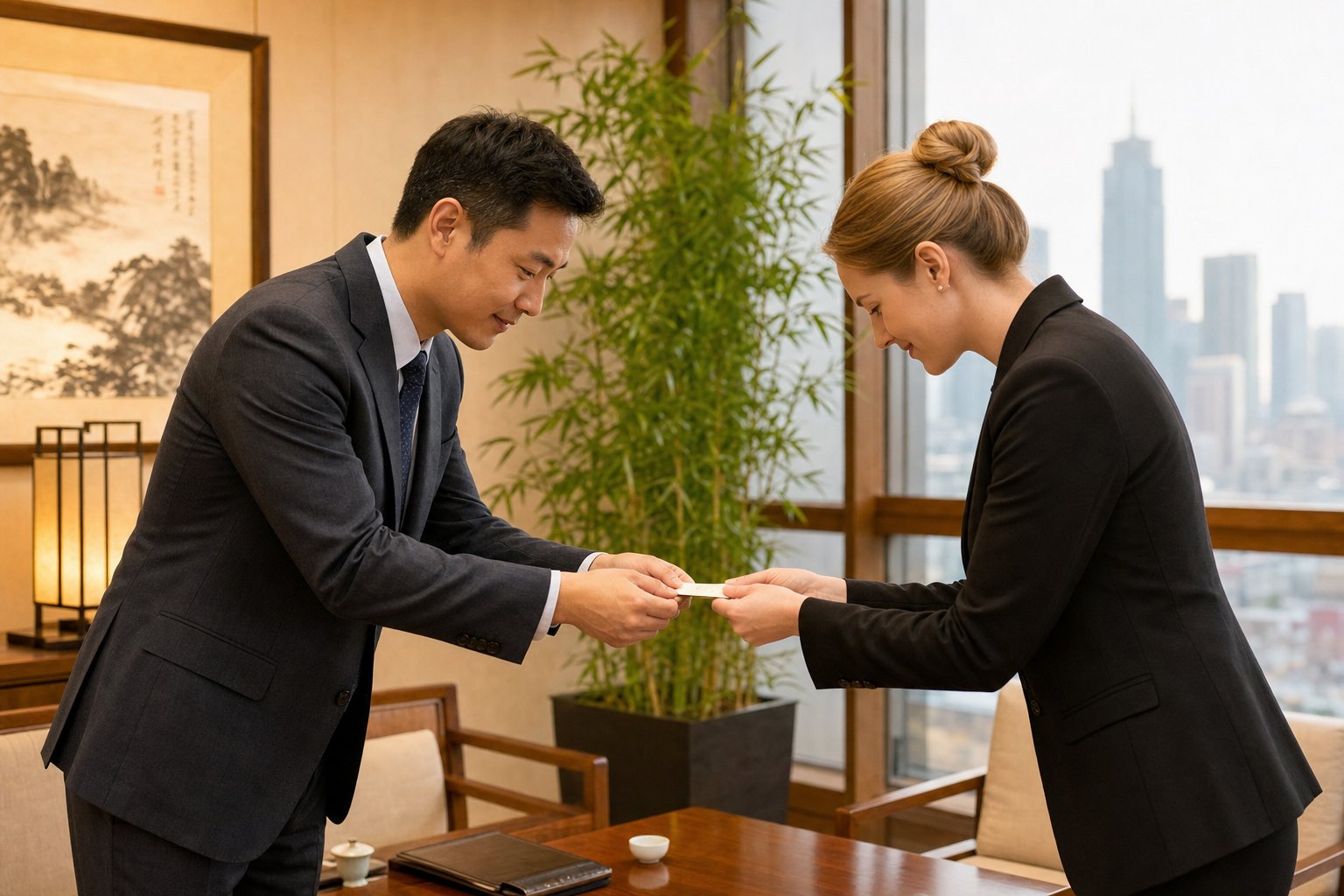
Which name should you use? Start with whatever they introduce themselves as. If someone hands you a business card that reads "David Chen (Chen Dawei)," they've signaled that David is their professional preference. If they introduce themselves as Chen Dawei without offering an English alternative, use that.
Seniority still matters, even in Western offices. A senior Chinese colleague who is 20 years your elder may not expect you to use their title in an American or British workplace, but they'll notice if you address them with the same casual tone you'd use with a peer. A slightly more respectful register, using their full name rather than a shortened nickname, for instance, goes a long way.
The biggest misstep in cross-cultural workplaces isn't using the wrong title. It's assuming all Chinese colleagues share the same preferences. Some embrace informality completely. Others maintain a clear boundary between their professional English persona and their Chinese identity. The only reliable approach is to pay attention to how each person introduces themselves and mirror that choice back.
Professional settings test your ability to read hierarchy and regional context. Social situations, by contrast, test something different entirely: your willingness to step into a more personal, relationship-driven mode of address where titles give way to kinship terms and warmth replaces formality.
Step 4 - Address People in Casual and Social Situations
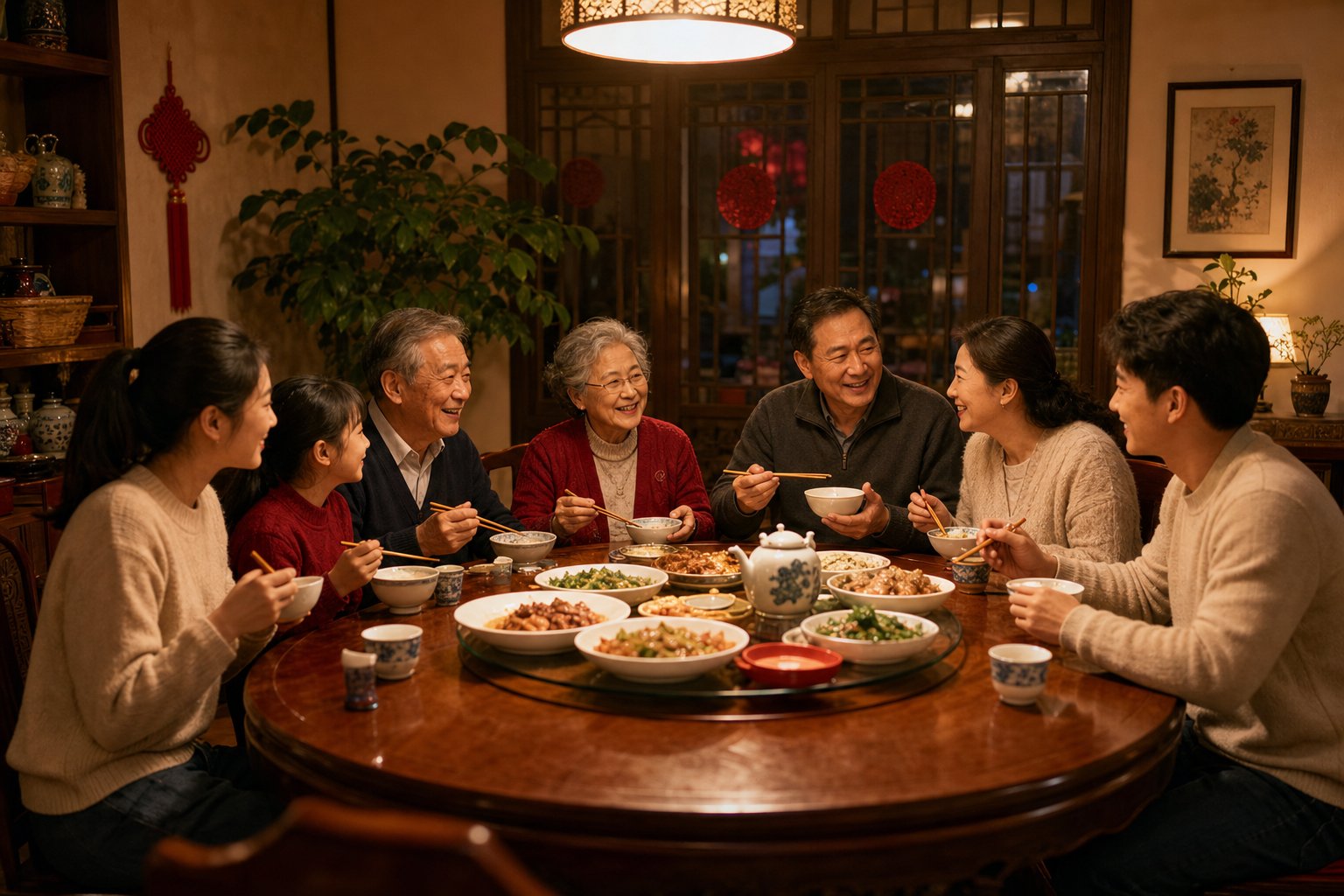
Formal titles work in boardrooms. But what happens when you're sitting across from your partner's mother at a dinner table, or trying to get directions from a stranger on the street? Social settings in China operate on a completely different logic: one built on warmth, implied family bonds, and age-based respect rather than professional rank.
Meeting a Partner's Parents or Elders
When you meet a partner's parents for the first time, the expected address terms carry real emotional weight. You'd typically call them the same kinship terms your partner uses, or a slightly more formal version. For your partner's mother, 阿姨 (ayi, auntie) is the safe starting point before marriage. For their father, 叔叔 (shushu, uncle) works the same way. After marriage, many families expect you to switch to 妈 (ma) and 爸 (ba), the terms for mom and dad.
Getting this right is one of the clearest ways to show chinese for respect in personal relationships. Elders pay close attention to how you address them because it signals whether you understand your place in the family structure and whether you take the relationship seriously. If you're unsure what to use, ask your partner beforehand. They'll know exactly what their parents expect.
Kinship Terms for Non-Relatives
Here's something that surprises most Westerners: Chinese people routinely use family terms for complete strangers. It's not weird or overly familiar. It's how community connection works. The key is matching the term to the person's approximate age relative to yours.
- 阿姨 (ayi) - Auntie. For women roughly your parents' age. Use with neighbors, shopkeepers, or any woman a generation older. Caution: calling a woman in her mid-thirties "auntie" when you're in your twenties may offend, since it implies she looks old.
- 叔叔 (shushu) - Uncle. For men your parents' age. Same caution applies: don't use it for a man in his 30s or early 40s, as it can feel like an ego blow.
- 大哥 (dage) - Big brother. For a man slightly older than you. Friendly and respectful without implying a large age gap.
- 大姐 (dajie) - Big sister. Same logic for women slightly older than you.
- 爷爷 (yeye) / 奶奶 (nainai) - Grandpa / Grandma. For elderly strangers clearly in their 70s or older. Warm and appropriate when asking for help or making conversation.
- 师傅 (shifu) - Master. The go-to for taxi drivers, delivery workers, and tradespeople. It respects their skill without implying a family-like relationship.
- 老板 (laoban) - Boss. Use for shopkeepers and restaurant owners. Everyone likes being called the boss.
When addressing random strangers whose age you can't gauge, the safest move is to skip the title entirely and open with 你好 (ni hao) or 不好意思 (bu hao yisi, excuse me). Both are polite, gender-neutral, and risk-free.
How Chinese People May Address You
Understanding how Chinese people greet each other helps you interpret what's happening when they address you. If someone calls you 大哥 or 美女 (meinv, beautiful girl), they're not flirting. They're using standard casual address. A shopkeeper calling you 老板 is being friendly, not sarcastic.
You might wonder: do Chinese people bow when greeting? Bowing in China is far less common than in Japan or Korea. A nod, a smile, or a handshake covers most situations. The typical asian hello you see in movies with deep bows doesn't reflect everyday Chinese greetings. In casual settings, Chinese people often skip physical gestures entirely and simply say the other person's name or title as the greeting itself. A neighbor might say "回来了!" (you're back!) rather than any formal hello.
Do Chinese bow in highly formal or ceremonial contexts? Occasionally, yes, such as at weddings or funerals. But in daily social life, verbal address carries the respect that physical gestures carry in other East Asian cultures. Knowing how to greet people in Chinese is less about what you do with your body and more about what comes out of your mouth.
One more thing to expect: Chinese people may give you a Chinese nickname or kinship term once you're close. Being called 小 plus a shortened version of your name is a sign of affection, not disrespect. It means you've been folded into the social fabric.
Social situations rely on reading age, closeness, and context in real time. But what happens when you're operating in English, where Chinese naming conventions collide with Western expectations? That's where a different set of challenges emerges.
Step 5 - Handle Names in English-Speaking Contexts
You've learned the structure, the titles, and the social cues. But what happens when a Chinese name lands on your desk in an English-language email, a meeting invite, or a LinkedIn request? The rules shift because two naming systems are now colliding, and assumptions made in either direction can miss the mark.
English Names and Why Chinese People Use Them
Many Chinese people adopt English names for practical reasons. Pronunciation is a big one. If your colleagues consistently butcher your given name, picking an English alternative removes daily friction. Some choose English names in school, others pick them when entering international workplaces, and some simply like having a name that moves easily across cultures.
This practice is deeply embedded in the culture of Chinese people who live or work internationally. It's not about rejecting their Chinese identity. It's a pragmatic adaptation. In typical chinese culture, a person's Chinese name remains their "real" name for family, legal documents, and personal identity, while the English name functions as a professional tool.
The key takeaway: never assume someone's English name is their "preferred" name in all contexts. It may simply be their work name.
Surname-First Confusion in Western Contexts
When a Chinese person writes their name in English, you can't always tell which order they've used. Someone named Chen Yufei might list themselves as "Yufei Chen" on Western platforms, following given-name-first convention. Or they might keep the chinese customary order: "Chen Yufei." Without context, you're guessing.
Hyphenated given names add another layer. A name like "Xiao-Ming" signals that both syllables form the given name, not that one is a middle name. Similarly, some people write their given name as one word (Xiaoming) while others split it (Xiao Ming). Neither format changes what are china people called in formal address. The surname is still the piece you pair with a title.
When in doubt, check their email signature, business card, or social profile. Many Chinese professionals now capitalize their surname (CHEN Yufei) or list both orders to eliminate confusion.
Diaspora and Overseas Chinese Address Preferences
Among overseas Chinese communities, preferences vary enormously and no single rule applies. A second-generation Chinese American might use only their English name and feel disconnected from chinese cultural norms around formal address. A first-generation immigrant might strongly prefer their Chinese name and find it dismissive when colleagues don't attempt it.
Generation matters. Personal history matters. Regional background matters. The cultural norms of China that shaped someone's parents may not apply to them at all, or they may hold those norms even more tightly as a way of preserving identity abroad.
The only reliable approach? Don't assume. If someone introduces themselves as "Kevin," use Kevin. If they introduce themselves as "Zhang Wei," use Zhang Wei. If you're unsure whether to use their English or Chinese name, a simple "What do you prefer to be called?" respects their autonomy without making it awkward. That single question sidesteps every possible misstep.
Knowing which name to use is half the equation. The other half, especially in professional relationships, is knowing how to write it in an email subject line, a WeChat message, or a LinkedIn note, where formality levels shift again.
Step 6 - Master Digital and Written Communication Address
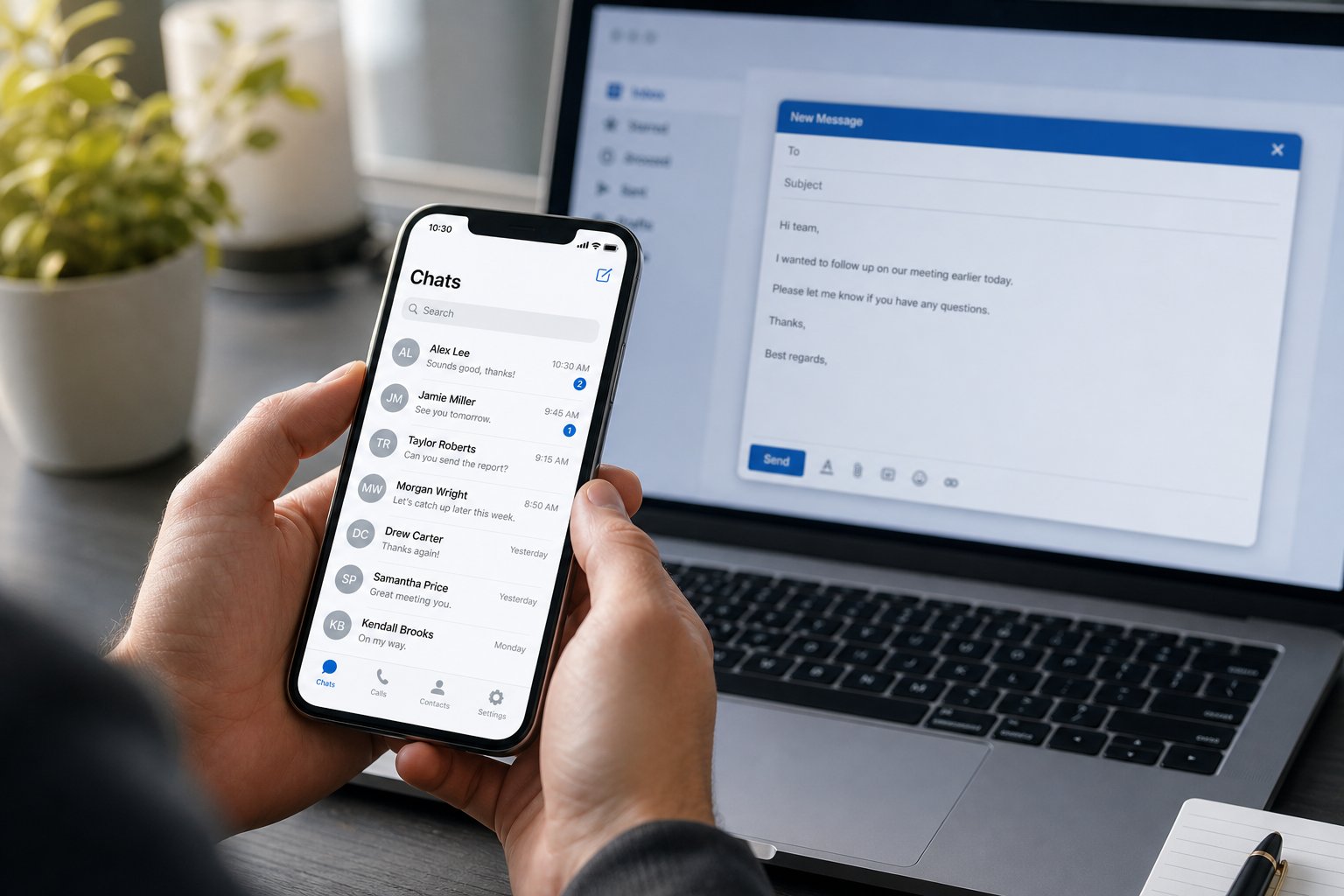
Picking the right name and title in person is one thing. Putting it in writing, where tone of voice and facial expressions can't soften a misstep, raises the stakes. Digital communication with Chinese contacts follows its own hierarchy of formality, and the platform you're using determines how formal you need to be. An email to a potential client in Beijing reads nothing like a quick WeChat reply to a colleague you've worked with for two years.
Email Salutations for Chinese Contacts
Chinese work culture tends to be more formal than in the West, and email reflects that clearly. The opening line of a Chinese business email always includes a greeting followed by the recipient's title and surname. Two greetings dominate:
- 尊敬的 (zunjing de) - "Respected." The standard for formal emails to superiors, clients, or anyone you haven't built a personal relationship with. Example: 尊敬的李总 (Respected General Manager Li).
- 亲爱的 (qin'ai de) - "Dear." Reserved for informal emails to peers, friends, or colleagues at your level. Note: men typically don't use this with each other due to gender norms in Chinese communication, and it's never used upward to a superior.
After the greeting, the formula is Name + Position. If you know someone's professional title, use it. A manager named Li Ming gets addressed as 李明经理 (Li Ming Jingli). If you don't know their position, fall back on 先生 or 女士 after their surname. When writing in English to a Chinese contact, mirror this respect: "Dear Manager Li" or "Dear Ms. Chen" rather than jumping straight to a first name.
For signing off, politeness in Chinese emails follows set phrases. The most common formal closing is 此致敬礼 (ci zhi jingli), equivalent to "Sincerely." For business-specific contexts, 顺祝商祺 (shun zhu shang qi) means "Best wishes for your business" and signals professional warmth. A less formal but still polite option is 期待您的答复 (qidai nin de huifu), meaning "Looking forward to your reply."
WeChat and Messaging App Etiquette
WeChat isn't just a messaging app in China. It replaces email's role in much of Chinese business communication. Documents, invoices, project updates, and quick decisions all flow through WeChat messages rather than inboxes. That means your manners in Chinese digital spaces need to extend beyond email.
A few etiquette rules that matter:
- Confirm receipt of important messages. Replying 收到 (shou dao, "Got it") or 好的 (hao de, "Okay") to a work message is expected. Silence can be read as ignoring the sender.
- Match the other person's formality level. If your contact opens with 您好 (nin hao, the formal "you"), respond at the same register. If they use casual language, you can relax too.
- Voice messages are common. Don't be surprised if a Chinese colleague sends a 60-second voice note instead of typing. It's standard practice, not laziness. Respond in whatever format feels natural to you.
- First contact still requires respect. When adding someone new on WeChat, include a brief introduction: your name, how you're connected, and why you're reaching out. A cold add with no context feels presumptuous.
Younger Chinese professionals under 35 tend to drop formality on WeChat faster than in email. Emojis, shortened phrases, and casual greetings replace the structured openings you'd use in a formal message. But with someone senior or unfamiliar, err on the side of etiquette in Chinese messaging norms: open with their title, keep the tone respectful, and let them set the pace for informality.
LinkedIn and Professional Platform Norms
LinkedIn connection requests to Chinese professionals follow Western platform conventions more closely, since the platform itself is international. Still, a few adjustments show cultural awareness. Use their full name as displayed on their profile. If they list a professional title, reference it. A connection note that reads "Dear Director Zhang, I enjoyed your presentation at the conference" lands better than a generic "Let's connect."
For Chinese professionals on LinkedIn, their displayed name often signals their preference. If they list "David Zhang" rather than "Zhang Dawei," they've chosen the Western order for that platform. Mirror it back.
Here's how formality levels rank across different communication formats, from most formal to most casual:
- Formal business letter - Opening: 尊敬的 + full name + title (e.g., 尊敬的刘总, "Respected General Manager Liu"). Full structured format with 此致敬礼 closing.
- First-contact business email - Opening: 尊敬的 + surname + title, followed by 您好 on the next line. Professional sign-off required.
- Ongoing business email - Opening: surname + title + 您好 (e.g., 王经理您好, "Hello Manager Wang"). Slightly warmer, less rigid structure.
- LinkedIn message - Opening: "Dear [Title + Surname]" or "Hi [English name]," depending on their profile presentation.
- First WeChat message (professional) - Opening: surname + title + 您好, plus a brief self-introduction.
- Ongoing WeChat message (familiar colleague) - Opening: name or nickname directly, or just jumping into the topic. Emojis acceptable.
- Casual WeChat message (friend) - Opening: nickname, 小 prefix, or no greeting at all. Voice messages, stickers, and informal language are standard.
The pattern is clear: formality decreases as the platform becomes more conversational and as the relationship deepens. Chinese manners and etiquette in digital spaces aren't about rigid rules. They're about reading which level of the ladder you're on with each specific person and choosing your opening accordingly.
Even with all this knowledge, mistakes happen. You'll misjudge a formality level, mispronounce a name, or accidentally use a given name where a title was expected. The real skill isn't avoiding errors entirely. It's knowing how to ask the right question and recover with grace when things go sideways.
Step 7 - Ask Preferences and Recover From Mistakes Gracefully
You've learned the structure, the titles, the regional differences, and the digital norms. But here's the truth: you will still get something wrong. Maybe you'll call someone by their given name thinking it's their surname. Maybe you'll mispronounce a tone so badly the meaning shifts entirely. Maybe you'll use a title that doesn't match their role. None of these are catastrophic. In chinese customs and etiquette, the effort matters more than perfection, and a graceful recovery earns more respect than avoiding interaction altogether.
How to Ask What Someone Prefers to Be Called
The simplest way to avoid a mistake? Ask. It's not awkward. It's not rude. In fact, asking shows cultural awareness because it acknowledges that preferences vary. Here are phrases that work in both English and Mandarin:
English: "What would you like me to call you?" or "How do you prefer to be addressed?"
Mandarin: 我怎么称呼您比较好?(Wo zenme chenghu nin bijiao hao?) - "How should I address you?"
Mandarin (casual): 我叫你什么好?(Wo jiao ni shenme hao?) - "What should I call you?"
The first Mandarin phrase uses 您 (nin), the formal "you," which makes it appropriate for professional settings and elders. The second uses 你 (ni), the informal version, better suited for peers or social situations. Both signal that you respect the other person's autonomy over their own name.
Timing matters. Ask early, ideally during introductions or the first exchange. Asking after you've been using the wrong name for weeks feels more awkward than asking upfront. If someone hands you a business card with both Chinese and English names, a quick "Which name do you prefer I use?" resolves any ambiguity instantly.
Common Mistakes and How to Correct Them
Three errors come up repeatedly for people learning how to address Chinese people properly:
- Confusing surname and given name. You meet someone named Liu Xiaohong and call her "Ms. Xiaohong" instead of "Ms. Liu." This is the most common mistake and the easiest to fix. Simply correct yourself: "Sorry, Ms. Liu" and move on. No lengthy explanation needed.
- Using a given name too casually. Calling someone by their given name alone implies closeness that hasn't been established. If you catch yourself, switch to their surname plus title in the next sentence. The shift itself communicates that you recognize the misstep.
- Mispronouncing tones. Tones change meaning in Mandarin, and getting them wrong can create confusion. But here's the reassuring part: context almost always makes your intent clear. Chinese speakers are accustomed to hearing non-native pronunciation. A genuine attempt, even an imperfect one, registers as respect rather than offense.
The pattern across all three mistakes is the same: correct quickly, don't over-apologize, and keep the conversation moving. Drawing excessive attention to your error makes the other person responsible for comforting you, which flips the social dynamic in an uncomfortable direction.
Cultural Grace When You Get It Wrong
Among traditional chinese customs, saving face applies to everyone in an interaction, not just yourself. When you make a naming mistake, the most culturally aligned response is a brief acknowledgment followed by the correct form. Think of it like a musician hitting a wrong note and smoothly continuing the piece rather than stopping to announce the error to the audience.
If you need to apologize, 不好意思 (bu hao yisi) is your best choice. It means "excuse me" or "my bad" and fits situations where you've caused mild social friction without serious harm. Reserve 对不起 (duibuqi) for genuine mistakes that actually affected someone. Using the lighter phrase keeps the moment small, which is exactly what you want.
What are some chinese traditions around handling social errors? The core principle is mutual face-saving. When someone mispronounces your Chinese colleague's name, you'll often see others gently offer the correct pronunciation without making it a teaching moment. Mirror that same grace when you're corrected. A simple 谢谢 (xiexie, thank you) after being corrected shows you appreciate the help rather than feeling embarrassed by it.
Understanding china customs and traditions around naming isn't about achieving flawless performance. The traditions and customs of china around address exist to build connection, not to create barriers. Every Chinese person you meet knows that their naming system differs from Western norms. Most appreciate any genuine effort to get it right, and they'll meet you halfway when you stumble. The customs of chinese address reward sincerity over precision, and that's the most important thing to carry with you into any interaction, whether it's your first business meeting in Shanghai or a family dinner with your partner's parents.
Frequently Asked Questions About Addressing Chinese People
1. Do you use the first or last name when addressing a Chinese person?
In Chinese naming convention, the surname (family name) comes first and the given name follows. When addressing someone formally, pair their surname with an appropriate title such as xiansheng (Mr.) or nushi (Ms.). For example, if someone is named Wang Xiaoming, Wang is the surname, so you would say 'Mr. Wang' rather than 'Mr. Xiaoming.' Using the given name alone implies a level of closeness that may not yet exist in the relationship.
2. Is it rude to call a Chinese person by their first name?
Using a Chinese person's given name without an established close relationship can feel overly familiar, especially with older individuals or in professional settings. The safe default is surname plus title (e.g., Manager Li, Ms. Chen). Younger Chinese professionals in international workplaces may be more relaxed about given-name usage, but it is best to wait for them to invite that level of informality rather than assuming it is welcome.
3. Should I use a Chinese colleague's English name or Chinese name?
Use whichever name they introduce themselves with. If a colleague says 'Call me David,' use David. If they introduce themselves as Zhang Wei without offering an English alternative, use Zhang Wei. Many Chinese professionals adopt English names for workplace convenience, but preferences vary by individual. When uncertain, simply ask 'What do you prefer to be called?' to respect their choice without making assumptions.
4. How do you greet someone in Chinese for the first time in a business setting?
In a first business meeting, address the person using their surname plus their professional title, such as Wang Zong (General Manager Wang) or Li Jingli (Manager Li). If you do not know their title, surname plus xiansheng (Mr.) or nushi (Ms.) is universally appropriate. Let the senior person set the tone for any shift toward informality, and avoid using given names or casual address until explicitly invited to do so.
5. What should I do if I mispronounce a Chinese person's name?
Correct yourself briefly and move on without over-apologizing. Chinese speakers are accustomed to hearing non-native pronunciation attempts and generally appreciate the effort regardless of accuracy. If corrected, say xiexie (thank you) and use the corrected form going forward. Drawing excessive attention to the error can make the situation more uncomfortable for everyone. The cultural expectation is mutual face-saving through quick, graceful recovery.