Why Gender Is Hard to Read in Pinyin Names
Imagine you receive a professional email signed "Wei Zhang" or spot the author name "Jing Li" on an academic paper. You need to reply or write a reference, but you have no idea whether you are addressing a man or a woman. With names like "Michael" or "Maria," the answer is almost instant. With a name in Chinese rendered as pinyin, the signal simply is not there.
This is not a gap in your cultural knowledge. It is a structural problem baked into how Chinese names travel across languages. Chinese characters carry layered gender information through their visual radicals, semantic meanings, and historical usage patterns. The character for a common chinese name like "Jing" might contain a radical associated with femininity, masculinity, or neither, and a native reader picks up on that immediately. Strip those characters away, romanize the sound, and you are left with a bare syllable that could map to dozens of entirely different characters with opposite gender associations.
Why Pinyin Names Challenge Gender Identification
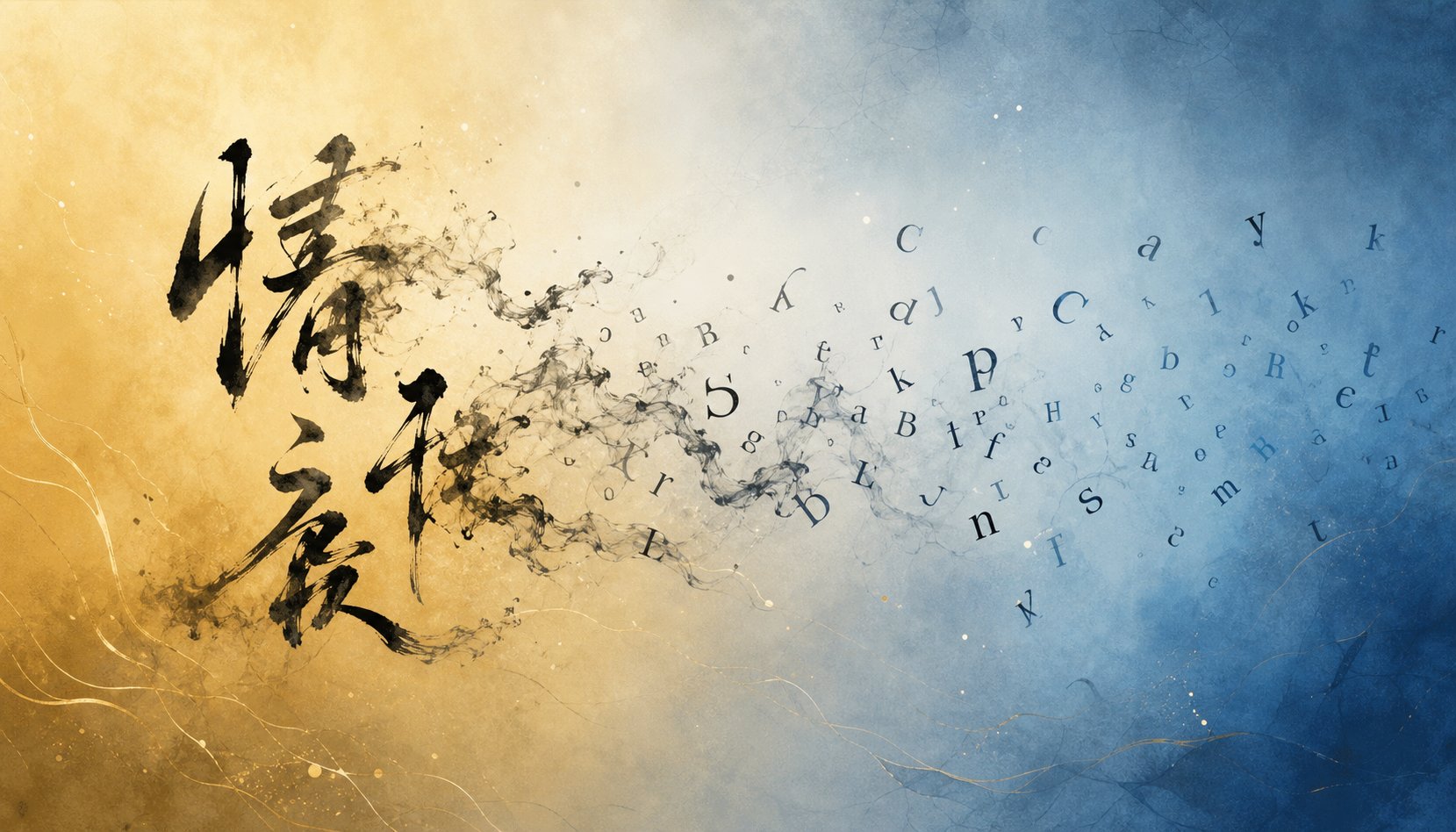
The root of the difficulty is compression. Mandarin Chinese uses thousands of distinct characters, each with its own meaning and gender connotation. Pinyin, however, flattens all of that richness into a limited phonetic inventory.
Pinyin is a phonetic system that collapses thousands of distinct characters into roughly 400 syllables, making gender inference fundamentally different from character-based reading.
Research published in Scientific Data confirms the scale of this problem: the error rate of commonly used gender detection tools on Chinese given names in pinyin format ranges from 43% to 94%, rendering them essentially unreliable. Even among the most common chinese names, a single pinyin string can represent characters that are strongly feminine, strongly masculine, or completely neutral. Western name-gender databases, built on alphabetic languages where spelling itself signals gender, have no framework for handling this kind of ambiguity.
What This Guide Covers
This guide bridges academic linguistics and everyday cross-cultural communication. You will learn how chinese names and meanings encode gender at the character level, which phonetic patterns in pinyin still carry statistical gender cues, and how regional and generational trends shift the landscape. Each section draws on corpus research and peer-reviewed findings, translated into practical heuristics you can apply the next time a pinyin name lands in your inbox. The goal is not to make you guess perfectly but to help you understand what information is present, what is lost, and when the respectful move is simply to ask.
How Chinese Naming Conventions Build Gender Signals
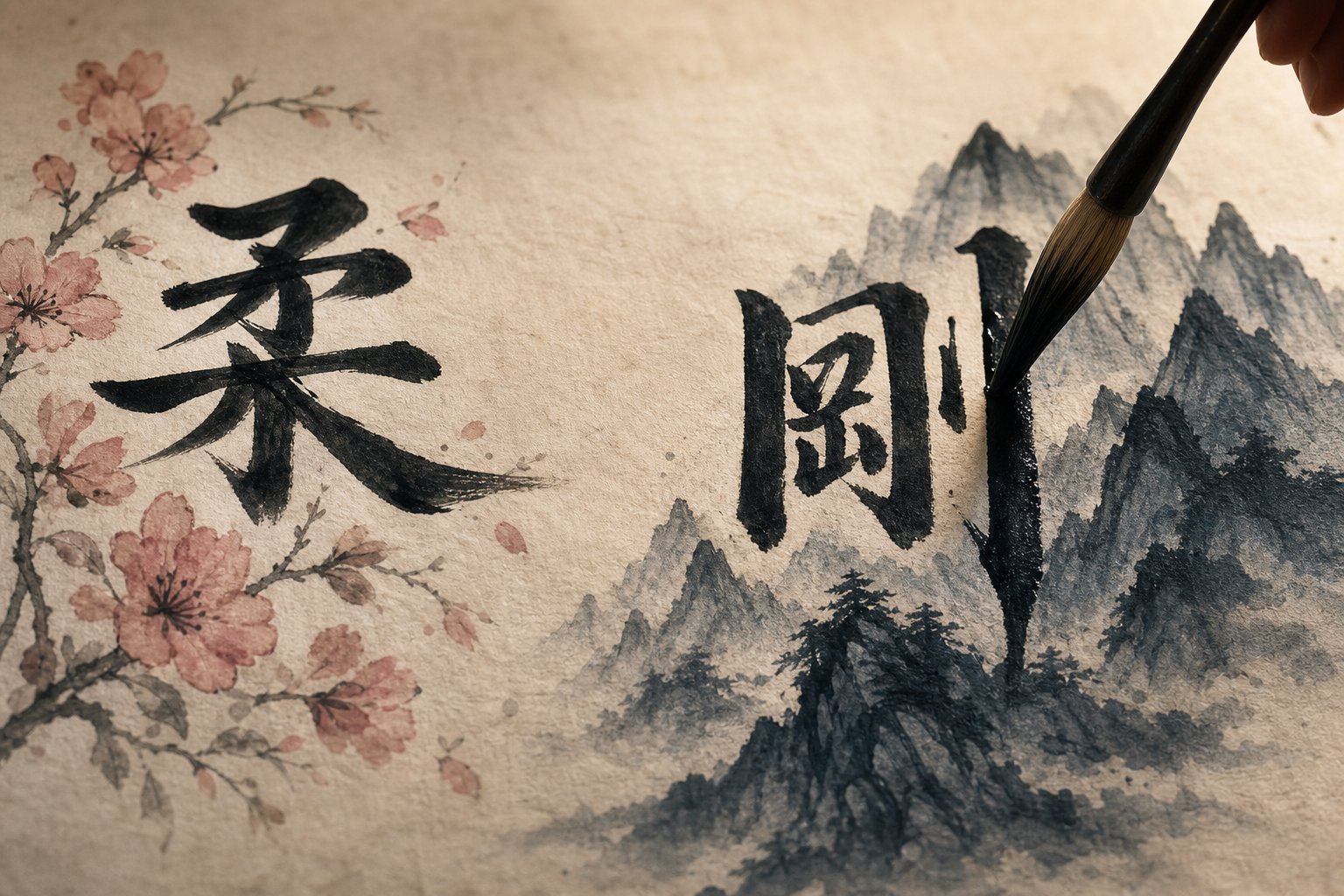
Chinese names follow a distinctive syntax: surname first, given name second. The surname is inherited, typically one character drawn from a pool of a few hundred common options. The given name, however, is where all the creative and cultural weight lands. It consists of one or two characters chosen specifically for that individual, each carrying its own meaning, tone, and visual structure. This is the space where gender gets encoded, and it works through mechanisms that have no equivalent in most Western naming traditions.
How Chinese Given Names Encode Gender Through Characters
When you encounter chinese first names in their original script, gender cues operate on multiple levels simultaneously. Each character is not just a sound but a small picture built from components called radicals. These radicals hint at the character's semantic category, much like a prefix or suffix in English hints at word meaning. A native reader processes these layers instantly, picking up gender associations without conscious effort.
Research in cultural onomastics confirms that China has never had strict linguistic rules mandating gender-specific names. Instead, names are considered masculine or feminine based on the idea that certain objects, qualities, and concepts are culturally treated as characteristic of men or women. The result is a probabilistic system, not a binary one, but the statistical tendencies are strong enough to make gender inference highly reliable at the character level.
The Role of Radicals and Semantic Meaning
Think of radicals as tiny meaning tags embedded inside each character. A character containing the grass radical (艹, cao) likely relates to plants or flowers. One built with the jade radical (玉, yu) connects to precious stones and refinement. These associations map onto gender expectations in chinese naming conventions. Here are some of the most common gender-linked radicals and what happens when their characters get romanized:
- Grass radical (艹) - appears in characters like 芳 (fang, fragrance), 莉 (li, jasmine), 蕊 (rui, flower pistil). Strongly feminine. In pinyin, "fang" and "li" carry no trace of the floral radical.
- Woman radical (女) - appears in characters like 娟 (juan, graceful), 婷 (ting, elegant), 妍 (yan, beautiful). Explicitly feminine. In pinyin, "juan" and "ting" look completely gender-neutral.
- Jade radical (玉/王) - appears in characters like 瑶 (yao, precious jade), 琳 (lin, fine jade). Leans feminine. In pinyin, "yao" and "lin" reveal nothing about jade.
- Metal radical (金/钅) - appears in characters like 锋 (feng, sharp edge), 铭 (ming, inscribe). Leans masculine. In pinyin, "feng" and "ming" are indistinguishable from their feminine homonyms.
- Strength radical (力) - appears in characters like 勇 (yong, brave), 劲 (jin, vigor). Masculine. In pinyin, "yong" and "jin" lose all connection to physical power.
- Mountain radical (山) - appears in characters like 岩 (yan, rock), 峰 (feng, peak). Masculine. In pinyin, "yan" is identical to the feminine "yan" meaning graceful or swallow.
You'll notice the pattern: radicals that evoke beauty, nature, and refinement cluster in female chinese given names, while radicals tied to strength, metal, and vastness cluster in male names. The moment these characters become pinyin, every one of those visual and semantic tags disappears.
Why Intentional Name Selection Matters
Here is what makes chinese names and characters so different from Western naming traditions. In English, parents often choose names from an existing inventory. "James" is masculine because generations of men have carried it, not because the letters J-A-M-E-S encode a meaning about manhood. The name is a cultural inheritance, not a semantic construction.
Chinese given names work the opposite way. Parents actively compose a name by selecting characters for their meaning, sound, and visual balance. Analysis of naming data covering nearly 1.2 billion Han Chinese individuals born between 1930 and 2008 shows clear thematic patterns: sons receive characters associated with ambition (志, zhi), openness (明, ming), and culture (文, wen), while daughters receive characters invoking beauty (丽, li), purity (玉, yu), and fragrance (芳, fang). Each character is a deliberate wish encoded in script.
This intentional selection is precisely why gender signals are so strong in written Chinese and so weak in pinyin. The meaning is the message. When romanization strips the meaning and leaves only the sound, you lose the very layer that parents spent time choosing. A name like "Yan" could be 燕 (swallow, feminine), 岩 (rock, masculine), or 彦 (accomplished, neutral). Three completely different wishes, collapsed into three identical letters.
Character frequency data reinforces this gap. A dataset of over 30 million Chinese individuals found that gender can be reliably assigned to more than 80% of names when using Chinese characters with a 0.9 confidence threshold. Convert those same names to pinyin, and the proportion of clearly gendered names drops significantly, with gender-neutral names rising from about 4.82% in characters to 7.66% in pinyin format. The information is there in the original script. It simply does not survive the translation into sound alone.
So what patterns, if any, do survive in pinyin? Certain syllables still carry statistical leanings toward one gender, shaped by which characters parents most frequently select for sons versus daughters. Those phonetic tendencies are the subject of the next sections.
Common Male Pinyin Name Patterns and Elements
Certain pinyin syllables show up far more often in male names than female ones. These are not random. They reflect centuries of cultural expectations about masculinity, encoded through character selection and reinforced across generations. When you encounter chinese male names in romanized form, the underlying characters almost always draw from a handful of recognizable thematic pools. Understanding those pools gives you a statistical edge, even without seeing the original script.
Pinyin Syllables That Lean Masculine
Corpus research on millions of Chinese names reveals that specific pinyin syllables carry strong masculine associations. These associations exist because the most common characters mapped to those syllables happen to express qualities traditionally linked to men: physical strength, moral ambition, brightness, and endurance. Here is a reference table of the most frequently occurring masculine pinyin elements, the character meanings they typically represent, and example full names:
| Pinyin Element | Most Common Character Meanings | Example Full Names |
|---|---|---|
| wei | greatness (伟), power (威), defend (卫) | Zhang Wei, Li Weiguo |
| jian | strong (健), build (建), sword (剑) | Wang Jian, Chen Jianguo |
| ming | bright (明), fame (名), inscribe (铭) | Liu Ming, Zhao Mingzhi |
| gang | steel (钢), firm (刚), ridge (岗) | Li Gang, Zhang Gangqiang |
| yong | brave (勇), eternal (永), surge (涌) | Wang Yong, Chen Yongqiang |
| zhi | ambition (志), wisdom (智), will (志) | Liu Zhigang, Zhao Zhiyuan |
| qiang | strong (强), wall (墙) | Li Qiang, Wang Zhiqiang |
| jun | army (军), handsome (俊), ruler (君) | Zhang Jun, Chen Junjie |
| hai | sea (海), vast (海) | Wang Hai, Li Hailong |
| long | dragon (龙), grand (隆) | Zhao Long, Liu Jilong |
A few things stand out. Many of these syllables end in open vowels or strong nasal finals like "-ang" and "-ong." The consonant onsets tend toward harder sounds: "g," "zh," "j," and "q." These phonetic features are not gender markers in themselves, but they correlate with masculine naming because the characters parents choose for sons happen to cluster around these sound shapes. Data from a dataset of over 30 million Chinese individuals confirms that names containing these syllables are predicted as male with high confidence when character-level information is available.
Thematic Clusters in Male Chinese Names
Chinese male first names do not scatter randomly across the dictionary. They cluster into distinct thematic groups that reflect cultural ideals of masculinity. Recognizing these clusters helps you spot patterns even when a specific syllable is unfamiliar.
Strength and power. This is the most concentrated cluster. Characters like 强 (qiang, strong), 刚 (gang, firm), 勇 (yong, brave), 力 (li, power), and 威 (wei, mighty) all express physical or moral toughness. In pinyin, you will see these as "qiang," "gang," "yong," and "wei." Research on gendered naming practices notes that such diversity in boy's names aligns with traditional perspectives assigning greater social and public expectations to men.
Ambition and achievement. Characters like 志 (zhi, ambition), 成 (cheng, accomplish), 建 (jian, build), and 功 (gong, merit) encode aspirations for professional and moral success. These appear in male chinese given names across all generations, though their frequency has shifted over time.
Vastness and nature. Mountains, oceans, and sky imagery dominate this cluster. Characters like 海 (hai, sea), 峰 (feng, peak), 山 (shan, mountain), 龙 (long, dragon), and 鹏 (peng, mythical bird) connect masculinity to scale and grandeur. The natural world referenced in chinese names for men tends toward the immovable and the vast, in contrast to the delicate flora associated with feminine names.
Light and clarity. Characters like 明 (ming, bright), 辉 (hui, radiance), 昊 (hao, vast sky), and 阳 (yang, sun) link masculinity to illumination and openness. This cluster connects to the traditional yin-yang framework, where yang energy is associated with brightness, activity, and the masculine principle.
Compound Name Patterns for Men
Most Chinese given names consist of two characters, and masculine chinese names often combine elements from different thematic clusters to create layered meaning. These compound patterns produce distinctive pinyin combinations that, while not definitive, lean strongly male in statistical terms.
Common compound structures include:
- Ambition + Strength: Zhiqiang (志强, ambition + strong), Jianguo (建国, build + nation), Zhiyong (志勇, ambition + brave)
- Vastness + Power: Hailong (海龙, sea + dragon), Haifeng (海峰, sea + peak), Yunlong (云龙, cloud + dragon)
- Light + Achievement: Mingzhi (明志, bright + ambition), Guanghui (光辉, light + radiance), Mingcheng (明成, bright + accomplish)
- Virtue + Strength: Junjie (俊杰, handsome + outstanding), Weiguo (卫国, defend + nation), Yongde (勇德, brave + virtue)
You'll notice that compound names in pinyin are often longer, typically four to six letters per syllable pair. When you see a two-syllable given name where both syllables appear in the masculine reference table above, the probability of a male name increases substantially. A name like "Zhiqiang" or "Jianguo" carries a very high male probability, not because of any single phonetic feature, but because both components draw from the same masculine character pool.
One important caveat: these are statistical tendencies drawn from corpus research, not absolute rules. The Chinese Gender dataset shows that approximately 4.82% of names in Chinese characters fall into a genuinely gender-neutral zone. Some syllables like "ming" can represent both the masculine 明 (bright) and the gender-neutral 铭 (inscribe) or even appear in female names as 茗 (tea). Context, generation, and regional variation all modulate these patterns. A single syllable is a clue, not a verdict.
Still, the phonetic fingerprint of masculine naming is real. Harder consonant onsets, strong nasal endings, and syllables drawn from the strength-ambition-vastness semantic space all tilt the odds toward male. The feminine side of the spectrum operates through a different phonetic and thematic logic entirely, one built around softness, beauty, and a very different relationship to the natural world.
Common Female and Gender-Neutral Pinyin Name Patterns
Where masculine pinyin elements draw from steel, mountains, and ambition, feminine naming operates through an entirely different aesthetic vocabulary. The thematic territory shifts toward beauty, flowers, gentleness, and precious materials. These are not arbitrary associations. They reflect centuries of cultural ideals about femininity, encoded through deliberate character selection and reinforced by naming frequency data across generations. When you encounter chinese female given names in romanized form, the underlying characters almost always pull from these recognizable pools.
Pinyin Syllables That Lean Feminine
Corpus analysis of chinese given names female reveals that certain pinyin syllables appear overwhelmingly in women's names. The reason is straightforward: the most commonly chosen characters behind those syllables express qualities culturally linked to femininity. Beauty, grace, floral imagery, and quiet refinement dominate. Here is a reference table of the most frequently occurring feminine pinyin elements:
| Pinyin Element | Most Common Character Meanings | Example Full Names |
|---|---|---|
| mei | beautiful (美), plum blossom (梅), younger sister (妹) | Wang Mei, Li Meiling |
| xiu | elegant (秀), embroidery (绣) | Zhang Xiuying, Chen Xiulan |
| hua | flower (花), splendid (华) | Li Hua, Wang Chunhua |
| yan | swallow bird (燕), graceful (妍), colorful (艳) | Liu Yan, Zhao Yanlin |
| jing | quiet (静), crystal (晶), clean (净) | Wang Jing, Li Jingjing |
| li | beautiful (丽), jasmine (莉), elegant (俐) | Zhang Li, Chen Lili |
| fang | fragrance (芳), virtuous (方) | Wang Fang, Liu Jingfang |
| ting | graceful (婷), pavilion (亭) | Li Ting, Zhang Tingting |
| lan | orchid (兰), blue (蓝) | Chen Lan, Wang Xiulan |
| yue | moon (月), joy (悦) | Li Yue, Zhao Xingyue |
Notice the phonetic texture. Many of these syllables feature softer consonant onsets and front vowels like "i" and "ue." Endings tend toward open vowels or light nasals rather than the heavy "-ang" and "-ong" finals that dominate masculine names. The syllable "yan," for instance, appears in both male and female names, but its most frequent character mappings in women's names are 燕 (swallow) and 妍 (graceful beauty), while in men's names it typically maps to 岩 (rock). Same sound, opposite worlds.
Feminine Thematic Clusters
Just as male names cluster around strength and ambition, chinese names with meaning for women organize into distinct thematic groups. Recognizing these clusters helps you interpret unfamiliar pinyin combinations.
Beauty and elegance. This is the densest cluster. Characters like 美 (mei, beautiful), 丽 (li, gorgeous), 秀 (xiu, elegant), 婷 (ting, graceful), and 妍 (yan, lovely) all express aesthetic ideals directly. In pinyin, these appear as "mei," "li," "xiu," "ting," and "yan." Traditional names like Xiuying (秀英, elegant and brave) and Meiling (美玲, beautiful and delicate) have been among the most popular chinese female given names for decades.
Flowers and nature. Floral imagery is deeply embedded in feminine naming. Characters like 花 (hua, flower), 兰 (lan, orchid), 莲 (lian, lotus), 梅 (mei, plum blossom), and 蓉 (rong, hibiscus) connect women's names to the natural world. Flower-inspired names such as Lianhua (莲花, lotus flower), Meihua (梅花, plum blossom), and Mudan (牡丹, peony) represent an entire naming tradition. The nature referenced here is delicate and seasonal, in contrast to the mountains and oceans of masculine naming.
Gentleness and virtue. Characters like 淑 (shu, kind and pure), 静 (jing, quiet), 慧 (hui, wise), 宁 (ning, peaceful), and 贞 (zhen, faithful) encode moral qualities associated with traditional femininity. Names built from this cluster, such as Shuzhen (淑珍, gentle and precious) or Jingya (静雅, serene elegance), carry a calm, composed energy that reads clearly even in pinyin.
Precious materials. Jade, pearl, and gold appear frequently in chinese name meanings for women. Characters like 玉 (yu, jade), 珍 (zhen, precious), 珠 (zhu, pearl), 瑶 (yao, precious jade), and 琳 (lin, fine jade) link femininity to rarity and value. A name like Baoyu (宝玉, precious jade) or Zhenzhu (珍珠, pearl) signals femininity through material metaphor. In pinyin, "yu" and "zhen" lose this association entirely since both syllables map to dozens of unrelated characters.
Reduplication as a Feminine Marker
One of the strongest gender signals that actually survives romanization is reduplication: repeating the same syllable to form a given name. Names like Lili, Tingting, Jingjing, Feifei, and Ningning are overwhelmingly feminine in Chinese naming practice. Linguistic research identifies this pattern as a reliable gender marker because it connects to diminutive and affectionate speech patterns culturally associated with women and girls.
The range of reduplicated names is wide: Qianqian (倩倩, graceful beauty), Yaoyao (瑶瑶, precious jade), Xinxin (欣欣, thriving), Shanshan (珊珊, coral), and Qingqing (青青, fresh green) all follow this structure. Even without knowing the underlying characters, when you see a pinyin name with a repeated syllable pattern like "XX" in the given name position, the probability of a female name is high. This makes reduplication one of the few pinyin-level cues that carries genuine predictive power for gender.
That said, some reduplicated forms do appear in childhood nicknames for boys, particularly in informal family contexts. The distinction is that formal registered names with reduplication lean strongly feminine, while informal nicknames are more flexible.
Gender-Neutral Pinyin Names
Not every pinyin name falls neatly on one side of the spectrum. A growing number of chinese gender neutral names occupy ambiguous territory where phonetic cues alone cannot resolve the question. These names are especially common among younger generations, where parents increasingly choose characters for aesthetic sound or philosophical meaning rather than traditional gender alignment.
Some of the most frequently encountered gender-ambiguous pinyin names include:
- Yu - could be 玉 (jade, leans feminine), 宇 (universe, leans masculine), or 雨 (rain, neutral)
- Jie - could be 洁 (pure, leans feminine), 杰 (outstanding, leans masculine), or 捷 (quick, neutral)
- Min - could be 敏 (quick/clever, slightly feminine), 民 (people, slightly masculine), or 旻 (autumn sky, neutral)
- Xin - could be 欣 (joyful, slightly feminine), 鑫 (prosperous, slightly masculine), or 新 (new, neutral)
- Chen - could be 晨 (morning, neutral), 辰 (star/time, neutral), or 琛 (treasure, slightly masculine)
- An - could be 安 (peace, neutral), used freely for both genders
- Ning - could be 宁 (peaceful, slightly feminine) or 凝 (concentrated, neutral)
Modern naming guides confirm this trend, listing names like Anhe (安禾, peace + grain), Qingning (清宁, clear + tranquility), and Leyan (乐言, joy + speech) as explicitly gender-neutral options that work equally well for boys and girls. The rise of these names reflects a broader cultural shift in mainland China, where post-1990s parents increasingly prioritize individual expression over traditional gender coding.
For anyone trying to assess pinyin name gender differences, gender-neutral names represent the hard boundary of phonetic inference. When a name like "Yu Jie" or "Chen Min" appears without additional context, no amount of phonetic analysis will resolve the ambiguity. The characters behind the pinyin hold the answer, but the pinyin itself stays silent. This is where the structural limitations of romanization become most visible, and where the many-to-one mapping problem demands closer examination.
Why Pinyin Romanization Strips Away Gender Cues
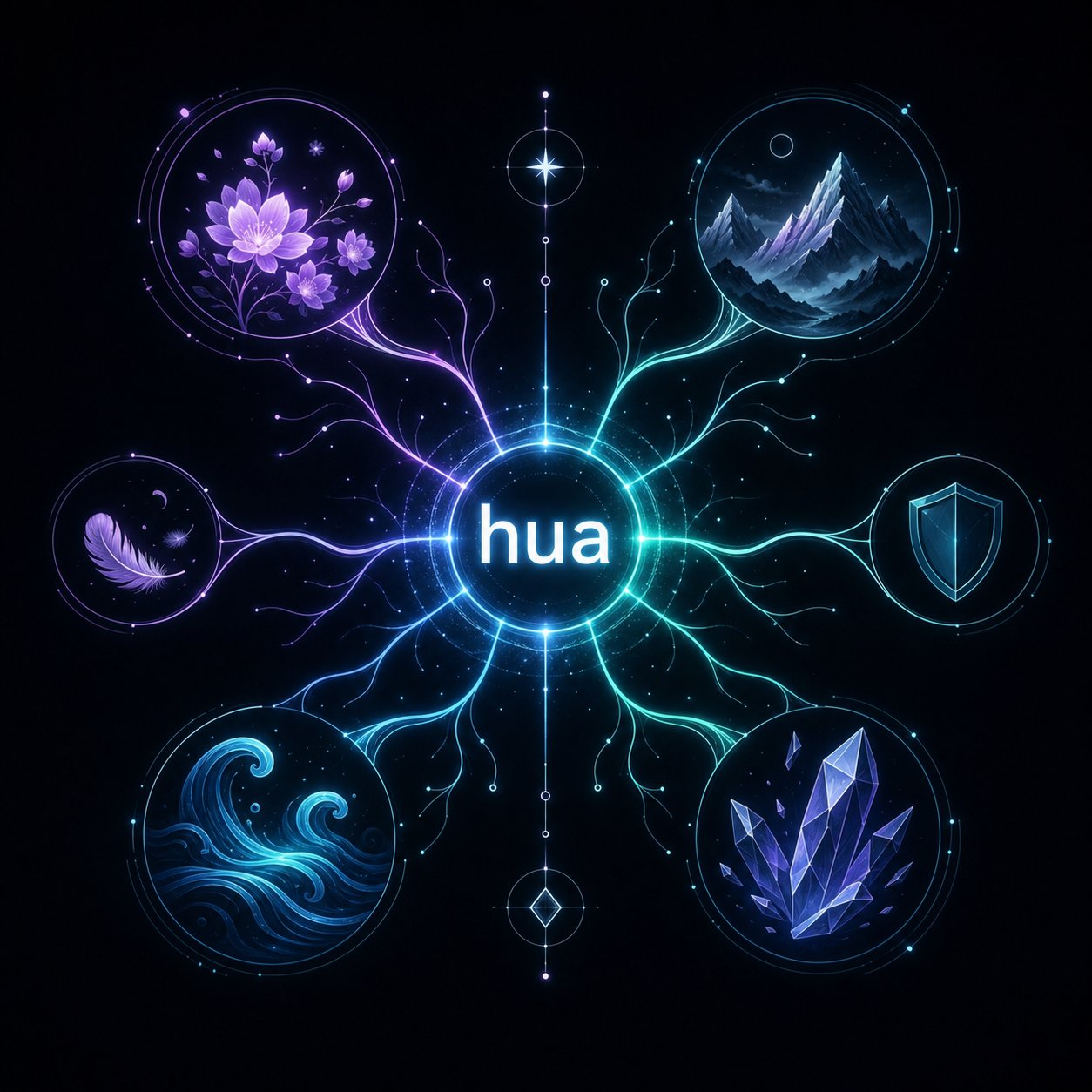
The gender-neutral names discussed above are not edge cases. They are symptoms of a deeper structural problem that affects every pinyin name to some degree. Romanization does not just obscure gender. It fundamentally destroys the information layer where gender lives. To understand why, you need to see exactly how the many-to-one mapping works and what it costs.
The Many-to-One Character Mapping Problem
Consider the pinyin syllable "jing." In an English name like "Jean" versus "Gene," spelling alone tells you something about gender. In pinyin, "jing" is a single romanized form that maps to more than 30 distinct Chinese characters, each with its own meaning, radical structure, and gender association. Here are just a few:
| Pinyin | Character | Meaning | Gender Lean |
|---|---|---|---|
| jing | 静 | quiet, serene | Feminine |
| jing | 晶 | crystal, sparkling | Feminine |
| jing | 京 | capital city | Neutral |
| jing | 景 | scenery, view | Neutral/Masculine |
| jing | 劲 | strength, vigor | Masculine |
| jing | 经 | classic, scripture | Masculine |
| jing | 菁 | essence of plants | Feminine |
| jing | 靖 | peaceful, stable | Neutral/Masculine |
A person named "Li Jing" could be a woman whose name means "quiet beauty" (静), a woman whose name means "sparkling crystal" (晶), or a man whose name means "vigor" (劲) or "classic" (经). Same three letters. Completely different people, different genders, different parental intentions. The chinese names english translation process collapses all of this into a single indistinguishable string.
The pinyin syllable "jing" maps to characters meaning quiet (feminine), crystal (feminine), capital (neutral), strength (masculine), and scenery (neutral) — a single romanized form carrying opposite gender signals depending on which character it represents.
This is not unique to "jing." The syllable "yu" maps to more than 40 characters, including 玉 (jade, feminine), 宇 (universe, masculine), 雨 (rain, neutral), 裕 (abundant, masculine), and 瑜 (fine jade, feminine). The syllable "li" covers 丽 (beautiful, feminine), 力 (power, masculine), 莉 (jasmine, feminine), 立 (stand, masculine), and 理 (reason, neutral). Every common pinyin syllable used in names carries this kind of internal contradiction.
The scale of the problem is staggering. Mandarin has roughly 400 distinct syllables when tone is removed. Those 400 syllables must represent the full inventory of over 6,000 commonly used characters. On average, each pinyin string corresponds to about 15 different characters, but naming-relevant syllables often map to 30 or more. When you see a name in chinese language rendered as pinyin, you are looking at a lossy compression that has discarded most of the original information.
How Tone Loss Compounds Gender Ambiguity
Mandarin Chinese uses four tones plus a neutral tone to distinguish meaning. The syllable "li" pronounced in the third tone (lǐ) means something entirely different from "li" in the fourth tone (lì). In full pinyin with tone marks, "Jìng" (静, quiet) is technically distinguishable from "Jìng" (劲, strength) — except that both happen to share the fourth tone. Even with tones, many characters remain homophonous.
In practice, though, tone marks rarely survive international contexts. Passports, academic publications, email signatures, LinkedIn profiles, conference badges, and business cards almost universally present pinyin without tones. The chinese translation for names used in cross-cultural settings is bare romanization: "Jing Li," not "Jìng Lǐ." This strips away the one additional layer of disambiguation that pinyin could theoretically provide.
Imagine the equivalent in English. Picture a writing system where "Mark" and "Mary" were both spelled "Mar," and the only way to tell them apart was a small accent mark that most international documents omitted. That is the situation pinyin creates for every Chinese name that enters the global communication space. The original chinese names in chinese carry full gender information through their visual structure. The romanized versions carry almost none.
Why Western Name-Gender Tools Fail on Pinyin
This mapping problem explains why automated gender-detection tools perform so poorly on Chinese names. Tools like Genderize.io, Gender API, and similar databases were built on a fundamental assumption: that a name string is a unique identifier with a stable gender association. "Michael" is male. "Sarah" is female. The spelling is the signal.
Pinyin violates this assumption completely. A pinyin string is not a name. It is a phonetic approximation that could represent dozens of actual names with different genders. When a tool encounters "Wei Zhang" and assigns it male based on frequency data, it is making a probabilistic guess that ignores the fact that "Wei" could be 薇 (fern, feminine), 伟 (great, masculine), 微 (subtle, feminine), or 威 (mighty, masculine). The tool treats the pinyin as if it were a chinese name from english name conventions, where spelling maps one-to-one to identity.
Research confirms the failure rate is severe. Studies testing popular gender-detection APIs on Chinese pinyin names report error rates ranging from 43% to 94%, depending on the tool and dataset. For comparison, these same tools achieve 95%+ accuracy on English and European names. The gap is not a minor calibration issue. It reflects a category error: applying alphabetic-name logic to a phonetic transcription system that works on entirely different principles.
The problem compounds in professional databases. Academic citation systems, HR platforms, and CRM tools that auto-assign gender based on first names systematically misclassify Chinese researchers, employees, and contacts. A woman named 静 (Jing, quiet) gets tagged as male because the system's training data happened to include more men named 京 (Jing, capital) or 经 (Jing, classic). The tool cannot see the character. It only sees the letters.
This is why treating pinyin names the same way you treat alphabetic names leads to systematic errors. The romanization is not the name. It is a shadow of the name, stripped of the semantic and visual layers that carry gender meaning. Any reliable approach to reading gender in pinyin must account for this fundamental information loss and work with probabilistic patterns rather than deterministic lookups. Those patterns do exist in the phonetic structure itself, shaped by sound symbolism and the statistical distribution of characters across genders.
Sound Symbolism and Phonetic Gender Cues in Pinyin
Phonetic patterns are not just noise left over after meaning gets stripped away. Even without knowing a single Chinese character, the sounds themselves carry statistical gender signals. This is not intuition or guesswork. It is a measurable phenomenon called sound symbolism, and research confirms it operates across languages, including for listeners who have never encountered the language before.
A peer-reviewed study published in the Journal of Cultural Cognitive Science tested whether English and German speakers could infer gender from names in Min, a south China language they had never been exposed to. The result: both groups rated real male names as more male-sounding and real female names as more female-sounding in a consistent way. The exploratory analysis revealed a key mechanism: male names were more likely to have consonant-ending syllables, and listeners unconsciously used this cue in their judgments. Sound carries gender information even when meaning is invisible.
So what does this mean for reading a name in mandarin rendered as pinyin? It means phonetic heuristics exist. They are imperfect, probabilistic, and should never replace direct confirmation. But they are real, and understanding them gives you a better framework than random guessing.
Vowel Patterns and Gender Associations
Vowels are the most accessible phonetic cue because they shape the overall "feel" of a name. When you hear or read mandarin names, certain vowel patterns correlate with gender at a statistical level.
Feminine-leaning vowel patterns: Names heavy in front vowels and high vowels, particularly the "i" sound (as in "li," "qi," "xi") and the "ue/u" sound (as in "yue," "xue," "juan"), trend feminine. These sounds are produced with the tongue positioned high and forward in the mouth, creating a lighter, higher-pitched acoustic impression. Characters chosen for daughters disproportionately happen to contain these vowel shapes: 丽 (li), 琪 (qi), 雪 (xue), 月 (yue).
Masculine-leaning vowel patterns: Names featuring back vowels and open nasal endings, particularly "ao" (as in "hao," "tao"), "ang" (as in "gang," "qiang," "guang"), and "ong" (as in "long," "yong," "dong"), trend masculine. These sounds are produced with the mouth more open and the tongue positioned lower and further back, creating a fuller, deeper acoustic quality. The characters parents select for sons cluster heavily around these vowel shapes: 浩 (hao), 刚 (gang), 龙 (long), 勇 (yong).
The pattern is not absolute. The syllable "fang" ends in "-ang" but maps most frequently to 芳 (fragrance), a strongly feminine character. Context matters. But across large datasets of names in mandarin, the vowel-gender correlation holds as a statistical tendency.
Consonant and Syllable Structure Cues
Consonant onsets add another layer of information. Mandarin pinyin uses several consonant categories, and their distribution across male and female names is not uniform.
Retroflex initials (zh, ch, sh, r): These consonants, produced with the tongue curled back, appear more frequently in mandarin names male bearers carry. Syllables like "zhi" (志, ambition), "cheng" (成, accomplish), "sheng" (胜, victory), and "rui" (瑞, auspicious) are common in masculine naming. The retroflex quality creates a heavier, more forceful sound impression.
Palatal initials (j, q, x): These consonants are more evenly distributed across genders. "Jing" appears in both male and female names. "Qian" can be 倩 (pretty, feminine) or 乾 (heaven, masculine). "Xin" maps to both 欣 (joyful, slightly feminine) and 鑫 (prosperous, slightly masculine). Palatal sounds do not provide strong gender signals on their own.
Syllable-final consonants: Mandarin pinyin syllables can end in a vowel, "-n," or "-ng." Research from Cai and Zhao (2019) found that consonant-ending syllables lean masculine across Chinese language varieties. In pinyin terms, names ending in "-ng" (strong, gang, long) carry a heavier masculine association than names ending in open vowels (li, mei, hua). Names ending in "-n" (min, xin, yan) fall in between and tend toward gender-neutral territory.
Syllable length and given-name structure: Single-character given names (one syllable after the surname) lean masculine in statistical terms. Research on the CHGAT model notes that two-character names are the majority at 84.55% of Chinese first names, but single-character names like "Wei," "Gang," or "Jun" are disproportionately male. Two-syllable given names with softer phonetic combinations ("Tingting," "Meiling," "Xiulan") lean feminine. The reduplication pattern discussed earlier is the strongest version of this tendency.
Applying Phonetic Heuristics Responsibly
These phonetic cues are not equally powerful. Some carry stronger gender signals than others. Based on corpus research and sound symbolism findings, here is a ranked list from strongest to weakest predictive value:
- Reduplication pattern (e.g., Tingting, Lili) — strongest feminine signal that survives romanization. Very few formal male names use this structure.
- Nasal ending "-ang" or "-ong" combined with retroflex or velar onset (e.g., Gang, Qiang, Long) — strong masculine signal. The combination of heavy consonant plus back nasal creates a distinctly masculine phonetic profile.
- Single-syllable given name with a stop or nasal final (e.g., Gang, Jun, Feng) — moderately strong masculine signal. Brevity plus consonant weight correlates with male naming.
- High front vowels "i" or "ue" with palatal onset (e.g., Qi, Xue, Jie) — moderate feminine signal, though many exceptions exist.
- Open vowel endings without nasal (e.g., Hua, Li, Ya) — weak to moderate feminine signal. Many feminine characters happen to end this way, but so do some neutral and masculine ones.
- Retroflex initial alone (zh, ch, sh) — weak masculine signal. Slightly more common in male names but not reliable in isolation.
- Syllable count of given name (one vs. two syllables) — weak signal. One syllable leans male, two syllables are too common across both genders to be diagnostic alone.
A critical point: these heuristics work best in combination, not isolation. A name like "Zhigang" stacks multiple masculine cues (retroflex initial, "-ang" ending, strength-associated syllables, two syllables both from masculine pools). A name like "Lili" stacks feminine cues (reduplication, front vowel, open ending). But a name like "Jing" or "Min" sits in ambiguous territory where no single phonetic feature resolves the question.
The CHGAT research confirms that pronunciation embeddings improve gender prediction accuracy when combined with character-level information, reaching 93.62% accuracy. But pronunciation alone, without the character layer, produces substantially lower confidence. Phonetic cues are a supplement to meaning-based analysis, not a replacement for it.
These patterns also carry a generational and regional dimension. The phonetic profile of names chosen in the 1960s differs from names chosen in the 2000s. A name that sounds unmistakably masculine to someone familiar with older naming conventions might belong to a young woman whose parents chose it for its modern, gender-fluid aesthetic. Regional variation adds another layer of complexity that phonetic heuristics alone cannot account for.
Regional Naming Differences That Affect Gender Inference
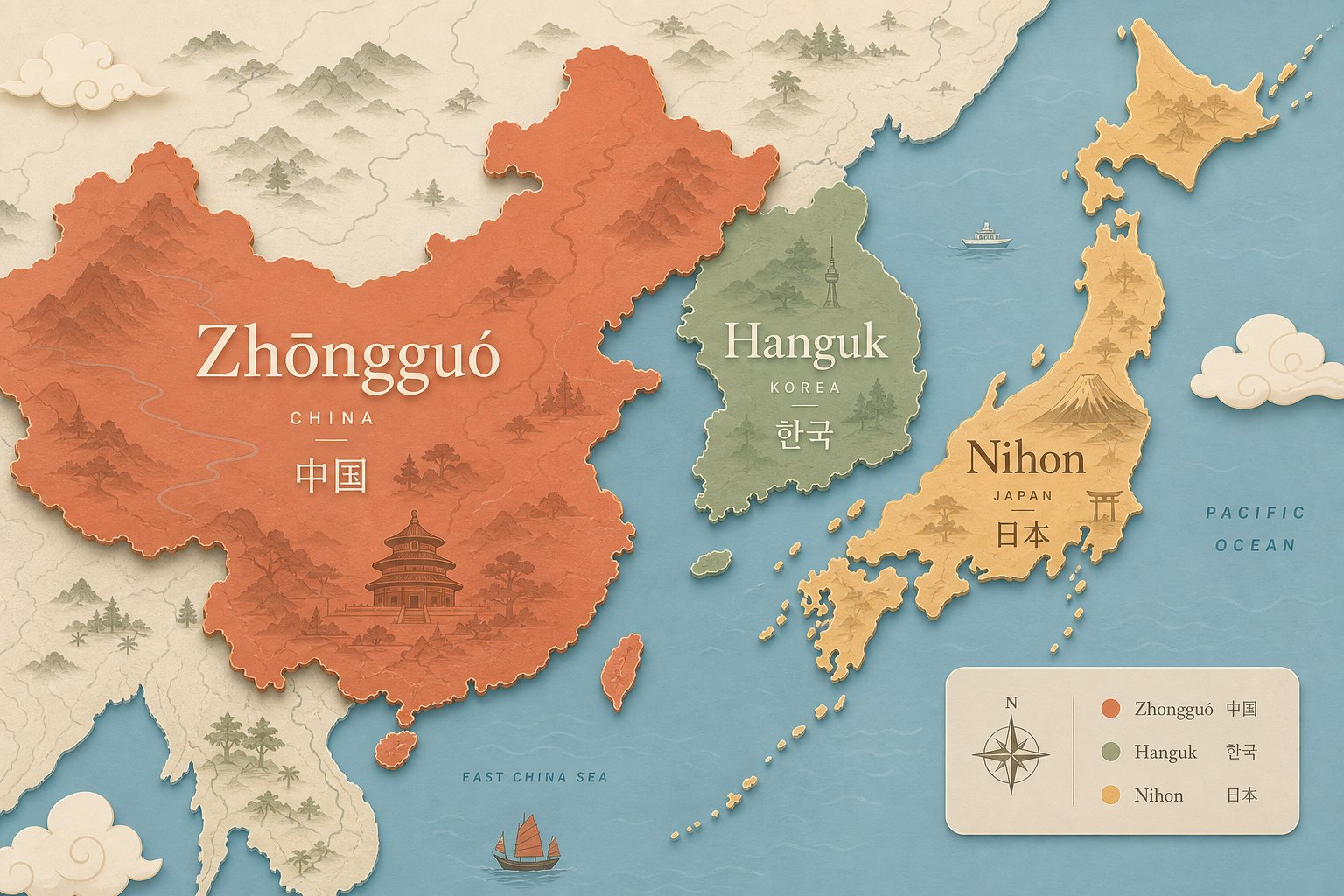
Phonetic heuristics assume a single, stable naming culture behind the pinyin. In reality, Chinese naming is not monolithic. A name chosen in Shanghai in 2015 follows different conventions than one chosen in Taipei in 1975 or one anglicized by a second-generation Chinese American in Toronto. These regional and generational differences shift the gender associations of pinyin syllables in ways that a one-size-fits-all phonetic analysis cannot capture. If you are trying to read gender from a romanized Chinese name, knowing where and when that name was likely given changes the odds considerably.
Mainland China Naming Trends and Gender Shifts
Mainland China's naming landscape has undergone dramatic transformation since the 1980s. Names from the 1950s through 1970s often carried explicit political or collective meaning: characters like 国 (guo, nation), 红 (hong, red), 建 (jian, build), and 军 (jun, army) appeared in both male and female names, though with different frequencies. Gender signals during this era were sometimes deliberately suppressed in favor of revolutionary ideals.
The post-reform generation, born after 1980, shifted sharply toward individualistic and aesthetically driven naming. Parents began choosing characters for their sound, visual elegance, or philosophical resonance rather than strict gender coding. This produced a wave of names that sit in ambiguous territory when romanized. Characters like 宇 (yu, universe), 晨 (chen, morning), and 逸 (yi, carefree) became popular asian names for both boys and girls, making pinyin-level gender inference even less reliable for younger cohorts.
By the 2000s and 2010s, another shift emerged: parents increasingly selected rare or unusual characters to ensure uniqueness. A dataset of over 30 million Chinese individuals drawn from business registration records captures naming patterns primarily from older, economically active adults. But names from younger generations show measurably higher rates of gender ambiguity. The proportion of gender-neutral names in pinyin format already sits at 7.66% in that dataset, and the figure is likely higher among people born after 1995.
Taiwan's Distinct Naming Patterns
Taiwan's naming conventions evolved along a different trajectory. Without the Cultural Revolution's influence on naming, Taiwanese names maintained stronger continuity with classical literary traditions. Research in sociolinguistic studies shows that Taiwanese naming draws on different metaphoric imagery than mainland naming, with evolving gender associations over time.
Feminine names in Taiwan lean more heavily on classical poetic imagery: characters evoking moonlight, orchids, and jade appear with high frequency across generations. Masculine names favor characters associated with scholarly achievement and moral cultivation rather than the raw physical strength imagery common in mainland names. A Taiwanese man named 文彬 (Wenbin, cultured and refined) carries a softer phonetic profile than a mainland man named 志刚 (Zhigang, ambitious and firm), yet both are unambiguously masculine in their respective cultural contexts.
The romanization system adds another wrinkle. Taiwan historically used Wade-Giles romanization and later adopted a mix of systems before partially standardizing on Hanyu Pinyin for some official purposes. A name romanized as "Tsai" in Wade-Giles becomes "Cai" in Hanyu Pinyin. "Hsieh" becomes "Xie." "Chang" could be either 张 or 常, depending on the system. When you encounter common asian names from Taiwanese contexts, the romanization itself may not follow standard pinyin conventions, making phonetic heuristics developed for Hanyu Pinyin unreliable.
Diaspora and Hybrid Naming Strategies
Overseas Chinese communities introduce yet another layer of complexity. Many diaspora families adopt hybrid naming strategies that further obscure gender signals in romanized form. These strategies include giving children both a Chinese name and a Western name, anglicizing pinyin spellings for easier pronunciation, or choosing Chinese characters that happen to produce pinyin resembling English names.
Research on the Chinese Gender dataset's performance with U.S. Social Security Administration records reveals the scale of this challenge. When tested on names of likely Chinese origin in the USSA dataset, the pinyin-based prediction method showed significantly reduced coverage: only 44.3% of names could be predicted at a frequency threshold of 10, and coverage dropped to around 28% at a confidence threshold of 0.8. Precision fell to 58% for males and 75% for females, far below the method's performance on mainland Chinese names.
The researchers note that this reduced performance likely stems from "cultural differences in naming conventions and the inclusion of non-Chinese names that resemble Pinyin spellings." Diaspora populations often select characters that sound pleasant in both Chinese and English, prioritizing cross-linguistic compatibility over traditional gender coding. A woman might be named "Jade" on her passport but 洁 (Jie, pure) on her Chinese documents. A man might go by "Kevin" professionally while his Chinese name is 凯文 (Kaiwen), chosen specifically because it sounds like the English name.
Cantonese names present a distinct challenge within the diaspora context. Cantonese romanization systems like Jyutping and Yale produce spellings that look nothing like Hanyu Pinyin. The surname 黄 is "Huang" in pinyin but "Wong" in Cantonese. The given name character 伟 is "Wei" in pinyin but "Wai" in Cantonese. Common names in asia's Cantonese-speaking regions, including Hong Kong and many Southeast Asian Chinese communities, use romanization that breaks every phonetic heuristic built on Mandarin pinyin patterns. A name like "Tsang Wing-kei" follows entirely different phonetic logic than "Zhang Yongqi," even though both could represent similar characters.
The following table summarizes how these regional differences affect gender inference from romanized names:
| Region | Common Naming Patterns | Gender Clarity in Pinyin | Romanization System |
|---|---|---|---|
| Mainland China (pre-1980) | Political/collective themes; traditional gender coding | Moderate to high | Hanyu Pinyin |
| Mainland China (post-1980) | Individualistic; aesthetic; rising gender ambiguity | Moderate, declining over time | Hanyu Pinyin |
| Taiwan | Classical literary imagery; scholarly masculine ideals | Moderate | Wade-Giles, Tongyong Pinyin, or Hanyu Pinyin (mixed) |
| Hong Kong / Cantonese regions | Cantonese pronunciation; English-influenced choices | Low (phonetic heuristics break down) | Cantonese romanization (Jyutping, Yale, or informal) |
| Diaspora (Western countries) | Hybrid strategies; cross-linguistic sound matching | Low | Varies widely; often informal or anglicized |
The practical takeaway is clear: a single set of phonetic rules cannot cover the full diversity of romanized Chinese names. A name's regional origin, the generation of the person who carries it, and the romanization system used all modulate whatever gender signal the pinyin might carry. When you encounter a romanized Chinese name without additional context, you are working with incomplete information on multiple levels simultaneously. The phonetic cues from earlier sections still apply as baseline probabilities, but regional awareness sharpens or weakens those probabilities considerably.
This variability raises a deeper question. Given how unreliable pinyin-based gender inference can be, especially across regions and generations, what are the ethical boundaries of attempting it at all? The answer depends heavily on context, stakes, and the alternatives available.
Ethical Guidelines for Gender and Pinyin Names
The phonetic cues, regional patterns, and statistical tendencies covered so far can sharpen your intuition. But intuition is not certainty, and the gap between the two carries real consequences when you act on a guess. Whether someone is wondering "what is my name in chinese" for a cross-cultural project or an HR system is auto-assigning gender tags to a database of chinese and english names, the ethical stakes of getting it wrong deserve direct attention.
When Gender Assumptions Cause Harm
Misgendering someone based on their pinyin name is not just an awkward moment. In professional contexts, it signals carelessness at best and disrespect at worst. Consider the scenarios where this plays out:
Academic correspondence. A researcher emails "Dear Mr. Li Jing" to a female professor. The assumption, drawn from a gender-detection tool or a quick guess, undermines the professional relationship before it begins. Research from the University of Illinois shows that LLMs and commercial tools like Genderize.io and Gender API struggle with gender-neutral names, achieving under 40% accuracy on neutral labels. Applying these tools to Chinese pinyin names compounds the problem with the many-to-one mapping issue already discussed.
HR and recruitment. Automated systems that tag applicants by inferred gender create biased pipelines. When a system classifies "Yu Chen" as male because its training data skewed that way, it distorts diversity metrics and may trigger inappropriate communication templates.
Journalism and publishing. Misgendering a source or subject in print is a factual error. For Chinese individuals whose names carry deliberate meaning, having that meaning flattened into a wrong pronoun adds a layer of cultural erasure.
Best Practices for Professional Communication
When uncertain about gender, default to respectful inquiry rather than confident assumption. The cost of asking is a single sentence. The cost of guessing wrong is trust.
Here is a practical checklist for anyone who regularly encounters pinyin names in professional settings:
- Do use gender-neutral language ("Dear Li Jing" or "Dear Dr. Li") until gender is confirmed.
- Do ask for pronouns in a natural, non-intrusive way when context allows, such as including your own pronouns in your signature as an invitation.
- Do check institutional profiles, personal websites, or published bios where individuals often indicate their pronouns or include photos.
- Do use the full name rather than guessing a gendered title when no other information is available.
- Don't rely on automated gender-detection APIs for Chinese pinyin names in any context where individual accuracy matters.
- Don't assume that a name sounding "soft" or "hard" to your ear maps to femininity or masculinity. Your phonetic intuitions are shaped by your own language, not Chinese naming conventions.
- Don't assign gender in databases or CRM systems based on pinyin alone. Flag these entries as unconfirmed instead.
- Don't treat someone asking "what is my chinese name" as an opportunity to impose gendered expectations from Western naming logic onto their choice.
Respecting Naming Autonomy Across Cultures
Chinese naming does not map neatly onto Western binary gender expectations. As earlier sections showed, a growing number of parents deliberately choose gender-ambiguous characters for their children. A person named "An" (安, peace) or "Yu" (雨, rain) may have received that name precisely because it transcends traditional gender coding. Treating their name as a puzzle to solve, rather than a choice to respect, misses the point entirely.
The broader principle is cultural humility. Chinese and english names operate on fundamentally different logic. English names inherit gender through tradition. Chinese names construct meaning through character selection. When that construction is deliberately neutral, or when romanization makes it appear neutral regardless of the original intent, the respectful response is the same: acknowledge the limits of what you can know from pinyin alone, and let the person tell you the rest.
This does not mean phonetic and contextual analysis is useless. It means that analysis should inform your level of confidence, not your behavior toward the individual. You can privately note that "Zhigang" is almost certainly male and address accordingly. But when a name like "Yu Jie" or "Min Chen" offers no clear signal, the ethical move is to hold your assumption lightly and create space for the person to self-identify. The practical framework for deciding when to research further and when to simply ask is where all of these threads converge.
Practical Strategies for Reading Gender in Pinyin Names
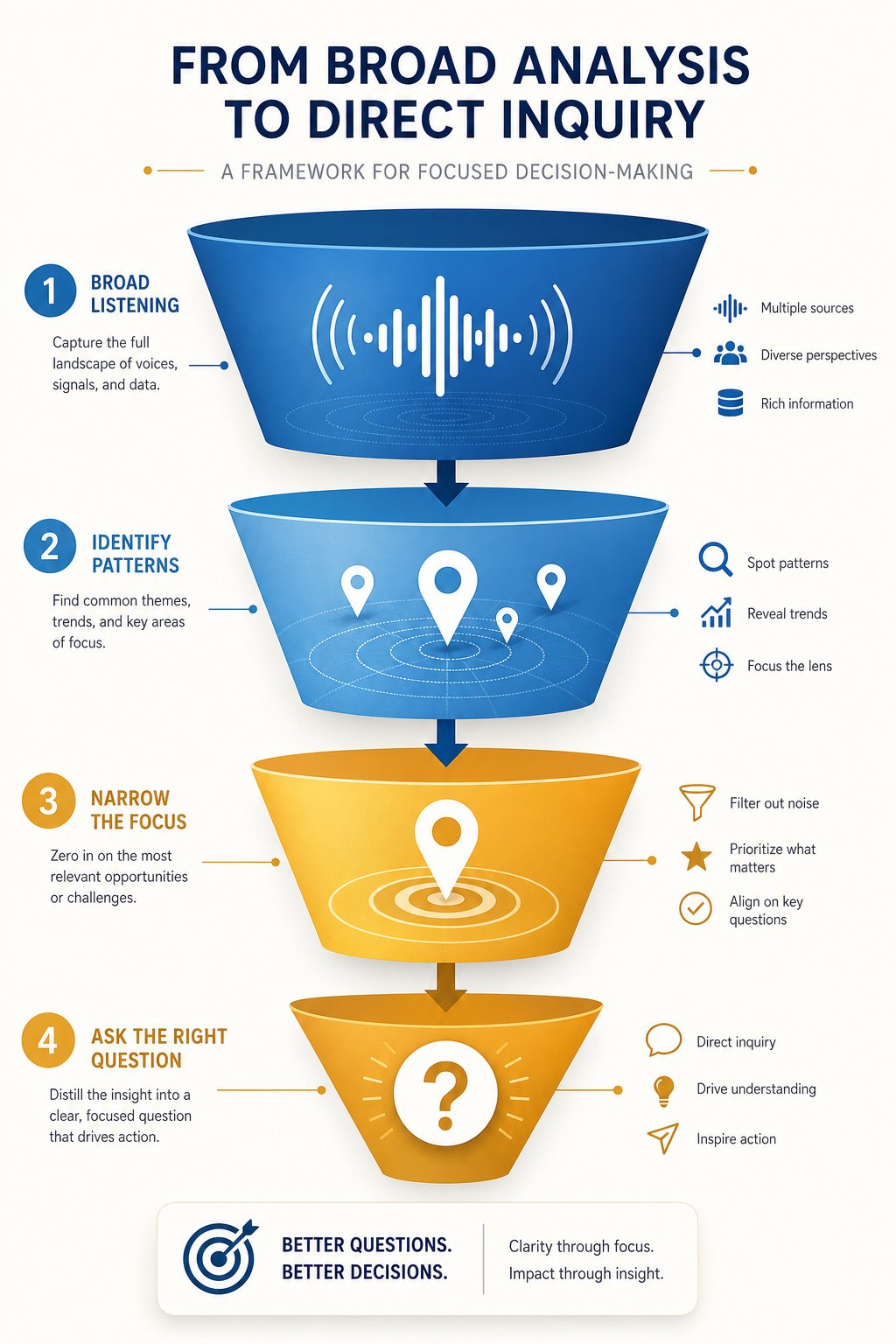
Knowing the phonetic patterns, regional shifts, and ethical boundaries is valuable. Putting them together into a repeatable process is what makes them useful. Whether you are scanning a conference attendee list, drafting an email to an unfamiliar colleague, or cleaning a database of common chinese full names, the following framework gives you a structured way to assess gender probability without overstepping.
A Step-by-Step Framework for Gender Assessment
Each step narrows the range of possibility. Move through them in order, and stop as soon as you reach a confidence level appropriate for your context:
- Check for reduplication. If the given name repeats a syllable (Tingting, Lili, Jingjing), the name is almost certainly female. This is the single strongest pinyin-level cue.
- Assess phonetic profile. Look for stacked masculine markers (retroflex onsets, "-ang" or "-ong" endings, single-syllable given names) or stacked feminine markers (front vowels, open endings, softer consonant onsets). A name like "Zhigang" stacks multiple masculine cues. A name like "Meiling" stacks feminine ones.
- Cross-reference with known syllable tendencies. Consult the masculine and feminine reference tables from earlier sections. If both syllables of a two-character given name appear in the same gendered pool, confidence increases.
- Factor in context. Consider the person's approximate generation, likely region of origin, and professional field. A "Jing" in a 1960s mainland Chinese context leans differently than a "Jing" from a 2010s Taiwanese academic setting.
- Acknowledge the ambiguity ceiling. If the name sits in gender-neutral territory (Yu, Jie, Min, Xin, Chen), accept that phonetic analysis alone cannot resolve it. Move to direct confirmation.
Tools and Resources for Pinyin Name Analysis
Several tools exist for chinese name interpretation, but their reliability varies dramatically. Here is an honest assessment:
- NamSor — the best-performing commercial API for Chinese pinyin, but still produces a 43-53% error rate depending on dataset composition. Useful for aggregate statistical research on large populations, not for individual-level decisions.
- Gender API / Genderize.io — built primarily on Western name databases. Error rates on Chinese pinyin names exceed 65%. Not recommended for this population.
- Character lookup databases (MDBG, Pleco, Zdic) — if you can identify the likely characters behind a pinyin name, these tools let you check meaning chinese names carry at the character level. Requires some Chinese literacy or a helpful colleague.
- CHGAT model — a research model from AAAI 2023 that incorporates character components and pronunciation embeddings, achieving 93.62% accuracy. Not publicly deployed as a consumer tool, but represents the state of the art for what a chinese name definition at scale could look like.
- Human judgment + cultural knowledge — still outperforms all automated approaches for individual names. A native Chinese speaker can resolve most ambiguities instantly by identifying the likely characters. When accuracy matters for a single person, ask a knowledgeable colleague or the person themselves.
When to Research and When to Ask
The decision depends on stakes and relationship. For aggregate research across thousands of popular chinese names, imperfect tools applied with documented error margins are acceptable. For individual communication, the calculus flips entirely.
Research further when: you need to address someone formally and have access to institutional directories, published profiles, or social media where pronouns or photos may clarify gender. A quick search often resolves what phonetic analysis cannot.
Ask directly when: you are in a relationship context that permits it, such as a first email exchange, a conference introduction, or an onboarding process. A simple "Could you let me know your preferred title or pronouns?" costs nothing and communicates respect. It also acknowledges what every section of this guide has demonstrated: that the name in chinese meaning is richer than its romanized shadow, and that the person behind the name is the only authoritative source.
Pinyin name gender differences are real, measurable, and useful as probabilistic guides. But they require layered analysis, combining phonetic cues, contextual awareness, regional knowledge, and ethical judgment. No single signal is definitive. No tool is reliable enough for individual decisions. The framework works best when it leads you not to a confident guess, but to the right question asked at the right moment.
Frequently Asked Questions About Pinyin Name Gender Differences
1. Can you tell gender from a Chinese name written in pinyin?
Gender inference from pinyin is unreliable because a single pinyin syllable can represent dozens of Chinese characters with opposite gender associations. For example, 'jing' maps to feminine characters like 静 (quiet) and masculine ones like 劲 (strength). Research shows that commercial gender-detection tools produce error rates between 43% and 94% on pinyin names. While statistical patterns exist, such as reduplication (Tingting, Lili) leaning strongly feminine and heavy nasal endings (-ang, -ong) leaning masculine, no pinyin-level cue is definitive without knowing the underlying characters.
2. Why do gender detection tools fail on Chinese pinyin names?
Western gender-detection tools like Genderize.io and Gender API were built on the assumption that a name string is a unique identifier with a stable gender association. Pinyin violates this assumption because it is a lossy phonetic transcription, not a name itself. The roughly 400 pinyin syllables must represent over 6,000 commonly used characters, meaning each string maps to an average of 15 or more characters with different meanings and gender leanings. These tools treat pinyin as if spelling equals identity, which works for alphabetic languages but fails fundamentally for romanized Chinese.
3. What are the strongest gender signals that survive in pinyin romanization?
The strongest feminine signal is reduplication, where a syllable repeats in the given name (Tingting, Lili, Jingjing). Very few formal male names use this structure. The strongest masculine signals include combinations of retroflex consonant onsets (zh, ch, sh) with back nasal endings (-ang, -ong), such as in names like Zhigang or Yongqiang. Single-syllable given names also lean masculine statistically. These cues work best when stacked together rather than used in isolation, and they remain probabilistic rather than deterministic.
4. How do regional differences affect gender inference from pinyin names?
Naming conventions vary significantly across mainland China, Taiwan, Hong Kong, and diaspora communities. Mainland names from the post-1980 generation show rising gender ambiguity as parents prioritize aesthetics over traditional coding. Taiwan uses different romanization systems (Wade-Giles, Tongyong Pinyin) that break Hanyu Pinyin phonetic heuristics. Cantonese-speaking regions produce romanizations like 'Wong' and 'Tsang' that follow entirely different phonetic logic. Diaspora families often adopt hybrid strategies or anglicize names, reducing gender-detection coverage to as low as 28% at high confidence thresholds.
5. What is the best practice when you cannot determine gender from a pinyin name?
Use gender-neutral language until gender is confirmed. Address the person by their full name or professional title (Dear Dr. Li, Dear Li Jing) rather than guessing a gendered title. Check institutional profiles, personal websites, or published bios where pronouns may be indicated. If in a relationship context that permits it, ask directly for preferred pronouns or titles. Avoid relying on automated gender-detection APIs for individual-level decisions, and flag unconfirmed entries in databases rather than assigning gender based on pinyin alone.