Why Chinese Name Combinations Go Wrong and How to Fix Them
Imagine introducing yourself at a business dinner in Shanghai, only to watch your host suppress a laugh. Your carefully chosen Chinese name, the one you spent hours researching, accidentally sounds like a vulgar phrase when spoken at conversational speed. This scenario plays out more often than you'd think, and it's not because people aren't trying hard enough. The structure of Mandarin itself makes bad combinations surprisingly easy to create.
Chinese is a tonal language with a limited set of syllables, roughly 400 compared to English's thousands. Layer four tones on top of those syllables, and you get a language packed with homophones, words that sound identical but carry wildly different meanings. A single character like "si" can mean "to think," "four," "silk," or "death" depending on tone and context. When you combine two or three characters into a full name, the potential for accidental collisions multiplies fast. One blogger recounting his experience picking a chinese name in Taiwan nearly named himself "Euthanasia" through innocent transliteration before a fluent friend caught the problem.
Why Bad Name Combinations Are So Easy to Create
Non-native speakers typically approach chinese naming conventions with English-language logic: pick characters with nice individual meanings, string them together, done. But Chinese names function as a system. The surname interacts with the given name phonetically and visually. Tonal sequences create rhythm patterns that can mirror slang. Characters that look elegant in isolation may contain radicals with unfortunate associations when paired. And chinese transliteration of foreign names, the most common starting point for newcomers, often produces syllable strings that collide with existing vulgar or inauspicious words. These aren't edge cases. They're predictable failure modes built into the language's architecture.
Who This Guide Serves
This guide addresses two audiences with overlapping needs. First, foreigners choosing a personal Chinese name for work, study, or daily life in Chinese-speaking communities. Second, writers and game designers naming fictional characters who need to sound authentic without accidentally becoming a joke. Both groups face the same linguistic traps, though the stakes differ. A real person lives with their name daily; a fictional character's bad name undermines an entire creative project's credibility.
The Severity Spectrum From Awkward to Offensive
Not all naming mistakes carry equal weight. Problems fall along a clear severity spectrum:
- Mildly awkward - The name sounds old-fashioned, overly literal, or slightly odd. Native speakers notice but won't mention it. Think of it like a foreigner named "Gertrude" in English: unusual, maybe a raised eyebrow, but harmless.
- Socially embarrassing - The name resembles slang, a meme, or a phrase that triggers laughter. People will talk about it behind your back. You'll get strange reactions you can't quite explain.
- Genuinely offensive - The name sounds like profanity, a sexual term, or a deeply inauspicious phrase. Native speakers may feel uncomfortable even saying it aloud. This is the tier that damages professional relationships.
Each tier requires different verification methods to catch. A visual check of character meanings won't reveal a spoken-form problem. Reading the name aloud won't expose a cultural taboo hidden in the radicals. The eight steps that follow give you a systematic process for screening across every category, starting with the most fundamental distinction most guides skip entirely: the difference between what a name looks like on paper and what it sounds like in someone's mouth.
Step 1 Distinguish Written Problems From Spoken Problems
A name exists in two forms simultaneously: the characters you see on a page and the sound that comes out of someone's mouth. These two dimensions can fail independently. A name might look perfectly elegant in writing yet sound like a curse word at natural speed. Or it might sound beautiful when spoken aloud but contain a character whose radical carries associations with death or illness. Translating chinese names without checking both layers is like proofreading only the spelling of a speech without ever reading it out loud.
This distinction matters because each type of problem requires a completely different verification method. You can't hear a radical. You can't see a homophone. Treating them as one category is why so many naming guides leave gaps that let embarrassing combinations slip through.
Written-Form Problems and Character Meaning Traps
Written-form problems live in the visual and semantic layer of a name. They show up when someone reads your name on a business card, a class roster, or a social media profile. Three mechanisms drive these failures:
Character meaning conflicts. Each character carries its own meaning, and when two characters sit next to each other, their combined meaning creates a new impression. A character meaning "jade" paired with one meaning "to break" produces an unfortunate visual phrase, even if the pronunciation sounds fine.
Radical associations. Chinese characters are built from components called radicals, which often hint at a character's semantic category. The radical 疒 (illness), 歹 (death), or 鬼 (ghost) embedded within an otherwise attractive character can create a subtle negative impression. Native readers process these associations subconsciously. You'll notice that characters containing the illness radical, like 病 or 疯, immediately signal something undesirable, and even less obvious characters sharing that radical carry a faint shadow of that meaning.
Visual similarity traps. Some characters look nearly identical to problematic ones, especially in handwritten or small-font contexts. A name that reads fine in large print might be misread as something unfortunate on a form or screen.
Spoken-Form Problems and Sound-Alike Dangers
Spoken-form problems emerge only when a name is said aloud. They're invisible on paper. Chinese name transliteration is especially vulnerable here because it prioritizes matching foreign sounds without considering what those sound sequences already mean in Mandarin.
Homophone collision. Mandarin has roughly 400 base syllables, meaning dozens of characters share identical pronunciations. The combination "shi si" could be 十四 (fourteen) or could sound like 是死 (is death) depending on tones and speed. When someone says your full name quickly, listeners don't parse individual characters. They hear a sound stream and match it against known words and phrases, including vulgar ones.
Research into Chinese homophones shows just how dense these overlaps are. Words like 目的 (goal) and 墓地 (grave) share identical pronunciation. In names, this collision risk multiplies because surname-plus-given-name creates two or three syllable sequences that listeners process as a unit.
Slang and internet language overlap. Spoken Chinese evolves fast. A syllable combination that was neutral five years ago might now be internet slang for something crude. These shifts are nearly impossible for non-native speakers to track without active consultation.
Why You Must Check Both Independently
Here's the core principle: run two separate verification passes on any name candidate. One visual, one auditory. They catch different problems using different methods.
| Problem Type | How It Manifests | Example Mechanism | Verification Method |
|---|---|---|---|
| Character meaning conflict | Reader sees an unfortunate phrase in the written name | Two characters with clashing meanings create an unintended visual phrase | Show the written name to native speakers and ask what impression the characters give together |
| Radical association | Subconscious negative feeling when reading the name | A character contains a radical linked to illness, death, or misfortune (疒, 歹, 鬼) | Break each character into its radical components and check their semantic categories |
| Homophone collision | Name sounds like an existing word or vulgar phrase when spoken | Syllable sequence matches profanity, slang, or inauspicious terms | Say the full name aloud at conversational speed and ask listeners what they hear |
| Tonal pattern overlap | Rhythm of the name mimics a known phrase | Tone sequence matches the cadence of a common expression or insult | Speak the name rapidly in context (e.g., "this is...") and note if it triggers associations |
Think of it this way: the written check answers "what does this name look like?" while the spoken check answers "what does this name sound like?" A name passes only when it clears both. Skipping either one leaves a blind spot that could surface at the worst possible moment, like the first day at a new job or the opening page of your novel.
Understanding the chinese character meaning in names at the visual level is only half the equation. The spoken layer introduces an entirely different set of risks, and the most treacherous of those risks comes from something you can't see on paper at all: the interaction between tones.

Step 2 Check for Tonal Clash Patterns
Tones are the invisible architecture of every Chinese name. Two names can share identical pinyin spellings yet mean completely different things based solely on pitch contour. When you're converting an english name to mandarin or selecting characters for their visual beauty, tonal rhythm is the element most likely to slip past unnoticed. It's also the element most likely to make a native speaker wince.
Here's why this happens: Mandarin has four main tones plus a neutral tone. Each syllable in your name carries one of these tones, and when two or three syllables combine at natural speaking speed, they create a rhythmic pattern. That pattern gets matched, instantly and subconsciously, against every phrase a listener already knows. If your name's tonal cadence mirrors a vulgar expression, the association fires before the listener even processes your actual characters.
How Tone Sequences Create Unintended Meanings
Think of mandarin tones in names as a melody. A first tone is high and flat. A second tone rises. A third tone sits low. A fourth tone drops sharply. String these together and you get a pitch contour that functions like a musical signature for your name.
The problem is that common profanity and slang also have distinctive tonal signatures. When your name accidentally replicates one of those signatures, listeners hear the vulgar phrase first and your intended name second. This happens because tone sandhi rules alter how tones actually sound in connected speech. A third tone followed by another third tone doesn't stay as written. The first one shifts to sound like a second tone. So a name you designed with two third-tone characters will actually be pronounced with a 2-3 pattern, potentially matching a phrase you never intended.
Consider how this works mechanically. The syllable "ma" alone has four distinct meanings across its tones: mother (first), hemp (second), horse (third), scold (fourth). When your surname's tone combines with your given name's tones, you're creating a two- or three-note melody. If that melody matches a known phrase, you have a tonal clash problem that no amount of careful character selection can fix.
Common Tonal Patterns That Signal Profanity
Certain tone combinations carry higher risk than others. The danger isn't random. It's concentrated in specific patterns that happen to overlap with how Mandarin profanity and crude slang are typically structured.
| Tone Pattern | Risk Type | Why It Fails | How to Verify |
|---|---|---|---|
| 4-4 (two consecutive falling tones) | Profanity overlap | Many common swear words and harsh commands use back-to-back fourth tones, creating an aggressive rhythmic punch that listeners associate with vulgarity | Say the full name rapidly three times and note if the cadence feels aggressive or reminds you of common exclamations |
| 3-3 (two consecutive third tones, realized as 2-3) | Slang collision | Third-tone sandhi transforms the first syllable into a rising tone, creating a 2-3 pattern that matches many colloquial and crude expressions | Pronounce the name with correct sandhi applied (not citation tones) and ask a native speaker what phrases come to mind |
| 2-4 (rising then falling) | Inauspicious phrase echo | This dramatic rise-and-fall contour mirrors several expressions related to misfortune, failure, or bodily functions | Embed the name in a sentence introduction ("This is...") and speak at full speed to test whether the tonal contour triggers associations |
| 4-2 (falling then rising) | Vulgar homophone risk | The sharp drop followed by a rise creates a distinctive cadence shared with several crude verbs and insults in colloquial Mandarin | Ask native speakers under 30 specifically, as younger speakers are more attuned to slang that uses this pattern |
| 4-neutral (falling then unstressed) | Casual profanity match | Swear words spoken casually often reduce their second syllable to a neutral tone, making any 4-neutral name pattern sound like a throwaway curse | Listen to how the name sounds when spoken lazily or quickly in informal contexts |
The 4-4 pattern deserves special attention. Many of Mandarin's sharpest insults use consecutive fourth tones because the falling-falling rhythm conveys aggression and finality. If your surname is a fourth tone and you pair it with a fourth-tone given name character, you're building your name on the same rhythmic foundation as common profanity. That doesn't guarantee a problem, but it means you need to verify more carefully.
Similarly, the third-tone sandhi issue catches people off guard because it's invisible in written pinyin. Standard pinyin notation shows the citation tone, not the spoken tone. So when you look at how to write name in mandarin using pinyin as your guide, you see two third-tone marks and assume that's what people will hear. In reality, the first third tone shifts to a second tone in pronunciation, creating a sound pattern you never planned for.
Testing Your Name Aloud at Natural Speed
Here's the critical testing method most people skip: say your full name, surname plus given name, at the speed a receptionist would call it out in a waiting room. Not slowly. Not carefully. Fast, casual, slightly bored.
Problems surface at natural speed because careful pronunciation separates each syllable cleanly, giving listeners time to process individual characters. But in real life, nobody says your name carefully. They blur syllables together, reduce unstressed tones, and process the whole thing as a single sound chunk. A name that sounds perfectly fine when you pronounce each character deliberately may collapse into something unfortunate at conversational pace.
Try these specific tests:
- Say "this is [your name]" five times quickly, as if introducing someone at a party
- Shout the name across a room, the way you'd call someone
- Mumble it the way a bored office worker might read it off a list
- Say just the surname and first given-name character together, then just the two given-name characters together, testing each pair independently
Each scenario stresses the name differently. Shouting tends to flatten tones toward fourth-tone territory. Mumbling reduces everything toward neutral tones. Quick repetition reveals rhythmic patterns your ear glosses over on a single careful pronunciation.
If you're a non-native speaker, your own ear may not catch the problem. That's expected. The goal of this step isn't to identify the specific issue yourself. It's to generate the spoken version of your name so that native speakers can react to it honestly. Record yourself saying the name in each of these scenarios and play it for consultants. Their facial micro-expressions in the first half-second will tell you more than their polite verbal response.
Tonal clashes are the most commonly missed naming problem precisely because they leave no trace on paper. You can stare at your chosen characters for hours, analyze their radicals, verify their individual meanings, and still miss a spoken-form disaster hiding in the pitch pattern. The only way to catch it is to move the name from the page into the air, and even then, the full picture doesn't emerge until you test how that name interacts with the specific surname sitting in front of it.
Step 3 Test Surname and Given Name Interactions
A given name doesn't exist in isolation. It sits behind a surname, and that surname changes everything. Two characters that sound perfectly innocent on their own can become profanity, an insult, or a punchline the moment a specific surname lands in front of them. This is the core challenge of chinese surname given name pairing: the system-level interaction matters more than any individual character choice.
Here's why this problem is so concentrated. Chinese has a relatively small pool of common surnames. The top 100 surnames cover roughly 85% of the population. Several of the most frequent ones happen to be homophones for words with strong negative or vulgar meanings. If your surname falls into one of these high-risk categories, your pool of safe given-name characters shrinks significantly, and you need to screen candidates against a specific set of collision patterns unique to that surname.
High-Risk Surnames and Their Collision Patterns
Certain surnames carry built-in phonetic landmines. The surname itself is fine, culturally respected, historically significant. But its sound overlaps with a common word that, when followed by certain syllables, produces an unfortunate phrase. When naming chinese characters for fiction or choosing a personal name, these are the surnames that demand extra caution:
Wu (吴) sounds identical to 无 (without, lacking). Any given-name character that represents a positive quality risks reading as "lacks [quality]." Wu Yong (吴用) sounds like 无用 (useless). Wu De (吴德) sounds like 无德 (without virtue).
Wang (王) shares its pronunciation with 亡 (death, to perish). More critically, the combination Wang Ba (王八) is a well-known insult meaning "bastard" or "cuckold," so any given name beginning with the "ba" syllable creates an immediate problem.
Shi (史) is a homophone for 屎 (excrement). Nearly any two-character given name following this surname risks sounding like a phrase involving feces. Shi Zhen Xiang (史珍香) infamously sounds like "is really fragrant" in a context that implies the opposite.
Fu (付/傅) overlaps with 负 (negative, to owe) and 腐 (rotten, corrupt). Fu Bai (付白) could echo 腐败 (corruption).
Yang (杨) creates one of the most commonly cited examples: Yang Wei (杨伟) sounds like 阳痿 (impotence). The given-name character 伟 (great, mighty) is perfectly respectable with other surnames but becomes unusable here.
| Surname | Problematic Given-Name Characters | What It Sounds Like | Suggested Alternatives |
|---|---|---|---|
| 吴 (Wu) | 用 (yong), 德 (de), 能 (neng), 聊 (liao) | 无用 (useless), 无德 (no virtue), 无能 (incompetent), 无聊 (boring) | Replace with characters sharing similar meaning but different pronunciation: 勇 (yong, brave) works if paired with a second character that breaks the pattern |
| 王 (Wang) | 八 (ba), 丹 (dan) in some combos | 王八 (bastard/turtle insult), contextual vulgar phrases | Avoid any given name where the first syllable is "ba"; use characters starting with different initials |
| 史 (Shi) | 珍香 (zhenxiang), 大 (da), 多 (duo) | Phrases involving excrement due to 屎 homophone | Choose given-name characters whose combined sound doesn't form a recognizable adjective-noun phrase with "shi" |
| 杨 (Yang) | 伟 (wei), 萎 (wei) | 阳痿 (impotence) | Replace 伟 with 威 (wei, authority) paired carefully, or choose entirely different characters like 杨瑞 (Yang Rui) |
| 付/傅 (Fu) | 败 (bai), 朽 (xiu) | 腐败 (corruption), 腐朽 (decayed) | Select given-name characters that don't form recognizable negative compounds with "fu" sound |
How to Test Your Specific Surname Pairing
The systematic approach works in two stages. First, identify whether your surname belongs to a high-risk category by checking if its pronunciation overlaps with any common negative word. Say your surname aloud and ask yourself: does this sound like any word meaning something unpleasant? If yes, you're working with a constrained palette and need to be more careful about what follows.
Second, take your candidate given-name characters and combine them with the surname as a spoken unit. Don't just check the full three-character name. Test the surname plus the first given-name character alone, because in casual speech, people often shorten names. If your name is Wang Baoyu, colleagues might call you Wang Bao, and that truncation could create a problem the full name avoids.
Following chinese name conventions, the surname always comes first and carries the most phonetic weight in how others perceive the combination. The reference material from MingShu emphasizes that "the given name should complement the family name in terms of sound, form, and meaning" and that disregarding family name compatibility is one of the most common naming mistakes. This isn't just about avoiding disasters. It's about ensuring the full name flows as a unified whole across all four dimensions: sound, form, meaning, and elemental balance.
Safe Character Swaps for Common Surname Conflicts
When you discover a collision, you rarely need to abandon your name concept entirely. The fix is usually a character swap: replacing the problematic character with one that preserves your intended meaning but uses a different syllable or tone.
Imagine you have the surname Wu and you want a name conveying "virtue." The obvious character 德 (de) is off-limits because Wu De sounds like "without virtue." But the concept of virtue can be expressed through other characters: 善 (shan, goodness), 仁 (ren, benevolence), or 贤 (xian, worthy). Each carries a similar semantic weight without triggering the 无 + [quality] pattern.
The principle is straightforward: meaning is flexible, but sound collisions are binary. Either the combination sounds like something bad or it doesn't. When it does, shift the sound while keeping the meaning close. Chinese has enough characters with overlapping meanings that you can almost always find an alternative that preserves your original intention.
For writers naming chinese characters in fiction, this constraint can actually strengthen your craft. A character named Yang Wei might get a laugh from Chinese-speaking readers that completely undermines a serious scene. Spending five minutes cross-referencing the surname against known collision patterns saves you from breaking your reader's immersion.
Testing surname interactions is the step where individual character choices become a functioning name. But even a combination that passes every Mandarin-based check might still carry hidden risks, because Mandarin isn't the only pronunciation system your name will encounter. Depending on where you live, work, or have family, your characters will be read through entirely different phonetic lenses.
Step 4 Screen for Dialect Problems Beyond Mandarin
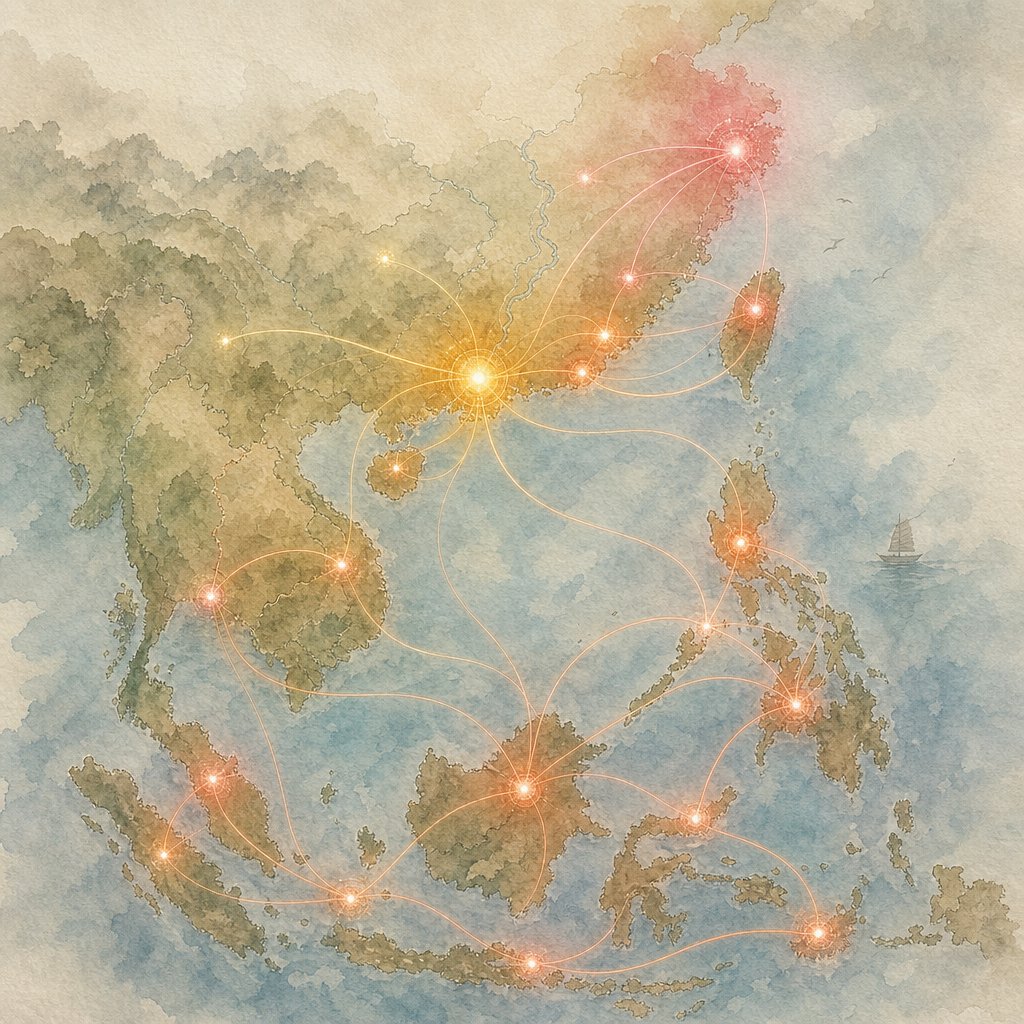
Your name doesn't live in one pronunciation system. Chinese characters are shared across dialects, but the sounds assigned to those characters vary dramatically. A name that clears every check in standard Mandarin might sound like profanity in Cantonese, an insult in Hokkien, or a crude joke in Shanghainese. The characters stay the same. The phonetic output changes completely.
This matters because people don't choose which dialect they hear your name in. A colleague from Guangdong will automatically process your characters through cantonese name pronunciation patterns, even if you only ever use Mandarin yourself. The same character 王 becomes Wang in Mandarin, Wong in Cantonese, and Ong in Hokkien. When you translate name chinese characters into sound, the output depends entirely on which phonetic system the reader carries in their head.
Cantonese Pronunciation Pitfalls
Cantonese has six tones compared to Mandarin's four, plus a set of final consonants (-p, -t, -k) that Mandarin lacks entirely. These extra phonetic features mean syllables that are distinct in Mandarin can collapse into homophones in Cantonese, or vice versa. A name with characters that sound safely different in your chinese mandarin name might land on identical syllables in Cantonese, creating a pun or vulgar phrase that didn't exist in Mandarin at all.
Cantonese also preserves many older Chinese pronunciations that Mandarin has lost. Characters that sound nothing alike in modern Mandarin may share a Cantonese reading because they were historically related. This creates collision patterns that are impossible to predict from Mandarin knowledge alone. If your name will be used in Hong Kong, Macau, Guangdong province, or among overseas Chinese communities in Southeast Asia, Cantonese screening is non-negotiable.
Hokkien and Southern Dialect Risks
Southern Min dialects, including Hokkien and Teochew, introduce yet another phonetic layer. These dialects are spoken by roughly 50 million people and dominate Chinese communities in Taiwan, Singapore, Malaysia, and the Philippines. A character pronounced "chen" in Mandarin becomes "tan" in Hokkien. "Zhang" becomes "Teo" or "Teoh." These aren't minor accent differences. They're entirely different sound systems applied to the same written characters.
The risk compounds because Min Chinese has greater dialectal diversity than any other subgroup, with mountain villages sometimes speaking mutually unintelligible varieties. A name that passes in Taiwanese Hokkien might still fail in Teochew or Hainanese. For practical purposes, focus on the dominant dialect of the specific community you'll interact with most.
When Dialect Checking Matters Most
Not everyone needs to screen across every dialect. The effort should match your situation. Dialect checking becomes essential when:
- You have family or in-laws in southern China, Hong Kong, or Taiwan who will use your name regularly in their native dialect
- You plan to work or do business in Hong Kong, Guangdong, Fujian, or Southeast Asian Chinese communities where Cantonese, Hokkien, or Teochew dominate daily speech
- Your chosen surname originates from a dialect-heavy region, meaning relatives and community members will default to dialect pronunciation at family gatherings
- You're writing fiction set in a specific region where characters would naturally speak a local dialect rather than standard Mandarin
- You interact regularly with older Chinese speakers, who are statistically more likely to default to dialect pronunciation than younger generations educated in Putonghua
If none of these apply, and your name will be used exclusively in Mandarin-dominant contexts like Beijing, northern China, or formal professional settings, dialect screening is lower priority. But "lower priority" doesn't mean zero risk. Chinese diaspora communities are everywhere, and you can't control who reads your name or which phonetic system they apply to it.
The practical approach: identify the one or two dialects most relevant to your life circumstances and find a native speaker of each to pronounce your candidate name. You don't need to learn the dialect yourself. You just need someone who speaks it to say your name aloud and tell you honestly what it sounds like in their system. A five-minute conversation with a Cantonese speaker can surface problems that hours of Mandarin-focused research would never reveal.
Dialect screening catches phonetic problems that exist outside Mandarin's frame of reference. But sound isn't the only dimension that shifts over time. Characters themselves accumulate new associations, cultural weight that has nothing to do with pronunciation and everything to do with what a society collectively remembers, mocks, or avoids.
Step 5 Verify Against Cultural Taboos and Modern Associations
Chinese name cultural meaning operates across three distinct time layers, and each one can independently disqualify an otherwise well-constructed name. A combination might sound clean, pair well with its surname, and pass dialect checks, yet still carry baggage that makes native speakers uncomfortable. That baggage comes from history, from pop culture, and from the internet, and each layer requires its own verification approach.
The tricky part? These layers don't stay static. A name that was perfectly respectable twenty years ago can become a punchline overnight if a viral meme or infamous public figure shares those characters. Understanding the chinese naming convention around cultural associations means accepting that names exist in a living cultural context, not a fixed dictionary.
Traditional Cultural Taboos Still in Effect
The oldest layer of naming taboos traces back thousands of years, and many remain active in modern Chinese society. Research into Chinese language taboos identifies the avoidance of noble and elder names as one of the three primary manifestations of linguistic taboo in Chinese culture. These aren't quaint historical curiosities. They shape how people react to names today.
Imperial and historical name avoidance. Throughout Chinese history, using characters from an emperor's name was forbidden, a practice called "bi hui" (避讳). While nobody will arrest you for using an emperor's name character in modern China, the cultural echo persists. Characters strongly associated with specific historical figures carry that figure's weight. Naming yourself with characters from Qin Shihuang's name or Mao Zedong's name reads as presumptuous at best, politically tone-deaf at worst.
Historical records show how seriously this was taken: Sima Qian changed characters in his writings to avoid the name of a former emperor, and the Tang Dynasty renamed an entire government ministry (from "Ministry of People" to "Ministry of Households") because the original contained a character from Emperor Taizong's personal name. The underlying principle, that certain characters "belong" to certain figures, still influences how Chinese speakers perceive names.
Elder name avoidance. Using the same characters as a living elder relative remains a genuine social violation in many families. If your grandfather's name contains the character 明, using 明 in your own name signals disrespect in traditional households. This applies to the specific character, not just the sound. For foreigners doing a name translation chinese speakers will encounter, this means asking your Chinese contacts whether any of your candidate characters overlap with prominent family names in their community.
Death and misfortune associations. Characters or combinations that reference death (死), endings (终, 末), emptiness (空, 虚), or loss (失, 亡) remain firmly taboo. The cultural belief that language carries supernatural power, that naming something can attract it, persists strongly in naming contexts even among otherwise non-superstitious Chinese speakers. As the research notes, this belief originated from ancient language worship where "the ancients believed that language itself had a supernatural divine power" and that words could "bring luck or disaster."
Modern Pop Culture and Internet Meme Associations
The second temporal layer moves much faster. A character combination that was neutral last year can become unusable after a scandal, a viral video, or a meme cycle. This is the layer where severity typically lands in the "socially embarrassing" tier rather than "genuinely offensive," but the social friction it creates is real.
Infamous public figures. When a politician, criminal, or controversial celebrity becomes widely known, their name's characters become temporarily or permanently tainted. The association doesn't require identical characters. Even similar-sounding combinations trigger the connection. Chinese internet users are remarkably quick at drawing phonetic parallels between new names and known figures.
Viral memes and catchphrases. China's internet culture produces memes at extraordinary speed. Viral moments regularly turn ordinary phrases into loaded cultural references. A character combination that sounds like a trending catchphrase will get laughs, eye-rolls, or confused stares depending on the audience's age. The phrase "zi ji xia zi ji" (scaring yourself) became inescapable after a poorly animated film went viral, and any name echoing those syllables would carry that association for months.
Internet slang evolution. Previously neutral character combinations acquire new meanings through online usage. Abbreviations, homophones used to dodge censorship, and ironic repurposing of formal language all create new landmines. The word "abstract" (抽象) now carries connotations of bewilderment and absurdity in Chinese internet culture that it never had before. Characters or combinations that map onto trending slang terms become temporarily radioactive for naming purposes.
The key difference between this layer and traditional taboos: meme associations fade. A name that sounds like a 2024 catchphrase might be completely neutral again by 2027. Traditional taboos, by contrast, have persisted for centuries and show no signs of weakening. This means the risk calculus differs. A meme collision is embarrassing but temporary. A traditional taboo violation signals deep cultural ignorance.
Superstition and Numerological Considerations
The third dimension isn't about what a name sounds like or what it references culturally. It's about the metaphysical properties Chinese tradition assigns to characters themselves: stroke counts, elemental associations, and five-element balance.
Five-element theory (五行) assigns each character to one of five elements: metal (金), wood (木), water (水), fire (火), and earth (土). A person's birth date determines which elements they have in abundance and which they lack. Traditional naming practice selects characters whose elemental associations compensate for deficiencies in the birth chart. Feng shui practitioners in Hong Kong report that roughly 60 to 70% of adults seeking name changes do so to "adjust their aura" by rebalancing elements after major life changes.
You'll notice this system operates through character radicals. A character containing the water radical (氵) carries water-element energy. Fire radical (火) carries fire. The interaction between elements follows a generative and destructive cycle: water nourishes wood, wood feeds fire, fire creates earth, earth yields metal, metal collects water. Conversely, water extinguishes fire, fire melts metal, and so on. Placing two destructively paired elements in a name is considered inauspicious by traditional practitioners.
Stroke count adds another layer. Certain total stroke counts for a name are considered lucky or unlucky based on numerological systems. While younger, urban Chinese speakers may dismiss this as superstition, older family members and traditional communities take it seriously. A name with an "unlucky" stroke count won't offend anyone, but it may draw unsolicited advice or concern from traditionally minded contacts.
How much weight should you give these metaphysical considerations? That depends on your audience. If you're choosing a name for professional use in a modern corporate environment, stroke counts and elemental balance are secondary to avoiding phonetic and cultural problems. If you're marrying into a traditional family or working closely with older Chinese business partners, these factors carry genuine social weight. For fiction writers, giving a character a name with deliberate elemental imbalance can subtly signal that something is "off" about them to culturally literate readers.
Here's a verification checklist to run your candidate name through before moving forward:
- Do any of my chosen characters appear in the name of a major historical figure, emperor, or political leader whose association could be problematic?
- Have I checked whether my characters overlap with the names of elder relatives in the community where I'll use this name?
- Does my character combination sound like, or visually resemble, any currently viral meme, catchphrase, or internet slang term?
- Are any of my characters strongly associated with a public figure involved in scandal, crime, or widespread ridicule?
- Do my characters contain radicals from conflicting elements (e.g., water and fire) that might concern traditionally minded speakers?
- Is my total stroke count one that traditional numerology considers inauspicious, and does my intended audience care about this?
- Was this combination neutral five years ago but potentially loaded now due to cultural shifts I might have missed?
- Have I searched Chinese social media platforms for my exact character combination to see if it has acquired any slang meaning or meme association?
Cultural verification is the step where timing matters most. A phonetic check produces stable results because pronunciation doesn't change year to year. But cultural associations are a moving target, which is why consulting living people, not just dictionaries, remains irreplaceable. The cultural layer also intersects with another dimension that dictionaries can't fully capture: the gendered expectations Chinese society encodes into specific characters and naming patterns.
Step 6 Assess Gender Signals and Generational Patterns
Every Chinese character carries a gender temperature. Some run strongly masculine, others strongly feminine, and a smaller set sits in neutral territory. When you're choosing a chinese name, misreading these signals is one of the fastest ways to create confusion, not because the name sounds vulgar, but because it sounds wrong in a way that makes native speakers pause and recalculate. Imagine a tall, bearded man introducing himself with a name that translates roughly to "Delicate Jasmine Blossom." The mismatch doesn't offend anyone, but it does become the only thing people remember about the introduction.
For foreigners selecting my mandarin name for professional or social use, gender-mismatched characters rank among the most common and most easily avoidable mistakes. Unlike tonal clashes or dialect collisions, which require specialized knowledge to detect, gender signals are something any native speaker can identify instantly. The fix is straightforward once you understand which characters carry which signals.
Characters With Strong Gender Associations
Chinese name gender meaning is encoded through several mechanisms: the character's semantic content, its radical components, and its historical usage patterns. The Chairman's Bao identifies clear markers: female names often contain the 女 (woman) radical, characters relating to beauty and appearance, or references to flowers featuring the 艹 (grass/plant) radical. Female names also frequently use repeated characters, as seen in celebrity names like 高圆圆 (Gao Yuanyuan) and 范冰冰 (Fan Bingbing). Male names, by contrast, tend toward characters conveying strength and fortitude, often featuring the 木 (tree) or 钅 (metal) radical.
These aren't rigid rules, but they function as strong defaults. A character like 婷 (graceful) or 娜 (elegant) reads as unambiguously feminine to any native speaker. Characters like 勇 (brave), 涛 (wave), or 强 (strong) read as firmly masculine. Placing a strongly feminine character in a man's name, or a strongly masculine one in a woman's name, creates cognitive friction every time someone encounters it.
| Character Examples | Gender Signal | Risk When Misused | Context |
|---|---|---|---|
| 婷 (ting, graceful), 娜 (na, elegant), 妤 (yu, beautiful) | Strongly feminine - contains 女 radical | A man with these characters in his name will face constant double-takes and assumptions of a data entry error on official forms | The 女 radical is the strongest single gender marker in Chinese naming; its presence almost always signals a female name |
| 莉 (li, jasmine), 花 (hua, flower), 兰 (lan, orchid) | Strongly feminine - flower/plant imagery | Creates an incongruent impression for male bearers; may trigger humor or confusion in professional settings | Flower characters with the 艹 radical are traditional feminine markers, though 松 (pine) and 柏 (cypress) are masculine plant references |
| 勇 (yong, brave), 刚 (gang, hard/firm), 强 (qiang, strong) | Strongly masculine - strength and hardness | A woman with these characters may be perceived as having been given a "boy's name" by parents who wanted a son, carrying social stigma in traditional communities | These characters appear in the most popular male names across decades of Chinese naming data |
| 涛 (tao, wave), 磊 (lei, stacked rocks), 鹏 (peng, mythical bird) | Strongly masculine - power and grandeur | Sounds jarring for a female bearer; native speakers may assume the name was assigned to a different person | Large-scale natural imagery (mountains, oceans, mythical creatures) codes masculine in traditional naming |
| 文 (wen, literature), 明 (ming, bright), 安 (an, peace) | Gender neutral | Low risk; these work for any gender without creating friction | Neutral characters are the safest choice for foreigners uncertain about gender conventions |
The pattern is intuitive once you see it: delicacy, beauty, and flowers signal feminine. Strength, grandeur, and hardness signal masculine. Abstract virtues like wisdom, peace, and brightness tend toward neutral. When in doubt, neutral characters eliminate this entire category of risk.
Generational Naming Rules and Their Constraints
A second dimension complicates character selection for anyone naming within a Chinese family structure. Many families follow generational naming practices (字辈, zibei), where all members of the same generation share one character in their given name. Ancestry's research into Chinese naming explains that all male descendants of one person may share the same first character of their given names, with each individual receiving a unique second character. These shared characters are often determined by a generational poem recorded in clan books.
Here's where this creates naming problems: the generation character is fixed. You don't get to choose it. If your generation's assigned character is 国 (nation), every male cousin in your generation has 国 as their first given-name character. Your only creative freedom is the second character. But that second character must now work with both the surname and the generation character, a three-way interaction that dramatically narrows your safe options.
Imagine the surname is 吴 (Wu) and the generation character is 德 (de). You already know from Step 3 that Wu De sounds like "without virtue." The generational system has forced a collision that no amount of clever second-character selection can fully resolve. The full name 吴德X will always begin with that unfortunate two-syllable sequence. In cases like these, some families quietly bend the generational rule or use the generation character in the second position rather than the first.
For foreigners who aren't bound by family generational poems, this constraint rarely applies directly. But if you're marrying into a Chinese family or naming a child within a family that follows 字辈 traditions, you may find your choices constrained by a character selected generations ago. Understanding this system helps you recognize when a seemingly odd name exists because the bearer had limited options, not because their parents made a careless choice.
Navigating Gender Expectations in Modern Naming
Modern Chinese naming is shifting. LingoAce notes that while traditional names show clear gender distinctions, modern Chinese names can be gender-neutral. There's also a developing trend, particularly in rural China and more modern households, of parents intentionally using cross-gender names. The cultural landscape isn't monolithic.
That said, the traditional framework still dominates first impressions. When someone reads your name on a resume, a WeChat contact card, or a conference badge, they form a gender assumption within milliseconds based on character signals. If that assumption conflicts with reality, it creates a small moment of recalibration that colors the interaction. This isn't necessarily negative, but it is a factor worth considering deliberately rather than stumbling into accidentally.
For foreigners choosing a chinese name, the safest path is straightforward:
- If you want to avoid any gender confusion, select characters that match your gender's traditional signals or stick to clearly neutral characters like 文, 明, 安, or 瑞
- If you intentionally want a gender-neutral or cross-gender name, make that a conscious choice rather than an accident, and be prepared for occasional questions
- If you're writing fiction, use gender signals deliberately as characterization tools: a female warrior with a masculine name tells readers something about her family or her world
The key distinction is intentionality. A Chinese person choosing a cross-gender name makes a deliberate cultural statement. A foreigner accidentally picking strongly feminine characters for a male name just looks like they didn't do their research. The difference is visible to native speakers immediately.
Gender signals and generational constraints shape how a name is perceived before anyone even speaks it aloud. But perception is ultimately a social phenomenon, and no amount of solo research can fully replicate how real people across different demographics will actually react to your name in practice.

Step 7 Consult Native Speakers the Right Way
You've screened your candidate name for tonal clashes, surname collisions, dialect problems, cultural taboos, and gender signals. Every one of those steps improves your odds. But none of them replaces the single most powerful verification tool available: putting your name in front of actual Chinese speakers and reading their reactions. The challenge isn't finding someone to ask. It's asking in a way that produces honest answers rather than polite deflection.
Here's the core problem when you ask a native speaker about a chinese name. Chinese communication culture prioritizes preserving the other person's feelings over delivering blunt truth. A native speaker who notices your name sounds like a crude phrase will often say "it's fine" or "it's interesting" rather than explain the embarrassing association directly. This isn't dishonesty. It's deeply ingrained social behavior where indirect expression aims to "maintain harmony in relationships" and avoid causing someone to lose face. If you simply ask "does my name sound okay?" you're almost guaranteed to get a reassuring answer regardless of the actual problem.
You need questions that give your consultants permission to flag issues without forcing them into the uncomfortable position of directly telling you your name is vulgar.
What Questions to Ask Native Speakers
The order matters here. Start with open-ended questions that let problems surface naturally, then narrow toward specific risk categories. Each question is designed to bypass the politeness reflex by framing the conversation as collaborative problem-solving rather than judgment.
- "What's the first thing that comes to mind when you hear this name?" - Say the full name aloud at natural speed and watch their face in the first half-second. Micro-expressions (a suppressed smile, a slight wince, raised eyebrows) reveal more than their verbal answer. If they pause before responding, something registered.
- "If you met someone with this name, what would you assume about them?" - This surfaces gender mismatches, age-inappropriate choices, and class signals without requiring the consultant to say anything negative directly. They can frame concerns as "assumptions others might make."
- "Does this name remind you of any phrase, person, or expression?" - This is your homophone and cultural association check. By asking what it "reminds them of" rather than whether it "sounds bad," you give them a neutral path to mention problematic overlaps.
- "If this were a character in a TV show, what kind of character would they be?" - A surprisingly effective question. If your intended professional name gets described as "a comedy sidekick" or "a villain," you have an association problem. This framing lets consultants express concerns through fictional distance.
- "Is there anything about this name that might make a teenager laugh?" - Younger generations catch slang overlaps and internet meme associations that older speakers miss. Framing it as "what teenagers might think" gives your consultant permission to mention crude associations without claiming they personally find it funny.
- "Would you feel comfortable calling this name out loud in a crowded office?" - This tests whether the name creates social discomfort for the speaker, not just the bearer. If someone hesitates to say your name in public, that's a strong signal something is off.
- "If you were helping me choose between this name and [alternative], which would you pick and why?" - Offering a comparison gives consultants a graceful way to steer you away from a problematic option without having to explicitly criticize your first choice.
Notice the pattern: none of these questions ask "is this bad?" They all create space for the consultant to share concerns indirectly, which aligns with how Chinese communication naturally works. You're designing the conversation to work with cultural communication norms rather than against them.
How Many People to Consult and Why Demographics Matter
One person's opinion isn't enough. Chinese is spoken across vast geographic, generational, and social distances. A name that sounds perfectly normal to a 25-year-old Beijinger might trigger an unfortunate association for a 60-year-old Cantonese speaker. Someone who grew up in Shanghai processes different slang than someone from Chengdu. When you ask a native speaker about your chinese name, you're really sampling one point in a multidimensional space.
At minimum, consult three people who differ along these axes:
- One person over 50. Older speakers catch traditional taboos, generational naming violations, and historical associations that younger people may not recognize. They're also more likely to process names through dialect pronunciation and to hold stronger opinions about stroke count and elemental balance.
- One person under 30. Younger speakers catch internet slang overlaps, meme associations, and pop culture references. They know which character combinations have been repurposed as online jokes. They're also more attuned to how a name reads on social media profiles and messaging apps.
- One person from a different region than where you'll primarily use the name. Regional variation in slang, dialect pronunciation, and cultural reference points means a name safe in one city might be problematic in another. A consultant from a different region provides a cross-check against local blind spots.
If possible, extend beyond three. A fourth consultant of a different gender helps catch gendered associations you might miss. A fifth who works in a formal professional environment (banking, law, government) can flag whether the name reads as appropriately serious for business contexts. Someone familiar with chinese names translation for foreigners specifically can tell you whether your name falls into common "foreigner name" patterns that mark you as an outsider.
Consider the case of someone converting a name like Thomas into Mandarin. The standard thomas in mandarin transliteration (托马斯, Tuomasi) works as a phonetic rendering but doesn't function as a real Chinese name. A native consultant would immediately flag this as a transliteration rather than a proper name, and could suggest character combinations that preserve some phonetic similarity while functioning as an authentic name. Without that consultation, you might use a transliteration thinking it's a name, when native speakers hear it as a foreign word written in Chinese characters.
Interpreting Conflicting Feedback
What happens when your consultants disagree? One says the name is lovely, another says it reminds them of something awkward, and a third has no reaction at all. This is normal, and it doesn't mean the process failed. Conflicting feedback is data.
Apply these interpretation principles:
- A single strong negative outweighs multiple neutrals. If one person identifies a clear vulgar homophone or cultural taboo, that problem exists regardless of whether others noticed it. The others may have been too polite to mention it, or it may be region-specific. Either way, the risk is real.
- Age-specific concerns are real concerns. If only your under-30 consultant flags a slang overlap, that association still exists for an entire generation of speakers you'll interact with. Don't dismiss it because older consultants didn't catch it.
- Regional disagreements indicate regional risk. If your Cantonese-speaking consultant flags a problem that your Mandarin-only consultants miss, you have a dialect-specific issue. Whether that matters depends on your life circumstances (revisit Step 4).
- Enthusiasm gaps matter. If one consultant says "it's fine" and another says "oh, that's a beautiful name," the difference in warmth tells you something. "Fine" often means "I don't see an obvious problem but I'm not impressed." Genuine enthusiasm signals a name that actively works well, not just one that avoids disaster.
- Hesitation is a negative signal. Any pause, hedging, or qualified response ("it's... okay" or "it could work") should be treated as a soft flag. Follow up with: "You seem uncertain. What's giving you pause?" Give them explicit permission to be direct.
The goal isn't unanimous approval. It's the absence of any strong negative reaction combined with at least some genuine positive response. A name that gets three "it's fine" responses and zero enthusiasm might be technically safe but forgettable. A name that gets two enthusiastic responses and one mild concern about an obscure regional association is probably a strong choice worth keeping.
Remember that this consultation step isn't a one-time gate. If you modify your name based on feedback, run the modified version past your consultants again. A character swap that fixes one problem can introduce another. The verification loop closes only when your final candidate has been spoken aloud, in full, by multiple native speakers across different demographics, and none of them flinched.
How to Choose a Chinese Name Replacement Without Social Awkwardness
So your consultants flinched. Maybe one laughed outright. Maybe all three gently steered you toward "considering alternatives." The verification process worked exactly as intended, and now you're holding a name that needs fixing. The good news: this situation is far more common and far less embarrassing than you think. Chinese speakers regularly encounter foreigners updating their names as language skills improve and cultural understanding deepens. Nobody judges you for getting it wrong the first time. They judge you for keeping a bad name after you know it's bad.
Minor Modifications That Preserve Your Name's Identity
Not every problematic name needs to be scrapped entirely. Often a single character swap resolves the issue while keeping the name recognizably yours. The key is identifying which element causes the collision and replacing only that piece.
Here are modification strategies ranked from least to most disruptive:
- Tone shift via character swap. Replace the problematic character with one that shares the same meaning but uses a different tone. If your name's issue is a tonal clash pattern, changing from a fourth-tone character to a first-tone synonym can eliminate the problem while preserving your name's semantic identity. People who know you will barely notice the difference in writing.
- Homophone redirect. Keep the same pronunciation but switch to a different character. This fixes written-form problems (bad radicals, unfortunate visual combinations) without changing how your name sounds. Your contacts won't hear any difference when calling your name aloud.
- Single character replacement. Swap one given-name character for a near-synonym that breaks the collision pattern. If Wu De (sounds like "without virtue") is your problem, replacing 德 with 善 preserves the virtue concept while eliminating the phonetic trap.
- Character reordering. For two-character given names, sometimes reversing the order of your given-name characters resolves a surname interaction without losing either character. This works when the problem is specifically the surname-plus-first-character sequence.
- Complete given-name replacement. When the collision is fundamental to your chosen characters, start fresh with new given-name characters while keeping your surname. This is more disruptive socially but sometimes necessary.
- Full name change. In rare cases where even the surname choice is problematic (perhaps a transliterated surname that sounds unfortunate in context), replacing the entire name is the cleanest path forward.
When a Complete Name Change Is Warranted
Minor tweaks work when the problem is isolated to one character or one interaction pattern. A complete change makes more sense when multiple issues stack up, when the name falls in the "genuinely offensive" tier, or when the name was a pure transliteration that never functioned as a real Chinese name in the first place.
Consider someone who originally rendered Thomas in Chinese as a direct phonetic transliteration like 托马斯 (Tuomasi). This isn't actually a Chinese name. It's a foreign word written in Chinese characters. Native speakers hear it as a transliteration immediately, and it carries no meaning, no cultural resonance, and no elegance. Upgrading from a transliteration to a proper name with meaningful characters isn't fixing a mistake. It's completing a process that was never finished.
A complete change is also warranted when your existing name has become associated with something new, a viral meme, a disgraced public figure, or internet slang that didn't exist when you chose it. Cultural context shifts, and names that were fine years ago can become untenable. Taiwan's household registration policies explicitly allow foreign nationals who have adopted Chinese names to apply for a name change, acknowledging that initial choices sometimes need revision.
How to Introduce a New Name Socially and Professionally
The social script for introducing a changed name is simpler than most people fear. Chinese culture has a built-in framework for name evolution. Children receive nicknames that differ from formal names. Writers use pen names. People adopt new names after major life transitions. A foreigner refining their Chinese name fits naturally within this cultural pattern.
For professional contacts, a brief, confident announcement works best: "I've updated my Chinese name to [new name]. I realized my old one had some issues, so I worked with native speakers to find something better." This framing accomplishes two things simultaneously. It signals cultural awareness, and it closes the door on further discussion about the old name. Most people will simply start using the new one without asking what was wrong with the previous version.
For closer relationships where people might ask why, a light touch works: "My old name accidentally sounded like [vague reference], so I picked something that works better." You don't need to spell out the exact vulgarity. The implication is enough, and most Chinese speakers will nod knowingly because they've seen this happen before.
A few practical tips for the transition:
- Update your WeChat name, email signature, and business cards simultaneously so there's no confusion period
- When meeting someone who knew your old name, reintroduce yourself with the new one naturally rather than making a formal announcement
- If someone uses your old name out of habit, gently correct once and move on. Repeated corrections make it a bigger deal than it needs to be
- For official documents, check whether your jurisdiction requires formal registration of the change, as some countries track Chinese name usage for visa and residency purposes
Here's what matters most: catching and fixing a bad name combination demonstrates cultural respect, not failure. The person who discovers their name sounds like profanity and takes steps to fix it earns more credibility than someone who never bothered learning how to pick a chinese name properly in the first place. Native speakers recognize the effort. They appreciate that you cared enough to get it right, even if it took a second attempt.
Learning how to choose a chinese name is ultimately a process, not a single decision. Your first attempt teaches you what you didn't know. Your second attempt, informed by tonal checks, surname interactions, dialect screening, cultural verification, and honest native-speaker feedback, produces something you can carry with confidence. The eight steps in this guide give you a systematic path from uncertainty to a name that sounds right, reads right, and respects the linguistic and cultural system it lives within.
Frequently Asked Questions About Avoiding Bad Chinese Name Combinations
1. Why do Chinese names chosen by foreigners often sound like profanity?
Mandarin has only about 400 base syllables shared across thousands of characters, creating dense homophone overlaps. When non-native speakers select characters based on individual meanings without testing how the full name sounds at conversational speed, the combined syllables frequently collide with vulgar phrases, slang, or inauspicious expressions. Tonal patterns compound this because certain tone sequences mirror the rhythmic signatures of common profanity, and these collisions are invisible in written form.
2. How do I check if my Chinese name has a bad meaning in different dialects?
Identify the one or two dialects most relevant to your circumstances, such as Cantonese if you work in Hong Kong or Hokkien if you have family in Southeast Asia. Find a native speaker of each relevant dialect and ask them to pronounce your candidate name aloud. Characters that sound safe in Mandarin can produce entirely different syllable combinations in other dialect systems, creating vulgar or unfortunate phrases that Mandarin-focused research would never reveal. A brief conversation with a dialect speaker is more effective than any dictionary check.
3. Which Chinese surnames are most likely to create embarrassing name combinations?
Several common surnames carry high collision risk due to homophone overlaps. Wu (吴) sounds like 'without,' making any positive-quality given name read as 'lacks that quality.' Shi (史) is a homophone for excrement. Yang (杨) paired with wei creates a word for impotence. Wang (王) followed by ba produces a well-known insult. Fu (付) overlaps with words meaning rotten or corrupt. If your surname falls into these categories, you need to cross-reference given-name candidates against each surname's specific collision patterns.
4. Can I change my Chinese name if I discover it has problems?
Yes, and it is far more socially acceptable than most foreigners assume. Chinese speakers regularly encounter foreigners updating their names as cultural understanding deepens. Options range from minor tweaks like swapping one character for a near-synonym that breaks the collision pattern, to complete replacements when multiple issues stack up. The social script is simple: announce the update confidently, note you worked with native speakers to improve it, and update your WeChat, email signature, and business cards simultaneously.
5. How should I ask native Chinese speakers to evaluate my name without getting a polite but unhelpful response?
Avoid direct questions like 'does this sound okay' because Chinese communication norms prioritize preserving feelings over blunt feedback. Instead, ask indirect questions that give consultants permission to flag issues: 'What is the first thing that comes to mind when you hear this name?' or 'Does this remind you of any phrase or expression?' Watch facial micro-expressions in the first half-second after saying the name aloud. Consult at least three people spanning different ages and regions, since a single opinion cannot cover generational slang, regional dialect risks, and traditional taboos simultaneously.