Why Non-Chinese People Choose a Chinese Name
You're probably here because someone asked "what is my chinese name?" and you realized you didn't have a good answer. Maybe your Mandarin teacher suggested you pick one. Maybe your new colleagues in Shenzhen keep stumbling over your Western name during meetings. Or maybe you just want to stop being "that foreigner" at the local coffee shop in Taipei.
Whatever brought you here, the reason matters. The context where you'll actually use your name should shape every decision you make about it. A name for a Shanghai corporate office carries different weight than one for a weekend language exchange group.
When Do You Actually Need a Chinese Name
Not everyone needs one, but these situations make a strong case:
- Working with Chinese-speaking colleagues or clients who default to Mandarin
- Studying Mandarin formally, where teachers and classmates will address you in Chinese
- Living in China, Taiwan, or another Chinese-speaking region long-term
- Building cross-cultural friendships or romantic relationships
- Opening bank accounts, signing leases, or handling paperwork in Chinese-speaking countries
In each of these scenarios, having a proper Chinese name signals that you're invested, not just passing through.
How Context Shapes Your Name Choice
Business contexts favor conservative, professional-sounding names. You'll want something that fits on a business card without raising eyebrows. Social or academic settings allow more creativity and personal expression — a playful meaning or a poetic reference won't seem out of place.
Here's what many guides skip: the emotional dimension. Figuring out how to choose a chinese name is more than a linguistic exercise. Taking a name in another culture is a meaningful act, and native speakers genuinely appreciate the effort when it's done with care. It tells people you respect their language enough to meet them on their terms.
This guide walks you through a complete workflow — from understanding name structure to selecting characters to getting native speaker validation — so you can get a chinese name that sounds natural, carries real meaning, and doesn't make anyone wince.
Step 1 - Understand How Chinese Names Are Structured
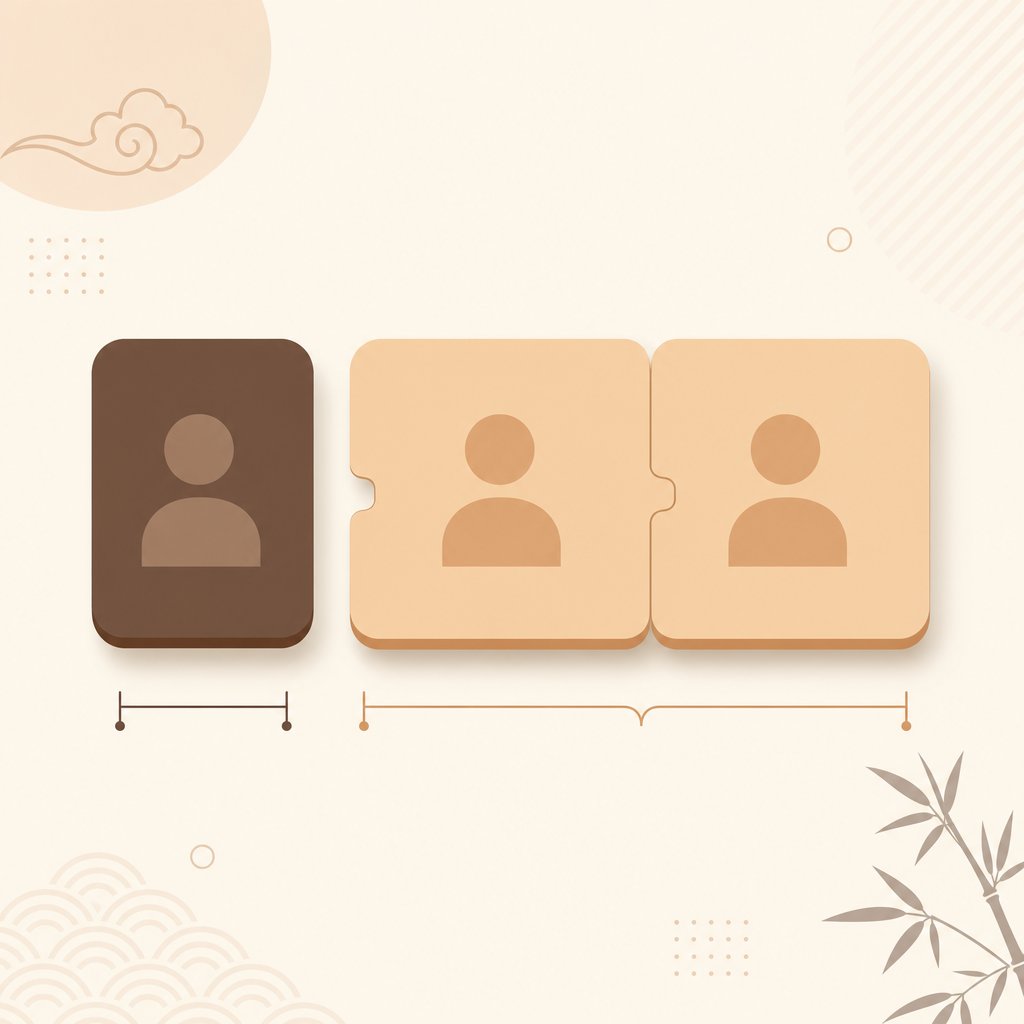
Before you pick characters or worry about meaning, you need to understand the basic anatomy of a Chinese name. The chinese name structure is surprisingly compact — most names are just two or three characters total — but the order and logic behind those characters differ completely from Western naming conventions.
Imagine someone introduces themselves as 王明辉 (Wáng Mínghuī). That's a full legal name. Three characters. The first character is the surname, and the remaining two form the given name. No middle name, no suffix, no hyphen. Simple on the surface, but every piece carries weight.
Here's how the components break down:
| Position | Component | Character Count | Example |
|---|---|---|---|
| First | Surname (姓 xìng) | 1 (rarely 2) | 王 (Wáng) |
| Second | Given name (名 míng) | 1 or 2 | 明辉 (Mínghuī) |
| Full name | Surname + Given name | 2 or 3 total | 王明辉 (Wáng Mínghuī) |
That's the entire framework. A one-character surname plus a one- or two-character given name. Understanding this chinese name order is the foundation for every decision that follows.
Surname First and Given Name Second
If you're used to English naming conventions, this feels backward. In English, you say "John Smith" — given name first, family name last. In Chinese, it's reversed. The family name leads, and the given name follows. So the basketball player 姚明 (Yáo Míng) has the surname 姚 (Yáo) and the given name 明 (Míng, meaning "bright").
This ordering reflects a deep cultural value: the family comes before the individual. Your surname roots you in your lineage. Your given name is the personal part — what your parents chose specifically for you.
For practical purposes, here's what this means when you're a non-Chinese person with a Chinese name:
- In Chinese contexts — speaking Mandarin, writing in characters, introducing yourself to Chinese speakers — use surname first. Say 白大卫 (Bái Dàwèi), not 大卫白.
- In English contexts — emails to Western colleagues, English-language business cards — you can reverse it to match local expectations. "Dawei Bai" works fine.
- On bilingual business cards, list both formats so nobody has to guess which is your first name and last name for chinese versus English usage.
One common point of confusion: the chinese name first name is actually the part that comes second. When someone asks "what's your first name?" in English, they mean your given name. In Chinese, that given name sits in the last position. Keep this straight and you'll avoid the mix-ups that tripped up early Chinese immigrants in English-speaking countries for generations.
One-Character vs Two-Character Given Names
You have a choice: a given name with one character or two. Both are legitimate, but two-character given names dominate modern usage and offer clear advantages for someone crafting a new name.
A single-character given name like 明 (Míng) paired with a surname gives you a two-character full name: 王明 (Wáng Míng). It's concise, but it limits your options. You get one character to carry all the meaning, and fewer tonal combinations to play with.
A two-character given name like 明辉 (Mínghuī) opens up more possibilities. You can pair complementary meanings — "bright" plus "radiance" — and create a more distinctive identity. Two characters also give you better tonal flow, which matters for how natural the name sounds when spoken aloud.
Regional trends matter here too. In Mainland China, two-character given names are the strong default. A Language Log analysis of naming trends notes that while monosyllabic given names still exist, disyllabic ones are far more common among younger generations. In Taiwan, single-character given names appear slightly more often than on the mainland, though two-character names still prevail overall.
For someone learning how do chinese names work and building one from scratch, the two-character given name is almost always the better path. It gives you room to balance sound, meaning, and cultural resonance — all of which become critical in the next step, when you decide your overall naming approach.
Step 2 - Decide Your Naming Approach
You know the structure. You know surname comes first and given name follows. The bigger question is: how do you actually generate the characters themselves? When picking a chinese name, you have three distinct paths, and each produces a very different result.
Think of it this way. If someone asked "how do i write my name in chinese," the honest answer is: it depends on what you want your name to do. Should it sound like your English name? Should it carry deep meaning? Or can it do both?
The Transliteration Approach
This is pure phonetic matching — you map the sounds of your Western name into Chinese characters that approximate the pronunciation. It's how celebrity names and foreign brand names get rendered in Chinese media. "Michael" becomes 迈克尔 (Màikè'ěr). "Sarah" becomes 莎拉 (Shālā).
The upside: people can immediately connect your Chinese name to your English one. The downside: the characters are chosen for sound, not meaning, so the result often reads as random or obviously foreign to native speakers. 迈克尔 literally breaks down to something like "stride-overcome-you" — not exactly a coherent identity. This approach answers the question of how to write my name in chinese, but it doesn't produce something that feels like a real Chinese name.
The Meaning-Based Approach
Here you abandon any phonetic connection to your birth name entirely. Instead, you choose characters purely for their meaning and cultural resonance — creating a name that sounds fully native. Someone named "Victor" might choose 志强 (Zhìqiáng, "ambitious and strong") because it reflects their personality, even though it sounds nothing like "Victor."
The result blends in perfectly. Native speakers won't guess it belongs to a foreigner just by hearing it. The tradeoff is that your Chinese name has zero connection to the name your friends and family use, which can feel disorienting.
The Hybrid Approach
This is where most people land when figuring out how to make a chinese name that actually works. You select characters that partially echo your original name's sounds while also carrying desirable meanings. The phonetic link is loose — maybe just the first syllable matches — but it's enough to create a bridge between your two identities.
This method is the preferred approach for foreigners integrating into Chinese professional or academic life, because it balances personal identity with cultural authenticity.
Here's how all three approaches compare side by side:
| Method | Pros | Cons | Best For |
|---|---|---|---|
| Transliteration | Instantly recognizable link to English name | Sounds foreign; meaning is random or awkward | Short-term stays, casual use |
| Meaning-Based | Sounds completely native; rich cultural resonance | No phonetic connection to your birth name | Long-term residents, fluent speakers |
| Hybrid | Partial sound link plus genuine meaning | Requires more research to find the right balance | Most learners and professionals |
To make this concrete, imagine you're named David and you want to know how to pick a chinese name. Here's what each approach produces:
- Transliteration: 大卫 (Dàwèi) — the standard phonetic rendering. 大 means "great" and 卫 means "defend." It's widely recognized in China thanks to the biblical figure, but it immediately signals a foreign name.
- Meaning-Based: 德明 (Démíng) — 德 means "virtue" and 明 means "bright." No sound connection to "David," but it reads as a perfectly natural Chinese name with aspirational meaning.
- Hybrid: 戴文 (Dàiwén) — the surname 戴 (Dài) echoes the "Da" sound in David, while 文 (wén) means "culture" or "literature." The name sounds authentically Chinese, carries real meaning, and still nods to your original identity.
For most people reading this guide, the hybrid approach hits the sweet spot. It lets you keep a thread of connection to who you've always been while fully respecting Chinese naming conventions. You're not just translating — you're creating something new that lives comfortably in both worlds.
Whichever path you choose, the next challenge is the same: selecting the right surname to anchor your name.
Step 3 - Select a Chinese Surname That Fits
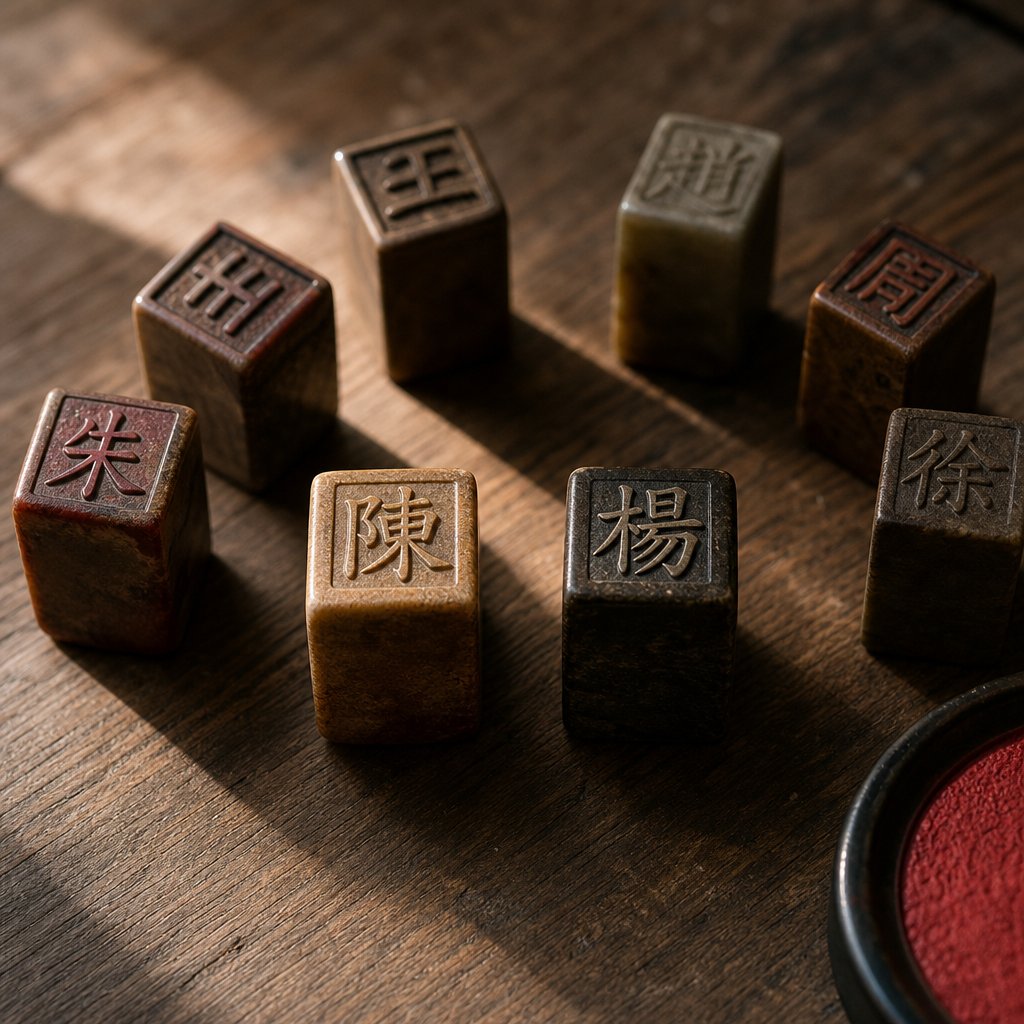
Your surname is the anchor of your Chinese name. Since chinese names surname first, it's literally the first thing people hear when you introduce yourself. The good news: you don't need to invent anything. China's 百家姓 (Bǎijiāxìng, or "Hundred Family Surnames") gives you a well-established pool to draw from, and the simplest strategy is phonetic matching — finding a common Chinese surname that shares a starting sound or syllable with your Western surname.
Mapping Western Surnames to Chinese Surnames
The idea is straightforward. Listen to the first sound of your last name, then find a Chinese surname that opens with something similar. You're not translating meaning here — you're matching the initial consonant or syllable so the surname feels like a natural echo of your identity.
Here are some common pairings to illustrate the pattern:
| Western Surname Initial Sound | Suggested Chinese Surnames | Pinyin | Meaning/Origin |
|---|---|---|---|
| Sm- (Smith, Smirnov) | 史 | Shǐ | History |
| J- (Johnson, Jones) | 张, 金 | Zhāng, Jīn | Stretch/expand; Gold |
| W- (Williams, Wilson) | 王, 魏 | Wáng, Wèi | King; Name of ancient state |
| B- (Brown, Baker) | 白, 波 | Bái, Bō | White; Wave |
| M- (Miller, Martin) | 马, 孟 | Mǎ, Mèng | Horse; First/eldest |
| L- (Lee, Lopez) | 李, 林 | Lǐ, Lín | Plum; Forest |
| T- (Taylor, Thomas) | 唐, 田 | Táng, Tián | Tang dynasty; Field |
| K-/C- (Clark, Kim) | 康, 金 | Kāng, Jīn | Health; Gold |
Notice that some Western sounds map to multiple options. If your last name is Williams, both 王 (Wáng) and 魏 (Wèi) work phonetically. Your choice might come down to which one pairs better tonally with the given name you select later, or which feels easier to write.
Why Common Surnames Are Safer Choices
Sticking to the top 100 most common Chinese surnames is a deliberate strategy, not a lack of creativity. According to China's Seventh National Population Census, just the top five surnames — 李 (Lǐ), 王 (Wáng), 张 (Zhāng), 刘 (Liú), and 陈 (Chén) — cover roughly a third of the Han Chinese population. When you pick a surname from this familiar pool, nobody blinks. It sounds normal.
Rare or unusual surnames create the opposite effect. If you choose something obscure, native speakers may assume there was a mistake, or they'll spend mental energy wondering why a foreigner picked such an odd family name instead of focusing on the conversation. The goal is a surname that disappears into the background so your given name can do the expressive work.
A few things worth noting about regional associations:
- 林 (Lín) is extremely common in southern China, Taiwan, and among overseas Chinese communities in Southeast Asia. If you'll be based in Taipei or Fujian, it blends in perfectly.
- 黄 (Huáng) is heavily concentrated in Guangdong and Guangxi provinces.
- Some surnames carry strong historical weight. Choosing 孔 (Kǒng) — the surname of Confucius — might raise eyebrows, as it implies a connection to that lineage.
Similarly, avoid combinations that accidentally mirror famous figures. Pairing the surname 李 with the given name 白 gives you 李白 (Lǐ Bái) — China's most celebrated poet. That's like a Chinese person choosing "Shakespeare" as their English name. It reads as either a joke or a misunderstanding of how first name and last name in chinese culture carry social weight.
The safest path: pick a top-50 surname that phonetically echoes your own, confirm it doesn't create any awkward full-name combinations, and move on. Your surname is the frame — the real creative work happens with the given name characters you'll choose next.
Step 4 - Choose Given Name Characters With Purpose
Your surname is locked in. The creative part starts here. Choosing a given name in chinese is where you get to express personality, values, or aspirations through individual characters. Each character carries its own meaning, and when you pair two together, they form a mini-phrase that becomes your identity in every Chinese-speaking interaction.
Sounds like a lot of pressure? It doesn't have to be. Think of it as picking two words that describe who you are or who you want to become. The key is knowing which characters are commonly used in names and what cultural signals they send.
Characters Organized by Meaning Category
Chinese given name characters tend to cluster around a few broad themes. Parents choose from these same categories when naming their children, so drawing from them keeps your name grounded in real naming culture rather than sounding like you pulled random words from a dictionary.
Here's a reference table of popular characters organized by what they express:
| Category | Characters | Pinyin | Meaning | Gender Association |
|---|---|---|---|---|
| Nature | 山 | shān | Mountain | Masculine |
| Nature | 海 | hǎi | Sea, ocean | Masculine-leaning |
| Nature | 林 | lín | Forest | Neutral |
| Nature | 雪 | xuě | Snow | Feminine |
| Nature | 云 | yún | Cloud | Feminine-leaning |
| Virtues | 德 | dé | Virtue, moral character | Masculine |
| Virtues | 信 | xìn | Trust, faithfulness | Masculine-leaning |
| Virtues | 慧 | huì | Wisdom, intelligence | Feminine |
| Virtues | 仁 | rén | Benevolence, kindness | Masculine |
| Aspirations | 志 | zhì | Ambition, aspiration | Masculine |
| Aspirations | 学 | xué | Learning, scholarship | Neutral |
| Aspirations | 明 | míng | Bright, brilliant | Neutral |
| Aspirations | 远 | yuǎn | Far-reaching | Masculine-leaning |
| Strength | 强 | qiáng | Strong, powerful | Masculine |
| Strength | 勇 | yǒng | Brave, courageous | Masculine |
| Strength | 刚 | gāng | Firm, unyielding | Masculine |
| Beauty | 雅 | yǎ | Elegant, refined | Feminine |
| Beauty | 秀 | xiù | Graceful, outstanding | Feminine |
| Beauty | 华 | huá | Splendid, magnificent | Neutral |
You'll notice the rightmost column. That's not decoration — it's critical information. Every character carries a gender signal, and ignoring it creates confusion the moment someone reads your name.
Gender Signals in Character Choice
Chinese names don't have grammatical gender the way French or Spanish words do. But culturally, certain characters are so strongly associated with one gender that using them "wrong" immediately feels off to native speakers. A large-scale study analyzing over 30 million Chinese names confirmed that gender can be reliably predicted from character choice alone in the vast majority of cases.
Here's the practical breakdown:
- Strongly feminine: 婷 (tíng, graceful), 芳 (fāng, fragrant), 美 (měi, beautiful), 玉 (yù, jade), 秀 (xiù, elegant). These characters appear almost exclusively in women's names. A man named 王美芳 would get puzzled looks everywhere.
- Strongly masculine: 伟 (wěi, great/magnificent), 刚 (gāng, firm), 军 (jūn, military), 鹏 (péng, mythical great bird), 国 (guó, nation). These read as unmistakably male. A woman named 李军刚 would confuse every person she meets.
- Gender-neutral: 文 (wén, culture/literature), 明 (míng, bright), 宇 (yǔ, universe), 华 (huá, splendid), 学 (xué, learning). These work comfortably for anyone.
Why does this matter so much? Imagine filling out a form, sending an email, or being introduced at a meeting. People will read your name before they see your face. If your first name in chinese sends the wrong gender signal, every interaction starts with a small moment of confusion or correction. That's exactly the kind of friction a well-chosen name is supposed to eliminate.
If you're unsure about a character's gender association, look at a chinese name sample list — any collection of real names from census data or school rosters will show you which characters cluster with which gender in practice.
Stroke Count and Visual Balance
There's one more dimension that native speakers notice but rarely explain to learners: how the name looks when written. Chinese characters vary wildly in complexity — from 一 (yī, "one") at a single stroke to 鬱 (yù, "melancholy") at 29 strokes.
Characters with extremely high stroke counts create practical problems. They're harder to write by hand, slower to type on some input systems, and visually overwhelming next to simpler characters. A given name for chinese use should be something you can write quickly on a sign-in sheet without needing three attempts.
Visual balance between your two given-name characters also matters aesthetically. Pairing a very simple character (3-4 strokes) with a very complex one (15+ strokes) looks lopsided on paper. Aim for characters in a similar stroke-count range — both moderate, or both slightly complex. The Chinese name analysis tradition (姓名学) even assigns auspicious or inauspicious values to specific stroke-count totals, though you don't need to follow that system to benefit from its core insight: balanced names look and feel more harmonious.
A reasonable target: keep each given-name character between 5 and 12 strokes. That range covers the vast majority of characters commonly used in names while avoiding both the too-sparse and the too-dense extremes.
With your characters selected for meaning, gender fit, and visual balance, there's still one invisible dimension that can make or break your name: how it actually sounds when spoken aloud.

Step 5 - Test Tonal Harmony and Natural Sound
You've picked characters with strong meaning, appropriate gender signals, and balanced stroke counts. On paper, your name looks great. But Chinese names don't live on paper — they live in people's mouths. And this is where many non-native speakers unknowingly create names that feel off, even when the characters themselves are perfectly fine.
Mandarin is a tonal language. Every syllable carries one of four tones (plus a neutral tone), and the way those tones interact across a two- or three-character name creates a rhythm. Get that rhythm wrong and your name sounds stilted, harsh, or monotonous — even if a native speaker can't immediately explain why it feels strange.
Think of it like music. Individual notes can all be beautiful, but string three clashing ones together and you get noise instead of melody. Writing chinese names that sound natural requires paying attention to this invisible layer of pronunciation.
Tone Combinations That Sound Natural
Mandarin has four main tones: first tone (high and flat), second tone (rising), third tone (low/dipping), and fourth tone (falling). When you say a full name in Mandarin — surname plus given name — you're producing a sequence of two or three tones in rapid succession. Certain sequences flow smoothly. Others create friction.
The general principle is contrast. Alternating between different tones creates a natural rise-and-fall pattern that mirrors how native speakers actually talk. Repeating the same tone multiple times in a row flattens the melody and makes the name harder to say comfortably.
Here are tone patterns that tend to sound pleasant and natural in names:
- 2-4 (rising then falling): Creates a satisfying arc. Example: 明志 (Míngzhì)
- 1-3 (high flat then low): The contrast between high and low gives the name depth. Example: 天宇 (Tiānyǔ)
- 4-2 (falling then rising): Energetic and balanced. Example: 瑞文 (Ruìwén)
- 2-4-2 (for three-character names): A wave-like pattern that flows easily. Example: 林志文 (Lín Zhìwén)
- 1-4-2 or 4-1-2: Varied contours that keep the ear engaged
And here are patterns to approach with caution or avoid entirely:
- 3-3 (two consecutive third tones): This triggers tone sandhi — the first third tone automatically shifts to a second tone in pronunciation. The name 美雨 is written as mǎiyǔ but spoken as máiyǔ. It's not wrong, but it means the name you chose on paper sounds different when spoken aloud, which can confuse you as a learner.
- 4-4-4 (all falling tones): Sounds aggressive and choppy, like someone barking commands. A name like 瑞志慧 (Ruìzhìhuì) hits the ear like a series of verbal punches.
- 1-1-1 (all first tones): Sounds flat and robotic. Three high-level syllables in a row lack any melodic movement. As one Mandarin learner noted about his own name 凌云龙 (Líng Yúnlóng), three consecutive second tones are "a bit annoying to pronounce" — and the same applies to any repeated tone pattern.
- 4-4 (double falling): Less severe than triple, but still sounds curt. Works better if the surname provides contrast before it.
A practical tip: if your full name in Mandarin ends on a second tone (rising) or a first tone (high and level), it tends to leave a pleasant, open impression — like ending a sentence on an upbeat note. Names ending on a fourth tone can sound decisive, which works in professional contexts but may feel abrupt in casual ones.
What Makes a Name Sound Foreign vs Natural
Tonal flow is one piece of the puzzle. The other is character pairing — whether the two characters in your given name actually belong together in the context of a name. This is where many foreigners stumble without realizing it.
Native speakers have a lifetime of exposure to thousands of real names. They've internalized which character combinations feel like names and which feel like vocabulary words, brand slogans, or random dictionary entries. When you pair characters that no Chinese parent would ever put together, the name immediately signals "a non-native person made this."
Here's what to watch for:
- Vocabulary words masquerading as names: Characters like 的 (de, possessive particle), 是 (shì, "is"), 很 (hěn, "very"), 了 (le, aspect marker), and 在 (zài, "at/in") are among the most common in everyday Mandarin. They never appear in names. Using them would be like naming yourself "The" or "Very" in English.
- Overly literal combinations: Pairing 大 (dà, big) with 人 (rén, person) gives you 大人 — which means "adult" or is an archaic term of address for officials. It's a word, not a name. Similarly, 好人 (hǎorén, "good person") reads as a description, not an identity.
- Characters from different registers: Mixing a very classical, literary character with a very modern, colloquial one creates tonal whiplash. It's like naming yourself "Forsooth Kevin" in English — the pieces don't belong in the same sentence.
- Phonetic coincidences with common words: If your full name happens to sound like an everyday object or phrase, people will notice. A name that sounds like 马路 (mǎlù, "road") or 电话 (diànhuà, "telephone") will get laughs every time you introduce yourself.
The simplest test? Say your full name aloud — surname and given name together — quickly and naturally, the way you'd introduce yourself at a dinner party. Does it roll off the tongue in one smooth phrase? Or does your mouth stumble, pause, or produce something that sounds more like a sentence fragment than a name in Mandarin?
If you can't tell, that's completely normal. Non-tonal-language speakers often lack the ear for this distinction early on. Which is exactly why how to spell name in chinese correctly is only half the battle — the other half is hearing how it lands. And that's something only a native speaker can reliably judge for you.
Step 6 - Validate Your Name With Native Speakers
Your name sounds good to you. The tones flow, the characters carry meaning, and nothing obvious jumps out as wrong. But here's the thing — you're not the audience. Native speakers are. And they'll catch problems in half a second that you might never notice on your own, no matter how many hours you spent researching.
This is the step most online guides and name generators skip entirely. A tool can check character frequency and tone patterns, but it can't tell you that your name sounds like a regional slang term for something embarrassing, or that it reminds people of a cartoon villain from a popular 90s show. Only a real person can do that. If you're serious about how to find your chinese name — one you'll actually use with confidence — human feedback is non-negotiable.
Who to Ask for Feedback
You have several options, and the best choice depends on your situation:
- A Chinese language teacher: They understand both the linguistic mechanics and the cultural weight of naming. They've likely helped other students through this process before.
- A language exchange partner: Someone close to your age who can tell you honestly whether the name sounds natural for your generation — not just technically correct.
- A Chinese colleague or friend: Especially valuable if they know your personality, because they can judge whether the name "fits" you beyond just sounding right.
- A respected elder or mentor: In Chinese culture, naming carries deep significance. Having someone respected help choose or refine your name shows cultural awareness and often produces better results than going it alone.
There's a cultural dimension worth understanding here. In Chinese tradition, the act of giving someone a name is meaningful — it implies care, thought, and a degree of responsibility. When you ask a trusted person to help you find your Chinese name rather than just generating one yourself, you're participating in that tradition. Many native speakers feel honored by the request, and they'll invest real thought into getting it right.
The recommended approach is to get feedback from multiple people — ideally three to five — so you're not relying on a single perspective. Different people notice different things.
What to Ask When Validating
Don't just say "what do you think?" and hope for useful feedback. Vague questions get vague answers. Instead, ask specific questions that target the exact failure modes you're trying to avoid:
- Does this name sound natural — like a real person's name, not a phrase or a brand?
- Does it remind you of any words, phrases, or slang with negative or funny meanings?
- Would you guess this name belongs to a man or a woman?
- Does it sound age-appropriate — or does it feel like a name for someone much older or younger?
- Is there anything awkward, strange, or unintentionally humorous about it?
- Would this name work well in a professional setting?
One important nuance: native speakers from different regions may react differently to the same name. A name that sounds perfectly normal in Beijing might carry an odd association in Guangzhou or Taipei. If you know where you'll primarily use your name, try to get feedback from someone familiar with that region's linguistic culture.
This validation step is what separates a name you'll use proudly for years from one that makes you cringe the first time a native speaker smirks. Online generators cannot catch regional slang, generational associations, or the subtle "that just sounds weird" reaction that comes from a lifetime of hearing Chinese names. A few honest conversations will save you from mistakes that are much harder to fix after you've already introduced yourself to an entire office or classroom.
With your name validated and refined by real people, you're nearly done. But before you commit, it's worth running through a final checklist of common pitfalls — the naming mistakes that trip up even well-intentioned learners who did everything else right.
Step 7 - Avoid These Common Naming Mistakes
You've built your name with intention — phonetic fit, meaningful characters, tonal harmony, native speaker approval. But even names that pass every earlier step can still crash into one final category of problems: accidental associations. These are the pitfalls that make native speakers laugh, wince, or quietly wonder if anyone helped you before you committed.
Understanding what is a chinese name at a deeper level means recognizing that names exist inside a dense web of homophones, cultural references, and social expectations. A combination that looks fine in isolation can collide with something unfortunate once it enters the real world of spoken Mandarin. Here's what to watch for.
Names That Sound Like Common Words
Chinese is packed with homophones — words that sound identical or nearly identical but carry wildly different meanings. When your full name (surname plus given name) happens to sound like an everyday word or phrase, that word is all anyone will hear.
Some infamous examples:
- 杜鹃 (Dùjuān): Individually, these are lovely characters. Together, they mean "cuckoo bird" — or a type of flower. As a name, it sounds like you named yourself after an animal.
- 马桶 (Mǎtǒng): If your surname is 马 (Mǎ) and you pick a given name starting with 桶-adjacent sounds, you risk landing on the word for "toilet." Nobody recovers from that introduction.
- 史珍香 (Shǐ Zhēnxiāng): Each character is respectable on its own — history, precious, fragrant. But spoken aloud quickly, it sounds uncomfortably close to 是真香 (shì zhēn xiāng), a meme phrase meaning "it really smells good," which carries sarcastic connotations online.
The danger here isn't the individual characters — it's the phonetic collision when the full name is spoken at natural speed. Chinese speakers process names as sound first, characters second. If the sound triggers a common word, that association sticks permanently.
Celebrity and Historical Figure Names
This one trips up people who've done just enough research to be dangerous. You admire a historical figure, you see their name uses beautiful characters, and you think: why not borrow it?
Here's why not. Choosing a name identical to 李白 (Lǐ Bái, the Tang dynasty poet) or 成龙 (Chéng Lóng, Jackie Chan's Chinese name) comes across the same way a Chinese person introducing themselves as "William Shakespeare" or "Albert Einstein" would land in English. It reads as either a joke or a fundamental misunderstanding of chinese naming customs.
Historical and celebrity names carry cultural weight that doesn't transfer to a new person. These names are essentially retired — they belong to their original owners in the collective consciousness. Using them signals that you either don't understand this or don't care, neither of which builds the trust you're trying to create.
The better move: draw inspiration from the qualities those figures represent. Admire 李白's literary genius? Use characters like 文 (wén, literature) or 诗 (shī, poetry) in your own original combination. You get the spirit without the presumption.
Overly Literary or Archaic Characters
Some learners swing too far in the opposite direction — instead of borrowing a famous name, they dig into classical Chinese dictionaries and emerge with characters so rare that most native speakers can't read them without a dictionary.
Characters like 曦 (xī, dawn light), 翾 (xuān, to fly), or 嫕 (yì, gentle) might carry poetic meaning, but they create practical headaches. People can't type them easily. Government forms may not render them correctly. And most importantly, using obscure characters in your name signals a kind of literary pretension that feels odd coming from a non-native speaker — like a first-year French student insisting on using 18th-century vocabulary in casual conversation.
The core chinese naming convention favors characters that are meaningful but accessible. The most beloved Chinese names use common characters in uncommon combinations — that's where elegance lives, not in obscurity.
Red Flag Checklist Before You Commit
Run your final name through this list. If any item applies, go back and adjust:
- The full name sounds like a common word, phrase, or idiom when spoken aloud quickly
- The name is a homophone for something embarrassing, vulgar, or morbid (remember that tonal differences collapse in some dialects)
- It matches or closely resembles a celebrity, historical figure, or fictional character's name
- It sounds like a brand name, product, or company (e.g., 百度 Bǎidù, 华为 Huáwéi)
- The name is four characters long — extremely rare in real life and immediately marks you as someone unfamiliar with chinese name conventions
- You're mixing simplified and traditional characters inappropriately for your region (simplified for Mainland China, traditional for Taiwan and Hong Kong)
- Any character has a stroke count above 15, making it impractical to write by hand
- The characters include one that's primarily used as a grammatical particle rather than a content word
If your name clears every item on this list, passes native speaker validation, and feels like something you'd be proud to introduce yourself with for years to come — you're done.
A well-chosen Chinese name isn't just a convenience or a party trick. It's a bridge. It tells the people around you that you took their language and culture seriously enough to do this right. That effort gets noticed, remembered, and respected — in boardrooms, classrooms, and every conversation in between.
Frequently Asked Questions About Choosing a Chinese Name
1. Can I just transliterate my English name into Chinese characters?
You can, but pure transliteration often produces names that sound obviously foreign to native speakers. Characters chosen solely for phonetic matching tend to carry random or incoherent meanings when read together. A hybrid approach works better for most people — selecting characters that partially echo your original name's sounds while also carrying desirable meanings. This creates a name that feels authentically Chinese and still connects to your identity.
2. How many characters should a Chinese name have?
Most Chinese names are two or three characters total: a one-character surname followed by a one- or two-character given name. Two-character given names are far more common in modern usage and offer greater flexibility for meaning, tonal balance, and distinctiveness. Four-character names are extremely rare and will immediately mark you as unfamiliar with Chinese naming norms, so they should be avoided.
3. Does it matter which Chinese surname I pick?
Yes. Choosing a surname from the top 100 most common Chinese family names helps your name blend in naturally. Rare or unusual surnames draw unwanted attention and may confuse native speakers. The simplest strategy is phonetic matching — finding a common Chinese surname that shares a starting sound with your Western surname. Also avoid surnames that create awkward combinations with your chosen given name or accidentally mirror famous historical figures.
4. How do I know if my Chinese name sounds natural to native speakers?
The most reliable method is asking three to five native speakers for direct feedback. Ask specific questions: Does the name sound like a real person's name? Does it remind them of any words with negative meanings? Would they guess it belongs to a man or woman? Online generators and dictionaries cannot catch regional slang, generational associations, or subtle phonetic collisions that a native speaker identifies instantly.
5. What are the biggest mistakes foreigners make when choosing a Chinese name?
The most common pitfalls include picking names that sound like everyday words or phrases when spoken aloud, copying celebrity or historical figure names like Li Bai or Cheng Long, using overly rare or archaic characters that most people cannot read, mismatching gender signals in character choice, and ignoring tonal harmony so the name sounds harsh or monotonous. Running your name through a validation checklist with native speakers prevents most of these errors.