Your Name Is Worth Explaining Well
You know the moment. Someone at a networking event glances at your name tag, hesitates, and then produces something that sounds nothing like your chinese name. You smile politely. You correct them. They try again, get it slightly less wrong, and you both move on. Multiply that interaction by hundreds over a lifetime abroad, and you start to understand why so many Chinese people feel genuine fatigue around something as basic as an introduction.
Do I correct them again? Do I just let it go? Should I have picked an English name years ago? Why does saying my own name out loud feel like a performance?
If that internal monologue sounds familiar, this guide is for you. Not for the foreigner who wants a crash course in Chinese names. For you, the person carrying your chinese name definition across cultures every single day, wondering how to make the process less exhausting and more dignified.
Why Explaining Your Name Feels So Exhausting
The frustration runs deeper than pronunciation. Research in cross-cultural psychology shows that when someone's name is consistently mispronounced, it can feel like a microaggression, leaving the person feeling invisible or unworthy. Your name is your identity. When you have to repeatedly teach people how to say it, explain what it means, and justify why you haven't simply adopted something easier, the emotional labor adds up fast.
There's also the identity tension that comes with the territory. As one Chinese PhD student living abroad described it, after years of using an English name he suddenly realized that no one in his daily life was calling him by his Chinese name anymore, and the memories linked to it were fading. That quiet erosion of identity is something many Chinese people abroad recognize but rarely talk about openly.
What This Guide Will Give You
This is a practical communication toolkit. You'll walk away with clear frameworks for breaking down your chinese name structure, ready-to-use scripts for professional and casual settings, strategies for handling mispronunciation gracefully, and guidance on the English name question. Whether someone asks "what is your chinese name" out of genuine curiosity or you're introducing yourself cold in a room full of strangers, you'll have language that feels natural and confident.
The goal here is not to simplify who you are for someone else's convenience. It's to own your name narrative, to explain it on your terms with clarity and pride rather than apologetic shorthand. You shouldn't have to wonder what's my name in chinese versus what's my name in English and feel like those are two different people. Your name carries meaning your parents chose deliberately, and you deserve tools that communicate that meaning without the cringe.
The first step is understanding what makes chinese names structurally different from Western ones, and learning to explain that difference in a single sentence.
Step 1 Break Down Your Name Structure Clearly
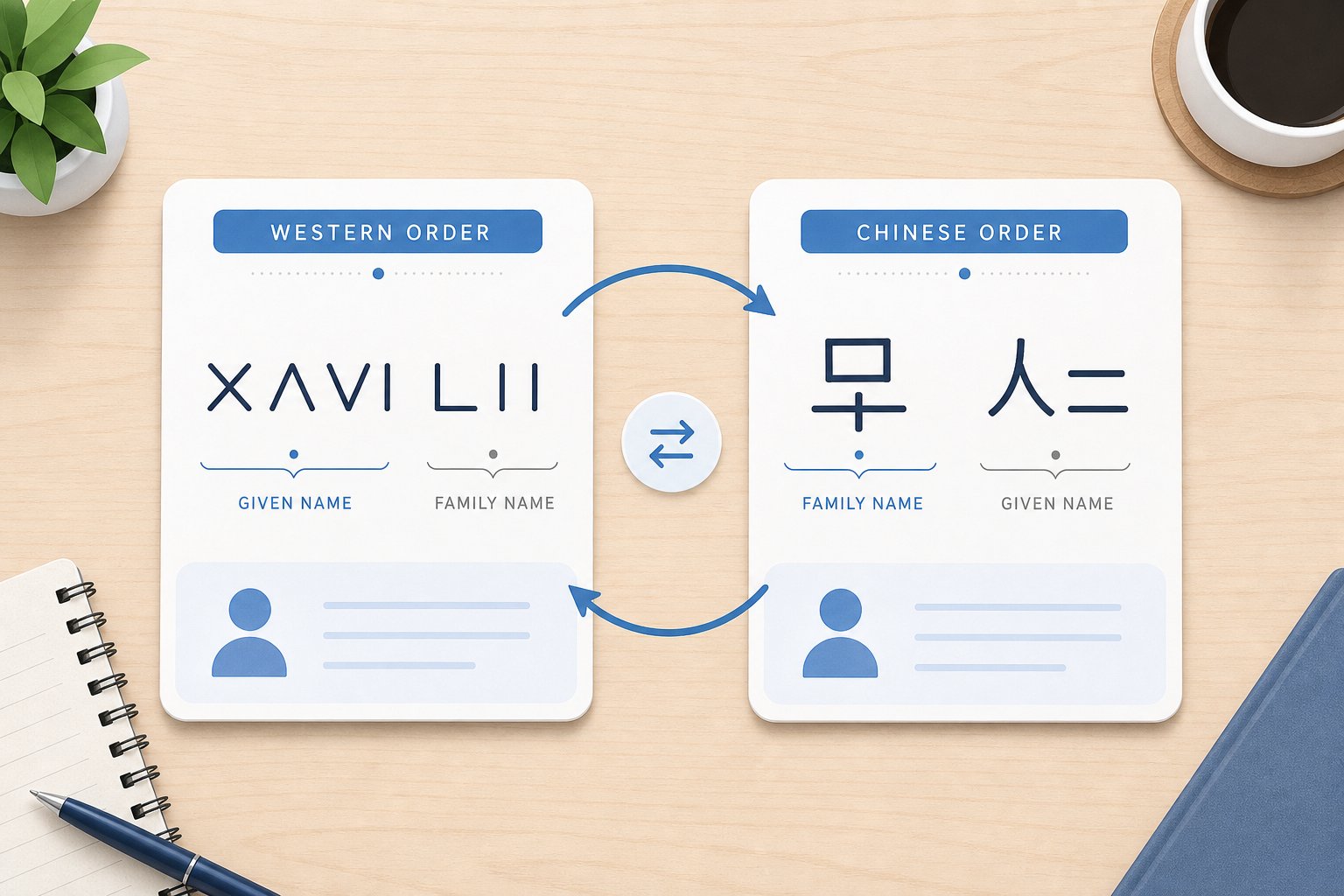
Most foreigners operate on a single assumption: given name first, family name last. When your name flips that order, confusion follows immediately. They don't know which part to call you, which part is shared with your siblings, or why your name seems "shorter" than theirs. The fix is surprisingly simple: give them the structural map before you give them the name itself.
Surname First and Why It Matters
In Chinese name order, the family name always leads. This isn't a quirk or a formatting preference. It reflects a cultural value system where family identity precedes individual identity. When you say your full name, you're announcing your lineage before yourself. That's the opposite of Western conventions, and it's the single biggest source of confusion when foreigners encounter a chinese name first name last name arrangement for the first time.
Here's the framework that clears it up in one sentence: "My family name is X, my given name is Y, and in Chinese culture the family name comes first." That's it. You've just explained the entire chinese name structure in under five seconds. Most people immediately get it once you frame it this way.
The table below shows exactly how this plays out compared to Western naming conventions:
| Element | Western Name (e.g., John Smith) | Chinese Name (e.g., Wang Xiaoming) |
|---|---|---|
| Position 1 | Given name (John) | Family name (Wang) |
| Position 2 | Middle name (optional) | Given name (Xiaoming) |
| Position 3 | Family name (Smith) | No third element |
| What friends use | Given name (John) | Given name (Xiaoming) |
| What's shared with siblings | Family name (Smith) | Family name (Wang) + possibly a generational character |
When someone sees a three-syllable Chinese name like Wang Xiaoming, they often assume "Wang" is the first name because it appears first. You can preempt this by saying: "Wang is my family name, like Smith. Xiaoming is my given name, like John." Mapping it onto their existing framework makes the chinese last name first convention click instantly.
The Two or Three Character Structure Explained Simply
Chinese names are compact. Most consist of two or three characters total: one character for the surname and one or two for the given name. There's no middle name in the Western sense. When you see a name with three syllables, it's not first-middle-last. It's family name plus a two-character given name.
The Asia Media Centre notes that all of the top 100 Chinese family names have only one syllable, and these surnames cover about 85 percent of China's citizens. So if someone sees your name and wonders which part is the first name and last name in chinese naming, the short answer is almost always: the single-syllable part is the family name, and everything after it is the given name.
There are rare exceptions. A handful of chinese surnames are two characters, like Ouyang, Zhuge, or Shangguan. If yours is one of these, a quick note like "My family name is actually two syllables, Ouyang, which is less common" saves a lot of back-and-forth.
Some families also use generational names, where siblings and cousins share one character in their given names. For example, siblings named Zhenni and Zhenhai both carry the generational character "Zhen." This practice traces lineage within a generation, functioning almost like a built-in family identifier. According to Temple University's EDVICE Exchange, generational names are sometimes determined by a family poem that maps out characters for future generations. Not every family uses them, but if yours does, it's a detail that foreigners find genuinely interesting because it has no Western equivalent.
You don't need to explain generational names every time you introduce yourself. But when someone asks "Do you have a middle name?" it's a natural opening to say: "Not exactly. The first character of my given name is shared with my siblings. It's a generational marker, kind of like how your whole family shares a last name, except this one connects everyone born in the same generation."
With the structure clear, the next challenge becomes practical: helping people actually say your name out loud without butchering it.
Step 2 Craft a Pronunciation Guide Without Audio
Structure is one thing. Getting someone to actually say your name correctly is another challenge entirely. You can't play an audio clip every time you meet someone new, so you need text-based strategies that bridge the gap between how your name is spelled in pinyin and how it actually sounds to an English speaker's ear.
The core problem with chinese name pronunciation is that pinyin wasn't designed to be intuitive for English speakers. As one pronunciation guide puts it, "it's common for our first guess to be so far off the mark that a listener can't even recognize their own name." That means you need to do the translation work upfront, converting your name into sounds English speakers already know.
Create a Phonetic Cheat Sheet for Your Name
Think of this as your personal chinese name translation into familiar sounds. You're not changing your name. You're building a bridge so someone can get close enough that you'll actually recognize what they're saying. Here's a step-by-step template you can follow:
- Break your name into individual syllables. If your name is Zhangwei, separate it into Zhang and Wei.
- For each syllable, find an English word or sound that rhymes or closely matches. To pronounce Zhang, tell people it rhymes with "song" but starts with a J sound. For Xu, say it sounds like the English word "shoe." For Wei, say it rhymes with "way."
- Address any pinyin letters that mislead English speakers. If your name contains Q, explain it sounds like "ch." If it contains X, say it sounds like "sh." If it has C, compare it to the "ts" in "hats."
- Offer a simplified version they can default to. Something like: "If all else fails, just say 'Jong-way' and I'll know you mean me."
- Decide how much tone guidance to include. For casual settings, skip tones entirely. For people who seem genuinely interested, use pitch analogies: "The first syllable is flat and high, like you're holding a steady note. The second rises, like you're asking a one-word question."
That tone analogy works because English speakers already use pitch changes for intonation. A rising pitch at the end of "Tea?" is similar to Mandarin's second tone. A sharp falling pitch like a firm "No!" mirrors the fourth tone. You're mapping how to say chinese names onto patterns they already produce naturally, even if they've never thought about pitch as carrying meaning.
Why Your Surname Might Be Spelled Three Different Ways
If you've ever wondered how do i say my name in chinese when even the spelling keeps changing, romanization systems are the culprit. The same surname can appear as Zhang, Chang, or Cheung depending on which system was used and which dialect it represents.
Mainland China adopted pinyin in 1958, but earlier emigrants and people from Taiwan, Hong Kong, or Cantonese-speaking regions often use different systems. Wade-Giles, the older academic system, uses apostrophes and different letter combinations. You can spot it by features like "ts'" or hyphens in personal names, as in "Mao Tse-tung" versus the pinyin "Mao Zedong." Cantonese speakers use Jyutping or informal romanizations, which is why the surname written as Zhang in Mandarin pinyin becomes Cheung in Cantonese.
This matters practically when translating chinese names across documents, passports, and professional profiles. If your family emigrated before pinyin became standard, your legal surname spelling might not match modern pinyin at all. A brief explanation like "My name is spelled Cheung on my passport because my family is from Hong Kong, but in Mandarin pinyin it would be Zhang" resolves the confusion before it starts.
For a chinese mandarin name translation that foreigners can actually use, consistency helps. Pick one romanization for professional contexts and stick with it. Then pair it with your phonetic cheat sheet so people know both how it's written and how it's spoken. The spelling gets them to your name on paper. The phonetic guide gets them to your name out loud.
With pronunciation handled, there's a deeper layer that transforms a name introduction from functional to memorable: the meaning your parents embedded in those characters.

Step 3 Share the Meaning Behind Your Characters
Here's something that surprises most Westerners: Chinese given names aren't pulled from a pre-existing list. There's no baby name book with 10,000 entries. Instead, parents deliberately select one or two characters that together form a phrase expressing their hopes for the child. Every chinese name meaning is an act of creative intention, which means you're carrying a tiny story your parents wrote for you before you could speak.
That story is your secret weapon in introductions. When you share the mandarin name meaning behind your characters, you transform a forgettable exchange into something people genuinely remember.
Turn Your Characters Into a Story Foreigners Remember
The challenge is translating a system built on visual, semantic characters into something that lands for people who read alphabetically. You'll need a storytelling framework. Here are three approaches that work depending on your name and the situation:
- The literal meaning approach: Translate each character directly and let the imagery speak. "My given name is Meiyun. Mei means beautiful, and Yun means cloud. So my name is essentially 'beautiful cloud.'" Simple, visual, and instantly memorable.
- The parental wish approach: Frame the meaning as your parents' intention. "My parents named me Zhiyuan. Zhi means ambition, and Yuan means far-reaching. They wanted me to aim high and think long-term." This resonates because every culture understands parents hoping for their child's future.
- The historical or cultural reference approach: Connect your name to a broader tradition. "My name includes the character Mei, which means plum blossom. In Chinese culture, the plum tree blooms in winter, so it symbolizes resilience through hardship. My grandmother chose it." This gives people a cultural anchor without requiring a lecture.
You can also explain character composition visually. Chinese characters are built from smaller components called radicals, and these often hint at meaning. The character for "bright" (ming) combines the symbols for sun and moon. The character for "rest" (xiu) shows a person leaning against a tree. If your name contains a character with a vivid visual breakdown, use it. Foreigners find this fascinating because it's completely unlike how alphabetic writing works. As Hacking Chinese explains, most characters are combinations of simpler components rather than standalone pictures, which means there's almost always a visual story to tell.
You don't need to explain every radical. Pick the one detail that's most vivid or surprising, and let that carry the conversation.
Use Your Surname Frequency as a Conversation Starter
Chinese surname meanings offer another easy entry point, especially because many chinese last names and meanings trace back to concrete objects, historical figures, or ancient kingdoms. The surname Li (plum) connects to the Tang dynasty emperors who popularized it. Wang literally means "king." Zhang's character combines the symbols for "bow" and "long," reportedly given to the inventor of the bow and arrow. Chen traces back to an ancient kingdom in modern-day Henan.
These chinese surnames and meanings are conversation gold because they give foreigners something tangible to hold onto. Imagine saying: "My surname is Li, which means plum tree. About 100 million people in China share it, which is more than the entire population of Germany." That single fact reframes your name from unfamiliar to fascinating. The sheer scale of chinese surnames meaning being shared across millions of people is something Westerners, accustomed to relatively unique last names, find genuinely surprising.
You can also use frequency as a relatable hook for why Chinese people always use full names. When your surname is shared by tens of millions, a first-name-only introduction tells people almost nothing. It's like if half of America were named Smith. That analogy clicks immediately.
The key with all of these approaches is brevity. You're not delivering a lecture on names in chinese and meanings. You're offering one memorable detail, one image, one number that sticks. The best name introductions feel like sharing a small gift rather than assigning homework.
With your structure explained, pronunciation guided, and meaning shared, the remaining question is practical: how do you package all of this into something you can actually say in ten seconds at a networking event or write in a classroom introduction?
Step 4 Use Ready-Made Scripts for Every Situation
Knowing your name's structure, pronunciation, and meaning is only useful if you can deliver it smoothly in the moment. The difference between a confident introduction and an awkward one often comes down to preparation. A practiced ten-second script beats a rambling two-minute explanation every time, because foreigners respond to clarity and brevity far more than completeness.
The trick is adapting your delivery to the context. How you introduce your name in chinese language at a job interview should sound different from how you do it at a house party. Below are fill-in-the-blank templates you can personalize and rehearse until they feel natural.
Scripts for Professional Introductions
In professional settings like interviews, conferences, and networking events, keep it tight. State your name, offer one pronunciation cue, and move on. You want to project confidence, not invite a language lesson. As one cross-cultural communication guide notes, embedding the pronunciation into your introduction alongside your role makes the interaction feel natural rather than forced.
Hi, I'm [Full Name]. My family name is [Surname], and [Given Name] is pronounced like [rhyming word]. I'm the [role] at [company].
Nice to meet you. I go by [Given Name], which sounds like [phonetic guide]. I work in [field/department].
Notice the pattern: name, one pronunciation anchor, then pivot to the professional context. You're answering what is your name in chinese terms while immediately grounding the conversation in shared professional territory. No one needs your character meanings at a networking event unless they ask.
Scripts for Casual and Social Settings
Parties, meetups, and social gatherings give you room to be playful. Humor makes pronunciation stick better than precision does. You can afford a personal detail or a lighthearted comment that would feel out of place in a boardroom.
Hey, I'm [Full Name]. The first part rhymes with [word], and the second part sounds like [word]. Don't worry, most people need two tries.
I'm [Given Name], think [familiar English word] but with a [tone description]. My parents named me after [brief meaning]. What about you?
The casual script works because it invites reciprocity. When someone asks what your name in chinese means, they're showing genuine curiosity. Giving them a short, warm answer and then bouncing the conversation back keeps things balanced. You're sharing, not lecturing.
Scripts for Academic and Classroom Contexts
Classroom introductions are unique because you're often speaking to a group, and the name you establish on day one is what people will use all semester. This is your chance to set the record straight once and save yourself months of corrections.
Hi everyone, my name is [Full Name]. [Surname] is my family name, and [Given Name] is what I go by. It's pronounced [phonetic breakdown]. If it helps, think of [rhyming word].
I'm [Full Name]. Quick pronunciation tip: [Given Name] sounds like [familiar word]. I'll also respond to [shortened version or nickname] if that's easier to remember.
In academic settings, offering a shortened version is a practical choice, not a compromise. Some people wonder what is the chinese name of my name versus the version I use daily, and the answer can simply be both. You're giving classmates a way in while keeping your full name on the table.
Across all these contexts, the underlying principle stays the same: prepare a version that takes under fifteen seconds to deliver. Practice it out loud until the rhythm feels as automatic as saying your phone number. The confidence comes from repetition, not from the words being perfect. A slightly imperfect script delivered with ease always lands better than a flawless explanation delivered with hesitation.
What these scripts don't address is the bigger strategic question lurking underneath every introduction: should you use your Chinese name at all, or offer an English one, or both? That decision shapes everything else.

Step 5 Decide Your Naming Strategy Across Contexts
This is the question that lives beneath every introduction you've ever given abroad: do you use your Chinese name, an English one, or some combination? It's not just a practical decision. It's an identity decision, and it carries more emotional weight than most people around you will ever realize.
The English Name Dilemma and How to Navigate It
There's no single right answer here, and anyone who tells you otherwise is oversimplifying your life. The choice exists on a spectrum, and each position comes with real trade-offs. As The China Project points out, the most respectful approach is to call someone by the name they choose for themselves, whether English or Chinese, and respect their agency in defining their own identity.
Here's what each option actually looks like in practice:
- Use only your Chinese name everywhere. You maintain full identity consistency. People learn your real name. The downside: you'll spend more time on pronunciation corrections, and some people will avoid saying your name altogether rather than risk getting it wrong.
- Offer a shortened or adapted version. Turning Xiaoming into "Xiao" or Zhiyuan into "Zhi" gives people a manageable entry point without creating a completely separate identity. The trade-off is that a fragment of your name may lose its meaning.
- Adopt an English name for convenience. This reduces friction in daily interactions. Many people derive a chinese name from english phonetics, choosing something that echoes the sound of their given name. The emotional cost varies widely. Some people feel relief; others feel like they're performing a version of themselves that isn't quite real.
- Use both names strategically. Keep your Chinese name for personal relationships and formal documents, use an English name in fast-paced professional settings where you'd rather not spend your first impression on a pronunciation lesson. This english name chinese name pairing is the most common approach among Chinese professionals abroad.
Historically, carrying multiple names isn't foreign to Chinese culture at all. Sixth Tone notes that until the mid-1900s, Chinese people routinely held several names simultaneously: a birth name, a courtesy name given at adulthood, and self-chosen names that revealed different aspects of their personality. The current practice of adopting English names can be seen as a continuation of that tradition rather than a capitulation to Western norms.
What matters is that the choice is yours, made intentionally rather than out of default accommodation. If you convert your name to chinese sounds when picking an English equivalent, or go english to chinese name when introducing yourself in different rooms, that's strategy, not surrender.
How to Assert Your Chinese Name When You Prefer It
If you've decided your Chinese name is what you want people to use, you need language that makes that preference clear without turning every introduction into a negotiation. Confidence is the key ingredient. When you hesitate or apologize for your name being "difficult," you're giving people permission to not try.
Here are phrases that assert your preference directly:
- "I go by [Chinese name]. Here's how to say it: [phonetic guide]." No hedging, no offering alternatives.
- "My name is [Chinese name]. It's two syllables: [breakdown]. I don't use an English name." The last sentence closes the door on the follow-up question before it arrives.
- "You can call me [Chinese name]. It sounds like [rhyme]. I promise it gets easier after the second time." Light humor that normalizes the learning curve without minimizing your name.
The goal isn't to make foreigners feel guilty for finding your name unfamiliar. It's to communicate that you've made a deliberate choice and you're comfortable with it. People mirror your energy. If you treat your name as something worth learning, most of them will too.
Research on naming practices among mainland Chinese students confirms that those who demonstrate high agency in their name choices, whether choosing to keep their Chinese name or selecting an English one, report greater satisfaction with cross-cultural interactions. The deciding factor isn't which name you use. It's whether the choice feels like yours.
Whatever strategy you land on, the real test comes not in the first introduction but in the days and weeks after, when someone keeps getting it wrong despite your best efforts.
Step 6 Handle Mispronunciation Without Awkwardness
You delivered a clear introduction. You offered a phonetic guide. And yet, three weeks later, your coworker is still saying something that barely resembles your name. This is where the real emotional labor lives, not in the first explanation but in the ongoing corrections that follow.
You're not imagining the toll. Research from Race Equity Matters found that 73% of people have had their name mispronounced, with 43% saying it made them feel disrespected. For bearers of popular chinese names and less common ones alike, the cognitive load of constantly correcting others can become so exhausting that many simply stop trying. That's a boundary worth pushing back against.
Gentle Corrections That Work the First Time
Harvard-trained etiquette expert Sara Jane Ho recommends keeping corrections quick, casual, and judgment-free. The formula: correct, normalize, redirect. Don't dwell on the mistake. Make it feel small, then move the conversation forward. Whether you carry one of the most common chinese names or something rarer, the approach stays the same.
Try: "It's actually [correct pronunciation], like [rhyming word]. Happens all the time. Anyway, about that project..." The redirect is key. You're not making it a moment. You're making it a footnote.
What to Do When Someone Keeps Getting It Wrong
One-time corrections are easy. Repeated errors with the same person require escalation. Here's a framework that moves from lightest touch to most direct:
- The casual re-introduction: Find a natural moment to say your name again clearly. "Oh, by the way, it's [name], like [phonetic cue]. I realized I never gave you a good way to remember it."
- The humor approach: "You're getting closer every time! It's [correct pronunciation]. Think [rhyming word] and you've got it." Lightness disarms defensiveness.
- The direct but kind correction: "Hey, I want to mention this because it matters to me. My name is pronounced [correct]. I know it's unfamiliar, but I'd appreciate you giving it another try."
- The serious conversation: For persistent cases with people you see daily: "I've corrected this a few times now, and I need you to make an effort. My name is [correct]. It's important to me." No smile required.
Not everyone will achieve perfect pronunciation, and that's a reality worth accepting. Some common chinese last names like Zhang, Xu, or Qiu contain sounds that simply don't exist in English. You get to decide what "close enough" means for you. Maybe someone saying "Jang" instead of "Zhang" is acceptable. Maybe it's not. That threshold is yours to set.
The most popular chinese names and the rarest ones share the same truth: you shouldn't have to earn the right to be called correctly. Setting boundaries around your name isn't rude. It's self-respect. And the people worth keeping in your life will meet you there.
Corrections handle the spoken dimension. But your name also lives in email signatures, LinkedIn profiles, and Zoom screens, spaces where you can preempt confusion entirely through smart formatting.
Step 7 Set Up Your Name in Digital and Written Formats
Spoken introductions fade from memory. Written ones stick around. Every email you send, every LinkedIn connection request, every Zoom call where your name sits in the corner of the screen is a chance to preempt confusion before it starts. The way you write chinese name details across platforms determines whether people learn your name passively or keep guessing wrong.
Format Your Name for Email Signatures and Business Cards
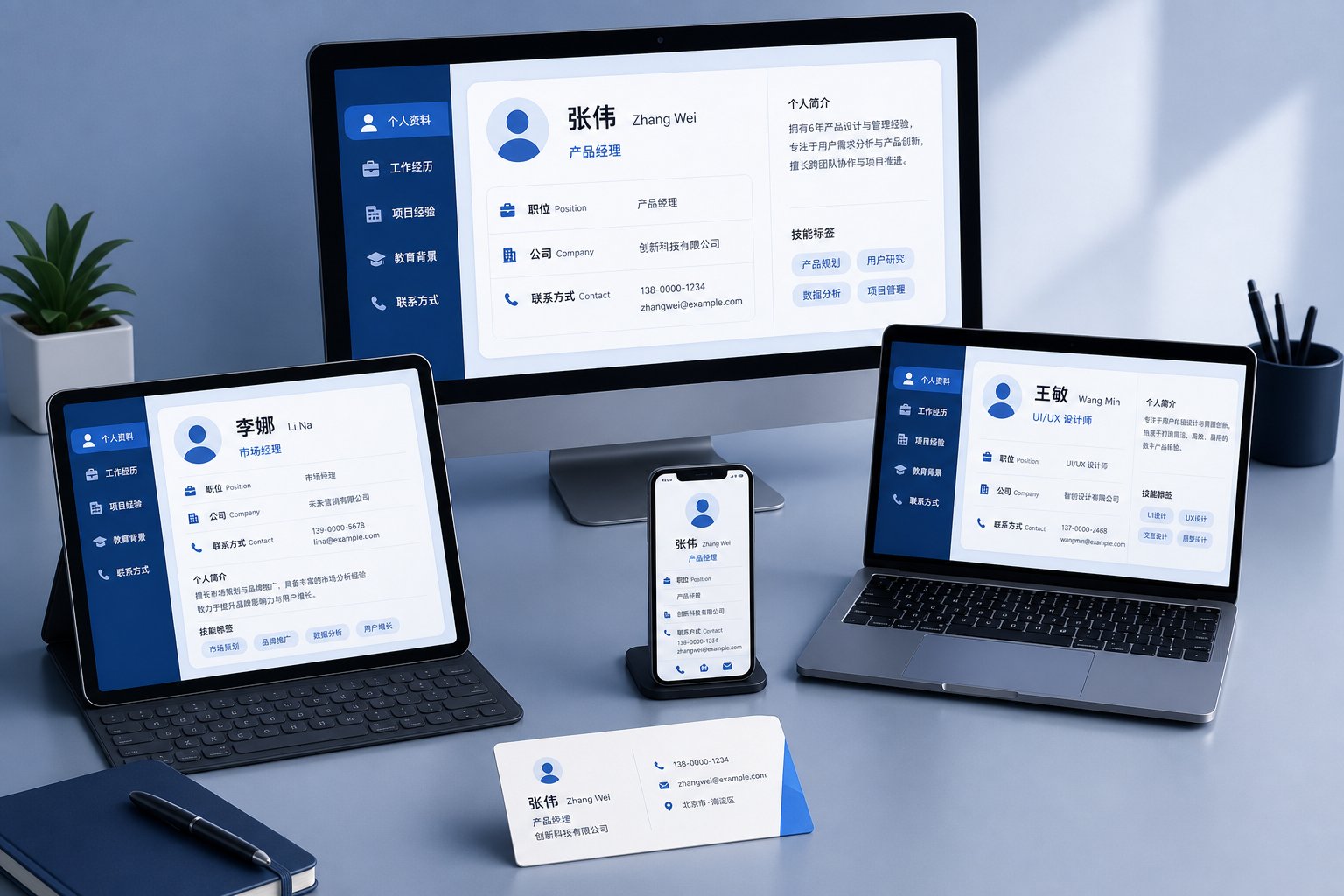
Your email signature works around the clock as a silent pronunciation guide. Adding a phonetic note in parentheses costs you one line of text and saves dozens of awkward corrections over time. For business cards, professional formatting guidelines recommend placing Chinese characters above the pinyin to establish visual hierarchy, with the characters slightly larger to signal that they're the primary form of your name.
A common mistake is omitting your name in chinese characters entirely and relying only on romanization. This erases an important layer of your identity and makes it harder for Chinese-speaking contacts to find you. Including both your name in chinese script and the pinyin romanization gives every reader, regardless of language background, something they can use.
For the surname-first question in Western professional contexts: preserve Chinese name order in your pinyin and characters, but if you use an English name, follow Western order for that version. Consistency within each system prevents confusion. As the same formatting guide emphasizes, recipients should be able to immediately recognize that "Chen Jing" and "Lisa Chen" refer to the same person.
Optimize LinkedIn and Video Call Display Names
Zoom and Teams display names are prime real estate. You have roughly 30 characters to work with, which is enough to include a phonetic cue. LinkedIn offers more flexibility through the built-in pronunciation field and the name section itself, where you can add names in chinese letters alongside your romanized version.
Here's how formatting plays out across platforms:
| Platform | Recommended Format | Example |
|---|---|---|
| Email Signature | Characters + Pinyin + phonetic note | 陈静 Chen Jing (sounds like "Chun Jing") Marketing Manager, Acme Corp |
| Pinyin as display name, characters in the pronunciation or headline field | Chen Jing (陈静) · Use LinkedIn's audio name feature | |
| Zoom/Teams | Pinyin with phonetic hint in parentheses | Chen Jing ("Chun Jing") |
| Business Card | Characters above Pinyin, English name below if applicable | 陈静 Chen Jing Lisa Chen |
The principle across every platform is the same: give people both the correct written form and a way to say it. If you're wondering how to write my name in chinese for professional use, the answer is to include your name chinese characters alongside romanization wherever space allows. This dual approach respects your identity while removing barriers for colleagues who can't read Chinese.
Keep formatting consistent across all platforms. When your email signature, LinkedIn, and business card all present your name the same way, people build recognition faster. Inconsistency, like switching between surname-first and given-name-first across different profiles, creates exactly the confusion you're trying to eliminate.
With your digital presence handled, the only remaining piece is the internal shift: moving from treating name explanations as a chore to experiencing them as something you own completely.
Step 8 Build Confidence That Lasts
Explaining your name was never the problem. The problem was feeling like you had to apologize for it. Every tool in this guide, the structure breakdown, the phonetic cheat sheet, the meaning story, the scripts, the digital formatting, exists to replace that apologetic energy with something steadier: ownership.
Make Your Name Introduction Second Nature
Confidence with your name comes from the same place as any other skill: repetition. Practice your ten-second introduction out loud until the rhythm feels automatic. Say it in the mirror. Say it to friends. Record yourself and listen back. The goal is for your chinese name interpretation to roll off your tongue without a single hesitation or qualifier. When someone asks what does my chinese name mean, you want the answer ready like muscle memory, not something you're assembling in real time.
Here's your action checklist:
- Prepare your one-sentence structure explanation (surname first, given name second)
- Build your phonetic guide using English rhymes and familiar sounds
- Develop one memorable meaning story about your characters
- Choose and rehearse scripts for your most common social contexts
- Set up consistent formatting across email, LinkedIn, and video calls
These chinese naming conventions, the order, the deliberate character selection, the generational markers, aren't obstacles to communication. They're what make your name worth hearing. Whether you're reflecting on my mandarin name and how it connects you to family history, or helping a colleague finally nail the pronunciation, you're not performing your culture. You're simply communicating it clearly.
Own Your Name Narrative
The deeper shift is this: you're not explaining your name because foreigners deserve an education. You're doing it because your name deserves to be said right. Chinese naming customs gave you something most Western names don't carry, a handpicked meaning, a family lineage, a sound your parents chose with care. That's not a burden to manage. It's a story worth telling on your own terms.
Your name is not a problem to be solved. It is an identity to be spoken, clearly and without apology, in every room you enter.
Some readers may still be in the process of picking a chinese name for professional use, or wondering how to choose a chinese name that bridges both worlds. Whatever stage you're at, the principle holds: intentional choice beats default accommodation. Own the narrative, practice the delivery, and let the confidence compound over time.
FAQs About Explaining Your Chinese Name to Foreigners
1. How do I explain the order of my Chinese name to foreigners?
Use a simple one-sentence framework: 'My family name is X, my given name is Y, and in Chinese culture the family name comes first.' Then map it onto Western conventions by comparing your surname to a familiar last name like Smith. This instantly clarifies which part is which and why the order is reversed from what English speakers expect.
2. Should I adopt an English name or keep my Chinese name abroad?
There is no single correct answer. Your options range from using only your Chinese name, offering a shortened version, adopting an English name for convenience, or using both strategically depending on context. The key factor is intentional choice rather than default accommodation. Research shows that people who exercise high agency in their naming decisions report greater satisfaction in cross-cultural interactions regardless of which option they choose.
3. How can I help foreigners pronounce my Chinese name without audio?
Create a phonetic cheat sheet by breaking your name into syllables and pairing each with an English rhyming word or familiar sound. For example, Zhang rhymes with 'song' but starts with a J sound, and Xu sounds like 'shoe.' Address misleading pinyin letters directly, such as explaining that Q sounds like 'ch' and X sounds like 'sh.' Offer a simplified fallback pronunciation for casual settings.
4. How do I politely correct someone who keeps mispronouncing my Chinese name?
Use an escalation framework starting with the lightest approach. Begin with a casual re-introduction offering a new memory cue. If that fails, try humor to disarm defensiveness. For persistent cases, use a direct but kind correction stating that pronunciation matters to you. Reserve a serious conversation for people who repeatedly ignore corrections despite daily contact. The key is to correct quickly, normalize the mistake, and redirect the conversation.
5. What is the best way to format my Chinese name in professional settings like email and LinkedIn?
Include both Chinese characters and pinyin romanization wherever possible, with a phonetic pronunciation hint in parentheses. For email signatures, place characters followed by pinyin and a sound guide. On LinkedIn, use the built-in audio name feature and add characters in your headline. On Zoom, add a phonetic hint after your pinyin name. Keep formatting consistent across all platforms so contacts build recognition faster.