The Huang Surname and Its Layered Meaning
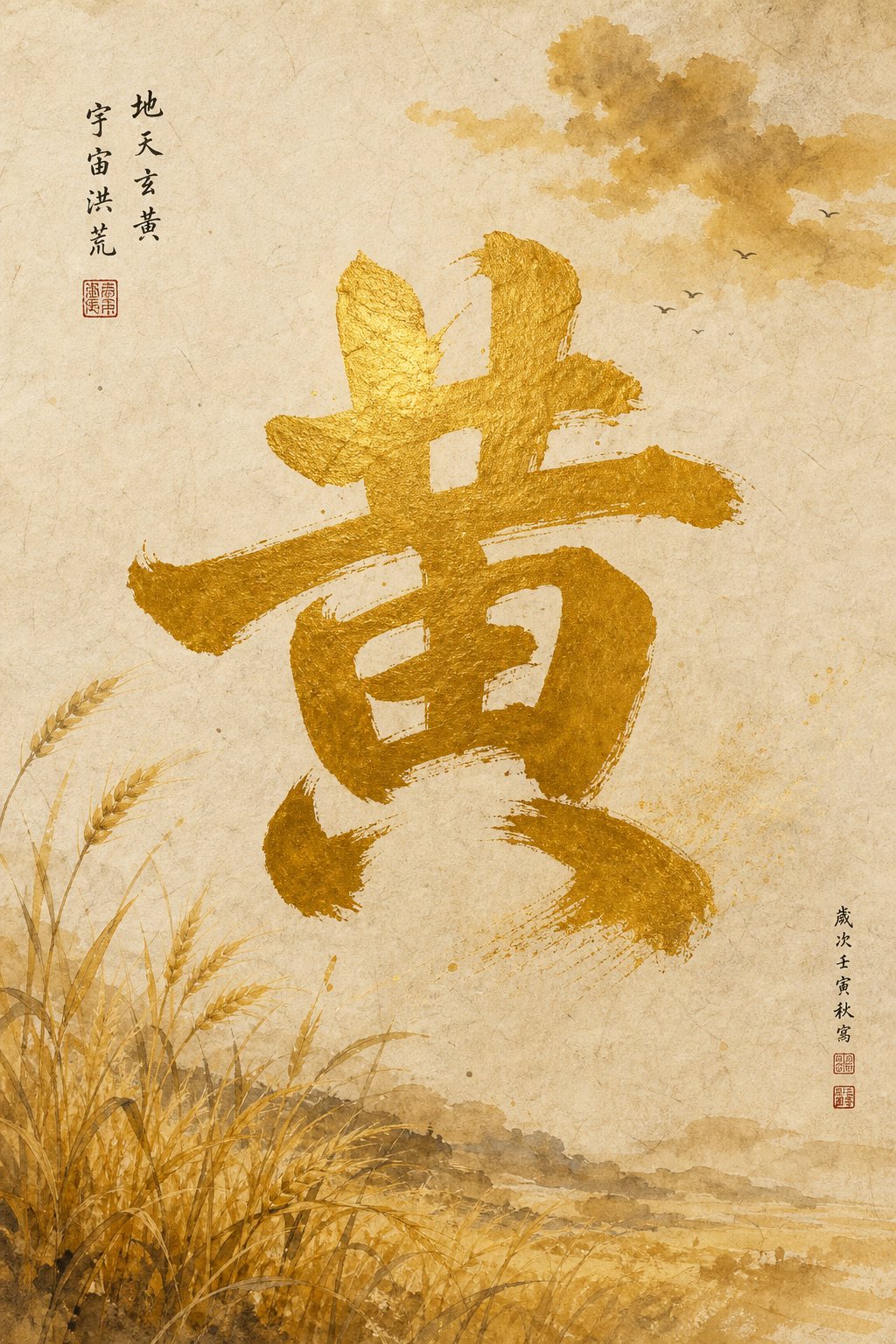
What does the surname Huang actually mean? At its simplest, the Chinese character 黄 (huáng) translates to "yellow." It ranks as one of the most common surnames in China, typically holding the 7th or 8th position among all Chinese family names. Tens of millions of people carry this surname worldwide, yet most never dig past that one-word translation.
Here is the thing: a single English word barely scratches the surface. The Huang surname carries centuries of history, geography, philosophy, and identity within its strokes. To truly understand what it means to bear this name, you need to look at it through three distinct layers.
What Does the Surname Huang Mean
The literal huang meaning is straightforward: yellow, the color. In Chinese culture, yellow is far from ordinary. It represents the earth, the center, harvest, and imperial authority. A descendant of the legendary Yellow Emperor (Huang Di) was granted the fief of an ancient territory called Huang, and that territory eventually gave rise to the family name carried by millions today.
So the surname huang connects to a color, a place, and a mythological ancestor all at once. That triple connection is rare among Chinese surnames and gives it unusual cultural weight.
Why Huang Is More Than a Color
Imagine discovering your last name ties back to a 4,000-year-old kingdom, a founding emperor figure, and a philosophical system that shaped an entire civilization. That is the reality for anyone whose family carries the character 黄, whether they spell it Huang, Wong, Ng, Hoang, or Vong.
To make sense of this richness, think of the huang surname meaning as operating on three layers:
The three layers of Huang surname meaning: (1) Literal meaning, the color yellow, tied to earth and harvest. (2) Historical meaning, the ancient State of Huang in present-day Henan province, whose people adopted the state name after its fall. (3) Cultural meaning, symbolic associations with the Yellow Emperor, the Yellow River, and the Five Elements theory that places yellow at the philosophical center of the universe.
Each layer builds on the one before it. The color gives the character its visual identity. The historical state gives the surname its origin story. And the cultural associations give surname bearers a sense of belonging to something far larger than a single family line.
Understanding these layers matters whether you are researching your own heritage or simply curious about one of the world's most widely held family names. The character 黄 is not just a label. It is a compressed archive of Chinese civilization, and unpacking it reveals how language, history, and philosophy intertwine inside a single written symbol.
The Chinese Character 黄 Explained
That compressed archive we mentioned? It starts with the physical structure of the character itself. When you look at the Huang chinese character 黄, you are looking at a visual story built stroke by stroke. Understanding how this char in chinese is constructed helps reveal why it carries the meanings it does.
Breaking Down the Character 黄
The simplified form of 黄 is written with 11 strokes and is composed of two key components: 田 (tián, meaning "field") and 八 (bā, meaning "eight" or representing division). The traditional form, 黃, uses 12 strokes and includes the grass radical 艹 at the top, making the agricultural connection even more explicit.
Picture it this way: a field (田) sitting beneath grass or growing crops, with elements suggesting abundance below. The character visually evokes golden wheat fields at harvest time. That is not a coincidence. The color yellow in Chinese culture has always been tied to ripe grain, fertile earth, and the loess soil of northern China's heartland.
A helpful mnemonic from classical character study suggests imagining "many (eight) yellow wheat fields" to remember the composition. The components work together to paint a picture of agricultural richness, grounding the Huang chinese surname in imagery of the land itself.
When you see this name in chinese characters, you are seeing a symbol that predates modern writing systems by thousands of years. Ancient small seal script versions of 黄 show an even more pictographic form, reinforcing its roots in earth and harvest imagery.
Huang vs Huáng — Clearing Up the Emperor Confusion
Here is where many people researching their heritage hit a stumbling block. The chinese for name Huang (黄, yellow) sounds identical to another character: 皇 (huáng, emperor). Both share the exact same pinyin pronunciation and tone. But they are completely different characters with unrelated meanings and origins.
This confusion matters because the Yellow Emperor is called Huáng Dì (黄帝), using the "yellow" character, while a generic emperor is also huángdì (皇帝), using the "imperial" character. When you see references to the Huang surname's connection to the Yellow Emperor, it is the color character 黄 doing double duty, not the imperial character 皇.
| Feature | 黄 (huáng) | 皇 (huáng) |
|---|---|---|
| Meaning | Yellow (color) | Emperor / Imperial |
| Key Component | 田 (field) + 八 (eight) | 白 (white) + 王 (king) |
| Radical | 黄 (itself serves as radical 201) | 白 (white, radical 106) |
| Stroke Count | 11 (simplified) / 12 (traditional) | 9 strokes |
| Usage as Surname | Yes — one of China's top 8 surnames | Extremely rare as a surname |
| Common Compounds | 黄河 (Yellow River), 黄金 (gold) | 皇帝 (emperor), 皇宫 (palace) |
You'll notice the structural logic is entirely different. The character 皇 combines 白 (white/bright) with 王 (king), suggesting a radiant ruler. Meanwhile, 黄 is built from agricultural components representing fields and abundance. They share a sound but tell completely different stories.
For anyone tracing their Huang lineage, this distinction is essential. Your surname character 黄 connects you to the earth, to harvests, and to an ancient state, not to the generic concept of imperial rule. The prestige of the name comes from its specific historical and natural associations, which run far deeper than a homophone might suggest.
Origins in the Yellow Emperor and the State of Huang
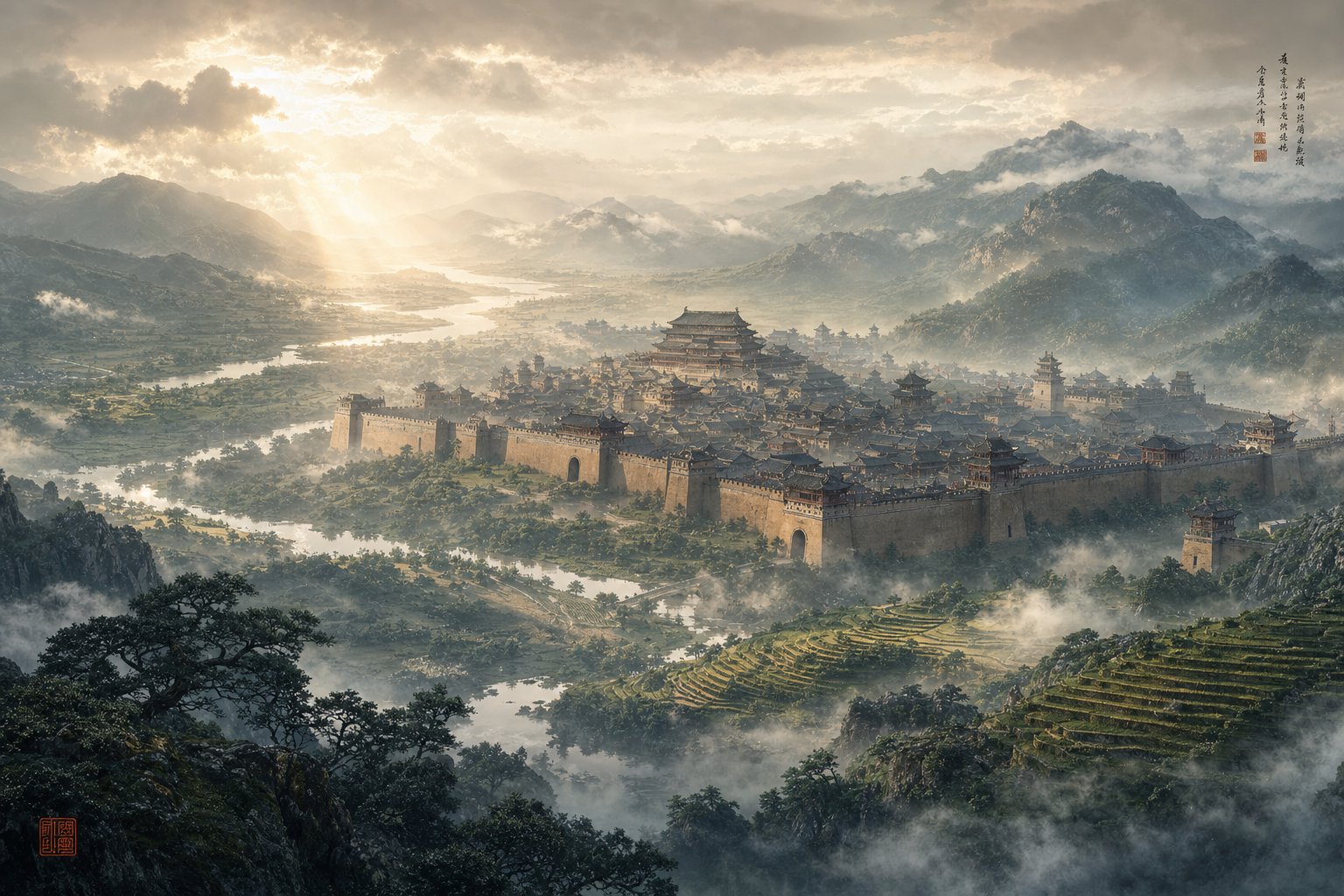
The character 黄 connects to earth and harvest, but the Huang family name draws its deepest prestige from something older still: a mythological ancestor and a real kingdom that once stood on Chinese soil. These two origin threads, one legendary and one documented through archaeology, together explain why the Huang last name carries such weight across Chinese culture.
The Yellow Emperor and Surname Identity
Every culture has founding figures, and in Chinese civilization, few loom larger than the Yellow Emperor, or Huangdi (黄帝). Britannica notes that Huangdi is reputed to have been born around 2704 BCE and began his legendary reign in 2697 BCE. He is credited with introducing wooden houses, carts, boats, the bow and arrow, and writing. His reign is portrayed in ancient sources as a golden age of wisdom and harmony with natural law.
Why does this matter for the Huang name origin? Chinese genealogical tradition traces the Huang clan back to descendants of this mythological emperor. The connection works like this: Huangdi's descendants spread across ancient China, and one branch eventually established a territory called Huang. The surname did not come directly from the emperor's title, but the ancestral link gives the name a sense of civilizational rootedness that few other surnames can claim.
For bearers of the Huang last name, this association is not just trivia. It places their family within the founding narrative of Chinese civilization itself. When clan genealogy books (族谱) trace lineages back through thousands of years, the Yellow Emperor often sits at the apex of the family tree. Whether historically verifiable or not, this mythological anchor shapes how Huang families understand their identity and their place in the broader story of Chinese culture.
The Ancient State of Huang in Henan Province
Mythology provides the spiritual origin. History provides the documented one. The primary source of the Huang last name origin is the State of Huang (黄国), a vassal state located in present-day Huangchuan County, Henan Province.
The state's founding reaches deep into antiquity. According to historical records including the Bamboo Annals, the Huang State was established around 2148 BCE by Dalian, the eldest son of Boyi, a figure of the Ying surname lineage who was granted his name by the legendary Emperor Shun. The state's ethnic origins trace back to the Dongyi peoples, specifically descendants of Shaohao. During the Xia and Shang periods, these people were known as the Huang Yi, a branch of the Nine Yi confederation.
When the Zhou dynasty rose to power, the Huang people submitted to the Zhou royal house and were enfeoffed as a viscountcy state. Its rulers carried the title "Viscount of Huang," and the state occupied a strategically important position at the junction between the Jiang and Huai river regions. This location placed it squarely between the Central Plains culture to the north and the expanding Chu state to the south.
For centuries, the Huang State maintained its independence through careful diplomacy. It allied with powerful states like Qi, Song, and others to resist Chu's southward expansion. Bronze inscriptions and entries in the Zuo Zhuan (a classical Chinese narrative history) document its participation in alliance meetings and military campaigns throughout the Spring and Autumn period.
Then came the turning point. In 649 BCE, the Chu state launched a punitive expedition against Huang for refusing to pay tribute. The Zuo Zhuan records that the Huang people, trusting in their alliance with Qi, dismissed the threat, reportedly saying: "From Ying to us is nine hundred li. How can they harm us?" That confidence proved fatal.
In the summer of 648 BCE, King Cheng of Chu conquered and destroyed the State of Huang. After its fall, the descendants of the ducal house adopted the state's name as their surname, forming the Huang family name. Huangchuan has since been recognized as the origin of the Huang surname worldwide.
This single historical moment transformed a political identity into a family identity. The people of a fallen kingdom preserved their heritage the only way they could: by carrying their state's name forward through generations as a surname.
Archaeological evidence confirms the story. The Ancient City of Huang State, designated a Major Historical and Cultural Site Protected at the National Level in 2006, covers approximately 2.8 square kilometers in Longgu Township, Huangchuan. Over 800 artifacts have been unearthed from the site, including bronze vessels inscribed with "Viscount of Huang," jade objects, and chariot fittings that attest to the state's sophistication.
After the state's destruction, some Huang clan members were forcibly relocated to the heartland of Chu, giving rise to place names still used today: Huangzhou (present-day Huanggang), Huangpi, Huang'an, and Huangmei. During the Warring States period, a descendant named Huang Xie rose to become Lord Chunshen, chancellor of Chu and one of the famous Four Lords of the Warring States. He oversaw the dredging of what became the Huangpu River, and Shanghai's abbreviation "Shen" traces back to his legacy.
These two origin threads, the Yellow Emperor mythology and the historical State of Huang, reinforce each other. The mythology provides cosmic significance, linking the Huang family name to the very founding of Chinese civilization. The historical state provides a concrete, archaeologically verified homeland and a specific moment of surname creation. Together, they give the name a dual foundation that is both spiritually resonant and historically grounded.
That grounding in a specific place and time also explains something else: why the Huang clan eventually scattered across southern China and beyond. A fallen state produces refugees, and refugees carry their identity with them wherever they go.
A Historical Timeline of the Huang Clan
Refugees carry their identity with them, and the Huangs carried theirs across an entire continent. After the fall of the State of Huang in 648 BCE, the clan's story became one of movement, adaptation, and survival through some of the most turbulent centuries in Chinese history. Each wave of migration pushed Huang families further south, deeper into new dialect regions, and eventually across oceans to new countries entirely.
Understanding this timeline is not just academic. If your surname is Wong, Ng, Hoang, or Vong, these migration waves explain how your branch of the family ended up where it did and why your name sounds nothing like "Huang" in Mandarin.
Southward Migrations Across Dynasties
The pattern is consistent across Chinese history: political collapse in the north drives populations southward. For the Huang clan, this pattern repeated over nearly two thousand years, with each wave depositing families into new linguistic environments.
- Warring States Period (475-221 BCE) — After the destruction of the Huang State, many clan members were relocated to Chu territory in present-day Hubei. Others scattered to neighboring regions. The surname survived but the community fragmented early.
- Jin Dynasty (266-420 CE) — Barbarian invasions in northern China during the Jin dynasty drove Huang clans southward into modern-day Fujian province. This migration established the first major Huang presence in China's southeast, a region that would become the clan's demographic heartland.
- Tang Dynasty (618-907 CE) — Branches of the clan pushed further south into Guangdong province. The An Lushan Rebellion (755 CE) and subsequent instability accelerated this movement. Huang families settling in Guangdong adopted local Cantonese speech patterns, laying the groundwork for the wong surname origin story familiar to millions today.
- Song Dynasty (960-1279 CE) — The fall of the Northern Song to Jurchen invaders in 1127 triggered another massive southward displacement. Huang families already in Fujian and Guangdong saw new arrivals from the north. Clan genealogy books from this era document specific migration routes and settlement patterns in detail.
- Ming Dynasty (1368-1644 CE) — Relative stability allowed Huang communities in the south to consolidate. Coastal Fujian and Guangdong became launching points for maritime trade networks. Some Huangs began settling in Southeast Asian port cities during this period, establishing the earliest diaspora communities.
- Qing Dynasty and Beyond (1644-1912 CE) — Political upheaval, the Taiping Rebellion, famines, and economic hardship drove large-scale emigration from southern China. Huang families from Fujian, Guangdong, and Hainan left for Vietnam, Thailand, Malaysia, Singapore, the Philippines, and eventually the Americas.
Each of these waves did not just move people geographically. It moved them linguistically. A Huang family that settled in Fujian during the Jin dynasty spent over a thousand years developing Hokkien speech patterns before their descendants emigrated to Southeast Asia. That is why the last name Ng origin traces back to Hokkien and Teochew dialect communities in Fujian, where 黄 is pronounced "Ng" rather than "Huang."
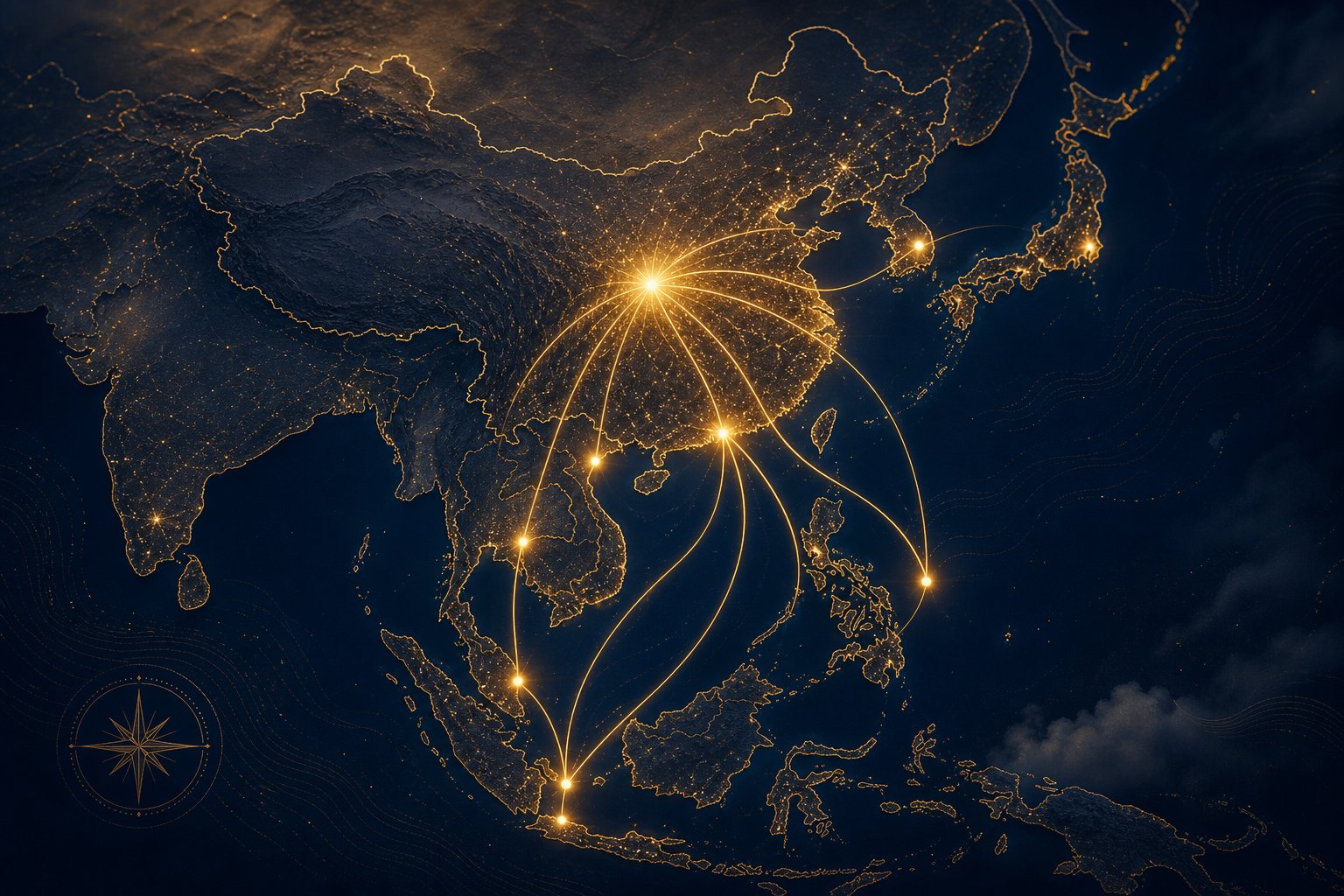
From China to Southeast Asia and Beyond
The overseas story accelerated dramatically in the 19th and early 20th centuries. Imagine a Hokkien-speaking Huang family in coastal Fujian, facing famine and political instability. They board a ship to Malaya or the Philippines. Their surname character remains 黄, but the romanization they register under reflects their spoken dialect: Ng, Ong, Uy, or Wee.
Meanwhile, a Cantonese-speaking Huang family from Guangdong emigrates to San Francisco or Sydney. They register as Wong. A Hakka family heads to Jamaica or Suriname and becomes Vong. Vietnamese Huangs, whose ancestors crossed the border centuries earlier, carry the name as Hoang or Huynh depending on whether their family settled in northern or southern Vietnam. The hoang last name origin and huynh surname origin both trace back to the same Chinese character 黄, split by regional Vietnamese pronunciation differences.
The push factors were remarkably consistent across centuries: war, political upheaval, famine, and economic pressure. What varied was the destination and the dialect community each family belonged to when they left. A Huang who left China in 1850 from a Teochew-speaking village carried a completely different romanization than one who left from a Cantonese-speaking city, even though both wrote the exact same character in their family records.
This is why the Huang surname meaning cannot be separated from its migration history. The name is not just a linguistic artifact sitting in a dictionary. It is a living record of where families traveled, which dialect they spoke, and which port they departed from. Every spelling variant, Wong, Ng, Hoang, Vong, Uy, tells a specific geographic and historical story about one branch of a clan that has been on the move for over two and a half millennia.
Those dialect differences, and the dozens of romanizations they produced, deserve a closer look. The sheer variety of spellings can be disorienting for anyone trying to connect their family name back to its Chinese root.
Wong, Ng, Hoang, and Vong Are All Huang
Dozens of romanizations, one character. If you have ever searched for the wong last name origin or wondered why your family name Ng seems unrelated to "Huang," the answer lies in how Chinese dialect groups diverged over centuries of geographic separation. The character 黄 never changed. The spoken languages around it did.
Why One Surname Has So Many Spellings
Chinese is not a single spoken language. It is a family of related but mutually unintelligible dialect groups: Mandarin, Cantonese, Hokkien, Teochew, Hakka, and others. Each group developed its own pronunciation of the same written characters over roughly 1,500 years of regional isolation. When these communities emigrated and needed to romanize their names for colonial or immigration records, they wrote down what they heard themselves saying, not what Mandarin speakers in Beijing would say.
That is why wong in chinese still refers to the exact same character 黄. A Cantonese speaker pronouncing 黄 naturally produces something close to "Wong." A Hokkien speaker produces "Ng" or "Ooi." A Vietnamese speaker, whose language borrowed Chinese vocabulary centuries ago, says "Hoàng" in the north or "Huỳnh" in the south. Every version traces back to the same written surname and the same ancestral meaning.
The Vietnamese split is particularly interesting. According to FamilySearch, the Huynh surname is a variant of Hoàng adopted by most Southern Vietnamese to avoid a naming taboo. The original form "Hoang" was identical to the personal name of the ruler Nguyễn Hoàng (1525-1613 CE), who governed the southern provinces. To show respect, southern families shifted their pronunciation to Huỳnh. So the huynh last name and the hoang surname are the same name, divided by a 16th-century political convention rather than any difference in origin.
Regional Romanizations at a Glance
The wong surname, the huynh surname, and the family name Ng all share a single root. This table maps out the major variants so you can locate your own family's branch:
| Dialect / Language | Romanization | Region of Use | Approximate Pronunciation |
|---|---|---|---|
| Mandarin | Huang | Mainland China, Taiwan | hwahng (second tone, rising) |
| Cantonese | Wong | Hong Kong, Guangdong, overseas Cantonese communities | wohng (long "o" sound) |
| Hokkien (Min Nan) | Ng, Ooi, Wee, Ong | Fujian, Taiwan, Malaysia, Singapore, Philippines | ng (nasal syllable), ooy, wee |
| Teochew | Ng, Ung | Eastern Guangdong, Thailand, Cambodia | ng (nasal, similar to Hokkien) |
| Hakka | Vong, Wong | Guangdong highlands, Jamaica, Suriname, Mauritius | vohng or wohng |
| Vietnamese (Northern) | Hoàng | Northern Vietnam, overseas Vietnamese | hwahng (falling-rising tone) |
| Vietnamese (Southern) | Huỳnh | Southern Vietnam, overseas Vietnamese | hwin (falling tone) |
| Hmong | Vang | Laos, Thailand, United States Hmong communities | vahng |
| Korean | Hwang | South Korea, Korean diaspora | hwahng |
You'll notice that the Hokkien and Teochew pronunciations are the most dramatically different from Mandarin. The initial "h" sound dropped away entirely in these southern Min dialects, leaving only the nasal "ng." That is why someone with the family name Ng may have no idea their surname connects to Huang until they see the shared character 黄 written down.
For anyone carrying the wong last name, the huynh last name, or any other variant, the takeaway is simple: your surname's meaning, history, and ancestral connections are identical to every other bearer of 黄 worldwide. The spelling is a record of which dialect community your ancestors belonged to and which port they left from. The character, and everything it represents, remains the same.
Behind these linguistic variations stand real people whose achievements gave the Huang name its lasting reputation. The clan produced scholars, artists, and folk heroes whose stories still resonate across Chinese culture.
Notable Figures Who Carried the Huang Name
Scholars, artists, and folk heroes. The Huang clan produced all three across centuries of Chinese history, and their achievements shaped how the surname is perceived to this day. A name gains prestige not just from its ancient origins but from the people who carry it forward. For the Huang family, that roster spans calligraphy, political philosophy, and martial arts, three pillars of traditional Chinese culture.
Huang Tingjian and the Art of Calligraphy
Born in 1045 in what is now Xiushui, Jiangxi province, Huang Tingjian grew up in a family of poets and earned the prestigious jinshi ("advanced scholar") degree in 1067. He went on to become one of the most celebrated calligraphers and poets of the Song dynasty, frequently mentioned alongside Su Dongpo as one of the era's defining literary voices.
What set Huang Tingjian apart was his refusal to follow convention. Rather than adopting the flowery, extravagant style typical of late Tang and early Song poetry, he advocated an introspective, carefully constructed approach that rejected established patterns. His wild cursive calligraphy drew inspiration from the 8th-century Tang priest Huaisu, yet remained unmistakably his own. Today, he is grouped with Su Dongpo, Mi Fu, and Cai Xiang as one of the Four Great Song Calligraphers.
His influence extended far beyond his lifetime. The Jiangxi school of poetry, which he founded, shaped Chinese literary culture for centuries. His unconventional approach to creativity, more mystical and scholarly than his contemporaries, resonated with generations of writers who valued depth over decoration. For Huang clan members, his legacy represents intellectual refinement and artistic courage tied directly to their family name.
Philosophers and Political Thinkers Named Huang
Five centuries after Huang Tingjian, another bearer of the name left an equally lasting mark, this time on political thought. Huang Zongxi (1610-1695) was a philosopher, naturalist, political theorist, and soldier who lived through one of China's most dramatic transitions: the fall of the Ming dynasty and the rise of the Qing.
Born in Yuyao, Zhejiang province, Huang Zongxi was the son of a Ming loyalist who died in prison for opposing the powerful eunuch Wei Zhongxian. That personal tragedy fueled a lifetime of political engagement. After the Ming collapsed, Huang Zongxi assisted loyalist forces before retiring in 1649 to devote himself entirely to scholarship.
His masterwork, Waiting for the Dawn (明夷待访录), is a political tract that condemns selfish autocratic rule and declares that the world should belong to the people. He argued that laws should grow from local needs rather than being imposed by rulers with political agendas. He advocated using the education system as a forum for public opinion and called for equitable land distribution. These ideas were radical for their time and remained influential into the 20th century, when reformers like Liang Qichao praised his work as a new kind of political historiography.
Huang Zongxi also produced the Record of the Ming Scholars, widely regarded as the first great systematic history of Chinese philosophy. His intellectual output was staggering: political theory, philosophical history, natural science, and poetry, all from a man who did not complete his first major work until age 52.
For the Huang clan, Huang Zongxi represents moral courage and intellectual independence. He carried the family name through an era of political collapse and used it as a platform for ideas that challenged imperial authority itself.
Huang Feihong and Martial Arts Legacy
If Huang Tingjian represents the brush and Huang Zongxi the pen, then Huang Feihong represents the fist. Known in Cantonese as Wong Fei Hung, this legendary martial artist was born in 1847 in Foshan, Guangdong, and lived until 1925. His life spanned a period of immense turmoil: the decline of the Qing dynasty, foreign encroachment, and social upheaval across southern China.
Wong Fei Hung's father, Wong Kei Ying, was one of the Ten Tigers of Canton, a group of the top ten martial artists in Guangdong province. Under that rigorous training, the younger Wong mastered Hung Gar kung fu and refined several techniques, including the famous Tiger Crane Paired Form Fist. His teaching philosophy went beyond physical skill. He emphasized "moral hands," the principle that martial arts should serve just causes and protect the weak.
He was also a skilled practitioner of traditional Chinese medicine, running Po Chi Lam, a clinic in Foshan where he treated countless patients. This dual identity as healer and fighter reflected his belief in the interconnection of physical health and moral well-being.
Perhaps no other figure from Chinese martial arts history has been as widely portrayed in film and television. Over 100 movies and numerous TV series depict his exploits, with actors like Kwan Tak-hing, Jet Li, and Jackie Chan bringing his legend to global audiences. These portrayals transformed Wong Fei Hung into a symbol of justice, national pride, and the enduring spirit of Chinese martial culture.
His surname, Wong, is simply the Cantonese romanization of 黄. Every film bearing his name reinforces the Huang clan's association with righteousness and physical mastery.
More Huang Figures Across History
These three represent the breadth of Huang achievement, but the list extends much further. Across dynasties and disciplines, bearers of the name left their mark:
- Huang Xie (Lord Chunshen) — Warring States-era chancellor of Chu and one of the Four Lords, credited with developing the Huangpu River region that became Shanghai.
- Huang Gongwang — Yuan dynasty painter, one of the Four Masters of the Yuan, whose landscape painting Dwelling in the Fuchun Mountains is considered a national treasure.
- Huang Daopo — Song-Yuan era textile innovator who revolutionized cotton weaving technology in southern China.
- Huang Jin — Yuan dynasty scholar-official and literary figure known for his contributions to classical prose and historical writing.
- Huang Xing — Revolutionary leader and co-founder of the Kuomintang alongside Sun Yat-sen, instrumental in overthrowing the Qing dynasty in 1911.
From calligraphy to revolution, from medicine to martial arts, the Huang surname threads through Chinese history like a continuous line of ink on paper. Each figure reinforced the name's association with excellence in their respective field. For modern bearers of the name, whether they spell it Huang, Wong, Ng, or any other variant, these ancestors represent a shared heritage of achievement that transcends dialect and geography.
That sense of shared heritage does not exist only in history books. It lives on in ancestral halls, clan genealogy records, and philosophical traditions that Huang families maintain to this day.
Cultural Symbolism and Ancestral Traditions
Ancestral halls, genealogy books, and philosophical traditions are not relics of a distant past. For Huang families worldwide, they remain active expressions of identity, binding scattered branches back to a common root. The wong surname meaning, the huynh family name, the hoang name origin, and the ng surname origin all converge in these shared cultural practices, regardless of which romanization a family uses today.
Ancestral Halls and Clan Genealogy Books
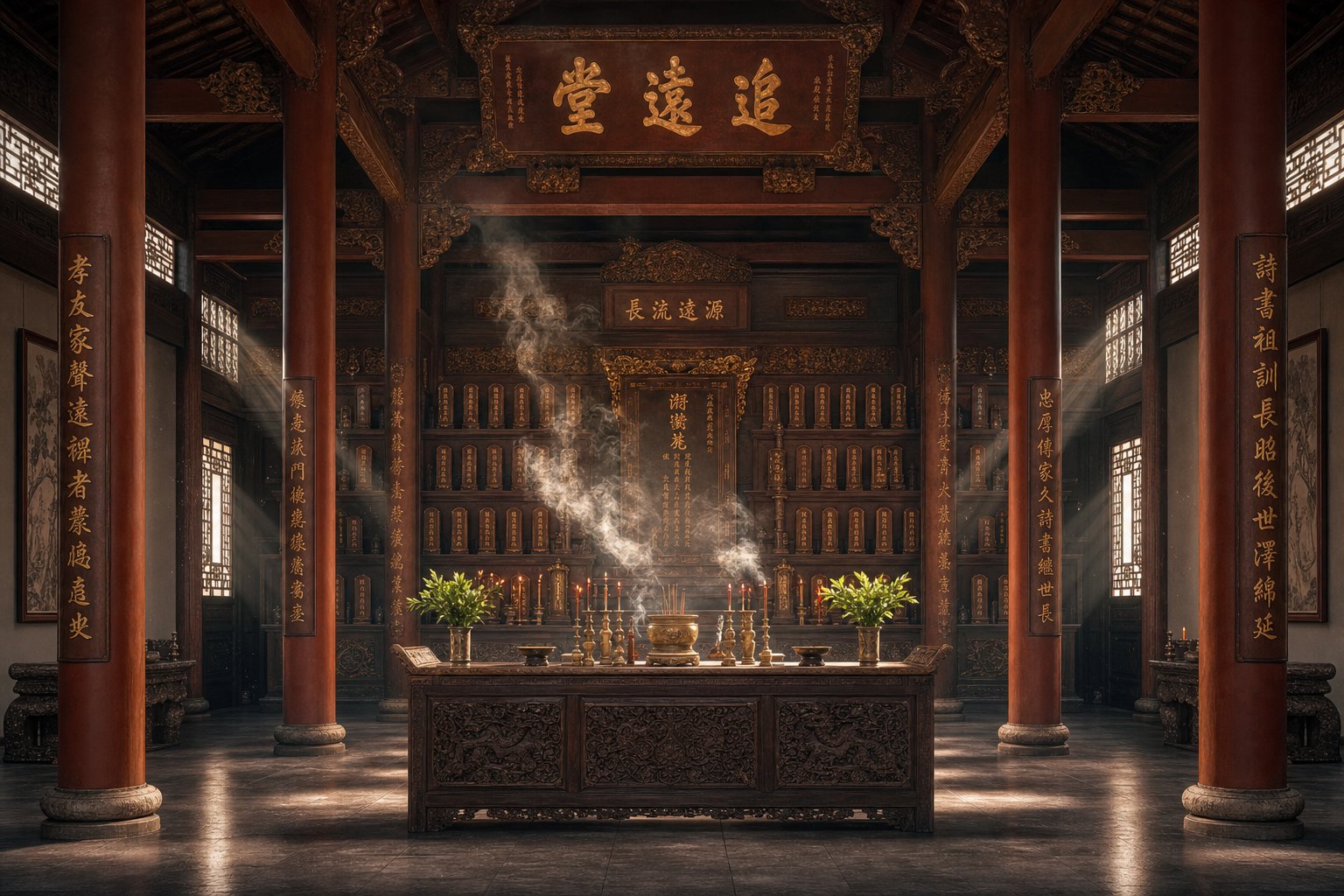
In Chinese family culture, the ancestral hall (宗祠, zōngcí) serves as the spiritual center of a clan. These halls house ancestral tablets, host seasonal rituals, and provide a physical space where descendants gather to honor their lineage. For the Huang clan, major ancestral halls still stand in Huangchuan (Henan), Fujian, and Guangdong, the regions where the surname took deepest root during its southward migrations.
Equally important are clan genealogy books (族谱, zúpǔ). These handwritten records trace family lines across dozens of generations, documenting births, marriages, migrations, and notable achievements. A well-maintained Huang genealogy book can stretch back over a thousand years, connecting a modern family in Southeast Asia to a specific village in Fujian or Guangdong. In Confucian values, maintaining these records is not optional. It is a filial duty, an act of respect toward ancestors who came before and a gift to descendants who will follow.
Diaspora communities took these traditions with them. The Chi Chang Fellowship Society in Singapore, a Huang clan association established in 1953, illustrates this perfectly. After its founding, members declared that their top priority was securing a permanent place for ancestral worship where descendants could enshrine their forebears. The society traced its genealogy back to the great ancestor Qiao Shangong and maintained traditions of mutual aid, elder care, and scholarship funding for clan children. This pattern repeats across Malaysia, Thailand, the Philippines, and wherever Huang families settled in significant numbers.
These associations do more than preserve ritual. They function as living networks, connecting people who share the character 黄 but may spell it Wong, Ng, Ong, or Hoang. Through annual gatherings, scholarship programs, and genealogy projects, they keep the surname's meaning alive as something experienced rather than merely inherited.
Yellow in Five Elements Philosophy
Beyond family ritual, the color yellow itself carries philosophical weight that deepens the surname's significance. In Chinese cosmology, the Five Elements theory (五行, Wǔ Xíng) assigns each element a color, direction, season, and set of qualities. Yellow belongs to the Earth element, which occupies the center position, the axis around which the other four elements revolve.
Here is what that association means in practice. Yellow represents:
- Earth element (土) — stability, groundedness, and the nurturing force that sustains all life
- Center direction — the balancing point among north, south, east, and west, symbolizing harmony and equilibrium
- Late summer harvest — the season of abundance when golden grain fills the fields, connecting to themes of prosperity and reward
- Imperial color — reserved for emperors during the Ming and Qing dynasties, yellow silk robes signified divine authority and cosmic legitimacy
- Nourishment and prestige — the earth feeds all things, making yellow a symbol of generosity and sustaining power
These are not abstract ideas disconnected from daily life. When a Huang family member sees their surname character 黄, these associations resonate beneath the surface. The name does not just mean "yellow" the way English speakers think of a color. It means centrality, stability, harvest, and authority, all compressed into a single syllable.
This philosophical layer explains something about the pride surname bearers feel. Whether someone traces their hoang name origin to northern Vietnam, their ng surname origin to a Hokkien village in Fujian, or their wong surname meaning to a Cantonese community in Hong Kong, the underlying symbolism remains constant. Yellow is not peripheral. It is the center. And carrying a surname that embodies that centrality gives the name a quiet gravity that goes beyond genealogy into cosmology itself.
Philosophy and ritual together form the cultural bedrock of the Huang identity. But what does all of this mean for someone living in Toronto, Sydney, or Ho Chi Minh City today, someone who may never have visited an ancestral hall or read a genealogy book? The surname still shapes identity in ways both visible and subtle, even for those furthest from its geographic origins.
Carrying the Huang Surname in the Modern World
Philosophy and ritual form the cultural bedrock, but identity is something you live with daily. For someone in Vancouver who has always spelled their name Wong, or a family in Houston registered as Huynh, the question eventually surfaces: what does this name actually connect me to? The answer is both simpler and larger than most people expect.
What Huang Means for Diaspora Families
The scale alone is striking. According to Forebears, approximately 36.5 million people bear the surname Huang worldwide, making it the 8th most common surname on Earth. In China, roughly 1 in every 39 people carries the character 黄. In Taiwan, it ranks 3rd, with over 1.3 million bearers. Add the millions who spell it Wong, Ng, Hoang, Huỳnh, Vang, or Hwang, and the true global count climbs even higher.
Those numbers mean something personal. You are not carrying a rare or obscure name. You belong to one of the largest kinship networks in human history, a network that spans 176 countries and connects people across every major continent. Whether your family left Guangdong in 1880 or Fujian in 1950, you share a written character, an ancestral homeland in Henan, and a cultural inheritance rooted in earth, harvest, and centrality.
The Huang surname is not just a label inherited at birth. It is a compressed record of where your ancestors lived, which dialect they spoke, which port they departed from, and which philosophical traditions shaped their worldview. Every variant spelling is a chapter in that record.
For diaspora families, one common starting point is simply learning how to pronounce Huang in its Mandarin form. The pronunciation of Huang is "hwahng" with a rising second tone, rhyming roughly with "song" but starting with a "hw" sound. If you have only ever heard your family say "Wong" or "Ng," hearing the Mandarin pronunciation huang can feel unfamiliar at first. But knowing how do you pronounce Huang in its original form helps bridge the gap between your family's spoken tradition and the broader clan identity. Many people search for how to say Huang precisely because they want to reconnect with the name's root sound after generations of dialect-specific usage.
Tracing Your Huang Family Branch
Knowing the meaning is one thing. Finding your specific branch is another. If you want to move from general knowledge to personal discovery, here are practical starting points:
- Clan associations — Huang clan societies exist in Singapore, Malaysia, Thailand, the Philippines, and most countries with significant Chinese diaspora populations. These organizations maintain genealogy records, host annual gatherings, and can often help connect you to your ancestral village.
- Genealogy databases — Platforms like FamilySearch, MyHeritage, and Ancestry hold immigration records, ship manifests, and census data that can trace your family's arrival in a new country. Search under all known romanizations of your name.
- DNA analysis — The Huang DNA Project on FamilyTree DNA connects surname bearers through paternal Y-DNA testing, helping identify which branch of the clan your family belongs to genetically.
- Ancestral village visits — If your family records identify a specific village in Fujian, Guangdong, or Hainan, visiting that village and consulting local genealogy books (族谱) can fill in gaps that no online database captures.
The key is searching under every spelling your family has used. Immigration officers often romanized names inconsistently, so a single family might appear as Huang, Hwang, Wong, or Ng across different documents. Cast a wide net.
Ultimately, the huang surname meaning is not something that lives only in dictionaries or history books. It lives in the choices your ancestors made, the dialect they spoke, the ship they boarded, and the community they built on the other side. Whether you pronounce Huang as "hwahng," "wong," "ng," or "hwin," you carry the same character, the same ancient state, and the same golden thread of meaning that has connected millions of people across nearly three thousand years of continuous history.
Frequently Asked Questions About the Huang Surname
1. What does the Chinese surname Huang mean?
The surname Huang (黄) literally translates to 'yellow,' but its meaning operates on three layers. The literal layer refers to the color associated with earth and harvest. The historical layer connects to the ancient State of Huang in present-day Henan province, which fell to the state of Chu in 648 BCE, after which descendants adopted the state name as their family surname. The cultural layer ties the name to the Yellow Emperor (Huangdi), the Yellow River, and Five Elements philosophy, where yellow represents the earth element and centrality. Together, these layers make Huang one of the most symbolically rich surnames in Chinese culture.
2. Are Wong, Ng, and Hoang the same surname as Huang?
Yes, Wong, Ng, Hoang, Huynh, Vong, Hwang, and several other romanizations all represent the same Chinese character 黄. The different spellings result from regional dialect pronunciations. Cantonese speakers say 'Wong,' Hokkien and Teochew speakers say 'Ng,' Vietnamese speakers say 'Hoang' (north) or 'Huynh' (south), and Hakka speakers say 'Vong.' When families emigrated and registered their names with immigration authorities, they romanized what they heard in their own dialect rather than using the Mandarin pronunciation 'Huang.'
3. How do you pronounce the surname Huang?
In Mandarin Chinese, Huang is pronounced 'hwahng' with a rising second tone. It rhymes roughly with 'song' but begins with a 'hw' sound. The tongue stays flat while the lips round slightly on the initial sound. In Cantonese, the same character is pronounced 'wong' with a long 'o' sound. In Hokkien and Teochew dialects, it becomes a nasal 'ng' sound with no vowel. Each pronunciation is equally valid and reflects the speaker's regional dialect heritage.
4. Where did the Huang surname originate?
The primary documented origin is the State of Huang (黄国), a vassal state located in present-day Huangchuan County, Henan Province, China. Founded around 2148 BCE by Dalian, the eldest son of Boyi, the state existed for over 1,500 years before being conquered by the state of Chu in 648 BCE. After its destruction, the royal descendants and citizens adopted their state's name as a family surname to preserve their identity. The site has been designated a Major Historical and Cultural Site Protected at the National Level, with over 800 artifacts unearthed confirming the state's existence.
5. How common is the Huang surname worldwide?
Huang ranks as the 8th most common surname on Earth, with approximately 36.5 million bearers under the Mandarin spelling alone. In China, roughly 1 in every 39 people carries the character 黄. In Taiwan, it ranks 3rd with over 1.3 million bearers. When you add the millions who spell it Wong, Ng, Hoang, Huynh, Vang, or Hwang across 176 countries, the total global count is significantly higher, making the Huang clan one of the largest kinship networks in human history.