Understanding Overseas Chinese Naming Conventions
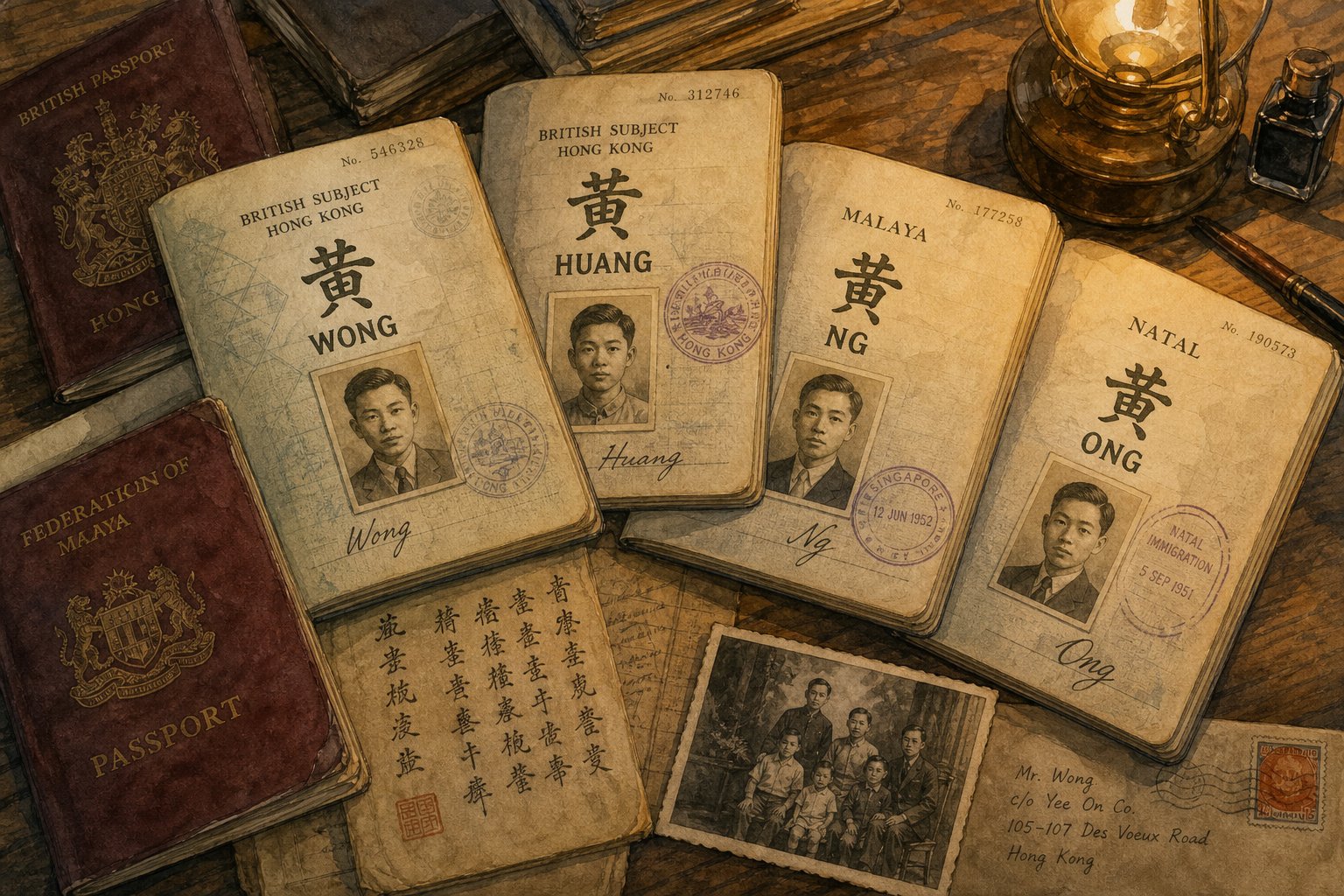
Imagine two people sharing the exact same Chinese surname character, yet one writes it as "Wong" on their passport and the other writes "Huang." They could be distant relatives, separated by a few generations and a few thousand miles. This single difference tells a story of dialect, migration, and the country where a family eventually settled. That story is what overseas Chinese naming conventions are really about.
Chinese names outside of mainland China follow patterns shaped by forces that have nothing to do with Mandarin Pinyin or modern naming trends in Beijing or Shanghai. They reflect something older and more personal: the dialect your ancestors spoke, the colonial administration that first recorded their arrival, and the immigration policies that determined how their identity would appear on paper.
What Makes Overseas Chinese Names Different
Names in China today follow a relatively standardized system. Mandarin Pinyin serves as the default romanization, and naming conventions are governed by national regulations. Step outside those borders, though, and the picture fractures into dozens of regional patterns. Overseas Chinese naming conventions are shaped by at least four intersecting forces:
- The dialect group of the original migrants (Cantonese, Hokkien, Teochew, Hakka, Hainanese)
- The host country's language and administrative systems
- Colonial-era recording practices that locked in specific spellings
- Immigration policies that sometimes forced name changes or adaptations
The result is that chinese names in the diaspora carry layers of historical information invisible to anyone unfamiliar with these patterns. A surname spelled "Tan" points toward Hokkien-speaking communities in Southeast Asia. "Chan" suggests Cantonese roots, likely through Hong Kong or early migration to North America. "Ong" could indicate Hokkien or Teochew heritage depending on the country. These aren't random variations. They're linguistic fingerprints.
The same Chinese surname character can appear as Wong, Huang, Ng, Ong, or Oei depending on the dialect spoken by the original migrant and the country where their family settled. A single spelling can reveal both ancestral dialect and migration path.
Understanding chinese name origins in the diaspora means recognizing that romanization was never neutral. As the CJK Dictionary Institute's database documents, a single Chinese character can produce dozens of romanized variants across Cantonese, Hokkien, Hakka, and Hainanese alone. Each variant reflects a real community's pronunciation and history.
Why This Guide Focuses on Diaspora Communities
Most guides to naming in chinese culture start and end with mainland conventions. They explain Pinyin, cover character meanings, and move on. That approach leaves out the lived experience of millions of overseas Chinese who navigate dual naming systems, dialect-based spellings, and administrative confusion on a daily basis.
This article is written for those communities. Whether you're a second-generation Malaysian Chinese trying to understand why your surname is spelled differently from a mainland relative, a Cantonese-heritage family in Vancouver choosing a name for a newborn, or a Filipino Chinese professional deciding how to present your name across cultures, the patterns explored here are yours. They reflect chinese naming customs that evolved over generations of migration, adaptation, and cultural preservation.
The conventions that govern how Chinese names transform across borders aren't just linguistic curiosities. They're tied to identity, family history, and belonging. And they start with something deceptively simple: which dialect your ancestors spoke when they first left home.
How Chinese Names Are Structured
Dialect is only half the story. Before you can trace how a Chinese name transforms across borders, you need to understand how are chinese names structured at their core. The architecture of a Chinese name is compact, meaningful, and ordered in a way that clashes with Western systems from the moment it hits a foreign form.
Surname First and Given Name Order
A Chinese name places the family name first and the given name second. Think of it as zooming in: the broader identity (clan, lineage) comes before the individual. A surname in chinese is typically a single character, while chinese first names consist of one or two characters. So a full name like Wang Xiaoming is three syllables total: Wang (family) + Xiaoming (given).
This creates immediate confusion in countries that expect given-name-first order. When Wang Xiaoming fills out a Western form, which box does "Wang" go in? The Asia Media Centre notes that in early Chinese immigration to New Zealand, this confusion resulted in entire families carrying the "wrong" surnames for generations.
Chinese family names are drawn from a relatively small pool. Only about 400 different surnames exist in China, and the top 100 character surnames cover roughly 85 percent of the population. Given names, by contrast, are nearly limitless in their combinations.
You'll also encounter generation names, a tradition where males of the same generation within a family share one character in their given name. These function almost like chinese middle names, signaling exactly where someone sits in the family tree. Generation names are often predetermined by a family poem or ancestral record, sometimes planned out decades in advance.
The Role of Tones and Characters in Meaning
Every Chinese character carries meaning, tone, and visual structure. A name isn't just a sound. It's a deliberate selection of names and characters chosen for their meaning, aesthetic balance, and tonal harmony. The given name "Mei," for instance, means "beautiful" in the third tone but "plum blossom" in the second tone. Same spelling in English, entirely different identity.
This is the core tension for overseas Chinese: romanization flattens all of that. It strips away tone, erases the visual meaning of the character, and reduces a layered identity to a string of letters. The same romanized spelling can represent dozens of different characters with completely unrelated meanings.
And here's where dialect compounds the problem. A single surname character doesn't just lose meaning through romanization. It produces entirely different romanized spellings depending on which dialect does the translating:
| Surname Character | Pinyin (Mandarin) | Jyutping (Cantonese) | Hokkien POJ | Wade-Giles |
|---|---|---|---|---|
| 王 | Wang | Wong | Ong | Wang |
| 陈 / 陳 | Chen | Chan | Tan | Ch'en |
| 林 | Lin | Lam | Lim | Lin |
| 李 | Li | Lei | Li | Li |
| 黄 / 黃 | Huang | Wong | Ng / Oei | Huang |
Notice how the chinese name structure stays identical at the character level, yet the romanized output diverges dramatically. "Wong" could be 王 in Cantonese or 黄 in Cantonese. "Tan" and "Chen" share the same origin character 陈. Without knowing the dialect behind the spelling, you can't reliably trace the name back to its source.
This table illustrates exactly why overseas Chinese naming patterns can't be understood through Mandarin Pinyin alone. The dialect a family spoke at the moment of emigration became permanently encoded in their surname's spelling, creating the regional variations that define diaspora naming to this day.
Dialect Groups and Their Distinct Romanizations
The dialect spoken at the moment of emigration didn't just influence a surname's spelling. It determined it entirely. Two families carrying the same character on their ancestral tablets can end up with chinese last names that look completely unrelated in English. This isn't a quirk of history. It's a systematic pattern, and once you understand which dialect produces which romanization, you can reverse-engineer someone's ancestral roots from their spelling alone.
Cantonese Romanization Patterns
Cantonese speakers formed the earliest and most visible Chinese diaspora communities in North America, Australia, and of course Hong Kong and Macau. Their romanization patterns dominate what many Westerners think of as "typical" chinese surnames. Wong in chinese can represent either 黄 or 王, because Cantonese pronounces both characters as "wong." Chan represents 陈, Ng represents 吴, and Leung represents 梁.
If you've ever wondered why someone named "Wong" seems unrelated to someone named "Huang," the answer is dialect, not different families. The huang name origin traces back to an ancient state during the Shang dynasty, and the character 黄 has remained unchanged for millennia. Only the sound shifted as it passed through Cantonese phonology instead of Mandarin.
Cantonese names also produce distinctive given-name romanizations. You'll notice spellings like "Wai," "Kin," "Siu," and "Fung" that look nothing like their Pinyin equivalents (Wei, Jian, Xiao, Feng). For early diaspora communities in San Francisco, Vancouver, and Sydney, these Cantonese spellings became permanent family identifiers, passed down regardless of whether later generations still spoke the dialect.
Hokkien and Teochew Naming in Southeast Asia
Southeast Asia's Chinese communities are predominantly Hokkien and Teochew in origin, and their naming patterns reflect this clearly. Hokkien speakers produce surnames like Tan (陈), Lim (林), Ong (王), and Goh (吴). The chen last name origin is the same ancient lineage whether it appears as Chen, Chan, or Tan. The difference is purely phonological.
Teochew speakers share linguistic roots with Hokkien but diverge on key surnames. LearnDialect.sg documents how 王 becomes "Ong" in Hokkien but "Heng" in Teochew, while 黄 is "Ng" in Teochew but can appear as "Wee," "Oei," or "Ooi" in Hokkien. These distinctions matter. In Singapore and Malaysia, you can often guess whether someone's family is Hokkien or Teochew based solely on their surname spelling.
The li surname is an interesting exception. Across Hokkien, Teochew, and Cantonese, 李 consistently romanizes as "Lee" or "Li," making it one of the few chinese surnames that doesn't immediately reveal dialect origin through spelling alone.
Hakka Naming Conventions
Hakka communities, historically scattered across Guangdong, Fujian, and parts of Southeast Asia, produce their own distinct romanizations. The most recognizable Hakka marker is the use of "V" sounds where other dialects use "W" or "H." The character 黄 becomes "Vong" or "Wong" in Hakka, while 王 may appear as "Vong" as well. Surnames like "Chong" (张) and "Fong" (方) also signal Hakka heritage.
Hakka naming conventions are particularly prevalent among Chinese communities in parts of Malaysia (especially Sabah), Mauritius, Jamaica, and Suriname. If you encounter someone who can't quite pronounce zhang the way Mandarin speakers expect, and their family spells it "Chong" or "Cheong," Hakka ancestry is a strong possibility.
The table below shows how five of the most common chinese surnames appear across all major dialect romanizations:
| Character | Mandarin Pinyin | Cantonese | Hokkien | Teochew | Hakka |
|---|---|---|---|---|---|
| 陈 | Chen | Chan | Tan | Tan | Chin |
| 林 | Lin | Lam | Lim | Lim | Lim |
| 黄 | Huang | Wong | Wee / Oei / Ng | Ng | Vong |
| 王 | Wang | Wong | Ong | Heng | Vong |
| 李 | Li | Lee | Lee | Lee | Lee |
As My China Roots notes, a single surname like 陈 has been romanized in over 18 different ways across global Chinese communities. These aren't errors or inconsistencies. They're a map. Each spelling points to a specific dialect group, a specific migration wave, and often a specific region of origin in southern China.
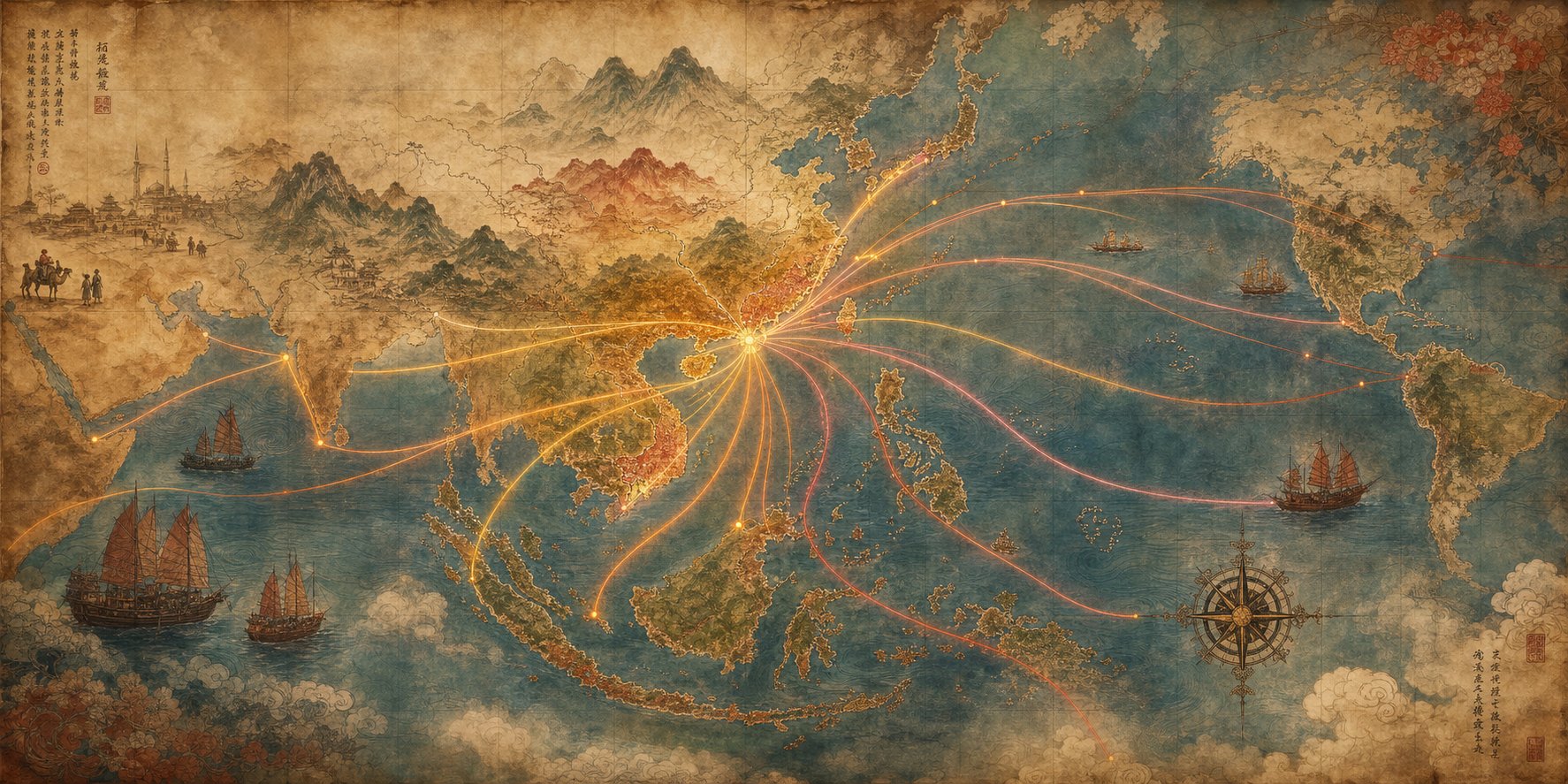
These dialect-driven patterns didn't develop in isolation, though. They collided with local administrative systems, colonial policies, and national identity projects in each country where Chinese migrants settled. Nowhere is that collision more visible than in Southeast Asia, where the world's largest overseas Chinese populations built lives under vastly different political conditions.
Southeast Asian Chinese Naming Adaptations
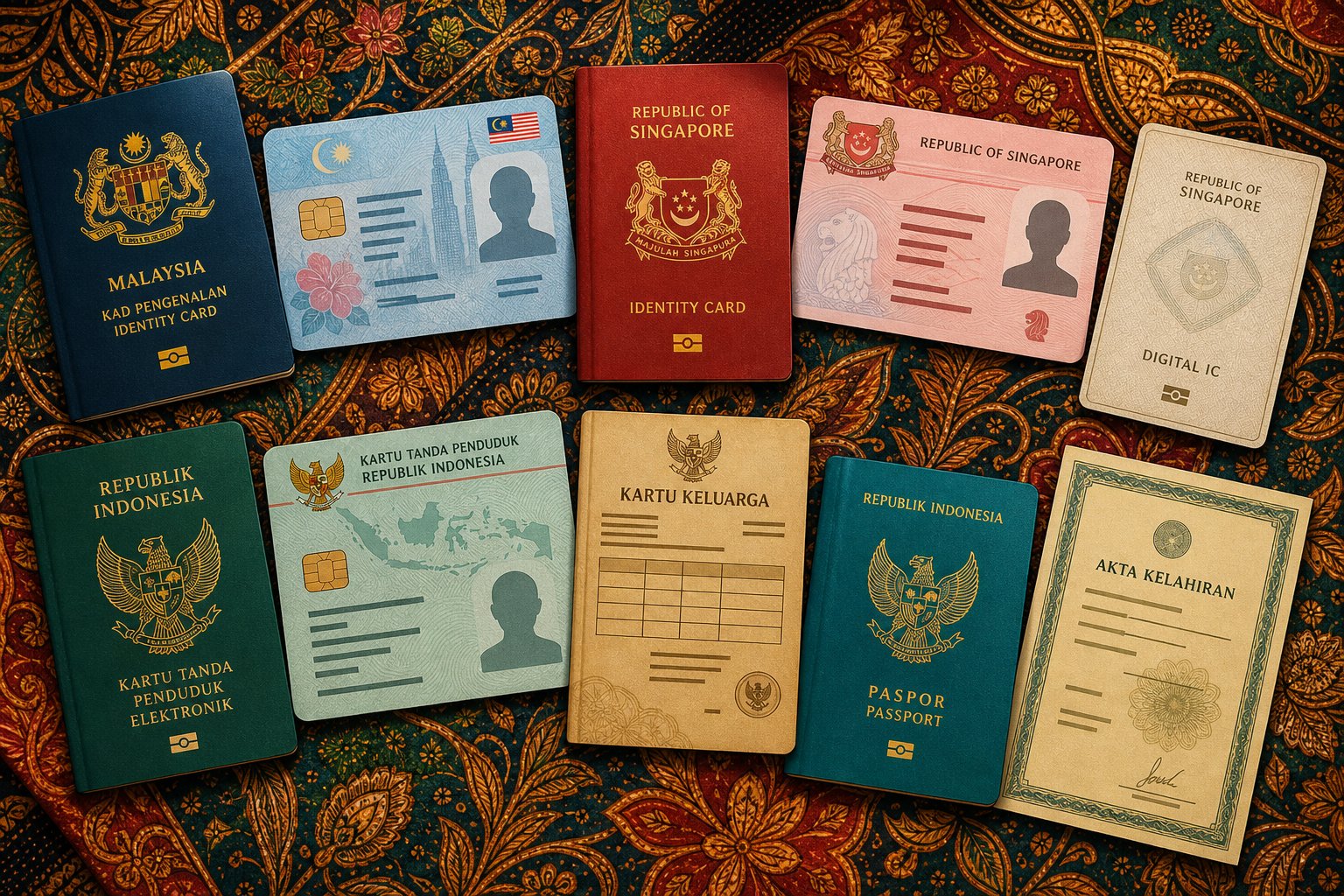
Southeast Asia is home to the largest overseas Chinese populations on earth. Malaysia, Indonesia, Singapore, the Philippines, and Thailand each absorbed waves of southern Chinese migrants over centuries, yet each country produced radically different naming outcomes. The same Hokkien family that settled in Penang, Jakarta, and Manila could end up with three entirely different surname formats within a single generation. These aren't just spelling differences. They reflect distinct national policies, colonial legacies, and community strategies for survival.
Malaysian Chinese Naming Patterns
Malaysian Chinese retain some of the strongest connections to dialect-based romanization anywhere in the diaspora. Walk through any Malaysian Chinese community and you'll encounter the most common chinese surnames spelled exactly as their Hokkien, Cantonese, Hakka, or Teochew ancestors would have pronounced them. The tan last name dominates among Hokkien-heritage Malaysians, while Cantonese families write the same character as "Chan" and Hakka families as "Chin."
What makes Malaysia distinctive is the three-part structure visible on every national identity card (IC). A typical Malaysian Chinese name appears as: [Surname] [Given name in romanized dialect] or [Surname] [English name] [Chinese given name]. For example, someone might be registered as "Tan Mei Ling" or "Tan Michelle Mei Ling." The IC locks this format permanently, and it becomes the legal name used across all official documents.
Key characteristics of Malaysian Chinese naming:
- Surnames follow dialect-group pronunciation, not Mandarin Pinyin
- Given names may be romanized Chinese, English, or a combination of both
- The IC format becomes the permanent legal name with no flexibility for reordering
- Hokkien and Cantonese romanizations dominate among the most popular chinese last names in Malaysia (Tan, Lim, Lee, Wong, Ng)
- Some families include a generation name as part of the given name, preserving clan traditions
Indonesian Chinese Forced Name Changes
Indonesia tells a far more painful story. During the Suharto era (1966-1998), government policies forced Chinese Indonesians to abandon their chinese names in chinese and adopt Indonesian-sounding alternatives. Presidential Cabinet Decree No. 127/1966 explicitly required citizens of Chinese descent to replace their names with "Indonesian" ones. Overnight, families named Tan became "Tanujaya," Lim became "Limanto" or "Halim," and Oei became "Widjaja."
This wasn't voluntary assimilation. It was state-mandated erasure. An entire generation grew up without legal chinese last name connections, unable to pass dialect-based surnames to their children. Some families embedded fragments of their original surname within the new Indonesian name as a quiet act of resistance. Others lost the thread entirely.
After the fall of Suharto in 1998, regulations changed. Chinese Indonesians regained the legal right to use Chinese names, celebrate Chinese holidays, and operate Chinese-language schools. Some families have since reclaimed their original surnames on official documents. Others, particularly those born during the New Order period, retain their Indonesian names as the only identity they've ever known. The generational split is stark: grandparents named Oei, parents named Widjaja, and grandchildren who may choose either.
Singaporean and Filipino Chinese Conventions
Singapore operates a bilingual naming system that preserves both Chinese characters and romanized versions as official. According to Cultural Atlas, Chinese Singaporean names appear on National Registration Identity Cards in both romanized form and Chinese characters, though the romanized version serves as the legal spelling. The government-promoted name order is [Surname] [Chinese given name] [English given name], producing formats like "TAN Mei Ling Emily."
Translating chinese names into english in Singapore follows dialect pronunciation rather than Pinyin. A family surnamed 陈 registers as "Tan" if Hokkien, "Chan" if Cantonese, or "Chin" if Hakka. This dialect-based romanization is the official name, giving it a permanence that differs from mainland China, where the Chinese characters hold legal primacy. Many Singaporeans also adopt English names used in daily life, creating a layered identity system where someone might be "Emily" at work, "Mei Ling" to family, and "陈美玲" in Chinese-language contexts.
Filipino Chinese naming follows yet another path. Spanish colonial influence means many Chinese Filipino families adopted Spanish-style naming conventions centuries ago. A family surnamed Tan might carry the full legal name "Tan, Maria Christina Lim" with the common chinese last names appearing alongside Spanish given names and a maternal surname. Chinese names are maintained for family use, ancestral records, and community contexts, but rarely appear on government documents. The result is a dual system where someone's legal identity looks entirely Filipino while their family identity remains distinctly Chinese.
Key characteristics across Southeast Asian countries:
- Malaysia: Dialect romanization preserved on ICs; English names optional but increasingly common
- Indonesia: Historical forced name changes created a broken naming lineage; post-1998 reclamation is ongoing but uneven
- Singapore: Bilingual system with dialect-based romanization as the legal standard; English names widely adopted as social names
- Philippines: Spanish naming structure dominates legal documents; Chinese names reserved for family and community use
- Thailand: Royal decree in 1913 required adoption of Thai surnames; most Thai-Chinese families have used Thai names for over a century
Each of these systems solved the same problem differently: how to fit Chinese naming conventions into a non-Chinese administrative framework. Some preserved dialect heritage. Others erased it. And in Western countries, where Chinese communities arrived as minorities navigating English-dominant systems, yet another set of adaptations emerged.

Western Country Adaptations for Chinese Names
In Southeast Asia, administrative systems at least acknowledged the existence of Chinese naming structures, even when they distorted or suppressed them. Western countries presented a different challenge entirely: systems built around the assumption that everyone's name follows a given-name-first, surname-last pattern. For Chinese migrants arriving in North America, the UK, or Australia, the very order of their name became a source of confusion, and the strategies they developed to manage that confusion shaped diaspora naming for generations.
North American Naming Patterns
Chinese communities in the United States and Canada developed several distinct approaches to fitting their names into English-language systems. The most common strategy you'll encounter today is adopting an English first name while keeping the Chinese surname: "David Wong," "Michelle Chen," "Kevin Lim." This english name chinese name pairing gives the individual a name that functions smoothly in Western contexts while preserving the family's dialect-based surname.
But this wasn't always a free choice. During the exclusion era of the late 19th and early 20th centuries, immigration officials at ports of entry routinely altered Chinese names to fit what they could hear, spell, or process. NorthJersey.com's reporting on Asian American name histories highlights how names were changed at the point of entry, sometimes permanently reshaping a family's identity. A surname that should have been "Huong" might become "Hong." A given name might be dropped entirely, leaving only a single syllable on the immigration record.
Other common patterns in North America include:
- Fully reversing name order so the given name appears first on all documents ("Xiaoming Wang" instead of "Wang Xiaoming")
- Hyphenating two-syllable given names to signal they form a single unit ("Xiao-Ming Wang"), preventing systems from splitting them into a first and middle name
- Using the Chinese given name as a legal middle name while an English name serves as the first name ("David Xiaoming Wang")
- Merging given name syllables into one word ("Xiaoming") to avoid the hyphen but preserve unity
Names with a hyphen became particularly important for preserving two-character given names. Without the hyphen, Western systems often interpret the first syllable as a middle name and the second as the "real" first name, fragmenting the name's meaning. A person named "Wang Mei Ling" might find themselves addressed as "Ling" by colleagues who assume "Mei" is a middle name. The hyphen in "Mei-Ling" signals that both syllables belong together.
Naming Conventions in the UK and Australia
British and Australian administrative systems handle Chinese names with their own quirks. UK passports, for instance, list surnames in a separate field and capitalize them, which actually helps clarify name order. Australian systems similarly distinguish between "family name" and "given names" on most official forms. Yet confusion persists in everyday interactions, where people default to assuming the last word in a name is the surname.
Community conventions in the UK reflect the colonial connection to Hong Kong. Cantonese-heritage families who migrated from Hong Kong often already carried English names assigned during schooling under British colonial education. As DW reports, linguistic professor David C.S. Li from the Hong Kong Institute of Education explains that "one consequence of British colonization in Hong Kong is the need for an English name for all kinds of education- and work-related purposes." These names traveled with migrants to the UK, creating a community where dual naming was already normalized before arrival.
In Australia, the practice of using English names professionally while maintaining Chinese names within family and community contexts is widespread. Someone might be "Andrew Tan" on their business card and LinkedIn profile, but "陈伟明" (Tan Wei Ming) at family gatherings, Chinese community events, and on WeChat. This isn't code-switching in the negative sense. It's a practical system that lets individuals move between cultural contexts without friction.
The key difference from Southeast Asian conventions is that in Western countries, the Chinese name often has no official legal standing at all. It exists in family records, community use, and personal identity, but may never appear on a single government document. This makes the english to chinese name connection entirely informal for many diaspora families, maintained through oral tradition and family practice rather than administrative systems.
Choosing English Names That Complement Chinese Names
Selecting an English name is a near-universal experience for overseas Chinese in Western countries. Research published in the journal Names found that mainland Chinese students demonstrate a high degree of agency in their English name choices, with uniqueness being a key factor. For diaspora families, the process is even more layered because the English name often needs to work alongside an existing Chinese name from birth.
Three main approaches dominate how families derive a chinese name from english or select english names that pair well with Chinese ones:
- Phonetic similarity: Choosing an English name that echoes the sound of the Chinese given name. Someone named "Mei" might become "May." A person named "Wai-Kit" might choose "Wyatt." The syllable "Yan" pairs naturally with "Yandy" or "Yvonne."
- Meaning translation: Selecting an English name that carries a similar meaning to the Chinese characters. A name meaning "bright" (明) might pair with "Claire" or "Lucian." A name meaning "jade" (玉) might inspire "Jade" directly.
- Independent selection: Choosing an English name with no phonetic or semantic connection to the Chinese name, based purely on personal preference, cultural associations, or family tradition.
The independent approach is increasingly common among second and third-generation families, where the English name functions as the primary social identity and the Chinese name carries cultural rather than practical weight. Some parents today use online tools marketed as a "chinese name converter" or name convert to chinese service to find pairings, though these tools vary widely in quality and cultural sensitivity.
What's worth noting is that the choice itself carries meaning. Opting for phonetic similarity signals a desire to keep both names connected, to make the Chinese identity audible even in the English version. Choosing independently signals that both names can stand alone, each valid in its own context. Neither approach is more "correct." Both reflect legitimate strategies for managing a dual-naming reality that overseas Chinese navigate daily.
These naming decisions don't happen in a vacuum, though. They collide with bureaucratic systems that weren't designed for dual names, hyphenated given names, or surname-first conventions. The administrative friction that results creates real, tangible problems that go far beyond social awkwardness.
Legal and Administrative Naming Challenges
You've chosen your name, settled on a format, and built a life around it. Then a bank teller tells you your passport name doesn't match your birth certificate. Or an airline refuses to issue a boarding pass because your ticket says "Mei Ling" but your passport reads "MEILING" as one word. These aren't hypothetical scenarios. For overseas Chinese navigating systems that handle name chinese characters inconsistently, administrative friction is a routine part of life.
Passport and Official Document Formatting
Different countries format Chinese names on passports in fundamentally different ways. China merges given name syllables into a single block (WANG XIAOMING, with no space between "XIAO" and "MING"). Taiwan separates them with a hyphen (WANG XIAO-MING). Hong Kong may list them as two distinct words (WONG Siu Ming). Singapore follows dialect romanization and often includes Chinese characters alongside the English spelling. Each system makes its own assumptions about what constitutes a first name chinese speakers would recognize and what counts as a last name in chinese naming logic.
The problem emerges when one person holds documents from multiple jurisdictions. A Chinese-born individual who emigrated to Canada might carry a PRC passport reading "CHEN MEILING," a Canadian permanent resident card reading "Meiling Chen," and a marriage certificate reading "Mei Ling Chen." Three documents, three formats, one person. Banks, immigration officers, and property registrars treat these as potential identity mismatches.
Common consequences include:
- Visa rejections when the name on a supporting document doesn't exactly match the passport spelling
- Bank account freezes when a wire transfer names the recipient differently than the account registration
- Property title disputes when a deed uses a hyphenated given name but the passport merges the syllables
- Flight booking errors when a system splits a merged given name into a first and middle name, or drops one syllable entirely
The root cause is simple: no international standard exists for how to romanize and format a name in chinese language systems for use in Western administrative frameworks. Each country invented its own approach, and overseas Chinese who cross borders carry the consequences.
Name Order Confusion in Professional Settings
Beyond official documents, everyday professional life presents its own friction. When a colleague sees the name "Wei Lin Zhang" on an email, they often assume "Zhang" is the surname because it appears last. They might be right. Or "Zhang" could be a chinese name first name that was placed last to conform to Western order, with "Wei Lin" as a two-part surname. Without context, there's no way to tell.
This confusion intersects with chinese honorifics in professional settings. In Chinese business culture, addressing someone as "Zhang Xiansheng" (mr in chinese convention places the surname before the title) signals respect. But a Western colleague attempting the same courtesy might say "Mr. Wei" when "Wei" is actually the given name. The result is an address that feels wrong to the Chinese professional but polite in intent, creating an awkward gap that neither party knows how to bridge.
As the Cultural Atlas notes, it is common practice in Chinese contexts to write family names in capitals to avoid exactly this confusion. Many overseas Chinese professionals have adopted this strategy across their international communications.
Practical solutions for reducing name-order confusion:
- Capitalize your surname in email signatures and professional profiles (e.g., "Wei Lin ZHANG") to signal which element is the family name
- Add a comma after the surname on business cards when using surname-first order (e.g., "ZHANG, Wei Lin") to match academic citation style
- Include a preferred name or pronunciation guide in email signatures for colleagues unfamiliar with chinese name pronunciation
- Use the "Last name / First name" label explicitly on forms and profiles where the system allows custom fields
- Standardize your name format across all platforms (LinkedIn, company directory, publications) to prevent conflicting assumptions
None of these solutions are perfect. They're workarounds for systems that assume a two-part, given-first naming structure. But they reduce the daily friction significantly, and they signal to institutions and colleagues that the name order is intentional, not an error to be "corrected."
These administrative headaches don't stay static across generations, though. The naming decisions that first-generation immigrants make, including how they format documents and which compromises they accept, ripple forward into how their children and grandchildren experience their own names.
Generational Shifts in Diaspora Naming Practices
A grandmother named 陈美华 becomes "Chan Mei Wah" on her Hong Kong identity card. Her son, born in London, is registered as "Michael Mei-Wah Chan." Her granddaughter's birth certificate reads "Olivia Chan" with no Chinese name at all. Three generations, one family, and a naming pattern that tells the story of assimilation, adaptation, and sometimes loss. Understanding how overseas Chinese naming conventions shift across generations reveals not just linguistic change but deeper questions about identity and belonging.
First Generation Naming Decisions
First-generation immigrants face the most consequential naming choices because their decisions set the template for everyone who follows. When they romanize their surname, that spelling becomes the family's permanent identifier in the new country. A Hokkien speaker who registers as "Tan" locks in that dialect marker for all descendants, even if those descendants never speak a word of Hokkien.
The choices extend beyond surnames. First-generation arrivals decide whether to adopt a local name, how to format their given name on official documents, and whether to maintain chinese traditional names for family use. Many keep their full Chinese name as their legal identity, using it on all documents while perhaps adopting an informal English name for workplace convenience. Others make the switch immediately, sensing that a familiar-sounding name reduces friction in job applications, housing searches, and daily interactions.
These decisions are rarely made with future generations in mind. They're survival choices, made under pressure, often at an immigration counter or employer's office. Yet they echo forward for decades.
Second and Third Generation Naming Shifts
By the second generation, a clear pattern emerges across most diaspora communities. Parents give their children English or local-language first names paired with Chinese middle names. The chinese name meaning still matters deeply to the family, but it moves from the primary position to a secondary one. A child might be "Jessica Mei-Lin Wong" on paper, with "Mei-Lin" carrying carefully chosen characters that reference family values or aspirations, while "Jessica" handles the social world.
Some families maintain generation-name traditions into the second generation, ensuring cousins share a character that marks their place in the lineage. But this practice fades quickly. By the third generation, most families in Western countries have abandoned generation names entirely. The pool of common chinese names within a family narrows to whatever the parents remember or can research independently.
What's striking is the reversal that sometimes happens in the third or fourth generation. Younger diaspora members, secure in their local identity but hungry for cultural connection, actively reclaim Chinese naming practices. They might insist on using their Chinese given name professionally, research the chinese names and meanings their grandparents chose, or give their own children Chinese first names rather than relegating them to the middle position. As CHiNOY TV documents, some Chinese Filipinos are now actively researching and reclaiming surnames that were lost or replaced generations ago, driven by a desire to reconnect with ancestral identity before the remaining clues disappear.
The generational progression typically follows this pattern:
- First generation: Full Chinese name as legal identity, dialect-based romanization, optional English name for social use. Example: "Chan Mei Wah" (legal) / "May" (informal English name)
- Second generation: English first name with Chinese given name as middle name, inherited dialect surname. Example: "Michael Mei-Wah Chan"
- Third generation: English first name only, Chinese middle name may be absent or token, surname remains but dialect connection fades. Example: "Olivia Chan" with no Chinese characters on any document
- Fourth generation and beyond: Either complete assimilation into local naming norms, or a conscious reclamation where Chinese names return to prominence as an identity statement. Example: "Chan Mei-Xin" chosen deliberately to restore surname-first order
Naming Mixed-Heritage Children
Imagine you're choosing a name that needs to work across two or three cultural traditions simultaneously. This is the reality for a growing number of overseas Chinese families. Mixed-heritage households navigate questions that single-heritage families never face: which surname does the child carry? Can a Chinese given name pair naturally with a non-Chinese surname? How do you honor both lineages without creating a name so long it won't fit on official forms?
For parents researching how to name your asian baby in a mixed-heritage context, the approaches vary widely. Some choose a Chinese given name that also functions phonetically in the other parent's language. "Kai," for instance, works in Chinese (meaning "victory" or "open"), Japanese, Hawaiian, and several European languages. Others give the child separate names from each tradition, using one as a legal middle name. A child might be "Liam Wei-Jun O'Brien," carrying Irish, Chinese, and English naming traditions in a single legal name.
The most common chinese names chosen for mixed-heritage children tend to be those with simple romanizations that non-Chinese speakers can pronounce comfortably. Parents often prioritize accessibility alongside chinese name meaning, selecting characters that carry significance but produce spellings like "Mei," "Lin," "Kai," or "An" rather than more complex romanizations that invite mispronunciation.
What connects all these generational patterns is a tension between practicality and preservation. Each generation balances the desire to function smoothly in their local environment against the pull of heritage, identity, and family continuity. The choices aren't right or wrong. They're responses to specific circumstances, and they shift as those circumstances change.
Ancient chinese names once carried clan histories, generational poems, and cosmological significance in every character. Today's diaspora families may not maintain all those layers, but the impulse behind them persists. Choosing chinese baby names remains one of the most deliberate cultural acts a family performs, whether they're selecting from a generation poem passed down for centuries or browsing name lists on their phone. The weight of the decision hasn't changed. Only the context has.
These generational shifts don't just affect personal identity. They shape how individuals present themselves professionally, how they introduce themselves across cultural boundaries, and how they make peace with the gap between their legal name and their felt identity.
Navigating Naming Decisions as Overseas Chinese
The gap between a legal name and a felt identity isn't just an administrative inconvenience. It's a daily negotiation. Every introduction, every new colleague, every form that asks "preferred name" forces a micro-decision: which version of yourself do you present? For overseas Chinese professionals and families, these decisions accumulate into something larger, a personal philosophy about how do chinese names work within the life you're actually living.
Strategies for Professional Naming
Professional contexts demand clarity. Colleagues need to know what to call you, clients need to find you online, and HR systems need a consistent identifier. The chinese naming convention you follow at work doesn't have to match what your family uses at home, but it does need to be intentional.
Several approaches work well depending on your goals:
- Lead with your Chinese given name: A growing number of professionals in Western workplaces use their Chinese name as their primary professional identity. "Wei-Lin Zhang" rather than "William Zhang." This approach has gained momentum as workplaces become more culturally aware and as professionals themselves feel less pressure to assimilate through naming.
- Use an English name with your dialect surname: The classic pairing of "David Tan" or "Sarah Wong" remains the most common strategy. It reduces pronunciation friction while preserving the family's dialect heritage in the surname.
- Include both names visibly: Some professionals format their name as "Wei-Lin (William) Zhang" or "William Wei-Lin ZHANG" in email signatures and LinkedIn profiles, making both identities accessible without forcing a choice.
- Capitalize your surname consistently: As the Cultural Atlas notes, writing family names in capitals is common practice in Chinese contexts to avoid confusion. Adopting this in professional communications ("Wei-Lin ZHANG") signals name order clearly.
Handling introductions across cultural contexts requires flexibility. When meeting someone in a Chinese-language business setting, you might introduce yourself surname-first with appropriate honorifics. In an English-speaking meeting, you might lead with your English name or your given name in Western order. Neither version is less "real." They're context-appropriate presentations of the same identity.
The trend toward using Chinese given names professionally reflects something broader than personal preference. It signals that the workplace itself has shifted. When a colleague named "Xiaoming" no longer feels compelled to become "Simon" for others' convenience, that's a cultural change worth noting. It doesn't mean adopting an English name was ever wrong. It means the range of viable choices has expanded.
For those wondering what is your name in chinese or how do i say my name in chinese when introducing themselves to Chinese-speaking colleagues, the answer depends on whether you have an existing Chinese name or need a chinese name translation. Many diaspora professionals carry a Chinese name given at birth that they rarely use publicly. Reintroducing it in appropriate contexts can feel like reclaiming something quietly set aside.
Preserving Cultural Identity Through Naming
Naming is never just practical. Every time a parent chooses characters for a child, every time someone decides whether to use "Wei-Lin" or "William" on a job application, they're making a statement about belonging. The question "what is my chinese name" carries emotional weight for diaspora members who may have grown up hearing their Chinese name only from grandparents, or who discover its meaning for the first time as adults.
Maintaining Chinese naming practices across generations connects families to something larger than individual identity. It preserves dialect heritage, honors ancestral choices, and keeps alive a system where names carry meaning beyond sound. A child named "明慧" (bright and wise) carries her grandparents' aspirations in two characters. That continuity matters, even when the child grows up in a country where no one reads those characters on sight.
Choosing to preserve a Chinese name across generations is an act of cultural stewardship. It says: this lineage, this dialect, this family's story matters enough to carry forward, even when the surrounding world doesn't require it.
Some families use a chinese name converter or chinese name convert tool to find characters that match an English name's sound or meaning, creating a bridge for children who might otherwise have no Chinese name at all. These tools vary in sophistication, and the best results still come from consulting family members or cultural practitioners who understand the nuances of character selection. But the impulse behind using them is valid: the desire to give a child access to both naming traditions, even when one parent doesn't speak Chinese.
What matters most is this: there is no single correct way to handle overseas Chinese naming decisions. A person who goes exclusively by their English name isn't less Chinese. A person who insists on their full romanized Chinese name in every context isn't being difficult. Someone who uses different names in different settings isn't being inconsistent. They're navigating a reality that single-naming-system cultures never have to face.
The conventions explored throughout this article, dialect romanizations, generational shifts, administrative workarounds, regional adaptations, aren't rules to follow. They're patterns to understand. Your naming choices are yours. They reflect your family's history, your personal comfort, your professional needs, and your relationship to a heritage that spans continents and centuries. However you choose to carry your name forward, that choice is legitimate. It always has been.
Frequently Asked Questions About Overseas Chinese Naming Conventions
1. Why do Chinese people with the same surname spell it differently?
The spelling differences come from dialect groups, not different families. A single surname character like 陈 can appear as Chen (Mandarin), Chan (Cantonese), Tan (Hokkien), or Chin (Hakka) depending on which dialect the original migrant spoke when they emigrated. The romanization was locked in at the moment of settlement and passed down to all descendants, even if later generations no longer speak that dialect. Country of settlement also plays a role, as colonial administrators recorded names based on what they heard.
2. How are Chinese names structured differently from Western names?
Chinese names place the family name (surname) first and the given name second, reversing the Western convention. Surnames are typically one character, while given names consist of one or two characters, making a full name just two or three syllables total. This compact structure creates confusion in Western systems that assume the last word in a name is the surname. Additionally, Chinese names carry layered meaning through character selection, including tonal distinctions and visual symbolism that romanization completely strips away.
3. Why do some Chinese Indonesians have Indonesian-sounding names instead of Chinese ones?
During the Suharto era (1966-1998), Indonesian government policy forced Chinese Indonesians to abandon their Chinese names and adopt Indonesian-sounding alternatives. Families named Tan became Tanujaya, Lim became Halim, and Oei became Widjaja. After Suharto's fall in 1998, Chinese Indonesians regained the legal right to use Chinese names. Some families have reclaimed their original surnames, while others born during the New Order period retain their Indonesian names as their only known identity.
4. How do overseas Chinese choose English names to pair with their Chinese names?
Three main approaches exist. Phonetic similarity matches the English name's sound to the Chinese name, such as choosing May for someone named Mei. Meaning translation selects an English name with equivalent meaning, like Claire for a name meaning bright. Independent selection picks an English name based purely on personal preference with no connection to the Chinese name. Second and third-generation families increasingly favor independent selection, while first-generation immigrants often prefer phonetic similarity to keep both identities connected.
5. How can overseas Chinese avoid name-order confusion in professional settings?
Effective strategies include capitalizing your surname in email signatures and profiles (e.g., Wei-Lin ZHANG), adding a comma after the surname when using surname-first order on business cards, including a pronunciation guide in email signatures, and standardizing your name format across all platforms like LinkedIn and company directories. Hyphenating two-syllable given names also prevents systems from splitting them into separate first and middle names, which is a common source of confusion.