The Chinese Character for Light 光 Explained
Looking up the light Chinese character for a tattoo design, a language class, or to decode a name you came across? You're in the right place. The character you need is 光, and it carries far more depth than a single English word can capture.
What Does 光 Mean in Chinese
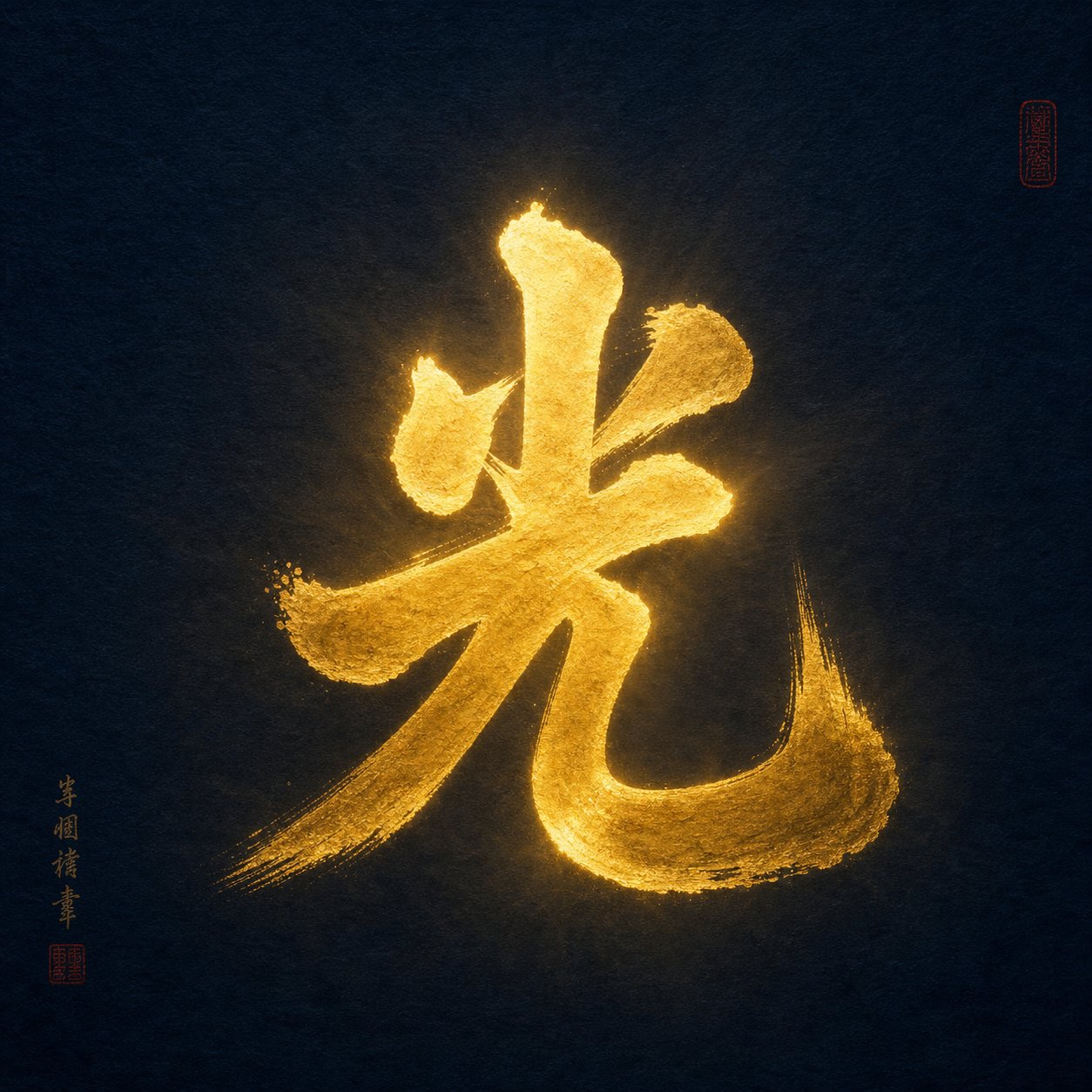
光 (pinyin: guāng, first tone) is the primary Chinese character for light. It refers to physical light, brightness, and radiance, but extends into meanings like glory, honor, and even bare or smooth depending on context.
Pronounced "gwahng" with a high, flat tone, 光 ranks among the 500 most common Chinese characters at position 255. That frequency tells you something important: this isn't a rare literary term. It shows up in everyday conversation, scientific vocabulary, personal names, and philosophical texts alike.
The character is composed of two visible parts: 火 (fire) sitting on top and 儿 (person) below. Imagine a person holding fire above their head, illuminating the darkness around them. That image isn't just a memory trick. It's the actual pictographic origin of the character, preserved across thousands of years of writing.
Who Searches for This Character and Why
People look up the chinese character for light for surprisingly varied reasons:
- Mandarin or Cantonese learners building vocabulary
- Tattoo research, verifying the correct character before committing to ink
- Parents exploring Chinese or Japanese names that carry the meaning of light
- Calligraphy enthusiasts wanting proper stroke order
- Curious readers who spotted 光 in a book, film title, or brand name
This guide covers all of those angles. Rather than giving you a bare dictionary entry, you'll find etymology, stroke-by-stroke writing instructions, compound words, cultural context, and comparisons with related characters. Think of it as everything the character 光 contains, unpacked into plain English.
The story of how this character came to look the way it does today starts with ancient oracle bones and a surprisingly vivid image of fire carried through darkness.
Origin and Evolution of the Character 光
Every Chinese character has a backstory, but few are as visually intuitive as 光. This isn't a character that was assembled from abstract parts. It started as a drawing, a literal sketch of a human being carrying fire into the dark. Understanding that origin makes the modern form click into place instantly.
From Pictograph to Modern Character
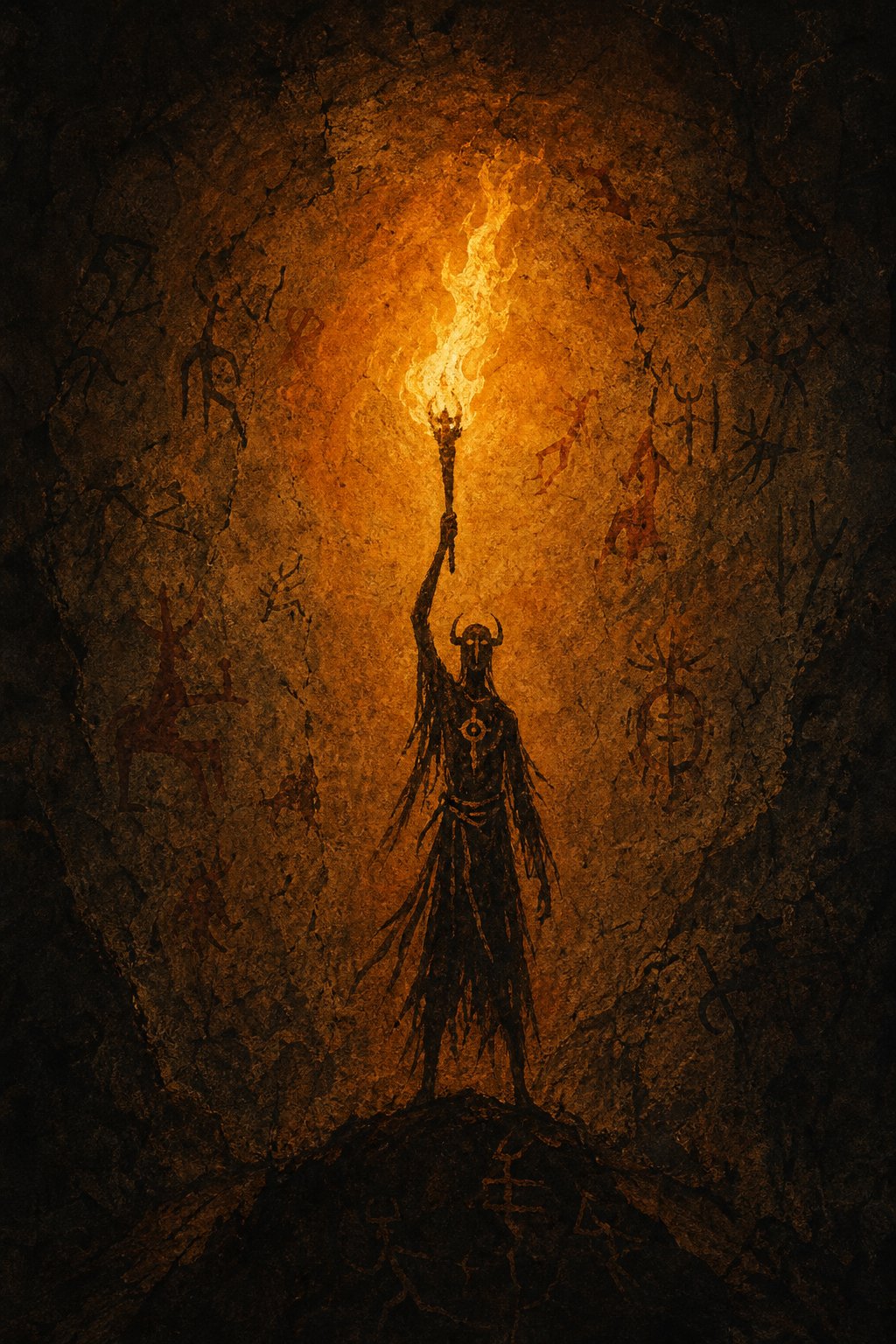
Imagine living over three thousand years ago, before electricity, before candles, before oil lamps as we know them. When night fell, the only way to see was to carry fire. The earliest known form of guang, carved into oracle bones during the Shang Dynasty (roughly 1200 BCE), depicts exactly that scene: a person kneeling or standing with flames rising above their head.
This wasn't metaphorical. As SilkStory explains, ancient people literally used fire as a lamp, and the character 光 is a pictograph of a person with fire above their head used for illumination. The figure carried a burning torch or bundle of kindling, and the glow radiating outward became the concept we now call "light."
Over centuries, the image simplified through successive writing systems:
- Oracle bone script (circa 1200 BCE) - A recognizable human figure with flame-like strokes above the head
- Bronze script (circa 800 BCE) - The figure becomes more stylized, but the fire-above-person structure remains clear
- Seal script (circa 200 BCE) - Lines smooth out into more uniform curves, the character grows more compact
- Modern simplified form - The streamlined 光 you see today, six strokes total
What's remarkable is how little the core idea changed. Even in its modern form, you can still trace the original picture if you know where to look.
Breaking Down the Components of 光
The modern chinese character light is built from two semantic components that directly reflect its pictographic roots:
The upper portion derives from 火 (huǒ), meaning fire. In the character 光, this fire element appears in a slightly modified form: three short strokes that suggest flickering flames. You'll notice these strokes don't look exactly like the standalone character 火, because they've been compressed to fit above the lower component.
The lower portion is 儿 (rén in its radical form), representing a person. According to Chinese-Characters.org, the "man" component was originally written as 卩 (a kneeling figure) in archaic forms, and later evolved into the 儿 shape we recognize today. Think of it as a pair of legs, the last visible trace of that ancient torch-bearer.
Put them together and the logic is elegant: fire + person = light. A person carrying fire creates illumination. The character doesn't describe light as an abstract phenomenon. It captures the human act of making light in chinese characters, the moment someone lifts a flame and pushes back the darkness.
This compositional clarity is one reason 光 remains so easy to remember once you've heard the story. The character isn't arbitrary. It's a compressed narrative, a three-thousand-year-old snapshot of someone lighting the way forward. That same forward motion carries into how you physically write the character, stroke by stroke.
How to Write 光 Stroke by Stroke
Knowing the story behind a character is one thing. Putting pen to paper and writing it correctly is another. The good news: 光 is only six strokes, making it one of the more approachable characters for beginners. And because 光 is also the japanese kanji for light, mastering this stroke order gives you correct form in both Chinese and Japanese writing systems.
Step-by-Step Stroke Order for 光
Each stroke follows a specific direction and sequence. Here's the complete breakdown:
- Stroke 1: Short vertical - Start at the top center and draw a short vertical line downward. This represents the tip of the flame.
- Stroke 2: Left-falling stroke (piě) - Beginning just below and slightly left of stroke 1, draw a short stroke falling to the lower left. This is the left flicker of fire.
- Stroke 3: Right dot (diǎn) - From a position mirroring stroke 2 on the right side, press a short dot angling to the lower right. This completes the fire element at the top.
- Stroke 4: Horizontal - Draw a horizontal line from left to right across the middle of the character. This separates the fire above from the person below.
- Stroke 5: Long left-falling stroke - Starting from the left end of the horizontal, sweep a longer stroke down and to the left. This forms the left leg of the person component.
- Stroke 6: Vertical-bend-hook - Begin at the center of the horizontal line, draw downward, curve to the right along the bottom, then finish with a small upward hook. This forms the right leg and completes the character.
The overall rhythm is top-to-bottom, left-to-right, with the final hook giving the character its grounded, balanced feel. If you're studying the 光 kanji for Japanese writing, the stroke order is identical since Japan inherited this character directly from classical Chinese.
Practice Tips for Writing 光 Correctly
A few pointers to keep your proportions clean:
- Keep the top three strokes (the fire element) compact. They should occupy roughly one-third of the character's total height.
- Make the horizontal stroke (stroke 4) slightly wider than the fire element above it. This gives the character visual stability.
- The vertical-bend-hook (stroke 6) is the character's anchor. Give it a smooth, confident curve rather than a sharp angle.
- Practice the light kanji on grid paper first. The center vertical and horizontal lines of the grid help you place stroke 1 and stroke 4 accurately.
Writing 光 correctly builds muscle memory that transfers to dozens of compound characters. But knowing how to draw it is just the starting point. The real richness of this character emerges when you see how a single form stretches across multiple, sometimes surprising, meanings in everyday Chinese.
Multiple Meanings and Uses of 光 in Context
A single character, six strokes, and yet 光 carries at least five distinct meanings depending on how it's used in a sentence. If you try to translate 光 with just the word "light," you'll miss most of what it actually does in spoken and written Chinese. This is where the character gets interesting for learners, because context changes everything.
Here's a complete breakdown of the 光 meaning spectrum, organized from the most frequent usage to the least common.
| Meaning | Part of Speech | Example Sentence | Pinyin | English Translation |
|---|---|---|---|---|
| Light / ray | Noun | 房间里的光线很暗。 | Fangjiān lǐ de guāngxiàn hěn àn. | The light in the room is very dim. |
| Bright / glory | Adjective | 这是一段光荣的历史。 | Zhè shì yī duàn guāngróng de lìshǐ. | This is a glorious period of history. |
| Bare / smooth | Adjective | 他光着脚在地上走。 | Tā guāngzhe jiǎo zài dì shàng zǒu. | He walked barefoot on the ground. |
| Only / merely | Adverb | 他光吃米饭,不吃肉。 | Tā guāng chī mǐfàn, bù chī ròu. | He only eats rice and doesn't eat meat. |
| To use up | Verb (resultative) | 钱花光了。 | Qián huā guāng le. | The money has been used up. |
光 as Light and Brightness
The primary chinese for light usage is straightforward. As a noun, 光 refers to physical light, rays, or radiance. You'll encounter it in weather descriptions, room settings, and scientific contexts. When used as an adjective or within compound words, it extends into "bright" and "glorious," carrying a sense of honor or splendor. Think of phrases like 光明 (guāngmíng, brightness or hope) or 光荣 (guāngróng, glory). The leap from physical light to metaphorical glory is intuitive: something that shines draws admiration.
光 as Bare or Smooth
This meaning surprises most learners. When you 光 translate in a sentence like 光着膀子 (guāngzhe bǎngzi), it means "bare-chested," not "shining-chested." The logic? A smooth, bare surface reflects light. Over time, that association between shininess and bareness became a standalone meaning. You'll hear it in everyday phrases:
- 光头 (guāngtóu) - bald head (literally "bare head")
- 光脚 (guāngjiǎo) - barefoot
- 光滑 (guānghua) - smooth, slippery
The connection makes more sense when you picture a polished surface. Something stripped bare becomes smooth, and smooth things catch the light.
光 as an Adverb Meaning Only
In colloquial Mandarin, 光 functions as an adverb meaning "only" or "merely." It can appear before the subject or the predicate, depending on what you want to emphasize. Place it before the verb to restrict the action, or before the subject to single out a person.
Compare these two sentences:
- 他光吃米饭,不吃肉。(Tā guāng chī mǐfàn, bù chī ròu.) - He only eats rice, doesn't eat meat. The restriction is on the action.
- 光他吃米饭,其他人都不吃米饭。(Guāng tā chī mǐfàn, qítā rén dōu bù chī mǐfàn.) - Only he eats rice. Everyone else doesn't. The restriction is on the person.
You'll also encounter 不光 (bù guāng), which flips the meaning to "not only." It pairs naturally with 而且 (érqiě, moreover) or 还 (hái, also) to build "not only... but also" structures. This pattern is classified at HSK 3 level, so you'll meet it relatively early in formal study.
The "use up" meaning works differently. Here, 光 attaches after a verb as a resultative complement, indicating that something has been completely consumed or exhausted. 吃光 means "eaten up entirely." 用光 means "completely used up." It signals totality, nothing left, the light gone out.
Five meanings from one character might seem like a lot to track. But in practice, sentence structure and surrounding words make the intended sense obvious. The real challenge isn't distinguishing these meanings. It's knowing which character to reach for when you want to say "light" or "bright" in the first place, because Chinese offers several options with overlapping territory.
How 光 Differs from 亮 明 and 灯
Chinese has multiple characters that all translate to "light" or "bright" in English, and picking the wrong one can make a sentence sound unnatural or change its meaning entirely. If you've searched for the chinese word for light and found several results, you're not confused. The language genuinely offers distinct characters for different shades of the concept. Here's how to tell them apart.
光 vs 亮 vs 明 - When to Use Each
Think of it this way: 光 is the light itself, the rays, the radiance, the source energy. 亮 describes the result of light hitting something, the state of being lit up or visible. 明 leans toward clarity and understanding, the kind of brightness that lets you see things plainly.
A quick analogy helps. Imagine a flashlight in a dark room:
- 光 (guāng) is the beam coming out of the flashlight
- 亮 (liàng) is the room becoming bright once you turn it on
- 明 (míng) is being able to clearly read the sign on the wall
In practice, 光 functions primarily as a noun referring to light in chinese as a physical phenomenon: sunlight, laser light, the glow of a screen. When you want to say something is bright, you'll reach for 亮. And when you want to express that something is clear, obvious, or understood, 明 is your character.
Here's a detailed comparison to make the distinctions concrete:
| Character | Pinyin | Core Meaning | Typical Usage Context | Example Word | Translation |
|---|---|---|---|---|---|
| 光 | guāng | Light (the substance/rays) | Physical light, radiance, glory, abstract brilliance | 阳光 (yángguāng) | Sunlight |
| 亮 | liàng | Bright (state of being lit) | Describing brightness level, loudness of voice, revealing something | 明亮 (míngliàng) | Bright and clear |
| 明 | míng | Bright / clear (understanding) | Clarity, intelligence, next (in time), openness | 说明 (shuōmíng) | To explain / instructions |
| 灯 | dēng | Lamp / light fixture | Physical light sources, devices that produce light | 台灯 (táidēng) | Desk lamp |
Notice how each character occupies its own lane. You wouldn't say 亮线 for "ray of light" because 亮 describes a state, not a substance. And you wouldn't use 光 to describe a room's brightness level the way you'd use 亮. Saying 这个房间很光 sounds odd. 这个房间很亮 is natural.
A few more usage patterns that clarify the boundaries:
- Bright in chinese as a compliment about someone's intelligence? Use 聪明 (cōngmíng), built from 明.
- Describing a shiny, well-lit surface? Use 光亮 (guāngliàng), which combines both characters.
- Talking about turning on a light? The object is 灯, and the state it creates is 亮: 开灯 (kāi dēng, turn on the light), 灯亮了 (dēng liàng le, the light is on).
灯 and Other Light-Related Characters
灯 (dēng) stands apart from the other three because it's purely concrete. It refers to the physical object that produces light: a lamp, a lantern, a traffic signal. You won't find 灯 used metaphorically for hope or glory the way 光 and 明 are. It stays grounded in the tangible world.
Common compounds with 灯 include:
- 路灯 (lùdēng) - street light
- 红绿灯 (hónglǜdēng) - traffic light
- 灯笼 (dēnglóng) - lantern
- 灯泡 (dēngpào) - light bulb
There's also 辉 (huī), meaning radiance or splendor, which appears in literary and formal contexts like 光辉 (guānghuī, brilliance/glory). And 耀 (yào), meaning to shine or dazzle, shows up in words like 耀眼 (yàoyǎn, dazzling) and 光耀 (guāngyào, to bring glory to).
The takeaway? When someone asks for the light in chinese, the answer depends on what kind of light they mean. The beam itself is 光. The brightness it creates is 亮. The clarity it enables is 明. And the device producing it is 灯. Each character handles one piece of the puzzle.
Where 光 truly shines, though, is in compound words. It combines with dozens of other characters to build vocabulary across nature, philosophy, science, and daily life, creating a web of meaning that stretches far beyond any single definition.

Common Words and Compounds Built from 光
A single character becomes truly useful once you see how it combines with others to form new words. With 光, the compound possibilities are enormous. It pairs with characters for the sun, the moon, science, and everyday objects, each time carrying its core sense of light or radiance into a new context. Rather than dumping a flat list, let's group these compounds by theme so you can find exactly what you need.
Nature and Celestial Compounds with 光
The most intuitive compounds pair 光 with natural light sources. In Chinese compound word structure, the first character typically describes what kind of light it is, while 光 anchors the meaning as "ray" or "beam." You'll recognize this pattern instantly:
- 阳光 (yángguāng) - sunlight. Literally "sun + light." Also used figuratively to describe someone with a sunny, optimistic personality.
- 月光 (yuèguāng) - moonlight. The soft glow of the moon, frequently appearing in poetry and song lyrics.
- 星光 (xīngguāng) - starlight. The chinese for bright star glow, often used metaphorically for celebrity glamour (星光大道, "Avenue of Stars").
- 日光 (rìguāng) - sunlight or daylight. More formal than 阳光, common in scientific or written contexts like 日光浴 (rìguāngyù, sunbathing).
- 灯光 (dēngguāng) - lamplight or stage lighting. The light produced by an artificial source, frequently used for theater and event contexts.
- 风光 (fēngguāng) - scenery, landscape. Literally "wind + light," capturing the visual beauty of a place. Also means "glory" or "impressive" in colloquial use.
Notice how each compound follows the same logic: the first character tells you the source, and 光 tells you it's the light coming from that source. Once you internalize this pattern, new compounds become instantly readable even if you've never seen them before.
Abstract and Philosophical Compounds
光 extends naturally into abstract territory. Physical light has always served as a metaphor for hope, honor, and moral clarity, and Chinese vocabulary reflects that connection directly:
- 光明 (guāngmíng) - brightness, but more often used to mean hope or a bright future. 光明正大 (guāngmíng zhèngdà) is a four-character idiom meaning "fair and aboveboard."
- 光荣 (guāngróng) - glory, honor. Used for achievements and proud moments. 光荣榜 (guāngróng bǎng) is an "honor roll."
- 光辉 (guānghuī) - radiance, splendor, brilliance. Carries a grand, almost literary weight. You'll see it in formal speeches and historical writing.
- 光彩 (guāngcǎi) - luster, splendor, honorable. 光彩夺目 means "dazzlingly brilliant."
- 光阴 (guāngyīn) - time (literary). Literally "light + shadow," capturing how time passes like shifting light. The proverb 一寸光阴一寸金 (yī cùn guāngyīn yī cùn jīn) means "an interval of time is worth an ounce of gold."
- 光临 (guānglín) - to grace with one's presence. A formal, polite term. 欢迎光临 (huānyíng guānglín) is the standard "welcome" greeting you hear in Chinese shops and restaurants.
The pattern here shifts slightly. In these compounds, 光 often occupies the first position, acting as a modifier that adds radiance or honor to the second character. The light in chinese word formation isn't just physical. It carries emotional and moral weight.
Science and Technology Terms Using 光
Modern Chinese needed vocabulary for optics, lasers, and electromagnetic radiation. Rather than borrowing foreign words wholesale, the language built scientific terms from existing characters, and 光 became the foundation for an entire branch of technical vocabulary:
- 光线 (guāngxiàn) - light ray, beam. The basic unit of light in physics discussions.
- 光学 (guāngxué) - optics. Literally "light + study," the science of how light behaves.
- 激光 (jīguāng) - laser. Literally "stimulated light," a compact translation of "Light Amplification by Stimulated Emission of Radiation."
- 光谱 (guāngpǔ) - spectrum. The range of light wavelengths, used in physics and chemistry.
- 光纤 (guāngxiān) - optical fiber. The technology behind high-speed internet connections.
- 光合作用 (guānghé zuòyòng) - photosynthesis. Literally "light + combine + function."
- 光源 (guāngyuán) - light source. Any object that emits light, whether natural or artificial.
- 光速 (guāngsù) - the speed of light.
If you're studying Chinese for STEM fields, these compounds are essential. The beauty of the system is its transparency: once you know 光 means light and 学 means study, 光学 as "optics" requires zero memorization. The meaning assembles itself.
Daily Life and Cultural Compounds
Beyond nature and science, 光 appears in words you'd encounter while traveling, shopping, or watching Chinese media:
- 光盘 (guāngpán) - CD, DVD, or disc. Literally "light disc," named for how optical discs are read by laser.
- 观光 (guānguāng) - sightseeing, tourism. Literally "view + light," meaning to take in the sights.
- 时光 (shíguāng) - time, days gone by. A nostalgic, poetic word for the passage of time. Jay Chou's song 时光机 (Time Machine) uses it to evoke childhood memories.
- 光顾 (guānggù) - to patronize (a shop). A polite way to say "visit as a customer."
- 曝光 (bàoguāng) - exposure (photography or media). Used both for camera exposure settings and for exposing scandals.
- 眼光 (yǎnguāng) - insight, taste, way of looking at things. 他很有眼光 means "he has good taste" or "good judgment."
- 目光 (mùguāng) - gaze, vision. More literary than 眼光, often describing where someone's eyes are directed.
What's striking across all these categories is how consistently 光 retains its identity. Whether it's describing moonbeams, fiber optic cables, or someone's good taste, the character always carries that core sense of illumination, something being made visible or brought into clarity.
This same versatility crosses national borders. The light japanese word hikari uses the identical character 光, and many of these compounds, like 光線 (kousen, light ray) and 光明 (koumei, bright light), carry directly into Japanese with the same written form and closely related meanings. That shared vocabulary between Chinese and Japanese opens up a whole additional layer worth exploring.
光 in Japanese - The Kanji Hikari
The character 光 doesn't stop at the Chinese border. It traveled to Japan centuries ago as part of the kanji writing system and settled into everyday Japanese with its core meaning fully intact. If you've been searching for hikari meaning or wondering about the hikari kanji, you're looking at the same six-stroke character discussed throughout this article. Same form, same radical, same visual logic of a person carrying fire. The difference lies in how it's pronounced and, in a few cases, how it's used.
光 as Hikari in Japanese
Japanese kanji have two reading categories: on'yomi (the Sino-Japanese reading borrowed from Chinese pronunciation) and kun'yomi (the native Japanese reading). For 光, these break down as follows:
In Chinese, 光 is pronounced guāng (first tone). In Japanese, the same character is read as hikari (ひかり) in kun'yomi and kō (こう) in on'yomi.
The kun'yomi reading hikari is what Japanese speakers use when the character stands alone as a noun meaning "light" or "ray." You'll hear it in phrases like 光を浴びる (hikari wo abiru, to bathe in light) or 光が差す (hikari ga sasu, light shines in). The verb form 光る (hikaru) means "to shine" or "to glow," as in 光る電球 (hikaru denkyuu, a glowing light bulb).
The on'yomi reading kō appears in compound words, mirroring how Chinese compounds work. Many of these compounds are shared directly between the two languages:
- 光線 (こうせん / kōsen) - light ray
- 光学 (こうがく / kōgaku) - optics
- 太陽光 (たいようこう / taiyōkō) - sunlight, solar light
- 光明 (こうみょう / kōmyō) - bright light, hope
- 観光 (かんこう / kankō) - sightseeing
Notice how the compound structure is nearly identical to Chinese. 太陽光発電 (taiyōkō hatsuden) means "solar power generation," built from the same characters Chinese uses for the same concept. If you already know these compounds from studying Chinese, you'll recognize them instantly in Japanese text.
Shared Meaning Across Chinese and Japanese
The hikari meaning in japanese aligns closely with the Chinese definition: physical light, radiance, a beam or glow. Both languages also extend the character into metaphorical territory, using it for glory, brilliance, and hope. The compound 光栄 (kōei) in Japanese means "honor" or "glory," directly paralleling the Chinese 光荣 (guāngróng).
Where usage diverges is subtle. In Chinese, 光 can mean "bare" or function as an adverb meaning "only." Japanese doesn't carry those extended meanings. The hikari in japanese meaning stays closer to the literal: light, shine, radiance. Japanese uses different words entirely for "bare" (裸, hadaka) and "only" (だけ, dake).
One area where Japanese takes 光 in its own direction is naming. Hikari has been a popular given name in Japan, especially for girls, with usage climbing steadily since the 1980s and ranking within the top 30 for girls in recent years. The name carries connotations of brightness, hope, and beauty. Parents sometimes write it with the single kanji 光, or they use alternative kanji combinations that produce the same pronunciation, such as 陽 (sun), 輝 (brilliance), or 星 (star) paired with phonetic characters.
For boys, the reading Hikaru (光る, to shine) is more common as a given name, famously carried by characters in Japanese literature and media. The Tale of Genji's protagonist is called 光源氏 (Hikaru Genji), literally "Shining Genji," linking the character to beauty and brilliance in Japanese literary tradition stretching back over a thousand years.
Whether you encounter 光 in a Chinese text or a Japanese one, the visual form and fundamental meaning remain the same. That continuity across two major writing systems makes it one of the most universally recognizable characters in East Asia. Its cultural weight, though, extends even deeper when you look at how Chinese philosophy, naming traditions, and symbolism have built layers of meaning around this single character over millennia.
Cultural Significance of 光 in Names and Philosophy
A character doesn't survive three thousand years on linguistic utility alone. 光 endures because it carries philosophical weight. Across Confucianism, Buddhism, and Taoism, the three pillars of ancient Chinese thought, light serves as a metaphor for moral clarity, spiritual awakening, and the pursuit of knowledge. That symbolic depth is why 光 appears so frequently in Chinese names, place names, and cultural expressions. It's not just a word. It's an aspiration.
光 in Chinese Philosophy and Symbolism
In Confucian thought, light represents moral virtue made visible. Confucius emphasized humanism, treating others with respect, and fulfilling social obligations with integrity. A person of 光明正大 (guāngmíng zhèngdà, fair and aboveboard) character doesn't hide their intentions. They act in the open, in the light. The metaphor is direct: moral behavior is illumination, and dishonesty is darkness. When Confucian texts praise someone's 光辉 (radiance), they're describing the visible effect of inner virtue on the world around them.
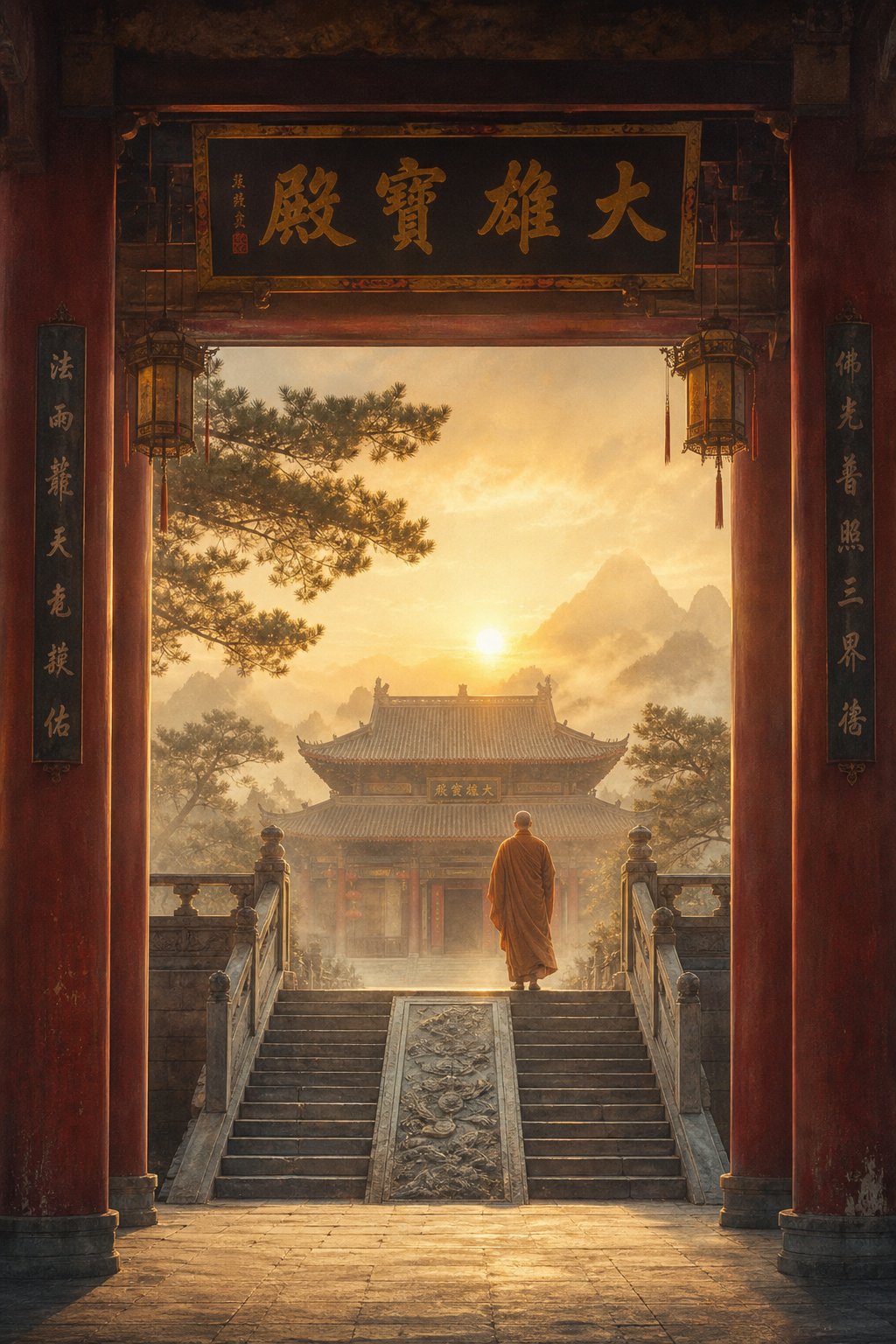
Buddhism takes the symbolism further inward. In Mahayana Buddhist tradition, which became deeply influential in China, 光明 represents enlightenment itself, the moment ignorance dissolves and truth becomes clear. The Buddha is often described as radiating light, and Buddhist temple names frequently incorporate 光: 光明寺 (Guāngmíng Sì, Temple of Radiance) appears across China, Japan, and Korea. Here, 光 isn't physical brightness. It's the clarity that comes from spiritual awakening.
Taoism adds yet another layer. The Taoist concept of harmony with nature, of yielding to the Tao, connects light to the natural order. Sunlight, moonlight, and starlight aren't just phenomena. They're expressions of the Way operating through the universe. The Taoist interest in observing natural elements gave 光 a scientific dimension alongside its spiritual one, linking observation of physical light to deeper understanding of how the world works.
This philosophical richness is precisely why 光 functions as both a Chinese cultural symbol and a light japanese symbol. The character carries the same aspirational meaning in both cultures: illumination as a path toward wisdom and goodness.
Using 光 in Personal and Place Names
When Chinese parents choose 光 for a child's name, they're embedding a wish. The character signals hope that the child will bring brightness to their family, achieve something honorable, or live with moral clarity. Here are common name formations and what they intend:
- 光明 (Guāngmíng) - brightness, a hopeful future. Expresses the wish for a life free of darkness or hardship.
- 国光 (Guóguāng) - glory of the nation. A patriotic name suggesting the child will bring honor to their country.
- 光华 (Guānghuá) - radiant splendor. Implies brilliance and outstanding achievement. Also the name of a famous road in Shanghai (光华路).
- 光耀 (Guāngyào) - to shine gloriously. Parents hope the child will bring pride and distinction to the family name.
- 光祖 (Guāngzǔ) - to glorify one's ancestors. Reflects the Confucian value of honoring family lineage through personal achievement.
- 光远 (Guāngyuǎn) - light reaching far. Suggests broad vision and far-reaching influence.
Beyond personal names, 光 marks places and institutions across the Chinese-speaking world. 光华大学 (Guanghua University) was a prestigious Shanghai institution. 光明日报 (Guangming Daily) is one of China's major national newspapers, its name literally meaning "Brightness Daily." The dairy brand 光明 (Bright) chose the character for its associations with purity and trust.
Place names carry similar intent. 光州 (Guangzhou, though written differently from the famous Guangzhou/Canton) and 光谷 (Optics Valley, Wuhan's tech district) both leverage the character's dual resonance: physical light and forward-looking progress.
Even as a japanese symbol for light, 光 retains this naming power. Japanese parents choosing hikari for a child draw on the same well of meaning: hope, brilliance, a life that illuminates. The philosophical roots are shared because the character itself is shared, carrying its accumulated symbolism across borders and centuries.
All this cultural weight might seem like a lot to attach to six strokes. But that density is exactly what makes 光 memorable. And for learners trying to lock the character into long-term memory, that rich web of associations becomes a powerful tool.
How to Remember 光 and Key Takeaways
You've seen the etymology, the stroke order, the compound words, and the cultural layers. That's a lot of information attached to one character. The question now is practical: how do you make 光 stick in your memory permanently? The answer depends on how your brain prefers to learn.
Mnemonic Devices for Remembering 光
Picture a person standing in total darkness with a fire blazing above their head. The flames illuminate everything around them. That person carrying fire IS light. Fire (火) on top of a person (儿) equals 光.
That image isn't just a clever trick. It's the actual origin of the character: fire on legs, a portable flame that can be moved from place to place. The mnemonic and the etymology are the same story, which makes it doubly sticky.
Different learner types can anchor this character in different ways:
- Visual learners: Sketch the oracle bone version alongside the modern form. Seeing the ancient person-with-fire drawing next to today's streamlined 光 creates a before-and-after image your brain won't easily drop. The light in japanese kanji uses the identical form, so one visual memory covers both languages.
- Kinesthetic learners: Write the character repeatedly while saying "guāng" aloud. Focus on how stroke 6, the vertical-bend-hook, sweeps along the bottom like legs walking forward. Your hand remembers what your eyes might forget.
- Context learners: Learn 光 inside a compound you'll actually use. If you love nature, anchor it with 阳光 (sunlight). If you're into tech, let 激光 (laser) be your hook. Embedding the character in a word you care about gives it a real-world context that isolated flashcards can't match.
- Story learners: Expand the mnemonic into a narrative. A traveler walks through a pitch-black forest. They lift a torch above their head. The fire catches, and suddenly the path ahead is visible. That traveler is the character 光, and the light kanji japanese learners study is the same traveler, just pronounced differently.
Whichever method resonates, pair it with spaced repetition. Review 光 the next day, then three days later, then a week out. Each successful recall pushes the memory deeper until the character becomes as automatic as recognizing the letter "A."
Key Takeaways About the Light Character
Here's everything this guide covered, compressed into a quick-reference checklist:
- 光 (guāng) is the primary Chinese character for light, composed of fire (火) above a person (儿)
- It originated over 3,000 years ago as a pictograph of someone carrying fire to illuminate darkness
- The character has six strokes, written top-to-bottom with a distinctive hook at the base
- Beyond "light," it means glory, bare/smooth, only/merely, and to use up, depending on context
- It differs from 亮 (bright state), 明 (clarity), and 灯 (lamp device) in specific, predictable ways
- It forms dozens of compounds across nature, philosophy, science, and daily life
- The same character serves as the light japanese kanji, read as hikari or kō
- In Chinese culture, it symbolizes hope, moral clarity, and honor, making it a popular choice for names
One character, six strokes, thousands of years of meaning. Whether you came here for a tattoo check, a language lesson, or pure curiosity, 光 rewards the attention. It's a character that does exactly what it describes: it illuminates.
Frequently Asked Questions About the Light Chinese Character 光
1. What is the Chinese character for light?
The Chinese character for light is 光, pronounced guāng in Mandarin with a first (high, flat) tone. It combines the radical for fire (火) on top with the component for person (儿) below, representing someone carrying fire to illuminate darkness. Beyond physical light, 光 also conveys meanings like glory, honor, bare/smooth, only, and to use up completely depending on context.
2. How do you write the Chinese character 光 step by step?
The character 光 is written in six strokes following a top-to-bottom, left-to-right sequence. Start with a short vertical dot at the top center, then a left-falling stroke and a right dot to form the fire element. Next, draw a horizontal line across the middle. Finish with a long left-falling stroke for the left leg and a vertical-bend-hook that curves along the bottom for the right leg. This same stroke order applies when writing the character as Japanese kanji.
3. What is the difference between 光, 亮, 明, and 灯 in Chinese?
Each character handles a different aspect of light. 光 (guāng) refers to light itself as rays or radiance. 亮 (liàng) describes the state of being bright or lit up. 明 (míng) emphasizes clarity and understanding, the kind of brightness that enables comprehension. 灯 (dēng) is purely concrete, referring to physical light-producing devices like lamps and lanterns. Choosing the right one depends on whether you mean the beam, the brightness it creates, the clarity it enables, or the device producing it.
4. Is the Chinese character 光 the same as the Japanese kanji for light?
Yes, 光 is the identical character used in both Chinese and Japanese writing systems. In Japanese, it is read as hikari (ひかり) when standing alone as a noun and kō (こう) in compound words. The core meaning of light and radiance carries over between both languages, though Chinese extends 光 into additional meanings like bare and only that Japanese does not use. Many compound words such as 光線 (light ray) and 観光 (sightseeing) share the same written form in both languages.
5. Why is 光 used in Chinese names and what does it symbolize?
Chinese parents choose 光 for names because it symbolizes hope, moral clarity, honor, and a bright future. Rooted in Confucian, Buddhist, and Taoist philosophy, light represents virtue made visible and spiritual awakening. Common name formations include 光明 (brightness/hope), 国光 (glory of the nation), and 光华 (radiant splendor). The character expresses a wish that the child will bring honor to their family or achieve something distinguished, reflecting the deep cultural association between illumination and moral excellence.