The Power of Lucky Characters in Chinese Monkey Zodiac Tradition
Most guides about the chinese zodiac year of the monkey stop at lucky numbers and colors. Useful, sure, but they barely scratch the surface. In Chinese tradition, the real depth of zodiac-specific fortune lives inside individual characters — the 汉字 (hànzì) themselves. Each stroke, each sound, each radical carries meaning that interacts with a person's zodiac sign in ways that go far beyond a simple list of "lucky 8s" and "wear more gold."
If you were born in a year of the monkey (1944, 1956, 1968, 1980, 1992, 2004, 2016, or 2028), specific Chinese characters are considered especially auspicious for you. These aren't random picks. They're rooted in centuries of cultural reasoning that blends phonetics, visual symbolism, and the Five Elements (五行) framework into a coherent system of fortune.
Why Chinese Characters Hold Special Luck for Monkey Zodiac Natives
Imagine a system where a single character can carry luck through how it sounds, what it looks like, and which elemental force it channels. That's exactly how zodiac-specific character luck works in Chinese culture. The chinese zodiac sign of the monkey is associated with Metal in its base element, with intelligence as its core trait, and with nobility through a critical phonetic link you'll discover shortly. These associations create a web of characters that resonate with Monkey energy.
This matters in everyday life more than you might expect. Parents selecting names for babies born under the chinese star sign monkey consult these principles. Calligraphers choose specific characters for scrolls gifted to Monkey-year friends. Business owners pick auspicious characters for shop names. Even red envelope inscriptions follow this logic.
Understanding Zodiac-Specific Character Symbolism
Unlike Western lucky symbols, where a four-leaf clover works the same for everyone, Chinese character luck is personalized. The same character that brings fortune to a Monkey native might be neutral or even inauspicious for someone born under the Rooster or Tiger sign.
This personalization comes from three interlocking mechanisms: how a character sounds (and what other words share that sound), what its visual components depict, and how its elemental energy interacts with the Monkey's own Five Elements profile. The chinese star sign monkey belongs to the Earthly Branch 申 (shēn), which carries Metal energy and governs the hours of 3-5 PM — details that directly influence which characters harmonize with Monkey-year natives.
The interplay of these forces is what makes lucky Chinese characters for year of the monkey so specific, and so powerful when applied correctly. The question is: which characters make the cut, and why?
How Chinese Characters Encode Luck Through Sound and Symbol
Chinese characters don't carry luck by accident. Three distinct mechanisms work together to encode fortune into specific characters: homophony (谐音, xiéyīn), visual symbolism (象形, xiàngxíng), and centuries of historical usage in blessings and ritual language. For people born under the monkey chinese zodiac symbol, these mechanisms converge in particularly powerful ways — starting with a phonetic coincidence that has shaped Chinese art and culture for over two thousand years.
The Homophonic Link Between 猴 and 侯
Here's where things get fascinating. The chinese symbol for monkey is 猴 (hóu). Say it out loud. Now say 侯 (hóu), the character meaning "marquis" or "nobleman." They sound identical — same tone, same pronunciation. In Chinese culture, this isn't a trivial coincidence. It's a foundational lucky association.
Because 猴 (monkey) and 侯 (marquis/nobility) share the exact same pronunciation, the Monkey has been a symbol of career advancement, official rank, and noble status in Chinese art and language for centuries.
This homophonic link explains why traditional jade carvings often depict monkeys in scenes of promotion and success. As Sotheby's notes in their analysis of Chinese art symbolism, a jade carving showing a monkey carried on another's back (辈辈封侯, bèibèi fēng hóu) means "may every generation be granted the title of marquis." The word "monkey" becomes a visual stand-in for "nobility" purely through sound.
For Monkey-year natives, this means any character associated with rank, achievement, or official success carries a built-in resonance. Characters like 禄 (lù, official salary), 爵 (jué, noble rank), and 封 (fēng, to bestow a title) all tap into this phonetic inheritance. The monkey in chinese culture isn't just clever — it's inherently linked to upward mobility.
How Pictophonetic Principles Create Lucky Associations
Beyond homophones, the internal structure of characters matters. Most Chinese characters are pictophonetic (形声字, xíngshēngzì) — they combine a radical that hints at meaning with a component that suggests pronunciation. This structure creates layers of association that determine whether a character harmonizes with a particular zodiac sign.
Think of it this way: the radical is the character's elemental DNA. A character with the 木 (wood) radical carries Wood energy. One with 氵(water) carries Water energy. For the chinese sign for monkey — which belongs to Metal in the Five Elements system — characters containing the 金 (metal/gold) radical naturally align with Monkey energy. Characters with radicals representing elements that support Metal (like Earth, since Earth generates Metal in the productive cycle) also carry favorable associations.
Certain radicals are considered especially auspicious for Monkey natives:
- 金 (jīn) — Metal radical, directly matching the Monkey's base element
- 口 (kǒu) — Mouth radical, symbolizing the Monkey's cleverness in speech
- 宀 (mián) — Roof radical, suggesting shelter and protection for the restless Monkey
- 王 (wáng) — King radical, reinforcing the 猴/侯 nobility connection
The pictophonetic system means a single character can simultaneously channel lucky meaning through its radical, lucky sound through its phonetic component, and lucky energy through its elemental classification. When all three align with the Monkey's zodiac profile, you have a powerfully auspicious character.
Stroke Count Significance in Character Selection
There's one more layer to consider. In Chinese numerology, the total number of strokes in a character determines whether it carries Yin or Yang energy. Characters with an odd stroke count are Yang; those with an even count are Yin. According to traditional naming principles, the balance between Yin and Yang strokes across a full name must follow specific patterns — such as Yang-Yang-Yin or Yin-Yang-Yang — to be considered harmonious.
For Monkey-year people, stroke count takes on additional significance. The Monkey's Earthly Branch 申 carries Yang Metal energy, so characters with Yang (odd) stroke counts tend to reinforce the Monkey's natural vitality. Stroke totals that align with traditionally auspicious numbers — 3, 5, 7, 8, 11, 13, 15, 16 — are preferred when selecting characters for names, seals, or calligraphy gifts intended for Monkey natives.
These three mechanisms — homophony, pictophonetic structure, and stroke count — don't operate in isolation. The most auspicious characters for Monkey-year people satisfy all three criteria simultaneously: they sound like something fortunate, contain radicals aligned with the Monkey's elemental profile, and carry a stroke count that reinforces Yang Metal energy. Identifying those characters is where cultural knowledge meets practical application.
Essential Lucky Chinese Characters for Monkey Zodiac People
So which characters actually pass all three tests — sound, structure, and elemental alignment? The monkey chinese zodiac personality is defined by sharp intelligence, restless ambition, and quick adaptability. The most auspicious characters for Monkey natives mirror these traits while channeling fortune through their phonetic and visual DNA. Here are the essential ones you should know, whether you're selecting a name, commissioning calligraphy, or simply deepening your understanding of the chinese zodiac monkey horoscope.
福 Fu and 禄 Lu — Fortune and Noble Prosperity
These two characters form the foundation of luck for Monkey-year people. They work individually, but together they create a compound blessing that directly taps into the Monkey's connection to status and success.
- 福 (fu, second tone) — Literal meaning: fortune, blessing, happiness. This character contains the 示 (shi) radical on the left, indicating spiritual or divine connection, paired with components suggesting a full mouth and a field — material abundance. For Monkey natives, 福 resonates because the year of the monkey personality thrives on variety and reward. The character's 13 strokes (Yang, odd count) align with the Monkey's Yang Metal energy, making it doubly harmonious.
- 禄 (lu, fourth tone) — Literal meaning: official salary, emolument, prosperity granted by rank. This is where the 猴/侯 homophonic link pays off directly. 禄 represents the material reward that comes with the noble title 侯. In chinese astrology year of the monkey traditions, this character is considered especially potent because it completes the implied promise of the Monkey's phonetic inheritance: if 猴 sounds like nobility, then 禄 is the wealth that nobility brings. The character carries the 示 radical (spiritual blessing) combined with a phonetic component suggesting continuity.
You'll notice these two characters often appear together in traditional blessings as 福禄 (fulu), meaning "fortune and prosperity." For someone born in a Monkey year, this pairing carries extra weight because 禄 specifically references the kind of prosperity earned through rank and achievement — exactly the path the Monkey zodiac personality is built to pursue.
慧 Hui and 捷 Jie — Wisdom and Swift Success
If 福 and 禄 address what the Monkey receives, these next two characters reflect who the Monkey is. They align with the core traits that define the monkey in chinese horoscope traditions: mental sharpness and speed.
- 慧 (hui, fourth tone) — Literal meaning: wisdom, intelligence, keen perception. The character combines 彗 (a broom sweeping away confusion) with 心 (heart/mind) at the bottom. It suggests a mind that clears through complexity effortlessly. The year of the monkey meaning centers on cleverness, and 慧 is the character that most directly honors this trait. With 15 strokes (Yang, auspicious count), it reinforces the Monkey's natural mental energy. Parents frequently choose this character for daughters born in Monkey years.
- 捷 (jie, second tone) — Literal meaning: quick, agile, victorious. The left side carries the 扌(hand) radical, suggesting action and skill, while the right component implies rapid movement. This character doesn't just mean fast — it means fast and successful. Think of it as "swift victory." The monkey zodiac personality is known for finding shortcuts and seizing opportunities before others even notice them. 捷 captures that energy perfectly. Its 11 strokes (Yang) maintain elemental harmony with the Monkey's profile.
Together, 慧 and 捷 form a character pairing that celebrates the Monkey's greatest strengths. In the chinese horoscope for the monkey, intelligence without action is wasted, and speed without wisdom is reckless. These two characters balance each other.
瑞 Rui and Other Auspicious Characters for Monkey Natives
Beyond the core four, several additional characters carry strong auspicious energy for Monkey-year people.
- 瑞 (rui, fourth tone) — Literal meaning: auspicious omen, good fortune, jade token of authority. The 王 (king/jade) radical on the left directly connects to the Monkey's nobility association. In ancient China, 瑞 referred to jade objects presented as proof of heavenly approval. For Monkey natives, this character signals that success isn't just earned — it's cosmically endorsed. Its 13 strokes (Yang) add further compatibility.
- 铭 (ming, second tone) — Literal meaning: inscription, to engrave, to remember. Contains the 金 (metal) radical, directly matching the Monkey's base element. It suggests lasting achievement — something carved permanently into history. The year of the monkey personality craves recognition, and 铭 represents the kind of legacy that endures.
- 聪 (cong, first tone) — Literal meaning: clever, sharp-eared, intelligent. Combines the 耳 (ear) radical with 总 (comprehensive), suggesting someone who hears and understands everything. This character reinforces the Monkey's reputation as the quickest mind in the zodiac cycle.
Each of these characters works because it doesn't fight the Monkey's nature — it amplifies it. The best lucky characters for any zodiac sign aren't generic blessings pasted onto everyone equally. They resonate with who you already are. For Monkey natives, that means characters celebrating intelligence, speed, noble achievement, and divinely-sanctioned good fortune.
Of course, the Monkey doesn't exist in a single form. The Five Elements cycle means a Metal Monkey and a Water Monkey carry different elemental profiles — and that changes which characters serve them best.
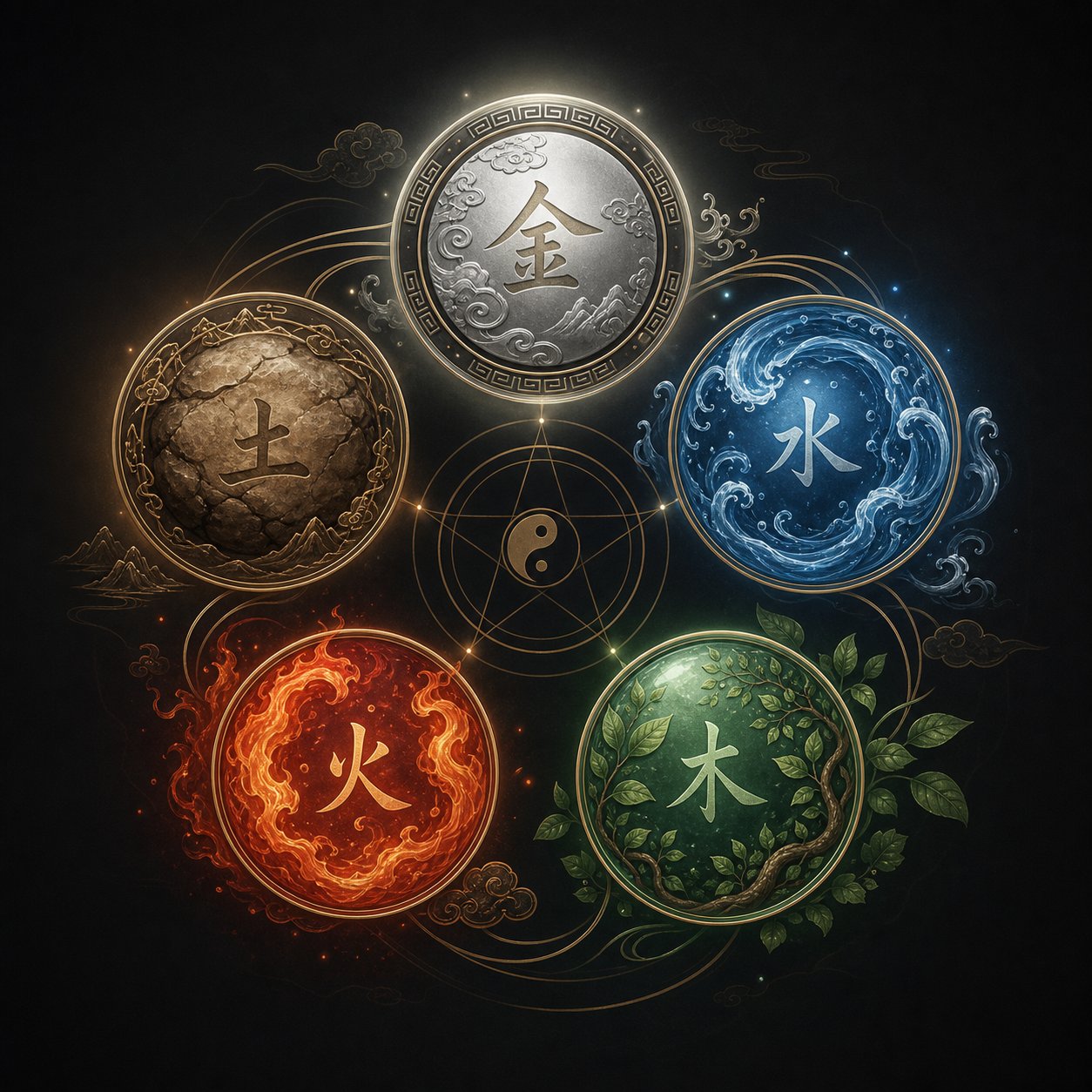
Element-Specific Lucky Characters for Each Monkey Year Variant
Not all Monkeys are built the same. The Five Elements cycle layers an additional elemental force on top of the Monkey's base Metal energy, creating five distinct variants — each with a different personality profile and a different set of ideal lucky characters. A water monkey born in 1992 carries fundamentally different elemental needs than a metal monkey born in 1920 or 1980.
How do you know which element applies to you? The system is straightforward. According to the Chinese zodiac's 60-year cycle, your element is determined by the last digit of your birth year: 0 or 1 means Metal, 2 or 3 means Water, 4 or 5 means Wood, 6 or 7 means Fire, and 8 or 9 means Earth. Since Monkey years recur every 12 years, each element-Monkey combination appears once every 60 years.
This matters for character selection because each element has its own radical family in the Chinese writing system. Characters containing a specific elemental radical channel that element's energy — and when that energy either matches or productively supports your Monkey variant, the character becomes especially auspicious.
Metal Monkey and Water Monkey Lucky Characters
The metal monkey (born in years ending in 0 or 1, such as 1920, 1980, or 2040) doubles down on Metal energy. The Monkey's base element is already Metal, so this variant carries intensified qualities: determination, precision, ambition, and a sharp analytical mind. The 1980 chinese zodiac element is Metal, making those born that year particularly strong candidates for characters containing the 金 (jīn) radical.
Lucky characters for Metal Monkey natives:
- 锐 (ruì) — Sharp, keen, acute. The 金 radical on the left pairs with a phonetic component suggesting forward momentum. This character captures the Metal Monkey's cutting precision and competitive edge.
- 铭 (míng) — To inscribe, engrave, remember. Metal radical plus a component meaning "name" — literally carving your legacy into permanence. Ideal for the Metal Monkey's drive toward lasting achievement.
- 鑫 (xīn) — Prosperity, abundance of gold. Three 金 radicals stacked together. This character is pure concentrated Metal energy, often used in business names. For the Metal Monkey, it amplifies financial fortune.
The water monkey (born in years ending in 2 or 3, such as 1932, 1992, or 2052) blends the Monkey's native cleverness with Water's fluidity and intuition. If you're exploring the chinese zodiac of 1992, you're looking at a Water Monkey — someone who combines sharp intelligence with emotional depth and adaptability. The chinese horoscope water monkey is considered one of the most socially gifted variants, able to read situations and flow around obstacles rather than forcing through them.
Lucky characters for Water Monkey natives:
- 涵 (hán) — To contain, encompass, cultivate. The 氵(water) radical on the left suggests depth and capacity. This character implies someone with vast inner resources — a perfect match for the water monkey chinese zodiac profile.
- 泽 (zé) — Marsh, grace, beneficence. Water radical combined with a component suggesting selection and abundance. It means both a body of water and the blessings that flow from generosity. For Water Monkeys, it channels fortune through social connections and goodwill.
- 澄 (chéng) — Clear, pure, to clarify. Water radical with a component meaning "to ascend." This character represents mental clarity rising above confusion — the Water Monkey's ability to see through complexity with calm precision.
Wood Monkey and Fire Monkey Lucky Characters
The wood monkey (born in years ending in 4 or 5, such as 1944, 2004, or 2064) introduces growth energy into the Monkey's profile. Wood represents vitality, creativity, and expansion. In the Five Elements productive cycle, Water feeds Wood, so Wood Monkeys benefit from characters that channel upward momentum and organic development.
Lucky characters for Wood Monkey natives:
- 桐 (tóng) — Paulownia tree, associated with the phoenix. The 木 (wood) radical grounds this character in growth energy, while the tree itself symbolizes nobility and artistic refinement in Chinese culture. A powerful choice for Wood Monkeys pursuing creative or scholarly paths.
- 栋 (dòng) — Ridgepole, pillar, backbone. Wood radical plus a component suggesting movement and weight-bearing. It means the central beam that holds a structure together — leadership through strength and reliability.
- 荣 (róng) — Glory, flourishing, prosperity. Though it carries the 艹 (grass/plant) radical rather than 木 directly, it belongs to the Wood element family. It means to bloom and thrive, capturing the Wood Monkey's potential for visible, celebrated success.
The fire monkey (born in years ending in 6 or 7, such as 1956, 2016, or 2076) combines the Monkey's quick mind with Fire's passion, charisma, and visibility. In the productive cycle, Wood feeds Fire, so Fire Monkeys carry an energy of transformation — turning ideas into action with dramatic flair. This is the most outwardly dynamic Monkey variant.
Lucky characters for Fire Monkey natives:
- 炜 (wěi) — Brilliant, radiant, glowing. The 火 (fire) radical on the left pairs with 韦 (leather/resilience), suggesting a brilliance that endures rather than burns out. Perfect for the Fire Monkey's sustained charisma.
- 煜 (yù) — To shine, illuminate, blaze. Fire radical combined with a component meaning "to rise daily." This character implies someone whose light grows stronger over time — the Fire Monkey's trajectory of increasing influence and recognition.
- 灿 (càn) — Brilliant, splendid, dazzling. Fire radical with a simplified phonetic component. It captures pure radiance without complexity — the Fire Monkey's ability to command attention effortlessly.
Earth Monkey Lucky Characters and Element Harmony
The Earth Monkey (born in years ending in 8 or 9, such as 1968 or 2028) brings grounding stability to the Monkey's restless nature. Earth generates Metal in the productive cycle, which means Earth energy directly supports and strengthens the Monkey's base element. This makes the Earth Monkey variant uniquely self-reinforcing — the elemental overlay feeds the core sign rather than pulling it in a different direction.
Lucky characters for Earth Monkey natives:
- 坤 (kūn) — Earth, feminine principle, receptive power. The 土 (earth) radical on the left connects to one of the eight trigrams in the I Ching, representing vast capacity and nurturing strength. For Earth Monkeys, it channels the ability to build lasting foundations beneath their ambitions.
- 培 (péi) — To cultivate, nurture, develop. Earth radical combined with a phonetic component suggesting doubling or multiplication. It means to build something up layer by layer — the Earth Monkey's patient approach to long-term success.
- 城 (chéng) — City, city wall, fortification. Earth radical with a component meaning "to complete." It represents both protection and civilization — the Earth Monkey's talent for creating secure, prosperous environments around themselves.
The following table consolidates the element-specific character recommendations for quick reference:
| Monkey Variant | Birth Years | Key Radical | Lucky Characters | Core Symbolic Theme |
|---|---|---|---|---|
| Metal Monkey | 1920, 1980, 2040 | 金 (jīn) — Metal | 锐, 铭, 鑫 | Precision, permanence, concentrated wealth |
| Water Monkey | 1932, 1992, 2052 | 氵/水 (shuǐ) — Water | 涵, 泽, 澄 | Depth, generosity, clarity |
| Wood Monkey | 1944, 2004, 2064 | 木 (mù) — Wood | 桐, 栋, 荣 | Growth, leadership, flourishing |
| Fire Monkey | 1956, 2016, 2076 | 火/灬 (huǒ) — Fire | 炜, 煜, 灿 | Radiance, charisma, illumination |
| Earth Monkey | 1968, 2028, 2088 | 土 (tǔ) — Earth | 坤, 培, 城 | Stability, cultivation, protection |
One important nuance: you don't have to limit yourself exclusively to your element's radical. The Five Elements interact through productive and controlling cycles. A Water Monkey, for instance, also benefits from Metal-radical characters because Metal generates Water in the productive cycle. A Wood Monkey can draw on Water-radical characters for the same reason. The table above gives you the primary matches, but understanding the elemental relationships opens up a wider field of auspicious options.
Individual characters carry power on their own, but Chinese tradition rarely stops at single characters. The real magic happens when lucky characters combine into phrases, idioms, and blessings — multi-character expressions where meanings multiply rather than simply add together.
Powerful Lucky Phrases and Character Combinations for Monkey Years
A single lucky character is like a single musical note — meaningful on its own, but far more powerful when combined into a chord. In Chinese tradition, four-character idioms (成语, chéngyǔ) and blessing phrases (祝福语, zhùfúyǔ) create compound luck where meanings don't just add together — they multiply. For Monkey-year people, certain phrases carry centuries of cultural weight, appearing in everything from calligraphy scrolls to jade carvings to Lunar New Year door decorations.
What makes these combinations special? They layer multiple lucky mechanisms simultaneously. A well-chosen four-character phrase can activate the 猴/侯 homophonic link, reference the Monkey's intelligence, invoke elemental harmony, and carry historical prestige — all in four syllables.
Lucky Four-Character Idioms Connected to the Monkey
The most culturally significant idioms for Monkey-year people exploit the phonetic identity between 猴 (hóu, monkey) and 侯 (hóu, marquis). These phrases have appeared in Chinese art and literature for over two thousand years, and they remain central to celebrations during any Monkey zodiac year. During the chinese new year 2016, for example, these idioms appeared on decorations, red envelopes, and social media greetings across Chinese-speaking communities worldwide.
Here are the most powerful lucky character combinations for Monkey natives, ranked by cultural significance and frequency of traditional use:
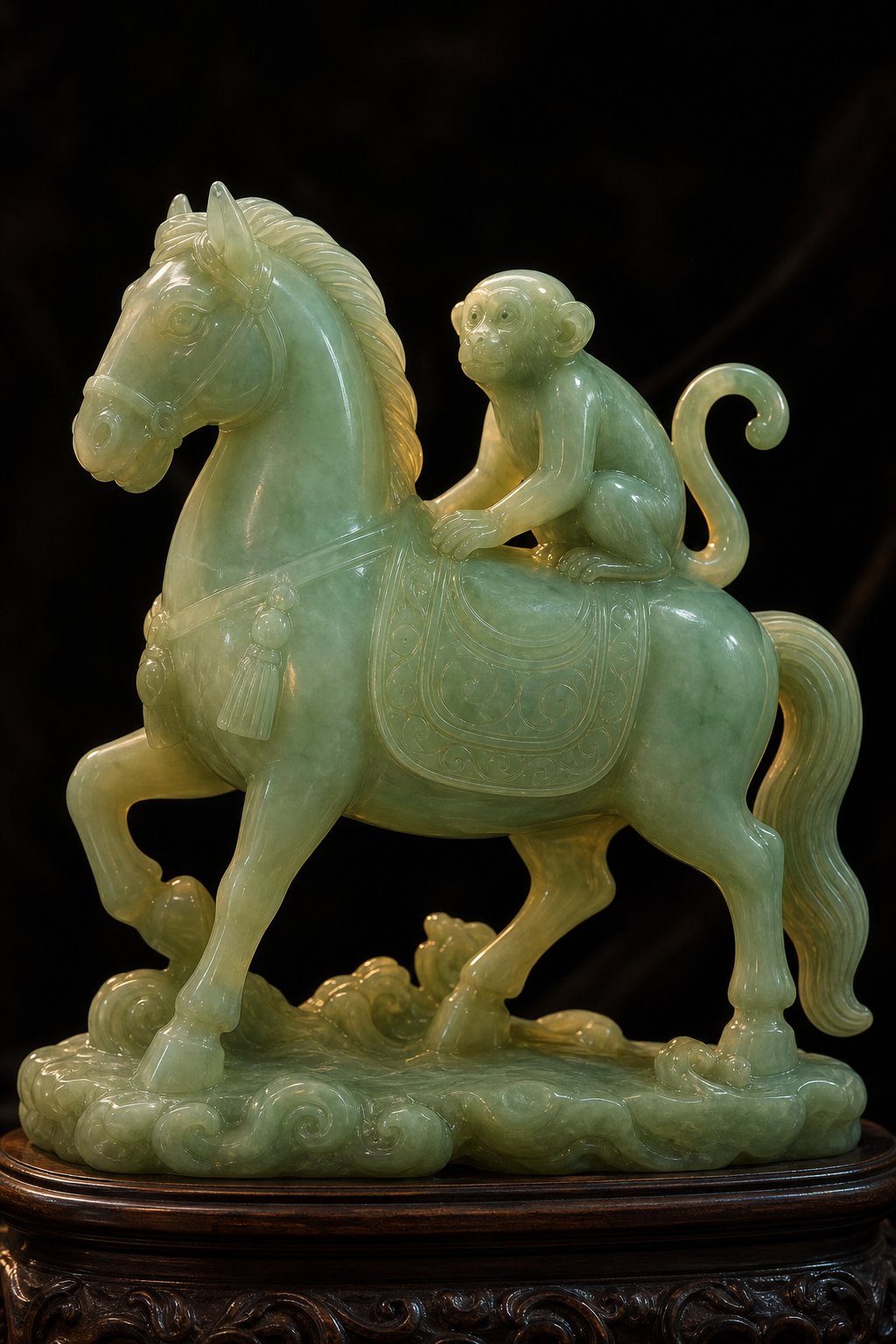
- 马上封侯 (mǎ shàng fēng hóu) — Literally "immediately granted the title of marquis." This phrase works on two levels: 马上 means both "on horseback" and "immediately," while 封侯 means "to be ennobled." In traditional art, it's depicted as a monkey sitting on a horse's back — the monkey (猴) representing the marquis title (侯), and the horse representing swift arrival. This is arguably the single most recognized lucky image for Monkey-year people in all of Chinese visual culture.
- 封侯挂印 (fēng hóu guà yìn) — "To be granted a noble title and receive the official seal." This phrase symbolizes reaching the highest levels of career success. According to Baidu Baike, the imagery often depicts a monkey retrieving a hanging seal, using the 猴/侯 and 蜂/封 (bee/bestow) homophones together. The famous 2,100-year-old cypress tree at Dai Temple in Shandong Province is named "挂印封侯" because a tree burl on its trunk resembles a monkey holding an official seal — a natural formation that became a cultural landmark.
- 辈辈封侯 (bèibèi fēng hóu) — "May every generation be granted nobility." Depicted in art as one monkey carrying another on its back (辈 meaning "generation" and 背 meaning "back" share a phonetic link). This phrase extends the Monkey's luck across family lines, making it a popular blessing for Monkey-year families hoping to pass fortune to their children.
- 侯门似锦 (hóu mén sì jǐn) — "The nobleman's household is splendid as brocade." This phrase combines the 侯 nobility reference with 锦 (brocade/splendor), wishing the recipient a life of refined prosperity. It's especially appropriate for housewarming gifts or wedding blessings directed at Monkey-year recipients.
Blessing Phrases for Monkey-Year Celebrations
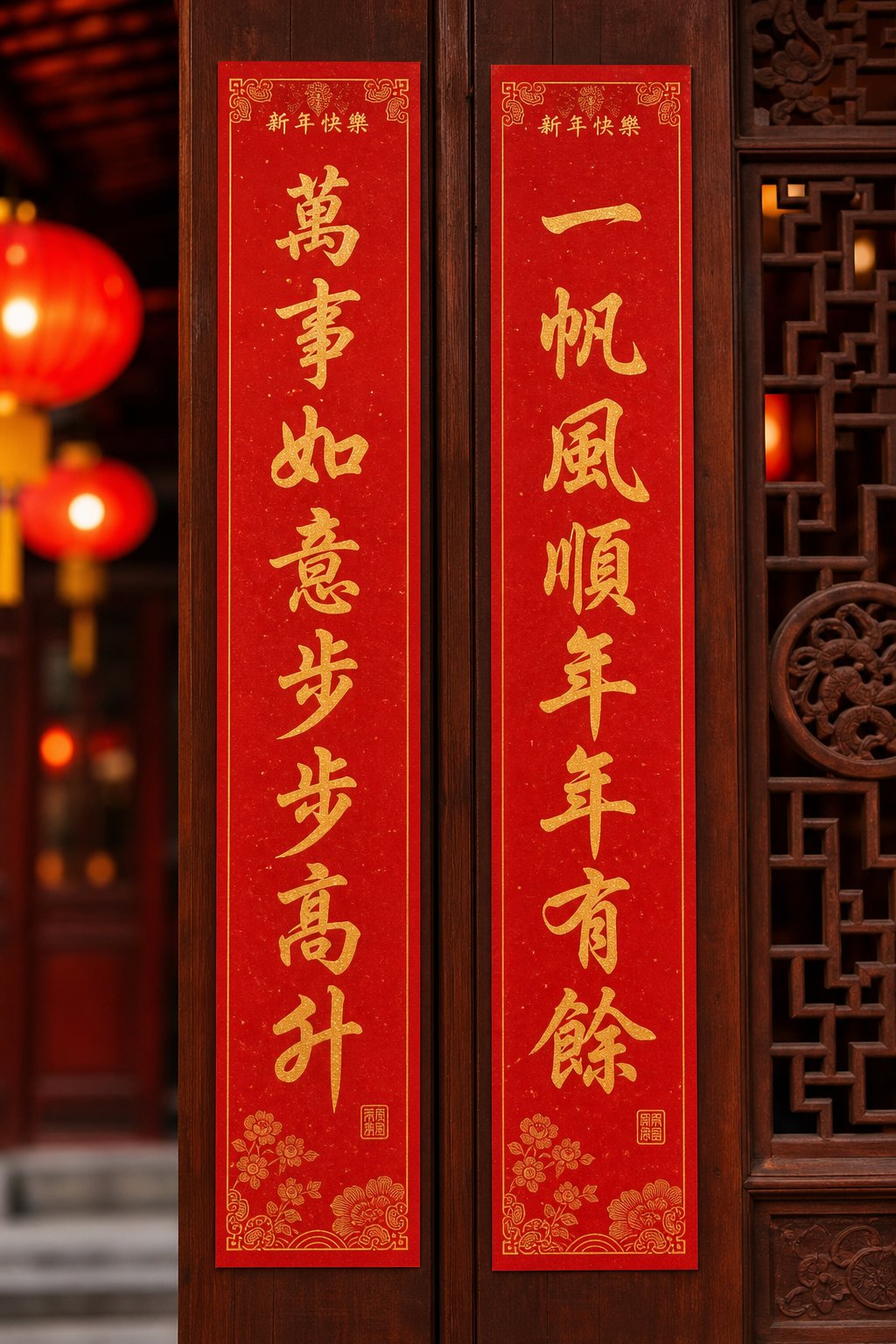
Beyond classical idioms, specific blessing phrases are crafted for Monkey-year celebrations. These appear on red paper couplets (春联, chūnlián) hung on doorframes, written inside red envelopes, and shared as greetings during the Lunar New Year. The chinese zodiac 2016 celebrations — the most recent Fire Monkey year — saw many of these phrases trending on WeChat and Weibo.
Popular blessing phrases include:
- 金猴献瑞 (jīn hóu xiàn ruì) — "The golden monkey presents auspicious omens." This phrase combines 金 (gold/Metal, the Monkey's base element) with 瑞 (one of the core lucky characters discussed earlier). It's the standard opening blessing for any Monkey year celebration.
- 灵猴送福 (líng hóu sòng fú) — "The clever monkey delivers blessings." 灵 (clever/spiritual) honors the Monkey's intelligence, while 送福 (delivering fortune) frames the Monkey as an active agent of luck rather than a passive recipient.
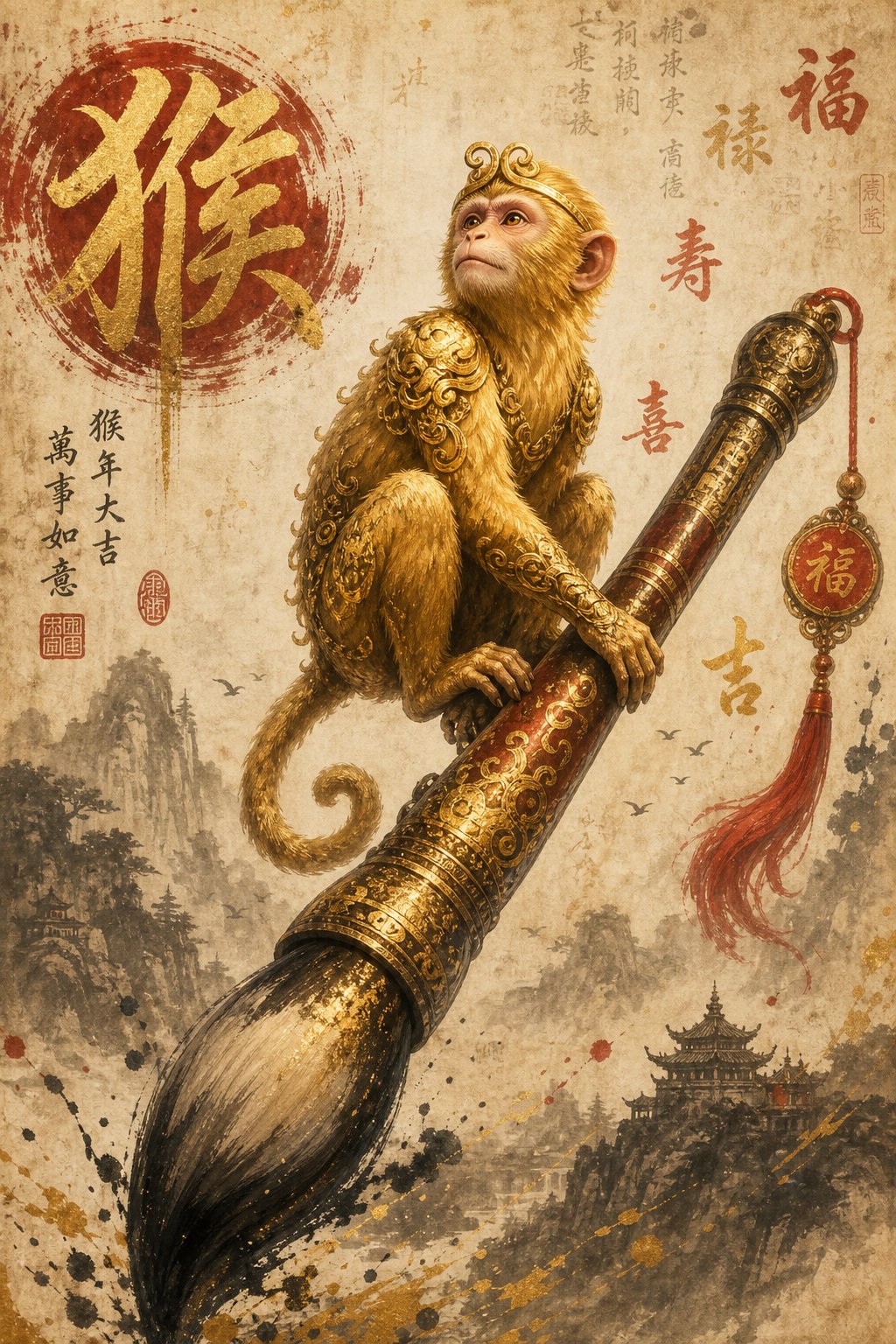
- 猴年大吉 (hóu nián dà jí) — "Great luck in the Monkey year." Simple, direct, and universally appropriate. 大吉 (great luck) is the most common blessing suffix, and pairing it with 猴年 makes it zodiac-specific.
- 玉猴腾祥 (yù hóu téng xiáng) — "The jade monkey leaps with auspiciousness." 玉 (jade) connects to the Monkey's association with precious materials and nobility, while 腾 (to leap/soar) captures the Monkey's dynamic energy. 祥 (auspiciousness) seals the blessing.
These phrases were everywhere during the zodiac 2016 chinese celebrations, printed on everything from shopping mall banners to limited-edition postage stamps. They remain equally relevant for the next Monkey year in 2028.
How Character Pairings Amplify Auspicious Meaning
Why do combinations work better than individual characters? The answer lies in how Chinese characters interact semantically. When two or more characters appear together, they create meaning that neither carries alone. Consider 封侯 — individually, 封 means "to seal" or "to bestow" and 侯 means "marquis." Together, they specifically mean "to be promoted to the rank of marquis" — a complete narrative of achievement compressed into two syllables.
This compounding effect follows predictable patterns that you can use when selecting character combinations for Monkey-year people:
- Action + Outcome: Phrases like 封侯挂印 pair the action (being granted a title) with its tangible result (receiving the official seal). Both parts reinforce the same message from different angles.
- Trait + Reward: Combinations like 慧达福禄 pair the Monkey's innate quality (wisdom) with the fortune it attracts (prosperity). This structure validates the recipient's character while wishing them success.
- Element + Blessing: Phrases like 金猴献瑞 anchor the blessing in the Monkey's elemental identity before delivering the auspicious wish. The elemental reference makes the blessing zodiac-specific rather than generic.
In traditional Yangjiapbu woodblock prints — a folk art form recognized as intangible cultural heritage — the 挂印封侯 motif combines a monkey with bees (蜂, fēng, homophone of 封, "to bestow") and a beehive shaped like an official seal. Every visual element in the composition carries phonetic meaning, creating a layered blessing that works through both image and sound simultaneously. The chinese star sign 2016 celebrations revived interest in these traditional prints, with collectors seeking original Qing dynasty woodblocks featuring the monkey-and-seal motif.
The power of these combinations explains why Chinese calligraphers don't simply write random lucky characters for Monkey-year recipients. They select phrases where every character reinforces the others, building compound fortune that's greater than the sum of its parts. Knowing which characters amplify each other is half the equation — the other half is knowing which characters clash, creating combinations that Monkey-year people should actively avoid.
Characters and Combinations Monkey-Year People Should Avoid
Luck isn't only about what you attract — it's also about what you sidestep. In Chinese metaphysics, certain characters carry energy that directly conflicts with the Monkey's zodiac profile. Using them in names, gifts, or calligraphy intended for Monkey-year natives can introduce friction, stagnation, or outright misfortune. The traditional Chinese almanac (黄历, huánglì) has codified these avoidance rules for centuries, and they remain a core part of date selection and naming practices across Chinese-speaking cultures.
The logic behind character avoidance mirrors the logic behind character selection — just running in reverse. Where lucky characters align with the Monkey's elemental energy and phonetic associations, unlucky characters clash with them. Understanding monkey compatibility chinese zodiac principles means knowing both sides of the equation.
Characters Linked to Zodiac Clash Signs
The most critical avoidance rule comes from the Six Clash (六冲, liùchōng) system. The Monkey's Earthly Branch is 申 (shēn), and it sits in direct opposition to 寅 (yín) — the Tiger. This is the Monkey's primary monkey enemy sign, a classical 六冲 relationship where the two branches push in genuinely opposite directions on element, season, and compass direction simultaneously. Metal (Monkey) controls Wood (Tiger) in the destructive cycle, creating inherent tension.
What does this mean for character selection? Characters that carry strong Tiger energy should be avoided for Monkey-year people:
- 寅 (yín) — The Tiger's Earthly Branch itself. Rarely used in names, but occasionally appears in formal or literary contexts. For Monkey natives, it introduces direct oppositional energy.
- 虎 (hǔ) — Tiger. Obvious, but worth stating. Characters containing the 虎 radical or the character itself conflict with the Monkey's energy on the most fundamental level.
- 彪 (biāo) — Tiger stripes, fierce, imposing. Contains the 虎 component and channels aggressive Wood energy that clashes with the Monkey's Metal nature.
- 琥 (hǔ) — Amber (literally "tiger jade"). Despite containing the auspicious 王 radical, the 虎 component dominates its energetic signature, making it unsuitable for Monkey natives.
Beyond the Tiger clash, the Monkey also has a Harm (相害, xiānghài) relationship with the Pig (亥, hài). This is subtler than a direct clash — think of it as a slow drain rather than a head-on collision. Characters strongly associated with the Pig branch can quietly undermine a Monkey native's fortune over time. The character 亥 itself and characters containing the 豕 (shǐ, pig) radical fall into this category.
Monkey and snake compatibility is actually considered favorable in classical zodiac terms — the Snake is not a clash sign. However, monkey and rabbit compatibility presents a different concern. The Rabbit (卯, mǎo) has a Destruction (相破, xiāngpò) relationship with the Monkey, which is less severe than a clash but still introduces friction. Characters containing 卯 as a component — like 柳 (liǔ, willow) — carry a mild disharmony for Monkey natives that's best avoided in formal naming contexts.
Unlucky Homophones and Stroke Counts to Avoid
Sound matters as much as structure. Just as the 猴/侯 homophone creates positive associations, certain sounds create negative ones. Characters that sound like words associated with loss, separation, or decline should be avoided when selecting characters for Monkey-year people:
- 散 (sàn) — To scatter, disperse, break apart. For the Monkey, whose fortune depends on accumulation and advancement (the 侯/禄 connection), a character meaning dispersal works against the grain.
- 损 (sǔn) — To damage, lose, harm. The sound carries inherent negativity, and the meaning directly opposes the Monkey's drive toward gain and achievement.
- 衰 (shuāi) — To decline, wither, weaken. This character represents the opposite trajectory of everything the Monkey zodiac stands for — upward mobility and increasing fortune.
- 困 (kùn) — Trapped, stuck, exhausted. Visually, it shows a tree (木, Wood) enclosed inside a box (囗). For the Monkey — a sign defined by agility and freedom of movement — a character meaning confinement is especially inauspicious.
Stroke count adds another layer. While Yang (odd) stroke counts generally support the Monkey's Yang Metal energy, certain specific totals are considered inauspicious in Chinese numerology. Characters with 4 strokes carry the phonetic shadow of 死 (sǐ, death), and characters with 14 or 24 total strokes are traditionally avoided in naming because these numbers are associated with hardship and instability in the Chinese almanac tradition.
A monkey enemy year — when the Tiger year arrives and activates the Six Clash for all Monkey natives — makes these avoidance principles even more relevant. During such years, the almanac recommends extra caution with character selection for any major life event: naming a business, commissioning a personal seal, or choosing inscription text for gifts. The monkey zodiac compatibility framework isn't just about relationships between people — it's about the relationship between a person and the characters that surround them.
Knowing what to avoid clears the path for practical application. The real question becomes: how do you put all of this knowledge — lucky characters, element-specific choices, and avoidance rules — to work in everyday life?
How to Use Lucky Characters in Naming, Gifts, and Daily Life
Theory is only valuable when it translates into action. You now know which characters carry auspicious energy for Monkey natives and which ones to avoid — but where exactly do you apply this knowledge? The answer: nearly everywhere. From the moment a child born year of the monkey receives their name to the WeChat messages exchanged decades later, lucky characters weave through Chinese life in ways both ancient and surprisingly modern.
Naming Children and Businesses With Lucky Monkey Characters
Naming is the highest-stakes application. A name follows a person for life, and in Chinese culture, it actively shapes fortune rather than merely labeling identity. Parents expecting a baby during monkey zodiac years typically consult naming guides — or professional naming masters — months before the birth.
The process follows a specific logic. According to Your Chinese Astrology's naming guide, characters with certain radicals are considered especially auspicious for Monkey-year babies:
- 木 (wood) radical — Characters like 杉, 林, 果, 栋, and 森. The Monkey lives and plays freely in forests, so wood-radical characters suggest a person making full use of their talents.
- 王 (king) radical — Characters like 玉, 玲, 珍, 琪, 琳, and 璇. The Monkey traditionally proclaims itself king, so this radical signals sovereignty and success.
- 口 and 宀 (mouth/roof) radicals — Characters like 君, 周, 宇, 安, 宏, and 容. These represent the cave where the Monkey finds shelter — safety, protection, and a secure home base.
- 子 and 辰 radicals — Characters like 孔, 孙, 学, and 涛. These reference the Rat (子) and Dragon (辰), which form the Monkey's Three-Harmony group (三合), boosting luck through zodiac alliance.
- 彡, 巾, and 衣 (clothing) radicals — Characters like 彤, 彦, 红, 裕, and 袁. The Monkey enjoys dressing up like humans, so clothing-related characters elevate status and social standing.
For business naming, the same principles apply with a commercial twist. Entrepreneurs born the year of the monkey often select company names featuring 金 (metal/gold), 鑫 (triple gold, meaning prosperity), or 瑞 (auspicious omen). A Metal Monkey opening a financial services firm might choose a name containing 锐 (sharp, keen) to channel precision. A Water Monkey launching a consulting practice might favor 涵 (depth, capacity) to signal comprehensive expertise.
What year of the monkey were you born in? That element variant matters here. A Wood Monkey entrepreneur benefits from 荣 (flourishing) in their business name, while a Fire Monkey gains visibility from 煜 (to shine). The element-specific characters from the previous section become practical naming tools in this context.
Calligraphy, Seals, and Home Decor Applications
Beyond naming, lucky characters appear throughout the physical environment. Calligraphy scrolls (书法, shūfǎ) featuring auspicious phrases make traditional gifts for Monkey-year recipients at birthdays, housewarmings, and business openings. The phrases covered earlier — 马上封侯, 金猴献瑞, 封侯挂印 — are popular choices for professional calligraphers commissioned to create personalized scrolls.
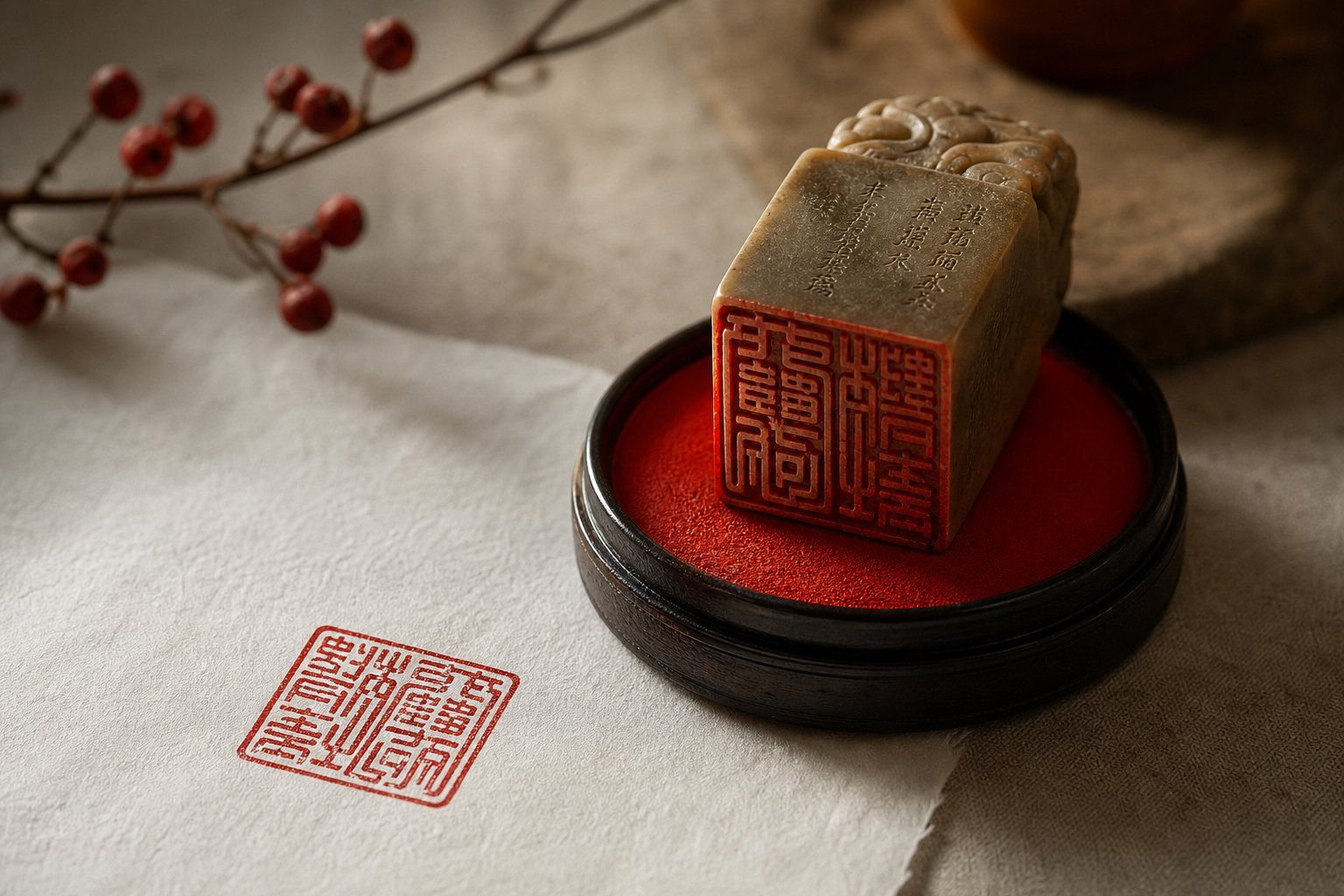
Personal seals (印章, yìnzhāng) offer another application. A carved stone seal bearing a Monkey-year person's name uses characters selected for both meaning and visual balance. The seal becomes a portable talisman — stamped on paintings, documents, and correspondence, it carries the owner's auspicious characters into every interaction. Seal carvers pay attention to stroke count, radical composition, and the visual harmony of characters when they appear in the square seal format.
For home decor, the timing extends well beyond Lunar New Year. Red paper cuttings (剪纸, jiǎnzhǐ) featuring monkey motifs paired with characters like 福 and 禄 can hang year-round in a Monkey native's home. Jade or wood carvings depicting the 马上封侯 scene — a monkey atop a horse — serve as permanent feng shui objects placed in the career corner (north sector) of a living space.
Here's a practical checklist of occasions and contexts where lucky characters should be applied for Monkey-year people:
- Birth — selecting a given name with auspicious radicals and stroke counts
- School enrollment — choosing a courtesy name or English name with matching meaning
- Red envelopes — writing 猴年大吉 or 金猴献瑞 inside monetary gifts
- Weddings — selecting couplets featuring 侯门似锦 for Monkey-year couples
- Business launch — incorporating element-specific lucky characters into company names
- Housewarming — gifting calligraphy scrolls with 封侯挂印 or 灵猴送福
- Birthday milestones — commissioning a personal seal with carefully chosen characters
- Career promotion — displaying 马上封侯 imagery in the workspace
Lucky Characters in Digital Communication and Modern Life
Traditional applications haven't disappeared, but they've gained a digital layer. During chinese horoscope monkey years, WeChat red envelopes (微信红包) carry typed blessings that follow the same character-selection principles as handwritten ones. Senders choose amounts ending in lucky numbers (1, 7, or 8) and attach messages featuring phrases like 金猴送福 or 猴年行大运.
Social media usernames represent a modern naming opportunity. Monkey-year natives on platforms like Weibo, Douyin, or Xiaohongshu sometimes incorporate lucky characters into their handles — 瑞 (auspicious), 铭 (legacy), or 慧 (wisdom) appear frequently. The character 鑫 is especially popular among business-oriented users born in years of the monkey chinese astrology identifies as Metal variants.
Emoji combinations have created a visual shorthand for zodiac blessings. The monkey emoji paired with a crown (referencing the Monkey King and the 王 radical connection) or gold coins (referencing 禄 and material prosperity) functions as a modern pictographic blessing — not so different from the ancient pictophonetic principles that created lucky characters in the first place.
When is the year of the monkey next? The upcoming 2028 Earth Monkey year will likely see these digital practices intensify, with AI-generated calligraphy, personalized lucky character recommendations, and zodiac-specific digital red envelopes becoming mainstream. The characters themselves don't change — 福, 禄, 瑞, and the element-specific options remain constant — but the delivery methods keep evolving.
One important note on timing: lucky characters aren't seasonal. While their visibility peaks during Lunar New Year celebrations, the auspicious energy they carry for Monkey natives operates year-round. A name chosen with proper character principles works every day, not just in January or February. A personal seal carved with harmonious characters brings fortune whenever it's used. The characters are permanent tools, not holiday decorations.
Complete Lucky Elements Reference Table for Monkey Zodiac
All the cultural reasoning, elemental theory, and phonetic analysis covered above ultimately serves one purpose: helping you make practical choices. Whether you're preparing for the 2028 chinese new year, selecting a name, or simply curious about what resonates with your zodiac profile, having everything in one place saves time. Here's the consolidated reference for every lucky element associated with the year of the monkey chinese zodiac.
Complete Lucky Elements Reference for Monkey Zodiac
The year of the monkey lucky numbers are 1, 7, and 8. These aren't arbitrary. The number 1 (一, yī) represents new beginnings and leadership — fitting for a sign linked to nobility through the 猴/侯 connection. The number 7 (七, qī) carries associations with togetherness and positive cycles in Chinese numerology. And 8 (八, bā) sounds like 发 (fā, to prosper), making it the most universally recognized lucky number in Chinese culture. For Monkey natives specifically, these monkey lucky numbers align with the sign's Yang Metal energy and its drive toward accumulation and advancement.
Lucky colors — white, gold, and blue — connect directly to elemental harmony. White and gold both represent Metal, the Monkey's base element. Blue corresponds to Water, which Metal generates in the productive cycle. You'll notice how the character 金 (jīn) bridges multiple lucky categories simultaneously: it's the Metal radical used in element-specific lucky characters like 锐 and 鑫, it references the gold color, and it appears in the blessing phrase 金猴献瑞. One character, three layers of reinforcement.
Lucky flowers (chrysanthemum and alliums), lucky directions (north, northwest, west), and the core lucky characters all follow the same elemental logic. The traditional framework positions these elements as an interconnected system rather than a disconnected list.
The following table brings everything together by element variant, so you can find your specific monkey year profile at a glance:
| Element Variant | Birth Years | Lucky Numbers | Lucky Colors | Lucky Directions | Lucky Flowers | Top Lucky Characters |
|---|---|---|---|---|---|---|
| Metal Monkey | 1920, 1980, 2040 | 1, 7, 8, 6 | White, gold, silver | West, northwest | Chrysanthemum | 锐, 铭, 鑫, 瑞 |
| Water Monkey | 1932, 1992, 2052 | 1, 7, 8 | Blue, white, black | North, northwest | Alliums | 涵, 泽, 澄, 慧 |
| Wood Monkey | 1944, 2004, 2064 | 1, 7, 8, 3 | Blue, green, gold | North, east | Chrysanthemum, orchid | 桐, 栋, 荣, 捷 |
| Fire Monkey | 1956, 2016, 2076 | 1, 7, 8 | Gold, red-gold, white | West, south | Alliums, sunflower | 炜, 煜, 灿, 福 |
| Earth Monkey | 1968, 2028, 2088 | 1, 7, 8, 5 | Gold, yellow, white | West, southwest | Chrysanthemum | 坤, 培, 城, 禄 |
Choosing the Right Characters for Your Monkey Element
The next year of the monkey arrives in 2028 — an Earth Monkey year. If you're planning ahead for a child's name, a business launch, or simply want to align your environment with favorable energy during that 2028 chinese zodiac cycle, start with the Earth Monkey column above and expand outward using the productive cycle. Earth generates Metal, so Earth Monkey natives benefit from both 土-radical and 金-radical characters. That dual compatibility gives Earth Monkeys the widest selection of auspicious options among all five variants.
For those already born in a monkey year, the key takeaway is personalization. The universal Monkey lucky characters — 福, 禄, 慧, 捷, 瑞 — work for all variants. But layering your element-specific characters on top creates a more targeted and potent selection. A Water Monkey using 涵 in their name while wearing blue and favoring the number 1 creates a coherent system where every element reinforces the others.
The most effective approach to lucky character selection isn't choosing the single "best" character — it's building a consistent system where your characters, colors, numbers, and directions all channel the same elemental energy. When every element in your environment points the same direction, compound fortune follows.
Whether the year of the monkey next on the calendar is months away or years distant, the principles don't expire. Lucky characters carry their energy permanently — in names, seals, calligraphy, and digital identities alike. The system rewards those who understand it deeply enough to apply it consistently, not just during a single Lunar New Year celebration, but across every meaningful choice where a character can tip the balance toward fortune.
Frequently Asked Questions About Lucky Chinese Characters for Year of the Monkey
1. What are the luckiest Chinese characters for people born in the Year of the Monkey?
The most auspicious characters for Monkey-year natives include 福 (fu, fortune), 禄 (lu, noble prosperity), 慧 (hui, wisdom), 捷 (jie, swift success), and 瑞 (rui, auspicious omen). These characters align with the Monkey's core zodiac traits of intelligence, ambition, and upward mobility. The character 禄 is especially powerful because it directly connects to the homophonic link between 猴 (monkey) and 侯 (marquis), reinforcing the Monkey's association with career advancement and noble status.
2. Why is the pronunciation of 猴 (monkey) considered lucky in Chinese culture?
The character 猴 (hou, monkey) shares the exact same pronunciation and tone as 侯 (hou, marquis or nobleman). This phonetic identity has made the Monkey a symbol of career promotion, official rank, and noble achievement in Chinese art and language for over two thousand years. Traditional jade carvings, woodblock prints, and calligraphy all exploit this connection, depicting monkeys in scenes that represent being granted noble titles and official seals.
3. How do the Five Elements affect which characters are lucky for Monkey-year people?
Each Monkey year carries a different elemental overlay based on the 60-year cycle. Metal Monkeys (1980, 2040) benefit from characters with the 金 radical like 锐 and 鑫. Water Monkeys (1992, 2052) favor 氵-radical characters like 涵 and 泽. Wood Monkeys (2004, 2064) align with 木-radical characters like 桐 and 栋. Fire Monkeys (2016, 2076) resonate with 火-radical characters like 煜 and 灿. Earth Monkeys (1968, 2028) thrive with 土-radical characters like 坤 and 培. Your birth year's last digit determines your element.
4. Which Chinese characters should Monkey-year people avoid?
Monkey natives should avoid characters associated with the Tiger (their zodiac clash sign), including 虎, 彪, and 琥, as well as characters containing the 豕 (pig) radical due to the Harm relationship. Characters with unlucky homophones like 散 (scatter), 损 (damage), and 衰 (decline) work against the Monkey's fortune. Stroke counts of 4, 14, and 24 are also traditionally avoided. The character 困 (trapped) is particularly inauspicious because confinement opposes the Monkey's defining trait of agility and freedom.
5. How are lucky Chinese characters used in naming babies born in the Year of the Monkey?
Parents select characters with radicals considered auspicious for Monkey babies: 木 (wood, representing forests where monkeys thrive), 王 (king, reflecting the Monkey King legend), 口 and 宀 (mouth and roof, symbolizing shelter), and 子 and 辰 (referencing the Rat and Dragon from the Monkey's Three-Harmony group). The process also considers stroke count balance between Yin and Yang, elemental alignment with the child's specific Monkey variant, and avoidance of characters linked to clash signs like the Tiger.