What Makes a Male Chinese Name Authentic
When you type a query like "what would my Chinese name be" into a search engine, you'll find dozens of tools that spit out random character combinations. But here's the thing: Chinese names aren't assembled from interchangeable parts. Every character in a Chinese name carries meaning, tone, and visual weight. A male Chinese name generator that ignores these layers produces results that sound hollow to native speakers, like a sentence that's grammatically correct but says nothing.
Chinese names follow a structure that's the reverse of Western conventions. The surname comes first, representing family lineage and heritage. The given name follows, typically one or two carefully selected characters. Unlike English names drawn from a fixed pool, Chinese given names are built character by character. Parents, writers, and anyone looking to get a Chinese name must consider how each character sounds, what it means, and how it looks when written. A name isn't just heard — it's seen on paper, and the balance of strokes matters.
Why Male Chinese Names Require More Than Random Generation
Chinese male names tend to reflect qualities like strength, ambition, and moral integrity. Characters chosen for boys often symbolize power and aspiration, while the tonal relationship between surname and given name determines whether the full name flows naturally when spoken aloud. Mispronouncing even a single tone can shift a name's meaning entirely — the syllable "wèn" in the fourth tone suggests an inquisitive mind, but pronounced in the second tone as "wén," it could reference a mosquito. This level of precision is why common Chinese names that sound effortless actually reflect deliberate, layered decisions.
Who Needs a Male Chinese Name Generator
The audiences searching for a Chinese name generator are more varied than you might expect:
- Fiction writers crafting Chinese male characters who need names that feel culturally grounded rather than stereotypical
- Gamers building characters for RPGs, MMOs, or tabletop campaigns set in East Asian-inspired worlds
- Professionals adopting a Chinese name for work or study in China, where colleagues and clients will use it daily
- Parents of mixed-heritage children choosing Chinese names that honor family roots while pairing well with a Western name
Each of these use cases demands a different level of cultural precision, but all benefit from understanding the same foundational principles. A name pulled from a generator without context is just a pair of characters. A name chosen with knowledge of how Chinese names are structurally built — how surname pairs with given name, how tone shapes perception, how meaning layers onto sound — becomes something that actually belongs to its bearer.
That structural foundation is exactly where the real craft begins.
How Male Chinese Names Are Structurally Built
A Chinese name is a miniature architecture project. Every name in Chinese characters follows a precise blueprint: surname first, given name second, with each element carrying its own phonetic, visual, and semantic weight. Understanding this blueprint is what separates a name that sounds authentic from one that feels like random Chinese hanzi strung together.
Surname Plus Given Name Structure Explained
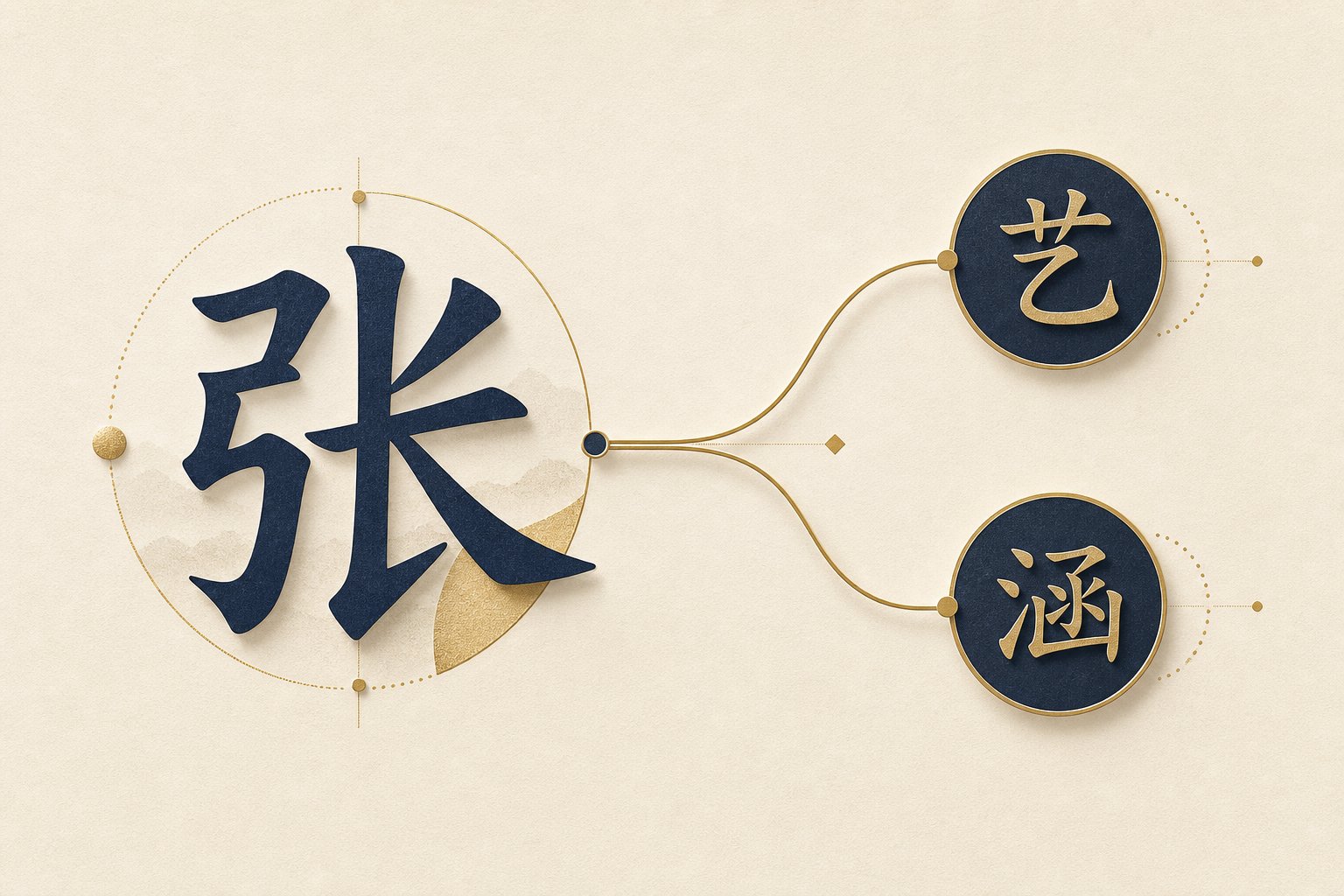
The structure is deceptively simple. A full Chinese name typically contains two or three characters total. The first character is the surname (姓 xìng), inherited from the father's lineage. The remaining one or two characters form the given name (名 míng), chosen deliberately by the family. So when you see a name like 李浩明 (Lǐ Hàomíng), the breakdown is: 李 is the surname, and 浩明 is the given name meaning "vast and bright."
This ordering reflects a core Confucian value: family identity precedes individual identity. Your surname roots you in ancestral lineage; your given name is the part crafted specifically for you. When naming Chinese characters in fiction or choosing a name for personal use, respecting this order is non-negotiable — reversing it immediately signals unfamiliarity with the culture.
One-Character vs Two-Character Given Names for Males
Male Chinese given names come in two forms: single-character and two-character. Imagine the difference between a one-word statement and a short phrase. A single-character given name like 明 (Míng, "bright") is punchy and direct, while a two-character name like 明浩 (Mínghào, "bright and vast") allows for richer layered meaning.
Two-character given names dominate modern usage. They offer more room for parents to express specific hopes — combining a virtue character with a nature character, for instance, or pairing aspiration with strength. Single-character names were more common in older generations and carry a certain classical weight, but they also create more potential for duplicate names of Chinese male individuals across the population. With surnames like 王 (Wáng) shared by roughly 99 million people, a two-character given name provides crucial differentiation.
Here's what makes this interesting for anyone using a chinese character generator or building names manually: the same given name character shifts in feeling depending on its surname pairing. Take the character 伟 (Wěi, "great"). Paired with 张 (Zhāng), you get 张伟 (Zhāng Wěi) — one of the most common names in China, almost generic. But pair it with 欧阳 (Ōuyáng), a rare compound surname, and 欧阳伟 suddenly carries a distinctive, almost literary quality. The character hasn't changed, but its context transforms the entire name's personality.
Tonal Harmony and Stroke Balance
Mandarin has four tones, and how those tones interact across a full name determines whether it sounds musical or clunky. Two consecutive fourth-tone characters (like 李力 Lǐ Lì) create a harsh, abrupt rhythm. Alternating tones — say, a first-tone surname followed by a fourth-then-second-tone given name — produce a dynamic, rising finish that feels natural to the ear.
Beyond sound, there's the visual dimension of names in Chinese writing. Stroke count balance matters because Chinese names are seen as often as they're heard. A surname with very few strokes (like 丁, just two strokes) paired with a given name containing complex characters (like 鑫, twenty-four strokes) creates visual imbalance on paper. Skilled name selection considers how the characters look together — whether the radicals complement each other and whether the overall composition feels aesthetically cohesive.
A well-constructed male Chinese name balances meaning, sound, and visual aesthetics of the written characters. No single element can carry the name alone.
Radicals within characters also signal thematic intent. The water radical (氵) appears in characters like 浩 (hào, vast) and 泽 (zé, marsh/grace), suggesting depth and flow. The metal radical (钅) shows up in 锋 (fēng, blade/vanguard) and 锐 (ruì, sharp), projecting strength. When building a name in Chinese characters, these radicals function like visual shorthand — native readers instinctively register the elemental associations before consciously processing the full character meaning.
This interplay of tone, stroke, and radical is precisely why certain surname-given name combinations feel inevitable while others feel forced. The next logical question: which surnames pair most naturally with which given name characters?
Popular Surnames Paired with Strong Male Given Names
Chinese surnames aren't chosen — they're inherited. But the given name that follows? That's where all the creative decision-making happens. A chinese surname anchors a person in family history, while the given name characters express individual identity and parental aspiration. Knowing which given names pair naturally with which surnames is the difference between a name that flows and one that stumbles.
Most Popular Chinese Surnames and Their Origins
China's most common chinese last names read like a compressed history lesson. Each one traces back to ancient kingdoms, occupations, or imperial lineage. The top five surnames alone — Wang, Li, Zhang, Liu, and Chen — account for over 30% of China's population. That's roughly 400 million people sharing just five chinese family names.
Here's what makes these surnames relevant for name generation: each one carries a specific tone, and that tone dictates which given name characters will sound harmonious after it. Wang (王, Wáng) sits in the second tone — a rising pitch. Li (李, Lǐ) uses the third tone — a dipping contour. Zhang (张, Zhāng) rides the first tone — flat and high. These tonal signatures shape everything that follows.
Among asian surnames more broadly, Chinese surnames stand out for their brevity. Most are a single character, occasionally two. This compactness means the given name carries proportionally more weight in the full name's rhythm and meaning. A one-syllable surname paired with a two-syllable given name creates the classic three-beat cadence that defines most modern Chinese male names.
Compatible Given Name Characters for Common Surnames
Tonal pairing isn't random. The general principle: avoid stacking identical tones, and aim for a contour that rises or falls across the full name. A flat first-tone surname like Zhang (张, Zhāng) pairs well with a fourth-tone-then-second-tone given name, creating a descending-then-rising arc. A third-tone surname like Li (李, Lǐ) benefits from given names starting in the first or fourth tone to avoid the awkward "tone sandhi" effect where consecutive third tones force pronunciation changes.
The table below maps the most common chinese last names to recommended male given name pairings, showing how tonal patterns and character meanings work together:
| Surname (Character) | Pinyin / Tone | Surname Meaning | Recommended Given Name | Given Name Pinyin | Given Name Meaning | Tonal Pattern (Full Name) |
|---|---|---|---|---|---|---|
| 王 | Wáng (T2) | King | 浩然 | Hàorán | Vast and righteous | 2-4-2 (rising-falling-rising) |
| 李 | Lǐ (T3) | Plum | 宇航 | Yǔháng | Universe voyage | 3-3-2 (dip-dip-rising) |
| 张 | Zhāng (T1) | Archer | 明哲 | Míngzhé | Bright philosophy | 1-2-2 (flat-rising-rising) |
| 刘 | Liú (T2) | Kill/Destroy | 俊杰 | Jùnjié | Outstanding hero | 2-4-2 (rising-falling-rising) |
| 陈 | Chén (T2) | Exhibit | 子墨 | Zǐmò | Refined ink | 2-3-4 (rising-dip-falling) |
| 杨 | Yáng (T2) | Willow | 博文 | Bówén | Vast and literate | 2-2-2 (rising-rising-rising) |
| 黄 | Huáng (T2) | Yellow | 奕辰 | Yìchén | Grand celestial | 2-4-2 (rising-falling-rising) |
| 赵 | Zhào (T4) | Exceeding | 宇轩 | Yǔxuān | Universe lofty | 4-3-1 (falling-dip-flat) |
| 周 | Zhōu (T1) | Circumference | 泽宏 | Zéhóng | Grace and vastness | 1-2-2 (flat-rising-rising) |
| 吴 | Wú (T2) | Ancient state | 建豪 | Jiànháo | Build greatness | 2-4-2 (rising-falling-rising) |
You'll notice the 2-4-2 tonal pattern appears frequently. That's not coincidence — this rising-falling-rising contour creates a satisfying melodic arc in Mandarin, which is why it shows up in so many popular chinese surnames and meanings pairings.
One critical note on uniqueness: certain combinations are so common they've become almost generic. The name 张伟 (Zhāng Wěi, meaning "great") is shared by an estimated 300,000 people in China. Similarly, 王伟, 李伟, and 刘伟rank among the most duplicated names in the country. If you're using a male chinese name generator for fiction or personal adoption, these ultra-common pairings might be worth avoiding unless you specifically want a name that blends in rather than stands out.
The safest strategy? Pair a common surname with a less frequently used given name character — or combine two given name characters in an unusual but tonally sound arrangement. A name like 陈奕辰 (Chén Yìchén) uses popular individual characters but arranges them in a way that feels fresh without sounding invented.
Surnames and tonal compatibility give you the structural skeleton. But traditional Chinese naming goes deeper — into generational systems, elemental theory, and birth charts that have guided character selection for centuries.

Traditional Systems Behind Male Chinese Name Selection
Tonal flow and stroke balance are the mechanics of a good name. But for centuries, Chinese families haven't started the naming process with aesthetics — they've started with systems. Three traditional frameworks have guided how to choose a Chinese name for males: generational naming poems, five elements theory, and birth chart analysis. These aren't relics of the past, either. Many families still consult them, and any serious chinese name generator with meaning draws on these principles to produce culturally grounded results.
Generational Naming Traditions in Chinese Families
Imagine opening a family registry and finding a poem written by your ancestors three hundred years ago — a poem that dictates one character in your name. That's how 字辈 (zìbèi), or generational naming, works. A family composes a sequence of characters, often arranged as a poem or couplet expressing hopes for future generations. Each generation of males takes the next character in the sequence as one fixed element of their given name.
So all male cousins born in the same generation share one character in their given name. The Asia Media Centre notes that these generation names are worked out long in advance and cannot be changed — they're written into the family's historical records. The second character of the given name is then chosen individually, allowing personal expression within the generational framework.
For anyone learning how to make a Chinese name for fiction or gaming, zìbèi offers a useful pattern: siblings and cousins sharing one character instantly signals family connection without exposition. It's a worldbuilding shortcut rooted in real tradition.
Five Elements Theory and Name Selection
The five elements (五行 wǔxíng) — wood, fire, earth, metal, and water — form a cycle of creation and destruction central to Chinese cosmology. In naming, the logic works like this: a child's birth chart reveals which elements are strong and which are deficient. Parents then select name characters containing radicals associated with the missing element to restore balance.
Here are the five elements with their associated radicals and example male name characters:
- Wood (木 mù) — Radicals: 木, 艹 — Example characters: 林 (Lín, forest), 柏 (Bǎi, cypress), 荣 (Róng, glory)
- Fire (火 huǒ) — Radicals: 火, 灬 — Example characters: 炎 (Yán, flame), 煜 (Yù, radiant), 焕 (Huàn, brilliant)
- Earth (土 tǔ) — Radicals: 土, 山 — Example characters: 坤 (Kūn, earth/masculine), 峰 (Fēng, peak), 城 (Chéng, city)
- Metal (金 jīn) — Radicals: 钅, 金 — Example characters: 鑫 (Xīn, prosperous), 锋 (Fēng, vanguard), 铭 (Míng, inscribe)
- Water (水 shuǐ) — Radicals: 氵, 雨 — Example characters: 浩 (Hào, vast), 泽 (Zé, grace), 霖 (Lín, sustained rain)
This system explains why you'll encounter names in chinese and meanings that seem to cluster around nature imagery. A boy named 浩泽 (Hàozé) isn't just poetically named — his parents likely determined through birth chart analysis that he needed water element reinforcement. The name is both beautiful and functionally corrective within this cosmological framework.
How Birth Charts Influence Character Choice
The birth chart (八字 bāzì, literally "eight characters") maps a person's exact birth year, month, day, and hour onto the Chinese calendar's heavenly stems and earthly branches. Each of these eight positions corresponds to one of the five elements. A practitioner analyzes the chart to identify elemental imbalances — too much fire and not enough water, for instance.
This chinese name interpretation process is why traditional families often consult a naming master (起名师 qǐmíng shī) rather than choosing characters purely by preference. The master cross-references the birth chart's elemental needs with characters that supply the missing element through their radicals, while simultaneously checking tonal harmony and stroke count. It's a multi-variable optimization problem dressed in cultural tradition.
For those using an ancient chinese name generator approach — whether for historical fiction or personal adoption — understanding these systems adds depth. A name that satisfies five elements theory, respects generational naming, and sounds tonally balanced isn't just culturally accurate. It tells a story about the family, the era, and the hopes embedded in every stroke.
These traditional systems define the philosophical "why" behind character selection. The next layer is thematic — what specific qualities and aspirations do the most popular male name characters actually express?
Thematic Frameworks for Meaningful Male Names
Every Chinese boy name tells a story about what the parents — or the creator — want that name to project. Characters aren't chosen at random from a dictionary. They're selected from thematic clusters that have been refined over centuries of literary, philosophical, and cultural tradition. Whether you're naming a newborn, building a fictional character, or using a chinese name generator fantasy tool for a creative project, understanding these thematic groupings gives you a vocabulary of intention.
Names That Convey Leadership and Authority
Chinese names for boys that project authority tend to draw from characters associated with rulership, vastness, and decisive action. Think of names like Jackie Chan's stage name 成龙 (Chéng Lóng, "become a dragon") — the dragon character 龙 has symbolized imperial power for millennia. Characters in this category often carry bold, open sounds and strong tonal profiles that command attention when spoken aloud.
The character 伟 (wěi, great) appears in names like 伟杰 (Wěijié), meaning "great and outstanding," a name associated with leadership qualities and ambition. Similarly, 威 (wēi, imposing) and 龙 (lóng, dragon) signal power without subtlety — these are names meant to announce presence.
Scholarly and Literary Male Name Characters
Confucian culture prizes intellectual achievement, and this shows up clearly in asian boy names rooted in Chinese tradition. Characters like 文 (wén, literature), 博 (bó, broad knowledge), and 哲 (zhé, philosophy) appear frequently in names meant to honor learning. The name 博文 (Bówén) — "broad literature" — directly reflects this scholarly aspiration, combining two characters that together suggest a person of deep and wide-ranging intellect.
Classical literature provides a rich source here. The name 浩然 (Hàorán) references the Confucian concept of 浩然之气 — a "vast, righteous spirit" described by Mencius. Parents choosing this name aren't just picking pleasant sounds; they're invoking a specific philosophical lineage. Names like 志远 (Zhìyuǎn, "far-reaching ambition") similarly draw from Confucian ideals about moral purpose and long-term vision.
Names Expressing Strength and Resilience
For a chinese warrior name — whether for a historical novel, a game character, or a martial arts screenplay — the character palette shifts toward hardness, sharpness, and endurance. This is where wuxia names and xianxia fiction have developed their own distinct naming conventions. Wuxia heroes often carry names with characters like 剑 (jiàn, sword), 锋 (fēng, blade's edge), or 刚 (gāng, steel-hard). A wuxia name generator drawing from authentic patterns would combine these martial characters with nature imagery — think 云锋 (Yúnfēng, "cloud blade") or 天刚 (Tiāngāng, "heaven's steel").
Xianxia naming goes further into the mythological, favoring characters that suggest transcendence and cosmic power: 玄 (xuán, mysterious), 墨 (mò, ink), 尘 (chén, dust/mortal world). A xianxia cultivator might carry a name like 凌霄 (Língxiāo, "soaring above the clouds") — poetic, elevated, and slightly otherworldly. These patterns are distinct from everyday chinese boy names but follow the same structural rules of tonal balance and radical coherence.
The table below organizes commonly used male name characters by thematic category:
| Theme | Character | Pinyin | Meaning | Example Full Name |
|---|---|---|---|---|
| Leadership | 伟 | Wěi | Great, grand | 王伟杰 (Wáng Wěijié) |
| Leadership | 龙 | Lóng | Dragon, power | 陈伟龙 (Chén Wěilóng) |
| Leadership | 威 | Wēi | Imposing, majestic | 李力威 (Lǐ Lìwēi) |
| Leadership | 豪 | Háo | Heroic, grand | 张建豪 (Zhāng Jiànháo) |
| Scholarly | 文 | Wén | Literature, culture | 周博文 (Zhōu Bówén) |
| Scholarly | 哲 | Zhé | Philosophy, wisdom | 张明哲 (Zhāng Míngzhé) |
| Scholarly | 博 | Bó | Broad, knowledgeable | 刘博远 (Liú Bóyuǎn) |
| Scholarly | 书 | Shū | Book, writing | 赵书翰 (Zhào Shūhàn) |
| Strength | 刚 | Gāng | Steel, hard | 王志刚 (Wáng Zhìgāng) |
| Strength | 锋 | Fēng | Blade, vanguard | 李剑锋 (Lǐ Jiànfēng) |
| Strength | 强 | Qiáng | Strong, powerful | 陈志强 (Chén Zhìqiáng) |
| Strength | 勇 | Yǒng | Brave, courageous | 黄勇军 (Huáng Yǒngjūn) |
| Nature/Elegance | 轩 | Xuān | Lofty, refined | 梓轩 (Zǐxuān) |
| Nature/Elegance | 泽 | Zé | Marsh, grace | 刘奕泽 (Liú Yìzé) |
| Nature/Elegance | 林 | Lín | Forest | 周翰林 (Zhōu Hànlín) |
| Nature/Elegance | 宇 | Yǔ | Universe, space | 天宇 (Tiānyǔ) |
| Moral Virtue | 仁 | Rén | Benevolence | 张仁杰 (Zhāng Rénjié) |
| Moral Virtue | 义 | Yì | Righteousness | 李义明 (Lǐ Yìmíng) |
| Moral Virtue | 德 | Dé | Virtue, morality | 王德华 (Wáng Déhuá) |
| Moral Virtue | 信 | Xìn | Trust, integrity | 陈信宏 (Chén Xìnhóng) |
You'll notice that many of these characters overlap across categories. A name like 俊朗 (Jùnlǎng, "handsome and radiant") blends elegance with a subtle assertion of confidence. The character 杰 (jié, outstanding) appears in both leadership and scholarly contexts because excellence itself is thematically flexible. This overlap is a feature, not a bug — it's what allows Chinese names for boys to carry multiple layers of meaning simultaneously.
Historical figures reinforce these patterns. The name of Zhuge Liang (诸葛亮), the legendary strategist of the Three Kingdoms period, uses 亮 (liàng, bright/clear) — a scholarly-virtue character that reflects his reputation for brilliance. Martial arts icon Jet Li's Chinese name 李连杰 (Lǐ Liánjié) combines 连 (lián, connect) with 杰 (jié, outstanding), projecting heroism and resilience. These real-world examples show how thematic character selection creates names that feel inevitable in hindsight.
Thematic intention gives a name its soul. But a name doesn't exist in isolation — it exists within a specific cultural moment, a geographic context, and increasingly, a digital identity. How these naming patterns shift across regions and generations reveals just how dynamic Chinese male naming really is.
Regional Differences and Modern Naming Trends
A male Chinese name doesn't exist in a cultural vacuum. The same character can carry different connotations depending on whether it appears on a birth certificate in Shenzhen, a student ID in Taipei, or a business card in Vancouver. Asian names and surnames operate within distinct regional ecosystems, and understanding these differences matters whether you're using a mandarin name generator or selecting a name manually for a specific context.
Naming Trends in Mainland China vs Taiwan
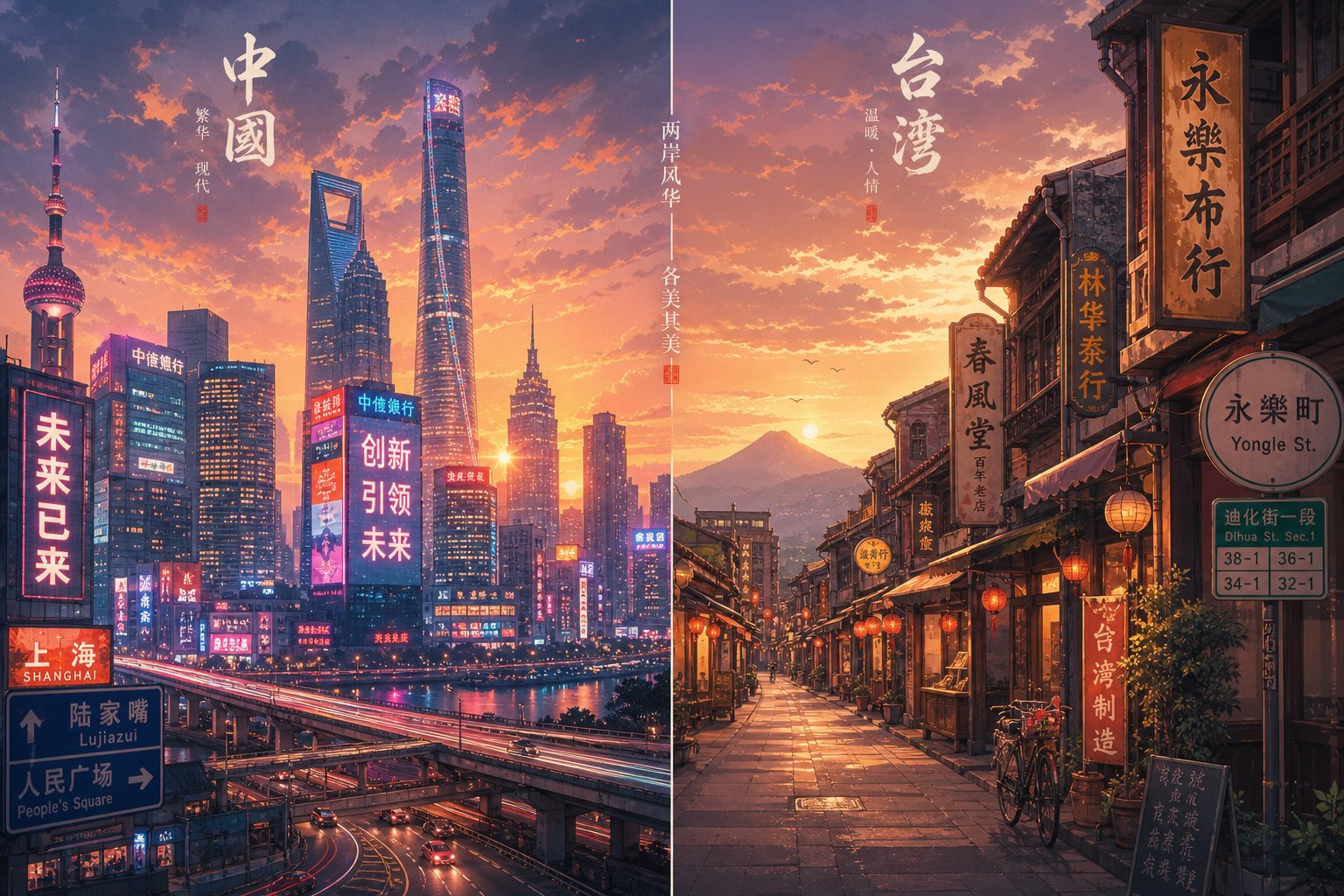
Mainland China's naming landscape has shifted dramatically across generations. Names from the 1980s frequently featured single-character given names with bold, aspirational characters like 伟 (wěi, great) and 强 (qiáng, powerful). The post-1990 generation moved toward romanticized characters influenced by Hong Kong and Taiwanese pop culture — 梦 (mèng, dream), 雨 (yǔ, rain), and 涵 (hán, cultivation) became popular. The current generation of parents has swung back toward classical Chinese literature for inspiration. Recent reporting from the Global Times shows names like 锦程 (Jǐnchéng, "splendid prospects," rooted in a classical idiom) and 砚舟 (Yànzhōu, "inkstone boat," drawn from a Northern Song Dynasty poem) trending among newborns across multiple provinces. Cultural sociologists describe this as young parents "reclaiming traditional Chinese culture as a living aesthetic in everyday life."
Taiwan, by contrast, has maintained a steadier connection to literary naming traditions. Taiwanese mandarin naming conventions tend to favor elegant, understated characters with classical resonance. Taiwanese last names follow the same pool of common Chinese surnames, but given name choices lean toward softer, more poetic combinations. You'll encounter more names referencing nature and philosophical concepts — characters like 翰 (hàn, writing brush), 彥 (yàn, accomplished), and 廷 (tíng, court) appear with higher frequency than their mainland equivalents. The generational whiplash between revolutionary-era names and internet-era names that characterizes mainland trends is less pronounced in Taiwan, where naming has evolved more gradually.
How Western Males Choose Chinese Names
Getting a chinese name from an english name is a common starting point for foreigners, but the approach matters. The simplest method — phonetic transliteration — often produces awkward results. As one language learner recounted in The Guardian, her first transliterated name "sounded awful" and felt infantilizing. She eventually worked with a native speaker and her Chinese teacher to create 李熙怡 (Lǐ Xīyí), a name expressing happiness and success that sounds like it belongs to a real person.
The key principles for Western males adopting Chinese names: choose from the 100 most common surnames so people recognize it as a personal name, keep the full name to two or three characters, and run candidates past at least two native speakers. An asian name generator male tool can provide starting points, but the cultural nuances — whether a name sounds Korean, whether it echoes a villain from a classic novel, whether it carries unintended homophone meanings — require human verification. One learner named himself 凌云龙 (Líng Yúnlóng, "soaring cloud dragon"), inspired by a Tai Chi movement, and was told it sounds like a martial arts character. Not necessarily wrong, but worth knowing.
Diaspora Naming and Dual Identity
For Chinese males in the diaspora, naming becomes an act of identity negotiation. Research on Hong Kong naming practices reveals that English and Chinese names serve entirely different social functions. The Chinese name is reserved for family and close friends — using it signals intimacy. The English name handles casual, everyday interactions. Switching from English name to Chinese name as a relationship deepens is a gradual, almost ritualistic process.
This dual-name system means the same person might operate under multiple name forms depending on context:
- Full legal Chinese name (on ID, formal documents, family registry)
- Shortened casual Chinese name (used by close friends, often just the given name without surname)
- English name (workplace, university, casual acquaintances)
- Online handle or gaming alias (often a creative blend of Chinese characters, English, or invented terms)
Gaming and online culture have added yet another layer. In MMOs and competitive gaming, asian names function as aesthetic choices rather than identity markers. A player might use a poetic four-character phrase as their handle — something that would be absurd as a legal name but works perfectly as a digital persona. An asian name generator designed for gaming contexts operates under completely different rules than one meant for professional use. The cultural weight drops away; what remains is sound, style, and visual impact on screen.
This contextual flexibility is precisely why mistakes happen. A name that works beautifully in a gaming context might embarrass its bearer in a professional meeting — and the pitfalls that trip up non-native speakers are more specific than most people realize.
Common Mistakes When Generating Male Chinese Names
A name that looks elegant on paper can land as a joke in conversation. When non-Chinese speakers attempt a chinese name conversion — whether through a tool or manual character selection — the errors tend to fall into predictable categories. Knowing these traps in advance saves you from carrying a name that makes native speakers wince.
Unintended Meanings and Homophone Traps
Mandarin is packed with homophones. The same syllable pronounced in the same tone can map to dozens of characters, and when you string two syllables together, the potential for accidental meaning multiplies. A name like 诗婷 (Shītíng) looks poetic on its own — "poetry" and "graceful" — but spoken aloud, it sounds uncomfortably close to 失听 (shītīng, "loss of hearing"). For male names, combining 富 (fù, wealthy) with 贵 (guì, noble) produces 富贵, which native speakers associate with a fictional peasant character from a famous novel about suffering. The individual characters are fine; the combination carries baggage.
This problem intensifies when you try to convert name into Chinese through phonetic transliteration. A name converter chinese tool that simply matches English syllables to similar-sounding characters often produces combinations that mean nothing — or worse, mean something embarrassing. The English name "Sean" transliterated carelessly might become 死恩 (sǐ ēn, "dead grace"). Always check what the full character combination means as a phrase, not just what each character means individually.
Tonal Clashes That Make Names Sound Unnatural
Imagine saying four words in a row that all drop sharply in pitch. That's what happens when every character in a name sits in the fourth tone — the result sounds aggressive and choppy, like someone barking commands. Multi-tone Chinese names require careful attention to tonal contour because the way tones interact across syllables determines whether a name flows or stumbles.
Consecutive third tones create a different problem. Mandarin's tone sandhi rule forces the first third tone to shift into a second tone when followed by another third tone. A name like 李雨 (Lǐ Yǔ) technically becomes "Lí Yǔ" in natural speech — the surname's tone changes, which can confuse listeners unfamiliar with the person. Three consecutive third tones (李语雨, Lǐ Yǔyǔ) creates an even more awkward pronunciation cascade.
Gender Expectations in Character Selection
Chinese naming carries strong gender associations that aren't always obvious to outsiders. Characters like 婷 (tíng, graceful), 萱 (xuān, daylily), and 静 (jìng, quiet) are almost exclusively used in female names. A male character named 李静萱 in your novel would immediately read as female to any Chinese reader — LTL Mandarin School's research confirms that characters like 强 (qiáng, strong), 伟 (wěi, great), and 勇 (yǒng, brave) signal male names, while beauty and gentleness characters signal female ones. Using a name to chinese name converter without understanding these gendered patterns risks producing results that confuse rather than convince.
Overly archaic characters present a subtler trap. Choosing rare classical characters like 曦 (xī, dawn light) or 翾 (xuān, to fly) might seem sophisticated, but in modern usage they can sound pretentious — like naming an English-speaking child "Bartholomew Thaddeus" in a casual context. If native speakers need to look up a character in your name, it's probably too obscure for everyday use.
Before finalizing any generated name, run through this verification checklist:
- Search the full name as a phrase in a Chinese dictionary or search engine — check for unintended compound meanings or associations with famous characters
- Say the full name aloud and listen for homophone collisions with common words (especially vulgar or humorous ones)
- Map the tonal pattern — avoid three or more consecutive identical tones, especially third or fourth tones
- Verify gender alignment by checking whether each given name character appears predominantly in male or female names in modern usage
- Confirm character frequency — if a character doesn't appear in the top 3,000 most-used characters, reconsider whether it's too obscure
- Check for cultural sensitivity — avoid characters associated with political figures, tragic historical events, or religious terms used inappropriately
- Ask at least two native Mandarin speakers (ideally from different regions) to read the name cold and share their first impression
That last step matters most. No chinese name convert tool or checklist replaces the instinct of a native speaker who can instantly tell you whether a name sounds like a real person or a textbook exercise. When you translate name into Chinese for professional or personal use, native feedback is the final filter that catches what algorithms miss.
Avoiding mistakes is half the equation. The other half is having a clear, repeatable process for evaluating candidates and landing on a name that actually fits your purpose.
How to Evaluate and Finalize Your Generated Name
Knowing what to avoid clears the minefield. But a practical, repeatable process for moving from a blank slate to a finalized name is what actually gets you across the finish line. Whether you're pulling candidates from a chinese names generator or assembling characters manually, the steps below work the same way — they just scale in rigor depending on your use case.
Step-by-Step Process for Choosing Your Name
Think of this as a funnel. You start broad, generate options, then progressively filter until one name remains. Here's the sequence:
- Define your purpose and context. A gaming alias needs style and memorability. A professional name for use in China needs cultural precision and easy pronunciation. A fiction character needs authenticity within the story's setting. Your purpose determines how much rigor each subsequent step demands.
- Select a surname. For personal use, pick from the top 100 most common Chinese surnames — anything outside that range raises eyebrows. For fiction, match the surname to the character's regional background or family status. A rare compound surname like 欧阳 (Ouyang) signals aristocratic lineage; a common one like 王 (Wang) signals everyman roots.
- Choose a thematic direction. Decide what quality the name should project: strength, intellect, elegance, moral virtue, or something genre-specific like martial heroism. This narrows your character pool from thousands to dozens.
- Generate candidates. Use a chinese name gen tool, a character dictionary filtered by radical and tone, or the thematic tables from earlier sections. Aim for five to ten full-name candidates at this stage.
- Check tonal flow. Say each candidate aloud. Does the pitch contour rise and fall naturally, or does it flatten into monotony? Eliminate any name with three consecutive identical tones or awkward tone sandhi collisions.
- Verify character combinations. Search each full name in a Chinese search engine. Look for unintended compound meanings, associations with public figures, or homophone overlaps with common slang. If a name returns results for a notorious criminal or a fictional buffoon, discard it.
- Get native speaker feedback. Present your top two or three candidates to at least two native Mandarin speakers. Ask them to read each name cold — without context — and describe their first impression. Listen for hesitation, laughter, or confusion.
The entire process might take fifteen minutes for a gaming character or several days for a name you'll use professionally in China. That range is normal. A china names generator gives you raw material; this process refines it into something you can actually carry.
How to Verify a Generated Name Sounds Natural
Sounding natural is different from being technically correct. A name can follow every structural rule and still feel off — too literary, too old-fashioned, or too obviously assembled by a foreigner. The quickest test: does the name appear in real-world usage? Search Chinese social media platforms or public directories for your candidate. If zero results come back, the name might be too unusual. If millions come back, it might be too generic. The sweet spot is a name that exists in the wild but isn't ubiquitous.
Another useful check: character frequency in modern text. If either character in your given name falls outside the 3,000 most commonly used characters, native speakers may stumble when reading it. A random chinese name generator that pulls from the full Unicode CJK block without frequency filtering will occasionally produce characters that look impressive but function poorly in daily life — characters people can't type easily on a phone keyboard, for instance.
Resources for Native Speaker Feedback
Finding native speakers willing to evaluate your name candidates is easier than it sounds. Language exchange platforms, Chinese learning communities, and university Chinese departments all offer access to native speakers who understand the naming context. As Hacking Chinese emphasizes, it's "absolutely crucial" to ask native speakers rather than advanced second-language learners — connotations and emotional associations are nearly impossible for non-native speakers to judge accurately, regardless of proficiency level.
If you're working with a chinese male name generator for professional purposes, consider consulting a naming specialist (起名师) who can cross-reference your candidates against birth chart compatibility, stroke count auspiciousness, and regional associations. For fiction or gaming, a single native reader who enjoys the same genre can tell you whether your character's name fits the world you're building.
Different contexts demand different standards. A tabletop RPG character named 凌霄剑 (Língxiāo Jiàn, "sky-piercing sword") works perfectly in a wuxia campaign but would be absurd on a business card. A name generator chinese tool optimized for one context may produce poor results for another. Knowing your context — and being honest about how much cultural weight your name needs to carry — is the single most important filter in the entire process.
The best chinese name generator male tools combine algorithmic generation with the cultural knowledge outlined throughout this guide: structural rules, tonal harmony, thematic intention, regional awareness, and mistake avoidance. But no tool replaces understanding. A generator that produces 张明哲 means nothing to someone who can't evaluate whether those characters work together. The principles in this guide — from surname pairing to five elements theory to homophone checking — equip you to make informed choices regardless of which tool you use. The name you land on should feel less like a random output and more like a deliberate statement: balanced in sound, rich in meaning, and grounded in a tradition that spans thousands of years.
Frequently Asked Questions About Male Chinese Name Generators
1. How do I choose a Chinese name that sounds natural for a male?
Start by selecting a common surname from the top 100 Chinese family names, then pair it with one or two given name characters that create tonal variety. Avoid stacking identical tones, especially three consecutive third or fourth tones. Check the full name for unintended homophone meanings by searching it in a Chinese search engine, and always get feedback from at least two native Mandarin speakers before finalizing your choice.
2. What is the difference between one-character and two-character Chinese given names for males?
A single-character given name like 明 (Ming) is concise and carries classical weight, while a two-character name like 明浩 (Minghao) allows for richer layered meaning by combining multiple aspirations. Two-character given names dominate modern usage because they reduce the chance of duplicate names across China's massive population and give parents more room to express specific hopes through character pairing.
3. What are the most common mistakes when generating a male Chinese name?
The most frequent errors include creating unintended meanings through homophone collisions, stacking identical tones that make the name sound unnatural, using characters with strong female associations in a male name, choosing overly archaic characters that sound pretentious, and failing to check whether the character combination echoes a famous fictional character or public figure. Phonetic transliteration from English names is particularly risky without native speaker verification.
4. How does the five elements theory affect Chinese male name selection?
The five elements system (wood, fire, earth, metal, water) connects to a child's birth chart, which reveals elemental imbalances. Parents select name characters containing radicals associated with the deficient element to restore cosmic balance. For example, a child lacking the water element might receive a name with characters containing the water radical (氵), such as 浩 (vast) or 泽 (grace). This practice remains common in traditional families and informs many name generator algorithms.
5. Can a Western male use a Chinese name generator for professional purposes?
Yes, but the process requires more cultural rigor than casual use. Choose from the 100 most common surnames so people recognize it as a real name, keep the full name to two or three characters, and avoid pure phonetic transliteration of your English name since it often produces awkward or meaningless results. Run your top candidates past native speakers who can catch connotations, regional associations, and homophone issues that no algorithm reliably detects.