Understanding the Metal Element in Chinese Naming
Why does Chinese philosophy include metal as a fundamental element instead of air? If you grew up with the Greek model of earth, water, fire, and air, the Chinese system can feel surprising. The answer lies in how the ancient Chinese observed the natural world: they tracked cycles of transformation rather than static states of matter. Metal represented everything that could be refined, sharpened, and purified from the earth itself.
What Is the Metal Element in Wu Xing
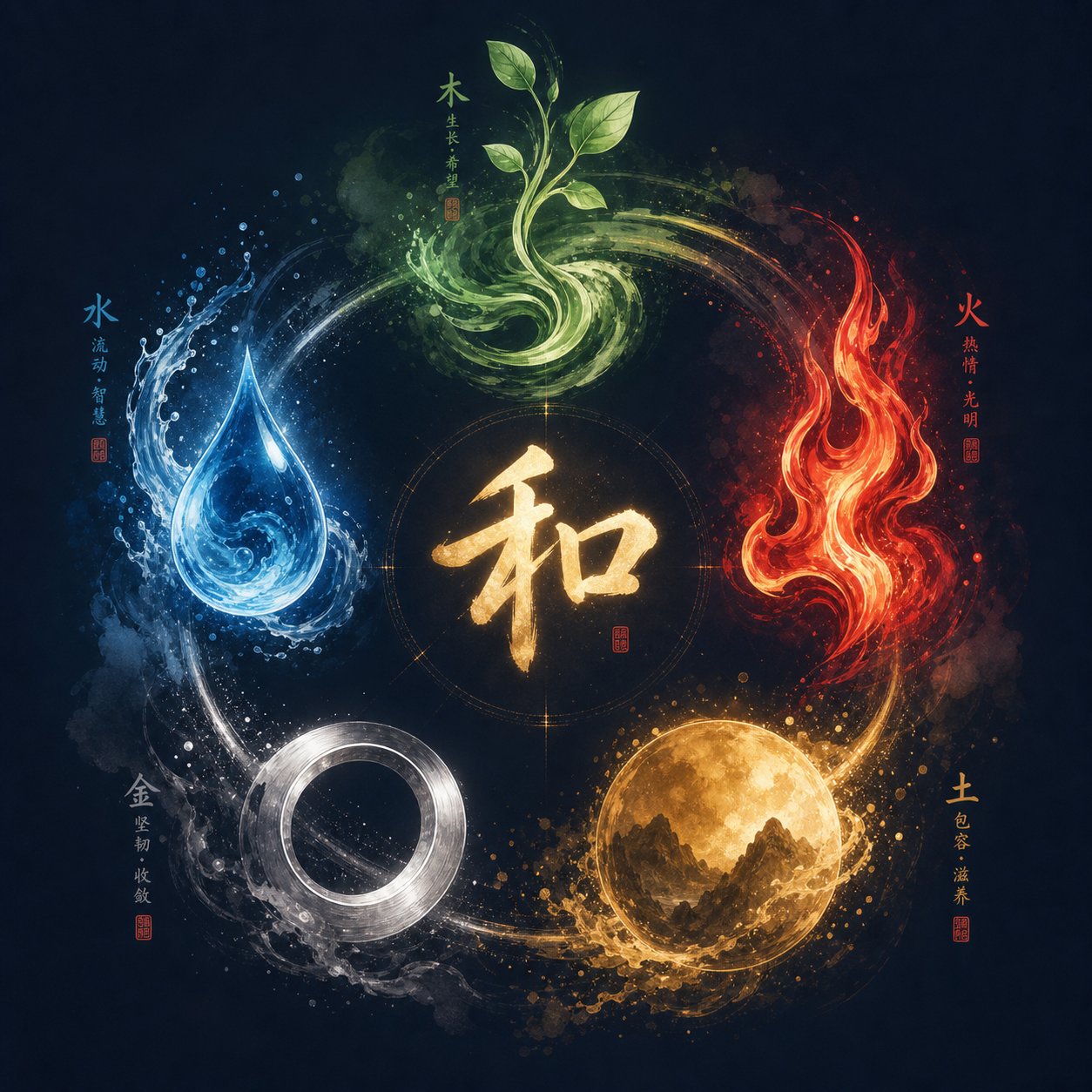
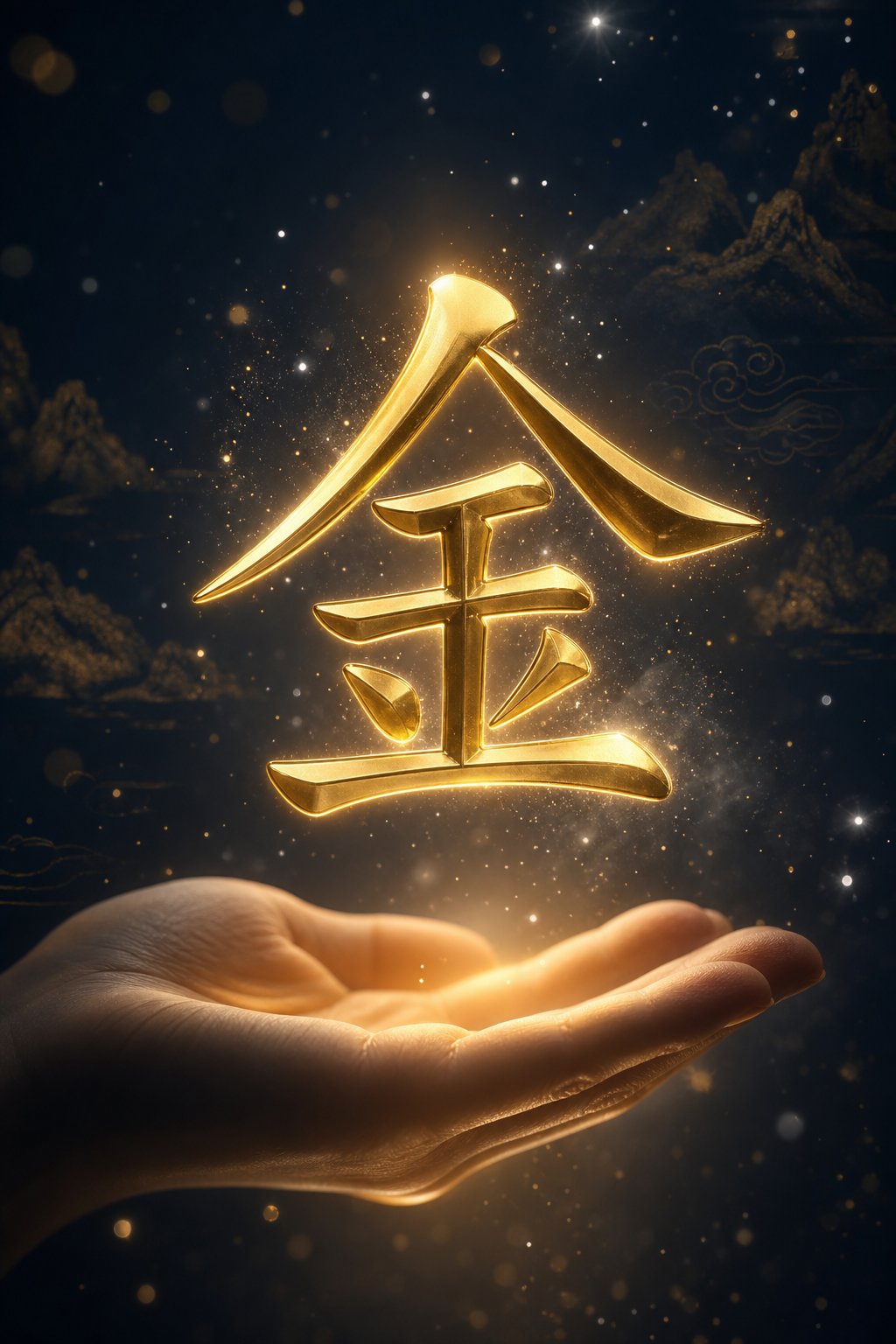
In the Wu Xing (五行) framework, metal (金, jin) is one of five Chinese elements that describe how energy moves through nature and human life. The character 金 originally depicted nuggets buried beneath the earth, and the Shuowen Jiezi (说文解字), China's first comprehensive character dictionary compiled around 100 CE, defines it as a substance born within the earth that follows the principles of transformation. Unlike the Western periodic table's definition, metal in Chinese cosmology is a phase of energy: contracting, solidifying, and distilling toward essence.
Metal's core associations: precision, justice, clarity, and strength. It governs autumn, the west, the color white, and the lung organ system.
This is the chinese element metal that parents draw upon when naming a child. It carries the weight of righteousness, decisiveness, and inner resilience.
Why Metal Matters for Chinese Names
A Chinese name is never just a label. It is a deliberate act of shaping destiny. When a birth chart reveals that a child lacks the metal element, parents select characters infused with metal energy to restore balance. The name becomes a daily correction, a quiet force working across a lifetime.
Whether you are a Chinese parent choosing a newborn name or a non-Chinese speaker wondering "what should my Chinese name be," understanding metal in Chinese naming philosophy is the starting point. You need to know what metal represents before you can choose the right character to carry it.
The real question, then, is how metal interacts with the other four elements and why that interaction determines which characters belong in your name.
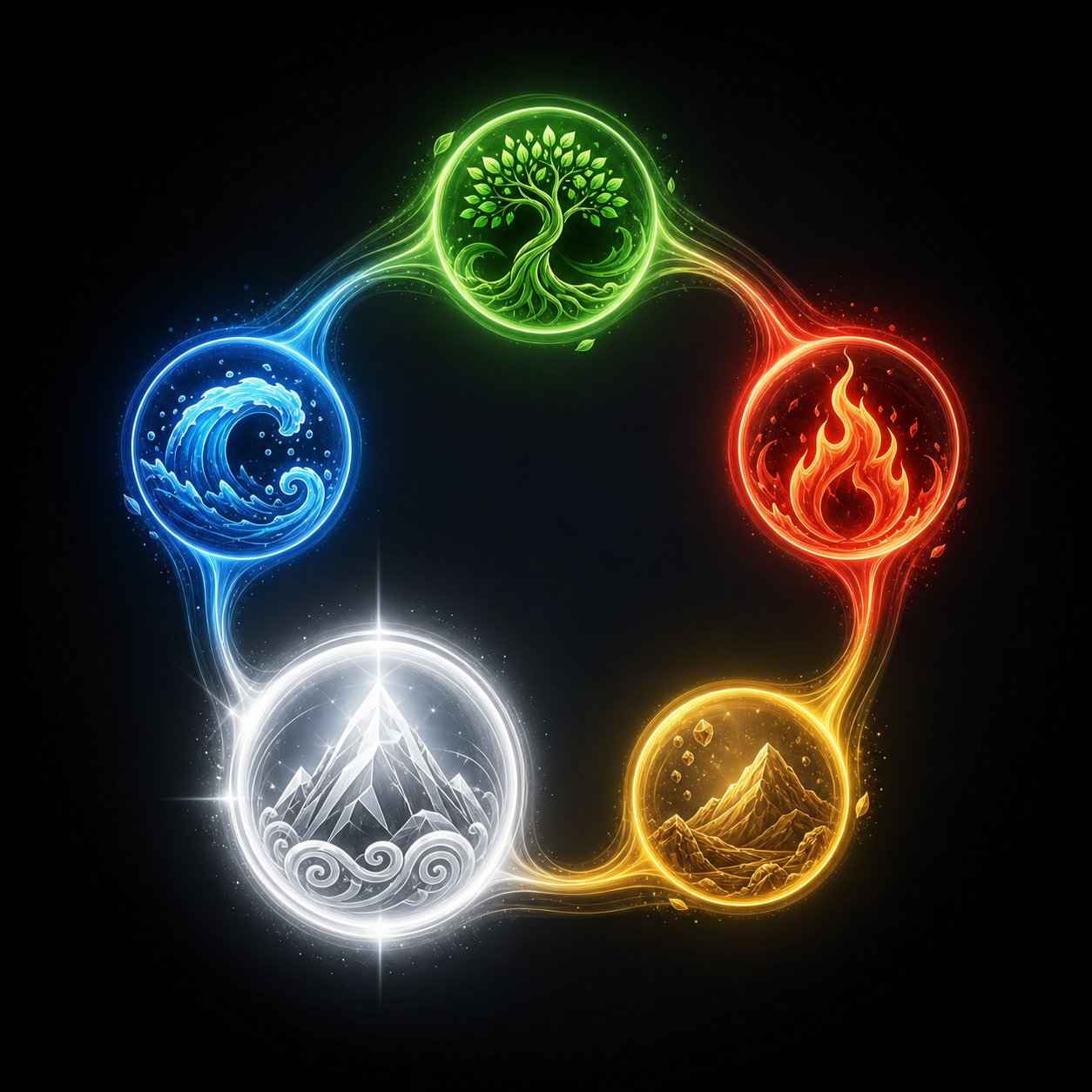
How the Five Elements Cycle Shapes Naming Decisions
The chinese five elements do not exist in isolation. They flow into one another, feed one another, and keep one another in check. When you select a name to strengthen metal, you are not simply picking a character with the right radical. You are working within a dynamic system where every element either supports or challenges the others. Understanding this chinese element cycle is what separates a thoughtful name from a random one.
The Generative and Overcoming Cycles
Wu xing the five elements operate through two fundamental relationships. The first is the generative cycle (相生, xiangsheng), where each element naturally produces the next:
- Wood feeds Fire
- Fire creates Earth (ash)
- Earth produces Metal (minerals form within it)
- Metal generates Water (condensation on metal surfaces)
- Water nourishes Wood
The second is the overcoming cycle (相克, xiangke), where each element restrains another:
- Metal cuts Wood
- Wood parts Earth (roots break soil)
- Earth dams Water
- Water extinguishes Fire
- Fire melts Metal
These two cycles form the backbone of the five elements chinese naming philosophy. Every character you place in a name either generates support for a weak element or inadvertently strengthens something that already overwhelms the chart.
| Element | Chinese | Generated By | Generates | Overcome By | Overcomes |
|---|---|---|---|---|---|
| Wood | 木 | Water | Fire | Metal | Earth |
| Fire | 火 | Wood | Earth | Water | Metal |
| Earth | 土 | Fire | Metal | Wood | Water |
| Metal | 金 | Earth | Water | Fire | Wood |
| Water | 水 | Metal | Wood | Earth | Fire |
How Element Cycles Influence Name Selection
Imagine a child whose birth chart shows weak metal energy. A naming master has two complementary strategies. The first is direct: choose a character that carries metal energy itself, like 铭 (ming, inscribe) or 锦 (jin, brocade). The second is indirect: select an Earth-element character, because Earth generates Metal in the producing cycle. Characters containing the 土 radical or carrying earth-associated meanings quietly feed metal strength from behind the scenes.
This indirect approach matters more than most parents realize. Among the 5 chinese elements, metal is vulnerable to fire. If the child's chart already contains strong fire energy, stacking metal characters alone may not be enough since fire melts metal. Adding Earth-element characters creates a buffer: Fire produces Earth, and Earth in turn produces Metal. The destructive energy gets redirected into a productive chain.
Conversely, you would avoid pairing metal-element name characters with strong fire-element characters in the same name. A name combining 炎 (yan, blazing fire) with 铭 (ming, inscribe) creates internal tension within the chinese 5 element framework, where one character symbolically weakens the other.
The five elements in china have governed naming logic for centuries precisely because they offer this layered thinking. A name is not a single note but a chord, and the cycle relationships determine whether that chord resonates or clashes. Knowing which china elements support metal and which challenge it gives you the foundation to evaluate any character a naming consultant suggests.
The cycle tells you what metal needs. The birth chart tells you how much it needs. That calculation, the precise reading of elemental balance in a person's Four Pillars, is where BaZi enters the picture.
BaZi Birth Charts and Metal Element Deficiency
So how do you actually know whether your chart needs metal? You do not guess. You calculate. The BaZi system (八字, literally "eight characters") maps the exact energetic landscape present at the moment of birth, revealing which elements are abundant, which are balanced, and which are missing entirely. For anyone exploring metal element chinese names, this is where the process gets specific and personal.
Reading Your BaZi Birth Chart for Element Balance
BaZi is built on four pillars, each representing a different time unit of your birth: year, month, day, and hour. Each pillar contains two characters, one Heavenly Stem on top and one Earthly Branch below, giving you eight characters total. These eight characters are the raw data a naming master reads to determine what element am i chinese astrology says I need.
The Heavenly Stems and Earthly Branches (天干地支, Tian Gan Di Zhi) originated from ancient Chinese observation of celestial phenomena. There are ten Heavenly Stems, each paired with one of the five elements in either its yin or yang polarity:
- 甲 (Jia) - Yang Wood: growth, creativity, and flexibility
- 乙 (Yi) - Yin Wood: stability, nurturing, and adaptability
- 丙 (Bing) - Yang Fire: passion, charisma, and leadership
- 丁 (Ding) - Yin Fire: warmth, compassion, and intuition
- 戊 (Wu) - Yang Earth: practicality, stability, and groundedness
- 己 (Ji) - Yin Earth: organization, diligence, and resourcefulness
- 庚 (Geng) - Yang Metal: determination, strength, and resilience
- 辛 (Xin) - Yin Metal: precision, intelligence, and analytical skill
- 壬 (Ren) - Yang Water: communication, adaptability, and networking
- 癸 (Gui) - Yin Water: intuition, wisdom, and empathy
The twelve Earthly Branches correspond to the twelve zodiac animals and also carry elemental associations. Shen (Monkey) and You (Rooster) are the two branches most strongly linked to metal. When you ask "what is my chinese zodiac heavenly element," you are really asking which Heavenly Stem sits atop your Day Pillar, because that stem represents your Day Master, the core identity element in your chart.
The Earthly Branches combine with the Heavenly Stems in a fixed 60-year cycle known as a Jia Zi. This chinese elemental zodiac system means that each year, month, day, and hour carries a unique elemental fingerprint. A child born in a Geng year already has Yang Metal in the Year Pillar's stem, but that alone does not guarantee metal strength across the full chart.
When Your Chart Calls for Metal
A naming master does not simply count how many metal characters appear in the eight positions. The analysis goes deeper. They assess the Day Master's strength relative to the season of birth, the supporting and draining relationships between all eight characters, and the interactions like clashes, combinations, and transformations that shift elemental weight.
Consider a practical example. A child born with a Ding (Yin Fire) Day Master in winter faces an immediate challenge: fire born in the water-dominant winter season is inherently weak. If the chart also contains strong water stems and metal branches that feed that water, the fire element struggles. But what if the chart lacks metal entirely? Then the child misses metal's qualities of structure, discipline, and clarity. A BaZi practitioner would identify this gap and recommend metal-element characters for the name to restore what the chart cannot provide on its own.
The process typically follows this logic:
- Identify the Day Master element and its yin/yang polarity
- Assess whether the Day Master is strong, weak, or neutral based on seasonal influence and surrounding elements
- Determine which elements are favorable (useful gods, 用神) and which are unfavorable
- If metal is identified as a useful god or is critically absent, prescribe metal-element characters for the name
Chinese astrology metal analysis also considers the difference between needing Yang Metal (庚) energy versus Yin Metal (辛) energy. A chart that needs the forceful, decisive quality of Geng metal calls for different characters than one requiring the refined, delicate quality of Xin metal. This distinction directly shapes which characters a master recommends.
Not every family follows this traditional path strictly. Some parents consult a full BaZi reading and select characters based on precise calculations. Others appreciate the symbolism of metal, its associations with integrity, clarity, and inner strength, and choose metal characters for their aesthetic and aspirational meaning alone. Both approaches are valid. The traditional method offers systematic precision rooted in centuries of practice. The modern approach treats naming as an act of intention rather than cosmic correction.
What matters in either case is knowing which characters actually belong to the metal element. That distinction is less obvious than it appears, because not every character containing a metallic radical qualifies, and some metal-element characters carry no visible metal indicator at all.
How to Identify Metal Element Characters
You know your chart needs metal. You understand why. But when you sit down to choose a character, a practical question surfaces: how do you actually confirm that a given character belongs to the metal element? The answer is less straightforward than scanning for a shiny radical. Chinese naming tradition recognizes three distinct methods for classifying a character's elemental nature, and each one can yield different results depending on the source you consult.
Radical-Based Metal Character Identification
The most visible method is radical identification. If a character contains the gold or metal radical, it carries metal energy. This is the approach most parents encounter first, and for good reason: it is concrete, visual, and easy to verify with any dictionary.
The gold in chinese character form is 金 (jin), which originally depicted nuggets of ore buried beneath the earth. As a standalone character, 金 means gold, metal, or money. As a radical component, it signals that the character relates to metals, metallic objects, or qualities associated with metal. Characters like 银 (yin, silver), 铜 (tong, copper), 铁 (tie, iron), and 钱 (qian, money) all carry this radical and are unambiguously classified as metal element characters.
The metal radical is known as 金字旁 (jin zi pang), meaning "metal character on the side," because it typically appears on the left side of a character. When you encounter characters like 铭 (ming, inscribe), 锦 (jin, brocade), 钰 (yu, precious jade), or 锋 (feng, sharp edge), the left-side radical immediately tells you: this character belongs to metal.
Sounds simple enough. But here is where regional writing systems complicate things.
Simplified vs Traditional Metal Radicals
If you are selecting characters in Mainland China, you will encounter the simplified metal radical: 钅. It is a compressed, streamlined version of 金 with fewer strokes, designed for faster writing. In Taiwan, Hong Kong, and classical texts, the full traditional radical 金 remains intact within characters. The same character can look quite different depending on which system you use:
- Simplified: 银 (silver) uses the 钅 radical on the left
- Traditional: 銀 (silver) uses the full 金 radical on the left
- Simplified: 钟 (bell/clock) uses 钅
- Traditional: 鐘 (bell/clock) uses 金
- Simplified: 镜 (mirror) uses 钅
- Traditional: 鏡 (mirror) uses 金
This distinction matters for naming because stroke count calculations differ between the two systems. A character with 钅 has fewer total strokes than its traditional 金 counterpart, and many naming masters in Mainland China still use traditional stroke counts (known as 康熙字典 stroke counts) for auspicious number calculations even when the name will be written in simplified form. If you are working with chinese elements symbols in a naming context, always clarify which stroke-count system your consultant uses.
For parents in Taiwan and Hong Kong, the traditional radical is immediately recognizable. For those in Mainland China, learning to spot 钅 as the simplified metal indicator is essential. Both forms carry identical elemental weight in naming practice.
Non-Obvious Metal Characters Beyond the Radical
Here is where identification gets interesting. Not every metal-element character wears its classification on its sleeve. Two additional methods exist for determining what element is metal in a character that lacks the visible radical.
The first is sound-based classification through the Five Sounds (五音, wu yin) theory. Ancient Chinese phonology mapped all sounds to the five elements. The Five Tones, Gong, Shang, Jue, Zhi, and Yu, correspond to Earth, Metal, Wood, Fire, and Water respectively. Shang (商) is the metal tone, described as crisp and clear, like the ring of a struck bell. Characters whose pronunciation falls within the Shang tonal category can be classified as metal regardless of their radical. This system draws from the Huangdi Neijing and other classical sources that connected sound frequencies to elemental resonance.
The second is meaning-based classification. Some characters carry metal associations through their semantic content rather than their structural components. A character meaning "sharp," "decisive," "autumn," or "white" may be classified as metal through its conceptual alignment with metal's qualities, even if its radical belongs to another element. Classical naming texts and wuxing elements dictionaries catalog these associations, though interpretations can vary between schools of thought.
When you ask which element is a metal character, the answer depends on which classification method takes priority. Most modern naming practitioners use a layered approach: radical first, then meaning, then sound. If all three align, the classification is certain. If they conflict, the radical typically wins for characters that have one, while meaning-based classification governs characters without a metal radical.
| Character | Pinyin | Has Metal Radical | Classification Method | Why It Is Metal |
|---|---|---|---|---|
| 铭 | ming | Yes (钅) | Radical | Visible simplified metal radical on left |
| 锦 | jin | Yes (钅) | Radical | Visible simplified metal radical on left |
| 银 | yin | Yes (钅) | Radical | Means "silver," radical confirms metal |
| 利 | li | No | Meaning | Means "sharp/benefit," associated with metal's cutting quality |
| 秋 | qiu | No | Meaning | Means "autumn," the season governed by metal |
| 初 | chu | No | Meaning | Contains 刀 (knife) component, cutting relates to metal |
| 宸 | chen | No | Sound/Meaning | Classified as metal in some Five Sounds systems |
| 珅 | shen | No | Sound | Shang tone category in classical phonology |
You will notice that characters like 利 and 秋 contain no trace of the 钅 or 金 radical, yet experienced naming masters classify them as metal chinese characters based on their semantic field. This is why consulting a knowledgeable practitioner matters: a parent scanning a dictionary for metal radicals alone would miss these options entirely.
The radical method gives you certainty. The meaning and sound methods give you range. Together, they open a much wider field of characters for building a name that carries metal energy without being limited to the most obvious choices. That expanded palette becomes especially important when you need characters that balance stroke count, tonal flow, and cultural resonance, all of which shape how a name sounds, looks, and feels in daily life.
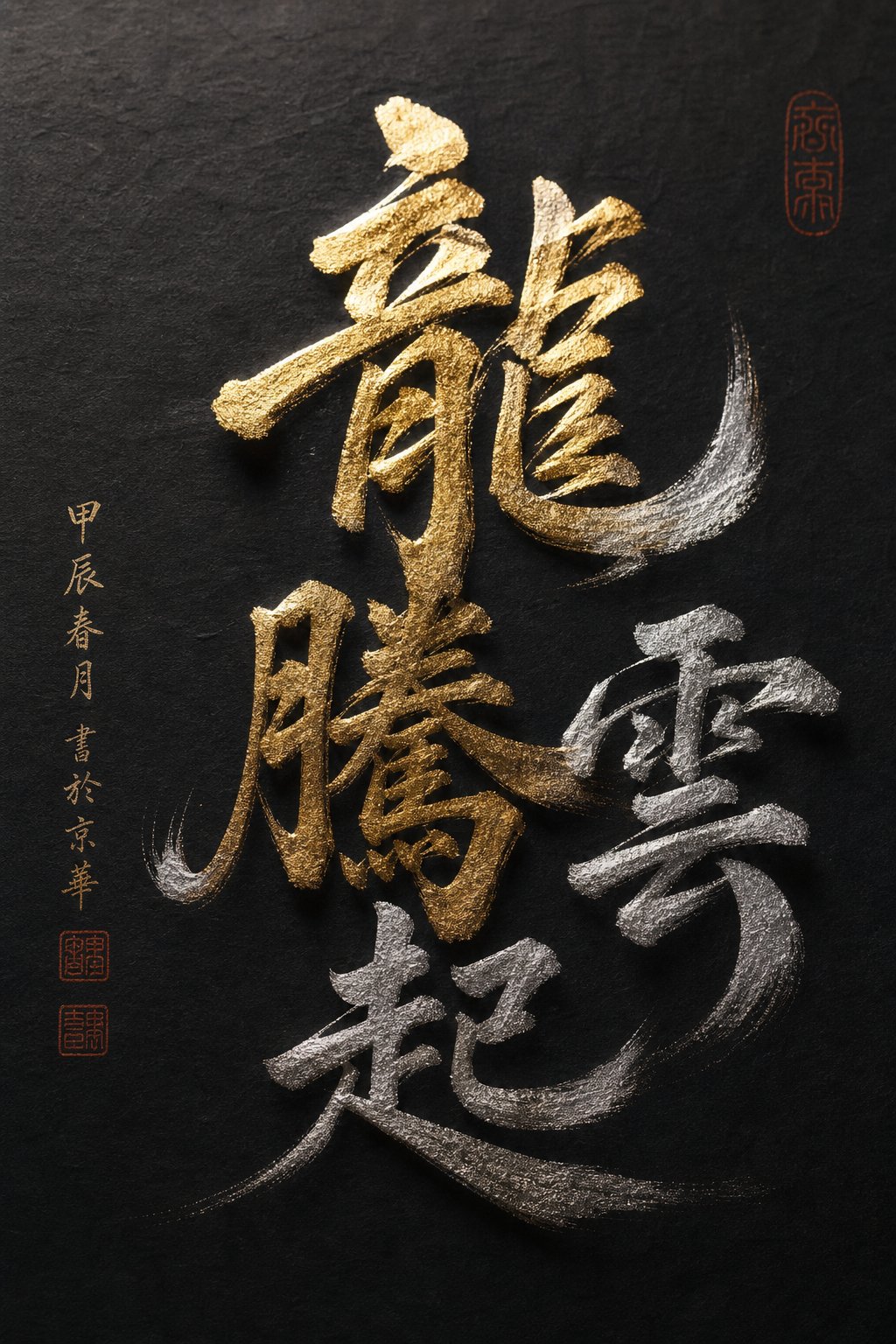
Popular Metal Element Characters and Their Meanings
Knowing how to identify a metal character is one thing. Knowing which ones actually work in a name is another. Not every chinese metal character carries the right weight for personal naming. Some feel too industrial. Others sound dated. A few carry unfortunate associations that only a native speaker would catch. What does metal mean in the context of a name? It means choosing characters that channel metal's qualities, precision, resilience, value, into something a person carries for life.
Top Metal Characters for Modern Chinese Names
The characters below are organized by how frequently they appear in contemporary Chinese names, not alphabetically. Each one has earned its popularity through a combination of pleasant sound, balanced stroke count, and rich metal symbolism that parents find aspirational.
| Character | Pinyin | Stroke Count | Meaning | Usage Notes |
|---|---|---|---|---|
| 鑫 | xin (1st tone) | 24 | Prosperity, abundance of gold | Extremely popular for business names and given names; triple 金 stacking signals wealth |
| 铭 | ming (2nd tone) | 11 | To inscribe, to remember | Gender-neutral; suggests someone who leaves a lasting mark |
| 锦 | jin (3rd tone) | 13 | Brocade, splendid | Evokes beauty and refinement; common in both male and female names |
| 钰 | yu (4th tone) | 10 | Precious jade, treasure | Leans feminine; combines metal radical with jade meaning for double preciousness |
| 锐 | rui (4th tone) | 12 | Sharp, keen, acute | Suggests intellectual sharpness; popular for boys |
| 银 | yin (2nd tone) | 11 | Silver, purity | Softer than gold; carries elegance without ostentation |
| 钧 | jun (1st tone) | 9 | Ancient weight unit, gravitas | Implies substance and authority; traditionally male |
| 钢 | gang (1st tone) | 9 | Steel, strength | Direct and powerful; less common in modern names due to industrial feel |
| 铮 | zheng (1st tone) | 11 | Sound of metal clashing | Suggests outspokenness and clarity; used in the phrase 铮铮铁骨 (unyielding character) |
| 锋 | feng (1st tone) | 12 | Sharp edge, vanguard | Implies leadership and cutting ability; strongly masculine |
Character Breakdowns with Component Analysis
A closer look at the most distinctive characters reveals why their metal meanings resonate so deeply in naming culture.
鑫 (xin) is visually striking: three 金 characters stacked in a pyramid formation. The symbolism of metals here is literal multiplication. One gold is valuable. Three golds together suggest overflowing prosperity. Parents choose 鑫 when they want abundance written directly into the name. Its 24-stroke count makes it one of the most complex common naming characters, which some traditions consider auspicious for its visual density.
铭 (ming) combines the metal radical 钅 with 名 (name/fame). The component analysis tells a story: to carve one's name into metal so it endures forever. As one naming resource explains, a name with Ming suggests someone who leaves a mark, who wants to be remembered. This character works across genders and pairs well with almost any surname, making it one of the most versatile metal choices available.
锦 (jin) pairs the metal radical with 帛 (silk). Brocade is silk interwoven with gold thread, a fabric reserved for royalty in imperial China. The metal symbolism here is not about hardness or cutting. It is about value woven into something beautiful. Parents who choose 锦 want their child's name to suggest a splendid, richly textured life.
钰 (yu) merges 钅 with 玉 (jade). This character essentially means "precious as both metal and jade," doubling the sense of treasure. It carries a softer, more refined energy than characters like 钢 or 锋, which is why it appears more often in female names.
银 (yin) offers an interesting alternative to 金. Silver in Chinese culture represents purity and understated elegance rather than flashy wealth. Where gold shouts, silver whispers. Parents drawn to metal's clarity without its associations of material ambition often land on 银.
钢 (gang) means steel, the hardest and most unyielding form of metal. It carries undeniable strength, but modern parents sometimes find it too blunt, too industrial for a personal name. You will encounter it more in names from the 1950s-1970s, when revolutionary ideals of iron will and steel determination shaped naming trends. Today it reads as somewhat dated unless paired with a softening second character.
Notice what is absent from this list. Characters like 铁 (tie, iron) and 铅 (qian, lead) technically belong to the metal element, but they carry connotations of heaviness, dullness, or harshness that make them poor choices for names. Similarly, 锈 (xiu, rust) contains the metal radical but suggests decay rather than strength. The symbolism of metals matters as much as the elemental classification. A character must carry positive cultural weight to function well in a name.
This distinction between elemental correctness and cultural appropriateness is exactly where gender conventions, stroke count calculations, and family harmony enter the decision. A character can be perfect in isolation yet wrong in combination.
Gender Conventions and Family Naming Harmony
A character can carry perfect metal energy and still feel wrong in a name. Why? Because naming operates within cultural expectations that go beyond elemental classification. Gender associations, stroke count mathematics, and sibling coordination all shape whether a metal character lands gracefully or awkwardly in a given name. If you are trying to find your chinese name or helping a child receive one, these layers matter as much as the element itself.
Gender Traditions in Metal Element Names
Chinese naming has long associated certain metal characters with masculinity and others with femininity. The logic follows the character's meaning rather than its radical. Characters suggesting hardness, sharpness, and force lean male. Characters evoking preciousness, beauty, and delicate sound lean female. Here is how the traditional division looks:
Characters traditionally used in male names:
- 钢 (gang) - steel, unyielding strength
- 铮 (zheng) - clang of metal, outspoken integrity
- 锋 (feng) - sharp edge, vanguard leadership
- 锐 (rui) - keen, acute, intellectually sharp
- 钧 (jun) - ancient weight measure, gravitas and authority
- 铸 (zhu) - to cast metal, to forge something lasting
Characters traditionally used in female names:
- 钰 (yu) - precious jade-metal, refined treasure
- 锦 (jin) - brocade, splendid beauty
- 铃 (ling) - bell, a clear and pleasant sound
- 银 (yin) - silver, understated elegance
- 钗 (chai) - hairpin, feminine adornment
- 镁 (mei) - magnesium, chosen for its phonetic similarity to 美 (beautiful)
These boundaries are shifting. Characters like 铭 (ming, to inscribe) and 鑫 (xin, triple gold) have become genuinely gender-neutral in contemporary usage. Parents today increasingly choose 锐 for daughters when they want to signal intellectual sharpness, and 钰 occasionally appears in male names where parents value its sense of inner worth over its traditionally feminine associations. The trend reflects a broader cultural movement: younger Chinese parents prioritize meaning over convention when they get a chinese name for their child.
Still, awareness of these patterns matters. A name that reads as strongly gendered in one direction can create social friction if the bearer's gender does not match expectations. When someone asks "what is your chinese name" and the answer surprises the listener, that moment of mismatch is something parents weigh carefully.
Stroke Count and Auspicious Number Calculations
Metal element characters span a wide range of stroke counts, from 9 strokes (钧, 钢 in simplified) to 24 strokes (鑫). This range matters because many naming traditions require the total stroke count of a full name to hit specific auspicious numbers.
The most widely used system is the 五格剖象法 (Five-Grid Name Analysis), which calculates five numerical values from the stroke counts of surname and given name characters. Each grid corresponds to a different life aspect: heaven, personality, earth, external, and total. The numbers are then evaluated against a table of auspicious and inauspicious values.
Imagine you have settled on a metal character like 锦 (13 strokes) for its beautiful meaning. But your surname has 8 strokes, and the Five-Grid calculation shows that 8 + 13 produces an unfavorable personality grid number. You face a choice: keep the character you love and accept the numerological tension, or swap to a different metal character whose stroke count produces better grid numbers. This is why experienced naming consultants always present multiple metal character options rather than a single recommendation.
One important note: stroke counts differ between simplified and traditional systems. Many practitioners in Mainland China use Kangxi Dictionary (康熙字典) stroke counts, which follow traditional character forms, even when the name will be written in simplified characters daily. A character like 钟 appears to have 9 strokes in simplified form but counts as 17 strokes under the Kangxi system because the traditional form 鐘 has 17. Always confirm which counting method your consultant uses before evaluating whether a metal character fits your numerical requirements.
Balancing Elements Across Sibling Names
For families with multiple children, naming becomes a coordination exercise. Parents often want sibling names to feel connected yet distinct, and element selection plays a central role in achieving that harmony.
A common approach is to assign each child a different element based on their individual BaZi chart. One child might receive a metal-element name while a sibling gets a wood-element name. This respects each child's unique elemental needs. However, some parents worry about the overcoming cycle: metal overcomes wood. Does naming one child with metal and another with wood create symbolic conflict between siblings?
Most practitioners advise against reading sibling names through the overcoming lens too literally. The names serve individual charts, not a shared family chart. That said, parents who want visible harmony sometimes choose elements from the generative cycle instead. If the first child has a metal name, the second might receive a water-element name (since metal generates water), creating a sense of flow rather than tension.
Another strategy uses a shared generational character (辈分字) that carries one element, while the unique character in each sibling's name carries the element their personal chart requires. This gives the family cohesion through the shared character while addressing individual balance through the variable one.
People exploring how to find your chinese name sometimes wonder whether they need to consider existing family members' name elements. The answer depends on how traditional the family's approach is. Strict practitioners map the entire family's elemental landscape. Modern families typically focus only on the individual child's chart. Either way, the goal remains the same: a name that feels complete on its own while sitting comfortably alongside the names of those closest to the bearer.
If you have ever wondered "what would be my chinese name" and whether it should echo or contrast with a partner's or sibling's name, the answer lies in your personal chart first. Family harmony is a secondary consideration, not the primary driver. Similarly, parents choosing chinese names meaning fire for one child and metal for another are not creating conflict. They are responding to two different charts with two different needs.
Gender fit, stroke count alignment, and family coordination are the filters that narrow your metal character options from dozens to a handful. But there is one more dimension that shapes the final choice: the personality qualities you want the name to project and how yin or yang metal energy colors those qualities differently.
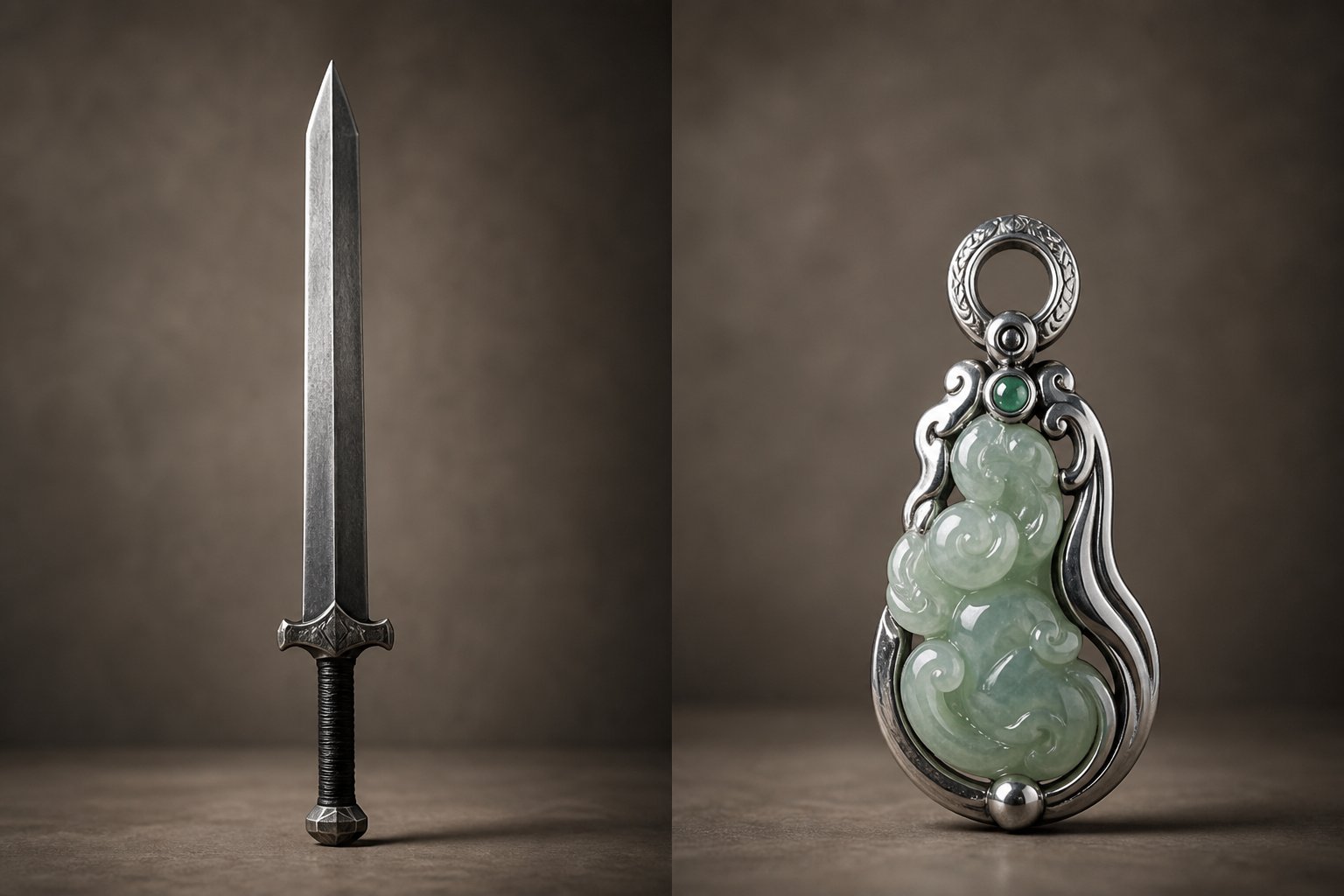
Metal Element Personality and Naming Intentions
Every name carries an aspiration. When parents select a metal element character, they are not just filling an elemental gap in a birth chart. They are encoding a set of personality traits they hope will take root in their child's life. The metal element personality is one of the most clearly defined in Wu Xing psychology, and its characteristics of metal map directly onto specific characters that naming masters recommend.
The core qualities parents seek to embed through metal names: discipline, determination, righteousness, precision, organization, and an unwavering sense of justice.
Think of it this way. A parent who values intellectual sharpness gravitates toward 锐 (rui, sharp/keen), because the character literally means a fine cutting edge applied to the mind. A parent who wants their child to possess discernment and self-reflection chooses 鉴 (jian, mirror/to examine), a character rooted in the ancient bronze mirrors that revealed truth without distortion. A parent drawn to moral clarity might select 铮 (zheng, the clear ring of struck metal), because a metal person in Chinese thought is someone whose integrity rings out unmistakably.
These are not random associations. Metal in chinese astrology governs the lung and large intestine organ systems, which traditional medicine connects to grief, letting go, and boundary-setting. A person with strong metal energy knows what to keep and what to release. They organize their world with precision. They hold themselves and others to high standards. Characters like 钧 (jun, gravitas), 锋 (feng, vanguard edge), and 铭 (ming, to inscribe permanently) each capture a different facet of this personality archetype.
Metal Personality Traits That Inspire Name Choices
The metal element personality expresses differently depending on whether the energy is balanced, excessive, or deficient. Parents naming a child whose chart lacks metal are essentially asking: what qualities does this child need support developing? The answer shapes which character they choose:
- Discipline and structure - Characters like 铸 (zhu, to cast/forge) and 钢 (gang, steel) suggest someone who can impose order on chaos
- Precision and clarity - Characters like 锐 (rui, keen) and 鉴 (jian, discernment) point toward analytical thinking and clear judgment
- Righteousness and justice - Characters like 铮 (zheng, ringing integrity) and 钦 (qin, respect/admiration) carry moral weight
- Resilience and endurance - Characters like 铭 (ming, inscribed permanently) and 锦 (jin, brocade woven with gold thread) suggest something that lasts
What does the metal element mean in chinese zodiac personality terms? It means someone who cuts through ambiguity, who values fairness over popularity, and who finishes what they start. These traits show up vividly in the metal element chinese zodiac combinations, where the metal quality overlays an animal sign's base personality.
The Metal Tiger, for example, combines the Tiger's natural courage and independence with metal's sharp focus and determination. The result is one of the most driven personalities in the entire sixty-year cycle: someone with unwavering ambition, a strong sense of justice, and an intensity that commands attention. A chinese astrology metal tiger born in 1950 or 2010 carries this combination of fearless action and structured resolve. Other metal-year animals express the element differently. The Metal Rooster sharpens into perfectionism and critical analysis. The Metal Monkey gains strategic precision. The Metal Pig develops unusual determination beneath a gentle exterior. Each combination reveals how metal's characteristics of metal adapt to the base animal's temperament.
Yin Metal vs Yang Metal in Naming
Not all metal energy is the same. The distinction between Yang Metal (庚, Geng) and Yin Metal (辛, Xin) creates two fundamentally different personality profiles, and each calls for different naming characters.
Yang Metal is the axe, the sword, the unrefined ore. It is bold, direct, and forceful. A person with Yang Metal energy confronts problems head-on, speaks bluntly, and values action over deliberation. Characters that channel Yang Metal tend to be strong and decisive: 钢 (gang, steel), 锋 (feng, cutting edge), 铸 (zhu, to forge), and 铮 (zheng, clashing metal sound). These characters suit a chart that needs assertive, outward-facing metal strength.
Yin Metal is the jewel, the needle, the finely crafted ornament. It is precise, refined, and quietly powerful. A person with Yin Metal energy works with subtlety, notices details others miss, and achieves through elegance rather than force. Characters that express Yin Metal carry a different tone: 钰 (yu, precious jade-metal), 银 (yin, silver), 铭 (ming, to inscribe delicately), 锦 (jin, gold-threaded brocade), and 鉴 (jian, mirror for reflection). These characters suit a chart that needs internalized, contemplative metal qualities.
When a BaZi practitioner identifies metal deficiency, they also assess which polarity the chart needs. A child whose Day Master is overwhelmed by excessive water energy might need Yang Metal's decisive force to cut through confusion. A child whose chart runs hot with fire might benefit from Yin Metal's cooling, reflective quality, since Yin Metal is more adaptable and less likely to clash violently with fire's intensity.
This yin-yang distinction is why two children who both "need metal" in their charts might end up with completely different name characters. One receives 锋 for its commanding edge. The other receives 钰 for its quiet preciousness. Both names restore metal energy, but they do so through opposite expressions of the same element.
Understanding whether you need the sword or the jewel is the final layer of intention before committing to a character. It transforms the naming process from "pick something with a metal radical" into a precise act of personality design. And that precision matters most when you are trying to avoid the common mistakes that trip up even well-intentioned parents, from characters that look metallic but are not, to beautiful-sounding options that carry hidden negative meanings.
Common Mistakes and Practical Tips for Metal Names
A character that looks metallic is not always a metal chinese element character. A character that is genuinely metal is not always a good name. These two traps catch parents and name-seekers more often than any other issue in the process. Avoiding them requires knowing what to watch for before you commit a name to paper and government registration.
Characters That Look Like Metal But Are Not
Some characters contain components that visually resemble the metal radical but are structurally different. Others were historically classified as metal but have been reclassified in modern dictionaries. If you rely on appearance alone, you risk choosing a character that carries no metal energy at all.
- 钱 (qian) vs 浅 (qian) - The right side looks similar, but 浅 carries the water radical (氵), not metal. Its meaning (shallow) has nothing to do with metal.
- 金 vs 全 (quan) - At a glance, 全 (complete/whole) resembles 金 in its upper portion, but it belongs to the 入 radical family. No metal energy here.
- 鉴 (jian) in simplified form 鉴 - The simplified version obscures the original 金 component visible in the traditional 鑑. Some parents miss that simplified 鉴 still counts as metal because the radical is hidden in simplification.
- 釆 vs 金 - The radical 釆 (bian, to distinguish) looks like a variant of 金 but is an entirely separate radical meaning "to separate." Characters built on 釆, like 释 (shi, to release), are not metal.
The safest approach is to verify any character against a naming-specific elemental dictionary rather than relying on visual inspection. Standard dictionaries classify by radical for linguistic purposes, but naming dictionaries classify by elemental energy, and the two systems do not always agree.
Metal Characters to Avoid in Names
Even confirmed metal-element characters can be wrong for a name. The metal radical guarantees elemental classification but says nothing about cultural connotation. These characters carry negative or awkward associations that make them poor naming choices despite their metal credentials:
- 铡 (zha) - Means guillotine or hay cutter. The association with execution and violence makes it unsuitable regardless of its strong metal energy.
- 锈 (xiu) - Means rust. It literally signifies metal in decay, the opposite of the vitality you want a name to project.
- 铐 (kao) - Means handcuffs or shackles. Strong metal imagery, but the connotation of imprisonment is obvious.
- 铅 (qian) - Means lead (the heavy metal). Carries associations of toxicity, dullness, and heaviness.
- 锉 (cuo) - Means to file down or a metal file. The sense of being worn away or diminished works against naming intentions.
- 铁 (tie) - Means iron. Not inherently negative, but reads as blunt and dated in modern naming. It peaked during the revolutionary era when names like 铁军 (Iron Army) reflected political ideals.
Beyond negative meanings, watch for overly common choices that lack distinctiveness. Characters like 鑫 appear in millions of registered names and business signs across China. If uniqueness matters to you, consider less saturated options like 钧 (jun, gravitas) or 鉴 (jian, discernment) that carry equal metal weight with far less repetition.
The feng shui metal element adds another layer to consider. In feng shui practice, the element metal feng shui associates with the west and northwest sectors of a living space, with autumn energy, and with the qualities of contraction and completion. Some families align their child's name element with the feng shui element metal of their home's dominant sector, believing this creates resonance between the person and their environment. A child whose bedroom sits in the western (metal) sector of the home might receive a metal name to harmonize personal and spatial energy. This is not universal practice, but parents who already follow feng shui metal element principles in their home design sometimes extend that logic to naming.
Tips for Non-Chinese Speakers Choosing a Name
If you are wondering how to find my chinese name as someone who did not grow up speaking Mandarin, the process looks different than it does for native speakers. You are not just selecting characters. You are entering a cultural system with layers of meaning you may not intuitively grasp. Here is what to expect:
- Work with a qualified naming consultant - Look for someone who can explain their methodology (BaZi-based, meaning-based, or hybrid). Ask whether they use traditional or simplified stroke counts and which elemental classification system they follow.
- Provide your birth data - A proper consultation requires your birth year, month, day, and hour to calculate your Four Pillars. Without this, any element recommendation is guesswork.
- Clarify your goals - Are you seeking a name for professional use in China, for cultural connection, or for a specific ceremonial purpose? Each context shapes the formality and style of name that fits.
- Ask about pronunciation - When people ask "what is my mandarin name," they often forget that they need to be able to say it comfortably. A consultant should walk you through tones and help you find my chinese name that you can actually pronounce with confidence.
- Request multiple options - A good consultant presents three to five name candidates with explanations of elemental balance, stroke count analysis, and meaning. You should understand why each option works, not just be handed a single answer.
- Verify independently - After receiving recommendations, check the characters in a dictionary yourself. Confirm the meanings match what was explained. Look up the characters on Chinese naming forums to see if native speakers flag any unintended associations or homophones with unfortunate words.
The biggest mistake non-Chinese speakers make is treating the process as a quick translation exercise. Your English name does not convert directly into Chinese. A meaningful Chinese name is built from scratch using your birth chart, your aspirational qualities, and the phonetic and visual aesthetics of the characters themselves. Give the process the time it deserves, and you will end up with a name that feels genuinely yours rather than a superficial label.
With pitfalls identified and practical guidance in hand, the final step is pulling every thread together into a clear decision framework, one that moves you from understanding metal to actually choosing the right characters for your name.
Bringing It All Together for Your Metal Element Name
You have the theory. You understand the cycles, the birth chart logic, the character classification methods, and the cultural filters that separate a good metal name from a misguided one. The question now is simple: what do you actually do with all of this?
Whether you follow the traditional BaZi path, where every character is prescribed by your chart's elemental needs, or the modern aesthetic path, where you choose metal characters for their aspirational meaning and cultural resonance, the decision process follows the same structural logic. One path is systematic and calculated. The other is intentional and intuitive. Both produce meaningful names when you respect the fundamentals.
Your Metal Element Naming Checklist
Here is the framework distilled into a sequence you can follow immediately. Each step builds on the previous one, narrowing your options from hundreds of possible characters down to the handful that genuinely fit.
- Determine whether metal is needed. Calculate your BaZi chart using your exact birth year, month, day, and hour. Identify your Day Master element and assess whether metal serves as a favorable element (用神) in your chart. If you are unsure whether you are metal-deficient, a qualified practitioner can read the chart and tell you directly. This is the step that answers "am i metal" or "what is my element" with precision rather than guesswork.
- Decide between Yang Metal and Yin Metal. If your chart needs the forceful, decisive energy of Geng (庚), you will lean toward characters like 锋, 钢, and 铮. If it calls for the refined, precise energy of Xin (辛), characters like 钰, 银, and 铭 are more appropriate. This polarity shapes the entire personality tone of the name.
- Identify candidate characters using all three classification methods. Start with radical-based characters (钅 or 金 radical) for certainty, then expand into meaning-based and sound-based metal characters for greater range. Build a list of ten to fifteen candidates before narrowing down.
- Check stroke count compatibility. Run each candidate through the Five-Grid (五格) calculation with your surname. Eliminate characters that produce inauspicious grid numbers. Remember to use Kangxi Dictionary stroke counts if your consultant follows that system, even for simplified characters.
- Verify gender appropriateness. Consider whether the character's cultural associations align with the bearer's gender identity and the family's preferences. Note which characters are shifting toward gender-neutral usage and which remain strongly coded.
- Confirm positive connotations. Read the character aloud in full-name context. Check for unfortunate homophones in both Mandarin and any relevant dialect. Verify that the meaning carries no negative associations (rust, decay, imprisonment, violence). Search Chinese naming forums for any red flags native speakers would catch.
- Evaluate family harmony. If siblings already have names with specific elemental characters, consider whether your metal choice creates generative flow or unnecessary tension. This step is optional for modern families but important for those following traditional practice.
- Finalize with a consultant or trusted native speaker. Even if you have done the research yourself, a second opinion from someone experienced in naming conventions catches blind spots. Present your top two or three options and ask for honest feedback on sound, visual balance, and cultural impression.
Next Steps for Finding Your Perfect Name
If you have not yet calculated your birth chart, that is your starting point. You cannot know what is my chinese name should contain until you know what your chart lacks. Free BaZi calculators exist online and can give you a rough elemental distribution, though a professional reading provides the nuance that automated tools miss, particularly around hidden stems, seasonal strength, and the critical distinction between missing elements and genuinely needed ones.
For those ready to find out your chinese name through a full consultation, prepare your exact birth time (ask your parents or check hospital records), decide whether you want a traditional or modern approach, and clarify your priorities. Do you value meaning above all? Sound? Stroke count harmony? Knowing your own hierarchy of preferences helps a consultant serve you faster and more accurately.
If you already have a Chinese name and wonder whether it carries the right elemental balance, the same framework applies in reverse. Identify the elements present in your current name characters, compare them against your BaZi chart, and assess whether the name supports or conflicts with your favorable elements. Some adults choose to adopt a supplementary name or courtesy name that adds the missing element without replacing their birth name entirely.
Metal is not just an element in a chart. It is clarity when the world feels foggy, structure when everything seems chaotic, and integrity when compromise would be easier. Whether your name carries 铭 inscribed into its bones or 钰 glowing quietly at its center, the metal you choose becomes part of how you move through life. Give it the attention it deserves.
Frequently Asked Questions About Metal Element Chinese Names
1. How do I know if my BaZi chart needs the metal element?
You need to calculate your Four Pillars using your exact birth year, month, day, and hour. A BaZi practitioner examines your Day Master element, its strength relative to the birth season, and the interactions among all eight characters. If metal is identified as your favorable element (用神) or is critically absent from your chart, metal-element characters are recommended for your name. Free online calculators provide a rough elemental distribution, but a professional reading offers nuance around hidden stems and seasonal strength.
2. What are the best metal element characters for Chinese names?
The most popular metal characters in modern Chinese names include 鑫 (xin, triple gold/prosperity), 铭 (ming, to inscribe/remember), 锦 (jin, brocade/splendid), 钰 (yu, precious jade), 锐 (rui, sharp/keen), and 银 (yin, silver/purity). Each carries positive cultural connotations beyond its elemental classification. The best choice depends on your specific chart needs, whether you require Yang Metal energy for decisiveness or Yin Metal energy for refinement, as well as stroke count compatibility with your surname.
3. What is the difference between Yang Metal and Yin Metal in naming?
Yang Metal (庚, Geng) represents the axe and sword — bold, direct, and forceful energy. Characters channeling Yang Metal include 钢 (steel), 锋 (sharp edge), and 铮 (clashing metal sound). Yin Metal (辛, Xin) represents the jewel and needle — precise, refined, and quietly powerful. Yin Metal characters include 钰 (precious jade-metal), 银 (silver), and 铭 (to inscribe). Your BaZi chart determines which polarity you need based on the specific imbalance present.
4. Can a character be metal element without having the metal radical?
Yes. Chinese naming tradition uses three classification methods: radical-based, meaning-based, and sound-based. Characters like 利 (sharp/benefit), 秋 (autumn), and 初 (beginning, contains the knife component) are classified as metal through their semantic associations with metal qualities such as cutting, autumn season, or sharpness. The Five Sounds (五音) theory also assigns metal classification based on pronunciation. This expands your options well beyond characters with the visible 钅 or 金 radical.
5. Which metal element characters should I avoid in a Chinese name?
Avoid characters with negative connotations despite containing the metal radical. These include 铡 (guillotine), 锈 (rust), 铐 (handcuffs), 铅 (lead, associated with toxicity), and 锉 (to file down, suggesting diminishment). Also be cautious with 铁 (iron), which reads as blunt and dated in modern naming. Additionally, watch for characters that visually resemble metal but belong to different radicals, such as 全 (complete) which looks similar to 金 but carries no metal energy.