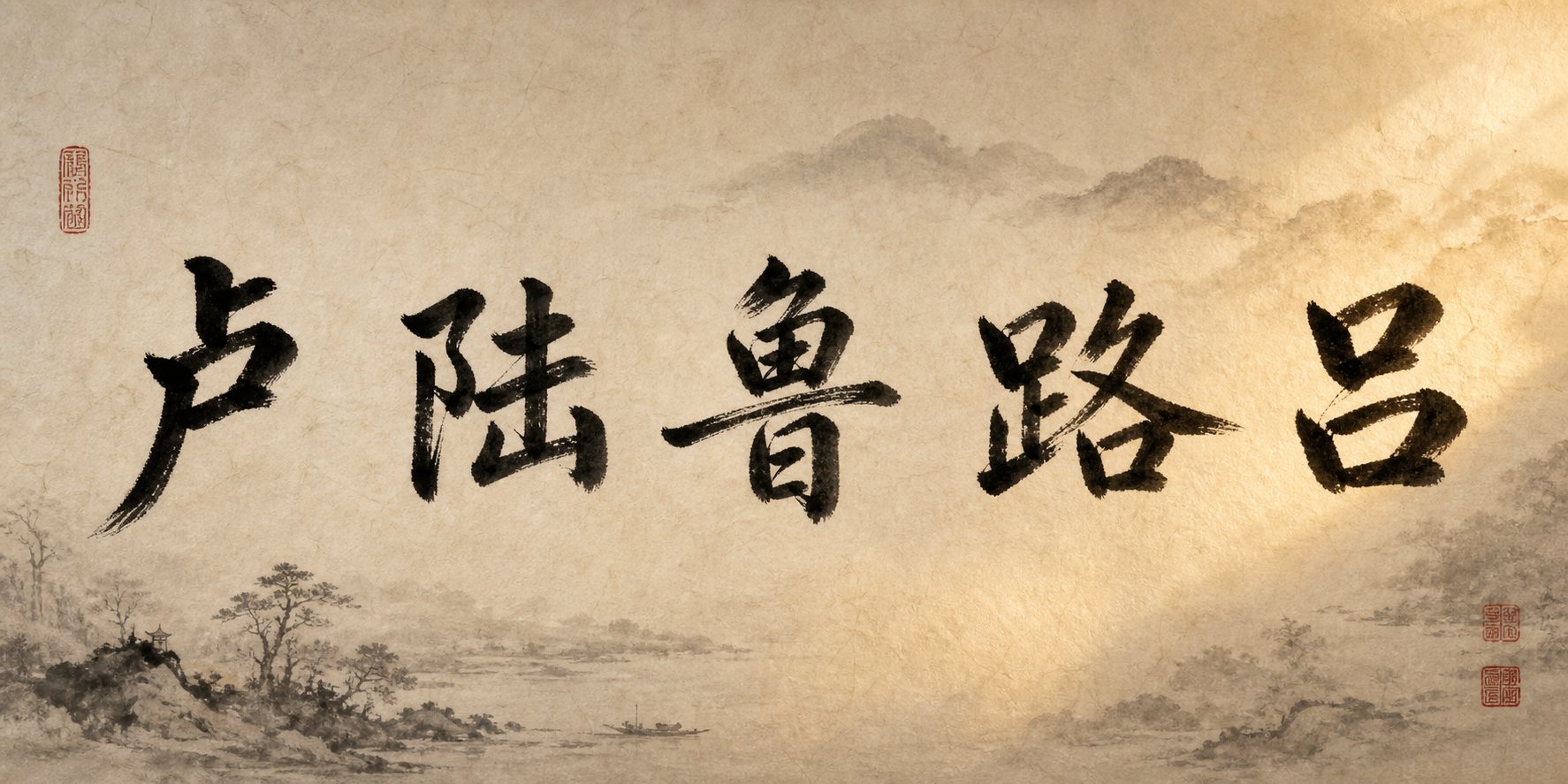
The Ancient Chinese Naming System Explained
Imagine meeting someone who carries five different names, each one unlocked at a different chapter of their life. One name whispered by parents at birth. Another bestowed in a solemn ceremony at age twenty. A third chosen by the person themselves to express a philosophical ideal. A fourth granted after death to seal their legacy for eternity. This was not unusual in ancient China. It was expected.
A Name for Every Stage of Life
Ancient chinese names operated within an integrated system of identity that followed a person from cradle to grave. The layers included the ming (birth name), the zi (courtesy name), the hao (art name or alias), the shi (posthumous name), and for emperors, the miao hao (temple name). Each served a distinct social function and arrived at a specific moment: birth, childhood, adulthood, scholarly life, and death.
You might wonder why one name was not enough. The answer lies in how chinese naming customs treated identity itself. A name was never just a label. It was a ritual act, a philosophical statement, and a social contract all at once. Calling someone by the wrong name at the wrong time could be a grave insult or a declaration of intimacy, depending on context. As one historical analysis notes, publicly using a person's birth name was so offensive that even sworn enemies avoided it.
Why Ancient Chinese Names Were More Than Labels
When a child is born on the third day, the father names it. This is the way of ritual propriety. - The Book of Rites (Liji)
This passage captures the essence of naming in chinese culture before 1912. The act of giving a name was governed by ceremony, timing, and cosmic consideration. Chinese name origins trace back to a world where language held spiritual power, where the characters chosen for a child could shape their fate, and where names in china functioned as markers of social hierarchy, moral aspiration, and clan belonging.
Chinese traditional names were not static artifacts. They evolved across dynasties as Confucian, Daoist, and Buddhist thought reshaped what a name could mean. What follows is a journey through that system, stage by stage, from the humble milk names given to protect vulnerable infants to the posthumous titles carved into imperial temples. Each layer reveals something essential about how ancient China understood personhood itself.
How Ancient Chinese Names Were Structured
Before any of those layered names could be given, a person needed a foundation. In the chinese name structure, that foundation was always the surname, placed firmly at the front. The family name came first, the given name followed. This order was not arbitrary. It encoded an entire worldview.
Surname First and What It Meant
How are chinese names structured? At the most basic level, a name consisted of two parts: the surname (xing or shi) followed by the personal name (ming). So a name like Kong Qiu places the family identity, Kong, before the individual identity, Qiu. You encounter the collective before the personal.
This ordering reflected Confucian values that placed family, lineage, and social obligation above individual desire. Your surname in chinese culture was not just an inherited tag. It was a declaration of belonging. It told the world which clan claimed you, which ancestors you honored, and which obligations you carried. The modern convention of placing the family name first descends directly from this ancient principle: the group precedes the self.
In practice, most chinese last names consisted of a single character, though rare two-character surnames like Sima and Ouyang also existed. The given name could be one or two characters, giving most full names a compact two-to-three character structure. This brevity was deceptive. Behind each character surname lay centuries of clan history, migration, and political fortune.
Origins of Chinese Surnames From Clan to Family
The story of the chinese surname stretches back more than four thousand years, but it begins with a distinction most people today have forgotten. In the earliest periods, xing and shi were not the same thing.
The xing was the older form. It functioned as a matrilineal clan marker, tracing descent through the mother's line. Many of the most ancient xing contain the radical for "woman" (nu) in their written form: Ji, Jiang, Yao, Si. This linguistic fossil points to a time when kinship was reckoned through mothers. The xing identified broad clan groups and primarily served to regulate marriage. People sharing the same xing could not marry, no matter how many generations separated them.
The shi emerged later as a patrilineal branch identifier. As clans grew and split, individual lineages needed their own markers. The shi distinguished one branch from another within the same overarching xing. Over time, as patrilineal descent became dominant, the shi gradually absorbed the function of the xing. By the Qin and Han dynasties, the two had fully merged into the single concept we now call the surname.
The Zuozhuan, one of the earliest Chinese historical narratives, documents how these shi were assigned and inherited during the Spring and Autumn period. It records dozens of cases where noble families received new shi based on their fiefdoms, official positions, or ancestral achievements. The text from the Shi Zu Bo Kao identifies thirty-two distinct categories through which surnames originated, revealing just how varied the paths to a family name could be.
Chinese last name meanings, then, were never random. Each surname carried an origin story rooted in geography, politics, or occupation. The following table illustrates the major categories:
| Category | Origin | Example Surnames | Explanation |
|---|---|---|---|
| Fiefdoms (yi) | Land granted to nobles | Cui, Lu, Yang | Ministers took the name of their granted territory |
| States (guo) | Feudal kingdoms | Song, Lu, Wei, Qi | Ruling families named after their states |
| Occupations (ji) | Professional skills | Wu (shaman), Tao (potter), Bu (diviner) | Hereditary trades became hereditary names |
| Ancestral names (zi) | Grandfather's courtesy name | Kong, Zhong, Shu | Descendants adopted a forebear's personal name |
| Geographic features (di) | Place of residence | Qiao (bridge), Chi (pond), Shan (mountain) | Families identified by local landmarks |
By the Song dynasty, chinese surnames meaning and heritage had become a subject of formal study. The Baijiaxing, or Hundred Family Surnames, compiled during the early Song period, listed 504 surnames in a rhyming poem format. It became a standard text for teaching children to read, and its influence was so widespread that the expression laobaixing ("old hundred surnames") became colloquial shorthand for ordinary people. Out of roughly 12,000 family names recorded throughout Chinese history, about 25 percent remain in use today.
What made this system powerful was its transparency. A surname instantly communicated lineage, regional origin, and sometimes social rank. Chinese last name meanings were legible to anyone educated in the tradition. Two strangers meeting could, from surnames alone, determine whether they shared a common ancestor, whether marriage between their families was permissible, and what level of ritual courtesy was appropriate.
This structural foundation, surname first and laden with meaning, was the bedrock on which every other name in the system was built. The birth name that followed it carried its own weight of ritual and intention, beginning with a ceremony held just three days after a child entered the world.
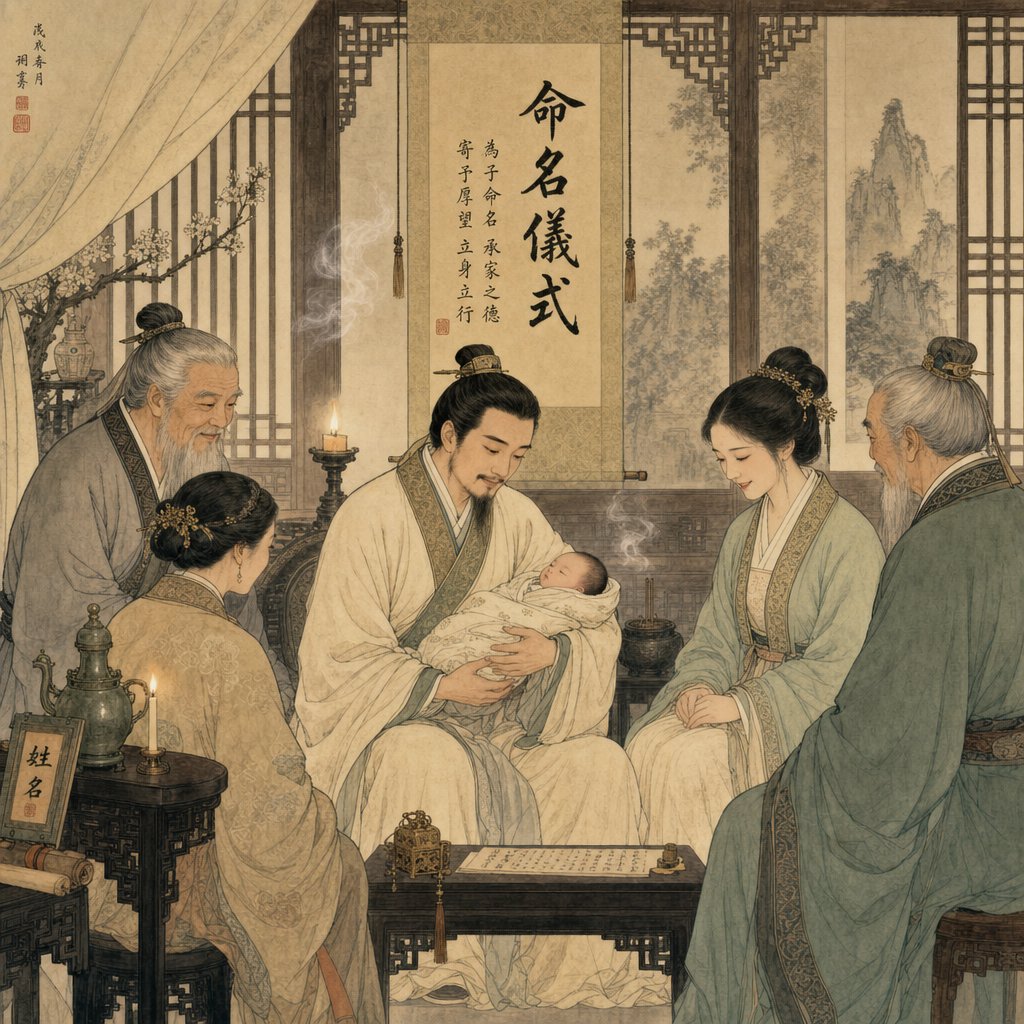
Birth Rituals and Childhood Names in Ancient China
A newborn in ancient China did not receive a name the moment it arrived. The first days of life were governed by ritual separation, spiritual caution, and careful timing. The chinese name meaning assigned at birth carried weight far beyond identification. It was a declaration that the child had been accepted into the family, recognized by the ancestors, and granted a place in the human world.
The Third-Day Naming Ceremony
The Book of Rites (Liji) prescribed a specific sequence. When a wife's month of confinement arrived, she moved to a side apartment. The husband did not enter. For three days after the birth, the newborn remained in a liminal space, not yet fully part of the household. On the third day, the ceremony began.
According to the translated text of the Liji, a divination was performed to select a suitable man, not the father, to lift the child for the first time outside the birth chamber. An exorcistic rite followed: the master of archery shot six arrows made of raspberry wood from a mulberry bow, one toward heaven, one toward earth, and four toward the cardinal directions. Only after this protective ritual did the child begin its gradual incorporation into family life.
The father's role came later. At the end of the third month, after the child's hair was ceremonially cut, the mother presented the infant to the father. He took hold of the child's right hand and spoke the name "with the smile and voice of a child." The governess then announced the name to all assembled relatives. A formal record was made, noting the year, month, and day of birth alongside the chosen chinese first names, and copies were deposited with local officials.
This was no casual moment. The Liji specified strict rules for what a birth name could not be: it should not duplicate the name of a day, a month, a state, or any hidden ailment. The chinese name definition was bounded by taboo from the very start. Naming was an act of both creation and constraint.
Milk Names and the Art of Protective Humility
Alongside the formal birth name existed a parallel tradition that operated on entirely different logic. Before or shortly after the official naming, many families gave infants a "milk name" (ru ming) or "small name" (xiao ming). These chinese baby names were deliberately crude, ugly, or absurd. The reasoning? A child with a worthless-sounding name would escape the notice of evil spirits and jealous ghosts who might otherwise snatch a promising young life.
This was not folk superstition confined to peasant households. Historical records show that even aristocratic families followed the practice. The duke Zhou Huan Gong's birth name was Heijian, meaning "Black Shoulder." Duke Jin Cheng Gong was calledHeitun, or "Black Buttocks." These were not insults. They were shields.
The categories of protective childhood names reveal the underlying beliefs:
- Animal names - names like Gou (dog), Niu (ox), or Zhu (pig), associating the child with hardy, common creatures unlikely to attract envy
- Names suggesting worthlessness - names meaning "leftover," "unwanted," or "too many," implying the child was not precious enough to steal
- Names invoking toughness or survival - names referencing iron, stone, or locks, suggesting the child was bound to the earthly world and difficult to carry away
- Deliberately ugly or crude names - references to body parts, dirt, or unpleasant physical features, making the child seem undesirable to spirits
The logic was consistent: beauty attracts danger, and value invites theft. In a world where infant mortality was devastatingly high, parents wielded language as a form of spiritual camouflage. The milk name was a disguise worn until the child was strong enough to survive without it.
This practice reveals something profound about the ancient chinese name meaning system. Names were not passive labels. They were active forces. A name could summon attention or deflect it, invite fortune or repel disaster. Language held genuine power over fate, and parents who chose ugly names for beloved children were not being careless. They were being strategic.
The milk name typically faded from use as the child grew, replaced by the formal birth name in school and public life. But it often survived within the family as a term of endearment, a private reminder of those fragile early years. The real transformation came later, when the child crossed into adulthood and received an entirely new name in a ceremony that marked them as a full participant in society.
The Courtesy Name and Its Sacred Purpose
That transformation arrived in a single ceremony. One day you were a child, addressed by your birth name, still sheltered under parental authority. The next, you stood before your community wearing an adult's cap for the first time, and a new name was spoken aloud. This was the courtesy name, or zi, and receiving it meant you had crossed a threshold that could never be uncrossed.
The Capping Ceremony and Coming of Age
What is a courtesy name in china? It was an additional name bestowed upon a person at adulthood, complementing and in many ways replacing the birth name in daily social use. The Book of Rites (Liji) prescribed the timing precisely: "A son at twenty is capped, and receives his appellation." For women, the parallel was the hairpin ceremony (ji li), performed at age fifteen or upon betrothal.
The male capping ceremony, called guan li, was no casual affair. A respected elder or family friend was invited to serve as the officiant. The young man's hair was bound up in an adult style, and a cap was placed on his head three times, each cap more formal than the last. With the final capping, the officiant announced the courtesy name they had chosen. From that moment forward, the young man's birth name became restricted. Only his parents, grandparents, and the emperor retained the right to use it.
This restriction was the heart of the system. The courtesy name meaning was inseparable from its social function. Among peers, using someone's birth name was considered deeply disrespectful, almost an act of aggression. The zi existed so that equals could address each other with dignity. It functioned as one of the most fundamental chinese honorifics, a built-in mechanism of mutual respect encoded directly into the naming system. Yan Zhitui, a scholar of the Northern Qi dynasty, captured the distinction clearly: the birth name existed to distinguish one person from another, but the courtesy name existed to express moral integrity.
How Courtesy Names Connected to Birth Names
A chinese courtesy name was never random. It bore a deliberate semantic relationship to the birth name, typically through one of several patterns: synonymy, elaboration, complementary meaning, or literary allusion. The person choosing the zi had to demonstrate learning and creativity, crafting a name that illuminated the birth name from a new angle.
Consider the most famous example. Zhuge Liang's birth name, Liang, means "bright." His courtesy name, Kongming, means "exceedingly bright." The zi amplifies the ming. Or take the poet Li Bai: his birth name Bai means "white" or "pure," and his courtesy name Taibai means "supremely white," an elaboration that also references the planet Venus (known as Taibai in Chinese). Yue Fei, the Song dynasty general, had a birth name meaning "to fly," paired with the courtesy name Pengju, meaning "the great roc rises," an allusion to the mythical bird in Zhuangzi that soars ninety thousand li.
Another common method used birth-order characters as the first syllable of the zi. Confucius himself illustrates this: his birth name was Qiu, and his courtesy name was Zhongni, where zhong indicates he was the second son. The characters bo (first), zhong (second), shu (third), and ji (youngest) appeared frequently in courtesy names, embedding family position into personal identity.
The following table shows how several historical figures' courtesy names related to their birth names:
| Historical Figure | Birth Name (Ming) | Courtesy Name (Zi) | Semantic Relationship |
|---|---|---|---|
| Zhuge Liang | Liang (bright) | Kongming (exceedingly bright) | Amplification of the same quality |
| Li Bai | Bai (white, pure) | Taibai (supremely white) | Intensification with celestial allusion |
| Yue Fei | Fei (to fly) | Pengju (the great roc rises) | Literary elaboration via Zhuangzi |
| Zhao Yun | Yun (cloud) | Zilong (son of the dragon) | Complementary imagery: clouds accompany dragons |
| Bao Zheng | Zheng (to rescue) | Xiren (aspiring to benevolence) | Moral extension: rescue through virtue |
After the Qin dynasty, courtesy names were almost always disyllabic, consisting of two characters. Before that period, monosyllabic zi were common. This shift toward two-character names allowed for richer semantic play and more nuanced connections to the birth name.
The courtesy name system also shaped how chinese honorifics operated in writing and formal speech. When scholars corresponded, they addressed each other exclusively by zi. Historical texts like the Analerta (Lunyu) record Confucius addressing his disciples by their courtesy names in formal settings, switching to birth names only in moments of intimate instruction or sharp correction. The choice of which name to use carried emotional and hierarchical information that everyone in the conversation understood instantly.
By the time a person had both a ming and a zi, they already carried two distinct identities: one private and familial, the other public and social. But for scholars, poets, and officials, even two names were not enough. Many felt the need for a third, one chosen entirely by themselves, free from family expectation or ritual obligation, expressing something no elder could bestow.
Art Names and Posthumous Honors of the Literati
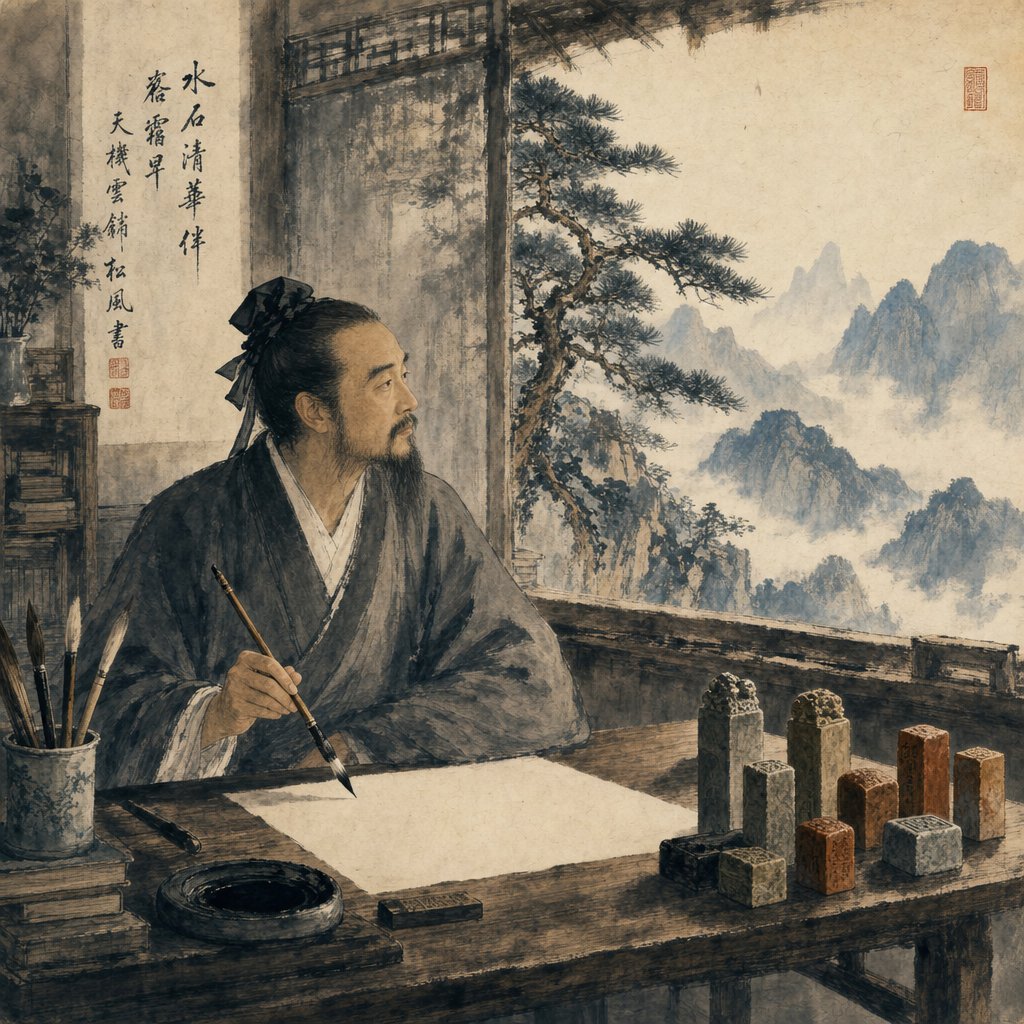
That third name was the hao, or art name. Unlike the ming given by a father or the zi bestowed by an elder, the hao belonged entirely to the person who chose it. No ceremony governed its creation. No ritual calendar dictated its timing. No family obligation shaped its meaning. It was, in the fullest sense, a self-portrait in characters, and it became one of the most expressive elements of any ancient chinese name.
Art Names and the Scholar-Official Identity
The hao functioned as a freely chosen alias that expressed a scholar's philosophical outlook, aesthetic sensibility, or relationship to the natural world. A poet who saw himself as a recluse might name himself after a mountain valley. A painter devoted to simplicity might adopt a name referencing an unadorned studio. A retired official might choose a name that signaled his withdrawal from political life. The possibilities were limitless because the hao answered to no authority except the self.
What made this practice distinctive was its flexibility. A person could adopt multiple hao over a lifetime, shedding old ones and creating new ones as their circumstances or philosophy changed. The Song-dynasty calligrapher Huang Tingjian called himself Fuweng ("Old Man from Fu") and also Shangu Daoren ("Daoist from the Mountain Valley"). Ouyang Xiu, the celebrated essayist, used Zuiweng ("Old Drunkard") during one period and Liu-yi Jushi ("Scholar of the Six Ones") during another. Each name captured a different facet of his identity at a different moment in life.
Among the most famous chinese names in literary history, many are actually hao rather than birth names. Wang Shouren, the Ming-dynasty philosopher, is universally known as Wang Yangming, Yangming being his art name. The modern writer Zhou Shuren published under the pen name Lu Xun. Zhuge Liang called himself Wolong, the "Sleeping Dragon." In each case, the chinese name interpretation that endured in cultural memory was the self-chosen one, not the name assigned at birth.
Studio names formed a particularly popular category of hao. Scholars named their studies, then became known by those studio names. The calligrapher Zhao Mengfu's studio was called Songxuezhai ("Pine Snow Studio"), and that name became inseparable from his artistic identity. Wang Guowei, the Republican-era scholar, was known as Wang Guantang because his studio was called Guantang ("Contemplation Hall"). These names appeared on seals, colophons, and the title pages of collected works, making the hao the public face of a scholar's intellectual life.
The hao also served practical purposes within literati culture. During the imperial examination system, candidates and officials used art names in their correspondence, calligraphy, and poetry exchanges. Using someone's hao in conversation signaled familiarity and intellectual kinship. It was less formal than the zi but carried none of the taboo weight of the ming. In this way, the chinese old name system created a gradient of intimacy: the ming for family elders, the zi for formal peers, and the hao for the world of letters and art.
Posthumous Names and How Emperors Were Remembered
If the hao was a name chosen in life, the posthumous name (shi) was one imposed after death. It served as a final verdict on a person's character and achievements, selected not by the individual but by those who survived them. For emperors, the Ministry of Rites chose the title. For high officials, the emperor himself bestowed it. For respected scholars, disciples or friends might grant a private posthumous name (sishi).
The practice originated during the Zhou dynasty and continued through every subsequent era until the fall of the Qing in 1912. A fixed vocabulary of characters existed for posthumous titles, each carrying a predefined moral judgment. These characters fell into three broad categories:
- Praising characters - Wen (cultured), Wu (martial), Hui (benevolent), Xiao (filial), Kang (strong), Jing (luminous). These honored rulers and officials who governed well or displayed exceptional virtue.
- Neutral or sympathetic characters - Huai (mindful), Ai (lamentable), Min (grievable), Shang (young deceased). These expressed pity for those who died young, suffered misfortune, or ruled during impossible circumstances.
- Critical characters - Li (severe, unpitying), Yang (like roaring fire, licentious), Ling (believer in ghosts), You (darkened). These condemned rulers who governed cruelly, indulged in excess, or brought ruin to their states.
The weight of a posthumous name was enormous. Being remembered as "Wen" (the Cultured) versus "Li" (the Severe) shaped how all future generations would interpret a ruler's legacy. Han Wudi, "Emperor Wu the Martial," carries his military ambition in his very name. Zhou Youwang, "King You the Darkened," is condemned for eternity by his.
Temple names (miao hao) operated on a parallel track, reserved exclusively for emperors. These were inscribed on the spirit tablets placed in the imperial ancestral temple and followed a strict formula: a single descriptive character plus either zu (ancestor, for dynastic founders) or zong (forebear, for successors). Before the Tang dynasty, not every emperor received a temple name. Only those whose reigns had significant impact earned the honor. From the Tang onward, the practice became universal, and temple names like Taizong ("Grand Forebear") or Gaozong ("High Forebear") became the standard way to reference emperors in historical writing.
To see the complete system in action, consider Su Shi, one of the most celebrated literary figures in Chinese history. His ming was Shi. His zi was Zizhan. He adopted multiple hao across his lifetime, including Dongpo Jushi ("Retired Scholar of the Eastern Slope"), a name he chose during his exile in Huangzhou when he farmed a plot of land on an eastern hillside. After his death, he received the posthumous title Wenzhong ("Cultured and Loyal"). A single person, four distinct layers of naming, each capturing a different dimension of his existence: the family's hope at birth, the social identity of adulthood, the personal philosophy of his middle years, and the final judgment of posterity.
This layered system meant that chinese name interpretation was never straightforward. Knowing which name a historical text uses tells you something about the author's relationship to the subject, the period in which the text was written, and the level of formality intended. The ancient chinese name was not a single fixed point of identity but a constellation, each star illuminating the person from a different angle.
Yet all these names, whether chosen or bestowed, operated within invisible constraints that went far deeper than social etiquette. Behind every character selection lay a cosmological framework: elemental theory, numerological calculation, and philosophical conviction about the relationship between language and destiny.
Philosophy and Cosmology Behind Ancient Name Choices
Those invisible constraints were not vague superstitions. They formed rigorous systems, tested across centuries, that governed which characters could appear in a name and why. When educated families in ancient China selected a name, they were not simply browsing a list of pleasant-sounding words. They were diagnosing a cosmic imbalance and prescribing a remedy written in ink.
A name is the vessel of reality. When the name is correct, reality is settled. When reality is settled, all things find their proper place.
This principle, rooted in Confucian thought and echoed across classical texts, captures why chinese names and meanings were treated as inseparable. A name did not merely describe a person. It actively shaped their path. The characters chosen at birth were understood to interact with the forces governing the universe, and selecting the wrong ones could invite a lifetime of misalignment.
Five Elements Theory in Name Selection
The most systematic framework for understanding chinese name meanings was Wu Xing, the Five Phases or Five Movements. Despite the common translation as "Five Elements," the Chinese character xing means "movement" or "phase," describing dynamic patterns of energy rather than static materials. First documented in the Book of Documents (Shangshu) around 1000 BCE, these five phases are Wood, Fire, Earth, Metal, and Water.
How did this shape naming? When a child was born, a specialist would calculate the infant's BaZi (Eight Characters) birth chart based on the exact year, month, day, and hour of birth. Each of these four time pillars contained two characters, and each character corresponded to one of the five phases. The resulting chart revealed which elemental energies were abundant, which were deficient, and which needed supplementation.
Imagine a child born with an excess of Fire energy but no Water in their chart. Without balance, the child might grow up impulsive, volatile, prone to burnout. The remedy was built directly into the name: parents would choose characters containing the Water radical (氵) to compensate for what the birth chart lacked. A character like Han (涵, meaning "to contain" or "inclusive") or Ze (泽, meaning "marsh" or "beneficence") would introduce Water energy into the child's identity, theoretically restoring equilibrium.
The connection between radicals and elements was precise and well-documented:
| Element (Phase) | Associated Radicals | Example Name Characters | Qualities Invoked |
|---|---|---|---|
| Wood (mu) | Wood (木), Grass (艹) | Lin (林, forest), Fang (芳, fragrant) | Growth, vitality, flexibility |
| Fire (huo) | Fire (火), Fire dots (灬) | Yan (炎, flame), Yu (煜, radiant) | Passion, visibility, warmth |
| Earth (tu) | Earth (土), Mountain (山) | Kun (坤, feminine earth), Yue (岳, peak) | Stability, patience, nurturing |
| Metal (jin) | Metal (金), Metal variant (钅) | Ming (铭, inscription), Rui (锐, sharp) | Discipline, clarity, decisiveness |
| Water (shui) | Water (氵), Rain (雨) | Han (涵, contain), Run (润, moist) | Wisdom, adaptability, depth |
The system went deeper than simple addition. The Five Phases existed in two dynamic cycles: a Generating Cycle (Wood feeds Fire, Fire creates Earth, Earth bears Metal, Metal collects Water, Water nourishes Wood) and a Controlling Cycle (Wood parts Earth, Earth dams Water, Water quenches Fire, Fire melts Metal, Metal cuts Wood). A skilled name-chooser considered not just which element was missing but how the chosen character would interact with the elements already present. Adding Water to a chart dominated by Fire might restore balance, but adding it carelessly could extinguish the very energy that gave the child drive and ambition.
Tonal harmony added another layer. The mandarin name meaning was shaped not only by semantic content but by sound. Parents considered whether the tones of the full name rose and fell in a pleasing pattern, avoiding combinations that sounded flat, harsh, or awkward when spoken aloud. A name that looked elegant in calligraphy but stumbled on the tongue was considered incomplete.
Yin-Yang theory intersected with all of this. Characters themselves carried yin or yang qualities based on their meaning, sound, and even stroke structure. A name composed entirely of yang characters (bright, strong, ascending) might overwhelm a child whose birth chart already skewed yang. Balance required mixing light with shadow, strength with gentleness, movement with stillness.
Confucian Virtues and Buddhist Dharma Names
Beyond cosmological calculation, philosophical conviction directly shaped what a china name meaning could express. Confucian families drew heavily from the Five Constants (wuchang) when selecting characters for their children's names: Ren (仁, benevolence), Yi (义, righteousness), Li (礼, ritual propriety), Zhi (智, wisdom), and Xin (信, trustworthiness). These were not merely aspirational. They were prescriptive. Naming a child Ren was an act of moral instruction, embedding an ethical obligation into the very syllable the child would hear every day of their life.
Daoist influence introduced a different vocabulary. Where Confucian names pointed toward social virtue, Daoist-inflected names reached toward nature, spontaneity, and transcendence. Characters referencing clouds (yun), mist (xia), cranes (he), pines (song), and the Dao itself appeared in the names of scholars who identified with the reclusive tradition. The meaning chinese names carried shifted depending on which philosophical current the family followed.
Buddhism brought something entirely new: a parallel naming system that existed outside the family structure altogether. When a person took Buddhist vows, whether as a fully ordained monk or as a devout layperson, they received a dharma name (fa ming). In China, ordained monks and nuns adopted the surname Shi (释), derived from Shijiamouni, the Chinese transliteration of Shakyamuni Buddha. Their given dharma name was chosen by their teacher and often reflected the lineage being transmitted.
What made dharma names significant within the broader naming tradition was their radical break from family identity. A person who entered monastic life shed their surname, their generational character, their entire clan-based naming structure. The dharma name replaced all of it with a new identity rooted in spiritual aspiration rather than blood lineage. In some Chinese Pure Land sects, all lay members shared a common first character in their dharma names, creating a spiritual kinship that mirrored the generational naming system of secular clans but organized around faith rather than ancestry.
Even the Shaolin Temple maintained its own generational naming poem. Each successive generation of monks took the first character of their dharma name from a seventy-character poem composed by the monk Xueting Fuyu. This meant that a Shaolin monk's generation within the lineage was immediately legible from their name alone, just as a secular person's generation was legible within their clan.
For educated families navigating all these systems, the process of choosing a name often required professional help. Fortune tellers and naming specialists (xingming xue practitioners) offered consultations that combined BaZi analysis, Five Phase diagnosis, stroke-count numerology, and phonetic evaluation into a comprehensive assessment. The stroke count of each character was believed to carry its own numerical fortune. Certain totals were auspicious, others dangerous. A name might satisfy every semantic and elemental requirement but fail the stroke-count test, sending the family back to search for alternative characters.
What did a chinese name mean, then, when all these layers converged? It meant that a two- or three-character name was the visible surface of an enormous invisible calculation. Behind those few brushstrokes lay a birth chart, a philosophical tradition, a family's moral aspirations, and a numerological verdict, all compressed into syllables a child would carry for life. The name in chinese meaning was never just linguistic. It was cosmological, ethical, and deeply personal all at once.
This philosophical weight did not operate in isolation. It intersected with another powerful force: the clan. Families did not simply choose names one child at a time. They planned them across generations, encoding lineage identity into a predetermined sequence of characters that could stretch centuries into the future.
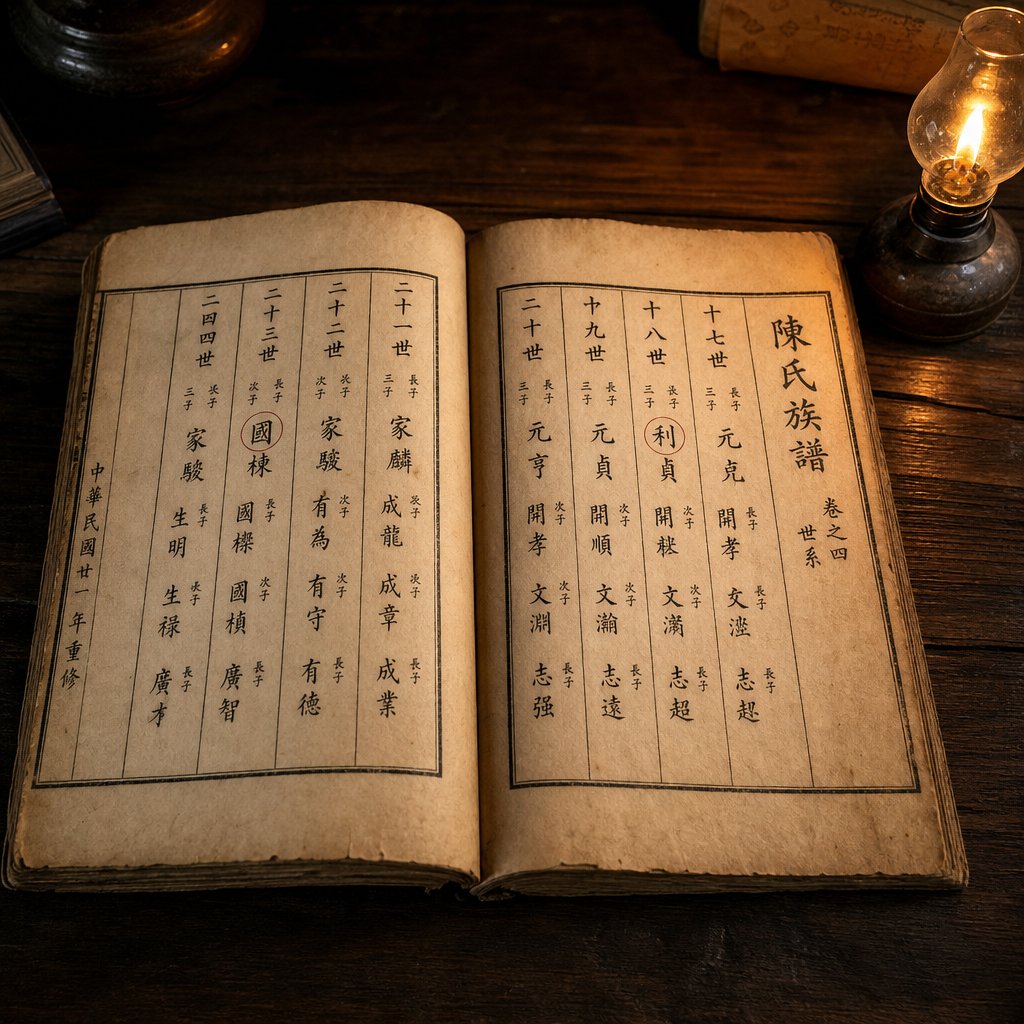
Generational Naming and the Power of Clan Identity
That planning took a remarkable form. Rather than leaving each generation to choose names independently, many clans predetermined a single character that every child born into the same generation would share. Your brothers shared it. Your cousins shared it. Even distant relatives you had never met, living in provinces hundreds of miles away, carried that same character in their name. This was the generational naming system, known as zibei or beifen, and it transformed the chinese naming convention from an individual family decision into a collective, multi-century project.
How do chinese names work within this system? The structure was straightforward. A person's two-character given name consisted of one generational character, shared with all relatives of the same generation, and one personal character, unique to the individual. The generational character most often appeared as the first of the two given characters, though some clans placed it second. Either way, the shared element made kinship instantly visible. Two strangers meeting for the first time could glance at each other's names and immediately determine whether they belonged to the same generation, an older one, or a younger one.
How Generational Characters Were Chosen
The characters were not selected at random or one generation at a time. They were composed in advance, often decades or centuries before the children who would bear them were born. The process followed a deliberate sequence:
- Clan elders compose a generational poem - A respected scholar or official within the clan, sometimes the most prominent literary figure of the lineage, composed a poem or couplet. Each character in this poem was assigned to one future generation in order.
- Each character in the poem corresponds to one generation - The first character belonged to the current or next generation, the second to the generation after that, and so on. A twenty-character poem covered twenty generations, roughly five to six hundred years of future descendants.
- All children of that generation incorporate the designated character - When a child was born, the family consulted the poem to determine which character belonged to the current generation. That character became part of the child's given name, paired with a unique personal character chosen by the parents.
The poems themselves were not arbitrary strings of characters. They typically praised ancestors, invoked Confucian virtues, expressed hopes for prosperity, or narrated the clan's origin story. When read in sequence across generations, the characters formed coherent lines of verse encoding the family's deepest values and aspirations. A typical chinese naming conventions poem might be structured in lines of five or seven characters, sometimes following rhyme schemes, sometimes not, but always providing an ordered sequence that left no ambiguity about which character belonged to which generation.
Consider a real example. The Wong clan of Gom Benn village in Taishan used a poem attributed to Wong Shi Jun, a Ming dynasty official who composed it in the early 1600s. One section read: "Shi chuan li yi zhong" (世传礼义重), meaning "Etiquette is passed down from generation to generation." Each of those five characters corresponded to one generation. A person from the 23rd generation carried "chuan" (传) in their name. Their children, the 24th generation, carried "li" (礼). The poem functioned like a fingerprint for the clan, unique enough that even a handful of generational characters could identify which family you belonged to.
Clan Genealogy Books and Their Naming Poems
The generational poem did not float in oral tradition alone. It was recorded, preserved, and enforced through the jiapu, or clan genealogy book. These were comprehensive records of family history maintained across generations, documenting births, deaths, marriages, lineage branches, and the generational naming sequence itself. The jiapu served as both a historical archive and a practical reference. When a child was born, the family consulted the book to confirm which generational character was current.
The origins of this formalized practice trace to the Song dynasty (960-1279), when Neo-Confucian thinkers like Zhu Xi placed renewed emphasis on lineage, ancestor worship, and clan organization. Before the Song period, generational naming existed in informal patterns. Families might share radicals or use similar-sounding characters within a generation, but no codified system governed the practice. The Song dynasty's intellectual climate, with its stress on ritual propriety and family as the foundation of social order, transformed these loose habits into a structured institution.
By the Ming dynasty (1368-1644), two-character given names shaped by generational poems had become the common chinese name pattern across much of the country. The practice was so widespread that single-character given names, which had been popular in earlier periods, became relatively rare among families that maintained genealogy books. Chinese name conventions during this era treated the generational character as non-negotiable. A family that ignored the designated character risked exclusion from the clan register.
No family illustrates the system's longevity better than the descendants of Confucius. The Kong clan maintains what is recognized as the world's longest documented family tree, spanning over 2,500 years and more than eighty generations. During the Ming dynasty, Emperor Zhu Yuanzhang bestowed ten generational characters upon the Kong family, covering the 56th through 65th generations. Subsequent emperors and clan leaders added more, eventually establishing a fifty-character sequence that remains in use today:
"Xi Yan Gong Yan Cheng, Hong Wen Zhen Shang Yin; Xing Yu Chuan Ji Guang, Zhao Xian Qing Fan Xiang; Ling De Wei Chui You, Qin Shao Nian Xian Yang; Jian Dao Dun An Ding, Mao Xiu Zhao Yi Chang; Yu Wen Huan Jing Rui, Yong Xi Shi Xu Chang."
These fifty characters cover generations 56 through 105, a span of roughly 1,500 years into the future from when the final twenty were established. The Kong Mansion even issued an official notice stating that clan members who did not follow the designated generational characters would "not be permitted entry into the genealogy." By the 1990s, Kong descendants in Qufu had reached the 80th generation (the "You" character), with 25 characters still remaining for future use.
The system served purposes beyond sentiment. It reinforced clan cohesion by making every member's generational position immediately legible. It prevented marriages between people of incompatible generations, which Confucian propriety forbade. It helped clan elders maintain order and hierarchy across branches that might be separated by vast distances. And it served administrative purposes: local officials could verify a person's clan membership and generational standing simply by checking their name against the genealogy book.
The practice also reveals how typical chinese names functioned as social technology. In a society without centralized identity documents for most of its history, the generational character was a portable proof of belonging. Two Kong descendants meeting anywhere in China could determine their exact relationship by comparing generational characters. If one carried "Xian" and the other "Qing," the relative seniority was immediately clear, and proper forms of address followed automatically.
Yet this elegant system operated within a broader landscape of restrictions that went beyond family convention. The same reverence for names that produced generational poems also produced something far more constraining: a system of taboos that could reshape language itself when a new emperor took the throne.
Naming Taboos That Shaped an Empire
Those restrictions were not abstract principles. They carried the force of law, and violating them could cost you your career, your freedom, or your life. The naming taboo system, known as bihu (避讳), prohibited anyone from writing or speaking the name chinese characters belonging to emperors, ancestors, or revered sages. Every time a new ruler ascended the throne, the characters in his personal name became forbidden territory for the entire empire. Texts were revised. Place names were changed. Common words vanished from everyday use overnight.
Sounds extreme? It was. But the logic was consistent with everything else in the ancient naming system. If names held genuine power, if they shaped destiny and encoded identity, then using a superior's name casually was an act of profound disrespect. It collapsed the hierarchy that held society together. The taboo system enforced this belief through three distinct levels of prohibition, each with its own scope and consequences.
The first and most severe was the state taboo (guohui, 国讳). This forbade the use of characters from the reigning emperor's given name and those of his ancestors. The second was the family taboo (jiahui, 家讳), which required individuals to avoid the name characters of their own ancestors, typically going back seven generations. In diplomatic correspondence between clans, each family's taboos were mutually observed. The third was the sage taboo (shengren hui, 圣人讳), which discouraged writing the names of revered figures like Confucius. Together, these three levels created a web of linguistic restrictions that touched every literate person in the empire.
Imperial Taboos and Their Consequences
The state taboo was backed by criminal penalties. This was not a matter of etiquette alone. During the Qin dynasty, the First Emperor's given name, Zheng (政), forced the pronunciation of the "first month" (正月, originally Zhengyue with a falling tone) to shift to a level tone, and the month was eventually renamed entirely to Duanyue (端月). A single emperor's name altered how millions of people referred to the calendar.
The consequences for carelessness could be devastating. In 1777, the scholar Wang Xihou published a dictionary that criticized the Kangxi Dictionary and wrote the Qianlong Emperor's name without omitting the required stroke. The result: Wang Xihou and members of his family were executed, and their property was confiscated. This was not an isolated incident. Throughout the Qing dynasty's "literary inquisition" (wenziyu), suspicion of taboo violation alone could trigger investigation and punishment.
The imperial examination system became the primary enforcement mechanism. Candidates who inadvertently used a taboo character in their essays were automatically failed and rejected. During the Yuan dynasty, the History of the Yuan records that examination candidates who violated imperial taboos were dismissed without appeal. In the Ming dynasty, a top-ranked scholar named Qi Shun was degraded to the bottom of the examination list in 1460 simply because his surname matched a character in the imperial name. The name in chinese language was never just personal property. It was political territory.
Some emperors recognized the burden their names placed on the population. Emperor Xuan of Han, whose original given name Bingyi (病已) contained two extremely common characters, changed his own name to Xun (询), a far rarer character, explicitly to make compliance easier for his subjects. Emperor Taizong of Tang, whose name Shimin (世民) also used common characters, issued a decree stating that only the two characters used together needed to be avoided, not each character in isolation. His son Emperor Gaozong later reversed this leniency, forcing the chancellor Li Shiji to drop a character and become simply Li Ji.
How Naming Taboos Reshaped the Chinese Language
The most remarkable consequence of the taboo system was linguistic. When a character became forbidden, it did not simply disappear. It was replaced, and the replacements often stuck permanently. The chinese name in chinese language was so powerful that avoiding it generated new vocabulary, alternative pronunciations, and synonym chains that persist in modern usage.
Three methods existed for handling a taboo character: substituting it with a synonym or similar-sounding character, leaving a blank space, or omitting the final stroke when writing it. The substitution method had the most lasting impact on the language itself. Consider these documented examples:
| Dynasty | Emperor's Name | Taboo Character | Substitution | Lasting Effect |
|---|---|---|---|---|
| Qin | Ying Zheng (嬴政) | Zheng (正) in 正月 | Pronunciation shifted to first tone (zheng) | Modern Mandarin still uses the altered pronunciation for "first month" |
| Han | Liu Zhuang (刘庄) | Zhuang (庄) as a surname | Yan (严) | Created a permanent split: some families remained Yan even after the taboo lapsed |
| Tang | Li Shimin (李世民) | Min (民) in official usage | Ren (人) in some compounds | Variant readings entered dictionaries |
| Qing (Kangxi) | Xuanye (玄烨) | Xuan (玄) in Xuanwu Gate | Shen (神) in Shenwu Gate | The Forbidden City gate retains the substituted name today |
| Qing (Qianlong) | Hongli (弘历) | Hong (弘) | Hong (宏) | The Ming-era reign title Hongzhi (弘治) was permanently rewritten as 宏治 in Qing texts |
The cumulative effect was staggering. Over two thousand years of successive dynasties, each with its own set of forbidden characters, the taboo system generated layers of synonyms, variant spellings, and alternative pronunciations that accumulated in the language like geological strata. Names and characters became entangled in ways that outlasted the dynasties that created them. A word replaced during the Han dynasty might never revert to its original form, even centuries after the taboo lost its legal force.
Scholars navigated these restrictions through careful study. Educated families maintained lists of current imperial taboos and taught children to recognize forbidden characters before they sat for examinations. The built-in contradiction was obvious: you could not avoid a name you did not know. In 435 CE, Goguryeo ambassadors formally requested that the Northern Wei court issue them a document listing the emperors' names so they could avoid giving offense in their petitions. The emperor agreed. But for ordinary people, the mechanism of learning which characters were forbidden remained unclear throughout most of Chinese history.
For modern historians, this system became an unexpected gift. Because scribes consistently avoided specific characters during specific reigns, taboo analysis now serves as a powerful dating tool. If a text uses a particular character freely but avoids another, scholars can narrow down when it was copied or composed based on which emperor's taboo was being observed. The very restrictions that constrained ancient writers now help researchers reconstruct the chronology of texts whose origins would otherwise remain uncertain.
The taboo system reveals something fundamental about how the name in chinese language functioned as a social force. Names were not neutral labels that could be spoken freely. They were charged objects, surrounded by rules that shaped what could be written, what could be said, and even what could be thought. This power was not distributed equally. The names that commanded the most elaborate avoidance belonged to men. The names that were most thoroughly erased from the record belonged to women.
Gender and the Hidden Names of Ancient Chinese Women
That erasure was not accidental. It was structural. The entire naming system, with its layered ceremonies, generational poems, and posthumous honors, was built around male identity. Women participated in it, but the historical record treated their names as disposable. A man's birth name was taboo, protected, spoken only by those with authority over him. A woman's birth name simply vanished, replaced by a generic marker that identified her only through her relationship to men.
Why Women's Names Were Lost to History
Open any official dynastic history and you will notice something striking. Emperors, generals, scholars, and officials appear with their full complement of names: ming, zi, hao, shi. Their mothers, wives, and daughters appear as surnames followed by a title. "Lady Wang." "Consort Li." "The Zhang clan woman." The personal name, the one chosen at birth with all the cosmological care described in earlier chapters, goes unrecorded.
This was not an oversight by careless historians. It reflected a deliberate social convention. As the Vancouver Public Library's genealogy guide explains, Chinese women essentially lost their given names at marriage. After that point, their names were commonly written as their maiden surname followed by "Shih," "Shee," or "See," meaning simply "a married woman who came from the [surname] clan." A woman named Wang Meihua before marriage became "Wang Shee" in her husband's household records, or sometimes "Li Wang Shee" if she married into the Li family. Her personal identity collapsed into a clan marker.
Women did receive birth names. They did, in some families, receive courtesy names during the hairpin ceremony at age fifteen. But these names circulated only within the inner household, the gyneceum where women's social lives unfolded. They were not used in official documents, carved on memorial steles, or recorded in local gazetteers. Chinese feminine names existed in a private sphere that left almost no written trace.
The result is a massive archival silence. For every dynasty, thousands of women lived, raised families, managed estates, and shaped communities. Their names died with the people who knew them personally. Kinship terms replaced personal names in daily address: "Third Aunt," "Elder Sister," "Second Daughter-in-law." Even within the family, a woman's birth name often fell out of use after marriage, replaced by relational titles that defined her through her position in the household hierarchy.
Gendered Aesthetics in Character Selection
When women's names were recorded, they followed distinct aesthetic conventions that reveal how gender shaped every aspect of the naming system. Chinese first names female characters drew from a specific semantic universe: beauty, softness, nature, and domestic virtue. Chinese names male characters occupied an entirely different territory: ambition, strength, moral achievement, and public service.
The contrast was not subtle. Parents selecting chinese first names male for their sons reached for characters invoking martial prowess, scholarly brilliance, or Confucian virtue. Chinese names for boys featured characters like Wei (greatness), Zhi (ambition), Gang (steel), and Guo (nation). Names of chinese male figures in historical records overflow with characters suggesting upward movement, expansive force, and public achievement. Chinese masculine names pointed outward, toward the world the boy was expected to conquer or govern.
For daughters, the vocabulary shifted entirely. Chinese feminine names drew from flowers (lan, orchid; lian, lotus; mei, plum blossom), precious materials (yu, jade; zhu, pearl; jin, gold), fragrance (fang, fragrant; xin, aromatic), beauty (li, beautiful; yan, gorgeous; mei, lovely), and gentleness (shu, gentle; jing, quiet; wan, graceful). The literary tradition reinforced these patterns. Classical fiction gave female characters names ending in "niang" (maiden), a suffix that simultaneously identified gender, suggested youth, and anchored identity to femininity itself. Characters like Du Liniang from The Peony Pavilion and Hu Sanniang from The Water Margin carried this marker as a permanent gender tag.
The following table illustrates how character selection diverged along gender lines:
| Category | Male Characters | Meaning | Female Characters | Meaning |
|---|---|---|---|---|
| Nature imagery | Long (dragon), Peng (great roc) | Power, mythic scale | Feng (phoenix), Yan (swallow) | Grace, beauty in flight |
| Moral qualities | Ren (benevolence), Yi (righteousness) | Public virtue, duty | Shu (gentle virtue), Hui (kindness) | Domestic virtue, warmth |
| Materials | Gang (steel), Tie (iron) | Hardness, endurance | Yu (jade), Zhu (pearl) | Preciousness, refinement |
| Aspirations | Guo (nation), Zhi (ambition) | Public achievement | Jing (quiet), An (peace) | Inner harmony, contentment |
| Natural world | Song (pine), Bai (cypress) | Resilience, longevity | Lan (orchid), Lian (lotus) | Purity, delicate beauty |
These conventions were not absolute rules, but they were powerful defaults. A family that gave a daughter a "masculine" name risked social comment. A son given "feminine" characters would face ridicule. The naming system encoded gender expectations from the first days of life, long before a child could understand what those expectations meant.
The rare exceptions prove how rigid the norm was. Women whose names survived in the historical record almost always achieved something extraordinary enough to break through the archival silence. Wu Zetian, the only woman to rule China as emperor in her own right, is remembered partly through her youth name Wu Meiniang ("Beautiful Maiden Wu"). The poet Li Qingzhao's name endures because her literary achievement was too significant to erase. Ban Zhao, the Han-dynasty historian who completed her brother's work on the Book of Han, kept her name in the record through intellectual accomplishment that male scholars could not ignore. Lin Moniang, later deified as the sea goddess Mazu, preserved her birth name through religious veneration that elevated her beyond ordinary social categories.
These women are famous precisely because they are exceptions. For every Li Qingzhao whose name survived, thousands of equally talented women disappeared into the generic "Lady" plus surname formula that the official histories preferred. The naming system that gave men five distinct identities across a lifetime often gave women none that lasted beyond their own generation.
Yet even as this gendered asymmetry defined the ancient system, the broader architecture of Chinese naming proved remarkably durable. The surname-first order that encoded collective identity over individual desire remains standard across Chinese-speaking communities worldwide. Meaningful character selection, where parents choose names based on aspiration, elemental balance, and aesthetic resonance, continues in modern families who consult naming specialists and weigh stroke counts. Generational naming persists in clan associations from Fujian to San Francisco. The practice of choosing characters that complement the surname's meaning, creating a miniature poem from a full name, remains a living art.
What has changed is the scope of who gets to participate. The naming traditions that once reserved their full complexity for men now extend equally to daughters. The cosmological calculations, the literary allusions, the careful tonal balancing, all of it applies regardless of gender in contemporary practice. The ancient system's deepest insight, that a name is not a label but an act of creation, endures. Its most limiting feature, the erasure of half the population from the record, does not.
From the third-day ceremony to the posthumous title, from the humble milk name to the self-chosen hao, the ancient Chinese naming system treated identity as something built across a lifetime rather than fixed at a single moment. Each name marked a transition, acknowledged a relationship, or expressed an aspiration. Five names were not excessive. They were necessary, because no single name could contain everything a person was, everything they owed, and everything they hoped to become.
Frequently Asked Questions About Naming Traditions in Ancient China
1. Why did ancient Chinese people have so many names?
Each name served a distinct social and ritual function tied to a specific life stage. The birth name (ming) identified the child within the family, the courtesy name (zi) enabled respectful address among peers after adulthood, the art name (hao) expressed personal philosophy, and the posthumous name (shi) sealed a person's legacy after death. Using the wrong name at the wrong time could be a serious social offense, so multiple names created a gradient of intimacy and formality that regulated all human interaction.
2. What is a courtesy name in Chinese culture and when was it given?
A courtesy name (zi) was a formal name bestowed during the capping ceremony (guan li) when a man turned twenty or during the hairpin ceremony (ji li) when a woman turned fifteen. After receiving it, only parents, grandparents, and the emperor could use the person's birth name. Peers addressed each other exclusively by courtesy names as a sign of mutual respect. The zi always bore a deliberate semantic relationship to the birth name, such as synonymy, amplification, or literary allusion.
3. How did the Five Elements theory influence Chinese name selection?
Parents consulted a child's BaZi (Eight Characters) birth chart to identify which of the five elemental energies — Wood, Fire, Earth, Metal, or Water — was deficient. They then chose name characters containing the corresponding radical to restore cosmic balance. For example, a child lacking Water energy might receive a name with the water radical (氵), like Han (涵) or Ze (泽). Specialists also considered how the chosen element interacted with existing energies through generating and controlling cycles to avoid unintended imbalances.
4. What were naming taboos in ancient China and what happened if you broke them?
Naming taboos (bihu) prohibited writing or speaking characters from the names of emperors, ancestors, or sages like Confucius. Violations carried real consequences: examination candidates were automatically failed, scholars could face execution during strict periods like the Qing literary inquisition, and officials were demoted. The taboo system forced widespread character substitutions that permanently altered the Chinese language, creating synonym variations and alternative pronunciations still visible in modern usage.
5. How does generational naming work in Chinese families?
Clan elders composed a poem where each character was assigned to one future generation in sequence. Every child born into that generation incorporated the designated character into their given name alongside a unique personal character. This made kinship instantly recognizable between strangers sharing the same clan. The Confucius family (Kong) maintains the longest documented sequence, with a fifty-character poem covering generations 56 through 105, roughly 1,500 years of future descendants.