Why Every Foreigner in China Needs a Proper Chinese Name
Imagine walking into a business meeting in Shanghai and handing over a card with only your English name on it. Your Chinese counterparts smile politely, but there is a subtle distance. They struggle with the pronunciation, default to an awkward approximation, and the conversation never quite reaches the warmth it could have. Picking a Chinese name for foreigners is not a novelty or a party trick. It is a practical tool that shapes how people relate to you in nearly every meaningful interaction across China.
Chinese names carry deep cultural weight. As Temple University's Center for Chinese Language Instruction explains, names in Chinese culture are more than labels. They reflect philosophical traditions, family aspirations, and social customs. When you adopt a thoughtful Chinese name, you are signaling that you understand this. When you pick a careless one, native speakers notice immediately.
Why a Chinese Name Opens Doors
Think about the question "what is your Chinese name" from a native speaker's perspective. It is not small talk. It is an invitation to connect on their cultural terms. A well-chosen name tells people you have invested time in understanding their language and traditions. It makes you memorable, approachable, and easier to introduce to others. Chinese colleagues will use your name naturally in conversation rather than stumbling over foreign syllables, and that fluidity builds rapport faster than any icebreaker.
A Chinese name chosen with care signals cultural respect before you even speak a word of Mandarin. It tells native speakers you are here to participate, not just observe.
The changing of names is a two-way street in China. Just as Chinese students adopt English names when studying abroad, foreigners are expected to adopt Chinese monikers as well. The Chinese language lacks an alphabet, and its characters cannot absorb foreign sounds that have no matching character. Your English name simply cannot be written in Chinese as-is. It needs to be rechristened.
When You Actually Need a Chinese Name
You will encounter the question "what is your name in Chinese" more often than you expect. Here are the situations where having a proper Chinese name moves from nice-to-have to essential:
- Business settings: Business cards, email signatures, and WeChat contacts all require a Chinese name for smooth professional interaction.
- University enrollment: Chinese universities register foreign students under Chinese names for class rosters, diplomas, and campus systems.
- Legal documents: Visa applications, bank accounts, and residence permits in China often require a transliterated or chosen Chinese name.
- Social introductions: When someone introduces you to their family or friends, a Chinese name makes the introduction natural rather than awkward.
Knowing how to say "my name is in Chinese" with confidence changes the dynamic of every first meeting. It shifts you from outsider to participant. People remember you. They correct your tones with genuine interest rather than polite detachment. And over time, your Chinese name becomes part of your identity in a way that surprises most foreigners who initially treated it as a formality.
This guide walks you through the entire process of finding what is my Chinese name, from understanding how Chinese names are structured to selecting characters, avoiding pitfalls, and refining your choice over time. It is not a quick-tips list. It is the end-to-end journey that nobody lays out clearly, including the insider knowledge that native speakers rarely share with foreigners directly.
How Chinese Names Are Structured
Before you pick characters or worry about meaning, you need to understand how do Chinese names work at a structural level. The Chinese name structure is the opposite of what English speakers are used to, and getting this wrong creates confusion from your very first introduction.
Surname First and Given Name Second
In English, you say "John Smith" — given name first, family name second. In Chinese, the chinese name order is reversed: surname (姓 xìng) comes first, followed by the given name (名 míng). So when you hear the name 王明 (Wáng Míng), 王 is the family name and 明 is the given name. This is not a quirk. It reflects a Confucian value where family identity precedes the individual.
A typical Chinese name is just two or three characters total. The surname is almost always one character, and the given name is one or two characters. That is the entire name. No middle name, no hyphenation, no suffix. When you understand that first name and last name in chinese follow this compact pattern, you realize why every single character carries so much weight.
| Component | Chinese Term | Character Count | Position | Example |
|---|---|---|---|---|
| Surname (family name) | 姓 (xìng) | 1 (rarely 2) | First | 李 (Lǐ) |
| Given name | 名 (míng) | 1 or 2 | Second | 美华 (Měihuá) |
| Full name | 名字 (míngzi) | 2 or 3 total | Surname + Given | 李美华 (Lǐ Měihuá) |
This chinese last name first convention affects how introductions work in practice. When someone asks your name in a formal setting, you give the full name — surname and given name together. Calling someone by their surname alone is incomplete, and calling them by their full name directly can feel blunt unless you hold seniority over them. The first name last name chinese order shapes every social interaction from business cards to classroom roll calls.
Formal Names Versus Casual Nicknames
Here is something most guides skip entirely: not every Chinese name you encounter serves the same purpose. Chinese naming conventions distinguish between formal registered names and casual nicknames, and foreigners benefit from understanding both.
Your formal name (大名 dàmíng, literally "big name") is what appears on official documents, university enrollment records, and business cards. It follows the full surname-plus-given-name structure and should sound professional and culturally appropriate.
Casual nicknames work differently. Among friends and colleagues, people often use shortened forms or affectionate variations. A person named 李小芳 (Lǐ Xiǎofāng) might be called 小芳 (Xiǎofāng) by friends, or even 芳芳 (Fāngfang) by close companions. The pattern of adding 小 (xiǎo, "little") or 老 (lǎo, "old") before a surname — like 小李 (Xiǎo Lǐ) or 老王 (Lǎo Wáng) — is extremely common in daily Chinese social life.
For foreigners, this means you may want two versions of your Chinese identity: a polished formal name for first name and last name for chinese documents and professional settings, and a relaxed nickname that friends and coworkers actually use day to day. The formal name earns respect. The nickname builds warmth. Both matter, and knowing when to deploy each one separates foreigners who understand Chinese social dynamics from those still figuring them out.
With the structural foundation clear, the next question becomes personal: which surname should you claim as your own, and how do you choose one that sounds natural rather than forced?
Choosing a Chinese Surname That Fits
Your chinese surname is the anchor of your entire name. It comes first, it is what people hear first, and it immediately signals whether your name sounds native or foreign. The good news is that choosing one is simpler than picking given name characters, because chinese family names are inherited rather than invented. You are essentially borrowing from a well-established list rather than creating something from scratch.
Three Ways to Pick Your Chinese Surname
Foreigners typically land on a surname through one of three approaches, each with its own advantages:
1. Phonetic matching. Choose a chinese surname that echoes the first syllable of your Western name. If your name is Harris, the surname 何 (He) captures that opening sound. If you are called Martin, 马 (Ma) works naturally. This approach gives your Chinese name a subtle connection to your birth identity while still sounding completely native. Since chinese names surname first means the surname is the very first thing people hear, a phonetic match helps Chinese speakers remember both your names at once.
2. Adopting a common surname for simplicity. Some foreigners skip the phonetic link entirely and pick a high-frequency surname that feels comfortable to pronounce. This works well if your Western name does not map cleanly onto any Chinese sound. Sticking to common chinese last names like 王 (Wang) or 李 (Li) ensures nobody blinks at your surname — it blends in immediately.
3. Receiving a surname from a Chinese mentor. Teachers, close friends, or in-laws sometimes gift a surname to a foreigner. This carries social meaning. It signals that someone in the culture has claimed you, in a sense, and vouched for your name. If a Chinese teacher assigns you a surname, accept it graciously — they have likely considered how it sounds with potential given names already.
Most Common Chinese Surnames for Foreigners
Why stick to common surnames? Because rare or literary surnames — like the compound surname中文 forms 欧阳 (Ouyang) or 诸葛 (Zhuge) — immediately draw attention. They are associated with historical figures and fiction characters, and a foreigner using one sounds like an English learner naming themselves "Shakespeare." Common surnames disappear into the background, letting your given name do the expressive work.
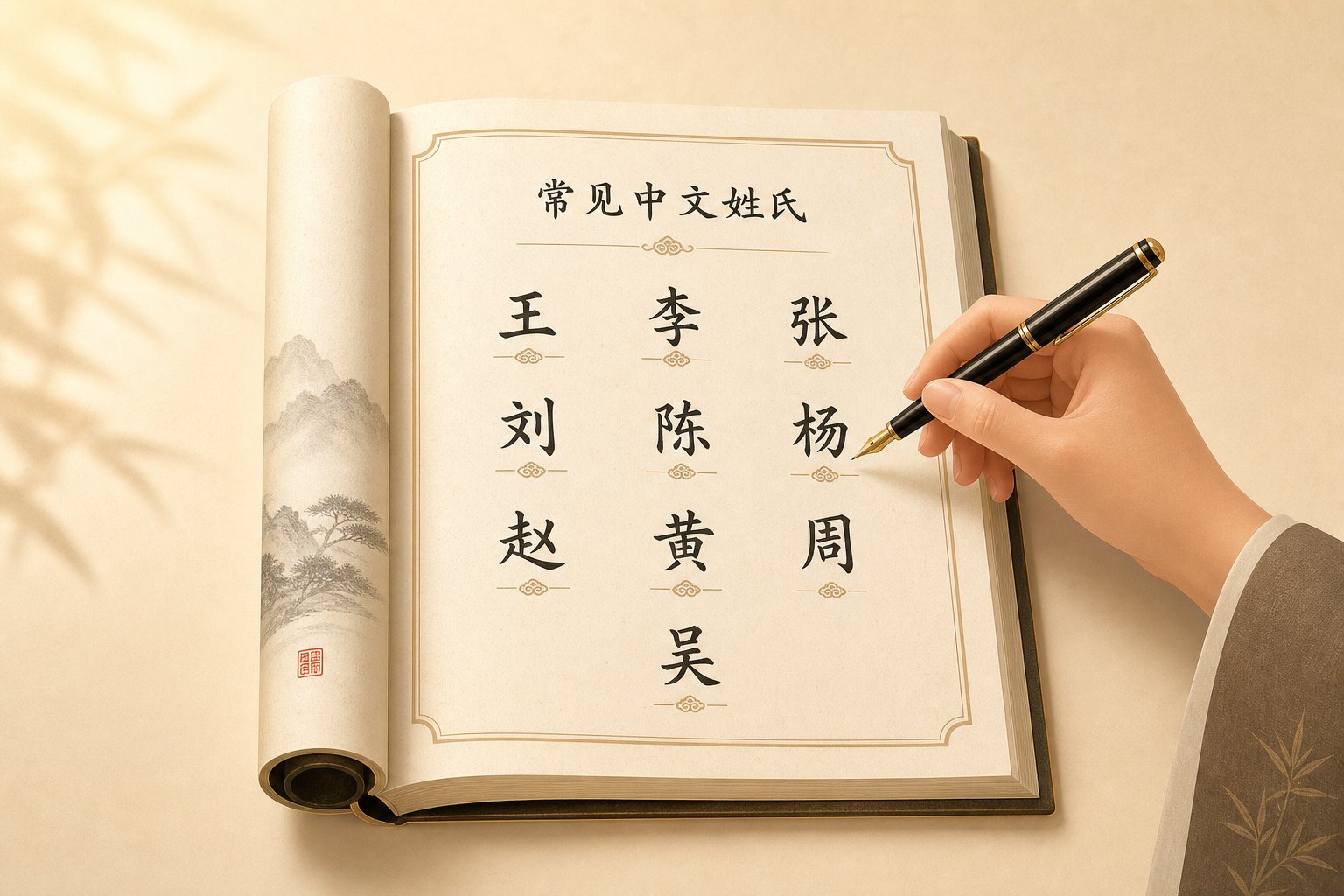
Here are the most widely shared chinese surnames along with approximate English phonetic matches to help you find a natural fit:
- 王 (Wang) — sounds like "Wong" or the start of "Wanda"
- 李 (Li) — sounds like "Lee," fits names starting with L
- 张 (Zhang) — sounds like "Jong," fits names starting with J or Ch
- 刘 (Liu) — sounds like "Leo," fits names starting with L or Lou
- 陈 (Chen) — sounds like "Chun," fits names starting with Ch or Sh
- 杨 (Yang) — sounds like "Young," fits names starting with Y
- 赵 (Zhao) — sounds like "Jow," fits names starting with J or Z
- 黄 (Huang) — sounds like "Hwong," fits names starting with H or W
- 周 (Zhou) — sounds like "Joe," fits names starting with J or Jo
- 吴 (Wu) — sounds like "Woo," fits names starting with W or U
The meaning of chinese last names matters less than you might expect. Unlike given names, surnames are not chosen for their definitions. 王 technically means "king" and 李 means "plum tree," but no one interprets them literally when they hear a name. Think of them the way English speakers think of "Smith" or "Baker" — the occupational origin is trivia, not identity.
One special case deserves mention: foreigners who marry into Chinese families. Some families still follow the 字辈 (zibei) generational naming tradition, where each generation shares one character in their given names to preserve lineage order. If your spouse's family practices this, you may be expected to incorporate the generational character into your Chinese name. This is a sign of deep acceptance into the family structure, and it is worth asking your partner whether their family maintains a 字辈 sequence before finalizing your name independently.
With your surname selected, the real creative work begins: choosing given name characters that carry the right meaning, sound, and cultural weight for your gender and personality.
Gender Conventions and Character Selection
Chinese given names are not gender-neutral by default. Native speakers can usually identify whether a name belongs to a man or a woman within a fraction of a second, based entirely on the characters used. When you are picking characters for your own name, understanding these conventions is not optional. Choose the wrong gendered character and you will spend every introduction explaining yourself, or worse, getting puzzled looks that nobody explains to you directly.
Characters That Signal Masculine Names
Chinese names for men tend to draw from a specific pool of characters associated with strength, ambition, vastness, and achievement. If you look at common chinese given names male speakers carry, you will notice recurring themes: power, moral integrity, and natural forces that suggest scale or dominance.
Boy names frequently use characters containing the radicals for "tree" (木), "man" (亻), or "metal" (钅). The tree radical appears in characters like 楠, 杨, and 桢, while the man radical shows up in 伟 and 佳. These structural clues help native speakers instantly read a name's gender even if they have never encountered that specific combination before.
Common characters in chinese names boy options include 强 (qiang, strong), 伟 (wei, great), 志 (zhi, ambition), 龙 (long, dragon), 宏 (hong, grand), and 雄 (xiong, heroic). A chinese name generator male tool might suggest these characters, but understanding why they work matters more than simply plugging them in.
Characters That Signal Feminine Names
Girl chinese names follow equally clear patterns. Feminine characters lean toward beauty, grace, nature imagery, and gentleness. The most reliable indicators are radicals: the "flower" radical (艹) appears in characters like 蓉, 薇, and 苗. The "female" radical (女) shows up in 娜, 婉, and 婷. The "jade" radical (王) signals femininity in characters like 琪, 瑶, and 瑞.
When exploring chinese names girl options and their meanings, you will encounter characters like 美 (mei, beautiful), 雪 (xue, snow), 婷 (ting, graceful), 梦 (meng, dream), and 丽 (li, beautiful). Understanding chinese girl names and meanings at this level helps you avoid accidentally selecting a character that signals the opposite gender.
| Character | Pinyin | Meaning | Gender Association | Example Name Combination |
|---|---|---|---|---|
| 伟 | wei | Great, mighty | Male | 张伟 (Zhang Wei) |
| 强 | qiang | Strong | Male | 李强 (Li Qiang) |
| 志 | zhi | Ambition | Male | 王志明 (Wang Zhiming) |
| 龙 | long | Dragon | Male | 陈龙 (Chen Long) |
| 杰 | jie | Outstanding | Male | 刘杰 (Liu Jie) |
| 美 | mei | Beautiful | Female | 王美琳 (Wang Meilin) |
| 婷 | ting | Graceful | Female | 李婷婷 (Li Tingting) |
| 雪 | xue | Snow | Female | 张雪 (Zhang Xue) |
| 花 | hua | Flower | Female | 陈花 (Chen Hua) |
| 静 | jing | Quiet, gentle | Female | 刘静怡 (Liu Jingyi) |
| 文 | wen | Cultured | Neutral | 王文 (Wang Wen) |
| 安 | an | Peaceful | Neutral | 李安 (Li An) |
How Character Combinations Create Layered Meaning
Here is where things get interesting for foreigners. A single character has one meaning in isolation, but paired with another character, it creates a layered effect that native speakers read instantly. Consider the names of chinese male speakers: 志强 (Zhiqiang) combines "ambition" with "strength," creating a name that reads as "strong-willed and determined." Each character reinforces the other.
The same layering applies to feminine names. 美琳 (Meilin) pairs "beautiful" with "fine jade," evoking both physical grace and inner refinement. Neither character alone carries that full connotation. The combination is what makes the name feel complete and intentional rather than random.
What happens if you accidentally cross gender lines? Imagine a male foreigner choosing the name 李雪婷 (Li Xueting). Both 雪 and 婷 are strongly feminine characters. Native speakers will assume the name belongs to a woman before meeting you. The social result is not offense — it is confusion. People will hesitate, double-check, and quietly wonder whether you chose the name yourself or whether someone was playing a joke. It marks your name as foreign-chosen in a way that undermines the effort you put into the rest of the process.
Modern Chinese naming is gradually becoming more flexible, with some families choosing gender-neutral characters that avoid strong associations in either direction. Characters like 文 (wen, cultured), 安 (an, peaceful), and 宁 (ning, serene) work for any gender. If you want to sidestep gendered expectations entirely, these neutral options give you room to breathe while still sounding natural to native ears.
Gender-appropriate characters are only half the equation, though. Even perfectly gendered, beautifully meaningful characters can betray you if they clash tonally or accidentally form an embarrassing homophone when spoken aloud.
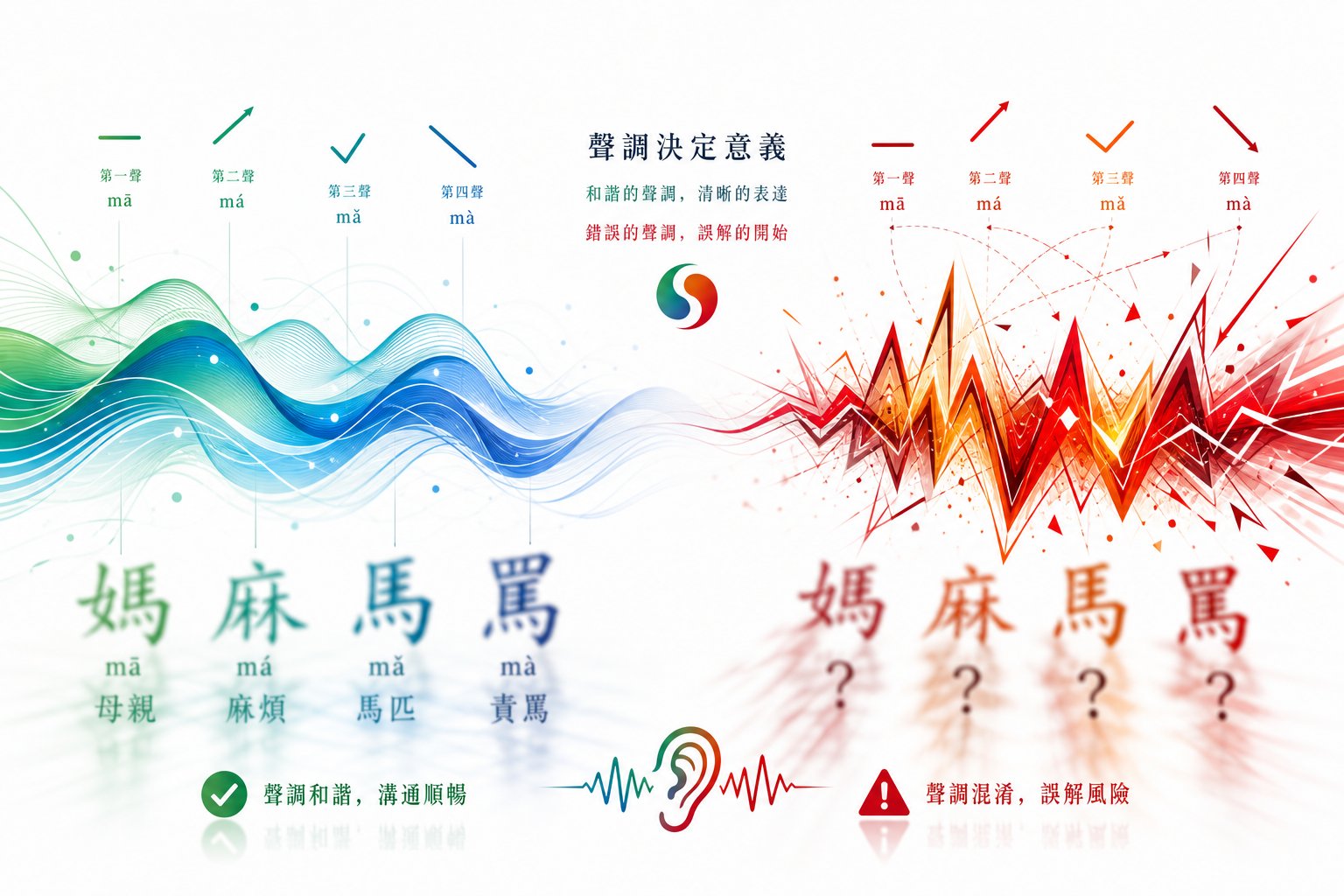
Avoiding Tonal Clashes and Phonetic Pitfalls
You have picked meaningful characters, matched them to your gender, and assembled a name that looks beautiful on paper. But here is the uncomfortable truth: a Chinese name exists primarily as a spoken thing. The way your name sounds when said aloud matters more than what it looks like written down. Two perfectly fine chinese hanzi can combine into something that makes native speakers wince, giggle, or do a double-take — and they probably will not tell you why.
Understanding how to say chinese names correctly goes beyond individual character pronunciation. It requires attention to how tones interact across syllables, what accidental words your name might echo, and whether the overall sound flows or stumbles. This is where most foreigners get tripped up, because romanization meaning on a pinyin chart tells you nothing about how characters sound together in sequence.
Why Tone Patterns Matter in Names
Mandarin has four tones plus a neutral tone, and the pattern they create across your full name affects how it feels to say and hear. Imagine a name where all three characters use the fourth tone (the sharp, falling tone). Spoken aloud, it sounds aggressive — like someone barking commands. Three consecutive first tones feel flat and monotonous, like a robot reading a list. Native speakers instinctively avoid these patterns when naming chinese characters for their own children, and your name should follow the same logic.
The most natural-sounding names mix tones. A common pleasing pattern is a combination of tones that rise and fall, creating a melodic contour. For example, a second tone followed by a fourth tone (rising then falling) feels balanced and easy on the ear. Think of how tonal differences between characters like 买 (mai, third tone) and 卖 (mai, fourth tone) completely change meaning — that same tonal sensitivity applies to how your full name registers in a listener's mind.
Homophone Traps That Make Native Speakers Laugh
Chinese is dense with homophones. The same pinyin to chinese character mapping can yield dozens of different characters, which means your carefully chosen name might sound identical to an unfortunate word or phrase. Each character in isolation may carry a lovely meaning, but spoken together at conversational speed, the syllables blur into something else entirely.
Here are common phonetic pitfalls to watch for when assembling your name in chinese characters:
- Names that sound like common objects or actions: A name like 杜子腾 (Du Ziteng) looks fine character by character, but spoken quickly it echoes 肚子疼 (duzi teng, "stomachache"). Native speakers will hear the phrase, not the name.
- Accidental number associations: The syllable "si" appears in both 四 (si, four) and 死 (si, death). Any name containing this sound risks triggering the negative association, especially in combination with other unlucky sounds.
- Names that echo slang or insults: Characters pronounced "dai" or "ben" can accidentally form words meaning "stupid" or "foolish" when paired with certain surnames. Always check the full surname-plus-given-name combination as a single spoken phrase.
- Overly literal combinations: A name like 白富美 (Bai Fumei) literally spells out the internet slang for "fair-skinned, rich, and beautiful" — a meme, not a name. What reads as flattering characters individually becomes a joke when combined.
- Repeated syllable awkwardness: If your surname and given name share the same initial consonant or vowel sound, the name can feel tongue-twisting or childish, like an unintentional tongue twister.
As naming guides emphasize, a name can be technically correct but still feel odd — checking for common homophones, slang, and overly literal combinations is essential before committing.
The Five-Times-Fast Pronunciation Test
Here is a simple test that native Chinese parents actually use, and it works just as well for foreigners: say your full Chinese name aloud five times in quick succession. Do not slow down or enunciate carefully. Speak at the speed a colleague would use calling your name across an office.
What you are listening for:
- Does the name trip your tongue? If you stumble, others will too.
- Does it blur into an unintended word or phrase at speed?
- Does it sound harsh, flat, or sing-song in a way that feels unnatural?
- Can you imagine a Chinese person calling this name comfortably in daily conversation?
If you lack confidence in your own tonal accuracy, use a phonetic pronunciation generator or text-to-speech tool set to Mandarin Chinese. Listen to the computer read your name. Better yet, record yourself saying it and compare. The gap between how you think your name sounds and how it actually lands on native ears can be significant — and this simple repetition test closes that gap before you commit to a name publicly.
Tonal flow and homophone safety are things you can check on your own, but they only get you partway there. The final filter — the one that catches cultural blind spots no foreigner can self-diagnose — requires putting your name in front of actual native speakers and knowing how to read their reactions honestly.
Getting Honest Feedback from Native Speakers
You can research characters, study tone patterns, and run every homophone check available online. But the truth is, no amount of solo work replaces the judgment of someone who grew up inside the language. If you want to find your chinese name — one that actually works in real life — you need native speakers involved in the process. The challenge is not finding someone willing to help. It is knowing who to ask, what questions cut through politeness, and how to interpret responses in a culture that rarely delivers blunt criticism.
Who to Ask for Naming Help
Not every native speaker makes a good naming advisor. A college student might say your name sounds "cool" without catching that it reads as outdated or overly literary. A busy colleague might approve it quickly just to be helpful. When you want to get a chinese name that holds up under scrutiny, look for someone with these qualities:
- Cultural depth: A Chinese teacher, a colleague over 30, or a friend who reads widely. They have absorbed enough names across generations to sense what sounds natural versus forced.
- Willingness to be honest: Someone you have a genuine relationship with — not an acquaintance trying to be polite. The closer the relationship, the more likely they will flag problems.
- Regional awareness: Ideally, someone from the region where you will use the name most. A name that works in Beijing might carry different connotations in Guangdong.
As Hacking Chinese emphasizes, you should check your name with several native speakers rather than relying on one opinion. A single person might miss a regional slang association or an outdated cultural reference that another would catch immediately.
Questions That Reveal Whether Your Name Actually Works
Here is the problem with asking "what do you think of my name?" in Chinese culture: you will almost always hear something positive. The question is too open, too easy to deflect with a smile. Instead, use specific questions designed to surface real reactions. Follow this process when presenting your name candidates:
- Present two or three options, not just one. Giving choices removes the pressure of rejecting your single idea outright. Ask which they prefer and why.
- Ask: "Does this sound like a real Chinese person's name?" This forces them to evaluate naturalness rather than just meaning.
- Ask: "Does this name remind you of any words, phrases, or famous people?" This surfaces homophone issues and cultural associations you cannot detect alone.
- Ask: "How old does this name sound? Would it fit someone my age?" Names carry generational weight. A name that sounds like a grandmother's name on a 25-year-old foreigner creates dissonance.
- Ask the ultimate test question: "Would you name your own child this?" If they hesitate, laugh, or redirect — that is your answer. A chinese good name passes this test without awkwardness.
These questions work because they are concrete. They give your advisor permission to critique without feeling like they are insulting you personally. Someone wondering "what would my chinese name be" should treat this checklist as non-negotiable before committing.
Reading Between the Lines of Polite Feedback
Chinese communication culture prioritizes harmony and face-saving. Research from the University of Virginia's Darden School explains that Chinese speakers communicate "no" through hesitation, vague phrasing, subject changes, and deferral rather than direct rejection. This applies fully to naming feedback. Your advisor will almost never say "that name is bad." Instead, watch for these signals:
- "It's... interesting" or "very unique" — This usually means it sounds foreign or strange. Unique is not a compliment in Chinese naming.
- A pause before responding — Genuine enthusiasm comes quickly. A pause means they are searching for something kind to say.
- Suggesting alternatives unprompted — If they immediately offer other options, they are diplomatically steering you away from your choice.
- "It's fine" with no elaboration — Compare this to how they react to a name they genuinely like. Real approval comes with energy: "Oh, that's good!" or an explanation of why it works.
- Asking who gave you the name — They may be trying to understand whether criticizing it would embarrass a mutual connection.
The key insight for anyone trying to figure out how to find my chinese name through native feedback: ask multiple people separately, compare their reactions side by side, and trust the patterns over any single response. If three out of four advisors hesitate on the same name, that name has a problem — even if nobody says so directly.
How to choose a chinese name is ultimately a collaborative act. You bring your preferences, your phonetic constraints, and your personality. Native speakers bring the cultural radar that catches what you cannot see. The best names emerge from that partnership, not from either side working alone. And once you have a name that passes the native-speaker filter, the next consideration is whether it fits the specific context where you will actually use it — because a name that works perfectly in a classroom may not carry the same weight in a boardroom.

Matching Your Chinese Name to the Right Context
A name that charms your language tutor over coffee might fall flat in a corporate boardroom. A name that looks authoritative on a business card might feel stiff when friends type it into a WeChat group chat. The reality most guides ignore is that many long-term foreigners in China do not rely on a single Chinese name. They maintain different versions for different settings — and this is not deception. It is the same instinct that makes you sign emails differently depending on whether you are writing to your CEO or your college roommate.
When you translate name chinese from English, the result changes depending on what you need it for. A chinese name translation for legal documents follows strict government transliteration tables. A name chosen for social life follows cultural aesthetics. Understanding which context demands which approach saves you from the common mistake of forcing one name to do everything.
Chinese Names for Business and Professional Settings
In professional China, your name appears on business cards, email signatures, contract headers, and WeChat profiles that clients and partners see daily. The characters you choose here need to project competence, stability, and maturity. Think conservative rather than creative.
According to professional business card formatting guidelines, your Chinese name should be the most prominent element on your card, with characters displayed above the pinyin romanization to maintain visual hierarchy. The pinyin follows standard formatting: surname capitalized, a space, then the given name capitalized with multi-character given names written together (e.g., "Zhang Weiming" not "Zhang Wei Ming").
For business contexts, stick to characters that convey reliability and intellect rather than poetic beauty or raw power. Characters like 文 (wen, cultured), 明 (ming, bright/clear), 信 (xin, trustworthy), and 达 (da, accomplished) read as professional without being grandiose. Avoid anything too flashy — a name like 龙飞 (Longfei, "dragon soaring") might work socially but raises eyebrows on a consulting firm's business card.
Your WeChat display name and email signature should match your business card exactly. Inconsistency across platforms undermines the professional image you are building, and Chinese colleagues will notice the mismatch.
Names for University and Social Life
Campus life and friendships allow more breathing room. University enrollment systems need a formal name on record, but the name itself can be warmer, more expressive, and slightly more playful than what you would put on a corporate card. Characters that reflect personality traits, hobbies, or aspirations fit naturally here.
Students often use names with characters like 乐 (le, joyful), 思 (si, thoughtful), or 阳 (yang, sunny) — approachable choices that invite conversation rather than commanding respect. If you want to convert your name to chinese for social use, prioritize how it feels in casual speech. Will classmates enjoy saying it? Does it lend itself to a natural nickname? A two-character given name like 小乐 (Xiaole) rolls off the tongue in a way that a formal three-character name might not during a quick hallway greeting.
Some foreigners keep their professional name for university paperwork but introduce themselves socially with a shorter, friendlier version. This dual approach mirrors what Chinese people themselves do — the name on their ID card is not always the name their friends use.
Legal Names on Visas and Official Documents
Here is where personal preference gives way to bureaucratic rules. When Chinese authorities need to render your name into chinese characters for a visa, residence permit, or bank account, they follow standardized transliteration tables — not aesthetic judgment. The result is a character-by-character phonetic approximation of your passport name, and it often sounds nothing like a natural Chinese name.
For example, "Michael Johnson" becomes something like 迈克尔·约翰逊 (Maikeʼer Yuehanxun) on official documents. These transliterations use characters chosen purely for sound, not meaning. The characters 迈, 克, and 尔 are phonetic placeholders that no Chinese parent would combine into a real name. This is why your legal transliterated name and your chosen social or professional name are typically two separate things entirely.
Research on name discrepancies in official documents confirms that transliteration standards vary across time periods and institutions, meaning your name might even appear differently on documents issued by different Chinese agencies. The practical takeaway: do not try to use your english to chinese name converter result as your social name, and do not expect your carefully chosen cultural name to appear on your visa.
| Setting | Formality Level | Character Style | Example Approach |
|---|---|---|---|
| Business cards and corporate use | High | Conservative, competence-signaling characters (文, 明, 信, 达) | Choose a name that could belong to a Chinese executive; display characters above pinyin on cards |
| University enrollment | Medium-high | Formal but slightly warmer; personality-reflecting characters acceptable | Register your full formal name; use a friendlier short form in class |
| Social life and friendships | Low-medium | Approachable, expressive characters (乐, 阳, 思); nicknames welcome | Prioritize how the name sounds in fast casual speech and group chats |
| Visas and legal documents | Mandatory/official | Phonetic transliteration only; characters chosen for sound, not meaning | Accept the government-assigned transliteration; do not alter it to match your chosen name |
The key distinction: when you name translate in chinese for official purposes, the system controls the output. When you choose a name for professional or social life, you control it. Keeping these tracks separate prevents confusion and lets each version of your name do its specific job well.
Knowing which name fits which context is strategic. But even a perfectly context-matched name can still miss the mark if it triggers the subtle judgments that native speakers make — and rarely voice — about foreigner names that sound "off."
What Native Speakers Really Think About Foreigner Names
Chinese people are generous. They will compliment your chopstick skills, praise your tones even when they are rough, and tell you your Chinese name is "very good" with a warm smile. But behind that encouragement, native speakers form instant judgments about foreigner names — judgments they almost never share directly. Understanding what triggers those silent reactions is the difference between a name that earns genuine respect and one that gets a polite nod followed by a private chuckle.
Mistakes That Instantly Mark Your Name as Foreign
Native speakers can spot a self-chosen foreigner name within seconds. The tells are consistent, and they fall into a few predictable categories:
- Overly poetic or archaic characters. Choosing characters like 墨 (mo, ink), 瑾 (jin, fine jade), or 翊 (yi, soaring) might feel elegant to a learner browsing a dictionary. But these characters belong to classical poetry or period dramas, not modern birth certificates. It is the equivalent of an English learner naming themselves "Percival Thornwood" — technically valid, culturally bizarre. No Chinese parent born after 1980 would choose these for their child.
- Grandiose meaning stacking. As one language learner recounted, he once named himself 金才宇 (Jin Caiyu) — literally "Golden Skill Universe." Every introduction brought awkward shuffles and embarrassed giggles. Naming yourself the equivalent of "Dragon Emperor" or "Eternal Wisdom" signals that you chose characters from a dictionary without understanding that real Chinese names are understated. Ambition is fine. Megalomania is not.
- Meaning-only selection with no ear for sound. Picking characters purely because you like their definitions — without saying the full name aloud — produces combinations that feel clunky or unnatural. A name can mean "wise and courageous" on paper but sound like a tongue twister or an accidental pun when spoken at normal speed.
- Unfiltered chinese name generator output. A china names generator or asian names generator tool can suggest character combinations, but these tools lack cultural context. They do not know that certain pairings sound dated, that some characters are associated with rural naming conventions from the 1950s, or that a particular combination echoes a famous fictional villain. A mandarin name generator gives you raw material, not a finished name. Treating its output as final — without running it past a native speaker — is one of the most common ways foreigners end up with names that feel "off."
The biggest giveaway is not any single bad character. It is the feeling that someone assembled a name from parts without understanding the whole — like a sentence that is grammatically correct but no native speaker would ever actually say.
What Makes a Chinese Name Feel Natural
So what separates a name that sounds native from one that screams "foreigner chose this"? The answer is surprisingly simple: restraint and familiarity.
Natural Chinese names share a few qualities that no chinese name gen tool can replicate on its own. They use characters that appear in real people's names within the current generation. They balance meaning with sound — pleasant to hear, easy to write, and modest in their aspirations. A name like 陈宇轩 (Chen Yuxuan) works because both 宇 and 轩 are popular among people born in the 1990s and 2000s. It sounds like someone's actual classmate, not a character from a wuxia novel.
The best chinese name from english name conversions follow this principle: they anchor to what real Chinese people are actually named right now. Browse a Chinese university class roster or a company directory. Notice how common the characters are. Notice the absence of dragons, phoenixes, and ancient jade metaphors. Real names are quieter than foreigners expect — and that quietness is exactly what makes them believable.
If your name could belong to a Chinese colleague your own age, you have succeeded. If it sounds like it belongs in a historical drama or a fantasy game, you have overcorrected for meaning at the expense of authenticity. The goal when deriving a chinese name from english is not to impress — it is to blend. A name that blends lets your personality, your language skills, and your relationships do the impressing instead.
This insider perspective is worth internalizing, but it also raises a reassuring truth: you do not need to get everything perfect on your first attempt. Names evolve, and the best approach treats your Chinese name as a living choice that grows alongside your cultural understanding.
Growing Into Your Chinese Name Over Time
Here is something nobody tells you at the beginning: your first Chinese name does not have to be your forever name. Most long-term expats in China have cycled through two or three names as their language skills deepened and their cultural awareness sharpened. The name you pick in your first semester of Mandarin class will likely feel different — maybe even embarrassing — five years later when you can actually hear the tonal awkwardness or recognize the overly literal character choices. That is normal. That is the process working exactly as it should.
Your First Chinese Name Does Not Have to Be Your Last
Think about how to pick a chinese name the way you think about learning the language itself. Nobody expects conversational fluency on day one. Your first name serves a practical purpose: it gives Chinese speakers something to call you, gets you through introductions, and starts building your identity in the language. It does not need to be a masterpiece.
Consider the real examples from GoEast Mandarin's student stories. Hannah simply became 汉娜 (Hanna) — a direct phonetic match with no deeper meaning. Germano had a Chinese name for years before an older Chinese person told him the fengshui was wrong and gave him a new one: 马杰 (Majie). Saverio spent years searching before settling on 习沙威 (Xishaowei) when he finally needed it for a driving license. These are not failures. They are natural stages of cultural integration, each name reflecting a different level of understanding and confidence.
If someone asks "what's my name in Chinese" and you only have a basic phonetic approximation, that is a perfectly valid starting point. You are not locked in. Chinese people themselves sometimes adopt new names at major life transitions — entering university, starting a career, or even after consulting a fortune teller. The culture accommodates name evolution in ways that Western naming traditions do not.
A Roadmap from Beginner Name to Fluent Name
How to choose chinese name options shifts as your relationship with the language matures. Here is a realistic progression that most successful expats follow, whether consciously or not:
- Stage one: the phonetic placeholder. Early in your time in China, get my chinese name sorted with a simple sound-based approximation. Your teacher or a friend picks characters that echo your English name. The meaning is secondary. The goal is functionality — something people can say and remember. This stage might last months or even a couple of years.
- Stage two: the culturally informed name. As you learn more characters, absorb naming conventions, and understand gender patterns and tonal flow, you begin to hear what works and what does not. You might realize your first name uses outdated characters, carries an unintended homophone, or simply does not reflect who you are in this culture. This is when you collaborate with native speakers to how to make a chinese name that balances sound, meaning, and naturalness. Many foreigners settle here permanently.
- Stage three: the refined identity name. Some long-term residents — those who marry into Chinese families, build careers entirely in Chinese, or reach near-native fluency — eventually adopt a name with deeper personal significance. Maybe it incorporates a generational character from a spouse's family. Maybe it references a personal philosophy using characters only an advanced speaker would select. This stage is optional, but it represents full ownership of your Chinese linguistic identity.
Not everyone reaches stage three, and that is fine. The point is that choosing a chinese name is not a one-time event with permanent consequences. It is an evolving decision that grows alongside you.
Transitioning names socially is simpler than you might fear. Update your WeChat name, mention the change casually to close contacts — "I go by [new name] now" — and let the shift happen organically. Chinese people change display names and nicknames regularly. Nobody will find it strange. If anything, moving to a more culturally sophisticated name earns quiet respect from native speakers who recognize the growth it represents.
When someone eventually asks "what does my chinese name mean" and you can explain the characters, the tonal choices, and the cultural reasoning behind each element, you will know the journey was worth every iteration. The process of picking a chinese name is itself an act of cultural engagement — not a box to check, but a relationship to build. Start where you are, refine as you grow, and trust that the name you carry five years from now will be better than anything you could have forced on day one.
Frequently Asked Questions About Picking a Chinese Name
1. How do I choose a Chinese name that sounds natural to native speakers?
Start by selecting a common Chinese surname that phonetically matches your Western name, then pair it with one or two given-name characters appropriate for your gender and age group. Avoid overly poetic or grandiose characters that no modern Chinese person would use. The key test is whether your name could belong to a real Chinese person your own age. Run your final choice past multiple native speakers using specific questions like 'Would you name your own child this?' rather than open-ended requests for feedback.
2. Do I need different Chinese names for different situations?
Many long-term foreigners in China maintain separate names for different contexts. Legal documents use a standardized phonetic transliteration of your passport name assigned by authorities. Professional settings call for a formal name with conservative characters signaling competence. Social life allows warmer, more expressive names or nicknames. These are not contradictions but reflect how Chinese people themselves use names differently across formal and casual settings.
3. What mistakes do foreigners commonly make when picking a Chinese name?
The most common errors include choosing archaic or overly literary characters that belong in period dramas rather than modern life, stacking grandiose meanings like 'Golden Dragon Universe,' selecting characters purely for meaning without testing how they sound aloud, and using unfiltered output from online name generators without cultural context. Native speakers can identify a self-chosen foreigner name within seconds based on these patterns. The fix is restraint: choose characters that real Chinese people your age actually use.
4. Can I change my Chinese name later if I pick the wrong one?
Absolutely. Most long-term expats cycle through two or three Chinese names as their language skills and cultural understanding deepen. Chinese culture accommodates name evolution more readily than Western traditions. You can start with a simple phonetic approximation, graduate to a culturally informed name as you learn more, and potentially adopt a more sophisticated name as fluency grows. Transitioning socially is straightforward: update your WeChat name and mention the change casually to contacts.
5. Why do some Chinese name combinations sound funny or offensive to native speakers?
Chinese is extremely rich in homophones, meaning your carefully chosen characters might sound identical to an unfortunate word or phrase when spoken at normal speed. For example, certain character combinations can accidentally echo words for 'stomachache,' 'death,' or common insults. Tone patterns also matter: all fourth tones sound aggressive, while repeated tones sound flat. The practical solution is to say your full name aloud five times quickly, use text-to-speech tools, and ask native speakers specifically whether your name reminds them of any words or phrases.