What a Pinyin Name Generator Actually Does
Ever wondered what "my name is in chinese" actually sounds like, or how to find a Chinese name that won't raise eyebrows? A pinyin name generator takes your input — usually an English name, a set of preferences, or personality traits — and produces a Chinese name rendered in pinyin, the romanized spelling system for Mandarin. The goal is a name that sounds natural, carries appropriate meaning, and follows real Chinese naming conventions.
But here's the thing: generating a name is the easy part. Knowing whether that name is any good requires understanding how pinyin works, what tones do to meaning, and which cultural rules separate a respectable name from an embarrassing one. This guide covers all of it — tonal flow, gender patterns, surname selection, and a practical checklist for evaluating any output from a chinese name generator or mandarin name generator.
What Pinyin Means in Chinese Naming
Pinyin (literally "spell sounds") is the official romanization system for Mandarin Chinese, adopted by the People's Republic of China and used internationally. It represents pronunciation using the Latin alphabet plus tone marks. When you search for a name generator chinese tools provide, the results you see — like "Li Mingyu" or "Zhang Weilin" — are pinyin. It's the bridge that lets English speakers read, say, and type Chinese names without knowing characters.
Pinyin is also how native speakers input characters on phones and computers, making it foundational to modern Chinese literacy. For naming purposes, it tells you how a name sounds but not what it means — and that distinction matters enormously.
Why a Generator Alone Is Not Enough
Most people type "chinese my name" into a tool and accept whatever comes back. The problem is that pinyin is inherently ambiguous. The same romanized syllable can map to dozens of different characters, each with a completely different meaning.
Pinyin without character context is like an English word without spelling — "there," "their," and "they're" all sound identical but mean entirely different things. In Chinese, the ambiguity is far greater.
A chinese names generator can suggest syllable combinations, but only you can decide whether the underlying characters carry the right meaning, avoid unfortunate homophones, and respect cultural norms. The sections ahead give you the knowledge to make that call confidently — starting with the tonal system that shapes every Chinese name at its core.

How Pinyin and Tones Shape a Chinese Name
The same pinyin syllable spoken with a different pitch becomes an entirely different word. That single fact makes tones the most critical — and most overlooked — factor when choosing a Chinese name. A chinese name generator with characters will show you the written forms, but if you can't read the tone marks above the vowels, you're essentially picking a name blindfolded.
The Four Tones and What They Mean for Names
Mandarin has four pitched tones plus a neutral (unstressed) tone. Each one changes the meaning of a syllable completely. As Hacking Chinese explains, tones are differences in pitch that differentiate words — much like vowels differentiate "bid" from "bead" in English.
Here's how they work in a naming context:
- First tone (high, flat) — mā: Steady and elevated. Names using first-tone syllables often sound calm and composed. Think of the surname "Wāng" or given-name syllables like "fēi" (to fly).
- Second tone (rising) — má: Starts mid-range and rises. It carries an upward energy, similar to a question in English. Syllables like "mín" (people) or "yáng" (sun) use this tone.
- Third tone (low/dipping) — mǎ: Drops low before rising slightly. In connected speech, it often stays low without the rise. Names with consecutive third tones trigger a tone-change rule where the first shifts to a rising tone.
- Fourth tone (falling) — mà: Starts high and drops sharply, like a firm command. It sounds decisive. Syllables like "wèi" (great) and "jùn" (handsome) carry this tone in many chinese male names.
The neutral tone appears in unstressed syllables and has no fixed pitch of its own. It rarely shows up in given names but exists in some surname particles.
Tonal Flow and Aesthetic Patterns
Native speakers don't just hear individual tones — they perceive the melodic contour of a full name. Imagine saying "Zhāng Wěihuá" aloud. You get a high start, a low dip, then a rising finish. That falling-rising pattern feels dynamic and balanced to Mandarin ears.
Contrast that with three consecutive first tones: "Gāo Fēi Fēng." The flat, high pitch repeated three times sounds monotone and robotic. Similarly, stacking multiple third tones creates pronunciation headaches because of mandatory tone sandhi rules — the preceding third tone must shift to a rising tone, which can make the name feel unstable.
Pleasing combinations tend to alternate between tones that move in different directions. A fourth tone followed by a second tone (falling then rising) creates a satisfying contrast. A first tone followed by a fourth tone (high-flat then sharp drop) sounds authoritative. These patterns matter because names in chinese letters are spoken thousands of times over a lifetime — awkward tonal flow becomes grating quickly.
Why Pinyin Without Tones Is Incomplete
When you see a name written as "Li Wei" without tone marks, you're looking at a shell with no definitive meaning. The syllable "wei" alone maps to dozens of mandarin characters depending on the tone — and even within a single tone, multiple chinese hanzi share the same sound. A chinese character name generator that omits tone marks leaves you guessing.
Consider how dramatically meaning shifts with tone on just one common name syllable:
| Pinyin + Tone | Character | Meaning | Name Suitability |
|---|---|---|---|
| wēi (1st) | 威 | Power, authority | Strong masculine name |
| wéi (2nd) | 维 | Maintain, uphold | Neutral, intellectual |
| wěi (3rd) | 伟 | Great, mighty | Very common male name |
| wèi (4th) | 卫 | Defend, protect | Traditional, patriotic |
Without tone marks, "Wei" could mean power, uphold, great, or defend — four completely different name in characters options with distinct connotations. Multiply that ambiguity across a two-syllable given name and you're dealing with hundreds of possible character combinations. This is why any serious pinyin name generator should display tone marks and the corresponding chinese symbols and meanings, not just bare romanization.
Tones shape how a name sounds, what it means, and how native speakers perceive the person carrying it. With that phonetic foundation in place, the next layer to understand is the cultural architecture that governs how Chinese names are actually constructed — from surname-first order to the philosophy behind character selection.
Cultural Rules Behind Chinese Name Construction
Tones tell you how a name sounds. Culture tells you whether that name makes sense. When you generate a chinese name or try to create chinese name options from scratch, the phonetics are only half the equation. Chinese naming follows a set of structural rules and philosophical principles that have been refined over thousands of years — and breaking them is exactly how people end up with names that sound foreign-chosen.
Surname-First Order and Name Structure
In English, you say "John Smith" — given name first, family name last. Chinese names reverse that order entirely. The surname (姓, xing) comes first, followed by the given name (名, ming). This isn't just a formatting quirk. It reflects a Confucian value system where family identity takes precedence over individual identity.
A typical full name is two or three characters total. The most common structure is one-character surname plus two-character given name — like 李美华 (Li Meihua), where 李 is the surname and 美华 is the given name meaning "beautiful splendor." Single-character given names exist but are less common in modern usage because two characters allow richer meaning combinations.
Compound surnames like 欧阳 (Ouyang) or 司马 (Sima) do exist, but they're rare — the vast majority of common chinese names use a single-character surname. If you're trying to make a chinese name that blends in naturally, sticking with the one-surname-plus-two-given-name pattern is your safest bet.
Generational Naming and Family Traditions
Some families follow a tradition called 字辈 (zibei) — a generational naming system where all members of the same generation share one character in their given name. Imagine a family where all male cousins have the character 国 (guo, "nation") as their middle character: 李国强 (Li Guoqiang), 李国伟 (Li Guowei), 李国明 (Li Guoming). That shared character instantly signals they belong to the same generation.
These generation characters often come from a pre-composed poem created by ancestors, with each line's characters assigned to successive generations in sequence. The practice has declined in mainland China since the mid-20th century, but it remains meaningful in diaspora communities and family genealogy records. For anyone making a chinese name with a specific family connection in mind, knowing whether a generational character applies is essential context.
Auspicious Characters and Naming Philosophy
Here's where Chinese naming diverges most sharply from Western conventions. When you get a chinese name, you're not just picking something that sounds nice — you're selecting characters that carry aspirational weight. Parents may spend months deliberating, consulting dictionaries, elders, or even fortune tellers who practice 姓名学 (xingmingxue, "name science") to balance stroke counts, the five elements, and phonetic harmony.
The belief that a name shapes destiny isn't superstition to be dismissed — it's a living cultural practice. Characters are chosen from well-established meaning categories that reflect what the family hopes the child will embody:
- Virtue and moral character: 德 (de, virtue), 仁 (ren, benevolence), 义 (yi, righteousness), 忠 (zhong, loyalty)
- Nature and beauty: 梅 (mei, plum blossom), 竹 (zhu, bamboo), 雪 (xue, snow), 云 (yun, cloud), 兰 (lan, orchid)
- Aspiration and strength: 志 (zhi, ambition), 强 (qiang, strong), 伟 (wei, great), 勇 (yong, brave)
- Precious materials and elegance: 玉 (yu, jade), 金 (jin, gold), 华 (hua, splendid), 秀 (xiu, elegant)
- Wisdom and scholarship: 智 (zhi, wisdom), 文 (wen, literature/culture), 明 (ming, bright/intelligent)
The jade name meaning is particularly worth noting — 玉 (yu) symbolizes purity, nobility, and moral perfection in Chinese culture, making it one of the most enduringly popular characters in feminine chinese names across centuries.
There's also a concept called 避讳 (bihui, "name taboo"). Using the same characters as a direct ancestor — especially grandparents or great-grandparents — is considered deeply disrespectful. Names that sound like inauspicious words such as 死 (si, death) or 苦 (ku, suffering) are strictly avoided. Even a name that looks elegant on paper gets rejected if it sounds awkward when spoken aloud quickly.
These cultural layers explain why a pinyin name generator can only ever be a starting point. The tool gives you syllables; the culture determines whether those syllables form a name anyone would actually carry. And within that culture, one of the most visible signals of a name's authenticity is the surname — which is why knowing which surnames are common, neutral, and phonetically compatible with your identity matters just as much as the given name itself.
Common Chinese Surnames in Pinyin with Meanings
Your given name carries personal meaning, but your surname signals something else entirely — belonging. In Chinese culture, the surname comes first and anchors your identity within a lineage. For non-Chinese speakers using a chinese surname generator or picking a name manually, the surname you choose determines whether your name sounds like it belongs to a real person or reads like a foreigner's experiment.
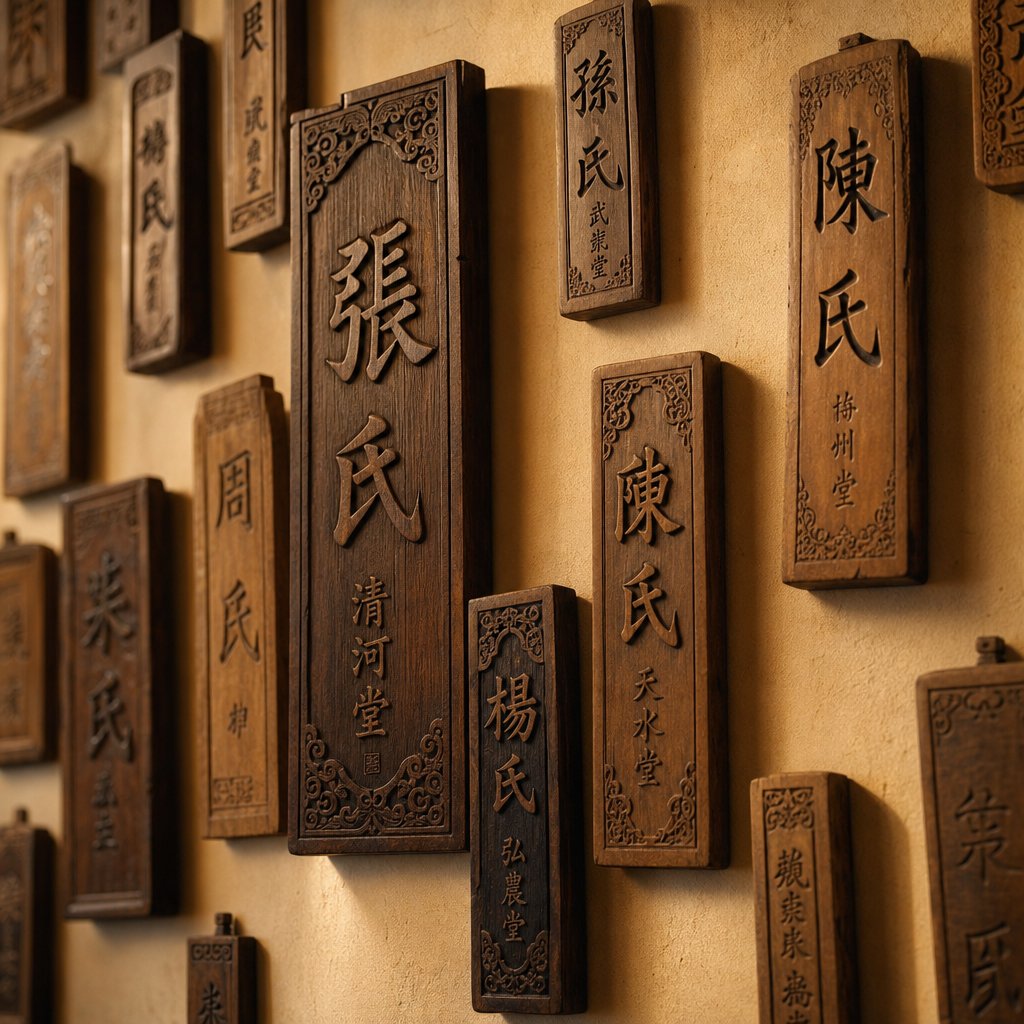
Here's the scale of what you're working with: China has roughly 6,000 surnames in active use, but the distribution is wildly uneven. The top 100 most common chinese last names account for approximately 85.9% of the country's 1.4 billion people. The top five alone — Wang, Li, Zhang, Liu, and Chen — cover over 30% of the registered population. That concentration means picking a common surname instantly makes your name sound natural, while choosing something rare can inadvertently mark it as unusual.
Top Surnames by Frequency in Pinyin
When you're evaluating output from a chinese last name generator or selecting a surname yourself, this reference gives you the most common chinese last names ranked by population share. Each entry includes tone marks — because as we covered earlier, pinyin without tones is incomplete.
| Rank | Pinyin (with tones) | Character | Approx. Population % | Literal Meaning |
|---|---|---|---|---|
| 1 | Wáng | 王 | 7.4% | King, monarch |
| 2 | Lǐ | 李 | 7.9% | Plum (tree) |
| 3 | Zhāng | 张 | 7.1% | To stretch, draw (a bow) |
| 4 | Liú | 刘 | 5.4% | To kill (archaic); royal Han surname |
| 5 | Chén | 陈 | 4.5% | Ancient kingdom; to display |
| 6 | Yáng | 杨 | 3.1% | Poplar tree |
| 7 | Zhào | 赵 | 2.3% | Ancient state name |
| 8 | Huáng | 黄 | 2.2% | Yellow |
| 9 | Zhōu | 周 | 2.1% | Cycle, circumference; Zhou dynasty |
| 10 | Wú | 吴 | 2.1% | Ancient state of Wu |
| 11 | Xú | 徐 | — | Slow, gentle |
| 12 | Sūn | 孙 | — | Grandchild, descendant |
| 13 | Hú | 胡 | — | Reckless; beard (also a historical ethnic term) |
| 14 | Zhū | 朱 | — | Vermilion red; Ming dynasty royal surname |
| 15 | Gāo | 高 | — | Tall, high |
| 16 | Lín | 林 | — | Forest, grove |
| 17 | Hé | 何 | — | What, which (interrogative) |
| 18 | Guō | 郭 | — | Outer city wall |
| 19 | Mǎ | 马 | — | Horse |
| 20 | Luó | 罗 | — | Net; to collect |
Population percentages for the top 10 are drawn from national surname surveys. Rankings 11-20 remain in the top tier of chinese surnames but individual percentage data varies by source and census year.
You'll notice that many of these asian last names carry meanings rooted in nature (plum, poplar, forest, horse), geography (ancient kingdoms and states), or physical qualities (tall, yellow, slow). These meanings are largely vestigial — nobody thinks of "plum tree" when they hear the surname Li, just as nobody thinks of "son of John" when they hear "Johnson." The meanings matter more for trivia than for practical naming decisions.
Choosing a Surname That Fits
If you're a non-Chinese speaker adopting a Chinese name, your surname choice sends a signal before anyone even hears your given name. Here's how to think about it:
Phonetic similarity to your original name. Many people pick a surname that echoes the sound of their English surname. Someone named "Wang" or "Warren" might naturally gravitate toward 王 (Wáng). A person named "Lee" or "Leigh" has an obvious match in 李 (Lǐ). This approach makes the name easier to remember and creates a subtle link between your identities. Among asian surnames names, the most internationally recognized ones — Wang, Li, Zhang, Chen — also happen to be the most common, which works in your favor.
Common vs. distinctive. Sticking with a top-10 surname is the safest choice. These surnames are so widespread that they carry zero connotations — they're the Chinese equivalent of "Smith" or "Johnson." Choosing something from the top 50 is still perfectly natural. Going beyond the top 100, however, starts to feel unusual. A surname like 司徒 (Situ) or 上官 (Shangguan) is a compound surname that would draw immediate attention and curiosity about your family background — attention you probably don't want if you're trying to blend in.
Surnames to approach carefully. A few common surnames asian communities use widely have homophones that can cause awkward moments. For example, 贾 (Jiǎ, rank 45) sounds identical to 假 (jiǎ, "fake"). The surname 吴 (Wú) sounds like 无 (wú, "without/nothing"), which can create unintentionally comic combinations — 吴德 (Wú Dé) sounds like "without virtue." Similarly, 马 (Mǎ, "horse") paired with certain given names can produce phrases that sound like slang. These aren't dealbreakers, but they're worth checking before you commit.
The practical takeaway: pick a surname from the top 20, verify it doesn't create unfortunate sound combinations with your chosen given name, and move on. The surname is your foundation — solid and unremarkable is exactly what you want. The given name is where personality, meaning, and creativity come into play, and that's also where gender conventions start to matter significantly.
Gender Conventions in Pinyin Name Selection
Chinese given names are gendered — not grammatically, but culturally. Unlike English, where "Alex" or "Jordan" can belong to anyone without raising questions, traditional Chinese names carry strong gender signals embedded in the characters themselves. And because characters map to specific pinyin syllables, those gender signals show up at the phonetic level too. When you're evaluating output from a pinyin name generator, recognizing these patterns is how you avoid giving a man a woman's name or vice versa.
Feminine Name Patterns in Pinyin
Traditional chinese girl names draw from a consistent set of meaning categories: beauty, flowers, jade, grace, gentleness, and natural elegance. These concepts tend to cluster around certain pinyin syllables that native speakers immediately recognize as feminine.
You'll notice that many popular female chinese names use softer consonant onsets and open vowel endings. Syllables like "xiu" (elegant), "mei" (beautiful), "yun" (cloud/grace), "lan" (orchid), "fang" (fragrance), and "jing" (quiet/calm) appear repeatedly across generations of chinese female names. The sounds themselves aren't inherently feminine — it's the character associations that make them so. But after centuries of use, the pinyin alone is enough to signal gender to a native ear.
According to China Highlights, the most popular china female names right now include combinations like 一诺 (Yi nuo, "one promise"), 欣怡 (Xin yi, "happy and content"), and 梓涵 (Zi han, "catalpa tree, mellow"). These modern choices show a shift toward abstract qualities and literary imagery, but the underlying principle remains: feminine names evoke inner beauty, emotional depth, and natural grace rather than physical power.
Common character categories for chinese female names include:
- Flowers and plants: 花 (hua, flower), 兰 (lan, orchid), 梅 (mei, plum blossom), 莲 (lian, lotus), 桐 (tong, paulownia tree)
- Jade and precious materials: 玉 (yu, jade), 瑶 (yao, precious jade), 琪 (qi, fine jade), 珠 (zhu, pearl)
- Beauty and elegance: 美 (mei, beautiful), 丽 (li, pretty), 秀 (xiu, elegant), 雅 (ya, refined), 妍 (yan, gorgeous)
- Gentleness and emotion: 静 (jing, calm), 慧 (hui, wise), 怡 (yi, joyful), 婉 (wan, graceful)
- Nature imagery: 雪 (xue, snow), 云 (yun, cloud), 霞 (xia, rosy clouds), 月 (yue, moon)
Example combinations that sound natural: 美莲 (Mei lian, "beautiful lotus"), 诗云 (Shi yun, "poem cloud"), 兰芬 (Lan fen, "orchid fragrance"). Each pairs a poetic concept with a complementary image, creating a name that feels complete rather than random.
Masculine Name Patterns in Pinyin
Chinese boy names operate from a different palette entirely. Where feminine names lean toward softness and beauty, chinese male names emphasize strength, ambition, vastness, and moral authority. The pinyin syllables reflect this — harder consonant onsets, more closed syllables, and sounds that carry weight when spoken aloud.
Syllables like "wei" (great/mighty), "gang" (steel/strong), "long" (dragon), "jun" (handsome/military), "hao" (vast), and "zhi" (ambition/will) dominate traditional chinese names male speakers carry. The current top chinese boy names lean toward cosmic and expansive imagery: 奕辰 (Yi chen, "grand celestial"), 宇轩 (Yu xuan, "universe, lofty"), and 浩宇 (Hao yu, "vast universe") all project scale and aspiration.
Common character categories for chinese male names include:
- Strength and power: 强 (qiang, strong), 刚 (gang, steel-hard), 伟 (wei, great), 勇 (yong, brave), 豪 (hao, heroic)
- Ambition and achievement: 志 (zhi, ambition), 成 (cheng, success), 达 (da, attainment), 超 (chao, surpass)
- Vastness and nature: 宇 (yu, universe), 海 (hai, ocean), 山 (shan, mountain), 天 (tian, sky), 龙 (long, dragon)
- Virtue and intellect: 德 (de, virtue), 文 (wen, literate/cultured), 明 (ming, bright), 博 (bo, abundant knowledge)
- Prosperity: 富 (fu, wealth), 福 (fu, fortune), 国 (guo, nation), 鑫 (xin, prosperity)
Example combinations: 俊杰 (Jun jie, "outstanding talent"), 博文 (Bo wen, "vast learning"), 天阔 (Tian kuo, "vast sky"). These names project confidence without crossing into arrogance — a balance the next chapter will explore further.
Unisex and Modern Naming Trends
Younger generations in China are increasingly choosing names that don't fall neatly into traditional gender categories. This shift mirrors broader cultural changes, and it's something a pinyin name generator may not account for unless it's been updated to reflect current trends.
Characters with a unisex meaning — those that carry positive connotations without strong gender coding — include 安 (an, peace), 晨 (chen, dawn), 明 (ming, bright), 文 (wen, literate), 熙 (xi, bright/happy), and 诺 (nuo, promise). A Language Log analysis of naming trends notes that Chinese naming preferences are "in flux," with younger generations experimenting with structures and character choices that would have seemed unusual a generation ago — including trisyllabic given names and names incorporating the mother's surname.
The table below compares typical feminine and masculine pinyin syllables side by side, showing how sound patterns correlate with gendered character meanings:
| Pinyin Syllable | Common Feminine Character | Feminine Meaning | Common Masculine Character | Masculine Meaning |
|---|---|---|---|---|
| mei | 美 | Beautiful | — | Rarely used for males |
| wei | 薇 (wēi) | Fern, delicate plant | 伟 (wěi) | Great, mighty |
| jing | 静 (jìng) | Calm, serene | 景 (jǐng) | Scenery, grand view |
| yu | 玉 (yù) | Jade | 宇 (yǔ) | Universe |
| xin | 欣 (xīn) | Joyful, happy | 鑫 (xīn) | Prosperity (triple gold) |
| hao | — | Rarely used for females | 浩 (hào) | Vast, grand |
| wen | 雯 (wén) | Cloud patterns | 文 (wén) | Literature, culture |
| lan | 兰 (lán) | Orchid | — | Rarely used for males |
Notice how the same pinyin syllable can serve both genders through different characters. "Yu" as 玉 (jade) reads feminine; "yu" as 宇 (universe) reads masculine. "Wen" as 雯 (cloud patterns) leans feminine; "wen" as 文 (literature) works for either gender but skews male in traditional usage. This is exactly why bare pinyin output without character specification is unreliable for gender accuracy.
The practical lesson: if you're using a female chinese names generator or looking for chinese boy names specifically, check that the tool specifies characters — not just syllables. A name that looks gender-appropriate in pinyin might map to the wrong character and send the opposite signal. And even with the right gender coding, a name can still fail if it trips over one of the common mistakes that non-native speakers make — pitfalls that are entirely avoidable once you know what to watch for.
Common Mistakes When Choosing a Chinese Name
Gender-appropriate characters and pleasing tonal flow are necessary conditions for a good name — but they're not sufficient. Plenty of names pass those checks and still make native speakers wince. If you've already used a chinese name converter or pinyin name generator to produce a candidate, the mistakes below are exactly what you need to screen for before committing.
Here are the most frequent pitfalls, ranked from the one nearly everyone falls into down to the subtler errors that only trip up more advanced learners:
- Direct phonetic transliteration of an English name — the single most common mistake and the hardest habit to break.
- Characters that look appealing but carry hidden negative meanings — visual beauty misleading non-readers.
- Ignoring tonal flow — creating tongue-twisters or monotone sequences that feel unnatural to speak.
- Using rare or archaic surnames — immediately signaling that the name was foreign-chosen.
- Choosing overly grandiose or presumptuous characters — the equivalent of naming yourself "Emperor Wisdom Dragon."
Characters That Look Good but Mean Something Bad
When you can't read Chinese characters fluently, it's tempting to choose them based on visual elegance or a dictionary's first definition. The problem is that many characters carry secondary meanings, slang associations, or homophone traps that only native speakers catch instantly.
The syllable "si" (思, to think) looks harmless and even poetic. But pair it with certain characters and you land dangerously close to 死 (sǐ, death). The character 日 (rì) literally means "sun" — a beautiful concept — yet in colloquial Mandarin it functions as a vulgar expletive. Similarly, names like "Wangcai" (旺财, prosperous wealth) or "Tiezhu" (铁柱, iron pillar) are traditionally pet names or rural nicknames, not names an adult would carry in professional settings.
The character 花 (huā, flower) seems lovely until you realize that 花心 (huāxīn) means "unfaithful" and certain combinations with 花 carry frivolous connotations. Even the character 史 (shǐ, history) — perfectly respectable as a surname — sounds identical to 屎 (shǐ, feces), which makes given-name pairings tricky.
The Transliteration Trap
The instinct to convert your name to chinese by matching English sounds to pinyin syllables is understandable — but it almost always produces awkward results. When you convert name into chinese through pure phonetic transliteration, you're fighting a fundamental structural mismatch. Chinese represents syllables as discrete blocks, not as fluid letter combinations.
A name like "Thomas" becomes 托马斯 (Tuōmǎsī) — three syllables that sound neither like the original English nor like anything a Chinese person would actually be named. As Yoyo Chinese explains, transliteration is "the dodgy DIY of translation" because the resulting names exist in a phonetic no-man's-land. "Jack" becomes 杰克 (Jiékè), "Charlotte" becomes 夏洛特 (Xiàluòtè) — multi-syllable constructions that immediately mark the bearer as foreign.
Real Chinese given names are one or two characters. Three-character given names are virtually nonexistent. So when you convert your name to chinese through transliteration and end up with three or four syllables in the given name alone, you've created something that no chinese name translator would produce if cultural authenticity were the goal. The better approach is finding characters whose meaning resonates with your identity rather than chasing phonetic similarity.
Overly Ambitious or Archaic Choices
Freedom to choose your own name doesn't mean freedom from cultural context. One blogger recounted naming himself 金才宇 (Jīn Cái Yǔ) — literally "Golden Skill Universe" — and described how every introduction brought awkward shuffles and embarrassed giggles from native speakers. The name wasn't offensive; it was just absurdly grandiose, like an English speaker introducing themselves as "Magnificent Cosmic Genius."
Characters meaning "emperor" (帝, dì), "dragon" (龙, lóng as a given name for non-Chinese), or "immortal" (仙, xiān) can come across as culturally tone-deaf when chosen by someone outside the culture. The same applies to borrowing names from revered historical figures. Naming yourself after Li Bai (the Tang dynasty poet) or Zhuge Liang (the legendary strategist) feels to Chinese ears roughly like a Chinese person moving to America and introducing themselves as "Shakespeare" — it's not illegal, but it signals a fundamental misunderstanding of how names work.
The safest path is choosing characters that express genuine virtues — wisdom, kindness, perseverance — without reaching for cosmic or imperial imagery. A name like 任桐慕 (Rèn Tóngmù) works because it's modest, phonetically balanced, and carries quiet meaning without demanding attention. That restraint is exactly what separates a name that earns respect from one that earns a suppressed laugh.
Knowing what to avoid is half the battle. The other half is having a reliable method to test whether your chosen name actually sounds right to native ears — a practical evaluation framework you can apply to any output, regardless of which english to chinese name converter or tool produced it.
How to Tell if Your Pinyin Name Sounds Natural
You've avoided the common mistakes. You've picked characters with appropriate meaning, a common surname, and gender-correct syllables. But does the name actually sound like something a real person would carry? Whether you're wondering whats my chinese name after running a generator or you've assembled one manually, the final step is validation. A name can be technically correct and still feel off — the way a grammatically perfect sentence can still sound robotic.
Here's a practical framework you can apply to any candidate name, no matter how you found it.
The Native Speaker Test
The single most reliable check is asking a native Mandarin speaker to react to your name. But how you ask matters. Don't say "What do you think of this name?" — that invites polite approval. Instead, try these approaches:
- Say the full name aloud and watch their face. Hesitation, a suppressed smile, or a quick "oh..." are red flags.
- Ask: "If you met someone with this name, what would you assume about them?" This reveals connotations you can't find in a dictionary.
- Ask: "Does this sound like a real person's name, or does it sound made up?" Native speakers can instantly distinguish natural combinations from artificial ones.
- Try saying the name quickly three times in a row. If you stumble or it feels like a tongue-twister, native speakers will notice that awkwardness too.
If you're still in the early stages of figuring out how to find my chinese name, getting feedback from two or three native speakers — not just one — gives you a more reliable signal. One person might be too polite; three people laughing is data.
Tonal Flow Checklist
Tonal patterns follow predictable rules that you can check without any help. For a two-character given name (the most common structure), evaluate the tone sequence of the full name — surname plus given name — as a three-syllable unit:
- Avoid three consecutive third tones. This triggers mandatory tone sandhi where the first two syllables shift to second tone. The name becomes phonetically unstable — it sounds different from how it's written.
- Vary the direction. A mix of rising and falling tones (2nd + 4th, or 1st + 3rd) creates natural contrast. Flat sequences of the same tone sound monotone.
- Test the surname-given name boundary. The transition between your surname's tone and the first character of your given name is where flow breaks most often. Say just those two syllables together — do they glide or collide?
- Check for consecutive falling tones (4th + 4th). This isn't wrong, but it can sound abrupt or aggressive. If your name has this pattern, make sure the final syllable softens the sequence.
For anyone trying to find chinese name options that sound musical rather than mechanical, tonal variety is the key. The best names alternate between tones that move in complementary directions.
Homophone Awareness
Chinese has far more homophones than English. Your name's pinyin — even with correct tones — might sound identical to a common word or phrase with an unintended meaning. This is the check that catches problems no generator will flag for you.
To screen for homophones:
- Say your full name aloud and ask yourself: does this sound like a common phrase, idiom, or slang term?
- Search your name's pinyin (without tone marks) in a Chinese dictionary or search engine. Look at what other character combinations share that sound.
- Pay special attention to your surname + first given-name character combination. If those two syllables together form a recognizable word, the association will stick.
- Check whether your name appears in naming databases where real people share it. If real Chinese people carry the same name, that's strong validation. If zero results come up, proceed with caution.
Imagine someone asking what would my chinese name be and receiving "Wu Liao" (吴聊) as output. Technically, those are valid characters. But spoken aloud, it sounds exactly like 无聊 (wúliáo) — "boring." No generator caught that. A five-second homophone check would have.
The question of how do i write my name in chinese or how to write your name in mandarin ultimately comes down to this: a good name passes all three tests — native speaker approval, smooth tonal flow, and clean homophone clearance. If your candidate survives all three, you've found something worth keeping. If it fails even one, go back to the generator and try again — because the right name is worth the extra iteration.

Choosing the Right Name for Your Situation
A name that passes every validation check can still be wrong for you — because context shapes what "right" means. A language student picking a classroom name has completely different priorities than a parent choosing a bilingual name their child will carry for life. The same pinyin name generator output might be perfect for one scenario and wildly inappropriate for another.
Your situation determines how much weight to give phonetic simplicity versus depth of meaning, how conservative or creative you can afford to be, and whether the name needs to function across cultures or only within Chinese-speaking contexts. Here's how to calibrate your choices based on who you are and what you need the name for.
Names for Language Learners and Students
If you're picking a name for a Mandarin class or language exchange, prioritize pronounceability and memorability over poetic depth. Your teacher and classmates will say this name dozens of times per session — if it's a tongue-twister or uses rare characters nobody recognizes, it becomes a distraction rather than an identity.
Stick with common surnames from the top 10 and a one or two-character given name using familiar syllables. Something like 李明 (Li Ming) or 王安 (Wang An) works perfectly. These names are simple, gender-clear, and easy for both native speakers and fellow students to remember. You can always adopt a more meaningful name later as your understanding deepens. Think of this as a starter name — functional, low-risk, and easy to replace. A chinese name generator from english can give you a quick starting point, but keep the output short and simple for this use case.
Names for Fiction Writers and Game Developers
Creating characters for a novel, screenplay, or game is the one context where an ancient chinese name generator actually makes sense. Fiction demands names that signal era, social class, and personality — and those signals differ dramatically across genres.
For modern-day settings, use names that reflect current trends: two-character given names with aspirational but grounded meanings. For wuxia (martial arts) fiction, lean toward characters evoking nature, weapons, and moral philosophy — names like 叶孤城 (Ye Gucheng, "lone city leaf") or 楚留香 (Chu Liuxiang, "lingering fragrance"). Xianxia (immortal cultivation) stories use more ethereal, archaic-sounding combinations that would seem absurd in real life but feel right within the genre.
The key difference from personal naming: fiction names can break rules that real names shouldn't. Grandiose characters, unusual surnames, and poetic four-character constructions all work when they serve narrative purpose. A chinese name maker with meaning becomes a worldbuilding tool here — just make sure the names are internally consistent within your fictional universe. If you need a female chinese names generator for a cast of characters, vary the naming patterns across your characters to reflect different backgrounds and personalities rather than giving everyone the same style.
Names for Business and Professional Use
When you need a name for business cards, WeChat introductions, or meetings with Chinese partners, the stakes shift toward respectability and conservatism. This isn't the place for creativity. You want a name that projects competence, maturity, and cultural awareness — one that makes Chinese colleagues think "this person took the time to do this properly."
Choose a top-20 surname with phonetic similarity to your real name if possible. For the given name, select characters from the virtue or intellect categories: 文 (wen, cultured), 德 (de, virtue), 明 (ming, bright), 信 (xin, trust). Avoid anything playful, overly youthful, or trendy. A chinese name generator male professionals might use should skew toward traditional dignity — names like 陈志远 (Chen Zhiyuan, "far-reaching ambition") or 林博文 (Lin Bowen, "vast learning"). For women, a chinese female name generator should produce similarly professional results — 王雅文 (Wang Yawen, "refined and cultured") reads as competent and polished without being stiff.
Run the name past a Chinese business contact before printing cards. As Yoyo Chinese notes, getting feedback from several native speakers — not just one — protects you from blind spots that a single opinion might miss.
Bilingual Names for Children
This is the highest-stakes scenario. A child's name follows them through school enrollment, passport applications, and a lifetime of introductions in two languages. Parents choosing bilingual names need a solution that works phonetically in both English and Mandarin without sounding forced in either.
The most successful approach finds overlap — names where the English pronunciation maps naturally to a valid Chinese character combination. "Mei" works as both an English name and the Chinese character 美 (beautiful). "Leo" can map to 利奥 (Li'ao) but also inspires standalone Chinese names like 乐 (Le, joy). Some parents choose completely independent names for each language, which avoids phonetic compromise but means the child carries two distinct identities.
Whether you use a chinese name generator female or chinese name generator male tool for inspiration, verify that the Chinese name stands on its own — not just as a transliteration of the English name. The child will use this name with Chinese-speaking family, in heritage language classes, and potentially in professional contexts later in life. It deserves the same care a Chinese family would give it.
The table below summarizes what matters most for each situation:
| Persona | Top Priority | Recommended Style | Key Consideration |
|---|---|---|---|
| Language learner | Easy pronunciation | Simple, common characters; short given name | Treat as temporary; upgrade later as skills grow |
| Fiction writer / game dev | Authenticity to genre and era | Varies by setting (modern, wuxia, xianxia) | Names can break real-world rules if genre demands it |
| Business professional | Respectability and conservatism | Top-20 surname + virtue/intellect given name | Get feedback from Chinese colleagues before printing cards |
| Parent (bilingual child) | Works in both languages long-term | Phonetic overlap or independent dual names | Name must stand alone in Chinese, not just echo English |
No single asian name generator or tool can account for all these variables automatically. The tool gives you raw material — syllable combinations, character suggestions, meaning lookups. Your situation determines which output is worth keeping and which belongs in the discard pile. Match the name to the life it needs to serve, and you'll end up with something that earns nods of recognition rather than stifled laughter.
Frequently Asked Questions About Pinyin Name Generators
1. How does a pinyin name generator work?
A pinyin name generator takes your input — typically an English name, personality traits, or meaning preferences — and produces a Chinese name rendered in pinyin, the official romanization system for Mandarin. It matches syllable combinations to Chinese characters that carry appropriate meanings. However, because the same pinyin syllable can map to dozens of different characters with completely different meanings, the generator's output is only a starting point. You still need to verify tonal accuracy, cultural appropriateness, and homophone safety before adopting any suggested name.
2. Why do tones matter when choosing a Chinese name?
Mandarin's four tones change the meaning of a syllable entirely. For example, 'wei' in the first tone means power, in the third tone means great, and in the fourth tone means defend — each mapping to a different character with distinct connotations. Beyond individual meaning, the tonal sequence across your full name affects how natural it sounds to native speakers. Names with varied tone directions sound musical and balanced, while repeated same-tone syllables feel monotone or create pronunciation difficulties through mandatory tone sandhi rules.
3. What are common mistakes when converting an English name to Chinese?
The most frequent mistake is direct phonetic transliteration — forcing English syllables into pinyin equivalents. This produces multi-syllable constructions like 'Tuoamasi' for Thomas that no Chinese person would actually carry as a name. Other common errors include choosing visually appealing characters with hidden negative meanings, selecting overly grandiose characters like 'emperor' or 'dragon' that seem presumptuous, using rare surnames that mark the name as foreign-chosen, and ignoring tonal flow which creates tongue-twister combinations.
4. How can I tell if my Chinese name sounds natural to native speakers?
Apply three tests: First, ask native Mandarin speakers to react to your name — watch for hesitation, suppressed smiles, or awkward pauses rather than asking directly if they like it. Second, check the tonal flow by saying the full name quickly three times and verifying you avoid three consecutive third tones or flat same-tone sequences. Third, screen for homophones by searching your name's pinyin in a Chinese dictionary to ensure it doesn't sound like common words with unintended or embarrassing meanings.
5. Should I choose a common or unique Chinese surname?
For most non-Chinese speakers adopting a Chinese name, a common surname from the top 20 is the safest choice. These surnames — like Wang, Li, Zhang, Chen, and Liu — are so widespread they carry zero special connotations, similar to 'Smith' or 'Johnson' in English. Choosing a rare or compound surname like Shangguan or Situ draws immediate curiosity about your family background. Pick a common surname with phonetic similarity to your real name if possible, and verify it doesn't create unfortunate sound combinations with your chosen given name.