What Pinyin Name Stroke Order Means and Why It Matters
How do you write a name in Chinese — correctly? Not just the right character, but each stroke in the right sequence? That question sits at the heart of pinyin name stroke order: the process of using pinyin romanization to identify the exact Chinese character for a name, then writing that character with its proper stroke sequence.
Think of it as a two-step bridge. Pinyin tells you which character you need. Stroke order tells you how to put that character on paper the way native writers do.
What Pinyin Name Stroke Order Actually Means
Every Chinese character is built from individual strokes written in a specific, standardized sequence. When you apply this concept to names, you're combining phonetic knowledge (pinyin) with handwriting mechanics (stroke order). You hear or read a name's romanized spelling, match it to the correct character, and then reproduce that character stroke by stroke. Getting the chinese name strokes right isn't just academic — it affects legibility, aesthetic balance, and even how handwriting-recognition tools interpret your writing.
Pinyin is the pronunciation key that unlocks the correct character; stroke order is the blueprint that builds it on paper. Without both, you're guessing at one end or the other.
Who Needs This Skill and Why
Two groups benefit most. First, Chinese language learners who want to write friends', colleagues', or classmates' names properly. Second, people with Chinese names who grew up typing rather than handwriting and want to master the correct name stroke patterns for their own characters.
The practical situations are everywhere: filling out official forms, addressing envelopes, writing names on red envelopes for holidays, or creating personalized calligraphy gifts. In each case, correct stroke order produces characters that look balanced and natural — while incorrect order creates awkward, hard-to-read results.
Most resources teach stroke order with generic vocabulary or teach pinyin without connecting it to handwriting. This guide closes that gap, walking you from a romanized name all the way through to confident, correctly sequenced brushstrokes — starting with the foundational rules that govern every character you'll ever write.
Fundamental Chinese Stroke Order Rules Applied to Names
Every Chinese character — whether it appears in a textbook vocabulary list or on someone's birth certificate — follows the same set of structural rules. The chinese character stroke order system isn't random. It evolved over centuries to produce balanced, legible writing at speed. When you internalize these principles, writing name characters stops feeling like memorizing arbitrary sequences and starts feeling logical.
The Core Stroke Order Rules Every Writer Must Know
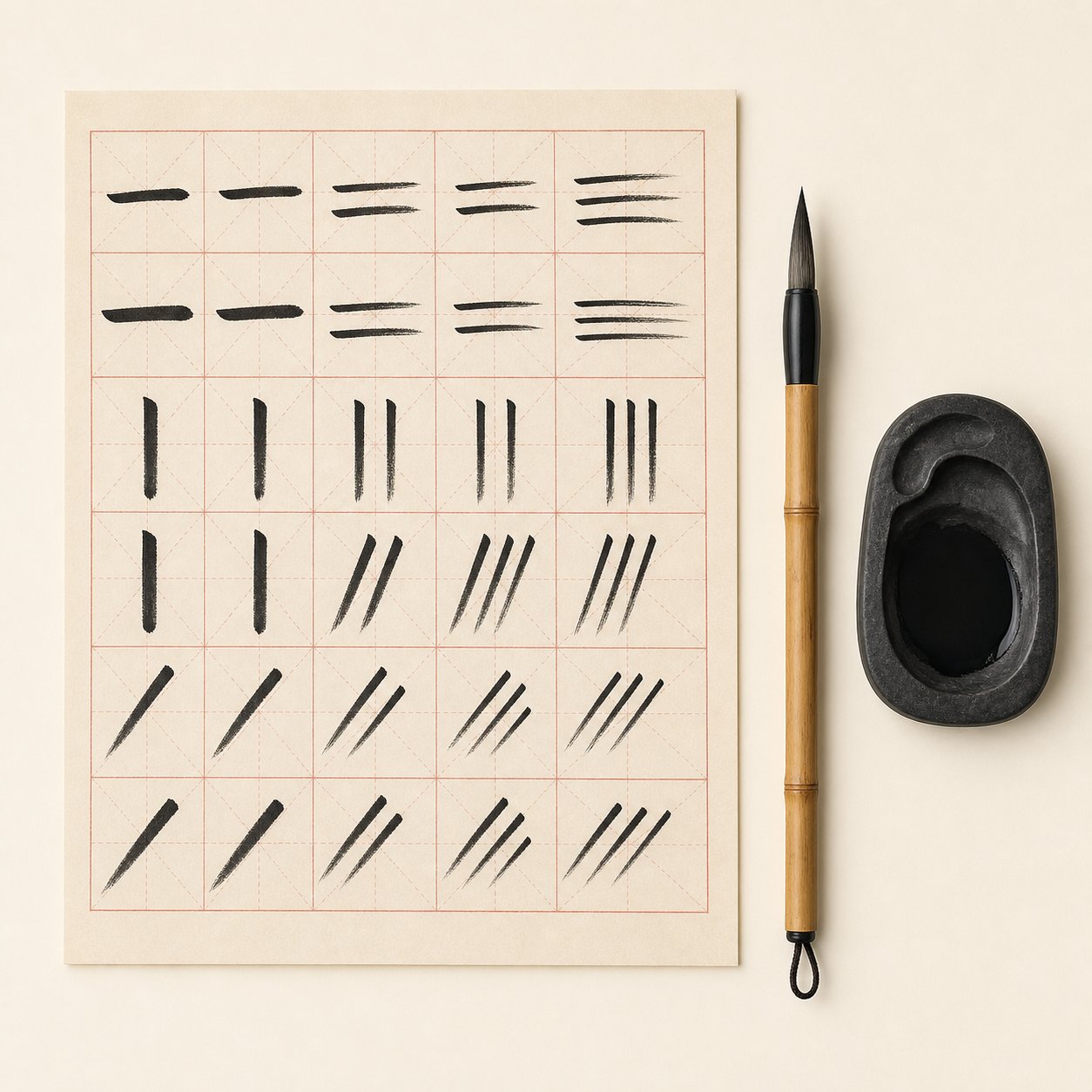
The most basic building block is the horizontal line in chinese writing: a single rightward stroke called 横 (heng). It's the first stroke type most learners encounter, and it anchors many of the rules below. From there, six core principles govern the chinese writing strokes order for virtually every character you'll meet:
- Top to bottom (从上到下) — Start with the uppermost component and work downward. In the surname 李 (li), you write the top radical 木 before the bottom component 子.
- Left to right (从左到右) — When a character has side-by-side components, begin on the left. The surname 林 (lin) is two 木 radicals; you complete the left one entirely before starting the right.
- Horizontal before vertical (先横后竖) — When a horizontal line and a vertical line cross, the horizontal stroke comes first. You'll see this clearly in 王 (wang), one of China's most common surnames, where three horizontals precede the single vertical.
- Diagonals: left-falling before right-falling (先撇后捺) — A left-slanting stroke (撇) is written before a right-slanting stroke (捺). The character 文 (wen), popular in given names, demonstrates this perfectly.
- Outside before inside (从外到内) — For enclosed or partially enclosed structures, write the outer frame first, then fill in the interior. The surname 周 (zhou) uses this principle with its enclosing box.
- Close frames last (先进后关) — If a character has a fully enclosed structure, the bottom closing stroke is the very last one written. Think of 国 (guo) — the bottom horizontal of the outer box seals the character after everything inside is complete.
One additional principle often trips people up: the convex concave rule. Characters like 凹 (ao) and 凸 (tu) have irregular enclosed shapes that don't fit neatly into "outside before inside." For these, you follow the outer contour in a continuous path, treating the protruding or receding sections as part of the frame's natural flow rather than separate interior elements.
How These Rules Apply Inside Name Characters
Sounds complex? Here's why name characters make such effective practice material: they frequently combine multiple rules within a single character, forcing you to prioritize one principle over another.
Take the surname 张 (zhang), with 7 strokes in chinese. Its left component 弓 (bow) is completed first (left to right rule), and within 弓 itself, you move top to bottom. The right component 长 layers horizontal-before-vertical on top of the diagonal rule. One surname, three principles working together.
Or consider 黄 (huang), a surname with 11 strokes. It stacks a top section, a middle enclosed section, and a bottom component — demanding strict top-to-bottom discipline while also requiring you to handle the enclosed middle portion with the outside-before-inside rule.
The strokes in chinese characters always follow these same principles regardless of context. A character doesn't change its stroke order because it appears in a name rather than a common word. What changes is your motivation to get it right — because names carry personal significance, and writing someone's name with proper form shows genuine respect for the language and the person.
With these universal rules as your foundation, the next challenge becomes identifying which character a name actually uses — and that's where pinyin, especially its tone marks, becomes indispensable.
How Pinyin Helps You Find and Write the Right Name Character
Knowing the stroke order rules is only half the equation. The other half? Making sure you're applying those rules to the correct character in the first place. This is where pinyin earns its role as the essential first step in the process — and where most learners silently go wrong.
Imagine someone tells you their surname is "li." You look it up and start practicing the stroke order of chinese characters for 力 (force). But their actual name uses 李 (a common surname meaning plum). Different character, different radical structure, different stroke count, completely different stroke sequence. The pinyin sounded the same to your ear, but the tone — and therefore the character — was different all along.
From Pinyin Pronunciation to the Correct Character
The chinese stroke order of any name character can only be determined after you've confirmed which character you're dealing with. Pinyin gives you the pronunciation, but you need the full pinyin — including the tone mark — to narrow down your options. Here's the systematic method that connects sound to correct handwriting:
- Capture the full pinyin with tone marks. Don't just note "wang" — record "wáng" (second tone). This single detail eliminates dozens of wrong characters immediately.
- Search for the character using toned pinyin. Use a dictionary or lookup tool to find all characters matching that exact syllable and tone combination.
- Use context to select the correct character. Is it a surname? A given name? Knowing this helps you pick the right one from the remaining options. For example, wáng with second tone as a surname almost certainly means 王.
- Verify the character visually. Confirm with the person or a reliable source that you have the right character — especially for given names, where less common characters appear frequently.
- Look up the stroke order for that specific character. Only now do you determine the chinese word stroke order and begin practicing the correct sequence.
Skipping any step — especially the first two — means you risk practicing the wrong character entirely. And unlike vocabulary words where context might eventually correct you, a name written with the wrong character is simply someone else's name.
Why Tone Marks Are Essential for Name Characters
Mandarin Chinese has roughly 400 unique syllables. Add the four tones (plus the neutral tone), and that number expands to around 1,300 distinct sounds. But there are tens of thousands of characters. The math is clear: many characters share identical pronunciations, and homophones are extremely common in Chinese.
For names, this creates a specific problem. Consider the syllable "li" across its tones:
- lí (second tone) — 离 (to leave), 梨 (pear), 黎 (a surname meaning dawn)
- lǐ (third tone) — 李 (plum, one of China's most common surnames), 里 (inside), 理 (reason)
- lì (fourth tone) — 力 (force), 丽 (beautiful, used in given names), 立 (to stand)
Each of these characters has a completely different internal structure and chinese characters stroke order. 李 has 7 strokes starting with the horizontal stroke of its 木 radical. 黎 has 15 strokes with a far more complex composition. 丽 has 7 strokes but uses an entirely different sequence than 李. Without the tone mark, you're guessing among all of them.
A tone mark isn't decoration on a pinyin syllable — it's the difference between writing the right person's name and writing a stranger's.
The confusion multiplies with given names, where parents sometimes choose rare or literary characters that share pinyin with much more common ones. Someone named 熙 (xī, meaning bright or prosperous) might have their character confused with 西 (xī, west) or 希 (xī, hope) — all first tone, all "xi," but each requiring a different chinese word stroke order to write correctly.
Context helps resolve some ambiguity. If you know a character functions as a surname, your options shrink dramatically — most syllables have only one or two characters commonly used as family names. Given names offer less predictability, which is exactly why confirming the specific character (not just the pinyin) matters before you ever pick up a pen.
The takeaway is straightforward: treat character identification as a non-negotiable step before stroke order practice. Pinyin with accurate tone marks gets you to the right character. The right character gets you to the right stroke sequence. Skip the identification step, and even flawless stroke order technique produces the wrong name on paper — which, for the most common Chinese surnames, is a mistake worth examining in detail.
Stroke Order for the Most Common Chinese Surname Characters
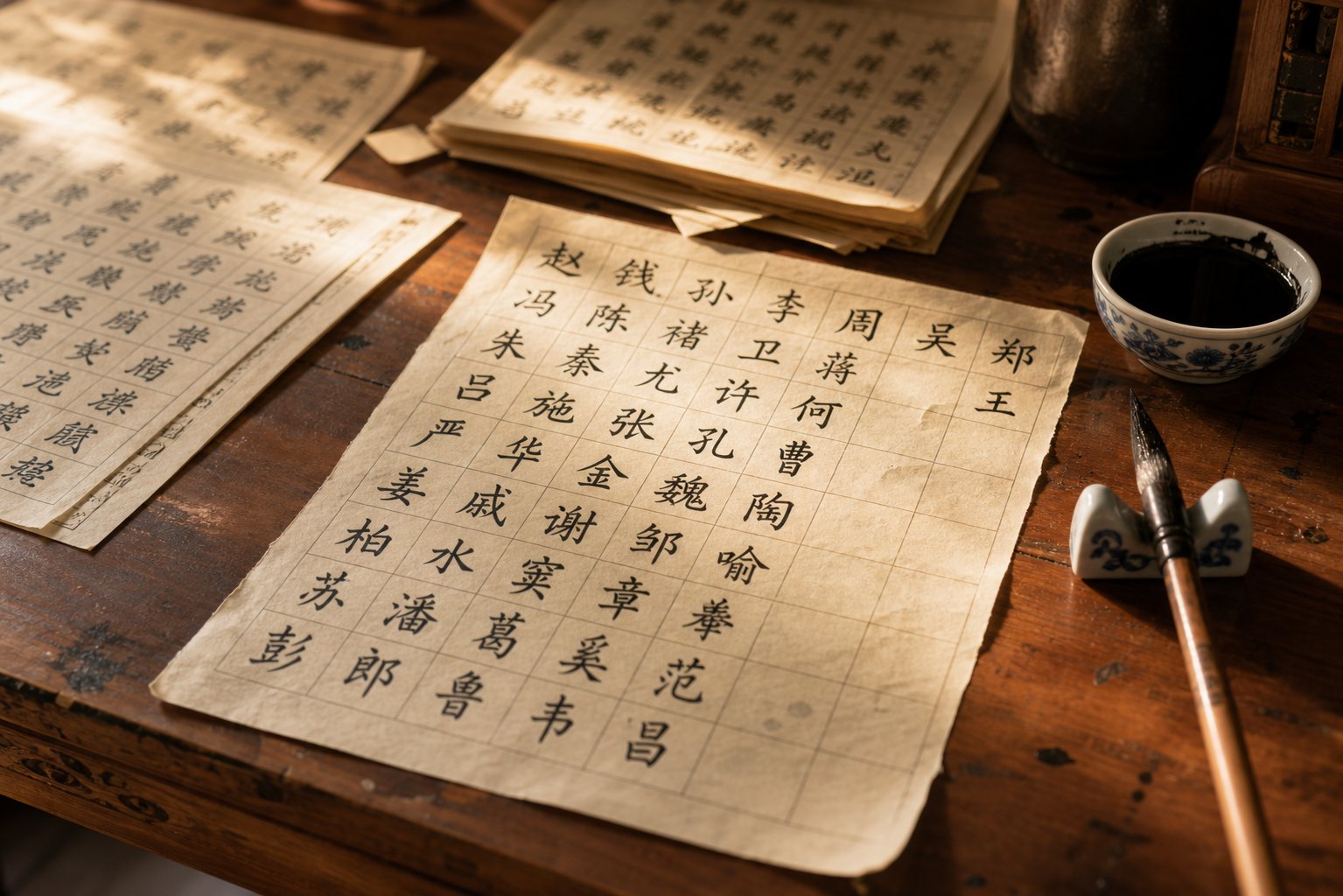
The ten most common Chinese surnames represent over 500 million people worldwide. If you're going to practice writing any characters by hand, these are the ones you'll use most often — on envelopes, forms, greeting cards, and introductions. The table below gives you a quick-reference guide to the chinese character strokes, pinyin, and stroke sequence for each one.
Top Ten Chinese Surnames and Their Stroke Sequences
| Character | Pinyin | Strokes | Meaning | Stroke Sequence Summary |
|---|---|---|---|---|
| 王 | wáng | 4 | King | Top horizontal, middle horizontal, vertical, bottom horizontal |
| 李 | lǐ | 7 | Plum | 木 (horizontal, vertical, left-fall, right-fall) then 子 (hook, curve, horizontal) |
| 张 | zhāng | 7 | Archer / To stretch | Left: 弓 (3 strokes, curved flow) then right: 长 (4 strokes, top to bottom) |
| 刘 | liú | 6 | To conquer | Left component (4 strokes) then right: 刂 knife radical (short vertical, long vertical) |
| 陈 | chén | 7 | To display | Left: 阝 ear radical (curved stroke, vertical) then right: 东 (5 strokes) |
| 杨 | yáng | 7 | Poplar tree | Left: 木 (4 strokes) then right component (3 strokes, horizontal-fold pattern) |
| 黄 | huáng | 11 | Yellow | Top section first, middle enclosed portion, bottom strokes last |
| 赵 | zhào | 9 | Ancient kingdom | 走 running radical base (top to bottom) then 乂 right component |
| 周 | zhōu | 8 | Complete / Cycle | Outer frame (left vertical, top horizontal) then interior 土 and 口, close bottom last |
| 吴 | wú | 7 | Ancient Wu kingdom | Top: 口 mouth (3 strokes) then bottom: 天 heaven (4 strokes) |
Notice the range: 王 requires just 4 strokes while 黄 demands 11. Yet every one of these characters follows the same foundational rules — top to bottom, left to right, outside before inside. The difference is simply how many layers of those rules stack together.
Stroke Count Reference and Character Decomposition
Memorizing the strokes of chinese characters becomes far easier when you break surnames into their component radicals. Instead of seeing a 7-stroke blur, you see two familiar building blocks snapped together. Here's how decomposition works for several common surnames:
- 李 = 木 (wood) + 子 (child) — Write the 4-stroke "wood" radical on top first, then the 3-stroke "child" component below. The Tang Dynasty imperial family carried this surname, making it one of the most widespread in history.
- 张 = 弓 (bow) + 长 (long) — The left "bow" radical is only 3 curved strokes. Finish it completely before moving to the right side. Natives describe this surname orally as "弓长张" (the Zhang made of Bow and Long).
- 刘 = 文 variant + 刂 (knife) — The left side resembles a simplified form of 文 (culture). The right side is the knife radical — just two vertical strokes. Natives introduce it as "文刀刘."
- 陈 = 阝(ear/mound radical) + 东 (east) — The left-ear radical appears in many place-related characters. Complete its 2 strokes first, then write 东 with its 5 strokes. The oral introduction script is "耳东陈."
- 吴 = 口 (mouth) + 天 (heaven) — Top to bottom: finish the 3-stroke mouth box, then write the 4-stroke heaven component below. Described as "口天吴" when introducing the name aloud.
This decomposition approach works because character strokes chinese learners find difficult are almost always compound structures. When you recognize the individual radicals, you already know their internal stroke order from other characters. 木 appears in 李, 杨, 林, and dozens of common words — learn it once, and that knowledge transfers everywhere.
A useful pattern emerges from the table: most of the top ten surnames fall between 4 and 9 chinese strokes, making them accessible practice targets even for beginners. 王 at 4 strokes is an ideal starting character. 李 and 张 at 7 strokes introduce multi-component structure without overwhelming complexity. 黄 at 11 strokes offers a genuine challenge that tests whether you can maintain top-to-bottom discipline across a taller character.
Surnames, though, are only half of a Chinese name. The given-name characters that follow them often carry richer meanings, more varied radical combinations, and their own stroke order surprises — which is exactly where the real handwriting practice begins.
Breaking Down Popular Given Name Characters Stroke by Stroke
Given names are where Chinese characters get personal. Parents choose these characters for their meaning, sound, and visual balance — and each one tells a small story through its component radicals. Understanding that story makes the stroke order intuitive rather than arbitrary. When you see how a character is built from meaningful parts, the chinese character drawing process becomes logical instead of overwhelming.
Decomposing Given Name Characters Into Radicals
Let's start with a character you already know conceptually: 名 (ming, second tone), meaning "name" or "fame." This character is composed of two radicals stacked vertically:
- 夕 (xi, evening) — the top component, 3 strokes
- 口 (kou, mouth) — the bottom component, 3 strokes
The logic? In ancient China, when evening fell and you couldn't see someone's face, you called out their name with your mouth. That's the pictographic reasoning embedded in the character — evening plus mouth equals name. You'll find this kind of visual logic throughout any chinese pictograms list, where characters encode meaning through their component parts rather than arbitrary shapes.
Following the top-to-bottom rule, you write 夕 first (left-falling stroke, horizontal-turning stroke, dot) and then 口 below it (vertical, horizontal-turn, closing horizontal). Six strokes total, two familiar components, one clear sequence.
This decomposition approach works for every common given-name character. The table below breaks down five popular choices:
| Character | Pinyin | Strokes | Components | Meaning | Why It's Popular in Names |
|---|---|---|---|---|---|
| 名 | ming | 6 | 夕 (evening) + 口 (mouth) | Name / Fame | Represents reputation and legacy |
| 明 | ming | 8 | 日 (sun) + 月 (moon) | Bright / Clear | Symbolizes intelligence and clarity |
| 华 | hua | 6 | 化 (change) + 十 (ten) | Magnificent / China | Evokes splendor and national pride |
| 文 | wen | 4 | Standalone pictograph | Literature / Culture | Represents education and refinement |
| 美 | mei | 9 | 羊 (sheep) + 大 (big) | Beautiful | Conveys beauty and goodness |
Stroke Order Walkthrough for Popular Name Characters
Each character in the table above follows the universal rules — but applies them differently based on its internal structure. Here's how the stroke sequence plays out for each one:
明 (bright) — Sun plus moon. Unlike 名, this character uses a left-right structure rather than top-bottom. You complete 日 on the left first (4 strokes: vertical, horizontal-turn, interior horizontal, closing horizontal), then write 月 on the right (4 strokes: left-falling, vertical-turn, interior horizontal, interior horizontal). The symbolism is vivid: sun and moon together create brightness. You'll find 明 on nearly every chinese pictograms list because its visual logic is so transparent.
华 (magnificent) — Written top to bottom in its simplified form with 6 strokes. The upper portion flows downward into the cross-shaped 十 at the base. This character appears in the word 中华 (Zhonghua, China) and carries connotations of flourishing civilization — a powerful choice for given names.
文 (culture) — At just 4 strokes, this is one of the simplest characters you'll encounter in names. The chinese character stroke names for its sequence are: dot (点), horizontal (横), left-falling (撇), right-falling (捺). It's a standalone pictograph — no radical decomposition needed — originally depicting a person with patterns on their chest, symbolizing civilization and learning.
美 (beautiful) — Nine strokes, top-to-bottom structure. Write 羊 first (the top six strokes: dot, left-fall, horizontal, horizontal, horizontal, vertical) then 大 below (horizontal, left-fall, right-fall). The ancient reasoning? A large, well-fed sheep represented prosperity and aesthetic pleasure. When you chinese draw this character, maintaining even spacing between the three horizontal lines of 羊 is the key to visual balance.
Notice a pattern across all five characters: the meaning encoded in the radicals often explains why parents choose them. 明 promises a bright future. 美 wishes beauty upon the child. 文 hopes for scholarly achievement. Understanding these symbolic layers doesn't just add cultural depth — it gives you a memory hook that makes the stroke sequence stick. When you know a character means "bright" because it combines sun and moon, you'll never forget to write the sun radical first on the left.
These individual characters rarely stand alone in practice, though. They combine with other characters to form compound words and phrases — and the way you write name-related compounds carries its own cultural weight.
Name Compounds and Cultural Significance of Correct Writing
Individual characters carry meaning, but Chinese names live inside compound words. When you fill out a form, you don't just write 名 — you write 姓名. When you hand someone a business card, the characters printed there form 名片. Each compound pairs name-related characters together, and writing them well means applying correct stroke order across multiple characters in sequence so the result looks cohesive rather than disjointed.
Name-Related Compound Words and Their Characters
Three compounds appear constantly in daily life whenever names are involved:
名字 (mingzi) — name (informal) — This is the everyday word for someone's name. You already know 名 (6 strokes: 夕 + 口). The second character, 字 (zi), means "character" or "word" and has 6 strokes built from 宀 (roof radical, 3 strokes on top) plus 子 (child, 3 strokes below). The logic is elegant: a child born under a roof receives a name. When writing this compound, finish all 6 strokes of 名 before starting 字 — left character complete, then right character complete.
姓名 (xingming) — full name (formal) — This is what you'll see on official documents, visa applications, and registration forms. 姓 (xing, 8 strokes) means "surname" and combines the 女 (woman) radical on the left with 生 (birth/life) on the right. The compound literally reads "surname-name," covering both family name and given name. Stroke order for 姓 follows the left-to-right rule: complete 女 (3 strokes) first, then 生 (5 strokes).
名片 (mingpian) — business card — As noted in research on Chinese compound word structure, 名片 follows the pattern where the first noun describes the second: a 片 (strip/piece) that carries a 名 (name). 片 has just 4 strokes — a vertical, then a short horizontal-turn, then two interior strokes. The compound totals only 10 strokes across both characters, making it accessible simple calligraphy practice for beginners who want to write something functional.
You'll notice these compounds share a structural trait: the meaning of the whole word emerges naturally from its parts. 姓名 is surname plus name. 名片 is name plus card. This transparency helps with memorization — and when you understand what each character contributes, you're less likely to reverse the order or substitute the wrong homophone.
Cultural Contexts Where Correct Name Writing Matters
Writing someone's name isn't just a mechanical exercise in Chinese culture. It carries social and emotional weight. Stroke order directly affects the aesthetic balance and legibility of handwritten characters — and when you're writing a name for someone else to see, that quality reflects your respect for the person.
Here are real-world situations where getting the pinyin name stroke order right genuinely matters:
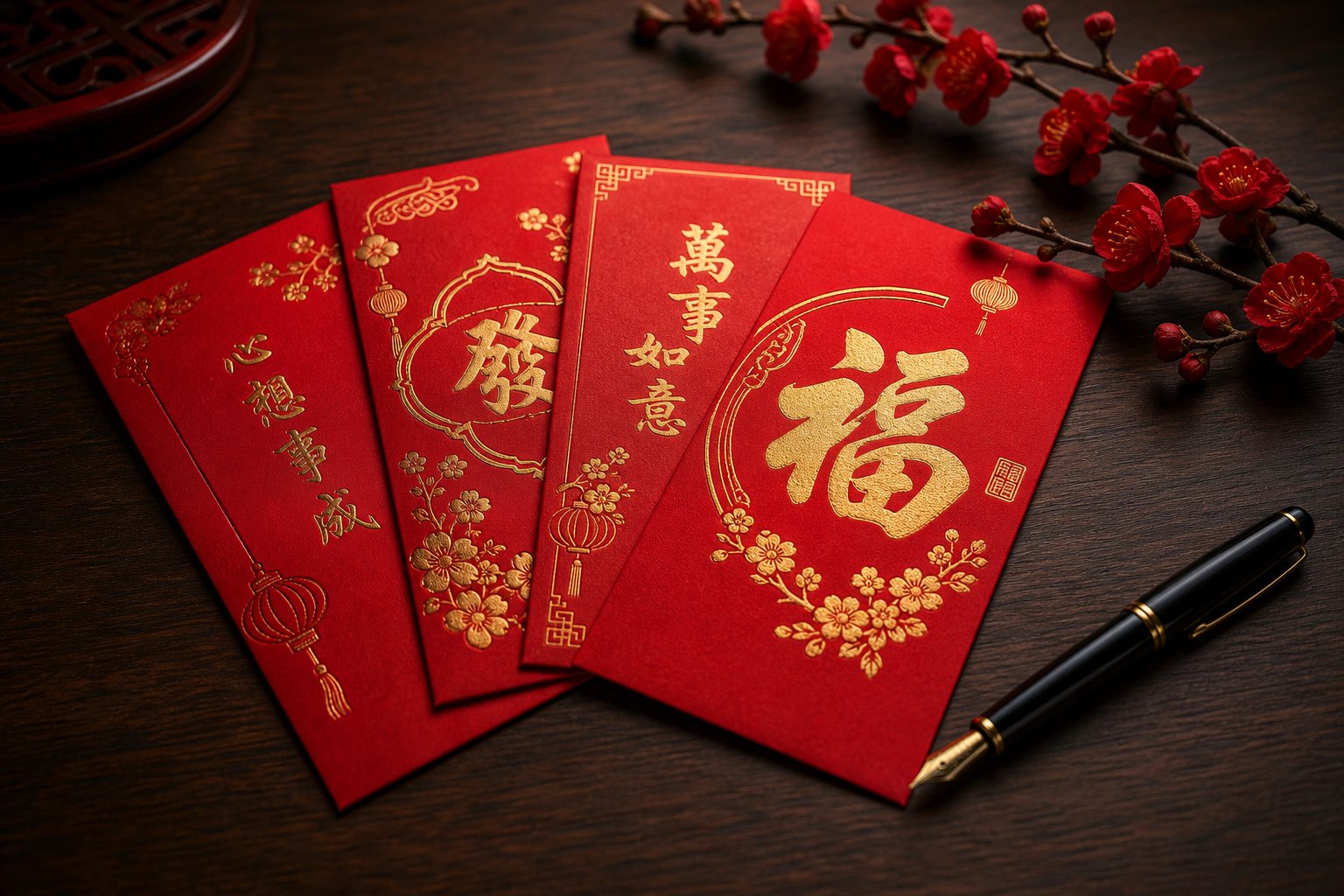
- Red envelopes (红包) — During Lunar New Year, weddings, and birthdays, you write the recipient's name on the envelope. Sloppy or unbalanced characters suggest carelessness. And notably, Chinese cultural tradition prohibits writing names in red ink, as it historically signified a death sentence — so you'll use black or blue ink, where stroke quality is even more visible without color to distract.
- Official forms and documents — Government paperwork, bank applications, and school registrations often require handwritten 姓名 fields. Characters written with proper stroke order appear more uniform and professional.
- Letters and cards — Addressing a letter or writing a personal note with someone's name demands care. The recipient sees your handwriting as a reflection of your effort and sincerity.
- Calligraphy gifts — Chinese name calligraphy is a popular personalized gift. Whether you're practicing chinese calligraphy names for a friend's wedding or a child's birth celebration, the stroke order determines whether the final piece looks polished or amateur.
- Seals and stamps (印章) — Personal name seals are still used for contracts and artwork. The characters carved into them reflect traditional chinese character styles, and understanding stroke order helps you appreciate — and verify — the design.
Why does stroke order affect appearance so much? Because each stroke is designed to flow naturally from the previous one. When you write top to bottom and left to right, your hand maintains a consistent rhythm. The spacing between strokes stays even. The proportions hold. Across different chinese character styles — from standard script (楷书) to running script (行书) — this internal consistency is what separates readable handwriting from visual chaos.
As Hacking Chinese points out, incorrect stroke order doesn't just look wrong — it makes joined or semi-cursive writing impossible to read, because the connections between strokes only make sense when they follow the standard sequence. For names, where misreading a single character means misidentifying a person, that legibility isn't optional.
The cultural stakes are clear: writing a name well shows you value the person behind it. But what happens when that name contains 15, 20, or even more strokes? Complex name characters demand the same principles — just applied with more patience and a solid strategy for breaking them apart.
Handling Complex and High-Stroke Name Characters
A surname like 王 at 4 strokes feels manageable. But what about the surname 爨 (cuan) at 30 strokes? Or given-name characters like 馨 (xin, fragrant) at 20 strokes? Some name characters pack so many radicals into a single square that they feel less like writing and more like assembling a puzzle. The good news: even the hardest chinese character to write still follows the same top-to-bottom, left-to-right principles you already know. The challenge is purely one of scale and patience.
Complex Name Characters and How to Tackle Them
What makes certain name characters difficult isn't mystery — it's density. Complex chinese characters used in names typically share one or more of these traits:
- High radical count — Multiple distinct components stacked or nested together, each with its own internal stroke sequence.
- Unusual component arrangements — Characters where radicals sit above, below, and between each other rather than in clean left-right or top-bottom splits.
- Rare stroke combinations — Sequences that don't appear in everyday vocabulary, making muscle memory harder to build.
Consider the surname 爨 (cuan, fourth tone). As Language Log documented, a mother in China went viral for her frustration trying to teach her young son to write his own 30-stroke surname. The character contains fragments of 興 (flourish) in its upper portion, 林 (forest) and 大 (big) crammed into the middle, and 火 (fire) at the bottom. Even experienced Sinologists admit they'd struggle to reproduce it from memory — not because the rules are different, but because so many rules apply simultaneously within one character.
For context, the chinese character with most strokes in regular modern use is 齉 (nang, blocked nose) at 36 strokes. The chinese word with most strokes ever documented — an ancient character pronounced "huang" — reportedly contains 172 strokes, though scholars debate whether it's a true character or a Daoist talisman. Name characters rarely reach these extremes, but surnames like 爨 and given-name characters like 鑫 (xin, 24 strokes, meaning prosperous) or 懿 (yi, 22 strokes, meaning virtuous) still demand serious attention.
The table below shows complex characters that actually appear in Chinese names, along with their stroke counts and what makes each one challenging:
| Character | Pinyin | Strokes | Usage | Difficulty Notes |
|---|---|---|---|---|
| 爨 | cuan | 30 | Rare surname | Five+ stacked components; middle section extremely dense |
| 鑫 | xin | 24 | Given name | Three 金 (gold) radicals arranged in a triangle; repetition helps |
| 懿 | yi | 22 | Given name | Left-right split with complex right component containing 次 + 心 |
| 馨 | xin | 20 | Given name | Top section (声 + 殳) dense; bottom 香 provides anchor |
| 瀚 | han | 19 | Given name | Left 氵 is simple but right component 翰 has 16 strokes alone |
| 疆 | jiang | 19 | Surname / given name | Narrow left side (弓 + 土) paired with wide right component (畺) |
| 曦 | xi | 20 | Given name | Left 日 is easy; right 羲 contains multiple nested sub-components |
You'll notice something reassuring: even the most strokes in a chinese character used as a name rarely exceed 30. Most complex given-name characters fall in the 19-24 range — challenging, but entirely learnable with the right approach.
Strategies for Memorizing Difficult Stroke Sequences
Imagine trying to memorize a 22-stroke sequence as a single string of movements. That's 22 individual decisions about direction, length, and placement — far beyond what working memory can handle in one pass. The solution? Don't treat it as 22 strokes. Treat it as a handful of familiar components assembled in order.
Here's a practical method that works for any complex name character, whether it's a hanzi with most strokes you've ever attempted or just slightly above your comfort zone:
- Identify the radical components. Break the character into its building blocks. 鑫 isn't 24 random strokes — it's 金 written three times (top-left, top-right, bottom-center). 馨 splits into an upper section and 香 (fragrant) below.
- Practice each component in isolation. Write 金 until it's automatic. Write 香 until you don't think about it. These smaller units are often characters you already know from other contexts.
- Determine the assembly order. Apply the universal rules: top components before bottom, left before right, outer frames before inner content. For 鑫, that means top-left 金 first, top-right 金 second, bottom 金 last.
- Combine at slow speed. Write the full character slowly, pausing between components to confirm placement. Speed comes later — accuracy comes first.
- Use the oral description trick. Just as natives say "弓长张" to describe the surname 张, create a verbal breakdown for complex characters. Saying "three golds" for 鑫 or "sound-fragrant" for 馨 gives your brain a narrative anchor.
This component-then-combine approach mirrors how native Chinese speakers actually learn difficult characters in school. Nobody memorizes 爨 as thirty individual strokes. They see the top portion (related to 興), the middle forest-and-big section (林 + 大), and the fire radical (火) at the bottom — then assemble those familiar pieces in sequence.
The fundamental rules never change regardless of complexity. A 30-stroke character still moves top to bottom. A 24-stroke character still completes its left component before its right. What changes is simply how many layers of those rules you're stacking — and how much patience you bring to the practice grid. Consistent short sessions, focusing on one complex character per week, build the muscle memory that makes even intimidating name characters feel routine over time.
Of course, knowing these strategies is one thing. Having the right tools to look up unfamiliar characters and structure your daily practice is another — and the lookup method you choose can make or break your progress.
Tools and Practice Methods for Mastering Name Stroke Order
You know the rules. You can decompose characters into radicals. You've even tackled 20-stroke monsters. But when you encounter an unfamiliar name character in the wild — on a wedding invitation, a colleague's email signature, or a form you need to fill out — how do you actually look it up and confirm the correct stroke order chinese dictionaries prescribe? The answer depends on what information you already have about the character.
Dictionary Lookup Methods for Name Characters
Traditional and digital dictionaries offer three primary search methods. Each one suits a different starting point, and knowing all three means you're never stuck regardless of what you know about the character.
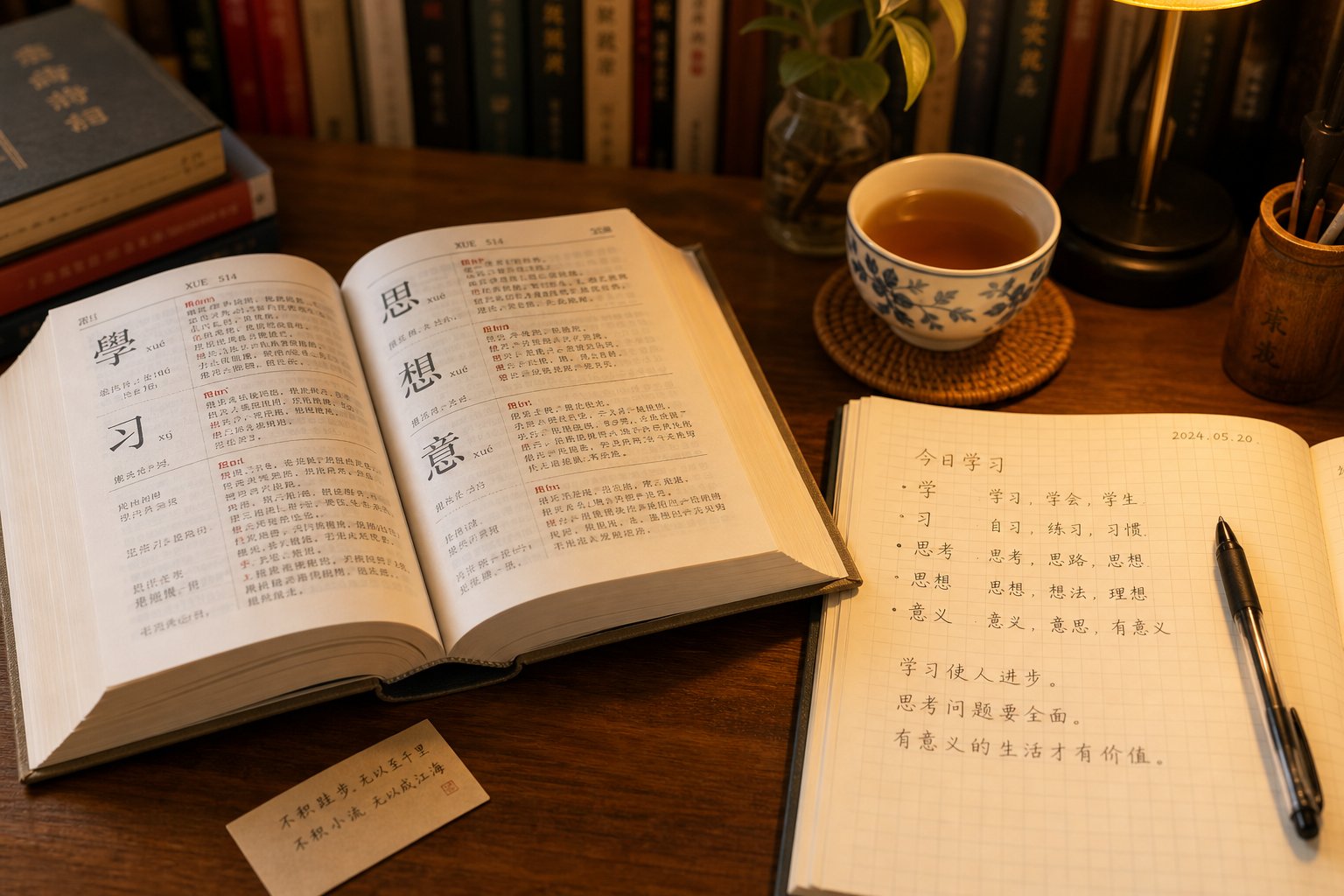
1. Lookup by pinyin — The fastest method when you know the pronunciation. You heard someone's name, you know the tones, and you need the character. A chinese stroke dictionary organized by pinyin groups all characters sharing the same syllable and tone together. You navigate to the correct syllable, scan the entries for the right meaning or context, and find your character along with its stroke order diagram. This is the method covered in Chapter 3 — pinyin with tone marks gets you there directly.
2. Lookup by radical — Useful when you can see the character but don't know how to pronounce it. Maybe you're looking at a printed name card or a handwritten envelope. Identify the primary radical (the semantic component, usually on the left or top), count its strokes, and find it in the radical index. From there, count the remaining strokes in the character to narrow your search within that radical's section. A chinese dictionary strokes index will list characters grouped by their radical and then sub-sorted by total stroke count.
3. Lookup by total stroke count — Your fallback when you can't identify the radical or the pinyin. Count every stroke in the character, then search the stroke-count index for characters matching that number. Within the stroke-count section, characters are organized by their first stroke type — horizontal, vertical, left-falling, dot, or turning. This method is slower but works for any character, no matter how unfamiliar. As a practical tip: identify the initial stroke of the character first, then scan through the list of characters with matching stroke counts that begin with that same stroke shape.
A mandarin stroke order dictionary — whether paper or digital — typically includes all three indexes. Paper dictionaries place the radical index and stroke-count index at the front or back of the book, with the main entries organized by pinyin. Digital tools often let you draw the character directly or search by component, which speeds up the process considerably. The key advantage of a dedicated chinese dictionary stroke reference over a general translation app is that it shows the animated or numbered stroke sequence, not just the finished character.
Which method should you default to? If you know the sound, use pinyin. If you can see the character, try radical lookup first — it's faster than counting every stroke. Reserve the stroke-count method for characters where you genuinely can't identify any familiar radical. Over time, you'll recognize more radicals on sight, making the second method your go-to for visual lookups.
A Daily Practice Routine for Stroke Order Mastery
Looking up a character is step one. Writing it from memory a week later is the real goal. Consistent short practice sessions build the muscle memory that transforms strokeorder chinese knowledge from intellectual understanding into automatic hand movement. Here's a structured routine that works whether you're practicing one name per day or five:
- Choose one name character. Start with a surname or given-name character relevant to your life — a friend's name, your own name, or a character from the tables in earlier chapters. Relevance keeps motivation high.
- Look up the stroke order. Use your preferred method — pinyin, radical, or stroke count — to find the character in a mandarin stroke order dictionary. Study the numbered sequence or animation carefully before picking up your pen.
- Trace the character three times. If you have a stroke order diagram or practice sheet, trace over it slowly. Focus on direction and proportion, not speed. Your hand is learning the path.
- Write from memory five times. Put the reference away. Reproduce the character on blank paper or a grid sheet. Check your sequence against the reference after each attempt. Correct any errors immediately — don't reinforce wrong habits.
- Write the full name in context. Combine the surname and given-name characters together. Write the complete name three times as a unit. This trains your hand to transition smoothly between characters at natural spacing.
- Review yesterday's character. Before ending your session, write the previous day's character once from memory. If you can't recall the sequence, look it up again and repeat step four. Spaced repetition is what moves hanzi stroke order from short-term recall into long-term muscle memory.
This entire routine takes ten to fifteen minutes. That's it. You don't need hour-long calligraphy sessions to build fluency — you need brief, focused repetitions spread across days and weeks. The spacing matters more than the volume.
A few practical tips to keep your sessions effective:
- Use grid paper (米字格 or 田字格) to maintain consistent proportions. The grid lines show you where each stroke should land relative to the character's center.
- Say the stroke names aloud as you write — "horizontal, vertical, left-fall, dot" — to engage auditory memory alongside motor memory.
- Keep a running list of name characters you've mastered. Watching the list grow provides tangible evidence of progress.
- When you encounter a new name in daily life, add it to tomorrow's practice queue. Real-world relevance makes retention dramatically easier.
The goal isn't perfection on day one. It's building a reliable system where every name character you encounter becomes a character you can reproduce confidently within a few practice sessions. Stroke order chinese learners struggle with most often isn't the complex 20-stroke character they studied carefully — it's the common 7-stroke surname they assumed they knew and never actually practiced with intention.
Ten minutes of deliberate daily practice builds more handwriting fluency than an hour of passive copying once a week.
Whether you're writing your own name on a form, addressing a red envelope for a friend, or practicing calligraphy as a creative outlet, the path is the same: pinyin identifies the character, decomposition reveals its structure, and consistent repetition makes the stroke sequence automatic. Start with the names that matter most to you, practice them with the methods above, and the confidence to write any Chinese name — stroke by correct stroke — will follow.
Frequently Asked Questions About Pinyin Name Stroke Order
1. How do you find the correct stroke order for a Chinese name?
Start by capturing the full pinyin with tone marks for the name. Use the toned pinyin to search a dictionary and identify the exact character, since many names share similar sounds but use different characters. Once you confirm the correct character, look up its stroke order in a stroke order dictionary or app. This three-step process — pinyin identification, character confirmation, then stroke sequence lookup — prevents the common mistake of practicing the wrong character entirely.
2. Why does stroke order matter when writing Chinese names?
Correct stroke order produces characters with balanced proportions and natural spacing, which is especially important for names written on official forms, red envelopes, letters, and calligraphy gifts. Beyond aesthetics, proper stroke order ensures legibility in semi-cursive writing styles where strokes connect, and it affects how handwriting-recognition software interprets your characters. In Chinese culture, writing someone's name with care reflects respect for that person.
3. What are the basic stroke order rules for Chinese characters?
Six core principles govern Chinese stroke order: top to bottom, left to right, horizontal before vertical, left-falling diagonal before right-falling, outside before inside for enclosed structures, and closing frames last. These rules apply universally to all characters including name characters. When multiple rules apply within one character, they layer together — for example, a left-right structured surname requires completing the entire left component before starting the right one.
4. How many strokes do common Chinese surnames have?
The ten most common Chinese surnames range from 4 to 11 strokes. Wang (王) is the simplest at 4 strokes, while Huang (黄) is the most complex at 11. Most top surnames fall between 6 and 9 strokes, including Li (李) at 7, Zhang (张) at 7, Liu (刘) at 6, Chen (陈) at 7, Yang (杨) at 7, Zhao (赵) at 9, Zhou (周) at 8, and Wu (吴) at 7. Breaking these into radical components makes memorization much easier.
5. What is the best way to practice writing Chinese name characters?
A daily ten-to-fifteen-minute routine works best: choose one relevant name character, look up its stroke order, trace it three times over a reference, then write it from memory five times on grid paper. Check your sequence after each attempt and correct errors immediately. Add a review of the previous day's character to build spaced repetition. Saying stroke names aloud while writing engages auditory memory alongside motor memory, accelerating retention.