What Stroke Order Means and Why It Matters
When you pick up a pen to write a Chinese character, do you just draw whatever stroke feels right first? If so, you are likely building bad habits that will slow you down later. Every Chinese hanzi follows a specific sequence of strokes, and that sequence is not random or optional. It is a standardized system refined over centuries and formally codified in official government standards.
Defining Stroke Order in Chinese Writing
Chinese character stroke order is the prescribed sequence in which you write each individual stroke to form a complete character. Think of it as the structural DNA of every character, a built-in blueprint that dictates not just what strokes appear, but exactly when each one gets written. China's National Language Commission has published formal standards governing this sequence, most recently the Stroke Orders of the Commonly Used Standard Chinese Characters in 2020, which covers all 8,105 characters in the official standard list. This replaced the earlier 1997 edition and serves as the current authoritative reference for stroke order in the Chinese language written system.
Stroke order is not decoration or tradition for its own sake. It is the structural DNA of every Chinese character, encoding centuries of writing efficiency into a repeatable sequence your hand can learn once and recall forever.
Why Stroke Order Still Matters for Modern Learners
You might wonder whether chinese stroke order still matters in an age of keyboards and touchscreens. The short answer: absolutely. Here is why:
- Handwriting input on devices — Most phone and tablet handwriting recognition systems use stroke order and direction, not just final shape, to identify characters. Writing in chinese with incorrect sequencing often means the software cannot find what you intended.
- Muscle memory for memorization — Your hand retains a kind of motor memory when you practice chinese handwriting in the correct order. This physical repetition reinforces recall far more effectively than visual study alone.
- Reading handwritten and cursive text — Native speakers connect and abbreviate strokes based on standard stroke order. Without that knowledge, semi-cursive chinese handwriting becomes nearly impossible to decode.
This guide is designed to bridge the gap between oversimplified beginner tips and dense reference charts. Whether you are just starting out or correcting years of guesswork, you will find a clear, practical framework for understanding stroke order chinese learners can actually apply.
Of course, knowing the rules means nothing if you cannot identify the strokes themselves. Every character, no matter how complex, is built from a small set of fundamental stroke types.
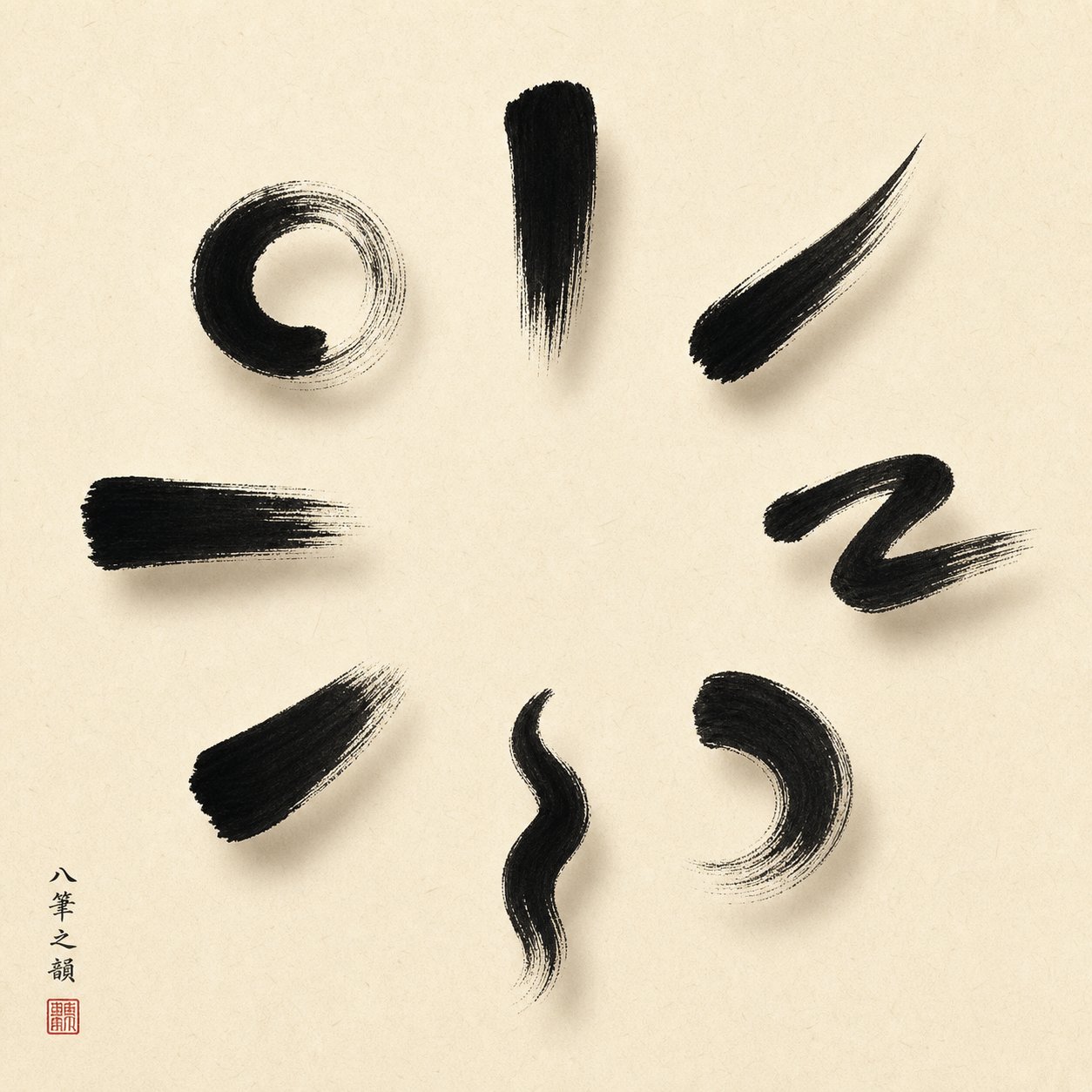
The Eight Basic Strokes Every Learner Must Know
Imagine trying to spell English words without knowing the alphabet. That is essentially what happens when learners jump into writing characters without first recognizing the chinese basic strokes that compose them. Every single character, from a one-stroke 一 to a thirty-plus-stroke 鑫, is assembled from the same small toolkit of fundamental movements.
The Eight Fundamental Stroke Types
Chinese strokes (strokes 中文) fall into eight core categories. Each has a specific name, a defined direction of movement, and a distinct visual identity. You will encounter these mandarin basic strokes in virtually every character you write, so getting familiar with them early pays off quickly.
| Stroke Name (Chinese) | Stroke Name (English) | Direction | Example Character |
|---|---|---|---|
| 横 (heng) | Horizontal | Left to right | 一 (one) |
| 竖 (shu) | Vertical | Top to bottom | 十 (ten) |
| 撇 (pie) | Left-falling | Upper right to lower left | 人 (person) |
| 捺 (na) | Right-falling | Upper left to lower right | 大 (big) |
| 点 (dian) | Dot | Quick press downward (slight rightward angle) | 主 (main) |
| 折 (zhe) | Turning | Changes direction mid-stroke (e.g., horizontal then vertical) | 口 (mouth) |
| 钩 (gou) | Hook | Attached flick at the end of another stroke | 小 (small) |
| 提 (ti) | Rising | Lower left upward to the right | 地 (earth) |
A few things to notice. The horizontal line in chinese writing always moves left to right, never the reverse. The dot in chinese characters, despite its small size, carries real structural weight and appears in countless common characters like 火 (fire) and 心 (heart). And the turning stroke is unique because it combines two directions in a single, unbroken motion, which is why characters like 口 and 国 feel different from characters built purely of straight lines.
How to Identify Strokes Within Characters
When you look at a new character, try breaking it apart into these eight basic mandarin strokes before anything else. Take 木 (tree) as an example: you will find one horizontal stroke, one vertical stroke, one left-falling stroke, and one right-falling stroke. Four strokes, all from the list above.
This decomposition skill is the prerequisite to learning chinese stroke names and, more importantly, to understanding the ordering rules that govern how those strokes sequence together. Once you can reliably spot a 横 versus a 提, or distinguish a 撇 from a 捺, you have the vocabulary to follow the sequencing logic that determines which stroke comes first, second, and last.
With these building blocks identified, the real question becomes: in what order do you write them?
Core Stroke Order Rules for Everyday Characters
Six foundational rules govern the chinese characters stroke order for the vast majority of characters you will ever write. Think of them as traffic laws for your pen: follow them consistently, and every character flows in a predictable, efficient sequence. Break them, and you end up with awkward hand movements and characters that look subtly off-balance.
The following rules are listed in priority order. When you encounter an unfamiliar character, run through this list from top to bottom and apply the first rule that fits the structure you see.
Top to Bottom and Left to Right
- Top to bottom (从上到下) — Start with the highest stroke and work downward. The character 三 (san, "three") is the clearest example: stroke one is the top horizontal line, stroke two is the middle horizontal line, and stroke three is the bottom horizontal line. Each sits lower than the last. Characters like 立 and 言 follow the same descending logic.
- Left to right (从左到右) — When a character has side-by-side components, write the left portion before the right. In 川 (chuan, "river"), the three vertical strokes are written from left to right. The same principle applies to compound characters like 林 (two 木 side by side) and 明 (日 on the left, 月 on the right).
These two rules alone handle the chinese strokes order for a huge number of simple and compound characters. They reflect the natural direction your hand travels across the page.
Crossing Strokes and Enclosure Patterns
- Horizontal before vertical when strokes cross (先横后竖) — When a chinese writing horizontal line intersects with a vertical stroke, the horizontal is always written first. In 十 (shi, "ten"), stroke one is the horizontal line drawn left to right, and stroke two is the vertical line drawn top to bottom through it. The same applies to 干 and 丰. This rule ensures the horizontal anchor is in place before the vertical crosses it.
- Left-falling before right-falling (先撇后捺) — Diagonal strokes that slant in opposite directions follow a fixed order: the left-falling stroke (撇) comes first, then the right-falling stroke (捺). In 人 (ren, "person"), the left-falling diagonal is stroke one, and the right-falling diagonal is stroke two. You will see this same pattern in 八, 交, and the lower portion of 大.
- Outside before inside (从外到内) — When a character has an enclosing frame, write the outer structure before filling in the interior. In 月 (yue, "moon"), the left downward stroke and the outer turning stroke form the frame first, and then the two interior horizontal strokes are added. This rule applies to all partially enclosed characters where the frame wraps around inner content.
The Inside-Before-Closing Principle
- Inside before closing the frame (先进后关) — For fully enclosed characters, write the top and sides of the frame, fill in the interior content, and then close the bottom. In 日 (ri, "sun"), you draw the top and two sides of the box, add the interior horizontal stroke, and then seal the bottom. The character 国 (guo, "country") works the same way: the outer enclosure opens, the inner component 玉 is written, and the bottom horizontal stroke closes the box last.
Why close last? Imagine drawing a box and then trying to squeeze content inside it. Leaving the bottom open gives your pen room to work before sealing everything shut.
These six rules cover the order of strokes in chinese characters for the overwhelming majority of what you will write day to day. Master them, and you can confidently approach the chinese character writing stroke order of most common characters without needing to look each one up individually. The stroke order of chinese characters becomes predictable rather than something you memorize case by case.
Still, some characters do not fit neatly into a single rule. Symmetrical structures, unusual enclosures, and late-placed dots introduce additional layers of complexity that require their own guidelines.
Advanced Rules for Complex Character Structures
Symmetrical layouts, partial enclosures, and strategically placed dots all create situations where the six core rules need backup. These advanced guidelines handle the structural edge cases that trip up even intermediate learners. Once you internalize them, the chinese character strokes that once felt unpredictable start following a clear logic.
Rules for Symmetrical and Enclosed Characters
Each rule below addresses a specific structural pattern. You will notice that many of them override or refine the basic left-to-right principle when a character's geometry demands a different approach.
- Center before sides in symmetrical characters — When a character is vertically symmetrical, write the center stroke or component first, then the left side, then the right. In 小 (xiao, "small"), the center vertical hook is stroke one, followed by the left dot and then the right dot. The character 水 (shui, "water") follows the same principle: the center vertical hook comes first, then the strokes fan outward from the middle. This contradicts the usual left-to-right rule, but it makes sense because the center stroke acts as a spine that anchors the character's proportions.
- Bottom enclosures written last — When a character sits inside a frame that opens at the top, the bottom enclosure is written after the interior content. In 凶 (xiong, "fierce"), you write the interior strokes (the X-shaped cross) before adding the bottom-enclosing strokes. Characters like 函 and 出 follow this same pattern. The logic mirrors the "inside before closing" core rule but applies specifically to frames that wrap from below rather than from above.
- Left-side enclosures come after interior content — Characters with enclosures that open to the upper right, such as 区 (qu, "area") and 医 (yi, "medicine"), are written interior first, enclosure last. The vertical-turning stroke that forms the left and bottom frame is the final stroke. This is because the enclosure wraps around the content from the left and bottom, so you need the interior in place before the frame can close around it.
- Three-sided enclosures depend on opening direction — A frame open at the bottom (like 同) gets its outer strokes first, then the interior. A frame open on the right (like 区) gets its interior first, then the wrapping stroke last. A frame open at the top (like 凶) gets its interior before the bottom closes. The direction the enclosure opens determines whether you build the frame first or fill the content first.
- Upper-right and inside dots are written last — Dots positioned at the upper right or inside a character are typically the final stroke. In 犬 (quan, "dog"), the dot at the upper right is the last stroke written. Similarly, 太 (tai, "too much") places its bottom dot last. Characters like 玉 (yu, "jade"), 书 (shu, "book"), and 寸 (cun, "inch") all follow this pattern. By contrast, dots at the upper left or top center are written first, following the standard top-to-bottom flow.
Taiwan's Ministry of Education identifies 17 distinct stroke order rules in its Handbook of Stroke Order of Frequently Used Chinese Characters, covering everything from the radical 戈 to spanning horizontal strokes. Mainland standards consolidate many of these into fewer, broader categories. Both systems agree on the underlying principles, but the granularity differs, which is worth knowing if you use reference materials from different regions.
How Structure Type Changes Rule Application
The same chinese character stroke rules apply differently depending on how a character is composed. Recognizing the structural category first helps you predict which rules take priority.
- Left-right compositions (左右结构) — Characters like 好 (hao, "good") split into a left component (女) and a right component (子). You complete the entire left side before starting the right. Within each component, the standard top-to-bottom and horizontal-before-vertical rules apply independently. The character strokes chinese learners write in these compositions follow a predictable two-stage process.
- Top-bottom compositions (上下结构) — Characters like 思 (si, "think") stack one component above another (田 on top, 心 below). You finish the top component entirely before moving to the bottom. Each layer is treated as its own mini-character with its own internal stroke sequence.
- Full enclosure (全包围) — Characters like 国 use the outside-first, inside-next, close-last sequence. The frame opens, the interior fills, and the bottom seals.
- Partial enclosure (半包围) — Characters like 区 and 凶 require you to identify which direction the enclosure opens. That determines whether the frame or the content comes first. Left-bottom enclosures (区) close last. Top-open enclosures (凶) close at the bottom last.
Understanding these structural categories transforms the way you approach strokes in chinese characters. Instead of memorizing the chinese character order stroke by stroke for thousands of individual characters, you learn to classify a character's structure, apply the matching rule set, and arrive at the correct sequence through reasoning.
These advanced rules handle the what of stroke sequencing. But they also raise a deeper question: why do these particular sequences exist in the first place? The answer lies not in arbitrary convention, but in the physical mechanics of brush, ink, and hand.
The Logic Behind Each Stroke Order Rule
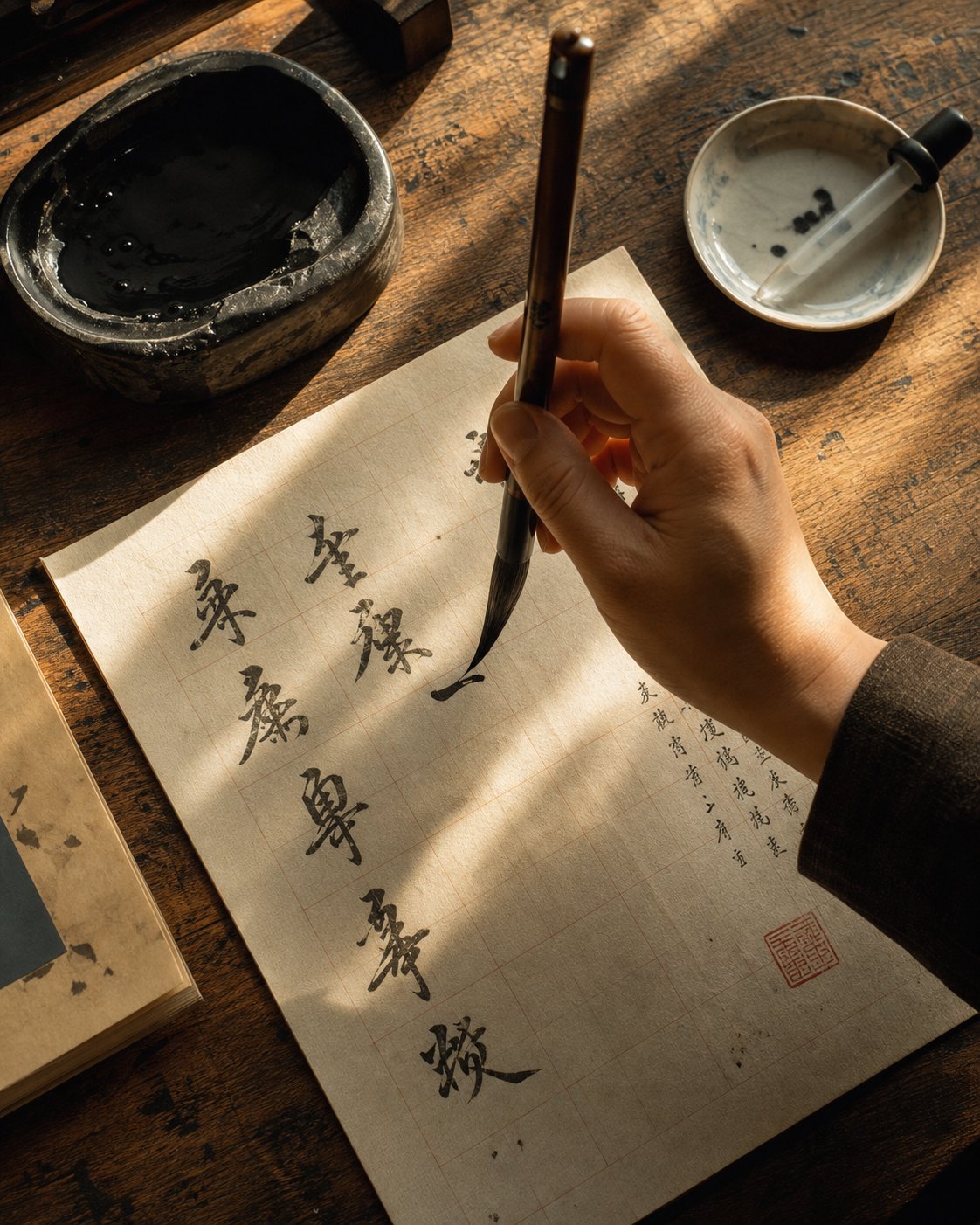
Stroke order rules can feel like arbitrary mandates handed down from ancient textbooks. Why does the horizontal come before the vertical? Why write the outside before the inside? These conventions were not invented to frustrate learners. They emerged from centuries of practical brush-writing experience, where efficiency, ink control, and physical comfort dictated every movement of the hand.
Calligraphic Origins of Stroke Sequence
Chinese calligraphy strokes were originally written with a flexible brush held vertically, loaded with wet ink that dried quickly on absorbent paper. Every rule you learned in the previous sections traces back to the physical constraints of that tool.
- Top to bottom follows gravity. When you hold a brush upright, your arm naturally descends. Moving downward requires less muscular effort than pushing upward, so building characters from the top down conserves energy across hundreds of characters in a single writing session.
- Left to right matches the resting hand position. A right-handed calligrapher's wrist naturally sits to the left of the writing surface. Moving rightward is an opening motion that keeps previously written strokes visible and prevents smearing wet ink. This is why basic chinese writing always progresses in that direction.
- Horizontal before vertical creates a stable anchor. A horizontal chinese brush stroke laid down first acts like a shelf. The vertical stroke that crosses it can then be positioned precisely relative to that reference line, producing balanced proportions without guesswork.
- Outside before inside builds the frame first. Imagine furnishing a room before the walls exist. You would have no reference for where anything belongs. Writing the enclosure first gives you defined boundaries, so the interior strokes for writing fit proportionally within the available space.
- Inside before closing prevents trapping the brush. If you seal a frame before filling it, your brush has to re-enter a closed space, creating awkward angles and inconsistent ink flow. Leaving the closing stroke for last lets the brush exit smoothly after completing the interior.
The stroke order system was designed to produce aesthetically pleasing, balanced characters while allowing the minimum amount of hand movements. Ink flow, brush lifting efficiency, and maintaining consistent stroke thickness all depend on following a sequence that keeps the brush moving forward rather than doubling back.
Stroke order rules evolved from practical brush-writing constraints, not arbitrary convention. Each rule solves a specific physical problem: gravity, ink smearing, spatial reference, or brush re-entry.
Ergonomic Efficiency and Natural Hand Movement
Even if you never touch a brush, these principles still apply to modern stroke writing with a pen or stylus. The left-falling-before-right-falling rule, for instance, follows the natural arc of a right-handed wrist rotating outward. The center-before-sides rule in symmetrical characters establishes a visual spine that your hand can use as a reference point for the flanking strokes.
This is why understanding the reasoning matters more than rote memorization. When you encounter an unfamiliar character and need to chinese handwrite it for the first time, you can predict the correct sequence by asking: which stroke gives my hand the most natural path forward? Which stroke establishes a reference for the ones that follow? The answers almost always align with the standard rules, because those rules were built from exactly that logic.
Learners who grasp the ergonomic reasoning behind each chinese brush stroke sequence find that new characters stop feeling like puzzles. The correct order becomes the one that feels most natural, because your hand is following the same physical logic that calligraphers refined over millennia. Chinese formal writing traditions encoded efficiency into every rule, and that efficiency transfers directly to modern pens, styluses, and touchscreens.
Of course, knowing the logic does not eliminate every ambiguity. Some characters contain structures where two rules seem to apply simultaneously, pulling the stroke sequence in different directions. Resolving those conflicts requires a clear priority system.
Resolving Conflicts When Multiple Rules Apply
You have learned the core rules. You have studied the advanced guidelines. Then you sit down to write a character like 坐 or 必, and two rules seem to demand opposite sequences at the same time. Which one wins? This is the question most guides skip entirely, leaving learners to guess. A clear priority hierarchy eliminates that guesswork.
When Rules Compete Inside One Character
Stroke order conflicts arise when a character's structure triggers more than one rule simultaneously. The solution is not to pick your favorite rule. It is to understand which rule takes precedence based on the specific structural relationship between the strokes involved.
Let's walk through three characters where this happens:
- 坐 (zuo, "to sit") — This character has two 人-shaped components flanking a central vertical stroke, all sitting above a horizontal base. The symmetry rule says center first, then sides. The top-to-bottom rule says start at the top. Here, the top-to-bottom rule wins at the macro level: you write the two upper 人 components (left then right) before the lower horizontal stroke. But within the upper section, the center-before-sides principle does not fully apply because the two 人 shapes are written left to right rather than outward from a center spine. The resolution: top-to-bottom governs the overall sequence, and left-to-right handles the side-by-side components within each layer.
- 及 (ji, "to reach") — The left-falling stroke (撇) and the turning stroke (横折折撇) create a sequencing puzzle. The left-to-right rule suggests starting with the leftmost element, but the left-falling stroke here actually begins at the top and sweeps leftward, making it the first stroke under the top-to-bottom principle. The turning stroke follows, and the right-falling stroke (捺) finishes last. The resolution: top-to-bottom takes priority over left-to-right when a stroke starts higher on the character, regardless of where it ends.
- 半 (ban, "half") — Two dots sit symmetrically on either side of a vertical stroke, with horizontal strokes above and below. The symmetry rule would suggest center first, then the flanking dots last. But the standard mandarin stroke order places the two dots first (top-to-bottom, left-to-right), then the horizontal strokes, and finally the skewering vertical stroke last. The resolution: the cutting-stroke-last rule overrides the symmetry rule here, and the dots are treated as upper elements governed by top-to-bottom sequencing.
A practical priority hierarchy you can apply to any chinese hanzi stroke order conflict looks like this:
- Top-to-bottom generally overrides left-to-right when strokes start at different heights.
- Cutting or skewering strokes are written last, overriding both symmetry and top-to-bottom for that specific stroke.
- Enclosure rules (outside before inside, close last) override left-to-right and top-to-bottom within the enclosed section.
- Symmetry (center before sides) applies only when no higher-priority rule contradicts it.
This hierarchy is not explicitly spelled out in any single official document, but it reflects the consistent patterns found across the thousands of characters codified in the mainland GB standard and Taiwan's MOE standard. When you look up a character in a stroke order chinese dictionary and the sequence surprises you, chances are one of these priority interactions explains why.
Regional Differences in Stroke Order Standards
Here is something that catches many learners off guard: the "correct" stroke order for a given character is not always universal. Mainland China, Taiwan, Hong Kong, and Japan each maintain their own official strokeorder standards, and they sometimes disagree on specific characters.
These differences are not errors. They reflect legitimate regional traditions that evolved from the same calligraphic roots but diverged on edge cases where multiple rules could reasonably apply. If you consult a mandarin stroke order dictionary published in Beijing and compare it to Taiwan's MOE reference, you will find agreement on the vast majority of characters. The disagreements cluster around exactly the kinds of rule-conflict situations described above.
| Character | Mainland China (GB Standard) | Taiwan (MOE Standard) | Japan (Kakijun) |
|---|---|---|---|
| 必 (bi, "must") | Heart-dot (center), left-falling, then the two remaining dots left to right | Left-falling stroke first, then the three dots in sequence | Heart-dot (center), left-falling, right dot, then left dot |
| 右 (you, "right") | Horizontal stroke first, then left-falling stroke | Left-falling stroke first, then horizontal stroke | Horizontal stroke first, then left-falling stroke |
| 忄 (heart radical) | Left dot, right dot, then vertical stroke | Left dot, vertical stroke, then right dot (left to right) | Left dot, vertical stroke, then right dot |
The character 必 is perhaps the most famous example. All three regions agree on the final result, but the path to get there differs. Mainland China starts with the center dot, treating it as the anchor of a symmetrical structure. Taiwan begins with the left-falling stroke, applying a top-to-bottom, left-to-right logic. Japan uses yet another sequence. Each approach is internally consistent with that region's broader rule priorities.
What does this mean for you as a learner? Pick one standard and stick with it. If you are studying simplified characters, the mainland GB standard is the natural choice. If you are learning traditional characters in a Taiwanese context, follow the MOE standard. The important thing is consistency within a single system, not matching every regional variant simultaneously. Any reliable chinese word stroke order reference will specify which standard it follows, so check before assuming a sequence is "wrong" just because it differs from what you learned elsewhere.
Regional variation also explains why different apps and dictionaries sometimes show conflicting animations for the same character. This is not a bug. It is a feature of a writing system used across multiple countries with independent standardization bodies. As long as you follow one recognized standard consistently, your hanzi stroke order is correct.
With rule conflicts resolved and regional differences demystified, a different kind of problem remains: the characters that learners consistently get wrong despite knowing the rules. Some sequences are simply counterintuitive, and a few widespread misconceptions make them even harder to correct.
Common Mistakes and Notable Exceptions
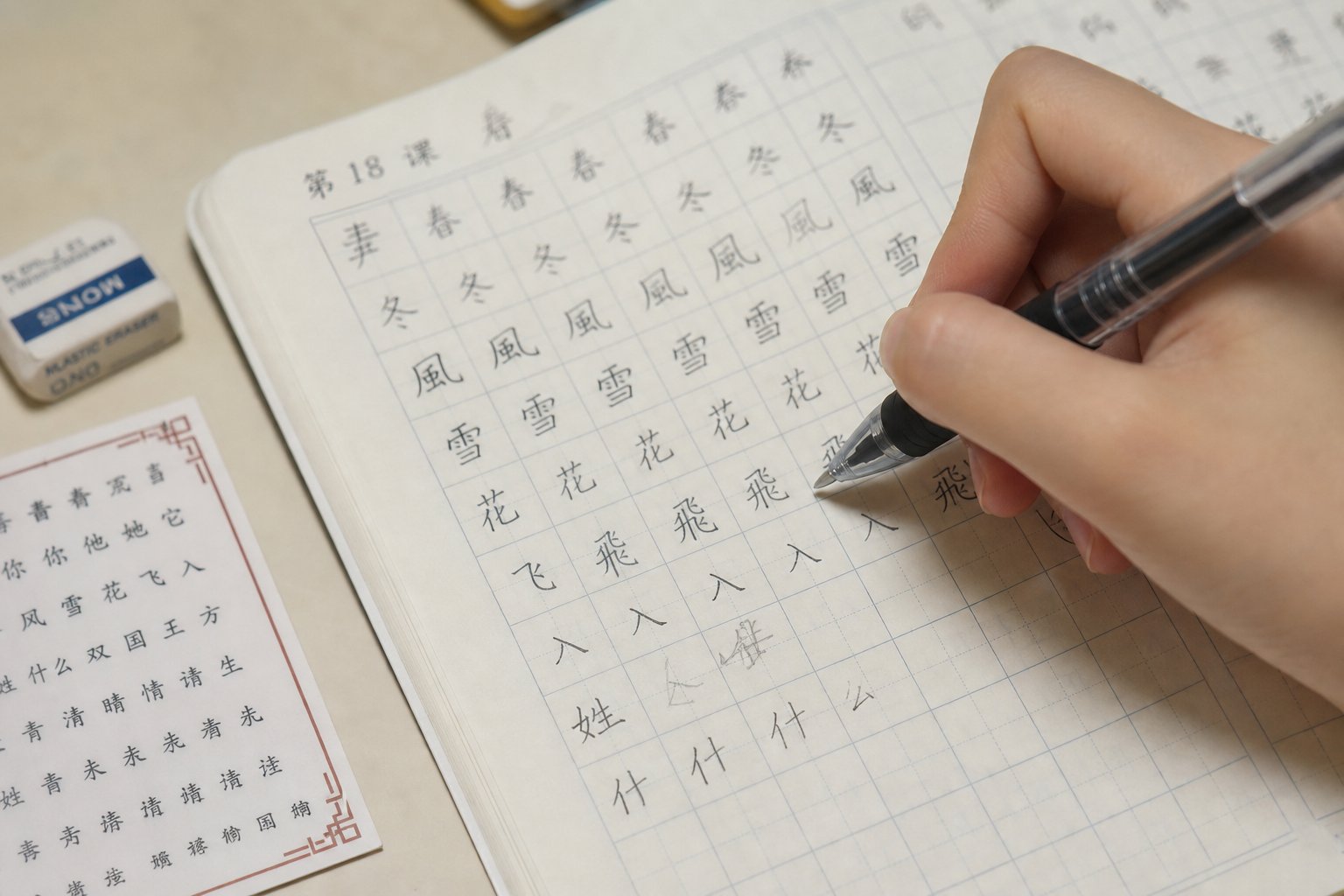
Knowing the rules is one thing. Applying them to characters that feel counterintuitive is another. Certain characters trip up learners so consistently that they deserve individual attention. If you have ever wondered how to write chinese characters like 方, 火, or 忄 without second-guessing yourself, this section is for you.
Characters Most Often Written in the Wrong Order
The following characters are among the most frequently misordered by learners. Each mistake has a logical explanation, and each correction follows directly from the rules covered earlier.
- 方 (fang, "square") — Most people write the left-falling stroke (撇) before the turning stroke (横折钩). The correct sequence is: dot, horizontal, 横折钩 first, then the 撇 last. The turning stroke establishes the frame before the diagonal sweeps through it.
- 万 (wan, "ten thousand") — Same trap as 方. Learners instinctively write the 撇 before the 横折钩, but the correct order places the turning stroke before the left-falling stroke. Any character containing this component inherits the same sequence.
- 火 (huo, "fire") — Many learners write the left dot first, then the right dot, then the center strokes. The actual sequence is: left dot (点), rising stroke (提), center vertical (竖), left-falling stroke (撇), and finally the right-falling stroke (捺). The center strokes come after the initial dot, not before.
- 忄 (heart radical) — Found in characters like 快, 情, and 性. Learners often write the vertical stroke first because it looks like the spine. In the mainland standard, the correct order is left dot, right dot, then vertical stroke. The dots come first because they sit at the top of their respective positions.
- 书 (shu, "book") — The dot at the bottom feels like it should come last, and it does. But learners frequently misplace the horizontal stroke's timing relative to the turning stroke. The correct sequence is: horizontal fold (横折), horizontal fold hook (横折钩), vertical (竖), then the dot (点) last.
- 里 (li, "inside") — Most people write the top 日 component, then add the bottom strokes. The correct order actually requires writing the 甲 shape first (the full vertical passes through the upper box), then adding the two bottom horizontal strokes afterward.
How do you write in chinese without falling into these traps? The key is recognizing that your intuition often defaults to visual logic (what looks like it should come first) rather than structural logic (what the rules actually prescribe). When you learn to write chinese characters properly, you train yourself to override that visual instinct with rule-based reasoning.
Misconceptions About Stroke Order Flexibility
Beyond individual character errors, several widespread beliefs make it harder for learners to take stroke order seriously or apply it correctly.
- "Stroke order is just personal preference." — It is not. How to write in chinese is governed by official national standards. The mainland GB standard and Taiwan's MOE standard both prescribe specific sequences for every commonly used character. Deviation is not a style choice; it is simply incorrect within that system.
- "Simplified and traditional characters always share the same stroke order." — They often do, but not always. The traditional 門 (men, "door") and its simplified form 门 have different internal structures, which means the stroke sequence diverges. Similarly, characters that underwent radical simplification may reorder strokes to accommodate new component arrangements. If you chinese character write in both systems, verify each one independently.
- "More strokes means harder stroke order." — Stroke count and ordering difficulty are not the same thing. A 20-stroke character built from familiar left-right components (like 懂) is straightforward because you simply complete the left side, then the right, applying standard rules within each. A 4-stroke character like 方 causes more confusion because its turning stroke and diagonal interact in a less intuitive way. Structural complexity, not stroke count, determines how challenging the sequence is to learn.
How do you write chinese characters correctly when so many common ones defy expectation? The honest answer: targeted practice on the specific characters that break your assumptions. Knowing the rules gives you a framework, but these exceptions require deliberate attention until the correct sequence replaces the incorrect habit in your muscle memory.
Getting the order right is not just about satisfying a standard on paper. Correct stroke order unlocks practical skills that affect how you interact with Chinese every day, from typing on your phone to looking up unfamiliar characters in a dictionary.
Practical Benefits of Correct Stroke Order Knowledge
Stroke order is not an academic exercise you practice once and forget. It feeds directly into three skills you will use every time you interact with Chinese, whether you are texting a friend, looking up an unfamiliar word, or trying to commit a new character to long-term memory.
- Handwriting input on devices
- Dictionary lookup and character decomposition
- Building durable character memory
Each one rewards correct stroke order in a tangible, everyday way.
Handwriting Input on Phones and Computers
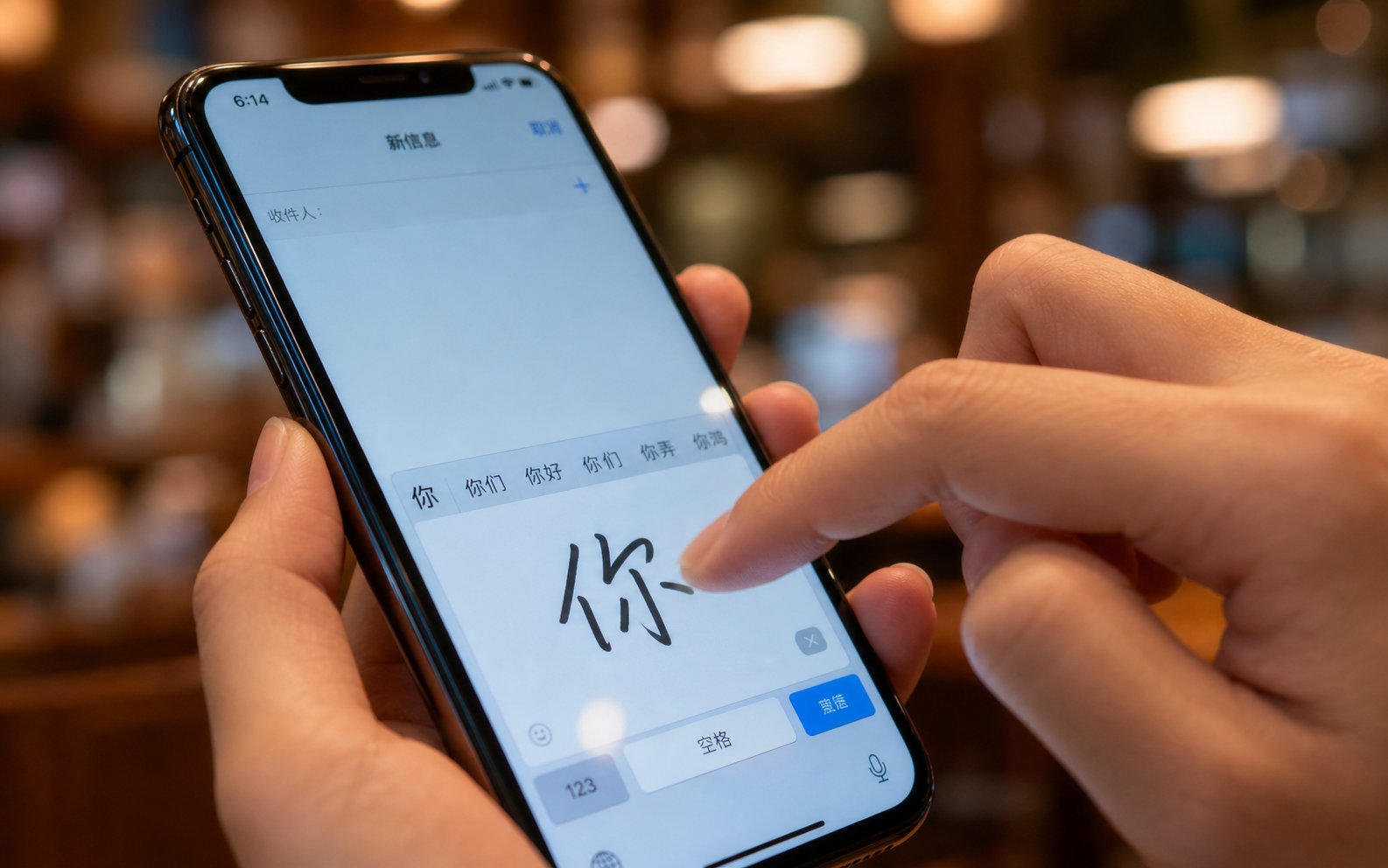
When you draw a chinese character on your phone's touchscreen, the device does not wait until you finish to start guessing. It narrows candidates in real time, stroke by stroke, using the direction and sequence of each input to eliminate possibilities. Apple's handwriting recognition system, for example, handles an inventory of approximately 30,000 characters and achieves top-4 accuracy above 95 percent, even across varied writing styles. That accuracy depends on the system's ability to interpret stroke sequence as a signal, not just final shape.
What happens when your stroke order is wrong? The algorithm receives unexpected directional data and may surface completely unrelated characters in its candidate list. You end up tapping through suggestions or rewriting the character from scratch. Correct stroke order turns handwriting input into a fast, reliable method. Incorrect order turns it into a guessing game.
This is especially relevant for learners who want to draw hanzi on a smartwatch or tablet where keyboard input feels clunky. The smaller the screen, the more the system relies on stroke sequence rather than visual shape to disambiguate similar-looking characters.
Dictionary Lookup and Character Decomposition
Ever encountered an unfamiliar character and needed to find chinese character by drawing it into a dictionary app? That chinese character dictionary draw feature works on the same recognition principles described above. But even with traditional paper dictionaries, stroke order knowledge is essential.
Paper dictionaries organize characters by radical and remaining stroke count. To use them, you need to identify the radical (often the first structural component written), then count the remaining strokes accurately. If you do not know the correct sequence, you might misidentify the radical entirely or miscount strokes because you are splitting a single turning stroke into two separate ones. Looking up a word by stroke count requires a solid understanding of what constitutes one stroke versus two, and that understanding comes directly from knowing the standard stroke order.
Decomposition works the same way. When you draw mandarin characters in the correct sequence, you naturally segment them into meaningful components: radicals, phonetic elements, and recurring sub-structures. This decomposition makes complex characters less intimidating because you recognize familiar building blocks rather than seeing an undifferentiated mass of lines.
Building Long-Term Character Memory
A 2025 study published in the journals System and Computer Assisted Language Learning tracked 43 learners from 15 countries and found that participants who practiced correct stroke order recognized and wrote characters 15 percent faster than those using random or no stroke order. Their long-term memory retention was also significantly stronger, with recognition accuracy increasing by 20 percent when writing accuracy improved by 30 percent.
Why does sequence matter for memory? Because your brain encodes motor patterns alongside visual ones. When you chinese character draw in the same order every time, you build procedural memory, the same kind of memory that lets you type without looking at the keyboard. Each character becomes a movement pattern, not just a picture. Scramble the order, and you are storing fragmented images with no consistent motor anchor.
This motor encoding also transfers to reading cursive and semi-cursive scripts. In connected writing, strokes merge and abbreviate based on the standard sequence. A reader who knows the expected order can mentally reconstruct which strokes were joined or shortened. Without that knowledge, cursive Chinese looks like abstract art rather than readable text.
Whether you want to chinese symbol draw on a touchscreen, locate a rare character in a dictionary, or simply remember what you studied last week, correct stroke order is the common thread. It is not a rule you follow to satisfy a teacher. It is a practical tool that makes every other Chinese skill work better.
Frequently Asked Questions About Chinese Character Stroke Order Rules
1. Does stroke order really matter when writing Chinese characters?
Yes, stroke order matters for several practical reasons beyond tradition. Handwriting recognition software on phones and tablets uses stroke sequence to identify characters in real time. Writing in the wrong order often causes the device to suggest incorrect characters. Additionally, correct stroke order builds muscle memory that strengthens long-term character recall. Studies show learners who follow proper stroke order recognize and write characters up to 15 percent faster and retain them more reliably over time. It also helps you read cursive or semi-cursive handwriting, where strokes connect based on the standard sequence.
2. What are the basic stroke order rules in Chinese?
Six core rules govern most Chinese characters: (1) top to bottom, as seen in 三 where horizontal lines are written from highest to lowest; (2) left to right, as in 川 where vertical strokes proceed leftward to rightward; (3) horizontal before vertical when strokes cross, as in 十; (4) left-falling before right-falling diagonals, as in 人; (5) outside before inside for enclosing frames, as in 月; and (6) inside before closing the frame, as in 国 where the bottom stroke seals the box last. These six principles cover the vast majority of everyday characters.
3. Is Chinese stroke order the same in Mainland China, Taiwan, and Japan?
Not always. While the three regions agree on stroke order for most characters, they diverge on certain edge cases. For example, the character 必 starts with a center dot in Mainland China, a left-falling stroke in Taiwan, and follows yet another sequence in Japan. The character 右 also differs: Mainland China and Japan write the horizontal stroke first, while Taiwan prescribes the left-falling stroke first. These differences reflect legitimate regional traditions, not errors. Learners should pick one standard and follow it consistently rather than mixing systems.
4. How many basic strokes are there in Chinese characters?
There are eight fundamental stroke types that combine to form every Chinese character: horizontal (横), vertical (竖), left-falling (撇), right-falling (捺), dot (点), turning (折), hook (钩), and rising (提). Each has a specific direction of movement and visual identity. The turning stroke is unique because it changes direction mid-stroke without lifting the pen. Every character, from the simplest one-stroke 一 to complex multi-component characters, is built entirely from combinations of these eight basic strokes.
5. What should I do when two stroke order rules seem to conflict?
Apply a priority hierarchy: top-to-bottom generally overrides left-to-right when strokes start at different heights; cutting or skewering strokes (like the vertical in 半) are written last regardless of other rules; enclosure rules override both left-to-right and top-to-bottom within the enclosed section; and the symmetry rule (center before sides) applies only when no higher-priority rule contradicts it. For example, in 坐, top-to-bottom governs the overall sequence while left-to-right handles side-by-side components within each layer. This hierarchy reflects patterns consistent across official standards.