What Semantic Components Really Mean Inside Chinese Characters
When you look at a Chinese character like 洋 (ocean), you might see a jumble of strokes. But hidden inside that character are two distinct parts doing very different jobs. One part, 氵, signals that this character relates to water. The other part, 羊, hints at how the character sounds. That water-signaling piece is a semantic component, and recognizing it changes how you read, learn, and remember Chinese characters.
What Are Semantic Components in Chinese Characters
Semantic components are meaningful sub-units within compound Chinese characters that indicate the general meaning category of the character. They are not standalone words in context but functional parts that point readers toward a character's conceptual domain, such as water, fire, speech, or emotion.
Think of a semantic component as a built-in category label. When you spot 氵(the water component) on the left side of a character, you can reasonably expect that character relates to liquid, rivers, or moisture. Characters like 河 (river), 湖 (lake), and 洗 (to wash) all carry this same marker. The semantic component does not tell you the exact meaning or pronunciation. It narrows the field.
This is different from a full standalone character. The character 水 means "water" and functions independently in sentences. Its reduced form 氵 only appears inside other characters as a component. Many semantic components follow this pattern: they derive from independent chinese symbols but take on a compressed or altered shape when embedded within a compound character. So what are chinese symbols called when they serve this internal role? Linguists refer to them as semantic components, meaning components, or sometimes significs, depending on the analytical framework.
Why Semantic Components Matter for Reading and Learning
Here is the key statistic that makes this concept foundational: roughly 80% of all Chinese characters are phono-semantic compounds. Each one contains a semantic component hinting at meaning and a phonetic component hinting at pronunciation. That means the vast majority of characters you will ever encounter follow this two-part structure.
Imagine learning thousands of chinese characters as isolated drawings with no internal logic. That is what rote memorization feels like. Recognizing semantic components flips the process. Instead of memorizing each character from scratch, you start seeing patterns. A character with 火 or its variant 灬 at the bottom likely involves heat or cooking. A character with 言 or 讠 on the left probably relates to speech or language. These are not random guesses. They are educated inferences based on how the chinese character semantic system actually works.
As Outlier Linguistics explains, a single component like 力 can play different roles across different characters. In one character it depicts a plow (its original pictographic form), in another it contributes the abstract meaning "effort," and in yet another it serves a purely phonetic function. The role depends on the specific character, not on the component in isolation. This nuance matters because it means understanding semantic components is not about memorizing a fixed label for each piece. It is about understanding how meaning gets constructed inside the writing system.
The chinese characters definition most learners start with, pictures that represent words, only accounts for about 5% of the writing system. The remaining structure is compositional, built from reusable parts with identifiable functions. Semantic components are the meaning half of that composition, and they are the gateway to treating character learning as a system rather than a memory marathon.
Of course, knowing that semantic components exist is just the starting point. The real question is where they came from, and why some of them no longer look anything like the concepts they represent.
How Semantic Components Evolved from Ancient Pictographs
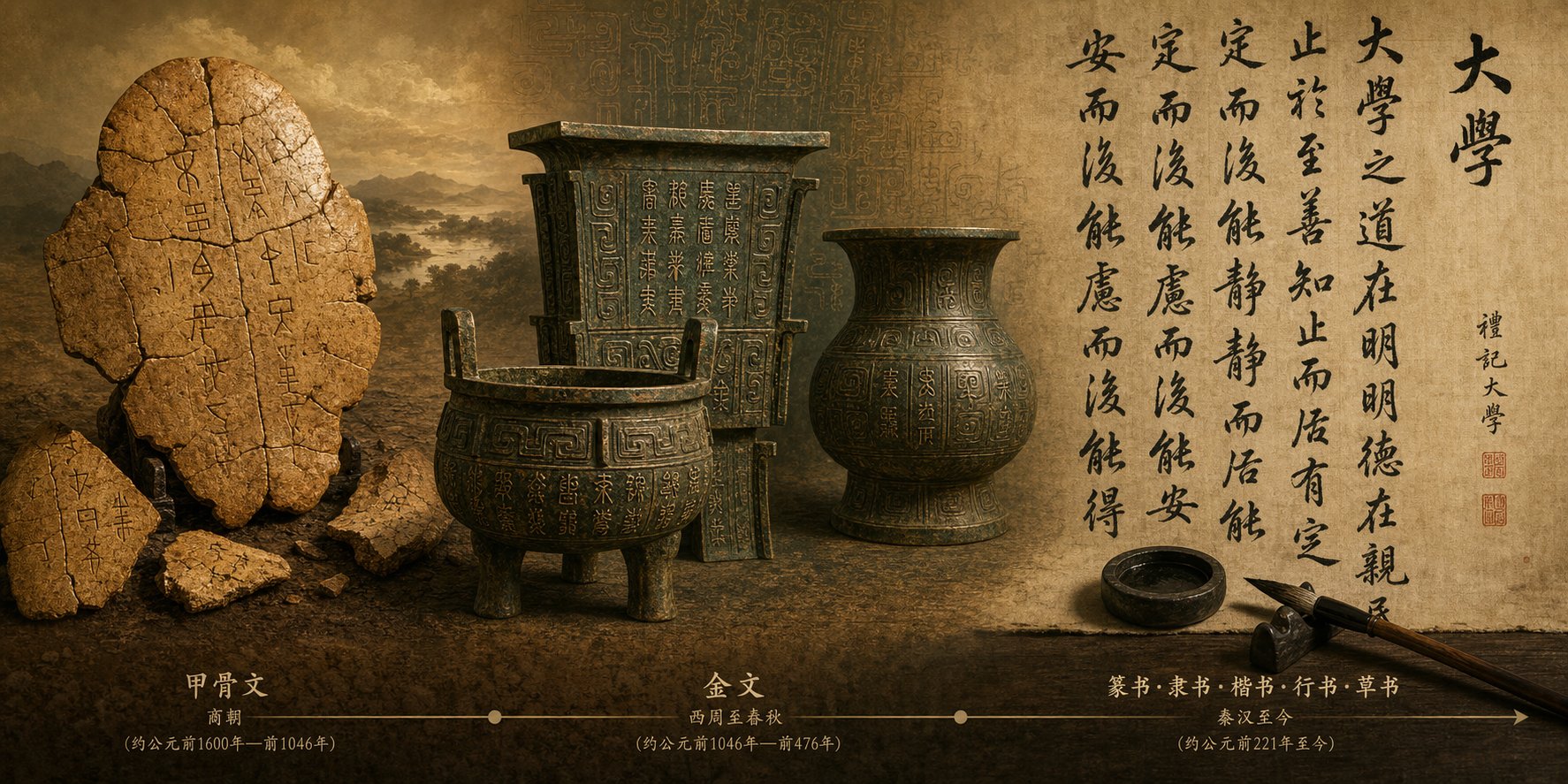
The origin of chinese characters stretches back over 3,000 years, and the semantic components embedded in today's characters carry that entire history inside their strokes. What began as recognizable drawings of rivers, flames, and trees gradually compressed into abstract marks that no longer look like what they represent. Understanding this transformation explains why some meaning clues inside characters feel intuitive while others seem completely opaque.
From Oracle Bone Pictographs to Modern Semantic Elements
During the Shang Dynasty (c. 1250 BCE), diviners carved chinese pictographs onto turtle shells and ox bones at Yinxu (Anyang). These oracle bone inscriptions were largely pictorial. The character for water looked like a flowing stream with droplets. The character for fire resembled rising flames. At this stage, semantic components did not yet exist as separate functional parts because most characters were simple pictures representing whole concepts.
The shift began during the Western Zhou Dynasty (1046-771 BCE), when writing moved onto bronze vessels. Bronze script introduced rounder, more decorative strokes, and characters started combining pictographic elements to express more complex ideas. A picture of water could now attach to another element to create a new character whose meaning related to liquid. This was the birth of semantic components as a structural concept: one part carrying meaning, another carrying sound or additional meaning.
By the time the Qin Dynasty standardized writing into Seal Script around 221 BCE, these chinese pictograms had already lost much of their pictorial directness. The real break came with Clerical Script during the Han Dynasty, when brush-and-ink writing flattened curves into angular strokes optimized for speed. The chinese characters evolution from picture to abstraction accelerated here. What had been a flowing stream became three short strokes stacked vertically: 氵. What had been dancing flames became four dots arranged in a row: 灬.
Why Some Semantic Components Lost Their Visual Logic
Consider the semantic component for fire. In oracle bone script, it was a clear depiction of flames rising from a base. Through bronze and seal stages, the shape grew more stylized but still recognizable. In clerical and regular script, it split into two modern forms: 火 when used as a standalone character, and 灬 (four dots) when placed beneath another element, as in 煮 (to cook) or 熱 (hot). If nobody told you those four dots meant fire, you would never guess it from appearance alone.
The Shuowen Jiezi, compiled by Xu Shen around 100 CE during the Han Dynasty, was the first systematic dictionary to catalog these meaning-bearing elements. It organized roughly 9,353 characters under 540 semantic classifiers, tracing each component back to its pictographic origin. The shuowen jiezi essentially froze a moment in the evolution, preserving explanations for why certain components carried certain meanings, even as the visual connection was already fading for contemporary readers.
This historical layering is why learners today face an uneven landscape. Some semantic components, like 木 (wood) in 林 (forest) or 桥 (bridge), still feel visually logical. Others, like 攵 (a hand holding a stick, meaning "to strike") in 教 (to teach), require historical context to make sense. The meaning connection is real, but it lives in etymology rather than in the modern shape of the strokes.
These layers of transformation raise a practical question: if the writing system evolved through so many stages, is there a framework that classifies how characters were originally constructed? Chinese scholars formalized exactly that system over two thousand years ago.
Understanding the Six Categories and Where Semantics Fit
Chinese scholars during the Han Dynasty developed a classification framework called 六书 (liushu), or the Six Methods of character formation. This system, most famously codified by Xu Shen in the Shuowen Jiezi around 100 CE, attempts to explain how every character in the writing system came into being. For learners interested in semantic components, this framework reveals something crucial: not all types of chinese characters use semantic components in the same way, and one category dominates the entire script.
The Six Methods of Character Formation
The six categories describe different structural principles behind character creation. Some categories produce characters that are purely visual. Others combine meaning elements. And one massive category, accounting for over 80% of all characters, pairs a semantic element with a phonetic one. Here is how they break down:
| Category Name | Chinese Term | Role of Semantic Component | Example |
|---|---|---|---|
| Pictographs | 象形 (xiangxing) | The entire character is a picture; no separate semantic component exists | 日 (sun), 月 (moon) |
| Simple Ideographs | 指事 (zhishi) | Abstract indicators point to meaning; no separable semantic part | 上 (above), 下 (below) |
| Compound Ideographs | 会意 (huiyi) | Multiple meaning elements combine; all parts contribute semantically | 休 (rest) = 亻person + 木 tree |
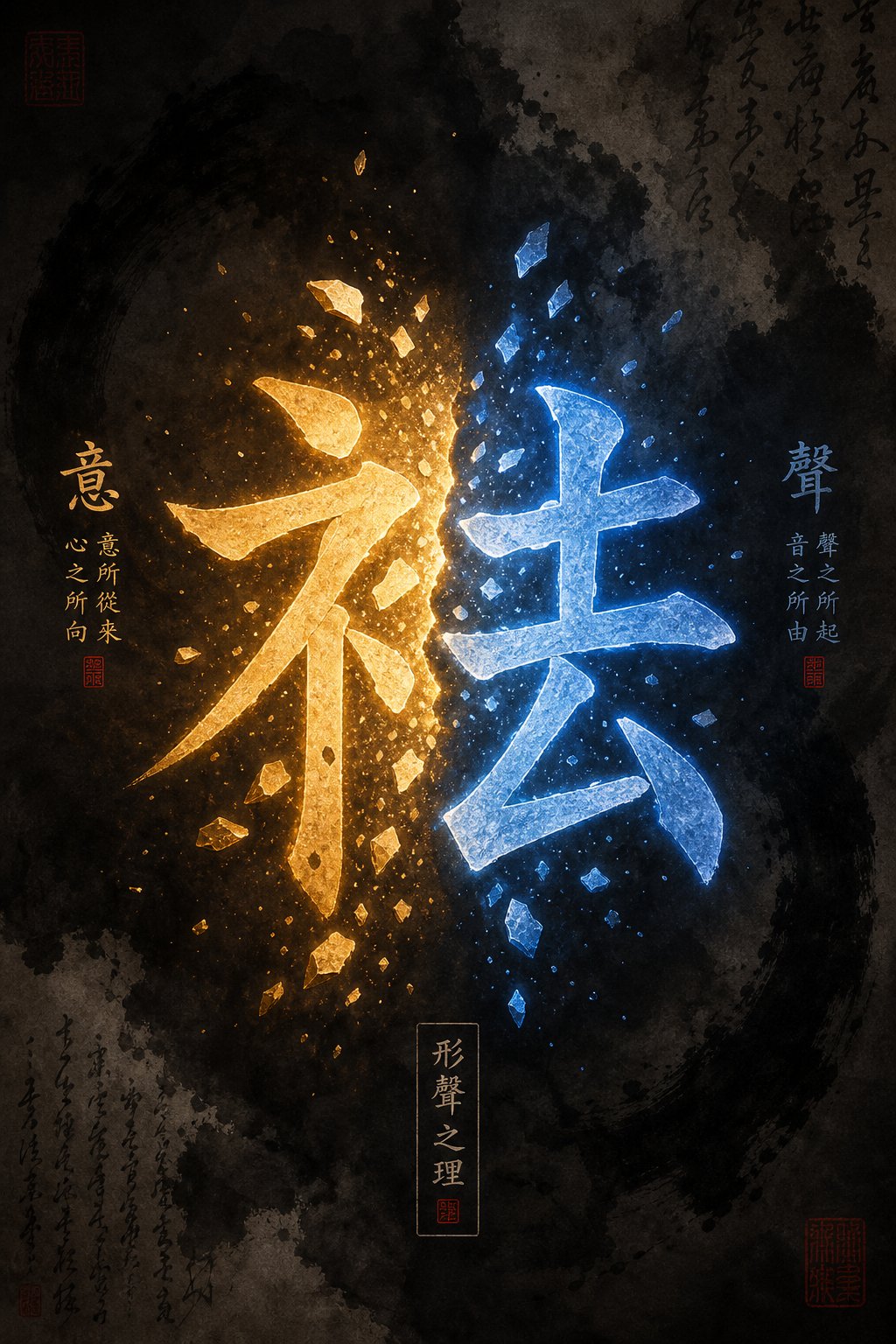
| Phono-semantic Compounds | 形声 (xingsheng) | One component carries meaning (semantic); the other signals sound (phonetic) | 河 (river) = 氵water + 可 sound |
| Transfer Characters | 转注 (zhuanzhu) | Characters share semantic roots and were historically interchangeable | 考 (test), 老 (old) |
| Loan Characters | 假借 (jiajie) | No semantic component; character borrowed purely for its sound | 来 (originally "wheat," borrowed for "to come") |
Notice the pattern. Pictographs and simple ideographs are self-contained. They do not split into semantic and phonetic halves. What are ideographs doing differently? They express meaning through the whole shape or through abstract indicators rather than through separable functional parts. Compound ideographs do combine multiple elements, but every piece contributes to meaning rather than sound. The chinese compound ideograph 看 (to look), for instance, joins 手 (hand) and 目 (eye), both carrying semantic weight.
The last two categories, transfer and loan characters, describe how characters get repurposed rather than how they are structurally built. They tell you about usage history, not about internal composition.
Semantic Components in Phono-Semantic Compounds
The category that matters most for understanding semantic components is 形声 (xingsheng), the phono-semantic compound. Over 80% of all Chinese characters belong to this single type. Each one follows the same structural logic: one part signals the meaning domain, and the other part hints at pronunciation.
Imagine you encounter the character 蹬 for the first time. You spot 足 (foot) on the left. That is the semantic component telling you this character involves feet or stepping. The right side, 登 (deng), provides the sound. You can now make an educated guess: something related to feet that sounds like "deng." The actual meaning is "to step on," pronounced deng. Your guess lands close.
This same phonetic element 登 appears across a whole family of characters, each paired with a different semantic component:
- 瞪 (to stare) = 目 (eye) + 登 (sound)
- 澄 (to settle, become clear) = 氵(water) + 登 (sound)
- 嶝 (mountain path) = 山 (mountain) + 登 (sound)
In every case, the semantic component on the left narrows the meaning category while the phonetic component on the right stays constant. This is the structural engine behind the six compound categories that generates the most characters. Recognizing the semantic half gives you a foothold on meaning even when you have never seen the full character before.
The practical takeaway is straightforward. You do not need to memorize which abstract category a character belongs to. What matters is identifying the functional parts inside it. When you see a compound character, ask: which piece points to meaning, and which piece points to sound? That single question unlocks the logic of the vast majority of the script.
Still, there is a complication. The semantic component inside a character is often called a "radical," and many learners treat these terms as interchangeable. They are not. The distinction between a dictionary-indexing radical and a meaning-carrying semantic component is sharper than most resources acknowledge.
Semantic Components vs Radicals and Why the Difference Matters
If you have spent any time studying Chinese writing symbols, you have almost certainly heard someone say a character "contains two radicals." That statement reveals a common misunderstanding. By definition, every character has exactly one radical. Confusing radicals with semantic components leads learners down a path where dictionary mechanics get tangled up with linguistic meaning, and both concepts lose their usefulness. Pulling them apart clarifies how the writing system actually works.
Radicals as Dictionary Tools vs Semantic Components as Meaning Carriers
A radical is a filing label. Traditional Chinese dictionaries do not sort entries alphabetically. Instead, they assign each character to a section headed by a specific component called a 部首 (bushou), literally "section head." The Kangxi Dictionary (1716) established 214 radicals, while the modern 现代汉语词典 uses 201. Each character gets filed under one radical, and within that section, characters are ordered by remaining stroke count. That is the entire job of a radical: indexing.
A semantic component, by contrast, is a linguistic concept. It describes any part of a character that contributes meaning information. When you see 氵in 河 (river), that component tells you the character relates to water. It functions as a semantic component because it narrows the meaning domain. It also happens to be the radical under which 河 is filed in dictionaries. But these are two separate roles that coincide in this case, not a single unified concept.
So what do you call chinese characters' internal parts when discussing their structure? Linguists use the term "components" for any sub-unit, "semantic component" for the meaning-bearing part, and "phonetic component" for the sound-bearing part. "Radical" refers only to the dictionary-indexing function. Here are the key differences:
- Every character has exactly one radical, but it may contain multiple semantic components (especially in compound ideographs where all parts carry meaning).
- Radicals are assigned by dictionary editors for organizational purposes. Semantic components are inherent to how a character was originally constructed.
- Some radicals carry no transparent meaning in the characters they index. They were chosen for filing convenience, not because they signal the character's meaning category.
- Many common semantic components never appear in the official radical list at all. They contribute meaning inside characters but were never designated as dictionary section headers.
- A component like 土 (earth) functions as the radical in 境 (situation, filed under earth) but is not the radical in 肚 (stomach, filed under 月/meat). In both characters, 土 is still a component, but its dictionary role differs.
When Radicals and Semantic Components Overlap and Diverge
The overlap is real and substantial. Many of the 214 Kangxi radicals are also high-frequency semantic components. Elements like 水/氵(water), 火/灬 (fire), 木 (wood), and 金/钅 (metal) serve double duty: they index characters in dictionaries and they genuinely signal meaning. This is why studying radicals often feels productive. You are learning semantic components at the same time, even if the terminology conflates two ideas.
The divergence, however, matters for anyone trying to use chinese writing symbols systematically. Consider the component 攵, which depicts a hand holding a stick and carries the semantic meaning "to strike" or "to act upon." It appears in characters like 教 (to teach), 放 (to release), and 政 (governance). This is a productive semantic component that helps you understand a whole family of characters. Yet in many dictionaries, these characters are not filed under 攵 at all. The radical assigned for indexing might be a different part of the character entirely.
The reverse also happens. Some radicals have lost their semantic transparency over centuries of evolution. They still function as filing labels, but they no longer help a modern learner guess meaning. A learner who memorizes all 214 radicals expecting each one to unlock meaning will hit a wall. A learner who focuses on semantic components, understanding which parts of characters reliably signal meaning categories, builds a tool that works across the entire script regardless of how dictionaries happen to be organized.
The practical lesson is simple. Radicals are useful if you need to look up a character in a traditional dictionary. Semantic components are useful every time you encounter an unfamiliar character and want to make an educated guess about what it means. Both systems have value, but they answer different questions. One asks "where do I find this character?" The other asks "what does this character likely mean?"
With that distinction clear, the next step is seeing how semantic components cluster into families, groups of characters that share the same meaning-bearing element and belong to the same conceptual domain.
Semantic Component Families Grouped by Meaning Domain
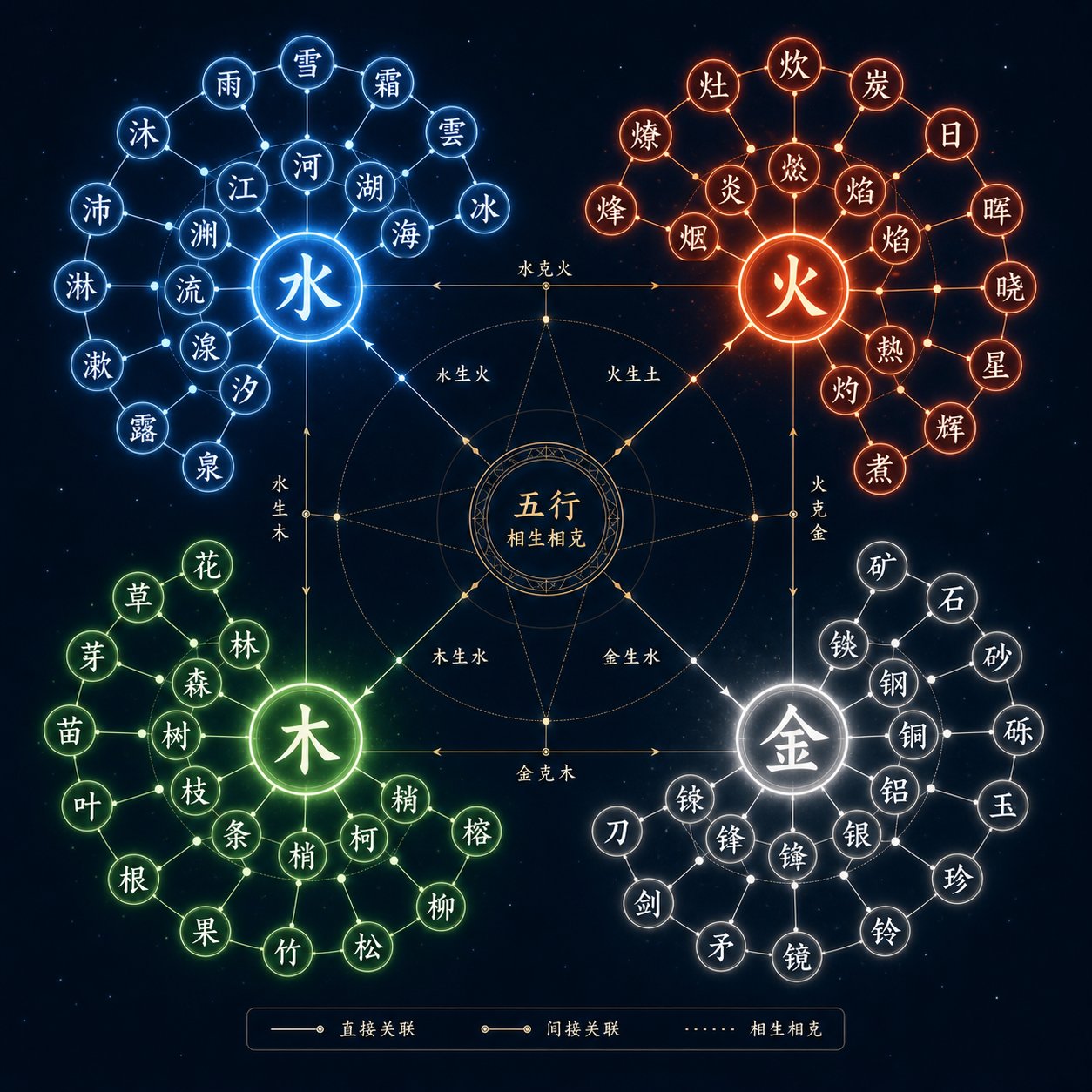
Dictionaries organize radicals by stroke count. That makes sense for indexing, but it does nothing for a learner trying to build mental connections between characters that share a conceptual thread. When you group semantic components by meaning domain instead, something clicks. You start seeing the writing system the way it was designed: as clusters of related characters branching out from shared roots.
Organizing Semantic Components by Meaning Domain
Think about how you naturally categorize the world. You group rivers, rain, and ice under "water." You group anger, joy, and worry under "emotions." Chinese character meanings follow the same logic. Characters that relate to water share the same semantic component. Characters that relate to emotions share a different one. Once you learn to spot these markers, a chinese pictograms list of thousands of characters starts to feel like a manageable set of families rather than an endless catalog of isolated shapes.
What makes this approach powerful is that semantic components do not just signal meaning. They also tend to appear in predictable positions within a character. The water component almost always sits on the left. The roof component always goes on top. Fire in its dot form appears at the bottom. These position-meaning correlations give you two clues at once: where to look and what to expect.
The table below maps the most productive semantic families, showing each component's meaning domain, its visual form, where it typically appears inside a character, and a sample of characters it generates:
| Meaning Domain | Semantic Component | Typical Position | Example Characters |
|---|---|---|---|
| Water / Liquid | 氵(water) | Left | 河 (river), 湖 (lake), 洗 (wash), 海 (ocean), 泪 (tears) |
| Fire / Heat | 火 / 灬 | Left or bottom | 灯 (lamp), 炒 (stir-fry), 煮 (boil), 热 (hot), 烤 (roast) |
| Wood / Plants | 木 (tree) | Left | 林 (forest), 桥 (bridge), 松 (pine), 板 (board), 根 (root) |
| Metal / Tools | 钅(gold/metal) | Left | 银 (silver), 铁 (iron), 钟 (bell), 钥 (key), 针 (needle) |
| Earth / Ground | 土 (earth) | Left | 地 (ground), 城 (city), 坡 (slope), 墙 (wall), 场 (field) |
| Body Parts | 月 (flesh/meat) | Left | 肝 (liver), 肺 (lung), 腿 (leg), 脑 (brain), 胖 (fat) |
| Emotions / Mind | 忄/ 心 (heart) | Left or bottom | 忙 (busy), 快 (fast/happy), 怕 (afraid), 想 (think), 愁 (worry) |
| Speech / Language | 讠(speech) | Left | 说 (speak), 话 (words), 语 (language), 讲 (explain), 识 (know) |
| Movement / Walking | 辶 (walk) | Bottom-left wrap | 过 (pass), 远 (far), 运 (transport), 边 (side), 道 (road) |
| Person / Human | 亻(person) | Left | 他 (he), 你 (you), 住 (live), 休 (rest), 伴 (companion) |
| Sight / Eyes | 目 (eye) | Left | 看 (look), 眼 (eye), 睡 (sleep), 瞪 (stare), 盲 (blind) |
| Hands / Action | 扌(hand) | Left | 打 (hit), 抱 (hug), 拉 (pull), 推 (push), 抓 (grab) |
| Shelter / Dwelling | 宀 (roof) | Top | 家 (home), 安 (peace), 室 (room), 宝 (treasure), 容 (contain) |
| Grass / Vegetation | 艹 (grass) | Top | 花 (flower), 草 (grass), 茶 (tea), 菜 (vegetable), 药 (medicine) |
| Illness / Disease | 疒 (sickness) | Top-left wrap | 病 (sick), 痛 (pain), 疯 (crazy), 疲 (tired), 癌 (cancer) |
The Most Common Semantic Families and Their Characters
A few of these families deserve closer attention because they generate enormous numbers of characters and appear constantly in everyday reading.
The water family (氵) is one of the most prolific. Characters like 海 (ocean), 河 (river), 湖 (lake), 江 (river), and 洗 (wash) all carry this three-stroke marker on their left side. You will also find it in less obvious characters like 汗 (sweat), 泡 (bubble), and 漂 (to float). The connection is always liquid or fluid motion.
The person family (亻) generates characters related to human activity, relationships, and states of being. The chinese person character 人 compresses into 亻when it appears as a semantic component on the left. Characters like 休 (rest, literally a person leaning against a tree), 伙 (partner), and 仁 (benevolence) all branch from this root. Spotting 亻immediately tells you the character involves people or human qualities.
The speech family (讠) clusters characters around communication. Consider the chinese character for listening: 听. In its traditional form 聽, the ear component (耳) is prominent, but the simplified version uses 口 (mouth). Meanwhile, characters like 说 (speak), 话 (words), 语 (language), and 读 (read) all carry 讠on the left, marking them as speech-related. If you encounter an unfamiliar character with 讠, you can confidently guess it involves language, communication, or verbal expression.
The heart/emotion family (忄or 心) is particularly interesting because it appears in two positions. When placed on the left as 忄, you get characters like 忙 (busy), 怕 (afraid), and 情 (emotion). When placed at the bottom as 心, you get characters like 想 (think), 意 (meaning), and 愁 (worry). Both positions signal the same domain: feelings, mental states, and inner experience.
This dual-position pattern is not unique to the heart component. Fire behaves similarly: 火 on the left in 灯 (lamp), 灬 at the bottom in 煮 (boil). Recognizing that a single semantic component can take different shapes depending on its position prevents confusion when the same meaning domain shows up in unexpected visual forms.
The position patterns themselves follow a rough logic. Components that describe the nature or category of something (water, wood, metal, person) tend to sit on the left. Components that describe a setting or enclosure (roof, cave, sickness) tend to wrap around from the top. Components that describe a base or foundation (fire dots, heart) tend to anchor at the bottom. These are tendencies rather than absolute rules, but they hold true often enough to serve as reliable reading shortcuts.
Grouping meaning chinese characters this way transforms how you approach unfamiliar text. Instead of seeing a wall of unknown characters, you start noticing familiar semantic markers scattered throughout. Each marker narrows your interpretation before you even reach for a dictionary. The question then becomes: how do you reliably identify which part of an unfamiliar character is the semantic component and which part is doing something else entirely?
How to Decompose Any Character Into Semantic and Phonetic Parts
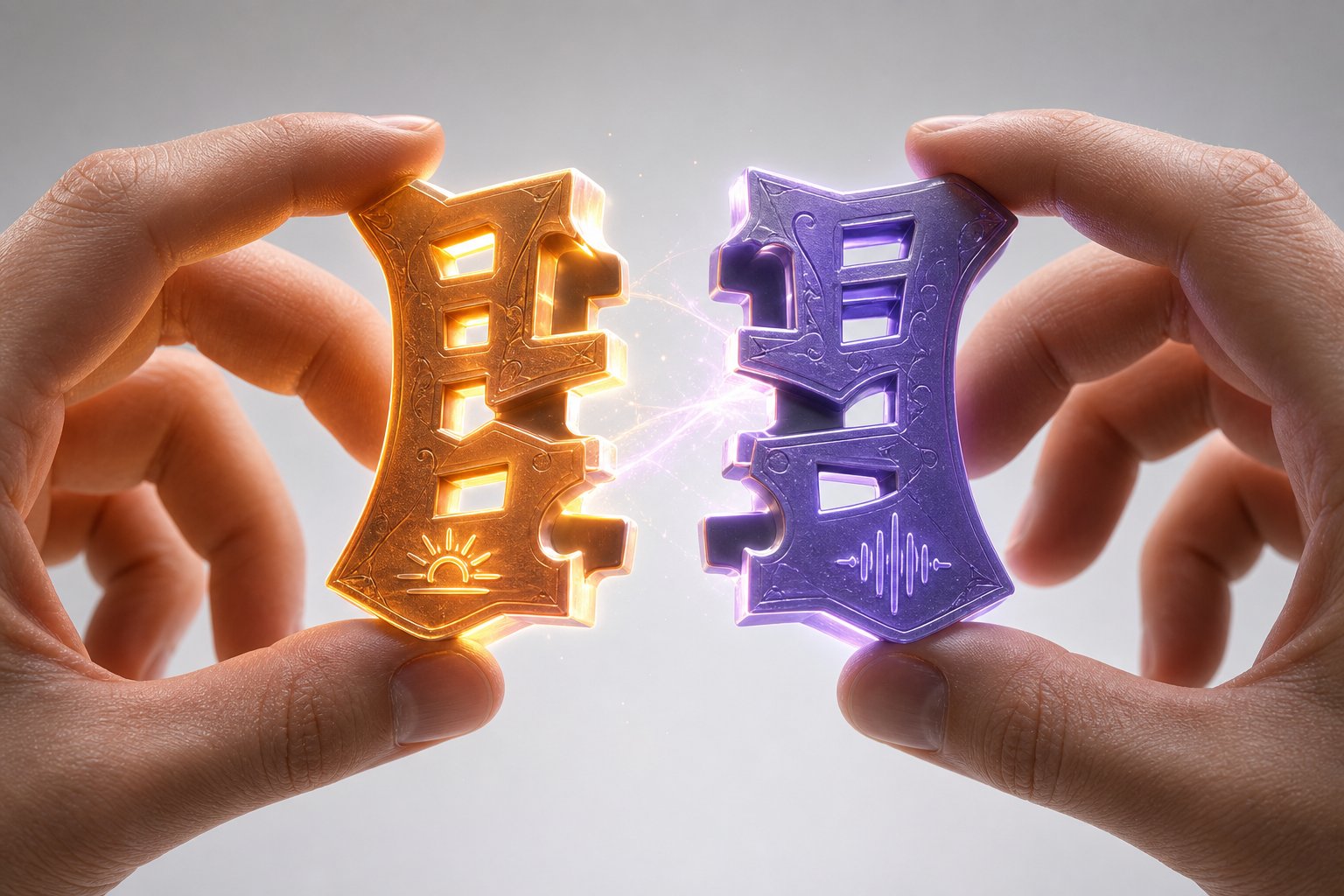
You encounter an unfamiliar character in a text. It looks complex, maybe twelve or fifteen strokes packed together. Your instinct might be to reach for a dictionary immediately. But before you do, there is a faster first step: split the character into its functional parts and let the semantic component give you a head start on meaning. This process, character decomposition, is a learnable skill with a repeatable method.
Step-by-Step Character Decomposition Method
Chinese character interpretation does not require guesswork when you follow a systematic approach. The goal is to identify which piece of a compound character carries meaning and which piece carries sound. Here is the method:
- Look for a natural visual split. Most phono-semantic compounds divide into two distinct sections. Scan for a vertical split (left-right), a horizontal split (top-bottom), or an enclosure pattern (outer-inner or wrapping). The majority of compound characters split left-right.
- Identify known components. Check whether either section matches a semantic component you already recognize. Common ones like 氵(water), 木 (wood), 扌(hand), 讠(speech), or 忄(heart) are high-frequency markers that appear across hundreds of characters.
- Apply position logic. Semantic components tend to occupy the left side, the top, or a wrapping position. Phonetic components tend to sit on the right or bottom. If you spot a familiar meaning-bearing element in one of these expected positions, that is likely your semantic component.
- Test the meaning hypothesis. Does the suspected semantic component's meaning domain make sense given any context you have? If you are reading a sentence about cooking and you spot 火 or 灬 in the character, your identification is probably correct.
- Check the remaining piece for sound. The other half of the character often appears in other characters you already know, pronounced similarly. If the right side of an unfamiliar character looks like 青 (qing), there is a good chance the full character is pronounced qing or something close to it.
- Confirm or adjust. If neither half matches anything familiar, look for a three-part split or consider that the character might be a compound ideograph (all parts carry meaning) rather than a phono-semantic compound.
This sequence works because it mirrors how the writing system was designed. The creators of phono-semantic compounds placed meaning and sound into predictable structural slots. You are reverse-engineering their logic.
Worked Examples at Different Difficulty Levels
Beginner: 妈 (mother)
This character splits cleanly into left and right. The left side is 女 (woman), a well-known semantic component signaling that the character relates to females or femininity. The right side is 马 (ma, horse), which contributes nothing to meaning here but provides the pronunciation: ma. The chinese character meaning is "mother," a female person pronounced ma. Both halves do exactly what the system predicts.
Beginner: 清 (clear, pure)
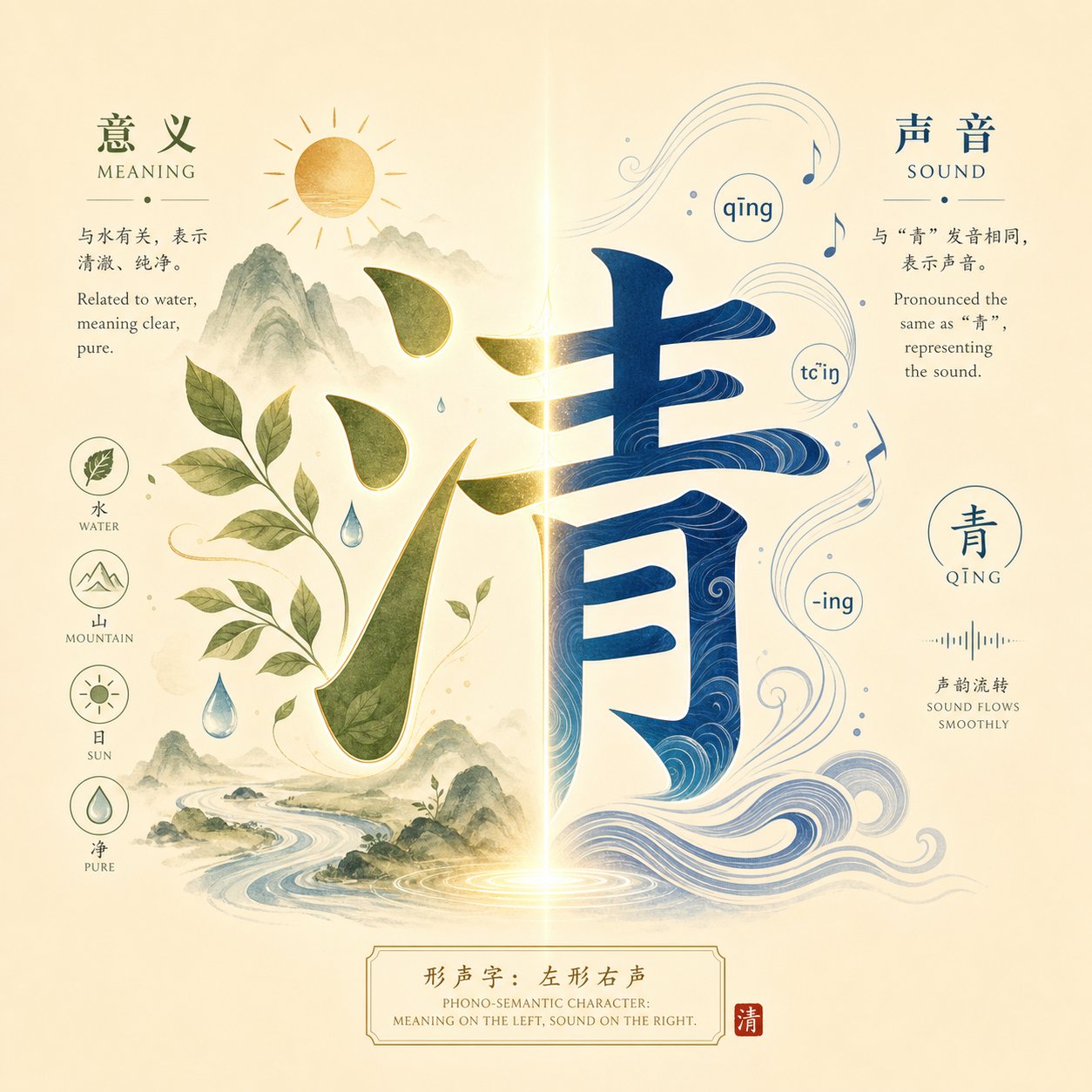
Left side: 氵(water). Right side: 青 (qing, blue-green). The semantic component tells you this character relates to water or liquid. The phonetic component gives you the sound: qing. The meaning, "clear" or "pure," connects to the idea of clean, transparent water. Straightforward decomposition with both halves working reliably.
Intermediate: 蝴 (butterfly, first character of 蝴蝶)
This character looks more complex chinese characters typically do at this level. Split it left-right. The left side is 虫 (insect), a semantic component marking the character as related to bugs or small creatures. The right side is 胡 (hu), providing the sound. You might not guess "butterfly" from "insect" alone, but you can confidently place this character in the domain of living creatures. That narrows your interpretation significantly when reading in context.
Intermediate: 铜 (copper)
Left side: 钅(metal). Right side: 同 (tong, same). The semantic component immediately tells you this is a type of metal or metallic substance. The phonetic component gives you tong. Even without knowing this specific character, you could guess "some kind of metal pronounced tong." The actual meaning, copper, fits perfectly within that prediction.
Advanced: 懈 (to slacken, to relax effort)
Left side: 忄(heart/emotion). Right side: 解 (jie/xie, to untie). Here the semantic component signals an emotional or mental state. The phonetic component 解 is pronounced xie in this context, giving the full character the reading xie. The meaning, "to slacken" or "become lax," connects to a mental state of loosening effort. Notice that the phonetic component 解 itself is a complex character, which is what makes this example advanced. You need to recognize 解 as a single phonetic unit rather than trying to decompose it further.
Advanced: 臊 (rank smell, or to feel embarrassed)
Left side: 月 (flesh/body). Right side: 喿 (sao/zao). The semantic component 月 in its "flesh" role tells you this relates to the body or physical sensation. The phonetic side provides the sound sao. The meanings, a bodily smell or a physical feeling of embarrassment, both connect to bodily experience. This example shows how a single semantic component can anchor multiple related meanings within one character.
A Reliability Scale for Semantic Components
Not all semantic components are equally trustworthy as meaning indicators. Some reliably predict the meaning domain of every character they appear in. Others have become opaque through centuries of change. When practicing chinese character interpretation, it helps to know which components you can lean on heavily and which ones require caution:
| Reliability Level | Semantic Components | Why |
|---|---|---|
| High reliability | 氵(water), 火/灬 (fire), 木 (wood), 钅(metal), 虫 (insect), 疒 (illness) | These components almost always predict the meaning domain accurately. A character with 疒 nearly always relates to disease or discomfort. |
| Moderate reliability | 月 (flesh), 土 (earth), 讠(speech), 忄(heart), 艹 (grass) | Usually reliable, but with notable exceptions. 月 can mean "moon" or "flesh" depending on the character, requiring context. |
| Lower reliability | 又 (hand/again), 攵 (strike), 阝left (hill) vs 阝right (city) | Original meanings have drifted far from modern usage. The connection exists historically but is not intuitive for modern learners. |
High-reliability components are your strongest tools. When you spot 氵in an unfamiliar character, you can bet on a water connection with confidence. Lower-reliability components still carry historical meaning, but you should treat them as supplementary clues rather than definitive answers. Examples of chinese writing across different eras show that these reliability levels shifted as the script evolved, with some components gaining transparency and others losing it.
The decomposition method works best when you practice it actively rather than passively reading about it. Pick any unfamiliar character, apply the six steps, and check your hypothesis against a dictionary. Over time, the process becomes automatic. You stop seeing complex chinese characters as monolithic blocks and start reading them as structured combinations with identifiable parts.
This method assumes, of course, that the character you are analyzing has not been altered by script reform. Simplified characters sometimes preserve the original semantic logic perfectly, and sometimes they disrupt it entirely. The relationship between simplification and semantic transparency is its own story.
Simplified vs Traditional Characters and Semantic Transparency
Character decomposition relies on one assumption: the semantic component is still visible inside the character. For traditional chinese characters, that assumption holds fairly well. The forms have remained stable for centuries, preserving the structural logic that pairs meaning with sound. But when the Chinese government simplified the script in the 1950s, some of those internal meaning clues survived intact, some got distorted, and some vanished entirely. If you are learning to read semantic components, the character set you study shapes how transparent that system feels.
The simplification effort changed roughly 30% of the 3,500 most commonly used han characters. That means the majority of chinese language characters look identical in both systems. The interesting cases are the ones that changed, because each change either preserved, altered, or broke the semantic component's visibility.
When Simplification Preserved Semantic Clarity
The most common simplification strategy was reducing a complex component to a simpler form and applying that reduction consistently across all characters containing it. The speech component 言 became 讠, dropping from seven strokes to two. But it still appears in the same left-side position, still marks the same meaning domain, and still functions identically as a semantic component. Characters like 說/说 (speak), 話/话 (words), and 語/语 (language) all retain their semantic transparency. You can spot 讠 just as easily as 言 and draw the same conclusion: this character relates to speech.
The same applies to the metal component 金, simplified to 钅, and the food component 食, simplified to 饣. In each case, the simplification reduced stroke count without disrupting the semantic signal. The component still sits in its expected position, still marks its meaning domain, and still helps you guess what an unfamiliar character is about. For learners of traditional characters chinese or simplified, these families work the same way.
Characters Where Simplification Obscured the Semantic Element
Other simplifications were not so clean. Consider the word for noodles. In traditional script, 麵 contains the semantic component 麥 (wheat/barley), making the connection to grain-based food visually obvious. The simplified form 面 dropped the wheat radical entirely, leaving a character identical to 面 (face). The semantic clue that linked noodles to wheat flour disappeared. A learner encountering 面条 (noodles) for the first time has no internal marker pointing toward food.
The character for love tells a similar story. Traditional 愛 contains 心 (heart) in its center, a semantic component connecting the character to emotion. Simplified 爱 removed the heart entirely. The meaning did not change, but the visual logic that once made the character self-explanatory is gone.
Then there are cases where simplification merged unrelated characters under one form. Traditional 髮 (hair) contained the semantic component 髟 (long hair), clearly marking its meaning domain. The simplified version 发 stripped that component away and also absorbed the unrelated character 發 (to emit/send). Two different words with different meanings now share one written form, and neither retains a transparent semantic component.
| Traditional | Simplified | Semantic Component | Status After Simplification |
|---|---|---|---|
| 說 (speak) | 说 | 言 → 讠 (speech) | Preserved: component simplified but still visible and functional |
| 鐵 (iron) | 铁 | 金 → 钅 (metal) | Preserved: same position, same meaning signal |
| 麵 (noodles) | 面 | 麥 (wheat) | Lost: wheat radical removed entirely |
| 愛 (love) | 爱 | 心 (heart) | Lost: heart component removed from structure |
| 髮 (hair) | 发 | 髟 (long hair) | Lost: merged with unrelated character 發 |
| 華 (China/flower) | 华 | — | Altered: whole character replaced with phonetic-based form |
| 聽 (listen) | 听 | 耳 (ear) | Lost: ear component removed; replaced by unrelated structure |
| 飯 (rice/meal) | 饭 | 食 → 饣 (food) | Preserved: food component simplified but still functional |
The pattern is clear. When reformers simplified a component systematically, replacing 言 with 讠 everywhere it appeared, semantic transparency survived. When they replaced entire characters with shorthand forms or merged unrelated words, the semantic layer often broke. Neither outcome is universal. You cannot assume that simplified characters always lack semantic logic, nor that traditional characters always make it obvious.
For learners, the practical implication is this: if you study simplified characters, most semantic components still work exactly as described throughout this article. The water, hand, person, and earth families remain fully intact. But a subset of characters, particularly those involving food, hair, and certain emotional concepts, lost their internal meaning markers during reform. In those cases, you are working with characters whose semantic logic lives only in their traditional forms.
This raises a natural follow-up question. Even in traditional characters, where simplification never intervened, are semantic components always reliable? Not quite. Some meaning connections broke long before any modern reform, eroded by centuries of semantic drift rather than deliberate policy.
Edge Cases and Exceptions That Trip Up Learners
Semantic components are powerful meaning clues, but they are not infallible. Centuries of linguistic change, sound loans, and graphical corruption have left the writing system with a layer of characters where the semantic component actively misleads rather than helps. Treating these exceptions as failures of the system misses the point. They are predictable patterns of breakdown, and knowing where the system breaks makes you a sharper reader everywhere else.
Characters Where Semantic Components Mislead
Imagine you see 猜 (to guess) and spot the component 犭on the left. That component means "animal" and reliably marks characters like 狗 (dog), 猫 (cat), and 狼 (wolf). So why does a character about guessing carry an animal marker? Because 猜 was originally written with a different structure, and the "animal" component here is a historical artifact that no longer reflects the character's modern meaning. The semantic connection existed in an older sense of the word that has since disappeared from use.
This is not a rare accident. A significant number of characters contain semantic components whose original logic has been severed from modern meaning. Here are common cases that trip up learners:
- 犭(animal) in 猜 (guess), 犹 (still/hesitate), 独 (alone): These words once had metaphorical connections to animal behavior in ancient usage. The Shuowen Jiezi records meanings tied to specific animals whose behavioral traits were used figuratively. Modern speakers no longer feel those connections.
- 女 (woman) in 姓 (surname), 始 (begin), 如 (like/as if): These reflect an ancient matrilineal society where clan names passed through mothers and origins were traced through female lineage. The semantic logic was real in the Zhou Dynasty but feels arbitrary today.
- 口 (mouth) in 加 (add), 古 (ancient), 右 (right): The element 口 inside these characters is often not the semantic component "mouth" at all. In many cases it is a decorative or ornamental element that carries no semantic or phonetic information. Mistaking ornamental 口 for the meaning "mouth" is one of the most common false etymologies learners encounter.
- 月 (moon) in 肝 (liver), 腿 (leg), 脑 (brain): This is not actually the moon component. It is a compressed form of 肉 (flesh) that happens to look identical to 月 in regular script. Two visually identical components with completely different origins create constant confusion.
- 贝 (shell/money) in 败 (defeat), 贼 (thief), 贫 (poor): The connection to money or valuables exists historically, since defeat often meant loss of property, thieves target wealth, and poverty is absence of it. But these links feel like stretches to modern learners who encounter these as abstract concepts.
Historical Meaning Shifts That Break Modern Logic
The Shuowen Jiezi, compiled around 100 CE, records character explanations that sometimes diverge sharply from how those same characters are used today. Xu Shen analyzed characters based on their Qin-era seal forms and Han-era word meanings. Two thousand years of semantic drift means his explanations, while historically accurate, can mislead anyone who applies them to modern Chinese without adjustment.
Take the component 攵 (a hand holding a stick, meaning "to strike"). In 教 (to teach), the ancient logic was that teaching involved physical discipline, striking a student who erred. In 政 (governance), ruling meant wielding force. These connections made sense in a world where authority was inseparable from physical coercion. A modern learner who sees 攵 and thinks "hitting" will struggle to connect it to education or politics without that cultural bridge.
Then there are what scholars call "false friends," characters where visual similarity to a known semantic component suggests a meaning connection that never existed. The character 胜 (to win) contains what looks like 月 (flesh/moon), but the left side is actually a corruption of an older form unrelated to either flesh or the moon. Similarly, ancient chinese hieroglyphs that evolved into modern forms sometimes merged visually distinct components into identical-looking shapes, creating phantom connections where none exist. What appears to be the same component in two different characters may have entirely separate origins, only converging through graphical simplification over time.
Contemporary scholarship on ancient chinese hieroglyphs and early script forms has revealed that many traditional explanations, even those in respected dictionaries, contain what researchers call false etymologies. These arise when modern observers try to find pictures or meaning connections in characters whose actual origins lie in sound loans, ornamental additions, or graphical corruption rather than semantic logic.
None of this means semantic components are unreliable as a learning tool. It means they are a probabilistic tool rather than an absolute one. The high-reliability components identified earlier (water, fire, metal, illness) still work in the vast majority of cases. The exceptions cluster around specific historical patterns: ancient metaphors that faded, ornamental elements mistaken for meaningful ones, and visually merged components with separate origins. Recognizing these patterns does not weaken your decomposition skills. It sharpens them by telling you exactly when to trust your analysis and when to verify it.
With a clear picture of both the system's strengths and its limits, the remaining question is practical: how do you build all of this knowledge into a daily learning strategy that actually accelerates vocabulary growth?
A Practical Strategy for Using Semantic Components to Learn Faster
Knowing how semantic components work is one thing. Turning that knowledge into a daily habit that compounds over weeks and months is where real acceleration happens. The learners who progress fastest are not the ones who memorize the most flashcards. They are the ones who train themselves to see structure inside every new character they encounter, building a network of meaning connections that makes each subsequent character easier than the last.
Building a Semantic Component Recognition Habit
People often ask how many symbols in chinese language one needs to learn before reading becomes comfortable. The standard answer is around 2,500 to 3,000 characters for general literacy. That number sounds overwhelming if you treat each character as an isolated unit. But when you approach those characters through their semantic components, you are not learning thousands of unrelated shapes. You are learning variations on roughly 100 to 150 recurring meaning-bearing elements. The ratio shifts from impossible to manageable.
Here is an actionable sequence that builds semantic component awareness into your study routine from day one:
- Start with 20 high-reliability semantic components. Focus on the ones that appear most frequently and predict meaning most accurately: 氵(water), 火/灬 (fire), 木 (wood), 钅(metal), 扌(hand), 讠(speech), 忄(heart), 亻(person), 女 (woman), 口 (mouth), 目 (eye), 足 (foot), 疒 (illness), 艹 (grass), 宀 (roof), 虫 (insect), 土 (earth), 月/肉 (flesh), 辶 (walk), and 食/饣 (food). Learn their meaning domains and typical positions.
- Decompose every new character you encounter. Before memorizing a character's meaning and pronunciation, spend five seconds splitting it into parts. Identify the semantic component, note its position, and confirm whether the meaning domain matches. This trains pattern recognition rather than rote recall.
- Log unfamiliar semantic components as you find them. When you hit a character whose left side or top section does not match any component you know, look it up. Add it to your growing inventory. Over time, your recognition set expands naturally from 20 to 50 to 80 components without dedicated drilling.
- Test your guessing ability on unknown characters. When reading, pause at unfamiliar chinese word symbols and predict the meaning domain before checking a dictionary. Track your accuracy. You will find that high-reliability components give you correct domain guesses 70% or more of the time.
- Review exceptions deliberately. When a guess fails, note why. Was the component ornamental? Was it a historical artifact? Was it a flesh/moon confusion? Cataloging your misses builds the nuanced judgment that separates intermediate learners from advanced ones.
Using Semantic Families to Accelerate Vocabulary Growth
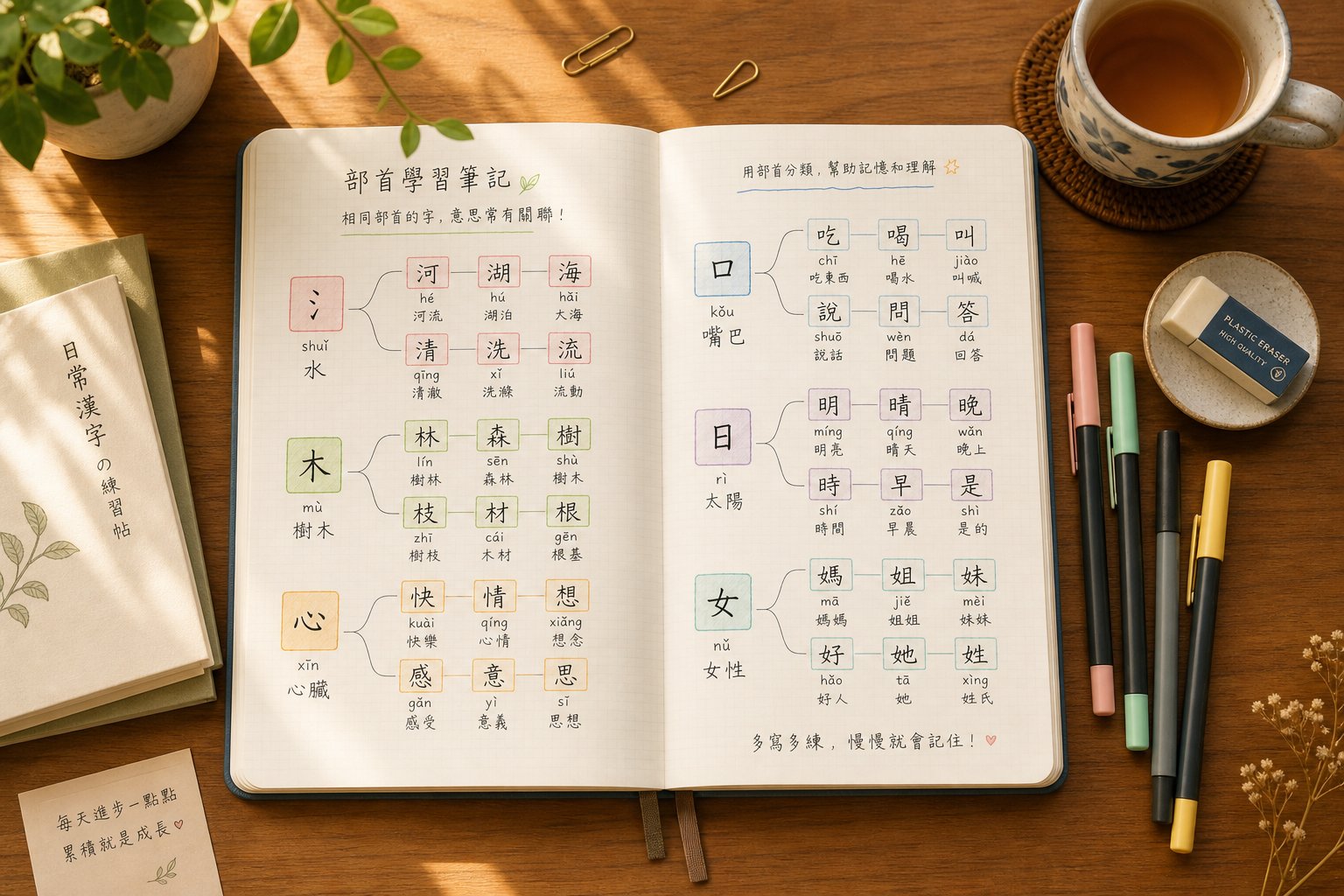
Once recognition becomes automatic, shift your strategy from individual characters to family clusters. Group your vocabulary by shared semantic component and review those clusters together. All your water-family characters in one session. All your speech-family characters in another. This mirrors how the semantic network model of vocabulary acquisition works: related items reinforce each other in memory, creating durable connections that resist forgetting.
When you learn chinese pictograms and their modern descendants as families rather than isolated items, something shifts. The character 泪 (tears) stops being a random shape and becomes "water from the eye." The character 忆 (memory) becomes "something the heart holds." Each new addition to a family strengthens your recall of every other member. Vocabulary growth becomes exponential rather than linear.
This clustering approach also helps you learn chinese letters and symbols you have never formally studied. Encounter 淹 for the first time? You spot 氵and know it involves water before you even check the dictionary. See 惭? The 忄tells you it is an emotion. You are no longer memorizing from zero. You are narrowing from a known category to a specific meaning, which is a fundamentally easier cognitive task.
The broader point is this: semantic component literacy transforms the entire experience of learning to read Chinese. Instead of facing what feels like an infinite wall of unique symbols, you navigate a structured system where meaning is encoded in predictable, recurring patterns. Letters in chinese do not work like alphabetic letters, but semantic components serve an analogous organizational role. They give you a finite set of building blocks that generate the full complexity of the script. Master the components, and the characters follow.
Frequently Asked Questions About Semantic Components in Chinese Characters
1. What is the difference between a radical and a semantic component in Chinese characters?
A radical is a dictionary indexing tool that assigns each character to a section for lookup purposes. A semantic component is a linguistic concept describing any part of a character that contributes meaning information. While many radicals also function as semantic components, the two systems serve different purposes. Every character has exactly one radical for filing, but may contain multiple meaning-bearing parts. Some radicals have lost their semantic transparency over time, and many productive semantic components never appear in official radical lists at all.
2. How do semantic components help you learn Chinese characters faster?
Semantic components act as built-in category labels inside compound characters. When you recognize a component like the water marker in an unfamiliar character, you can immediately narrow its meaning to the domain of liquids, rivers, or moisture before checking a dictionary. Since over 80% of Chinese characters are phono-semantic compounds containing both a meaning element and a sound element, learning roughly 100 to 150 recurring semantic components gives you a structural shortcut into thousands of characters rather than memorizing each one from scratch.
3. How many Chinese characters contain semantic components?
Approximately 80% of all Chinese characters are phono-semantic compounds, meaning they contain a semantic component that hints at meaning and a phonetic component that hints at pronunciation. Additionally, compound ideographs (about 10-15% of characters) contain multiple meaning-bearing elements. Only a small percentage of characters, mainly basic pictographs and simple ideographs, lack separable semantic components because the entire character functions as a single pictorial or abstract unit.
4. Did character simplification destroy semantic components in simplified Chinese?
Not universally. When reformers simplified a component systematically, such as reducing the speech component from 言 to 讠 across all characters, semantic transparency survived fully. However, certain characters lost their meaning markers entirely during simplification. The character for love (愛 to 爱) lost its heart component, and noodles (麵 to 面) lost its wheat radical. The majority of high-frequency semantic families like water, metal, hand, and person remain fully intact in simplified Chinese.
5. Are semantic components always reliable indicators of a character's meaning?
No. While high-reliability components like water, fire, metal, and illness predict meaning domains accurately in nearly all cases, some semantic components mislead due to historical meaning shifts, ornamental elements mistaken for meaningful ones, or visually merged components with separate origins. For example, the animal component appears in characters like 猜 (guess) due to ancient metaphorical connections that no longer exist in modern usage. Treating semantic components as probabilistic clues rather than absolute rules gives the best results.