What Pinyin Tone Marks Mean for Chinese Names
Imagine meeting three colleagues all named "Li Wei" on paper. Are they the same person? Not even close. One is Li Wei (李伟), another is Li Wei (丽薇), and a third is Li Wei (黎威). Strip away the tone marks and Chinese characters, and you are left with identical romanized spellings that represent entirely different human beings. This is the core challenge of pinyin tone marks in names, and it affects millions of people navigating cross-cultural communication every day.
So what is a pinyin? At its simplest, pinyin is the official romanization system for Mandarin Chinese. It uses the Latin alphabet to represent the sounds of Chinese characters, giving non-Chinese readers a way to approximate pronunciation. But here is the catch: Mandarin is a tonal language. The same syllable spoken with a different pitch pattern carries a completely different meaning. Chinese language tones are not optional flourishes. They are fundamental to the identity of every word and, by extension, every name.
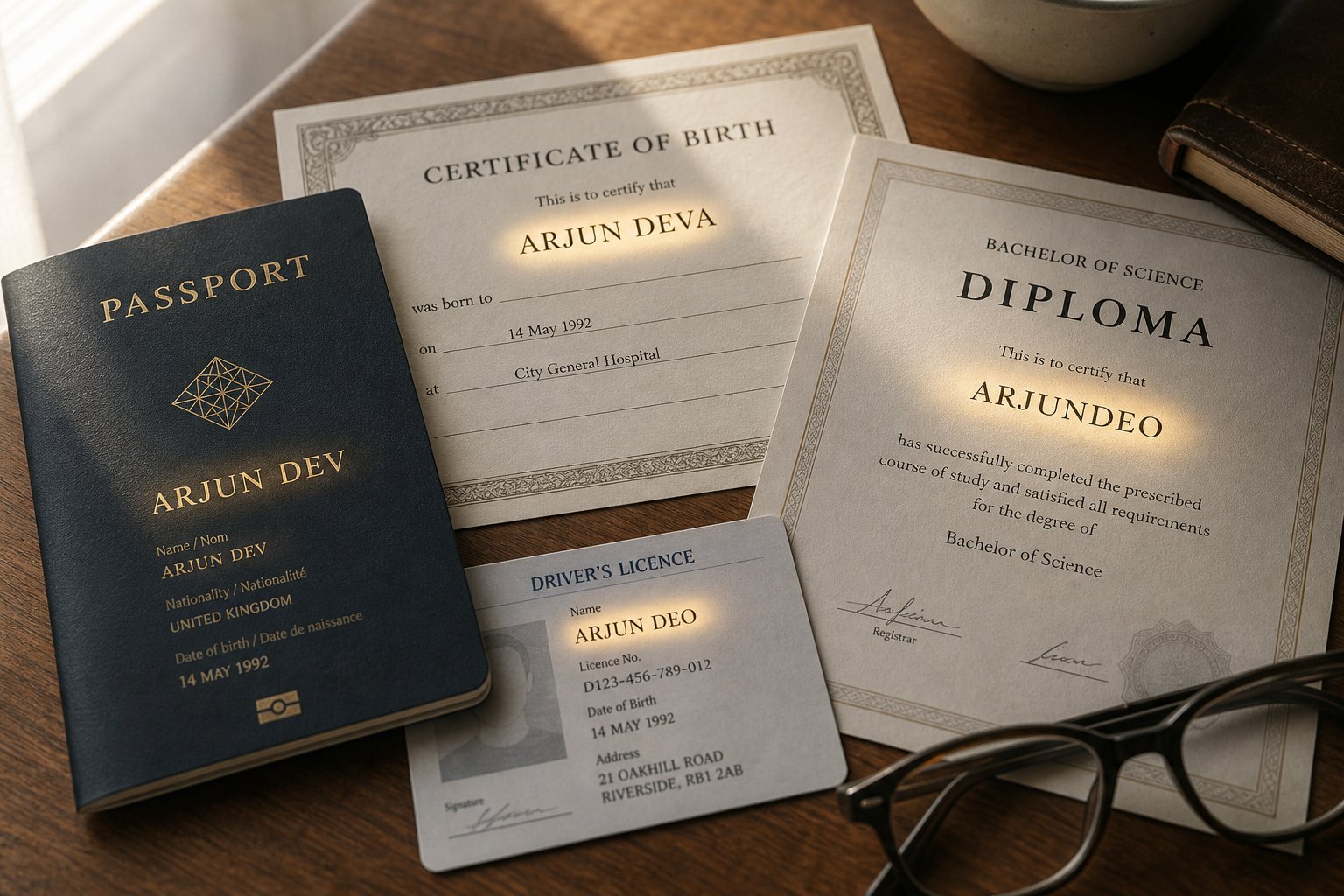
The same romanized spelling without tone marks can represent entirely different people.
What Are Pinyin Tone Marks
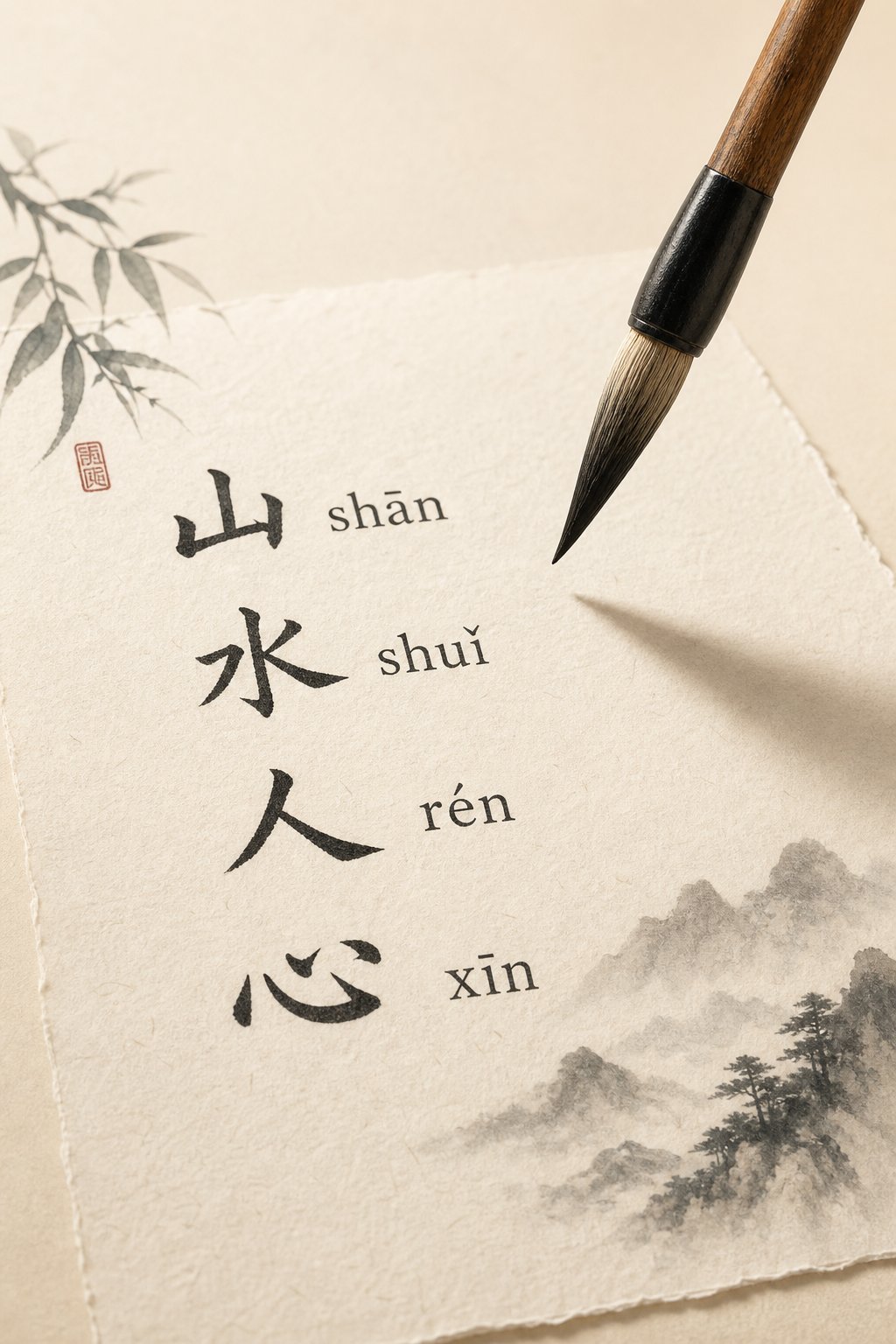
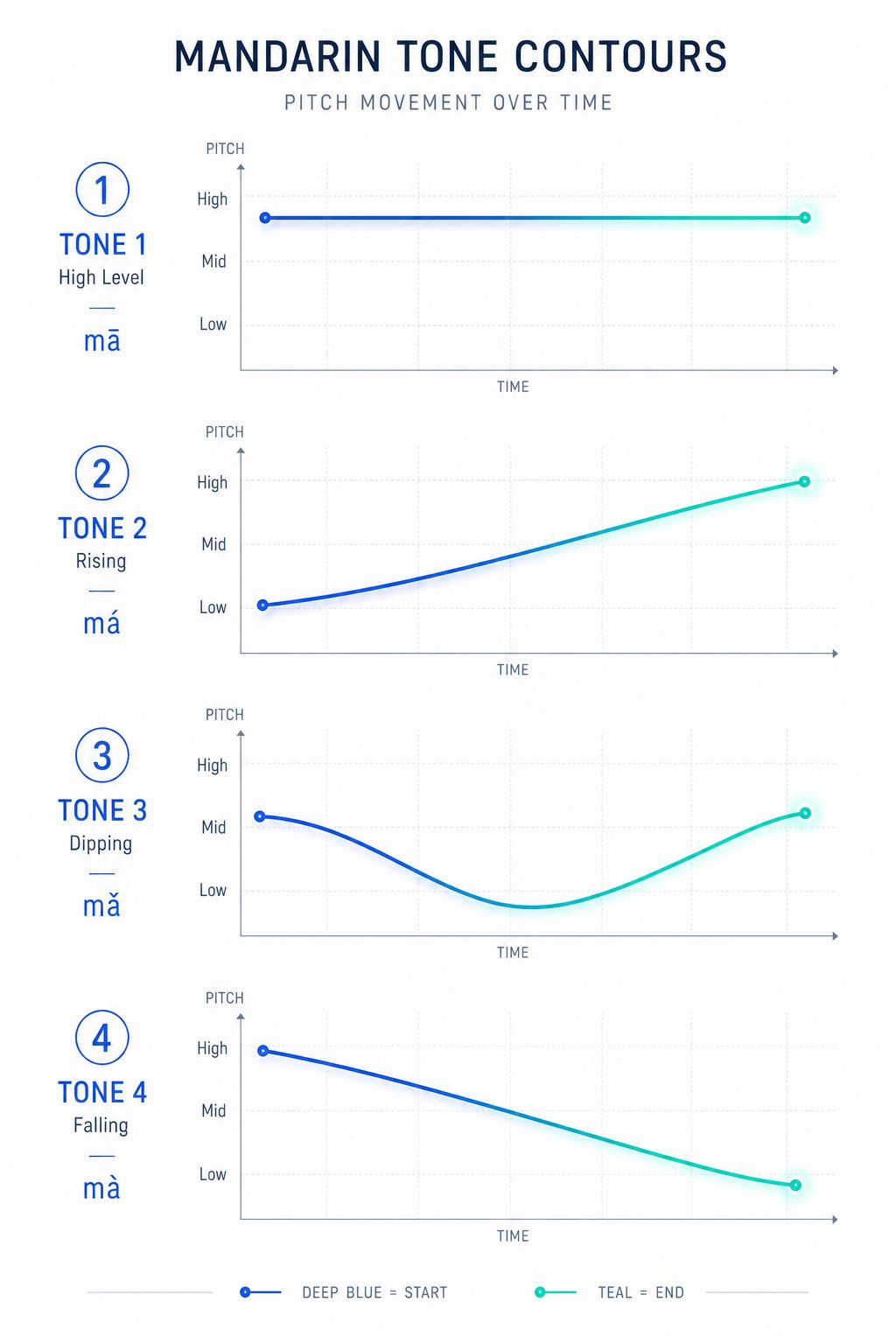
Tone marks are diacritical marks placed above vowels in the Hanyu Pinyin system. There are four primary tones plus a neutral (unstressed) tone. Each is represented by a small symbol over the main vowel of a syllable:
- First tone (ā) - a flat, high pitch that stays level
- Second tone (á) - a rising pitch, moving from mid-range to high
- Third tone (ǎ) - a dipping pitch that falls then rises
- Fourth tone (à) - a sharp falling pitch from high to low
These four diacritical marks look subtle on the page, but they carry enormous weight. When you see "mā," you know it means mother (妈). Change that mark to "mǎ" and you are talking about a horse (马). The pinyin meaning shifts entirely based on which small accent sits above the vowel. Understanding what is pinyin in Mandarin means recognizing that these marks are not decorative. They are the difference between one word and another.
Why Tone Marks Matter Specifically for Names
General vocabulary offers context clues. If someone says "I rode a mǎ," you can guess they mean horse even if the tone is slightly off. Names do not have that safety net. A person's name is a fixed identity marker, and the phonetic spelling of your name should reflect exactly who you are, not someone else entirely.
Consider the syllable "Li." Spoken with a second tone (Lí), it could be the surname 黎. With a third tone (Lǐ), it becomes 李, one of the most common surnames in China. With a fourth tone (Lì), it might represent 丽 or 利. Each version points to a different family lineage, a different character with its own history and meaning. Mandarin Chinese tones are what separate these identities, and tone marks are the written record of that distinction.
This article covers the rules governing where tone marks are placed, the official standards behind name romanization, how different countries handle them in practice, and the simplest ways to type them on any device. Whether you are writing an academic citation, filling out a form, or simply trying to get a colleague's name right, understanding how these small marks function is the first step toward accuracy.
The Four Tones in Chinese Surnames and Given Names
Each of the four tones in Chinese carries a distinct pitch contour, and when applied to names, these contours determine which character and which person you are referring to. A mandarin tones chart designed for general vocabulary works the same way for names. The difference is that names leave no room for guesswork. You either have the right tone or you have the wrong person.
Here is a breakdown of all four tones chinese learners encounter, mapped directly to real surname and given name examples:
| Tone Number | Tone Mark Symbol | Description | Surname Example | Given Name Example |
|---|---|---|---|---|
| First tone | ā | High and level, sustained at a steady pitch | Māo 毛 (as in Máo Zédōng) | Fēi 飞 (to fly) |
| Second tone | á | Rising from mid to high pitch | Lí 黎 | Méi 梅 (plum blossom) |
| Third tone | ǎ | Dipping low then rising slightly | Lǐ 李 | Měi 美 (beautiful) |
| Fourth tone | à | Sharp falling from high to low | Lì 利 | Lì 丽 (elegant) |
Notice how the surname column alone demonstrates the problem. "Li" without any tone mark could point to Lí, Lǐ, or Lì, each a completely different family name tied to a different lineage. A chinese tones chart for names makes these distinctions visible at a glance.
The Four Tones Applied to Surnames
Consider the syllable "Zhang." Written as Zhāng with a first tone, it represents 张, one of the most common surnames in China, shared by tens of millions of people. The character itself historically relates to the concept of drawing a bow. But pronounce that same syllable with a third tone, Zhǎng, and you get 掌, meaning "palm of the hand," a completely different character that functions as a rare surname.
The tones of mandarin do not just shift meaning slightly. They point to entirely separate characters with unrelated etymologies. Wáng (王, second tone) means "king" and is the most common surname in China. Wǎng (网, third tone) means "net." Same letters, different tone, different world.
Tones in Given Names and Their Meanings
Parents choosing given names in Chinese often consider tonal flow alongside meaning. A name like Zhāng Měilì (张美丽) has a deliberate rhythm: first tone, third tone, fourth tone. The mandarin tones create a melodic pattern that sounds pleasing when spoken aloud. Remove the tone marks from the written pinyin, and both the pronunciation guide and the intended meaning disappear.
Here are common given name syllables where a single tone change produces a different character and meaning entirely:
- Méi (梅, second tone) means "plum blossom," while Měi (美, third tone) means "beautiful"
- Yǔ (雨, third tone) means "rain," while Yù (玉, fourth tone) means "jade"
- Míng (明, second tone) means "bright," while Mìng (命, fourth tone) means "fate"
- Huá (华, second tone) means "magnificent" or "China," while Huà (画, fourth tone) means "painting"
- Jīng (晶, first tone) means "crystal," while Jìng (静, fourth tone) means "quiet"
These tone examples show why pinyin tone marks in names are not academic trivia. They preserve the specific character a parent chose, the meaning they intended, and the identity their child carries. Without marks, "Yu" could be rain, jade, fish (鱼, yú), or language (语, yǔ), leaving readers to guess which person and which meaning the name holds.
Knowing which tone belongs to which syllable is one thing. Knowing exactly where to place the mark within a syllable follows its own set of rules, and getting the placement wrong is one of the most common mistakes in name romanization.
Where to Place Tone Marks in Name Syllables
You know which tone a name syllable carries. But which letter actually gets the mark? Chinese tone marks always sit above vowels, never consonants, yet many people hesitate when a syllable contains two or three vowels in a row. The surname Huáng, for instance, has three vowels. Does the mark go on the u, the a, or the g? The answer follows a consistent hierarchy that applies to every pinyin syllable, whether it appears in a dictionary entry or on a name card.
Tone Mark Placement Hierarchy for Name Syllables
The rules for tone marking in pinyin are straightforward once you see the pattern. According to the standard placement guidelines, the priority works like this:
- If the syllable contains an "a" or "e," the mark always goes there. These two vowels trump everything else. No standard pinyin syllable contains both. Name examples: Hǎo (郝), Méi (梅), Huáng (黄).
- If the combination "ou" appears, mark the "o." Name example: Zhōu (周), Gǒu (苟).
- In all other vowel combinations, the mark goes on the final vowel. Name examples: Liú (刘), Guì (桂), Xiù (秀).
That third rule is where most confusion lives. In combinations like "iu" and "ui," you mark the second vowel: Liú places the tone on the u, while Guì places it on the i. The logic is clean: when "a" and "e" are absent and "ou" is not involved, the last vowel in the sequence carries the chinese accent marks.
For single-vowel syllables, placement is obvious. The surname Lǐ (李) has only one vowel, so the mark sits on the i. The given name Yù (玉) has only the u. No ambiguity exists in these cases.
Common Placement Mistakes in Name Romanization
Even people familiar with chinese tonal marks sometimes slip up when writing names. The most frequent errors include:
- Placing the mark on a consonant. Tonal marks never appear on letters like n, g, or h, regardless of how the name sounds.
- Marking the wrong vowel in diphthongs. Writing "Liù" instead of "Liú" for the surname 刘 reverses both the tone and the placement.
- Forgetting the "a/e first" rule in longer syllables. In a name like Guài (怪), some writers mistakenly place the mark on the u because it comes first, but the a always takes priority.
- Confusing "ui" placement. The name Cuì (崔) needs the mark on the i, not the u, because "ui" follows the final-vowel rule.
The pinyin system's internal logic does not change based on context. The same chinese pinyin tone marks placement rules that govern vocabulary words apply identically to personal names. Whether you are writing the word "beautiful" (měi) or the surname Méi (梅), the mark lands on the "e" because that vowel always claims priority.
Getting placement right is a mechanical skill. The deeper question is what happens when tone marks are missing entirely, and how much confusion a single toneless spelling can create when multiple real people share the same romanized name.

How Tone Marks Prevent Name Confusion
The answer is: a lot. When you strip tones from a Chinese name's phonetic spelling, you collapse dozens of distinct identities into a single string of letters. The romanized name "Li Wei" looks like one person. In reality, it could represent hundreds of different character combinations, each belonging to a different individual with a different family history and a different given name meaning. Tone marks are the simplest tool for pulling those identities back apart.
When the Same Pinyin Represents Different People
Consider "Zhang Wei," one of the most common name combinations in China. Without tone marks or chinese tone numbers to indicate pitch, this two-syllable string is a blank canvas. Add tones back in, and you begin mapping characters to specific people. The process of converting mandarin pinyin to chinese character requires tonal information, because the same syllable pronounced differently points to entirely different mandarin characters.
Here is what a single toneless name can actually represent:
| Tone-Marked Pinyin | Chinese Characters | Surname Meaning | Given Name Meaning |
|---|---|---|---|
| Zhāng Wěi | 张伟 | To draw a bow | Great, mighty |
| Zhāng Wēi | 张威 | To draw a bow | Power, authority |
| Zhāng Wéi | 张维 | To draw a bow | To maintain, dimension |
| Zhāng Wèi | 张卫 | To draw a bow | To guard, defend |
| Zhǎng Wěi | 掌玮 | Palm of the hand | Precious jade |
Five different people, five different sets of pinyin characters, all hiding behind the same two words on a page. And this table only scratches the surface. Research from CSH researcher Liuhuaying Yang's Not My Name visualization project illustrates how thousands of distinct chinese pinyin characters get compressed into just 375 possible syllables during romanization. The result is massive overlap, especially for common names.
Chinese tone numbers (writing Zhāng as Zhang1, Wěi as Wei3) offer one alternative notation for disambiguation, but diacritical marks remain the standard in Hanyu Pinyin. Either way, the principle is the same: without tonal information, you cannot reliably trace a romanized name back to its original characters.
Disambiguation in Academic Citations and Professional Contexts
This is not just a theoretical problem. A study on Chinese author name disambiguation found that Chinese names constitute about 16% of the 86 million name instances in MEDLINE, yet they make up more than 90% of the 1,000 most ambiguous names when frequencies are counted. The study demonstrated that nine different Chinese names can all be transliterated into the single English string "Wang Wei," creating serious confusion for anyone trying to identify who actually wrote a given paper.
Libraries, citation databases like Scopus and Web of Science, and professional directories all face this challenge daily. When a researcher searches for "Zhang Wei" in a database, they may retrieve publications from dozens of unrelated scholars. Including tone marks in author records, or at minimum recording names in original script, dramatically reduces the number of homonym cases that require disambiguation.
In practice, context often helps. Coauthor lists, institutional affiliations, and subject areas provide clues. But tone marks offer a lightweight, built-in layer of precision that costs nothing to include and immediately narrows the field. For academic citations, historical references, and any professional context where correctly identifying a person matters, the phonetic spelling with tones attached is always more useful than the bare romanization without them.
The gap between what tone marks can do and what actually appears on official documents, however, is wide. Standards exist for how Chinese names should be romanized, but real-world implementation varies dramatically depending on which authority is issuing the document.
Official Standards Governing Tone Marks in Names
Two authoritative documents define how Chinese names should be spelled in pinyin, and both technically include tone marks as part of the correct written form. The gap between what these standards prescribe and what shows up on actual documents tells a revealing story about practicality winning over precision.
GB/T 28039-2011 and Official Chinese Name Romanization
The Chinese national standard GB/T 28039-2011, formally titled Chinese Phonetic Alphabet Spelling Rules for Chinese Names, is the definitive reference for how personal names should appear in mandarin chinese pinyin. It establishes several key rules:
- The surname comes first, followed by the given name.
- Given name syllables are written together as one unit, without spaces or hyphens between them. A name like 王晓明 becomes Wáng Xiǎomíng, not Wáng Xiǎo Míng.
- The first letter of both the surname and the given name is capitalized.
- Tone marks are part of the standard form.
That last point is easy to miss. The standard does include diacritical marks in its prescribed format. Yet in practice, official documents almost universally drop them. China's National Immigration Administration references GB/T 28039-2011 directly in its guidelines for exit-entry documents, but the pinyin printed on passports and ID cards appears without tones. The omission is a concession to international machine-readable document standards, not a rejection of tonal accuracy.
ISO 7098 and International Romanization Rules
On the international side, ISO 7098 governs the romanization of Chinese using the pinyin writing system. Now in its third edition, this standard aligns closely with the Chinese national framework. It specifies Hanyu Pinyin as the accepted method for converting Chinese script into Latin characters and includes tone marks as part of complete romanization.
Where ISO 7098 differs slightly is in scope. It covers all Chinese text, not just names, and provides guidance for libraries, publishers, and international organizations that need consistent romanization rules. For personal names, it follows the same surname-first convention and treats tone marks as integral to accurate representation. The pinyin chinese language connection is formalized here: tones are not optional metadata but part of the spelling itself.
Historical Context: From Wade-Giles to Hanyu Pinyin
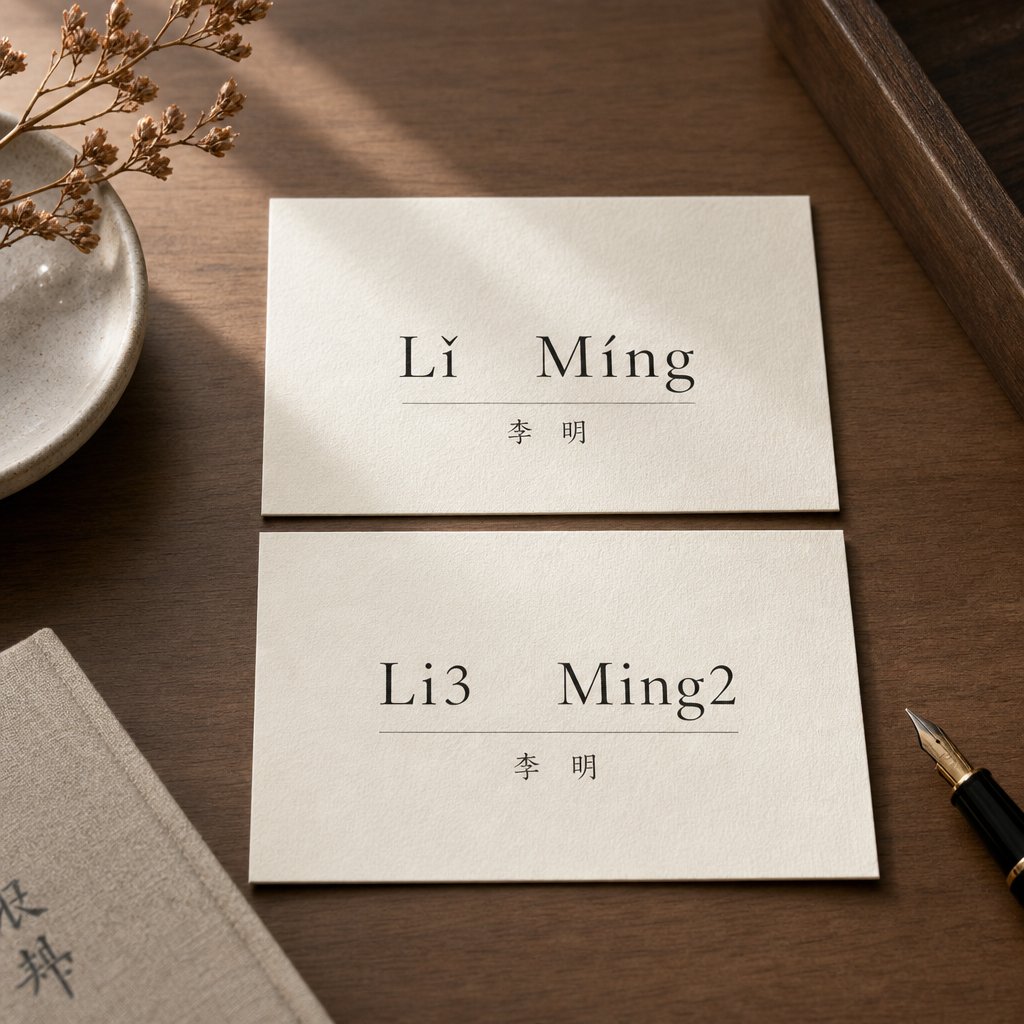
The current pinyin system did not appear overnight. Before its adoption in 1958, the dominant romanization method in English-language contexts was Wade-Giles, developed in the mid-19th century. Wade-Giles handled tones differently, using superscript numbers after each syllable. The name 李明 would appear as Li3 Ming2 rather than Lǐ Míng.
This number-based approach had drawbacks. Superscript digits were easy to lose in typesetting, and many publishers simply dropped them. The result was the same ambiguity problem we see today with toneless pinyin, just under a different system. Han yu ping ying (as Hanyu Pinyin is sometimes loosely transliterated) replaced Wade-Giles precisely because its diacritical marks integrated tones directly into the word's visual form rather than appending them as separate notation.
The shift happened gradually on the global stage. The United Nations adopted Hanyu Pinyin in 1986, and the Library of Congress followed in 2000. Each transition meant millions of Chinese names in catalogs and databases were re-romanized, moving from Wade-Giles spellings like Mao Tse-tung to the now-standard Máo Zédōng. The pinyin system won out because it offered a cleaner, more internally consistent framework, one where tones lived inside the word rather than beside it.
These standards paint a clear picture on paper. The reality of how names appear across passports, business cards, and government documents in different countries, however, introduces a whole new layer of variation that no single standard fully controls.

Real-World Usage Across Documents and Countries
Open any Chinese language textbook and you will see tone marks on every pinyin syllable. Open a Chinese passport and you will not see a single one. This gap between how pinyin in Chinese is taught and how it actually appears on official documents catches many people off guard. The standards covered above prescribe tone marks as part of correct romanization, yet the documents people carry in their wallets tell a different story.
Tone Marks on Passports and Official Documents
Chinese passports print names in toneless pinyin. This is not an oversight or a statement that tones are unimportant. It is a practical concession to the International Civil Aviation Organization (ICAO) standards for machine-readable travel documents. ICAO's specifications for the Machine Readable Zone (MRZ) restrict characters to the basic Latin alphabet (A-Z), digits, and a filler character. Diacritical marks simply cannot exist in that space.
The visual zone of the passport, the part humans read rather than machines, could theoretically include tone marks. But Chinese passport naming conventions follow the National Immigration Administration's guidelines, which produce toneless pinyin for both zones. The Latin passport name is shaped by China's own pinyin rules for personal names plus ICAO formatting requirements. So matching logic in verification systems has to account for national spelling rules and document-history effects rather than tonal precision.
The same applies to national ID cards, driver's licenses, and most government-issued documents within China. Mandarin in pinyin appears on these documents purely as a pronunciation aid or identification string, stripped of its tonal layer. Anyone who needs to translate chinese to pinyin and english for official purposes will encounter this toneless reality immediately.
Country-Specific Approaches to Name Romanization
China is not the only country where Chinese names appear on documents. Taiwan, Singapore, and Malaysia each handle romanization differently, and none of them use tone marks on official papers either. The variation runs deeper than just the presence or absence of diacritics.
| Country/Region | Primary System | Tone Marks on Documents | Notable Features |
|---|---|---|---|
| China (PRC) | Hanyu Pinyin | No | Given name syllables joined without space or hyphen (e.g., WANG XIAOMING) |
| Taiwan (ROC) | Multiple (Wade-Giles, Hanyu Pinyin, Tongyong Pinyin) | No | Hyphenated given names with lowercase second syllable (e.g., Chen Shui-bian) |
| Singapore | Varied historical romanizations (dialect-based) | No | Given name syllables often separated by space (e.g., Lee Kuan Yew), based on dialect pronunciation rather than Mandarin |
| Malaysia | Dialect-based romanizations (Hokkien, Cantonese, Hakka) | No | Spellings reflect southern Chinese dialects, not Mandarin pinyin (e.g., Tan, Ng, Ong) |
Taiwan's situation is particularly complex. As Pinyin News documented, Taiwanese names have historically followed a distinctive format with hyphens joining given name syllables, but no single romanization system dominates. A person's passport might use Wade-Giles for one syllable and an ad hoc spelling for another. The result is that even a mandarin chinese translator working with Taiwanese documents cannot rely on one consistent system.
Singapore and Malaysia add another layer of complexity. Names there often reflect Hokkien, Teochew, Cantonese, or Hakka pronunciations rather than standard Mandarin. The surname 林 appears as "Lim" (Hokkien) in Singapore but "Lin" in Chinese mandarin pinyin. These are not errors. They reflect different dialect traditions that predate modern standardization efforts.
When to Include Tone Marks in Written Names
Given that official documents universally omit them, when should you actually use tone marks? The answer depends on your audience and purpose. Pinyin in mandarin educational contexts demands them. A casual email does not. Here is a practical guide:
- Academic papers and linguistic publications: Include tone marks. They demonstrate precision, aid disambiguation between authors with similar names, and follow scholarly convention for chinese mandarin pinyin representation.
- Educational materials and language textbooks: Always include them. Students need tonal information to learn correct pronunciation.
- Formal business correspondence with Chinese partners: Optional but appreciated. Including marks shows cultural awareness, though omitting them will not cause offense.
- Database records and library catalogs: Include when the system supports diacritics. This reduces ambiguity in search results and author identification.
- Casual emails, social media, and everyday messaging: Omission is standard and expected. No one will consider it disrespectful.
- Legal documents and official forms: Follow the form's requirements. Most international forms do not support diacritics in name fields.
The pattern is clear: the more formal and precision-dependent the context, the more value tone marks add. In everyday communication, their absence is normal and understood. The key is recognizing that omission on a passport is a technical limitation, not a cultural norm to replicate in every situation where you write a Chinese name.
Written tone marks, however, only tell part of the pronunciation story. When Chinese names are spoken aloud, the tones themselves can shift through a phenomenon called tone sandhi, and understanding this gap between what is written and what is actually pronounced adds yet another dimension to getting names right.
Tone Sandhi and How It Affects Name Pronunciation
Here is something that trips up even intermediate Mandarin learners: the tone marks you see written in a name are not always the tones you hear when that name is spoken aloud. This disconnect is not a mistake. It is a feature of mandarin phonology called tone sandhi, a set of rules that automatically adjust certain tones in mandarin when specific syllable combinations occur in connected speech.
The tonal definition of sandhi comes from linguistics: it describes how the surface pronunciation of a tone changes based on its phonetic environment. For names, this means the way you say someone's name out loud may differ from what the written pinyin suggests, even though the written form remains correct.
Third-Tone Sandhi in Two-Syllable Names
The most important sandhi rule for names involves consecutive third tones. When two third-tone syllables appear back to back, the first one shifts to a second tone in natural speech. The written marks, however, stay unchanged.
Take the name Lǐ Yǔ (李雨). Both syllables carry a third-tone mark. But say this name at normal conversational speed and you will hear something closer to Lí Yǔ. The first syllable rises like a second tone, while only the final syllable retains its full dipping contour. This is the same pattern that makes 你好 (nǐhǎo) sound like níhǎo in everyday Mandarin.
Why not just write the changed tone? Because the marks represent each character's underlying citation tone, the tone it carries in isolation and in dictionary entries. Writing Lí Yǔ would imply the surname uses a second-tone character like 黎, pointing to a completely different person. The mandarin tone mark on the page preserves identity. The sandhi rule governs only what happens in the mouth.
Other common names affected by this pattern include Zhǎng Yǔ (掌宇), Mǎ Yǐng (马颖), and Lǚ Hǎo (吕浩). In each case, the first syllable sounds like a rising tone in mandarin when spoken naturally, but the written form keeps both third-tone marks intact.
Other Tonal Patterns That Affect Name Pronunciation
Third-tone sandhi is the most prominent rule, but it is not the only one that shapes how names sound. Two other patterns are worth knowing:
The neutral tone appears in some given name positions. Certain characters lose their full tonal weight when they sit in an unstressed syllable. While this is more common in everyday vocabulary (like the second syllable of 东西, dōngxi), some informal name pronunciations exhibit similar reduction. The chinese intonation of a name can shift subtly depending on how casually it is spoken.
The characters 一 (yī, "one") and 不 (bù, "not") follow their own sandhi rules if they appear in names or name-like compounds. Before a fourth-tone syllable, 一 is pronounced with a second tone (yí). Before any other tone, it shifts to a fourth tone (yì). Similarly, 不 changes from fourth tone to second tone (bú) when followed by another fourth-tone syllable. These shifts apply regardless of whether the character sits inside a name or a sentence.
Tone marks in names always represent the citation tone of each character, regardless of sandhi changes in connected speech.
This principle is what keeps the written system stable. If marks shifted to reflect every pronunciation change, you would lose the ability to trace a romanized name back to its original character. The mandarin phonetics of spoken names are fluid and context-dependent. The written tone marks are fixed anchors that tell you which chinese language tone each character fundamentally carries, even when the voice does something slightly different in the moment.
Understanding sandhi means you will not be confused when a name sounds different from how it looks on paper. It also means you will never "correct" a written tone mark based on what you heard, because the written form is already right. The real challenge most people face is more immediate: how do you actually get those diacritical marks onto a screen when you need to type a name with full tonal accuracy?

How to Type Pinyin Tone Marks on Any Device
Knowing where a tone mark belongs is one thing. Getting that mark onto your screen when you are typing a colleague's name in an email, a citation in a research paper, or a student roster is another challenge entirely. Standard keyboards were not designed with diacritics like ā, é, ǐ, or ù in mind. The good news is that every major operating system offers at least one reliable method for producing pinyin tone marks, and most take only a few minutes to set up.
Typing Tone Marks on Windows, Mac, and Linux
Each platform handles diacritical input differently, so the best approach depends on which system you use daily.
Windows: The most streamlined option is installing the PinyinTones keyboard. Once added to your language settings, you simply type the pinyin letters followed by the tone number, and the software places the correct mark on the right vowel automatically. Type "hao3" and hit space to get hǎo. This removes the need to remember placement rules while typing, since the keyboard handles it for you. Windows also includes a built-in Character Map utility where you can search for specific accented vowels and copy them individually, though this method is slower for frequent use.
Mac: Apple's approach uses the "ABC - Extended" keyboard (called "U.S. Extended" on older systems). You add it through System Preferences under Keyboard settings. Once active, you type a tone command first, then the vowel that receives the mark:
- First tone (ā): Option + a, then type the vowel
- Second tone (á): Option + e, then type the vowel
- Third tone (ǎ): Option + v, then type the vowel
- Fourth tone (à): Option + ~ (the key below Esc), then type the vowel
This method requires you to remember which vowel carries the mark, which actually reinforces correct placement. Mac also supports a press-and-hold method in most text fields: hold down a vowel key and a popup appears with accented variants you can select by number.
Linux: The Compose key is the cleanest solution. You assign a key (commonly Right Ctrl or Right Alt) as your Compose key through your desktop environment's keyboard settings. Then you press Compose followed by a sequence that produces the diacritical mark. For a macron (first tone), the sequence is Compose + hyphen + vowel. For a caron (third tone), it is Compose + c + vowel. The full list of sequences is available in your system's Compose table, and once memorized, the keystrokes become fast and natural.
Online Tools and Mobile Input Methods
Not everyone wants to configure system-level keyboards. Dedicated online tools and mobile methods offer alternatives that work without installation or with minimal setup. If you have ever used a phonetic spelling generator or an IPA alphabet converter for linguistic work, the concept is similar: you input basic text and the tool outputs properly formatted characters.
Here are practical methods ranked from easiest to most involved:
- Smartphone long-press: On iOS, add a Chinese keyboard through Settings, switch to it, and long-press any vowel to reveal tone-marked variants. Slide your finger to select the correct one. Android works similarly with Google Pinyin Input installed.
- Online pinyin converters: Web-based tools let you type numbered pinyin (like "Li3 Ming2") and instantly convert it to tone-marked output (Lǐ Míng). No software installation required.
- Browser extensions: Several extensions add pinyin input directly to your browser, useful if you primarily type names in web-based email or documents.
- PinyinTones keyboard (Windows): A one-time install that integrates directly into your system, ideal for frequent use.
- ABC - Extended keyboard (Mac): Built into macOS, requires memorizing four shortcut combinations but works in any application.
- Compose key sequences (Linux): Requires initial configuration but offers the fastest input once muscle memory develops.
For anyone studying pronunciation alongside writing, a pinyin chart with sound can complement these typing tools by letting you hear the tone you are about to mark, reinforcing the connection between the written diacritic and its spoken pitch contour.
Copy-Paste Reference for Common Name Syllables
If you regularly type the same Chinese names, the fastest method of all is keeping a personal reference document with pre-typed tone-marked syllables ready for quick copy-paste. Create a simple text file or note with entries like:
- Zhāng, Zhǎng
- Wáng, Wǎng, Wàng
- Lǐ, Lí, Lì
- Liú, Chén, Huáng
- Měi, Míng, Jìng, Yǔ, Xuě
This approach sidesteps keyboard configuration entirely. You look up the syllable, copy it, and paste it wherever needed. For people who only occasionally write tone-marked names, this low-tech solution often beats learning an entire input system. Over time, you will notice which syllables you reach for most often, and those become the ones worth learning to type directly.
The technical barrier to writing pinyin tone marks in names is lower than most people assume. A few minutes of setup or a simple reference file is all it takes to move from bare, ambiguous romanization to precise, tone-marked names that carry their full identity on the page. What remains is the softer question: when does that precision matter socially, and when is omission perfectly fine?
Etiquette and Cultural Sensitivity Around Tone Marks
You can type the marks. You know where they go. You understand the sandhi rules. The remaining question is more human than technical: when should you actually use them, and how do you navigate the social dynamics of asking someone about the tones in their name without making the interaction awkward?
When Precision Matters and When Omission Is Acceptable
Context determines everything here. In formal academic writing, linguistic publications, and Chinese language education materials, including tone marks demonstrates both respect and professional rigor. A researcher citing a Chinese author's work signals care by writing Lǐ Míng rather than Li Ming. A language instructor modeling correct mandarin pinyin pronunciation for students needs those marks on every handout and slide. In these settings, the accent in Chinese names carries functional weight, and omitting it looks like carelessness.
In casual business emails, social media posts, and everyday messaging, omission is standard. No Chinese colleague will feel disrespected because you typed their name without diacritics in a Slack message. The expectation in informal digital communication is toneless pinyin, and everyone operates within that norm. Think of it like capitalization in a text message: technically correct to include, but nobody notices when it is absent.
The middle ground is where judgment matters most. A formal business letter to a Chinese partner, a conference name badge, a company directory listing: these sit between casual and academic. Including tone marks in these contexts is a quiet signal that you have taken the time to learn the correct pronunciation of someone's name. It is never wrong to include them. It is simply not always expected.
Asking About and Respecting Name Pronunciation
What if you want to get someone's name right but do not know which tones apply? Asking is straightforward and almost always appreciated. A simple "Could you help me with the tones in your name?" works in professional and social settings alike. Most Mandarin speakers are pleasantly surprised when someone even knows that tones exist, let alone asks about them specifically.
As Temple University's Center for Chinese Language Instruction recommends, you can say something like: "It's important to me that I pronounce your name correctly. Could you say it for me once more?" Then repeat it back and ask if you got it right. This approach works whether you are a professor meeting students, a manager onboarding a new team member, or a colleague at a conference. The effort itself communicates respect, even if your pronunciation is not perfect on the first try.
Once you learn the tones, writing them down as a personal note or using a pinyin pronunciation chart as a reference helps you remember. You can even use a pronounce dict tool or lookup resource to confirm what you heard. Over time, these small acts of attention build into genuine cross-cultural fluency.
Chinese names carry culturally rich meanings and a personal and shared history that reflect philosophical traditions and social customs. A person's name tells the story of their parents' ideals and hopes for them.
This cultural depth is why getting the accent in mandarin names right matters beyond mere technical accuracy. Parents choose characters for their children based on meaning, sound, and tonal harmony. The name is not arbitrary. It encodes aspirations, family heritage, and sometimes generational continuity. When you take the time to learn and use the correct tones, you are acknowledging all of that, not just producing the right sound.
That said, balance matters. Spending five minutes publicly struggling with someone's name in front of a group can feel more embarrassing than respectful. If you cannot get it right in the moment, a quick private follow-up works better. And if someone offers you a preferred English name or a simplified pronunciation, accepting that choice is equally respectful. The goal is not to perform cultural awareness. It is to make the other person feel seen.
Pinyin tone marks in names sit at the intersection of linguistics, identity, and everyday communication. They serve a dual purpose: practical disambiguation that prevents one person from being confused with another, and cultural respect that honors the meaning embedded in every character a family chose. Knowing when to include them, how to type them, and why they exist gives you a valuable skill for navigating cross-cultural professional and personal relationships. The marks are small. What they carry is not.
Frequently Asked Questions About Pinyin Tone Marks in Names
1. Do Chinese passports include tone marks on names?
No. Chinese passports print names in toneless pinyin due to ICAO (International Civil Aviation Organization) standards for machine-readable travel documents. The Machine Readable Zone only supports basic Latin characters (A-Z), digits, and a filler character, so diacritical marks cannot be included. This is a technical limitation rather than a statement about tonal accuracy being unimportant. The visual zone could theoretically include them, but China's National Immigration Administration guidelines produce toneless pinyin for both zones of the passport.
2. How do you know where to place the tone mark in a pinyin syllable?
Pinyin follows a consistent placement hierarchy. First, if the syllable contains an 'a' or 'e,' the mark always goes on that vowel (e.g., Huang places it on the a). Second, if the combination 'ou' appears, mark the 'o' (e.g., Zhou). Third, in all other vowel combinations, the mark goes on the final vowel (e.g., Liu places it on the u, Gui places it on the i). For single-vowel syllables like Li or Yu, the mark simply sits on the only vowel present.
3. Why does a Chinese name sound different from what the tone marks show?
This happens because of tone sandhi, a phonological rule that changes how tones are pronounced in connected speech. The most common example occurs when two third-tone syllables appear consecutively. The first syllable shifts to a second tone when spoken aloud, but the written tone marks remain unchanged. For instance, Li Yu (both third tone) sounds like Li (rising) Yu in natural speech. Written marks always represent each character's citation tone to preserve identity and prevent confusion with different characters.
4. How many different people can share the same toneless pinyin name?
The number can be staggering. A common name like 'Zhang Wei' without tone marks could represent dozens of different character combinations, each belonging to a different person. Research shows that Mandarin has only about 375 possible syllables when tones are removed, yet thousands of distinct characters exist. In academic databases like MEDLINE, Chinese names make up about 16% of all name instances but account for over 90% of the 1,000 most ambiguous names, with as many as nine different Chinese names mapping to a single romanized string.
5. What is the easiest way to type pinyin tone marks on a computer?
The easiest method depends on your operating system. On Windows, the PinyinTones keyboard lets you type pinyin followed by a tone number (e.g., 'hao3' becomes hao with a third-tone mark) and handles placement automatically. On Mac, the ABC-Extended keyboard uses Option key combinations before the vowel. On any platform, online pinyin converters let you type numbered pinyin and instantly output tone-marked text with no installation required. For occasional use, keeping a copy-paste reference document with pre-typed tone-marked syllables is the simplest approach of all.