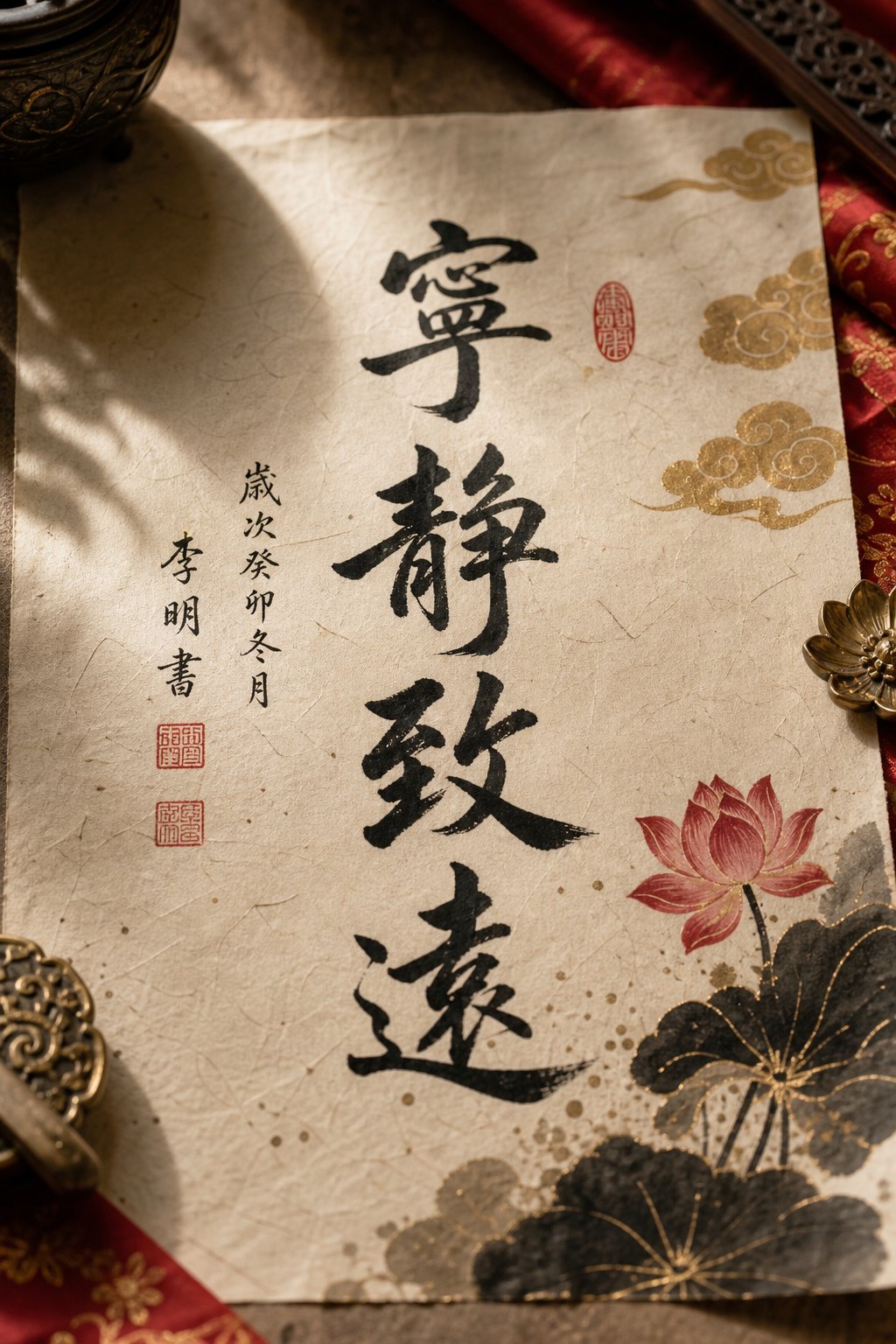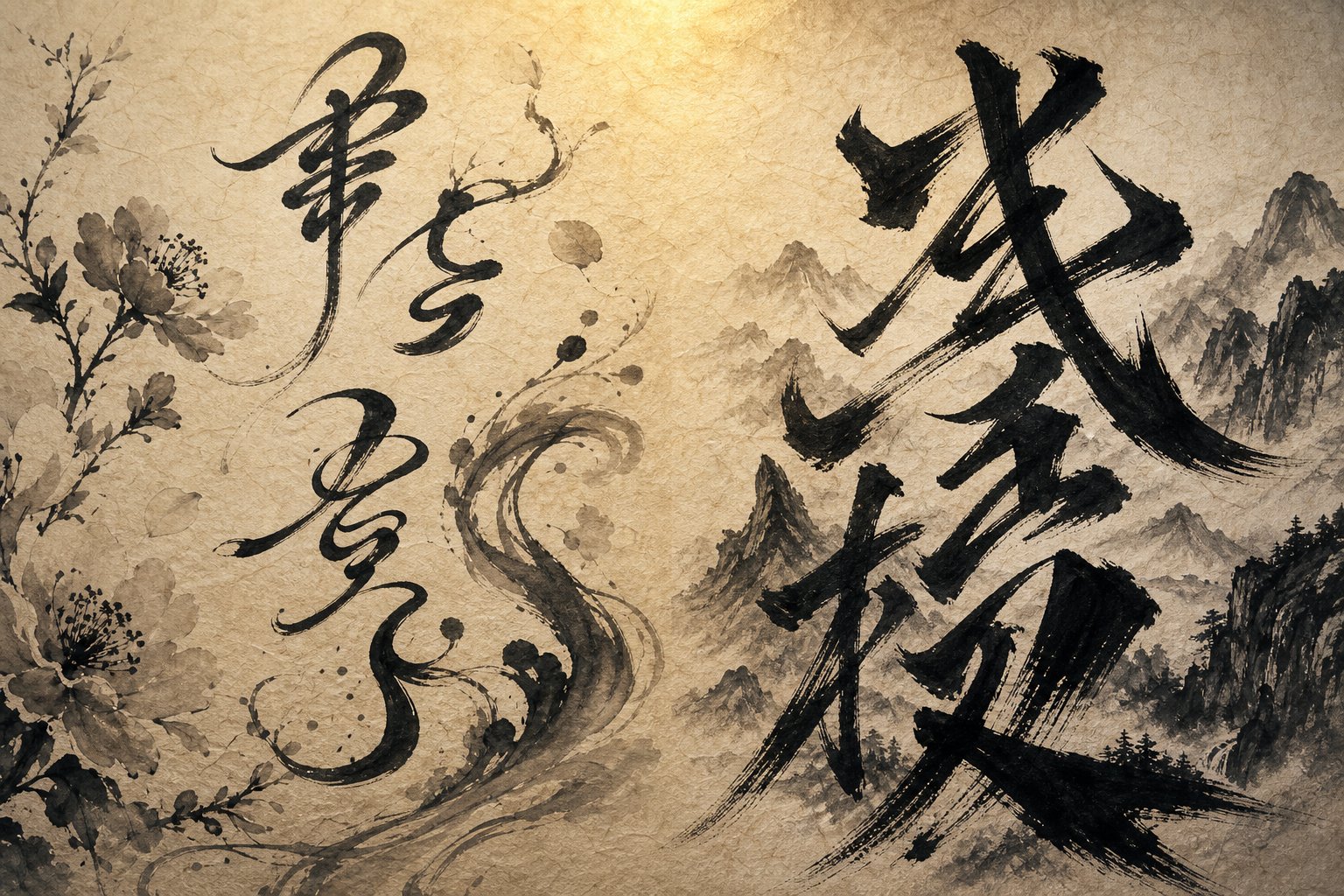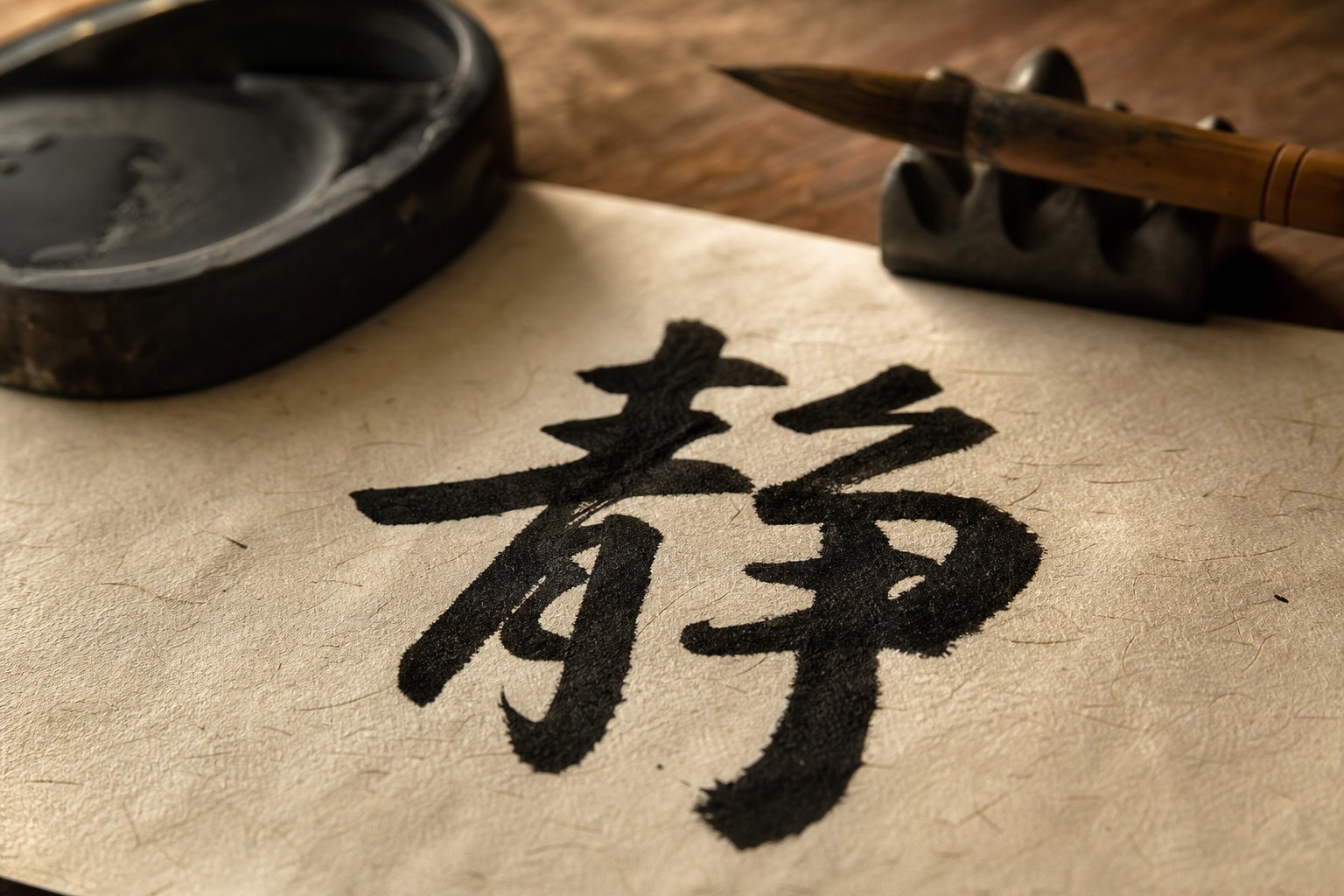
The Timeless Appeal of Chinese Character Tattoos
Few tattoo styles carry the same visual weight as a single Chinese character inked on skin. Where English requires a full sentence to express a concept, one Chinese character can hold centuries of philosophy, emotion, and cultural identity in a handful of brushstrokes. That density of meaning is exactly why popular chinese character tattoos remain among the most requested designs in studios worldwide.
Why Chinese Characters Make Powerful Tattoos
A Chinese character (汉字, hanzi) is not just a word. It is a visual structure built from specific components called radicals, written in a precise sequence of strokes that has been standardized for over a thousand years. Each character functions as both language and art, carrying graphic power that Latin script simply cannot replicate. When you look at chinese symbol tattoos, you are looking at a system where form and meaning are inseparable.
A single Chinese character can compress an entire philosophy into a few square centimeters of skin, carrying layers of historical, emotional, and spiritual meaning that no English word or phrase can fully replicate.
This is what draws people to chinese tattoos again and again. The character for "endurance" does not just spell out a word. It literally depicts a blade held over a heart. The character for "eternity" contains all eight fundamental calligraphy strokes within its structure. That kind of built-in symbolism gives a chinese language tattoo a depth that goes far beyond decoration.
What You Need to Know Before Choosing
Here is the reality, though. The internet is full of tattoo disasters where people permanently inked characters meaning "beef noodle soup" or "cheap" when they wanted "strength" or "cool." A single stroke in the wrong position can transform one character into something completely different. The difference between meaningful chinese tattoos and embarrassing mistakes often comes down to research, verification, and respect for the writing system.
This guide exists to close that gap. You will find the most culturally significant chinese characters for tattoos organized by meaning category, from love and eternity to strength, mythology, and spiritual peace. Each entry includes pinyin pronunciation, stroke count, cultural context, and honest sizing advice. Beyond individual characters, you will get calligraphy style guidance to match your aesthetic, placement recommendations based on stroke complexity, and a step-by-step verification process to ensure your chinese tattoo actually says what you think it says.
The goal is straightforward: help you choose a character that carries real weight, looks stunning on skin, and holds up to scrutiny from native readers for decades to come.
How We Selected the Best Chinese Characters for Tattoos
Not every Chinese character makes a good tattoo. Some look stunning at full size on paper but blur into an unreadable blob at two inches on a wrist. Others carry deep meaning in literary contexts but read as oddly formal or outdated to native speakers. Choosing the right chinese characters for tattoo work requires balancing multiple factors that most guides completely ignore.
Selection Criteria for Tattoo-Worthy Characters
Every character in this guide earned its place by meeting five specific criteria:
- Cultural significance: The character carries genuine weight in Chinese philosophy, literature, or daily life. It is not a novelty or an obscure variant that native readers would find strange.
- Visual aesthetics: The character has balanced proportions and structural interest. It looks intentional as a standalone design, not like a fragment pulled from a longer phrase.
- Stroke complexity and legibility: This is the factor no one else talks about. A character with too many fine strokes packed into a small space will lose definition as skin ages and ink spreads. Stroke count directly affects how small you can go and how well the tattoo holds up over 10, 20, or 30 years.
- Historical depth: The character has roots stretching back centuries, giving it layers of meaning that enrich the tattoo beyond surface-level translation.
- Correct native usage: The character is actually used by Chinese speakers in the way non-Chinese audiences intend it. This eliminates characters that technically translate to a concept but sound awkward or carry unintended connotations.
Stroke count deserves extra attention here. Research from the University of Melbourne has shown that Chinese characters have actually grown more complex over their 3,000-year history, not simpler. This means many traditional forms carry significant stroke density. For tattoos with chinese letters, that density creates a practical constraint: a 16-stroke character like 龍 (dragon) needs a minimum canvas of roughly 3 inches to remain legible after healing, while a 2-stroke character like 力 (strength) can work beautifully at under an inch.
Traditional vs Simplified Characters for Tattoos
When people search for chinese characters for tattoos, they rarely realize there are two versions of the same writing system in active use. Simplified characters (简体字) were introduced by the Chinese government in 1956 to improve literacy rates. Traditional characters (繁體字) remain the standard in Hong Kong, Taiwan, and most overseas Chinese communities.
For tattoo purposes, traditional characters are almost always the stronger choice. Why? As Tattoo Life notes, even in Mainland China, traditional characters are still favored for ceremonial and decorative use because they are "seen as more beautiful and imbued with heritage and meaning." A traditional chinese tattoo carries the full visual weight of a system refined over millennia, while simplified versions can look stripped down or incomplete to trained eyes.
Think of it this way: traditional chinese tattooing draws from the same character forms used in classical calligraphy, ancient poetry, and imperial documents. These are the forms that master calligraphers spent lifetimes perfecting. Simplified characters serve a practical purpose for everyday writing, but they sacrifice the architectural beauty that makes a chinese letters tattoo visually compelling.
Here is a direct comparison of characters featured in this guide:
| Character (Traditional) | Character (Simplified) | Meaning | Pinyin | Stroke Count (Traditional) | Stroke Count (Simplified) | Visual Complexity | Recommended Minimum Size |
|---|---|---|---|---|---|---|---|
| 愛 | 爱 | Love | ai4 | 13 | 10 | High | 2.5 inches |
| 龍 | 龙 | Dragon | long2 | 16 | 5 | Very High | 3 inches |
| 鳳 | 凤 | Phoenix | feng4 | 14 | 4 | High | 2.5 inches |
| 勇 | 勇 | Courage | yong3 | 9 | 9 | Medium | 1.5 inches |
| 禪 | 禅 | Zen | chan2 | 17 | 12 | Very High | 3 inches |
| 緣 | 缘 | Fate | yuan2 | 15 | 12 | High | 2.5 inches |
| 道 | 道 | The Way | dao4 | 12 | 12 | Medium-High | 2 inches |
| 永 | 永 | Eternity | yong3 | 5 | 5 | Low | 1 inch |
Notice the dramatic difference in some cases. The traditional 龍 has 16 strokes compared to the simplified 龙 with just 5. That simplified version loses the intricate internal structure that gives the dragon character its visual drama. Similarly, the traditional 愛 includes the radical 心 (heart) nestled inside it, literally placing "heart" at the center of "love." The simplified 爱 removes that heart component entirely, which many consider a meaningful loss.
Every character in the following sections uses the traditional form as the primary recommendation, with pinyin and tone number included so you can discuss pronunciation confidently with translators and native speakers during your verification process. Where traditional and simplified forms are identical, like 永 and 勇, you get the best of both worlds: full historical authenticity with no ambiguity about which version you chose.
With these selection principles established, the characters that follow represent the strongest candidates across every major meaning category, starting with the concepts people request most: love, eternity, and destined connection.
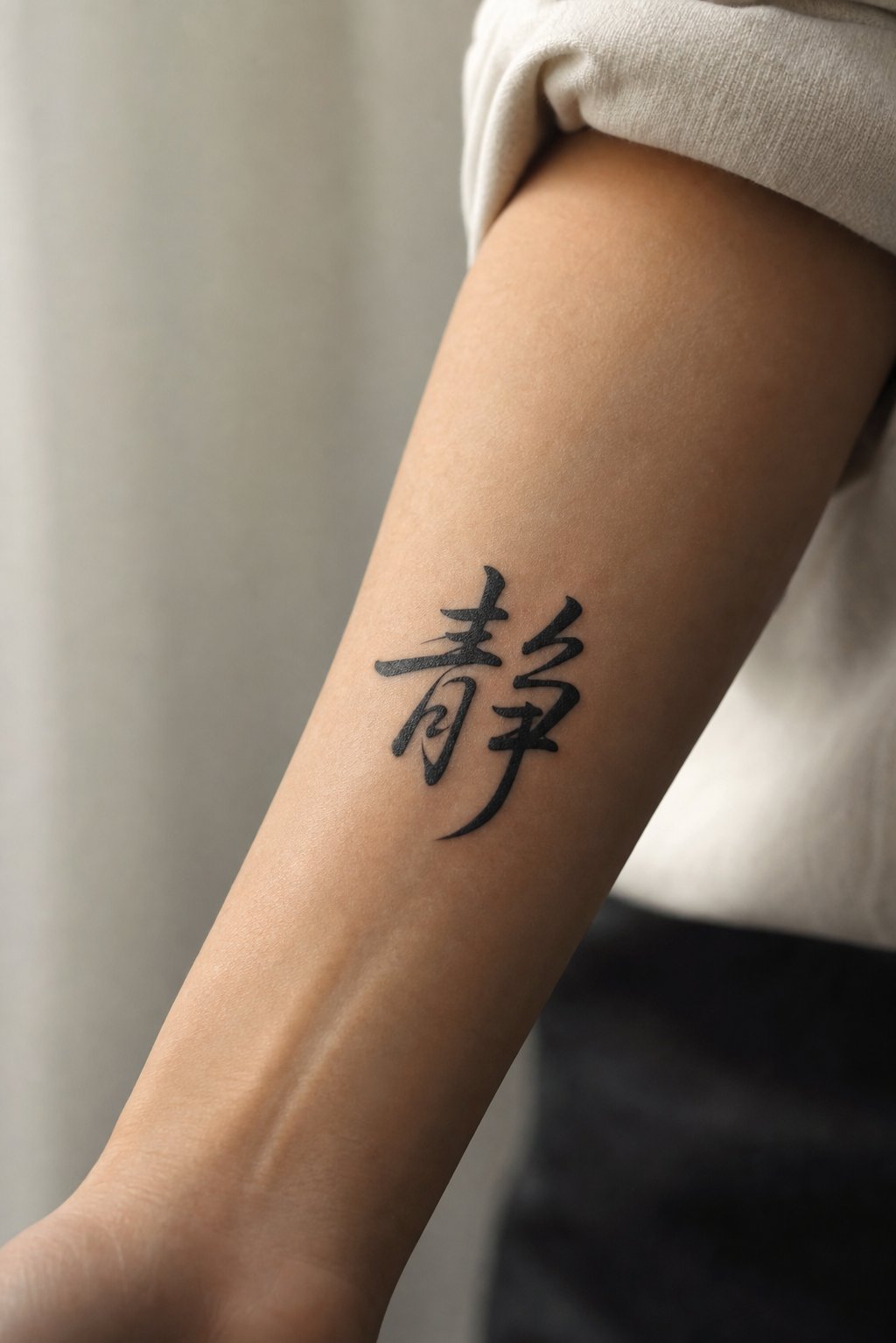
Love and Eternity Characters That Stand the Test of Time
When people search for tattoos in chinese with meanings tied to deep emotion, three characters dominate every request list: love, eternity, and fate. These are not trendy picks that fade with the season. They represent universal human experiences filtered through thousands of years of Chinese philosophy, poetry, and lived tradition. Each one carries a weight that goes far beyond its English translation.
Here is what you need to know about each character before committing it to skin permanently.
愛 Ai - The Character for Love
Pinyin: ai (fourth tone). Stroke count: 13 (traditional). Radical: 心 (heart).
The traditional character 愛 is one of the most culturally layered chinese love tattoo symbols you can choose. Its earliest form dates back to oracle bone script from the Shang Dynasty, where it depicted a hand caressing a heart, symbolizing tender care and emotional warmth. Over centuries, the character evolved through bronze inscriptions, seal script, and clerical script before arriving at the regular script form used today.
What makes 愛 structurally remarkable for a tattoo is what sits at its center: the radical 心 (heart). The traditional form literally places the heart inside the act of love. This is not a metaphor layered on after the fact. It is built into the architecture of the character itself. The simplified version 爱 removes this heart component entirely, which is why calligraphers and native speakers overwhelmingly recommend the traditional form for meaningful chinese tattoos.
A critical mistranslation pitfall: people sometimes receive 恋 (lian, romantic infatuation or crush) when they ask for "love." While 恋 relates to romantic feelings, it carries a lighter, more fleeting connotation. Think of it as the difference between infatuation and devotion. 愛 encompasses love in its fullest sense: familial, romantic, spiritual, and unconditional.
Pros
- Universally recognized meaning with no ambiguity among native readers
- Contains the heart radical 心, adding built-in symbolic depth
- Visually balanced with strong vertical structure
- Works beautifully in multiple calligraphy styles from kaishu to xingshu
- Pairs well with other characters like 永愛 (eternal love) for compound phrases
Cons
- 13 strokes require a minimum size of 2.5 inches for clean legibility after healing
- Not ideal for very small placements like behind the ear or finger
- Extremely common choice, so it may feel less unique to some
- Fine internal strokes demand a skilled artist experienced with character work
Ideal placements: inner forearm, ribcage, upper back, or shoulder blade where you have enough canvas for the strokes to breathe.
永 Yong - Eternity in a Single Stroke
Pinyin: yong (third tone). Stroke count: 5. Radical: 水 (water).
If 愛 is the most emotionally resonant character for tattoos, 永 is the most technically significant in the entire Chinese writing system. This character holds a unique position in calligraphy history through a concept called the Eight Principles of Yong (永字八法), a foundational teaching method that has guided calligraphy students for over a thousand years.
Here is why that matters for your tattoo: within just five strokes, 永 contains all eight fundamental brush techniques used in regular script calligraphy. The dot (ce), horizontal stroke (le), vertical stroke (nu), hook (ti), upward flick (ce), long left-falling stroke (lue), short left-falling stroke (zhuo), and right-falling stroke (zhe) are all present in this single character. Calligraphy masters from the Sui and Tang dynasties developed this teaching method because 永 demonstrates every essential movement a brush can make without any repetitive strokes.
For tattoo purposes, this means something practical: any calligrapher or artist who can render 永 correctly has demonstrated mastery of every basic stroke type. It functions as both a meaningful word and a built-in quality test for your artist's skill.
The meaning itself is equally powerful. 永 does not just mean "forever" in the casual way English speakers toss that word around. It carries the weight of geological time, of rivers that never stop flowing, of cycles that continue beyond any single lifetime. In classical Chinese poetry, 永 appears in contexts describing the eternal nature of mountains, the unending flow of water, and bonds that transcend death.
Pros
- Only 5 strokes, making it versatile for placements as small as 1 inch
- Contains all eight basic calligraphy strokes, giving it exceptional visual balance
- Works at virtually any size without losing legibility
- Identical in traditional and simplified forms, eliminating version confusion
- Deeply meaningful in both calligraphic tradition and philosophical context
Cons
- Low stroke count means less visual complexity for those wanting dramatic impact
- Can appear too simple if placed on a large canvas like the back or chest
- Requires precise stroke execution since every line is visible and exposed
- Common enough that pairing with a second character (like 永恆, eternal) adds distinction
Ideal placements: wrist, behind the ear, ankle, finger, nape of the neck, or anywhere you want a clean, minimalist statement. Its compact structure also makes it a strong choice for couples tattoos where matching size and placement matter.
緣 Yuan - Fate and Destined Connection
Pinyin: yuan (second tone). Stroke count: 15 (traditional). Radical: 糸 (silk thread).
Of all the chinese words tattoos and meaning combinations in this guide, 緣 may be the most difficult to translate and the most rewarding to wear. English offers "fate," "destiny," and "serendipity" as approximations, but none of them capture what 緣 actually means in Chinese thought.
In traditional Chinese philosophy and Buddhist-influenced thinking, 緣 is not something that happens to you. It is something that forms over time, shaped by actions, choices, and encounters across multiple lifetimes. Where Western destiny tends to be fixed and linear, 緣 is relational. It describes the invisible thread connecting people who are meant to meet, not necessarily meant to stay together forever.
This distinction matters for chinese tattoo meanings. The character suggests that a meeting in this life may be the result of past kindness, unfinished connections, or promises carried across reincarnations. Chinese speakers often say 有缘再见 (if we have yuan, we will meet again) or 有缘无分 (there is fate to meet, but no destiny to remain). The concept acknowledges that not all meaningful connections are meant to last, and that brevity does not diminish significance.
Structurally, 緣 includes the silk radical (糸) on its left side, evoking the image of threads being woven together. This visual metaphor of intertwined threads of fate gives the character an additional layer of meaning that resonates powerfully as body art.
Pros
- Carries a concept with no direct English equivalent, making it a genuine conversation piece
- Rich philosophical depth rooted in Buddhism, Taoism, and folk tradition
- The silk radical adds visual interest and symbolic resonance
- Less commonly chosen than 愛 or 永, offering more uniqueness
- Meaningful for commemorating specific relationships, chance encounters, or life-changing connections
Cons
- 15 strokes in traditional form require a minimum of 2.5 inches for clean execution
- Complex left-side radical demands an artist comfortable with fine detail work
- Meaning requires explanation to non-Chinese speakers, which may or may not appeal to you
- The simplified form 缘 (12 strokes) is more manageable but loses some visual richness
Ideal placements: inner forearm, ribcage, upper arm, or along the spine where the vertical structure of the character can stretch naturally.
Understanding chinese tattoos and meanings in this category comes down to emotional honesty. 愛 speaks to the heart directly. 永 speaks to time itself. 緣 speaks to the mysterious forces that bring people together. Each one tells a different story about what matters most to you, and each one holds up under scrutiny from native readers who understand the full weight behind the ink.
These characters channel emotion and philosophy into visual form. The next category shifts from the internal world to the external one, where characters represent the kind of strength, courage, and endurance that shows up in how you move through life.
Strength and Courage Characters for Bold Statements
Strength is not a single idea. It can mean raw physical power, the courage to act despite fear, or the quiet discipline of enduring pain without breaking. Chinese characters capture each of these dimensions separately, giving you the precision to ink exactly the kind of strength that defines your story. These three characters rank among the most popular chinese tattoos for men, though their meaning transcends gender entirely.
力 Li - Raw Strength and Power
Pinyin: li (fourth tone). Stroke count: 2. Radical: 力 (power, itself a radical).
With only two strokes, 力 is the most minimal character in this entire guide. Its origin traces back to oracle bone script where it depicted a plow or a muscular arm, representing the physical force needed to work the land. Over time, it evolved into the abstract concept of power, ability, and strength in all forms: physical, mental, and institutional.
That extreme simplicity is both its greatest asset and its biggest design challenge. Two strokes leave zero room for error. Every angle, every thickness variation, every endpoint is fully exposed. Your artist needs to nail the proportions perfectly because there is nothing else in the character to distract from a mistake.
For placement, 力 thrives in spots where larger characters would feel cramped. Think wrist, behind the ear, finger, or ankle. Its compact structure also makes it an excellent choice for a chinese tattoo forearm piece when paired with complementary imagery or a second character like 力量 (liliang, strength/force).
Pros
- Only 2 strokes, making it viable at sizes under 1 inch
- Clean, bold visual impact with strong angular energy
- Identical in traditional and simplified forms
- Versatile enough for minimalist placements or as part of compound designs
- Universally understood meaning with no risk of misinterpretation
Cons
- Minimal stroke count means less visual drama on larger canvas areas like the back or chest
- Can appear too simple standing alone at larger sizes
- Every imperfection is immediately visible with no surrounding strokes to mask errors
- Some viewers unfamiliar with Chinese may not recognize it as a complete character
勇 Yong - Courage Beyond Fear
Pinyin: yong (third tone). Stroke count: 9. Radical: 力 (power).
Notice something? The radical at the bottom of 勇 is 力 itself. This character literally builds courage on a foundation of strength. The upper component 甬 (yong) provides the phonetic element, but the structural message is clear: courage requires power as its base.
In Confucian philosophy, 勇 is one of the Three Virtues (三達德) alongside 仁 (benevolence) and 智 (wisdom). Confucius taught that courage without righteousness leads to chaos, while courage guided by moral principle creates a just person. This philosophical weight makes 勇 far more than a generic "be brave" statement. It carries an ethical dimension that resonates deeply in Chinese martial arts traditions where bravery must serve a higher purpose.
At 9 strokes, 勇 sits in the sweet spot for tattoo versatility. It has enough complexity to hold visual interest at medium sizes while remaining legible at 1.5 inches. Placement experts recommend characters of this complexity for the shoulder blade, upper arm, side ribs, or outer forearm, areas where the character has room to breathe without feeling lost on too large a canvas.
Among chinese tattoos for guys seeking inspirational chinese tattoos with martial arts heritage, 勇 consistently ranks at the top. It pairs naturally with imagery of warriors, mountains, or waves, and works in virtually every calligraphy style from clean kaishu to dramatic caoshu.
Pros
- 9 strokes provide strong visual weight without excessive complexity
- Rooted in Confucian philosophy, giving it intellectual and moral depth
- Contains the 力 radical, visually reinforcing the strength-courage connection
- Identical in traditional and simplified forms
- Works well at medium sizes (1.5 to 3 inches) across multiple body placements
Cons
- The upper component 甬 requires careful proportioning to avoid looking top-heavy
- Common artist error: making the bottom 力 too small relative to the upper section
- Popular enough that pairing with a second character (勇氣, courage-spirit) adds distinction
- Requires an artist who understands how the horizontal strokes in 甬 balance against the angular 力 below
忍 Ren - The Art of Endurance
Pinyin: ren (third tone). Stroke count: 7. Radical: 心 (heart).
Imagine a blade held directly over your heart. Not cutting, not withdrawn, just held there. That is 忍. This character combines the blade radical 刃 (ren) placed above the heart radical 心 (xin), creating a visual metaphor so visceral it needs no explanation: endurance is the ability to hold steady when pain presses against your most vulnerable place.
The construction is not accidental. 刃 itself is the knife character 刀 with a small stroke added to indicate the cutting edge. So 忍 stacks meaning in layers: knife becomes blade, blade sits on heart, and together they become the concept of bearing what seems unbearable. Few characters in any language pack this much narrative into their physical structure.
In Japanese martial arts culture, you will see 忍 displayed prominently in dojos and training halls. The character forms the root of 忍者 (ninja, literally "one who endures") and 忍耐 (nintai/rennai, patience and perseverance). This cross-cultural recognition makes it one of the most powerful male chinese tattoos for anyone connected to martial arts disciplines, meditation practices, or personal stories of overcoming hardship.
At 7 strokes, 忍 offers a balanced middle ground. It is complex enough to carry visual weight on a forearm or shoulder, yet compact enough to work at around 1.5 inches. The character's vertical structure, with 刃 stacked above 心, lends itself naturally to placements along the spine, on the ribs, or centered on the upper back. For back tattoos chinese enthusiasts often pair 忍 with surrounding brushstroke artwork or place it as a standalone centerpiece between the shoulder blades.
Pros
- Built-in visual storytelling: the blade-over-heart composition is immediately powerful
- 7 strokes provide good visual density without demanding oversized placement
- Deep roots in martial arts, Buddhist, and Confucian traditions
- Cross-cultural recognition in both Chinese and Japanese contexts
- Versatile sizing works from 1.5 inches up to large-scale back pieces
Cons
- The heart radical 心 at the bottom has curved, flowing strokes that contrast with the angular 刃 above, requiring an artist comfortable with both styles
- Common error: flattening the three dots of 心 into a straight line, losing the organic quality
- The blade component 刃 must clearly show its small distinguishing stroke, or it reverts to 刀 (knife), changing the character entirely
- Meaning can be misread as passive suffering rather than active resilience if context is not understood
These three characters, 力, 勇, and 忍, form a progression. Raw power. The courage to use it. The discipline to endure when power alone is not enough. Together or individually, they represent the external face of inner resolve, the kind of strength that shows up in action rather than words.
Strength characters speak to how you face the world. But Chinese mythology offers another dimension entirely, where single characters summon creatures that have embodied power, wisdom, and transformation for millennia.
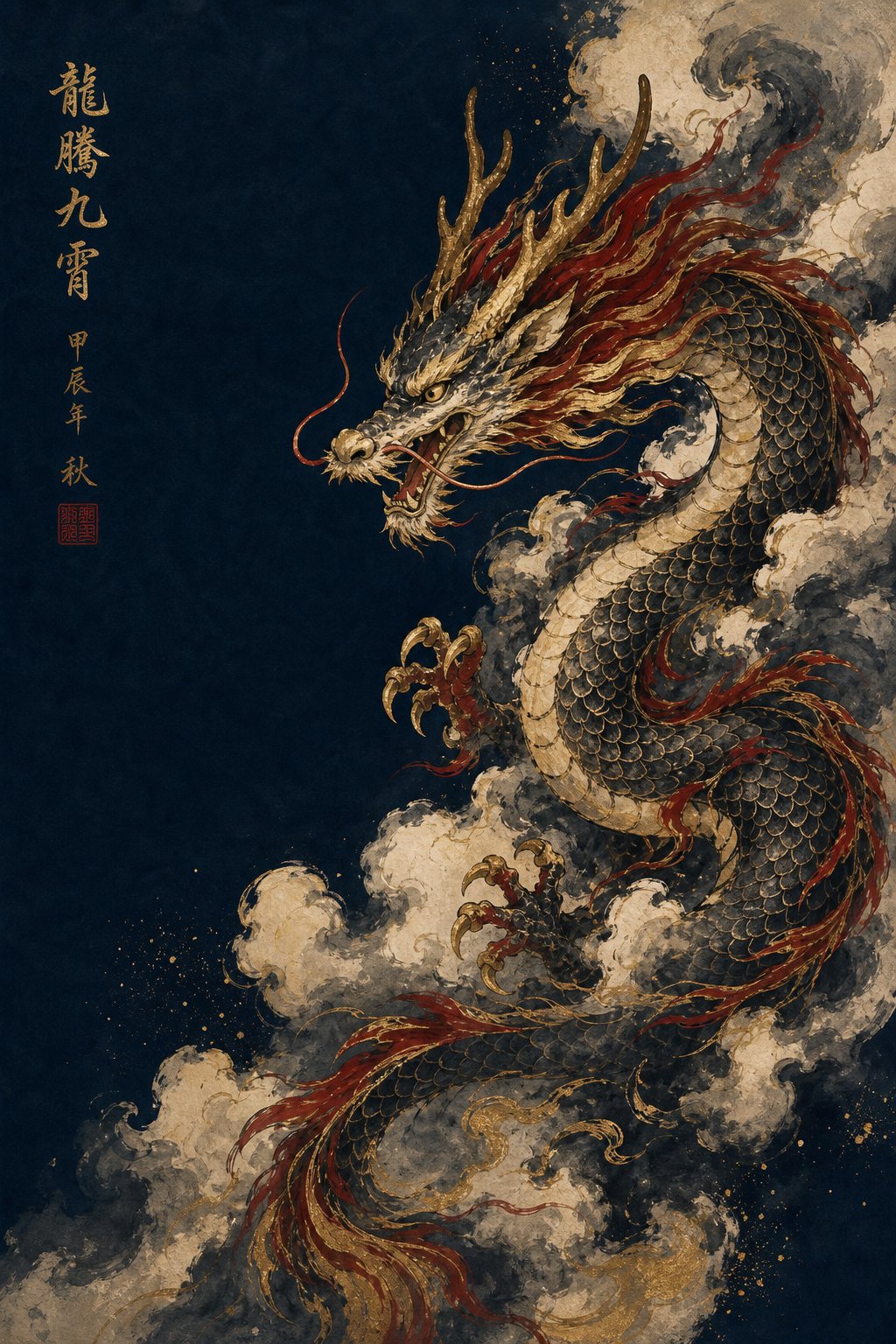
Dragon Tiger and Phoenix Characters with Deep Mythology
Some characters do not just carry meaning. They summon entire mythological worlds. 龍, 虎, and 鳳 are among the most visually complex and culturally loaded asian tattoo symbols in existence, each one backed by thousands of years of art, philosophy, and spiritual tradition. These are not characters you choose lightly. They demand larger canvas areas, skilled artists, and a genuine understanding of what you are placing on your body.
They also happen to be among the most stunning chinese inspired tattoos you will ever see when executed correctly. Here is what each one brings to the table.
龍 Long - The Dragon of Imperial Power
Pinyin: long (second tone). Stroke count: 16 (traditional). Radical: 龍 (dragon, itself a radical).
If you are researching the chinese dragon tattoo meaning, the first thing to understand is this: the Chinese dragon has almost nothing in common with its Western counterpart. Western dragons hoard treasure, breathe fire, and terrorize villages. The Chinese 龍 is a benevolent creature that symbolizes wisdom, prosperity, imperial authority, and cosmic order. It commands rain and rivers, brings good fortune, and represents the highest form of legitimate power.
In Chinese mythology, the dragon is described as a composite creature with the antlers of a deer, the body of a serpent, the claws of an eagle, the scales of a carp, and the ears of an ox. It flies without wings and commands the weather. Emperors claimed the dragon as their personal symbol, sitting on "dragon thrones" (龍椅) and wearing dragon-embroidered robes. A dragon sighting was considered an omen that the emperor was ruling justly and the nation was thriving.
As a tattoo character, 龍 in its traditional form is a visual powerhouse. Those 16 strokes create an intricate internal architecture that looks almost alive on skin, with sweeping curves, angular hooks, and layered components that reward close inspection. The simplified version 龙 (just 5 strokes) loses nearly all of this complexity, which is why serious tattoo collectors almost universally choose the traditional form.
The practical tradeoff? Sixteen strokes packed into a single character demand space. You need a minimum of 3 inches for clean legibility, and the character truly shines at 4 inches or larger. This makes 龍 a natural fit for the upper back, chest, shoulder cap, or as part of a full sleeve composition.
Pros
- Visually dramatic with 16 strokes creating exceptional structural complexity
- Carries exclusively positive symbolism: wisdom, prosperity, authority, and good fortune
- Pairs beautifully with illustrative dragon imagery surrounding the character
- One of the most recognizable popular asian symbols across all East Asian cultures
- Deep imperial and spiritual heritage spanning over 3,000 years
Cons
- Requires a minimum of 3 inches, limiting placement options
- High stroke density means fine lines can blur if the artist lacks precision
- Not suitable for small, discreet placements like wrist or ankle
- Demands an artist experienced with complex character work to maintain stroke clarity
- The simplified form 龙 looks dramatically different and may disappoint if chosen by mistake
虎 Hu - The Tiger of Fierce Protection
Pinyin: hu (third tone). Stroke count: 8. Radical: 虍 (tiger stripes).
Where the dragon rules the sky, the tiger commands the earth. In Chinese philosophy, these two creatures form one of the most important symbolic pairings in all of East Asian thought. The dragon-tiger pairing represents the fundamental yin-yang balance: the celestial dragon embodies yang (transformation, wisdom, sky), while the grounded tiger represents yin (hidden strength, protection, earth).
This is not a rivalry. It is a partnership. An ancient proverb states that "dragons bring the clouds, while tigers call forth the wind," symbolizing their complementary power to summon rain and peace. In martial arts traditions, students learn both the tiger's path (body, instinct, raw force) and the dragon's path (spirit, flow, internal energy). Together, they represent complete mastery.
The White Tiger (白虎, Bai Hu) holds a specific position as one of the Four Celestial Beasts, serving as guardian of the West. It represents bravery, autumn, and noble protection. On ancient tombs, tiger imagery was placed to guard souls in the afterlife. This protective quality makes 虎 a compelling choice for anyone who identifies with the role of guardian or protector.
At 8 strokes, 虎 sits in a practical sweet spot. It carries enough visual weight to stand alone at medium sizes (1.5 to 2.5 inches) while remaining legible at smaller scales than 龍. The character's top component 虍 (tiger stripes) gives it a distinctive open structure that reads clearly even at distance. This versatility makes it suitable for forearms, shoulders, ribs, or calves.
Pros
- 8 strokes offer strong visual presence without demanding oversized placement
- Identical in traditional and simplified forms, eliminating version confusion
- Carries protective symbolism rooted in the Four Celestial Beasts tradition
- Pairs powerfully with 龍 for a dragon-tiger yin-yang composition
- Works well surrounded by illustrative tiger imagery for a mixed character-art design
Cons
- The open top radical 虍 can look unfinished if proportions are off
- Common artist error: making the lower strokes too cramped relative to the wide top
- Less immediately recognizable to Western viewers than 龍
- The chinese lion tattoo meaning (獅) is sometimes confused with tiger; verify you are getting the correct animal
Ideal placements: outer forearm, shoulder blade, upper arm, ribs, or as one half of a dragon-tiger paired composition across the chest or back.
鳳 Feng - The Phoenix of Rebirth
Pinyin: feng (fourth tone). Stroke count: 14 (traditional). Radical: 鳥 (bird).
The Chinese phoenix (鳳凰, fenghuang) is not the Western phoenix that burns and rises from ashes. It is a divine bird described as a composite creature with the head of a stork, the shell of a tortoise, the forehead of a swallow, the beak of a chicken, and magnificent five-colored feathers. Its appearance was considered an omen that all under heaven would be safe and peaceful.
Where the dragon represents the emperor, the phoenix represents the empress. Together, they symbolize a harmonious and fortunate union. This dragon-phoenix pairing (龍鳳) appears throughout Chinese wedding traditions, imperial art, and ceremonial objects. The phrase 龍飛鳳舞 (dragon flies and phoenix dances) describes bold, flamboyant calligraphy, linking both creatures directly to the art of writing itself.
The phoenix also carries associations with fire, the south, and summer, complementing the dragon's connection to water, the east, and spring. This elemental opposition creates a rich symbolic framework where both creatures define each other through contrast. Neither is complete without the other.
At 14 strokes in traditional form, 鳳 demands similar canvas requirements to 龍. The bird radical 鳥 at the bottom provides a stable visual base, while the upper components create flowing, elegant lines that suit feminine aesthetics particularly well. The simplified form 凤 (just 4 strokes) loses virtually all of this structural beauty, making the traditional version essential for tattoo purposes.
Pros
- 14 strokes create elegant visual complexity with flowing, organic lines
- Symbolizes peace, prosperity, and harmonious union
- Pairs naturally with 龍 for wedding commemorations or partnership tattoos
- Less commonly chosen than 龍, offering more uniqueness among asian symbols and meanings
- Strong feminine energy without being limited to any gender
Cons
- Requires a minimum of 2.5 inches for clean execution
- The bird radical 鳥 at the bottom has fine detail that can blur at smaller sizes
- Western audiences may confuse it with the fire-rebirth phoenix, requiring explanation
- The simplified 凤 (4 strokes) looks nothing like the traditional form, creating potential miscommunication with artists
Ideal placements: shoulder blade, upper back, ribcage, thigh, or as the complementary half of a dragon-phoenix paired design.
The Dragon-Tiger Pairing and Related Zodiac Options
One of the most compelling approaches to these mythological characters is combining them. A 龍虎 (dragon-tiger) composition placed across the chest or back creates a visual representation of yin-yang balance that carries deep philosophical weight. Similarly, 龍鳳 (dragon-phoenix) works beautifully for couples tattoos or wedding commemorations, with each partner wearing one half of the pair.
For those drawn to Chinese zodiac connections, the snake (蛇, she, second tone) offers a related option worth considering. The snake tattoo chinese meaning ties directly to dragon mythology. In Chinese culture, the snake is sometimes called the "little dragon" (小龍), and people born in the Year of the Snake are said to share the dragon's wisdom and intuition in a more subtle, grounded form. At just 11 strokes, 蛇 requires less space than 龍 while maintaining a connection to that same mythological lineage.
These mythological characters represent the most visually ambitious options in the world of Chinese character tattoos. They demand space, skill, and commitment. But when executed well, they carry a presence that simpler characters cannot match, summoning entire cosmologies in a single frame of ink.
Mythology speaks through drama and scale. The next category moves in the opposite direction, toward characters that channel stillness, balance, and the quiet power of inner peace.
Peace and Harmony Characters for Spiritual Ink
Strength characters project outward. Peace characters draw inward. For anyone seeking a chinese word tattoo rooted in philosophy rather than force, the characters in this category carry some of the deepest intellectual heritage in human history. These are not soft choices. They represent ideas that entire civilizations have organized themselves around for over two thousand years.
What makes these characters especially compelling as chinese words tattoo ideas is their versatility. Most sit in a moderate stroke range that works across a wide variety of placements, from delicate wrist pieces to larger compositions on the ribcage or spine. They also tend toward elegant, balanced structures that suit minimalist aesthetics, making them particularly popular among chinese tattoos for females seeking refined designs with genuine philosophical weight.
和 He - Harmony Between All Things
Pinyin: he (second tone). Stroke count: 8. Radical: 口 (mouth).
和 is built from two components: 禾 (grain/harvest) on the left and 口 (mouth) on the right. The visual logic is straightforward. When there is enough grain to feed every mouth, harmony exists. This agricultural origin gives 和 a grounded, practical quality that separates it from abstract Western notions of peace.
In Confucian thought, 和 represents the ideal state of human relationships, where differences exist but do not create conflict. The Analerta teaches that "the gentleman seeks harmony, not sameness" (君子和而不同). In Daoist philosophy, the Daodejing describes how all things "shoulder yin and embrace yang, blending internal energies to attain harmony (和)" (Chapter 42). This makes 和 a character that bridges China's two dominant philosophical traditions.
As a tattoo chinese meaning choice, 和 communicates balance without passivity. It suggests active engagement with the world rather than withdrawal from it. At 8 strokes, it holds enough visual interest to stand alone at 1.5 to 2 inches while remaining clean and legible at smaller sizes.
Pros
- 8 strokes provide balanced visual weight without excessive complexity
- Rooted in both Confucian and Daoist philosophy, giving it cross-traditional depth
- Identical in traditional and simplified forms
- Versatile sizing works from 1.5 inches down to about 1 inch
- Pairs beautifully with 平 to form 平和 (peaceful harmony) for a two-character composition
Cons
- The left component 禾 has fine diagonal strokes that require precision at small sizes
- Can read as generic to native speakers without additional context or pairing
- Less visually dramatic than high-stroke characters like 龍 or 鳳
- Common enough in everyday Chinese that it may feel less special to some
道 Dao - The Way and Life's Path
Pinyin: dao (fourth tone). Stroke count: 12. Radical: 辶 (movement/walking).
If you want a single mandarin tattoo character that carries the weight of an entire philosophical tradition, 道 is it. This character is the foundational concept of Daoism (Taoism), one of China's two great indigenous philosophical systems. The term literally means "road" or "path," but its philosophical meaning extends far beyond physical direction.
In Daoist thought, 道 represents the process of reality itself, the way things come together while still transforming. The Daodejing opens with the famous paradox: "The Dao that can be spoken is not the eternal Dao." This teaches that 道 is not a fixed destination or a set of rules. It is the underlying pattern of existence that cannot be fully captured in language, yet can be lived and embodied through effortless action (wu-wei).
Structurally, 道 combines the radical 辶 (suggesting movement or a path) with 首 (head/beginning). The visual message: the path begins with awareness. This construction gives the character a flowing quality, with the 辶 radical sweeping beneath the upper component like a road unfolding beneath a traveler.
For chinese word tattoo ideas with genuine philosophical depth, 道 stands in a class of its own. It connects to millennia of poetry, martial arts philosophy (the "way" of the sword, the "way" of tea), and spiritual practice. Anyone who has studied tai chi, qigong, or traditional Chinese medicine has already encountered this character as a central organizing principle.
Pros
- Carries the full weight of Daoist philosophy spanning over 2,500 years
- 12 strokes create strong visual presence with flowing movement
- Identical in traditional and simplified forms
- Cross-cultural recognition through martial arts, meditation, and wellness traditions
- The sweeping 辶 radical gives it natural elegance suited to artistic calligraphy styles
Cons
- 12 strokes require a minimum of 2 inches for clean legibility
- The philosophical weight may feel presumptuous to some native speakers if the wearer has no connection to Daoist practice
- The 辶 radical's long sweeping stroke demands confident line work from the artist
- Extremely well-known, which reduces uniqueness but increases recognition
禪 Chan - Zen and Meditative Stillness
Pinyin: chan (second tone). Stroke count: 17 (traditional), 12 (simplified). Radical: 示 (spirit/altar).
Most Westerners know this concept through its Japanese pronunciation: Zen. But the character originated in China as 禪, transliterating the Sanskrit dhyana (meditation). Chan Buddhism developed in China beginning in the sixth century CE as a tradition emphasizing direct, embodied realization of awakening rather than textual study. Its defining concerns were experiential and relational, focused on unwavering attentiveness and responsive virtuosity in everyday life.
The character 禪 combines the spirit radical 示 (on the left, written as 礻) with 單 (single/simple) on the right. This construction suggests something profound: spiritual truth found through simplicity. Chan masters taught that enlightenment is not something acquired through elaborate rituals or years of scripture study. It is available here and now, in the midst of ordinary life.
At 17 strokes in traditional form, 禪 is the most complex character in this peace category. It demands a minimum of 3 inches and works best on larger canvas areas like the upper back, ribcage, or outer thigh. The simplified form 禅 (12 strokes) is more manageable for medium placements while retaining the essential radical structure.
Pros
- Connects to a living global meditation tradition with deep cultural roots
- 17 strokes (traditional) create impressive visual density and detail
- The spirit radical adds layers of meaning beyond simple "meditation"
- Recognized across Chinese, Japanese, Korean, and Vietnamese Buddhist cultures
- Carries associations with mindfulness, presence, and inner clarity
Cons
- Traditional form requires 3 inches minimum, limiting placement options
- High stroke count means fine lines can blur over time without proper sizing
- The simplified form 禅 is a reasonable alternative but loses some visual richness
- Overexposure through Western wellness branding may dilute its perceived depth for some
Character Pairs for Expanded Meaning
Single characters carry concentrated power, but chinese words for tattoos in this spiritual category also work beautifully as two-character phrases. These pairs let you express more nuanced ideas while maintaining visual elegance:
- 平和 (ping he) - peaceful harmony. Combines 平 (5 strokes, calm/level) with 和 (8 strokes). This phrase describes a gentle, even temperament and a state of inner equilibrium. At just 13 total strokes across two characters, it works well as a horizontal wrist piece or vertical spine placement.
- 自由 (zi you) - freedom/liberty. 自 means "self" and 由 means "from" or "reason." Together they express freedom as something that originates from within. A powerful choice for anyone whose personal story involves breaking free from constraints.
- 無畏 (wu wei) - fearless/without fear. 無 means "without" and 畏 means "fear" or "awe." This phrase appears frequently in Buddhist texts describing the state of a bodhisattva who acts with complete courage born from wisdom rather than ignorance.
These pairs address a gap that single characters cannot fill. They allow you to express relational concepts, states of being, and philosophical positions with greater precision. For anyone exploring chinese words tattoo designs beyond individual characters, pairs offer the best balance of meaning density and visual manageability.
The characters in this category share a common thread: they all point toward something that cannot be fully grasped through force or willpower alone. 和 asks you to find balance with others. 道 asks you to align with the natural flow of reality. 禪 asks you to be fully present without grasping. Each one rewards a lifetime of reflection, which is exactly what you want from something permanently written on your body.
Choosing the right character is only half the equation. The calligraphy style you select transforms the same character into a completely different visual experience, from clean architectural precision to wild, abstract brushwork that borders on pure art.
Calligraphy Styles That Transform Your Chinese Writing Tattoo
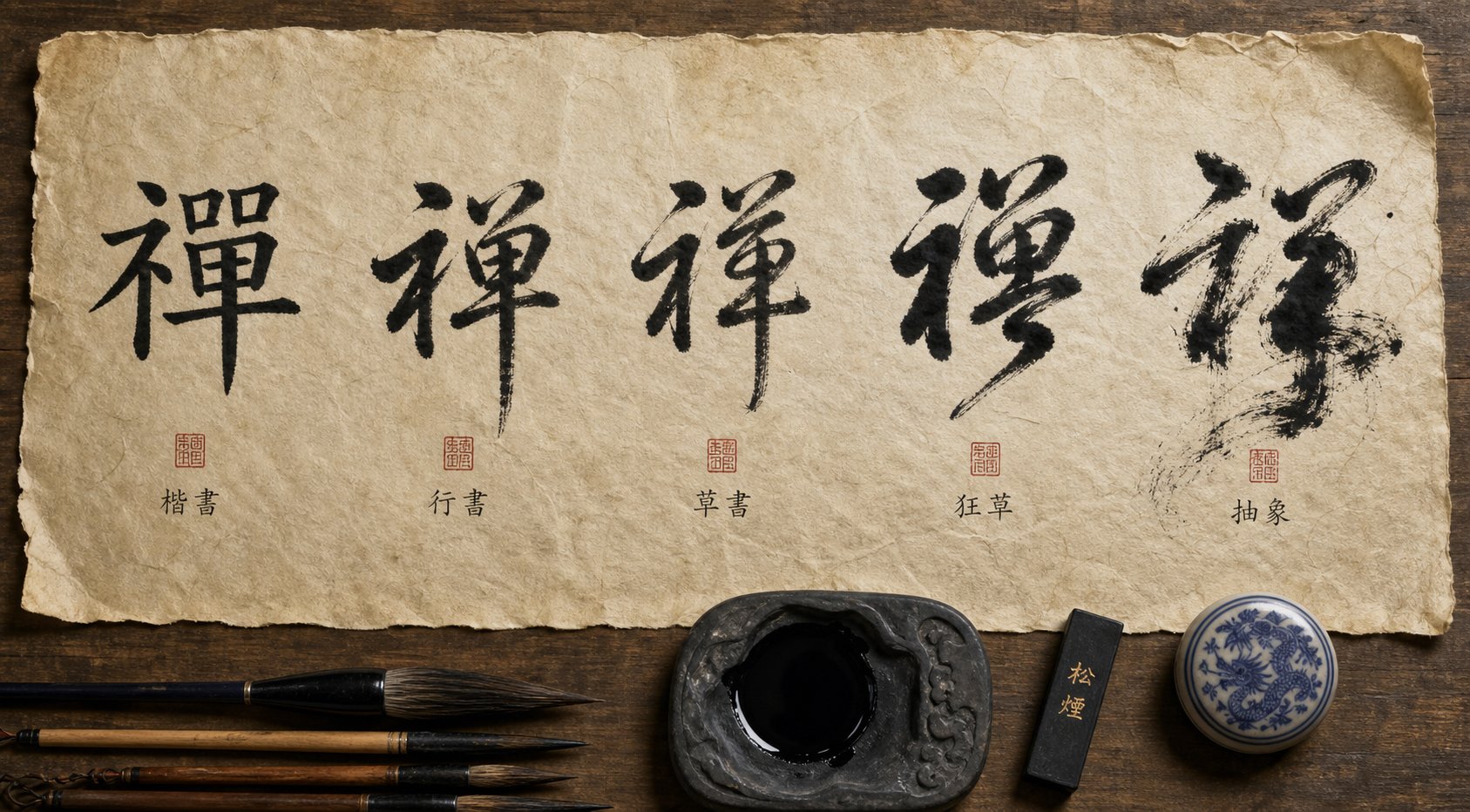
The same character written in two different calligraphy styles can look like it belongs to two entirely different languages. That is not an exaggeration. A chinese calligraphy tattoo of 龍 (dragon) in clean regular script looks structured and architectural. The same character in cursive script becomes a sweeping, almost abstract explosion of movement. Your choice of style shapes the entire personality of your ink.
Chinese calligraphy has evolved over thousands of years into five core scripts known as the Five Scripts (五體, wu ti). Each carries its own mood, rhythm, and visual energy. Choosing a generic computer font for your chinese character tattoo design is the equivalent of tattooing a meaningful quote in Times New Roman. Technically correct, but emotionally flat. Understanding these five styles lets you match the visual expression to the meaning you want to carry.
Kaishu Regular Script for Clean Readability
Kaishu (楷書, kai shu) is the standard script you see in textbooks, printed materials, and official documents. The famous Song Dynasty calligrapher Su Shi described it perfectly: "Standard Script is like standing." Each stroke is deliberate, upright, and clearly defined. There is no ambiguity about what the character says.
For tattoo chinese writing, kaishu is the safest choice when accuracy verification matters most. Because every stroke follows strict structural rules, a native speaker can immediately confirm whether the character is correct. If you are getting your first chinese writing tattoo and want zero risk of misinterpretation, kaishu gives you that confidence. The tradeoff is that it can feel formal or stiff compared to more expressive styles. It works best for characters where clarity of meaning takes priority over artistic flair.
Xingshu Running Script for Fluid Movement
Xingshu (行書, xing shu) is where calligraphy starts to feel alive. Su Shi called it "like walking," and that captures the energy perfectly. Strokes connect and flow into each other, creating a sense of natural movement without sacrificing legibility. This is the script most native Chinese speakers actually use in daily handwriting, notes, and signatures.
For chinese writing tattoos, xingshu offers the best balance between artistic expression and readability. The connected strokes give each character a sense of personality and rhythm that kaishu lacks, while remaining recognizable to anyone literate in Chinese. It is arguably the most technically demanding style to master because its flexibility allows for countless individual variations. A skilled calligrapher's xingshu has a signature quality, almost like a fingerprint, making your calligraphy chinese tattoo genuinely one of a kind.
Caoshu Grass Script for Abstract Artistry
Caoshu (草書, cao shu) is "like running." It is the fastest, most expressive, and most difficult to read of all five styles. Even native Chinese speakers often cannot decipher caoshu without specialized training. Strokes merge, simplify, and transform into sweeping gestures that prioritize emotional energy over literal communication.
This makes caoshu a bold choice for chinese language tattoo designs. You gain dramatic visual impact, raw artistic power, and a design that functions almost as abstract art. The risk? If readability matters to you, caoshu may frustrate. A viewer cannot casually glance at your tattoo and know what it says. For some people, that mystery is the entire point. For others, it defeats the purpose. Know which camp you fall into before committing.
Lishu and Zhuanshu: Ancient Scripts with Distinctive Character
Two older styles round out the five scripts and offer unique aesthetics for chinese words tattoo designs:
Lishu (隸書, li shu), or Clerical Script, developed when government scribes needed to write faster than seal script allowed. Its defining feature is a flattened, wide structure with horizontal strokes that flow in a distinctive "wave-like" rhythm. Think of it as architectural calligraphy. The characters feel solid, grounded, and slightly formal, like inscriptions carved into stone monuments. Lishu works beautifully for characters you want to feel ancient and authoritative without the illegibility of cursive styles.
Zhuanshu (篆書, zhuan shu), or Seal Script, is the oldest of the five and the closest to pictographic origins. Characters in seal script emphasize left-to-right symmetry, use mainly curves and dots with no sharp corners, and often look more like drawings than writing. Even native speakers may struggle to recognize characters in this style, but that ancient, mystical quality is precisely what makes it compelling for tattoos. Zhuanshu gives your ink a timeless, almost ritualistic appearance, as if the character was pulled from an artifact thousands of years old.
Comparing All Five Styles for Tattoo Decisions
| Style Name | Chinese Name | Visual Characteristics | Readability Level | Best Tattoo Placements | Recommended Character Complexity |
|---|---|---|---|---|---|
| Kaishu (Regular Script) | 楷書 | Square, upright, precise strokes with clear structure | High - easily verified by any literate reader | Any placement; ideal for small to medium sizes where clarity matters | Any stroke count; best for complex characters (12+ strokes) where legibility is critical |
| Xingshu (Running Script) | 行書 | Flowing, connected strokes with natural rhythm and movement | Medium-High - legible to native speakers with some artistic interpretation | Forearm, ribs, spine, shoulder blade; medium to large sizes | Best for moderate complexity (5-12 strokes) where flow enhances the design |
| Caoshu (Cursive/Grass Script) | 草書 | Highly abstracted, sweeping gestures, dramatic and emotional | Low - often illegible without specialized knowledge | Large canvas areas: back, chest, full sleeve, thigh | Simple characters (2-8 strokes) work best; complex ones become unrecognizable |
| Lishu (Clerical Script) | 隸書 | Flattened, wide, wave-like horizontal strokes, architectural feel | Medium - recognizable but with stylistic flourishes | Horizontal placements: collarbone, lower back, upper chest band | Moderate complexity (5-12 strokes); the wide format suits characters with strong horizontals |
| Zhuanshu (Seal Script) | 篆書 | Symmetrical, curved, pictographic, ancient and mystical appearance | Low - difficult even for native speakers to read without training | Circular or square compositions: shoulder cap, chest center, upper back | Simple characters (2-8 strokes) where the pictographic origin is still visible |
Matching Style to Intention
Here is a practical way to think about your choice. If your priority is that people can read and verify your tattoo, choose kaishu. If you want artistic beauty with maintained legibility, xingshu is your sweet spot. If the tattoo is primarily a visual art piece and meaning is personal rather than public, caoshu or zhuanshu give you that freedom.
Sizing matters differently across styles too. Kaishu holds up well at smaller sizes because its structured strokes remain distinct. Xingshu needs slightly more room for its flowing connections to read clearly. Caoshu and zhuanshu both benefit from larger placements where their sweeping or curved strokes have space to breathe. Lishu, with its wide horizontal emphasis, naturally suits placements where the character can stretch laterally rather than being compressed into a tall, narrow space.
One final consideration: your tattoo artist's comfort level. Most tattoo artists can replicate kaishu accurately from a printed reference. Xingshu requires more confidence with brush-like line variation. Caoshu demands an artist who genuinely understands calligraphic movement, not just someone tracing lines. If your artist has never worked with a particular style before, that is a red flag worth taking seriously. The style you choose should match both your aesthetic vision and your artist's proven capabilities.
Style determines how your character looks. But the practical question of whether that character will age well, read correctly, and avoid common disasters depends on a different set of decisions entirely, ones that a systematic comparison and verification process can solve.
Complete Character Comparison and Mistakes to Avoid
You have seen the individual breakdowns. You understand the calligraphy styles. But when you are standing in front of a mirror deciding what goes on your body permanently, you need a single reference that puts everything side by side. This section gives you that quick-comparison view, followed by the mistakes that turn meaningful ink into lifelong regret.
Quick Comparison by Stroke Count and Size
Every character featured in this guide is organized below by the practical factors that matter most at decision time. Use this table to narrow your options based on where you want the tattoo, how much space you have, and what level of artist skill you need to source.
| Character | Meaning | Pinyin | Stroke Count | Minimum Size | Ideal Placement | Artist Difficulty |
|---|---|---|---|---|---|---|
| 力 | Strength | li4 | 2 | 0.75 inch | Wrist, finger, behind ear | Low (but zero margin for error) |
| 永 | Eternity | yong3 | 5 | 1 inch | Wrist, ankle, nape of neck | Medium (all 8 basic strokes present) |
| 平 | Peace | ping2 | 5 | 1 inch | Wrist, inner forearm, ankle | Low |
| 忍 | Endurance | ren3 | 7 | 1.5 inches | Forearm, ribs, spine | Medium |
| 和 | Harmony | he2 | 8 | 1.5 inches | Inner forearm, shoulder blade | Medium |
| 虎 | Tiger | hu3 | 8 | 1.5 inches | Outer forearm, shoulder, ribs | Medium |
| 勇 | Courage | yong3 | 9 | 1.5 inches | Upper arm, shoulder blade, ribs | Medium |
| 道 | The Way | dao4 | 12 | 2 inches | Forearm, ribs, upper back | Medium-High |
| 愛 | Love | ai4 | 13 | 2.5 inches | Inner forearm, ribcage, shoulder blade | High |
| 鳳 | Phoenix | feng4 | 14 | 2.5 inches | Shoulder blade, upper back, thigh | High |
| 緣 | Fate | yuan2 | 15 | 2.5 inches | Inner forearm, ribcage, spine | High |
| 龍 | Dragon | long2 | 16 | 3 inches | Upper back, chest, full sleeve | Very High |
| 禪 | Zen | chan2 | 17 | 3 inches | Upper back, ribcage, thigh | Very High |
A quick pattern emerges: characters with fewer than 8 strokes give you placement freedom. Characters above 12 strokes lock you into medium-to-large canvas areas. If you already know where you want the tattoo, let the size constraint guide your shortlist. A 16-stroke character crammed onto a wrist will blur into an unreadable smudge within a few years as ink naturally spreads beneath the skin.
Characters to Avoid and Common Mistakes
Understanding chinese tattoo symbol meanings is only half the battle. You also need to know what can go wrong, because the gap between a correct character and an embarrassing one is often a single stroke, a wrong radical, or a dictionary entry read too quickly.
Here are the most common categories of failure:
Look-alike characters with wildly different meanings. Chinese has numerous characters that differ by just one or two strokes but carry completely unrelated meanings. The character 愛 (love) and 変 (weird/strange in Japanese kanji usage) are similar enough that one person ended up with "weird" permanently inked when they wanted "love." Similarly, adding an extra mark to 火 (fire) does not make it "look cooler." It makes it a character that does not exist, or worse, transforms it into something else entirely.
Dictionary lookup disasters. Someone wanted "hope" and tattooed the first two characters after the word in a dictionary entry, which turned out to be 名子, meaning "noun" (the grammatical label). Another person wanted "I am a vegetarian" and got "I am made of vegetables." These are not urban legends. They are documented cases shared by native speakers who encountered them in real life. Google Translate failures produce results like "I once am a katana" and "three small dishes" when someone wanted "Veni, vidi, vici."
Stroke modification errors. One tattoo artist told a client directly: "You can't change kanji symbols and expect it to mean the same thing." The client wanted to alter a line to make the character look better. That single aesthetic change could shift the meaning from "brave" to something completely different. Every stroke in a Chinese character exists for a reason. Adding, removing, or reshaping even one line can create a nonexistent character or, worse, a real character with an unintended meaning.
Mixing simplified and traditional forms. As StudyCLI notes, tattoo artists unfamiliar with the difference between simplified and traditional characters may mix elements from both systems, producing a hybrid that looks wrong to every native speaker regardless of which system they use. This is like combining British and American spelling in the same word. It signals that nobody involved in the process actually reads Chinese.
Culturally inappropriate choices. Some characters carry connotations that are invisible to outsiders. The character 鬼 (gui, ghost/demon) might seem edgy, but in Chinese culture it is used as a slur in certain contexts. Characters associated with death, bad luck, or criminal branding (historically, convicts were tattooed on the face as punishment) carry weight that a non-native speaker would never guess from a simple dictionary translation.
The difference between understanding chinese characters tattoo meaning correctly and walking around with permanent nonsense on your body comes down to one thing: verification. Not a single step of verification. Multiple layers.
Your Verification Checklist Before Getting Inked
Follow every step below. Skipping even one creates a gap where errors slip through. This process applies whether you are researching chinese symbol tattoos and meanings for the first time or you already have a character in mind.
- Confirm the character in at least three independent dictionaries. Use MDBG (mdbg.net), Pleco (mobile app), and a physical Chinese-English dictionary. Cross-reference the meaning, pinyin, and stroke count across all three. If any source gives a different meaning or flags the character as archaic, slang, or context-dependent, investigate further before proceeding.
- Verify with a native speaker who reads traditional characters. Not someone who "took Chinese in college." Find a native speaker, ideally one literate in traditional characters since that is what most tattoos use. Show them the character and ask them to tell you what it means without prompting. If their answer does not match your intended meaning, you have a problem. Ask at least two native speakers independently.
- Confirm the correct form: traditional or simplified. Decide which version you want and verify that your reference material matches. If you want traditional 愛 but your printout shows simplified 爱, your artist may ink the wrong version. Label your reference clearly.
- Get the character written by a calligrapher in your chosen style. Do not rely on computer fonts. Commission a calligrapher (online services exist for this) to write the character in your chosen script style. This gives you a hand-drawn reference that captures the natural brush movement a font cannot replicate. It also serves as a final accuracy check since a trained calligrapher will immediately notice if something is off.
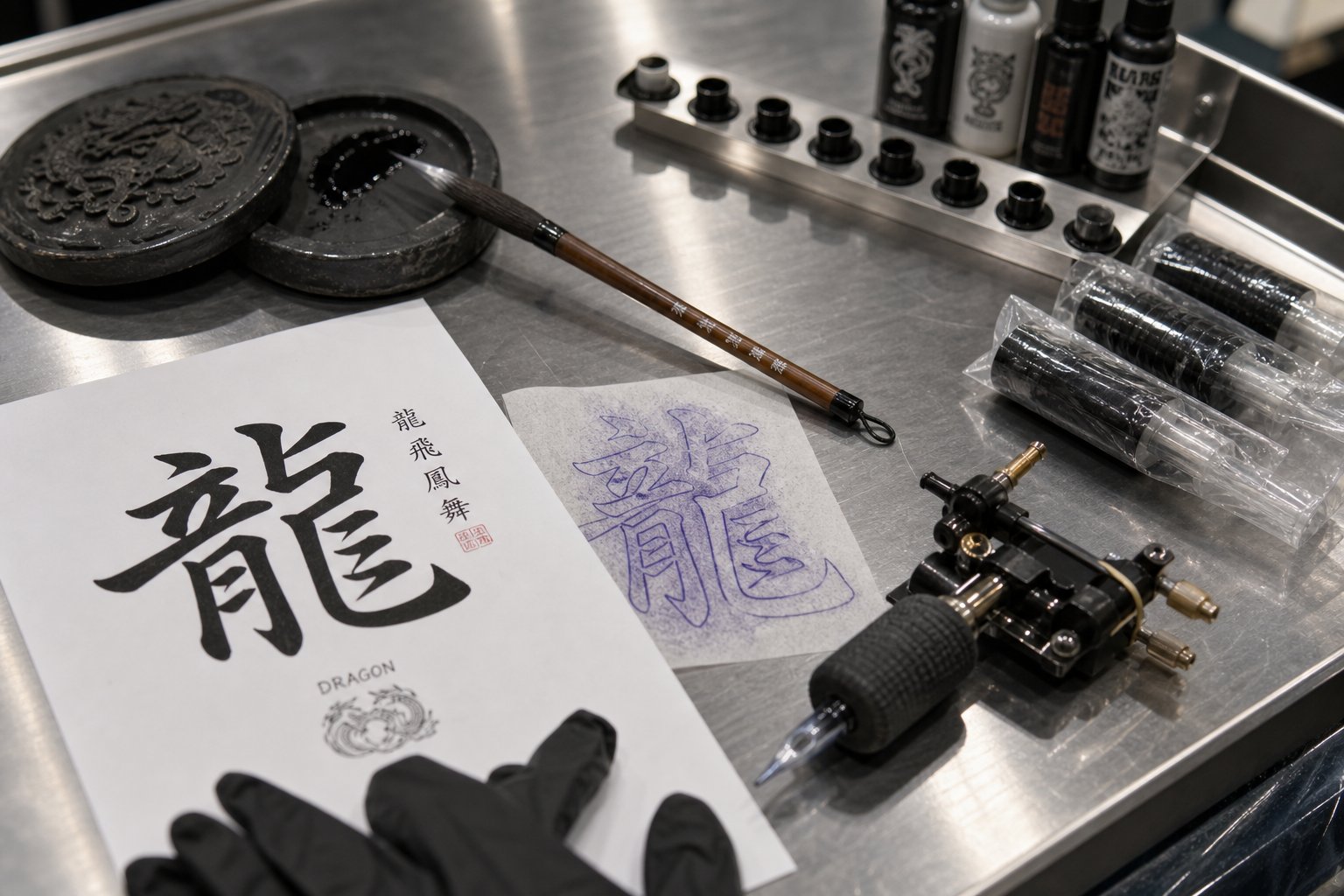
- Print your reference at the exact intended tattoo size. Bring a high-resolution printout to your appointment. Do not show your artist a tiny image on a phone screen and expect them to scale it up perfectly. Print it at the size you want it on your body so both you and the artist can evaluate whether the strokes remain legible at that scale.
- Verify your artist's experience with character work. Ask to see their portfolio of previous Chinese or Japanese character tattoos. Look for clean, consistent stroke widths, correct proportions, and sharp endpoints. If their portfolio shows no character work, or if previous examples show wobbly lines and uneven spacing, find a different artist. This is not the time to be someone's learning experience.
- Do a final side-by-side check with the stencil on skin. Before the needle touches you, compare the stencil transfer on your skin against your printed reference. Check stroke count, radical placement, and overall proportions. Have your native-speaker contact available by phone for a last-minute photo verification if needed.
This process might feel excessive. It is not. The internet is full of people who skipped one step and ended up with "beef noodle soup," "cute little princess," or "child changing station" permanently on their bodies. Every single one of those people thought they had done enough research.
Communicating with Your Tattoo Artist
Even a talented artist can produce a flawed chinese character tattoo and meaning mismatch if communication breaks down. Here is what to bring and how to frame the conversation:
- Bring a printed calligraphy reference, not a screenshot. High-resolution, printed at actual tattoo size, on clean white paper. Label it with the meaning, pinyin, and stroke count so the artist has context.
- Explain that stroke order affects visual authenticity. In Chinese calligraphy, the sequence in which strokes are drawn affects the natural flow of ink, where thick meets thin, where connections form. An artist who traces the character in random order may produce technically correct strokes that lack the organic rhythm a native reader expects. If your artist is unfamiliar with stroke order, provide a numbered diagram or a video reference showing the correct sequence.
- Discuss line weight variation. Chinese calligraphy naturally varies between thick and thin within a single stroke. A tattoo rendered in uniform line weight looks mechanical. Ask your artist whether they are comfortable with pressure variation that mimics brush behavior. If not, kaishu (regular script) with consistent line weight is the safest fallback.
- Agree on size before style. Confirm the minimum size needed for your character's stroke count. If you want a 16-stroke character at 1.5 inches, a good artist will tell you it will not age well. Listen to that advice. Legibility in 10 years matters more than placement preference today.
- Request a test draw on paper first. Before stenciling, ask the artist to freehand the character on paper so you can evaluate their comfort level with the strokes. This low-stakes step reveals whether they can handle the character confidently or are struggling with unfamiliar forms.
The goal of this entire process is simple: ensure that the tattoo chinese symbols and meanings you researched so carefully survive the translation from screen to skin without losing accuracy, beauty, or cultural integrity. A well-verified character tattoo is not just ink. It is proof that you respected the language enough to get it right.
With your character verified and your artist prepared, the final step is the most personal one: matching everything you have learned to your own story, your body, and the meaning you want to carry forward.
How to Choose Your Perfect Chinese Character Tattoo
You have the characters. You have the styles. You have the verification process. The question left is the most personal one: which chinese character tattoo actually belongs on your body? That answer lives at the intersection of what the character means, what your story demands, and what your skin can physically support.
Matching Characters to Your Personal Story
Rather than scrolling through endless chinese character tattoo ideas hoping something clicks, start from your intention and work backward:
- If your story is about love, connection, or devotion: 愛 (love), 緣 (fate/destined connection), or the pair 永愛 (eternal love). These carry emotional weight without sentimentality.
- If your story is about overcoming hardship or building resilience: 忍 (endurance), 勇 (courage), or 力 (strength). The blade-over-heart imagery of 忍 resonates especially with people who have survived something that tested them deeply.
- If you want visual drama and mythological power: 龍 (dragon), 虎 (tiger), or 鳳 (phoenix). These demand larger canvas areas but deliver presence that simpler characters cannot match.
- If your path is spiritual or philosophical: 道 (the way), 禪 (zen), or 和 (harmony). These meaningful chinese tattoo ideas connect to living traditions of meditation, martial arts, and mindful practice.
- If you want something compact and versatile: 永 (eternity) at 5 strokes or 力 (strength) at 2 strokes give you placement freedom without sacrificing depth of meaning.
The meaning of chinese tattoos is not just what the dictionary says. It is what the character means to you, filtered through the cultural weight it has carried for centuries. The strongest choices are ones where your personal story and the character's history reinforce each other.
Final Steps Before Getting Inked
Once you have narrowed your shortlist, this action checklist walks you from decision to appointment:
- Define your personal meaning clearly. Write one sentence about why this character matters to you. If you cannot articulate it, keep searching. A tattoo you cannot explain to yourself will not satisfy you in ten years.
- Select your calligraphy style. Match the visual energy to your intention. Kaishu for clarity and precision. Xingshu for artistic flow. Caoshu for dramatic abstraction. Let the style amplify the meaning rather than contradict it.
- Choose placement based on stroke complexity. Characters under 8 strokes work at 1 to 1.5 inches on wrists, ankles, or behind the ear. Characters above 12 strokes need 2.5 inches or more on forearms, ribs, or the back. Do not fight this constraint. It exists to protect your tattoo's legibility over decades.
- Find an artist experienced with chinese tattoo characters. Review their portfolio for previous character work. Look for consistent stroke widths, correct proportions, and confident line endings. Ask to see healed photos, not just fresh ones.
- Complete the full verification process. Three dictionaries. Two native speakers. A calligrapher's hand-drawn reference. A printed reference at actual size. A final stencil check on skin before the needle starts. No shortcuts.
- Discuss aftercare expectations with your artist. Character tattoos rely on precise, fine lines that must heal cleanly to remain legible. Any blurring, spreading, or patchy healing compromises the structural integrity of the strokes.
Aftercare for Character Tattoos
Chinese character tattoos share the same healing sensitivities as fine line tattoos. The thin, precise strokes that give chinese symbols for tattoos their elegance are also the most vulnerable to healing complications. A few key considerations:
- Keep the tattoo clean and lightly moisturized. Wash gently twice daily with fragrance-free soap and apply a thin layer of unscented lotion after the first few days. Over-moisturizing can slow healing and blur delicate lines.
- Avoid friction during healing. Clothing that rubs against the tattoo can distort fine strokes during the critical first two weeks. Choose placements and clothing that let the tattoo breathe.
- Protect from sun exposure permanently. UV light is the leading cause of tattoo fading, and thin character strokes fade faster than bold traditional work. Apply SPF 30 or higher whenever the tattoo is exposed to sunlight, even after full healing.
- Allow six to eight weeks for complete healing. The surface may look healed within two weeks, but deeper skin layers continue recovering for up to two months. Avoid swimming, heavy sweating on the area, and picking at any peeling skin during this period.
- Plan for potential touch-ups. Extremely fine strokes in complex characters (12+ strokes at smaller sizes) may need a touch-up session after healing to restore full clarity. This is normal and not a sign of artist error.
A well-chosen chinese tattoo design carries a lifetime of meaning when the research, execution, and aftercare all align. The characters in this guide have survived thousands of years of use because they express something true about the human experience: the need for love, the call to courage, the search for peace, the pull of fate. When you choose one of these chinese tattoo ideas with genuine understanding of what it says, how it is written, and where it comes from, you are not just getting ink. You are carrying forward a piece of living cultural heritage, verified, respected, and permanently yours.
Frequently Asked Questions About Chinese Character Tattoos
1. How do I make sure my Chinese character tattoo actually means what I think?
Use a multi-layer verification process: cross-reference the character in at least three independent dictionaries (MDBG, Pleco, and a physical dictionary), then show it to two or more native Chinese speakers without prompting them with your intended meaning. Commission a trained calligrapher to write it in your chosen style as a final accuracy check. Before the tattoo session, compare the stencil on your skin against your printed reference and confirm stroke count, radical placement, and proportions match exactly.
2. Should I choose traditional or simplified Chinese characters for a tattoo?
Traditional characters are almost always the stronger choice for tattoos. They carry the full visual complexity refined over millennia and are the same forms used in classical calligraphy and imperial documents. For example, the traditional form of love (愛) includes the heart radical (心) at its center, while the simplified version (爱) removes it entirely. Even in Mainland China, traditional characters are preferred for ceremonial and decorative purposes because they are considered more beautiful and culturally rich.
3. What is the minimum size for a Chinese character tattoo to remain legible?
Minimum size depends directly on stroke count. Characters with 2-5 strokes (like 力 or 永) can work at 0.75 to 1 inch. Characters with 6-11 strokes (like 忍, 和, or 勇) need at least 1.5 inches. Complex characters with 12-17 strokes (like 愛, 龍, or 禪) require 2.5 to 3 inches minimum. Going smaller than these thresholds causes fine strokes to blur together as ink naturally spreads beneath the skin over time, making the character unreadable within a few years.
4. Which Chinese calligraphy style is best for tattoos?
It depends on your priority. Kaishu (regular script) offers the highest readability and easiest verification, making it ideal for first-time character tattoos. Xingshu (running script) balances artistic flow with legibility and produces unique, hand-drawn results. Caoshu (grass script) creates dramatic abstract art but is often illegible even to native speakers. Lishu (clerical script) has an architectural, monumental quality, while Zhuanshu (seal script) looks ancient and mystical. Match the style to whether you prioritize public readability or personal artistic expression.
5. What are the most common Chinese character tattoo mistakes to avoid?
The biggest pitfalls include using look-alike characters that differ by one stroke but have completely different meanings, relying on Google Translate or single dictionary entries without native speaker verification, letting artists modify strokes for aesthetic reasons (which can change the meaning entirely), mixing simplified and traditional character forms in the same tattoo, and choosing characters with negative cultural connotations invisible to non-native speakers. Always complete a full verification process with multiple dictionaries and at least two native readers before your appointment.