What Makes Repeating Syllable Chinese Names Unique
When you first encounter a name like Fan Bingbing (范冰冰) or Gao Yuanyuan (高圆圆), something catches your ear. That rhythmic bounce, the echo of one syllable folding into itself, feels unlike anything in English or most European naming traditions. You're hearing a 叠字名 (diézi míng) in action, and it's one of the most distinctive features of Chinese naming culture.
Defining 叠字名 in the Chinese Naming System
So what exactly is a 叠字名? To define this vernacular naming convention simply: it's a given name formed by repeating a single Chinese character twice. The structure follows the standard Chinese name order, surname first, then the doubled character as the given name. Since the vast majority of Chinese surnames are one syllable (Wang, Li, Zhang), a 叠字名 creates a clean three-syllable rhythm: one beat for the family name, two identical beats for the given name.
A 叠字名 (diézi míng) is a Chinese given name created by doubling a single character, producing a rhythmic AB-B pattern when paired with a one-syllable surname, such as 范冰冰 (Fan Bingbing) where 冰 (bīng, meaning "ice") is repeated.
This naming style sits within a broader system where contemporary Chinese names typically consist of a surname (姓) followed by a given name (名). The surname is inherited, usually from the father, and rarely exceeds one syllable. The given name is where parents exercise creative freedom, and choosing to repeat a character is one deliberate path among many.
How Repeating Syllable Names Differ From Standard Two-Character Names
Most Chinese given names use two different characters, each carrying its own meaning. Imagine a name like Wang Xiaoming (王小明), where 小 (small) and 明 (bright) combine to suggest something like "a dawning light." Parents carefully pair characters with complementary meanings, balancing tonal variety and semantic depth.
A 叠字名 takes a completely different approach. Instead of weaving two meanings together, it doubles down on one. The repetition isn't accidental or lazy. It's a deliberate choice that trades semantic complexity for rhythmic warmth and emotional immediacy. When someone hears the same syllable twice in quick succession, it registers differently in the brain. It feels softer, more intimate, almost musical.
For people encountering Mandarin Chinese for the first time, especially those coming from English, these names can be puzzling. Why repeat? Is it a nickname? A typo in the system? The answer is neither. It's a fully intentional naming tradition with deep roots in how the Chinese language handles sound, meaning, and emotion simultaneously.
That interplay between sound and feeling isn't random. It draws on specific phonological mechanics built into Mandarin itself, where repetition carries grammatical and emotional weight far beyond what most Western languages allow.
The Linguistic Mechanics of Chinese Name Reduplication
Repetition in Mandarin isn't just a naming quirk. It's a deeply embedded grammatical tool that shapes how speakers express everything from politeness to intensity. When parents choose a repeating syllable name for their child, they're tapping into a linguistic mechanism that native speakers encounter dozens of times daily, often without thinking about it. Understanding how reduplication works across the language reveals why these names feel so natural to Chinese ears and so intriguing to everyone else.
Reduplication as a Linguistic Process in Mandarin
Imagine you want to soften a request in English. You might add "just" or "maybe" before a verb. In Mandarin, you can achieve the same effect simply by repeating the verb itself. The sentence 我试试看 (Wo shishi kan) means "let me give it a go," where doubling 试 (shi, to try) into 试试 conveys politeness and tentativeness without any extra words. This is the AA reduplication pattern, and it's one of the most common structures in spoken Mandarin.
The system extends well beyond verbs. Adjectives reduplicate to express warmth or emphasis: 小 (xiao, small) becomes 小小的 (xiaoxiao de, small and cute), adding an affectionate quality that the single character lacks. Nouns reduplicate to signal universality: 天 (tian, day) becomes 天天 (tiantian, every day). Even two-syllable adjectives follow their own pattern, with each character doubling individually in the AABB form. The word 漂亮 (piaoliang, pretty) transforms into 漂漂亮亮 (piaopiao liangliang, very pretty), intensifying the meaning while adding a rhythmic, almost musical quality.
This isn't unique to Mandarin. Reduplication functions as a productive morphological device across hundreds of the world's languages. Research documented in the World Atlas of Language Structures shows that 278 of 368 surveyed languages employ both full and partial reduplication productively. Languages like Malayalam, Tagalog, and many Austronesian languages use reduplication for plurals, aspect marking, and intensity. What makes Mandarin distinctive is how thoroughly reduplication permeates everyday speech and how directly it connects to emotional register. The same cognitive pattern that makes 看看 (kankan, to have a quick look) feel casual and friendly is the pattern that makes a name like 圆圆 (Yuanyuan) feel warm and approachable.
The key insight is this: when Chinese speakers hear a doubled syllable in a name, their brains don't process it in isolation. They process it against a lifetime of encountering reduplication as a marker of softness, intimacy, and affection. The name inherits all those associations pellmell, bundled together in two quick beats.
Which Syllable Structures Work Best for Repeated Names
Not every Chinese character sounds good when doubled. You'll notice that certain syllables lend themselves beautifully to repetition while others feel clunky or awkward. This isn't arbitrary. It follows the phonotactic constraints built into Mandarin's syllable structure.
A Mandarin syllable consists of an optional initial consonant, a final (which includes vowels and sometimes a nasal ending), and a tone. The phonotactic rules governing which initials can combine with which finals already limit the possible syllables in the language. When you double a syllable for a name, additional aesthetic constraints come into play:
- Open syllables dominate. Characters ending in a pure vowel sound (like 冰 bing, 圆 yuan, or 婷 ting) tend to flow more smoothly when repeated. The lack of a hard stop at the end allows one syllable to glide into its twin.
- Certain tone combinations feel more natural. First-tone characters (high and level) create a floating, serene quality when doubled. Fourth-tone characters (sharp and falling) can sound assertive. Third-tone pairs trigger tone sandhi, where the first syllable shifts upward, creating a rising-then-dipping contour that adds melodic interest.
- Syllables with diphthongs or compound vowels add richness. A character like 圆 (yuan), which contains the gliding vowel combination u-a-n, produces a fuller sound when repeated compared to a simple single-vowel syllable.
- Semantic weight matters. Parents gravitate toward characters with positive, evocative meanings: 冰 (ice, purity), 莹 (sparkle), 圆 (round, completeness). The doubling amplifies the meaning, so the character needs to carry a concept worth emphasizing.
Characters with harsh consonant clusters or abrupt endings tend to be avoided. A syllable like 则 (ze) or 克 (ke) rarely appears in doubled names because the repetition feels percussive rather than melodic. The vernacular instinct here is toward flow, not staccato.
For non-native speakers trying to understand these sound patterns, IPA (International Phonetic Alphabet) transcription offers a useful lens. The IPA meaning in this context is precise: it provides an exact notation of how each sound is produced, independent of the romanization system. Where pinyin might obscure the actual vowel quality of a syllable, IPA reveals whether you're dealing with a monophthong, a diphthong, or a more complex glide, all of which affect how pleasant a doubled syllable sounds to the ear.
The result of all these constraints is a self-selecting pool of characters that work well as repeating syllable names. They tend to be melodic, semantically positive, and phonologically smooth. This isn't a conscious checklist parents consult. It's an intuitive sense, shaped by the same phonological awareness that tells any native speaker which words "sound right" in their language. The mechanics are invisible, but the effect is unmistakable: a name that feels like it was always meant to echo.
These phonological preferences don't exist in a vacuum, though. The reason parents reach for that softness, that melodic intimacy, connects to something deeper than sound alone. It ties into how human beings universally respond to repeated sounds and what Chinese culture specifically encodes in the choice to double a name.
Cultural and Emotional Reasons Behind the Naming Tradition
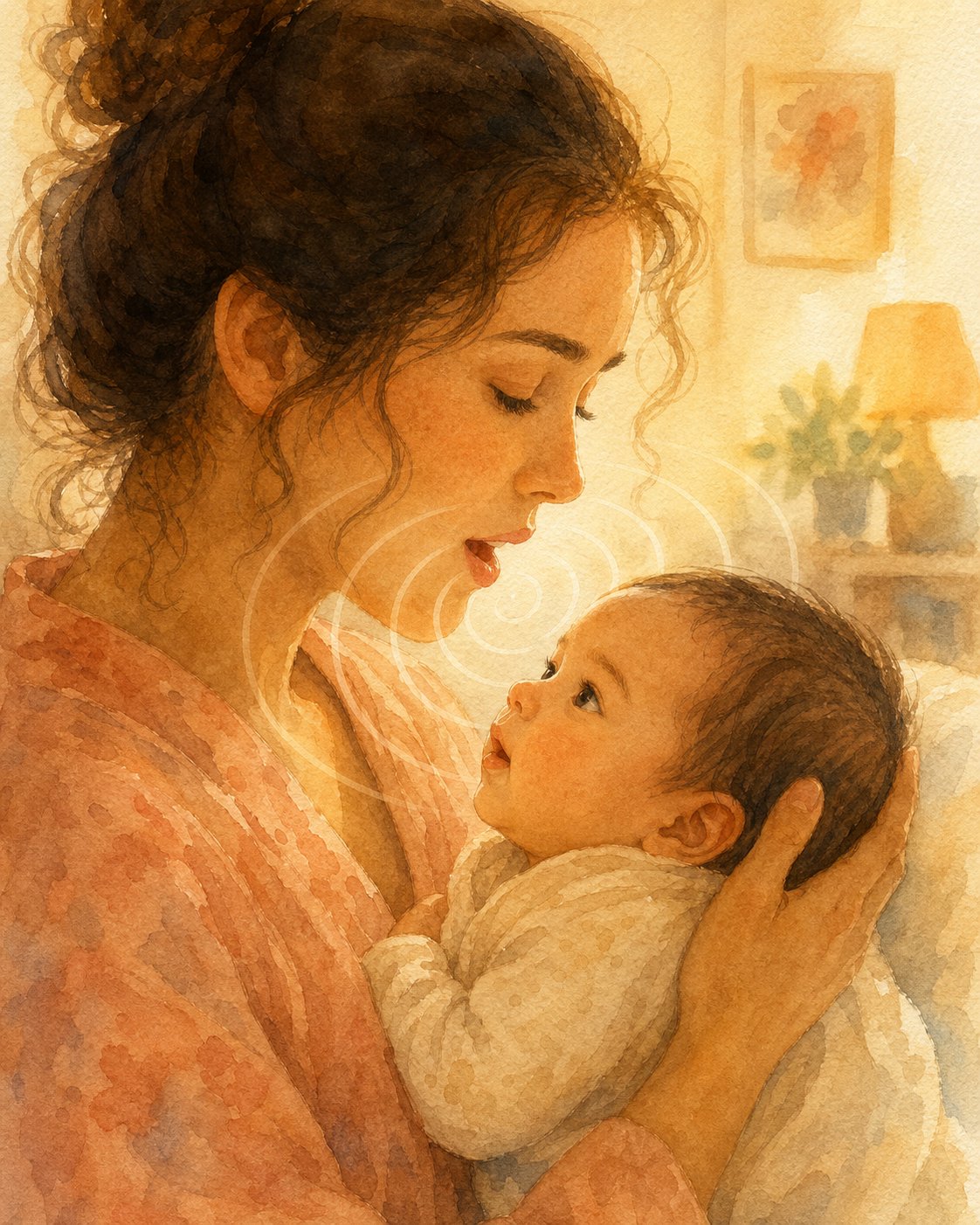
Think about how you instinctively talk to a baby. Your voice rises, your words simplify, and you repeat sounds: "mama," "dada," "bye-bye." This isn't learned behavior you picked up from a parenting book. It's hardwired. And it's precisely this deep-rooted human instinct that makes repeating syllables Chinese names feel so emotionally charged, not just to Chinese speakers, but to anyone who hears them.
The Psychology of Repetition and Affection
Cross-linguistic research consistently shows that sound repetition triggers nurturing responses in adults and preference responses in infants. A Stanford-led study testing 2,329 babies across 16 countries found that infants universally prefer the sing-songy, repetitive patterns of baby talk over normal adult speech. As psychologist Michael Frank noted, baby talk "tells them, 'This speech is meant for you.'" The melodic repetition signals safety, intimacy, and direct attention.
This preference isn't a one-way street. Parents instinctively use reduplication when addressing infants because repeated syllables are easier for developing brains to process and because the act of repeating a sound physically softens the speaker's vocal tone. You can't say "baobao" (宝宝, baby) in Mandarin with a harsh edge. The repetition forces gentleness into the delivery.
Here's where naming comes in. When parents give a child a 叠字名, they're encoding that same nurturing signal directly into the child's identity. Every time someone calls out "Yuanyuan" or "Tingting," the sound pattern activates the same cognitive pathway associated with affection and closeness. The name doesn't just identify the person. It carries an emotional instruction: approach with warmth.
This mechanism operates below conscious awareness. Native speakers don't analyze why a doubled name feels approachable. They simply feel it, the same way English speakers feel that "Teddy" sounds softer than "Theodore" without needing a linguistics degree to explain why diminutives signal familiarity.
Cultural Values Encoded in the Naming Choice
In Chinese families, choosing a 叠字名 over a standard two-character name is never accidental. It represents a deliberate curation of how the child will be perceived and addressed throughout life. The choice signals specific values the family wants to project:
- Intimacy over formality. A doubled name invites closeness. It tells the world that this family prioritizes warmth and emotional connection over social distance.
- Approachability as aspiration. Parents who choose these names hopefully envision their child moving through the world with ease, drawing people in rather than holding them at arm's length.
- Preserved innocence. The childlike quality of reduplication carries forward into adulthood, maintaining a thread of youthful softness regardless of the person's age or professional standing.
This stands in sharp contrast to the more formal naming tradition in Chinese culture, where parents select characters drawn from classical poetry, Confucian texts, or philosophical concepts. A name like 志远 (Zhiyuan, "far-reaching ambition") or 博文 (Bowen, "broad learning") projects scholarly gravitas and high aspiration. These names are designed to inspire the child toward achievement. They carry weight.
A 叠字名 carries something different. It doesn't assuage parental anxiety about a child's future success through an ambitious name. Instead, it prioritizes emotional texture over intellectual signaling. It says: we want this child to be loved easily, to feel familiar to others, to move through relationships with natural grace.
This doesn't mean parents who choose doubled names care less about their child's future. It means they're encoding a different theory of success, one where being approachable and emotionally resonant matters as much as projecting authority. In a culture where naming is understood as shaping destiny, this is a meaningful philosophical choice made at birth.
The emotional warmth embedded in these names raises an interesting question, though. If reduplication signals softness and approachability, does that mean these names carry gendered expectations? The answer, as it turns out, reveals a great deal about how Chinese society maps sound onto identity.
Gender Patterns and Social Expectations
The short answer is yes, and the pattern is striking. In contemporary Chinese society, repeating syllable names skew overwhelmingly female. Walk into any classroom, office, or social gathering in China and you'll notice that the doubled names you hear, Tingting, Yuanyuan, Lingling, almost always belong to women. This isn't coincidence. It reflects deeply embedded cultural assumptions about how femininity should sound.
Why Repeating Syllable Names Are More Common for Women
The connection between sound repetition and femininity runs through multiple layers of Chinese culture. Remember that reduplication signals softness, intimacy, and approachability. In a society where traditional feminine ideals emphasize gentleness (温柔, wenrou), grace (优雅, youya), and a certain lowkeyness in demeanor, a doubled name becomes a phonetic shorthand for these qualities. The name doesn't just identify a woman. It performs femininity every time it's spoken aloud.
This mirrors a broader linguistic pattern. Diminutive forms across many languages tend to be associated with women and children. Think of how English nicknames ending in "-ie" or "-y" (Susie, Becky, Maggie) skew female, or how the color rosa, pink in Spanish language, carries feminine connotations that shape everything from product naming to personal identity. The mechanism is similar in Chinese: sounds perceived as small, soft, or playful get culturally coded as feminine, and reduplication is the ultimate softening device in Mandarin phonology.
Male names, by contrast, tend to favor single strong characters that project ambition, strength, or moral weight. A name like 伟 (Wei, great), 刚 (Gang, steel), or 志 (Zhi, will) stands alone, one decisive syllable that doesn't echo or linger. The vernacular meaning embedded in these naming choices is clear: men should sound solid and singular, women should sound melodic and approachable. The doubled syllable, with its inherent gentleness, gets reserved primarily for daughters.
Research supports this intuition quantitatively. A large-scale dataset of over 30 million Chinese names published in Scientific Data found that female name coverage is consistently different from male name coverage in terms of character distribution, with certain characters appearing almost exclusively in women's names. The study also noted that gender-neutral names represent only about 4.82% of Chinese character names in their corpus, confirming that most names, including doubled ones, carry strong gender signals.
Gender-Associated Characters and Evolving Norms
Certain characters have become so strongly associated with female 叠字名 that hearing them doubled immediately signals a woman's name to any native speaker. Others, far rarer, appear in male doubled names. Here's how the landscape breaks down:
Characters commonly doubled for female names:
- 婷婷 (Tingting) - 婷 means graceful, elegant; contains the female radical 女
- 莹莹 (Yingying) - 莹 means sparkling, lustrous; associated with jade-like clarity
- 丹丹 (Dandan) - 丹 means vermillion, cinnabar; suggests rosy beauty
- 圆圆 (Yuanyuan) - 圆 means round, complete; conveys wholeness and harmony
- 娜娜 (Nana) - 娜 means graceful; carries the female radical 女 explicitly
- 莉莉 (Lili) - 莉 means jasmine; features the flower radical 艹
- 芳芳 (Fangfang) - 芳 means fragrant; also carries the flower radical
Characters occasionally doubled for male names:
- 明明 (Mingming) - 明 means bright, clear; gender-neutral leaning male
- 亮亮 (Liangliang) - 亮 means brilliant, luminous; suggests openness
- 磊磊 (Leilei) - 磊 means stacked rocks; implies upright character
- 军军 (Junjun) - 军 means army, military; one of few overtly masculine doubled names
- 强强 (Qiangqiang) - 强 means strong; direct assertion of power
You'll notice a pattern immediately. The female-associated characters cluster around beauty, flowers, grace, and luminosity. Many contain either the female radical 女 or the flower radical 艹, visual markers that reinforce the gender coding even in written form. The male examples, meanwhile, tend toward abstract qualities like brightness or strength, and they appear far less frequently in practice. A man named 军军 exists, but he's the exception that proves the rule.
This gendered distribution isn't static, though. Younger generations of Chinese parents are beginning to push against these conventions. Some choose characters that resist easy gender categorization when doubled: 安安 (An'an, peaceful), 乐乐 (Lele, joyful), or 晨晨 (Chenchen, morning). These names retain the warmth and rhythm of reduplication without anchoring the child to traditionally feminine or masculine associations. It's a subtle shift, not a revolution, but it reflects broader changes in how Chinese families think about gender identity and the expectations they want to encode, or deliberately leave open, in a child's name.
The gender dimension also intersects with how these names function in public life. When a woman with a doubled name enters a professional setting, her name's built-in softness can work for or against her, depending on context. Some women find that their 叠字名 makes them instantly memorable and approachable. Others feel it undermines perceptions of authority. This tension becomes especially visible when you look at public figures who carry these names into high-profile careers, where the sweetness of the sound meets the demands of professional branding.
Notable Public Figures With Repeating Syllable Names
Theory only takes you so far. To really hear how these names work in the real world, you need faces and careers attached to the sounds. Repeating syllable names show up across Chinese entertainment, art, sports, and public life, carried by figures whose fame has pushed these rhythmic names into global recognition. Once you start noticing them, they reach and reach into every corner of Chinese pop culture.
Celebrities and Public Figures With 叠字名
The following table collects some of the most recognizable figures whose names follow the doubled-character pattern. You'll find both Mandarin and Cantonese speakers here, demonstrating that this naming tradition crosses dialect boundaries and regional lines.
| Chinese Name | Pinyin | English Context | Field | Meaning of Repeated Character |
|---|---|---|---|---|
| 范冰冰 | Fan Bingbing | Fan Bingbing | Film & Fashion | 冰 (bing) = ice, purity |
| 李冰冰 | Li Bingbing | Li Bingbing | Film | 冰 (bing) = ice, purity |
| 高圆圆 | Gao Yuanyuan | Gao Yuanyuan | Film & Television | 圆 (yuan) = round, completeness |
| 郎朗 | Lang Lang | Lang Lang | Classical Music | 朗 (lang) = bright, clear |
| 艾未未 | Ai Weiwei | Ai Weiwei | Contemporary Art | 未 (wei) = not yet (philosophical) |
| 范玮琪 | Fan Weiqí | Christine Fan | Pop Music (Taiwan) | N/A (standard name for contrast) |
| 刘诗诗 | Liu Shishi | Liu Shishi | Television Drama | 诗 (shi) = poetry |
| 李玟玟 | Li Wenwen | Li Wenwen | Olympic Weightlifting | 雯 (wen) = patterned clouds |
| 蔡依依 | Cai Yiyi | — | Media | 依 (yi) = to rely on, gentle |
| 陈冠冠 | Chen Guanguan | — | Sports | 冠 (guan) = champion, crown |
A few names on this list deserve special attention. Lang Lang (郎朗), the globally celebrated pianist, carries a doubled name that has become synonymous with virtuosity in classical music. His name's bright, open syllables mirror the clarity of his playing style. Ai Weiwei (艾未未), the sculptor and activist, wears a name whose repeated character 未 (not yet) carries philosophical weight, an unusual choice that suits an artist whose work constantly questions what hasn't been said or done.
Fan Bingbing (范冰冰) and Li Bingbing (李冰冰) share the same doubled character but belong to entirely different families, a reminder that the pool of aesthetically pleasing characters for reduplication is relatively small. Both women built careers in film, and both names evoke crystalline purity through the character 冰 (ice). The coincidence highlights how certain characters become magnets for this naming pattern, appearing again and again like a recurring note in a musical quaver across generations.
What These Names Reveal About Public Persona
Here's where it gets interesting. Does carrying a repeating syllable name actually shape how the public perceives a celebrity? The evidence suggests it does, though not always in the ways you'd expect.
Consider the branding advantage first. A doubled name is inherently more memorable than a standard two-character name. The repetition creates a rhythmic hook, something that sticks in the ear the way a catchy chorus does. You hear "Bingbing" once and it lodges in memory. This matters enormously in entertainment industries where name recognition drives careers. The name functions almost like a sonic logo, compact, distinctive, and instantly recallable.
The rhythm also creates a sense of familiarity before you've ever met the person. Fan Bingbing's name sounds approachable, almost playful, even though her public image is anything but casual. She's known for commanding red carpets and wielding significant industry power. The contrast between the softness of her name and the sharpness of her professional presence creates a compelling tension, a kind of vamp that keeps public attention oscillating between warmth and authority.
Lang Lang presents a different case. His doubled name carries brightness and openness (朗 means clear and bright), which aligns perfectly with his exuberant performance style. There's no tension between name and persona here. Instead, the name amplifies the brand. When concert halls announce "Lang Lang," the repetition itself sounds like applause, two quick beats of enthusiasm that match his stage energy.
Ai Weiwei leverages his name differently still. The philosophical ambiguity of 未 (not yet), doubled into a kind of recursive questioning, mirrors his artistic practice of challenging assumptions. His name doesn't signal softness or approachability. It signals intellectual restlessness, proof that not all doubled names carry the same emotional register.
What unites these figures is that their names are impossible to forget. In an industry where thousands compete for attention, a repeating syllable name cuts through noise the way a repeated musical phrase cuts through a complex arrangement. It's the fungi fungi fungi principle of pattern recognition: the brain latches onto repetition because repetition signals importance.
This memorability comes with a trade-off, though. Some professionals with doubled names report that colleagues initially underestimate their authority, hearing the childlike rhythm before they see the person's credentials. The name's built-in warmth can read as a lack of seriousness in formal contexts, particularly for women navigating male-dominated industries. It's a tension that plays out differently depending on region, generation, and professional field.
That regional dimension matters more than most people realize. The way a doubled name sounds and lands depends heavily on whether it's being spoken in Mandarin, Cantonese, or another Chinese dialect, and the tonal rules governing pronunciation shift dramatically between these systems.

Tone Sandhi and Pronunciation Patterns
Saying the same syllable twice sounds simple enough, right? In English, repeating a sound is just that: repetition. In Mandarin, it's a different story entirely. When you double a character in a name, the tones of those two identical syllables don't always stay identical in speech. The rules governing how tones shift in sequence, called tone sandhi, turn these names into something far more phonetically complex than they appear on paper. For learners who already consider Mandarin one of the tough languages to learn, this adds another layer of challenge.
How Tone Sandhi Applies to Repeated Characters
The most important sandhi rule for doubled names involves the third tone. In Mandarin, when two consecutive third tones appear, the first syllable shifts upward and is pronounced as a second tone (rising). This means a name written as two identical third-tone characters doesn't actually sound like two identical syllables when spoken aloud.
Take a hypothetical name using the character 美 (mei, beautiful), which carries a third tone. Written in pinyin, the name reads Meimei (měiměi). But in natural speech, it sounds like méiměi, the first syllable rising where the second one dips. The written tone marks stay the same, yet the spoken reality diverges. Native speakers make this adjustment automatically, the same way English speakers naturally stress certain syllables without thinking about it.
Names built from first-tone characters (like 冰冰, Bingbing) don't trigger sandhi. Both syllables stay high and level, creating that floating, serene quality. Fourth-tone pairs (like a hypothetical 慧慧, Huihui) produce two sharp falling sounds in sequence, giving the name a more decisive, punchy rhythm. The tone of the repeated character fundamentally shapes the name's personality.
In casual speech, some speakers soften the second syllable of a doubled name into a neutral tone, making it shorter and lighter. This is especially common among family members and close friends. So 丹丹 (Dandan) might sound closer to "Dan-dan" with the second syllable losing its full tonal weight, much like how English speakers swallow the second syllable of "mama" in relaxed conversation.
Pronunciation Guidance for Non-Native Speakers
For anyone learning Mandarin, these names can function like tongue twisters. You're producing the same mouth shape twice while potentially shifting pitch between repetitions. It's the kind of challenge that trips up learners in the same way quinoa pronunciation stumps English speakers encountering an unfamiliar phonetic pattern. The sounds look deceptively simple, but the execution requires precision.
So what does IPA stand for in this context, and why does it help? The International Phonetic Alphabet provides exact notation for each sound's production, independent of pinyin's romanization conventions. Where pinyin marks tone with diacritics above vowels, IPA uses superscript numbers or contour lines to show the precise pitch movement. For a name like 婷婷 (Tingting, first tone), IPA would indicate the high-level contour [55] on both syllables, confirming that no shift occurs. For a third-tone pair, it would show the first syllable rising [35] while the second follows the full dipping contour [214].
Here's a practical approach to getting these names right:
- Identify the tone of the repeated character using a dictionary or pinyin chart. This determines whether sandhi applies.
- If both syllables carry a third tone, pronounce the first as a rising second tone and the second with the full falling-rising dip.
- For first-tone or fourth-tone pairs, keep both syllables consistent. No sandhi shift is needed.
- Listen to a native speaker say the name at natural speed. Pay attention to whether the second syllable gets shortened or lightened in casual delivery.
- Practice the name in a full sentence rather than in isolation. Tones behave differently in connected speech, and names are rarely spoken alone.
The good news: once you internalize the third-tone sandhi rule, it applies universally across Mandarin, not just to names. Every time you encounter two third tones in sequence, whether in 你好 (nihao, hello) or a doubled name, the same shift kicks in. Master it once and it unlocks pronunciation accuracy across the entire language.
Tonal patterns aren't fixed across time, though. The way these names sound, and how often they appear, has shifted considerably across Chinese generations and regions, shaped by cultural forces that go far beyond phonology.
How Popularity Has Shifted Across Generations and Regions
Naming trends in China don't drift slowly. They surge and recede in waves, shaped by political upheaval, economic transformation, and pop culture influence. Repeating syllable names are no exception. Their popularity has spiked, plateaued, and evolved across decades, and the forces behind those shifts tell a broader story about how Chinese society relates to identity, individuality, and emotional expression.
Generational Waves in 叠字名 Popularity
If you trace Chinese naming conventions decade by decade, you'll find that doubled names barely registered before the late 1970s. Earlier generations were busy encoding political loyalty into their children's identities. The 1950s produced waves of names like 建国 (Jianguo, "build the country") and 卫国 (Weiguo, "guard the country"). The 1960s brought revolutionary fervor: characters like 红 (hong, red) and 兵 (bing, soldier) dominated, reflecting the Cultural Revolution's ideological grip. There was no room for softness or playfulness in those decades. A doubled name would have felt frivolous against the backdrop of political campaigns demanding seriousness from every citizen, including infants.
The late 1970s marked a pivot. After Reform and Opening Up, single-character given names became fashionable as families embraced a more concise, modern style. Then came the 1980s, and everything changed for 叠字名. Double-character names where the same character repeats twice surged in popularity, particularly for girls. Celebrities born in this era, like Fan Bingbing (1981) and Liu Shishi (1987), carry names that reflect the trend perfectly. The style was described at the time as lighthearted and "cute," a deliberate departure from the political weight that names had carried for decades.
What drove this shift? Several forces converged:
- The one-child policy's emotional concentration. Introduced in 1980, the policy meant most urban families had exactly one child to name. Research from LSE shows that only children grew up with "exceptionally high levels of parental investment," and that dynamic extended to naming. With one shot at choosing a name, parents poured more emotional weight into the decision. A doubled name, with its built-in warmth and intimacy, became a way to express the concentrated affection directed at a single child.
- Pop culture amplification. As television and film industries expanded through the 1980s and 1990s, actresses and singers with 叠字名 became household names. Their fame normalized the style and made it aspirational. Parents who admired a celebrity's image sometimes chose similar naming patterns for their own daughters.
- Retreat from political naming. After decades of names that served the state, families reclaimed naming as a personal, emotional act. The doubled name represented the opposite of ideological sloganeering. It was intimate, family-facing, and deliberately apolitical.
The post-1990s generation brought a counter-trend. As individualism grew and competition intensified, many parents swung toward uniqueness. Some selected rare characters specifically to avoid duplication with classmates. Others created four-character names combining both parents' surnames. A member of the pop group TF Boys, Yi Yangqianxi (易烊千玺), exemplifies this shift toward complexity and distinctiveness. His four-character name is so unusual that many people can't read it correctly on first encounter.
Does this mean doubled names are fading? Not exactly. They remain common, but they've lost their dominance among post-00s children. The trend now leans toward names that balance emotional warmth with semantic originality, two distinct characters that still sound melodic but offer more individual meaning. The doubled name hasn't disappeared. It's simply sharing space with more diverse naming strategies in a culture that increasingly values standing out over fitting in.
Regional and Dialectal Naming Preferences
China isn't one linguistic community. It's dozens, and the way a doubled name sounds depends enormously on which dialect is doing the speaking. A name that flows beautifully in Mandarin might land differently in Cantonese, Hokkien, or Shanghainese, because each system has its own tonal inventory, syllable structure, and phonological constraints.
Cantonese and Mandarin represent the starkest contrast. Cantonese operates with six to nine tones (depending on how you count checked tones), compared to Mandarin's four plus neutral. This expanded tonal palette means a doubled character in Cantonese produces different melodic contours than the same character in Mandarin. Some characters that sound smooth when repeated in Mandarin become tonally awkward in Cantonese, and vice versa. Cantonese-speaking families in Guangdong and Hong Kong still use doubled names, but the character selection often differs from northern preferences because the phonological "fit" is evaluated against a different sound system.
Southern Chinese naming conventions also tend toward slightly more formal registers in official names, with doubled forms reserved more often for childhood nicknames (小名, xiaoming) rather than legal given names. A child in Guangzhou might be called 莹莹 at home but carry a different two-character name on official documents. In northern China, particularly in Mandarin-dominant regions, the doubled name is more likely to be the legal name itself, appearing on ID cards and passports without any sense of informality.
Think of it like how regional accent differences shape naming elsewhere. In English-speaking cultures, a name that sounds elegant in a British Received Pronunciation accent might carry different associations in an American Southern drawl. The transatlantic accent of old Hollywood created its own naming aesthetic, favoring certain vowel sounds that projected sophistication on screen. Similarly, the mid-Atlantic accent that blended British and American phonology influenced how names "performed" in public contexts. Chinese dialects create analogous effects: the same characters carry different social weight depending on the regional sound system pronouncing them.
There's also a generational-regional intersection worth noting. Urban families in first-tier cities like Beijing, Shanghai, and Shenzhen tend to follow national naming trends more closely, influenced by media and internet culture. Rural families and those in smaller cities often maintain more traditional regional preferences, including dialect-specific naming conventions that don't always align with Mandarin-centric trends. A family in rural Fujian might choose characters for doubling based on how they sound in Hokkien, producing names that Mandarin speakers would never select.
For diaspora communities, the picture gets more complex still. Chinese families abroad sometimes choose doubled names precisely because they're easier for non-Chinese speakers to remember and pronounce. The repetition acts as a mnemonic device in cross-cultural settings, similar to how someone unfamiliar with a language might latch onto a repeated sound pattern even when they can't parse individual meanings. It's the linguistic equivalent of a familiar melody in an otherwise foreign song. You might not understand the lyrics, but the chorus sticks. It's not quite "no sabo" territory, where heritage speakers lose fluency in their parents' language, but it reflects a similar negotiation between cultural preservation and practical adaptation.
These regional and generational patterns matter because they determine how a doubled name is received in different contexts. A name that signals warmth and modernity in Beijing might read as overly casual in a traditional Cantonese family. A name chosen for its Mandarin melody might lose its music entirely when pronounced in another dialect. The popularity of repeating syllable names isn't a single story. It's dozens of parallel stories, shaped by local phonology, regional culture, and the specific historical moment when a family sat down to choose what their child would be called for life.
All of these layers, generational, regional, dialectal, converge when a person carrying a doubled name steps outside the Chinese-speaking world. And that's where an entirely different set of challenges begins, ones that have less to do with culture and more to do with databases, forms, and the assumptions baked into Western systems.
Practical Challenges in Cross-Cultural Settings
A name that sounds musical in Mandarin can become a source of friction the moment it enters a Western database. Repeating syllable Chinese names collide with systems, assumptions, and social norms that were never designed to accommodate them. The problems are real, recurring, and surprisingly difficult to resolve, but they're not insurmountable once you understand where the friction points actually sit.
Common Problems in Western Systems and Forms
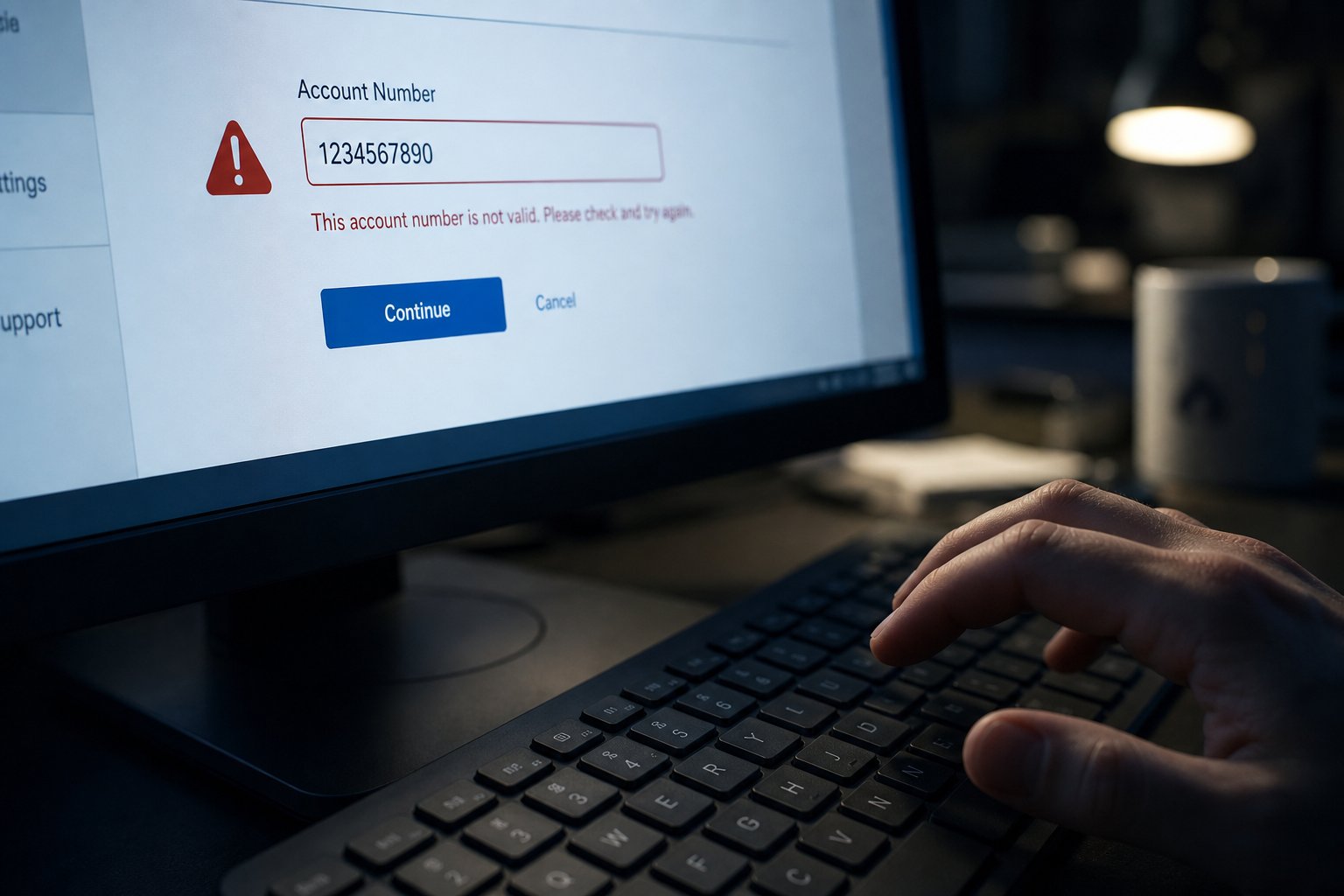
Imagine filling out an airline booking form and typing your legal given name: Bingbing. The system flags it. A pop-up asks you to correct the "duplicate entry." Or worse, it silently truncates your name to a single instance, issuing a boarding pass that reads "Fan Bing" instead of "Fan Bingbing." You now hold a ticket that doesn't match your passport, and you're about to have a conversation with airport security that no one enjoys.
This isn't hypothetical. Western databases routinely mishandle doubled names because their validation logic treats identical consecutive strings as errors. The same issue surfaces across multiple systems:
- Airline and travel bookings flag repeated syllables as typos, sometimes auto-correcting without notification. The mismatch between ticket and passport can cause boarding denials.
- Government and visa forms with character limits may truncate the name or split it incorrectly across given name and middle name fields.
- Banking and financial systems sometimes reject the name at account creation, interpreting the repetition as a data entry error. As documented in cross-system name mismatch cases, even within China, administrative databases lack unified verification, and manual data entry errors persist indefinitely because no cross-system check exists to catch them.
- University enrollment and HR platforms may split "Bingbing" into a first name and middle name, creating records that don't align with official documents.
- Email systems generate addresses like "bing.fan" instead of "bingbing.fan," erasing half the given name entirely.
The root cause is simple: most Western form validation was built with English-language naming conventions in mind. English names rarely repeat syllables in sequence, so duplicate-string detection gets baked into input validation as a "helpful" error check. For the millions of people whose legal names contain intentional repetition, this helpfulness becomes a barrier.
Practical workarounds for name-bearers dealing with these systems:
- When booking travel, always cross-check the confirmation against your passport. If the system truncated your name, call the airline directly to correct it before travel day.
- For forms that split names into multiple fields, try entering the full doubled name in the "given name" field with no space. If that fails, some people use a hyphen (Bing-Bing) as a workaround, though this introduces its own inconsistencies across records.
- Keep a screenshot or printout of your official name as it appears on your passport. When a system rejects your input, having documentation ready speeds up the manual override process.
- For banking, request written confirmation of exactly how your name was entered at account opening. A discrepancy caught early is far easier to fix than one discovered during a compliance review months later.
The pound key on your keyboard won't fix a systemic design flaw, and neither will any single workaround. These are infrastructure problems that require platform-level solutions. Until those arrive, the burden of reconciliation falls on the name-bearer, a frustrating reality shared by anyone whose name doesn't fit neatly into the i-before-the-e logic of English-centric systems.
Social Etiquette and When to Use the Full Name
Beyond databases, there's a human problem. Non-Chinese colleagues frequently assume that a repeating syllable name must be a nickname, a pet name, something informal that surely isn't what appears on official documents. This assumption can range from mildly annoying to genuinely offensive, depending on context.
Here's the reality: for many people, the doubled name is their legal given name. It appears on their passport, their degree, their employment contract. When a colleague says, "But what's your real name?" they're implying that the person's actual identity is somehow incomplete or childish. It's the equivalent of someone insisting that "Bobby" can't possibly be on your birth certificate, except in this case, it absolutely is.
The formality spectrum for these names works differently than most Westerners expect. In Chinese social contexts, using someone's full three-syllable name (surname plus doubled given name) is the standard formal address. Dropping the surname and using just the doubled portion, like calling someone "Yuanyuan" instead of "Gao Yuanyuan," signals familiarity and is typically reserved for friends and family. Some people also have entirely separate childhood nicknames (小名) that only close relatives use, which are distinct from their legal doubled name.
For non-Chinese colleagues and friends navigating these names respectfully, here's a quick-reference guide:
- Use the full name as given. If someone introduces themselves as "Yuanyuan," that's what you call them. Don't shorten it to one syllable or ask for an "easier" alternative.
- Never assume it's a nickname. Asking "Is that your real name?" implies their identity needs validation. It doesn't.
- Don't add sign pounds of emphasis or exaggeration when pronouncing the repeated syllable. Say it naturally, at the same pace you'd say any two-syllable name.
- If you're unsure about formality, use the full name (surname + given name) until invited to do otherwise. This mirrors Chinese professional etiquette.
- Spelling matters. "Bingbing" is one given name, not two words. Don't insert a space or hyphen unless the person themselves uses one.
- If someone offers an English name as an alternative, respect that choice, but don't pressure people who haven't offered one to adopt an English name for your convenience.
The underlying principle is straightforward: a person's name is their name. The fact that it contains repetition doesn't make it less formal, less serious, or less deserving of the same respect you'd give any other name. The rhythmic quality that makes these names sound irresistible in Mandarin doesn't diminish their weight as legal identities in any language or system they enter.
Frequently Asked Questions About Repeating Syllable Chinese Names
1. Why do some Chinese names repeat the same syllable twice?
Chinese names that repeat a syllable, called 叠字名 (dieziaming), use reduplication to create warmth and emotional intimacy. This naming convention draws on a broader linguistic pattern in Mandarin where repeating sounds signals affection, softness, and closeness. Parents choose doubled names to encode approachability and endearment into their child's identity, leveraging the same cognitive mechanism that makes baby talk universally appealing to infants and caregivers alike.
2. Are repeating syllable Chinese names more common for females or males?
These names skew heavily female in contemporary Chinese society. Characters associated with beauty, grace, and flowers (like 婷, 莹, 莉) are commonly doubled for girls, while male doubled names are far rarer and tend to use characters conveying brightness or strength (like 明, 磊, 军). This pattern reflects cultural associations between sound repetition, diminutive forms, and traditional feminine ideals, though younger generations are increasingly choosing gender-neutral doubled characters like 安安 (peaceful) or 乐乐 (joyful).
3. How do you correctly pronounce a Chinese name with repeated syllables?
Pronunciation depends on the tone of the repeated character. The key rule is third-tone sandhi: when two third-tone syllables appear consecutively, the first shifts to a rising second tone. For example, a name with two third-tone characters sounds like a rising tone followed by a dipping tone. First-tone and fourth-tone pairs remain consistent without any shift. In casual speech, native speakers often soften the second syllable to a neutral tone, making it shorter and lighter than the first.
4. Is a repeating syllable Chinese name a nickname or a legal name?
For many people, the doubled name is their official legal name appearing on passports, degrees, and government documents. Assuming it is a nickname can be offensive. While some families use doubled forms only as childhood pet names (小名) with a different legal name on documents, this varies by region. In northern China, doubled names are more commonly the legal given name itself, while in southern regions like Guangdong, they may be reserved for informal family use with a separate formal name on official records.
5. Why do Western databases and forms have problems with repeating syllable Chinese names?
Most Western form validation was designed around English naming conventions, where identical consecutive strings rarely occur. Systems interpret repeated syllables as typos or duplicate entries, leading to auto-corrections, truncations, or outright rejections. Airlines may issue boarding passes that don't match passports, banks may reject account applications, and email systems may generate addresses using only half the given name. Until platforms update their validation logic, name-bearers often need to manually verify entries and keep documentation ready for override requests.