The Chinese Symbol for Strength and What It Really Means
You search for the Chinese character for strength, and dozens of tattoo sites give you a single character with zero context. Here's the problem: Chinese doesn't work that way. The language has multiple characters that express strength, each carrying a different shade of meaning. Picking the wrong one is like getting "power" tattooed when you meant "resilience."
Let's clear that up.
What Does the Chinese Symbol for Strength Mean
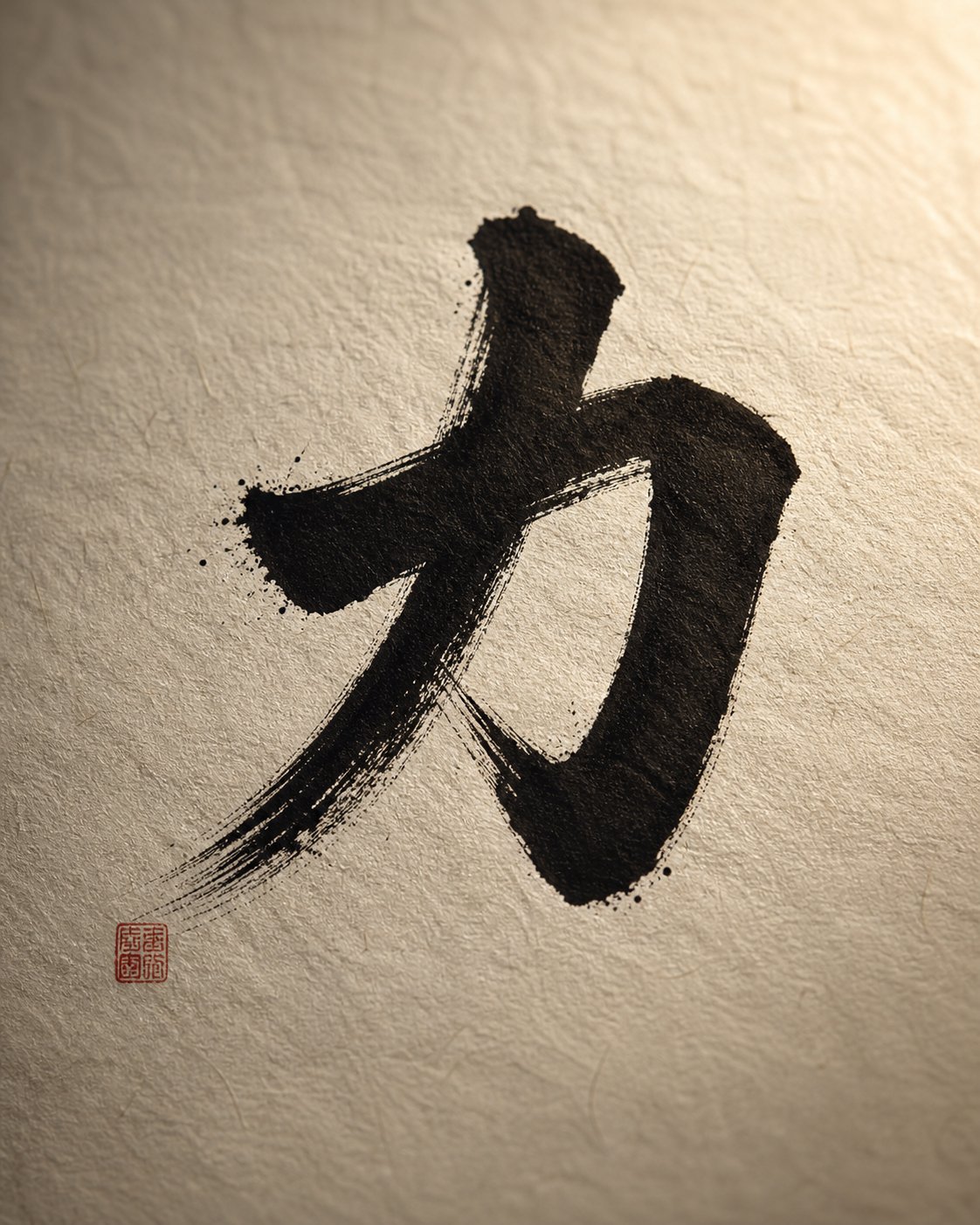
力 (li, fourth tone) — force, power, strength. One of the most fundamental characters in the Chinese writing system, 力 is a pictograph originally depicting a plow or a muscular arm exerting downward force.
The Chinese character 力 (li) refers to power, strength, or force. It can also convey energy, effort, ability, or influence. As a pictogram, it depicts a person reaching down and using arm strength to pick up an object — the 丿 stroke represents the arm while the hooked stroke symbolizes the hand. Some scholars also see it as a picture of a plow, a heavy tool that requires considerable physical effort to operate.
This dual origin — human muscle and agricultural labor — tells you something important about how ancient Chinese people understood strength. It wasn't abstract. It was rooted in daily survival: tilling soil, lifting loads, pushing through resistance.
With just two strokes, 力 is also one of the simplest characters to write. That simplicity is deceptive, though, because the strength chinese symbol carries enormous weight across the language. It functions as a standalone word, a radical inside other characters, and a building block in dozens of compound words like 力量 (liliang, power), 能力 (nengli, ability), and 努力 (nuli, effort).
Why Chinese Has Multiple Strength Characters
Here's where the chinese symbol meaning gets interesting. Unlike English, which relies on one word modified by adjectives ("inner strength," "brute strength"), Chinese uses entirely different characters to express different types of strength:
- 力 (li) — raw force, physical power, exertion. The most general and foundational symbol of strength in chinese.
- 強/强 (qiang) — strong, powerful, unyielding. Implies being robust or dominant, often used for describing people, nations, or willpower.
- 勁/劲 (jin) — vigor, energy, drive. Carries a sense of spirited force or enthusiasm behind an action.
Each character opens a different door. Someone looking for strength in chinese to represent perseverance would land on a completely different word than someone expressing raw physical power. And that distinction matters — especially if you're choosing a chinese symbol for a tattoo, a piece of art, or personal meaning.
The sections ahead trace how 力 evolved over three thousand years, how to write these characters correctly, how Chinese philosophy reframes strength entirely, and which compound words native speakers actually use in daily life. By the end, you'll understand not just what the character looks like, but what it genuinely means in context.
The Ancient Origins and Evolution of 力
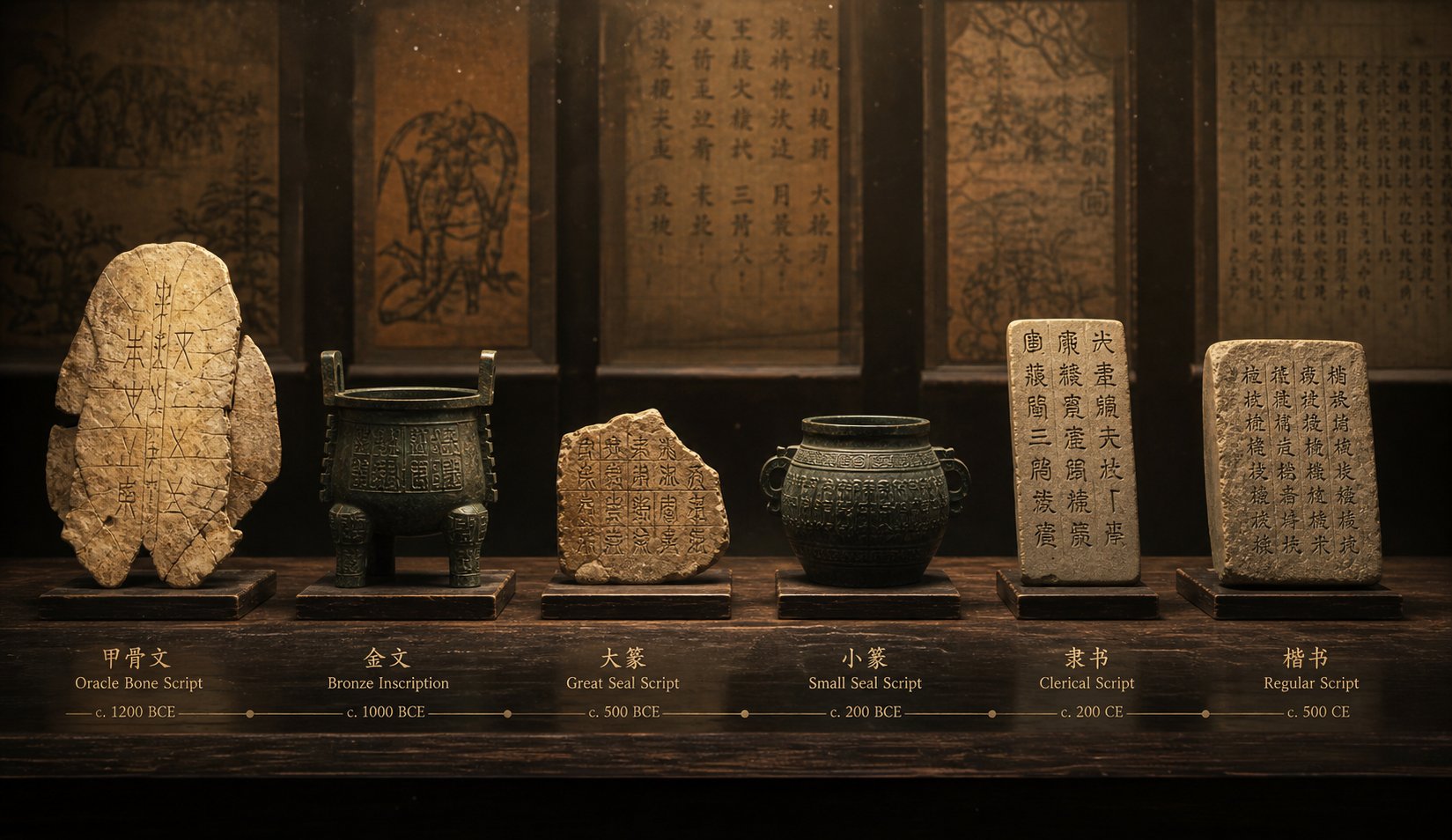
A character that looks this simple — just two strokes — didn't start out that way. The modern form of 力 is the result of over three thousand years of gradual refinement, each era stripping away detail while preserving the core idea of physical exertion. Tracing that visual journey reveals something powerful: the symbolism for strength in Chinese writing has always been tied to the human body at work.
Oracle Bone Origins of the Strength Character
The earliest known version of 力 appears on oracle bones dating to roughly 1250-1000 BCE during the Shang Dynasty. These were turtle shells and animal bones used for divination, and the characters etched into them are pictographs — crude drawings that resemble the objects they represent.
In oracle bone script, 力 looked like a curved implement with a handle and a blade angled into the ground. Scholars interpret this as a plow, the kind of heavy wooden tool that required serious upper-body effort to push through soil. Some researchers see it differently — as a stylized muscular arm with a bent elbow, the tendons visible under strain. The ancient dictionary Shuowen Jiezi (circa 100 CE) defines it as "sinew" and says the character "resembles the form of human sinews."
Either interpretation points to the same idea: strength wasn't an abstract concept to the people who created this character. It was something you felt in your muscles after a day of farming.
From Plow to Power — How 力 Evolved Over Three Millennia
Imagine watching a detailed sketch slowly become a logo. That's essentially what happened to 力 across five major script stages. Each transition simplified the form while keeping the character recognizable.
- Oracle Bone Script (circa 1250-1000 BCE) — The character appears as a clearly pictographic drawing of a plow or flexed arm. Lines are scratched with a sharp tool into bone, so strokes are thin, angular, and uneven. The shape has a visible curve suggesting the handle of an implement or the bend of an elbow.
- Bronze Script (circa 1000-400 BCE) — Cast into ritual bronze vessels, the character becomes slightly more uniform. The lines are thicker and rounder due to the casting process. The plow shape is still recognizable, but the details begin to smooth out. By the Early Warring States period (around 400 BCE), the form is more compact and symmetrical.
- Seal Script (circa 221 BCE-100 CE) — Standardized during the Qin Dynasty's unification of writing, the seal script version of 力 features elegant, evenly weighted curved lines. The pictographic origin is harder to see now. The character looks more like an abstract symbol — two flowing strokes that suggest downward force without literally depicting a tool.
- Clerical Script (circa 25-220 CE, Eastern Han Dynasty) — This is where the character takes a dramatic turn toward its modern appearance. Clerical script flattens curves into angular strokes and introduces the distinctive horizontal emphasis of later Chinese writing. The two-stroke structure we recognize today becomes clearly established.
- Regular Script (circa 200 CE-present) — The modern standard form. Two clean strokes: a horizontal-turning stroke that bends downward, and a left-falling diagonal. All pictographic detail is gone, replaced by efficient geometry. This is the 力 you see in books, on screens, and in tattoo designs.
The entire evolution — from a recognizable picture of a farming tool to a minimal two-stroke character — took roughly 1,500 years of active transformation, followed by another 1,800 years of relative stability in the regular script form.
What the Pictographic Shape Tells Us About Ancient Chinese Life
Here's why this history matters beyond academic curiosity. The fact that 力 originated as a plow tells you that ancient Chinese civilization equated strength with agricultural labor. This wasn't a warrior culture glorifying combat when it coined its word for power. It was a farming society that understood force as something you applied to the earth to feed your family.
That origin also makes the character far easier to remember once you know the story. When you look at the modern form of 力, you can still see a faint echo of that original plow — the vertical hook suggesting a blade driven into soil, the diagonal stroke like a handle gripped by calloused hands. The symbol represents strength not as domination, but as sustained effort against resistance.
This pictographic logic runs through the entire Chinese writing system. Characters aren't arbitrary squiggles. They're compressed stories. And 力, as one of the oldest and most fundamental characters, carries a story that connects modern readers directly to Bronze Age farmers symbolizing strength through the tools of their survival.
That foundational meaning — effort, exertion, force applied with purpose — is exactly what makes 力 so productive as a building block. It doesn't just stand alone. It lends its meaning to dozens of other characters, functioning as a radical that signals "this word involves force or effort" to anyone who can read it.
How to Write the Chinese Strength Characters Correctly
Knowing the history behind a character is one thing. Actually putting brush to paper (or stylus to screen) is another. If you're planning to use chinese letters for strength in a tattoo, a piece of calligraphy, or even just handwriting practice, getting the stroke order right isn't optional — it's what separates a well-formed character from one that looks "off" to any native reader.
The good news? The most fundamental strength character is also one of the easiest to write in the entire language.
How to Write 力 Step by Step
力 (li, fourth tone) consists of only two strokes, making it one of the simplest characters you'll encounter in chinese writing for strength. But "simple" doesn't mean "sloppy." Each stroke has a specific starting point, direction, and ending that must be followed.
- Stroke 1 — Horizontal-turning stroke (横折钩, hengzhegou): Begin at the upper-left area of the character space. Draw a short horizontal line moving right, then immediately turn downward without lifting your pen. Continue the stroke vertically downward, finishing with a small hook that flicks to the left at the bottom. This single continuous stroke creates the "backbone" of the character — the vertical structure with its top crossbar and bottom hook.
- Stroke 2 — Left-falling stroke (撇, pie): Start from the middle of the vertical line (roughly where the horizontal portion meets the downstroke). Draw diagonally downward to the left, tapering the stroke as it extends. The ending point should sit slightly below and to the left of the hook from stroke one.
That's it. Two strokes, and you've written the strong symbol in chinese for raw physical force. The entire character fits inside a square frame, with the diagonal stroke giving it a sense of forward motion — like a body leaning into effort.
Writing 強 and 强 — Traditional vs Simplified
Writing strong in chinese writing gets more complex when you move to 強/强 (qiang, second tone), the character meaning "strong, powerful, unyielding." This is where traditional and simplified Chinese diverge visually.
Traditional form: 強 — 11 strokes. The left side contains 弓 (gong, bow) stacked with 厶 (si, private), while the right side features 虫 (chong, insect). The etymology connects to a type of beetle with a hard shell — strength through resilience. When writing, you complete the entire left component (弓 in three strokes, then 厶 below it) before moving to the right-side 虫.
Simplified form: 强 — 12 strokes. Interestingly, the simplified version actually has one more stroke than the traditional in standard stroke-count methods, because the left component 弓 is written slightly differently in combination. The right side replaces the traditional 虫 structure with a modified form. The overall appearance is more angular and compact.
Here's the stroke order for the simplified 强:
- Write 弓 (the bow radical) on the left side — this takes 3 strokes: a horizontal-turning stroke, a horizontal-turning stroke again, and a final horizontal-turning-hook stroke forming the bow shape.
- Write the small 口 (mouth) component tucked inside the lower portion of the left side — 2 strokes.
- Move to the right side. Write the top horizontal stroke.
- Add the vertical stroke on the right.
- Complete the remaining strokes of the right component (虽 structure), working top to bottom: two internal horizontal strokes, then the bottom-enclosing strokes, finishing with the final horizontal line at the base.
If you're choosing between forms for a tattoo or artwork, the traditional 強 carries more visual weight and calligraphic elegance. The simplified 强 looks cleaner in modern contexts. Both are correct — they're just used in different regions (traditional in Taiwan, Hong Kong, and Macau; simplified in mainland China and Singapore).
Common Stroke Order Mistakes to Avoid
When people attempt strength in chinese letters without guidance, a few errors come up repeatedly:
- Writing 力 as two separate strokes without the hook. The first stroke must end with a leftward hook at the bottom. Without it, the character looks incomplete and can be confused with other forms. That hook is what gives 力 its visual energy.
- Starting the diagonal stroke of 力 from the wrong point. The left-falling stroke begins from the middle of the vertical line, not from the top. Starting too high makes the character look like 刀 (dao, knife) — a completely different word.
- Reversing stroke order in 強/强. Always complete the left component before the right. Chinese characters follow a consistent left-to-right, top-to-bottom logic. Writing the right side first produces awkward spacing and unbalanced proportions.
- Making the 弓 radical too large. In 強/强, the bow radical on the left should occupy roughly one-third of the character's width. Beginners often draw it too wide, leaving no room for the right component and creating a cramped, unreadable result.
- Confusing 力 with 刀. These two characters differ by a single stroke detail. 力 has its diagonal stroke crossing through the vertical, while 刀 (knife) has a cleaner interior. When writing strong in chinese letters, double-check that your 力 doesn't accidentally read as "knife" — a mistake that shows up in tattoos more often than you'd think.
Getting stroke order right isn't just about aesthetics. In Chinese calligraphy, correct stroke sequence determines how ink flows, where pressure builds, and how the character's internal balance holds together. Even in a tattoo design, a calligrapher who follows proper stroke order will produce a character with natural rhythm — something that looks alive rather than mechanically copied from a font.
With the physical act of writing covered, the real depth of these characters reveals itself when you see how 力 works inside other words — not as a standalone symbol, but as a radical that lends its meaning of force and effort to an entire family of related characters.
How the Strength Radical Builds Other Chinese Characters
Here's something that shifts how you think about chinese characters and symbols entirely: 力 doesn't just mean strength on its own. It works as a radical — a recurring building block that appears inside dozens of other characters, silently contributing the idea of force or effort to each one. When you spot 力 tucked inside an unfamiliar character, you immediately know that word involves some kind of exertion, power, or energy.
This is how the Chinese writing system actually works. Characters aren't isolated pictures. They're modular. And 力 is one of the most productive modules in the entire system.
Understanding 力 as a Radical in Chinese Writing
In the traditional Kangxi radical system (214 radicals total), 力 is radical number 19. When it appears inside a compound character, it's called 力字旁 (li zi pang) — literally "the 力 side component." You'll typically find it on the right side or bottom of a character, though its position can vary.
Think of it like a tag. Every time 力 shows up as a component, it's tagging that character with the concept of force, effort, or physical exertion. A reader who recognizes this pattern can make educated guesses about unfamiliar words — even without knowing the exact definition. That's the power of understanding chinese words symbols and meanings at the structural level rather than memorizing them one by one.
Key Characters Built from the Strength Radical
Let's look at the most important characters that contain 力 as a radical. Notice how each one combines the strength element with another component to create a specific, distinct meaning:
| Character | Pinyin | Meaning | How 力 Contributes |
|---|---|---|---|
| 動/动 | dong (fourth tone) | to move, motion | Movement requires force — 力 combines with 重 (heavy) to suggest exerting effort to shift weight |
| 努 | nu (third tone) | effort, to exert | 力 sits at the bottom, grounding the character in physical striving — as in 努力 (nuli, hard work) |
| 勇 | yong (third tone) | courage, bravery | 力 at the base supports 甬 (a phonetic element) — courage understood as strength applied despite fear |
| 勝/胜 | sheng (fourth tone) | victory, to win | Winning requires force — 力 signals the exertion behind triumph |
| 勢/势 | shi (fourth tone) | momentum, power, influence | 力 contributes the idea of force channeled into strategic advantage or position |
| 功 | gong (first tone) | achievement, merit, skill | 工 (work) + 力 (force) — achievement is literally "work plus effort" |
The character 勇 (yong) deserves special attention. It's the chinese symbol for courage, and it's built directly on the strength radical. That's not a coincidence — Chinese writing encodes the philosophical idea that bravery is a specific application of strength. You can't have courage without force behind it.
How Radicals Reveal Hidden Connections Between Characters
When you study symbols in chinese this way — through their shared components rather than as isolated units — patterns emerge fast. 功 (achievement) literally shows you that accomplishment equals work plus force. 動/动 (movement) tells you that motion requires effort. 努 (exertion) places strength at its foundation.
These aren't random design choices. They reflect how Chinese thinkers categorized reality thousands of years ago, and those categories still hold. Understanding the meaning behind chinese symbols at the radical level means you're no longer memorizing shapes. You're reading a system — one where 力 quietly signals "effort lives here" across an entire family of related words.
That structural logic also reveals something about how Chinese culture conceptualizes strength itself. It's never just brute force in isolation. It's force applied toward movement, courage, victory, achievement. Strength, in the Chinese writing system, is always strength directed at something — which leads directly into how Chinese philosophy frames the concept in ways that diverge sharply from Western thinking.
The Philosophy of Strength in Chinese Culture
In Western traditions, what represents power is usually obvious — size, dominance, the ability to impose your will. Greek heroes flex. Roman legions conquer. The strongest person in the room is the one who can force everyone else to comply.
Chinese philosophy flips that assumption entirely. Across its three major intellectual traditions, strength is reframed as something internal, paradoxical, and often invisible. This isn't just academic trivia. It directly shapes which chinese symbols of power resonate with native speakers — and which ones you might want to choose for personal meaning.
Daoist Soft Strength — The Power of Yielding
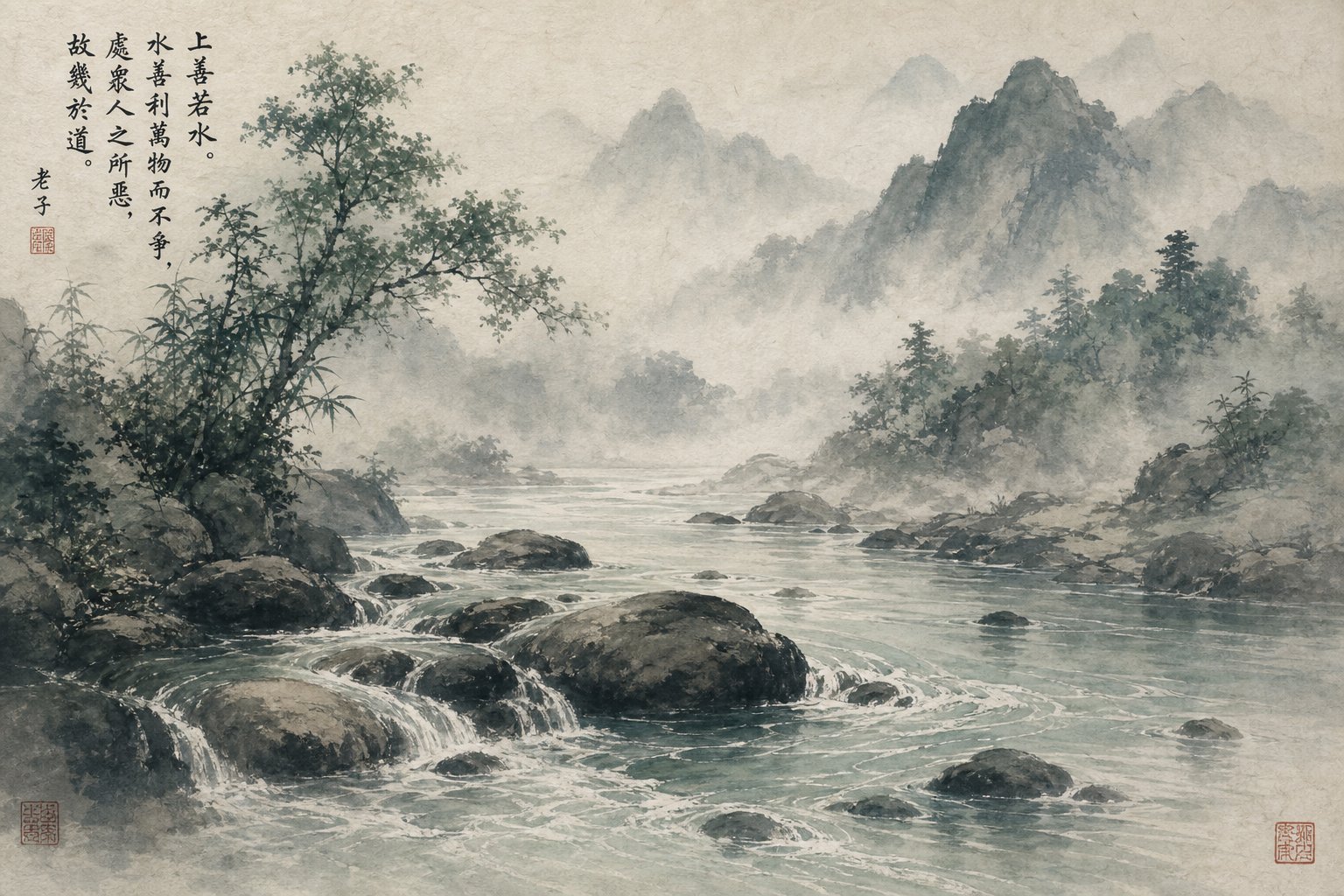
Imagine a river cutting through a canyon. The water is soft. The rock is hard. Given enough time, the water wins every single time. That image sits at the heart of Daoist philosophy, and it produces one of the most counterintuitive symbols that signify strength in Chinese thought.
Laozi, the foundational Daoist philosopher, made this paradox explicit in Chapter 78 of the Tao Te Ching:
There is nothing in the world softer and weaker than water, yet for attacking hardness and strength, nothing can surpass it. Softness overcomes hardness, weakness overcomes strength. Everyone in the world knows this, but no one can put it into practice.
The principle is called 柔弱勝剛強 (rou ruo sheng gang qiang) — the soft and weak overcome the hard and strong. Water doesn't resist obstacles. It flows around them, under them, through the smallest cracks. And over centuries, it reshapes landscapes that seemed permanent.
For Daoists, this isn't passivity. It's a symbol of power rooted in patience and adaptability. The person who yields at the right moment preserves their energy while the rigid opponent exhausts theirs. Think of it as strategic flexibility — knowing when not to push is itself a form of force.
This is why someone drawn to Daoist philosophy might choose 柔 (rou, soft/flexible) or the compound 柔韌 (rou ren, resilient) over raw 力 — because in this framework, the things symbolizing strength look nothing like what Western culture expects.
Confucian Moral Strength and Self-Cultivation
Confucianism takes a different angle. Here, true strength isn't physical at all — it's moral. The Confucian ideal of 君子 (junzi, the exemplary person) centers on self-discipline, ethical cultivation, and the ability to hold firm to principles under pressure.
The relevant chinese symbol for power in this tradition is 德 (de, virtue/moral force). A person with 德 doesn't need to coerce anyone. Their character itself exerts influence. Confucius taught that a ruler who governs through virtue is like the North Star — everything else naturally orients around them without force being applied.
The compound 堅強 (jianqiang, strong-willed) captures this Confucian flavor perfectly. It combines 堅 (firm, solid) with 強 (strong) to describe someone whose inner resolve doesn't crack under external pressure. This isn't about lifting heavy objects. It's about maintaining integrity when compromise would be easier.
For Confucians, self-cultivation (修身, xiushen) is the lifelong practice of building this inner strength. You train your character the way an athlete trains their body — daily, deliberately, against resistance. The symbols representing power in this tradition point inward rather than outward.
Physical vs Inner Strength in Chinese Thought
Chinese culture does recognize physical, martial strength — it's not all philosophy and metaphor. The term 武力 (wuli) means military force or martial power, and 體力 (tili) refers to raw physical stamina. These concepts exist and matter.
But here's the key difference: in Chinese thought, physical strength alone is never the highest form of power. The martial arts tradition itself reflects this hierarchy. The character 武 (wu, martial) is traditionally broken down as 止 (zhi, to stop) + 戈 (ge, a weapon) — the true martial artist is one who stops conflict, not one who starts it.
This layered understanding means that when a Chinese speaker thinks about what is a symbol of power, they're navigating a spectrum:
- 力 (li) — raw physical force, the most basic level
- 強 (qiang) — being strong, dominant, capable of imposing will
- 德 (de) — moral force that influences without coercion
- 道 (dao) — alignment with natural principles, the highest form of power in Daoist thought
Western culture tends to collapse these into one category. Chinese philosophy insists they're fundamentally different — and ranks them. The person who relies only on 力 is considered less powerful than the person who operates through 德 or 道.
This philosophical backdrop matters for anyone choosing chinese symbols power for personal use. If you want to express brute force, 力 works. If you want resilience, 堅強 fits. If you want the Daoist paradox of soft power, 柔 or 水 (shui, water) carries that meaning. The philosophy behind the character determines whether your choice resonates with depth — or just looks like a random word pulled from a translation app.
These philosophical distinctions don't stay locked in ancient texts. They flow directly into the compound words that modern Mandarin speakers use every day — each one encoding a specific type of strength for a specific context.
Strength-Related Chinese Words and When to Use Them
A single character rarely tells the full story in Mandarin. Native speakers almost never say 力 by itself in conversation the way English speakers drop "strength" into a sentence. Instead, they reach for compound words — two-character combinations that specify exactly what kind of strength they mean. Choosing the right chinese word for strength depends entirely on context, and each option carries a different emotional weight.
Essential Strength Compound Words in Mandarin
Think of these compounds as precision tools. Where English uses adjectives to modify one word ("physical strength," "inner strength," "national strength"), Chinese builds entirely separate terms. Here are the six most important ones you'll encounter:
| Word | Pinyin | Literal Meaning | Usage Context |
|---|---|---|---|
| 力量 | liliang (fourth + second tone) | force + quantity | General strength or power — used for physical force, collective power, or the "strength" of an idea or movement. A coach might say a boxer has 力量, or a journalist might describe the 力量 of public opinion. |
| 堅強/坚强 | jianqiang (first + second tone) | firm + strong | Strong-willed, mentally tough. Used when someone endures hardship without breaking. You'd describe a person staying composed after loss as 坚强 — never for physical power. |
| 強大/强大 | qiangda (second + fourth tone) | strong + big | Powerful, mighty — used for nations, armies, organizations, or forces that are dominant in scale. China's military is 强大. A startup isn't. |
| 實力/实力 | shili (second + fourth tone) | real + force | Actual capability, proven strength. Used in competition, business, or academics to describe someone's genuine skill level versus their reputation. "Show your 实力" means prove what you can really do. |
| 毅力 | yili (fourth + fourth tone) | perseverance + force | Willpower, determination sustained over time. Running a marathon requires 毅力. Finishing a PhD requires 毅力. It's strength measured in endurance, not intensity. |
| 體力/体力 | tili (third + fourth tone) | body + force | Physical stamina and energy. A manual laborer needs 体力. An elderly person losing 体力 is losing physical capacity. Purely bodily — never used for mental or emotional strength. |
Notice the pattern. Each compound pairs 力 (or 強) with a qualifier that narrows the meaning to a specific domain. The chinese character for strong on its own — 強 — is broad. But 坚强 is emotional resilience, 强大 is institutional dominance, and they're not interchangeable.
When to Use Which Strength Word — A Contextual Guide
Imagine you're describing someone who kept going after a devastating setback. A Mandarin speaker would instinctively reach for 坚强 (strong-willed) or 毅力 (perseverance) — never 体力 or 强大. Those belong to completely different situations.
Here's a quick way to think about it:
- Describing a person's character? Use 坚强 (resilient) or 毅力 (determined).
- Describing a country or organization? Use 强大 (mighty, dominant).
- Describing someone's proven skill? Use 实力 (actual capability).
- Describing raw physical energy? Use 体力 (bodily stamina) or 力量 (physical force).
- Describing general power or influence? Use 力量 — it's the most versatile strong symbol in compound form.
If you're looking for the chinese symbol for strong to use in a tattoo or artwork, this context matters enormously. 力量 reads as generic "power." 毅力 reads as grit and determination. 坚强 reads as emotional toughness. Each sends a different message to anyone who can actually read it.
Classical vs Modern Usage of Strength Characters
Classical Chinese (文言文, wenyanwen) — the literary language used until the early 20th century — handled these concepts differently. In classical texts, single characters carried the full weight that modern Mandarin distributes across compounds. A poet could write 力 alone and imply everything from physical exertion to political influence, relying on context to do the narrowing work.
Modern Mandarin is more explicit. The shift toward two-character compounds happened gradually as the spoken language evolved away from the terse classical style. Today, saying just 力 in conversation sounds incomplete — like saying "strong" in English without finishing your thought. Speakers need the second character to know what kind of strength you mean.
This classical-to-modern shift also explains why tattoo choices can feel awkward to native readers. A single character like 強 works in classical poetry or calligraphy because that context supports standalone characters. But in a modern context, it can read as abrupt — like a sentence fragment. The compound 坚强 or 力量 feels more complete, more intentional, more like something a person would actually say.
For anyone choosing strong in chinese characters for personal use, the decision comes down to aesthetic versus linguistic naturalness. Single characters look cleaner and more visually striking. Compounds communicate more precisely and feel more authentic to how the language actually works. Neither choice is wrong — but understanding the difference separates an informed decision from a guess.
That tension between visual impact and linguistic accuracy becomes especially critical when these characters move from paper to skin — where permanence demands getting the choice right the first time.
Chinese Strength Symbols for Tattoos and Design
Permanence changes everything. A character that looks fine on a screen takes on a different weight once it's inked into skin. If you're considering a chinese symbol for strength tattoo, the stakes are higher than picking a font — you're choosing a word that will represent you for decades, and one that native speakers will read instantly. Getting it right means understanding not just meaning, but visual form, calligraphic style, and cultural context.
Choosing the Right Strength Character for a Tattoo
Not every strength character works equally well as body art. The visual complexity, stroke balance, and semantic precision all matter. Here are the top choices for a strength tattoo in chinese, along with what each one offers and where it falls short:
- 力 (li — force, strength)
Pros
Minimalist and elegant. Only two strokes, so it scales beautifully from small wrist placements to larger designs. Instantly recognizable. Impossible to botch if your artist follows correct stroke order. Works well as part of a larger composition or standalone.
Cons
Can look too simple — almost like a fragment rather than a complete thought. Some native readers may find a single two-stroke character underwhelming as a tattoo. Visually similar to 刀 (dao, knife) if the hook stroke is poorly executed.
- 強 (qiang — strong, powerful, unyielding)
Pros
The traditional form has 11 strokes, giving it rich visual complexity and calligraphic beauty. Carries a sense of dominance and resilience. The 弓 (bow) radical on the left adds an elegant curved element that looks striking in brush calligraphy. Reads as a complete, self-contained statement.
Cons
Requires a skilled artist — the multiple components (弓, 厶, 虫) must be properly proportioned or the character becomes illegible. The simplified form 强 looks less distinctive. Larger placement needed to preserve detail.
- 勇 (yong — courage, bravery)
Pros
Combines strength (力 radical at the base) with the concept of courage — a more specific and emotionally resonant meaning than raw force. Nine strokes provide good visual balance. Popular among those wanting strength meaningful chinese tattoos that go beyond the generic.
Cons
Means courage specifically, not strength broadly. If your intent is pure physical power, this character overshoots into bravery territory. The upper component 甬 requires careful execution to avoid looking like unrelated characters.
- 力量 (liliang — strength, power)
Pros
A two-character compound that reads naturally to native speakers. Feels like a complete word rather than a fragment. The pairing of 力 and 量 creates visual balance — one simple character beside a more complex one.
Cons
Two characters require more space and careful spacing. Less "iconic" than a single bold character. May feel less dramatic for those wanting a minimal chinese symbol strength tattoo.
Common Mistakes in Chinese Strength Tattoos
Scroll through any online gallery of chinese tattoo symbols strength and you'll spot the same errors repeated endlessly. Most are preventable with basic research:
- Confusing 力 with 刀 (knife). One misplaced hook and your strength in chinese tattoo reads as "knife." The difference is subtle in print but obvious to any reader. Always verify the bottom hook flicks left.
- Using machine-generated fonts. Standard computer fonts (like SimSun or MS Minghei) were designed for screen readability, not artistic expression. A tattoo rendered in a system font looks like someone printed a Word document on their arm. Always work from hand-brushed calligraphy.
- Mixing simplified and traditional forms. Combining 强 (simplified) with a traditional-style character in the same design is like mixing British and American spelling in one sentence — technically readable, but visually inconsistent and culturally jarring.
- Mirror-image errors. Some artists accidentally flip reference images, producing a reversed character. Chinese characters are not symmetrical — a mirrored 力 or 強 is pure nonsense. Always confirm orientation before the needle touches skin.
- Choosing characters based on single-word translations. Typing "strength" into Google Translate and inking whatever appears is how people end up with characters meaning "electric power" (电力) or "strength of a medicine" (药力). Context determines which strength word is appropriate.
The safest approach? Have a native Mandarin or Cantonese speaker — ideally someone with calligraphy training — review your chosen character and the artist's final stencil before the session. A five-minute check prevents a lifetime of regret.
Calligraphy Styles That Work Best for Body Art
A chinese tattoo for strength isn't just about which character you pick. The calligraphic style transforms the same character into completely different visual experiences. Three major styles dominate tattoo applications:
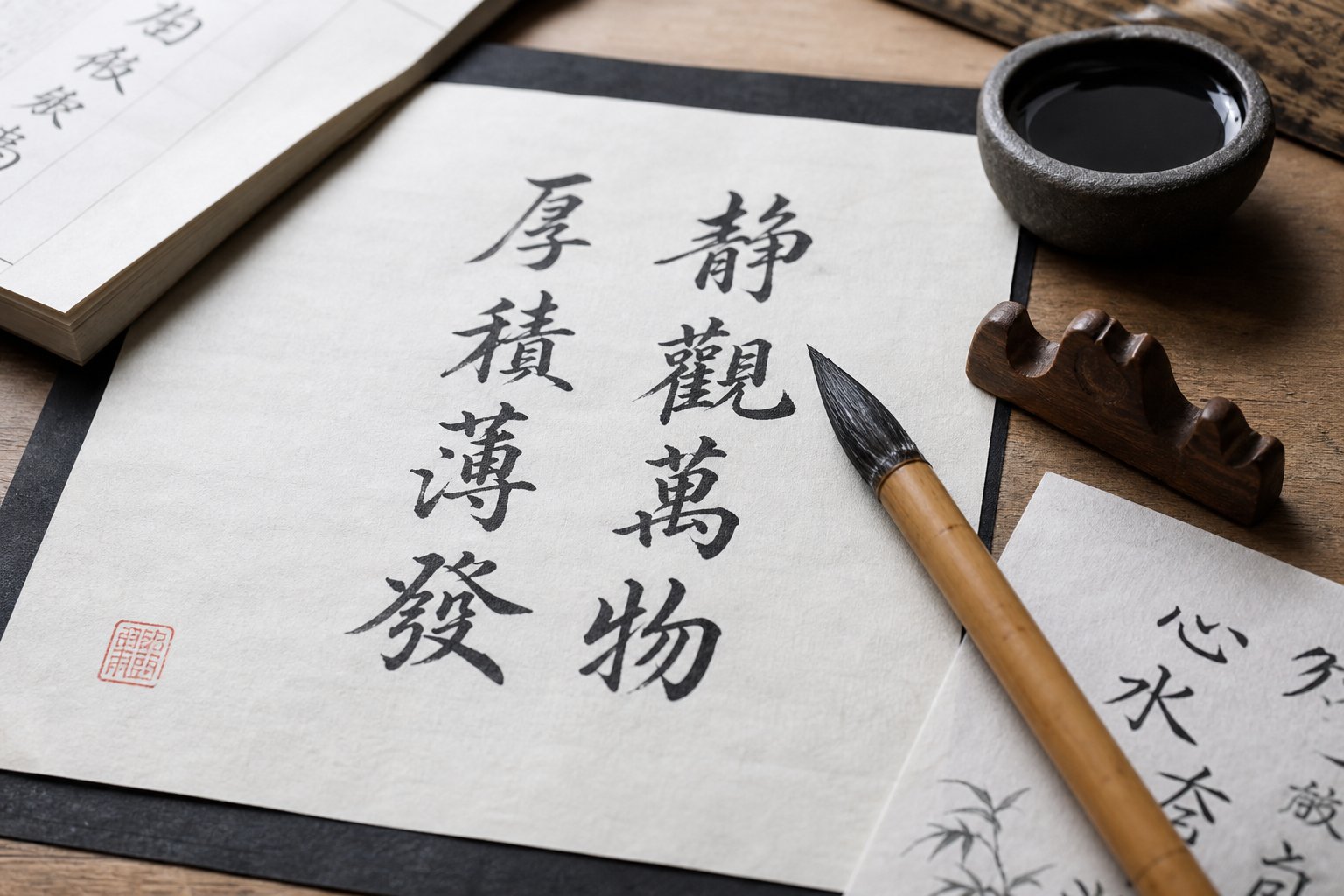
Regular script (楷書, kaishu) — Clean, structured, and highly legible. Every stroke is distinct and precisely placed. This is the "default" style most people picture when they think of Chinese characters. It works well for smaller tattoos where readability matters, and it's the easiest style for a tattoo artist to replicate accurately. The tradeoff: it can feel static, almost clinical.
Running script (行書, xingshu) — A semi-cursive style where strokes flow into each other with natural momentum. Characters written in running script look like they were brushed quickly and confidently, with visible energy in the connections between strokes. This is the sweet spot for most chinese symbol tattoo strength designs — it's artistic without being illegible, dynamic without being chaotic.
Cursive script (草書, caoshu) — Highly abstracted and expressive. Strokes merge, simplify, and sometimes disappear entirely. A 力 written in cursive might look like a single sweeping gesture rather than two distinct strokes. Visually stunning for large-scale pieces, but risky: even native readers sometimes can't decipher cursive script without context. Choose this only if artistic impact matters more to you than immediate readability.
One practical consideration: your tattoo artist doesn't need to know Chinese, but they do need to treat the character as calligraphy rather than illustration. The thickness variations, the pressure transitions, the way a stroke tapers at its end — these details separate a living character from a dead copy. If possible, commission a calligrapher to brush your chosen character in your preferred style, then bring that original brushwork to your tattoo artist as the reference.
The difference between a forgettable chinese symbol for strength tattoo and one that genuinely resonates comes down to informed choices at every stage — character selection, style, verification, and execution. Skip any one of those steps and you're gambling with something permanent.
Understanding Strength Across Cultures and Choosing Your Symbol
A tattoo artist can replicate a character perfectly and still give you the wrong one. That happens when the choice is based on a dictionary translation rather than an understanding of what symbolizes strength in the culture the character comes from. Chinese and Western traditions don't just use different words for strength — they define the concept differently at a foundational level.
Chinese vs Western Concepts of Strength
When you ask what are symbols of strength in a Western context, the answers tend to point outward: a lion, a clenched fist, a warrior standing alone against impossible odds. Western strength is individual, visible, and often innate — something you're born with or seize through dominance. The hero acts alone. Power is proven by overcoming others.
Chinese culture frames it differently. Strength is collective, cultivated, and internal. Identity is shaped by one's group — family, community, nation — and individual power matters most when it serves something larger than the self. Interdependence is seen as strength, not weakness. A person's success brings honor to the family, and endurance through hardship is valued over dramatic displays of dominance.
This cultural gap explains why the same English word — "strength" — maps onto so many different Chinese characters. Each one encodes a different relationship between the individual and the world around them.
| Chinese Concept | Character | Philosophical Root | Western Equivalent |
|---|---|---|---|
| Raw physical force | 力 (li) | Agricultural labor, bodily exertion | Brute strength, athletic power |
| Dominance, being mighty | 強 (qiang) | Resilience (hard-shelled beetle origin) | Dominance, superiority |
| Courage under pressure | 勇 (yong) | Force applied despite fear (力 radical) | Bravery, heroism |
| Perseverance over time | 毅力 (yili) | Confucian self-cultivation | Grit, willpower |
| Emotional resilience | 堅強 (jianqiang) | Inner firmness, moral strength | Mental toughness |
| Soft, adaptive power | 柔 (rou) | Daoist yielding (water over stone) | No direct equivalent — closest is "resilience" |
| Collective might | 強大 (qiangda) | Group strength, national power | Institutional power, military strength |
Notice the bottom row. 柔 — softness as strength — has no clean Western parallel. That's not a translation gap. It's a philosophical one. And it's exactly the kind of nuance that gets lost when someone asks what symbol represents strength and receives a single character without context.
How to Choose the Right Strength Symbol for Your Purpose
So what is a symbol of strength that actually fits your intent? The answer depends on what kind of strength you're trying to express. Here's a practical framework:
- You want to express raw power or physical force. Choose 力 (li) for minimalism or 力量 (liliang) for a more complete word. These are direct, unambiguous, and universally understood.
- You want to express resilience after hardship. Choose 堅強 (jianqiang, strong-willed) or 毅力 (yili, perseverance). These carry emotional weight and suggest strength built through suffering — not strength you were handed.
- You want to express courage. Choose 勇 (yong). It's specific, visually balanced, and built on the strength radical itself.
- You want to express quiet, adaptive power. Choose 柔 (rou, flexible) or the Daoist-inflected 柔韌 (rouren, resilient). These are unconventional choices that signal philosophical depth.
- You want to express dominance or being mighty. Choose 強 (qiang) in its traditional form for visual impact, or 強大 (qiangda) for the sense of large-scale power.
The symbols for strength in Chinese aren't interchangeable labels for the same idea. They're different ideas entirely — each rooted in a distinct philosophical tradition, each carrying a different emotional register. Someone who chooses 毅力 is telling a story about endurance. Someone who chooses 力 is making a statement about force. Someone who chooses 柔 is embracing a paradox that most Western readers won't immediately grasp.
That's the real answer to what are symbols for strength in Chinese: not one character, but a spectrum. Your job isn't to find the "correct" translation. It's to locate yourself on that spectrum — to decide what strength means to you personally, and then find the character that already carries that meaning for the billion-plus people who read it natively. When the intent matches the symbol, the result isn't just a tattoo or a design element. It's a statement that holds up under scrutiny from anyone who actually understands the language.
Frequently Asked Questions About Chinese Strength Symbols
1. What is the most common Chinese symbol for strength?
The most common Chinese symbol for strength is 力 (li, fourth tone). It is a two-stroke pictograph originally depicting a plow or muscular arm exerting force. As one of the most fundamental characters in the Chinese writing system, 力 serves as both a standalone word meaning force, power, or strength and as a radical that appears inside dozens of other characters related to effort and exertion, such as 動 (movement), 勇 (courage), and 功 (achievement).
2. What is the difference between 力 and 強 in Chinese?
力 (li) refers to raw physical force, exertion, or energy — the most basic and general concept of strength. 強 (qiang) means strong, powerful, or unyielding, implying robustness or dominance. Think of 力 as the force itself and 強 as the quality of being strong. In practice, 力 appears in compounds describing types of force (physical stamina, willpower, capability), while 強 appears in words describing states of being powerful (strong-willed, mighty, dominant).
3. Which Chinese strength character is best for a tattoo?
The best choice depends on your intended meaning. 力 works for minimalist designs due to its two-stroke simplicity and clean scalability. 強 in its traditional form offers rich calligraphic complexity across 11 strokes. 勇 (courage) combines the strength radical with bravery for a more emotionally specific statement. For a natural-sounding option, the compound 力量 (power) or 堅強 (resilience) reads more authentically to native speakers. Always have a native speaker verify your chosen character and the artist's stencil before inking.
4. How do you write the Chinese character for strength?
The character 力 requires only two strokes. First, write a horizontal-turning stroke: start at the upper left, draw a short horizontal line to the right, then turn downward without lifting your pen, finishing with a small leftward hook at the bottom. Second, add a left-falling diagonal stroke starting from the middle of the vertical line and extending down to the lower left. The entire character fits within a square frame and takes just seconds to write once you know the correct sequence.
5. What does Chinese philosophy say about strength?
Chinese philosophy presents multiple frameworks for understanding strength. Daoism teaches that softness overcomes hardness — water wearing down stone represents true power through patience and adaptability. Confucianism frames moral virtue and self-discipline as the highest form of strength, valuing inner resolve over physical dominance. The martial tradition recognizes physical force but ranks it below moral and spiritual power. This layered view means Chinese has distinct characters for each type: 力 for physical force, 堅強 for emotional resilience, 柔 for adaptive flexibility, and 德 for moral authority.