The Sun Surname and Its Ancient Roots in Chinese Civilization
Imagine carrying a family name that connects you directly to Zhou Dynasty royalty, legendary military strategists, and the founding father of modern China. For the roughly 20 million people worldwide who bear the Sun surname, that connection is real. The sun surname history stretches back more than 3,000 years, making it one of the oldest continuously documented clan names in Chinese civilization. Yet most families who carry it have lost track of the very story that makes their name remarkable.
What the Sun Surname Means and Why It Matters
The meaning of the name Sun is rooted in family itself. Written as 孙 in simplified Chinese and 孫 in its traditional form, the character literally translates to "grandson" or "descendant." Unlike surnames meaning sun as in the celestial body, this name speaks to lineage and continuity across generations. It ranks among the top 12 most common surnames in China, carried by millions whose ancestors once served as nobles, generals, and court officials.
The Sun last name appears in the Hundred Family Surnames (百家姓), the classical Song Dynasty text that has served as a reference for Chinese genealogy for over a thousand years. Its placement in early genealogical records confirms what scholars have long recognized: this is not a name that emerged from common origins. It was born from royalty, forged through military service, and preserved by clans who understood the weight of their heritage.
The Sun surname belongs to a rare category of Chinese clan names with multiple independent royal origins, each traceable to a specific ancestor, state, and historical moment across three millennia.
A 3,000-Year Legacy in One Family Name
What makes the Sun surname unusual is not just its age but its complexity. Most Chinese surnames trace back to a single origin point. The Sun family name branches from at least three distinct royal lineages, each rooted in a different ancient state during the Zhou Dynasty period. One branch descends from King Wen of Zhou himself. Another connects to the legendary Emperor Shun through the State of Qi. A third emerges from the powerful State of Chu in southern China.
This article traces the full sun surname history in a way no single English-language resource has done before. You'll find the distinct origin branches unified in one genealogical framework, the linguistic evolution of the character across dialects and borders, the famous figures who carried the name through pivotal moments in Chinese history, and practical guidance for researching your own Sun ancestry. Among last names meaning sun or surnames that mean sun in other cultures, the Chinese Sun stands apart because its meaning points inward, toward descendants, rather than outward toward the sky.
The story begins not with one ancestor but with three separate moments in history when powerful clans chose the same character to define their identity. Each of those origin branches carries its own founding figure, its own geographic homeland, and its own line of descendants stretching into the present day.
Three Distinct Origin Branches of the Sun Family Name
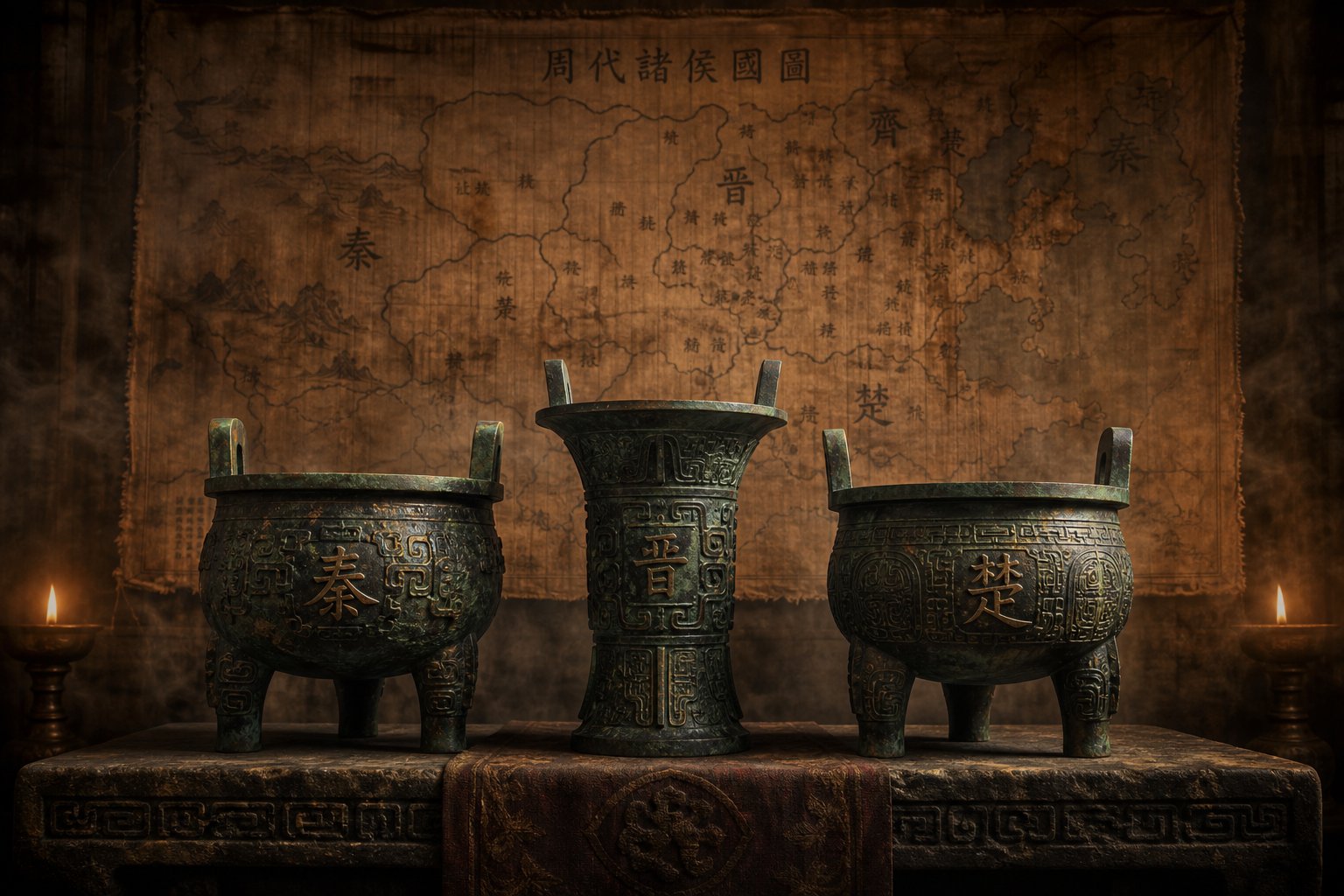
Most surnames have one founding story. The Sun surname has at least three, each rooted in a different ancient state, a different royal bloodline, and a different century. Understanding the sun last name origin means recognizing that not all Sun families share the same ancestor. The branch you belong to determines which kingdom your forebears served, which region they called home, and which historical figures sit at the top of your family tree.
Here is a side-by-side comparison of the three primary lineages before we explore each one in detail:
| Lineage Character | Ancestral State | Founding Ancestor | Approximate Era | Key Descendants |
|---|---|---|---|---|
| Ji (姬) | State of Wei | Sun Yi (孙乙), courtesy name Wuzhong | ~800 BC, Spring and Autumn period | Sun Liangfu, Sun Lin (Wei ministers) |
| Gui (妫) | State of Qi | Sun Shu (孙书), also known as Tian Shu | ~523 BC, Spring and Autumn period | Sun Wu (Sun Tzu), Sun Bin, Sun Jian, Sun Quan |
| Mi (芈) | State of Chu | Sun Shu'ao (孙叔敖) | ~630-593 BC, Spring and Autumn period | Sun Simiao (attributed by some genealogies) |
The Ji Lineage From the State of Wei
The oldest confirmed sun surname origin traces back to the royal house of Zhou itself. In 1055 BC, the Duke of Zhou enfeoffed his brother Kang Shu in the State of Wei, located in present-day Henan Province. Eight generations later, Duke Wu of Wei (Ji He) rose to prominence after conquering the Western Rong tribes, earning his title from King Ping of Zhou.
Duke Wu had a son named Hui Sun. Hui Sun's grandson, a man named Yi with the courtesy name Wuzhong, made a decision that would echo across millennia. He adopted his grandfather's name as his clan surname, becoming Sun Yi. This act, recorded in the classical genealogical text Yuanhe Xingzuan, established the Ji-lineage Sun clan. Sun Yi is recognized as the founding ancestor of the entire Ji branch.
For generations, this branch held hereditary ministerial positions in Wei, wielding real political power in the Yellow River region. When the clan eventually fell from favor, its members migrated north to the State of Jin and east to the State of Qi, seeding Sun communities across northern China.
The Gui Lineage From the State of Qi
The second major sun name origin produced the most famous descendants. This branch connects to the legendary Emperor Shun through a winding path of exile and reinvention.
In 672 BC, a prince named Chen Wan fled the State of Chen after political turmoil and resettled in the State of Qi, changing his surname from Chen to Tian. Four generations later, his descendant Tian Wu Yu had a son named Tian Shu (courtesy name Zizhan), who served as a senior official in Qi. In 523 BC, after a successful military campaign against the State of Ju, Duke Jing of Qi bestowed upon Tian Shu the surname Sun and granted him the fief of Le'an in present-day Shandong Province.
This single act of royal bestowal created the Le'an Sun clan, arguably the most consequential branch in all of sun surname history. Sun Wu, the legendary author of The Art of War, was Tian Shu's grandson. Sun Bin, Sun Jian, Sun Ce, and Sun Quan all descend from this line. When you encounter the Sun surname in military history or the Three Kingdoms narrative, you are almost certainly looking at the Gui lineage.
The Yao Lineage and Non-Han Adoptions
The third major branch emerges from the powerful State of Chu in southern China. Sun Shu'ao (630-593 BC), a grandson of King Fenmao of Chu through the Mi surname line, served as Lingyin (Prime Minister) under King Zhuang of Chu. His courtesy name contained the character "Sun," and his descendants adopted it as their clan name. Sun Shu'ao is remembered in the Records of the Grand Historian as the first entry among China's upright officials, a man whose governance left no corrupt officers and no bandits in Chu.
Beyond these three core lineages, the Sun surname absorbed members from numerous non-Han ethnic groups over the centuries. During the early Silla period in Korea, the Moksan Daesu division was bestowed the surname Sun by King Yuri. Khitan generals carried the name during the Tang Dynasty. In the Yuan Dynasty, Mongol descendants of the Grand Commander Tahai adopted Sun as their Han surname, settling in what remains the only Mongolian ethnic enclave village in Shanxi Province. During the Qing Dynasty, the entire Sunjia clan of the Manchu Eight Banners converted to Sun, as did members of the Lubuli clan. Among present-day Jingpo, Miao, Achang, Hani, and Tujia minorities, Sun clan members trace their adoption of the name to government policies spanning the Tang through Qing dynasties.
Each of these origin branches carried the same character but developed distinct identities, ancestral halls, and geographic strongholds. The character itself, 孙, holds its own story of evolution, one written in oracle bone inscriptions and reshaped across thousands of years of linguistic change.
The Chinese Character for Sun and Its Linguistic Evolution
The character itself tells a story older than any genealogy book. When you see the sun chinese character written as 孫 in its traditional form, you're looking at a visual argument about what family means. Its structure, its sound, and its transformation across centuries reveal how deeply the concept of lineage is embedded in this single surname.
The Character 孫 From Oracle Bones to Modern Script
The traditional chinese character for sun (孫) is composed of two parts. On the left sits 子 (zi), meaning "child" or "son." On the right stands 系 (xi), a character representing threads or continuity. Together, they form a meaning that is both literal and poetic: the continuation of one's children, or simply, "grandson" and "descendant." This is not a name borrowed from nature or geography. It is a name that declares generational persistence.
In oracle bone script, the earliest known form of Chinese writing dating to the Shang Dynasty (around 1200 BC), the character appeared in a more pictographic form. The 子 component resembled a swaddled infant, while the thread-like element suggested an unbroken cord connecting generations. By the time bronze inscriptions emerged during the Western Zhou period, the character had stabilized into a recognizable ancestor of its modern form.
The evolution continued through seal script during the Qin unification, where strokes became more standardized and symmetrical. Clerical script in the Han Dynasty squared off the curves, and regular script during the Tang Dynasty gave us the traditional form 孫 that remained standard for over a thousand years. The simplified version, 孙, arrived in the 1950s and 1960s as part of the People's Republic of China's script reform, replacing the right-side 系 with a streamlined 小 (xiao, meaning "small"). The simplification changed the visual composition but preserved the pronunciation and meaning entirely.
Understanding sun in chinese writing means recognizing that this character has always carried a double function. It serves as both a common noun (grandson, descendant) and a proper surname. Context determines which meaning applies, but the surname usage draws its authority directly from the noun. To bear the name Sun is, in the most literal sense, to declare yourself a descendant worth remembering.
Romanization Variants Across Dialects and Languages
If you've encountered this surname spelled differently across countries and communities, there's a reason. The character 孫 is pronounced differently depending on which Chinese dialect or East Asian language you're speaking, and each pronunciation reflects a specific historical migration path. Sun in mandarin chinese is the standard Pinyin romanization (Sūn), but that's only one version of the story.
Here's how the same character sounds and is written across major dialect groups and neighboring languages:
| Romanization | Language/Dialect | Community Context | Migration Period |
|---|---|---|---|
| Sun (Sūn) | Mandarin | Mainland China, Taiwan, most overseas communities using Pinyin | Standard since Qing-era Mandarin dominance |
| Suen / Syun | Cantonese | Hong Kong, Guangdong, Macau, and Cantonese diaspora | Tang-Song era migrations to Guangdong |
| Sng / Soon | Hokkien / Teochew | Fujian, Southeast Asia (Malaysia, Singapore, Philippines) | Ming-Qing era maritime trade migrations |
| Tôn | Vietnamese (Sino-Vietnamese) | Vietnam | Han Dynasty-era Chinese administration influence |
| Son (손) | Korean | South Korea, Korean diaspora | Early Silla period adoption (pre-7th century) |
| Son | Japanese (on'yomi reading) | Japan (primarily in historical/literary contexts) | Tang Dynasty cultural exchange |
Why do these variants exist? Each one preserves a snapshot of how the character was pronounced at the moment a particular community adopted or carried it abroad. Cantonese retains features of Middle Chinese pronunciation from the Tang and Song dynasties, which is why "Suen" sounds so different from the Mandarin "Sun." The Hokkien "Sng" preserves an even older layer of southern Chinese phonology, carried to Southeast Asia by Fujian merchants during the Ming and Qing periods.
The Vietnamese "Tôn" reflects Sino-Vietnamese pronunciation, a systematic adaptation of Chinese characters into Vietnamese phonology that occurred over centuries of cultural contact. Meanwhile, the Korean "Son" (손) represents an independent adoption of the character into the Korean phonological system, with the surname established in Korea as early as the Silla Dynasty.
What this means practically is that a person named Suen in Hong Kong, a person named Soon in Singapore, and a person named Tôn in Hanoi may all trace their surname to the same ancient character. The spelling differences are not errors or separate names. They are linguistic fossils, each one marking a specific moment when a branch of the Sun clan crossed a geographic or linguistic boundary. When you write sun in chinese or encounter chinese for sun as a surname in any of these forms, you're reading the same 3,000-year-old story filtered through different phonological traditions.
These pronunciation differences did more than create spelling variations on passports. They shaped how Sun clan communities identified themselves in new lands, which dialect associations they joined, and which ancestral halls they built. The character remained constant, but the sound it carried became a marker of regional identity, one that connects directly to the famous historical figures who made this surname legendary.

Famous Figures Who Carried the Sun Surname Through History
A surname gains its reputation through the people who carry it. The Sun name appears at turning points across more than two millennia of Chinese history, from the battlefields of the Warring States to the collapse of imperial rule in the twentieth century. These are not minor footnotes. The figures below shaped philosophy, warfare, medicine, and politics on a scale that still resonates globally.
Here is a timeline-style overview of the most prominent bearers of the surname Sun across major dynasties:
- Sun Wu (Sun Tzu) - Spring and Autumn period (c. 5th century BC) - Military strategist, author of The Art of War
- Sun Bin - Warring States period (c. 4th century BC) - Military theorist, descendant of Sun Wu, author of Sun Bin's Art of War
- Sun Shu'ao - Spring and Autumn period (c. 630-593 BC) - Prime Minister of Chu, celebrated as China's model upright official
- Sun Ce - Late Han Dynasty (175-200 AD) - Conqueror who unified the Jiangdong region, known as the "Little Conqueror"
- Sun Quan - Three Kingdoms period (181-252 AD) - Founding emperor of Eastern Wu
- Sun Simiao - Tang Dynasty (581-682 AD) - Physician and pharmacologist, honored as the "King of Medicine"
- Sun Yat-sen - Late Qing / Republic era (1866-1925) - Revolutionary leader, first provisional president of the Republic of China
Sun Tzu and the Warring States Military Tradition
The most globally recognized bearer of the last name Sun never sought fame as a family man. Sun Wu, known in the West as Sun Tzu, was a military strategist and general who served the State of Wu near the end of the Spring and Autumn period (770-476 BC). He is traditionally credited as the author of The Art of War (Bingfa), the earliest known treatise on war and military science.
The text itself is a systematic guide to strategy and tactics for rulers and commanders. It covers terrain, intelligence, flexible tactics, and the relationship between political considerations and military policy. Its most famous axiom, "Know the enemy and know yourself, and you can fight a hundred battles with no danger of defeat," has transcended military circles entirely, influencing business strategy, sports coaching, and diplomatic theory worldwide.
Sun Wu belonged to the Gui lineage from the State of Qi. His grandson Sun Bin continued the family's military tradition a century later during the Warring States period, producing his own treatise on warfare. Together, these two figures established the surname Sun as synonymous with strategic brilliance in Chinese culture. When someone says the Sun name in a military context, this is the lineage they mean.
Sun Quan and the Kingdom of Wu
Fast forward seven centuries, and the surname Sun sits on an imperial throne. Sun Quan (181-252 AD) founded the Wu Dynasty, one of the Three Kingdoms that divided China after the collapse of the Han Dynasty. His kingdom occupied eastern China around present-day Nanjing, with its capital at Jianye.
Sun Quan did not build from nothing. His father Sun Jian and elder brother Sun Ce had already carved out a power base in the Jiangdong region through military conquest. When Sun Ce died in 200 AD at just twenty-five, the eighteen-year-old Sun Quan inherited command. He proved more than capable, consolidating Wu's territory and navigating the complex three-way rivalry with Cao Cao's Wei in the north and Liu Bei's Shu Han in the west.
For anyone who knows the Three Kingdoms narrative through novels, games, or film, the Sun family is inseparable from that story. The Wu kingdom lasted from 222 to 280 AD, making the surname Sun the only Chinese clan name to have ruled its own dynasty during this iconic era.
Sun Yat-sen and the Birth of Modern China
Perhaps no single bearer of the surname Sun reshaped China more fundamentally than Sun Yat-sen (1866-1925). Born to a family of poor farmers in Xiangshan, Guangdong Province, he trained as a doctor before dedicating his life to revolution. He cofounded the United League (Tongmenghui), which became the Chinese Nationalist Party (Kuomintang), and spent sixteen years in exile organizing the overthrow of the Qing Dynasty.
His persistence paid off in 1911 when the Qing finally fell. Sun served as the first provisional president of the Republic of China, and both the Chinese Nationalists and the Chinese Communists later honored him as a pioneer of the revolution. He is known simply as the "Father of Modern China," a title that transcends political boundaries.
Between Sun Tzu and Sun Yat-sen, the Tang Dynasty produced Sun Simiao (581-682 AD), a physician whose encyclopedic medical texts earned him the title "King of Medicine." His work Qianjin Yaofang (Essential Prescriptions Worth a Thousand Gold) compiled thousands of herbal formulas and clinical observations, remaining a foundational reference in traditional Chinese medicine for over a millennium.
What connects these figures is more than a shared character on their family registers. Each one operated at a moment of fracture in Chinese history, whether it was warring states, collapsing dynasties, or imperial decline. The surname Sun, it seems, has a pattern of surfacing precisely when the old order breaks apart and something new must be built. That pattern is not coincidence. It reflects the geographic and political positioning of Sun clan communities across China's shifting landscape, a story best understood by tracing their migrations dynasty by dynasty.

How the Sun Clan Migrated Across China Through the Dynasties
Surnames don't stay in one place. People carry them wherever survival, ambition, or government orders push them. The chinese sun clan communities that exist today, scattered from Heilongjiang in the north to Guangdong in the south, did not spread evenly or randomly. Each major shift in their geographic footprint corresponds to a specific historical trigger: a war lost, a dynasty collapsed, a famine endured, or an emperor's resettlement decree enforced.
Here is the dynasty-by-dynasty migration sequence that shaped the Sun surname's distribution across China:
- Zhou Dynasty (1046-256 BC) - Sun clan communities concentrated in the Yellow River basin, primarily in the states of Wei (Henan), Qi (Shandong), and Chu (Hubei/Hunan). Each origin branch remained close to its founding state.
- Qin and Han Dynasties (221 BC - 220 AD) - Qin unification and subsequent Han expansion pushed Sun families outward from their original strongholds. Military service and government appointments scattered members to frontier garrisons and new administrative centers across northern and central China.
- Three Kingdoms Period (220-280 AD) - The Sun family's rule over the Wu kingdom drew massive clan migration into the Jiangdong region (modern Jiangsu, Zhejiang, and Anhui). This was the first major southward shift.
- Tang Dynasty (618-907) - Military agricultural colonies and government postings spread Sun families into Fujian and Guangdong. The Tang government's development of Lingnan's two provinces opened regions previously avoided due to malaria.
- Song Dynasty (960-1279) - The fall of the Northern Song in 1125 and Jurchen occupation of North China triggered massive southward flight. Sun clan members joined the general Han Chinese migration from the Yangzi River valley into the Xi River basin and further south.
- Ming Dynasty (1368-1644) - Government-directed resettlement pushed Sun families into Yunnan, Guizhou, and Sichuan. Military colonists and exiled officials carried the name into China's southwestern highlands.
- Qing Dynasty (1644-1912) - The devastating Ming-Qing transition, particularly in Sichuan, prompted both flight and government-organized repopulation campaigns that redistributed Sun communities once more.
From the Yellow River to Jiangdong
During the Zhou period, you could draw a circle around the sun chinese communities and it would barely extend beyond the central plains. The Ji-lineage Suns lived in Wei territory in modern Henan. The Gui-lineage Suns clustered in Qi, across what is now Shandong. The Mi-lineage branch remained in Chu's domain along the middle Yangzi. These were aristocratic families tied to specific courts, and they had little reason to move.
That changed with the Qin unification in 221 BC. Centralized government meant centralized military service. Sun clan members found themselves posted to distant garrisons. The Han Dynasty continued this pattern, and by the Eastern Han period, Sun families had spread across much of northern and central China.
The real turning point came with Sun Jian, Sun Ce, and Sun Quan. When the Sun family established the Wu kingdom in Jiangdong during the Three Kingdoms era, they didn't just move a ruling household south. They pulled an entire network of retainers, soldiers, and extended clan members into the lower Yangzi region. For the first time, the Sun surname had a major population center south of the river. Even after Wu fell to the Jin Dynasty in 280 AD, those communities stayed.
Tang and Song Era Migrations Southward
The Tang Dynasty opened China's deep south to sustained Han Chinese settlement. Before the Tang, the Lingnan region covering modern Guangdong and Guangxi was sparsely populated by Han people. Few northerners crossed the mountain ranges voluntarily. The Tang and subsequent Song governments changed this by establishing military agricultural colonies that drew settlers steadily southward. Sun clan members followed these routes, establishing communities in Fujian and eventually Guangdong.
The catastrophe of 1127 accelerated everything. When Jurchen armies captured the Northern Song capital at Kaifeng, the imperial court fled south to Hangzhou. Millions of northern Chinese followed. Fujian and Zhejiang became cultural centers of Han civilization during the Southern Song. Sun families who had remained in the north for generations now relocated permanently to these southern provinces. This migration wave is the reason the sun in chinese language communities of Fujian and Guangdong exist at all. Without the Song collapse, the surname might have remained predominantly northern.
Ming and Qing Dynasty Population Shifts
The Ming Dynasty introduced something new: planned, large-scale government resettlement into China's southwestern frontier. After defeating the last Mongol-backed rulers in Yunnan in 1382, the Ming government promoted settlement in a planned and large-scale manner. Troops recruited from South China were sent to Yunnan to suppress rebellions, and many stayed as landlords and local officials. Exiles, merchants, and civil servants followed. Sun clan members were among these migrants, carrying the surname into highland basins that had previously been inaccessible to Han Chinese.
The Ming-Qing transition brought devastation that rivaled the Song collapse. In Sichuan, the province's population fell by as much as 90 percent due to warfare, famine, and the scorched-earth campaigns of Zhang Xianzhong in the 1640s. The Qing government responded with the massive Huguang tian Sichuan (Huguang filling Sichuan) campaign, offering free land, oxen, seed, and tax exemptions to anyone willing to resettle the devastated province. This movement, concentrated between 1671 and 1776, drew migrants from Hubei, Hunan, Guangdong, Guangxi, and Guizhou. Sun families from these southern provinces were among those who answered the call, establishing new branches in Sichuan and Chongqing.
By the end of the Qing Dynasty, the Sun surname had completed its transformation from a geographically concentrated northern clan into a truly national presence. But geographic spread alone doesn't tell you which branch you belong to. For that, you need a different kind of marker, one that Chinese clans developed precisely to solve this problem: the hall name.
Sun Clan Hall Names and Ancestral Halls Explained
Knowing your surname is Sun tells you something. Knowing your hall name tells you everything. Within the vast Sun family name, hall names (堂号, tanghao) function as precise sub-identifiers, pinpointing which branch you descend from, which ancestor founded your line, and which region your clan called home. Think of them as postal codes for genealogy. Two Sun families living in the same city might share a character on their door but trace back to entirely different kingdoms.
Understanding Hall Names as Clan Branch Identifiers
A hall name is not just a label. It is a declaration of identity tied to a specific ancestral hall (宗祠, zongci) where clan members gathered for rituals, resolved disputes, educated their young, and maintained genealogical records. As research on Chinese ancestral halls confirms, these buildings served as the social, economic, and cultural hub of lineage unity, with their symbolic meaning forming the basis of all their functions and space.
Ancestral halls flourished during the Ming and Qing Dynasties (1368-1911), particularly after the Ming government issued an edict in 1536 allowing folk construction of clan temples. For the Sun clan, this meant each major branch could establish its own hall, choose a name reflecting its founding story, and use that name as a permanent marker of lineage identity. The sun name meaning, rooted in descendants and continuity, found its physical expression in these halls where generations gathered to honor that very continuity.
How does this work in practice? Imagine two Sun families meeting for the first time. One says their hall name is Yingri Tang. The other says Leshi Tang. Immediately, both know they belong to different branches with different founding ancestors, different geographic roots, and different genealogical records. The hall name resolves ambiguity that the surname alone cannot.
Major Sun Ancestral Halls and Their Locations
The Sun clan developed numerous hall names over the centuries, each one encoding a specific historical reference or moral aspiration. Here are the most prominent:
| Hall Name | Chinese Characters | Meaning / Origin | Associated Region | Branch Lineage |
|---|---|---|---|---|
| Yingri Tang | 映日堂 | "Reflecting the Sun Hall" - references the clan's name and its aspiration to brilliance | Zhejiang, Jiangsu | Gui (妫) lineage, Wu kingdom descendants |
| Leshi Tang | 乐是堂 | "Hall of Joyful Righteousness" - derived from the Le'an fief granted to Sun Shu (Tian Shu) in Qi | Shandong, Henan | Gui (妫) lineage, Le'an branch |
| Fugu Tang | 富贵堂 | "Hall of Wealth and Honor" - reflects the clan's prosperity in the region | Anhui, Jiangxi | Ji (姬) lineage, Wei descendants |
| Bingfa Tang | 兵法堂 | "Hall of Military Strategy" - honors Sun Wu (Sun Tzu) and the Art of War tradition | Shandong | Gui (妫) lineage, Sun Wu's direct line |
| Taiyuan Tang | 太原堂 | "Taiyuan Hall" - named for the Taiyuan commandery where a major branch settled | Shanxi, northern China | Ji (姬) lineage, northern migration branch |
The sun original name of each branch lives inside these hall names. Leshi Tang, for instance, directly references Le'an, the fief that Duke Jing of Qi granted to Sun Shu in 523 BC. Any Sun family using this hall name is declaring descent from that specific moment of royal bestowal. Bingfa Tang makes an even bolder claim, linking its members directly to the military strategist tradition of Sun Wu.
Physically, these ancestral halls followed architectural patterns common across southern and eastern China. Buildings were arranged symmetrically along a central axis, with main halls (享堂, Xiangtang) for sacrificial ceremonies, courtyards for gatherings, and side rooms for storing genealogical records. The halls hosted spring and autumn sacrifices where clan members reaffirmed their shared identity, and they housed the zupu (clan genealogy books) that recorded every birth, marriage, death, and migration within the branch.
Many of these structures were destroyed during the upheavals of the twentieth century, but their names survive in family records and oral tradition. If your family identifies with a specific hall name, that single piece of information can unlock which origin branch you belong to, which province your ancestors migrated from, and which genealogical records might still document your line. The hall name is, in effect, the key that connects a modern Sun family to the broader global diaspora of the clan.
Global Spread of the Sun Surname Beyond China
Hall names kept branches distinct within China. But once Sun clan members crossed national borders, a different kind of identity marker took over: the romanization itself. The spelling on a passport or immigration document became the permanent record of which dialect community a family belonged to and which migration wave carried them abroad. Today, the Sun surname and its variants appear across every inhabited continent, each concentration traceable to a specific historical moment.
The Sun Surname in Korea and Vietnam
The son last name in Korea (손, Son) is not a recent borrowing. Its origin predates most Chinese diaspora movements by centuries. The son surname origin traces to the early Silla Kingdom, where King Yuri bestowed the surname upon the Moksan Daesu division around the 1st century AD. This makes the last name Son origin in Korea an independent royal grant rather than a migration story. Korean Son families maintain their own genealogical records (jokbo) entirely separate from Chinese Sun clan genealogies.
Sun in Korean is written 손 and pronounced "Son," preserving an ancient reading of the character 孫 that diverged from Mandarin pronunciation over a millennium ago. Notable bearers include Son Heung-min, captain of Tottenham Hotspur, and Masayoshi Son, the Korean-Japanese founder of SoftBank. People sometimes confuse the son last name with the song last name (宋, Song), but these are entirely different characters with unrelated origins. The surname Song derives from the ancient Song state, while Son/Sun derives from the character meaning "grandson." Keeping these distinct matters for genealogical accuracy.
In Vietnam, the surname appears as Tôn, a Sino-Vietnamese pronunciation that reflects centuries of Chinese administrative influence beginning in the Han Dynasty. Vietnamese Tôn families often trace their ancestry to Chinese officials or merchants who settled in northern Vietnam during periods of direct Chinese governance. The son chinese character 孫 entered Vietnamese naming conventions through this prolonged cultural contact, adapting to local phonology while retaining its meaning.
Southeast Asian and Western Diaspora Communities
Southeast Asia holds the largest concentration of overseas Sun families. Research from UCLA's Asia Pacific Center documents that roughly 40 million people of Chinese descent live across the eleven nation states of Southeast Asia, representing the largest Chinese diaspora in the world. Sun clan members are distributed throughout this population, concentrated especially in Malaysia, Singapore, Indonesia, and the Philippines.
Why these countries? The answer lies in port geography and dialect networks. Most Suns who left China in the past 400 years departed from Guangdong and Fujian provinces, the two coastal regions with the strongest maritime trading traditions. Hokkien-speaking Suns (spelled Soon or Sng) settled primarily in the Philippines, Malaysia, and Singapore through Ming and Qing-era trade routes. Cantonese-speaking Suns (spelled Suen) concentrated in Hong Kong, Macau, and Malaysian cities with established Cantonese communities. In the Philippines, the surname appears in hispanicized forms like "-son" or "-zon" appended to given names, a legacy of Spanish colonial naming conventions applied to Chinese residents.
The migration timeline matters. Early waves during the Three Kingdoms and Ming periods produced small merchant communities. The massive wave after 1850, driven by labor demand from Western colonial economies and political instability in China, dwarfed everything before it. Sun Yat-sen himself exemplified this later pattern, born in Guangdong and educated in Hawaii before organizing revolution from overseas Chinese communities across Southeast Asia.
| Country/Region | Local Variant | Estimated Population | Primary Migration Period |
|---|---|---|---|
| China (mainland) | Sun (孙) | ~18.3 million | Indigenous origin |
| South Korea | Son (손) | ~450,000 | Silla Dynasty (1st century AD onward) |
| Vietnam | Tôn | Significant minority | Han Dynasty through Ming era |
| Malaysia / Singapore | Soon, Sng, Suen | Part of 7+ million Chinese Malaysians | Ming-Qing maritime trade (15th-19th c.) |
| Indonesia | Soon, Sng | Part of 7+ million Chinese Indonesians | Ming-Qing era (15th-19th c.) |
| Philippines | Sun, -son, -zon | Part of 1.5+ million Chinese Filipinos | Ming-era trade, Spanish colonial period |
| United States / Canada | Sun, Suen, Soon | Smaller communities | Gold Rush era through 20th century |
In the Americas and Europe, Sun families arrived through two distinct channels. The first was the 19th-century labor migration that brought Chinese workers to California, British Columbia, Peru, and the Caribbean. The second was the post-1949 wave of educated professionals and political refugees who settled in Western countries after the Chinese Civil War. Each channel produced different community profiles: working-class Chinatown communities from the first wave, and dispersed professional families from the second.
Note that the surname Song (宋) sometimes creates confusion in Western records. A researcher encountering "Sun" or "Son" in immigration documents needs to verify whether the original character is 孫 (Sun/grandson) or 宋 (Song/the dynasty name). The surname Song has entirely separate origins in the ancient Song state, and mixing the two collapses distinct family histories into one.
What unites all these diaspora communities is not just a shared character but a shared set of genealogical tools. The same zupu tradition that documented Sun clan branches within China followed families overseas, with 138 Sun family tree books cataloged across China, Singapore, Korea, Malaysia, Thailand, Japan, Indonesia, and even Costa Rica. Accessing and interpreting those records is the practical challenge that turns historical knowledge into personal family discovery.
Researching Your Sun Family Genealogy and Clan Records
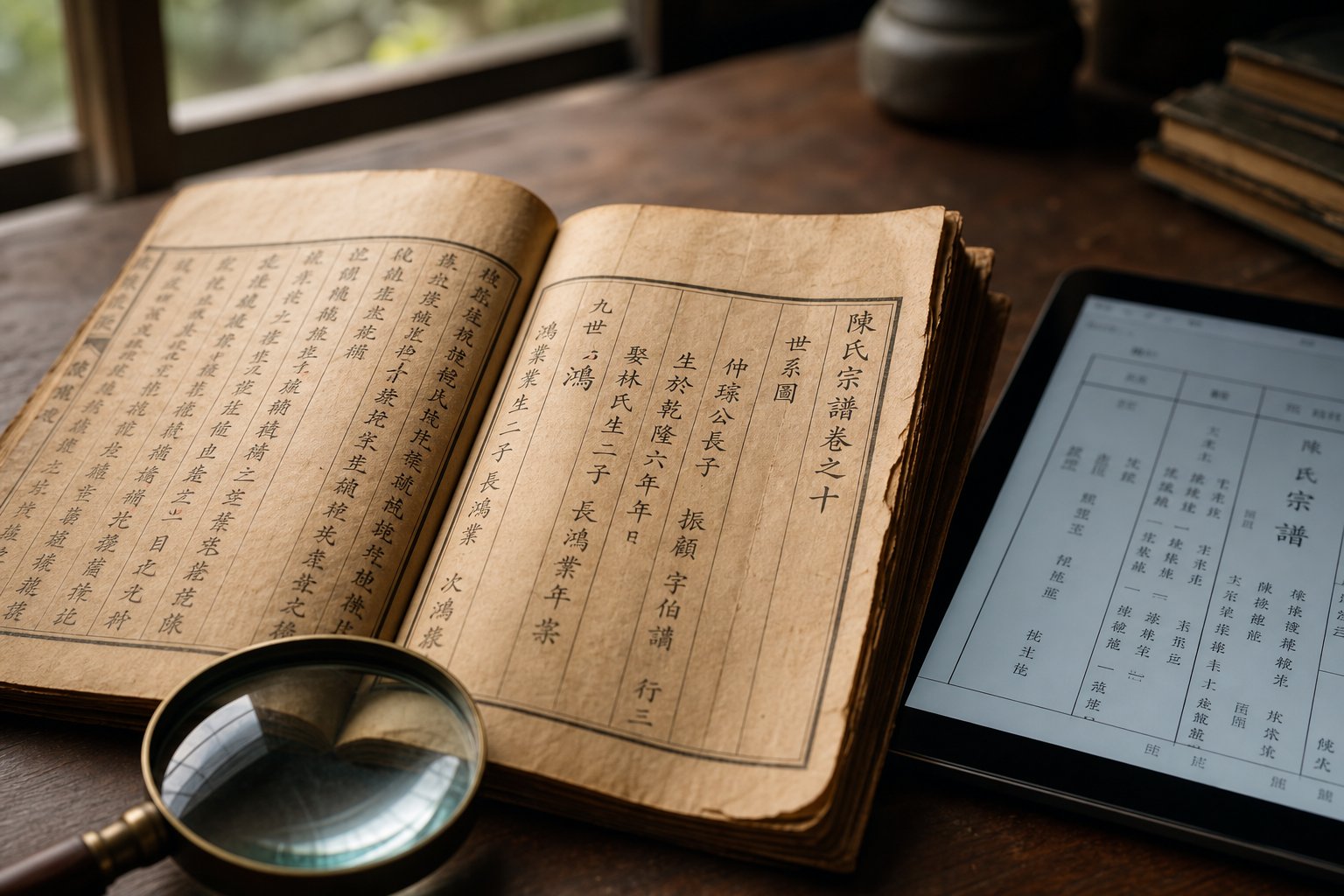
Knowing the origin of the sun's name is one thing. Connecting it to your own family line is another challenge entirely. Unlike Western genealogy, where church records and census data form the backbone of research, Chinese family history depends on a single document type that most people have never heard of: the zupu (族谱), or clan genealogy book. Over 138 Sun family tree books have been cataloged across multiple countries, but finding the right one and understanding what's inside requires a specific approach.
How to Read and Interpret a Sun Clan Zupu
A zupu can be anything from a few handwritten pages to a multi-volume publication covering dozens of generations. As Legacy Tree Genealogists explains, these books were compiled by clans to document their lineage, and they typically focus on a specific surname in a specific locality. For Sun families, that means a zupu might cover the Suns of Le'an in Shandong or the Suns of Fuchun in Zhejiang, each representing a distinct branch.
Most zupu follow a standard internal structure:
- Preface (序) - Written by a respected scholar or clan elder, explaining when and why the book was compiled or updated
- Lineage charts (世系图) - Generational diagrams showing father-son descent lines, sometimes spanning 20 to 50 generations
- Biographical entries (传记) - Short biographies of prominent ancestors, including official titles, accomplishments, and burial locations
- Clan rules (家规) - Regulations governing membership, behavior, and obligations to the clan
- Generation poems (字辈) - A sequence of characters used to name children according to their generation, allowing any clan member to identify another's generational rank by name alone
- Migration records (迁徙记) - Notes on when and why branches relocated, often the most valuable section for diaspora researchers
One important caveat: zupu were written to glorify ancestors. Compilers were selective about who they included. Individuals who disgraced the family were typically omitted, and since clans were patrilineal institutions, only minimal details were kept about wives, sisters, and daughters. Treat these records as you would any compiled family history source, valuable but not infallible.
People researching the sen surname, the su last name origin, or the sohn last name origin sometimes discover unexpected connections to Sun clan records. The sen last name origin in Bengali culture is distinct from the Chinese Sun, but in some Southeast Asian contexts, the sen family name appears as a phonetic adaptation of 孫. Similarly, those tracing the sung last name origin should verify whether their ancestor's character was 孫 (Sun) or 宋 (Song), as immigration records frequently conflated these distinct surnames.
Modern Resources for Tracing Sun Ancestry
Starting your research doesn't require a plane ticket to China. Here is a step-by-step approach:
- Identify your ancestral hometown - This is the village your emigrating ancestor came from. Ask older relatives for the Chinese name. Be aware that many village names changed during the twentieth century.
- Determine your hall name (堂号) - If your family preserved this information, it immediately narrows which branch and region to search.
- Search digital zupu databases - FamilySearch's Chinese genealogy collection holds digitized records. Provincial libraries in Shanghai, Guangdong, Fujian, and Beijing also maintain online catalogs, though most are in Chinese only.
- Contact the ancestral village - Reach out to village leadership with photographs and your ancestor's Chinese name, approximate departure date, and known relatives. They can confirm whether a zupu still exists locally.
- Check Southeast Asian clan associations - In Malaysia, Singapore, and Indonesia, local Sun clan associations sometimes preserve zupu that traveled out of China with emigrating members.
- Engage a specialist researcher - Zupu are written in classical Chinese that is literary and archaic. Translation requires someone familiar with these specific record types and the historical context they assume.
Beyond zupu, other record types can supplement your research:
- County gazetteers (地方志) - Local government records that sometimes mention prominent Sun families, available through Chinese university libraries
- Ancestral hall inscriptions - Stone tablets at surviving Sun ancestral halls recording donations, renovations, and clan events
- Overseas Chinese archives - Immigration records in destination countries (ship manifests, naturalization papers, business registrations)
- DNA testing - Modern genetic genealogy can confirm or challenge assumed lineage connections, particularly useful when paper records are missing
The zupu revival that began in the 1990s means new compilations are being produced across southern China. Many clans that lost their records during the Cultural Revolution have been reconstructing genealogies from surviving fragments, oral histories, and ancestral hall inscriptions. If your family's zupu was destroyed, a recently recompiled version may exist.
The practical reality is this: sun surname history is not locked in the past. It is actively maintained by living communities who still update their records, rebuild their halls, and welcome diaspora members who return with questions. The gap between knowing your surname's 3,000-year story and finding your own place within it is smaller than most families assume. It starts with one question to an older relative, one search in a digital database, or one letter to a village you've never visited but that your ancestors once called home.
Frequently Asked Questions About the Sun Surname History
1. What does the Sun surname mean in Chinese?
The Chinese character for Sun (孫 in traditional, 孙 in simplified) literally means 'grandson' or 'descendant.' It combines the character for 'child' (子) with a component representing threads or continuity (系), symbolizing the unbroken line of generations. Unlike surnames referencing the celestial sun, this name declares generational persistence and lineage continuity. It functions as both a common noun and a proper surname, with context determining the meaning.
2. Where does the Sun last name originate from?
The Sun surname has three distinct royal origins from the Zhou Dynasty era. The Ji lineage descends from King Wen of Zhou through the State of Wei (around 800 BC). The Gui lineage traces to the State of Qi, where Duke Jing bestowed the surname upon Tian Shu in 523 BC, producing Sun Tzu and Sun Quan. The Mi lineage comes from Sun Shu'ao, Prime Minister of the State of Chu. Additional branches formed through non-Han ethnic adoptions by Manchu, Mongol, Korean, and other groups over subsequent centuries.
3. How common is the Sun surname and where is it most concentrated?
The Sun surname ranks among the top 12 most common in China, with approximately 18.3 million bearers on the mainland alone. Globally, the number reaches roughly 20 million when including diaspora communities. It is most concentrated in Shandong, Henan, Jiangsu, and Zhejiang provinces within China. Internationally, significant populations exist in South Korea (as Son, around 450,000), Vietnam (as Ton), and across Southeast Asian nations including Malaysia, Singapore, Indonesia, and the Philippines.
4. Why is the Sun surname spelled differently in different countries?
The character 孫 is pronounced differently across Chinese dialects and East Asian languages, and each spelling preserves a snapshot of pronunciation at the time a community carried it abroad. In Mandarin it is Sun, in Cantonese it becomes Suen or Syun, in Hokkien it is Sng or Soon, in Vietnamese it is Ton, and in Korean it is Son. These are not errors or separate names but linguistic fossils marking specific moments when Sun clan branches crossed geographic or linguistic boundaries during historical migration waves.
5. How can I research my Sun family genealogy?
Start by identifying your ancestral hometown and hall name (tanghao) through older relatives. Then search digital zupu databases such as FamilySearch's Chinese genealogy collection, which holds digitized clan records. Over 138 Sun family tree books have been cataloged across multiple countries. You can also contact your ancestral village directly, check Southeast Asian clan associations that may hold emigrant records, or engage a specialist researcher familiar with classical Chinese genealogical texts. DNA testing can supplement paper records when documentation gaps exist.