What Makes Taiwanese Naming Conventions Unique
Taiwanese naming conventions are the cultural rules governing how names in Taiwan are structured, chosen, and used — following a surname-first, given-name-second format where characters are selected based on meaning, phonetic harmony, stroke count, and spiritual balance. While this system shares roots with broader Chinese naming traditions, Taiwan's layered history has produced something distinctly its own.
Why Taiwanese Names Are Distinct
Imagine meeting three people surnamed Chen. One spells it "Chen," another "Tan," and a third "Chin." All three characters are identical — the difference lies in dialect, romanization system, and personal history. This kind of complexity is everyday life in Taiwan. Names here carry the fingerprints of Hoklo and Hakka migration from Fujian and Guangdong, fifty years of Japanese colonial administration, postwar Mandarin standardization, and a globalized present where many Taiwanese also go by English names like "Kevin" or "Vivian."
Unlike mainland China, where Hanyu Pinyin is universal and naming culture follows a more uniform path, Taiwan names reflect competing romanization systems, regional dialect pronunciations, and spiritual practices that remain deeply embedded in daily life. Parents still consult fortune-tellers. Stroke counts still matter. And the legal system allows — with limits — name changes that would be unusual elsewhere.
A Multicultural Naming Landscape
Taiwan's population includes Hoklo (Minnan) speakers making up the majority, Hakka communities comprising roughly 19.3% of the population, 16 officially recognized indigenous nations with entirely separate naming traditions, and over 570,000 new immigrants reshaping the cultural fabric. Each group brings its own conventions to the table.
Taiwan's naming system is not simply "Chinese names with a twist." It is the product of indigenous roots, southern Chinese migration, colonial-era disruption, and modern reinvention — a layered identity expressed in just two or three characters.
The surname-first structure — where Lin Chi-ming is Mr. Lin, not Mr. Chi-ming — is just the starting point. What follows involves generational characters, gender conventions, spiritual numerology, legal restrictions, and a romanization puzzle that confuses even longtime residents. Each of these layers reveals something about how Taiwanese people understand identity, family, and belonging.
How Taiwanese Names Are Structured
So how are Chinese names structured in Taiwan specifically? The formula is deceptively simple: surname first, given name second. But within that compact frame, every character carries weight — phonetic, visual, and symbolic. Understanding the chinese name structure helps you avoid the most common mistakes foreigners make when reading, writing, or addressing Taiwanese names.
Surname Plus Given Name Order
In Western naming conventions, you'd say "David Chen." In Taiwan, it's reversed: Chen (surname) comes first, followed by the given name. The surname — called xing (姓) — represents lineage and family identity. It almost always consists of a single character. The given name — ming (名) — follows immediately after and serves as the personal identifier.
When written in Chinese characters, there's no space between the surname and given name. So 陳威廷 is simply a continuous string of characters. In romanized form, you'll typically see the surname separated: Chen Wei-Ting. Many Taiwanese capitalize the surname to reduce confusion — a practical convention since some characters can function as either surnames or given names.
Single vs Double Character Given Names
Most Taiwanese people of Han Chinese descent carry three-syllable names: one syllable for the surname, two for the given name. Sounds straightforward, right? Here's where it gets interesting. Fewer than 1 in 20 citizens has a single-syllable given name, and fewer than 1 in 100 has a two-syllable surname. The overwhelming default is a one-character surname paired with a two-character given name.
A two-character given name offers parents more room to layer meaning. One character might reflect a family tradition while the other expresses a personal aspiration. A single-character given name, though rarer, can feel more direct and modern — you'll see it more often among younger generations influenced by pop culture or international naming trends.
How Generational Characters Fit In
Some families embed a generational character — called beifenzi (輩分字) — within the given name. This shared character links siblings and cousins from the same generation, creating an audible thread of kinship. For example, siblings named Chen Chang-Hu and Chen Chang-Wei both carry "Chang" as their generational marker, with only the final character distinguishing them individually.
Not every family maintains this tradition. Some lineages have lost track of their generational poems over time, while smaller families simply choose not to use them. Still, when you encounter two people with the same surname and a shared character in their given names, there's a good chance you're looking at relatives from the same generation.
The table below breaks down how these components fit together in practice:
| Full Name | Surname (姓) | Generational Character | Individual Character | Meaning |
|---|---|---|---|---|
| Chen Wei-Ting (陳威廷) | Chen (陳) | — | Wei-Ting (威廷) | Dignified and courtly |
| Huang Hui-Wen (黃惠雯) | Huang (黃) | — | Hui-Wen (惠雯) | Gracious and refined |
| Jia Zhen-Ni (賈珍妮) | Jia (賈) | Zhen (珍) | Ni (妮) | Precious girl (Zhen shared among siblings) |
| Lin Chi-Ming (林志明) | Lin (林) | — | Chi-Ming (志明) | Aspiration and brightness |
Notice how the generational character, when present, occupies the first position of the given name. The individual character then fills the second slot, giving each person their unique identity within the family pattern. This chinese name convention — compact yet layered — packs family history, parental hopes, and personal identity into just two or three characters.
Of course, structure alone doesn't explain why certain surnames dominate the island or why some characters appear far more often than others. The answer lies in migration history and the handful of family names that followed settlers across the Taiwan Strait centuries ago.
Most Common Taiwanese Surnames and Their Origins
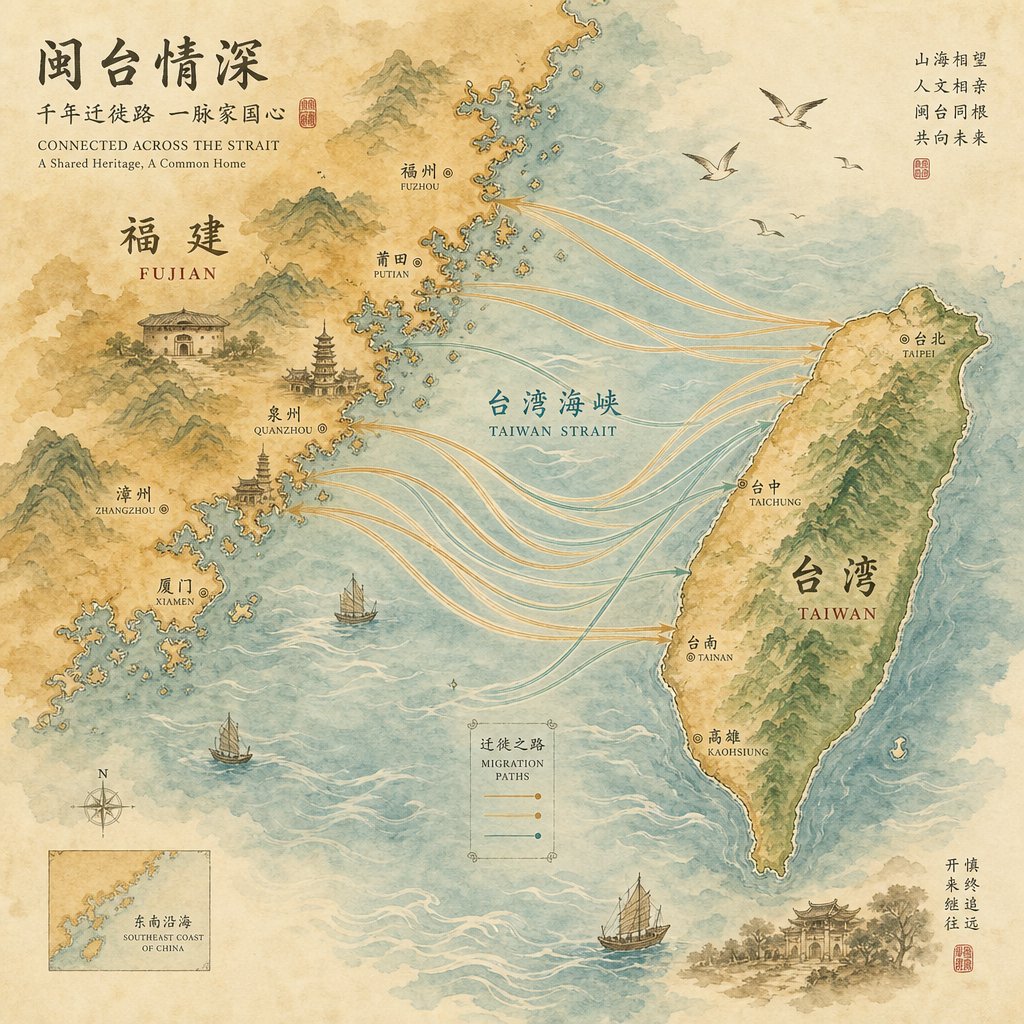
A handful of taiwanese last names dominate the island's population in a way that surprises most outsiders. According to Taiwan's Ministry of the Interior, people carrying one of the most common surnames in Taiwan account for 52.79 percent — roughly 12.33 million people — of the total population. That means more than half the island shares a surname with millions of others. The concentration is striking, and it traces directly back to the waves of settlers who crossed the Taiwan Strait from a narrow band of coastal China.
The Top Ten Taiwanese Surnames
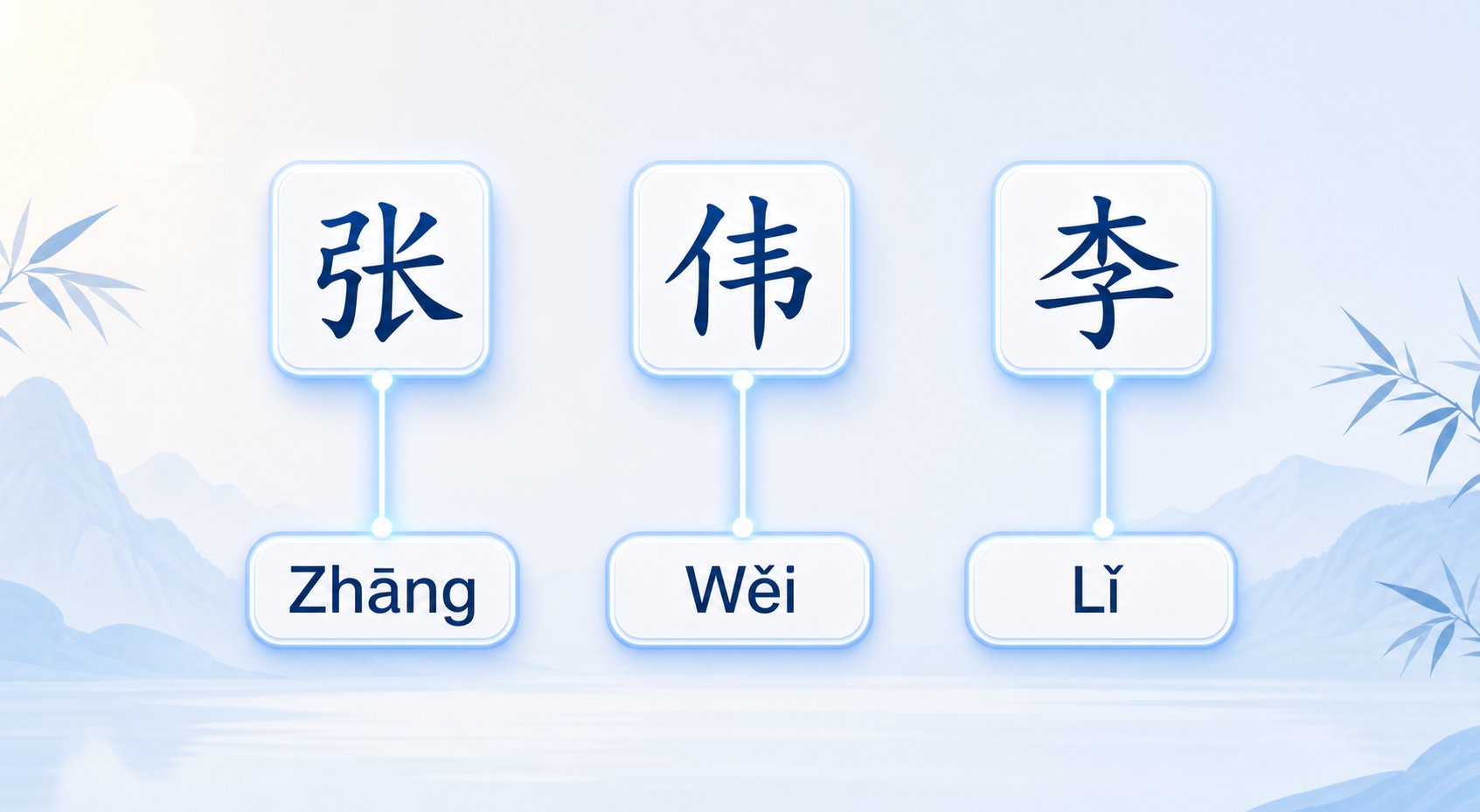
Chen (陳) sits firmly at the top. It accounts for approximately 11 percent of Taiwan's population, making it the single most common surname on the island. Lin (林) follows closely behind, then Huang (黃), Zhang (張), and Li (李). Together, these five taiwan surnames cover a massive share of the population. Rounding out the top ten are Wang (王), Wu (吳), Cai (蔡), Liu (劉), and Yang (楊).
If you've spent any time in Taiwan, you'll notice this concentration immediately. Walk into a classroom of thirty students and you might find five or six sharing the surname Lin or Chen. It's not unusual for offices to distinguish colleagues by adding a descriptor — "tall Chen" versus "young Chen" — because the surname alone isn't enough.
The table below shows how these surnames in taiwan appear across different romanization systems, reflecting the multiple spelling conventions you'll encounter on passports, business cards, and academic papers:
| Character | Hanyu Pinyin | Wade-Giles | Tongyong Pinyin | Hokkien (Minnan) | Approx. % of Population |
|---|---|---|---|---|---|
| 陳 | Chen | Ch'en | Chen | Tan | ~11% |
| 林 | Lin | Lin | Lin | Lim | ~8% |
| 黃 | Huang | Huang | Huang | Ng / Ong | ~6% |
| 張 | Zhang | Chang | Jhang | Tiu / Teo | ~5% |
| 李 | Li | Li | Li | Lee | ~4% |
| 王 | Wang | Wang | Wang | Ong | ~4% |
| 吳 | Wu | Wu | Wu | Goh / Go | ~4% |
| 蔡 | Cai | Ts'ai | Cai | Chua / Tsua | ~3% |
| 劉 | Liu | Liu | Liou | Lau | ~3% |
| 楊 | Yang | Yang | Yang | Iu / Yeoh | ~2% |
You'll notice that some surnames look identical across systems (Lin stays Lin everywhere), while others shift dramatically. Zhang becomes Chang in Wade-Giles and Jhang in Tongyong Pinyin — three different spellings for the same family. This is why taiwanese last names can be so confusing to outsiders encountering them for the first time.
Regional Origins and Migration Patterns
Why does Taiwan's surname distribution look so different from mainland China's? In China, Wang (王) is the most common surname, followed by Li (李) and Zhang (張). In Taiwan, Chen and Lin hold the top spots instead. The reason is geography and history.
The majority of Taiwan's Han population descends from immigrants who arrived from two specific regions: Fujian province (particularly Quanzhou and Zhangzhou) and eastern Guangdong. These weren't random cross-sections of China's population — they were coastal communities with their own surname concentrations. Chen and Lin happened to be dominant in southern Fujian, so when those communities transplanted themselves across the strait, they brought their surname ratios with them.
A genetic study by Dr. Lin Mali of Mackay Memorial Hospital found that Taiwan's ethnic composition breaks down to approximately 73.5% Minnan (southern Fujian), 17.5% Hakka, 7.5% post-1945 migrants from other mainland provinces, and 1.5% indigenous peoples. That Minnan supermajority explains why surnames common in Fujian — Chen, Lin, Huang — rank so much higher in Taiwan than they do across China as a whole.
The five historically prominent families of Taiwan illustrate this pattern clearly. The Banqiao Lin family, the Wufeng Lin family, the Keelung Yan family, the Lukang Gu family, and the Kaohsiung Chen family all trace their roots to Fujian immigrants who arrived during the Qing dynasty.
Hoklo and Hakka Surname Differences
Here's where things get particularly interesting for anyone trying to understand surnames in taiwan. The same Chinese character can sound completely different depending on whether the bearer's family speaks Hoklo (Minnan) or Hakka — and that pronunciation often determines how the name gets romanized on official documents.
Take the surname 陳. A Hoklo speaker pronounces it "Tan," while a Mandarin speaker says "Chen" and a Hakka speaker might say "Chin" or "Chan." The character 王 becomes "Ong" in Hokkien but stays "Wang" in Mandarin. These aren't alternative spellings of the same sound — they're entirely different phonetic systems applied to the same written character.
Among Taiwanese surnamed Huang (黃), roughly 80% trace their origins to Hoklo communities and about 15% to Hakka families. Both groups share the same character but may romanize it differently. A Hoklo-background Huang might appear as "Ng" or "Ong" on older documents, while a Hakka-background Huang could show up as "Wong" — the same surname, three possible spellings, depending on dialect heritage and which romanization system was in use when the passport was issued.
This dialect-driven variation means that taiwan surnames carry embedded information about a family's regional origins. Someone spelled "Tan" on their passport likely has Hokkien-speaking ancestors from southern Fujian. Someone spelled "Chan" may have Hakka or Cantonese roots from eastern Guangdong or western Fujian. The spelling itself becomes a quiet marker of migration history — a detail that most people outside Taiwan never notice, but one that Taiwanese people read instinctively.
These dialect layers also explain why the same person might introduce themselves differently depending on context — using Mandarin pronunciation in formal settings but reverting to Hokkien or Hakka pronunciation at home or in their ancestral village. A name isn't just a label; it's a bridge between the present and the specific corner of southern China a family left behind generations ago.
Surnames tell you where a family came from. But given names reveal something more personal — the hopes, values, and even gender expectations that parents project onto a child at birth.
Gender Conventions in Taiwanese Given Names
When you hear a Taiwanese name, can you guess whether it belongs to a man or a woman? In many cases, yes. Traditional taiwanese naming conventions encode gender through specific character choices that signal masculinity or femininity to any native reader. A name like Chi-ming (志明) reads unmistakably male, while Shu-fen (淑芬) is instantly recognized as female. These aren't arbitrary associations — they reflect centuries of cultural expectations about what men and women should aspire to be.
Research from Taiwan's Ministry of the Interior (2018) confirms that gendered naming patterns remain statistically dominant across the population. A study examining the 100 most frequently used names for each gender found clear clustering around specific character types — with boys' names showing higher overall diversity, reflecting traditional expectations that men occupy more varied social and public roles.
Traditional Characters for Boys
Taiwan male names tend to draw from a character pool that emphasizes strength, ambition, moral virtue, and achievement. These characters project outward — toward the world, toward action, toward legacy. Chi-ming (志明), the second most common men's given name in Taiwan, literally combines "aspiration" with "brightness." That pairing tells you everything about what parents traditionally wanted for their sons.
Common characters found in taiwanese boy names include:
- 志 (Zhi) — Ambition, will, aspiration
- 明 (Ming) — Brightness, clarity, wisdom
- 偉 (Wei) — Greatness, grandeur
- 建 (Jian) — To build, to establish
- 宏 (Hong) — Vast, grand, magnificent
- 俊 (Jun) — Talented, handsome, outstanding
- 德 (De) — Virtue, moral character
- 國 (Guo) — Nation, country (reflecting civic duty)
- 文 (Wen) — Literature, culture, refinement
- 信 (Xin) — Trustworthiness, integrity
You'll notice a pattern: these characters point toward public life, intellectual achievement, and moral strength. A boy named Jian-Hong (建宏) carries the meaning "to build something vast." A boy named Jun-De (俊德) is "outstanding in virtue." The names function almost like compressed mission statements — a family's hopes distilled into two syllables.
Traditional Characters for Girls
Taiwan female names historically draw from a different semantic universe. Where boys' names project outward, girls' names traditionally turn inward — toward beauty, grace, gentleness, and the natural world. Shu-fen (淑芬), the number-one female name in Taiwan for at least the past decade, combines "virtuous" with "fragrant" — evoking a quiet, refined femininity.
Characters commonly found in traditional female names include:
- 淑 (Shu) — Virtuous, gentle, refined
- 芬 (Fen) — Fragrant, sweet-smelling
- 美 (Mei) — Beautiful
- 雅 (Ya) — Elegant, graceful
- 婷 (Ting) — Graceful, slender
- 蓉 (Rong) — Lotus flower
- 薇 (Wei) — Fern or rosa, symbolizing resilience
- 靜 (Jing) — Quiet, serene, calm
- 玲 (Ling) — Tinkling of jade, delicate
- 嘉 (Jia) — Excellent, auspicious
Flowers, jade, serenity, fragrance — these characters paint a portrait of femininity rooted in Confucian ideals. Nature imagery dominates: orchids (蘭), snow (雪), and morning dew (露) all appear frequently. The underlying message is one of beauty that is quiet rather than commanding, precious rather than powerful.
This gendered divide isn't subtle. Native speakers can identify a name's likely gender with high accuracy based on character choice alone. Research on gender identification in Chinese names confirms that metaphoric imagery — flowers and beauty for women, mountains and ambition for men — serves as the primary signal.
The Rise of Gender-Neutral Names
Here's where things get interesting. Taiwan ranks among the most progressive societies in East Asia on gender equality — it has the highest percentage of female lawmakers in East Asia and legalized same-sex marriage in 2019. These shifts in social attitudes are showing up in naming practices too.
Younger Taiwanese parents increasingly choose characters based on meaning and aesthetic appeal rather than gender tradition, selecting names that work equally well for sons or daughters.
Gender-neutral names in Taiwan often feature characters with less obviously gendered connotations. Instead of "beautiful" or "mighty," parents reach for concepts like wisdom (哲, Zhe), joy (樂, Le), serenity (安, An), or light (晨, Chen — meaning "morning"). These characters carry positive meanings without signaling a specific gender to the reader.
The academic study of this trend reveals something nuanced: gender-neutral names don't simply avoid gendered characters. They often incorporate functional words or use metaphoric imagery in unconventional ways — a flower character in a boy's name, or a strength character in a girl's name. The boundaries are softening rather than disappearing entirely.
Names like Yu-Ting (宇庭) or Jia-En (嘉恩) now appear on both boys and girls without raising eyebrows. Characters such as 宇 (universe), 恩 (grace/kindness), and 翔 (soaring) occupy a middle ground that earlier generations would have coded more strictly. This evolution mirrors broader cultural changes — as rigid gender roles loosen in Taiwanese society, the naming system absorbs and reflects that flexibility.
Still, the shift is gradual rather than revolutionary. Grandparents and fortune-tellers often push back, and the older generation's preferences still carry weight in a culture that values family consensus. The result is a naming landscape in transition — where traditional gendered characters coexist with newer, more fluid choices, and where the characters parents select reveal as much about their generation as about their child.
Gender expectations shape which characters feel appropriate. But the actual selection process involves far more than personal taste — it draws on spiritual systems, numerological calculations, and cosmological frameworks that most outsiders never see.
The Art and Spirituality of Choosing a Taiwan Name
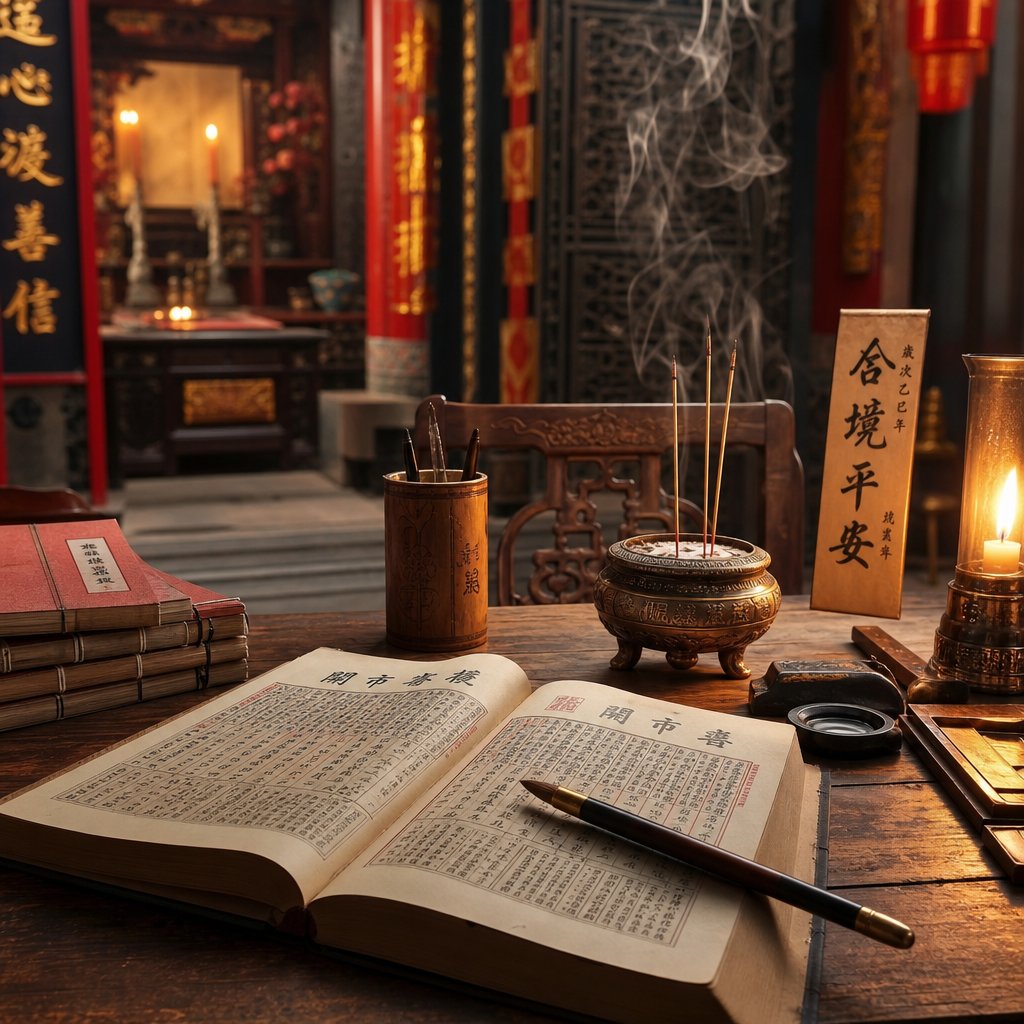
Picking a name in Taiwan isn't a casual afternoon decision. It's a process that can stretch over weeks, involve multiple consultations, and draw on cosmological systems dating back thousands of years. For many families, choosing a taiwan name is closer to commissioning a spiritual blueprint than filling out a birth certificate. The characters parents select aren't just labels — they're believed to shape a child's fortune, health, and life trajectory.
This is where chinese naming conventions diverge sharply from Western practices. In English-speaking countries, parents might choose a name because it sounds nice or honors a relative. In Taiwan, the selection process often involves fortune-tellers, numerological calculations, and elemental balancing — a system called xingmingxue (姓名學, "name science" or onomastics) that treats naming as a living cultural practice millions of families engage in seriously.
Fortune-Telling and Birth Charts
Imagine this: a baby is born at 3:47 a.m. on a Tuesday in the Year of the Dragon. Before the parents even discuss favorite characters, many will visit a fortune-teller — often one stationed near a local temple — to have the child's bazi (八字, "Eight Characters") calculated. The bazi is derived from the year, month, day, and hour of birth, each mapped to a pair of celestial stems and earthly branches from the traditional Chinese calendar.
This birth chart reveals which of the five elements — metal (金), wood (木), water (水), fire (火), and earth (土) — are strong or weak in the child's cosmic makeup. A child born with an excess of fire and a deficiency of water, for example, needs a name containing characters associated with water to restore balance. The fortune-teller's job is to diagnose these imbalances and recommend character types that compensate for them.
The price of this consultation depends on the fortune-teller's reputation. Some charge modest fees; well-known practitioners in cities like Taipei or Tainan can command significantly more. Either way, the advice carries real weight. Parents rarely override a fortune-teller's elemental recommendations, even if they had a different character in mind.
Stroke Counting and the Five Elements
Beyond elemental balance, the total number of strokes in a name matters enormously. This is the chinese naming convention that surprises most outsiders — the idea that the physical complexity of a written character (how many pen movements it requires) carries numerological significance.
Each Chinese character has a fixed stroke count. The character 人 (person) has two strokes; 天 (heaven) has four. In the naming system, characters with an even number of strokes are classified as Yin, while odd-numbered strokes are Yang. A well-constructed name must balance these forces across its components.
The calculation goes deeper than simple odd-or-even classification. A traditional Chinese name is analyzed in segments:
- Tian ge (天格) — the "heaven" component, derived from the surname
- Ren ge (人格) — the "person" component, combining the surname with the first character of the given name
- Di ge (地格) — the "earth" component, formed by the given name characters
- Zhong ge (忠格) — the total name considered as a whole
The total stroke count of the zhong ge should ideally equal one of a set of auspicious numbers — including 3, 5, 6, 7, 8, 11, 13, 15, 16, 17, 18, 21, 23, 25, 29, 31, 32, 33, 37, 39, 45, 47, 48, 52, 63, 65, 67, 68, 73, or 81. Names whose strokes fall outside these numbers are considered less fortunate. Additionally, the Yin-Yang pattern across the three characters must follow specific sequences — such as Yang-Yang-Yin or Yin-Yang-Yang — to achieve proper balance.
This is why parents can't simply pick their favorite characters and call it done. A beautiful character with the wrong stroke count might throw the entire name out of alignment. The process often involves testing dozens of character combinations before finding one that satisfies both meaning and numerology.
Sound and Visual Balance in Character Choice
Numbers and elements aren't the only considerations. A name also needs to sound right when spoken aloud and look right when written on paper. Tonal flow matters — Mandarin has four tones, and a name where all characters share the same tone can sound flat or awkward. Parents say the full name aloud repeatedly, testing how it rolls off the tongue in conversation, in a classroom roll call, in a shout across a crowded room.
Visual balance plays a role too. Characters vary dramatically in complexity — some are just a few strokes, others are dense clusters of twenty or more. A name pairing an extremely simple character with an extremely complex one can look lopsided when written. Aesthetically minded parents seek characters that complement each other visually, creating a name that looks harmonious on a page, a business card, or a wedding invitation.
Phonetic pitfalls also demand attention. A name that sounds elegant in isolation might become a homophone for an embarrassing word when combined with the surname. Parents — and fortune-tellers — test for these collisions by running through dialect pronunciations as well, since a name that works in Mandarin might sound unfortunate in Hokkien or Hakka.
So what does the full process actually look like from start to finish? Here's the typical sequence a Taiwanese family follows when naming a child:
- Record the exact birth time — year, month, day, and hour are all needed for the bazi calculation.
- Consult a fortune-teller or name specialist — the practitioner analyzes the birth chart to identify elemental strengths and deficiencies.
- Receive elemental recommendations — the fortune-teller specifies which element(s) the name should reinforce (e.g., "this child needs water and wood").
- Generate candidate characters — parents and the fortune-teller brainstorm characters that match the required elements, carry positive meanings, and avoid taboo associations.
- Calculate stroke counts — each candidate combination is tested against numerological requirements for auspicious totals and proper Yin-Yang balance.
- Test phonetic and tonal harmony — the full name is spoken aloud in Mandarin and relevant dialects to check for awkward sounds or unfortunate homophones.
- Evaluate visual balance — the characters are written together to confirm they look proportionate and aesthetically pleasing.
- Finalize and register — once a name passes all checks, it's registered at the local household registration office within the legal deadline.
This multi-layered process explains why naming in Taiwan can take days or even weeks after a child's birth. It's not indecision — it's due diligence. Every character must satisfy spiritual, numerical, phonetic, and aesthetic criteria simultaneously. The result is a name that functions less like a label and more like a carefully calibrated talisman.
Yet even with all this care, certain characters remain permanently off-limits — not because of stroke counts or elemental mismatch, but because of deeply rooted cultural taboos that no amount of numerological perfection can override.
Naming Taboos and Generational Traditions
A name can pass every numerological test, satisfy the five elements, and sound beautiful in three dialects — and still be rejected instantly by a grandparent. Why? Because it violates a naming taboo. In Taiwanese culture, certain characters are simply off-limits regardless of how auspicious their stroke count might be. These prohibitions, rooted in the ancient practice of bihu (避諱), carry a weight that no fortune-teller's endorsement can override.
Naming Taboos and Characters to Avoid
The concept of bihu dates back to imperial China, where using a character from the emperor's name was a punishable offense. Taiwan no longer has emperors, but the underlying logic persists at the family level. The rules aren't written in any legal code — they live in family memory, enforced by elders who remember exactly which characters belong to whom.
Here are the main categories of naming taboos that Taiwanese families observe:
- Elder name avoidance (家諱) — A child's name must not contain any character used in the names of parents, grandparents, or other senior relatives. Using a grandfather's character is considered deeply disrespectful, as if claiming equality with someone who holds generational authority over you.
- Death and misfortune associations (凶字) — Characters directly linked to death (死, 亡, 喪), illness (病, 疾), or suffering (苦, 哀) are universally avoided. Even characters that merely suggest decline or endings — like 落 (to fall) or 暮 (dusk/twilight) — make parents uneasy.
- Homophone collisions (諧音禁忌) — A character might look perfectly fine on paper but sound identical to an unlucky or embarrassing word when spoken aloud. The surname-plus-given-name combination gets tested across Mandarin, Hokkien, and Hakka pronunciations to catch these collisions. A name that sounds like "lose money" or "early death" in any local dialect is immediately discarded.
- Overly grand or presumptuous characters (過大字) — Some families avoid characters like 天 (heaven), 帝 (emperor), or 龍 (dragon) for fear that a child's fate cannot "carry" such weight. The belief is that an ordinary person bearing an excessively powerful name invites misfortune rather than greatness.
- Characters shared with infamous figures — If a character is strongly associated with a notorious historical figure or a convicted criminal in the news, families steer clear. No one wants their child's name to trigger an immediate negative association.
These taboos operate simultaneously. A character might be phonetically perfect and numerologically ideal, yet fail because it duplicates great-uncle's name or sounds like a curse word in Hokkien. The elimination process is ruthless — and it's one reason why naming a child in Taiwan takes so much longer than outsiders expect.
Generational Names in Family Lineages
Generational names — called zibei (字輩) or paihangzi (排行字) — represent one of the oldest organizational systems in Chinese family culture. The idea is elegant: a clan establishes a poem or sequence of characters, and each generation takes the next character in the sequence as a shared element in their given names. Cousins born in the same generation all carry the same character, making kinship immediately visible.
Picture a family whose generational poem includes the sequence 文-明-德-志. The great-grandfather's generation all share 文 in their names. The grandfather's generation shares 明. The father's generation shares 德. And the current generation shares 志. When two strangers with the same taiwanese surname discover they share a generational character, they can instantly calculate their relative position in the family tree.
In practice, this tradition is fading. Urbanization has scattered extended families across the island and overseas. Many younger parents have never seen their family's generational poem — or don't know it exists. The tradition survives most strongly in families that maintain ancestral halls, participate in clan associations, or come from Hakka communities where lineage consciousness remains particularly strong.
Even where generational names have declined, their echo persists. Siblings in Taiwan still frequently share one character in their given names — not because of a formal generational poem, but because parents like the aesthetic symmetry. A brother named Wei-Jie (偉傑) and a sister named Wei-Ling (偉玲) share 偉 as a sibling marker rather than a clan-wide generational character. It's the tradition in miniature, adapted for nuclear families.
Legal Rules for Names in Taiwan
Cultural taboos are enforced by family pressure. Legal rules, on the other hand, are enforced by the household registration office. Taiwan's Name Act establishes clear boundaries around what a legal name can look like and when it can be changed.
The structural requirements are straightforward. Article 3 of the Name Act mandates that Chinese-language names follow a surname-first, given-name-second order, with no space or symbol between them. Article 2 restricts character choices to those found in four approved dictionaries: the Ci Yuan, the Ci Hai, the Kangxi Dictionary, and the Ministry of Education's Guoyu Cidian. Characters not found in these references cannot be used — which means invented characters or extremely obscure variants are legally prohibited.
What about name changes? Taiwan is notably more flexible here than many Asian countries. Under Article 9 of the Name Act, a person may apply to change their given name under several conditions, including:
- Sharing the same full name with a colleague or classmate at their workplace or school
- Having the same given name as a close elder relative within three degrees of kinship
- Sharing a full name with someone registered in the same municipality for over six months
- Having the same name as a criminal suspect with an outstanding arrest warrant
- Having a name deemed "unflattering" or with special considerations
That last category — "unflattering" names — is the one most Taiwanese people use. Under this provision, a person can change their given name up to three times in their lifetime, though the second change requires the applicant to have reached the age of majority. This relative ease of legal name changes explains why Taiwan has a notably high rate of name modifications compared to neighboring countries. Some people change names after consulting a new fortune-teller; others do so after a run of bad luck they attribute to poor name energy.
Indigenous Taiwanese have additional rights under the law. Article 1 allows indigenous persons to register names under their own cultural customs, using indigenous scripts rather than Chinese characters. Those who previously registered Han Chinese names may apply to restore their ethnic names — a provision that reflects Taiwan's evolving recognition of indigenous identity and the colonial-era forced assimilation that stripped many families of their original names.
One important restriction: Articles 15 bars anyone with an outstanding arrest warrant or an active prison sentence from changing their name. The law explicitly prevents name changes from being used to evade legal accountability — a practical safeguard that closes an obvious loophole.
These legal frameworks interact with cultural practices in ways that aren't always obvious. A family might choose a name that satisfies every spiritual and aesthetic criterion, only to discover at the registration office that one character isn't in the approved dictionaries. Or a young adult might legally change a name their parents spent weeks selecting — a decision that can create real family tension, especially if the original name was chosen by a respected fortune-teller.
Between cultural taboos, generational expectations, and legal constraints, the boundaries around taiwanese surnames and given names are tighter than they first appear. But there's another layer of complexity that trips up foreigners more than any taboo or law: the question of how these names get spelled in Roman letters — and why the same person might appear under three different spellings depending on the document.
Romanization Systems and Name Spelling
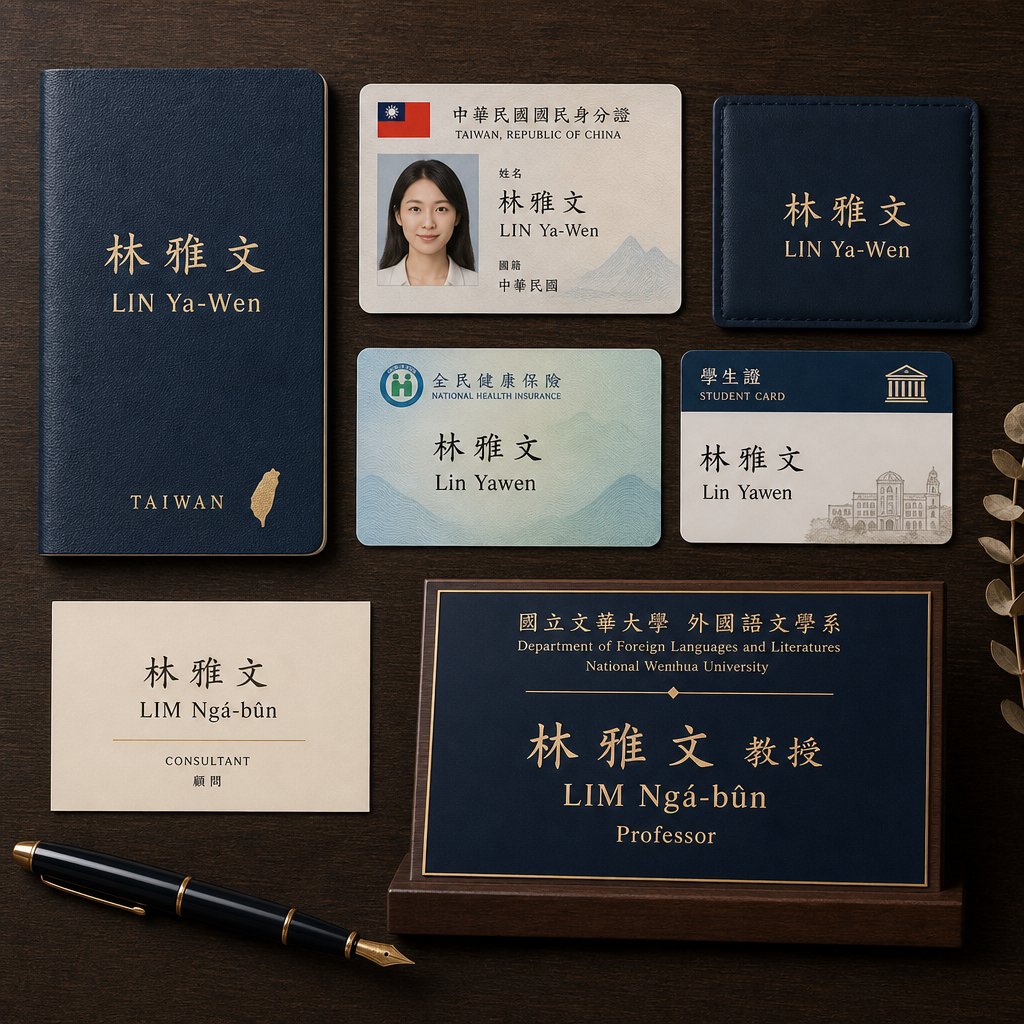
You've seen the same Taiwanese person's name spelled three different ways across a passport, a business card, and an academic paper. It's not a typo. Taiwan's romanization history is a patchwork of competing systems, dialect pronunciations, and personal choices — all layered on top of each other over more than a century. Understanding taiwan spelling conventions means accepting that there is no single "correct" way to write a Taiwanese name in Roman letters. There are only systems, each with its own logic and legacy.
Wade-Giles vs Hanyu Pinyin vs Tongyong Pinyin
Three romanization systems have dominated Taiwanese names at different points in history. Each one transliterates Mandarin sounds into the Latin alphabet using slightly different rules, which means the same character produces different spellings depending on which system was in use when a person first registered their name.
Wade-Giles was the historic default. Developed in the 19th century and given its completed form by Herbert Giles in 1892, this system dominated Taiwanese passports and official documents for decades. Most people in Taiwan still romanize their names using a simplified version of Wade-Giles — one that drops the diacritics, tone marks, and apostrophes of the formal system. Under Wade-Giles, the surname 張 becomes "Chang," 蔡 becomes "Ts'ai," and 謝 becomes "Hsieh."
Tongyong Pinyin had a brief official run. Adopted as the national standard in 2002, it was designed as a compromise — similar enough to Hanyu Pinyin for international readability, but with modifications meant to better represent Taiwanese Mandarin pronunciation. Cities like Kaohsiung adopted it for street signs, and some people registered passport names under this system during its short window of dominance.
Hanyu Pinyin is the current standard. Taiwan officially switched to Hanyu Pinyin in 2009, aligning with the system used internationally for romanized Chinese. Under Taiwan's Ministry of Education guidelines, the surname comes before the given name without a comma, only initials are capitalized, and the given name characters are written together without a space. So 陳志明 becomes "Chen Zhiming" in the official format.
Here's the catch: most Taiwanese people who registered their passport names before 2009 kept their older spellings. Changing a romanized name on a passport creates headaches — bank accounts, diplomas, international publications, and visa histories all reference the original spelling. So the population carries a living archive of every system that was ever in use.
Why Taiwanese Surnames Have Multiple Spellings
The romanization system explains part of the variation. But dialect is the other half of the puzzle. When you encounter tiwan names spelled "Tan" instead of "Chen," or "Lim" instead of "Lin," you're not looking at a different romanization of Mandarin — you're looking at a completely different language.
Taiwan's Ministry of Foreign Affairs amended the Passport Act in 2019 to allow romanized names transliterated from Hoklo, Hakka, or indigenous languages — not just Mandarin. This means a person surnamed 陳 can now legally register as "Tan" (Hokkien pronunciation) rather than "Chen" (Mandarin). Someone surnamed 蕭 might appear as "Siew" (Hokkien) rather than "Xiao" (Pinyin) or "Hsiao" (Wade-Giles).
Political figures illustrate this perfectly. Former vice-president Vincent Siew's surname uses a rare Hokkien romanization of 蕭. Vice-president Hsiao Bi-khim has a given name romanized in Hokkien rather than Mandarin. And the given names of presidents Ma Ying-jeou and Tsai Ing-wen are romanized in yet another system — Gwoyeu Romatzyh — rather than Wade-Giles or Pinyin.
The table below shows how common surnames appear across different systems and dialects:
| Character | Hanyu Pinyin | Wade-Giles | Tongyong Pinyin | Hokkien | Hakka |
|---|---|---|---|---|---|
| 陳 | Chen | Ch'en | Chen | Tan | Chin / Chan |
| 林 | Lin | Lin | Lin | Lim | Lim |
| 黃 | Huang | Huang | Huang | Ng / Ong | Wong / Vong |
| 張 | Zhang | Chang | Jhang | Tiu / Teo | Chong |
| 蔡 | Cai | Ts'ai | Cai | Chua / Tsua | Tsoi |
| 謝 | Xie | Hsieh | Sie | Chia / Sia | Tsia |
Notice how 林 stays "Lin" or "Lim" across nearly every system — it's one of the few surnames with minimal variation. Meanwhile, 謝 can appear as Xie, Hsieh, Sie, Chia, or Sia depending on the system and dialect. Someone encountering these spellings without context would never guess they all represent the same family name.
This variation isn't random or careless. Each spelling encodes a specific choice — which language the bearer identifies with, which era they registered their documents in, and sometimes which political stance they hold toward standardization. A taiwan spelling on a passport is, in its own quiet way, a statement of identity.
English Names and Nicknames
Beyond romanization, there's another naming layer that's become nearly universal among younger Taiwanese: the English name. Walk into any office in Taipei and you'll hear colleagues calling each other "Kevin," "Amber," or "Jasper" — names chosen not at birth but often in elementary school English class, at a cram school, or during college.
A taiwan nickname in English serves a practical function. It gives international contacts something easy to pronounce and remember. It sidesteps the romanization confusion entirely — no one needs to figure out whether you're "Hsieh" or "Xie" if you simply go by "Eric." For many Taiwanese professionals working in global companies, the English name becomes their primary identifier in the workplace while their Chinese name remains the one used at home and on legal documents.
The selection process for English names ranges from deliberate to whimsical. Some people choose names that phonetically echo their Chinese given name — a woman named 美玲 (Mei-Ling) might go by "Melanie." Others pick names from favorite movies, novels, or musicians. A few end up with names assigned by English teachers in childhood that they never bothered to change, even if the name feels slightly odd to native English speakers.
Unlike Chinese given names, English names carry no spiritual weight, no stroke-count calculations, no elemental balancing. They exist in a separate register — informal, flexible, and easily swapped. It's not unusual for someone to use one English name in college, adopt a different one at their first job, and settle on a third by their thirties. This fluidity stands in sharp contrast to the careful, fortune-teller-guided process behind their Chinese name.
The coexistence of a formal Chinese name, a romanized passport spelling, and a casual English name means that a single Taiwanese person might operate under three or four different identifiers depending on context. 陳志明 at the household registration office, "Chen Chih-Ming" on the passport, "Chen Zhiming" in academic publications, and "Jason" at work. Each version is real. Each serves a purpose. And navigating between them is something most Taiwanese people do without a second thought — a quiet act of code-switching that reflects the island's position between tradition and globalization.
These layered identities aren't static. The systems people choose, the spellings they keep, and the English names they adopt all shift with generational attitudes — and the trends reshaping Taiwanese naming today look nothing like the patterns their grandparents followed.
Modern Naming Trends Reshaping Taiwan
A generation ago, naming a child in Taiwan meant consulting a fortune-teller, honoring the family's generational poem, and selecting characters that balanced the five elements. Today, younger parents are just as likely to scroll through social media for inspiration, test how a name looks as an Instagram handle, or pick characters from a favorite drama. The rules haven't disappeared — but they're competing with new priorities that would have been unthinkable to previous generations.
The Decline of Traditional Naming Patterns
Generational names — those shared characters linking cousins and siblings across a family tree — are quietly fading from use. In earlier decades, a family's zibei poem dictated which character each generation would carry. Skipping your assigned character was a minor act of rebellion. Today, most urban parents under 40 have never seen their family's generational poem, and many don't know one exists.
The reasons are structural. Smaller family sizes mean fewer cousins to coordinate with. Geographic mobility scatters relatives across cities and continents. And the cultural authority of clan elders — the people who once enforced these systems — has weakened as nuclear families make decisions independently. The result is that taiwan names male and female alike increasingly reflect individual parental taste rather than lineage obligation.
Fortune-telling hasn't vanished, but its grip has loosened. Some parents still consult practitioners for stroke counts and elemental balance, yet treat the recommendations as one input among many rather than a binding verdict. Others skip the process entirely, choosing characters purely for meaning and sound — a shift that would have alarmed their grandparents.
Pop Culture and Creative Character Choices
Where tradition retreats, pop culture fills the gap. Television dramas, anime, K-pop, and social media influencers now shape which characters feel fresh and desirable. A popular drama character's name can trigger a visible spike in registrations the following year. Parents notice which names sound modern, which ones photograph well on birth announcements shared online, and which ones carry the right cultural associations for a generation growing up bilingual.
The trend toward rare or unusual characters is accelerating. Rather than defaulting to time-tested combinations like Chi-Ming or Shu-Fen, younger parents seek out less common characters that make their child's name distinctive. This mirrors a broader cultural shift toward individuality — the same impulse that drives unique fashion choices and personal branding on social platforms.
Famous people from Taiwan illustrate how naming choices signal identity in public life. President Tsai Ing-wen's romanized name uses a non-standard spelling that departs from strict Wade-Giles (which would render her name as "Tsai Ying-wen"), reflecting a deliberate choice about how she presents herself internationally. Legislator Freddy Lim chose his English name after horror icon Freddy Krueger — a playful, personal decision that carries no traditional weight but communicates personality instantly. These public examples normalize the idea that names are tools for self-expression, not just inherited obligations.
Navigating Bicultural Identity Through Names
The most significant modern shift may be the growing practice of choosing names that work across languages. Parents raising children in a globalized Taiwan — where English education begins in elementary school and international careers are common — increasingly think about how a name will function outside Chinese-speaking contexts.
This doesn't mean abandoning Chinese names. Instead, it means selecting characters whose romanized forms are easy for foreigners to pronounce, or choosing given names that echo common English names phonetically. A child named 凱文 (Kai-Wen) carries a name that sounds close to "Kevin" without being a direct transliteration. A girl named 艾莉 (Ai-Li) has a name that reads naturally as "Ellie" to English speakers while remaining a legitimate Chinese character combination.
The tension at the heart of modern Taiwanese naming is this: how do you honor a system built on ancestral wisdom, spiritual balance, and family continuity while also giving your child a name that works on a LinkedIn profile, a conference badge, and a passport that crosses dozens of borders?
Research confirms that acquiring an English name has become an integral part of Taiwanese culture, with nearly every young adult carrying one alongside their Chinese name. Almost 40% of surveyed Taiwanese young adults value their English name as much as their Chinese name — treating it not as a throwaway classroom label but as a genuine second identity. The selection is frequently motivated by Western popular culture, favorite TV characters, musicians, or carefully chosen names from dictionaries.
For female taiwan names, this bicultural approach often means parents select characters that are both aesthetically meaningful in Chinese and phonetically accessible in English. The same applies to boys' names — parents want something that carries weight in both worlds. The old binary between "Chinese name for home" and "English name for abroad" is blurring into something more integrated, where both names feel equally real and equally personal.
Taiwan's naming landscape is evolving faster than at any point in its history. Generational poems give way to Instagram aesthetics. Fortune-tellers compete with baby-name apps. And the question isn't whether tradition will survive — it's how it will adapt. What remains constant is that names in Taiwan still carry social meaning in every interaction, which raises a practical question for outsiders: once you know someone's name, how do you actually use it without causing offense?

How to Address Taiwanese People Respectfully
You've learned how names are structured, chosen, and spelled. But knowing someone's name and knowing how to use it are two different things. In Taiwan, the wrong form of address can make you sound presumptuous, overly familiar, or just plain rude — even when you mean well. The gap between what do you call people from taiwan in theory and how you actually address them in practice trips up foreigners constantly.
The core principle is simple: people generally address one another by their full name, not just the given name. Using someone's given name alone is considered the most intimate form of address — reserved for family members, romantic partners, and very close friends. Call a colleague or new acquaintance by their given name without invitation, and you've skipped several levels of social closeness they didn't agree to.
Professional vs Casual Forms of Address
In a business meeting or formal setting, the safest approach is surname plus title. What do you call someone from taiwan in a professional context? You use their family name followed by an appropriate honorific: Chen Xiansheng (Mr. Chen), Lin Xiaojie (Ms. Lin), or their occupational title — Huang Jiaoshou (Professor Huang), Wang Laoshi (Teacher Wang). Notice the order: in Chinese, the family name comes before the title. When translated into English, the title flips to the front — Professor Huang, Teacher Wang.
Using a surname alone — just "Chen" or "Lin" without any title — can sound abrupt or even dismissive in Mandarin. It's the equivalent of barking someone's last name at them in a hallway. Always pair the surname with something: a title, an honorific, or at minimum the prefix Xiao (小, for someone younger) or Lao (老, for someone older), which signal familiarity and warmth rather than formality.
In casual settings, especially among younger Taiwanese, English names dominate. Colleagues who would never use each other's Chinese given names freely call each other "Kevin" or "Amber" without any sense of overstepping. The English name occupies a middle ground — neither overly formal nor too personal — making it the default in educational and commercial environments. If someone introduces themselves with an English name, use it. That's the clearest signal of their preference.
Titles and Honorifics in Daily Life
What are taiwan people called in everyday interactions? It depends entirely on context and relationship. Taiwanese culture maintains a layered system of address that shifts based on age, seniority, and closeness:
- Strangers and formal settings — Surname + title (Xiansheng, Xiaojie, or professional title). This is the default for anyone you don't know well.
- Workplace peers — English name, full Chinese name, or surname + Xiao/Lao prefix depending on relative age.
- Close friends — Chinese nickname, English name, or occasionally given name if the friendship is long-established.
- Family and romantic partners — Given name alone, kinship terms (big sister, second brother), or pet names.
Occupational titles carry particular weight. A doctor is addressed as Yisheng, a boss as Laoban, a teacher as Laoshi. These aren't just polite — they're expected. When greeting a professional, Taiwanese generally address them by their surname followed by their title. Dropping the title in favor of just a name can feel like you're ignoring their professional standing.
Among close friends and relatives, kinship-style terms signal endearment. Someone might call a slightly older friend Jie (姐, older sister) or a younger colleague Xiao + surname. These terms indicate closeness and affection rather than literal family relationships — a social warmth that formal titles can't convey.
Asking for and Using Preferred Names
Here's the practical reality: many Taiwanese people operate under several names that they use interchangeably across different circumstances — a legal Chinese name, a romanized passport name, an English name, and possibly a nickname. A Taiwanese person will usually tell you which name to use. If they don't volunteer it, asking is perfectly acceptable and even appreciated.
A simple "What should I call you?" or "What name do you prefer?" removes all guesswork. This is especially important when meeting diaspora Taiwanese who navigate dual naming daily — switching between their Chinese name with family and their English name at work or school. Don't assume which version they prefer in your shared context. Let them tell you.
For quick reference, here's a list of dos and don'ts when addressing Taiwanese people:
- Do use someone's full name or surname + title when meeting them for the first time.
- Do use their English name if they introduce themselves with one — it signals their preference.
- Do ask which name or form of address they prefer if you're unsure.
- Do use professional titles (Teacher, Professor, Doctor) when addressing someone in their professional capacity.
- Don't use a given name alone unless explicitly invited to or unless you share a close personal relationship.
- Don't use a bare surname without a title — it sounds curt and impersonal.
- Don't assume the first part of a romanized name is the given name — remember, surname comes first in Chinese order.
- Don't shorten or create a nickname for someone's Chinese name without their permission.
- Don't insist on using someone's Chinese name if they've offered an English alternative — respect the boundary they're setting.
The underlying logic across all these guidelines is the same: let the person define how they want to be addressed, and match your level of familiarity to the actual closeness of the relationship. Taiwanese naming conventions encode social distance into every interaction. Getting the address right isn't just politeness — it's a signal that you understand and respect the relationship as it actually stands, not as you might wish it to be.
Frequently Asked Questions About Taiwanese Naming Conventions
1. Why do Taiwanese names have the surname first?
In Taiwanese naming conventions, the surname (xing) precedes the given name (ming) because family identity takes precedence over individual identity in Chinese cultural tradition. The surname represents lineage and ancestral connection, while the given name expresses personal aspirations. This order is the opposite of Western naming conventions, so a person named Chen Wei-Ting is Mr. Chen, not Mr. Wei-Ting. When written in Chinese characters, there is no space between the surname and given name, though romanized versions typically separate them for clarity.
2. How do Taiwanese parents choose a name for their child?
Many Taiwanese families follow a multi-step process that blends spirituality with aesthetics. Parents often consult a fortune-teller who analyzes the child's birth chart (bazi) to identify which of the five elements — metal, wood, water, fire, or earth — need strengthening. Characters are then selected to restore elemental balance. Each candidate name is tested for auspicious stroke counts, proper Yin-Yang balance, tonal harmony in Mandarin and local dialects, and visual proportion when written. The process can take days or weeks, as every character must satisfy spiritual, numerical, phonetic, and aesthetic criteria simultaneously.
3. Why is the same Taiwanese surname spelled differently on different documents?
Taiwan has used multiple romanization systems over the past century — Wade-Giles, Tongyong Pinyin, and Hanyu Pinyin — each producing different spellings for the same character. Additionally, dialect pronunciation creates further variation: the surname character for Chen in Mandarin becomes Tan in Hokkien and Chin in Hakka. Since most people keep the romanized spelling they first registered on their passport, Taiwan's population carries a living archive of every system that was ever official. A 2019 amendment also allows names romanized from Hoklo, Hakka, or indigenous languages, adding even more legitimate spelling variants.
4. Can Taiwanese people legally change their names?
Yes, Taiwan's Name Act permits given name changes under specific conditions, including sharing a name with a colleague or classmate, having the same name as a close elder relative, or having a name deemed unflattering. A person can change their given name up to three times in their lifetime, though the second change requires reaching the age of majority. Indigenous Taiwanese have additional rights to restore ethnic names that were replaced with Han Chinese names during colonial-era forced assimilation. However, anyone with an outstanding arrest warrant or active prison sentence is barred from changing their name.
5. How should I address a Taiwanese person if I'm unsure what name to use?
The safest approach is to use their surname plus a title (Mr., Ms., or a professional title like Professor or Doctor). Never use a given name alone unless explicitly invited to — it signals an intimacy reserved for close friends and family. If someone introduces themselves with an English name, use that; it indicates their preference. When in doubt, simply ask 'What should I call you?' This is perfectly acceptable in Taiwanese culture and shows respect for their naming preferences, especially since many Taiwanese people operate under several names across different social contexts.