Why the Top 10 Chinese Last Names Represent Nearly Half a Nation
Imagine stopping a random person on the street in Beijing, Shanghai, or Guangzhou. There's roughly a 40% chance their surname belongs to a list of just 10 names. In a country of 1.4 billion people, the top chinese last names — Wang, Li, Zhang, Liu, Chen, Yang, Huang, Zhao, Wu, and Zhou — account for over 500 million people combined. That concentration is staggering, especially when you consider the United States reported 6.3 million different surnames in its 2010 census alone.
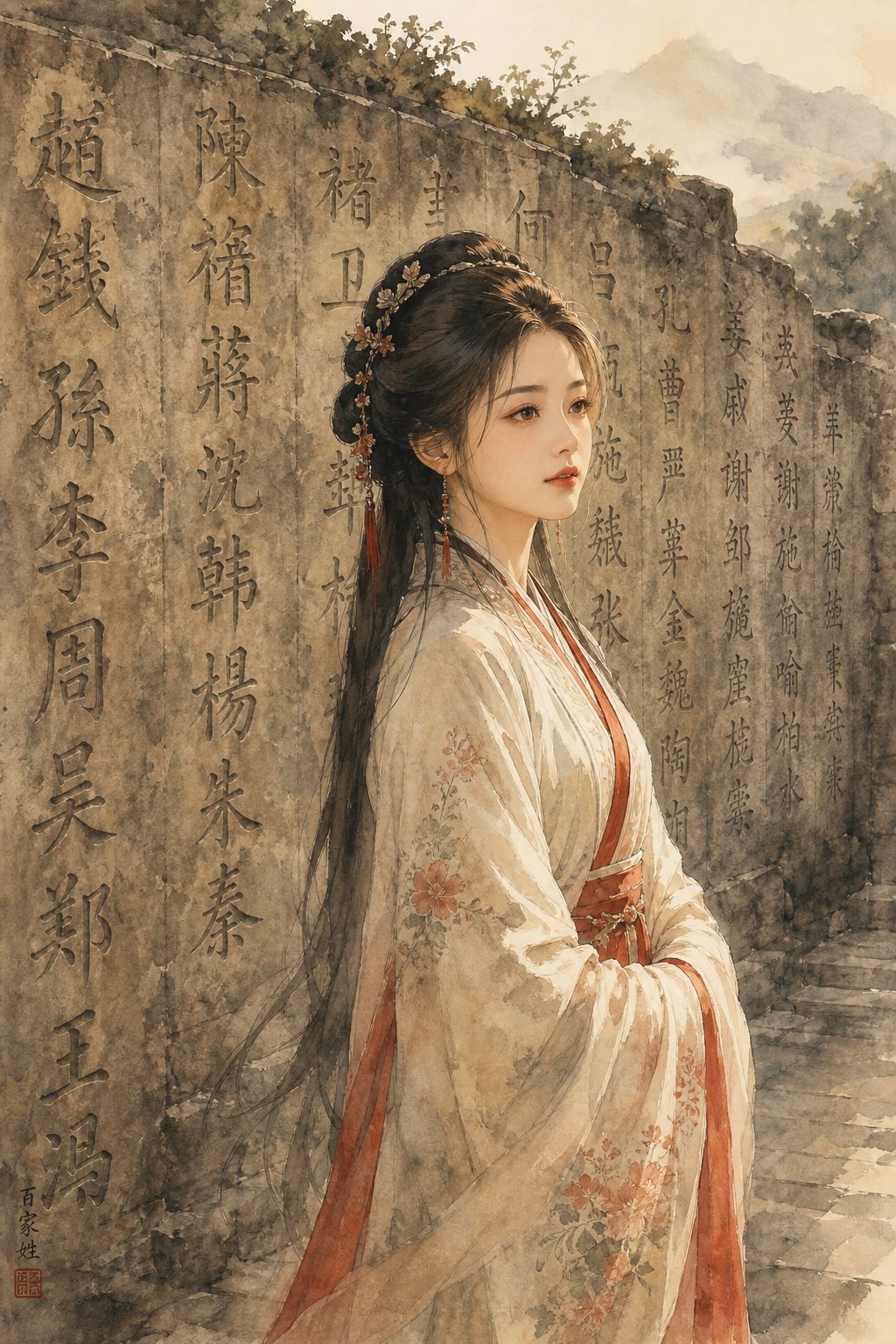
Chinese surnames (姓, xing) aren't just identifiers. They're living artifacts of a civilization stretching back over 3,000 years. Each one carries origin stories tied to ancient kingdoms, imperial dynasties, and geographic homelands. The classic text known as the Hundred Family Surnames (百家姓, Baijiaxing), compiled during the Song Dynasty (960-1279 CE), originally catalogued around 500 chinese family names in rhyming verse and became a standard educational text for children across centuries. The full modern list runs to roughly 6,000 surnames in active use, yet the vast majority of the population clusters around a remarkably small number of them.
Why Chinese Surnames Matter Beyond China
These chinese last names don't stop at China's borders. Decades of migration have carried them across Southeast Asia, North America, Europe, and Australia. US Census Bureau data shows that Zhang, Liu, and Wang were the three fastest-growing surnames in America between 2010 and 2020, with growth rates between 54% and 74%. Li, Lin, and Chen also ranked among the top 10 fastest-growing names in the country. When you encounter asian last names like Wong, Chan, Lee, or Ng in cities from Vancouver to Sydney, you're often looking at dialect-specific romanizations of these same chinese surnames. Understanding them opens a window into one of the world's oldest continuous naming traditions — and into the lives of communities spanning every continent.
How Chinese Names Differ From Western Names
If you're used to English naming conventions, chinese names flip the script entirely. Where "John Smith" leads with the individual and ends with the family, a Chinese name places the surname first. The basketball star known internationally as Yao Ming carries the surname Yao (姚) and the given name Ming (明). This ordering reflects a core Confucian value: family identity precedes individual identity.
In Chinese culture, the surname always comes first. It roots a person in their ancestral lineage before their individual name even appears — a structural reminder that family history shapes who you are.
Most chinese surnames are a single character, which is why the top 10 are all one-syllable names. Compound surnames like Sima (司马) or Ouyang (欧阳) exist but remain rare. A typical full name is just two or three characters total — short, but dense with meaning. Recognizing this structure matters for cross-cultural communication, whether you're addressing a colleague, reading a news headline, or simply trying to understand how asian surnames work in practice. Getting the order right signals respect and cultural awareness that native speakers genuinely appreciate.
How We Ranked the Most Common Chinese Last Names
Numbers tell the story here. Our ranking draws directly from China's seventh National Population Census, conducted in 2020 by the Chinese government. This census covered the entire mainland population and produced the most authoritative surname frequency data available. Every surname on this list earned its position through raw population count — no subjective criteria, no historical weighting.
Census Data and Population Statistics
The data reveals a sharp concentration at the top. Wang, Li, and Zhang each claim populations near or above 100 million, together representing roughly 21% of all Chinese citizens. After that, the numbers drop quickly — Liu at 72 million, Chen at 63 million, and so on down to Zhou at nearly 27 million. The most common chinese last name, Wang, alone covers 7.21% of the national population. For perspective, the most common last names in china outnumber the entire populations of many countries.
Every surname in the top 10 is a single character. Compound surnames like Ouyang (欧阳) and Sima (司马) — despite their literary fame — never broke into the upper ranks. Ouyang tops the compound list at just 1.1 million people, a fraction of even the tenth-ranked single-character surname. Single characters were simpler to write, easier to standardize in government records, and more practical across millennia of administrative use.
The Historical Forces Behind Surname Dominance
Why do so few names dominate so completely? Several forces compounded over thousands of years. Royal lineage played the largest role — the most popular surnames in china often trace back to ruling dynasties. Emperors granted their own surnames to loyal subjects as political rewards, artificially inflating those names across generations. The Tang Dynasty distributed the surname Li (李) to meritorious officials. The Han Dynasty did the same with Liu (刘).
Beyond imperial grants, clan mergers consolidated multiple unrelated lineages under a single surname. Ethnic minorities adopted Han surnames during assimilation — Manchu clan names like Aisin Gioro became Jin (金), and Niohuru became Niu (钮). Forced surname changes during dynastic transitions added another layer. If your surname matched a character in the new emperor's name, you changed it to avoid taboo. These mechanisms funneled millions of people into an increasingly narrow set of most common chinese surnames over centuries.
Reading This Guide — Pinyin and Pronunciation
Each surname entry in this guide includes standardized pronunciation and cultural context to make these common chinese last names accessible regardless of your background. You'll find:
- Mandarin pinyin with tone marks for standard pronunciation
- Cantonese romanization (Jyutping) for southern dialect speakers
- Common English spellings found in diaspora communities worldwide
- Character meaning and etymological origin
- Population statistics from census data
- Notable historical and contemporary bearers
- Cultural notes on regional distribution and significance
These details matter because a single surname can appear as five or six different English spellings depending on dialect and country of emigration. Knowing that Chen, Chan, Tan, and Chin all represent the same character (陈) transforms how you read a room — or a phone directory — in any city with a Chinese diaspora community.
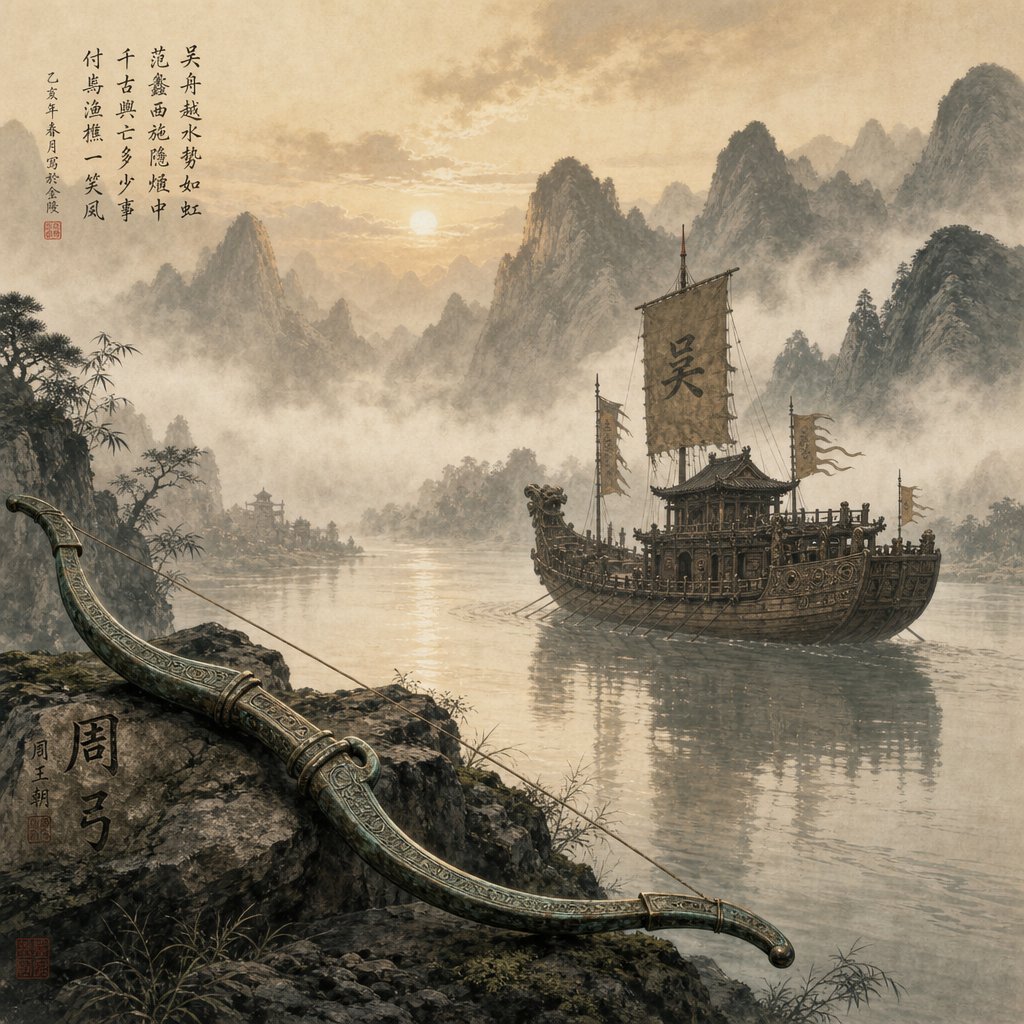
#10 Zhou and #9 Wu — Ancient Kingdoms Preserved in Family Names
Some surnames outlive the empires that created them. Zhou and Wu both trace their roots to powerful ancient states — one that shaped Chinese philosophy for millennia, and another that produced one of history's greatest military strategists. When you explore chinese surnames and meanings at this level, you're reading compressed history in a single character.
#10 Zhou (周) — The Dynasty That Became a Surname
Pinyin: Zhōu | Cantonese: Jau1 | Common English spellings: Chow, Chou, Jou
The character 周 means "circumference," "cycle," or "completeness" — fitting for a surname born from China's longest-lasting dynasty. The Zhou Dynasty (1046-256 BCE) ruled for nearly 800 years, witnessing the birth of Confucianism, Taoism, and Legalism. When the dynasty finally fell to the state of Qin in 256 BCE, descendants of the royal family adopted Zhou as their surname to honor their lost kingdom.
The origin legend reaches even further back. Zhou's ancestral founder, Hou Ji, was a great-great-grandson of the Yellow Emperor renowned for teaching early agricultural practices. His descendants eventually established the Zhou Dynasty through King Wu of Zhou, who overthrew the Shang Dynasty in the Battle of Muye around 1046 BCE. That single military victory set the stage for a surname that roughly 25 million people carry today.
- Royal dynasty connection spanning nearly 800 years of rule
- Widespread global recognition through figures like Zhou Enlai and Jay Chou (周杰伦)
- Elegant 8-stroke character with balanced visual structure
- Cultural weight — the Zhou Dynasty established the philosophical foundations of Chinese civilization
Notable bearers reflect the surname's breadth: Zhou Enlai (周恩来), the first Premier of the People's Republic of China; Jay Chou, one of Asia's best-selling pop artists; and Lu Xun (real name Zhou Shuren, 周树人), widely considered the father of modern Chinese literature. Among cantonese last names, Zhou appears as "Chow" — you'll recognize it from filmmaker Stephen Chow and martial artist Chow Yun-fat.
#9 Wu (吴) — From the Ancient Kingdom of Wu
Pinyin: Wú | Cantonese: Ng4 | Common English spellings: Ng, Goh, Go, Woo
The surname Wu (吴) derives from the ancient Kingdom of Wu, located in present-day Jiangsu province along the Yangtze River Delta. Its origin legend involves a deliberate act of sacrifice. During the 13th century BCE, King Tai of Zhou intended his youngest son to inherit the throne. His two elder sons, Taibo and Zhongyang, voluntarily left their homeland and traveled southeast, where they established the state of Wu. Their descendants adopted Wu (吴) as their surname — a name born not from conquest, but from filial deference.
The Kingdom of Wu became a formidable power. King Helu, one of the "Five Hegemons" of the Spring and Autumn period, employed Sun Tzu — author of The Art of War — as his military strategist. Wu also pioneered complex naval warfare, developing specialized warships centuries before most civilizations had organized navies.
What makes Wu distinctive among chinese surname meanings is its Cantonese romanization. The family name Ng — just two consonants with no vowel — is one of the most instantly recognizable spellings of any asian last name worldwide. English speakers often puzzle over how to pronounce it (the "ng" sound from the end of "sing," used as a standalone syllable). Across Southeast Asia, the same character appears as Goh in Hokkien-speaking communities and Go in Teochew dialects.
- Connected to Sun Tzu and The Art of War through the Kingdom of Wu's military legacy
- Wu Cheng'en (吴承恩) — Ming Dynasty author of Journey to the West, one of China's Four Great Classical Novels
- John Woo (吴宇森) — Hong Kong film director who pioneered the crime action genre internationally
- Constance Wu (吴恬敏) — actress known for Crazy Rich Asians and Fresh Off the Boat
- Melissa Wu — Australian-Chinese Olympic diver who represented Australia at four Olympic Games
With approximately 25 million bearers in China alone, Wu ranks among the most widespread surnames in the Yangtze Delta region. The Wu dialect group — encompassing Shanghainese and other regional varieties — takes its name from this same ancient kingdom, linking the surname to an entire linguistic and culinary tradition that remains vibrant today.
Both Zhou and Wu demonstrate how chinese surnames and meanings intertwine with geopolitical history. A fallen dynasty, a voluntary exile — each origin story compressed into a single character, carried forward by millions who may never know the legend behind their own asian last name. The next entries on this list carry equally dramatic backstories, tied to imperial texts and the color of emperors themselves.
#8 Zhao and #7 Huang — Imperial Colors and Royal Texts
A fallen dynasty preserves its name through descendants. A royal text immortalizes a surname by placing it first. Zhao and Huang both carry deep imperial connections, but their paths to prominence couldn't be more different — one earned its fame through a literary honor, the other through the most sacred color in Chinese civilization. Understanding these chinese last names and meanings reveals how political power shaped naming traditions across millennia.
#8 Zhao (赵) — First in the Hundred Family Surnames
Pinyin: Zhao | Cantonese: Ziu6 | Common English spellings: Chiu, Chao, Cho, Tio
Here's a question worth asking: why does Zhao appear first in the Hundred Family Surnames text, even though it's only the eighth most common mandarin surname by population? The answer is pure politics. The text was compiled during the early Song Dynasty, and the Song emperor's surname was Zhao. Placing the imperial surname at position one was an act of deference — not a reflection of population size.
The character 赵 contains the radical 走, meaning "to walk" or "to run." Its origin legend traces back to Zao Fu (造父), a legendary chariot-driver who served King Mu of Zhou. Zao Fu's extraordinary skill with horses earned him a fief called Zhao city in present-day Shanxi province. His descendants took the place name as their surname — a common pattern in ancient Chinese naming.
Centuries later, the surname gained military prestige through the state of Zhao during the Warring States period (475-221 BCE). This kingdom produced some of China's fiercest warriors and most dramatic historical episodes, including the famous Battle of Changping. The surname 中文 character itself carries that martial energy — its cultural register spans imperial authority, military valor, and artistic refinement.
- Zhao Kuangyin (赵匡胤, 927-976) — founding emperor of the Song Dynasty who unified China after decades of fragmentation
- Zhao Yun (赵云, d. 229) — legendary Three Kingdoms general celebrated for single-handedly rescuing his lord's infant son at the Battle of Changban
- Zhao Mengfu (赵孟頫, 1254-1322) — Yuan Dynasty calligrapher and painter whose work defined classical Chinese aesthetics
- Zhao Wei (赵薇) — internationally known Chinese actress and filmmaker
Across the diaspora, Zhao appears as Chiu in Cantonese-speaking communities, Tio in Hokkien and Teochew, and Chau in Hakka. The surname carries roughly 27 million bearers in mainland China, concentrated heavily in northern provinces where the ancient state of Zhao once stood.
#7 Huang (黄) — The Color of Emperors
Pinyin: Huang | Cantonese: Wong4 | Common English spellings: Wong, Hwang, Ooi, Ng, Wee
Yellow isn't just a color in Chinese culture — it's the color of supreme authority. The Yellow Emperor (Huangdi), mythological ancestor of all Han Chinese, established yellow as the imperial hue over 4,000 years ago. The Yellow River, the "Mother River" of Chinese civilization, reinforced this association. So when you encounter the surname Huang (黄), you're looking at a character that literally means "yellow" and carries all that symbolic weight.
The meaning of chinese surnames often connects to ancient states, and Huang is no exception. According to tradition, the surname traces to the Huang Kingdom (黄国), established during the Xia Dynasty. One origin legend links it to the Huang Yi (黄夷) tribe of the ancient Dongyi people, who used the Yellow Oriole as their totem. When these tribal communities settled across different regions of China, they adopted Huang as their surname — carrying the golden bird's legacy forward in a single character.
What makes Huang fascinating for chinese family names and meanings is its sheer geographic spread. It's the seventh most common surname in mainland China with over 32 million bearers, the third most common in Taiwan, and the most common surname in the Guangxi Zhuang Autonomous Region. Roughly 19% of all Huangs in China live in Guangdong Province alone, which explains why the Cantonese romanization "Wong" dominates diaspora communities worldwide.
And "Wong" is everywhere. It's the most common Chinese surname in Ontario, Canada, the third most common in America, and the sixth most common in Singapore. If you've encountered the spelling Wong in any English-speaking country, there's a strong chance it represents Huang (黄) rather than Wang (王) — though both are pronounced identically in Cantonese, creating a homophone puzzle that native speakers resolve by saying "yellow Wong" versus "king Wong."
- Wong Fei Hung (黄飞鸿, 1847-1924) — martial artist, physician, and folk hero whose life inspired over 100 films
- Huang Xing (黄兴, 1874-1916) — revolutionary leader and first Army Commander-in-chief of the Republic of China
- Huang Tingjian (黄庭坚, 1045-1105) — Song Dynasty poet and calligrapher, one of the "Song Four" masters
- Jensen Huang (黄仁勋, born 1963) — co-founder and CEO of Nvidia Corporation
- Lawrence Wong (黄循财, born 1972) — Prime Minister of Singapore
- Penny Wong (黄英贤, born 1968) — Australian Minister for Foreign Affairs
The diversity of romanizations tells its own story about chinese surnames meaning and migration patterns. The same character 黄 becomes Wong in Hong Kong, Ooi in Penang, Ng in Teochew communities, Wee in Hainanese, Hwang in Korean, and Huynh in southern Vietnam. Each spelling marks a different dialect community, a different migration route, a different chapter in the global Chinese diaspora.
Zhao and Huang both demonstrate how imperial connections amplify a surname's reach — one through a literary text that placed it first among hundreds, the other through a color so sacred that only emperors could wear it. The surnames ahead on this list carry their own dynastic ties, rooted in poplar trees and ancient states that stretched across southern China.
#6 Yang and #5 Chen — Trees and Ancient States
Poplar trees and fallen kingdoms — two very different origin stories, yet both produced surnames carried by tens of millions across China and the global diaspora. Yang and Chen rank among the most popular chinese last names not because of a single historical event, but because multiple forces — imperial expansion, geographic spread, and sheer clan fertility — compounded over millennia. Together, they account for roughly 100 million people in mainland China alone.
#6 Yang (杨) — The Poplar Tree Lineage
Pinyin: Yang | Cantonese: Joeng4 | Common English spellings: Yeung, Yeo, Yong, Young
The character 杨 means "poplar tree," built from the wood radical 木 on the left and the phonetic component 昜 on the right. Its origin traces to the ancient Yang state (杨国) in modern-day Shanxi province, where descendants of the Zhou Dynasty royal house settled and adopted the place name as their surname. When the Sui Dynasty (581-618 CE) rose to power under Emperor Yang Jian (杨坚), the surname spread rapidly — an imperial house propagating its name across the entire empire.
But it's the Yang Family Generals (杨家将) of the Northern Song Dynasty that cemented this surname in popular culture. This military clan — spanning multiple generations of warriors who defended China's northern borders against Khitan invaders — became the subject of classical drama, opera, and modern television series. Their story is China's equivalent of King Arthur's knights: part history, part legend, entirely iconic. The female warriors of the Yang family, particularly Mu Guiying, remain feminist touchstones in Chinese storytelling.
- Yang Jian (杨坚, 541-604) — founding emperor of the Sui Dynasty who reunified China after centuries of division
- Yang Guifei (杨贵妃, 719-756) — Tang Dynasty imperial consort, celebrated as one of the Four Beauties of Chinese history
- Yang Zhenning (杨振宁, born 1922) — Nobel laureate in Physics (1957), known internationally as Chen-Ning Yang
- Yang Liwei (杨利伟, born 1965) — China's first astronaut, completing the country's inaugural crewed spaceflight in 2003
- The Yang Family Generals (杨家将) — Northern Song military dynasty celebrated across centuries of classical drama and opera
Across the diaspora, Yang's romanization shifts with dialect. Cantonese speakers write it as Yeung, Hokkien and Teochew communities use Yeo, and Hakka speakers spell it Yong. In Western countries, you'll occasionally encounter "Young" — an anglicization that obscures the surname's Chinese origin entirely. With roughly 37 million bearers in China, Yang ranks as one of the chinese common last names that spans both northern and southern provinces, though its highest concentration remains in Sichuan and Guizhou.
#5 Chen (陈) — From the State of Chen to Global Prominence
Pinyin: Chen | Cantonese: Can4 | Common English spellings: Chan, Tan, Chin, Chun, Ching
If you've ever watched a martial arts film, you've encountered this surname. Chen (陈) is arguably the most internationally recognized of all china last names, thanks largely to Jackie Chan (成龙, born Chan Kong-sang) and the sheer volume of Chens in global entertainment, business, and politics. The character means "to display" or "to arrange," though its surname usage derives from the ancient kingdom of Chen in modern-day Henan province, where the ruling family adopted their state's name as their hereditary surname after the kingdom fell in 479 BCE.
What makes Chen remarkable among chinese american surnames is its staggering variety of romanizations. The same character 陈 has been transcribed into English as Chen, Chan, Chin, Chinn, Ching, Chun, Chang, Chance, Dan, Zan, Zen, Tan, Tang, Tchen, Tin, Ting, Tjin, and Jin — a testament to how dialect differences and inconsistent immigration processing created a maze of spellings from one original character. Here's how the major dialect communities break down:
- Mandarin: Chen — standard in mainland China, Taiwan, and most official documents
- Cantonese: Chan — dominant in Hong Kong, Macau, and Guangdong diaspora communities
- Hokkien: Tan — common in Singapore, Malaysia, the Philippines, and Indonesia
- Hakka: Chin — found in communities across Southeast Asia and the Caribbean
- Teochew: Tan or Tang — overlapping with Hokkien in many Southeast Asian countries
- Vietnamese adaptation: Tran (Trần) — the second most common surname in Vietnam, carried by roughly 11% of the population
- Korean adaptation: Jin (진) — derived from the same Chinese root character
With approximately 63 million bearers in mainland China, Chen ranks as the fifth most common surname nationally — but it's the single most common surname in Taiwan, covering over 11% of the island's population. It also dominates in Fujian and Guangdong provinces, the ancestral homelands of most overseas Chinese communities. This geographic concentration explains why Tan and Chan appear so frequently among asian american last names in cities like San Francisco, New York, and Los Angeles.
- Chen Sheng (陈胜, d. 208 BCE) — leader of the first major peasant uprising against the Qin Dynasty
- Jackie Chan (陈港生, born 1954) — martial artist and actor whose global fame made "Chan" synonymous with Chinese cinema
- Chen Kaige (陈凯歌, born 1952) — Fifth Generation filmmaker, director of Farewell My Concubine
- Tan Kah Kee (陈嘉庚, 1874-1961) — Hokkien businessman and philanthropist who funded schools across Southeast Asia
- Priscilla Chan (陈慧娴, born 1985) — philanthropist and co-founder of the Chan Zuckerberg Initiative
A quick cultural etiquette note for anyone navigating chinese first and last names in professional settings: when meeting someone named Chen Wei (陈伟), address them as "Chen xiansheng" (Mr. Chen) or "Chen nvshi" (Ms. Chen) in formal contexts. Use the given name Wei only after they've invited you to do so — or among close friends. In Chinese culture, jumping to a given name without permission signals a familiarity that hasn't been earned. The safe default is always surname plus title.
Yang and Chen together illustrate how popular chinese last names radiate outward from China through dialect-specific channels. A single character fractures into dozens of spellings as it crosses borders and languages — yet the ancestral connection remains intact. The surname ahead on this list took a different path to dominance: not through geographic spread, but through raw imperial power and a 400-year dynasty that reshaped Chinese identity itself.
#4 Liu — The Battle-Axe Surname That Built a Dynasty
Imperial power doesn't just shape borders — it shapes names. While Yang and Chen spread through geographic migration and clan growth, Liu (刘) took a more direct route to dominance: a 400-year dynasty that actively distributed its surname as a political tool. Among traditional chinese last names, Liu stands apart as the one most deliberately engineered for expansion. The character originally meant "battle-axe" or "to kill" — a martial origin fitting for a surname that conquered its way to the fourth position through sheer imperial force.
#4 Liu (刘) — The Surname of the Han Dynasty
Pinyin: Liu | Cantonese: Lau4 | Common English spellings: Lau, Low, Lieu, Liew, Ryu (Korean), Yoo (Korean), Luu (Vietnamese)
The character 刘 (traditional: 劉) carries the radical for "knife" (刂) — a remnant of its ancient meaning as a battle-axe or weapon for killing. That violent etymology faded over centuries, but the martial spirit endured. Liu Bang (刘邦, 256-195 BCE), a peasant-turned-rebel-leader, wielded this surname all the way to the imperial throne when he founded the Han Dynasty in 202 BCE. His rise from commoner to emperor remains one of history's most dramatic ascents — and it transformed an obscure surname into a symbol of supreme authority.
The Han Dynasty (202 BCE-220 CE) wasn't just another ruling period. It defined Chinese civilization so fundamentally that the dominant ethnic group in China still calls itself "Han Chinese" (汉族), and Chinese characters are still called "Han characters" (汉字). That 400-year reign — split between the Western Han and Eastern Han — gave the Liu surname something no amount of natural population growth could match: institutional power to replicate itself across an entire empire.
When you conduct a surname origin search for Liu, the data is staggering. Census records show approximately 72 million people carry this surname in mainland China, representing about 5.1% of the population. It's the most common surname in Jiangxi province and ranks among the top five in Shandong, Henan, and Sichuan. Beyond China, Liu appears as the 8th most common surname in Taiwan and the 30th most common in South Korea (as Yoo or Ryu).
Why Liu Became So Widespread
Imagine a system where loyalty earns you the emperor's own name. That's exactly how the Han Dynasty operated. Liu Bang and his successors granted the imperial surname to generals, officials, and even entire communities who demonstrated exceptional service to the throne. This wasn't a symbolic gesture — receiving the emperor's surname meant joining the imperial clan, with all the privileges and protections that entailed. The practice artificially inflated Liu's numbers far beyond what natural reproduction could achieve.
The scale was enormous. The Han Dynasty created extensive enfeoffments, establishing Liu-surnamed aristocrats across every corner of China. These royal chinese surnames spread through provinces as local lords, administrators, and landowners — each one founding a new branch of the Liu family tree. Sixty-six emperors bearing the Liu name ruled across multiple dynasties, collectively spanning over 650 years. No other surname in Chinese history comes close to that record of imperial representation.
Non-Han peoples also adopted the Liu surname over centuries. Xiongnu chieftains, Turkic leaders, and other ethnic minorities took the name during periods of cultural assimilation — adding yet more branches to an already massive family tree. By the time the Han Dynasty fell, Liu had become so deeply embedded in Chinese society that its numbers never contracted, even without imperial backing.
- Strong historical prestige — direct association with one of China's greatest dynasties
- Han Dynasty connection gives the surname cultural weight equivalent to the word "Chinese" itself
- Widespread global recognition across East and Southeast Asia
- Multiple origin lines create broad geographic distribution rather than regional concentration
- Literary and artistic legacy spanning poetry, philosophy, and statecraft
The origin legend of Liu reaches far deeper than the Han Dynasty. Most accounts trace the surname to the mythical Emperor Yao (approximately 2377-2259 BCE), one of China's legendary sage-kings. After Yao abdicated his throne to Emperor Shun, one of Yao's sons received a fief called Liu — establishing both a state and a surname in a single act. Among ancient chinese last names, few claim such a direct line to China's founding mythology.
The earliest documented bearer was Liu Lei (刘累), a descendant of Emperor Yao who lived during the late Xia Dynasty. Liu Lei earned fame as a dragon tamer — trained by the mythical Huanlong clan, he successfully tamed four dragons for King Kongjia and received the title "Dragon Tamer" (御龙氏). When one dragon died under his care, Liu Lei fled south with his family, preserving the surname through exile. That blend of myth and migration — a dragon tamer running from a king's wrath — gives Liu one of the most vivid origin stories among all traditional chinese surnames.
- Liu Bang (刘邦, 256-195 BCE) — peasant who overthrew the Qin Dynasty and founded the Han Dynasty as Emperor Gaozu
- Liu Che (刘彻, 156-87 BCE) — Emperor Wu of Han, who expanded the empire to its greatest territorial extent
- Liu Bei (刘备, 161-223 CE) — founding emperor of Shu Han during the Three Kingdoms period, immortalized in Romance of the Three Kingdoms
- Liu Yuxi (刘禹锡, 772-842) — Tang Dynasty poet and statesman known for philosophical verse
- Liu Shaoqi (刘少奇, 1898-1969) — second President of the People's Republic of China
- Liu Xiang (刘翔, born 1983) — Olympic gold medalist in the 110m hurdles (Athens 2004), the first Chinese man to win an Olympic gold in track and field
- Liu Yifei (刘亦菲, born 1987) — actress known internationally for Disney's live-action Mulan
- Andy Lau (刘德华, born 1961) — Hong Kong entertainment icon, one of the "Four Heavenly Kings" of Cantopop
That last name — Andy Lau — highlights how chinese last name meanings travel through dialect. In Cantonese, 刘 becomes "Lau," the spelling most Hong Kong residents use. In Malaysia, it appears as "Liew" or "Lew." Korean communities write it as "Yoo" or "Ryu" (as in filmmaker Ryu Seung-wan), while Vietnamese speakers spell it "Luu" (Lưu). Each variant marks a different migration path, a different community — yet all trace back to that same battle-axe character and a dragon tamer who fled south thousands of years ago.
Liu's story is ultimately about how political systems manufacture demographic outcomes. A single dynasty's 400-year policy of surname grants created a population base so large it persists two millennia later. The surname ahead on this list — Zhang — took the opposite path. Despite being the third most common name in China, it never produced a major dynasty at all. That paradox makes Zhang one of the most curious entries in the meaning of chinese last names.
#3 Zhang — The Bow and Arrow Inventor's Legacy
Liu built its numbers through imperial decree. Zhang (张) did the opposite — it grew to over 87 million bearers without ever producing a single major dynasty. That paradox makes Zhang one of the most curious among common chinese surnames: the third most popular surname in chinese history, yet never the name of an emperor who unified the country. Its power came not from thrones, but from a legend involving starlight, a bow, and a grandson of the Yellow Emperor.
#3 Zhang (张) — The Bow-Stretcher
Pinyin: Zhang | Cantonese: Zoeng1 | Common English spellings: Cheung, Chang, Teo, Teoh, Chong, Truong
The character 张 is built from two components: 弓 (bow) on the left and 长 (long, stretch) on the right. Together they mean "to stretch open" or "to draw a bow" — a meaning that traces directly to the surname's origin legend. Zhang Hui (张挥), grandson of the Yellow Emperor, was an expert observer of the stars. One night during the Battle of Zhuolu against the rebel leader Chi You, Hui noticed a formation of six stars shaped like a bow in the night sky. Inspired by this celestial pattern, he invented the bow and arrow — a weapon that turned the tide of battle and secured victory for the Yellow Emperor's forces.
In recognition of this contribution, the Yellow Emperor bestowed upon Hui the title "Marquis of Qingyang" and appointed him as the official responsible for bow production. The surname Zhang was granted to honor his invention, and his descendants settled in what became modern-day Qinghe county in Hebei. A folk saying still commemorates this origin: "天下张姓出清河" — all Zhang descendants come from Qinghe.
Sounds complex? Here's a quick pronunciation tip. The "zh" in Zhang trips up most English speakers. It's not a "z" sound and it's not quite a "j" either. Place your tongue where you'd say "judge," but pull it slightly further back on the roof of your mouth. The resulting sound is a retroflex — your tongue curls back before releasing. Pair that with the first tone (flat and high, like singing a sustained note), and you'll get close to how native Mandarin speakers say it.
Zhang's Unique Position in Chinese Culture
You'll notice something interesting about how Chinese speakers use this surname in everyday language. Zhang functions as a generic placeholder name — the Chinese equivalent of "Smith" or "Jones" in English. The idiom 张三李四 (Zhang San Li Si), literally "Zhang Three, Li Four," means "Tom, Dick, and Harry" — any random, ordinary person. When Chinese speakers want to reference a hypothetical stranger in conversation, they reach for Zhang first. That cultural reflex tells you just how deeply embedded this typical chinese last name is in the collective consciousness.
The phrase appears in the Song Dynasty text Baijiaxing and has persisted for over a thousand years. If you're creating a common chinese name for a fictional character, a placeholder in a legal document, or an example in a language textbook, Zhang is the default choice. It's so neutral, so universally recognized, that it carries no regional or class connotation — unlike surnames tied to specific dynasties or kingdoms.
Yet here's the historical curiosity: despite being the third most common surname in China, Zhang never produced a founding emperor of a major unified dynasty. Liu gave China the Han Dynasty. Li gave it the Tang. Zhao gave it the Song. Zhang produced brilliant generals, poets, inventors, and statesmen — but never a dynasty-founding emperor. Historians attribute this partly to the surname's multi-origin nature. Unlike Liu or Li, which concentrated power through imperial lineage, Zhang families remained dispersed across regions without a single dominant clan consolidating political control. The family stayed unified rather than fracturing into competing branches, which paradoxically kept them out of dynastic power struggles.
That absence from the throne didn't limit the surname's cultural output. Common chinese full names like Zhang Wei, Zhang Fang, and Zhang Lei appear so frequently in modern China that offices and classrooms routinely have multiple Zhangs who need distinguishing. Among typical chinese names, Zhang paired with a single-character given name remains one of the most statistically likely combinations you'll encounter.
- Zhang Heng (张衡, 78-139 CE) — Han Dynasty polymath who invented the world's first seismoscope and made groundbreaking contributions to astronomy and mathematics
- Zhang Fei (张飞, d. 221 CE) — legendary Three Kingdoms general celebrated for his valor at the Battle of Changban Bridge
- Zhang Sanfeng (张三丰, 12th-13th century) — legendary Taoist monk credited with creating tai chi
- Zhang Yimou (张艺谋, born 1950) — internationally acclaimed filmmaker whose works include Hero, House of Flying Daggers, and the opening ceremonies of the 2008 and 2022 Beijing Olympics
- Cheung Ka-long (张家朗, born 1997) — Hong Kong Olympic gold medalist in fencing, the first athlete representing Hong Kong to win Olympic gold in the sport
- Chang Chen-yue (张震岳, born 1974) — Taiwanese rock musician and songwriter
- Zhang Weili (张伟丽, born 1989) — UFC strawweight champion, the first Chinese fighter to win a UFC title
Across the diaspora, Zhang fractures into dozens of spellings. Cantonese speakers write it as Cheung or Cheong — you'll recognize it from Hong Kong actor Leslie Cheung (张国荣). Hokkien communities in Southeast Asia use Teo or Teoh, while Hakka speakers spell it Chong or Tiong. In Taiwan, the standard romanization is Chang. Vietnamese communities write it as Truong (Trương). These chinese full names look completely different on paper, yet they all trace back to that same bow-stretching character and a stargazer who changed the course of an ancient battle.
Zhang's story proves that demographic dominance doesn't require a dynasty. Sometimes a surname grows simply because it's everywhere — woven into idioms, scattered across provinces, neutral enough to represent anyone. The two surnames ahead of Zhang on this list took a different path entirely, riding the coattails of China's two greatest golden ages to even larger populations.
#2 Li — The Plum Tree Surname That May Be Earth's Most Common
Zhang grew to 87 million without a dynasty. Li (李) took the opposite approach — it rode one of China's greatest golden ages to a population of over 92 million in China alone, and more than 100 million across Asia. When you factor in the Korean Lee/Yi (이), the Vietnamese Ly (Lý), and diaspora communities spanning every continent, Li may well be the most common surname name in the world. No other single character connects so many people across so many cultures.
#2 Li (李) — The Plum Tree and the Tang Dynasty
Pinyin: Li | Cantonese: Lei5 | Common English spellings: Lee, Lie, Ly, Rhee (Korean), Yi (Korean), Lei (Macau)
The character 李 is composed of two parts: 木 (tree) on top and 子 (child, seed) on the bottom. Together they mean "plum" or "plum tree" — a fruit so central to the surname's origin legend that it literally saved a family from starvation. According to tradition, during the late Shang Dynasty, a minister named Li Zheng was executed for opposing the tyrannical King Zhou. His wife and son fled west into Henan, where they survived by eating wild plums. In gratitude, the son changed the family surname from 理 ("reason") to 李 ("plum") — a homophone that preserved the sound while honoring the fruit that kept them alive.
That origin story is ancient, but the real explosion came during the Tang Dynasty (618-907 CE). Emperor Li Yuan (李渊) founded the dynasty in 618 AD, launching what many historians consider China's cultural zenith — a period of unprecedented poetry, art, trade, and territorial expansion. Twenty emperors surnamed Li ruled across the Tang's nearly 300-year span. Like the Han Dynasty's Liu before them, the Tang emperors liberally granted their imperial surname to favored generals, officials, and even non-Han peoples including Turkic khans, Khitan leaders, and Persian merchants. The number of people surnamed Li skyrocketed during this period, transforming it from a common surname into the most common chinese surname of the era.
The practice was staggering in scope. Generals like Xu Shiji and Du Fuwei received the Li surname as political rewards. Entire ethnic communities — Mohe, Khitan, Tibetan, Uyghur — adopted it through imperial decree. By the Song Dynasty that followed, Li had become the second most common surname in china, a position it has held for roughly a thousand years. All told, 64 Li-surnamed emperors have ruled in Chinese history, governing all or part of China for a combined 650 years.
Li's Global Dominance
Here's where the numbers get truly remarkable. Li doesn't just dominate in mainland China — it's the most common surname in Macau, the second most common in Hong Kong, and the fifth most common in Taiwan. In Korea, the same character written as Lee or Yi is one of the top three surnames, carried by roughly 15% of the population. In Vietnam, Ly (Lý) founded an entire dynasty that ruled for over 200 years. When you tally all these variants together, Li/Lee likely surpasses even Wang as the most common asian last names on Earth.
Among asian names and surnames in the West, "Lee" holds a unique position. It's the 22nd most common surname in the United States, with over 30% of American Lees identifying as Asian/Pacific Islander in origin. That makes it the most common Chinese surname in America — a distinction amplified by the fact that "Lee" also exists as an English and Irish surname, creating a cross-cultural overlap that no other asian names share.
- Li Shimin (李世民, 598-649) — Emperor Taizong of Tang, widely regarded as one of China's greatest rulers, who expanded the empire and fostered a golden age of culture
- Li Bai (李白, 701-762) — Tang Dynasty poet revered as the "Immortal of Poetry," whose works remain foundational to Chinese literature
- Li Qingzhao (李清照, 1084-1155) — Song Dynasty poet considered the greatest female writer in Chinese literary history
- Bruce Lee (李小龙, 1940-1973) — martial artist and filmmaker who single-handedly introduced kung fu to global audiences
- Jet Li (李连杰, born 1963) — wushu champion and international film star
- Ang Lee (李安, born 1954) — Oscar-winning director of Brokeback Mountain, Crouching Tiger, Hidden Dragon, and Life of Pi
- Lee Kuan Yew (李光耀, 1923-2015) — founding father of modern Singapore
- Li Ka-shing (李嘉诚, born 1928) — Hong Kong billionaire and one of Asia's most influential business figures
- Li Na (李娜, born 1982) — first Asian-born player to win a Grand Slam singles title in tennis
The Plum Tree Symbolism
The plum blossom (梅花, meihua) holds a place of honor in Chinese culture as one of the "Four Gentlemen" — alongside orchid, bamboo, and chrysanthemum. What makes it special is timing: the plum tree blooms in late winter, pushing delicate flowers through frost and snow while every other plant remains dormant. That quality — resilience, renewal, and beauty in adversity — made it a symbol of perseverance, purity, and hope for over 2,000 years of Chinese philosophy and art.
The connection to the surname 李 runs deeper than shared botany. The plum tree that saved Li Lizhen's family from starvation became a permanent emblem of survival against impossible odds. Painters throughout Chinese history depicted plum blossoms on dark, gnarled branches — fragile beauty emerging from hardship. That visual metaphor maps perfectly onto the surname's own history: a family fleeing execution, surviving on wild fruit, and eventually producing emperors.
No one embodied the plum tree connection more than Li Bai (李白), the Tang Dynasty's greatest poet. His verses frequently played on natural imagery, and his surname's meaning — plum — wove itself into his poetic identity. One of his most famous drinking poems captures the spirit that made him immortal:
"Raise your glass to invite the bright moon; with my shadow we become three. The moon cannot drink, and my shadow merely follows — yet briefly I keep them as companions through spring." — Li Bai, Drinking Alone Under the Moon (月下独酌)
Li Bai wrote with the same quality the plum blossom embodies: luminous beauty emerging from solitude. His poetry — spontaneous, vivid, unrestrained — defined the Tang Dynasty's literary golden age and cemented the Li surname's association with artistic genius. Over a thousand years later, his verses remain required reading in every Chinese classroom, ensuring that the most common surname in china carries not just demographic weight, but cultural prestige that no census can measure.
Li's dominance rests on a rare combination: imperial power, cross-border adoption, and deep cultural symbolism all reinforcing the same name. Only one surname managed to surpass it — not through a single dynasty, but through the convergence of multiple royal bloodlines into a single character that literally means "king."
#1 Wang — How the Character for King Became China's Top Surname
Li earned its numbers through a single golden-age dynasty. Wang (王) took a fundamentally different path — not one royal house, but dozens of them, all converging on the same character across thousands of years. The result? What is the most common chinese surname today: a name carried by over 100 million people in mainland China, representing 7.1% of the total population. No other surname in china comes close.
#1 Wang (王) — The King of Chinese Surnames
Pinyin: Wang | Cantonese: Wong4 | Common English spellings: Wong, Ong, Heng, Vong, Vuong (Vietnamese)
Look at the character 王 and you'll see its meaning encoded in the strokes. Three horizontal lines represent Heaven, Earth, and Humanity, while a single vertical stroke connects all three — symbolizing the ruler who unifies these realms under one sovereign authority. That's not a modern interpretation. The character has carried this cosmological meaning since the Shang Dynasty, when 王 was the title reserved exclusively for supreme rulers. It translates directly as "king."
Through the Xia (c. 2070-1600 BCE), Shang (1600-1046 BCE), and Zhou (1046-256 BCE) dynasties, only the highest sovereign could bear the title Wang. Over time, that title transformed from a position into a surname — but not through a single event. When kingdoms fell, their royal descendants needed a way to mark their heritage without claiming active sovereignty. The solution was elegant: take the word for "king" as your family name. A fallen king's children became "the Wangs" — literally, "the royals."
Why Wang Holds the #1 Position
Here's what makes Wang unique among all common last names in china: it didn't descend from one ancestor. Multiple unrelated royal bloodlines independently adopted the same character, creating a convergence effect that no single-origin surname could match.
The most prominent origin traces to Crown Prince Jin of the Eastern Zhou Dynasty (770-256 BCE). Known for his intelligence and integrity, Prince Jin was the eldest son of King Ling of Zhou. His straightforward counsel displeased the king, leading to his demotion. Prince Jin's son, Zongjing, fled to Taiyuan in modern-day Shanxi province. The locals, recognizing his royal ancestry, respectfully called him "Wang" — and the surname stuck. The Taiyuan Wang (太原王氏) clan became one of China's most celebrated noble lineages.
But that's only one branch. During the turbulent Spring and Autumn and Warring States periods, many Zhou royals lost power, faced exile, or had their territories confiscated. Several adopted the surname Wang to preserve their heritage — including descendants of King Wu of Zhou's younger brother, King Ping of Zhou, and the Duke of Huan. Beyond the Zhou royal family, descendants of Bigan, a prince from the Shang Dynasty killed for opposing the tyrannical King Zhou, also took on the Wang surname. So did Tian Jian, the last King of Qi, after his state fell to Qin in 221 BCE.
This multi-origin phenomenon — scholars call it "convergence" — explains why Wang is the most common last name in china despite never establishing a major centralized dynasty. The Taiyuan Wang and Langya Wang (琅琊王氏) are the two most-cited noble lineages, but dozens of smaller branches contributed to the total. Each fallen kingdom added another stream to the river. By the time census-taking became systematic, Wang had accumulated so many independent origins that its combined population dwarfed every other surname.
The numbers confirm this dominance. Wang stands as the #1 surname in no fewer than 16 provinces, from Jilin in the northeast to Xinjiang in the far west. The highest concentration appears in Shandong province, and northern provinces generally show higher rates than the south. Among all china surnames tracked by census data, Wang's 7.1% share means roughly 1 in every 14 Chinese citizens carries this name — and in some northern provinces, the ratio climbs to nearly 1 in 10.
Wang in the Modern World
The Wang family has produced 151 prime ministers and 36 empresses throughout Chinese history — a breadth of influence that spans military conquest, artistic mastery, philosophical innovation, and political reform. While the lineage never established a centralized dynasty, it founded over a dozen smaller kingdoms, including Wang Mang's Xin Dynasty (9-23 CE).
- Wang Xizhi (王羲之, 303-361) — the "Sage of Calligraphy," whose Preface to the Orchid Pavilion remains the most celebrated work of Chinese calligraphy
- Wang Wei (王维, 701-761) — Tang Dynasty poet and painter whose verses captured the spiritual beauty of nature
- Wang Anshi (王安石, 1021-1086) — Northern Song reformist statesman whose bold economic policies reshaped governance
- Wang Yangming (王阳明, 1472-1529) — Ming Dynasty philosopher who revolutionized Confucian thought with his doctrine of innate knowledge
- Wang Zhaojun (王昭君, c. 54-19 BCE) — one of the Four Beauties of Chinese history, who achieved peace through marriage diplomacy
- Wang Jian (王翦) — Qin Dynasty general instrumental in helping Qin Shi Huang unify China
- Ong Teng Cheong (王鼎昌, 1936-2002) — first elected President of Singapore
- Vera Wang (王薇薇, born 1949) — fashion designer whose bridal gowns became globally iconic
- Wang Yibo (王一博, born 1997) — actor and idol whose fame spans Chinese and Korean entertainment
One practical note for English speakers: Wang (王, meaning "king") is not the only Chinese surname romanized as "Wang." The character 汪, meaning "deep and vast," is also pronounced Wang in Mandarin — though it's far less common. In Cantonese, both 王 and 黄 (Huang, meaning "yellow") are pronounced "Wong," creating confusion that native speakers resolve by specifying "三横王" (three-horizontal-stroke Wang) versus "草头黄" (grass-radical Huang). If you're unsure which character someone's surname represents, asking to see it written is perfectly acceptable and shows cultural awareness.
Among surnames in china, addressing someone named Wang in professional contexts follows standard Chinese etiquette. Use "Wang xiansheng" (王先生, Mr. Wang) or "Wang nvshi" (王女士, Ms. Wang) in formal settings. In business contexts, pair the surname with a professional title: "Wang zong" (王总, Director Wang) or "Wang laoshi" (王老师, Teacher Wang). Given how many Wangs exist in any Chinese workplace, colleagues often use full names — both surname and given name together — to distinguish between multiple people sharing this common chinese surname. That frequency isn't a burden; it's a testament to how deeply this single character has woven itself into the fabric of Chinese identity across three millennia of recorded history.
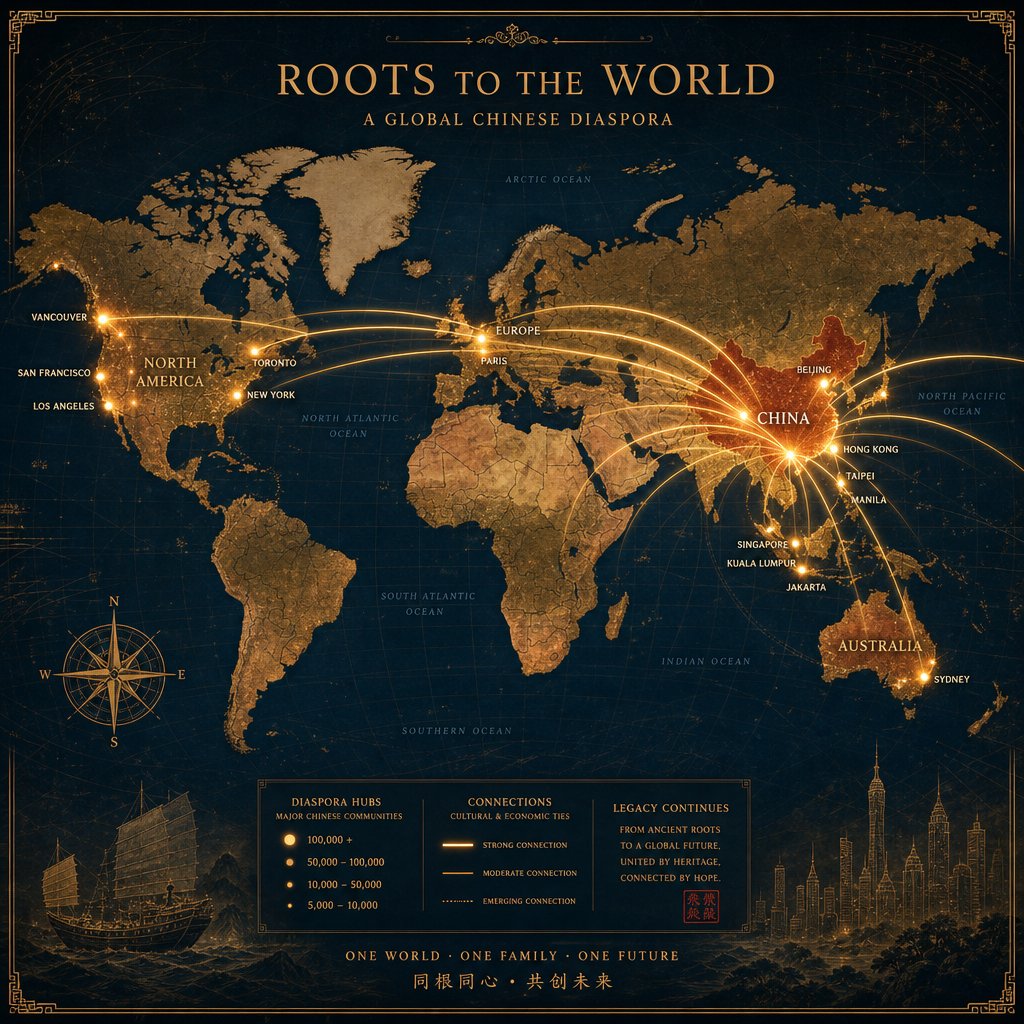
Complete Comparison Table and Cross-Cultural Surname Guide
Ten surnames, over 500 million people, and dozens of romanization variants scattered across the globe. Whether you're building a chinese family name list for research, navigating a multicultural workplace, or simply trying to understand the names you encounter daily, having everything in one place makes the difference between confusion and clarity.
Complete Comparison Table — All 10 Surnames at a Glance
This chinese surnames list consolidates every key detail from the entries above into a single reference. You'll notice that all ten are single-character surnames, each tied to a dynasty, kingdom, or ancient legend.
| Rank | Character | Pinyin | Cantonese | Common English Spellings | Meaning | Dynasty Connection | Approx. Population % |
|---|---|---|---|---|---|---|---|
| 1 | 王 | Wang (2nd tone) | Wong4 | Wong, Ong, Heng | King | Multiple royal lines (Shang, Zhou, Qi) | 7.1% |
| 2 | 李 | Li (3rd tone) | Lei5 | Lee, Ly, Rhee | Plum tree | Tang Dynasty | 6.6% |
| 3 | 张 | Zhang (1st tone) | Zoeng1 | Cheung, Chang, Teo | To draw a bow | None (Yellow Emperor legend) | 6.2% |
| 4 | 刘 | Liu (2nd tone) | Lau4 | Lau, Low, Lieu | Battle-axe | Han Dynasty | 5.1% |
| 5 | 陈 | Chen (2nd tone) | Can4 | Chan, Tan, Chin | To display | State of Chen | 4.5% |
| 6 | 杨 | Yang (2nd tone) | Joeng4 | Yeung, Yeo, Young | Poplar tree | Sui Dynasty | 2.6% |
| 7 | 黄 | Huang (2nd tone) | Wong4 | Wong, Hwang, Ooi | Yellow | Yellow Emperor / Huang Kingdom | 2.3% |
| 8 | 赵 | Zhao (4th tone) | Ziu6 | Chiu, Chao, Cho | To walk/run | Song Dynasty | 1.9% |
| 9 | 吴 | Wu (2nd tone) | Ng4 | Ng, Goh, Go | Kingdom of Wu | Kingdom of Wu | 1.8% |
| 10 | 周 | Zhou (1st tone) | Jau1 | Chow, Chou, Jou | Cycle/completeness | Zhou Dynasty | 1.8% |
Dialect Romanization Guide
A single character can look like five completely different names depending on dialect and country of emigration. This list of chinese last names shows how each surname appears across major Chinese dialect groups — essential context for anyone working with diaspora communities. Note that taiwanese last names often follow the Wade-Giles system rather than pinyin, producing spellings like Chang (for Zhang) and Huang that differ from mainland conventions.
| Character | Mandarin Pinyin | Cantonese Jyutping | Hokkien | Hakka | Common Diaspora Spellings |
|---|---|---|---|---|---|
| 王 | Wang | Wong | Ong, Heng | Wong, Vong | Wong (HK), Ong (SG/MY) |
| 李 | Li | Lei | Lee, Li | Lee, Lei | Lee (global), Ly (VN) |
| 张 | Zhang | Zoeng / Cheung | Teo, Teoh | Chong, Tiong | Chang (TW), Cheung (HK) |
| 刘 | Liu | Lau | Lau, Low | Liew, Lew | Lau (HK), Ryu (KR) |
| 陈 | Chen | Can / Chan | Tan, Tang | Chin, Chun | Chan (HK), Tan (SG/MY) |
| 杨 | Yang | Joeng / Yeung | Yeo, Iu | Yong, Iong | Yeung (HK), Young (US) |
| 黄 | Huang | Wong | Ooi, Ng | Wong, Vong | Wong (HK), Hwang (KR) |
| 赵 | Zhao | Ziu / Chiu | Tio, Teo | Chau, Cheu | Chiu (HK), Chao (TW) |
| 吴 | Wu | Ng | Goh, Go | Ng, Wu | Ng (HK/SG), Goh (SG) |
| 周 | Zhou | Jau / Chow | Chiu, Jiu | Chew, Chu | Chow (HK), Chou (TW) |
In places like Singapore and Malaysia, the spelling of a surname immediately signals ancestral dialect group. A person surnamed "Tan" is understood to have Hokkien roots, while "Chan" points to Cantonese heritage. Among taiwanese surnames, the Wade-Giles romanization creates its own distinct set — Chang for Zhang, Chao for Zhao — that differs from both mainland pinyin and Cantonese spellings. If you're compiling a chinese surname list for international use, accounting for these taiwan last names variants prevents misidentification.
Surname Etiquette for Cross-Cultural Communication
Knowing the list of chinese surnames is one thing. Using them correctly in conversation is another. Here are practical guidelines that apply whether you're meeting a colleague in Shanghai, emailing a contact in Taipei, or introducing yourself at a conference in Vancouver:
- Always use the surname in formal settings. Address someone as "Wang xiansheng" (Mr. Wang) or "Chen nvshi" (Ms. Chen) until invited to use their given name.
- Don't assume a two-syllable name means surname plus given name. "Ouyang" and "Sima" are compound surnames — both syllables belong to the family name.
- Title follows the surname in Chinese: "Li laoshi" (Teacher Li), "Zhang yisheng" (Doctor Zhang). This is the reverse of English order.
- To ask someone's surname politely, use the phrase "Nin gui xing?" (您贵姓? — What is your honorable surname?). This is standard etiquette in formal introductions.
- Women do not take their husband's surname after marriage in Chinese culture. A married woman retains her birth surname in all official contexts.
- When uncertain which character a romanized surname represents (Wang 王 vs. Wang 汪, or Wong as 王 vs. 黄), asking to see it written is perfectly appropriate and shows respect.
In Chinese naming, the surname always comes first and carries the weight of ancestry. A person's family name is not just an identifier — it's a compressed history of kingdoms, migrations, and millennia of lineage that precedes any individual identity.
This complete chinese surname list covers roughly 40% of China's population in just ten entries. Each character encodes a story — a fallen dynasty, an invented weapon, a plum tree that saved a family from starvation. Whether you encounter these names as Wang or Wong, Li or Lee, Zhang or Cheung, you're reading the same ancient histories written in different dialects across different centuries. That's the real power of a surname: it travels.
Frequently Asked Questions About the Top 10 Chinese Last Names
1. What is the most common Chinese last name?
Wang (王) is the most common Chinese last name, carried by over 100 million people in mainland China, roughly 7.1% of the total population. The character means 'king' and gained its dominance through a convergence of multiple royal bloodlines. When ancient kingdoms fell, descendants of various royal houses independently adopted Wang as their surname, creating a multi-origin phenomenon that no single-lineage surname could match. Wang is the top surname in at least 16 Chinese provinces.
2. Why do so few surnames dominate China's population?
Several historical forces concentrated China's population into a small number of surnames over thousands of years. Imperial surname grants were the biggest factor — dynasties like the Han (Liu) and Tang (Li) rewarded loyal subjects by bestowing the emperor's own surname. Clan mergers consolidated unrelated lineages under single names, ethnic minorities adopted Han surnames during assimilation, and forced surname changes during dynastic transitions funneled millions more into existing names. These mechanisms compounded over millennia to produce today's extreme concentration.
3. Why do Chinese surnames have so many different English spellings?
A single Chinese surname character can appear as five or more English spellings because different dialect groups pronounce the same character differently. For example, the character 陈 is romanized as Chen in Mandarin, Chan in Cantonese, Tan in Hokkien, and Chin in Hakka. Migration to different countries added further variation, as immigration officials transcribed names inconsistently. Taiwan uses the Wade-Giles system (producing Chang instead of Zhang), while Hong Kong follows Cantonese pronunciation (Cheung for Zhang).
4. Is Li or Lee the most common surname in the world?
Li (李) is a strong contender for the most common surname on Earth. With over 92 million bearers in China, plus the Korean Lee/Yi (carried by roughly 15% of South Korea's population), the Vietnamese Ly, and millions in diaspora communities worldwide, the combined total likely exceeds 100 million people. When all variants are counted together, Li/Lee may surpass Wang globally, though exact worldwide figures are difficult to verify across different census systems.
5. Do Chinese women change their surname after marriage?
No, Chinese women traditionally retain their birth surname after marriage. Unlike the Western convention of adopting a husband's surname, Chinese naming culture keeps a woman's family name unchanged in all official contexts throughout her life. This practice reflects the deep ancestral significance of surnames in Chinese culture, where the family name represents thousands of years of lineage that marriage does not alter. Children typically take the father's surname, though taking the mother's surname is also legally permitted.