What Are Two Character Chinese Surnames
When you hear a name like Zhuge Liang, where does the surname end and the given name begin? Many people outside China instinctively split it as "Zhu" plus "ge Liang." That split is wrong. The surname is Zhuge, written as two characters (诸葛), and Liang is the given name. This is a two character Chinese surname in action, and it trips up even seasoned Mandarin learners.
A compound surname (复姓, fuxing) is a Chinese surname composed of two or more characters that functions as a single, indivisible family name. Unlike double-barrelled names formed by combining two separate surnames, a compound surname is one linguistic unit with its own distinct origin and history.
What Makes a Surname Two Characters
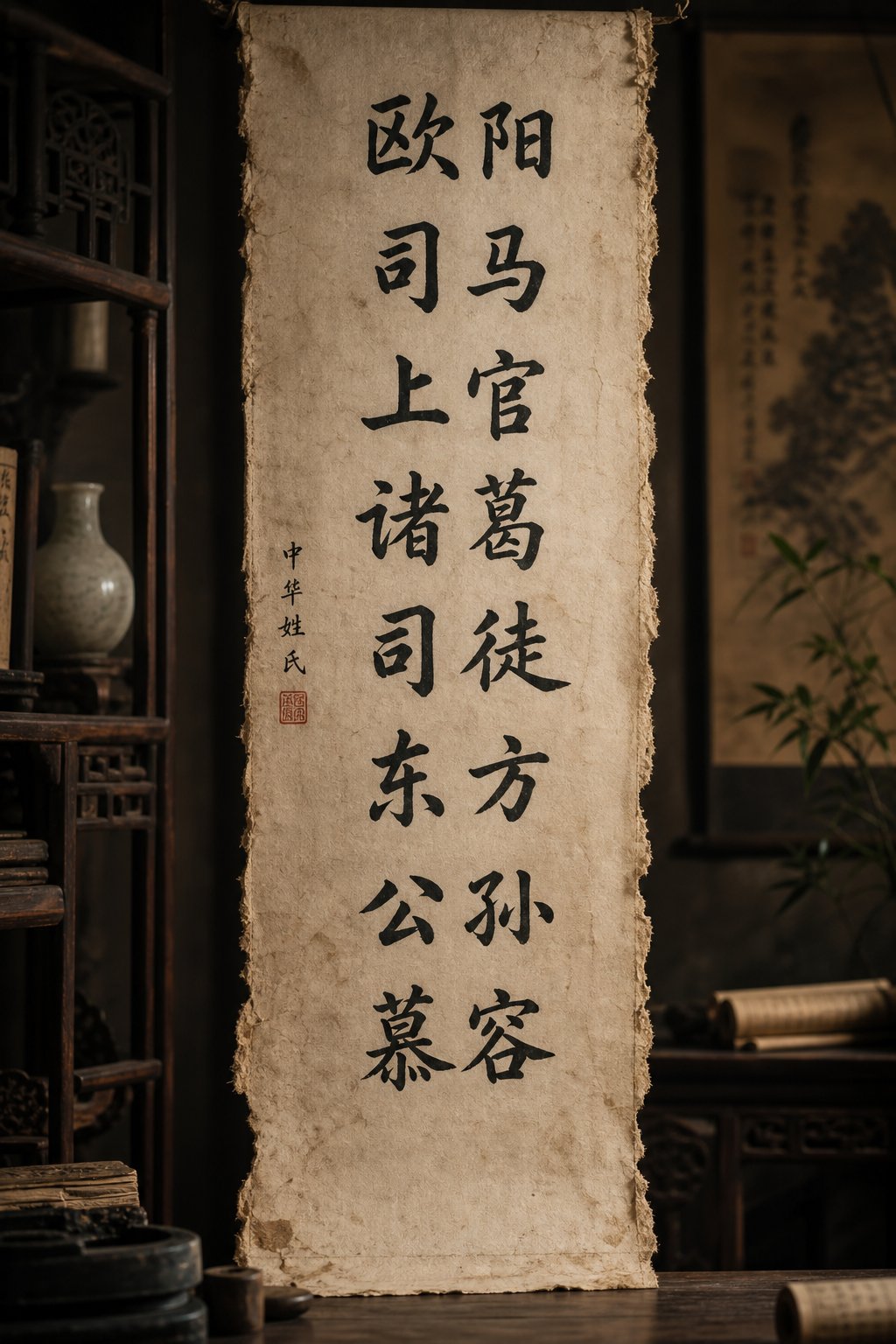
Most Chinese surnames are a single character: Wang, Li, Zhang, Chen. These dominate the population so thoroughly that the top 100 single-character names cover roughly 85% of all people in China. Two character Chinese surnames, by contrast, represent only about 0.11% of the population. They are rare, but they carry outsized cultural weight. Names like Sima (司马), Ouyang (欧阳), and Shangguan (上官) each trace back to specific historical roles, places, or lineages that required more than one character to express.
What makes these 2 character chinese surnames distinct is their indivisibility. You cannot break Ouyang into "Ou" and "Yang" and treat them as separate family names. The two characters together form one chinese surname with one origin story.
Why Most Chinese Surnames Are Single Characters
Chinese favors brevity. A single-character surname paired with a one- or two-character given name creates a compact, balanced full name. Over centuries, many compound surnames actually simplified into single-character versions. Ouyang became Ou or Yang. Zhongli became Zhong. Gongsun became Sun. Linguistic economy and political pressures, including imperial edicts that forced surname changes, steadily reduced the number of multi-character surnames in active use.
The Hundred Family Surnames Text
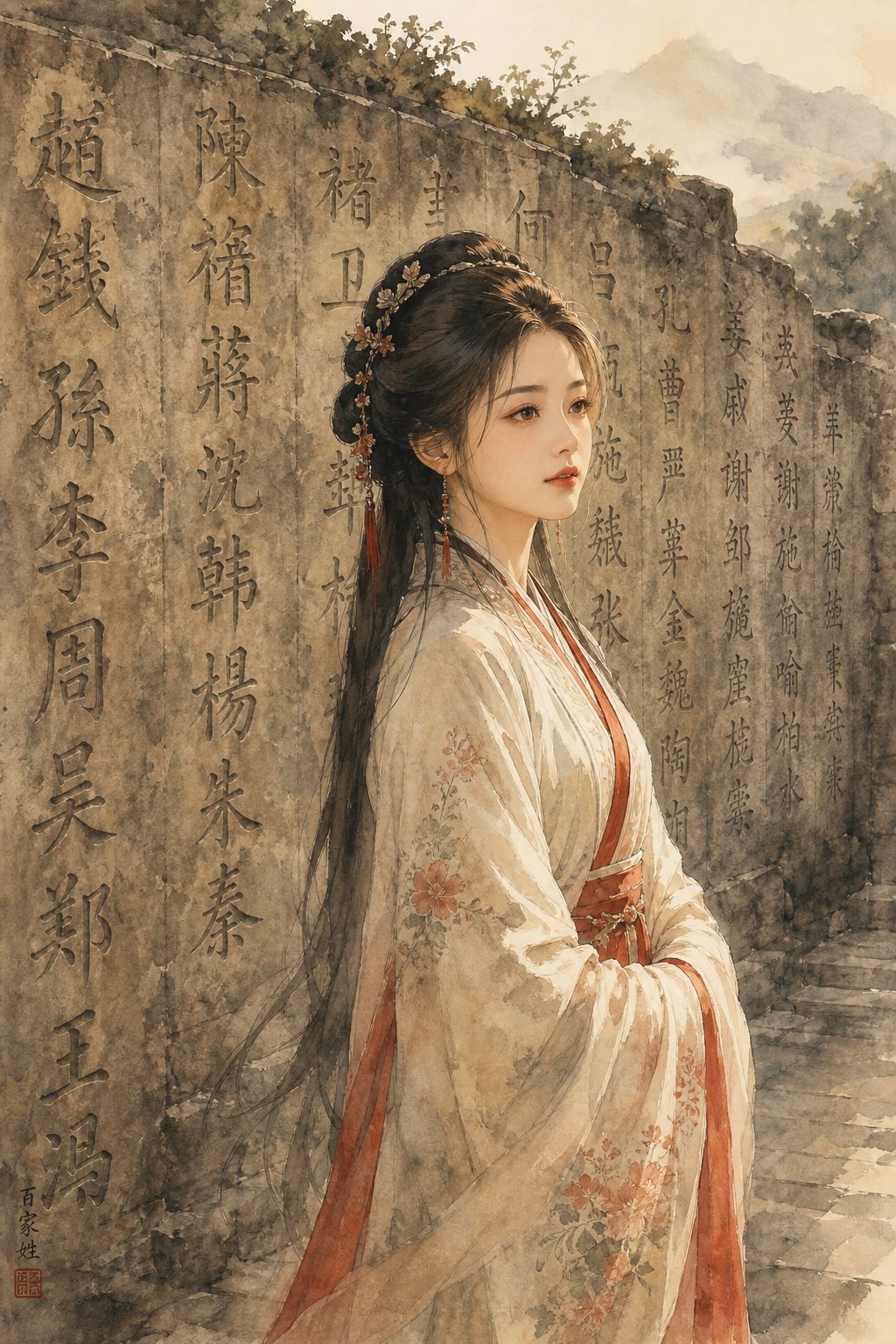
The Hundred Family Surnames (百家姓), compiled during the early Song dynasty, remains one of the most recognized references for Chinese surnames. Despite its name suggesting just 100 surnames chinese families carried, the text actually cataloged over 500 surnames, including dozens of compound ones. It grouped 2 letter chinese surnames together near the end, listing pairs like Sima, Shangguan, and Ouyang as part of the broader surname tradition. The text served as a literacy primer for children and, over time, became a cultural touchstone for understanding the full diversity of Chinese family names.
Among the most common chinese surnames today, compound names barely register in population statistics, yet they appear constantly in literature, historical records, and popular media. That gap between rarity and visibility is exactly what makes them fascinating, and it raises a natural question: where did these unusual surnames actually come from?
Historical Origins and How These Surnames Formed
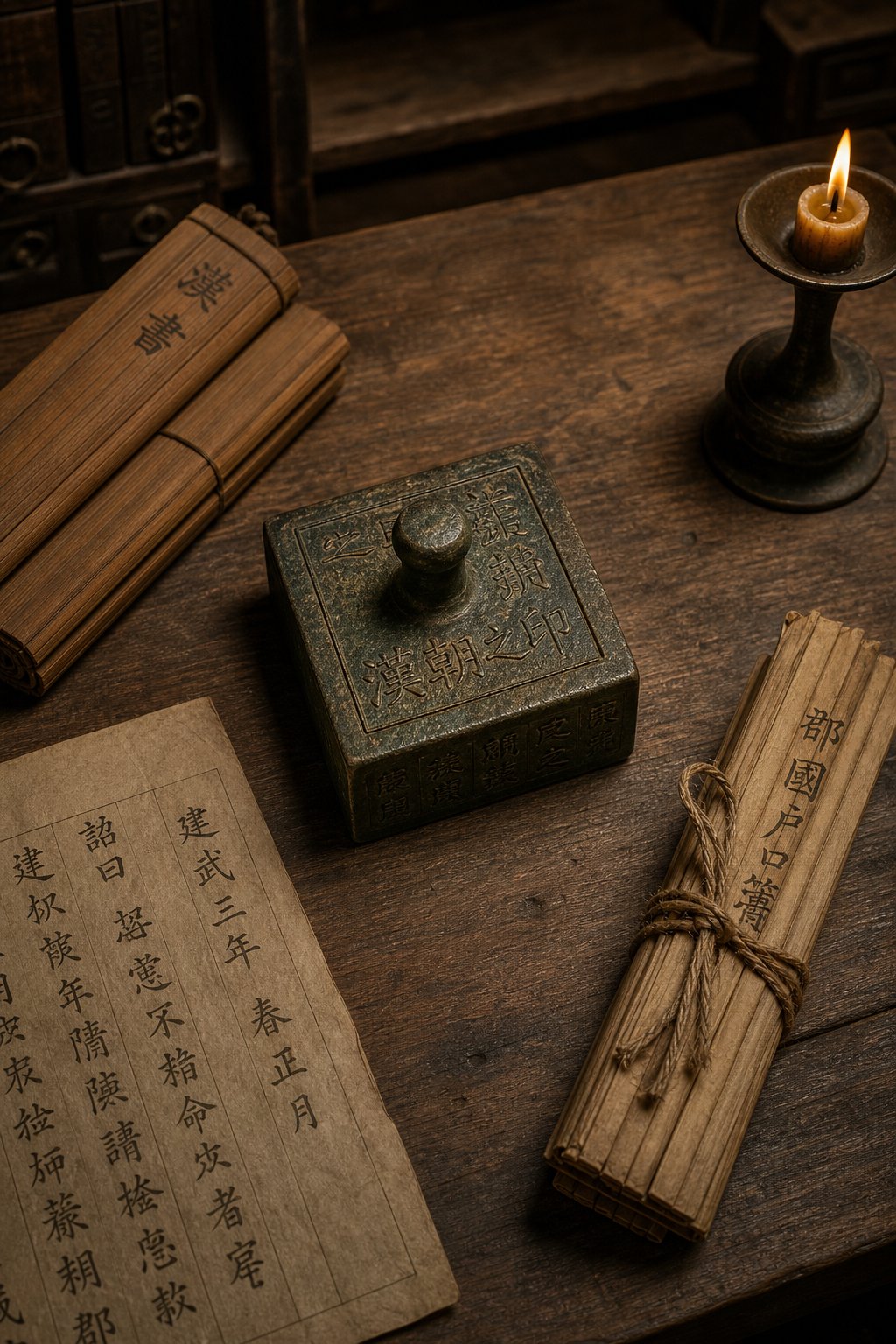
Each compound surname carries a specific origin story rooted in Chinese surname history, and those stories fall into a handful of recognizable patterns. Think of it like a filing system: every two-character surname earned its extra character for a reason, whether that reason was a job title, a geographic marker, or a tribal identity. Understanding these categories helps you decode ancient chinese surnames and meanings that might otherwise seem arbitrary.
- Official titles and government ranks - Sima (司马), Sikong (司空), Situ (司徒), Taishi (太史)
- Geographic locations and landmarks - Ouyang (欧阳), Dongguo (东郭), Ximen (西门), Nangong (南宫)
- Ethnic assimilation from non-Han peoples - Yuwen (宇文), Murong (慕容), Huyan (呼延), Tuoba (拓跋)
- Royal lineage and noble descent - Gongsun (公孙), Xiahou (夏侯), Huangfu (皇甫)
Surnames From Official Titles and Ranks
The largest and most recognizable category traces back to the bureaucratic machinery of ancient China. During the Zhou dynasty and into the Han period, senior government positions carried distinctive two-character titles. When these roles became hereditary or deeply associated with a particular family, the title itself became the surname.
Sima (司马) is the clearest example. The term literally means "Master of the Horse," a military office responsible for cavalry and warfare. It was one of the Three Excellencies of the Han dynasty. Families who held this position for generations eventually adopted it as their permanent chinese surname. The same pattern produced Situ (司徒), meaning "Minister over the Masses," Sikong (司空), meaning "Minister of Works," and Taishi (太史), the title for the Grand Historian. Each of these official-title surnames preserves a snapshot of the Zhou and Han bureaucratic structure in just two characters.
Surnames From Geographic Locations
A second major chinese surname origin category comes from places. When a family's identity was tied to a specific landmark, city gate, or region, that location became their name. Ouyang (欧阳) derives from the area south of Mount Ou Yu, with "yang" (阳) meaning the sunny southern side of a mountain. Families living in that region adopted the geographic description as their surname.
Other location-based surnames are even more literal. Dongmen (东门) means "East Gate," taken by families residing near the eastern gate of a Zhou dynasty capital. Ximen (西门) means "West Gate." Nangong (南宫) translates to "Southern Palace." These names functioned almost like ancient addresses that hardened into permanent family identifiers over centuries.
Surnames From Ethnic and Royal Origins
Not all compound surnames are native Han Chinese creations. A significant number entered the Chinese naming system through ethnic assimilation during periods when non-Han peoples ruled parts of northern China. The Xianbei tribes alone contributed surnames like Yuwen (宇文), Murong (慕容), Tuoba (拓跋), and Dugu (独孤). The Xiongnu gave rise to Huyan (呼延), while the Khitan ruling clan used Yelü (耶律) and the Jurchen emperors carried Wanyan (完颜). As these groups integrated into Chinese society across successive dynasties, their multi-character clan names became part of the broader surname landscape.
Royal chinese surnames form a related but distinct thread. Gongsun (公孙) literally means "dukes' descendants," a title used during the Spring and Autumn period for noble offspring. Xiahou (夏侯) traces to a noble title granted to descendants of the legendary Yu the Great. Huangfu (皇甫) evolved from the courtesy name of a Song dynasty nobleman, Huangfu Chongshi. These royal lineage surnames served as markers of aristocratic blood, distinguishing their bearers from commoners who carried simpler single-character names.
What connects all these categories is a shared logic: compound surnames emerged when a single character could not capture the full identity a family wanted to preserve. A job title, a mountain, a tribal heritage, a royal bloodline, each required that extra character to tell the complete story. The surnames that survived into the modern era are the ones whose stories proved too meaningful to abbreviate.
Major Two Character Surnames With Characters and Pinyin
Knowing where compound surnames come from is one thing. Being able to recognize them on sight, pronounce them correctly, and understand their meaning is another challenge entirely. If you have ever scanned a chinese surname list looking for two-character entries, you have probably noticed how scattered and incomplete most resources are. Some give characters without pinyin. Others provide romanization but skip the meaning. Few offer both in one place.
The table below brings together the most well-known compound surnames in a single bilingual reference. Each entry includes the Chinese characters (simplified), standard pinyin romanization with tone marks, a brief note on meaning or origin, and a notable historical figure associated with the name. This is not an exhaustive catalog of all chinese surnames, but it covers the ones you are most likely to encounter in historical texts, literature, and modern life.
Complete Reference Table of Compound Surnames
| Chinese Characters | Pinyin | Approximate Meaning/Origin | Notable Historical Figure |
|---|---|---|---|
| 欧阳 | Ouyang | South of Mount Ou Yu (geographic) | Ouyang Xiu (Song dynasty poet) |
| 上官 | Shangguan | High official; place name | Shangguan Wan'er (Tang dynasty poet) |
| 皇甫 | Huangfu | From courtesy name of Song nobleman | Huangfu Song (Han dynasty general) |
| 令狐 | Linghu | Place name in ancient China | Linghu Chu (Tang dynasty chancellor) |
| 诸葛 | Zhuge | Branch of the Ge (葛) clan | Zhuge Liang (Three Kingdoms strategist) |
| 司徒 | Situ | Minister over the Masses (official title) | Szeto Wah (Hong Kong educator) |
| 司马 | Sima | Master of the Horse (military title) | Sima Qian (Grand Historian) |
| 夏侯 | Xiahou | Marquess Xia; noble title from Yu the Great's line | Xiahou Dun (Three Kingdoms general) |
| 东方 | Dongfang | "The East"; descendants of Fuxi clan | Dongfang Shuo (Han dynasty scholar) |
| 南宫 | Nangong | Southern Palace (geographic/structural) | Nangong Kuo (Western Zhou official) |
| 公孙 | Gongsun | Dukes' descendants (noble lineage) | Gongsun Zan (Han dynasty warlord) |
| 完颜 | Wanyan | Jurchen royal clan | Wanyan Aguda (Jin dynasty founder) |
| 贺兰 | Helan | Helan Mountains; Xianbei origin | Princess Dowager Helan |
| 申屠 | Shentu | "Butcher from Shen" (occupation + place) | Shentu Jian (Han dynasty figure) |
| 慕容 | Murong | Xianbei tribal name | Murong Huang (Yan dynasty ruler) |
| 呼延 | Huyan | Xiongnu tribal name | Huyan Zan (Song dynasty general) |
| 端木 | Duanmu | Ancient clan name | Duanmu Ci (Confucius' disciple) |
| 独孤 | Dugu | Xianbei origin | Dugu Qieluo (Sui dynasty empress) |
| 尉迟 | Yuchi | Xianbei or Khotan origin | Yuchi Jingde (Tang dynasty general) |
| 宇文 | Yuwen | Xianbei tribal name | Yuwen Tai (Northern Zhou founder) |
A few patterns jump out immediately. The surnames derived from official titles (Sima, Situ) cluster around government and military roles. Geographic surnames (Ouyang, Nangong, Dongfang) read almost like compass directions or landscape descriptions. And the non-Han surnames (Wanyan, Murong, Dugu) reflect the ethnic diversity of China's dynastic history. Together, this chinese surnames list captures the full range of origins discussed earlier, now in a format you can reference at a glance.
Population-wise, these chinese surnames names are far from equal. Data from China's 2020 National Name Report shows Ouyang leading with approximately 1,112,000 bearers, followed distantly by Shangguan at 88,000 and Huangfu at 64,000. Surnames like Xiahou (11,000) and Helan (10,000) are genuinely rare. The entire group of common compound surnames totals roughly 1.5 million people out of China's 1.41 billion population.
How to Read Pinyin Romanization
If you are unfamiliar with pinyin, here is a quick orientation. Pinyin is the standard romanization system for Mandarin Chinese, and it uses the Latin alphabet with tone marks to indicate pronunciation. Each compound surname is written as one continuous word with no space or hyphen. Ouyang is correct. Ou-yang, Ou Yang, and Ou-Yang are all incorrect in standard pinyin.
You will notice that some surnames look deceptively similar to common English words or single-character surnames. Sima is not "Si" plus "Ma" in the way you might combine two separate names. It is one unit, pronounced with a first tone on "Si" and a third tone on "Ma" (Sima). The same applies to Shangguan (fourth tone + first tone) and Huangfu (second tone + third tone). Getting the tones right matters because mispronouncing a compound surname can accidentally turn it into two unrelated words.
For anyone building a personal reference of chinese surnames and meanings, this table works as a starting point. But names on a page only tell part of the story. The real weight of these surnames becomes clear when you see who carried them and what they accomplished.
Famous Figures Who Carried Two Character Surnames
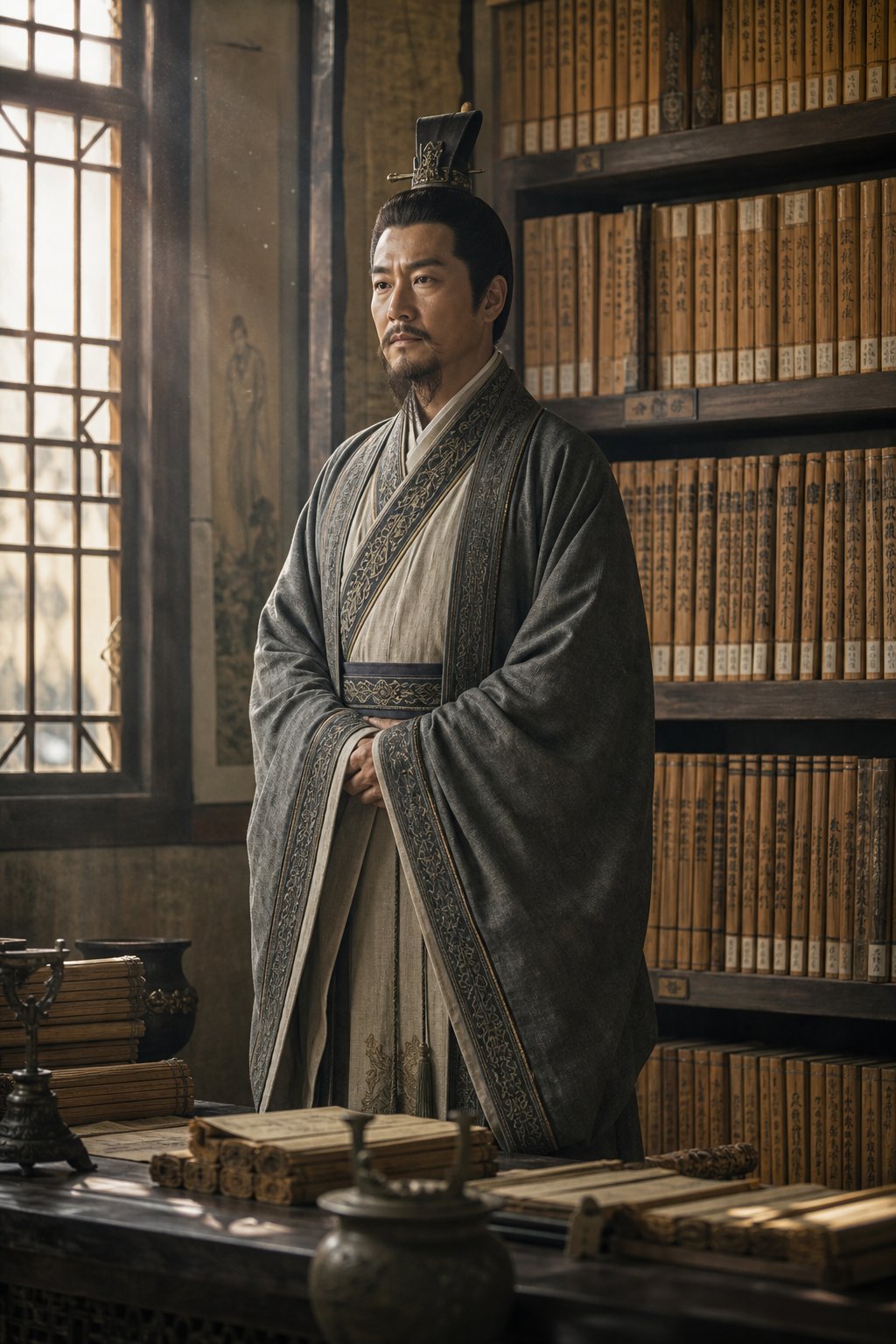
A surname for chinese families is never just a label. It is a lineage marker, a historical claim, and sometimes a story compressed into one or two characters. The compound surnames listed in the table above have survived for millennia precisely because the people who carried them did extraordinary things. Their achievements made the names unforgettable, and the names, in turn, kept their stories alive.
Sima Qian and the Historian Legacy
Imagine choosing castration over death so you could finish writing a book. That is exactly what Sima Qian did. Born around 145 BCE, he inherited the title of Grand Historian from his father, Sima Tan, at the Han dynasty court. The role combined astronomical observation, calendar regulation, and record-keeping of state events. But Sima Qian had a far grander ambition: to write a comprehensive history of the entire Chinese past.
His surname traces directly to the official-title category discussed earlier. "Sima" literally means "Master of the Horse," a senior military office. His family had held court positions for generations, and the title hardened into their permanent family name. The meaning of chinese surnames rarely gets more literal than this: the Sima clan was defined by service to the state.
When Sima Qian defended a disgraced general and offended Emperor Wudi, he faced execution. He chose castration instead, enduring lifelong shame so he could complete the Shiji (Records of the Grand Historian). That work, spanning over 130 chapters and covering more than two thousand years of history, became the model for every dynastic history that followed. It remains the standard against which all Chinese historical writing is measured.
Sima Qian termed himself not a "maker," like Confucius, but merely a "transmitter" of past events. Yet his work became the most important history of China down to the end of the 2nd century BCE, and a masterpiece of flexible Chinese prose that influenced narrative writing for two millennia.
Zhuge Liang the Legendary Strategist
If Sima Qian represents the scholar-official tradition, Zhuge Liang embodies the military genius archetype. Living during the turbulent Three Kingdoms period (181-234 CE), he served as chancellor and chief strategist of the Shu Han state. His surname, Zhuge (诸葛), belongs to the clan-branch category: the family descended from the Ge clan but relocated to a place called Zhuyu, combining the two into a new compound surname.
Among chinese male names and surnames in popular culture, Zhuge Liang might be the single most recognizable compound-surname figure. His reputation for near-supernatural intelligence, his invention of military formations, and his loyalty to Liu Bei have made him a fixture in novels, films, television dramas, and video games. The idiom "borrowing arrows with straw boats" and the image of a feather-fan-wielding strategist both trace back to his legend. For many people encountering Chinese history for the first time, Zhuge Liang is the reason they learn that two-character surnames exist at all.
Ouyang Xiu and Literary Tradition
Ouyang Xiu (1007-1072) was a Song dynasty statesman, historian, essayist, and poet who championed a return to classical simplicity in Chinese prose. His surname, Ouyang, is geographic in origin, referring to the southern slope of Mount Ou. He rose from modest beginnings to become one of the most influential literary figures of his era, mentoring younger writers like Su Shi and Wang Anshi who would go on to reshape Chinese literature themselves.
His legacy matters here because it shows compound surnames appearing at the highest levels of cultural production, not just military or political power. Ouyang Xiu helped compile the New Book of Tang and the New History of the Five Dynasties, shaping how later generations understood their own past.
Among chinese female names and surnames in history, few carry as much weight as Shangguan Wan'er (664-710). Born into a family that had already been destroyed by Empress Wu Zetian, she was raised in the imperial palace and eventually became Wu Zetian's chief political advisor. She drafted imperial edicts, participated in military and state affairs, and made a name for herself as a poet. Her surname, Shangguan, derives from the "high official" title category, and she lived up to it completely. Later generations of male scholars reduced her story to palace gossip and romantic intrigue, but her recently discovered tombstone reveals a far more complex political figure who repeatedly tried to check the power of Empress Wei.
These four figures span different dynasties, different fields, and different surname origins. Yet they share something crucial: their compound surnames made them instantly distinguishable in the historical record. A single-character surname like Li or Wang belongs to millions. A compound surname belongs to a story. And that distinction between common and rare, between blending in and standing apart, raises a question that matters in modern China: what happens when parents today try to create new two-character surnames by combining their own?
Compound Surnames Versus Modern Double-Barrelled Names
The answer is: it depends on who you ask, and it depends on what you mean by "two characters." A child born today with the surname Zhang-Wang (张王) has a two-character surname on paper. But linguistically and historically, it is a fundamentally different creature from Sima or Ouyang. Confusing the two is one of the most common mistakes people make when discussing chinese names and surnames, and the distinction carries real consequences for identity, law, and cultural heritage.
Traditional Compound Surnames Versus Modern Combinations
Traditional compound surnames (复姓) are single linguistic units. Ouyang is not "Ou" plus "Yang" stitched together from two families. It emerged as one name from one origin, whether that origin was a geographic location, an official title, or a tribal identity. These surnames have existed for over two thousand years, passed down intact through patrilineal inheritance like any other chinese name surname.
Modern double-barrelled surnames work differently. They are created by combining two separate single-character surnames, typically one from each parent. If the father's surname is Chen (陈) and the mother's is Li (李), the child might be registered as Chen-Li (陈李). Each component retains its independent identity. You can trace one half to the father's lineage and the other to the mother's. The result looks like a compound surname but functions like a hyphenated Western name.
In Hong Kong, this practice has roots going back decades. Married women, particularly in professional and political circles, commonly placed their husband's surname before their own. Carrie Lam, for instance, was known in Chinese as Lam-Cheng Yuet-ngor (林郑月娥), combining her husband's surname Lam with her birth surname Cheng. As Language Log documented, this convention became popular among Hong Kong civil servants from the 1960s onward. On the mainland, the trend is newer and driven by different motivations entirely.
Legal Status of Combined Surnames Today
China's 2021 Civil Code explicitly permits children to take either parent's surname or, in certain circumstances, a combined surname. This legal framework opened the door for parents to create new two-character surnames that never existed historically. A study of Chinese born between 1986 and 2005 found that compound surnames accounted for only 0.8% of the sample, while maternal surnames represented 1.4%. Both figures remain small, but they show a clear upward trend over time.
The motivations vary by region and class. In coastal areas like Jiangsu, Zhejiang, and Shanghai, where women hold relatively strong bargaining power, children bearing their mother's surname alone is more common. Combined surnames, by contrast, appear more frequently in urban families where the mother has a higher level of education. Researchers found that the decision to use a combined surname correlates less with family-line preservation and more with evolving attitudes about gender equality.
Are chinese surnames first or last in these combined forms? The same rule applies as always: chinese names are written surname first, whether that surname is one character or two. A child named Chen-Li Wei would have Chen-Li as the surname and Wei as the given name. The order does not change just because the surname grew longer.
Why the Distinction Matters
Treating modern combined surnames as equivalent to traditional compound surnames erases history. When someone carries the surname Sima, they are connected to a specific ancient military office and a lineage stretching back to the Zhou dynasty. When someone carries the surname Zhang-Wang, they are connected to two specific parents who made a modern choice. Both are valid. Neither is the other.
The distinction also matters practically. In standard pinyin, traditional compound surnames are written as one word without a hyphen: Ouyang, Shangguan, Zhuge. Modern combined surnames, by contrast, should be hyphenated: Zhang-Wang, Chen-Li. This orthographic rule exists precisely to signal whether a two-character surname is one historical unit or two joined parts. The most common chinese surname, Wang (王), appears in countless modern combinations, but no one would confuse Wang-Li with Wanyan.
For anyone researching their own family history, the question "is my surname a traditional compound or a modern combination?" has a straightforward answer. If it appears in classical texts like the Hundred Family Surnames or dynastic records, it is traditional. If it was created within the last few generations by joining two parents' names, it is modern. The most common chinese surnames, the Wangs and Lis and Zhangs, are the raw material from which new combinations are built. But the old compound surnames, the Simas and Ouyangs, were never assembled from parts. They arrived whole.
This linguistic clarity matters beyond genealogy. In an increasingly digital world, systems that process chinese names surname first need to know whether they are dealing with a one-character surname, a traditional two-character surname, or a modern hyphenated combination. Each type creates different challenges for databases, official documents, and cross-cultural communication.
Modern Challenges With Two Character Surnames
Digital systems love assumptions. And the assumption baked into most name-handling software, whether built in Beijing or Boston, is that a Chinese surname is one character long. That assumption works fine for the 99% of the population carrying names like Wang, Li, or Zhang. For the families still carrying compound surnames, it creates a cascade of errors that range from mildly annoying to genuinely disruptive.
Digital Systems That Break With Compound Surnames
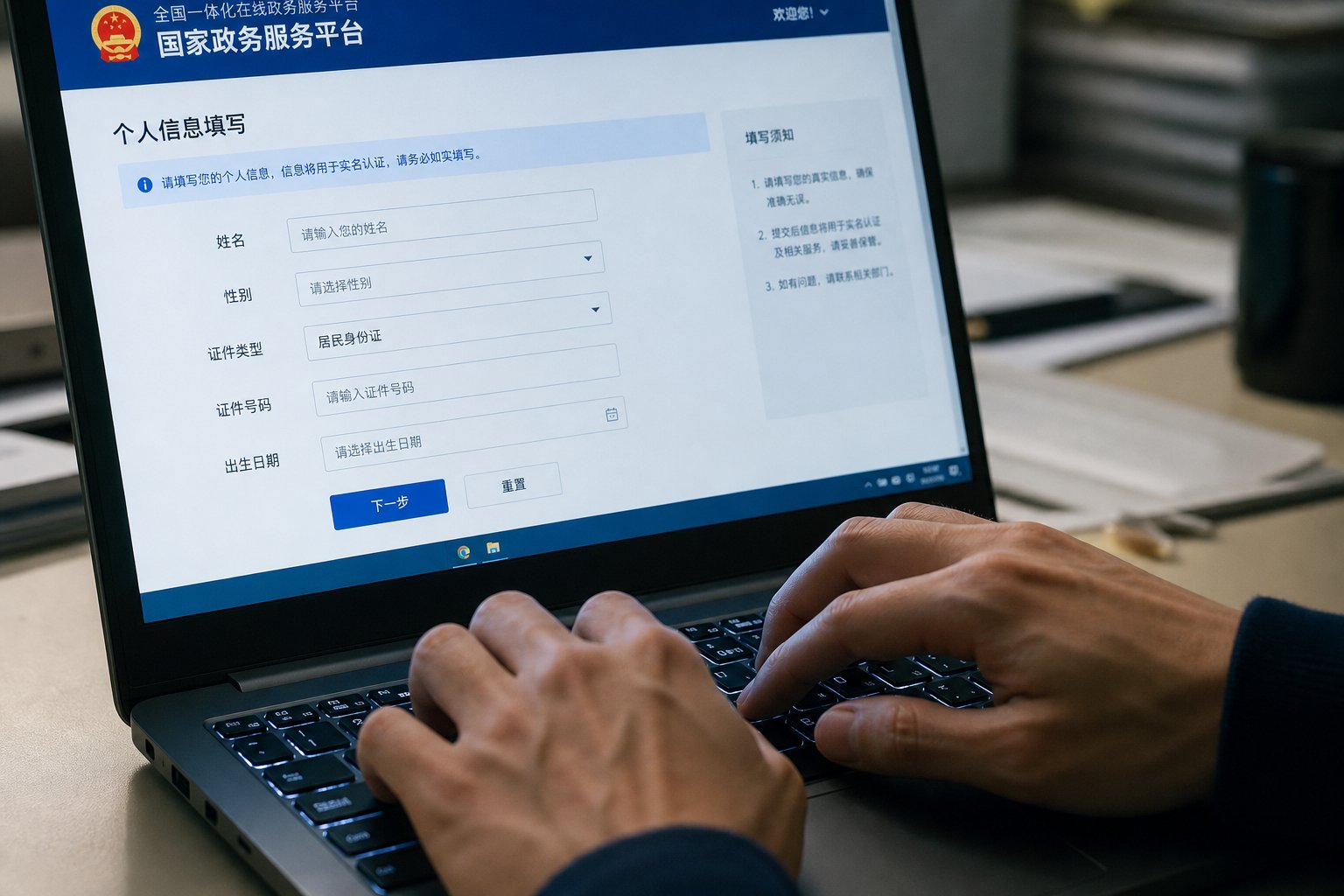
Picture filling out an online form in China. The surname field accepts one character. You type "欧" and the system moves your cursor to the given name field before you can finish entering "欧阳." Your surname is now split across two fields, your given name is wrong, and the system has no way to correct it without manual intervention. This is not a hypothetical scenario. It happens routinely to people with compound surnames on banking platforms, government portals, and e-commerce sites.
The root cause is database design. Many Chinese systems allocate a fixed one-character field for surnames because it covers the vast majority of cases. When a two-character surname arrives, the system either truncates it, splits it incorrectly, or rejects the input entirely. Airline ticketing systems are particularly problematic. International booking platforms often parse Chinese names by assuming the first character is the surname and everything else is the given name. A person named Shangguan Wei (上官伟) might end up with a ticket reading surname "Shang" and given name "Guan Wei," which then fails to match their passport.
Even within China, the national ID system handles compound surnames correctly, but third-party systems that pull data from it sometimes do not. Train ticket platforms, hotel check-in kiosks, and mobile payment verification steps can all stumble when the surname field does not match expectations.
Common Mistakes in Western Contexts
Western systems introduce a different set of problems. When chinese american surnames appear on immigration forms, HR databases, or university enrollment systems, the errors multiply. Most Western name fields assume a "first name / last name" structure, and staff processing these forms often have no training on how Chinese names work.
Here are the most frequent mistakes and their corrections:
- Splitting the surname into first and last name fields. Ouyang Ming becomes "Ouyang" in the first name field and "Ming" in the last name field, reversing the entire name. Correction: the full compound surname belongs in the last name or family name field.
- Treating the first syllable as the surname. Sima Guang gets recorded as surname "Si," first name "Ma Guang." This happens when clerks assume one syllable equals one name unit. Correction: recognize that Sima is one indivisible surname.
- Adding unwanted hyphens or spaces. Zhuge becomes "Zhu-Ge" or "Zhu Ge" in systems that auto-format names. This can cause passport mismatches and rejected visa applications. Correction: compound surnames in pinyin are written as one continuous word with no space or hyphen.
- Confusing romanization variants with different names. The same surname Sima might appear as Szema (Wade-Giles), Sima (pinyin), or Szu-ma (older transliteration). Staff unfamiliar with romanization systems may create duplicate records for the same person. Correction: ask which romanization system was used and cross-reference accordingly.
- Assuming the longer name is a given name. In cultures where surnames are short, a two-syllable element looks like a first name. American chinese surnames like Ouyang or Huangfu get filed as given names while the actual given name gets treated as the surname. Correction: when processing Chinese names, always confirm which part is the family name rather than guessing by length.
These errors are not just administrative inconveniences. For chinese filipino surnames or chinese surnames in the philippines, where Chinese-origin names have been adapted into Spanish-influenced naming conventions, the confusion compounds further. A Shangguan family that emigrated to Manila decades ago might carry documentation with three different spellings across three generations of paperwork.
Correct Handling for Professionals
If your work involves processing names from Chinese-speaking populations, a few principles will prevent most errors. The question "what is your surname in chinese" sounds simple, but the answer requires knowing what to do with it once you have it.
- Never assume surname length. Chinese surnames can be one, two, or (very rarely) three or more characters. Always ask or verify rather than auto-parsing.
- Use a single unified name field when possible. If your system must separate surname from given name, allow at least two characters (or six Latin letters) in the surname field.
- Respect the romanization on official documents. If a passport reads "Ouyang" as one word, do not split it. If it reads "OUYANG" in all caps with no space, that is the correct format for your records.
- Train staff on compound surname recognition. A short reference list of the most common compound surnames (Ouyang, Sima, Shangguan, Zhuge, Huangfu, Nangong) covers the majority of cases professionals will encounter.
- Flag discrepancies rather than auto-correcting. If a name does not fit your system's expected format, flag it for human review instead of letting software truncate or rearrange it.
These are not edge cases that affect a handful of people. With over a million Ouyang surname holders alone, plus significant diaspora populations carrying compound surnames across Southeast Asia, North America, and Europe, the total number of people affected by these system failures is substantial. Every misfiled visa application, every rejected airline boarding pass, every bank account that cannot be verified represents a real cost imposed by lazy assumptions about name length.
The technical fixes are straightforward. The cultural literacy required to implement them is the harder part, and it starts with understanding how these surnames actually sound and behave in spoken and written language.
A Guide for Mandarin Learners and Language Students
Pronouncing a compound surname in chinese correctly requires more than knowing the individual characters. When two syllables function as one surname, their tones interact, their rhythm shifts, and the rules for attaching titles and honorifics change. If you are studying Mandarin and have only encountered single-character surnames like the li chinese surname (李) or Wang (王), compound surnames will feel different in your mouth and on the page.
Tonal Patterns in Compound Surnames
Every character in Mandarin carries one of four tones (or a neutral tone), and compound surnames are no exception. The difference is that you are now producing two toned syllables in rapid succession as a single name unit, which creates tonal pairings that affect rhythm and flow.
Consider a few examples:
- Sima (司马) - first tone + third tone (sī mǎ)
- Ouyang (欧阳) - first tone + second tone (ōu yáng)
- Shangguan (上官) - fourth tone + first tone (shàng guān)
- Zhuge (诸葛) - first tone + third tone (zhū gě)
- Huangfu (皇甫) - second tone + third tone (huáng fǔ)
You will notice that tone sandhi rules still apply. When two third tones appear in sequence, the first shifts to a second tone in natural speech. This means Sima, technically sī + mǎ, does not trigger sandhi because the first syllable is first tone. But a hypothetical pairing of two third-tone characters would follow standard sandhi rules just as it would in any other two-syllable word. Treat compound surnames as single prosodic units, not as two separate words spoken back to back.
Naming Conventions With Titles and Honorifics
Sounds complex? Here is the practical question learners always ask: when you add a title like 先生 (xiānsheng, Mr.) or 女士 (nǚshì, Ms.), does it attach to the full two-character surname or just the second character?
The answer is straightforward. Titles attach to the complete surname. You say Ouyang xiānsheng (欧阳先生), not Yang xiānsheng. You say Shangguan nǚshì (上官女士), not Guan nǚshì. Truncating a compound surname when adding a title is the equivalent of calling someone named McDonald just "Donald." The full surname is the unit of address.
This extends to other forms of address too. In professional settings, you would say Sima zǒng (司马总, Director Sima) or Zhuge lǎoshī (诸葛老师, Teacher Zhuge). The compound surname always stays intact. Given names, meanwhile, follow the surname as usual. A full name like Ouyang Xiu (欧阳修) has a two-character surname plus a one-character given name, creating a three-character full name. Some parents give compound-surname children a single-character given name to keep the total length manageable, though two-character given names (producing four-character full names like Shangguan Wan'er) are perfectly acceptable.
Romanization Differences Across Systems
Here is where things get confusing for researchers and language students alike. The same surname in chinese can look dramatically different depending on which romanization system was used to transcribe it. Pinyin is the current international standard, but older texts use Wade-Giles, and Cantonese names use Jyutping or informal romanizations. The chinese surname lee, for instance, is actually the Cantonese romanization of 李 (Lǐ in pinyin), the same character that produces the li chinese surname in Mandarin contexts. One character, two completely different spellings, depending on dialect and system.
Compound surnames multiply this confusion. The table below shows how several well-known two-character surnames appear across three major romanization systems:
| Chinese Characters | Pinyin (Mandarin) | Wade-Giles | Cantonese (Jyutping/Informal) |
|---|---|---|---|
| 司马 | Sīmǎ | Ssu-ma | Si-ma / Szema |
| 欧阳 | Ōuyáng | Ou-yang | Au-yeung |
| 诸葛 | Zhūgě | Chu-ko | Zyu-got |
| 上官 | Shàngguān | Shang-kuan | Soeng-gun |
| 皇甫 | Huángfǔ | Huang-fu | Wong-fu |
| 东方 | Dōngfāng | Tung-fang | Dung-fong |
| 尉迟 | Yùchí | Yü-ch'ih | Wat-ci |
Notice how Zhuge becomes "Chu-ko" in Wade-Giles, a spelling that looks nothing like the pinyin version. Ouyang transforms into "Au-yeung" in Cantonese, which is how many Hong Kong families spell it on official documents. If you encounter a surname like "Szema" in an older English-language history book, that is simply the Wade-Giles rendering of Sima. Same family, same characters, different era of transcription.
For anyone researching the chinese surname transliterating zuo (左), the same principle applies to single-character surnames too. Zuo appears as "Tso" in Wade-Giles, and the chinese surname zuo can be mistaken for an entirely different name when systems do not cross-reference romanization variants. Compound surnames just amplify this problem because two characters mean twice as many opportunities for spelling divergence.
The practical takeaway for learners: always identify which romanization system a text uses before assuming you know how a surname is pronounced. A lee surname chinese family and a Li surname chinese family may share the exact same character (李). An "Au-yeung" in Hong Kong and an "Ouyang" in Beijing carry the same compound surname (欧阳). The characters are the constant. The romanization is just clothing that changes with time, place, and system.
This variability in how compound surnames get written down connects to a bigger question about their survival. When a surname can be spelled five different ways across three countries and two centuries of documents, tracking its bearers becomes genuinely difficult. And that difficulty feeds directly into the question of just how rare these surnames have become.
The Rarity and Cultural Revival of Compound Surnames
Tracking compound surname bearers across centuries of records, dialect shifts, and emigration waves reveals a stark reality: these surnames are vanishing. Not dramatically, not all at once, but steadily, generation by generation, as families simplify their names, marry into single-character surname lines, or simply produce no male heirs in a system that traditionally passes surnames through fathers. The numbers tell a clear story about where two character chinese surnames stand today.
How Rare Are Compound Surnames Today
China currently has fewer than 100 compound surnames still in active use. In ancient times, the country had over 1,000. That is a decline of more than 90% across roughly two millennia. The total number of people carrying these rare chinese surnames amounts to only a few million out of 1.41 billion, a fraction so small it barely registers in national statistics.
Among the survivors, the distribution is wildly uneven. Ouyang leads with approximately 1.1 million bearers, according to the 2020 National Name Report issued by China's Ministry of Public Security. After that, the numbers drop sharply: Shangguan has around 88,000 people, followed by Huangfu, Linghu, Zhuge, Situ, and Sima in descending order. Some of the rarest chinese surnames have dwindled to just a few hundred or even a few dozen carriers. The compound surname Xushi reportedly has only one known inheritor left today.
How did over 1,000 compound surnames shrink to fewer than 100? The mechanisms were multiple and cumulative. Some families voluntarily simplified their names for convenience, splitting Ouyang into separate Ou and Yang lines. Others lost their compound surnames through patrilineal inheritance rules: when a compound-surname family produced only daughters, the surname often died with that generation. Political upheavals, forced name changes during dynastic transitions, and the general linguistic pressure toward brevity all contributed. Each lost surname represents a unique chinese surnames story that no longer has living carriers.
Regional Concentrations and Survival Patterns
Compound surnames did not disappear uniformly across China. Certain regions became refuges where specific traditional chinese surnames persisted in higher concentrations. Ouyang families cluster in Hunan, Guangdong, and Jiangxi provinces, areas connected to the original geographic origin south of Mount Ou. Sima descendants concentrate in parts of Henan and Shanxi, near the ancient capitals where their ancestors held military office. Zhuge families maintain a presence in Shandong, close to the ancestral homeland of the Ge clan from which the surname branched.
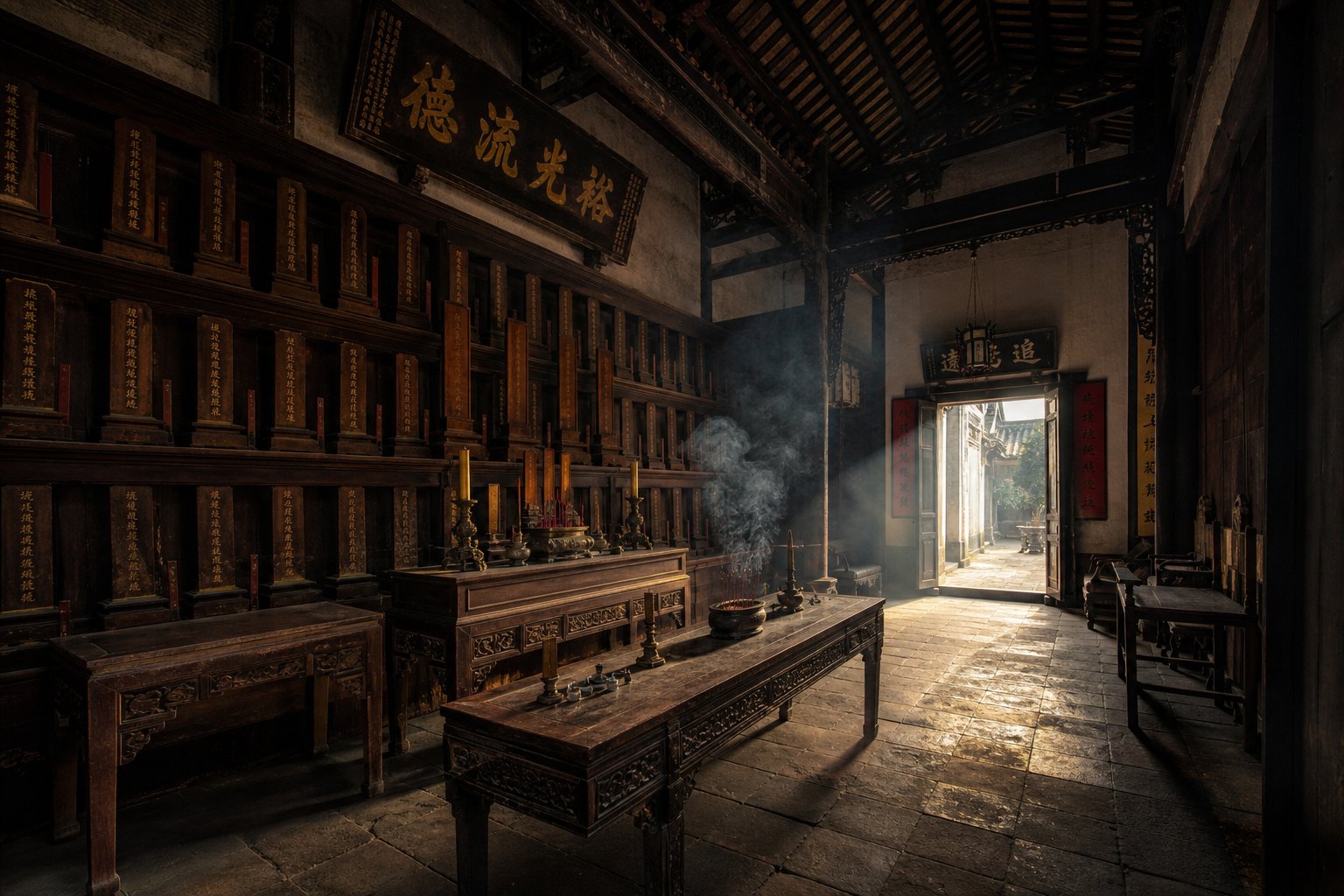
These regional patterns make sense when you consider how Chinese families historically stayed rooted in ancestral territories. Clan halls, ancestral temples, and shared graveyards anchored families to specific locations for centuries. The compound surnames that survived tend to be the ones whose bearers maintained these physical connections to place. When families scattered during wars or famines, their uncommon chinese surnames often scattered with them, diluting below the threshold of visibility.
The Xushi surname offers a particularly striking example of geographic concentration and near-extinction. Created by a Ceylon prince stranded in Quanzhou during the 15th century, the surname remained hidden for hundreds of years until the family graveyard was discovered in the 1990s. The last known bearer, Xushi Yin'e, revealed her identity as a descendant of Ceylon royalty. One person, one surname, one city. That is how thin the thread can get.
Cultural Revival and Genealogy Interest
Against this backdrop of decline, something unexpected is happening. Compound surnames are experiencing a cultural moment. Historical dramas set during the Three Kingdoms, Tang, and Song dynasties have made names like Zhuge, Shangguan, and Murong familiar to millions of viewers who might never encounter these surnames in daily life. Wuxia novels by authors like Jin Yong popularized characters named Linghu Chong, Ouyang Feng, Dongfang Bubai, and Ximen Chuixue, turning compound surnames into markers of literary romance and martial arts mystique.
This media exposure has created a perception of compound surnames as beautiful chinese surnames with antique and poetic qualities. Young parents browsing baby name forums sometimes express envy of families who carry these names naturally. The cultural cachet is real, even if the actual population numbers remain tiny.
Genealogy research has added another dimension to the revival. Online platforms connecting families to ancestral records have made it easier for people with simplified surnames to trace their lineage back to compound-surname origins. A person surnamed Ou (欧) might discover their family was originally Ouyang (欧阳) before a branch simplified the name three centuries ago. These discoveries do not always lead to formal name changes, but they do strengthen awareness of compound surname heritage.
Compound surnames are romanticized today as names with antique and poetic beauty, but their real significance lies in what they preserve: a living connection to specific moments in Chinese history that no single character could contain.
Are compound surnames growing or declining overall? The honest answer is both, depending on how you count. Traditional compound surnames continue their slow demographic decline as families shrink and intermarriage with single-character surname lines continues. But cultural awareness of these names is rising. More people know what they are, more people value them, and more families with compound surname heritage are choosing to preserve rather than simplify their names. The popular chinese surnames like Wang and Li will always dominate by sheer numbers. But the compound surnames occupy a different kind of space in Chinese culture: not popular, but precious.
Whether that cultural appreciation translates into demographic survival remains an open question. A surname needs bearers, not just admirers. And with some unique chinese surnames down to single-digit carriers, the window for preservation is closing. The families still carrying these names are not just maintaining a personal identity. They are keeping alive a piece of linguistic history that, once lost, cannot be reconstructed from records alone.
Frequently Asked Questions About Two Character Chinese Surnames
1. How many two character Chinese surnames still exist today?
Fewer than 100 compound surnames remain in active use in China today, down from over 1,000 in ancient times. The most common is Ouyang with approximately 1.1 million bearers, followed by Shangguan at around 88,000. The total population carrying traditional compound surnames amounts to only a few million out of China's 1.41 billion people, making them extremely rare compared to single-character surnames like Wang or Li.
2. What is the difference between a traditional compound surname and a modern double-barrelled Chinese surname?
Traditional compound surnames (复姓) like Sima or Ouyang are single linguistic units with one distinct historical origin, often tracing back thousands of years to official titles, geographic locations, or tribal identities. Modern double-barrelled surnames combine two separate single-character surnames from each parent, such as Chen-Li. In standard pinyin, traditional compounds are written as one word (Ouyang) while modern combinations use a hyphen (Chen-Li).
3. Where do two character Chinese surnames come from?
Compound surnames originated from four main sources: official government titles (Sima meaning Master of the Horse), geographic locations (Ouyang referring to the south side of Mount Ou), ethnic assimilation from non-Han peoples like the Xianbei and Xiongnu (Murong, Yuwen), and royal lineage grants (Gongsun meaning dukes' descendants). Each required more than one character to capture the full identity a family wanted to preserve.
4. Why do digital systems have problems with two character Chinese surnames?
Most name-handling software assumes Chinese surnames are one character long. This causes database fields to truncate compound surnames, airline systems to split names incorrectly, and Western HR platforms to misparse the surname and given name. A person named Shangguan Wei might end up with a ticket reading surname 'Shang' and given name 'Guan Wei,' which fails to match their passport and can cause real administrative problems.
5. What are the most famous two character Chinese surnames?
The most recognized compound surnames include Sima (司马), carried by historian Sima Qian; Zhuge (诸葛), carried by legendary strategist Zhuge Liang; Ouyang (欧阳), carried by Song dynasty poet Ouyang Xiu; and Shangguan (上官), carried by Tang dynasty politician Shangguan Wan'er. Others like Huangfu, Nangong, Dongfang, and Murong appear frequently in historical records and popular culture.