What the Wu Surname Really Means
When you see the last name "Wu" on a business card or family tree, you might assume it points to a single Chinese surname. It doesn't. The wu surname meaning shifts dramatically depending on which Chinese character sits behind those two Roman letters. Four entirely different surnames, each with its own history, each carrying a distinct identity, all collapse into one English spelling.
What Does Wu Mean as a Chinese Surname
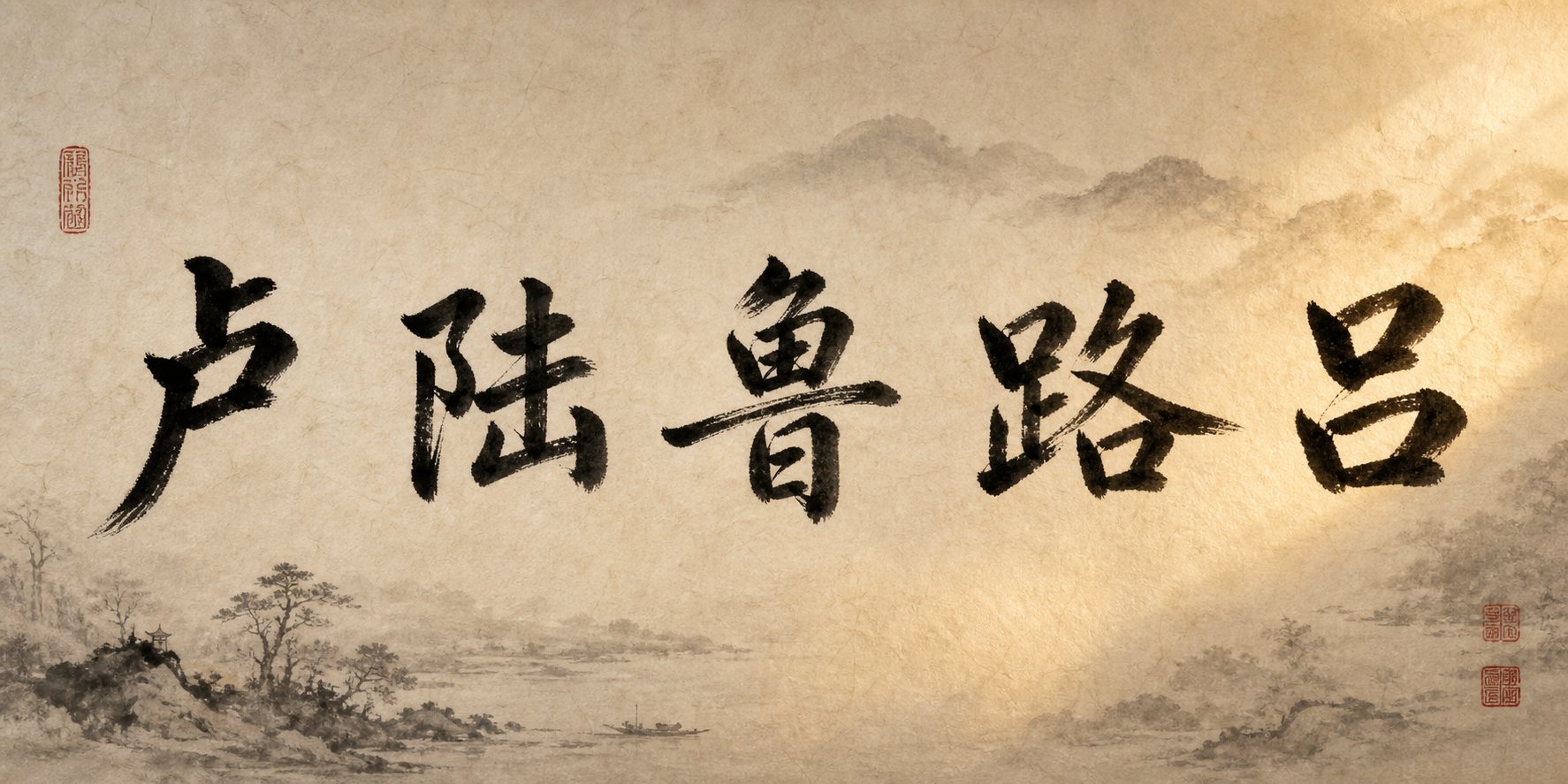
Wu is not one surname but a romanization shared by at least four distinct Chinese surnames: 吴/吳 (a geographic name tied to the ancient State of Wu), 武 (martial or military prowess), 伍 (a military unit of five soldiers), and 巫 (shaman or sorcerer). Each character carries a fundamentally different wu meaning rooted in separate lineages, occupations, and regions of origin.
The most common of these is 吴 (simplified) or 吳 (traditional). Listed as the sixth entry in the Hundred Family Surnames, a classic Song dynasty text, this character refers to the ancient kingdom in the Yangtze Delta region. A 2019 census placed it as the ninth most common surname in mainland China, shared by tens of millions of people. A 2013 study estimated roughly 26.8 million bearers of 吴 alone, representing about 2% of China's population.
The remaining three Wu surnames are far less common but no less significant. 武 (Wu) means "martial" and ranks among the top 100 surnames nationally. 伍 (Wu) originally described a squad of five soldiers and sits around the 116th most common surname. 巫 (Wu) connects to ancient shamanic traditions and is considerably rarer, ranking approximately 239th. Understanding which character your family uses is the first step toward any meaningful wu definition of your ancestry.
Why One Spelling Represents Multiple Surnames
Imagine four people named Wu sitting at the same table. Their families may have nothing in common, no shared ancestor, no overlapping homeland, no cultural connection beyond a coincidence of romanization. This happens because Mandarin pinyin, the standard system for converting Chinese sounds into Latin letters, flattens tonal and character differences into a single spelling.
In spoken Mandarin, these surnames aren't even identical. 吴 is pronounced with a rising second tone (Wu). 武 and 伍 carry a falling-rising third tone (Wu). 巫 uses a flat first tone (Wu). Tonal differences that feel obvious to a Mandarin speaker vanish completely once the name hits an English-language document. Add dialect variations into the mix, where the same character 吴 becomes "Ng" in Cantonese or "Goh" in Hokkien, and you'll notice how a single wu surname can scatter across dozens of spellings worldwide.
So what does wu mean for someone researching their heritage? The answer depends entirely on which of these four characters belongs to your family. Each one opens a different door into Chinese history, from royal Zhou dynasty lineage to ancient spiritual practices to the philosophy of warfare itself.
The Four Wu Characters and Their Hidden Meanings
Each wu chinese character tells a visual story. Chinese characters aren't arbitrary symbols. They're built from smaller components called radicals, and those radicals reveal the original logic behind a word's meaning. Pull apart the four Wu surnames radical by radical, and you'll uncover layers of meaning that the romanized spelling completely erases.
Breaking Down the Wu Characters Radical by Radical
Let's start with the most common one. The chinese character for wu in its simplified form, 吴, combines two elements: 口 (kou, meaning mouth) sitting above 天 (tian, meaning heaven or sky). The composition suggests loud speech, shouting toward the heavens. According to Wiktionary's entry on 吴, the character's definition points to speaking loudly or shouting. This makes etymological sense for a character that originally described the people of the Yangtze Delta, a region whose dialect sounded boisterous or foreign to northern ears.
武 (Wu, martial) breaks down into 止 (zhi, meaning stop or foot) combined with 戈 (ge, a dagger-axe or spear). Read literally, it means "to stop the spear." This isn't a character celebrating aggression. It encodes the idea that true martial strength lies in ending conflict, not starting it. The paradox is baked right into the strokes.
伍 (Wu, five-person unit) pairs 亻(ren, the person radical) with 五 (wu, the number five). The meaning is straightforward: a group of five people. In ancient Chinese military organization, soldiers were grouped into squads of five, and this character named that basic unit. Families who carry this surname likely descend from military administrators or soldiers identified by their unit structure.
巫 (Wu, shaman) is visually the most intriguing. It features 工 (gong, meaning work or craft) flanked by two 人 (ren, person) strokes, suggesting two figures performing ritual work. The character represents a shaman, medium, or sorcerer, someone who served as an intermediary between the human and spirit worlds. Wu in chinese spiritual traditions referred to practitioners of divination and healing long before organized Daoism or Buddhism took root.
Traditional vs Simplified Forms of Wu
Here's where things get tricky for researchers. The character 吳 is the traditional form, used in Taiwan, Hong Kong, and Macau. Mainland China, Malaysia, and Singapore use the simplified form 吴. They represent the same surname, the same lineage, the same meaning. The simplification removed a stroke from the lower portion, changing the internal structure from 夨 to 天, but the pronunciation and identity remain identical.
The other three Wu characters, 武, 伍, and 巫, were not affected by China's simplification reforms of the 1950s and 1960s. Their forms remain the same across all Chinese-speaking regions. So if you encounter a discrepancy between 吳 and 吴 in family records, you're looking at the same surname written under different political and regional conventions, not two separate families.
| Character | Radical Composition | Literal Meaning | Traditional Form | Approximate Population |
|---|---|---|---|---|
| 吴 | 口 (mouth) + 天 (heaven) | Loud speech; shouting | 吳 | ~26.8 million |
| 武 | 止 (stop) + 戈 (spear) | Martial; stopping conflict | 武 (unchanged) | ~6.5 million |
| 伍 | 亻(person) + 五 (five) | Military unit of five | 伍 (unchanged) | ~1.3 million |
| 巫 | 工 (work) + 人人 (two people) | Shaman; sorcerer | 巫 (unchanged) | ~300,000 |
Notice the population gap. 吴 dwarfs the other three combined, which explains why most people assume "Wu" refers to a single surname. But for the millions who carry 武, 伍, or 巫, the distinction matters deeply. Their characters encode entirely different ancestral stories, from battlefield philosophy to spiritual practice to the rigid geometry of ancient military life.
These structural differences aren't just academic. They shaped how each Wu family understood its place in Chinese society, what values the name carried forward, and what cultural weight it bore across generations.
The Ancient State of Wu and Royal Zhou Lineage
A surname that traces back to royalty carries a different kind of weight. For bearers of the wu last name origin rooted in 吴, that lineage runs directly to the Zhou royal house, one of the longest-ruling dynasties in Chinese history. The story begins not with ambition or conquest, but with an extraordinary act of self-sacrifice.
Taibo and the Founding of the Wu Kingdom
During the 13th century BCE, King Tai of Zhou (周太王), whose original surname was Ji (姬), ruled the Zhou state in northwestern China. He had three sons: Taibo (太伯), Zhong Yong (仲雍), and Ji Li (季历). Tradition held that the eldest son would inherit power. But King Tai recognized something special in his youngest son Ji Li, and more importantly, in Ji Li's own son Ji Chang, who would later become the legendary King Wen of Zhou.
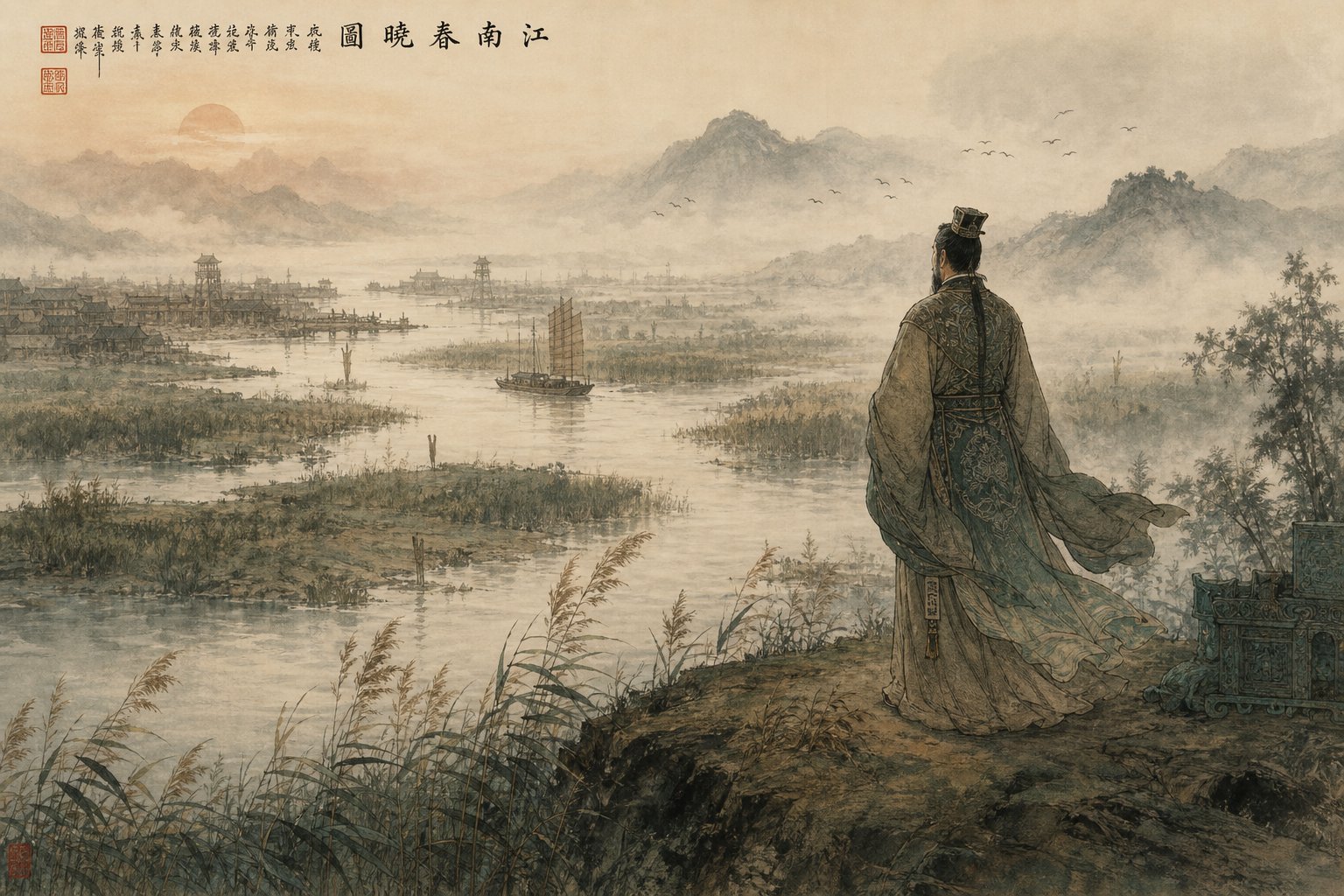
What happened next is remarkable. Taibo and Zhong Yong read their father's intentions and made a choice that would echo through millennia. Rather than force a succession crisis, the two elder brothers voluntarily left their homeland. They traveled southeast, far from the Zhou heartland, into the undeveloped marshlands of the Yangtze Delta, a region that corresponds to present-day Jiangsu province. There, they cut their hair short and tattooed their bodies in the local custom, signaling they could never return to claim the Zhou throne.
This wasn't exile. It was a deliberate renunciation. By adopting local customs incompatible with Zhou court ritual, Taibo and Zhong Yong made their decision irreversible. Ji Li inherited the Zhou leadership as planned, and his grandson Ji Fa eventually overthrew the Shang dynasty to establish the Zhou dynasty in 1046 BCE.
Meanwhile, Taibo founded a new state in the south. He established its first capital at Meili (梅里), believed to be modern-day Meicun in Wuxi. The local people, impressed by his character and Zhou-era knowledge, rallied around him. This settlement grew into the State of Wu, a kingdom that would become a major power during the Spring and Autumn period (770-476 BCE). Is wu a chinese last name with royal roots? For the 吴 lineage, the answer is unequivocal.
How a Kingdom Became a Surname
The State of Wu didn't remain a quiet southern settlement. Under later rulers, it grew into a formidable military and naval power. King Helu, one of the "Five Hegemons" of the Spring and Autumn period, employed the legendary strategist Sun Tzu and built China's first complex navy. Wu became a close ally of the state of Jin, and together they challenged the powerful state of Chu.
But in 473 BCE, the State of Wu fell to its rival, the State of Yue. The kingdom that Taibo's descendants had built over centuries was absorbed and dismantled. The royal family scattered. And here is where the wu name origin crystallizes into a surname: the displaced nobles and citizens of the fallen state adopted its name as their family name. Wu (吴) shifted from a place of belonging to a marker of identity carried in the blood.
This pattern, a kingdom's name becoming a hereditary surname after its collapse, is common in Chinese history. But the Wu case carries extra significance because of its Zhou royal connection. Every bearer of the 吴 surname can, in principle, trace their last name wu origin back through the State of Wu, through Taibo and Zhong Yong, and ultimately to King Tai of Zhou himself. That's a lineage stretching over three thousand years, linking a modern family name to one of China's founding dynasties.
Later, King Wu of the Zhou dynasty honored this connection by seeking out Taibo's descendants and formally granting them rulership of the Wu territory. This royal recognition cemented the legitimacy of the Wu state and its people's claim to Zhou bloodlines.
The philosophical resonance runs deep too. Taibo's original act of yielding power, choosing family harmony over personal ambition, became a celebrated example of Confucian virtue. Confucius himself praised Taibo's character. For modern Wu surname bearers, the name doesn't just mark geographic origin. It encodes a founding story about sacrifice, humility, and the kind of strength that comes from stepping aside rather than grasping for power.
That tension between martial strength and moral restraint wasn't unique to the Wu founding story. It ran through the very fabric of how ancient Chinese thinkers understood the concept of "wu" itself, particularly in the character 武, where the philosophy of warfare took a surprising turn.
Cultural Symbolism and Philosophy Behind Each Wu
A surname isn't just a label in Chinese culture. It's a compressed philosophy, a set of values passed down through generations. When you ask what does wu mean in chinese, the answer depends on which character you're examining, and each one plugs into a different vein of ancient thought. The wu name meaning shifts from statecraft to spirituality to military discipline depending on which door you open.
The Martial and Civil Balance in Chinese Philosophy
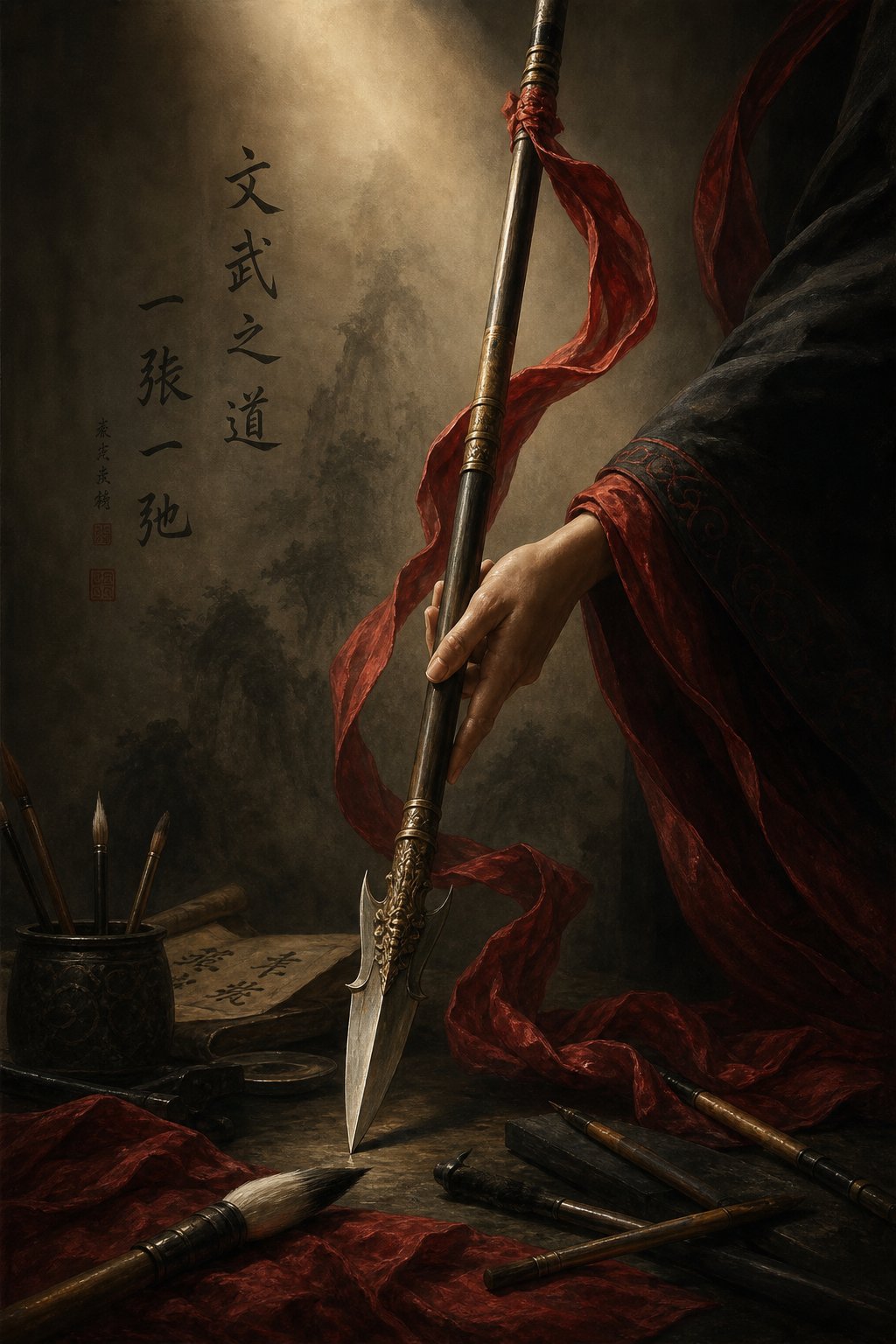
The character 武 (wu, martial) sits at the center of one of Chinese civilization's most enduring intellectual frameworks: the wen-wu (文武) dichotomy. Wen represents the civil, literary, and cultural sphere. Wu represents the martial, military, and physical sphere. Together, they form a complementary pair that shaped how Chinese thinkers understood governance, masculinity, and the ideal individual for over two thousand years.
Here's the paradox that makes 武 philosophically fascinating. Look at its radicals again: 止 (stop) + 戈 (spear). The character for "martial" literally encodes the idea of stopping the weapon, ending the fight. True martial virtue, in this reading, isn't about wielding violence. It's about possessing the strength to halt it.
The character 武 embodies the Confucian ideal that genuine martial prowess lies not in perpetuating conflict but in having the power and wisdom to bring it to an end.
During the Spring and Autumn Period (771-476 BCE), wen and wu evolved from practical descriptions into abstract principles of governance. Most Confucian thinkers subordinated wu to wen, viewing military force as necessary but secondary to moral cultivation and ritual propriety. Sun Tzu's famous treatise captured the balance differently, stating that a commander must "inspire soldiers by means of wen, and subdue them by wu," treating soldiers with humanity while maintaining military discipline. The ideal, across most schools of thought, was a combination of both principles rather than the dominance of either one.
For families bearing the 武 surname, this philosophical weight traveled with the name. The wu chinese meaning embedded in their identity wasn't "violent" or "aggressive." It was aspirational: the capacity to protect, to maintain justice, to stop the spear before it falls. Chinese naming philosophy, as noted by researchers at Temple University's Center for Chinese Language Instruction, treats names as carriers of parental ideals and cultural values. A surname like 武 carried forward the hope that its bearers would embody disciplined strength in service of peace.
Shamanic Roots and Spiritual Significance of Wu
The character 巫 opens an entirely different world. Long before Daoism codified its rituals or Buddhism arrived from India, China's earliest spiritual practitioners were the wu, shamans who served as intermediaries between the human realm and the spirit world. These figures performed divination, healing, rain-making ceremonies, and communication with ancestors. The wu meaning chinese spiritual traditions preserved was one of sacred labor, two ritual workers (人人) performing their craft (工) to bridge the visible and invisible.
Families carrying the 巫 surname likely descend from lineages of these spiritual specialists. In ancient China, occupations often crystallized into hereditary surnames. A family known for its shamanic role became permanently identified by that function. The name didn't just describe what an ancestor did. It marked an entire clan's social position within the community's spiritual infrastructure.
Wu (伍) tells a more pragmatic story. Ancient Chinese armies organized their smallest units into squads of five soldiers, called wu (伍). This wasn't arbitrary. Five-person units allowed tight coordination, mutual accountability, and clear chains of command. Officers who managed these units, or soldiers identified by their squad designation, eventually carried that organizational label as a surname. The wu meaning here is collective identity, a person defined by their place within a structured group rather than by individual achievement or spiritual calling.
What connects all four Wu characters is a shared principle of Chinese naming philosophy: surnames encoded social function. Whether your ancestor shouted across the Yangtze Delta (吴), stopped spears on the battlefield (武), channeled spirits for the community (巫), or held a squad together (伍), the name told the world what role your family played. These weren't arbitrary sounds. They were compressed histories, and the millions who carry them today inherit that layered significance whether they know it or not.
That inherited significance traveled far beyond China's borders. As Wu families migrated across dialects and continents, the same characters picked up wildly different pronunciations and spellings, creating a web of variant names that all trace back to these four original sources.
Pronunciation and Spelling Variations Across Dialects
Picture two people at an immigration counter. One writes "Ng" on the form. The other writes "Goh." They share the same surname character, 吴, inherited from the same ancient lineage. Yet their names look nothing alike in English. How does one Chinese character produce such wildly different spellings? The answer lies in the fractured landscape of Chinese dialects, where a single written character can sound completely different depending on which region your family called home.
How Wu Sounds Across Chinese Dialects
Chinese isn't one spoken language. It's a family of mutually unintelligible dialects unified by a shared writing system. When families emigrated from different parts of China, they romanized their surnames based on how they actually pronounced them, not how Beijing Mandarin would render them. The result is a scattering of English spellings that all point back to the same character.
In standard Mandarin, the wu pronunciation in chinese for 吴 is "Wu" with a rising second tone (IPA: /u35/). This is the spelling most people encounter today because pinyin, the Mandarin romanization system adopted in 1958, became the international standard after China's opening in 1979. But millions of Chinese emigrants left long before pinyin existed, carrying dialect-based spellings with them.
Cantonese speakers pronounce 吴 as a pure nasal syllable, a sound made entirely in the back of the nose without any vowel. In Jyutping romanization, it's written as "Ng4." This ng chinese pronunciation has no equivalent in English, which is why English speakers often struggle with it. The sound is simply a sustained velar nasal, the same consonant at the end of "sing" but stretched into a full syllable. When Hong Kong residents registered their names under British colonial administration, this pronunciation became the surname "Ng" on official documents.
Hokkien (Min Nan) speakers from Fujian province and Taiwan take the character in yet another direction. Their pronunciation of 吴 lands closer to "Goh" or "Ngo," depending on the specific sub-dialect. Singaporean and Malaysian Chinese of Hokkien descent commonly spell it "Goh," which is why former Singapore Prime Minister Goh Chok Tong (吴作栋) carries what appears to be a completely unrelated surname. It's the same character, filtered through a different phonological system.
Teochew speakers, concentrated in eastern Guangdong and parts of Southeast Asia, produce variants like "Ngo" or "Gou." Hakka speakers, scattered across southern China and the diaspora, use a pronunciation nearly identical to Cantonese: "Ng" with a low falling tone. The Vietnamese equivalent, "Ngo," reflects centuries of Chinese cultural influence on Vietnamese naming conventions, where 吴 became the surname of notable figures including South Vietnam's first president, Ngo Dinh Diem (吴廷琰).
Shanghainese and other Wu dialect speakers (the dialect shares its name with the surname, both referencing the ancient state) pronounce 吴 as something close to "Woo" or "Vu," with a voiced initial consonant that Mandarin lacks. The woo in chinese naming conventions often traces back to these Wu dialect or older Cantonese romanization systems. Director John Woo (吴宇森) and businessman Peter Woo (吴光正) both carry this Cantonese-influenced spelling.
| Dialect | Romanization Variants | IPA Pronunciation | Common Regions |
|---|---|---|---|
| Mandarin | Wu | /u35/ (rising tone) | Mainland China, Taiwan (post-1979 emigrants) |
| Cantonese | Ng, Woo, Wu | /ŋ̩21/ (syllabic nasal) | Hong Kong, Macau, Guangdong, overseas Cantonese communities |
| Hokkien (Min Nan) | Goh, Go, Ngo, Ngoh, Gouw | /ɡɔ24/ or /ŋɔ24/ | Fujian, Taiwan, Singapore, Malaysia, Philippines |
| Teochew | Ngo, Gou, Go | /ŋo55/ or /ɡou/ | Eastern Guangdong, Thailand, Cambodia |
| Hakka | Ng, Ung | /ŋ̩11/ (low tone nasal) | Guangdong (Meizhou), Jiangxi, Southeast Asia |
| Shanghainese (Wu dialect) | Woo, Vu | /vu23/ | Shanghai, Jiangsu, Zhejiang |
| Vietnamese | Ngo (Ngô) | /ŋo24/ | Vietnam |
| Korean | O, Oh | /o/ | South Korea, North Korea |
Why Ng Woo and Goh Are All the Same Surname
The origin of surname Ng confuses people more than any other variant. How does a two-letter combination with no vowel qualify as a name? The answer is phonological. In Cantonese, the velar nasal /ŋ/ functions as a complete syllable on its own. English doesn't allow this. English speakers always pair /ŋ/ with a preceding vowel (as in "sing" or "long"). So when Cantonese speakers wrote their ng surname in English, the result looked impossibly foreign, like a typo or an abbreviation.
The ng last name pronunciation in English varies wildly depending on who's saying it. Some anglicize it as "ing," others as "eng" or "ung." In Australia, the spelling "Ung" appears frequently. In the United States, you'll find "Ang," "Eng," and "Ing" as alternate romanizations of the same sound. None of these capture the original Cantonese pronunciation perfectly, but they all attempt to squeeze a syllabic nasal into English phonology.
What makes this even more complex is that the ng chinese spelling doesn't exclusively represent 吴. The Cantonese pronunciation of 伍 (the military-unit Wu) is also "Ng," just with a different tone (Ng5 versus Ng4). And in Hokkien, the surname 黄 (Huang in Mandarin, meaning "yellow") is also romanized as "Ng." So two people both named "Ng" might carry entirely different Chinese characters and completely unrelated family histories. Context, dialect background, and ancestral region become essential for disambiguation.
The wu dialect region itself adds another layer of linguistic interest. The Wu language group, spoken by over 80 million people across southern Jiangsu, Shanghai, and Zhejiang, preserves phonological features from Old Chinese that Mandarin has lost. Linguistic research describes it as a "living fossil of Old Chinese" because it retains voiced initial consonants, entering tones, and complex final structures that disappeared from northern Chinese centuries ago. The wu language carries the same name as the 吴 surname because both trace back to the same geographic and cultural source: the ancient State of Wu in the Yangtze Delta.
This dialect diversity created a practical problem for diaspora families. A grandfather who emigrated from Guangdong in 1920 registered as "Ng." His cousin who left Shanghai in 1950 became "Woo." Their nephew who moved to Canada in 1985 under the pinyin system is simply "Wu." Three spellings, one family, one character. The woo family name, the Ng surname, and the Wu spelling all converge on the same ancestral identity, separated only by the accident of which dialect and which era shaped the romanization.
These spelling variations don't just reflect linguistic differences. They map onto specific migration waves, colonial histories, and geographic clusters that reveal where different Wu families settled around the world.
Geographic Distribution and Global Migration Patterns
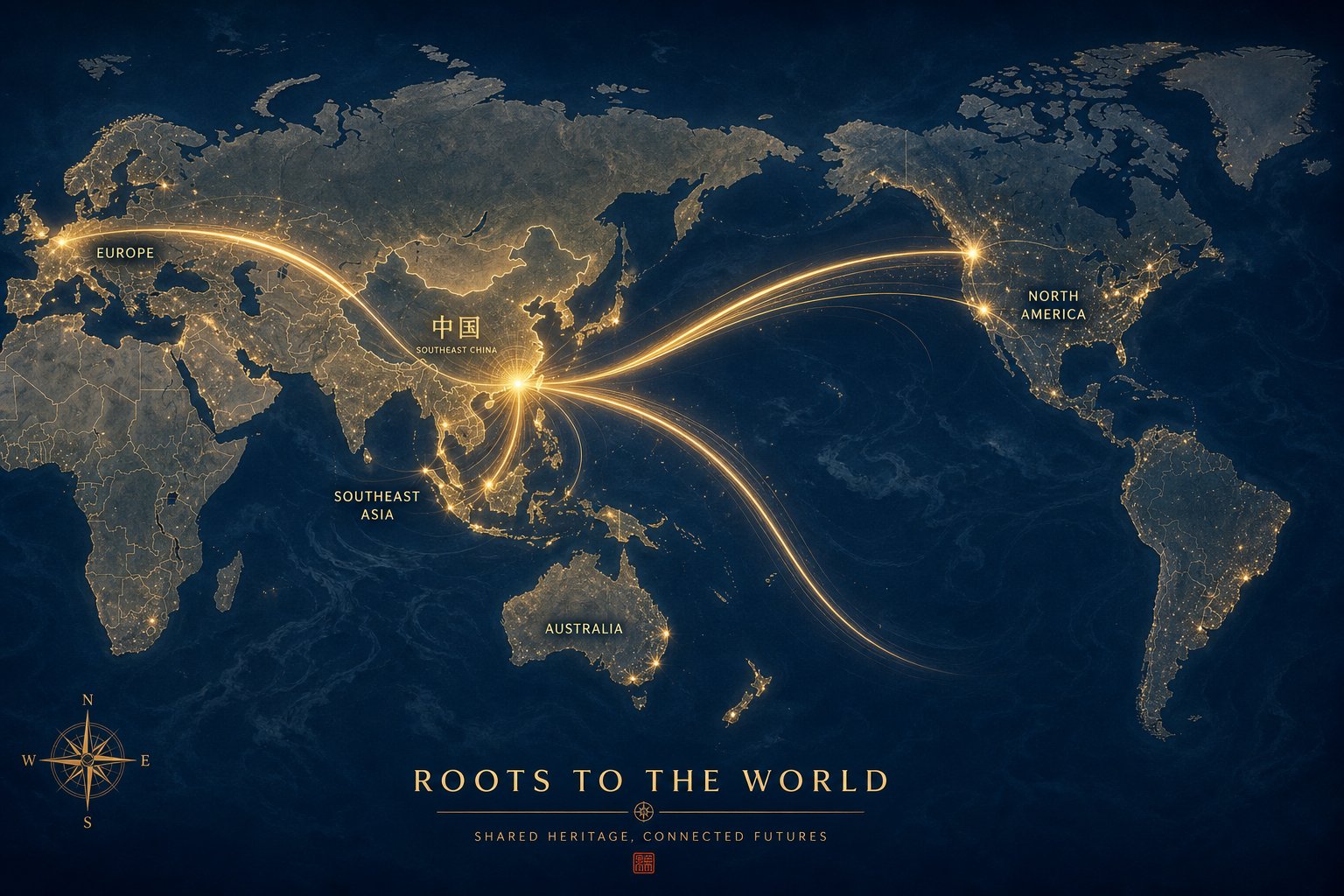
Spelling variations tell you which dialect a family spoke. But geography tells you why they spoke it. The distribution of different Wu characters across China isn't random. It's a map of ancient kingdoms, military postings, and spiritual traditions frozen into population data. And once those families left China, their destinations created distinct clusters that still shape how the wu family name appears around the world.
Where Different Wu Surnames Cluster in China
The most common character, 吴, concentrates heavily in the Yangtze Delta region: Jiangsu, Zhejiang, and Shanghai. This makes perfect historical sense. The ancient State of Wu occupied exactly this territory, and when the kingdom fell in 473 BCE, its displaced citizens scattered but largely remained in the surrounding provinces. A 2013 study found that Guangdong actually holds the highest absolute number of 吴 surname bearers, reflecting centuries of southward migration from the Yangtze region into the Pearl River Delta.
武 (martial Wu) shows a more even distribution across northern and central China. Unlike 吴, which ties to a single geographic origin, 武 emerged from an aspirational meaning rather than a place name. Families across many regions adopted it, and no single province dominates its population.
伍 (military-unit Wu) clusters noticeably in Guangdong and Guangxi provinces. This southern concentration likely reflects the military garrisons stationed along China's southern frontiers during the Qin and Han dynasties, where soldiers identified by their squad designation eventually settled permanently. The ngo last name spelling common in Southeast Asian communities often traces back to these Guangdong-rooted 伍 families who emigrated through southern ports.
巫 (shaman Wu) is the rarest and most geographically scattered, though it appears with slightly higher frequency in Fujian and among Malaysian Chinese communities. Its 239th-place ranking nationally means it accounts for a tiny fraction of all chinese wu surname bearers.
The Wu Surname in the Global Diaspora
Chinese emigration didn't happen all at once. It rolled out in waves, each originating from different provinces and landing in different destinations. These waves explain why specific Wu spellings dominate in specific countries.
- Southeast Asia (Singapore, Malaysia, Indonesia, Philippines): Dominated by Hokkien and Teochew speakers who left Fujian and eastern Guangdong from the 17th through early 20th centuries. The predominant spelling is "Goh" or "Go," representing 吴 in Min Nan pronunciation. Former Singapore Prime Minister Goh Chok Tong (吴作栋) exemplifies this pattern.
- Hong Kong and Macau: Cantonese-speaking communities where 吴 registers as "Ng" and the woo last name appears among older romanization conventions. Prominent figures like director John Woo (吴宇森) and businessman Peter Woo (吴光正) carry the "Woo" spelling from this tradition.
- United States and Canada: A layered mix reflecting multiple migration eras. Early Cantonese arrivals (1850s-1960s) brought "Ng," "Woo," and "Goh." Post-1979 Mandarin-speaking immigrants introduced the pinyin spelling "Wu," which now dominates among newer arrivals.
- Vietnam: The surname "Ngo" (Ngô) represents 吴 filtered through Sino-Vietnamese pronunciation. The Ngo family produced notable political figures including South Vietnam's first president.
- Australia: Cantonese and Hakka speakers from the gold rush era (1850s onward) established "Ng" and "Ung" as common spellings, while later waves added "Wu" and "Woo."
- Korea: The character 吴 became the surname "O" or "Oh" (오), making it one of the most common Korean surnames with roots traceable to the same ancient Chinese lineage.
The woo family name, in particular, marks a specific historical layer. It typically identifies families who emigrated from Cantonese-speaking regions before pinyin standardization. When you encounter someone with the Woo spelling, you're likely looking at a family that left Guangdong, Hong Kong, or the broader Pearl River Delta during the early-to-mid 20th century, a period when Cantonese romanization conventions dominated English-language record-keeping for Chinese immigrants.
Indonesia presents perhaps the most dramatic transformation. Under assimilation policies of the 1960s, many Chinese Indonesians adopted Indonesian-sounding surnames. A 吴 family might now carry names like "Widargo," "Gunawan," or "Prayogo," with the original Chinese character surviving only in family records or clan association documents.
These geographic patterns raise a practical question for diaspora families who've lost touch with their Chinese roots. If you know your family's country of origin and the spelling on old documents, can you work backward to identify which Wu character belongs to you? The answer, fortunately, is yes, and the process is more systematic than you might expect.
How to Identify Which Wu Character Is Yours
You know your last name is Wu. Maybe it's spelled Woo on your grandfather's immigration papers, or Ng on a faded certificate tucked in a drawer. But which of the four characters does your family actually carry? For diaspora families separated from China by generations, language barriers, and lost documents, this question can feel impossible to answer. It isn't. The process requires detective work, not luck, and each clue narrows the field considerably.
Clues From Your Family Dialect and Ancestral Region
Your family's dialect is the single most powerful clue. As Legacy Tree Genealogists explains, the Chinese who emigrated spoke non-mutually intelligible dialects, and depending on the dialect, one same surname could be pronounced and written in completely different ways. If your family spoke Cantonese and the last name Woo or Ng appears on old documents, you're almost certainly looking at 吴 or possibly 伍. If the spelling is "Goh" and your ancestors came from Fujian or Singapore, that's 吴 in Hokkien pronunciation.
Don't know which dialect your family spoke? You can make an educated guess based on where they emigrated to. Most Californian Chinese came from the Four Counties (Taishan, Xinhui, Kaiping, Enping) in Guangdong and spoke Taishanese or Cantonese. Most Filipino Chinese came from Quanzhou and Xiamen in Fujian and spoke Hokkien. Most Jamaican Chinese came from counties near Shenzhen and spoke Hakka. These regional patterns hold remarkably well because immigrants traveled with relatives and settled near people from the same villages.
Ancestral province matters too. If your family traces back to Jiangsu or Zhejiang, the wu name is overwhelmingly likely to be 吴, given the ancient State of Wu's concentration in that region. A family from Guangdong with the last name woo could be 吴, 伍, or even 武, since all three have significant populations there. A ngo name origin from Vietnam almost always points to 吴 (Ngo/Ngô in Sino-Vietnamese). The more geographic detail you can pin down, the fewer candidates remain.
Using Genealogical Records to Confirm Your Wu Character
Dialect and geography narrow the possibilities. Documents confirm them. Here's a step-by-step process for identifying your specific character:
- Check family documents for Chinese characters. Look for letters, photos, notebooks, travel documents, ID papers, or heirlooms that belonged to your earliest immigrant ancestor. Even a single document with Chinese writing can reveal the character. Don't overlook tombstones and grave inscriptions, which often include the deceased's Chinese name and ancestral hometown.
- Identify your ancestral dialect group. Ask older relatives what language was spoken at home. If no one remembers, research the dominant dialect of your family's emigration destination. A last name wu from a pre-1960s Hawaiian community likely reflects Cantonese origins, while one from a Thai family probably traces to Teochew speakers.
- Research your ancestral province and village. The more specific the location, the better. Chinese clan associations in your family's destination country sometimes kept archived members' lists in Chinese characters. These organizations, often organized by surname and dialect, can be goldmines for identifying the correct character.
- Consult clan genealogy books (族谱/jiapu). Chinese families have a tradition of keeping a family book called a jiapu that records lineage from father to son, sometimes stretching back thousands of years. FamilySearch offers a free searchable database of digitized jiapu. To find yours, you'll need your surname in Chinese characters, your family's hometown (ideally down to the village level), and any knowledge of honored ancestors or generation poems used in your family's naming conventions.
- Use DNA and genealogy platforms. Modern DNA testing can identify ethnic sub-groups and connect you with genetic relatives who may have preserved the family's Chinese records. Platforms like FamilySearch, MyHeritage, and 23andMe allow you to build family trees and match with distant cousins who might hold the missing pieces. Combined with the dialect and geographic clues above, DNA matches can confirm which branch of the Wu surname your family belongs to.
A word of caution from genealogy professionals: sometimes Chinese immigrants' surnames were wrongly transcribed as first names on arrival documents. The Chinese practice of placing the surname before the given name confused foreign officials, so a person named Wu Jianming might appear as "Jianming Wu" or even have "Wu" recorded as a middle name. If your family's last name woo or Wu doesn't appear where you expect it in old records, check whether it was accidentally shifted to a different name field.
For families affected by the U.S. Chinese Exclusion Act of 1882, an additional complication exists. Many immigrants traveled under forged papers as "paper sons," claiming familial ties with existing Chinese-American residents. If your ancestor was among them, the surname on official documents may not match the biological family name at all. The U.S. National Archives has made certain case files from this era available for research.
The identification process isn't always quick, but it's rarely a dead end. Even partial information, a province name, a dialect memory, a single photograph with Chinese text, can be enough to distinguish between the four Wu characters. And once you know which character is yours, the historical figures who shared it take on a personal dimension, connecting your family's story to a much larger legacy.
Famous Figures Who Carried the Wu Name
Once you know which Wu character belongs to your family, the historical figures who share it stop being abstract names in a textbook. They become part of your lineage's story. Across centuries and continents, bearers of each Wu character have shaped Chinese history in ways that mirror the philosophical weight encoded in their surnames.
Wu Zetian and the Martial Wu Legacy
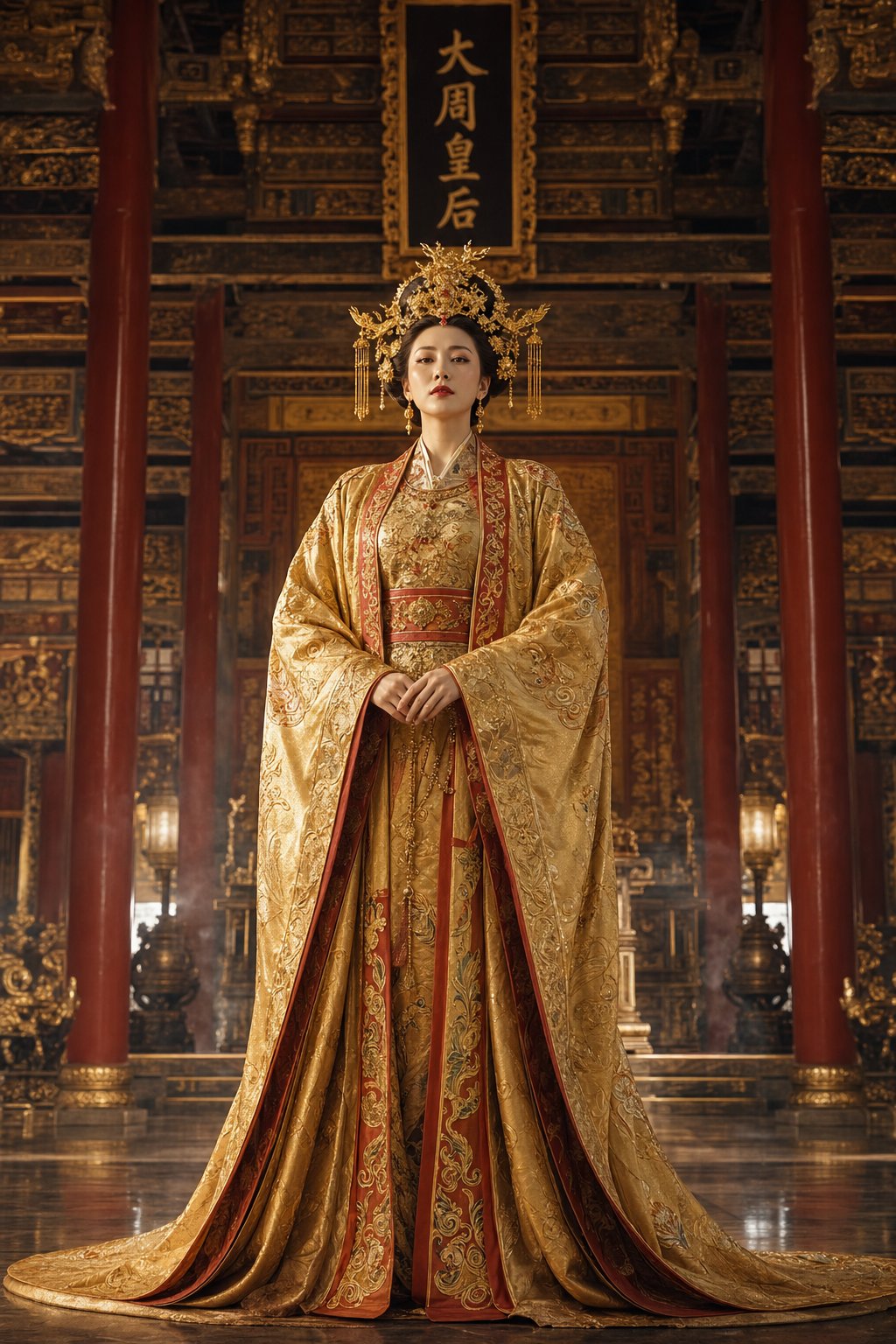
No discussion of the 武 surname is complete without Wu Zetian (武则天, 624-705 CE), the only woman in Chinese history to rule as emperor in her own right. Born into the family of Wu Shiyue, a prominent supporter of the Tang dynasty's founding rebellion, she rose from imperial concubine to undisputed sovereign of China for fifteen years. In 690 CE, she toppled the Tang and proclaimed her own Zhou dynasty, shattering every convention about gender and power in imperial China.
Her surname proved prophetic. Remember that 武 means "stopping the spear," the paradox of martial strength directed toward ending conflict. Wu Zetian embodied that paradox in full. She blended terror with reform, employing ruthless purges alongside policies that elevated women's roles, expanded the civil service examination system, and honored female ancestors in state ritual. Among history's most powerful women, including Hatshepsut, Cleopatra, and Catherine the Great, Wu Zetian alone overthrew a strong dynasty and ruled as emperor on her own terms.
The wu tze tian legacy resonates because it demonstrates how the 武 character's meaning played out in a real life: martial power wielded not merely for conquest but to reshape an entire civilization's rules.
Notable Wu Surname Bearers Across Fields
The diversity of achievement across all four Wu characters reinforces how different each lineage truly is. Here are notable figures organized by their specific character:
- 吴 (State of Wu lineage): Wu Cheng'en (吴承恩), author of Journey to the West, one of China's Four Great Classical Novels; Wu Chien-Shiung (吴健雄, 1912-1997), the experimental physicist who disproved the law of parity conservation; Harry Wu (吴弘达, 1937-2016), the human rights activist who spent 19 years in Chinese labor camps and later exposed the laogai system to the world; Goh Keng Swee (吴庆瑞), architect of Singapore's economic transformation as Deputy Prime Minister; and Michelle Wu (吴弭), mayor of Boston.
- 武 (Martial Wu): Wu Zetian (武则天), China's sole female emperor; Wu Qi (武起), the Warring States-era general whose military treatise Wuzi rivaled Sun Tzu's Art of War in influence.
- 伍 (Military-unit Wu): Wu Zixu (伍子胥), the legendary Spring and Autumn period strategist who helped King Helu of Wu rise to hegemonic power; Wu Yuan (伍员), whose story of loyalty and vengeance became one of Chinese literature's most retold narratives.
- 巫 (Shaman Wu): Wu Hung (巫鸿), the Harvard-based art historian whose scholarship on Chinese visual culture has reshaped the field; Eric Moo (巫启贤), the Malaysian Chinese singer who became one of Mandopop's most recognized voices across Southeast Asia.
Notice how the philosophical meanings discussed earlier manifest in these lives. The 吴 bearers, descended from a kingdom founded on voluntary sacrifice, produced scholars, scientists, and activists. The 武 bearers, carrying a character about stopping the spear, produced rulers and military theorists who reshaped the boundaries of power. The 伍 bearers, named for collective military structure, produced strategists who understood how groups function under pressure. And the 巫 bearers, inheriting a shamanic tradition of bridging worlds, gravitated toward art and cultural interpretation.
The woo surname spelling connects to this legacy too. Director John Woo (吴宇森), whose films redefined action cinema globally, and fashion designer Jason Wu (吴季刚), who dressed two U.S. first ladies, both carry the 吴 character through Cantonese and Mandarin romanizations respectively. Their creative achievements echo the cultural richness of the Yangtze Delta civilization their surname commemorates.
Whether your Wu ancestor was a Zhou prince, a battlefield philosopher, a spirit medium, or a squad leader, the name carried forward a specific vision of what a person could be. These famous bearers didn't just inherit a surname. They lived out its meaning.
Frequently Asked Questions About the Wu Surname
1. Is Wu a common Chinese last name?
Yes, Wu (吴) is one of the most common Chinese surnames, ranking as the 9th most common in mainland China with approximately 26.8 million bearers. It represents about 2% of China's total population. However, the romanization 'Wu' actually covers four separate surnames (吴, 武, 伍, 巫), each with different levels of prevalence. While 吴 dominates, 武 ranks in the top 100, 伍 sits around 116th, and 巫 is considerably rarer at approximately 239th place nationally.
2. Why is the surname Ng the same as Wu?
Ng and Wu represent the same Chinese character (吴) pronounced in different dialects. In Mandarin, the character sounds like 'Wu' with a rising tone. In Cantonese, it becomes a pure syllabic nasal sound written as 'Ng,' which has no vowel and is produced entirely in the back of the nose. When Cantonese-speaking families emigrated and registered their names in English, this pronunciation became the surname 'Ng' on official documents. The same character also appears as 'Goh' in Hokkien, 'Ngo' in Vietnamese, and 'Woo' in older Cantonese romanization systems.
3. What is the origin of the Wu surname in Chinese history?
The most common Wu surname (吴) traces back to the 13th century BCE when Taibo and Zhong Yong, sons of King Tai of Zhou, voluntarily left their homeland and traveled to the Yangtze Delta. They founded the State of Wu, which grew into a major power during the Spring and Autumn period. When the state fell to its rival Yue in 473 BCE, displaced nobles and citizens adopted the kingdom's name as their hereditary surname. This gives 吴 bearers a direct lineage connection to the Zhou royal house spanning over 3,000 years.
4. How can I find out which Wu character my family uses?
Start by checking family documents, old immigration papers, tombstones, or heirlooms for Chinese characters. Next, identify your family's dialect group by asking older relatives what language was spoken at home or researching the dominant dialect of your ancestor's emigration destination. Your ancestral province also helps: Jiangsu or Zhejiang origins strongly suggest 吴, while Guangdong could indicate 吴, 伍, or 武. Consulting clan genealogy books (族谱) through platforms like FamilySearch, or connecting with surname-based clan associations, can provide definitive confirmation.
5. What does the Chinese character 武 (Wu) literally mean?
The character 武 breaks down into two radicals: 止 (meaning stop) and 戈 (a type of spear or dagger-axe). Read literally, it means 'to stop the spear,' encoding the philosophical idea that true martial strength lies in ending conflict rather than perpetuating it. This paradox sits at the heart of the Confucian wen-wu (civil-martial) framework, where military virtue is defined not by aggression but by the power and wisdom to bring violence to a halt. Families bearing this surname inherited an aspirational identity rooted in disciplined strength serving peace.