The Xu Surname Decoded for Both 徐 and 許
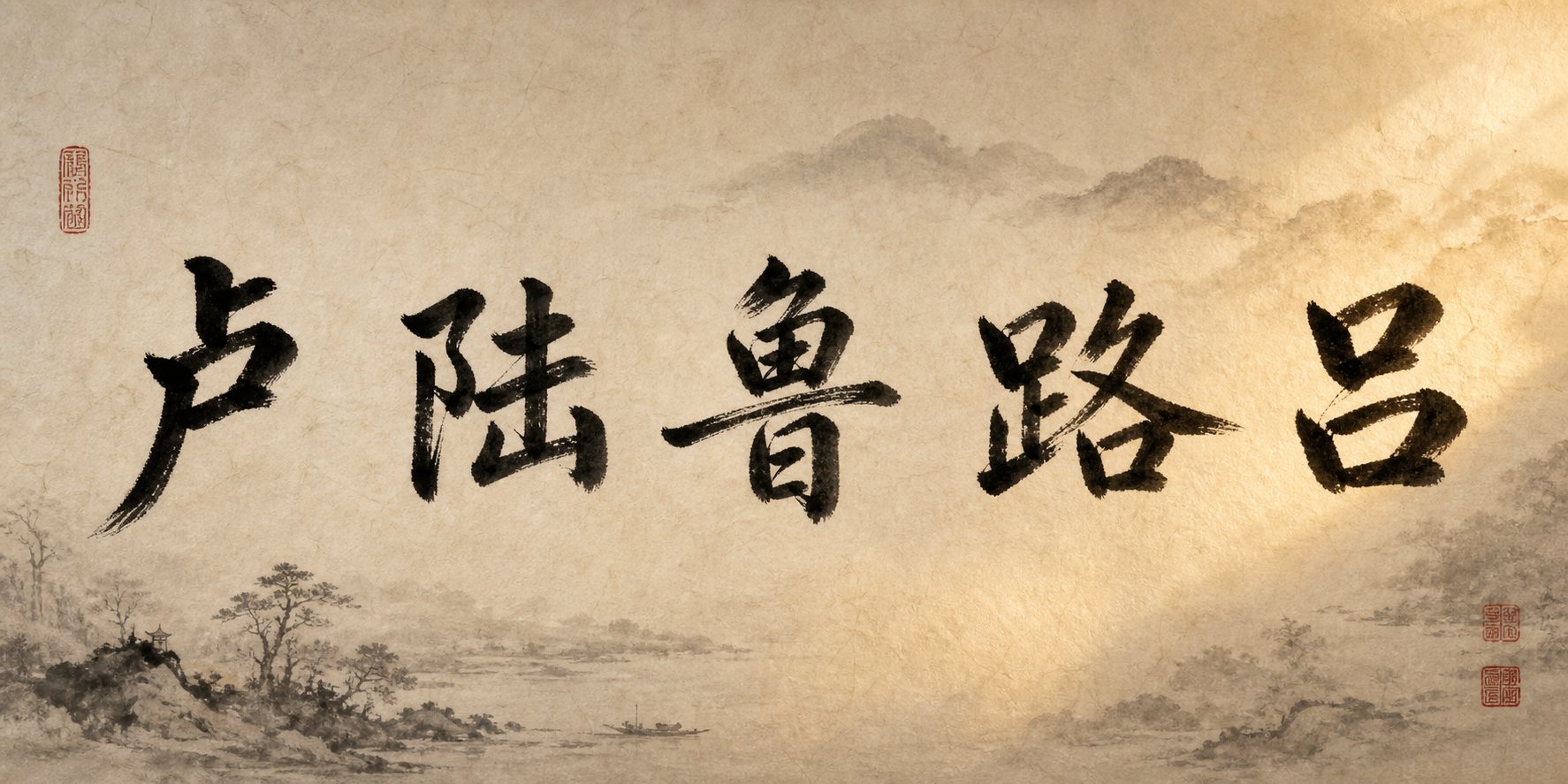
Imagine two families standing side by side at a reunion, both introducing themselves as "Xu." Same sound, same spelling on paper, yet completely different bloodlines stretching back thousands of years. This is the core puzzle behind the xu surname meaning: the single syllable "Xu" maps to two entirely separate Chinese characters, 徐 and 許 (simplified: 许), each carrying its own definition, ancestral origin, and cultural identity.
So is xu a word with one meaning, or two? The answer reshapes how you understand your own family history.
Two Characters, One Sound
The xu meaning splits along a clear line. The character 徐 conveys the idea of "slow, gentle, composed." It evokes deliberate movement and steady composure, qualities that shaped the identity of an ancient clan rooted in present-day Anhui and Jiangsu provinces. The character 許 (许), on the other hand, means "to allow, to permit, to promise." It speaks to trustworthiness and verbal commitment, values tied to a separate clan originating in Henan province.
These are not variant spellings of the same name. They represent two distinct xu surnames born from different founding ancestors, different kingdoms, and different eras of Chinese history. The 徐 surname ranks approximately 11th among the most common family names in mainland China, while 許 sits around 26th.
Why Understanding Your Xu Matters
If your xu last name was romanized generations ago when your family emigrated, you may have lost the connection to the original character. Romanization systems like Pinyin flatten both 徐 and 許 into the identical spelling "Xu," erasing a distinction that Chinese speakers recognize instantly by tone and context. For diaspora families across Southeast Asia, North America, and beyond, this creates real confusion about lineage.
徐 (xu meaning "slow, composed") and 許 (xu meaning "to permit, to promise") are two unrelated Chinese surnames with separate ancestral origins, unified only by their identical Pinyin romanization.
Knowing which character belongs to your family is the first step toward tracing your actual genealogical line. The distinction determines which ancient state your ancestors called home, which classical texts document your clan, and which migration patterns shaped your family's journey across centuries.
That journey begins with the building blocks of each character itself.
Character Etymology and Radical Analysis
Every Chinese character tells a story through its components. When you break a character into its radicals, you uncover layers of meaning that a simple dictionary entry never reveals. For the two Xu surnames, this radical-level analysis exposes why each clan developed such different cultural identities, and it gives you a concrete way to understand what does xu mean at its deepest structural level.
Breaking Down 徐 Radical by Radical
The character 徐 is classified as a phono-semantic compound in traditional Chinese linguistics. It combines two elements:
- 彳 (chi) - This radical means "step" or "to walk slowly." It depicts a left foot mid-stride and appears in dozens of characters related to movement, roads, and pace. When you see 彳 in a character, you know the meaning involves motion or travel.
- 余 (yu) - This component serves as the phonetic element, giving the character its sound. On its own, 余 means "surplus" or "remaining," but here it primarily guides pronunciation rather than contributing direct meaning.
Together, these components produce the xu definition of "to walk slowly, to move deliberately." The Baxter-Sagart reconstruction of Old Chinese confirms this, recording the original meaning as simply "walk slowly." From that core image of unhurried movement grew a broader semantic field: calmness, composure, poise, and gradual action.
You'll notice this meaning embedded in classical Chinese compounds like 徐徐 (slowly, gently) and 徐行 (to walk at a leisurely pace). The character appears in the Japanese reading omomuro ni, meaning "slowly, deliberately," reinforcing how deeply this sense of measured composure is baked into the glyph itself.
For the clan that adopted 徐 as their surname, these qualities became aspirational virtues. Steadiness over haste. Composure under pressure. The xu define here is not passive slowness but intentional restraint, a deliberate choice to move through the world with gravity and calm.
Breaking Down 許 Radical by Radical
The character 許 follows a different structural logic. Its components are:
- 言 (yan) - The semantic radical meaning "speech," "words," or "to speak." This radical anchors the character's meaning firmly in the domain of verbal communication. Any character built on 言 relates to language, promises, or declarations.
- 午 (wu) - The phonetic component, which on its own means "noon" or refers to the seventh Earthly Branch. Here it functions primarily to indicate pronunciation rather than contribute semantic content.
The combination produces a character meaning "to permit, to allow, to promise, to praise." The semantic logic is clear: a verbal act of granting permission or making a commitment. When someone gives their word, that spoken promise is the essence of 許.
This definition xu carries shaped the cultural identity of 許 surname bearers in a fundamentally different direction from their 徐 counterparts. Where 徐 families valued composure and deliberate action, 許 families oriented around trustworthiness, the weight of spoken commitments, and the honor of keeping promises. Is xu a word about movement or about speech? The answer depends entirely on which character you carry.
The table below places both characters side by side for a clear comparison:
| Feature | 徐 (xu) | 許 (xu) |
|---|---|---|
| Semantic Radical | 彳 (chi) - step, walk slowly | 言 (yan) - speech, words |
| Phonetic Component | 余 (yu) - surplus, remaining | 午 (wu) - noon (phonetic marker) |
| Total Strokes | 10 | 11 (traditional) / 6 (simplified 许) |
| Core Meaning | Slow, gentle, composed | To permit, to promise, to praise |
| Character Type | Phono-semantic compound | Phono-semantic compound |
| Associated Clan Values | Composure, steadiness, deliberate action | Trustworthiness, verbal honor, commitment |
| Mandarin Tone | 2nd tone (rising): xu | 3rd tone (dipping): xu |
These etymological roots are more than academic curiosities. They connect directly to the historical kingdoms that gave each surname its origin, kingdoms whose founding stories explain how two unrelated clans ended up sharing a single romanized spelling.

Origins of 徐 from the Ancient State of Xu
A character's radicals reveal its meaning, but history reveals its people. The surname 徐 did not emerge from a dictionary. It was born from a kingdom, one that endured for over a thousand years before its fall sent descendants scattering across eastern China, carrying the state's name as their family identity. Understanding the xu last name origin for 徐 means tracing a lineage back to the second millennium BCE, to a legendary flood hero and the son who built a nation from gratitude.
The Ancient State of Xu and Its Founding
The story begins with Boyi (伯益), a Longshan tribal leader who lived during the age of China's legendary sage-rulers. When catastrophic flooding devastated ancient China in what mythology calls the Great Flood of Gun-Yu, Boyi served Emperor Shun and Yu the Great in taming the waters. His contributions to flood control and governance earned him deep respect. As a reward for Boyi's service, Yu the Great appointed Boyi's son Ruomu (若木) as the king of the State of Xu (徐国), located in what is now Jiangsu and Anhui provinces in eastern China.
This founding moment is significant. The surname xu in chinese traces directly to this state, not to a personal name or an occupation. Ruomu's descendants ruled the State of Xu for generations, building a polity that persisted through the Shang Dynasty and into the early Zhou period. The state occupied strategic territory along the Huai River region, positioning it as a power among the eastern peoples known as the Huaiyi.
The kingdom's end came in 512 BCE, when the State of Wu conquered the State of Xu. With their nation destroyed, descendants of King Ruomu made a deliberate choice: they adopted the name of their fallen state as their surname, preserving the memory of Xu through their family identity. This practice of taking a state name as a clan name was common in ancient China, but few surnames carry as long a continuous lineage as 徐.
Descendants of King Ruomu adopted the name Xu as their surname to commemorate the end of their nation, transforming a political identity into a bloodline that has persisted for over 2,500 years.
The Records of the Grand Historian (史记), compiled by Sima Qian during the Han Dynasty, documents this lineage and establishes the Boyi-Ruomu connection as the primary origin narrative for the surname xu. Most 徐 families today can trace their ancestry back to these royal bloodlines, making it one of the oldest continuously documented xu chinese surnames in existence.
The Rebellion of the Three Guards Theory
Not every 徐 family descends from Ruomu's royal line. A secondary origin account places some bearers of the surname in a completely different historical moment: the Rebellion of the Three Guards (三监之乱), a civil war that erupted around 1042-1039 BCE during the early Western Zhou Dynasty.
Here is the context. After King Wu of Zhou overthrew the Shang Dynasty, he appointed his brothers as overseers of the conquered eastern territories. When King Wu died and the Duke of Zhou declared himself regent for the young King Cheng, these brothers suspected usurpation. They allied with Shang loyalists, Dongyi tribes, and Huaiyi states, including the State of Xu, in open rebellion against the Zhou government.
The Duke of Zhou crushed the uprising in three years. In the aftermath, he reorganized the conquered territories under the new Fengjian system. The remaining Shang dynasty factions were divided into six clans, and one of these bore Xu as their family name. This account provides a secondary lineage path for some 徐 families, one rooted not in the original royal line of Ruomu but in the political reorganization that followed Zhou's consolidation of power over eastern China.
The distinction matters for genealogy. Families tracing their xu last name through the Rebellion of the Three Guards connect to a different historical moment and a different set of ancestors than those descending from Boyi and Ruomu. Both paths lead to the same character, 徐, but they represent separate branches of the surname's family tree.
Whether through royal descent or post-rebellion reorganization, the 徐 surname is anchored firmly in the geography of eastern China, specifically the Anhui, Jiangsu, and Shandong region. The 許 surname, by contrast, traces to an entirely different state in a different province, a separation that the next section makes clear.
Origins of 許 from the State of Xu in Henan
The 徐 surname traces to the Huai River region of eastern China. The hsu surname, written 許, comes from an entirely different place and an entirely different ancestor. Its origin lies roughly 500 kilometers to the west, in the heartland of the Central Plains.
The Zhou Dynasty State of 許
The hsu last name origin begins with Bo Yi (伯夷), a minister who served the legendary Emperor Shun. Bo Yi's descendants were granted control over a small territory in the upper reaches of the Ying River, in what is now Xuchang (許昌), Henan province. When King Wu of Zhou overthrew the Shang Dynasty in the 11th century BCE, he reconfirmed this family's rule over their ancestral land, formally establishing the State of 許.
The first recorded ruler was Xu Wenshu (許文叔), whose personal name was Jiang Ding (姜丁). The ruling family bore the clan name Jiang (姜) and may have been connected to the Zhou royal house through marriage. This detail matters: it places the 許 state within the Zhou feudal network from the very beginning, a vassal bound by kinship and obligation to the central court.
The state's history was turbulent. Neighboring Zheng (鄭) conquered it multiple times, forcing the rulers of 許 to seek military protection from the powerful southern state of Chu. That dependence came at a cost. Chu relocated the 許 capital repeatedly, moving it to Ye (葉), Chengfu (城父), Jing (荆), Rongcheng (容城), and Baiyu (白羽) over the span of decades. Around 480 BCE, the state was finally extinguished by Zheng.
With their kingdom gone, descendants adopted 許 as their surname, preserving the state's name as a family identity. The hsu meaning, then, is not just "to permit" in the abstract. It carries the memory of a lost nation and the people who refused to let it disappear entirely.
How 許 Differs from 徐 in Lineage
Despite sharing the same Pinyin romanization, the hsu last name and the 徐 surname are completely unrelated bloodlines. Consider the differences:
| Feature | 徐 (State of Xu, Eastern) | 許 (State of Xu, Central) |
|---|---|---|
| Founding Ancestor | Boyi/Ruomu (flood-control hero) | Bo Yi (minister of Emperor Shun) |
| Clan Surname | Ying (嬴) | Jiang (姜) |
| Geographic Origin | Anhui/Jiangsu (Huai River) | Henan (Ying River, Xuchang) |
| State Dissolved By | Wu (512 BCE) | Zheng (c. 480 BCE) |
| Character Meaning | Slow, composed | To permit, to promise |
The classical text Hundred Family Surnames (百家姓), compiled during the early Song Dynasty, lists both 徐 and 許 as separate entries. This is not an oversight or a variant listing. The compilers recognized what modern romanization obscures: these are two distinct surnames with independent genealogical records, separate ancestral halls, and different zupu (族谱) lineage books.
For anyone researching their hsu name origin, this distinction is the starting point. If your family traces roots to Henan, particularly the Xuchang region, you almost certainly carry 許. If your ancestors came from Anhui, Jiangsu, or Shandong, the character is likely 徐. But romanization alone cannot tell you which one you are. That question requires looking beyond spelling to dialect, geography, and family records.
How to Identify Which Xu Character Is Yours
Knowing that two separate surnames exist behind the spelling "Xu" is one thing. Figuring out which one belongs to your family is another challenge entirely. If your ancestors emigrated decades or generations ago, the original Chinese character may have been lost in translation, replaced by a romanized spelling that tells you nothing about which bloodline you carry. The good news? Several practical clues can point you in the right direction.
Dialect Clues That Reveal Your Character
The romanization your family uses is often the strongest indicator. Different systems and dialects produce different spellings for 徐 and 許, and those spellings rarely overlap. If your last name Hsu appears on old immigration documents, passports, or family records, you can be fairly confident your character is 許. The spelling "Hsu" comes from the Wade-Giles romanization system, which was standard in Taiwan and pre-1979 mainland China, and it maps specifically to 許, not 徐.
Standard Pinyin "Xu," however, could be either character. Pinyin does not distinguish between them in writing because it typically drops tone marks in names. This is where dialect spellings become invaluable.
Cantonese romanization splits the two surnames clearly. The tsui surname (also spelled "Chui") in Cantonese corresponds to 許. If your family uses "Tsui" or "Chui" as their last name Tsui, you carry the 許 character. Meanwhile, Cantonese speakers romanize 徐 as "Chee," "Tsui" (Jyutping: ceoi4), or "See/Si." The chee surname origin traces directly to 徐 through Cantonese and Hakka dialect pronunciation, where the initial consonant shifts from the Mandarin "x" sound to a "ch" or "ts" sound.
Hokkien and Teochew dialects offer another layer of distinction. In these Southern Min languages, 徐 is typically romanized as "Chee," "Cher," or "Chhi," while 許 appears as "Koh," "Ko," or "Khoh." The hsu family name in any Wade-Giles-influenced context almost always signals 許.
Here is a quick-reference list of spelling-to-character mappings:
- Hsu (Wade-Giles) → 許
- Xu (Pinyin) → Could be either 徐 or 許
- Tsui / Chui (Cantonese) → 許
- See / Si / Syu (Cantonese/Jyutping) → 徐
- Chee / Cher / Chhi (Hokkien/Teochew/Hakka) → 徐
- Koh / Ko / Khoh (Hokkien) → 許
- Hui (certain regional dialects) → 許
These mappings are not absolute rules. Regional variation and family tradition sometimes produce exceptions. But as starting indicators, they narrow the field considerably.
Ancestral Region as an Indicator
When spelling alone leaves ambiguity, geography fills the gap. The two Xu states occupied different parts of China, and migration patterns from those regions remained relatively consistent for centuries.
Families tracing roots to Henan province, particularly the area around Xuchang, Ye, or the upper Ying River valley, most likely carry 許. This is the homeland of the ancient State of 許, and descendants who remained in or migrated from this region overwhelmingly bear that character.
Families with ancestral ties to Anhui, Jiangsu, or Shandong provinces, especially the Huai River corridor, are far more likely to carry 徐. The ancient State of 徐 occupied this territory for over a millennium, and its descendants concentrated in these eastern provinces before spreading south during later dynastic migrations.
If you are unsure of your ancestral province, several resources can help:
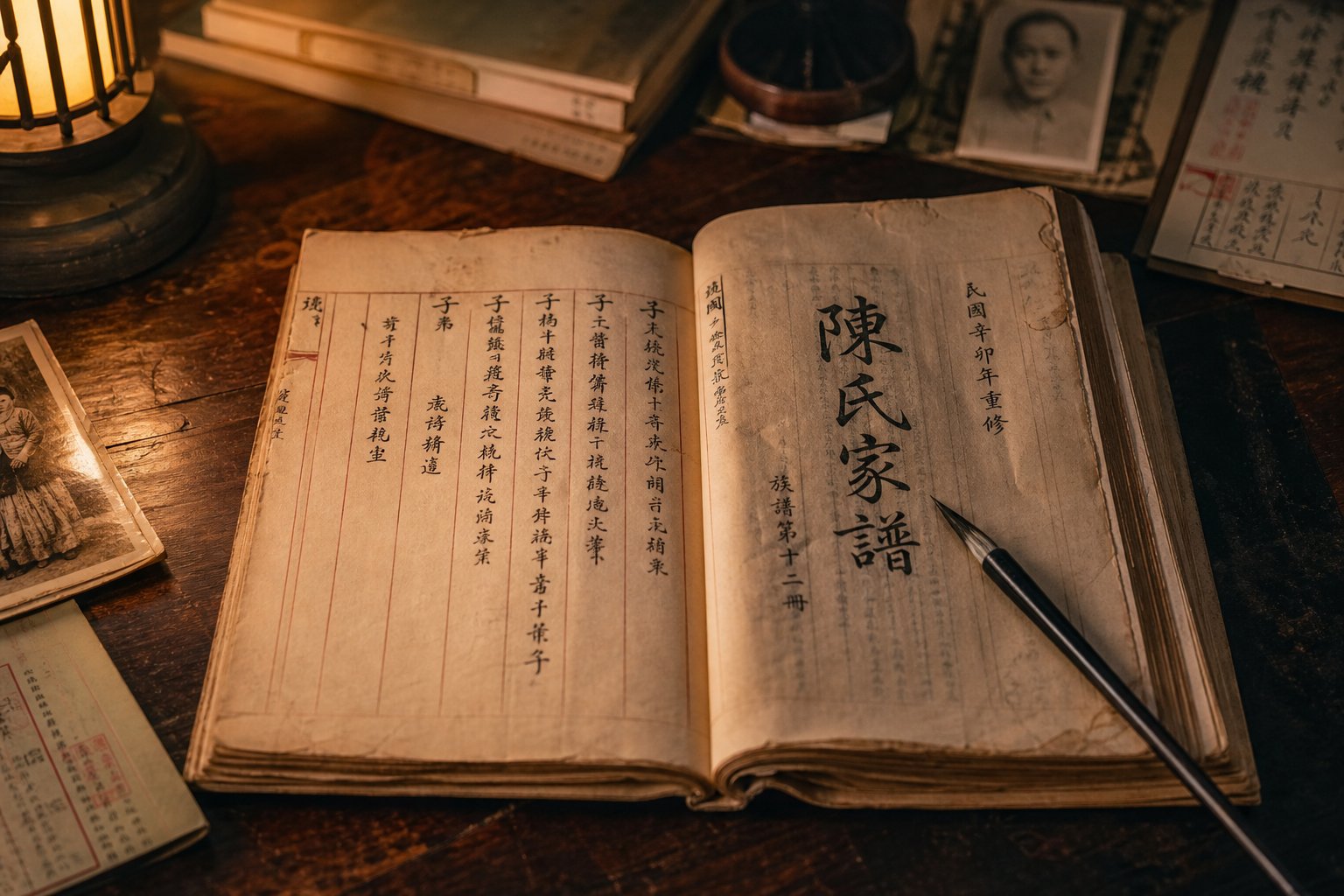
- Family genealogy books (族谱 / 家谱) - These clan records typically identify the character explicitly and trace lineage back to a specific village. FamilySearch maintains a digitized collection of Chinese genealogies searchable by surname and province.
- Ancestral tablets or altar inscriptions - If your family maintains a traditional ancestral shrine, the character will be written on memorial tablets.
- Older relatives - Grandparents or great-aunts who grew up in China or received Chinese-language education often know the character even if younger generations do not.
- Immigration and naturalization records - Early documents sometimes include the Chinese character alongside the romanized spelling, especially records processed through Chinese consulates.
- Clan association records - Many overseas Chinese communities maintain surname associations (宗亲会) that keep genealogical records organized by character, not romanization.
The key insight is this: romanization was never designed to preserve genealogical identity. It was a practical tool for non-Chinese speakers to approximate pronunciation. Recovering your actual character means looking past the spelling to the dialect, the geography, and the family records that predate romanization itself.
Of course, dialect spellings vary far more widely than the short list above suggests. A complete mapping of every romanization variant to its corresponding character and dialect system reveals just how many ways "Xu" has been written across the Chinese-speaking world.
Romanization Variants Across Chinese Dialects
The spelling on your passport or family documents is a product of history, geography, and bureaucratic accident. No single romanization system ever governed how Chinese surnames were transcribed into Latin script. Instead, a patchwork of competing systems, regional dialects, and immigration-era improvisation produced dozens of spellings for what are ultimately just two characters. Sorting through this tangle is essential for anyone trying to connect a romanized spelling back to its source.
Romanization Systems and Their Xu Variants
Four major romanization systems have shaped how the Xu surnames appear in English-language records:
- Hanyu Pinyin - The standard system used in mainland China since 1958. Both 徐 and 許 are written as "Xu," distinguished only by tone marks (xu with second tone for 徐, third tone for 許) that are almost never included in personal names. This makes Pinyin the least helpful system for identifying which character you carry.
- Wade-Giles - The older system dominant in Taiwan and pre-1979 Western scholarship. It renders 徐 as "Hsu" (Hsü2) and 許 also as "Hsu" (Hsü3). In practice, however, the spelling "Hsu" became strongly associated with 徐 in Taiwanese usage because of how naming conventions evolved on the island. The Yale University Library romanization guide notes that well-established Wade-Giles personal names were never converted to Pinyin, which is why "Hsu" persists in so many Taiwanese records.
- Tongyong Pinyin - A short-lived system used in Taiwan from 2002 to 2008. It rendered both characters as "Syu" or "Siu," adding yet another layer of spelling variation for Taiwanese families.
- Dialect-based romanizations - Cantonese, Hokkien, Teochew, Hakka, and Wu speakers each developed their own transcription conventions, often influenced by colonial-era systems like Jyutping, Pe̍h-oe-ji, or local postal romanizations.
The result? A single Chinese family that migrated to different countries at different times could end up with completely different surname spellings depending on which port they departed from, which dialect they spoke, and which immigration officer processed their paperwork. As My China Roots documents, official records were often subject to the translation abilities of immigration officials rather than any consistent standard.
Complete Dialect Spelling Reference
The table below maps the most common romanization variants to their corresponding character and dialect of origin. You'll notice that some spellings appear under both characters. This reflects real-world ambiguity, not error. In those cases, additional context like ancestral region or family records is needed to confirm the character.
| Romanized Spelling | Character | Dialect / System | Region of Use |
|---|---|---|---|
| Xu | 徐 or 許 | Hanyu Pinyin | Mainland China, international |
| Hsu | 徐 (primarily) | Wade-Giles | Taiwan, older overseas records |
| Tsui / Chui | 徐 | Cantonese | Hong Kong, Macau, Guangdong |
| Hui / Heoi | 許 | Cantonese (Jyutping: heoi2) | Hong Kong, Guangdong |
| Chee / Chi | 徐 | Hokkien / Hakka | Fujian, Southeast Asia |
| Cher / Chhi / Chhi | 徐 | Teochew / Hokkien (Pe̍h-oe-ji: Chhi) | Guangdong (Chaoshan), Southeast Asia |
| Koh / Ko | 許 | Hokkien | Fujian, Philippines, Southeast Asia |
| See / Si | 徐 | Cantonese (alternate) | Hong Kong (less common) |
| Syu | 徐 | Jyutping (ceoi4) / Tongyong Pinyin | Hong Kong, Taiwan |
| Zee | 徐 | Wu Chinese (Shanghainese) | Shanghai, Zhejiang |
| Sy / Djie / Tjhie | 徐 | Hakka | Guangdong (Meizhou), Southeast Asia |
| Koo / Khoo | 許 | Hokkien (variant) | Malaysia, Singapore, Philippines |
| Shyu | 徐 | Tongyong Pinyin / Wade-Giles variant | Taiwan |
| Ser / Sher | 徐 | Teochew | Guangdong (Chaoshan), Thailand |
| Su / Swee / Shui | 徐 | Hokkien (literary reading) | Fujian, Taiwan, Southeast Asia |
A few entries deserve extra explanation. The surname Hui (and the last name Hui spelling more broadly) corresponds to 許 in Cantonese because the Jyutping romanization of 許 is "heoi2," which older postal and informal systems shortened to "Hui." If your family uses Hui as their surname, the character is almost certainly 許, not 徐. Similarly, the surname Koo (sometimes written Khoo) maps to 許 through Hokkien dialect pronunciation, particularly among Malaysian and Singaporean Chinese communities. Families carrying the Koh surname trace the same Hokkien path to 許.
One important caveat: the Wikipedia entry for 徐 lists Cantonese romanizations including "Tsui," "Chui," and "Choi" for 徐 specifically, while the tsui last name in some Hong Kong families may also correspond to 許 depending on local convention. This overlap is real and unavoidable. Cantonese phonology produces similar-sounding results for both characters in certain tonal environments, which is why Hong Kong identity documents typically include the Chinese character alongside the romanized name.
The takeaway? Treat this table as a strong starting indicator, not a final verdict. If your spelling maps cleanly to one character, you can proceed with reasonable confidence. If it falls in an ambiguous zone, combine the spelling evidence with ancestral region and family records to reach a conclusion. The romanization tells you where to look. The character itself is what you are looking for.
Spelling, of course, is only half the puzzle. Knowing how to actually say the name aloud, and hearing the tonal difference between 徐 and 許, adds another dimension to distinguishing these two surnames.
How to Pronounce Xu in Mandarin and Other Dialects
How do you say Xu? It is one of the most common questions people ask when they encounter this surname for the first time. The spelling looks short and simple, but the xu pronunciation involves two sounds that do not exist in standard English, which is why so many people stumble over it.
Pronouncing Xu in Mandarin Chinese
The initial "x" in Pinyin represents a voiceless dorsal-palatal fricative (IPA: /ɕ/). To produce it, raise the middle of your tongue toward the hard palate, the area just behind where you would make an English "sh" sound, but positioned further forward. Then push air through the narrow gap, creating a soft, high-pitched hiss. You should be able to smile comfortably while making this sound. If your lips feel rounded or tense, you have moved too far back toward the retroflex "sh" position.
The vowel "u" in "Xu" is actually "ü" (IPA: /y/), a close front rounded vowel. English does not have this sound, but you can approximate it by shaping your lips as if you are about to say the "oo" in "goose," then saying "ee" as in "feet" instead. The lip rounding combined with the tongue position of "ee" produces the correct vowel.
Put together, the closest English approximation is something like "shü," but this is imperfect. The Mandarin "x" is softer and more forward than English "sh," and the vowel is tighter and more rounded than anything in English. If you want to know how to pronounce Xu accurately, practice the tongue-forward hiss and the rounded "ee" separately, then combine them.
Pronunciation Differences Between 徐 and 許
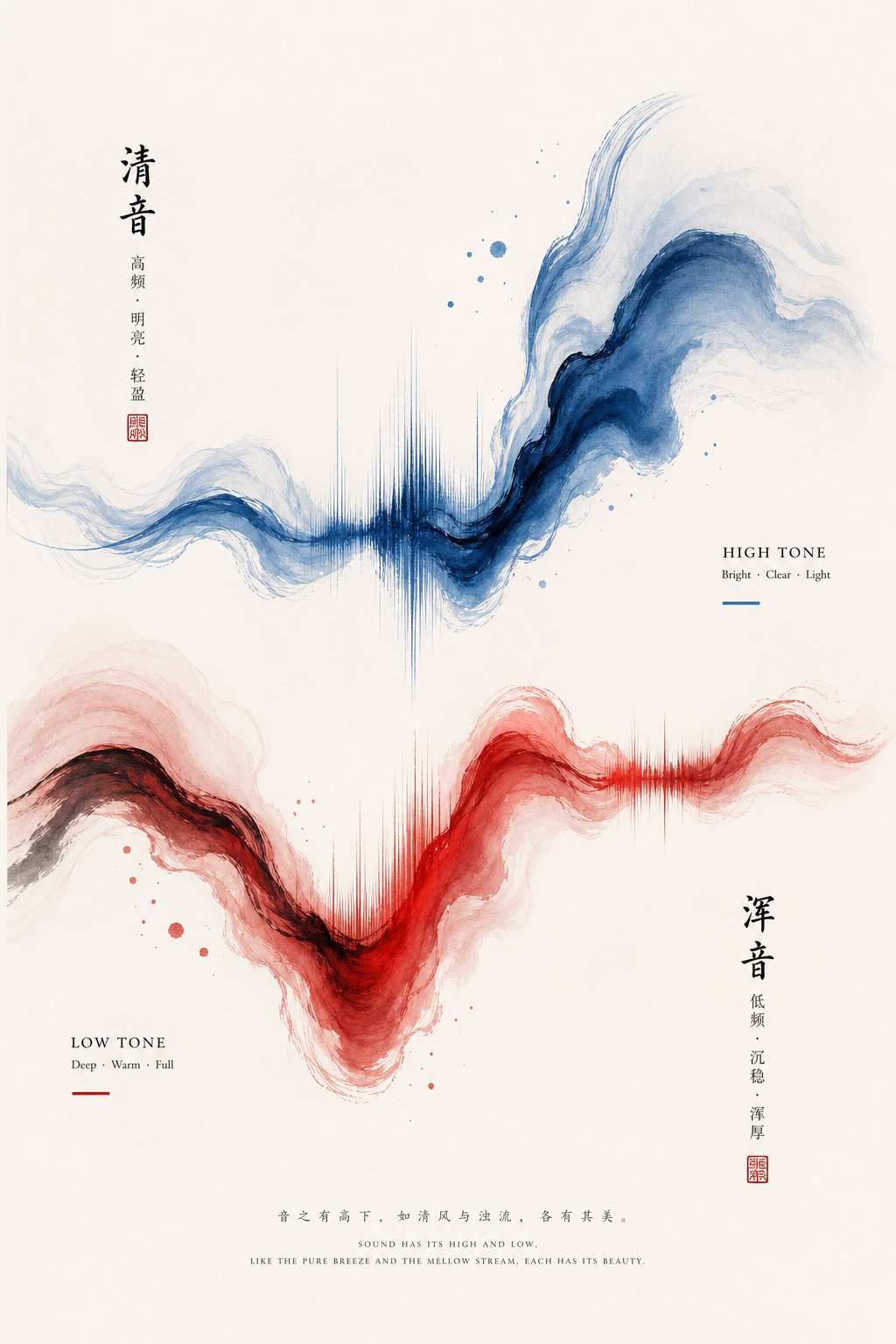
Here is where spoken Mandarin does what romanization cannot: it distinguishes the two surnames clearly through tone. The character 徐 carries the second tone (xú), meaning your pitch starts at a mid-level and rises, like the intonation of asking "what?" in English. The character 許 carries the third tone (xǔ), where your pitch dips low before rising again, similar to the drawn-out "well..." when you are hesitating.
In conversation, native Mandarin speakers hear these as completely different words. The confusion only exists on paper, where tone marks are routinely dropped from personal names. For anyone wondering how do you pronounce Hsu differently from Xu, the answer in Mandarin is simply tone: rising for 徐, dipping for 許. The hsu pronunciation in Wade-Giles attempts to capture the same sounds but uses "hs" to represent the palatal fricative that Pinyin writes as "x."
Beyond Mandarin, the two characters diverge even further in regional dialects:
| Dialect | 徐 Pronunciation | 許 Pronunciation |
|---|---|---|
| Mandarin | xú (rising tone) | xǔ (dipping tone) |
| Cantonese | ceoi4 ("choy") | heoi2 ("hoy") |
| Hokkien | chhî / sîr | khó / hí |
| Teochew | sîr / chî | khó / hé |
| Hakka | chhì | hí |
| Shanghainese (Wu) | zí | xǔ |
Notice how different these sound from each other in every dialect. In Cantonese, 徐 and 許 share almost no phonetic similarity at all. The "same sound" problem is largely a Mandarin Pinyin artifact. Speakers of southern Chinese dialects have never confused these two surnames because their pronunciations are nothing alike in those languages.
This is why older diaspora communities, particularly those in Southeast Asia and Hong Kong who speak Cantonese or Hokkien, rarely face the identification problem that Mandarin-Pinyin users encounter. Their dialect pronunciation already tells them which character they carry. The pronunciation challenge, and the identity confusion it creates, belongs primarily to the Pinyin era.
Historical Migration and Global Distribution of the Xu Family
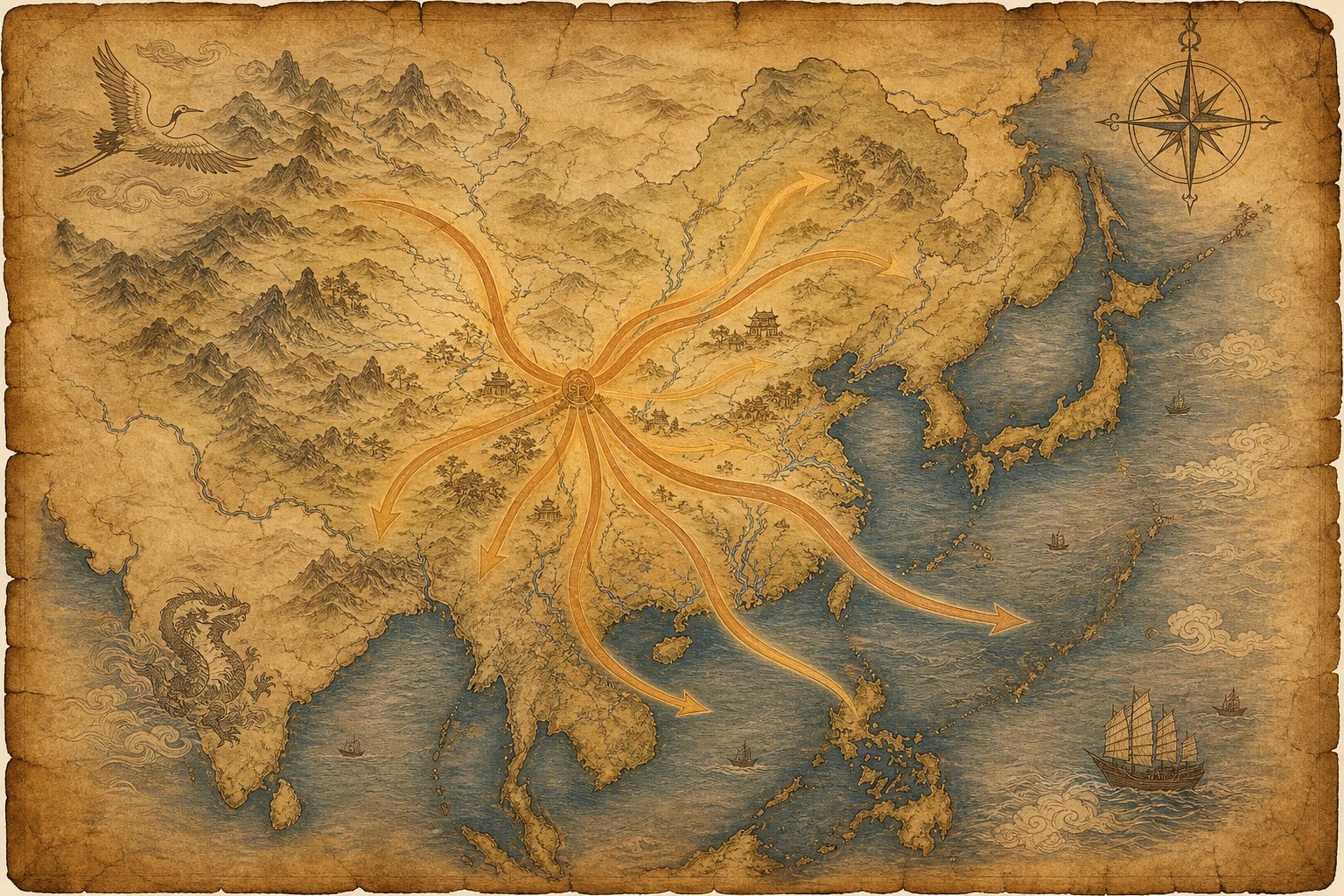
Dialect pronunciation kept these two surnames distinct in spoken language for centuries. But physical movement across geography is what shaped where each xu family cluster lives today. Both 徐 and 許 bearers followed dynastic migration waves that pushed Chinese populations southward and eventually overseas, yet their starting points and routes differed in ways that still show up in modern demographic data.
Dynastic Migration Timeline for 徐 Families
The earliest concentration of the chinese xu surname (徐) sat squarely in the Huai River corridor, spanning present-day Anhui, Jiangsu, and Shandong. This was the homeland of the ancient State of Xu, and for roughly a thousand years after its fall in 512 BCE, most 徐 bearers remained in this eastern region.
The first major dispersal came during the Qin and Han dynasties (221 BCE - 220 CE), when 徐 families spread across most of northern China while also pushing south into Jiangxi (Nanchang) and Zhejiang (Longyou). The main population center, however, stayed anchored in the lower Yellow River basin.
Everything changed during the Wei and Jin dynasties (3rd-4th centuries CE). The chaos of the Wu Hu invasions triggered massive southward migration across all Chinese last names, and 徐 families were no exception. Large numbers relocated to the Huai River region and the lower Yangtze, establishing new population centers that would persist for centuries.
Subsequent waves pushed the xu family further south in stages:
- Song Dynasty (960-1279) - 徐 families migrated from Jiangxi into Fujian province, settling in areas like Shanghang and Liancheng. Jiangxi held the largest 徐 population during this period, comprising roughly 23.5% of all bearers nationwide.
- Yuan Dynasty (1271-1368) - Further expansion into Guangdong, particularly Fengshun County and the Meixian District of Meizhou.
- Ming Dynasty (1368-1644) - The population center shifted decisively to Zhejiang, which held 35.1% of all 徐 surname bearers. The total hsu chinese population grew by 128% over the Song-Yuan-Ming span, far outpacing the national average of 20%.
- Qing Dynasty and beyond (1644-present) - Overseas emigration accelerated, with 徐 families departing from Fujian and Guangdong ports to Southeast Asia, and later to North America and Oceania.
The 許 surname followed a parallel but geographically offset pattern. Starting from Henan, 許 families moved south into Fujian and Guangdong during the Tang and Song periods. Most 許 bearers who settled overseas in the past 400 years departed from Guangdong and Fujian provinces, mirroring the broader pattern of southern Chinese emigration.
Global Distribution and Demographics Today
The two surnames occupy different tiers in China's population rankings. National Bureau of Statistics data from 2010 places 徐 at approximately 11th among the most common Chinese last names, with nearly 20 million bearers accounting for about 1.43% of the mainland population. The 許 surname ranks around 26th, with a smaller but still substantial population base.
Within China, the distribution is far from uniform. Jiangsu province holds the largest concentration of 徐 surname bearers, followed by Guangdong, Zhejiang, and Sichuan. These four provinces alone account for roughly 41% of all 徐 families nationwide. A secondary band of concentration runs through Shandong, Jiangxi, Anhui, Henan, and Hubei, adding another 30%.
| Region | 徐 Concentration | 許 Concentration | Notes |
|---|---|---|---|
| Jiangsu / Zhejiang | Very high (core area) | Moderate | Highest density zone for 徐: over 9 per sq km in southern Jiangsu |
| Guangdong | High | High | Major emigration departure point for both surnames |
| Fujian | Moderate-high | High | Key source province for Southeast Asian diaspora |
| Henan | Moderate | High (ancestral homeland) | Original territory of the State of 許 |
| Shandong / Anhui | High | Low-moderate | Original territory of the State of 徐 |
| Sichuan | High | Moderate | Significant inland concentration for 徐 |
| Taiwan | Moderate (ranked 20th) | High | 許 is more prominent in Taiwanese demographics |
| Southeast Asia | High (Singapore, Vietnam, Thailand) | High (Malaysia, Philippines) | Clan associations active in both communities |
| North America | Moderate-high | Moderate | Both surnames well-represented in post-1965 immigration |
Overseas, the xu family diaspora concentrates in predictable locations. Singapore hosts active clan associations for both characters, including the Singapore Nanyang Chee (Xu) Clan Association for 徐 bearers. Vietnam, Thailand, and Malaysia all have significant 徐 communities, while 許 families cluster heavily in Malaysia, the Philippines, and Taiwan. North American populations reflect more recent immigration waves and include both characters in roughly proportional numbers.
These demographic patterns are not just statistics. They represent the accumulated choices of millions of families over two millennia, each generation carrying their surname into new territory while maintaining the genealogical records that connect them back to their origins. The individuals who emerged from these migration streams, the generals, artists, scientists, and public figures who made the Xu name famous, reflect the cultural values embedded in each character across every era.
Famous People Who Carry the Xu Surname
Migration patterns tell you where the Xu families went. The individuals who rose to prominence within those communities tell you what they did when they got there. Across military strategy, fine art, exploration, entertainment, and science, bearers of both 徐 and 許 have left marks that echo the cultural values embedded in their respective characters.
Historical Figures Bearing 徐
The 徐 surname produced some of China's most celebrated historical figures, many of whom embodied the character's core meaning of composure and deliberate action:
- Military: Xu Da (徐達, 1332-1385), the Ming Dynasty's foremost general, served as Zhu Yuanzhang's chief military strategist during the overthrow of the Mongol Yuan Dynasty. His patient, methodical campaigns exemplified the steady composure that 徐 represents.
- Exploration: Xu Xiake (徐霞客, 1587-1641), born Xu Hongzu, spent 30 years traveling across China documenting geography, geology, and botany. His travel diaries remain foundational texts in Chinese geographic literature.
- Art: Xu Beihong (徐悲鴻, 1895-1953) revolutionized Chinese painting by blending Western realism with traditional ink techniques. His galloping horses remain among the most recognized images in modern Chinese art.
- Politics and military: Xu Xiangqian (徐向前, 1901-1990), one of the Ten Marshals of the People's Liberation Army, and Xu Shichang (徐世昌, 1855-1939), who served as President of the Republic of China.
- Film: Tsui Hark (徐克, born 1950), the Hong Kong director whose wuxia films redefined the genre, and Xu Jinglei (徐静蕾, born 1974), actress and filmmaker known by fans as Xu Jing, who became one of China's most commercially successful female directors.
Notable Bearers of 許 in Modern Times
The 許 surname carries its own roster of accomplished figures, particularly in entertainment, academia, and public life:
- Entertainment: Vivian Hsu (徐若瑄, born 1975), the Vivian Hsu Taiwan singer-actress who built a pan-Asian career spanning music, film, and television. Ann Hsu (許安植) gained recognition in Taiwanese media, while Barbie Hsu (徐熙媛, 1976-2025) became a household name across East Asia.
- Science: Lap-Chee Tsui (徐立之, born 1950), the Chinese-Canadian geneticist who co-discovered the gene responsible for cystic fibrosis and later served as President of the University of Hong Kong.
- Politics and public service: Hsu Fu-hsiang and other Taiwanese politicians bearing the Hsu surname have served in senior government roles, including Hsu David (Hsu Tzong-li), who served as President of Taiwan's Judicial Yuan.
- Technology: Jack Xu and other entrepreneurs in the tech sector have carried the surname into Silicon Valley and beyond, while Heidi Shyu (徐若冰, born 1953) served as U.S. Assistant Secretary of the Army for Acquisition, Logistics, and Technology.
What connects these figures across centuries and continents is not just a shared sound. The 徐 bearers, from Xu Da's patient military campaigns to Xu Xiake's decades-long journeys, consistently reflect the character's meaning of composure and steady persistence. The 許 bearers, from Lap-Chee Tsui's promise-fulfilling scientific breakthroughs to public servants whose careers rest on keeping commitments to constituents, mirror the character's core meaning of trustworthiness and honoring one's word. The xu surname meaning is not just etymology. It is a living thread connecting ancient clan values to the people who carry them forward today.
Frequently Asked Questions About the Xu Surname
1. What does the surname Xu mean in Chinese?
The surname Xu corresponds to two separate Chinese characters with different meanings. The character 徐 (second tone, xú) means 'slow, gentle, composed' and originates from the ancient State of Xu in Anhui/Jiangsu provinces. The character 許 (third tone, xǔ) means 'to permit, to promise' and traces back to a different State of Xu in Henan province. Despite sharing the same Pinyin spelling, these represent completely unrelated family lineages with distinct founding ancestors and geographic origins.
2. How do you pronounce the Chinese surname Xu correctly?
The initial 'x' in Xu is a voiceless palatal fricative, produced by raising the middle of your tongue toward the hard palate, softer and more forward than English 'sh.' The vowel is 'ü,' a rounded front vowel made by shaping your lips for 'oo' while saying 'ee.' The closest English approximation is 'shü,' though this is imperfect. In Mandarin, 徐 uses a rising second tone while 許 uses a dipping third tone, making them clearly distinguishable in speech.
3. Is Hsu the same as Xu?
Yes, Hsu is an older Wade-Giles romanization of the same sound that Pinyin writes as Xu. In Taiwanese usage, the spelling Hsu became strongly associated with 徐, though technically Wade-Giles renders both 徐 and 許 as Hsu. The difference is tonal: Hsü2 for 徐 and Hsü3 for 許. Many Taiwanese families retain the Hsu spelling on official documents because well-established Wade-Giles names were never converted to Pinyin.
4. How can I find out which Xu character my family uses?
Start with your family's romanized spelling: 'Hsu' typically indicates 許 or 徐 via Wade-Giles, 'Tsui/Chui' in Cantonese points to 徐, while 'Hui/Heoi' in Cantonese indicates 許. Next, check your ancestral region: Henan origins suggest 許, while Anhui, Jiangsu, or Shandong roots point to 徐. You can also consult family genealogy books (族谱), ancestral tablets, older relatives, immigration records, or overseas clan association archives for definitive confirmation.
5. How common is the Xu surname worldwide?
The 徐 surname ranks approximately 11th most common in mainland China with nearly 20 million bearers, accounting for about 1.43% of the population. The 許 surname ranks around 26th. Jiangsu province holds the highest concentration of 徐 families, while 許 is more prominent in Taiwan and among Hokkien-speaking communities. Both surnames have significant diaspora populations across Southeast Asia, North America, and Oceania, with active clan associations in Singapore, Malaysia, and other countries.