Why Wong and Wang Are Actually the Same Surname
You've seen Wong on one document and Wang on another. Maybe Chan popped up in a Hong Kong movie, but Chen showed up in a news article about mainland China. Are these different chinese family names, or the same one?
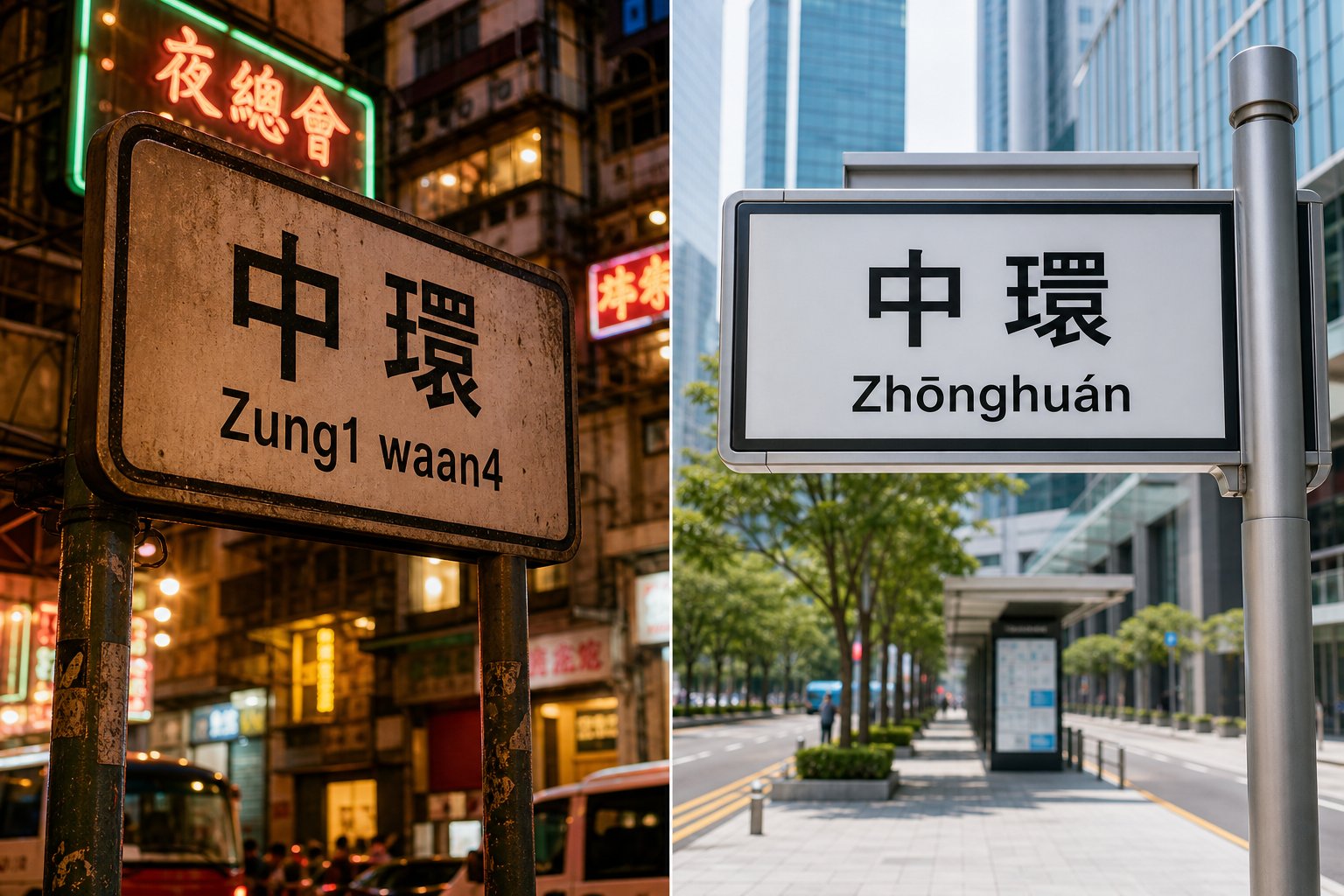
They're the same. Cantonese and Mandarin are two major Chinese dialect groups that pronounce identical characters in completely different ways. When those pronunciations get spelled out in the Roman alphabet, the result looks like two unrelated chinese surnames. But underneath the spelling, the ancestral character and family lineage are often one and the same.
A person named Wong and a person named Wang may share the exact same ancestral character 王 and family lineage. The spelling difference reflects dialect, not a different bloodline.
Why the Same Chinese Character Produces Different Surnames
Chinese names are written in characters, not letters. The character 王 means "king" and belongs to one of the most widespread clans on earth. But Cantonese speakers pronounce it "Wong," while Mandarin speakers say "Wang." Once families emigrated and their names were transcribed into English, those pronunciations became permanent spellings. The same pattern applies across hundreds of common chinese last names, creating pairs like Chan/Chen, Ng/Wu, and Lam/Lin that confuse anyone unfamiliar with the system.
Millions of people across Asia and the global diaspora carry these asian names and surnames without realizing their neighbor's differently spelled last name traces back to the exact same character. In places like Singapore and Malaysia, the spelling of a chinese last name can even signal which region a person's ancestors came from.
What This Guide Covers
This article maps the most frequently encountered surname pairs side by side, explains the phonological reasons behind each split, and gives you pattern-recognition tools so you can identify dialect origin from spelling alone. Whether you're researching genealogy, trying to connect family branches, or simply curious about why the same family can carry different last names across generations, you'll find your answers here.
How Romanization Systems Create Different Spellings
So if the underlying character is the same, what exactly produces two completely different spellings? The answer lies in romanization, the process of converting Chinese characters into the Roman alphabet. Different regions adopted different systems at different points in history, and those systems locked in the surname spellings we see today.
Think of it this way: chinese names in chinese are written as characters, a logographic script sometimes called hanzi. The character itself carries meaning and identity. But when you need to represent that character using English letters, you have to choose a phonetic system, and the system you pick depends on which dialect you speak and which government standardized your paperwork.
Romanization Systems That Shape Surname Spelling
Four major systems account for nearly all the surname spellings you'll encounter in the wild. Each one translates name chinese characters into Roman letters using different rules:
- Cantonese Conventional Romanization - The informal system used in Hong Kong, Macau, and older diaspora communities. It has no single official standard, which is why you'll see slight variations (Cheung vs. Cheong, for example). Most Cantonese surname spellings in passports and public records follow this convention.
- Jyutping - A standardized Cantonese romanization developed by the Linguistic Society of Hong Kong in 1993. It's more consistent than conventional spelling but rarely appears on identity documents. Linguists and language learners use it as a pronunciation reference.
- Mandarin Pinyin - The official romanization system of mainland China, adopted in 1958 and recognized internationally by the ISO in 1982. Pinyin is what most people encounter when learning Mandarin, and it governs how surnames appear on mainland Chinese passports and official records.
- Wade-Giles - An older system developed in the 19th century, still widely used in Taiwan for personal names. This is why you'll see Taiwanese surnames spelled as Chang instead of Zhang, or Tsai instead of Cai.
These aren't just academic distinctions. Each system produces a different chinese names english translation for the same character, and that translation becomes a person's legal surname in English-speaking countries.
How We Selected and Ranked These Surnames
The surname pairs covered in this guide were chosen based on frequency data. Research drawing on China's National Citizen Identity Information Center, which contains records for 1.28 billion citizens, confirms that a small number of surnames dominate the population. The top 100 chinese family names cover roughly 85 percent of mainland China's citizens, and the most common three alone, Li, Wang, and Zhang, are shared by over 270 million people.
We focused on the surnames most likely to cause confusion globally: those with dramatically different Cantonese and Mandarin spellings, high frequency in diaspora communities, and practical relevance for genealogy and identity verification. Understanding how do chinese names work across these systems is the key to decoding what looks like chaos on paper.
Here's why history matters: large-scale emigration from southern China, particularly Guangdong province, began in the 19th century, well before mainland China standardized on Pinyin in 1958. Hong Kong, Macau, and communities across Southeast Asia, North America, and Oceania all adopted Cantonese romanizations because that's what is chinese writing called in practice for those early emigrants. Their descendants carry those spellings today. Meanwhile, more recent immigrants from mainland China arrive with Pinyin-based surnames. The result is two parallel naming conventions existing side by side in the same cities, the same workplaces, and sometimes the same families.
With these systems mapped out, the specific surname pairs start to make sense. The differences aren't random. They follow predictable phonological rules that, once you recognize them, unlock connections between names that look nothing alike on the surface.
Wong vs Wang - The World's Most Common Surname Split
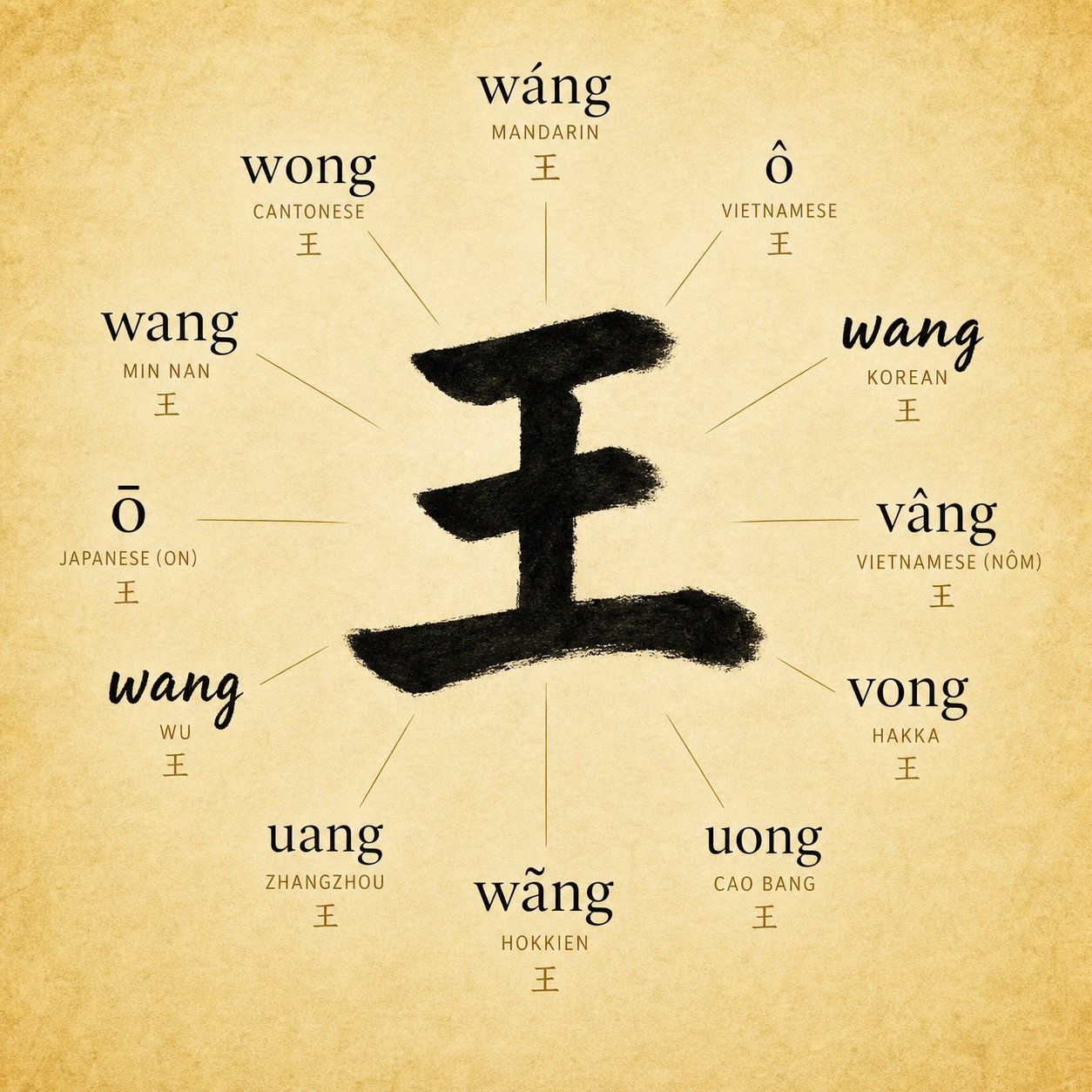
The character 王 is the single most common chinese last name on the planet. A 2018 survey found over 100 million bearers in China alone, making it the number one surname in mainland China. It means "king" or "monarch," tracing its wang last name origin back to descendants of ancient Chinese royalty, particularly the Zhou dynasty's ruling Ji clan. When you encounter someone named Wong or someone named Wang, you're almost certainly looking at the same character and the same deep ancestral roots, split only by dialect.
Wong vs Wang - Character 王 Explained
Why does Cantonese produce "Wong" while Mandarin gives us "Wang"? Both dialects preserve the final -ng consonant, but the vowel in the middle shifts. Cantonese uses a rounded "o" sound (wong4 in Jyutping notation), while Mandarin uses an open "a" sound (wang in Pinyin). This vowel difference is enough to create two spellings that look unrelated to anyone unfamiliar with the phonological connection.
Imagine two cousins: one grew up in Hong Kong, the other in Beijing. Their family shares the same ancestral hall, the same genealogy book, and the same character on their household register. But one carries a passport reading "Wong" and the other carries one reading "Wang." Neither spelling is more correct. They simply reflect how each dialect renders the same sound.
Regional Variants Beyond Cantonese and Mandarin
The split doesn't stop at two spellings. Across Southeast Asia and other dialect communities, 王 takes on additional forms that make it one of the most common chinese surnames in the world under multiple guises:
| Character | Cantonese | Mandarin Pinyin | Hokkien | Teochew | Hakka | Wade-Giles (Taiwan) |
|---|---|---|---|---|---|---|
| 王 | Wong | Wang | Ong / Ung | Heng | Wong / Vong | Wang |
In Singapore, Ong is the 5th most common surname among Chinese Singaporeans, while Wong ranks 6th. In Indonesia, you'll find it romanized as Ong, Heng, or even Bong depending on the local dialect community. The Vietnamese equivalent is Vuong. All of these trace back to the same character, the same meaning, and often the same lineage.
This makes 王 arguably the most widely distributed of all most common chinese last names globally, even though many bearers don't realize their differently spelled neighbors share the same ancestral name.
Genealogical Connections Across Spellings
For families researching their roots, the Wong/Wang split creates both opportunities and headaches. The good news: once you know wong in chinese is 王, you can search genealogical databases under all its variant spellings and dramatically expand your results. Family tree books (zupus) in China record the character, not the romanization, so a single document can connect Wongs in Vancouver with Wangs in Shanghai and Ongs in Jakarta.
The challenges are more practical. When family members hold different passport spellings, proving kinship for immigration, inheritance, or legal purposes can require extra documentation. Database systems that treat Wong and Wang as separate entries may fail to flag family connections. And within a single extended family, generational splits are common: grandparents who emigrated from Guangdong carry the surname Wong, while their mainland-born relatives use Wang.
Pros of the Wong/Wang Naming Pattern
- The character 王 is instantly recognizable across all Chinese-speaking communities regardless of romanization
- Multiple spelling variants make it easier to identify a person's regional or dialect background at a glance
- Genealogical records in Chinese characters unify all variants under one entry
Cons of the Wong/Wang Naming Pattern
- Official documents may not recognize Wong and Wang as the same surname, complicating legal and immigration processes
- Database searches often miss cross-dialect matches, fragmenting family records
- Family members in different countries may struggle to prove their shared lineage without supplementary documentation
These practical complications multiply when you consider that 王 is just one of dozens of most common chinese names affected by the same dialect-driven spelling split. The pattern repeats across nearly every major surname, and the next pair, Chan vs Chen, demonstrates how a single family can end up with not two but three or more completely different spellings depending on where its branches settled.
Chan vs Chen - One Family Three Spellings
If Wong vs Wang demonstrates how two spellings emerge from one character, the surname 陳 takes that fragmentation further. This is a family name that routinely appears as Chan, Chen, Tan, Chin, and even Tran depending on the dialect and country of settlement. It ranks as the 5th most common Chinese surname overall and holds the number one position in both Singapore and Taiwan, making it one of the most frequently encountered surname pairs in global diaspora communities.
The chen last name origin traces back to the ancient state of Chen (陳國), founded during the early Zhou dynasty by descendants of the legendary Emperor Shun. When the state fell to Chu in 478 BCE, the ruling family adopted 陳 as their surname. The character itself means "to display" or "to arrange," and its bearers have carried a reputation as mercantile, scholarly, and politically active across centuries of Chinese history.
Chan vs Chen - Character 陳 Across Dialects
The phonological split here is subtle but produces dramatically different spellings. In Cantonese, 陳 is pronounced with a "ch" initial and an open "an" ending, giving us "Chan." Mandarin Pinyin renders it as "Chen" with a slightly different vowel quality, where the "e" sits closer to a schwa sound. Both dialects preserve the initial "ch" consonant, which is why these two spellings look more similar to each other than, say, Wong and Wang. But the vowel shift is enough to create distinct legal identities on passports and official records.
You'll notice this pair everywhere. Hong Kong actors credited as Chan. Mainland Chinese scientists published as Chen. Singaporean business leaders listed as Tan. All the same character, all the same lineage, all rendered differently because of dialect.
Here's how the last name chen appears across major dialect groups:
| Character | Cantonese | Mandarin Pinyin | Hokkien | Teochew | Hakka | Hainanese |
|---|---|---|---|---|---|---|
| 陳 | Chan | Chen | Tan | Tan | Chin | Dan |
The Tan and Tran Connection
The Hokkien pronunciation of 陳 as "Tan" surprises many people encountering chinese last names and meanings for the first time. There's no obvious visual connection between "Tan" and "Chen," yet they represent the exact same character. In Singapore and Malaysia, where Hokkien speakers form a large portion of the Chinese community, the tan last name is overwhelmingly 陳 rather than any other character. The famous Singaporean industrialist and philanthropist Tan Kah Kee (1874-1961) carried this surname, as do countless families across Southeast Asia.
The Vietnamese surname Tran adds yet another layer. Vietnam historically used Chinese characters in its writing system, and 陳 was adopted directly. The Tran dynasty (1225-1400) ruled Vietnam for nearly two centuries. When Vietnamese romanization replaced characters, 陳 became "Tran" with a distinct Vietnamese pronunciation. Today, Tran is the second most common surname in Vietnam, and many bearers share distant ancestral roots with people named Chan, Chen, and Tan across the Chinese-speaking world.
This means a single extended family with branches in Hong Kong, mainland China, Singapore, and Vietnam could realistically include members surnamed Chan, Chen, Tan, and Tran, all tracing back to the same ancestor and the same character in the family genealogy book.
Practical Challenges for Families
The chen last name creates real-world complications precisely because it's so common and so widely dispersed. Most Chens who left China and settled overseas in the past 400 years came from Guangdong and Fujian provinces, the heartlands of Cantonese and Hokkien dialects respectively. That geographic split hardwired the Chan/Tan divide into diaspora communities from the start.
When researching chinese last names and meanings across family branches, the practical implications stack up quickly:
Pros of the Chan/Chen/Tan Spelling Variants
- Chan is widely recognized internationally thanks to high-profile Hong Kong figures in entertainment and martial arts
- Chen is the standard Pinyin spelling, making it easy to locate in mainland Chinese databases and academic publications
- Tan is immediately identifiable as Hokkien, helping researchers narrow down a family's provincial origin to Fujian or eastern Guangdong
- The character 陳 unifies all variants in Chinese-language genealogical records regardless of romanization
Cons of the Chan/Chen/Tan Spelling Variants
- Three or more common spellings make database searches incomplete unless you query every variant
- Immigration authorities may not recognize Chan and Tan as the same surname, complicating family reunification paperwork
- Younger generations in diaspora communities sometimes lose awareness that their differently spelled relatives share the same ancestral name
- Automated systems for background checks, credit reports, and medical records can fragment a family's history across multiple unlinked entries
For genealogical research, the key insight is straightforward: if your surname is Chan, Chen, Tan, Chin, or Dan, search under all variants. Family tree books (zupus) record the character 陳, not any particular romanization, so a single ancestral document can bridge what looks like five separate families in English-language records.
The Chan/Chen pair shows how a single vowel shift between Cantonese and Mandarin multiplies into a web of spellings once Hokkien, Teochew, and Vietnamese enter the picture. But some surname pairs create even more confusion, not because of multiple spellings, but because one spelling looks completely unpronounceable to English speakers. That's exactly the situation with Ng vs Wu.

Ng vs Wu - Why This Pair Confuses Everyone
Two letters. No vowel. No obvious way to say it out loud. The family name Ng is arguably the most misunderstood entry among common asian last names, and it routinely baffles English speakers encountering it for the first time. Yet Ng and Wu represent the exact same character, 吳, the ninth most common surname in mainland China with roughly 26.8 million bearers. The disconnect between these two spellings is so dramatic that many people never realize they're looking at the same name.
Ng vs Wu - The Most Misunderstood Surname Pair
In Mandarin Pinyin, 吳 becomes "Wu," a clean, open syllable that English speakers handle without difficulty. In Cantonese, the same character is rendered as "Ng," a spelling that contains no vowel at all. This isn't a typo or an abbreviation. It's a faithful representation of how Cantonese actually pronounces the character: as a pure nasal sound produced entirely at the back of the throat.
The surname traces its origin to the ancient State of Wu in present-day Jiangsu province, founded in the 13th century BCE. Descendants of the state's ruling family adopted 吳 as their surname, and it has since spread across every Chinese dialect group, Southeast Asia, Korea (where it appears as Oh or O), and Vietnam (where it becomes Ngo). Among one syllable last names in the Chinese naming system, this pair stands out because the Cantonese version doesn't even look like a syllable to Western eyes.
Why Ng Has No Vowel
Here's where the phonology gets interesting. Cantonese preserves a feature that Mandarin lost centuries ago: the ability to use a nasal consonant as a complete syllable with no vowel attached. The sound represented by "Ng" is what linguists call a syllabic nasal, specifically the velar nasal [ŋ].
The Cantonese surname Ng is not two consonants jammed together. It's a single sound, the same "ng" you already produce at the end of English words like "sing" or "long," used as an entire syllable on its own.
English speakers produce this exact sound every day without thinking about it. Say "sing" and hold the final sound. That humming resonance in the back of your throat, with your tongue raised against the soft palate and air flowing through your nose, is precisely the sound of the surname Ng. The only difference is position: English uses it to end syllables, while Cantonese uses it to form a complete one.
Mandarin, by contrast, restructured this syllable over centuries of phonological evolution. The nasal-only pronunciation shifted into an open syllable with a vowel, producing "Wu" (wú in tonal notation). The two dialects diverged so far on this particular character that their romanized forms share zero letters in common.
Pronunciation Guide and Common Mistakes
If you want to pronounce Ng correctly, try this approach drawn from phonetics research on the initial ng sound:
- Say the English word "sing" and stop on the final sound. Don't release your tongue or add a hard "g" at the end.
- Notice where your tongue is: raised at the back, pressing against the soft palate. The tip of your tongue should stay low and relaxed.
- Now produce that same nasal hum without the "si-" in front of it. That's Ng.
The most common mistakes include pronouncing it as "En-Gee" (spelling it out), saying "Ing" with a vowel in front, or adding a hard "g" click at the end. None of these are correct. The sound is one continuous nasal hum with no vowel, no plosive, and no tongue movement toward the front of the mouth.
Among asian surnames, Ng holds a unique position in terms of last name rarity of spelling pattern. While the underlying character 吳 is extremely common, the two-letter vowel-less romanization is virtually unmatched in any other naming tradition. In Hokkien-speaking communities across Singapore and Malaysia, the same character appears as Goh or Go, which is how former Singapore Prime Minister Goh Chok Tong spells his surname. Other Min Nan variants include Ngo, Ngoh, and Ngov.
For practical purposes, if you encounter someone with the surname Ng, Wu, Goh, or Ngo, there's a strong chance they share the same ancestral character 吳 and potentially the same family lineage stretching back over three thousand years to the ancient State of Wu.
The Ng/Wu pair represents the most extreme phonological gap between Cantonese and Mandarin romanizations, where two spellings share literally no letters in common. But dramatic spelling differences aren't limited to vowel-less surnames. The pairs Lam vs Lin and Cheung vs Zhang show how consonant shifts and diphthong differences create equally surprising gaps between dialect spellings.
Lam vs Lin and Cheung vs Zhang Decoded
Ng and Wu share zero letters in common, but at least both spellings are short. The pairs Lam vs Lin and Cheung vs Zhang introduce a different kind of confusion: consonant endings that vanished from one dialect but survived in another, and vowel combinations so different they disguise what are actually two of the most popular chinese names in existence.
These two pairs also reveal something deeper about how Chinese phonology evolved over time. Cantonese preserved ancient sound features that Mandarin gradually shed, and those preserved features show up directly in how surnames are spelled today.
Lam vs Lin - Character 林 and the Final Consonant Shift
The character 林 means "forest" or "woods," depicting two trees side by side. It ranks as the 18th most common surname in mainland China and holds even higher positions in southern Chinese communities, particularly in Fujian province where it's the number one surname. As one of the most popular chinese last names in the diaspora, you'll encounter it constantly in communities from Vancouver to Melbourne.
In Cantonese, 林 is pronounced "Lam" (lam4 in Jyutping). In Mandarin Pinyin, it becomes "Lin." The critical difference sits at the end: Cantonese preserves the original -m final consonant, while Mandarin shifted that -m to -n centuries ago.
This isn't a random change. Historical linguists have documented that Old Chinese and Middle Chinese both had three distinct nasal endings: -m, -n, and -ng. Cantonese retains all three to this day. Mandarin, however, merged -m into -n during the Ming Dynasty (roughly 1368-1644), eliminating the -m ending entirely from its sound system. The historical phonological evidence confirms that final -m remained in southern Chinese languages like Cantonese (e.g., 林 Cantonese lam, 音 Cantonese yam) while northern Chinese shifted these to -n (Mandarin lin, yin).
This means every Chinese surname that once ended in -m now has a Cantonese spelling with -m and a Mandarin spelling with -n:
- 林: Lam (Cantonese) vs Lin (Mandarin)
- 譚: Tam (Cantonese) vs Tan (Mandarin)
- 沈: Shum (Cantonese) vs Shen (Mandarin)
- 金: Kam (Cantonese) vs Jin (Mandarin)
If you see a Chinese surname ending in -m, you can be confident it's a Cantonese romanization. Mandarin Pinyin simply doesn't use -m as a final consonant. This is one of the most reliable pattern-recognition shortcuts for identifying dialect origin from spelling alone.
In Hokkien-speaking communities across Singapore and Malaysia, 林 appears as "Lim," preserving the same -m ending through a different romanization convention. The former Prime Minister of Singapore, Lee Hsien Loong's mother Kwa Geok Choo, and countless Hokkien families across Southeast Asia carry this Lim spelling. Whether you encounter Lam, Lim, or Lin, the character underneath is the same 林, and the family history connects back to the same roots.
Cheung vs Zhang - Character 張 and Initial Consonant Differences
If Lam vs Lin is a subtle one-letter swap at the end, Cheung vs Zhang is a full visual overhaul. These two spellings look nothing alike, yet they represent the same character 張, the third most common surname in China with over 87.5 million bearers in mainland China alone and more than 100 million worldwide.
The character 張 combines the radical 弓 ("bow") with 長 ("long"), originally meaning "to draw a bow" or "to stretch." Its origin traces back to Hui, a grandson of the Yellow Emperor, who legendarily invented the bow and arrow and was granted the surname meaning "archer" or "bowyer."
So how do you pronounce Zhang? In Mandarin, it's a retroflex initial "zh" (tongue curled back) followed by the open vowel "ang," producing a sound roughly like "jahng" to English ears. Cantonese takes the same character in a completely different phonological direction: the initial becomes a "ch" sound, and the vowel shifts to the diphthong "eung" (somewhere between "uh" and "ng"), giving us "Cheung" (zoeng1 in Jyutping).
The spelling gap is enormous. "Cheung" has seven letters. "Zhang" has five. They share only the letters "a" and "ng" in common, and even those sit in different positions. For anyone trying to connect taiwanese surnames or Hong Kong names to their mainland equivalents, this pair is one of the trickiest to recognize without prior knowledge.
Among the Chinese diaspora, the name takes on numerous forms. In Hong Kong, Cheung is standard. In Singapore, Hokkien and Teochew speakers render it as Teo, Teoh, or Tew, while Hakka speakers use Chong or Cheong. Indonesian Chinese communities spell it Tjang or Tjiong. The Vietnamese equivalent is Truong. Korean families with the same character use Jang or Chang.
Taiwan's Wade-Giles Variants
Taiwan adds another layer to both surnames through its historical use of the Wade-Giles romanization system. Most people in Taiwan romanize their names using a simplified version of Wade-Giles that drops diacritics and apostrophes, and this system has been used by most government offices' reference materials in Taiwan to date.
For 張, Wade-Giles produces "Chang" instead of Mandarin Pinyin's "Zhang." This is the spelling you'll see on taiwanese last names in international contexts: the astronaut Franklin Chang-Diaz, the writer Eileen Chang, the tennis player Michael Chang. Although Taiwan officially recommended Hanyu Pinyin as the first translation option for 張 starting in 2017, the vast majority of existing taiwanese surnames on passports and public records still use the Wade-Giles "Chang" spelling.
For 林, the difference between systems is minimal. Wade-Giles also renders it as "Lin," identical to Pinyin, because the pronunciation in Mandarin is straightforward and both systems handle it the same way. This makes Lin one of the rare surnames where Mandarin Pinyin and Wade-Giles agree completely.
Here's how both pairs compare across all major romanization systems:
| Character | Meaning | Cantonese | Mandarin Pinyin | Taiwan (Wade-Giles) | Hokkien |
|---|---|---|---|---|---|
| 林 | Forest | Lam | Lin | Lin | Lim |
| 張 | Archer / To draw a bow | Cheung | Zhang | Chang | Teo / Teoh / Tiu |
Notice the pattern: 林 stays relatively recognizable across systems because its consonants (L and n/m) are straightforward in any romanization. But 張 fragments dramatically because its initial consonant and vowel both shift between dialects, and each romanization system handles those shifts differently.
For genealogical research, the practical takeaway is clear. If your surname is Cheung, Chang, Zhang, Teo, Teoh, Chong, Jang, or Truong, you likely share the same ancestral character 張 and potentially the same lineage. If your surname is Lam, Lim, or Lin, the character 林 connects your family across dialect boundaries. In both cases, the character itself, not the romanized spelling, is the true identifier of your clan.
These two pairs illustrate how a single consonant shift (Lam to Lin) or a full phonological overhaul (Cheung to Zhang) can make the same surname unrecognizable across dialects. But what happens when a surname spelling is shared across multiple dialect systems, or even across entirely different Asian naming traditions? That's where names like Lee and Li start to blur the boundaries between Cantonese, Mandarin, Korean, and beyond.
Multi-Dialect Surnames That Cross All Boundaries
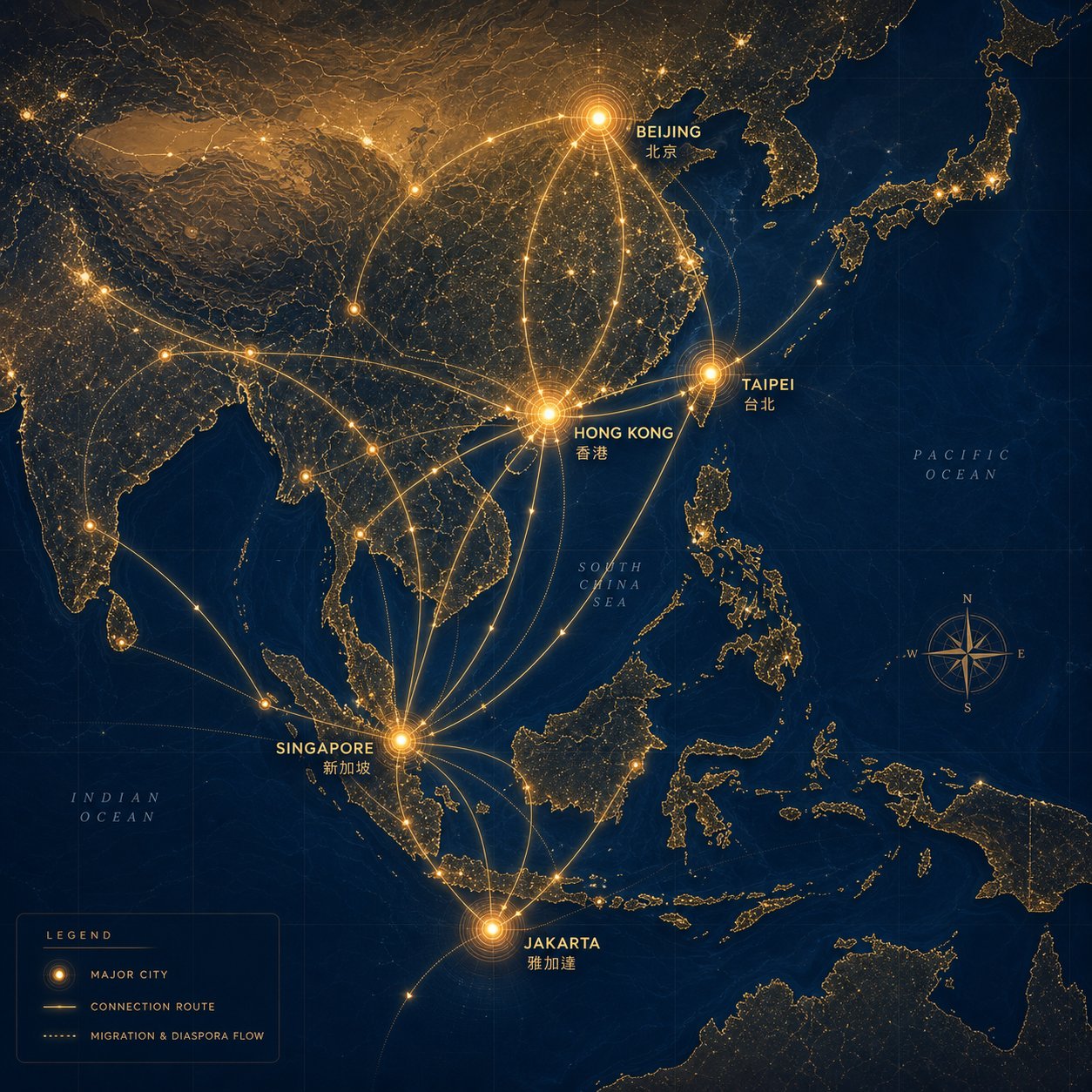
Some surname pairs split neatly along Cantonese and Mandarin lines. Others refuse to stay in their lane. The li surname 李 is the clearest example: it appears as Lee, Li, Lei, Dy, and Lý depending on dialect and country, and the spelling "Lee" is shared by Chinese, Korean, and even Western naming traditions. When a single spelling belongs to multiple cultures simultaneously, identifying dialect origin from the name alone becomes genuinely tricky.
Lee and Li - When Cantonese and Mandarin Almost Agree
The character 李 means "plum" and ranks as the second most common surname in China with nearly 100 million bearers. In Mandarin Pinyin, it's simply "Li." In Cantonese, the pronunciation is nearly identical, typically romanized as "Lee" or "Lei." Unlike Wong/Wang or Cheung/Zhang, this pair barely diverges phonetically between dialects. Both produce a clean "lee" sound.
So is lee an asian or white name? The answer is both. "Lee" exists independently as an English and Irish surname (from Old English "leah," meaning meadow). It's also the standard Cantonese and Teochew romanization of 李, the spelling used by Bruce Lee, Lee Kuan Yew, and millions of diaspora families. In Korean, the same character 李 is romanized as Lee, Yi, or Rhee. Without additional context, a person named Lee could be Cantonese, Teochew, Korean, or Anglo-Saxon. This overlap makes it one of the most ambiguous asian names in international settings.
Southeast Asian Variants - Hokkien and Teochew Spellings
Malaysia and Singapore introduce an entirely separate layer of romanization. Large Hokkien and Teochew communities in these countries brought their own dialect pronunciations, and those pronunciations became permanent surname spellings. The lim last name origin, for instance, traces to the Hokkien pronunciation of 林 (the same character that Cantonese renders as Lam and Mandarin as Lin). Similarly, Tan is Hokkien for 陳, Ong is Hokkien for 王, Goh is Hokkien for 吳, and Koh is Hokkien for 許.
These aren't rare variants. In Singapore, Tan, Lim, and Ong rank among the most frequently encountered surnames in asia, and they signal Hokkien or Teochew heritage as clearly as Wong signals Cantonese roots. For anyone researching asian common last names across Southeast Asia, recognizing these dialect-specific spellings is essential to connecting family branches that appear unrelated on paper.
How Country of Settlement Determines Spelling
The same character can produce completely different romanizations depending on where a family settled. Here's how country-specific conventions shape the spelling of common surnames:
- Hong Kong - Cantonese conventional romanization dominates. You'll see Wong, Chan, Cheung, Lam, Ng. No single official standard, so minor variations exist (Cheng vs Cheung).
- Mainland China - Mandarin Pinyin is mandatory on all official documents. Wang, Chen, Zhang, Lin, Wu. Consistent and standardized since 1958.
- Taiwan - Wade-Giles variants remain common on passports. Chang (張), Tsai (蔡), Hsu (許). Some younger Taiwanese now opt for Pinyin, creating mixed conventions within families.
- Malaysia and Singapore - Hokkien and Teochew romanizations prevail among the majority Chinese population. Tan, Lim, Ong, Goh, Koh, Teo. Cantonese spellings (Wong, Chan) appear in families with Guangdong roots.
- Indonesia - Historical assimilation policies led many Chinese Indonesians to adopt Indonesian-sounding names, though original surnames persist in some communities as Lie (李), Tan (陳), or Ong (王).
What this means in practice: an asian name spelled "Lee" in Singapore likely represents 李 via Teochew romanization. The same character in a Malaysian family might also appear as Lee. But in mainland China, that person's cousin spells it Li. In Vietnam, the same surname becomes Lý. Each spelling is correct within its local convention, and none is more "authentic" than another.
The country-of-settlement pattern explains why you can't decode every surname purely through Cantonese vs Mandarin comparison. Hokkien, Teochew, Hakka, and local government policies all shape the final spelling. Still, recognizable patterns do exist. Certain letter combinations and endings reliably signal whether a surname originated from a Cantonese or Mandarin romanization system, and learning those patterns lets you identify dialect origin at a glance without memorizing every individual pair.
How to Identify Dialect Origin From Spelling Alone
Memorizing every surname pair works if you only encounter a handful of names. But what happens when you meet a name you've never seen before? A faster approach is pattern recognition. Certain letter combinations and endings act as reliable fingerprints for Cantonese or Mandarin romanization, letting you identify dialect origin in seconds without consulting a reference table.
Think of it like recognizing whether a word is French or Spanish without knowing its meaning. Spelling conventions carry dialect DNA. Once you internalize a few rules, the chinese name definition behind any unfamiliar surname becomes much easier to decode.
Cantonese Spelling Patterns to Recognize
Cantonese romanization preserves older phonological features that Mandarin shed over centuries. These preserved features create distinctive spelling signatures you won't find in Pinyin:
- Final -m endings (Lam, Tam, Yam, Shum) - Mandarin eliminated the -m final consonant entirely during the Ming Dynasty. If a surname ends in -m, it's Cantonese or Hokkien. Never Mandarin Pinyin.
- The -eung or -eo- diphthong (Cheung, Leung, Yeung) - This vowel combination doesn't exist in Mandarin's sound system. It's a uniquely Cantonese feature that produces some of the most visually distinctive spellings among typical chinese names.
- Surnames ending in -ng without a preceding vowel (Ng) - A syllabic nasal used as a complete surname is exclusively Cantonese. Mandarin requires a vowel in every syllable.
- Final -k, -t, or -p endings (Kwok, Yip, Chit) - Cantonese preserves "entering tone" stop consonants that Mandarin lost. Any surname ending in a hard stop is Cantonese.
- The -ung ending (Chung, Fung, Hung) - While Mandarin has -ong (Zhong, Feng, Hong), the -ung spelling with a "u" signals Cantonese romanization.
These patterns are so reliable that you can spot a Cantonese surname across a crowded room. The preserved -m endings alone eliminate any ambiguity, since Mandarin Pinyin's nasal finals only include -n and -ng, never -m.
Mandarin Pinyin Spelling Patterns to Recognize
Mandarin Pinyin has its own telltale signatures, many of them tied to initial consonant clusters and vowel combinations that Cantonese romanization never produces:
- Zh-, Sh-, or initial R- (Zhang, Zhao, Shi, Ren) - These retroflex initials are exclusive to Mandarin Pinyin. Cantonese doesn't use "zh" or "sh" as initial consonant pairs. If you see a name in chinese language starting with Zh or Sh, it's Pinyin.
- The letter X as an initial (Xu, Xie, Xiao) - Cantonese romanization never begins a surname with X. This is a distinctly Mandarin Pinyin convention representing a palatal fricative sound.
- The Q initial (Qian, Qiu, Qin) - Same principle. The letter Q functioning as an initial consonant is unique to Pinyin's representation of the aspirated palatal affricate.
- The -iu or -ui ending (Liu, Cui, Dui) - These compressed diphthongs are Pinyin conventions. Cantonese spells equivalent sounds differently (Lau instead of Liu, for example).
- Single-letter surnames (Wu, Yu, Xu) - While Cantonese can produce short surnames (Ng, Au), the specific two-letter combinations Wu, Yu, and Xu are Pinyin standards.
The Yale Library romanization guide confirms that Pinyin replaced Wade-Giles as the U.S. library standard, which means most modern academic and official records from mainland China follow these exact patterns. Recognizing them helps you quickly determine whether a surname came from a mainland Chinese context.
Quick Decision Flowchart
When you encounter an unfamiliar Chinese surname and want to determine its dialect origin, run through these steps in order. Each question narrows the possibilities:
- Does it start with Zh-, Sh-, X-, Q-, or R-? If yes, it's Mandarin Pinyin. Stop here.
- Does it end in -m (Lam, Tam, Kam)? If yes, it's Cantonese. Mandarin has no -m finals.
- Does it contain -eung, -eo-, or -eu- (Cheung, Leung, Yeung)? If yes, it's Cantonese. These diphthongs don't exist in Pinyin.
- Does it end in -k, -t, or -p (Kwok, Yip, Shek)? If yes, it's Cantonese. Mandarin lost all stop-consonant endings.
- Is it a standalone nasal with no vowel (Ng)? If yes, it's Cantonese.
- Does it use -ung (Chung, Fung)? Likely Cantonese. Mandarin equivalent would be -ong.
- Does it match none of the above? Check for Wade-Giles markers like apostrophes (T'ang, Ch'en) suggesting Taiwanese romanization, or Hokkien patterns (Tan, Lim, Goh) suggesting Southeast Asian origin.
This flowchart handles the vast majority of common chinese names you'll encounter. Here's the full pattern-matching reference condensed into a single table for quick lookup:
| Spelling Pattern | Likely Dialect System | Examples |
|---|---|---|
| Ends in -m | Cantonese | Lam, Tam, Yam, Shum, Kam |
| Contains -eung or -eong | Cantonese | Cheung, Leung, Yeung, Seung |
| Ends in -k, -t, or -p | Cantonese | Kwok, Yip, Shek, Mak, Ip |
| Standalone nasal (no vowel) | Cantonese | Ng, M |
| Uses -ung ending | Cantonese | Chung, Fung, Hung, Tung |
| Starts with Zh- or Sh- | Mandarin Pinyin | Zhang, Zhao, Zhou, Shi, Shen |
| Starts with X- | Mandarin Pinyin | Xu, Xie, Xiao, Xia, Xing |
| Starts with Q- | Mandarin Pinyin | Qian, Qiu, Qin, Qi |
| Uses -iu ending | Mandarin Pinyin | Liu, Niu, Qiu |
| Contains apostrophe (T', Ch') | Wade-Giles (Taiwan) | T'ang, Ch'en, Ts'ai |
| Short with no Zh/Sh/X/Q markers | Hokkien (SE Asia) | Tan, Lim, Goh, Koh, Ong |
A few edge cases worth noting: some spellings overlap between systems. "Chan" could be Cantonese (陳) or a Wade-Giles rendering. "Huang" appears in both Pinyin and some Cantonese conventional spellings. When a surname doesn't trigger any of the clear markers above, context matters: a person from Hong Kong is almost certainly using Cantonese romanization, while someone with a mainland Chinese passport uses Pinyin by default.
The beauty of chinese name pronunciation patterns is that they're systematic, not arbitrary. Every spelling difference traces back to a real phonological feature preserved in one dialect and lost in another. The -m endings reflect Middle Chinese finals that Cantonese kept. The Zh- and X- initials reflect Mandarin's retroflex and palatal consonants that Cantonese handles differently. Once you see the logic, chinese name interpretation stops being guesswork and becomes straightforward pattern matching.
With these recognition tools in hand, you're ready to tackle the full picture: a comprehensive side-by-side table of the top 20 Chinese surnames across every major romanization system, pulling together all the patterns, pairs, and variants covered throughout this guide into one definitive reference.
The Complete Cantonese vs Mandarin Surname Reference Table
Every pattern, every phonological rule, and every dialect-driven spelling difference covered in this guide converges in one place. The table below maps the top 20 Chinese surnames by population frequency across four major romanization systems, giving you a single reference for decoding any chinese surname you encounter.
Top 20 Chinese Surnames - Complete Dialect Comparison Table
| Rank | Character | Cantonese (HK) | Mandarin Pinyin | Wade-Giles (Taiwan) | Hokkien (SE Asia) |
|---|---|---|---|---|---|
| 1 | 王 | Wong | Wang | Wang | Ong / Heng |
| 2 | 李 | Lee | Li | Li | Lee |
| 3 | 張 | Cheung | Zhang | Chang | Teo / Teoh |
| 4 | 劉 | Lau | Liu | Liu | Lau / Low |
| 5 | 陳 | Chan | Chen | Ch'en | Tan |
| 6 | 楊 | Yeung | Yang | Yang | Yeoh / Yeo |
| 7 | 黃 | Wong | Huang | Huang | Ng / Ooi / Wee |
| 8 | 趙 | Chiu | Zhao | Chao | Teo / Teoh |
| 9 | 吳 | Ng | Wu | Wu | Goh / Go |
| 10 | 周 | Chow / Chau | Zhou | Chou | Chew / Chiu |
| 11 | 徐 | Tsui | Xu | Hsu | Chee / Swee |
| 12 | 孫 | Suen | Sun | Sun | Sng / Soon |
| 13 | 馬 | Ma | Ma | Ma | Bey / Beh |
| 14 | 朱 | Chu | Zhu | Chu | Choo |
| 15 | 胡 | Wu / Woo | Hu | Hu | Oh / Ow |
| 16 | 郭 | Kwok | Guo | Kuo | Quek / Kueh |
| 17 | 何 | Ho | He | Ho | Ho / Hor |
| 18 | 林 | Lam | Lin | Lin | Lim |
| 19 | 高 | Ko | Gao | Kao | Ko / Kor |
| 20 | 羅 | Lo | Luo | Lo | Lo / Lor |
These 20 surnames alone account for over half a billion people worldwide. Each row represents a single chinese surname with a single meaning and a single ancestral origin, rendered through four different phonological lenses. The spelling differences you see are products of dialect and geography, not separate bloodlines.
Key Takeaways for Surname Research
After working through every major pair, a few principles hold true across the board when exploring chinese surnames and meanings:
- Same character, same family. Wong and Wang, Chan and Chen, Ng and Wu are not different surnames. They are identical characters filtered through different sound systems. The meaning of chinese last names stays constant regardless of romanization.
- Spelling reflects migration, not lineage. A family's romanized surname tells you where their ancestors settled and which dialect community they belonged to. It does not indicate a separate clan or a different origin story.
- The character is the true identifier. Genealogical records in Chinese, whether clan books, ancestral hall tablets, or government registers, use characters. Chinese last name meanings and lineage connections live in the character, not in any particular English spelling.
- Pattern recognition beats memorization. Final -m means Cantonese. Initial Zh- or X- means Mandarin Pinyin. The -eung diphthong means Cantonese. These rules cover the vast majority of cases without requiring you to memorize every pair.
Understanding chinese surname meanings across dialects isn't just an academic exercise. It's the key that unlocks genealogical research for families split across Hong Kong, mainland China, Taiwan, and Southeast Asia. When you know that Cheung, Chang, Zhang, and Teo all point to 張, a single search in a clan genealogy book can connect branches that looked completely unrelated in English records.
Next Steps for Tracing Your Family Name
Ready to take your surname origin search further? These resources bridge the gap between romanized spellings and ancestral records:
- FamilySearch Surname Finder - A free tool that connects romanized surnames to their Chinese characters and provides historical context on clan origins, ancestral villages, and migration patterns.
- Clan genealogy books (jiapu / zupu) - These handwritten family records trace lineages back centuries using characters. FamilySearch's jiapu guide explains how to locate and read them.
- Forebears surname distribution maps - Search any forebears surname spelling to see its global distribution, helping you identify where specific romanizations concentrate geographically.
- Ancestral village research - Most Chinese surnames trace to specific regions. Knowing your character narrows the search to particular provinces and villages where your clan originated.
Understanding that your romanized surname is one spelling of a shared ancestral character transforms genealogical research from a dead end into an open door. Every variant spelling is a thread leading back to the same origin.
Whether your name is Wong or Wang, Chan or Tan, Cheung or Zhang, the character underneath connects you to a lineage that predates any romanization system by thousands of years. The spelling on your passport is a product of history and geography. The family it represents is timeless.
Frequently Asked Questions About Cantonese vs Mandarin Surnames
1. Are Wong and Wang the same surname?
Yes, Wong and Wang both represent the Chinese character 王, meaning 'king.' Wong is the Cantonese romanization used in Hong Kong and older diaspora communities, while Wang is the Mandarin Pinyin spelling standard on mainland Chinese documents. They share the same ancestral origin, clan history, and family lineage. The spelling difference reflects which dialect was used when the name was first transcribed into English letters, not a separate bloodline or different family.
2. How do you tell if a Chinese surname is Cantonese or Mandarin?
Several spelling patterns reliably signal dialect origin. Surnames ending in -m (Lam, Tam) are Cantonese because Mandarin eliminated that final consonant. Names with the -eung diphthong (Cheung, Leung) or stop-consonant endings like -k or -p (Kwok, Yip) are also Cantonese. On the Mandarin side, initials like Zh-, Sh-, X-, or Q- (Zhang, Xu, Qian) are exclusive to Pinyin and never appear in Cantonese romanization. These patterns work as quick identifiers without needing to memorize every pair.
3. Why is the surname Ng so hard to pronounce?
Ng represents a syllabic nasal consonant in Cantonese, the same 'ng' sound at the end of English words like 'sing,' but used as an entire syllable with no vowel. English speakers produce this sound daily without realizing it. To pronounce it correctly, say 'sing,' stop on the final nasal hum, then reproduce that hum without the 'si-' in front. The Mandarin equivalent is Wu, which adds a vowel that Cantonese omits. Both spellings represent the character 吴.
4. Why do Chinese families have different surname spellings?
Different romanization systems adopted by different regions at different points in history created the variation. Hong Kong uses Cantonese conventional romanization, mainland China mandates Pinyin since 1958, Taiwan uses Wade-Giles, and Southeast Asian communities use Hokkien or Teochew spellings. A family that emigrated from Guangdong before Pinyin existed would carry Cantonese spellings, while their mainland relatives use Pinyin. The underlying Chinese character remains identical across all variants.
5. Is Chan the same as Chen and Tan?
All three represent the character 陈 and share the same ancestral origin tracing back to the ancient State of Chen. Chan is the Cantonese romanization common in Hong Kong, Chen is Mandarin Pinyin used in mainland China, and Tan is the Hokkien pronunciation found throughout Singapore and Malaysia. The Vietnamese equivalent is Tran. A single extended family with branches across these regions could realistically include members surnamed Chan, Chen, Tan, and Tran, all connected through the same genealogical records.