What Every Beginner Should Know About Chinese Calligraphy Sets
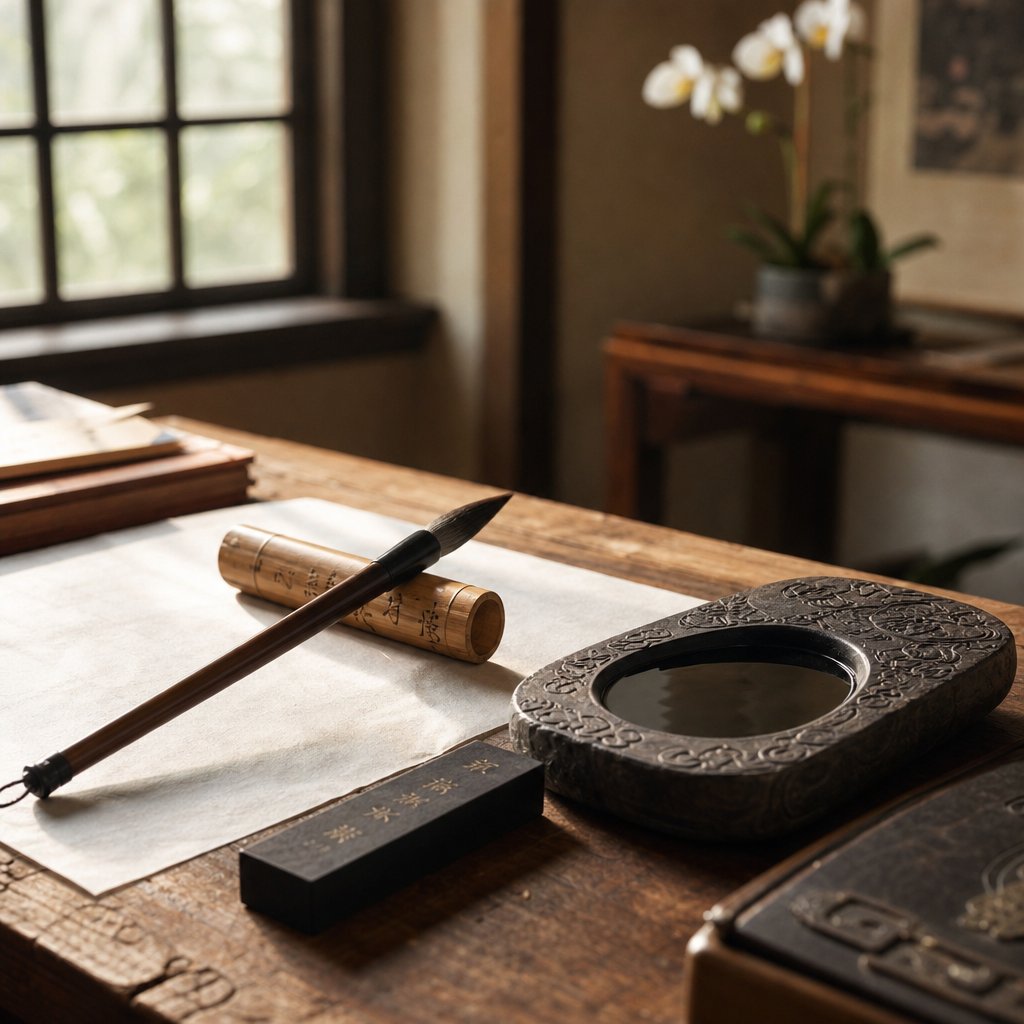
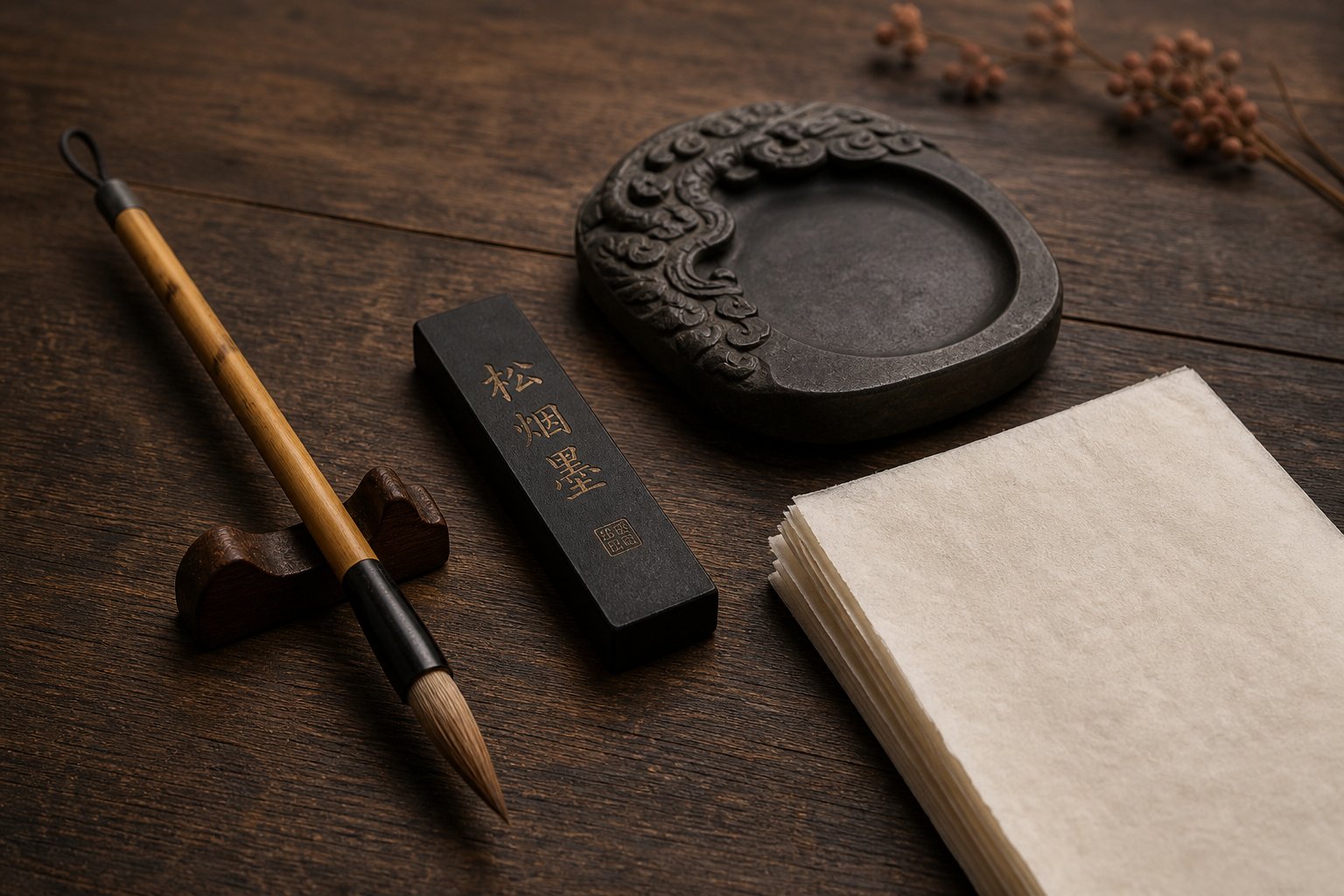
A Chinese calligraphy set for beginners is a curated collection of traditional writing tools used to practice the art of brush-based Chinese handwriting, known as 书法 (shufa). At its core, the set contains four essential instruments: a brush, an ink stick, an inkstone, and paper. These tools have remained largely unchanged for centuries, and together they give you everything needed to produce your first strokes.
What Is a Chinese Calligraphy Set
Imagine sitting down with a brush in hand, grinding ink against stone, and watching liquid black pool into a smooth reservoir you created yourself. That tactile, unhurried process is what separates a traditional Chinese calligraphy set from a simple pen-and-paper setup. The four core tools are collectively called the Four Treasures of the Study (文房四宝, wenfang sibao), a term that dates back over a thousand years. A four treasures Chinese calligraphy box set typically packages these items together, sometimes alongside accessories like a brush rest, seal, or felt mat, giving beginners a single point of entry into the practice.
What makes a calligraphy set chinese in character rather than generic is the relationship between the tools. The brush's hair type determines how ink flows. The inkstone's texture controls how fine the ink grinds. The paper's absorbency dictates how strokes spread. Each piece influences the others, which is why choosing the right set matters far more than most beginners realize.
Chinese calligraphy is both a visual art and a meditative practice. Each stroke demands full presence, turning the act of writing into a form of moving stillness that calms the mind while training the hand.
Why Cultural Context Matters for Beginners
Calligraphy rose to prominence during the Han dynasty (206 BCE-220 CE) and was eventually enshrined as one of the Six Arts that formed the foundation of classical Chinese education. In 2009, UNESCO inscribed Chinese calligraphy on the Representative List of the Intangible Cultural Heritage of Humanity, recognizing it as a source of pride, artistic heritage, and cultural identity for the Chinese people.
Why does this matter when you are shopping for your first set? Because understanding the cultural weight behind these tools changes how you approach them. A traditional Chinese calligraphy set is not a novelty item. It is a direct link to an art form spanning thousands of years. When you grind ink on a stone, you are repeating the same motion scholars performed to write imperial exams and poets used to compose verse. That context turns routine practice into something richer and keeps motivation alive long after the initial excitement fades.
In the sections ahead, you will learn exactly what each tool does, which brush types suit new learners, how to spot quality in a starter set, and how to avoid the common mistakes that push beginners to quit before they ever produce a character they are proud of.
Parts of a Chinese Calligraphy Set and What Each One Does
So what is in a Chinese calligraphy set, exactly? Every set revolves around the same four instruments, yet the quality and characteristics of each piece vary wildly between products. Knowing what the parts of a Chinese calligraphy set actually do, and what separates a reliable tool from a frustrating one, is the difference between steady progress and early burnout.
The Four Treasures of the Study Explained
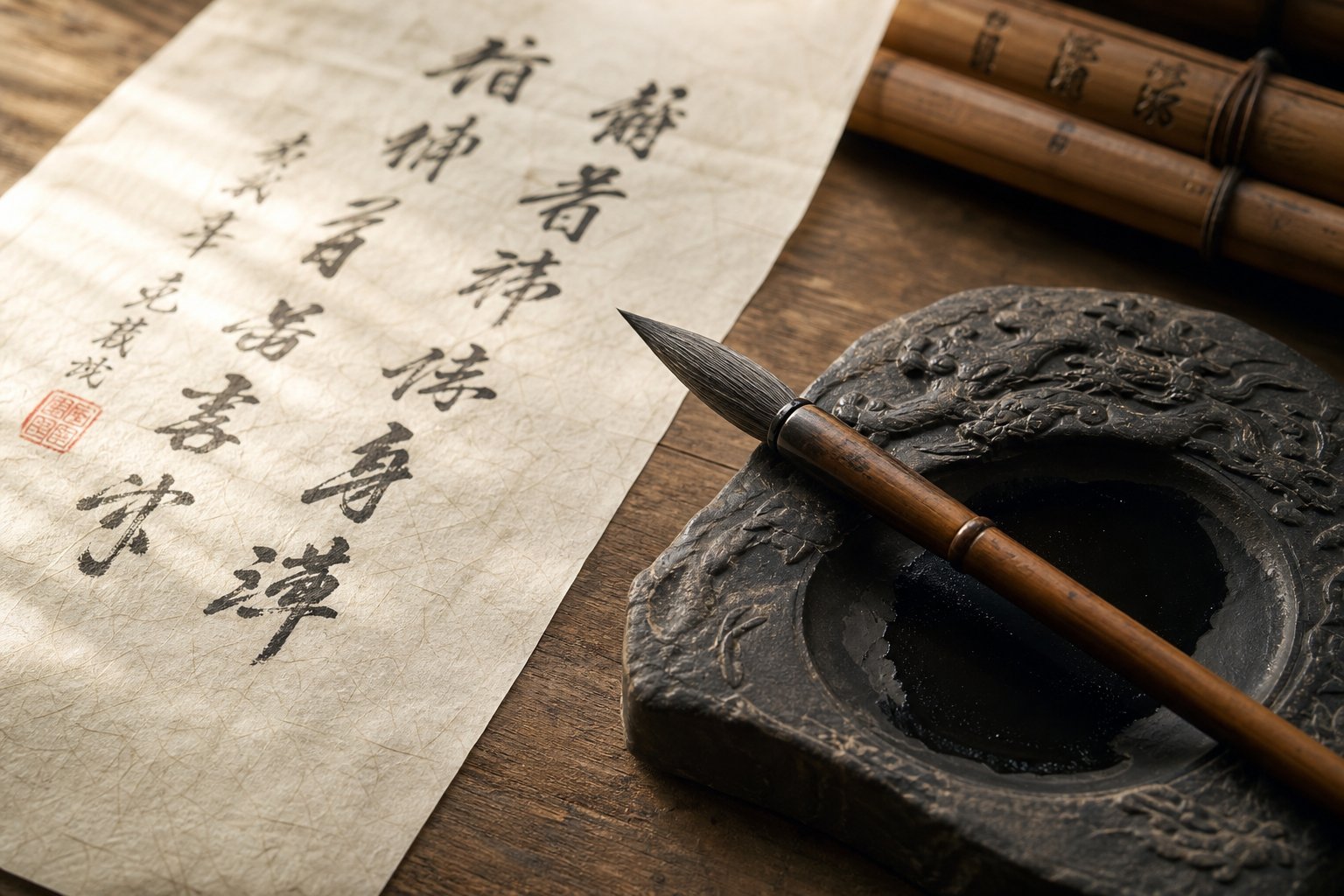
The Four Treasures (文房四宝) are not just a poetic label. Each tool plays a specific role in producing controlled, expressive strokes. Here is a breakdown of what are the tools of a Chinese calligraphy set and how they work together:
| Component | Function | What Beginners Should Look For | Quality Indicators |
|---|---|---|---|
| Brush (毛笔) | Delivers ink to paper through flexible bristles, allowing variation in stroke width and pressure | A mixed-hair brush in medium size (6-8 cm character range) with a firm yet springy tip | Tip reforms cleanly after pressure; hair feels even; no splitting during use |
| Ink Stick (墨) | Ground against the inkstone with water to produce fresh ink with controllable density | A smooth, crack-free stick with a mild scent and uniform color | Produces consistent, non-grainy ink; smooth flow without sticky texture |
| Inkstone (砚台) | Provides a grinding surface for the ink stick and serves as an ink reservoir | A stone inkstone with a fine, smooth grinding area and a well for holding liquid ink | Even grinding texture; produces smooth ink without grit; stable base that does not slide |
| Paper (宣纸) | Receives ink and determines how strokes spread, bleed, and dry | Partially treated (semi-sized) xuan paper or affordable practice grid paper | Even ink absorption; clear stroke edges; no excessive bleeding or weak spots |
Each component influences the others. A brush that holds ink beautifully is wasted on paper that bleeds uncontrollably, and perfectly ground ink means little if the brush tip splits on every downstroke. That interdependence is why a well-matched calligraphy chinese tool set outperforms a collection of individually expensive but mismatched pieces.
Quality Indicators for Each Component
You do not need laboratory equipment to evaluate your tools. Simple tests reveal whether each piece will support your learning or slow it down.
- Brush: Dip it in water, press lightly against paper, then release. A quality brush snaps back to a centered, pointed tip. If the hairs splay or refuse to regroup, control will be a constant struggle.
- Ink Stick: After grinding for two to three minutes, the resulting liquid should feel smooth between your fingers, not gritty. The color should be even and deep black, not washed-out gray.
- Inkstone: Run your fingertip across the grinding surface. It should feel fine-grained, almost silky, not rough like sandpaper. A rough or uneven surface produces inconsistent ink and wears down your ink stick unevenly.
- Paper: Apply a single wet stroke. Observe how far the ink spreads beyond the brush path. Balanced absorption gives you a clean edge; excessive bleeding turns every stroke into a shapeless blob.
A chinese calligraphy set labeled with component descriptions and material details is generally a good sign. It suggests the manufacturer is transparent about what you are getting, which makes it easier to assess whether the set matches your skill level.
Additional Items Your Set Might Be Missing
Many sets marketed as "complete" still leave gaps. You will likely need a few extras before your first session runs smoothly:
- Felt desk mat: Protects your surface from ink bleed-through and provides a slightly cushioned writing area that improves stroke feel.
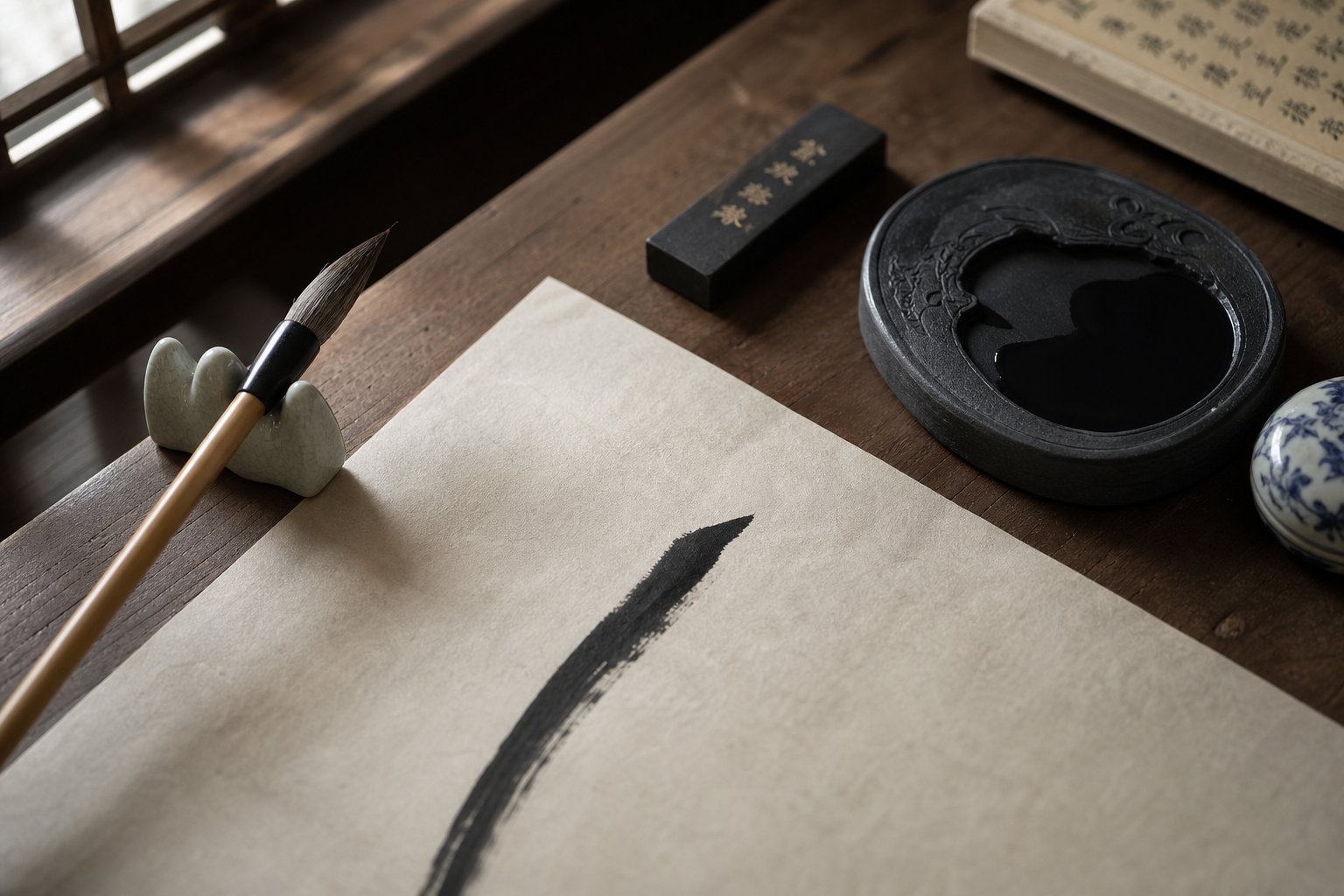
- Brush rest (笔架): Keeps your brush off the table between strokes so ink does not pool and damage the bristles. A wooden brush stand also helps maintain brush shape during drying.
- Water dropper or small dish: Gives you precise control over how much water you add to the inkstone during grinding.
- Paperweights: Thin metal or stone bars that hold your paper flat, preventing curling or shifting mid-stroke.
Budget an extra few dollars for these accessories if your set does not include them. Without a felt mat, ink soaks through to your desk. Without a brush rest, dried ink shortens bristle life. These are not luxuries; they are the parts of a Chinese calligraphy set that keep the core tools functioning properly session after session.
The tools themselves only tell half the story, though. The type of brush hair bundled into your set, whether wolf, goat, or a blend, shapes how every single stroke feels under your hand.
Understanding Brush Types in Your Chinese Calligraphy Brush Set
Pick up two different brushes from a chinese calligraphy brush set, press them against paper with the same pressure, and you will get two completely different strokes. One might feel springy and responsive, snapping back into shape the moment you lift. The other might feel soft and unpredictable, spreading ink in ways you did not intend. That difference comes down to one thing: the type of animal hair used in the bristles.
Wolf Hair vs Goat Hair vs Mixed Brushes
Every chinese brush calligraphy set contains brushes made from one of three hair categories. Each produces a distinct writing experience, and choosing the wrong type for your skill level can make basic strokes feel impossibly difficult.
- Wolf Hair (硬毫 / yanghao): Despite the name, these brushes typically use weasel hair rather than actual wolf fur. They are stiff, springy, and highly responsive to pressure changes. Strokes come out sharp and precise. However, that precision demands equally precise hand control, which most beginners have not yet developed. Beginner-friendliness: low to moderate.
- Goat Hair (羊毫 / yanghao): Soft, absorbent, and flexible. Goat hair brushes hold large amounts of ink and produce thick, flowing strokes with rich variation. The challenge? They offer almost no resistance. Without strong wrist control, the brush tip wanders, making consistent strokes difficult for new learners. Beginner-friendliness: low.
- Mixed Hair (兼毫 / jianhao): A blend of stiff and soft fibers, usually combining wolf (or weasel) hair in the core with goat hair on the outer layer. This gives you moderate spring, decent ink capacity, and a forgiving response that does not punish small errors in pressure or angle. Beginner-friendliness: high.
For most people starting out, a mixed-hair brush is the clear winner. It provides enough stiffness to guide your strokes without demanding the refined muscle memory that pure wolf or goat brushes require. Many sets marketed as the best chinese calligraphy watercolor brush set also use mixed-hair construction because the balanced flexibility works well across both calligraphy and painting applications.
Which Brush Size to Start With
When you open a chinese calligraphy painting brush set, you might find anywhere from one to a dozen brushes in different sizes. The temptation is to try them all immediately. Resist it.
Brush size is measured by the length and diameter of the bristle tuft, and it determines the character size you can comfortably write. Here is a practical guide:
- Small brush (小楷): Bristle tuft around 2-3 cm. Used for characters under 3 cm. Requires fine motor control most beginners lack.
- Medium brush (中楷): Bristle tuft around 3-5 cm. Writes characters in the 5-8 cm range. Ideal starting size because it is large enough to see stroke structure clearly but small enough to control without full-arm movement.
- Large brush (大楷): Bristle tuft 5 cm or longer. Produces characters 10 cm and above. Demands whole-arm coordination and significant ink management.
Start with one medium brush. Master the basic strokes at that scale. A calligraphy chinese bamboo brush set of 4 gives you room to grow, but reaching for the large brush before your fundamentals are solid just introduces variables you are not ready to manage. One brush, one size, consistent repetition. That is how muscle memory forms.
How Brush Stiffness Affects Stroke Control
Stiffness is not just about comfort. It directly shapes how you learn the eight foundational strokes that underpin every Chinese character.
A stiffer brush (wolf hair or stiff mixed) gives you immediate visual feedback. Press harder, the stroke widens predictably. Lift slightly, it narrows. That clear cause-and-effect relationship helps beginners understand how pressure translates to ink on paper. You can feel the brush pushing back against your hand, which builds awareness of how much force each stroke type requires.
A softer brush (goat hair) delays that feedback. The bristles absorb pressure before responding, creating a lag between your intention and the result on paper. Experienced calligraphers use that softness to produce expressive, flowing work. But for someone still learning to write a clean horizontal stroke, that lag feels like fighting the tool.
The sweet spot for a beginner set sits in the medium-stiff range. Enough spring to guide your hand, enough give to produce natural-looking variation. If your current brush feels either completely rigid like a stick or floppy like a wet mop, it is likely the wrong stiffness for your stage of learning.
Brush type and size set the foundation, but they are only one variable in the equation. The overall composition of your set, from ink format to paper grade, determines whether the tools work together or against each other at your skill level.
How to Tell a Beginner Set from an Advanced Chinese Calligraphy Set
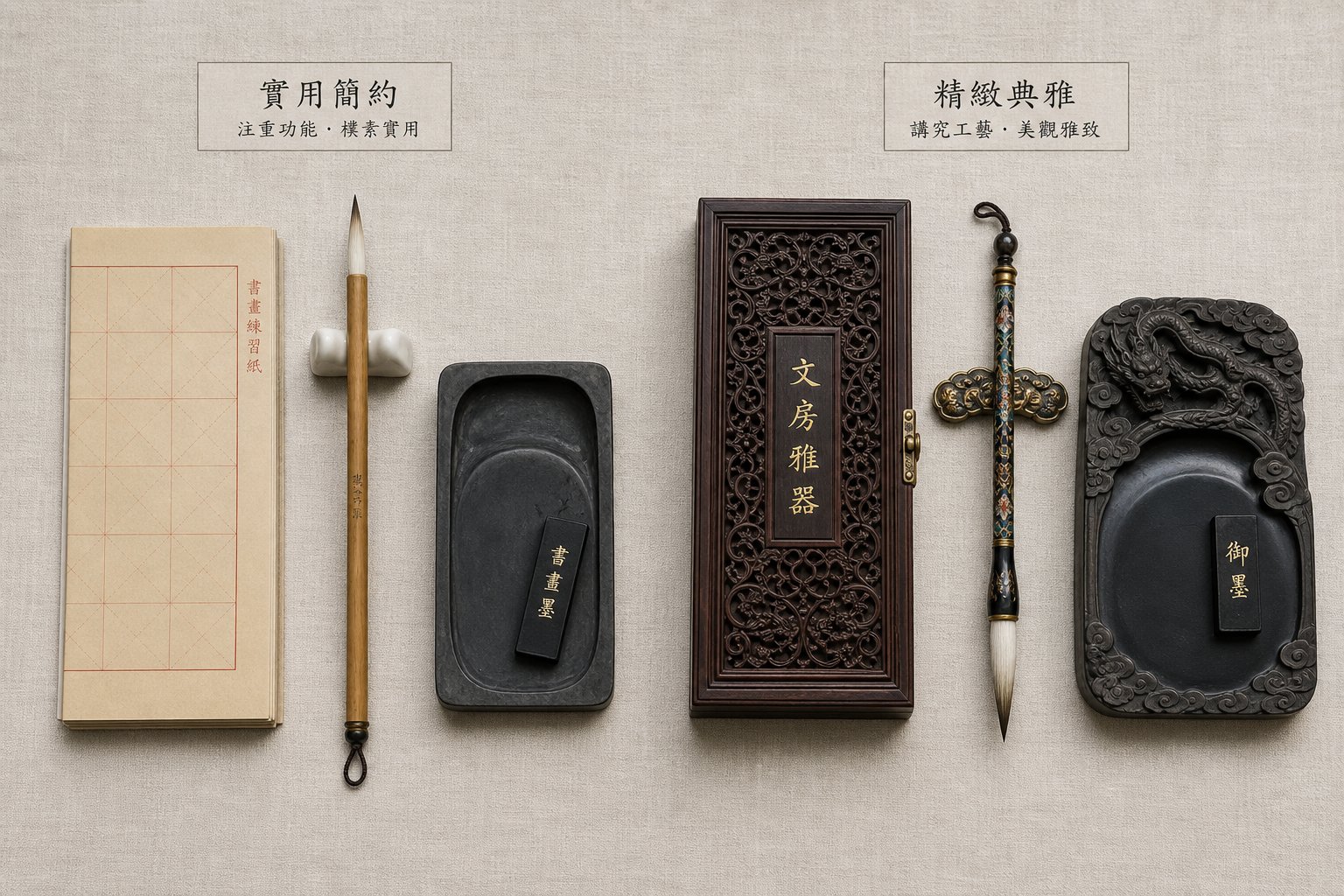
A professional chinese calligraphy set and a beginner one can look nearly identical in photos. Both contain brushes, ink, stone, and paper. Both come in attractive packaging. Yet using an advanced set as your first toolkit is like learning to drive in a race car: the sensitivity that rewards an expert punishes a novice. The real differences hide in the details of each component, and spotting them saves you money and frustration.
What Makes a Set Beginner Appropriate
A beginner chinese calligraphy set is designed around forgiveness. Every component leans toward predictability rather than expressive range. Here is what that looks like in practice:
- Brush stiffness: Beginner sets favor mixed-hair brushes with medium spring. Advanced sets often include pure goat-hair brushes that demand refined wrist control to produce clean edges.
- Ink type: A chinese calligraphy starter set frequently includes bottled liquid ink or a simple ink stick. Advanced practitioners prefer premium ink sticks that require longer grinding and produce subtler tonal gradations, nuances a beginner cannot yet exploit.
- Paper absorbency: Starter sets pair well with semi-sized (half-treated) practice paper or grid sheets. Raw xuan paper, the choice for exhibition work, absorbs ink instantly and punishes hesitation. One slow stroke bleeds into an unrecoverable blot.
- Inkstone quality: Entry-level stones grind ink adequately. High-end Duan or She inkstones produce finer particles and smoother ink, but the difference is imperceptible to someone still learning to hold the brush vertically.
The takeaway? More expensive does not mean better for learning. Premium tools reward precision you have not built yet. The best chinese calligraphy sets for beginners prioritize consistency and control over expressive potential.
Budget Starter vs Mid-Range vs Traditional Sets
Chinese calligraphy sets for beginners fall into three broad categories. This comparison helps you match your budget to your actual needs:
| Set Type | Price Range | Best For | Included Items | Limitations |
|---|---|---|---|---|
| Budget Starter | $15-$35 | Testing interest, casual practice, younger learners | 1-2 mixed-hair brushes, bottled ink or basic ink stick, simple stone, practice paper pad | Brushes may lose shape faster; ink quality is basic; paper quantity is limited |
| Mid-Range Practice | $40-$80 | Committed beginners, regular weekly practice | 2-3 brushes (mixed and wolf hair), quality ink stick, functional inkstone, semi-sized paper, brush rest | Inkstone is serviceable but not heirloom quality; paper selection may be narrow |
| Traditional Complete | $90-$200+ | Serious students, gift sets, cultural appreciation | Multiple brush types and sizes, premium ink stick, carved inkstone, raw xuan paper, accessories | Overkill for first-time users; soft brushes and raw paper frustrate beginners; higher cost raises stakes |
A budget starter set is perfectly adequate for your first three to six months. It lets you build foundational habits without worrying about damaging expensive tools during the inevitable clumsy phase. An authentic chinese calligraphy set in the traditional complete range makes a meaningful purchase later, once your hands know what to do with premium materials.
When to Upgrade Your Set
Upgrading too early wastes money. Upgrading too late holds you back. Look for these signals that your current tools have become the bottleneck:
- Your brush no longer holds a point despite proper cleaning and storage.
- You can consistently produce the eight basic strokes and want finer variation in thickness and tone.
- Practice paper feels limiting because you want to see how your strokes behave on more absorbent surfaces.
- You have developed a preference for a specific brush stiffness and want a higher-quality version of that type.
For most learners, that transition happens somewhere between month four and month eight of regular practice. Until then, the best chinese calligraphy set is simply the one that lets you practice without fighting your tools.
Knowing what level of set suits you is half the battle. The other half is avoiding the purchasing mistakes that lead beginners to shelve their tools within weeks of buying them.
Common Mistakes When Choosing Your First Calligraphy Set
Shelving a brand-new set after two frustrating sessions is more common than most sellers will admit. The problem usually is not lack of talent or motivation. It is a purchasing decision that set you up to struggle before you even ground your first ink. Here are the mistakes that trip up nearly every beginner who decides to buy a chinese calligraphy set without knowing what to watch for.
- Buying too many brushes at once. A set with eight or ten brushes looks impressive, but variety works against you at this stage. Your hand needs repetition with a single tool to build muscle memory. Switching brushes constantly means you never adapt to any of them.
- Choosing a decorative set over a functional one. Ornate packaging and carved handles look beautiful on a shelf. They do not help you write cleaner strokes.
- Overlooking ink quality. Cheap ink produces grainy, inconsistent flow that makes it impossible to tell whether a bad stroke is your fault or the tool's.
- Selecting paper that is too absorbent. Raw xuan paper punishes hesitation instantly. Beginners need semi-sized or grid practice paper that gives them a fraction of a second to adjust.
- Skipping water practice sets entirely. For absolute beginners, a reusable water mat removes the cost and mess of ink while still teaching brush control fundamentals.
Buying Too Many Brushes Too Soon
When you search for a chinese calligraphy set amazon listings often rank multi-brush bundles highest because they photograph well and seem like better value. But more brushes means more variables. Each brush has different stiffness, tip shape, and ink capacity. Jumping between them before mastering basic horizontal and vertical strokes with one brush creates what experienced teachers call "tool confusion," where inconsistent results feel like personal failure rather than a predictable consequence of constant switching.
Stick with one medium mixed-hair brush for your first month. Let your hand learn what consistent pressure feels like on a single tool before expanding your collection.
Decorative Sets vs Functional Practice Sets
A vintage chinese calligraphy set or antique chinese calligraphy set displayed in a lacquered box makes a stunning gift. The problem is that many of these sets prioritize presentation over usability. Brushes may use low-grade hair bundled into decorative handles. Ink sticks might be ornamental reproductions that grind poorly. The inkstone could be too small or too coarse for practical daily use.
A chinese calligraphy gift set is wonderful for someone who already practices and appreciates the aesthetics. For someone learning their first strokes, a plain-looking set with reliable mid-range components will always outperform a beautiful one that frustrates at every turn. Judge by function first, appearance second.
Water Calligraphy Sets as a Starting Alternative
If the idea of grinding ink, managing paper supplies, and cleaning brushes after every session feels overwhelming, a chinese water calligraphy set offers a pressure-free entry point. These sets use a special fabric mat that darkens when wet and dries blank within minutes, letting you practice strokes endlessly without consuming any paper or ink.
A chinese calligraphy set water practice version will not teach you everything. You miss the tactile feedback of real ink density, the way paper absorbs differently depending on speed, and the permanence that forces you to commit to each stroke. But for building basic brush-holding habits and memorizing stroke order, water sets remove every barrier except showing up.
The ideal path for many beginners is starting with a water mat for the first week or two, then transitioning to a traditional ink set once the brush feels natural in your hand. That way, your first real ink strokes already carry some confidence behind them.
Avoiding these mistakes gets the right tools into your hands. The next challenge is knowing exactly what to do with them the moment you open the box.
How to Use a Chinese Calligraphy Set Step by Step
Your set is out of the box. Everything is laid out on the table. How do you use a chinese calligraphy set without ruining your first sheet of paper or damaging a brush? The answer is a repeatable sequence that experienced calligraphers follow every single session. Get this routine right from day one and each practice feels natural rather than chaotic.
Setting Up Your Workspace and Grinding Ink
Your chinese calligraphy set up determines how smoothly the rest of the session flows. A cluttered or poorly arranged workspace introduces small frustrations that compound over thirty minutes of practice. Follow these steps before your brush ever touches paper:
- Clear a flat, stable surface. A kitchen table or desk works fine. Lay your felt mat down first to protect the surface and cushion your strokes.
- Position your tools within easy reach. Inkstone to the upper right (or upper left if left-handed), paper centered on the mat, brush rest beside the stone, and a small dish of clean water nearby.
- Soak your brush. If the brush is new, submerge the bristles in room-temperature water for five to ten minutes to soften the sizing that holds the hairs together during shipping. For subsequent sessions, a quick two-minute soak is enough.
- Add water to the inkstone. Use a dropper or small spoon to place a teaspoon of water into the grinding well. Less is more. You can always add water, but you cannot thicken ink that is already too diluted.
- Grind the ink stick. Hold the stick upright and move it in slow, steady circles against the stone's grinding surface. Maintain light, even pressure. After three to five minutes, the liquid should reach a consistency similar to whole milk: dark, smooth, and free of visible grit.
- Secure your paper. Place paperweights along the top edge to prevent curling. If using grid practice paper, align it squarely so the printed boxes guide your character sizing.
That sequence is your chinese calligraphy set instructions in miniature. Repeat it every session until it becomes automatic. The grinding step alone serves as a built-in warm-up that settles your breathing and focuses your attention before you write a single stroke.
How to Hold the Brush Correctly
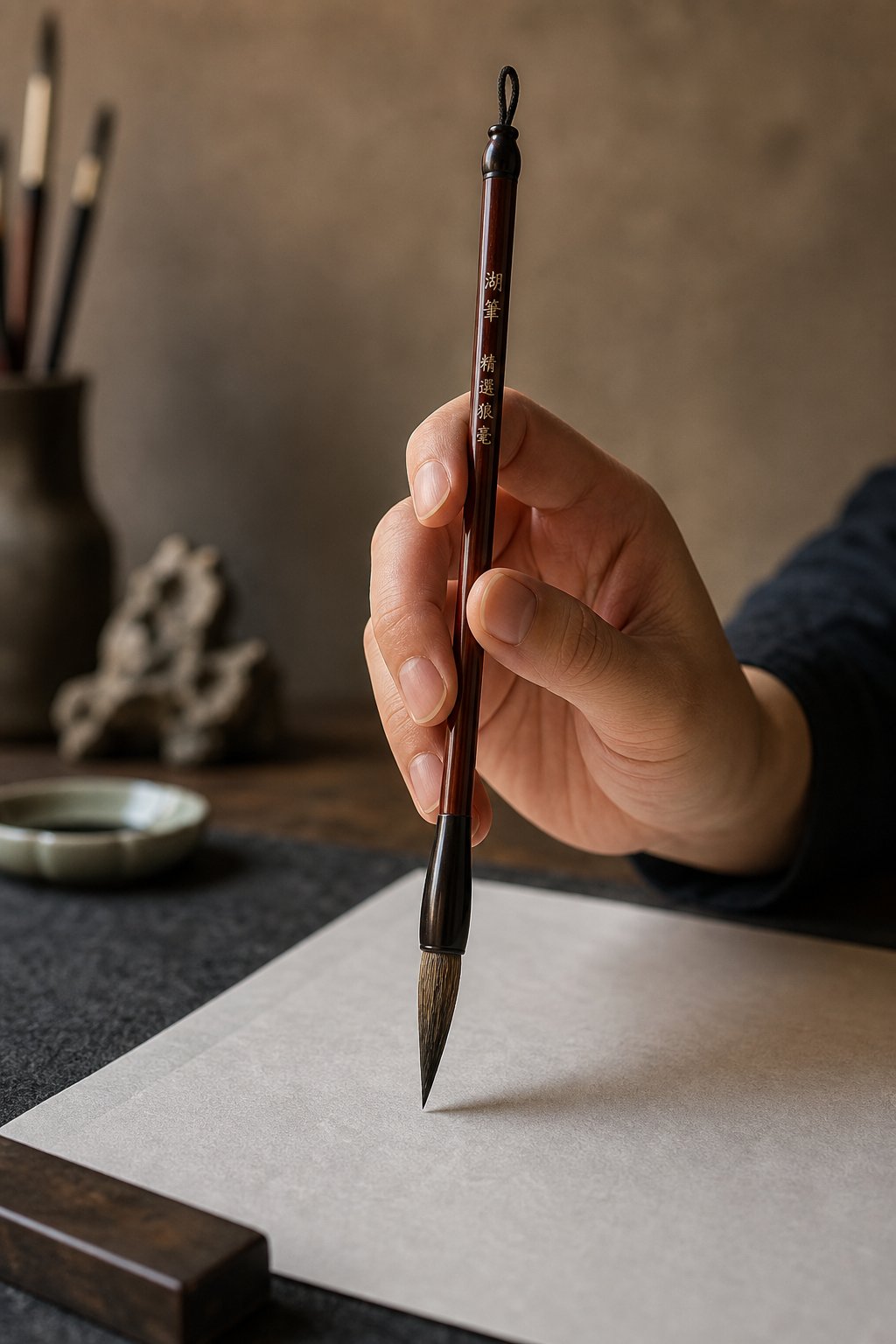
Knowing how to use a chinese calligraphy brush set starts with grip. The brush is held vertically, not at the slanted angle you would use for a pen. This vertical position gives you equal control in all directions, allowing strokes to move left, right, up, or down without rotating your wrist.
Here is the standard five-finger grip:
- Thumb: Presses against the brush handle from the left side, pad facing outward.
- Index finger: Hooks over the handle from the opposite side, working against the thumb to create a stable pinch.
- Middle finger: Rests above the index finger, adding downward control.
- Ring finger: Pushes the handle outward from below, creating a counterbalance.
- Pinky: Supports the ring finger lightly without gripping.
Your palm stays hollow, as if holding a small egg. Fingers do not clamp the handle. The grip is firm enough to control direction but relaxed enough that someone could pull the brush from your hand with a gentle tug. Sit upright with both feet flat on the floor, shoulders relaxed, and your forearm hovering slightly above the table rather than resting on it. This posture lets your whole arm guide larger strokes while your fingers manage fine details.
The Eight Basic Strokes Every Beginner Must Learn
Every Chinese character, no matter how complex, breaks down into a combination of fundamental strokes. The traditional teaching method for these strokes is called the Eight Principles of Yong (永字八法), a system that uses the single character 永 (meaning "eternal") to demonstrate all eight essential movements. The method likely emerged during the Sui and Tang dynasties when regular script flourished, and calligraphy masters developed it to help beginners grasp core techniques through one representative character.
Why 永? Because within its five written strokes, it contains eight distinct brush movements with no repetition. Few characters pack that much variety into so few strokes. Here are the eight principles and what each teaches your hand:
- Ce (侧) - Dot: A tilted press that lands at an angle, like a boulder leaning with weight and presence. Flat dots look lifeless.
- Le (勒) - Horizontal stroke: Drawn with a slight upward slant and controlled tension, like pulling reins tight. A limp horizontal appears weak.
- Nu (弩) - Vertical stroke: Carries internal force like a drawn bow. Slightly curved in appearance but filled with contained strength. Overly rigid verticals resemble dead wood.
- Ti (趯) - Hook: A quick upward release after pressing down to build momentum, like crouching before a jump.
- Ce (策) - Upward flick: A coordinating stroke that angles upward to balance elements on the opposite side of the character.
- Lue (掠) - Long left-falling stroke: A sweeping motion that accelerates gradually, ending light and swift while maintaining force to the tip.
- Zhuo (啄) - Short left-falling stroke: Quick and sharp, like a bird pecking at food. Distinct from the longer falling stroke in speed and brevity.
- Zhe (磔) - Right-falling stroke: An open, stretching movement written with knife-like momentum that gives the character its dynamic energy.
Using your chinese calligraphy set, practice each stroke individually before attempting the full 永 character. Spend an entire sheet on just the horizontal stroke. Then a sheet on the vertical. This isolation builds the specific muscle memory each movement requires. When you eventually combine them into 永, the character will feel like an assembly of familiar parts rather than an overwhelming whole.
The Eight Principles of Yong provide a strong foundation, but as calligraphy scholars have noted for centuries, they do not encompass every technique. They are a starting gate, not a finish line. How to use chinese calligraphy set tools effectively over time depends on consistent daily repetition, and that repetition only stays productive if your tools remain in good working condition between sessions.
Caring for Your Chinese Calligraphy Tools So They Last
A brush that felt responsive last week now splays like a worn broom. The ink grinds unevenly, producing gritty streaks instead of smooth black. Most beginners blame the tools. In reality, poor maintenance is the number one reason people conclude their chinese calligraphy ink set is low quality when the actual problem is neglect between sessions. A few minutes of care after each practice keeps every component performing the way it did on day one.
Cleaning and Storing Your Brushes
Ink dries fast. Once it hardens inside the bristles, hairs bond together permanently and the tip loses its shape. Cleaning immediately after every session is non-negotiable.
- Rinse in room-temperature water. Gently press and release the bristles until the water runs completely clear. Never use hot water as it damages the hair fibers.
- Reshape the tip. Use your fingers to form the bristles back into a natural point while still damp.
- Hang tip-down to dry. A brush rack or hook lets gravity pull residual moisture away from the ferrule. If you do not have a hanger, stand the brush upright in a holder only after it is fully dry.
- Never store a brush lying flat while wet. Trapped moisture weakens the glue binding the hairs and warps the handle over time.
Even an inexpensive brush lasts months of daily use with this routine. Skip it once and you may find the tip permanently stiff by morning.
Caring for Your Inkstone and Ink Stick
Your chinese calligraphy ink stone set needs attention too. Dried ink residue builds up on the grinding surface, creating an uneven texture that produces inconsistent ink density in future sessions.
- Rinse the inkstone after each use. Use clean water and a soft sponge or cloth. Avoid hot water or acidic cleaners as they can damage the stone's surface over time.
- Dry completely before storing. A damp stone left in a closed box encourages mildew and mineral buildup.
- Store in a cool, stable location. Avoid direct sunlight and heat sources, which cause the stone to lose moisture and degrade its grinding performance.
- Never leave the ink stick standing on the stone. Wet ink acts like glue. A stick left upright on the grinding surface will bond to it permanently, potentially damaging both pieces when you try to separate them.
For the ink stick itself, a chinese calligraphy ink stick set stays in good condition when stored in a dry environment away from humidity. Moisture causes cracking, and cracked sticks grind unevenly or break apart during use. Keep your stick in its original box or wrap it in soft cloth between sessions.
Paper Storage and Workspace Maintenance
Paper is the most environmentally sensitive tool in your collection. A chinese calligraphy set water scoop, felt mat, and paperweights all help during practice, but storage habits determine whether your paper remains usable between sessions.
- Store paper flat. Never fold or roll practice sheets. Creases disrupt ink flow and create unpredictable absorption spots.
- Keep paper dry and away from sunlight. Humidity causes warping and changes absorbency. A flat drawer or sealed folder works well.
- Wipe down your workspace after each session. Ink spills and dust on your felt mat transfer to fresh paper, contaminating strokes before you even begin.
These habits take less than five minutes combined. Treat them as the closing ritual of every practice session rather than an optional chore. Your tools will respond with the same consistency tomorrow that they gave you today, and that reliability is what makes structured daily practice possible rather than a guessing game about whether your equipment will cooperate.
Your First 30 Days With a Chinese Calligraphy Writing Set
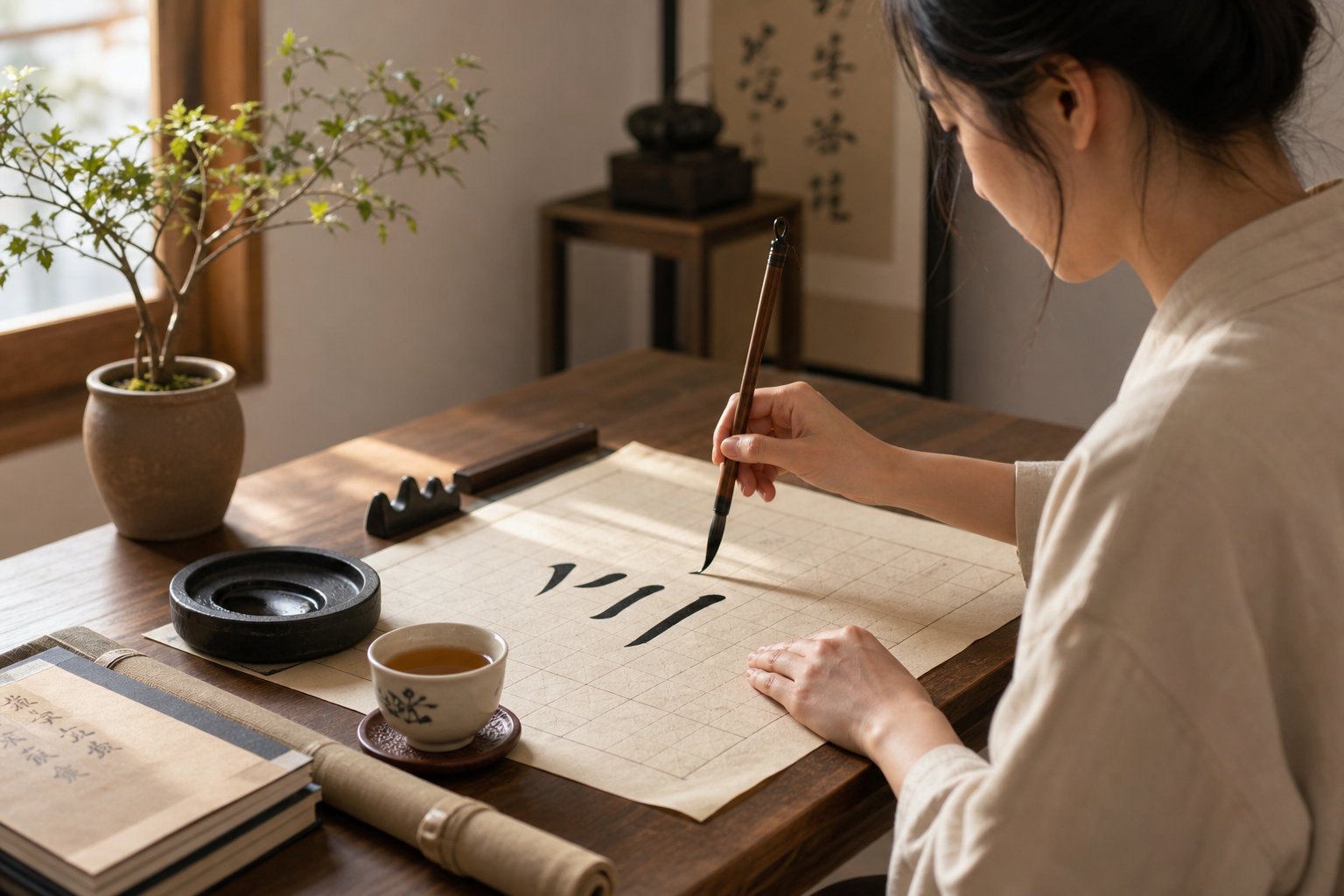
Your tools are clean, your workspace is ready, and your maintenance routine is locked in. The question that separates people who actually learn calligraphy from those who admire their set on a shelf is simple: what do you do each day? A chinese calligraphy writing set without a practice plan is just an expensive desk decoration. The roadmap below turns your purchase into real progress, one week at a time.
Week by Week Practice Plan for New Calligraphers
This plan assumes 20 to 40 minutes of daily practice. You do not need marathon sessions. As the Eastern Stillness beginner practice guide emphasizes, consistency matters far more than duration. Fifteen focused minutes every day beats two hours once a week.
| Week | Focus Area | Strokes/Characters to Practice | Daily Time Commitment |
|---|---|---|---|
| Week 1 | Setup, ink grinding, foundational strokes | Horizontal (横), vertical (竖). Repeat each stroke in rows across full sheets. | 20-30 minutes |
| Week 2 | Expanding stroke vocabulary | Dot (点), hook (钩), turning stroke (折), left-falling stroke (撇), right-falling stroke (捺) | 25-35 minutes |
| Week 3 | Combining strokes into simple characters | 一, 二, 三, 人, 大, 十, 木 | 30-40 minutes |
| Week 4 | Compound characters and personal rhythm | 永, 林, 休, 本. Practice the full 永 character to test all eight strokes together. | 30-40 minutes |
Week 1 feels slow on purpose. You are training your hand to grind ink at the right consistency, hold the brush vertically, and produce two strokes with clean starts and stops. Rushing past this phase is the most common reason beginners feel lost by week three.
Week 2 introduces strokes that require directional changes. The hook, for example, demands a pause and redirection at the bottom of a vertical line. Practice each new stroke in isolation before mixing it with ones you already know.
Week 3 is where the reward hits. Characters like 人 (person) and 大 (big) use only two or three strokes, yet they look and feel like real writing. Grid paper helps here because you can compare proportions against a printed model. A chinese calligraphy book set with copybook templates is especially useful during this phase since it gives you reference characters to trace and imitate.
Week 4 ties everything together. The character 永 (yong) contains all eight basic stroke types, making it the ultimate diagnostic tool. If one stroke within 永 consistently looks weak, you know exactly where to focus your next practice session.
Tailoring Practice to Your Goals
Not everyone picks up a chinese calligraphy writing and brush painting sumi set for the same reason. Your motivation shapes how you spend your practice time:
- Adult hobbyists: Focus on the meditative rhythm. Spend extra time on ink grinding and slow, deliberate strokes. There is no deadline. Let each session be a reset from screen-heavy days.
- Homeschool parents: A children's chinese calligraphy set paired with this four-week plan works well for learners ages eight and up. Shorten sessions to 10-15 minutes for younger children and emphasize the fun of watching ink appear on paper rather than stroke perfection.
- Chinese language students: Use calligraphy practice to reinforce character recognition. Write vocabulary words from your current lesson using proper stroke order. The physical act of brushing each stroke deepens memorization far beyond typing or flashcard review.
- Art enthusiasts: Treat each stroke as a drawing exercise. Pay attention to ink density variation, the taper at the end of a falling stroke, and how speed changes line quality. These observations transfer directly to ink painting and mixed-media work.
If you are unsure which approach fits, search for chinese calligraphy set youtube tutorials that match your interest. Watching someone at your level work through the same weekly progression builds confidence and helps you gauge whether your results are on track.
Building a Sustainable Daily Practice Habit
The biggest threat to progress is not difficulty. It is skipping three days, then feeling too far behind to restart. Here is how to make daily practice stick with your chinese calligraphy sets:
- Anchor it to an existing habit. Practice right after morning coffee or right before bed. Attaching calligraphy to something you already do removes the decision fatigue of finding time.
- Keep your tools accessible. If your set lives in a closet, setup friction wins on tired days. A dedicated corner with your mat, stone, and brush already in place cuts startup time to under two minutes.
- Set a minimum, not a target. On low-energy days, commit to five minutes. Just grind ink and write ten strokes. Most sessions naturally extend once the brush is moving, but even if they do not, five minutes maintains the chain.
- Track visually. Keep finished practice sheets in a folder. Flipping from week one to week four shows progress that feels invisible day to day.
A chinese calligraphy pen set or marker-based tool can serve as a travel backup for days when grinding ink is not practical. The strokes are not identical, but maintaining brush-holding posture and stroke order keeps muscle memory active between full sessions.
Thirty days will not make you a master. But thirty days of structured, daily contact with your tools builds something more important than skill: it builds identity. You stop being someone who bought a calligraphy set and become someone who practices calligraphy. That shift is what carries you into month two, month six, and beyond.
Frequently Asked Questions About Chinese Calligraphy Sets for Beginners
1. What should be included in a Chinese calligraphy set for beginners?
A beginner set should include the Four Treasures of the Study: a mixed-hair brush (ideally medium-sized), an ink stick or bottled ink, an inkstone with a smooth grinding surface, and semi-sized practice paper or grid sheets. Many sets also include a brush rest and felt mat, though you may need to purchase these separately. Look for sets that prioritize functional quality over decorative packaging, as reliable mid-range components support learning far better than ornamental pieces.
2. How do you use a Chinese calligraphy set for the first time?
Start by soaking your new brush in room-temperature water for five to ten minutes to soften the sizing. Lay a felt mat on a flat surface, position your inkstone nearby, and add a teaspoon of water to the grinding well. Grind the ink stick in slow circles for three to five minutes until the liquid reaches a smooth, milk-like consistency. Hold the brush vertically using the five-finger grip with a hollow palm, sit upright, and begin practicing basic horizontal and vertical strokes on grid paper.
3. Which brush type is best for calligraphy beginners?
Mixed-hair brushes (jianhao) are the best choice for beginners. They combine stiff fibers in the core with softer goat hair on the outside, providing moderate spring and a forgiving response that does not punish small errors in pressure or angle. Pure wolf-hair brushes demand precise hand control, while pure goat-hair brushes offer almost no resistance, making both types frustrating for new learners. A single medium-sized mixed-hair brush is all you need for your first several months of practice.
4. How much should a beginner spend on a Chinese calligraphy set?
A budget starter set in the $15 to $35 range is perfectly adequate for your first three to six months of practice. These sets typically include one or two mixed-hair brushes, basic ink, a simple stone, and practice paper. Mid-range sets ($40 to $80) suit committed beginners who plan to practice weekly. Traditional complete sets above $90 are best reserved for after you have built foundational skills, since premium tools reward precision that new learners have not yet developed.
5. How do you clean and maintain Chinese calligraphy brushes?
Rinse your brush in room-temperature water immediately after every session, gently pressing and releasing the bristles until the water runs completely clear. Never use hot water as it damages hair fibers. Reshape the tip with your fingers while damp, then hang the brush tip-down on a rack to dry. Never store a brush lying flat while wet, as trapped moisture weakens the glue and warps the handle. With this routine, even an inexpensive brush can last months of daily use.