How Chinese Last Names Carry Thousands of Years of History
Imagine carrying a piece of history older than the Roman Empire every time you introduce yourself. That's exactly what happens with Chinese last names. These surnames rank among the oldest continuous naming traditions on Earth, with some tracing back over 4,000 years to ancient clan systems. A single character, sometimes just a few brushstrokes, holds layers of meaning tied to geography, occupation, royalty, and kinship.
Understanding chinese last name meanings starts with one fundamental difference from Western names: the surname in Chinese always comes first. Where English speakers say "John Smith," Chinese speakers say the equivalent of "Smith John." This isn't arbitrary. It reflects a deep cultural priority: family identity precedes individual identity. The chinese name order places lineage before self, signaling that you belong to something larger before you are someone specific.
Why Chinese Surnames Come First
When you encounter first name and last name for chinese names, the structure flips what most English speakers expect. The family name (姓 xing) leads, followed by the given name (名 ming). This ordering mirrors Confucian values that have shaped Chinese society for millennia. Family, heritage, and collective belonging come before personal distinction. Siblings share the surname prominently at the front, reinforcing their bond as a unit. In professional and social contexts across China, people are often addressed by surname first, sometimes with a title attached, making the family name the primary social identifier.
The Ancient Split Between Xing and Shi
Here's where chinese surnames get fascinating. In ancient China, people didn't carry just one surname. They had two layers of family identity: the 姓 (xing), a broad clan name representing deep ancestral bloodlines, and the 氏 (shi), a narrower branch name identifying a specific family within that clan. Think of xing as the trunk of a tree and shi as individual branches. The xing connected you to a vast, sometimes semi-mythical ancestor. The shi, by contrast, had a more precise and traceable lineage tied to land, titles, or official roles.
These two systems coexisted for centuries, each serving different social functions. The xing regulated marriage, preventing unions between people of the same clan. The shi marked social rank and political allegiance. During the Warring States period (481-221 BCE), the boundaries between xing and shi began to blur as social hierarchies shifted.
When Emperor Qin Shi Huang unified China in 221 BCE, his sweeping standardization of writing, measurement, and governance also collapsed the dual-surname system into one. The merged result became the modern chinese last name as we know it today.
By the end of the Western Han Dynasty, chinese family names had spread to all social classes, no longer reserved for nobility. Ordinary people carried surnames that once belonged exclusively to aristocratic clans. This democratization of naming created the vast surname landscape that still defines Chinese identity, where roughly 6,000 surnames serve over a billion people. The origins behind those names, however, vary wildly depending on how each surname first came into existence.
Five Origin Types Behind Every Chinese Surname
Not all chinese surnames and meanings trace back to the same source. Some were born from kingdoms that rose and fell thousands of years ago. Others emerged from job titles, royal decrees, or the blending of cultures across China's borders. Understanding the meaning of chinese last names requires sorting them into distinct origin categories, each with its own logic and historical context.
Broadly, chinese surname meanings fall into five major types: territorial (from ancient states and fiefdoms), occupational (from official roles), imperial grant (bestowed by emperors), ethnic integration (adopted during cultural assimilation), and place-based (from geographic features or residences). Once you know which category a surname belongs to, its deeper story starts to unfold.
Surnames Born from Ancient Kingdoms and Fiefdoms
During the Zhou Dynasty (1046-256 BCE), China was divided into vassal states, each ruled by noble families. When these states eventually collapsed, their names lived on as surnames carried by descendants and former residents. This is one of the richest sources of ancient chinese last names still in use today.
Consider 陈 (Chen), which traces directly to the State of Chen, a Zhou Dynasty vassal in present-day Henan Province. Similarly, 宋 (Song) descends from the State of Song, and 鲁 (Lu) from the State of Lu, the homeland of Confucius. The surnames 郑 (Zheng), 吴 (Wu), and 赵 (Zhao) all follow this same pattern. According to FamilySearch, familiar vassal states from the Spring and Autumn and Warring States periods, including Qi, Lu, Jin, Song, Zheng, Qin, Chu, Wei, Han, Zhao, Wei, Yan, Chen, Cai, Cao, Hu, and Xu, all became common surnames that persist today. Nearly 200 surnames originated from fiefdoms alone.
Occupational and Imperial Grant Surnames
Some ancient chinese names didn't come from places but from what people did. Official titles in ancient courts became hereditary surnames passed down through generations. The surname 司马 (Sima) literally means "master of horses," referring to a high-ranking military official who oversaw cavalry. 司徒 (Situ) translates to "minister of education," while other role-based surnames like 卜 (Bu, divination), 陶 (Tao, pottery), and 屠 (Tu, butcher) reflect humbler trades.
Imperial grants represent a different path entirely. Emperors sometimes bestowed surnames on loyal subjects, foreign dignitaries, or conquered peoples as a mark of favor or control. During the Ming Dynasty, Emperor Zhu Yuanzhang granted the surname 安 (An, meaning "content with their lot") to Mongol leaders who submitted to Ming rule. These granted surnames carried political weight, binding recipients to the dynasty's identity.
Surnames from Ethnic Integration
China's surname pool expanded dramatically through centuries of ethnic assimilation. Non-Han peoples, including Xianbei, Manchu, Hui, Mongol, and Central Asian groups, adopted Chinese surnames during periods of cultural integration. The Northern Wei Emperor Xiaowen's Sinicization reforms in the 5th century CE converted hundreds of Xianbei clan names into single-character Chinese surnames. The ancient last names of these groups were often multi-syllable, compressed into one or two characters to fit Han naming conventions.
The surname 安 (An) alone illustrates this diversity. It was adopted by Parthian royalty who traveled the Silk Road, Xianbei tribespeople during the Northern and Southern Dynasties, Hui Muslims whose Arabic names sounded similar, and even Russian prisoners of war during the Qing Dynasty. One character, multiple ethnic threads woven together over centuries.
| Character | Pinyin | Meaning | Origin Type |
|---|---|---|---|
| 陈 | Chen | State of Chen | Territorial (Zhou vassal state) |
| 宋 | Song | State of Song | Territorial (Zhou vassal state) |
| 鲁 | Lu | State of Lu | Territorial (Zhou vassal state) |
| 司马 | Sima | Master of horses | Occupational (military title) |
| 司徒 | Situ | Minister of education | Occupational (official role) |
| 陶 | Tao | Pottery | Occupational (trade) |
| 安 | An | Peace / contentment | Imperial grant / Ethnic integration |
| 欧阳 | Ouyang | South of Mount Ou | Place-based (geographic feature) |
| 裴 | Pei | Township of Pei | Place-based (township name) |
| 康 | Kang | Kangju (Central Asian state) | Ethnic integration (Sogdian) |
These five origin types show that chinese family names and meanings are never one-dimensional. A single surname can encode geography, politics, profession, or the collision of entire civilizations. The real depth, though, emerges when you break individual characters apart and examine what each radical and stroke originally meant.
The Most Common Chinese Last Names Decoded
Knowing a surname's origin category is one thing. Pulling a character apart stroke by stroke to reveal what it actually means is something else entirely. The most common chinese last names aren't just labels. Each one is a miniature story compressed into a single character, built from radicals that carry their own independent meanings.
What follows is a deeper look at the most popular chinese last names through three lenses: what the character literally means, how it became a surname, and what cultural weight it still carries. You'll notice that even the simplest-looking characters hide surprising complexity.
Wang, Li, and Zhang — The Big Three Explained
These three surnames alone account for roughly 300 million people. If you learn just these characters, you can already address about 20% of China's population.
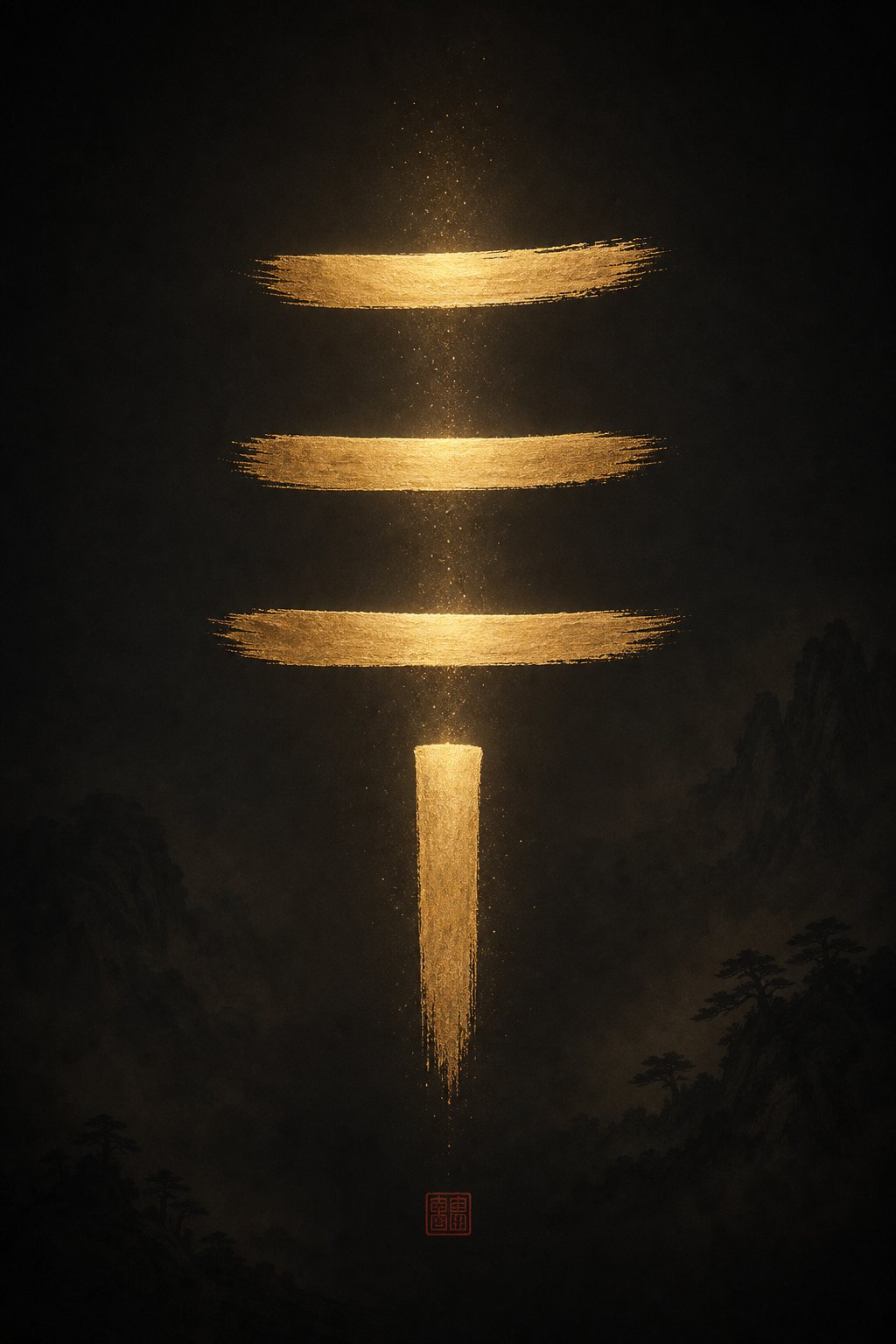
王 (Wang) — King. The wang last name origin is rooted in ancient cosmology. Look at the character: three horizontal strokes connected by one vertical line. Those three horizontals represent heaven (top), humanity (middle), and earth (bottom). The vertical stroke is the ruler who connects all three realms. The character literally depicts the concept of kingship. Historically, descendants of the royal Zhou Dynasty house and other noble families adopted Wang as their surname when their kingdoms fell. With approximately 100 million bearers, it consistently ranks as the most common chinese last name.
李 (Li) — Plum tree. This character splits cleanly into two components: 木 (mu, wood/tree) on top and 子 (zi, child/seed) on the bottom. Wood plus child equals the plum tree, a plant that produces fruit even in harsh winter conditions. The surname gained massive reach as the imperial family name of the Tang Dynasty (618-907 CE), one of China's most culturally prosperous eras. Emperor Li Yuan's clan spread the name through grants and adoption, pushing it to rival Wang for the top spot.
张 (Zhang) — To stretch a bow. The left side is 弓 (gong, bow) and the right side is 长 (chang, long). Together they evoke the image of drawing a longbow to full extension. Legend traces this surname to Huangdi's grandson Zhang Hui, credited with inventing the bow and arrow. The character also carries a secondary meaning of "to open" or "to expand," giving it connotations of ambition and reach. Around 95 million people carry this surname.
Chen, Liu, and Yang — Characters with Hidden Stories
陈 (Chen) — Ancient state / to display. The left radical 阝 derives from a mound or hill, commonly appearing in place-related characters. The right component 东 means "east." As a surname, Chen traces to the State of Chen in present-day Henan Province. After the state's fall, its people carried the name forward. The character's verb meaning, "to arrange" or "to lay out," adds a layer of formality and order to its cultural feel.
刘 (Liu) — To kill / battle axe. The liu last name origin surprises most people. The character's ancient form depicted a weapon, combining elements related to 文 (wen, pattern/culture) on the left and 刂 (dao, knife/blade) on the right. Despite this martial etymology, the surname became synonymous with imperial prestige through Liu Bang, who founded the Han Dynasty in 202 BCE. The Han Dynasty lasted over 400 years and shaped Chinese civilization so profoundly that the dominant ethnic group still calls itself "Han." Sixty-six emperors bearing the Liu surname ruled across multiple dynasties, collectively spanning over 650 years of Chinese history.
杨 (Yang) — Poplar tree. The left side is 木 (mu, wood), and the right component 昜 relates to the sun rising. Poplar trees grow tall and straight, reaching toward sunlight, which gives this surname connotations of upward growth and vitality. The Yang clan rose to prominence during the Sui and Tang dynasties, and the surname remains among the most common chinese surnames with approximately 40 million bearers.
| Character | Pinyin | Literal Meaning | Radical Breakdown | Historical Origin |
|---|---|---|---|---|
| 王 | Wang | King / monarch | Three horizontals (heaven, humanity, earth) + vertical (ruler) | Descendants of Zhou Dynasty royalty and nobility |
| 李 | Li | Plum tree | 木 (wood) + 子 (child) | Tang Dynasty imperial surname (618-907 CE) |
| 张 | Zhang | To stretch a bow | 弓 (bow) + 长 (long) | Attributed to the inventor of the bow and arrow |
| 刘 | Liu | Battle axe / to kill | 文 (pattern) + 刂 (knife) | Han Dynasty imperial surname (202 BCE-220 CE) |
| 陈 | Chen | To display / ancient state | 阝 (mound) + 东 (east) | State of Chen in Zhou Dynasty Henan |
| 杨 | Yang | Poplar tree | 木 (wood) + 昜 (sun rising) | Prominent during Sui and Tang dynasties |
| 赵 | Zhao | Ancient kingdom | 走 (walk/run) + 肖 (resemble) | State of Zhao, one of the Seven Warring States |
| 黄 | Huang | Yellow | Pictographic (field + light) | Linked to the Yellow Emperor and imperial color |
| 周 | Zhou | Circumference / cycle | Enclosure with 土 (earth) + 口 (mouth) | Zhou Dynasty (1046-256 BCE), longest-ruling dynasty |
| 吴 | Wu | Loud / ancient kingdom | 口 (mouth) + 天 (heaven) | State of Wu in the Yangtze River Delta region |
What stands out across these most common chinese surnames is a pattern: the characters that dominate China's population almost always connect to dynastic power, ancient states, or nature. They survived because the families behind them once held political influence, controlled territory, or multiplied under imperial favor. Yet not all Chinese surnames fit neatly into single characters. Some require two characters to tell their full story, and those compound surnames carry a distinct cultural weight of their own.
Compound Surnames That Tell a Deeper Story
Most entries on any chinese surnames list are single characters. One syllable, one meaning, one brushstroke composition. But scattered among them are two-character surnames, known as 复姓 (fuxing), that break the pattern entirely. These compound surnames often signal aristocratic lineage, ancient official titles, or geographic origins that required more than one character to express. In ancient times, China had over 1,000 compound surnames. Fewer than 100 remain in active use today.
So why do most Chinese surnames use a single character while these outliers need two? The answer lies in how chinese names and characters evolved together. Single-character surnames emerged from a system that prized brevity and efficiency, especially after the Qin Dynasty's standardization. Compound surnames, by contrast, preserved longer-form identifiers from official titles, place descriptions, or ethnic clan names that resisted compression. They survived precisely because their bearers held enough social status to maintain the longer form.
Famous Compound Surnames and Their Origins
Each compound surname on the list of chinese surnames carries a specific origin story, often tied to power, territory, or bureaucratic rank. These weren't names ordinary people adopted. They were markers of position.
- 欧阳 (Ouyang) — Means "south of Mount Ou." Derived from a geographic location in the ancient State of Yue. Currently China's most-used compound surname, with over 1.1 million bearers. Famous bearer: Ouyang Xiu, the celebrated Song Dynasty poet and statesman.
- 司马 (Sima) — Means "master of horses," an ancient military title overseeing cavalry operations. Famous bearer: Sima Qian, the Han Dynasty historian who wrote the Records of the Grand Historian.
- 诸葛 (Zhuge) — Derived from the Zhuge clan territory. Famous bearer: Zhuge Liang, the legendary strategist of the Three Kingdoms period, whose name remains synonymous with brilliance.
- 上官 (Shangguan) — Means "upper official," indicating ancestors who held senior government positions. Currently the second most popular compound surname with approximately 88,000 bearers.
- 东方 (Dongfang) — Means "the East" or "eastern direction." Carries literary and philosophical connotations tied to sunrise and renewal.
- 皇甫 (Huangfu) — Combines "imperial" and "assistant," pointing to royal chinese surnames with direct court connections.
- 令狐 (Linghu) — Derived from a place name in present-day Shanxi Province. Widely recognized through wuxia fiction character Linghu Chong.
You'll notice a pattern: these ancient chinese surnames almost always trace to either official titles, geographic descriptions, or noble lineage. They functioned as status markers in a way that single-character surnames did not.
Why Compound Surnames Are Increasingly Rare
China once had over a thousand compound surnames. The decline happened gradually through several pressures. Some families simplified their names by dropping one character. Ouyang, for instance, split into separate Ou and Yang lines over generations. Others disappeared because Chinese families traditionally inherit the father's surname, and when compound-surnamed women married into single-surname families, their names vanished within a generation. One compound surname, Xushi, reportedly has only one living inheritor remaining.
A countertrend has emerged in recent years. Some parents now combine both their single-character surnames to create new compound surnames for their children. Research suggests this practice is more common in modernized cities and among well-educated mothers, reflecting shifting attitudes about gender equality rather than lineage preservation. It's a contemporary reinvention of an ancient surnames tradition, though these newly created combinations lack the historical depth of surnames like Sima or Zhuge.
Whether ancient or newly coined, compound surnames occupy a unique space in any chinese surname list. They carry a poetic, almost literary quality that single characters cannot replicate. That cultural resonance helps explain why they appear so frequently in historical novels and period dramas, keeping these rare names alive in the popular imagination even as their real-world numbers shrink. Their rarity, though, raises a broader question: among the thousands of surnames that do survive, which ones carry the most cultural weight, and who decided their ranking?
The Baijiaxing Poem and Cultural Weight of Surname Ranking
If compound surnames carry aristocratic weight, then the question of which surname ranks first carries political weight. For over a thousand years, one document has shaped how Chinese people think about surname hierarchy: the Baijiaxing (百家姓), or Hundred Family Surnames. Written during the Northern Song Dynasty in the 10th century, this text listed 438 known surnames in China at the time, arranged as a rhyming poem designed for children to memorize. But the ordering was never random. It was a political statement disguised as a schoolbook.
Zhao, Qian, Sun, Li; Zhou, Wu, Zheng, Wang — the opening line of the Baijiaxing places the Song Dynasty imperial surname first, followed by the surnames of other powerful families of the era.
Why does Zhao (赵) lead the list? It wasn't the most common surname in China then, and it isn't now. Zhao held the top position because it was the imperial surname of the Song Dynasty rulers when the poem was compiled. The next several surnames — Qian, Sun, Li — also appear to reflect other important political figures of that period. In other words, the most common last names in china were never the organizing principle. Power was.
The Baijiaxing Poem and Its Political Origins
The poem's genius lies in its structure. By arranging surnames into four-character lines with tonal patterns, it became easy to chant and memorize. Generations of schoolchildren recited it the way Western students might learn the alphabet. This oral repetition preserved surname knowledge across centuries, even among people who couldn't read. According to YellowBridge's analysis, the surnames listed in the Baijiaxing still account for 90% of all surnames in china today, and the top ten surnames alone cover 40% of the population.
The contrast between the poem's political ordering and actual population data is striking. Wang (王) ranks first by population with over 101 million bearers, yet it sits in eighth position in the Baijiaxing's opening line. Zhao, the poem's leader, ranks only eighth by actual population. Here's how the most common surnames in china stack up against their Baijiaxing placement:
- Wang (王) — Population rank: #1 (101.8 million) | Baijiaxing position: #8
- Li (李) — Population rank: #2 (101.4 million) | Baijiaxing position: #4
- Zhang (张) — Population rank: #3 (95.8 million) | Baijiaxing position: #24
- Liu (刘) — Population rank: #4 (68.8 million) | Baijiaxing position: #252
- Chen (陈) — Population rank: #5 (56.7 million) | Baijiaxing position: #10
- Yang (杨) — Population rank: #6 (39.6 million) | Baijiaxing position: #16
- Huang (黄) — Population rank: #7 (28.8 million) | Baijiaxing position: #96
- Zhao (赵) — Population rank: #8 (27.0 million) | Baijiaxing position: #1
- Wu (吴) — Population rank: #9 (25.1 million) | Baijiaxing position: #6
- Zhou (周) — Population rank: #10 (23.8 million) | Baijiaxing position: #5
The mismatch tells a story. Surnames china's imperial families carried received pride of place regardless of how many people bore them. The most common surname in china — Wang — was politically important but not the ruling house, so it sat behind Zhao in the poem's hierarchy.
Ancestral Halls and Genealogy Books
The Baijiaxing was just one piece of a larger cultural infrastructure built around surnames. Across China, clans maintained 祠堂 (citang, ancestral halls) — physical buildings where members gathered for ceremonies, settled disputes, and reinforced their shared identity. These halls served as living archives, housing genealogy records and ancestral tablets that connected the present to the distant past.
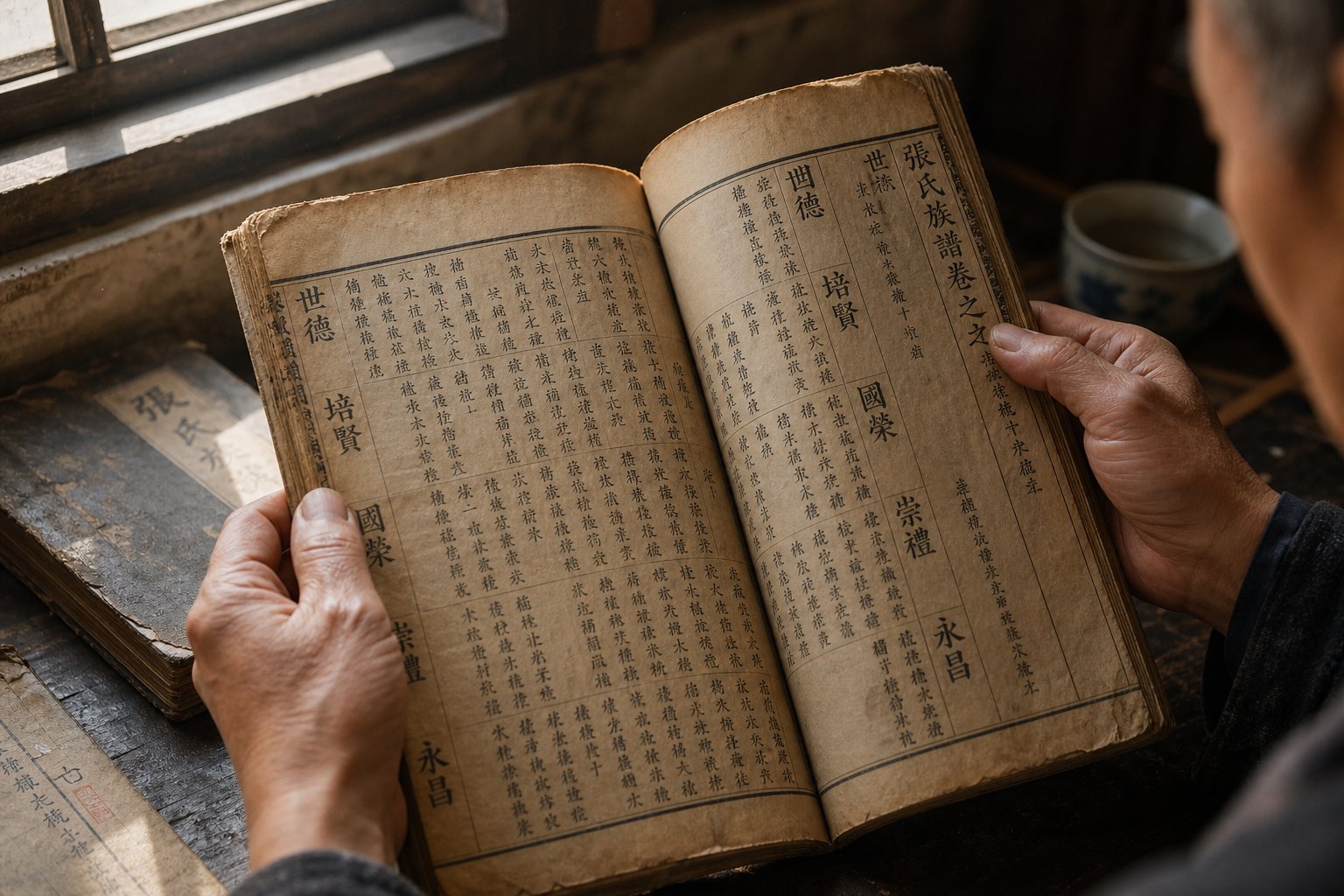
The most important document kept in these halls was the 族谱 (zupu, genealogy book). These records trace lineage across centuries, sometimes spanning hundreds of generations. My China Roots has collected over 15,000 of these records, with some dating back to the late Ming Dynasty (mid-1600s). A single zupu can run thousands of pages — the Taishan Li Clan Zupu, for example, spans seven volumes and 8,000 pages.
Within these genealogy books, you'll find something called 字辈 (zibei) — generational names. These are predetermined characters assigned to each generation, so that cousins, siblings, and relatives of the same generation all share one character in their given name. A generation poem (派字歌) dictates which character belongs to which generation, creating a naming pattern that can stretch across 20 or 30 generations into the future. When two strangers share a surname and discover they share the same generational character, they can immediately identify their relative position in the family tree.
Many zupus were destroyed during the Cultural Revolution (1966-1976), when campaigns against the "Four Olds" targeted ancestral halls, genealogy books, and tombstones. Yet families went to extraordinary lengths to preserve them — burying books underground, shipping them to relatives abroad, or reconstructing entire records from memory in the 1980s. That determination speaks to how deeply the most common last name china families carry isn't just a word. It's a living system of identity, maintained through physical spaces, written records, and naming conventions that bind generations together.
This cultural infrastructure also explains something puzzling about Chinese surnames in the global diaspora: why the same character produces completely different spellings depending on where a family settled and which dialect they spoke.
Why Chen, Chan, Tan, and Chin Are the Same Surname
Imagine two people named Chan and Tan meeting at a conference. They look at each other's name badges and assume no connection. But both carry the exact same surname character: 陈. The difference? One family emigrated from Guangdong Province speaking Cantonese. The other left Fujian Province speaking Hokkien. Same character, same meaning, completely different spelling once converted into the Roman alphabet.
This is one of the most confusing aspects of Chinese surnames for outsiders, and even for members of the diaspora themselves. Because Chinese is written in characters rather than letters, every romanized spelling is a phonetic approximation. And since China has hundreds of regional dialects, each with distinct pronunciations, a single character can produce half a dozen different-looking surnames depending on which dialect a family spoke when they first registered their name in a Western system.
One Character, Many Spellings Across Dialects
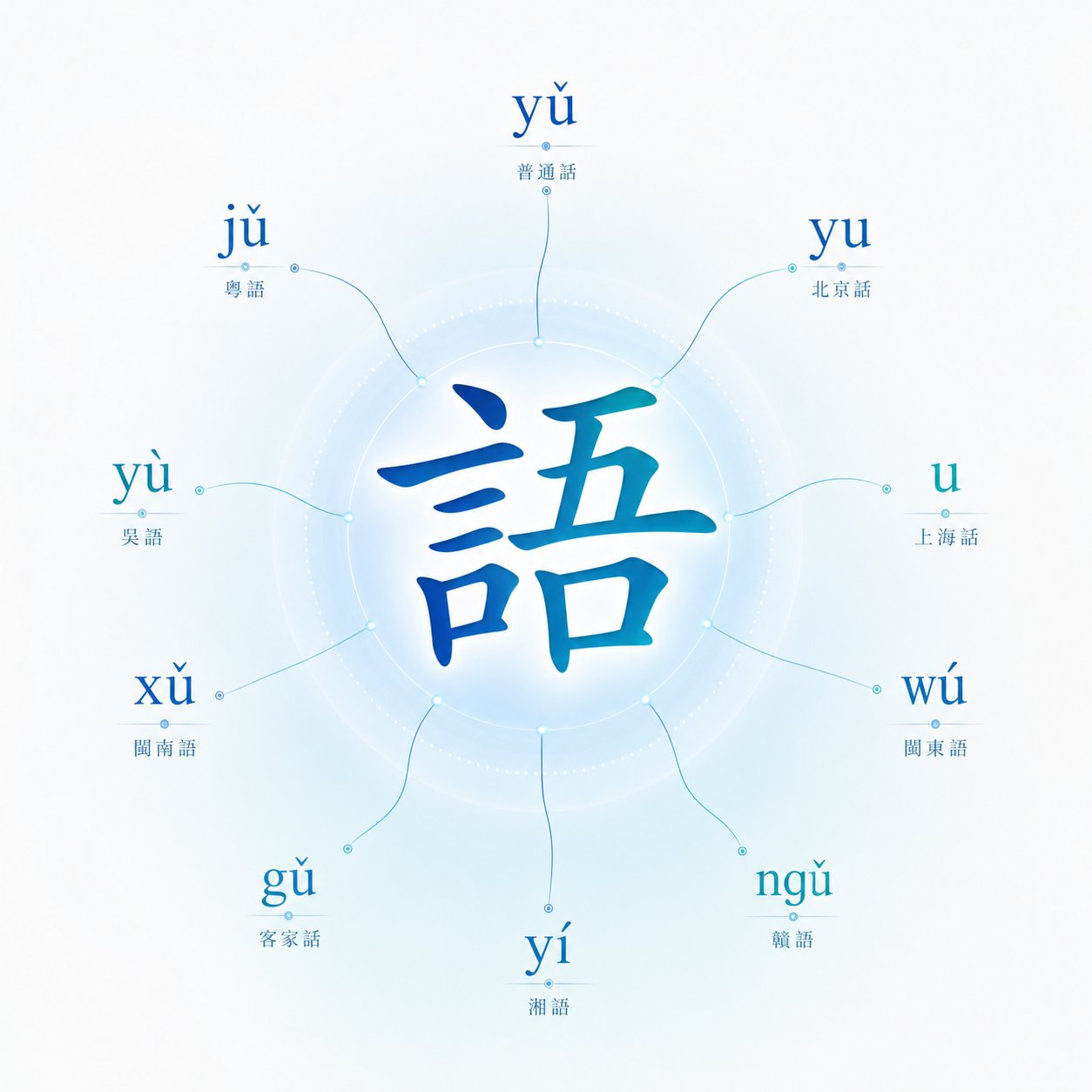
Take 陈 as the clearest example. In Mandarin pinyin, it's Chen. In Cantonese, it becomes Chan. Hokkien speakers say Tan. Hakka speakers render it as Chin. All four spellings represent the same ancient surname tracing back to the State of Chen. The character hasn't changed. Only the sound has, filtered through regional languages that evolved independently over centuries.
This pattern repeats across nearly every common surname. The character 王 (king) is Wang in Mandarin but Wong in Cantonese and Ong in Hokkien and Heng in Teochew. The character 林 (forest) becomes Lin in Mandarin, Lam in Cantonese, and Lim in Hokkien. Even 李 (plum tree) splits into Li, Lee, and Lei depending on dialect and romanization system. You'll notice that cantonese surnames tend to look and sound quite different from their Mandarin equivalents, often shorter or ending in different consonants.
The romanization system itself adds another layer of variation. Mainland China standardized on Hanyu Pinyin in the 1950s, but Hong Kong, Macao, and Taiwan each developed their own systems based on local pronunciation. That's why hong kong last names like Cheung, Lau, and Leung look nothing like their pinyin counterparts Zhang, Liu, and Liang, even though they represent the same characters. Similarly, taiwan last names often follow Wade-Giles or other older romanization systems, producing spellings like Tsai instead of Cai, or Hsieh instead of Xie.
| Character | Mandarin (Pinyin) | Cantonese | Hokkien | Common Regions |
|---|---|---|---|---|
| 陈 (陳) | Chen | Chan | Tan | Chan: Hong Kong, Macau | Tan: Singapore, Malaysia, Philippines |
| 王 | Wang | Wong | Ong / Heng | Wong: Hong Kong, North America | Ong: Southeast Asia |
| 林 | Lin | Lam | Lim | Lam: Hong Kong | Lim: Singapore, Malaysia, Indonesia |
| 李 | Li | Lee / Lei | Lee / Li | Lee: widespread globally across all dialect groups |
| 黄 | Huang | Wong | Ng / Ooi | Wong: Hong Kong | Ng: Singapore | Ooi: Malaysia |
| 张 (張) | Zhang | Cheung | Teo / Teoh | Cheung: Hong Kong | Teo: Singapore, Malaysia |
| 刘 (劉) | Liu | Lau | Low / Lau | Lau: Hong Kong, Macau | Low: Malaysia |
| 吴 (吳) | Wu | Ng | Goh | Ng: Hong Kong | Goh: Singapore, Malaysia |
Regional Surname Patterns in the Chinese Diaspora
The spelling of a Chinese surname often reveals exactly where a family's migration story began. Walk through an older Chinatown in San Francisco, Vancouver, or Sydney, and you'll see cantonese last names everywhere: Wong, Chan, Lee, Lau, Cheung. This isn't coincidence. The earliest waves of Chinese immigration to North America, Australia, and Europe came overwhelmingly from Guangdong Province in the 19th and early 20th centuries. These Cantonese-speaking migrants established the naming conventions that still dominate Western perceptions of Chinese surnames.
Southeast Asia tells a different story. In Singapore, Malaysia, Indonesia, and the Philippines, Hokkien and Teochew speakers arrived in large numbers, bringing their own pronunciations. That's why singaporean last names like Tan, Lim, Goh, and Ong are so prevalent in the region. A person surnamed Tan in Singapore and a person surnamed Chan in Hong Kong likely share the same ancestral character 陈, but their families left China from different ports speaking different dialects.
Surnames in taiwan present yet another variation. Taiwan's romanization historically followed the Wade-Giles system rather than pinyin, producing taiwanese last names like Tseng (曾, Zeng in pinyin), Hsu (许, Xu in pinyin), and Chiang (蒋, Jiang in pinyin). Even common taiwanese surnames that look similar to pinyin, like Lin or Chen, may carry slightly different pronunciation markers in official documents. The island's unique linguistic landscape, blending Mandarin, Hokkien (known locally as Taiwanese), and Hakka, means that the same family might spell their name differently depending on which generation registered it and in what context.
This dialect-driven fragmentation has real consequences. Family members separated by migration can carry surnames that look completely unrelated on paper. A Wong in San Francisco, an Ong in Jakarta, and a Wang in Beijing might all descend from the same ancestral village. Recognizing these connections requires looking past the Roman letters to the character underneath, where the shared meaning and origin remain intact regardless of how the name sounds when spoken aloud. That hidden unity beneath surface-level difference is part of what makes Chinese surname meanings so layered, and it extends even to surnames that seem unusual or rare.
Rare and Powerful Chinese Surnames Worth Knowing
Beyond the Wangs, Lis, and Zhangs that dominate population statistics, China's surname landscape includes characters that evoke thunder, dragons, and martial force. These rare chinese last names fascinate precisely because they break the pattern. While the most common surnames tend to reference nature, geography, or ancient states, a smaller set of surnames that mean power carry visceral, almost mythic energy. They're uncommon not because they lack appeal, but because their origins were narrower — tied to specific clans, military roles, or legendary figures rather than sprawling dynasties.
Surnames That Carry Meanings of Power and Strength
Some unique chinese last names read like titles pulled from epic poetry. They survived centuries not through sheer population numbers but through cultural resonance.
- 龙 (Long) — Dragon. The most symbolically charged creature in Chinese culture. This surname traces to descendants of officials who managed imperial dragon-worship rites. Despite the dragon's central role in Chinese identity, the surname remains relatively uncommon, carried by approximately 2.8 million people. Famous bearer: Long Yun, the Yunnan warlord who governed the province for nearly two decades.
- 武 (Wu) — Martial / military. The character depicts a foot (止) beneath a weapon (戈), literally meaning "to march with arms." It became a surname through descendants of the Zhou Dynasty minister Wu Ding. Empress Wu Zetian, China's only female emperor, made this surname legendary during the Tang Dynasty.
- 霍 (Huo) — Suddenly / swiftly. Originally referring to the rapid movement of a bird taking flight. The surname connects to the ancient State of Huo in present-day Shanxi Province. Famous bearer: Huo Qubing, the Han Dynasty general who defeated the Xiongnu at just 19 years old.
- 雷 (Lei) — Thunder. A powerful surname suggesting natural force and impact. The character combines 雨 (rain) on top with 田 (field) below, evoking the image of storms rolling over farmland. Approximately 2.6 million people carry this surname.
- 熊 (Xiong) — Bear. Suggests raw physical strength. The surname originated from the royal family of the ancient State of Chu, where rulers used Xiong as their clan name for centuries.
- 金 (Jin) — Gold. Symbolizing wealth and indestructibility. Originally the royal surname of the Jurchen Jin Dynasty (1115-1234), it was also widely adopted by Korean families who sinicized their names.
Why aren't these rare chinese surnames more widespread? Most trace to single clans or specific geographic pockets rather than imperial dynasties that distributed their names across millions of subjects. A surname like Liu spread because Han Dynasty emperors granted it liberally. A surname like Huo stayed contained because the State of Huo was small and short-lived.
The Rarest Chinese Surnames Still in Use
Move past the powerful-sounding names and you'll find genuinely uncommon chinese surnames that survive in tiny communities, sometimes numbering only a few hundred bearers. Some of these unique chinese surnames carry meanings so unusual that they've become subjects of cultural curiosity.
- 死 (Si) — Death. One of the rarest chinese surnames, reportedly carried by fewer than 10,000 people. According to FamilySearch, "Death," "Difficult," and "Last" belong to the three most special surnames in China. The Si surname is mainly distributed in northwestern China.
- 毒 (Du) — Poison. An extremely rare surname found in small pockets of Shaanxi Province. Its bearers have faced social pressure to change it, though some families maintain it out of ancestral loyalty.
- 难 (Nan) — Difficult. Distributed across just four small villages in Henan Province. The surname reportedly traces to Xianbei ethnic origins, carried southward during ancient migrations.
- 老 (Lao) — Old. One of four indigenous surnames in Foshan, Guangdong. Some Manchu families with the clan name "Sakeda" adopted this Chinese equivalent, since the Manchu word carries a similar meaning.
- 黑 (Hei) — Black. A rare surname found in scattered communities, often linked to ethnic minority origins along China's northern frontiers.
- 第五 (Diwu) — Fifth. A compound surname literally meaning "the fifth." It originated when the Qin Dynasty forcibly relocated noble families and numbered them in sequence. Families assigned the fifth position kept it as their permanent surname.
The existence of surnames like Si (death) and Du (poison) raises an obvious question: why would anyone keep a name with such negative connotations? The answer lies in the concept of surname taboos (避讳 bihui). Throughout Chinese history, certain characters were avoided because they matched an emperor's name or carried inauspicious meanings. Families bearing these uncommon chinese last names faced periodic pressure to change, and many did. Those who didn't often lived in remote areas where imperial naming edicts had less reach, or they valued ancestral continuity over social convenience.
Some historically changed surnames tell dramatic stories. The Tang Dynasty general Xu Shiji had his surname changed to Li when the emperor bestowed the imperial surname upon him as a reward for loyalty. Conversely, families sometimes changed away from imperial surnames after a dynasty fell, to avoid persecution by the new regime. These shifts remind us that surnames weren't always permanent. They could be weapons of political control, shields against danger, or badges of honor depending on who held power.
Whether a surname evokes dragons and thunder or death and poison, each one persists because a family chose to carry it forward. That choice — to keep, change, or reclaim a name — is something modern Chinese families still navigate, especially when tracing their roots across generations of upheaval and migration.
How to Trace and Understand Your Chinese Surname
Knowing that a surname carries meaning is one thing. Actually tracing your own chinese family name back to its source is a different challenge entirely. Whether you're exploring genealogy, trying to understand a colleague's name, or simply curious about what a last name in chinese reveals about someone's ancestry, the process follows a clear path once you know where to look.
How to Research Your Chinese Surname Origins
The biggest hurdle for anyone researching chinese american last names or diaspora surnames is a deceptively simple question: which character does your romanized spelling actually represent? A surname spelled "Lee" could be 李 (plum tree, from the Tang Dynasty imperial line) or 黎 (dawn, from an ancient state). "Wong" might be 王 (king) or 黄 (yellow). Dialect, region, and the era of immigration all affect which character sits behind the English spelling.
Here's a step-by-step process to move from a romanized surname toward its deeper origins:
- Identify the correct Chinese character. Ask older family members, check immigration documents, or look at ancestral tablets and gravestones. If your family uses a Cantonese or Hokkien spelling, cross-reference it against dialect pronunciation tables to find the matching character.
- Determine your family's dialect group. The dialect tells you which province your ancestors likely came from. Cantonese points to Guangdong. Hokkien suggests Fujian or Taiwan. Hakka narrows it to mountainous regions across southern China.
- Search for your family's jiapu (家谱). These genealogy books, sometimes spanning thousands of pages, record lineage from father to son across centuries. FamilySearch hosts digitized jiapu records searchable by surname, province, and village name.
- Locate your ancestral hall (堂号). Many surname clans maintained specific hall names that identify which branch of a larger surname group your family belongs to. This narrows your search from millions of people sharing a surname to a specific lineage.
- Check for a generation poem (字辈). If older relatives share a character in their given names with cousins of the same generation, that character comes from a predetermined generational poem. This poem can connect you directly to a specific jiapu.
- Build outward from known relatives. Start with the most recent ancestors you can confirm, then work backward. Jiapu records typically run chronologically, so matching a known great-grandparent's name to an entry in the book anchors your entire line.
The key insight: dialect clues are often more useful than the romanized spelling itself. If your grandmother spoke Teochew at home, that single fact narrows your ancestral origin to a handful of counties in eastern Guangdong, regardless of how the surname was later spelled on a passport.
Modern Trends Reshaping Chinese Surnames
Chinese surnames aren't frozen in history. The system continues to evolve, and understanding current conventions matters just as much as knowing ancient origins.
The most significant shift involves which parent's surname children receive. Since 1980, Chinese law has allowed children to take either the father's or mother's surname. In practice, research from Nanjing University found that only 1.4 percent of those born between 1986 and 2005 took their mother's surname. But the trend is accelerating, particularly in cities like Shanghai and in Zhejiang and Jiangsu provinces. Families with two children increasingly give one child each parent's surname, a practice sociologist Shen Yang describes as driven by rising gender equality awareness among young women.
Some parents go further, combining both single-character surnames into a new compound surname for their child. This creates chinese full names that didn't exist a generation ago, blending two family histories into one. It's a modern echo of the ancient compound surname tradition, though without the aristocratic lineage behind it.
For those navigating chinese first and last names in professional settings, a few conventions help. When you see a three-syllable name like Wang Xiaoming, the single syllable (Wang) is almost always the surname. Common chinese full names follow this one-plus-two pattern. On business cards, many Chinese professionals capitalize their surname to prevent confusion. And remember: Chinese women do not change their surnames after marriage, so a married couple will carry different last names throughout their lives.
Whether you're tracing a chinese surname through centuries of genealogy records or simply learning to read a colleague's name correctly, the underlying principle stays the same. Every surname is a compressed archive. The tools to decompress it — dialect knowledge, character identification, jiapu records, and generational poems — are more accessible now than at any point in history. What matters is knowing which questions to ask first.
The Living Legacy Behind Chinese Family Names
A single character. A few brushstrokes. And behind it: kingdoms that rose and fell, migrations across continents, dialects that split one name into a dozen spellings, and genealogy books thick enough to fill a shelf. That's what chinese last names and meanings really contain when you look past the surface.
Understanding chinese names and meanings isn't about memorizing a list. It's about recognizing that every surname functions as a compressed archive of human experience — political, geographic, occupational, and ethnic — passed down without interruption for thousands of years.
Every Surname Tells a Story of Origin
Throughout this guide, five distinct origin paths emerged. Some surnames were born from ancient states like Chen, Song, and Lu. Others crystallized from occupational titles like Sima (master of horses) or Tao (potter). Imperial grants created surnames as political tools. Ethnic integration wove non-Han names into the Chinese system. And geographic features gave families like Ouyang (south of Mount Ou) their permanent identity.
When someone asks what does a chinese name mean, the honest answer is: it depends on which layer you're reading. The literal character meaning is just the entry point. The radical breakdown reveals older pictographic logic. The historical origin story connects the name to a specific moment in time. And the dialect pronunciation tells you where a family's journey began. Chinese names meaning and significance operate across all these layers simultaneously.
Whether you're tracing your own ancestry, appreciating a friend's heritage, or simply curious about names in chinese and meanings they carry, the table below serves as a quick-reference starting point for the most searched surnames.
Quick Reference for the Most Searched Chinese Surnames
| Character | Pinyin | English Meaning | Origin Category | Notable Historical Figure |
|---|---|---|---|---|
| 王 | Wang | King / monarch | Royal descent | Wang Xizhi (calligrapher) |
| 李 | Li | Plum tree | Imperial surname (Tang Dynasty) | Li Bai (poet) |
| 张 | Zhang | To stretch a bow | Legendary invention | Zhang Heng (astronomer) |
| 刘 | Liu | Battle axe | Imperial surname (Han Dynasty) | Liu Bang (emperor) |
| 陈 | Chen | Ancient state / to display | Territorial (State of Chen) | Chen Sheng (rebel leader) |
| 杨 | Yang | Poplar tree | Nature / dynastic clan | Yang Jian (Sui Dynasty founder) |
| 黄 | Huang | Yellow | Imperial color / ethnic origin | Huang Tingjian (poet) |
| 赵 | Zhao | Ancient kingdom | Territorial (State of Zhao) | Zhao Kuangyin (Song Dynasty founder) |
| 周 | Zhou | Circumference / cycle | Dynastic (Zhou Dynasty) | Zhou Enlai (statesman) |
| 吴 | Wu | Ancient kingdom | Territorial (State of Wu) | Sun Quan's Wu Kingdom |
| 林 | Lin | Forest | Nature / place-based | Lin Zexu (official) |
| 孙 | Sun | Grandchild / descendant | Kinship term | Sun Tzu (strategist) |
| 马 | Ma | Horse | Occupational / ethnic adoption | Ma Yuan (general) |
| 朱 | Zhu | Vermilion / red | Imperial surname (Ming Dynasty) | Zhu Yuanzhang (emperor) |
| 胡 | Hu | Non-Han peoples / beard | Ethnic integration | Hu Shi (scholar) |
| 高 | Gao | Tall / elevated | Personal characteristic | Gao Shi (Tang poet) |
| 宋 | Song | State of Song | Territorial (Zhou vassal state) | Song Dynasty rulers |
| 龙 | Long | Dragon | Mythological / ritual role | Long Yun (warlord) |
Every entry in this table is a doorway. The meaning chinese names carry isn't static — it shifts depending on whether you're reading the character's radicals, tracing its dynastic connections, or following its pronunciation across dialects and borders. Chinese names with meaning this deep reward curiosity. The more you look, the more each surname reveals about the civilization that created it and the families that carried it forward.
Frequently Asked Questions About Chinese Last Name Meanings
1. What are the top 3 most common Chinese last names and what do they mean?
The three most common Chinese surnames are Wang (王), Li (李), and Zhang (张). Wang means 'king' or 'monarch,' with its three horizontal strokes representing heaven, humanity, and earth connected by a vertical stroke symbolizing the ruler. Li means 'plum tree,' combining the radicals for wood and child, and gained prominence as the Tang Dynasty imperial surname. Zhang means 'to stretch a bow,' combining the characters for bow and long, and is traditionally linked to the legendary inventor of the bow and arrow. Together, these three surnames are carried by roughly 300 million people.
2. Why do Chinese last names come before first names?
Chinese surnames come first because the naming order reflects deep Confucian cultural values that prioritize family identity over individual identity. Placing the family name (姓, xing) before the given name (名, ming) signals that a person belongs to a collective lineage before they are recognized as an individual. This convention has persisted for thousands of years and extends into professional and social contexts, where people are often addressed by surname with an attached title.
3. Why are Chen, Chan, Tan, and Chin all the same Chinese surname?
These are all romanized spellings of the same Chinese character 陈. The differences arise from regional dialect pronunciations. Chen is the Mandarin pinyin spelling, Chan is Cantonese, Tan is Hokkien (common in Singapore and Malaysia), and Chin is Hakka. Because Chinese is written in characters rather than letters, each romanization is a phonetic approximation based on whichever dialect a family spoke when they first registered their name in a Western system. This pattern applies to many Chinese surnames, with 黄 appearing as Huang, Wong, Ng, or Ooi depending on dialect.
4. What is the Baijiaxing and why does it matter for Chinese surnames?
The Baijiaxing (百家姓, Hundred Family Surnames) is a rhyming poem written during the Northern Song Dynasty that listed 438 known Chinese surnames arranged for easy memorization. Its ordering was political rather than population-based: the Song imperial surname Zhao appears first, despite not being the most common. The poem served as a schoolbook for centuries, preserving surname knowledge across generations through oral recitation. The surnames it lists still account for approximately 90% of all Chinese surnames in use today.
5. How can I find the meaning of my Chinese last name if I only know the English spelling?
Start by identifying which Chinese character your romanized surname represents, since one English spelling can correspond to multiple characters. Ask older family members, check immigration documents, or examine ancestral tablets. Next, determine your family's dialect group (Cantonese, Hokkien, Hakka, etc.), which narrows the ancestral province. Then search for your family's jiapu (genealogy book) through resources like FamilySearch, which hosts thousands of digitized records searchable by surname and region. Your ancestral hall name (堂号) and any generational naming characters (字辈) shared among relatives can further pinpoint your specific lineage branch.