Inside China's 56 Ethnic Groups and the Stories Their Names Tell
Every name tells a story. But when it comes to chinese minority ethnic names, those stories stretch across centuries of migration, conquest, linguistic drift, and deliberate political engineering. China officially recognizes 56 ethnic groups, yet each group name you encounter in a textbook or census report is the product of a layered process: part self-identification, part government classification, part translation compromise.
Most discussions of ethnic groups in china default to population statistics or political tensions. This guide takes a different path. It treats these names as linguistic artifacts, examining what they reveal about identity, history, and the mechanics of naming itself.
Why Ethnic Group Names Matter Beyond Demographics
When you read the word "Uyghur" or "Zhuang" or "Miao," you're encountering the end result of a naming chain with at least three links: what the group calls itself, what Mandarin speakers call the group, and how English transliterates that Mandarin label. Each link introduces distortion. Understanding china ethnicity at a meaningful level means tracing those links back to their source.
For writers crafting fiction set in China, researchers parsing historical documents, genealogists tracing family lines, or language learners trying to understand why the same group appears under different names in different sources, this distinction is practical, not academic. The types of chinese ethnic designations you encounter depend entirely on which layer of the naming system your source draws from.
In the 1950s, over 400 self-identified groups applied for official recognition. Government teams of linguists and anthropologists consolidated them into just 56 categories, each receiving a standardized name. Hundreds of distinct identities were merged, relabeled, or left unrecognized in the process.
What This Naming Guide Covers
This article unpacks two dimensions of the topic. First, the ethnonyms: the official and unofficial names assigned to each group, their etymologies, and how they've changed over time. Second, the personal naming systems within each group, which often follow radically different conventions from Han Chinese practices. Patronymics, clan prefixes, single-name traditions, and religious naming influences all come into play.
So how many ethnic groups in china actually exist? The official answer is 56. The real answer is more complicated. Groups like the Chuanqing, numbering over 670,000 chinese people, remain unrecognized in the national schema despite decades of advocacy. Their names exist outside the official framework, a reminder that classification is never neutral.
What follows is a linguistics-first exploration of how these names came to be, what they actually mean, and how to use them accurately in your own work.
The Minzu Shibie Campaigns That Defined Official Ethnic Names
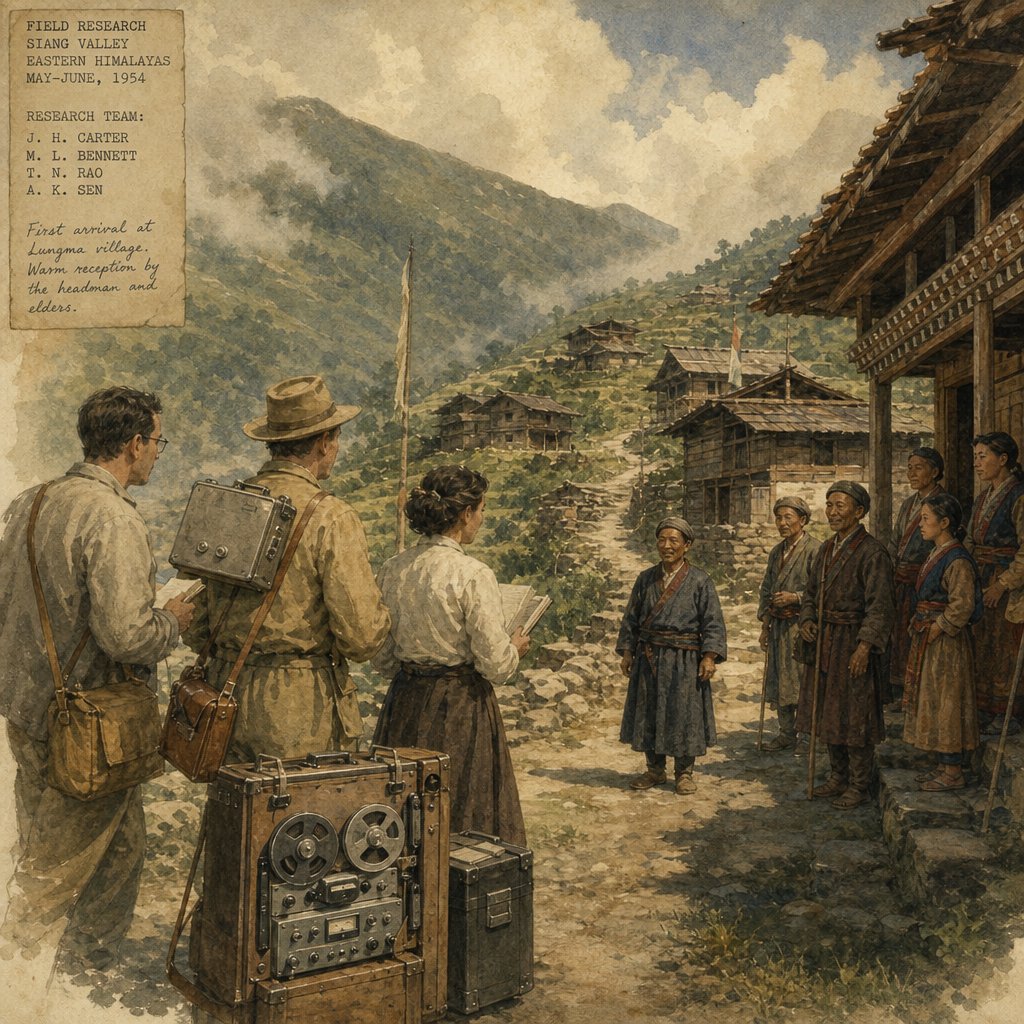
The names we use today for china ethnic groups did not emerge organically from centuries of cultural contact. They were, in large part, manufactured during a single decade. In the early 1950s, the newly established People's Republic launched the Minzu Shibie, or Ethnic Classification Project, a sweeping campaign to determine exactly who lived within its borders and what to call them.
The political stakes were high. The new government had promised ethnic equality and regional autonomy, but delivering on that promise required a definitive list of ethnolinguistic groups. You can't grant representation to a group you haven't officially named. So the state set out to build that list from scratch.
How Over 400 Groups Became 56 Official Categories
When the government invited self-identification in the early 1950s, the response was staggering. Over 400 distinct groups registered claims to separate ethnic status during the 1953-1954 census period. In Yunnan province alone, more than 260 group names were submitted. The china ethnic population was far more fragmented in its self-perception than any single administrative framework could accommodate.
The classification process unfolded in distinct phases:
- Initial census and self-reporting (1953-1954): Groups across the country submitted names for recognition during China's first national census, producing a raw list of over 400 claimed identities.
- Field investigation teams deployed (1954-1956): The government dispatched research teams composed of linguists, anthropologists, and officials to regions with high ethnic diversity, beginning with Yunnan province as the pilot.
- Linguistic and cultural analysis (1954-1959): Teams applied criteria drawn partly from Stalin's definition of a nationality (shared language, territory, economic life, and psychological character) and partly from traditional Chinese conceptions of ethnicity to evaluate each claim.
- Consolidation and official recognition (1950s-1979): Groups were progressively merged, reclassified, or confirmed. The initial 56 categories were largely set by 1956, with the final group (the Jino of Yunnan) recognized in 1979.
The Role of Linguists and Anthropologists in Naming
What makes the Minzu Shibie unusual in world history is how heavily it relied on academic fieldwork. As Thomas Mullaney documents in Coming to Terms with the Nation, non-Party-member ethnologists conducted the scientific surveys that became the basis for nationality policy. These researchers drew on Republican-era scholarship for both conceptual frameworks and methodology.
Imagine teams of scholars trekking into remote mountain villages, recording speech samples, documenting kinship systems, and cataloging ritual practices, all to answer a deceptively simple question: is this community a separate ethnic group, or a subgroup of one already recognized? Linguistic mutual intelligibility became a primary sorting tool. If two communities could understand each other's speech, they were often classified together regardless of whether they considered themselves distinct peoples.
This linguistic criterion shaped the final list of ethnolinguistic groups profoundly. Communities speaking mutually unintelligible languages were sometimes still merged if their cultural practices aligned closely enough, while others speaking related dialects were split apart based on historical and geographic factors.
Groups That Were Merged or Renamed During Classification
The consolidation process produced winners and losers. Several examples illustrate the pattern:
- Dozens of distinct Tai-speaking communities across southern China were merged into a single "Dai" category, erasing local distinctions that communities themselves considered fundamental.
- Multiple Tibeto-Burman groups in Yunnan and Sichuan were folded into broader categories like "Yi," a label that now encompasses communities speaking mutually unintelligible languages.
- The Mosuo people of Yunnan, known for their matrilineal kinship system, were classified as a branch of the Naxi rather than receiving separate recognition.
- Some groups in the autonomous regions of china received names that bore little resemblance to their own self-designations, chosen instead for how they rendered into Mandarin characters.
The political dimension cannot be ignored. Groups with larger populations, concentrated territories, or strategic border locations were more likely to receive separate recognition. Minorities in china who were small, geographically scattered, or culturally similar to a neighboring group often found themselves absorbed into a larger category.
Critically, the process never fully closed. Groups like the Chuanqing, the Khmu, and the Sherpas of Tibet have sought recognition for decades. Their names persist in local usage and academic literature, but they remain outside the official 56-category framework, classified under broader ethnic labels they do not identify with. The ethnic minorities in china that appear on any official list represent a political settlement as much as a scientific finding.
This classification infrastructure did more than sort populations. It determined which names would be printed on identity cards, taught in schools, and used in law. It also set the stage for a deeper question: once a group receives its official label, what does that name actually mean, and whose language does it come from?
Endonyms vs Exonyms and the Three Layers of Ethnic Naming
Every chinese minority ethnic name you encounter in a book, news article, or government document has passed through a three-stage filter. First, there's what the group calls itself in its own language. Then there's the Mandarin Chinese label assigned using Chinese characters. Finally, there's the English form, typically a romanization of the Mandarin version rather than the original self-designation. Each stage introduces phonetic compromises, political choices, and outright distortions that reshape how outsiders perceive a group's identity.
Understanding chinese ethnicity at a structural level means recognizing these three layers and knowing which one you're looking at in any given source.
Endonyms and What Groups Call Themselves
An endonym is the name a group uses for itself in its own language. These self-designations often carry meanings that reveal how a community understands its own identity. The Uyghurs call themselves something close to "Uyghur" (with a voiced velar fricative that English speakers struggle to reproduce), a word widely interpreted as meaning "unity" or "alliance." The Hmong call themselves "Hmong," meaning "people" or "free people." The Tibetans use "Bod-pa," referring to inhabitants of Bod (Tibet).
These endonyms frequently differ dramatically from the names outsiders use. When you see the ethnic label in chinese characters on an official document, you're almost never reading a direct translation of what the community calls itself. You're reading a phonetic approximation filtered through Mandarin's sound system.
Chinese Exonyms and Character Selection
The second layer is the Chinese exonym: the Mandarin designation written in Chinese characters. This is where things get linguistically complex. Mandarin lacks many of the sounds found in Turkic, Tibeto-Burman, Hmong-Mien, and other minority languages. When transcribing a foreign sound into Chinese characters, each character carries both a sound value and an inherent meaning, creating a dual layer of phonetic and semantic information that doesn't exist in alphabetic transliteration.
Consider the Uyghur example. The Mandarin exonym is Weiwuer (维吾尔), a phonetic rendering that approximates the original but replaces the medial consonant (a sound between "g" and "w" to English ears) with a "w" sound that fits Mandarin phonology. As Victor Mair documented on Language Log, the Mandarin rendering has historically wavered between different phonetic interpretations of that elusive middle consonant, with earlier transcriptions using characters suggesting a "g" or "h" sound before settling on the current "w" form.
Character selection is never purely phonetic. After 1949, the government deliberately chose characters with neutral or positive connotations for ethnic group names, replacing older transcriptions that used derogatory radicals. The characters in 维吾尔 (wei-wu-er) individually mean "maintain," "I/my," and a diminutive suffix, carrying no negative associations. This was a conscious political choice, not a linguistic inevitability.
English Transliteration Challenges
The third layer is where most English-speaking researchers, writers, and language learners encounter these names. And it's where confusion multiplies. English forms of ethnic names in chinese contexts typically derive from one of several competing systems:
- Hanyu Pinyin romanization of the Mandarin exonym (e.g., "Weiwuer" for Uyghur)
- Older postal romanization or Wade-Giles forms still found in historical sources
- Direct romanization of the endonym using the group's own Latin-script standard (e.g., "Uyghur" from Uyghur Latin Yeziqi)
- Anglicized forms with long historical usage that match none of the above (e.g., "Tibetan")
The result? A single group can appear under multiple English spellings depending on the source. The Uyghurs alone show up as Uyghur, Uighur, Uygur, and Uigur in English-language publications. Each spelling reflects a different romanization tradition, and none perfectly captures the original pronunciation. The Hanyu Pinyin orthography standard recommends following the original romanization of minority languages rather than transcribing from Chinese characters, but this principle is inconsistently applied.
For anyone researching chinese ethnic background through English-language sources, this means you'll encounter the same group under different names depending on whether your source prioritizes the endonym, the Mandarin exonym, or a historical English convention. The table below illustrates how these three layers diverge for several well-known groups:
| Endonym (Self-Designation) | Mandarin Exonym (Pinyin) | Chinese Characters | Common English Form |
|---|---|---|---|
| Uyghur ("unity/alliance") | Weiwuer | 维吾尔 | Uyghur / Uighur |
| Bod-pa ("people of Bod") | Zangzu | 藏族 | Tibetan |
| Hmong ("people/free people") | Miaozu | 苗族 | Miao / Hmong |
| Mongghul ("Mongol people") | Mengguzu | 蒙古族 | Mongolian |
| Tai / Dai ("free people") | Daizu | 傣族 | Dai |
| Choson ("morning calm") | Chaoxianzu | 朝鲜族 | Korean (ethnic) |
You'll notice that the English form sometimes follows the endonym (Uyghur, Hmong in some contexts), sometimes follows the Mandarin (Dai, Miao), and sometimes uses an entirely separate English-language tradition (Tibetan, Mongolian). There is no single rule governing which layer wins in English usage. This inconsistency is one of the most persistent sources of confusion when working with ethnicity in chinese studies.
The practical takeaway: whenever you encounter an ethnic group name in English, ask which layer it comes from. Is it the group's own word? A romanization of the Mandarin label? Or a historical English convention with its own separate lineage? The answer shapes not just pronunciation but the political and cultural assumptions embedded in the name itself.
These naming layers didn't emerge in a vacuum. Behind each Mandarin exonym lies a deeper question: what do the chosen characters actually mean, and what did the characters they replaced say about how the state once viewed its non-Han populations?
The Hidden Meanings Behind Each Ethnic Group Name
Strip away the Mandarin characters and English transliterations, and you find something more revealing: the original meanings embedded in each ethnic group name. These etymologies fall into recognizable patterns. Some names describe the land a group inhabits. Others are simply the group's word for "people." Still others were imposed by outsiders, sometimes carrying connotations the named group never chose. Tracing these origins turns a flat list of 56 labels into a map of how communities understood themselves and how their neighbors perceived them.
Names Derived from Geography and Landscape
A significant number of ethnic group names trace back to rivers, mountains, valleys, or regions. For communities whose identity was inseparable from a specific landscape, the land itself became the name. Consider these examples:
- Tibetan (Bod-pa): The endonym "Bod" refers to the Tibetan plateau region itself. "Bod-pa" simply means "person of Bod." The English word "Tibetan" likely derives from the Turkic "Tobet" or Arabic "Tubbat," both external geographic references to the same highland territory.
- Tajik (Tashkurghani): China's Tajik minority, concentrated in the Tashkurgan area of Xinjiang, are often identified by their geographic home in the Pamir highlands. The broader ethnonym "Tajik" itself may derive from a pre-Islamic tribal name or from the Middle Persian word for "Arab," later generalized to mean "non-Turkic Iranian speaker."
- Oroqen: This name derives from the Tungusic word meaning "people of the mountain ridge" or "people who use reindeer," tying identity directly to the Greater Khingan mountain landscape they inhabit.
- Ewenki: Likely meaning "people living in forested mountains," connecting the group's identity to the boreal forests of northeastern China and Siberia.
Geographic names tend to be stable over time because the land doesn't move, even when political borders shift around it. For the indigenous people of china's frontier regions, landscape-based names often predate any contact with Han Chinese civilization.
Self-Designations Meaning People or Humans
Perhaps the most common etymological pattern across the world's ethnic names is also the simplest: the group's word for "people" or "human beings." When a community had limited contact with outsiders, there was no need for a distinguishing label. You were simply "the people." This pattern appears repeatedly among China's minorities:
- Hmong: The endonym of the miao chinese group most commonly known in Western scholarship as "Hmong" translates roughly to "people" or "free people." The miao people china know through the official Mandarin label "Miao" (苗) is a Chinese exonym, not the group's own word for itself.
- Dai: Related to the Thai/Tai root meaning "free" or "people," shared across Tai-Kadai speaking communities from Yunnan to Southeast Asia.
- Hani: Often interpreted as meaning "people" in the group's own Tibeto-Burman language, though some scholars link it to a river name.
- Lahu: One folk etymology suggests "tiger people," though linguists debate whether the name originally meant simply "people" in an older form of the language.
- Wa: The self-designation in the Wa language carries connotations of "people" or "human," distinguishing the community from spirits and animals in their cosmological framework.
These "we are the people" names reveal something about the conditions under which ethnic identity crystallizes. A group only needs a distinguishing name when it encounters others. Before that moment, being human and being a member of the community are the same thing.
What Zhuang, Uyghur, Miao, and Hui Actually Mean
Four of the most frequently discussed chinese minority ethnic names illustrate how varied and contested etymologies can be. Here's what current scholarship says about each:
Zhuang: The current official character 壮 means "strong" or "robust," but this is a post-1949 replacement. The Zhuang people's own name for themselves varies by dialect, with forms like "Boux Cuengh" or "Boux Raeuz" appearing across different communities. The root "Cuengh" may relate to a word meaning "cave" or "hole," referencing the karst landscape of Guangxi. Scholarly consensus on a single original meaning remains elusive because the Zhuang encompass multiple subgroups with distinct self-designations.
Uyghur: The etymology of "Uyghur" is genuinely unresolved. Modern explanations range from derivation from a Turkic verb meaning "follow" or "accommodate oneself" to an adjective meaning "non-rebellious," to a verb meaning "wake" or "rouse." As linguistic analysis of Old Turkic sound shifts shows, none of these proposals fully satisfies the phonological evidence. The popular interpretation of "unity" or "alliance" circulates widely but lacks firm scholarly grounding. What is clear is that the term was a political designation in the 8th-century Uyghur Khaganate before being revived as an ethnic label in 1921.
Miao: The Mandarin exonym 苗 (miao) means "sprout" or "seedling," but this character was chosen for its phonetic value, not its meaning. The miao chinese label does not reflect how the group understands itself. Hmong communities use their own endonym, and many consider "Miao" an externally imposed term. Whether the original Chinese transcription carried derogatory intent or was purely phonetic remains debated among historians.
Hui: The hui chinese ethnic group presents a unique etymological case. The character 回 (hui) historically derives from the Chinese transcription of "Uyghur" (回鹘, huihu), which referred to the Old Uyghur-speaking people of the medieval Uyghur Khaganate. Over centuries, the term's meaning shifted from designating a specific Turkic group to referring broadly to followers of Islam, and eventually to the specific hui ethnicity recognized today: Chinese-speaking Muslims with no single non-Sinitic mother tongue. Three of China's 56 official ethnic groups (Hui, Uyghur, and Yugur) share this same etymological root, despite being linguistically and culturally distinct from one another.
A fourth category worth noting is names assigned by neighboring groups, often carrying occupational or behavioral connotations. The "Taranchi" label historically applied to Uyghurs in the Ili region meant "farmer" in Turkic, a designation imposed by nomadic neighbors who defined settled agriculturalists by their livelihood. Similarly, "Sart," used by Russian travelers for sedentary Turkic-speaking Central Asians, meant "merchant" or "trader." These externally assigned names reveal power dynamics: the namer defines the named by what is useful or visible to the namer, not by how the community sees itself.
Etymology, then, is never just a linguistic curiosity. It encodes relationships: between a people and their land, between a community and its self-concept, between a group and the outsiders who labeled it. These etymological roots also cluster along predictable lines when you organize groups by language family, a framework that reveals deeper structural patterns in how related peoples name themselves and their world.
Language Families That Shape Minority Naming Patterns
Etymological origins tell you what a name means. Language family membership tells you why it sounds the way it does. When you group chinese ethnic groups by their linguistic ancestry rather than geography or population size, structural patterns emerge that no alphabetical list can reveal. Related groups share phonological features, syllable structures, and naming conventions inherited from common ancestral languages. These shared traits explain why certain clusters of names "sound alike" to outside ears and why transliteration into Mandarin produces predictable distortions for each family.
Think of it this way: if you plotted every recognized minority on a china ethnic groups map color-coded by language family rather than administrative province, you'd see broad geographic bands that cut across political boundaries. Sino-Tibetan speakers dominate the southwest and central highlands. Turkic and Mongolic groups stretch across the northern arc. Tai-Kadai communities cluster along the southern border with Southeast Asia. Each band carries its own naming logic.
Sino-Tibetan and Tibeto-Burman Naming Patterns
The Sino-Tibetan family is the largest in China, encompassing not only the Han majority's Sinitic languages but also the Tibeto-Burman branch spoken by dozens of minority groups across the southwest. Among the major ethnic groups of china in this family, you'll find Tibetans, Yi, Tujia, Hani, Lisu, Lahu, Naxi, Qiang, Jingpo, and many others.
Tibeto-Burman naming conventions share several features:
- Monosyllabic or disyllabic roots are common. Group names tend to be short and tonal, reflecting the syllable-timed rhythm of these languages.
- Self-designations frequently derive from words meaning "people," "black," or geographic features. The Yi subgroups, for instance, use variants like "Nosu" (black people) and "Lolo" (a now-disfavored exonym).
- Tibetan naming follows a distinct pattern where place-based identity dominates. "Khampa" means person from Kham, "Amdo-wa" means person from Amdo. Regional identity often supersedes a single pan-ethnic label.
- Many Tibeto-Burman groups lack indigenous writing systems, meaning their endonyms were historically transmitted orally and only fixed in written form through Chinese character transcription or missionary romanization.
The Qiang people illustrate a fascinating case. Their name (羌, qiang) is one of the oldest ethnic designations in Chinese historical records, appearing in Shang dynasty oracle bones over 3,000 years ago. The character originally depicted a person with sheep horns, reflecting the pastoral identity outsiders associated with these highland communities. Modern Qiang speakers are likely descendants of just one branch of the ancient groups that bore this label.
Altaic Language Groups and Turkic-Mongolic Names
The northern and northwestern minorities belong to what linguists traditionally grouped as the Altaic family, though the genetic unity of Turkic, Mongolic, and Tungusic languages remains debated. Regardless of deep ancestry, these three branches share areal features that shape their naming conventions in recognizable ways.
Turkic-speaking groups (Uyghur, Kazakh, Kyrgyz, Uzbek, Tatar, Salar, Yugur) share these naming characteristics:
- Agglutinative morphology produces longer, multi-syllable ethnonyms that resist compression into Mandarin's character-per-syllable system. "Kazakh" requires three characters (哈萨克, ha-sa-ke) to approximate.
- Many Turkic ethnonyms derive from clan founders, tribal confederations, or political entities rather than geographic features. "Kazakh" likely means "free wanderer" or "independent," reflecting nomadic self-conception.
- Vowel harmony, a defining feature of Turkic phonology, gives these names a distinctive sonic quality that Mandarin transcription flattens.
Mongolic groups (Mongol, Daur, Dongxiang, Bonan, Tu) and Tungusic groups (Manchu, Evenki, Oroqen, Hezhe, Xibe) follow parallel patterns. Mongolic names often reference geographic or political origins: "Mongol" itself may derive from a root meaning "brave" or from the Mong River. Tungusic names lean heavily on landscape and livelihood, as seen in "Oroqen" (mountain ridge people) and "Hezhe" (people of the downstream).
If you overlay these groups on a china ethnic map, you'll notice that Altaic-speaking minorities occupy a vast crescent from Xinjiang through Inner Mongolia to Heilongjiang, a distribution that reflects centuries of nomadic movement across the steppe corridor.
Tai-Kadai, Hmong-Mien, and Austroasiatic Naming Traditions
Southern China's linguistic landscape belongs to three smaller but distinct families, each with naming conventions that differ sharply from both Sino-Tibetan and Altaic patterns.
Tai-Kadai groups (Zhuang, Dai, Bouyei, Dong, Li, Shui, Mulao, Maonan, Gelao) represent the largest non-Han population cluster. The Zhuang alone number over 16 million, making them the largest minority among all chinese ethnicities. Tai-Kadai naming features include:
- Prefix systems where "Boux" or "Pu" (meaning "person") precedes a distinguishing element. The Zhuang self-designation "Boux Cuengh" follows this person-plus-qualifier structure.
- Tonal distinctions that carry semantic weight in ethnonyms, often lost in Mandarin transcription.
- Shared roots with Thai, Lao, and Shan naming conventions across Southeast Asia, reflecting a language family that predates modern national borders.
Hmong-Mien groups (Miao, Yao) use naming systems where clan identity is paramount. The Hmong prefix system (Vang, Yang, Xiong, etc.) functions as a clan marker that precedes personal names, a convention with no parallel in Han Chinese practice. The family's two branches, Hmongic and Mienic, share this emphasis on lineage-based naming but diverge in phonological detail.
Austroasiatic representation in China is limited primarily to the Wa, Blang, and De'ang peoples of Yunnan's southwestern border region. These groups share naming features with Mon-Khmer languages of mainland Southeast Asia: sesquisyllabic word structures (a reduced presyllable followed by a full syllable), lack of tonal distinctions in some varieties, and ethnonyms rooted in landscape or subsistence terminology.
One final family deserves mention: Indo-European, represented by the Tajik and Russian minorities. The Tajik community in Xinjiang speaks Sarikoli and Wakhi, Eastern Iranian languages whose naming conventions follow Persian-influenced patronymic patterns entirely foreign to the East Asian linguistic context surrounding them.
The table below maps selected ethnic groups of china to their language families, illustrating how linguistic ancestry predicts naming structure:
| Language Family | Branch | Ethnic Group | Characteristic Naming Feature |
|---|---|---|---|
| Sino-Tibetan | Tibeto-Burman | Tibetan (Bod-pa) | Region-based identity markers (Khampa, Amdo-wa) |
| Sino-Tibetan | Tibeto-Burman | Yi (Nosu) | Color-based self-designation ("black people") |
| Turkic | Karluk | Uyghur | Political confederation name; vowel harmony in endonym |
| Mongolic | Central Mongolic | Mongol | Ethnonym from possible clan founder or geographic root |
| Tungusic | Northern Tungusic | Evenki | Landscape-based ("forest mountain people") |
| Tai-Kadai | Tai | Zhuang (Boux Cuengh) | Person-prefix + qualifier structure |
| Hmong-Mien | Hmongic | Hmong (Miao) | Clan prefix system preceding personal names |
| Austroasiatic | Mon-Khmer | Wa | Sesquisyllabic structure; subsistence-rooted ethnonym |
| Indo-European | Eastern Iranian | Tajik | Persian-influenced patronymic naming |
What this linguistic framework reveals is that naming is never arbitrary. The sound shape of an ethnonym, its internal structure, and its semantic content all follow patterns inherited from ancestral languages. A Turkic group name behaves differently from a Tibeto-Burman one not because of random historical accident, but because the phonological and morphological rules of each family constrain what a "natural" name looks like.
These inherited patterns also explain why Mandarin transcription distorts some names more than others. Monosyllabic Tibeto-Burman endonyms map relatively cleanly onto single Chinese characters. Polysyllabic Turkic names require awkward multi-character strings that obscure the original word's internal structure. The degree of distortion is predictable once you know which family you're dealing with.
Language families shaped how names sounded. But the Chinese characters chosen to write those names carried their own freight, one that often said more about Han attitudes toward non-Han peoples than about the peoples themselves.
How Derogatory Characters Were Replaced After 1949
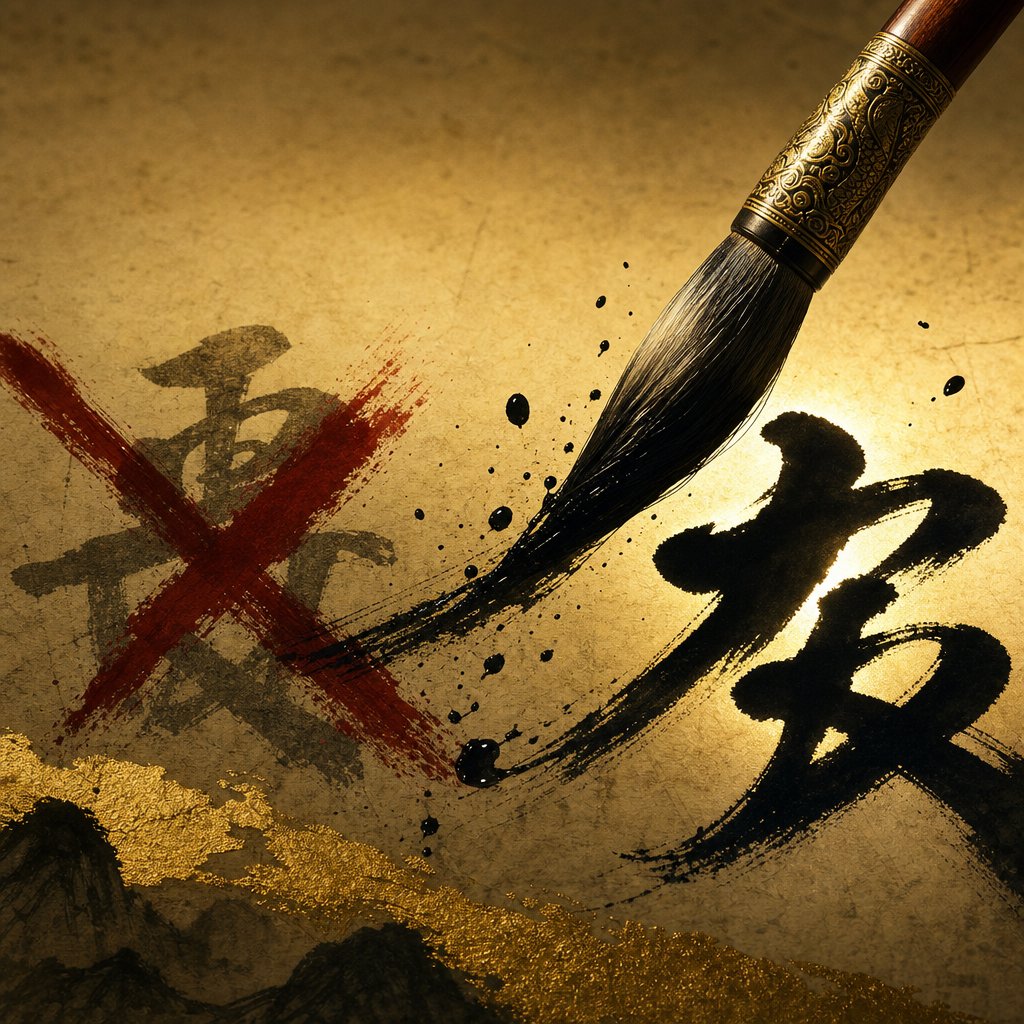
For over two thousand years, the Chinese writing system did something no alphabet could: it embedded insults directly into the visual form of ethnic names. Because Chinese characters are built from semantic components called radicals, the radical chosen to write a group's name could classify that group as subhuman without changing the pronunciation at all. A name written with the "dog" radical (犭) sounds identical to the same name written with the "person" radical (亻), but the visual message is unmistakable. This practice of graphic pejoratives, as linguist James Matisoff termed it in 1986, shaped how every ethnic group of china was represented in official documents, maps, and historical records for centuries.
The people of republic of china inherited this legacy. When the new government set out to build an egalitarian china social structure in the 1950s, one of its earliest symbolic acts was purging these derogatory characters from official use and replacing them with neutral or positive alternatives.
Derogatory Radicals and Their Colonial Origins
How did this practice begin? Imagine you're a Han Chinese scribe in the Zhou dynasty, tasked with recording the names of neighboring peoples. You need characters that approximate foreign sounds, but every character you choose carries a built-in meaning through its radical. The radicals available to you include the "dog" radical (犭), the "insect" radical (虫), the "sheep" radical (羊), and the "animal hide" radical (革). If you view these neighboring peoples as uncivilized, your character choices will reflect that worldview.
As historian Frank Dikötter documented, ancient Chinese texts blurred the boundary between human and animal when describing non-Han groups. The Beidi (northern peoples) were written with the dog radical. The Nanman (southern peoples) were written with the insect radical. The Qiang (western peoples) received the sheep radical. These weren't casual choices. They reflected a cosmological framework where civilization radiated outward from the Chinese center, with peripheral peoples occupying progressively less human categories.
The most common derogatory radicals included:
- Radical 94 (犭 "dog/beast"): Used for the Yao (猺, "jackal"), Zhuang (獞, "a dog name"), Yi/Lolo (猓, "proboscis monkey"), Bouyei (狆, "lap dog"), and Gelao (犵狫)
- Radical 142 (虫 "insect/reptile"): Used for the southern Man peoples (蠻, defined as "a snake species" in the earliest dictionary)
- Radical 177 (革 "animal hide"): Used for northern groups like the Tatars (韃靼, "red-dyed leather") and Mohe (靺鞨)
- Radical 123 (羊 "sheep"): Used for the Qiang (羌, "shepherd") and Jie (羯, "wether")
Sinologist Endymion Wilkinson noted that this practice may have originally derived from animal totems or tribal emblems, but over time it "fitted neatly with Han convictions of the superiority of their own culture as compared to the uncultivated, hence animal-like, savages and barbarians." The contrast is stark: while indigenous chinese peoples received characters associating them with beasts, Western nations transcribed in the 19th century got flattering characters. America became 美国 ("beautiful country"). France became 法兰西 (with 兰 meaning "orchid").
The Post-1949 Character Replacement Campaign
The renaming effort actually began before 1949. Chinese anthropologist Ruey Yih-Fu proposed revised names during the Nationalist period, and a formal language reform started in 1939 under the Republic. But the systematic, nationwide replacement campaign came after the People's Republic was established. On May 16, 1951, the State Council issued a directive specifically addressing "appellations, place names, tablets, and couplets that carry a discriminatory or insulting nature toward minority nationalities."
The reform followed a consistent logic: replace the animal radical with either the "person" radical (亻) or an entirely new character carrying positive or neutral meaning. In some cases, groups went through two successive name changes as the government refined its approach to the ethnic composition of china.
The Zhuang people's name changed three times: from 獞 (dog radical, meaning "a dog name") to 僮 (person radical, meaning "child") to 壮 (meaning "strong, robust"). Each replacement moved further from insult toward dignity, illustrating how character selection encodes social status in written Chinese.
Other documented replacements tell similar stories:
| Ethnic Group | Old Character(s) | Old Radical/Meaning | New Character(s) | New Meaning |
|---|---|---|---|---|
| Yao | 猺 | Dog radical; "jackal" | 瑶 | "Precious jade" |
| Zhuang | 獞 | Dog radical; "dog name" | 壮 | "Strong, robust" |
| Yi (Lolo) | 猓猓 | Dog radical; "monkey" | 彝 | "Sacrificial vessel" (dignity) |
| Lahu | 猓黑 | Dog radical + "black" | 拉祜 | "Heavenly protection" |
| Bouyei | 狆家 | Dog radical; "lap dog" | 仲家/布依 | Person radical / phonetic |
| Gelao | 犵狫 | Dog radical | 仡佬 | Person radical |
As Paul K. Benedict, the American anthropologist, explained the underlying principle: "by writing my name with a 'dog' alongside it you are calling me a 'dog.' The modern Chinese practice is to write these tribal names with the 'human being' radical, thereby raising their level of acceptance." The reform recognized that in a logographic writing system, orthography itself carries moral weight that alphabetic scripts simply cannot.
Understanding the Zu Suffix and Standardized Naming
Beyond replacing individual characters, the post-1949 reforms introduced a standardized suffix that unified all official ethnic designations: 族 (zu), meaning "ethnic group" or "nationality." Every recognized group in the ethnic composition of china now carries this suffix in formal usage. Tibetans are 藏族 (Zangzu). Uyghurs are 维吾尔族 (Weiwuerzu). The Han majority is 汉族 (Hanzu). The suffix creates grammatical equality: no group is a "tribe" or "race" or "barbarian type." All are 族, members of a formally equivalent category within the national framework.
This standardization did more than clean up vocabulary. It restructured how the state conceptualized its own diversity. Before 1949, non-Han peoples appeared in documents under a chaotic mix of terms: 人 (ren, "people"), 蛮 (man, "barbarians"), 夷 (yi, "eastern barbarians"), 番 (fan, "foreign/aboriginal"). The uniform 族 suffix replaced this hierarchy with at least nominal equivalence. Whether you numbered a billion or a few thousand, you were a 族.
The reform was not purely cosmetic. Scholars like Magnus Fiskesjö have argued that while the language changed, the conceptual association of minorities with primitiveness and wild nature persists in modern China, reinforced by tourism marketing that presents minority cultures as exotic spectacles. The characters are clean, but the underlying attitudes encoded in centuries of graphic pejoratives don't vanish with a stroke of the pen.
Still, the material impact was real. Identity cards, textbooks, maps, and legal documents all adopted the reformed characters. For millions of people, the written form of their group's name shifted from an embedded slur to a neutral or positive designation within a single generation. No alphabetic language reform could achieve quite this effect, because no alphabet carries semantic content in its individual letters the way Chinese radicals do.
Characters encode how the state sees a group. But what about how individuals within those groups name themselves? The personal naming conventions among China's minorities follow systems so different from Han Chinese practice that they challenge basic assumptions about what a "Chinese name" looks like.
Personal Naming Conventions That Differ from Han Chinese Traditions
Han Chinese naming follows a formula so consistent that most people never question it: a one-character surname from a finite pool of a few hundred options, followed by a one- or two-character given name. Surname first, given name second. The surname passes patrilineally, unchanged, across generations. Simple. Predictable. Universal across the largest ethnic group in china.
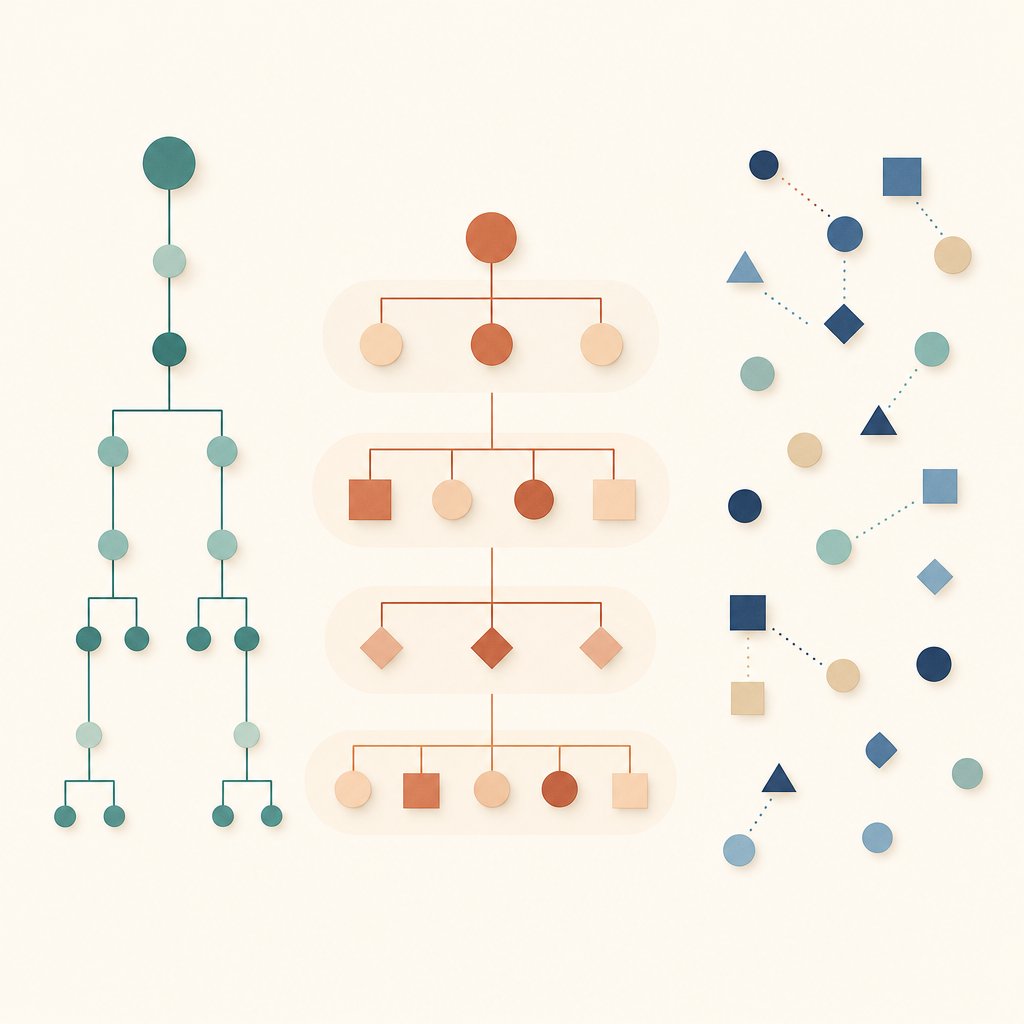
Step outside Han practice, and that formula dissolves. Chinese minority groups follow naming systems so structurally different that applying Han assumptions to them produces confusion, misidentification, and outright errors in official records. Patronymics replace fixed surnames. Clan markers function as prefixes rather than family names. Some communities use no surname at all. Religious traditions inject Arabic, Tibetan Buddhist, or Mongolian naming elements that follow entirely separate logic.
If you're a researcher, journalist, or genealogist working with these names, understanding the underlying system is the difference between parsing a name correctly and mangling someone's identity.
Patronymic Systems Among Turkic Minorities
Uyghurs, Kazakhs, Kyrgyz, and other Turkic-speaking groups in China traditionally use patronymic naming: a person's "last name" is their father's given name, not a fixed family surname passed across generations. This means siblings share a last name, but parents and children do not. A husband and wife each retain their own patronymic after marriage.
Here's what this looks like in practice for a hypothetical Uyghur family, as the Uyghur Human Rights Project illustrates:
- Husband: Memet Abduqadir (given name: Memet; patronymic: Abduqadir, his father's name)
- Wife: Amangul Niyaz (given name: Amangul; patronymic: Niyaz, her father's name)
- Children: Arafat Memet, Arfiya Memet (given names + father's given name as patronymic)
Notice the consequence: no one in this family shares a "surname" in the Han Chinese sense. The children carry "Memet" as their last name because that's their father's first name. Their children will carry different last names entirely. Genealogical tracing through surnames, the backbone of Han Chinese family research, simply doesn't work here.
The order also differs from Han convention. Uyghur names place the given name first and the patronymic second, the reverse of Han Chinese surname-first order. When official Chinese documents force Uyghur names into a surname-first format, the result is often a reversed name that confuses both Uyghur and non-Uyghur readers. The Uyghur skier Dilnigar Ilhamjan, for instance, appeared in international media during the 2022 Beijing Olympics as "Dinigeer Yilamujiang," a Pinyin rendering of her Chinese-character transliteration that obscured both the correct name order and pronunciation.
Another critical difference: Uyghurs generally refer to people by their given name, not their patronymic. Where an English speaker might say "Dr. Dawut," Uyghurs say "Dr. Rahile," because "Dawut" is simply her father's name, not an intergenerational family identifier. Some Uyghurs in the diaspora have adopted fixed family surnames, but this remains the exception rather than the rule.
Hmong Clan Names and Single-Name Traditions
Hmong naming operates on entirely different principles. Where Turkic groups use patronymics, Hmong communities organize identity around hmong clans, a system where clan membership determines social obligations, marriage eligibility, and mutual aid networks. The clan name functions somewhat like a surname but carries far deeper social weight.
According to EthnoMed's Hmong cultural profile, the most common Hmong clan names include: Chang (Tsab), Chue (Tswb), Fang (Faj), Her (Hawj), Khang (Khab), Kong (Koo), Lee (Lis), Lor (Lauj), Moua (Muas), Thao (Thoj), Vang (Vaj), Vue (Vwj), Xiong (Xyooj), and Yang (Yaj). The number of major clans is commonly cited as 18, though 12 may be considered the core clans.
Several features distinguish Hmong clan naming from Han practice:
- Clan as social contract: Members of the same clan regard each other as siblings regardless of blood relation. Marriage within the same clan is strictly forbidden, no matter how distant the connection.
- Clan name position varies: Traditionally in Asia, the clan name came first. In the US and other Western contexts, many Hmong now place the given name first, followed by the clan name, mirroring Western convention.
- Adult name addition: Hmong men traditionally receive an additional "adult name" after their first child is born. If a man's birth name is Vang and his adult prefix is Nao, his full name becomes Nao Vang Vue (adult name + birth name + clan name).
- Gender-neutral given names: It is common for the same given names to be used by both men and women.
- Name changes for health: If a child is ill or experiences misfortune, a shaman may determine the wrong name was given and assign a new one.
The clan system also means that a wife keeps her own clan name after marriage. Traditionally, neither her clan name nor her given name is used after she marries; she is referred to by her husband's name. In modern practice, particularly in diaspora communities, women increasingly retain their own names publicly.
For researchers tracing Hmong genealogy, the clan name is the critical identifier. Two people named "Vang" are not necessarily related by blood, but they are clan siblings with mutual obligations. Two people with different clan names in the same nuclear family (a married couple) is the norm, not the exception.
Tibetan, Hui, and Other Distinct Naming Practices
Tibetan naming challenges Han assumptions most radically because many Tibetan communities use no surname at all. A Tibetan name typically consists of two or four syllables drawn from Tibetan Buddhist vocabulary: Tenzin Gyatso, Lobsang Sangay, Dawa Tsering. These are given names, often bestowed by a lama or religious figure, with no family name component. Siblings may share no name elements whatsoever. A father named Dorje Rinchen might have children named Pema Yangzom and Tashi Norbu, with nothing in the names indicating family connection.
When Tibetans interact with Chinese bureaucratic systems that require a "surname" field, they face a structural mismatch. Some adopt the first syllable of their name as a de facto surname. Others use a clan or house name that exists in local usage but was never part of the formal personal name. The result is inconsistency across official documents.
Hui naming presents yet another pattern. The hui ethnicity is unique among Chinese minorities in being primarily Chinese-speaking, yet Hui personal naming draws heavily on Arabic and Islamic tradition. Many Hui carry both a Chinese name (following standard Han surname-plus-given-name format) and an Arabic "scripture name" (jingtang mingzi) used within the Muslim community. Common Arabic names like Muhammad, Fatima, Ibrahim, and Aisha appear in sinified forms: Muhanmode, Fatima, Yibulaxin.
Some Hui surnames themselves reflect Islamic heritage. The surname Ma (马), disproportionately common among Hui, likely derives from the first syllable of "Muhammad." Other Hui surnames like Ha (哈), Hai (海), and Sa (萨) trace to Arabic or Persian personal names that were adopted as Chinese-style surnames generations ago. This dual-naming system means a single Hui individual might be "Ma Jianming" in secular contexts and "Ibrahim" at the mosque.
Mongolian naming in China occupies a middle ground. Traditional Mongolian names are patronymic, similar to Turkic practice, but modern Chinese Mongolians increasingly adopt Han-style fixed surnames. Research published in F1000Research documents how Chinese Mongolian naming practices differ measurably from Han Chinese patterns, with Mongolians showing greater name diversity and less clustering around common names. Some Chinese Mongolians maintain dual names: a Mongolian name for community use and a Han-style name for official documents, creating the same kind of identity splitting seen among Uyghurs.
It's worth noting that discussions of cantonese ethnicity sometimes blur the line between linguistic and ethnic identity. Cantonese speakers are ethnically Han, but their naming conventions preserve older Chinese phonological layers. Cantonese romanizations of surnames (Chan vs. Chen, Wong vs. Wang, Ng vs. Wu) create apparent name differences that are linguistic rather than ethnic. This is a dialect distinction within Han practice, not a separate minority naming system, but it illustrates how even within the largest ethnic group in china, naming is never monolithic.
The key differences between Han and minority personal naming conventions can be summarized:
- Surname inheritance: Han uses fixed patrilineal surnames; Turkic groups use patronymics; Tibetans often use no surname; Hmong use clan names with different social rules.
- Name order: Han places surname first; Uyghur and Kazakh place given name first; Hmong varies by context.
- Name length: Han given names are 1-2 characters; Tibetan names are typically 2-4 syllables; Turkic names can run much longer when patronymic is included.
- Religious influence: Hui draw from Arabic; Tibetans draw from Buddhist vocabulary; Mongolians historically consulted lamas for name selection.
- Name stability: Han names are fixed at birth; Hmong names can change after illness; Mongolian names may be changed by religious authority; Hmong men gain adult names after fatherhood.
- Generational tracing: Han surnames allow multi-generational tracking; patronymic systems make surname-based genealogy impossible; Tibetan names offer no built-in family connection.
For anyone working with chinese minority groups in research, journalism, or creative writing, the practical rule is simple: never assume Han naming logic applies. Ask which system you're dealing with before parsing a name into "first" and "last" components. A Uyghur's last name is not their family name. A Tibetan's first syllable is not their surname. A Hmong person's clan name carries social obligations that a Han surname does not.
These structural differences create real-world friction whenever minority names meet bureaucratic systems designed around Han conventions. They also generate persistent confusion in English-language sources, where writers routinely misidentify which part of a minority name to use on second reference. Getting it right requires knowing not just the name, but the system behind it.
A Practical Reference for Writers and Researchers
Structural knowledge of naming systems only matters if you can apply it. Whether you're writing about chinese minorities in an academic paper, building a character in fiction, or parsing genealogical records, the same practical questions come up repeatedly: which name form should I use? How do I avoid common errors? And what does "Chinese" even mean when you're discussing ethnic group chinese identity versus national citizenship?
Choosing Between Endonyms and Exonyms in Your Writing
The choice between a group's self-designation and an externally assigned label depends on your audience and purpose. Academic writing increasingly favors endonyms (Hmong over Miao, Bod-pa over Tibetan in specialized contexts), while journalism and general-audience writing tends toward the most widely recognized English form. Neither choice is inherently wrong, but consistency matters. If you use "Uyghur" (the endonym-derived form), don't switch to "Weiwuer" (the Mandarin pinyin form) mid-text without explanation.
A useful rule: when writing about a group's internal culture, language, or self-conception, lean toward the endonym. When writing about state policy, demographics, or legal status, the official Mandarin-derived form may be more precise because that's the name the policy uses. Context determines correctness.
Common Mistakes and How to Avoid Them
Years of editing and research reveal the same errors recurring across English-language sources discussing minority ethnic groups in china. Here are the most frequent pitfalls:
- Do verify which naming layer your source uses before citing it. A source using "Miao" and one using "Hmong" may be discussing the same group or different subgroups.
- Do specify whether you mean nationality or ethnicity when using the word "Chinese." Someone can be ethnically Uyghur and nationally Chinese. Someone can be ethnically chinese (Han) and nationally American.
- Do ask which part of a minority name functions as the family identifier before defaulting to "last name" assumptions.
- Don't assume all 56 groups are ancient chinese tribes with unbroken lineages. Many official categories are modern administrative constructs grouping diverse communities under a single label.
- Don't treat "Han" and "Chinese" as synonyms. Han is one ethnic group chinese authorities recognize. "Chinese" can refer to any citizen of China regardless of ethnicity.
- Don't romanize a minority name from Chinese characters when a standard romanization from the group's own language exists. Write "Uyghur," not "Weiwuer."
- Don't use outdated exonyms (Lolo, Moso, Chungchia) without noting they are historical terms many communities consider offensive.
The question "is chinese a race" surfaces frequently in public discourse, and the answer matters for naming accuracy. "Chinese" is not a racial category. It functions as either a national identity (citizen of China, encompassing all 56 recognized groups) or an ethnic shorthand for Han Chinese specifically. The ambiguity is baked into English usage, not into the Chinese-language terminology, which distinguishes clearly between Zhongguoren (Chinese national) and Hanren (ethnic Han). When discussing chinese minority ethnic groups, precision on this point prevents the erasure of non-Han identities under a blanket "Chinese" label.
Key Takeaways for Researchers and Language Learners
The Han majority ethnic group in china accounts for over 91% of the population, which means the remaining 55 groups, despite numbering over 120 million people combined, are often treated as a monolithic "minority" category. Resist that flattening. Each group's naming system reflects a distinct linguistic heritage, historical experience, and cultural logic.
Respectful usage of ethnic names means recognizing that no single naming convention applies across all groups. The most accurate approach is always to learn which system a specific community uses and follow it on its own terms rather than forcing it into Han or English frameworks.
For verification, the Wikipedia list of ethnic groups in China provides a starting reference, but cross-check against sources from the communities themselves. Ethnologue, SOAS University of London's language databases, and publications by ethnically chinese and minority scholars offer more nuanced guidance than any single government classification.
Names are never just labels. They carry the weight of who gets to define whom. The more precisely you handle them, the more accurately you represent the people behind them.
Frequently Asked Questions About Chinese Minority Ethnic Names
1. How many ethnic groups are officially recognized in China?
China officially recognizes 56 ethnic groups, but this number is the result of a political classification process in the 1950s. Over 400 self-identified groups originally applied for recognition and were consolidated through linguistic analysis, cultural assessment, and political negotiation. Several groups, such as the Chuanqing (numbering over 670,000), remain unrecognized and classified under broader ethnic labels they do not identify with. The official count represents an administrative settlement rather than a purely scientific finding.
2. What is the difference between an endonym and an exonym for Chinese ethnic groups?
An endonym is the name a group uses for itself in its own language, such as 'Bod-pa' for Tibetans or 'Hmong' for the Miao. An exonym is a name assigned by outsiders, typically the Mandarin Chinese label written in characters and then romanized into English. Most English-language ethnic names for Chinese minorities derive from the Mandarin exonym rather than the group's self-designation, which often introduces phonetic distortion and strips away the original meaning embedded in the endonym.
3. Why were derogatory Chinese characters used for ethnic minority names?
For over two thousand years, Chinese scribes used characters containing animal-related radicals (dog, insect, sheep) to write non-Han ethnic names. This reflected a cosmological framework where civilization radiated outward from the Chinese center, with peripheral peoples categorized as progressively less human. After 1949, the government launched a systematic campaign to replace these characters with neutral or positive alternatives, such as changing the Yao name from a character meaning 'jackal' (dog radical) to one meaning 'precious jade.'
4. Do all Chinese minorities use surnames like Han Chinese?
No. Naming conventions vary dramatically across minority groups. Uyghurs and Kazakhs use patronymic systems where a person's last name is their father's given name, not a fixed family surname. Many Tibetans use no surname at all, relying on Buddhist-derived given names with no family name component. Hmong communities organize identity around clan names that carry deep social obligations, including marriage restrictions. Hui Muslims often maintain dual names: a Chinese-style name for secular use and an Arabic scripture name for religious contexts.
5. What does the suffix 'zu' mean in Chinese ethnic group names?
The suffix 族 (zu) means 'ethnic group' or 'nationality' and was standardized across all 56 official ethnic designations after 1949. Before this reform, non-Han peoples appeared in documents under a chaotic mix of terms including words for 'barbarians' or 'aboriginals.' The uniform zu suffix created grammatical equality, ensuring every recognized group, whether numbering a billion or a few thousand, held the same categorical status in official language and legal documents.