Why Getting Chinese Names Right Changes Everything
Imagine you are in a meeting and a new colleague introduces herself. Her name is on the screen: Xu Qiaoling. Your mind races. Is the X silent? Does Q sound like "kw"? You default to a mumbled approximation or skip her name entirely. Sound familiar?
You are not alone. Chinese name pronunciation trips up English speakers because pinyin, the system that spells out Mandarin sounds using Latin letters, assigns completely different values to familiar letters. The good news: once you learn those rules, the patterns click into place fast.
Pronouncing someone's name correctly is one of the simplest acts of respect and inclusion you can offer. Research from the University of Washington School of Medicine confirms that our brains activate when we hear our own name spoken correctly, while mispronunciation can trigger feelings of alienation and exclusion.
Why Pronouncing Chinese Names Correctly Matters
Names carry identity, family history, and cultural meaning. A study highlighted by MIT Sloan Management Review found that 74% of employees have struggled to pronounce colleagues' names at work, and some responded by avoiding those colleagues altogether. That avoidance creates invisible barriers in classrooms, workplaces, and social circles. Getting the pronunciation of chinese names even approximately right signals that you see the person behind the name.
Chinese names and pronunciation follow consistent, learnable logic. This is not a language where spelling is chaotic or exceptions outnumber rules. Every syllable maps to a specific sound, and once you internalize a handful of key differences from English, you can confidently say most names you encounter.
What This Guide Covers and How to Use It
This chinese name pronunciation guide is built around three confidence levels so you can use it whether you need a quick answer or deeper fluency:
- Level 1 - Respectful Approximation: Learn the biggest pitfalls (like X, Q, and C) so your attempt lands close enough to show effort.
- Level 2 - Correct Pronunciation: Understand initials, finals, and compound vowels well enough to say most chinese names pronunciation accurately.
- Level 3 - Tones and Regional Variation: Grasp how Mandarin tones shift meaning and why the same surname appears as Chen, Chan, or Tan depending on someone's regional background.
If you just need to look up a specific surname before a meeting, skip ahead to the quick-reference table. If you want the full system, read straight through. Either way, you will walk away with a practical framework that turns uncertainty into confidence, one syllable at a time.
Understanding the Pinyin System Behind Every Chinese Name
You see the letters. You recognize every single one of them. So why does the name still feel impossible to say? The disconnect comes from pinyin itself. Pinyin (literally "spell out the sound" in Chinese) is the official romanization system used in mainland China to represent Mandarin sounds with Latin letters. Here is the critical mental shift: pinyin borrows the same alphabet you already know, but it assigns those letters to an entirely different sound system.
How Pinyin Maps Sounds to Letters
Pinyin was created in the 1950s as a tool for Chinese speakers learning to read their own language. It was never designed with English speakers in mind. That single fact explains why the letter Q does not make a "kw" sound, why X has nothing to do with "ks," and why C never sounds like "k" or "s" the way you might expect. Each letter or letter combination in pinyin points to a specific Mandarin sound, and those sounds follow their own internal logic.
Think of it this way: if you picked up a Spanish text, you would know that J sounds like English H. Pinyin works the same way. It is a code, and once you learn what each letter actually represents, the chinese pronunciation of names becomes predictable rather than mysterious.
Here are the key differences between pinyin letter values and their English counterparts that trip people up most often:
- X in pinyin sounds like "sh" (as in "sheep"), not "ks" as in "box."
- Q sounds like "ch" (as in "cheese"), not "kw" as in "queen."
- C sounds like "ts" (as in "cats"), not a hard "k" or soft "s."
- Zh sounds like "j" (as in "judge"), not a buzzing "z" sound.
- R sounds closer to the "s" in "vision" with the tongue curled up, not the English "r" in "red."
- E alone sounds like "uh" (as in "again"), not "ee" or the "e" in "bed."
- H is never silent. Every consonant in pinyin is always pronounced.
No consonant in pinyin is silent, and there is not a one-to-one mapping between each Latin letter and its English sound. As linguist Peng Qi notes, the key is to focus on first-order approximations before refining details. You do not need perfection to get the chinese name english pronunciation close enough for clear communication.
Chinese Name Structure and Order Conventions
A typical Chinese name in pinyin follows a clean, consistent structure. The family name (surname) comes first, followed by the given name. Most surnames are a single syllable, while given names are one or two syllables. So when you see a name like Wang Xiaoming, "Wang" is the one-syllable surname and "Xiaoming" is the two-syllable given name.
This pattern holds remarkably well. According to the Asia Media Centre, all of the top 100 Chinese family names have only one syllable, and these surnames cover about 85 percent of China's citizens. That means if you see a three-part Chinese name, the first single syllable is almost certainly the surname.
Where confusion creeps in is name order. In Chinese contexts, the family name always leads: Zhang Wei, Li Na, Chen Xiaoming. But when Chinese people move to English-speaking countries, many reverse the order to match Western conventions, placing the given name first: Wei Zhang, Na Li. Some also adopt an English first name entirely, creating combinations like "David Chen" or "Amy Wang." Others capitalize their surname on business cards to prevent mix-ups.
When you are unsure which part is the surname, a practical rule applies: in a two-part Chinese name, the shorter element (usually one syllable) is almost always the family name. And if you are still uncertain, simply asking is always appropriate. Understanding this structure gives you a framework for the english pronunciation of chinese names, because you can break any name into its component syllables and tackle each one individually.
The real challenge, of course, is not structure. It is those individual sounds, especially the initials that look deceptively familiar but behave nothing like their English equivalents.
Mastering the Initials That Trip Up English Speakers
Six consonants account for the vast majority of Chinese name mispronunciations. They look like letters you already know, which is exactly why they are so deceptive. Your brain sees Q and fires up the "queen" pathway before you can stop it. The fix is straightforward: learn what each letter actually sounds like in pinyin, anchor it to an English word you already say every day, and overwrite that first instinct.
The Six Most Confusing Pinyin Initials Explained
When it comes to the phonetic pronunciation of chinese names, these six initials create the biggest stumbling blocks. Each one uses a familiar Latin letter but maps it to a Mandarin sound that has no direct English equivalent. The good news? Close approximations exist for all of them.
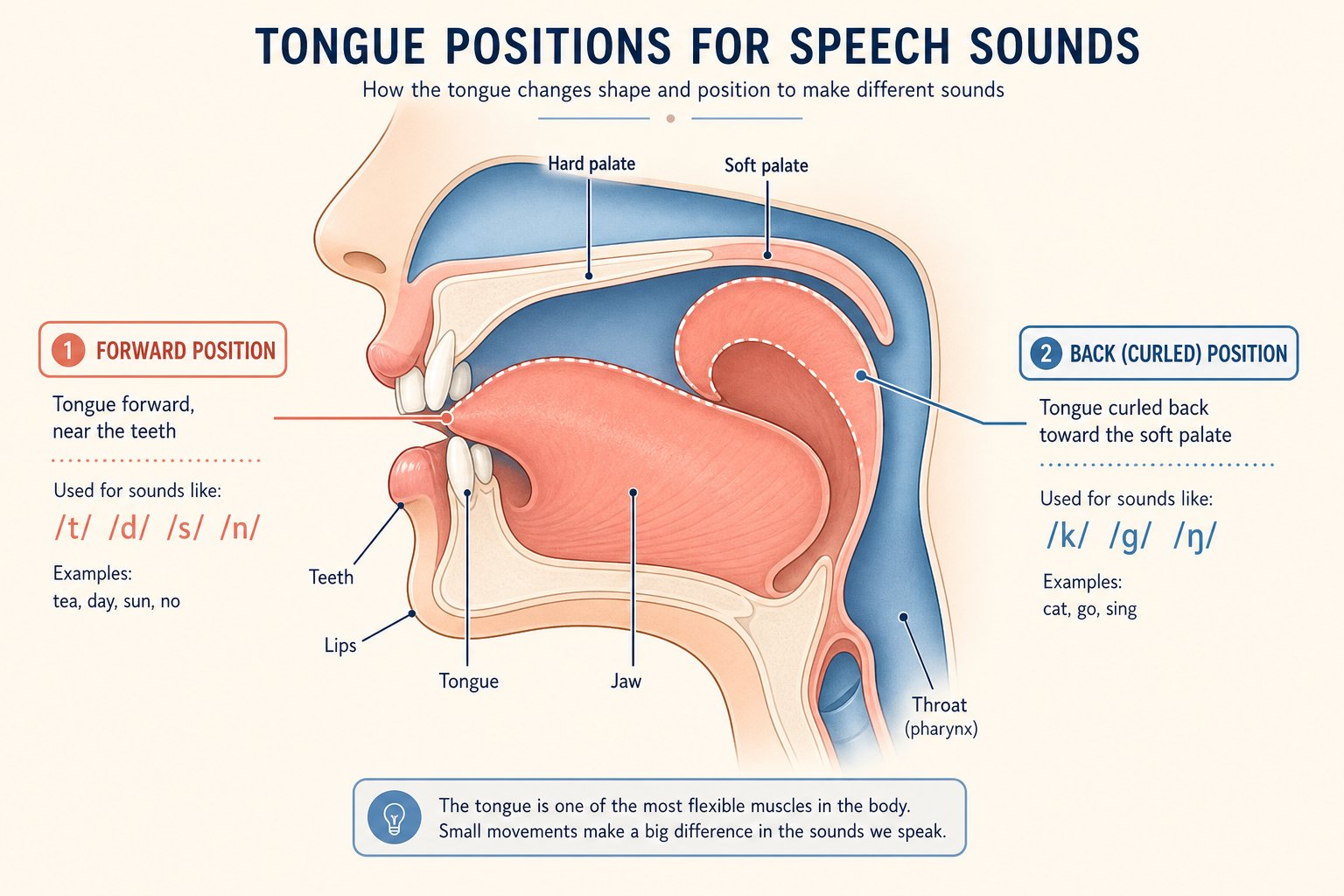
X - Think "she" with a smile. Place your tongue behind your lower front teeth and produce a light "sh" sound. It is softer and more forward in the mouth than the English "sh" in "shoe." As pronunciation research confirms, the key distinction is tongue position: English "sh" curls the tongue back, while pinyin X keeps it forward, almost touching the back of your front teeth. Imagine saying "she" while smiling wide. That forward, bright quality is X.
Q - Think "cheese" but sharper. This is the same forward tongue position as X, but with a burst of air. Say "cheese" and notice where your tongue hits the roof of your mouth. For pinyin Q, move that contact point forward, closer to your teeth, and add a crisp puff of air. The jia chinese name pronunciation (as in the name Jia) uses the related J initial, which shares this forward tongue position but without the aspiration.
C - Think "cats" without the "ca." Isolate the "ts" at the end of "cats" and use that as your starting consonant. Your tongue touches the back of your upper teeth, then releases with a strong puff of air. This is an aspirated sound, meaning you should feel breath on your hand if you hold it in front of your mouth.
Zh - Think "judge" with a curled tongue. Say the "j" in "judge," then curl the tip of your tongue farther back toward the roof of your mouth. The sound of zh is like English "j" but produced with the tongue in a retroflex position, touching the hard palate rather than the area just behind your teeth. The jun chinese name pronunciation (as in the common given name Jun) starts with this J-family sound in its forward position.
Z - Think "beds" without the "be." Isolate the "ds" ending from "beds" and use it to start a syllable. Your tongue presses against the back of your upper front teeth and releases without aspiration. It is the unaspirated counterpart to C, just as B is the unaspirated counterpart to P in Mandarin.
R - Think somewhere between English "r" and the "s" in "vision." This is the sound that surprises learners most. Mandarin R is a voiced retroflex fricative. Curl your tongue back to the same position you use for Zh, but instead of stopping the airflow, let it pass through with friction and vocal cord vibration. The rui chinese name pronunciation (as in the name Rui, meaning "auspicious") starts with this distinctive sound. If you say "vision" and notice the buzzy "zh" in the middle, you are close to the right quality.
English Word Analogies for Every Tricky Sound
Here is a quick-reference chart you can bookmark. For each initial, you will find the closest English approximation, a familiar word to anchor the sound, and the mistake to actively avoid:
| Pinyin Initial | English Approximation | Anchor Word | Common Mistake to Avoid |
|---|---|---|---|
| X | Light "sh" with tongue forward | "She" (said with a wide smile) | Saying "ks" as in "box" |
| Q | Sharp "ch" with tongue forward | "Cheese" (with extra air puff) | Saying "kw" as in "queen" |
| C | "ts" with aspiration | "Cats" (just the ending) | Saying "k" as in "cat" or "s" as in "city" |
| Zh | "j" with tongue curled back | "Judge" (tongue farther back) | Saying a buzzing "z" sound |
| Z | "ds" without aspiration | "Beds" (just the ending) | Saying English "z" as in "zoo" |
| R | Voiced retroflex, between "r" and French "j" | "Vision" (the middle sound) | Saying American "r" as in "red" |
A pattern emerges from this chart. The X/Q pair and the Zh/Ch pair are mirror images of each other. X and Q keep the tongue forward, near the teeth. Zh and Ch curl the tongue back, toward the palate. If you can feel that front-versus-back distinction in your own mouth, you have cracked the core logic of chinese name phonetic pronunciation for consonants.
One more practical tip: when you encounter a name and freeze, default to the English approximation column above rather than reading the letter at face value. Saying "Shee-ao" for Xiao is far closer to correct than "Ksee-ao." Saying "Chee" for Qi beats "Kwee" every time. The approximation does not need to be perfect. It just needs to land in the right neighborhood.
These six initials cover the consonant side of the puzzle. But consonants only start a syllable. What follows them, the vowels and compound finals, introduces its own set of surprises, especially when familiar-looking vowel combinations produce sounds nothing like their English equivalents.
Vowels and Compound Finals That Sound Different Than They Look
Consonants start the syllable, but vowels carry it. And in pinyin, vowels behave in ways that catch English speakers off guard. A single letter like "e" does not sound like any English "e" you have ever heard. Combine two or three vowels together, and the result can be even more surprising, because pinyin actually hides sounds inside its shortened spellings.
Vowel Sounds and Why They Shift in Combinations
Pinyin has six basic vowel sounds: a, o, e, i, u, and ü. On their own, most are straightforward. The letter "a" sounds like the "a" in "father." The letter "i" sounds like "ee" in "see." But the letter "e" is where English instincts fail you. Pinyin "e" by itself sounds like "uh" as in the second syllable of "sofa," not like the "e" in "bed" or "me." This single vowel trips people up in dozens of common names.
When vowels combine, they create compound finals that glide from one sound into another. Here are the most common ones you will encounter in Chinese names:
- ei - sounds like "ay" in "day." The fei chinese name pronunciation (as in Fei, meaning "to fly") rhymes with English "fay." Similarly, the mei chinese name pronunciation (as in Mei, meaning "beautiful") sounds like "may."
- ao - sounds like "ow" in "how" or "cow." Not like "ay-oh."
- ou - sounds like "oh" in "go." The mouth rounds and closes slightly at the end.
- ai - sounds like "eye" or the "i" in "bike."
For chinese name lei pronunciation, the final "ei" follows this same pattern: Lei sounds like "lay," not "lee" or "lie." Once you internalize that "ei" always maps to the "ay" sound, an entire family of names becomes easy to say.
The ü vowel deserves special attention because English simply does not have this sound. Imagine saying "ee" as in "see" but with your lips rounded into a tight circle, as if you were about to whistle. If you speak French, it is the "u" in "tu." If you speak German, it is the "ü" in "über." This sound appears after the initials L, N, J, Q, and X. The tricky part? After J, Q, and X, the two dots are dropped in writing, so "ju," "qu," and "xu" are actually pronounced "jü," "qü," and "xü." The spelling hides the real sound.
The Hidden Sounds in Compound Finals
Here is where pinyin gets sneaky. Three common finals are actually abbreviations of longer sounds. When you see them written, a middle vowel has been compressed out of the spelling but still exists in pronunciation:
| Written Form | Actual Pronunciation | English Approximation | Example Name |
|---|---|---|---|
| iu | iou | "ee-oh" gliding together | Liu (sounds like "lee-oh," not "loo") |
| ui | uei | "way" | Hui (sounds like "hway," not "hoo-ee") |
| un | uen | "wen" | Jun (sounds like "jwen," not "jun" as in "jungle") |
The chinese name liu pronunciation is a perfect example of this hidden-sound phenomenon. Written as "liu," it looks like it should rhyme with "loo." But the actual pronunciation is "lee-oh" compressed into a single smooth glide, as University of Iowa's Mandarin phonetics guide explains: start with the "i" sound, then glide into "ou" without pausing. The mouth transitions from flat to round in one motion.
The same logic applies to the chinese name hui pronunciation. Written "hui," it looks like "hoo-ee." But the actual sound is "hway," because "ui" is really "uei" compressed. You start with a rounded "u," glide through "e," and land on "i." In practice, it sounds close to the English word "way" with an "h" in front.
These compressed spellings follow a consistent rule: when "iou," "uei," or "uen" attach to an initial consonant, the middle vowel gets squeezed in writing but remains audible in speech. Knowing this single rule unlocks accurate pronunciation for dozens of common names.
Vowels give a syllable its body, but they do not tell the whole story. The same vowel combination, said at a different pitch, becomes an entirely different word and an entirely different name. That pitch dimension is where Mandarin tones enter the picture.
Tones and How They Change a Name's Meaning
You have the right consonant. You have the right vowel. You say the syllable "jing" and feel confident. But here is the catch: "jing" with a high flat pitch means "capital city" or "quiet," while "jing" with a falling pitch means "mirror" or "clean." The chinese name jing pronunciation changes meaning entirely depending on which of Mandarin's four tones you apply. Same letters, same mouth shape, completely different name.
Mandarin is a tonal language, which means pitch is not optional decoration. It is baked into the identity of every syllable. In English, you might raise your pitch at the end of a sentence to signal a question, but the word itself does not change meaning. In Mandarin, pitch is part of the word. The classic example: "ma" can mean mother, hemp, horse, or scold depending on whether your voice stays flat, rises, dips, or drops.
The Four Tones Described in Plain English
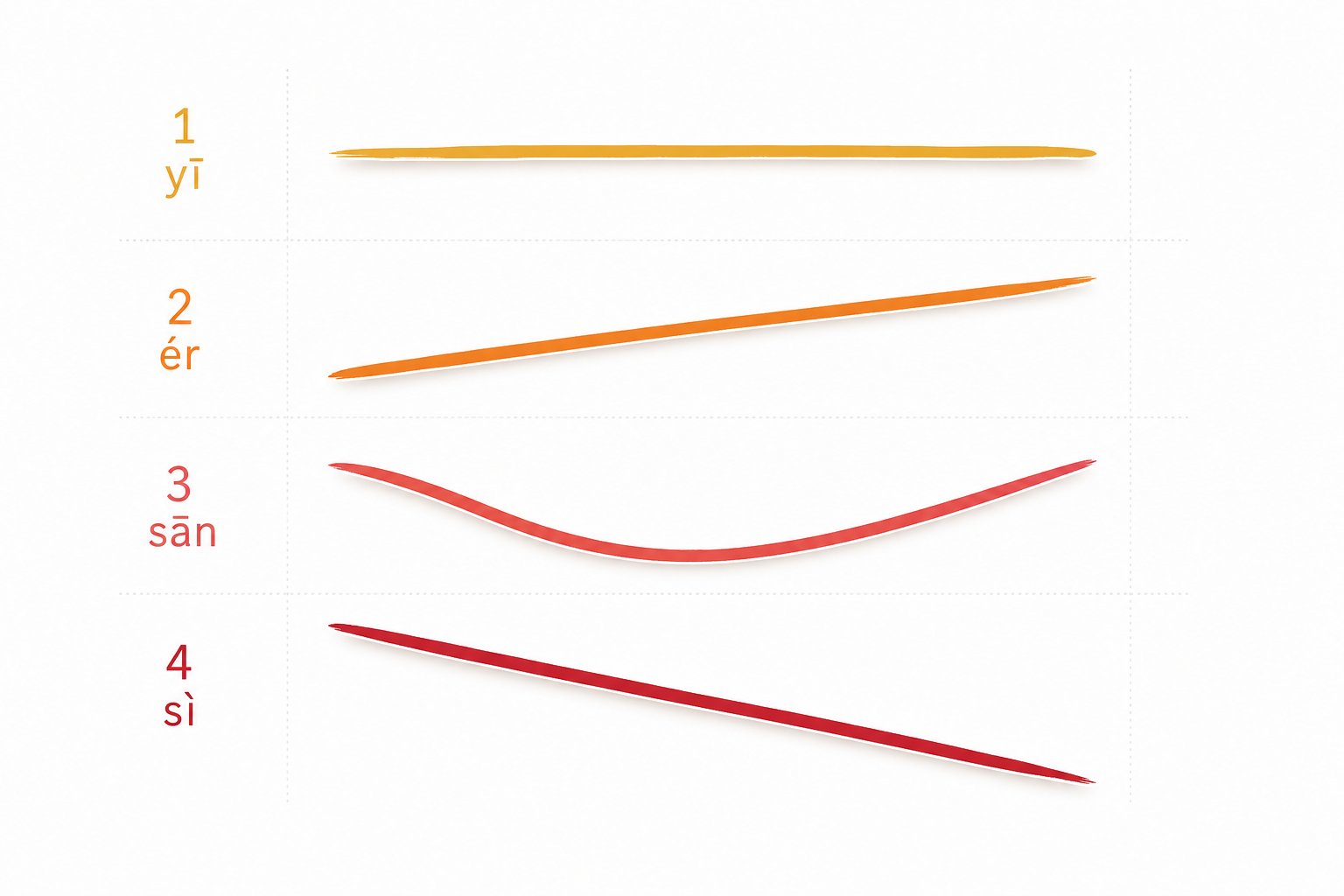
Imagine your voice as a line on a pitch graph. Each tone traces a different shape:
- Tone 1 (high and flat): Sustain a single high note, like holding a musical pitch steady. Think of the sound a doctor asks you to make when checking your throat: "Ahhh." Keep it level from start to finish. The chinese name cong pronunciation with first tone (as in Cong meaning "clever") stays on this steady high pitch throughout.
- Tone 2 (rising): Start at a middle pitch and slide upward, like the way your voice naturally rises when you ask "What?" in surprise. It is the same melodic shape as an English question word said in disbelief.
- Tone 3 (dipping then rising): Drop your pitch low, let it bottom out, then let it rise slightly at the end. Think of the drawn-out "well..." you say when you are thinking something over. In practice, when tone 3 appears before another syllable, speakers often just go low without the final rise.
- Tone 4 (sharp falling): Start high and drop sharply, like a firm, decisive "No!" or the way you might bark a command. It is short, forceful, and drops like a stone. The chinese name pronunciation jian with fourth tone (as in Jian meaning "sword" or "to build") uses this sharp downward pitch.
There is also a neutral tone, sometimes called tone 5 or the "light" tone. It is short, unstressed, and takes its pitch from whatever tone came before it. You will encounter it in the second syllable of some given names, where it sounds clipped and quick rather than carrying a distinct pitch contour.
Practical Tone Tips for Name Pronunciation
Here is the honest truth: tones represent Level 3 mastery in our confidence framework. For everyday name pronunciation, awareness matters far more than perfection. Most Chinese speakers will understand your intent from context and consonant-vowel accuracy alone, especially in a name. But tone awareness still helps, because it prevents you from accidentally saying something unintended.
Consider the chinese name juan pronunciation. With a first tone, "juan" can relate to "graceful." With a third tone, it connects to "roll" or "curl." The chinese name ba zheng pronunciation similarly shifts across tones: "ba" in first tone means "eight," in second tone means "to pull," in third tone means "target," and in fourth tone means "father" (informal). These are not obscure edge cases. They are common name elements where tone determines which character, and which meaning, a parent chose.
So what should you do when you are unsure of someone's tone? A practical approach:
- Default to a neutral, even pitch. If you do not know the correct tone, keep your voice flat and steady at a middle pitch rather than guessing. A wrong tone is more jarring than no tone at all.
- Listen for the person's own pronunciation. When someone introduces themselves, pay attention to the pitch movement in their name. Even one hearing gives you a template to mirror.
- Do not let tone anxiety stop you from trying. Getting the consonants and vowels right already puts you ahead of most English speakers. Tones are the polish, not the foundation.
Attempting tones, even imperfectly, signals that you recognize Chinese as a tonal language and that you are making a genuine effort. That effort registers as respect, regardless of whether your pitch lands perfectly.
Tones add a vertical dimension to pronunciation, but they are not the only source of variation in Chinese names. The same character, said with the same tone, can appear as completely different spellings depending on whether someone's family comes from Beijing, Hong Kong, or Taipei. That regional layer is where romanization systems diverge and where a single surname can look like three entirely different names on paper.
A Quick-Reference for the Most Common Chinese Surnames
Rules and charts are useful, but what most people actually need is a fast answer: "I have a meeting with someone named Huang in ten minutes. How do I say it?" This section gives you that answer for the twenty most frequently encountered Chinese surnames in English-speaking countries, plus a handful of given-name elements that consistently trip people up.
The 20 Most Common Chinese Surnames and How to Say Them
The three most common family names in mainland China are Li, Wang, and Zhang, shared by more than 270 million people. Add the next seventeen surnames on this list and you cover the vast majority of Chinese names you will encounter at work, school, or social events. For each chinese last name pronunciation below, the "Approximate English Pronunciation" column gives you the closest sound using words you already know:
| Surname (Pinyin) | Approximate English Pronunciation | Common Mistake to Avoid |
|---|---|---|
| Wang | "Wahng" (rhymes with "song," not "wang" as in "boomerang") | Saying it like English "wang" with a flat A |
| Li | "Lee" | No major pitfall; this one is intuitive |
| Zhang | "Jahng" (like "John" + "ng" at the end) | Pronouncing the Zh as a buzzing Z |
| Liu | "Lee-oh" (glided together smoothly) | Saying "loo" or rhyming it with "few" |
| Chen | "Chuhn" (the "e" is "uh," not "eh") | Saying "Chen" like "hen" with a Ch |
| Yang | "Yahng" (like "young" but with "ah") | Saying it like the English word "yang" |
| Huang | "Hwahng" (start with a quick "hw") | Dropping the H and saying "wang" |
| Zhao | "Jow" (rhymes with "cow") | Saying "zay-oh" or "zoo" |
| Wu | "Woo" (like "wood" without the D) | No major pitfall |
| Zhou | "Joe" (yes, like the English name) | Saying "zoo" or "zoh" |
| Xu | "Shü" (like "she" but with rounded lips) | Saying "ks-oo" or "zoo" |
| Sun | "Swun" (the U is between "oo" and "uh") | Saying it exactly like the English word "sun" |
| Ma | "Mah" (like "mama") | No major pitfall |
| Zhu | "Joo" (like "juice" without the "ice") | Saying "zoo" with a Z sound |
| Hu | "Hoo" (like "who") | Saying "huh" (that is a different name) |
| Guo | "Gwoh" (a quick "gw" glide into "oh") | Saying "goo-oh" as two separate syllables |
| Lin | "Lin" (like "linen") | No major pitfall |
| He | "Huh" (like the start of "hug") | Saying it like the English pronoun "he" |
| Luo | "Lwoh" (a quick "lw" into "oh") | Saying "loo-oh" or "luroh" |
| Mei | "May" (like the month) | Saying "me" or "my" |
A few patterns emerge from this table. Surnames ending in "-ang" always use the "ah" vowel, not the flat English A. Surnames starting with Zh- use a "j" sound with the tongue curled back. And the chinese name hu pronunciation ("Hoo") is distinct from He ("Huh"), a pair that causes constant confusion because English speakers read both through their native spelling rules.
For chinese name pronunciation guo, notice the "uo" compound final at work. As covered in the vowels section, "uo" glides from a rounded "oo" into "oh." When G precedes it, a brief "w" glide naturally appears, giving you "Gwoh" as a single smooth syllable. The ASU pronunciation guide confirms this glide in their audio recordings of common surnames.
Specific Names English Speakers Get Wrong Most Often
Beyond the top twenty surnames, certain name elements appear constantly in given names and cause predictable errors. Here are the ones that generate the most confusion, drawn from the long-tail keywords people actually search for:
- He - The he chinese last name pronunciation is "Huh," not "He" the pronoun and not "Hee." The pinyin "e" maps to an "uh" sound. This is arguably the single most mispronounced Chinese surname in English because it looks identical to a common English word.
- Fang - The fang chinese name pronunciation is "Fahng," with the open "ah" vowel. It does not rhyme with English "fang" (as in a vampire's tooth). The A in pinyin is always "ah," never the flat A of "cat."
- Luo - The luo chinese name pronunciation is "Lwoh," a single syllable with a quick glide. English speakers tend to break it into two syllables ("Loo-oh"), but in natural speech it flows as one unit.
- Fei - Sounds like "Fay," rhyming with "day." Not "fee" and not "fie."
- Jia - Sounds like "Jyah," with the J produced at the front of the mouth (tongue behind lower teeth). Not a hard English J as in "jar."
- Jun - Sounds like "Jwen," because "un" in pinyin is actually "uen" compressed. Not "jun" as in "jungle" or "June."
- Lei - Sounds like "Lay," following the "ei = ay" rule. Not "lee" and not "lie."
- Rui - Sounds like "Rway," with the Mandarin R (tongue curled back, buzzy quality) followed by the "ui = uei = way" compound final. This one combines two tricky elements in a single syllable.
The chinese name mei pronunciation is worth highlighting because it demonstrates how a single syllable carries layered meaning. Pronounced "May," this name element can mean "beautiful" (third tone) or "plum blossom" (second tone), as the Asia Media Centre notes. Either way, the mouth shape and vowel sound remain the same. Only the pitch changes.
If you bookmark one section of this guide for quick reference before meetings or introductions, make it this one. These twenty surnames plus the nine commonly searched name elements cover the overwhelming majority of Chinese names you will encounter in daily life. Get these right, and you are operating solidly at Level 2 pronunciation confidence.
One thing you will notice, though: not every Chinese person you meet spells their surname the way this table shows. Someone named "Wong" might share the exact same Chinese character as someone named "Wang." That discrepancy is not a typo. It is a signal that different romanization systems are at work, shaped by regional languages and historical conventions that stretch far beyond Mandarin pinyin.
Regional Romanization Systems and Why Names Vary So Much
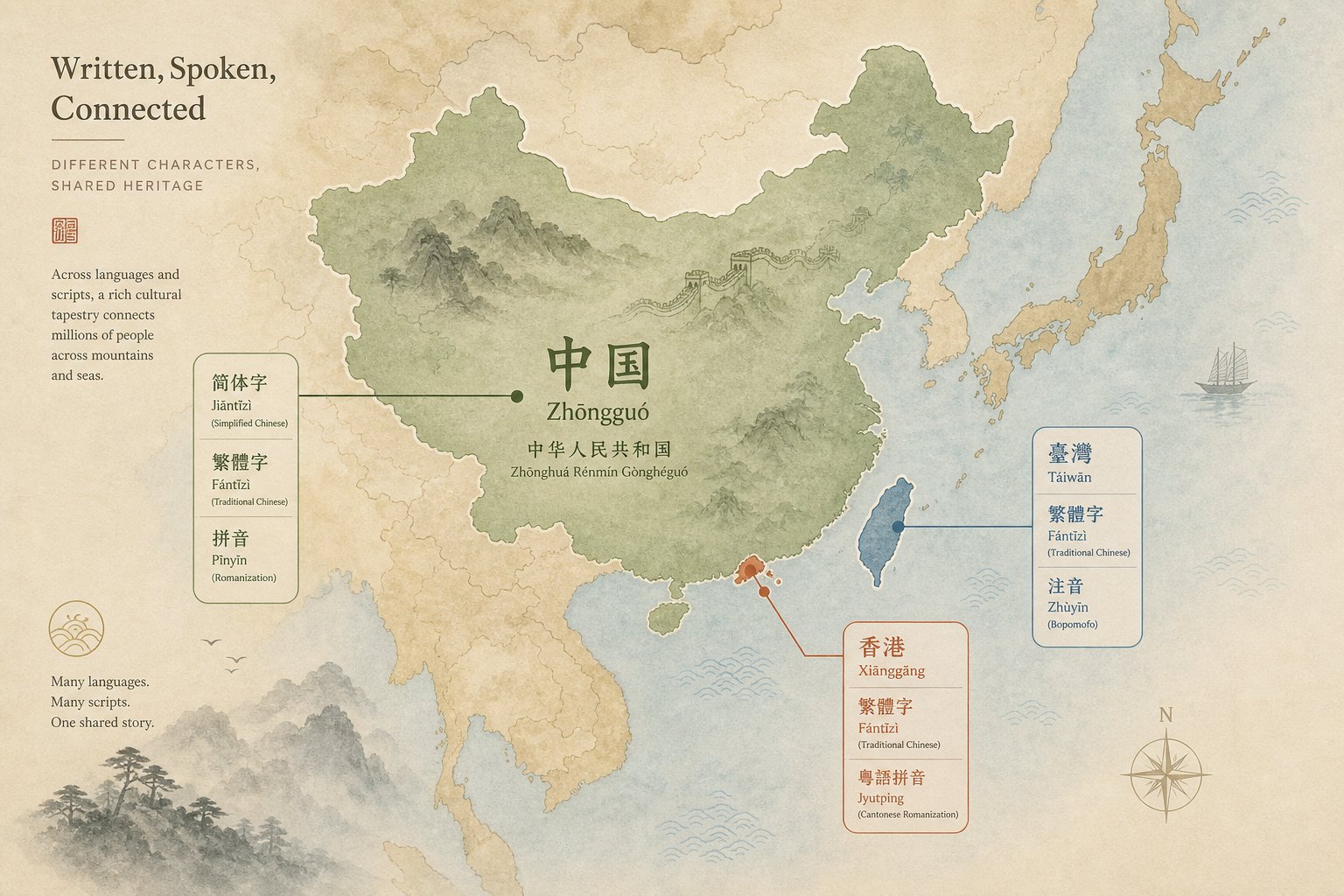
You learn that "Wang" is pronounced "Wahng." Then you meet someone named "Wong" and discover it is the exact same Chinese character. A colleague named "Tan" turns out to share a surname with your friend "Chen." What is going on? The answer is not inconsistency. It is geography. Chinese is not one spoken language but a family of related languages and dialects, and each region developed its own way of spelling names in Latin letters.
Pinyin vs Wade-Giles vs Cantonese Romanization
Three major romanization systems account for nearly all the spelling variation you will encounter in Chinese names. Each one emerged from a different historical and regional context:
Pinyin is the standard system used in mainland China since the 1950s. It is what this guide has focused on so far. If someone grew up in Beijing, Shanghai, or most cities in the People's Republic of China, their passport and official documents use pinyin. Names like Zhang, Xu, and Huang follow this system.
Wade-Giles is an older romanization system developed by British diplomats in the 19th century. It remains common in Taiwan and in older academic texts. Wade-Giles uses apostrophes to mark aspiration and makes different letter choices than pinyin for the same sounds. So pinyin "Xu" becomes Wade-Giles "Hsu," pinyin "Zhang" becomes "Chang," and pinyin "Qi" becomes "Ch'i." The chia chinese name pronunciation in Wade-Giles (as in Chia) corresponds to pinyin "Jia." If you see a name spelled "Chia," the person likely has Taiwanese heritage or their family adopted the Wade-Giles convention.
Cantonese romanization reflects the pronunciation of Chinese characters in Cantonese, a language spoken in Hong Kong, Macau, and Guangdong province. Cantonese has six to nine tones (depending on the counting method) and a completely different sound system from Mandarin. Names from this system look nothing like their pinyin equivalents because they represent genuinely different pronunciations of the same written character. Hong Kong names typically follow either the Yale Cantonese system or the government's own romanization conventions.
The practical takeaway: when you encounter a Chinese name that does not match pinyin patterns, you are likely looking at Wade-Giles or Cantonese spelling. Asking "Which romanization does your name use?" or simply "How do you pronounce your name?" is always appropriate and appreciated.
Why the Same Surname Looks Completely Different Across Regions
Here is where it gets concrete. The table below shows how a single Chinese character, representing one surname, appears across all three systems. Notice that these are not alternate spellings of the same sound. In many cases, the Cantonese pronunciation is a genuinely different word from the Mandarin one, because the two languages diverged centuries ago:
| Chinese Character | Pinyin (Mandarin) | Wade-Giles (Taiwan) | Cantonese (Hong Kong) |
|---|---|---|---|
| 王 | Wang | Wang | Wong |
| 李 | Li | Li | Lee / Lei |
| 陈/陳 | Chen | Ch'en | Chan / Tan |
| 黄/黃 | Huang | Huang | Wong |
| 吴/吳 | Wu | Wu | Ng |
| 徐 | Xu | Hsu / Hsü | Tsui / Chui |
| 谢/謝 | Xie | Hsieh | Tse |
| 蔡 | Cai | Ts'ai | Choi / Tsoi |
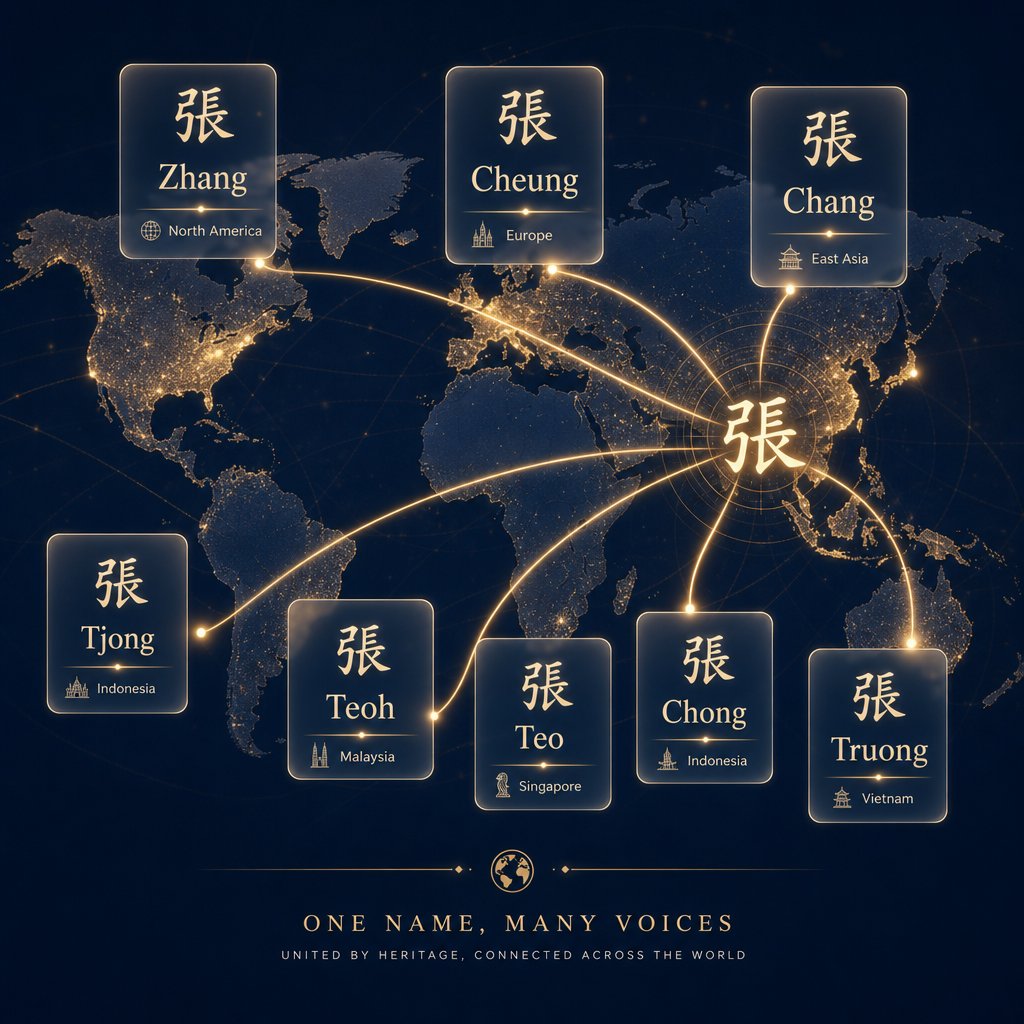
| 张/張 | Zhang | Chang | Cheung / Cheong |
| 林 | Lin | Lin | Lam |
Look at the row for 黄 (Huang). In Cantonese, this surname is pronounced "Wong," which is also the Cantonese pronunciation of 王 (Wang). Two completely different surnames in Mandarin collapse into the same spelling in Cantonese. Context and the person themselves are your only reliable guides.
The chinese last name ng pronunciation is one of the most distinctive examples. "Ng" represents the Cantonese pronunciation of the character 吴 (pinyin: Wu) or sometimes 伍. It starts with a nasal sound, the same "ng" you produce at the end of "sing," but used as the entire syllable. English speakers often freeze when they see it because no English word starts with "ng." The trick: hum the ending of "sing" and hold that nasal resonance. That is the complete sound. No vowel needed.
The tse chinese name pronunciation follows similar logic. "Tse" is the Cantonese romanization of 谢 (pinyin: Xie, meaning "to thank"). In Cantonese, it sounds roughly like "tseh" with a short, clipped vowel. You will recognize this surname from figures like Nicholas Tse, the Hong Kong actor and singer. If you tried to apply Mandarin pinyin rules to "Tse," you would get nowhere, because it is not pinyin at all.
The cai name pronunciation chinese also shifts dramatically across systems. In Mandarin pinyin, Cai sounds like "tsai" (rhyming with "eye" but starting with the "ts" from "cats"). In Wade-Giles, the same character appears as "Ts'ai." In Cantonese, it becomes "Choi" or "Tsoi," a noticeably different sound. Someone named Choi and someone named Cai may share the exact same surname character.
For pui name pronunciation chinese, you are looking at a Cantonese syllable that does not exist in Mandarin pinyin at all. "Pui" appears in Cantonese given names and sounds roughly like "poo-ee" compressed into one syllable, with the lips starting rounded and opening into an "ee" sound. It corresponds to various characters depending on tone, but the romanization itself signals a Cantonese-speaking background.
A practical rule emerges from all of this: the spelling of a Chinese name tells you not just how to pronounce it, but where the person's family likely comes from. "Chen" signals mainland China. "Chan" signals Hong Kong or Cantonese-speaking heritage. "Tan" signals Hokkien or Southeast Asian Chinese communities. All three share the same character. None of them is wrong.
When you are unsure which system someone's name follows, the simplest approach is to ask. Most people appreciate the question because it shows you recognize that their name carries specific regional and linguistic identity. And once you know the system, you can apply the right pronunciation rules rather than forcing every name through a single Mandarin pinyin lens.
Understanding these regional systems explains the variation you see on paper. But what about the moments when you are face-to-face with someone, their name is unfamiliar, and you need to respond in real time? That live-interaction challenge calls for a different kind of preparation: social scripts and graceful recovery strategies.
Handling Unfamiliar Names Gracefully in Real Situations
You have studied the initials, practiced the vowels, and bookmarked the surname table. Then you walk into a meeting and see an unfamiliar name on the attendee list. Your palms get a little sweaty. All the theory in the world does not eliminate that moment of social uncertainty. What matters now is not perfection. It is how you handle the gap between what you know and what you do not.
How to Ask About Pronunciation Without Awkwardness
The simplest strategy is also the one people skip most often: just ask. As workplace inclusion research from Trainual highlights, asking someone to pronounce their name signals investment in them as a person. It builds rapport rather than creating awkwardness. The key is framing. A good question puts the focus on your desire to get it right, not on the name being "difficult."
Try these scripts:
- "I want to make sure I say your name correctly. Could you help me with the pronunciation?"
- "Would you mind saying your name for me? I want to get it right."
- "I may be mispronouncing your name. How do you prefer it said?"
Each of these frames the request as respect, not confusion. They work in interviews, classrooms, client calls, and casual introductions alike.
What you should never do:
- Never say "I can't pronounce that." This puts the burden on the other person and implies their name is a problem.
- Never skip someone's name entirely. Referring to everyone else by name and then saying "and you" is immediately noticeable and alienating.
- Never joke about the difficulty. "Wow, not even going to try!" might feel lighthearted to you, but as career experts at The Muse note, it can damage professional relationships and make people feel othered.
- Never assign a nickname without permission. Shortening someone's name or substituting an English name without being invited to do so strips away their choice.
If you have a scheduled meeting, do your homework beforehand. Search the name on YouTube or a pronunciation site like PronounceNames.com. Even sixty seconds of preparation demonstrates that you value the interaction enough to try. When you arrive already close to the correct pronunciation, the other person notices, and it sets a tone of mutual respect from the first handshake.
What to Do When a Sound Simply Does Not Exist in English
Some Mandarin and Cantonese sounds genuinely have no English equivalent. The ü vowel, the retroflex R, the nasal "Ng" as a standalone syllable. No amount of goodwill makes your mouth produce a sound it has never practiced. So what do you do?
You get as close as you can, and you own the attempt honestly. A genuine approximation delivered with confidence always lands better than avoidance or a mumbled blur. If you say "Shü" for Xu and it comes out slightly more like "Shoo," that is still worlds better than "Ksoo" or skipping the name altogether. The person hears that you tried. That registers.
Celebrity names offer useful practice because you can hear them said correctly in interviews and press events. Consider how these famous names differ from their stage-name pronunciations:
- Jackie Chan - The jackie chan chinese name pronunciation is "Cheng Long" (成龙), said roughly as "Chuhng Lohng." His Cantonese birth name is "Chan Kong-sang." The English stage name bears almost no phonetic resemblance to either.
- Bruce Lee - The bruce lee chinese name pronunciation is "Li Xiaolong" (李小龙), approximately "Lee Shyow-lohng." "Lee" is the anglicized Cantonese form of Li, so the surname carries over, but the given name is entirely different.
- Michelle Yeoh - The michelle yeoh chinese name pronunciation uses her Cantonese surname "Yeoh" (杨), which corresponds to Mandarin "Yang." Her full Chinese name is Yang Ziqiong (杨紫琼), roughly "Yahng Dzuh-chyohng."
- Andy Lau - The andy lau chinese name pronunciation is "Liu Dehua" (刘德华) in Mandarin, roughly "Lee-oh Duh-hwah." "Lau" is the Cantonese romanization of 刘 (pinyin: Liu).
- Jackson Wang - The jackson wang chinese name pronunciation is "Wang Jiaer" (王嘉尔) in Mandarin, roughly "Wahng Jyah-er." His surname follows standard pinyin, making it a straightforward example of the "Wang = Wahng" rule from the surname table.
Notice the pattern: every one of these celebrities has a Chinese name that sounds substantially different from their English stage name. Practicing with these familiar figures builds your ear for real Mandarin and Cantonese syllables in a low-stakes context. You can look up interviews, listen to how hosts and native speakers say the names, and calibrate your own attempts.
The underlying principle across all of these scenarios is simple. A close, confident attempt beats silence. Asking beats guessing. And preparing beforehand beats scrambling in the moment. You do not need to be a Mandarin speaker to pronounce Chinese names respectfully. You just need to care enough to try, and to have a few reliable tools and strategies ready when the moment arrives.

Tools and Practice Methods to Keep Improving
Caring enough to try is the foundation. But turning that effort into lasting skill requires practice, and practice works best when you have the right tools at your fingertips. The good news: you do not need textbooks, tutors, or language classes. A handful of free resources can take you from hesitant approximation to confident pronunciation, one name at a time.
Free Tools and Resources for Practice
Several categories of tools help you hear, mimic, and refine Chinese name pronunciation online without spending a cent:
- Pinyin charts with audio: Sites like Yoyo Chinese and Pinyin Chart by ChinesePod display every possible Mandarin syllable in a grid. Click any cell and hear a native speaker say it clearly. These charts are ideal for isolating a specific sound you are struggling with.
- AI chinese name pronunciation generators: Tools powered by text-to-speech AI let you type any pinyin string and hear it spoken aloud instantly. Google Translate, Forvo, and newer AI voice platforms all offer this. Type "Xu Qiaoling," hit play, and get a native-quality audio model on demand. A chinese name pronunciation tool like this removes the guesswork entirely.
- Online dictionaries with audio: MDBG, Pleco, and LINE Dictionary let you search by pinyin or characters and play back recordings from real speakers. These are especially useful for checking tones, since the audio captures pitch movement that text cannot convey.
- Community pronunciation databases: Forvo and PronounceNames.com collect recordings from native speakers worldwide. Search a specific name and often find multiple recordings reflecting different regional accents, giving you a chinese names audio pronunciation reference grounded in real voices rather than synthetic speech.
The most effective way to use any of these: type the pinyin, listen to the native audio, repeat it aloud, then listen again. That loop of input and output trains your ear and your mouth simultaneously. Even two or three repetitions before a meeting makes a noticeable difference in how naturally the name comes out when it counts.
A chinese names pronunciation tool does not replace human interaction, but it gives you a private, pressure-free space to experiment. You can replay a tricky syllable twenty times without anyone watching. That freedom to fail quietly is what builds confidence for the public moments.
A Simple Daily Practice Routine for Improvement
Consistency beats intensity. Five minutes a day builds more skill than an hour once a month. Here is a step-by-step routine you can follow using any of the free tools above:
- Pick one name you will encounter this week. A colleague, a client, a public figure. Something with real-world stakes keeps you motivated.
- Break it into syllables. Identify the surname and given name. Separate each syllable: initial + final.
- Look up the chinese name pronunciation audio. Use a pinyin chart, AI tool, or Forvo to hear each syllable spoken by a native speaker.
- Repeat each syllable three times slowly. Focus on mouth shape and tongue position. Then say the full name at natural speed.
- Record yourself and compare. Most phones have a voice memo app. Play your version back-to-back with the native audio. Notice where the gap is and adjust.
- Use the name in context. Say it aloud in a sentence: "Good morning, [name]." This trains your mouth to produce the sounds in natural speech flow, not just in isolation.
This routine takes under five minutes. Do it consistently and you will notice your comfort zone expanding week by week. Names that once felt impossible start feeling routine. That progression maps directly to the confidence levels from the beginning of this guide: Level 1 (respectful approximation) becomes Level 2 (correct pronunciation) becomes Level 3 (tonal awareness and regional fluency) through nothing more than repeated, low-pressure practice.
You do not need to reach Level 3 to make a meaningful difference in how people experience you. Even moving from avoidance to a genuine Level 1 attempt changes the dynamic in a room. And every name you practice strengthens your ear for the next one, because the same initials, finals, and patterns recur across thousands of Chinese names.
Pronunciation is not a one-time lookup. It is an ongoing skill that compounds with every name you practice, every audio clip you replay, and every conversation where you choose to try rather than avoid.
Frequently Asked Questions About Chinese Name Pronunciation
1. Why do Chinese names spelled with X, Q, and C sound so different from English?
Pinyin was designed for Chinese speakers learning to read, not for English speakers. It reuses Latin letters but assigns them to completely different sounds. X maps to a light 'sh' sound (tongue forward), Q maps to a sharp 'ch' sound (with aspiration), and C maps to a 'ts' sound like the ending of 'cats.' These letters were chosen for systematic reasons within Mandarin phonology, not because they share any phonetic relationship with their English counterparts.
2. How do I pronounce the Chinese surname Xu correctly?
Xu is pronounced approximately like 'shoo' but with rounded lips and the tongue positioned behind the lower front teeth. The X produces a light, forward 'sh' sound, and the 'u' after X is actually the special vowel u-umlaut, made by saying 'ee' with tightly rounded lips as if about to whistle. The closest English approximation is 'shoo' said with pursed lips, though the true sound sits between 'shoo' and 'shee.'
3. Why is the same Chinese surname spelled differently by different people?
Different romanization systems reflect different Chinese languages and regional conventions. Mainland China uses pinyin (Chen), Taiwan often uses Wade-Giles (Ch'en), and Hong Kong uses Cantonese romanization (Chan). These are not alternate spellings of one sound but often represent genuinely different pronunciations in Mandarin versus Cantonese. A person's surname spelling typically indicates their family's regional origin, and asking which system they use is perfectly appropriate.
4. Do I need to use tones when saying someone's Chinese name?
Tones represent advanced mastery and are not strictly necessary for respectful name pronunciation in English-speaking contexts. Getting the consonants and vowels right matters most. If you are unsure of the correct tone, keep your voice at a neutral, even pitch rather than guessing incorrectly. However, being aware that tones exist and attempting them when you can signals genuine effort and cultural respect. Most Chinese speakers will understand your intent from context even without perfect tones.
5. What is the best way to ask someone how to pronounce their Chinese name?
Frame your request around your desire to get it right rather than implying the name is difficult. Effective phrases include 'I want to make sure I say your name correctly - could you help me?' or 'Would you mind saying your name for me?' Avoid saying 'I can't pronounce that,' skipping the name entirely, or assigning a nickname without permission. If you have time before a meeting, look up the pronunciation using online audio tools so you arrive already close to correct.