The Cultural Power of Snow in Chinese Naming
When you hear a Chinese name that means snow, you might picture a quiet winter landscape. But for Chinese families, snow carries far more weight than weather. It represents an entire philosophy of character, one woven through thousands of years of poetry, art, and moral teaching. Chinese names meaning snow draw on this deep well of symbolism, giving a child not just a beautiful sound but a story about who they might become.
Snow symbolism in Chinese culture runs remarkably deep. With its white color and cold, translucent texture, snow has long been compared to white jade, a material representing purity, dignity, and nobility. Chinese people particularly treasure the first snowfall of each year because it signals good fortune for the harvest ahead. The famous idiom rui xue zhao feng nian (瑞雪兆丰年) captures this belief: a timely snow promises a fruitful year. Snow is not fragile or fleeting in this tradition. It is a force that nourishes, purifies, and tests.
Why Snow Holds Deep Meaning in Chinese Culture
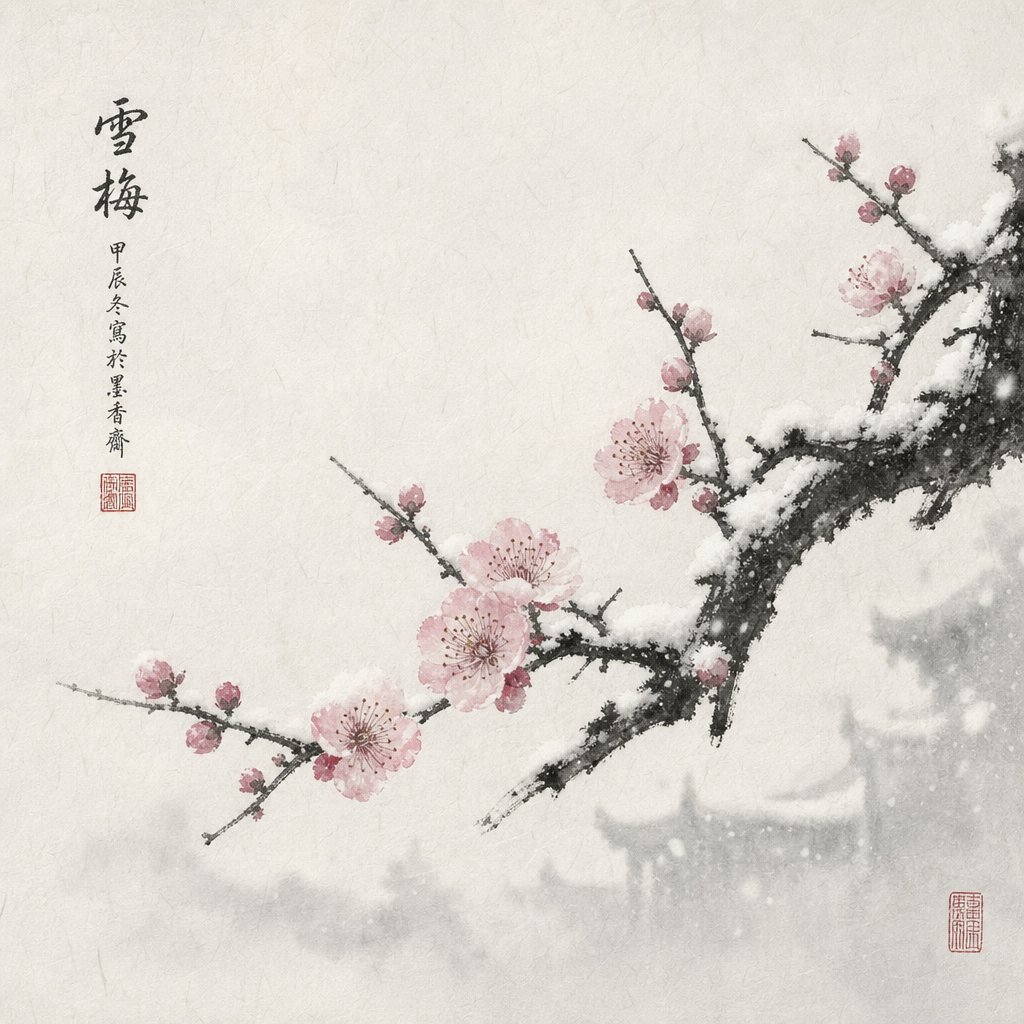
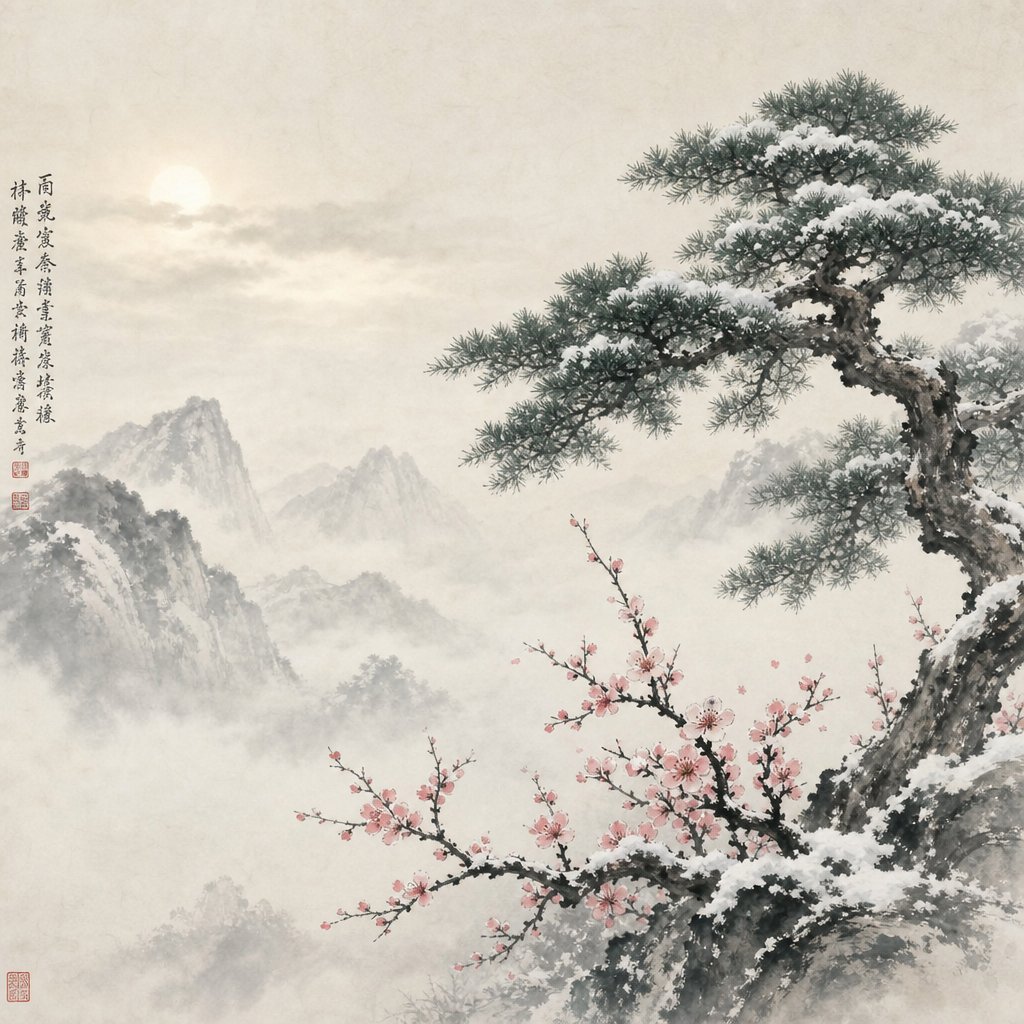
Imagine a plum blossom blooming against a backdrop of heavy snow. This image, central to Chinese art and literature, tells you everything about why parents choose snow-related characters for their children. The plum blossom in snow is the ultimate symbol of perseverance, someone who thrives precisely because conditions are harsh. Confucius himself used winter imagery to describe moral character, observing that only in the coldest season do you discover which trees refuse to lose their leaves.
Only in the cold of winter does one know that the pine and the cypress are the last to wither. (岁寒,然后知松柏之后凋也。) — Confucius, The Analerta
This idea, that adversity reveals true nature, sits at the heart of the meaning of snow in Chinese names. A child named with a snow character carries an implicit wish: may you possess the clarity and resilience that only winter can reveal.
The Symbolism Parents Seek in Snow Names
Chinese parents approach naming with serious intention. As Sixth Tone notes, most Chinese parents believe names should be elegant, auspicious, and ideally unique. Some consult classical poetry, others consider the Five Elements philosophy, and many seek characters that encode specific virtues they hope their child will embody.
Chinese name characters for snow offer a rare combination of qualities. They evoke moral clarity, the kind of person who sees through confusion to what is right. They suggest elegance without vanity, beauty that is natural and unforced. And they carry the weight of scholarly tradition, since snow imagery appears in some of the most celebrated verses in the Chinese literary canon. A snow name is not a label. It is a compressed poem, a parent's deepest hope made visible in brushstrokes.
This depth is exactly what separates a genuine understanding of snow-themed Chinese names from a surface-level list. Each character carries radical structure, tonal music, elemental associations, and centuries of literary resonance. The sections ahead unpack all of it, character by character, so you can choose a name with the full cultural picture in view.
Essential Snow Characters in Chinese and Their Nuances
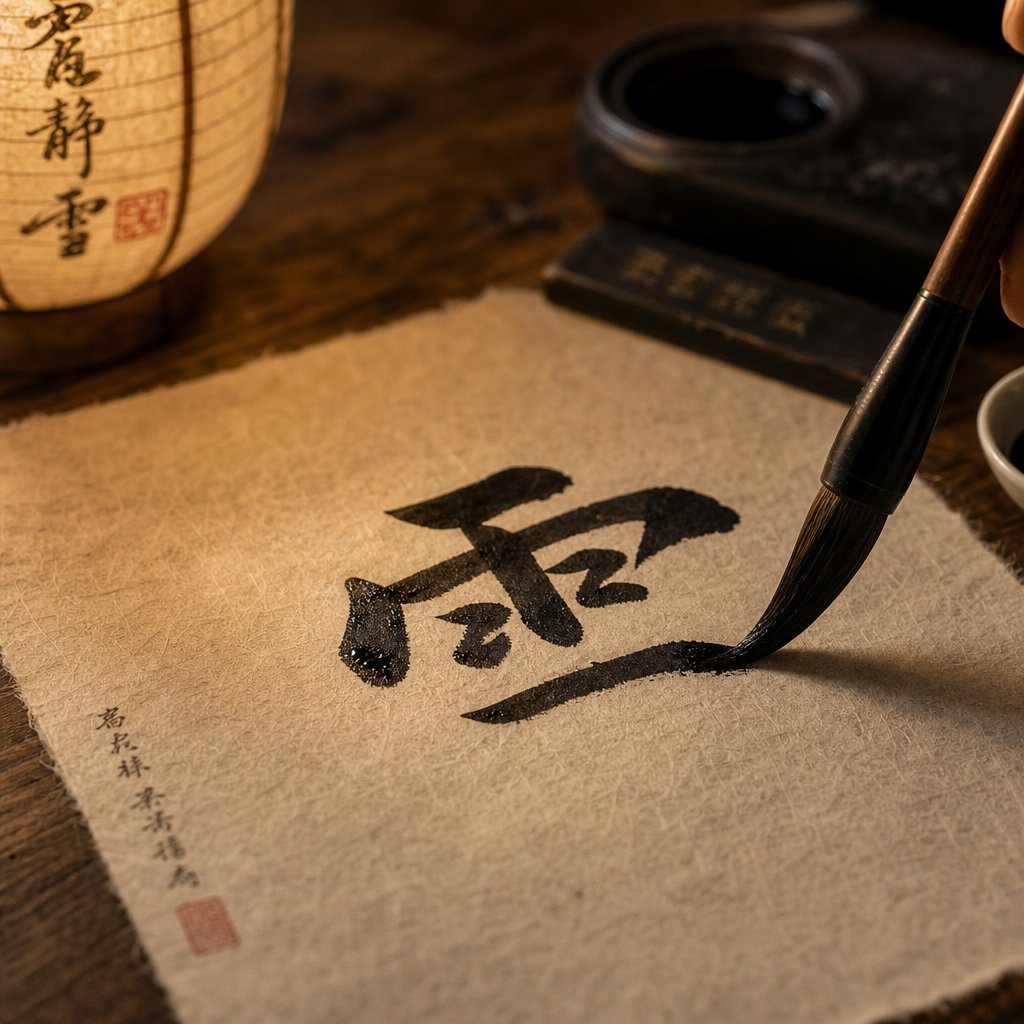
So how do you say snow in Chinese? The most direct answer is xue, written as 雪 and pronounced in the third tone (xuě) with a falling-then-rising pitch. But here is where things get interesting for naming purposes: Chinese offers not one but several characters that evoke snow, ice, frost, and wintry beauty. Each carries a distinct emotional texture, and choosing the right one shapes the entire personality of a name.
Understanding these characters means looking inside them, literally. Chinese characters are built from smaller components called radicals, which signal meaning or category. When you can read the radical structure of a snow-related character, you understand its visual logic and the associations it triggers for native speakers. Think of it as seeing the architecture behind the word.
Breaking Down 雪 Xue and Its Radical Structure
The character 雪 (xuě) is the primary Chinese character for snow. Its structure tells a clear story: the top portion is 雨 (yu), the rain radical, which appears in nearly all weather-related characters. The bottom portion is 彐, a component that in this context represents a hand sweeping or brushing. Together, the visual logic suggests rain that can be swept away, frozen precipitation that settles on surfaces. It is a beautifully literal piece of visual engineering.
In names, 雪 is the most versatile and widely recognized snow character. It reads as poetic without being obscure, and native speakers immediately associate it with purity, elegance, and quiet beauty. The character works equally well as the first or second element in a two-character given name, and it pairs naturally with dozens of other characters. Its third tone (the dipping tone) gives it a soft, contemplative sound that flows well after most surnames.
One practical note: 雪 is identical in both simplified and traditional Chinese. Parents from mainland China, Taiwan, Hong Kong, or diaspora communities all write it the same way, making it one of the most universally accessible snow characters for naming.
Beyond Xue — Other Characters That Evoke Snow and Ice
While 雪 is the most direct choice, four other characters deserve serious consideration when building a snow-themed name. Each brings a different shade of winter imagery.
霜 (shuāng) — Frost. This character shares the rain radical 雨 on top, with 相 (xiang, meaning mutual or appearance) below. Frost is snow's quieter cousin: it suggests delicacy, the first chill of autumn, and a refined coolness. In naming, 霜 carries associations with maturity and composed beauty. It appears in the famous solar term 霜降 (Shuangjiang, Frost's Descent), and as Chinese Idioms notes, this character carries enough cultural weight to serve as a meaningful nickname in contemporary Chinese storytelling. Pronounced in the first tone (flat and high), it sounds crisp and clear.
冰 (bing) — Ice. Here the structure shifts entirely. The left side is the ice radical 冫, two small strokes resembling frozen water drops. The right side is 水 (shui, water). So 冰 literally reads as "frozen water," ice in its purest form. In names, 冰 suggests crystalline clarity, integrity, and inner strength. It is slightly more assertive than 雪, carrying a sense of something solid and unbreakable. The character is the same in simplified and traditional forms, and its first-tone pronunciation (flat, high pitch) gives names a bright, decisive quality.
霏 (fei) — Falling snow or rain, misty precipitation. This elegant character combines the rain radical 雨 with 非 (fei, meaning not or flying apart). The result evokes snow or rain drifting softly through the air, that moment when flakes are still suspended, not yet settled. In names, 霏 is distinctly poetic and feminine. It suggests grace in motion, lightness, and a dreamy quality. You will encounter it doubled as 霏霏 in classical poetry to describe continuous gentle snowfall. Its first-tone pronunciation is airy and musical.
瑞 (rui) — Auspicious, lucky omen. This character takes a different path to snow. Its left side is the jade radical 王 (indicating something precious), and its right side is 专 in simplified form. The connection to snow comes through the idiom 瑞雪兆丰年, where 瑞雪 means "auspicious snow." In names, 瑞 does not literally mean snow, but it carries snow's positive associations: good fortune, timely blessings, and prosperity. It works particularly well for boys and is pronounced in the fourth tone (sharp, falling pitch), giving it a strong, decisive sound.
Simplified vs Traditional Forms for Each Character
If your family uses traditional characters (common in Taiwan, Hong Kong, and many overseas communities), you will want to know which snow characters change form and which stay the same. The good news: most snow-related characters for names are identical across both systems.
雪, 霜, 冰, and 霏 are all written identically in simplified and traditional Chinese. The only character in this set with a notable difference is 瑞, where the right component appears as 耑 in traditional form rather than the simplified 专. The difference is subtle and does not affect recognition or pronunciation.
This consistency makes snow characters especially practical for cross-cultural families. A name written in one system will be immediately readable in the other, no conversion needed.
| Character | Pinyin (Tone) | Radical Breakdown | Literal Meaning | Connotation in Names | Gender Tendency |
|---|---|---|---|---|---|
| 雪 | xuě (3rd) | 雨 (rain) + 彐 (hand/sweep) | Snow | Purity, elegance, poetic beauty | Slightly feminine, used for both |
| 霜 | shuāng (1st) | 雨 (rain) + 相 (mutual/appearance) | Frost | Refined coolness, composed maturity | Feminine-leaning |
| 冰 | bīng (1st) | 冫 (ice) + 水 (water) | Ice | Clarity, integrity, inner strength | Neutral, works for both |
| 霏 | fēi (1st) | 雨 (rain) + 非 (not/flying apart) | Falling snow/rain, misty | Grace, lightness, poetic dreaminess | Strongly feminine |
| 瑞 | ruì (4th) | 王 (jade) + 专/耑 (concentrated) | Auspicious omen | Good fortune, blessings, prosperity | Strongly masculine |
Notice the tonal variety across these five characters. You have third tone (xuě), first tone (shuāng, bīng, fēi), and fourth tone (ruì). This matters because Chinese names need tonal flow, and pairing a snow character with your family surname requires checking that the tones do not clash or create monotony. A name where every syllable sits in the same tone sounds flat to native ears.
Each of these characters opens a different door into winter imagery. The question is which shade of snow fits the name you are building: the soft blanket of 雪, the crystalline edge of 冰, the quiet chill of 霜, the drifting poetry of 霏, or the fortunate blessing of 瑞. The answer depends on whether you are naming a daughter or a son, and what qualities you want the name to carry forward.
Female Chinese Names That Mean Snow
For daughters, snow characters carry a particular resonance. The softness of falling flakes, the quiet elegance of a frost-covered landscape, the unblemished whiteness of fresh powder — these images align naturally with qualities Chinese culture has long celebrated in women: grace, inner purity, and composed beauty. That is why female chinese names meaning snow have remained popular across generations, from classical literature to modern birth registries.
Why do certain snow characters skew feminine? It comes down to connotation and sound. Characters like 雪 (xuě) and 霏 (fēi) carry soft tonal qualities and poetic associations that Chinese naming conventions traditionally link to femininity. The third tone of 雪 dips gently, while 霏 floats in a high, airy first tone. Pair either with characters meaning beauty, jade, or flowers, and you get names that sound musical to native ears. Meanwhile, 冰 (bīng) occupies a more neutral space, its crystalline sharpness lending itself to names that suggest both beauty and inner steel.
Female Snow Names Evoking Purity and Grace
These chinese girl names with snow meaning center on the idea of moral clarity and refined elegance. They are the names parents choose when they want to express a wish for their daughter to possess an untarnished character and natural grace.
- 雪怡 (Xuě Yí) — 雪 snow + 怡 peace/happiness. A name suggesting someone whose purity brings comfort and joy to others. The combination evokes a serene, contented spirit. Popular in mainland China as a modern nature-inspired name that balances poetic imagery with warmth.
- 冰清 (Bīng Qīng) — 冰 ice + 清 pure/clear. Drawn from the classical idiom 冰清玉洁 (pure as ice and clean as jade), this name carries centuries of literary weight. It describes someone of absolute moral integrity. A classic choice that remains timeless across all Chinese-speaking communities.
- 雪盈 (Xuě Yíng) — 雪 snow + 盈 fullness/abundance. This name pairs purity with prosperity, suggesting a person who possesses both wisdom and richness of spirit. As Mezzo Guild notes, the combination describes someone with honor and perseverance.
- 雪琳 (Xuě Lín) — 雪 snow + 琳 beautiful jade. The jade character adds preciousness to snow's purity, creating a name that means something like "pure as snow, precious as jade." Widely used in Taiwan and diaspora communities.
- 霜清 (Shuāng Qīng) — 霜 frost + 清 clear/pure. A more understated choice, this name evokes the crisp clarity of an autumn morning after the first frost. It suggests composed maturity and quiet refinement.
Female Snow Names Inspired by Winter Landscapes
These beautiful snow names for girls chinese draw on the visual poetry of winter itself — drifting flakes, snow-covered plum branches, and misty mountain scenes. They give a daughter not just a name but an image to carry.
- 雪飞 (Xuě Fēi) — 雪 snow + 飞 fly/drift. Picture snowflakes swirling through the air, free and graceful. This name captures movement and lightness, suggesting someone spirited and unconfined. A modern choice gaining popularity in mainland China.
- 霏霏 (Fēi Fēi) — 霏 falling snow/mist, doubled for emphasis. This reduplicated name comes directly from classical poetry, where 霏霏 describes continuous gentle snowfall. The repetition creates a musical, almost lullaby-like quality. It works beautifully as a given name or childhood nickname.
- 雪晴 (Xuě Qíng) — 雪 snow + 晴 clear sky/sunshine. The moment after snowfall when the sky clears and everything sparkles. This popular name represents clarity of thought and an optimistic spirit emerging from difficulty. Common across all Chinese-speaking regions.
- 雪梅 (Xuě Méi) — 雪 snow + 梅 plum blossom. Perhaps the most culturally loaded snow name for girls, this directly references the plum-blossom-in-snow motif of perseverance and beauty under pressure. A deeply traditional name that never goes out of style.
- 霏雪 (Fēi Xuě) — 霏 drifting/misty + 雪 snow. Reversing the typical order, this name foregrounds the dreamy quality of falling snow. It sounds ethereal and poetic, appealing to parents who want something less common but still immediately recognizable.
Classic vs Modern Feminine Snow Names
Chinese names for girls that mean pure snow span a wide stylistic range. Some have appeared in literature for centuries, while others reflect contemporary naming trends. Knowing the difference helps you choose a name that fits your family's sensibility.
Traditional/classic choices tend to pair 雪 with characters rooted in Confucian virtues or natural imagery that appears in Tang and Song dynasty poetry. Names like 雪梅, 冰清, and 雪贞 (Xuě Zhēn, snow + chastity/steadfastness) carry an unmistakable old-world elegance. These are names a grandmother would recognize and approve of instantly.
Modern/trendy choices lean toward softer, more playful combinations. Names like 雪怡, 雪晴, and 雪萱 (Xuě Xuān, snow + daylily/carefree) reflect the contemporary preference for names that sound warm and approachable rather than formal. In mainland China, recent naming trends favor two-character given names that combine a nature element with an emotion or aspiration character.
- 雪婷 (Xuě Tíng) — 雪 snow + 婷 graceful/beautiful. A modern favorite that pairs snow's purity with feminine elegance. The character 婷 is one of the most popular beauty characters in contemporary Chinese girl names, making this combination feel current without being trendy.
- 雪琴 (Xuě Qín) — 雪 snow + 琴 stringed instrument/music. This name suggests artistic refinement, someone whose purity expresses itself through creative talent. It bridges traditional and modern sensibilities, working well in both mainland and overseas contexts.
- 冰心 (Bīng Xīn) — 冰 ice + 心 heart. Made famous by the beloved 20th-century writer Bing Xin (pen name of Xie Wanying), this name means "a heart as pure as ice." It carries strong literary associations and suggests both emotional clarity and creative depth. A name with built-in cultural storytelling.
One pattern you will notice: the most enduring snow names for girls work because they balance coolness with warmth. Pure snow imagery alone can feel distant or cold, so skilled naming pairs it with characters that add life — happiness (怡), sunshine (晴), music (琴), or blossoms (梅). The snow provides the moral foundation; the companion character provides the human warmth. That balance is what makes these names feel complete rather than one-dimensional.
Of course, snow imagery is not exclusively feminine territory. The same characters that create graceful girl names can be combined with strength and scholarly elements to build equally compelling names for sons, a possibility that most naming guides overlook entirely.
Male Chinese Names That Mean Snow
In English, "Snow" as a name element feels almost exclusively feminine. Think of Snow White, or the handful of girls named Snowdrop or Neve. But Chinese naming works differently. The character 雪 (xuě) and its winter-related cousins carry no inherent gender restriction. What determines whether a snow name reads as masculine is not the snow character itself but what you pair it with. Combine 雪 with characters evoking strength, endurance, or scholarly ambition, and you get chinese boy names with snow meaning that feel powerful and culturally grounded.
This is a genuine gap in most naming resources. Search for male chinese names meaning snow and you will find almost nothing. Guides tend to treat snow as a feminine domain and move on. Yet Chinese literature and history are full of masculine snow imagery: the lone fisherman in a frozen river, the pine tree bearing heavy snow without breaking, the warrior who endures bitter cold on the frontier. These images translate directly into compelling names for sons.
Male Snow Names Symbolizing Strength and Resilience
The most natural masculine snow names in chinese draw on the idea of enduring or conquering winter's harshness. They frame snow not as something delicate but as a test that reveals character. These chinese names for boys that mean winter snow carry an implicit message: you are someone who thrives where others falter.
- 傲雪 (Ào Xuě) — 傲 proud/unyielding + 雪 snow. This name comes directly from the plum blossom tradition: 傲雪 describes something that stands proud against the snow, refusing to bend. It evokes defiance and inner strength. A bold, literary choice with deep cultural roots.
- 凌雪 (Líng Xuě) — 凌 rise above/surpass + 雪 snow. The character 凌 contains the ice radical (冫) and means to soar above or overcome. Combined with snow, it creates an image of someone who transcends adversity. Strong tonal contrast (second tone + third tone) gives it a dynamic, ascending sound.
- 雪松 (Xuě Sōng) — 雪 snow + 松 pine tree. The snow pine is a classic symbol of resilience and integrity in Chinese culture. A pine bearing heavy snow without breaking represents someone who maintains their principles under pressure. This name works across all Chinese-speaking communities and is immediately understood.
- 凛 (Lǐn) — Cold, stern, awe-inspiring. Used as a single-character given name, 凛 carries the ice radical and suggests someone commanding and formidable. It evokes the biting clarity of winter air. Its third-tone pronunciation and sharp consonant ending give it a decisive, masculine sound.
- 雪刚 (Xuě Gāng) — 雪 snow + 刚 hard/firm/unyielding. This pairing balances snow's purity with steel-like strength. The character 刚 is one of the most traditionally masculine characters in Chinese naming, and its first-tone pronunciation creates a strong finish after the softer third tone of 雪.
Scholarly and Noble Male Snow Names
Not all masculine snow names lean on physical toughness. Chinese culture equally values the scholar-gentleman ideal, someone whose strength is intellectual and moral rather than martial. These names pair winter imagery with characters suggesting wisdom, learning, and noble bearing.
- 瑞雪 (Ruì Xuě) — 瑞 auspicious + 雪 snow. Drawing directly from the idiom 瑞雪兆丰年 (auspicious snow heralds a good harvest), this name frames snow as a blessing. The fourth-tone 瑞 gives the name a commanding opening, while 雪 softens the landing. It suggests someone who brings good fortune through their presence.
- 雪哲 (Xuě Zhé) — 雪 snow + 哲 philosophy/wisdom. A name for a thinker, someone whose clarity of mind mirrors the clarity of a snow-covered landscape. The character 哲 appears frequently in scholarly male names and signals intellectual depth.
- 霖 (Lín) — Continuous rain, timely rain that nourishes. While not literally snow, 霖 shares the rain radical (雨) and belongs to the same water-element family. It suggests someone who provides sustained nourishment to those around them, like steady winter precipitation feeding the spring. A refined, understated choice.
- 雪谦 (Xuě Qiān) — 雪 snow + 谦 humble/modest. This combination captures the Confucian ideal of someone who possesses great purity of character yet remains humble. Snow covers everything equally without discrimination, and 谦 reinforces that selfless quality.
- 瀚雪 (Hàn Xuě) — 瀚 vast/expansive + 雪 snow. Picture an endless snowfield stretching to the horizon. This name suggests breadth of vision and ambition, someone whose scope of thinking is as boundless as a winter plain. The fourth-tone opening gives it weight and authority.
How Snow Characters Combine for Masculine Names
The key principle for building masculine snow names is contrast and balance. Snow characters provide the poetic foundation — purity, clarity, moral weight — while the companion character supplies the energy and direction. Think of it as yin and yang within a single name.
Characters that pair well with 雪 for boys tend to fall into three categories:
- Strength characters: 刚 (gāng, firm), 毅 (yì, resolute), 峰 (fēng, peak), 岩 (yán, rock). These ground the ethereal quality of snow in something solid and immovable.
- Scholarly characters: 哲 (zhé, wisdom), 文 (wén, cultured), 书 (shū, book/writing), 博 (bó, broad knowledge). These channel snow's purity into intellectual refinement.
- Ambition characters: 鹏 (péng, mythical great bird), 翔 (xiáng, soar), 远 (yuǎn, far-reaching), 志 (zhì, aspiration). These transform snow's stillness into forward momentum.
Position matters too. Placing 雪 first (雪峰, 雪刚) foregrounds the snow imagery and makes it the name's defining quality. Placing it second (傲雪, 凌雪) makes snow the challenge being overcome, shifting the emphasis to the action character. For boys, the second position often feels more dynamic because it frames snow as something to conquer rather than simply embody.
One more consideration that research on Chinese naming trends confirms: gender associations in Chinese names have become more flexible since the 1980s. Characters once considered exclusively feminine now appear in male names, and vice versa. A boy named 雪 something would have raised eyebrows in the 1960s, but contemporary parents — especially in urban areas and diaspora communities — embrace these combinations freely. The cultural shift means masculine snow names are not just possible but increasingly natural.
With individual characters and gender considerations covered, the next layer of depth lies in understanding how these snow elements interact with other characters at a structural level — the pairing patterns and positional mechanics that turn two characters into a single, harmonious name.
Character Combinations That Create Beautiful Snow Names
A single Chinese character carries meaning, but two characters together create a conversation. When you combine chinese characters for names, you are not just stacking definitions side by side. You are building a relationship between ideas, where each character modifies, amplifies, or redirects the other. Snow characters are especially versatile in this regard because they function as both anchor and accent, depending on where you place them and what you pair them with.
Think of it like color mixing. Snow (雪) on its own is white, pure, unadorned. Pair it with plum blossom (梅) and you get resilience. Pair it with jade (瑶) and you get preciousness. Pair it with pine (松) and you get steadfastness. The snow character stays constant, but the companion character determines the emotional direction of the entire name. Understanding these pairing patterns is what separates a name that merely references snow from one that tells a complete story.
How Snow Characters Pair With Nature Elements
Nature pairings are among the oldest and most culturally resonant combinations in Chinese naming. When 雪 meets another element from the natural world, the result is a miniature landscape painting compressed into two syllables. These two character chinese names with xue draw on imagery that has appeared in poetry and art for over a thousand years.
- 雪梅 (Xuě Méi) — Snow + plum blossom. The most iconic nature pairing in Chinese culture. The plum blossom blooms in late winter when snow still covers the ground, making this combination a direct symbol of beauty that emerges through hardship. It carries the full weight of the 梅花雪 motif from classical poetry.
- 雪松 (Xuě Sōng) — Snow + pine tree. The pine bears heavy snow without breaking, representing integrity under pressure. This pairing works particularly well for boys, channeling the Confucian image of the gentleman who remains upright regardless of circumstances.
- 雪莲 (Xuě Lián) — Snow + lotus. The snow lotus is a real plant that grows at extreme altitudes in the Himalayas and Tianshan mountains. This name evokes rare beauty, something precious precisely because it thrives where nothing else can. A feminine name with an adventurous edge.
- 雪竹 (Xuě Zhú) — Snow + bamboo. Bamboo bends under snow but springs back, symbolizing flexibility and resilience. Together with snow, it creates an image of someone who adapts gracefully to difficulty without losing their essential nature.
- 冰月 (Bīng Yuè) — Ice + moon. A winter night scene: moonlight reflecting off frozen surfaces. This pairing suggests luminous clarity and quiet beauty. Both characters carry cool, silvery associations, making the name feel cohesive and atmospheric.
Notice how each nature pairing creates a specific scene rather than an abstract quality. A person hearing 雪梅 does not just think "snow and plum" — they see the image, feel the cold air, and understand the cultural story behind it. That is the power of nature-based snow character pairings in chinese naming.
Snow Combined With Virtue and Beauty Characters
Where nature pairings paint pictures, virtue and beauty pairings make declarations. These combinations pair snow's inherent purity with characters that name specific qualities a parent hopes their child will embody. The snow element provides the moral foundation, while the companion character specifies the direction.
Virtue pairings:
- 雪贞 (Xuě Zhēn) — Snow + steadfast/chaste. A deeply traditional name expressing unwavering moral character. The character 贞 suggests someone who holds to their principles regardless of external pressure, amplified by snow's association with unblemished purity.
- 雪廉 (Xuě Lián) — Snow + incorruptible/honest. This name directly references the Confucian virtue of integrity in public life. It suggests someone clean-handed and principled, the kind of person whose character is as transparent as fresh snow. Historically associated with scholar-officials.
- 冰洁 (Bīng Jié) — Ice + clean/pure. Drawing from the idiom 冰清玉洁 (pure as ice, clean as jade), this pairing doubles down on moral clarity. It is a name that leaves no ambiguity about the quality being celebrated.
- 雪诚 (Xuě Chéng) — Snow + sincere/honest. A more modern virtue pairing that combines snow's purity with straightforward honesty. The second-tone 诚 lifts the name after the dipping third tone of 雪, creating pleasant tonal movement.
Beauty pairings:
- 雪琳 (Xuě Lín) — Snow + beautiful jade. The character 琳 contains the jade radical (王) and suggests something precious and refined. Combined with snow, it creates a name meaning "pure as snow, precious as jade" — elegance without ostentation.
- 雪瑶 (Xuě Yáo) — Snow + precious jade/jasper. Similar to 琳 but with a warmer, more luminous quality. 瑶 often appears in descriptions of mythical paradises (瑶池, the Jade Pool of the Queen Mother of the West), giving this name a touch of the otherworldly.
- 冰心 (Bīng Xīn) — Ice + heart. Made famous by the celebrated writer Bing Xin (1900-1999), this name means "a heart as pure as ice." The character 心 transforms the coldness of ice into something deeply personal and emotional. It suggests inner clarity rather than external beauty.
- 雪韵 (Xuě Yùn) — Snow + charm/rhyme/rhythm. This pairing gives snow an artistic dimension, suggesting someone whose purity expresses itself through creative elegance. The character 韵 carries associations with poetry and music, making it a favorite among literary-minded parents.
Position Matters — First Character vs Second Character
Here is something that most naming guides skip entirely: where you place the snow character within a two-character given name fundamentally changes what the name communicates. This is not just about sound — it is about meaning architecture.
Snow as the first character (雪梅, 雪松, 雪琳) makes snow the lens through which the second character is viewed. The name reads as "snow-like [quality]" or "snowy [thing]." Snow becomes the defining atmosphere of the name. This position tends to feel more descriptive and contemplative. You are saying: this person's essential nature is snow-like, and here is how that manifests.
Snow as the second character (傲雪, 凌雪, 映雪) makes snow the object or context that the first character acts upon. The name reads as "[action] toward snow" or "[quality] in snow." This position feels more dynamic and narrative. You are saying: here is what this person does in relation to snow's challenge or beauty.
Consider the difference between 雪飞 (Xuě Fēi, snow flies/drifts) and 飞雪 (Fēi Xuě, flying snow). The first emphasizes the snow itself taking flight — graceful, passive, beautiful. The second emphasizes the act of flying through snow — active, energetic, forward-moving. Same characters, reversed meaning emphasis.
For parents weighing this decision, a practical guideline: if you want the name to evoke a quality or atmosphere, place the snow character first. If you want it to evoke an action or relationship, place it second. Neither position is inherently better — it depends on the story you want the name to tell.
| Theme | Name | Pinyin | Character Breakdown | Combined Meaning | Position of Snow Character |
|---|---|---|---|---|---|
| Nature | 雪梅 | Xuě Méi | 雪 snow + 梅 plum blossom | Resilient beauty blooming in winter | First |
| Nature | 雪松 | Xuě Sōng | 雪 snow + 松 pine | Steadfast integrity under pressure | First |
| Nature | 雪莲 | Xuě Lián | 雪 snow + 莲 lotus | Rare beauty thriving in harsh conditions | First |
| Nature | 冰月 | Bīng Yuè | 冰 ice + 月 moon | Luminous clarity, silvery elegance | First |
| Virtue | 雪贞 | Xuě Zhēn | 雪 snow + 贞 steadfast | Unwavering moral purity | First |
| Virtue | 雪廉 | Xuě Lián | 雪 snow + 廉 incorruptible | Clean-handed integrity | First |
| Virtue | 雪诚 | Xuě Chéng | 雪 snow + 诚 sincere | Pure-hearted honesty | First |
| Beauty | 雪瑶 | Xuě Yáo | 雪 snow + 瑶 precious jade | Pure and luminously precious | First |
| Beauty | 雪韵 | Xuě Yùn | 雪 snow + 韵 charm/rhythm | Poetic elegance with inner purity | First |
| Beauty | 冰心 | Bīng Xīn | 冰 ice + 心 heart | A heart of crystalline purity | First |
| Action/Resilience | 傲雪 | Ào Xuě | 傲 proud/unyielding + 雪 snow | Standing proud against winter's test | Second |
| Action/Resilience | 凌雪 | Líng Xuě | 凌 surpass/rise above + 雪 snow | Transcending adversity | Second |
| Action/Resilience | 映雪 | Yìng Xuě | 映 reflect/illuminate + 雪 snow | Brilliance illuminated by snow (scholarly diligence) | Second |
The name 映雪 (Yìng Xuě) in the table above deserves a special note. It references the famous story of Sun Kang, a poor scholar in the Jin Dynasty who studied at night by the reflected light of snow because he could not afford a candle. This name carries an entire narrative about dedication to learning — a layer of meaning invisible to anyone unfamiliar with the allusion, but immediately recognized by Chinese speakers.
That is the deeper principle at work in chinese name character combinations with snow. Every pairing is not just a definition but a cultural reference point, a compressed story, a philosophical stance. The characters do not merely sit beside each other — they interact, creating meaning that exceeds the sum of their parts. And beyond character pairing, there is yet another layer that traditional Chinese families consider: whether the elemental energy of a snow name harmonizes with a child's birth chart and the cosmic balance of the Five Elements.
Five Elements Philosophy and Snow Name Selection
Character pairing and position are only part of the equation. Traditional Chinese naming goes a level deeper, asking whether the elemental energy of a name harmonizes with the child who will carry it. This is where the Five Elements — Wu Xing (五行) — enter the picture, and where snow names reveal their specific cosmic identity: Water.
The Water Element and Snow Name Compatibility
In Chinese naming philosophy, every character carries an elemental association determined by its radical, meaning, or symbolic tradition. Snow, ice, and frost characters all belong to the Water element (水) — the phase of energy associated with winter, wisdom, fluidity, and deep contemplation. Characters like 雪, 冰, 霜, and 霏 all contain either the rain radical (雨) or the ice radical (冫), placing them firmly in Water's domain.
Why does this matter? Because traditional families do not choose name characters in isolation. They first calculate the child's BaZi (八字) birth chart — the Four Pillars of Destiny derived from the exact year, month, day, and hour of birth. This chart maps the distribution of Wood, Fire, Earth, Metal, and Water energies present at the moment a child enters the world. A naming specialist then identifies which elements are dominant, which are missing, and what the Day Master (the core element representing the child's self) needs for balance.
A snow name is most auspicious when the birth chart actually benefits from additional Water energy. Imagine a baby with a Wood Day Master born in autumn — Metal season, which controls Wood. If the chart shows weak Water, adding a snow character strengthens the generating cycle (Water nourishes Wood), providing support where the child needs it most. But if a chart already overflows with Water energy, piling on more through a snow name could create imbalance rather than harmony.
This does not mean you must abandon a snow name if the chart is Water-heavy. As BaZi naming practitioners note, the method narrows direction without deciding everything by formula. Personal meaning, family tradition, and sound still matter. But understanding the elemental dimension gives you one more lens for evaluating whether a particular snow character serves your child well.
Historical Figures With Snow-Related Names
Sometimes the best naming inspiration comes from the people who carried snow names before. Chinese history and literature offer several figures whose snow-connected names became inseparable from their legacies.
Xie Daoyun (谢道韫) is perhaps the most famous. A noblewoman of the Eastern Jin Dynasty, she earned literary immortality through a single moment: when her uncle asked the family to describe falling snow, others compared it to salt scattered in the air. Xie Daoyun offered a far more elegant simile — "more like willow catkins rising on the wind" (未若柳絮因风起). Her poetic brilliance became so legendary that the phrase 咏絮之才 (talent of chanting about catkins) still describes exceptional female literary ability. Any snow name carries a whisper of her legacy.
Bing Xin (冰心), the pen name of Xie Wanying (1900-1999), chose "ice heart" to represent her literary identity — crystalline purity of emotion and expression. She became one of modern China's most beloved writers, and her name itself became a cultural reference point for artistic integrity.
These figures demonstrate something important: a snow name is not just a label but a lineage. When you give a child a name connected to snow imagery, you place them in a tradition of people whose names reflected and perhaps even shaped their character.
Snow Surnames and Given Name Interactions
One practical concern that catches families off guard: what happens when a snow-themed given name meets a surname that already carries winter or water associations? Chinese has several surnames with cold or water connections — 冷 (Lěng, cold), 白 (Bái, white), 冰 (Bīng, ice as a rare surname), and even 雪 (Xuě, which exists as an uncommon surname).
If your surname is 白 (Bái), naming a daughter 白雪 (Bái Xuě) creates a direct reference to Snow White — charming for a child, potentially awkward for an adult professional. If your surname is 冷, pairing it with 冰 or 霜 produces a name that feels excessively cold: 冷霜 (Lěng Shuāng) reads less like a personal name and more like a weather report.
Tonal clashes also deserve attention. Two consecutive third tones (like surname 柳 Liǔ + 雪 Xuě) create a pronunciation stumble in natural speech, since Mandarin tone sandhi forces the first third tone to shift. This is not disqualifying, but it is worth testing the full name aloud several times to confirm it flows naturally.
The safest approach: always speak the complete name — surname plus given name — out loud, in normal conversational speed, before committing. Listen for unintended meanings, tonal monotony, or combinations that sound like existing words or phrases. A name that looks beautiful on paper but trips up the tongue has not done its full job.
These philosophical and practical layers — elemental balance, historical resonance, surname compatibility — represent the deeper architecture beneath Chinese naming. But there is still one more source of inspiration that has fed snow names for centuries: the classical poems that made snow imagery immortal in the first place.
Snow in Chinese Poetry as Naming Inspiration
Classical Chinese poetry did not just describe snow — it transformed snow into a language for expressing solitude, moral clarity, and quiet defiance. When parents draw snow poetry inspired chinese names from these verses, they are handing their child a story that stretches back over a thousand years. The name becomes a doorway into a specific poem, a specific image, a specific philosophy. And someday, when that child is old enough to read the original lines, they discover their name was waiting for them inside a masterpiece.
This is what separates a name chosen from a poem versus one assembled from a dictionary. Poetic names carry narrative weight. They give you something to tell your child at bedtime: here is the poem your name comes from, here is what the poet saw, here is why it mattered.
Liu Zongyuan's River Snow and Names It Inspires
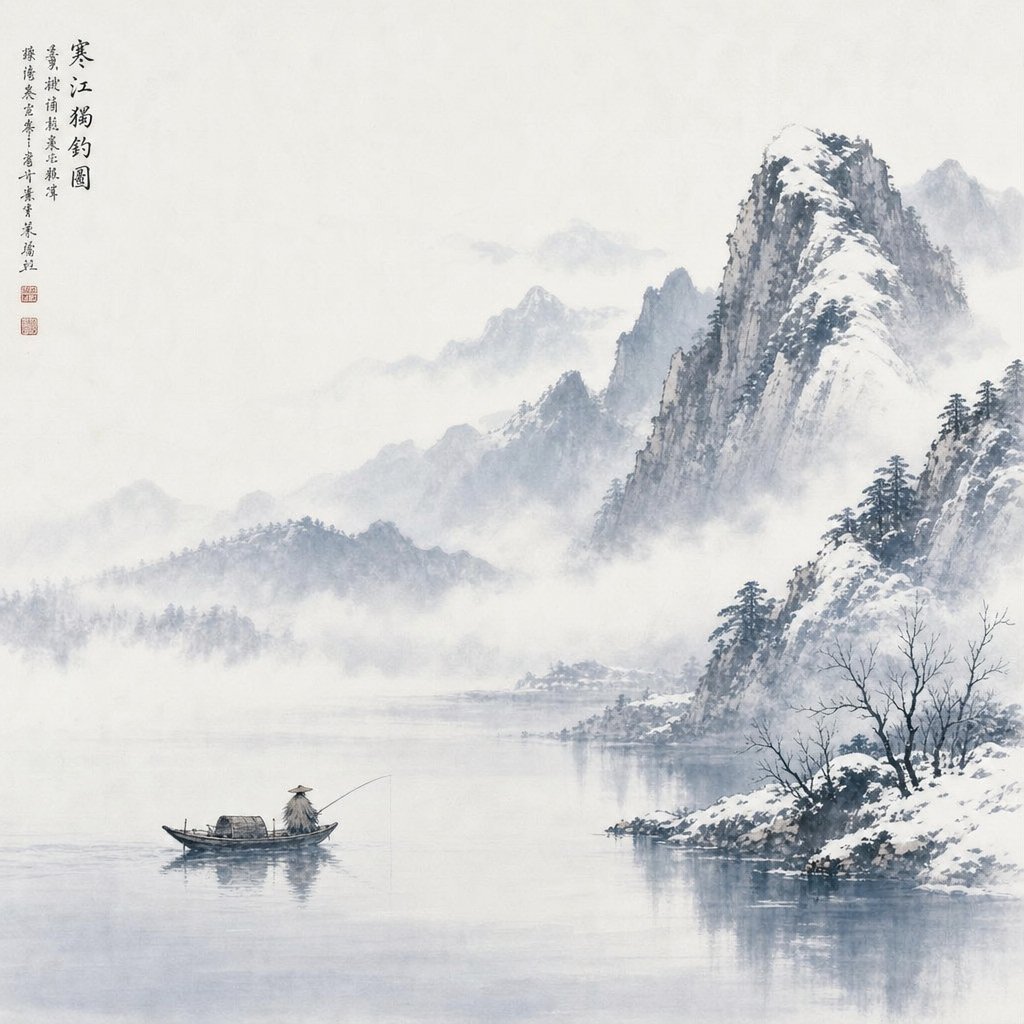
No poem captures snow's emotional power more concisely than 江雪 (Jiang Xue), "River Snow," written by the Tang Dynasty poet Liu Zongyuan (柳宗元). In just twenty characters, he paints a world emptied of all life except one solitary figure:
In a thousand mountains, the flight of birds is not seen; on ten thousand paths, human footprints have vanished. On a lonely boat, in straw cloak and bamboo hat, an old man — fishing alone, in the cold river snow.
The poem describes absolute solitude, but not despair. The old fisherman chooses to be there. He is self-sufficient, undisturbed by the emptiness around him, finding purpose in stillness while the world retreats. Liu Zongyuan wrote this during political exile, and the fisherman is widely understood as a self-portrait — someone maintaining dignity and purpose despite isolation.
Several literary chinese names from snow poems trace directly back to this piece:
- 江雪 (Jiāng Xuě) — River + snow. The poem's title itself works as a name, evoking vast winter stillness and quiet independence. It carries a contemplative, gender-neutral quality.
- 寒江 (Hán Jiāng) — Cold + river. Drawn from the final line, this name suggests someone with depth and composure, unshaken by harsh surroundings. It leans masculine with its stark, cool imagery.
- 独钓 (Dú Diào) — Alone + to fish. While rarely used as a formal name, this phrase from the poem inspires names built around 独 (independence) paired with snow characters, like 独雪 or 雪独.
- 孤舟 (Gū Zhōu) — Lonely + boat. This image inspires names pairing 舟 with winter elements, suggesting someone who navigates life's cold waters with self-reliance.
The beauty of naming from 江雪 is that you are giving your child a story about chosen solitude as strength — not loneliness, but the courage to stand apart.
The Plum Blossom and Snow Motif in Naming
If 江雪 represents solitary endurance, the plum blossom snow chinese name meaning represents something slightly different: beauty that refuses to wait for easy conditions. The plum blossom (梅花) is the only flower that blooms in late winter, often while snow still covers its branches. This image has inspired Chinese poets for centuries and remains one of the most powerful sources of classical chinese snow imagery names.
The Yuan dynasty poem 殿前欢·梅花 captures this perfectly, describing the plum blossom as holding "a unique kind of charm" precisely when viewed in snow — sparse, faint, yet unmistakable. The poet highlights that adversity does not diminish the flower's beauty but reveals a dimension invisible in easier seasons.
Even more so when seen in snow, sparse and faint, it holds a unique kind of charm.
This motif generates an entire family of names:
- 雪梅 (Xuě Méi) — Snow + plum blossom. The most direct expression of the motif, suggesting resilient beauty.
- 梅雪 (Méi Xuě) — Plum blossom + snow. Reversing the order foregrounds the flower's agency — the blossom confronting winter rather than being framed by it.
- 傲梅 (Ào Méi) — Proud/defiant + plum blossom. Captures the unyielding spirit of blooming when nothing else dares.
- 寒梅 (Hán Méi) — Cold + plum blossom. Emphasizes the harsh conditions that make the bloom meaningful.
- 雪芳 (Xuě Fāng) — Snow + fragrance. Inspired by the poetic phrase 暗香浮动 (a hidden fragrance drifts), describing the plum blossom's subtle scent in winter air.
The plum blossom is one of the "Four Gentlemen" (四君子) in Chinese art, alongside orchid, bamboo, and chrysanthemum — plants that symbolize noble virtues admired by scholars. A name drawn from this tradition tells your child: you were named for something that blooms when the world says it should not.
Giving Your Child a Story With Their Name
Chinese poems about snow for baby names offer something no dictionary definition can: a narrative inheritance. When your daughter asks why she is called 雪晴 (Xuě Qíng, snow + clear sky), you can describe the moment after a storm passes — the world transformed, sparkling, renewed. When your son asks about 凌雪 (Líng Xuě, rise above + snow), you can tell him about Liu Zongyuan's fisherman who found purpose in the coldest, emptiest landscape imaginable.
Mao Zedong's famous 1936 poem 沁园春·雪 (Spring in a Pleasure Garden: Snow) offers yet another angle — snow as a canvas for ambition and vision. The poem opens with a sweeping panorama of northern China blanketed in white, then pivots to reflect on history's great leaders. Names inspired by this poem (like 瑞雪, 飞雪, or 银装 — silver-clad) carry associations with grandeur and expansive thinking.
The key insight for parents: a poetic reference does not make a name obscure. It makes it layered. To strangers, the name sounds beautiful. To family, it carries a specific story. And to the child themselves, it becomes a thread connecting them to a literary tradition that has valued snow's symbolism for well over a millennium. That thread is a gift no one can take away.
Poetry provides the inspiration, but practical decisions still remain — especially for families navigating between Chinese and Western naming conventions. Pronunciation pitfalls, homophone traps, and the challenge of pairing a snow-themed Chinese name with an English first name all require careful attention.
Choosing a Snow Name for Cross-Cultural Families
Poetry and philosophy give a name its soul, but practical realities determine whether that name actually works in daily life. For diaspora families and cross-cultural parents choosing a chinese snow name for a diaspora baby, the challenges multiply. You are not just selecting characters that sound beautiful in Mandarin — you are choosing a name that must survive contact with school enrollment forms, English-speaking relatives, Cantonese-speaking grandparents, and a child who will eventually Google their own name. Getting this right requires attention to pitfalls that monolingual naming guides rarely mention.
Homophones and Combinations to Avoid
Chinese is famously rich in homophones — words that sound identical but carry wildly different meanings. This is where chinese name homophones to avoid become critical knowledge. A name that looks elegant on paper can sound unfortunate when spoken aloud, especially if the surname creates an unintended phrase.
Snow characters themselves are relatively safe. The syllable xue in third tone means snow, and there is no common vulgar or negative word sharing that exact pronunciation and tone. But problems emerge in combination. Consider these traps:
- 雪 (xuě) paired with 死 (sǐ)-sounding characters: Any second character pronounced si in fourth tone risks evoking 死 (death). A name like 雪思 (Xuě Sī, snow + thought) is fine in isolation, but spoken quickly after certain surnames, the si sound can land poorly.
- 冰 (bīng) after surname 白 (Bái): 白冰 sounds like "white ice" — not terrible, but it reads more like a product description than a personal name. Native speakers will notice.
- 雪 with 耻 (chǐ)-adjacent sounds: Characters ending in -chi sounds near 雪 can accidentally echo 雪耻 (xuě chǐ), meaning "to avenge a humiliation." The phrase is not negative per se, but it carries aggressive connotations unsuitable for a child's name.
- 霜 (shuāng) after surname 孙 (Sūn): 孙霜 spoken quickly can blur into sounds resembling 损伤 (sǔn shāng, damage/injury). Always test the full name at conversational speed.
The underlying principle: never rely on written characters alone. Speak the complete name — surname plus given name — out loud, rapidly, multiple times. Listen for unintended words or phrases that emerge from the sound stream. If you hear something awkward, trust your ears over the dictionary.
Mandarin vs Cantonese Pronunciation Considerations
Here is a layer that catches many families off guard: a name chosen for its Mandarin sound may land completely differently in Cantonese, Hokkien, or other Chinese languages. As the Asia Media Centre explains, the same character can be pronounced so differently across dialects that names effectively become different words depending on who is speaking them.
For snow characters specifically:
- 雪 is xuě in Mandarin but syut in Cantonese — a sharper, more clipped sound.
- 冰 is bīng in Mandarin but bing in Cantonese (similar, fortunately).
- 霜 is shuāng in Mandarin but soeng in Cantonese — quite different phonetically.
- 瑞 is ruì in Mandarin but seoi in Cantonese — almost unrecognizable as the same character to someone unfamiliar with both systems.
If grandparents or extended family primarily speak Cantonese, test the name in both pronunciations. A name that flows beautifully in Mandarin might feel clunky or create unfortunate homophones in Cantonese. The reverse is equally true. Families with roots in Guangdong, Hong Kong, or Southeast Asian Chinese communities should prioritize the Cantonese reading, since that is the pronunciation the child will hear most often from family.
Pairing Snow Names With Western First Names
Many cross-cultural families give their child both a Western legal name and a Chinese name. The question becomes: how do you make these two names feel like they belong to the same person rather than two strangers sharing a body?
Several strategies work well when pairing chinese and english names with a snow theme:
- Sound echoing: Choose a Western name whose sounds partially mirror the Chinese name. A girl named 雪琳 (Xuě Lín) might pair naturally with "Selene" or "Celine" — the -lin and -lene sounds create a subtle bridge between the two names without being a direct transliteration.
- Meaning echoing: Match the thematic spirit rather than the sound. A boy named 瑞雪 (Ruì Xuě, auspicious snow) could pair with "Felix" (Latin for lucky/fortunate) — different sounds, shared meaning.
- Initial matching: Some families like both names to share a starting letter or sound. 雪 (X-) pairs with Western names starting in S or Sh sounds, since English speakers often approximate the Mandarin x- as "sh." Names like "Shea," "Shane," or "Sienna" create phonetic continuity.
- Independent selection: There is nothing wrong with choosing names that have no phonetic or semantic connection. Many bilingual adults carry a Chinese name and an English name that relate only through being theirs. The names serve different contexts and communities.
One practical tip from cross-cultural naming experience: run your chosen name past several native speakers, not just one. A single friend might miss a regional slang association or a generational reference that others would catch immediately. Crowd-source your feedback. Ask people of different ages and from different regions. If three out of five react positively and none flag a problem, you are likely in safe territory.
Finally, consider which character system to use based on your family's heritage. If your family connects to Taiwan, Hong Kong, or Macau, traditional characters are the natural choice. If your roots are in mainland China or Singapore, simplified characters are standard. For diaspora families with mixed heritage, either system works — but pick one and stay consistent on official documents. Remember that most snow characters (雪, 霜, 冰, 霏) are identical in both systems, so this decision primarily affects companion characters in the name.
Cross-cultural naming is ultimately an act of bridge-building. You are giving your child a name that honors one tradition while living inside another. The snow characters, with their universal visual beauty and deep cultural resonance, are particularly well-suited to this task — they carry meaning that transcends any single language. What remains is the final step: pulling all these considerations together into a clear decision framework that helps you commit with confidence.
Finding the Right Snow Name for Your Child
You have the characters, the cultural context, the poetry, and the practical warnings. What remains is the moment of decision — narrowing dozens of beautiful possibilities down to the one name your child will carry forward. This is where a clear framework helps, not to replace intuition but to organize it.
Your Decision Framework for the Perfect Snow Name
How to choose a chinese snow name without second-guessing yourself? Run your top candidates through these factors, in order. A name that clears all seven is ready.
- Tonal flow with your surname. Say the full name — surname plus given name — out loud at normal speed, ten times. Listen for tonal monotony (all same tone), awkward sandhi shifts (consecutive third tones), or unintended homophones. The name should feel effortless to say.
- Gender alignment. Confirm the snow character and its companion read the way you intend. Characters like 霏 and 婷 signal feminine; characters like 刚 and 峰 signal masculine. If you want a gender-neutral name, pair 雪 or 冰 with neutral companions like 瑞, 明, or 然.
- Elemental compatibility. If your family follows BaZi naming principles, check whether your child's birth chart benefits from additional Water energy. Snow characters belong to the Water element — ideal when the chart needs Water, worth balancing with a companion character from another element if it does not.
- Cultural depth and storytelling potential. Can you explain the name's meaning to your child in a way that gives them pride? The best chinese snow names connect to a poem, a historical figure, or a philosophical idea that grows richer as the child matures.
- International pronounceability. For cross-cultural families, test whether English speakers can approximate the name without mangling it. Names starting with 雪 (xu-) challenge many non-Mandarin speakers, while 冰 (bing) and 瑞 (rui) tend to be easier entry points.
- Visual and calligraphic balance. Write the full name by hand. As naming experts note, a name must look balanced when written — not too dense, not too sparse, with stroke counts that complement rather than overwhelm each other.
- Native speaker verification. Share your final choice with at least three native speakers from different regions and age groups. If none flags a problem and the reactions are positive, you have your name.
What Snow Names Give Your Child Beyond a Label
A snow name in Chinese is not a weather reference. It is a compressed inheritance — centuries of poetry, philosophy, and moral aspiration folded into two or three characters. When you name a child 雪梅, you are not saying "snow and plum." You are saying: may you bloom when conditions are hardest. When you choose 凌雪, you are saying: may you rise above every obstacle with clarity intact.
That is the real gift of chinese names meaning snow. They give your child a story before they have lived one, a standard to grow into rather than a label to grow out of. The snow will always be there in their name — quiet, pure, patient — waiting for them to discover its full meaning on their own terms.
Frequently Asked Questions About Chinese Names Meaning Snow
1. How do you say snow in Chinese and what tone is it?
Snow in Chinese is written as 雪 and pronounced 'xue' in the third tone (xuě), which has a falling-then-rising pitch. The character combines the rain radical (雨) on top with a hand-sweeping component (彐) below, visually suggesting frozen precipitation that settles on surfaces. This character is identical in both simplified and traditional Chinese writing systems, making it universally accessible across all Chinese-speaking communities.
2. Can snow characters be used in Chinese boy names?
Yes, snow characters work well in masculine Chinese names when paired with strength, scholarly, or ambition characters. Names like 傲雪 (Ao Xue, proud against snow), 雪松 (Xue Song, snow pine), and 凌雪 (Ling Xue, rise above snow) carry powerful masculine energy. The key is combining the snow element with characters like 刚 (firm), 哲 (wisdom), or 峰 (peak) to create balanced names that evoke resilience and moral clarity rather than delicacy.
3. What is the difference between 雪, 冰, 霜, and 霏 in Chinese names?
Each character carries a distinct emotional texture. 雪 (xue) means snow and suggests purity and poetic elegance, working for both genders. 冰 (bing) means ice and conveys crystalline clarity and inner strength with a more assertive quality. 霜 (shuang) means frost and evokes refined coolness and composed maturity, leaning feminine. 霏 (fei) describes falling snow or misty precipitation and is strongly feminine, suggesting grace and dreaminess. Choosing between them depends on the specific shade of winter imagery you want the name to carry.
4. Does the Five Elements philosophy affect whether a snow name is suitable for my baby?
In traditional Chinese naming, snow characters belong to the Water element. Whether a Water-element name is auspicious depends on your child's BaZi (八字) birth chart, calculated from their exact birth date and time. A snow name works best when the chart needs additional Water energy to achieve balance. If the chart already has excess Water, you can still use a snow character but may want to pair it with a companion character from another element like Wood or Fire to create harmony.
5. How do I avoid choosing a Chinese snow name with an embarrassing hidden meaning?
Always speak the complete name — surname plus given name — out loud at conversational speed, multiple times. Listen for unintended homophones or phrases that emerge from the sound stream. Test the name in both Mandarin and Cantonese if your family uses both. Share your final choice with at least three native speakers from different regions and age groups. Watch for combinations where the surname creates awkward phrases, like 白雪 (Bai Xue) which directly references Snow White, or tonal clashes from consecutive third tones.