Why Chinese Has Dozens of Ways to Say Brother
Imagine calling your older brother and your younger brother by the exact same word. For English speakers, that is perfectly normal. "Brother" covers it all, regardless of age, closeness, or family rank. In Chinese, though, that single English word splinters into dozens of distinct terms, each one carrying specific information about who is older, who is younger, how formal the relationship is, and how much affection sits behind the name.
This is not a quirk of grammar. It is a deliberate cultural design. A study published in Science analyzing kinship categories across 566 languages found that each language's system reflects a trade-off between simplicity and usefulness. English leans toward simplicity with one umbrella term. Mandarin Chinese leans toward usefulness, giving speakers precise tools to mark hierarchy, lineage, and emotional tone in a single nick name in chinese family life.
Why Chinese Has So Many Words for Brother
The answer lies in what information a culture considers essential. In Chinese, you cannot talk about a brother without revealing whether he is older or younger than you. The language simply does not allow it. There is no neutral, age-blind word equivalent to the English "brother." You must choose between terms like 哥哥 (gēge) for an older brother or 弟弟 (dìdi) for a younger one, and from there, the variations multiply based on birth order, familiarity, and social context.
Chinese kinship terminology also distinguishes paternal from maternal lines, relative age among siblings, and even the degree of emotional warmth between speaker and listener. The result is a rich vocabulary of chinese nicknames that ranges from ancient literary forms still heard in period dramas to playful internet slang traded on gaming platforms. These are not just words. They are chinese terms of endearment, social signals, and markers of respect all rolled into one.
The Confucian Hierarchy Behind Brother Nicknames
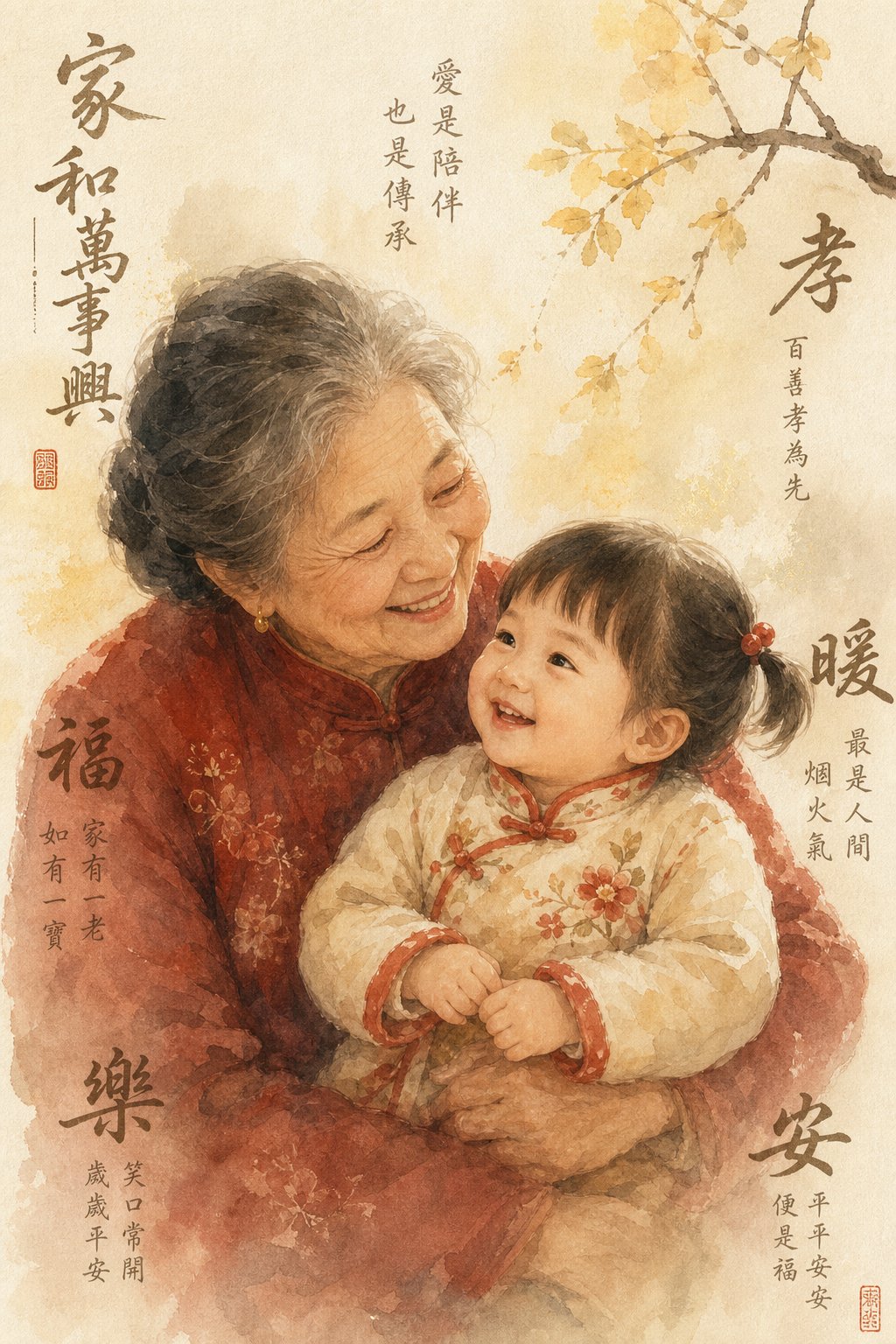
So why did Chinese develop this level of precision specifically for sibling terms? The short answer is Confucianism. The concept of 孝顺 (xiàoshun), or filial piety, placed family hierarchy at the center of moral life for over two thousand years. According to Confucian principles, younger family members owed obedience and respect to elders, and this expectation was encoded directly into the language. Calling someone 哥 (gē) was not just a label. It was an acknowledgment of their higher position in the family order.
In Chinese, every brother term is a statement about rank. You do not simply name a sibling. You declare whether you stand above or below them in the family hierarchy, and the language holds you to that distinction in every conversation.
This framework shaped chinese words of endearment and chinese endearments far beyond the family home. Brother terms eventually migrated into friendships, workplaces, and online communities, carrying their hierarchical DNA with them. The spectrum runs wide: from formal classical terms like 兄长 (xiōngzhǎng) found in ancient texts, through everyday spoken forms like 哥哥 and 弟弟, all the way to modern slang like 老哥 (lǎogē) tossed around in chat rooms.
What follows is a full guide to that spectrum, covering older brother nicknames, younger brother terms, social usage with non-family members, regional dialect variations, and the internet slang reshaping how a new generation says "brother" in Chinese.
Older Brother Nicknames from 哥哥 to 大哥
The hierarchy starts at the top, and in Chinese families, that means the older brother. If you only learn one term for older brother in Chinese, it should be 哥哥 (gēge). This is the default, the everyday word that children grow up using and adults never outgrow. But it is far from the only option. Depending on how many brothers a family has, how close the relationship feels, and how casual the moment is, speakers reach for different variations, each with its own texture.
哥哥 (Gēge) and Its Many Variations
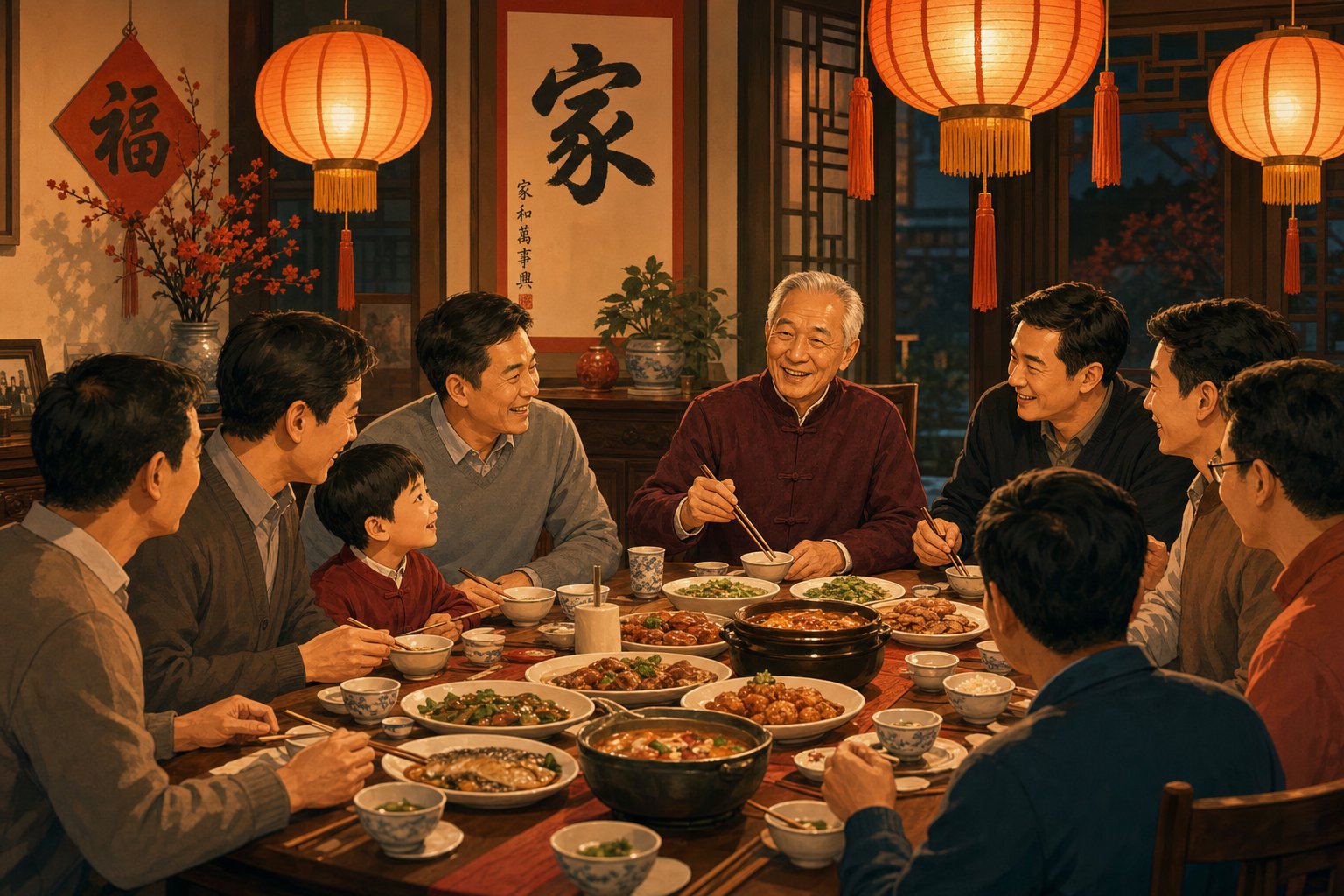
So what does gege meaning chinese actually break down to? The character 哥 (gē) means "older brother," and doubling it into 哥哥 adds warmth and familiarity. It is the standard way younger siblings address an older brother in both formal and informal settings. You will hear a five-year-old call out "gēge, wait for me!" and a thirty-year-old use the same word at a family dinner.
The term also extends beyond blood relatives. Younger people commonly attach 哥哥 after a surname to show respect toward an older male acquaintance. For example, 王哥哥 (Wáng gēge) addresses an older brother figure surnamed Wang. This flexibility is part of what makes the chinese for older brother system so layered: one base word, many social applications.
Numbering System for Multiple Older Brothers
When a family has more than one older brother, Chinese handles it with a clean numbering system. The eldest becomes 大哥 (dàgē), literally "big brother." The second oldest is 二哥 (èrgē), the third is 三哥 (sāngē), and so on. This numbering convention applies across Chinese kinship terms, using 大 (dà) for the first and numerical prefixes for the rest.
Imagine a family with three sons. The youngest daughter would call them 大哥, 二哥, and 三哥 respectively. In conversation, that sounds like:
- 大哥说晚饭他来做。(Dàgē shuō wǎnfàn tā lái zuò.) - Big brother said he will cook dinner.
- 你去问问二哥有没有空。(Nǐ qù wènwen èrgē yǒu méiyǒu kòng.) - Go ask second brother if he is free.
The term 大哥 carries particular cultural weight. As the eldest brother in a Confucian family structure, the 大哥 traditionally holds authority and responsibility second only to the father. This is why the word also migrated into social contexts where respect and leadership are implied.
Affectionate Short Forms and Diminutives
In casual speech, speakers often drop the doubling and use 哥 (gē) alone. This clipped form feels breezy and intimate, common between siblings who are close in age. A younger brother might shout "哥, 过来!" (Gē, guòlái! - Bro, come here!) without any loss of meaning.
Another affectionate option is 老哥 (lǎogē). The 老 here does not mean "old" in a literal sense. It adds a tone of casual familiarity, like saying "my man" or "buddy" in English. This form works well between friends and is especially popular in older brother in mandarin speech among young adults.
| Chinese Characters | Pinyin with Tones | Literal Meaning | When to Use It |
|---|---|---|---|
| 哥哥 | gēge | older brother | Standard address for any older brother; works in all settings |
| 大哥 | dàgē | big/eldest brother | Eldest brother specifically, or to show strong respect |
| 二哥 | èrgē | second older brother | Second eldest brother in families with multiple sons |
| 三哥 | sāngē | third older brother | Third eldest brother; pattern continues with higher numbers |
| 哥 | gē | brother (short form) | Casual, intimate; between close siblings or friends |
| 老哥 | lǎogē | old brother | Informal and affectionate; common among male friends |
| Surname + 哥 | X + gē | Brother [surname] | Respectful address for older male acquaintances |
Each of these older brother chinese terms slots into a specific emotional register. The formal end holds 哥哥 and 大哥. The casual end holds 哥 and 老哥. Knowing which to reach for depends on the relationship and the moment, a skill that comes naturally to native speakers but takes deliberate practice for learners.
Of course, older brothers are only half the sibling equation. The terms for younger brothers carry a noticeably different emotional flavor, often more playful and less bound by the weight of respect.
Younger Brother Nicknames and Affectionate Diminutives
Where older brother terms lean toward respect and deference, younger brother terms in Chinese tilt in a different direction. They carry warmth, playfulness, and sometimes a gentle teasing quality. The emotional register shifts because the social dynamic shifts. You are speaking down the age ladder rather than up it, and the language reflects that freedom.
弟弟 (Didi) as the Standard Younger Brother Term
The most common way to say younger brother in Chinese is 弟弟 (didi). Like 哥哥, it uses reduplication, a pattern deeply embedded in Chinese kinship terms where doubling a syllable adds familiarity and softness. The character 弟 (di) means "younger brother," and repeating it creates the standard form used across all registers, from toddlers pointing at a baby sibling to adults introducing family members at formal gatherings.
In everyday conversation, you will hear sentences like:
- 我弟弟今年上大学了。(Wo didi jinnian shang daxue le.) - My younger brother started college this year.
- 这是我弟弟,他比我小三岁。(Zhe shi wo didi, ta bi wo xiao san sui.) - This is my little brother. He is three years younger than me.
The term works universally. Whether you are talking to a stranger, a colleague, or your grandmother, 弟弟 is always appropriate. It is the safe default for little brother in Chinese, carrying no risk of sounding too casual or too stiff.
小弟 and 老弟 as Casual Affectionate Forms
When the mood is relaxed, speakers reach for shorter, more colorful variations. Two of the most common are 小弟 (xiaodi) and 老弟 (laodi), and despite looking similar, they occupy different emotional spaces.
小弟 (xiaodi) literally means "little younger brother." The 小 (xiao) prefix adds a diminutive quality, making the term feel tender and slightly protective. Older siblings use it when talking about a much younger brother, and it also appears as a humble self-reference. Imagine someone saying "小弟不才" (xiaodi bucai) in a semi-joking way to mean "your humble younger brother is not talented." In martial arts fiction and period dramas, junior members of a group often call themselves 小弟 when addressing seniors. This is the chinese little brother term you will encounter most often in both real life and media.
老弟 (laodi) flips the tone entirely. The 老 prefix, just like in 老哥, does not mean "old." It signals casual closeness, a buddy-like familiarity. An older friend might say "老弟, 别担心" (Laodi, bie danxin - Don't worry, bro) to comfort someone younger. The term feels like a pat on the shoulder. It is warm without being overly sweet, making it popular among male friends and colleagues where the age gap is small but acknowledged.
For families with multiple younger brothers, the numbering system mirrors the older brother pattern. The first younger brother is 大弟 (dadi), the second is 二弟 (erdi), and the third is 三弟 (sandi). In practice:
- 二弟最近工作怎么样?(Erdi zuijin gongzuo zenmeyang?) - How is second younger brother's job going lately?
- 三弟下周要来看我们。(Sandi xia zhou yao lai kan women.) - Third younger brother is coming to visit us next week.
These numbered forms sound slightly literary in modern speech. You are more likely to hear them in families that maintain traditional address customs or in historical dramas set in large households.
Contextual Sentences for Natural Usage
The diminutive form 小弟弟 (xiao didi) deserves special attention. Adding 小 before the already-reduplicated 弟弟 creates a triple layer of smallness and affection. This is the term adults use when speaking to or about very young boys, typically toddlers or children under five. It is one of the most common chinese nicknames for children in family settings. A grandmother cooing over a newborn grandson might say "小弟弟好可爱" (Xiao didi hao ke'ai - Little brother is so cute). The tone is pure tenderness.
Here is how these terms sound in natural conversation across different situations:
- Playful teasing: 老弟,你又迟到了!(Laodi, ni you chidao le! - Bro, you are late again!)
- Protective warmth: 小弟还小,让着他点。(Xiaodi hai xiao, rangzhe ta dian. - Little brother is still young, go easy on him.)
- Neutral introduction: 我有两个弟弟,一个在北京,一个在上海。(Wo you liang ge didi, yi ge zai Beijing, yi ge zai Shanghai. - I have two younger brothers, one in Beijing and one in Shanghai.)
| Chinese Characters | Pinyin | Tone of Usage | Example Context |
|---|---|---|---|
| 弟弟 | didi | Neutral | Standard term in all settings; introducing family to others |
| 小弟 | xiaodi | Affectionate / Humble | Referring to a much younger brother; humble self-reference |
| 老弟 | laodi | Playful / Casual | Between friends with a small age gap; buddy-like warmth |
| 小弟弟 | xiao didi | Tender / Childlike | Speaking about or to very young boys; family baby talk |
| 大弟 | dadi | Neutral / Slightly formal | First younger brother in families with multiple sons |
| 二弟 | erdi | Neutral / Slightly formal | Second younger brother; common in traditional families |
| 三弟 | sandi | Neutral / Slightly formal | Third younger brother; pattern continues numerically |
You will notice a pattern here. The little brother in mandarin chinese vocabulary leans more playful and less weighty than its older brother counterpart. There is no equivalent of the solemn authority that 大哥 carries. Even the most formal younger brother term, 弟弟, sounds softer than 哥哥 in everyday speech. This asymmetry is not accidental. In a system built on age-based respect, the person below you in rank can be addressed with more ease and affection. The person above you demands more careful word choice.
That playful flexibility also explains why younger brother terms adapt so easily outside the family. The same words that describe a biological sibling slide naturally into friendships, workplace banter, and stranger interactions, where calling someone 弟 or 老弟 can instantly establish a friendly, low-pressure dynamic.
Using Brother Nicknames for Non-Family Members
In English, calling a stranger "brother" sounds either deeply spiritual or slightly odd. In Chinese, it is everyday social currency. Brother terms routinely cross the boundary between family and the outside world, functioning as tools for building rapport, signaling respect, and smoothing over interactions with people you have never met. This phenomenon makes the brother in mandarin system far more than a kinship vocabulary. It is a social operating system.
哥 as a Social Honorific Beyond Family
The single syllable 哥 (ge) works as a lightweight honorific in countless daily encounters. When you want to show friendliness toward a man who appears slightly older than you, attaching 哥 after his surname instantly creates warmth without overstepping. A colleague named Li becomes 李哥 (Li ge). A friend's older brother becomes 张哥 (Zhang ge). The term costs nothing socially but communicates respect and approachability in one breath.
Service industry interactions lean on this pattern heavily. Delivery drivers in China are commonly referred to as 快递小哥 (kuaidi xiao ge) for packages and 外卖小哥 (waimei xiao ge) for food delivery. Taxi drivers often hear 师傅 (shifu), but younger passengers sometimes opt for 哥 when the driver looks close in age. The word acts as social lubrication, making a transactional exchange feel human.
Even salespeople use this tactic, dropping the 大 from 大哥 and using bare 哥 or 姐 to sound chummy and close the social distance with potential customers. It is a favorite move precisely because it works. The term carries just enough deference to flatter without feeling heavy.
兄弟 (Xiongdi) for Brotherhood and Male Bonding
When the relationship goes deeper than polite acquaintance, Chinese speakers reach for 兄弟 (xiongdi). This compound literally combines 兄 (older brother) and 弟 (younger brother), but its meaning transcends biology entirely. It is the word for brotherhood itself, the bond between men who consider each other family by choice rather than blood.
You will hear 兄弟 in toasts at dinner tables, in moments of loyalty between friends, and shouted across basketball courts. Someone saying "咱们是兄弟" (zanmen shi xiongdi - we are brothers) is making a declaration of trust. The term also appears in the broader phrase 兄弟 姐妹, which encompasses brothers and sisters together and is used when referring to siblings in chinese as a collective group or when speaking about close-knit communities that feel like family.
Among chinese terms of affection between male friends, 兄弟 sits at the top. It is weightier than 哥们儿 (gemenr), which feels more like casual "bro" energy, and more emotionally loaded than a simple surname-plus-哥 address. When someone calls you 兄弟, they are saying the relationship matters.
When Using Brother Terms with Strangers Is Appropriate
Not every situation welcomes a brother nickname. The key variable is perceived social distance. Here are common scenarios where these terms land naturally versus where they misfire:
- Addressing a taxi driver or delivery worker close to your age: 哥 or 师傅 both work well and feel friendly.
- Greeting a colleague a few years older in a relaxed office: surname + 哥 (e.g., 王哥) signals camaraderie.
- Meeting a friend's older brother for the first time: 哥 after his name shows immediate, appropriate respect.
- Chatting with a street vendor or shop owner: 老板 (laoban) is safer, but 哥 works if the vibe is casual.
- Speaking to a senior executive or someone much older: 哥 would sound presumptuous. Use their title or 先生 instead.
- Formal business meetings or government offices: brother terms are out of place entirely. Stick to professional titles.
The general rule is intuitive once you see the pattern. If the interaction benefits from warmth and the age gap is small, brothers in chinese social culture welcome the term. If hierarchy, formality, or significant age difference defines the moment, brother nicknames feel too familiar and can even offend. Calling a sixty-year-old stranger 大哥 when he expects 大叔 or 大爷 reminds him uncomfortably of his age, a social misstep that is hard to recover from.
This social flexibility is what keeps brother terms alive and evolving. The same words that structure family life also structure friendships, workplaces, and even anonymous online interactions, where a new generation has taken these traditional forms and remixed them into something entirely their own.
Modern Internet Slang and Gaming Brother Terms
Online spaces move fast, and Chinese brother terms have kept pace. The traditional vocabulary covered so far still dominates family life and face-to-face interactions, but on Weibo, Douyin, gaming platforms, and WeChat group chats, a parallel set of nicknames in chinese internet culture has emerged. These terms borrow DNA from the old forms but twist them with irony, humor, and the kind of casual energy that only anonymous or semi-anonymous communication produces.
老哥 and 小老弟 in Online Culture
You already saw 老哥 (lǎogē) as an affectionate older brother term in spoken Chinese. Online, it has taken on a life of its own. On forums and comment sections, 老哥 functions as a respectful but relaxed way to address any male user, regardless of actual age. It carries a tone of "fellow traveler" rather than literal kinship. Someone posting advice on Zhihu or sharing an experience on Weibo might receive replies starting with "老哥, 你说得对" (Lǎogē, nǐ shuō de duì - Bro, you are right). The word signals agreement and peer-level respect without any stiffness.
Its counterpart, 小老弟 (xiǎo lǎodì), hits a completely different note. This term blends the diminutive 小 with the familiar 老弟, creating a mildly condescending but humorous address. Imagine someone watching a younger user make a naive comment and replying "小老弟, 你还是太年轻了" (Xiǎo lǎodì, nǐ háishi tài niánqīng le - Little bro, you are still too young). The tone is not hostile. It is the verbal equivalent of an amused head shake, a way of saying "you have much to learn" with a grin. This makes it one of the more funny chinese nicknames circulating on platforms like Douyin and Bilibili, where generational teasing is part of the culture.
Gaming and Chat Platform Brother Slang
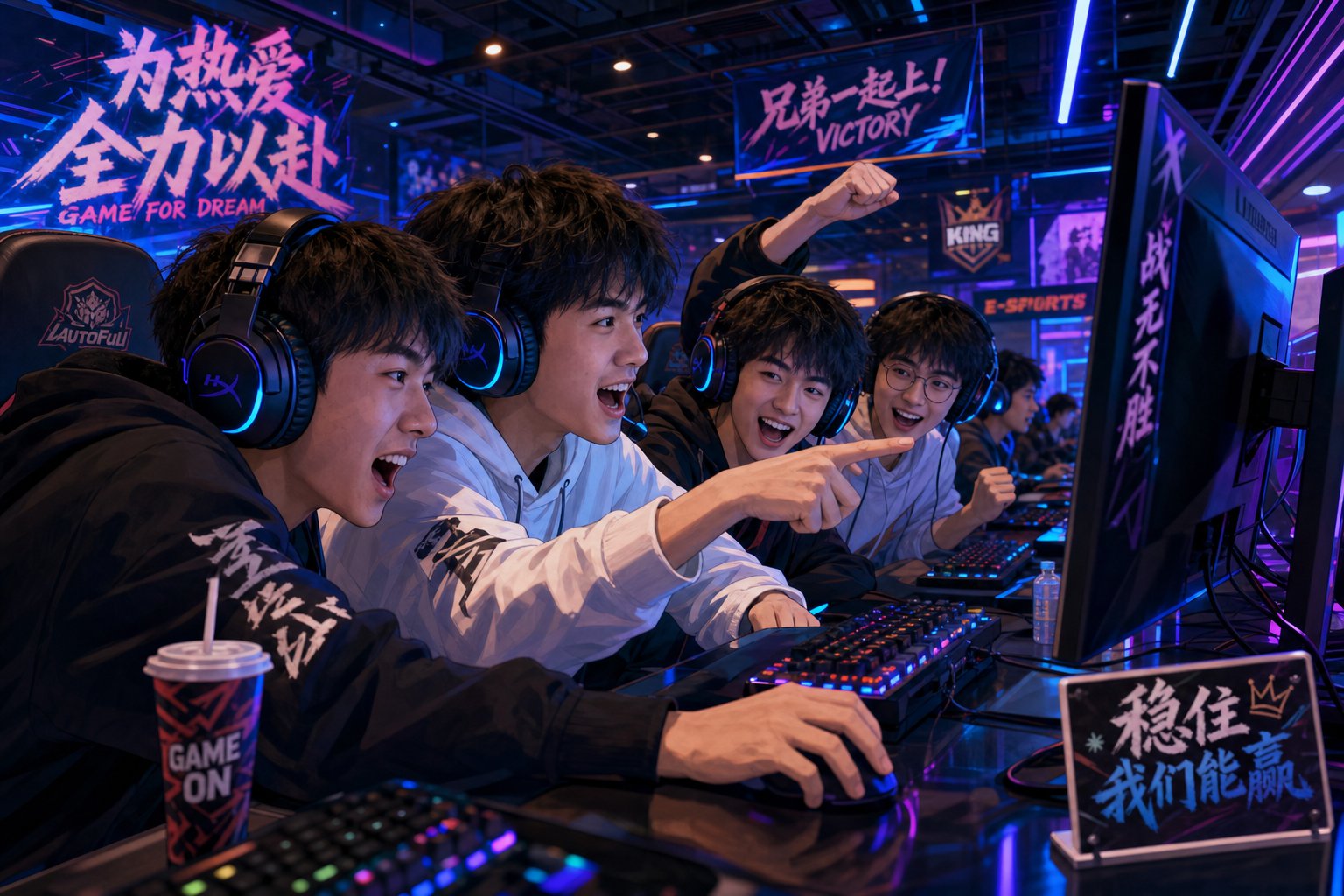
Gaming culture has its own brother vocabulary. In team-based games like Honor of Kings (王者荣耀) and League of Legends, 兄弟 (xiōngdì) appears constantly in chat. Players type "兄弟们, 冲!" (Xiōngdìmen, chōng! - Brothers, charge!) to rally teammates. The term builds instant solidarity among strangers who share a common goal for the next twenty minutes. It is the fastest way to turn five random players into a unit.
Then there is 铁子 (tiězi), which literally means "iron one." The metaphor is clear: this friendship is made of iron, unbreakable and solid. 铁子 evolved from the older slang 老铁 (lǎotiě), which exploded in popularity through livestreaming culture on platforms like Kuaishou. Streamers would greet their audience with "老铁们好" (Lǎotiěmen hǎo - Hey bros), and the shortened 铁子 became the go-to term among younger users who wanted something snappier. Both terms signal loyalty and closeness, but 铁子 feels more current.
Players building chinese gamertags and chinese usernames often incorporate these brother-related terms. You will see names like "你铁哥" (Your Iron Bro) or "老哥带飞" (Big Bro Carries) across gaming profiles, blending cool chinese nicknames with the brotherhood vocabulary that defines team culture.
- 老哥 (lǎogē) - Platform: Weibo, Zhihu, forums. Tone: Respectful, peer-level, warm.
- 小老弟 (xiǎo lǎodì) - Platform: Douyin, Bilibili comments. Tone: Humorous, mildly condescending, teasing.
- 兄弟 (xiōngdì) - Platform: Gaming chat (Honor of Kings, League of Legends), WeChat groups. Tone: Rallying, solidarity, casual bonding.
- 铁子 (tiězi) - Platform: Kuaishou, Douyin, gaming. Tone: Loyal, close, youthful slang.
- 老铁 (lǎotiě) - Platform: Livestreams, Kuaishou, WeChat. Tone: Warm, buddy-like, slightly older internet generation.
- 哥们儿 (gēmenr) - Platform: WeChat groups, casual texting. Tone: Relaxed bro energy, northern flavor.
How Traditional Terms Evolved into Internet Nicknames
None of these slang terms appeared from nowhere. Each one traces back to a traditional form. 老哥 is just 哥 with the familiar 老 prefix that Chinese has used for centuries. 铁子 descends from 铁哥们 (tiě gēmen), meaning "iron buddy," a phrase that predates the internet entirely. Even 小老弟 recombines existing pieces: 小 (small), 老 (familiar prefix), and 弟 (younger brother). The innovation is not in the building blocks but in the remix, the new tonal attitude layered onto old structures.
Generational differences show up clearly here. Users born in the 1980s tend to favor 兄弟 and 哥们儿, terms that feel grounded and sincere. Those born after 2000 lean toward 铁子, 老哥, and 小老弟, which carry more ironic distance and playful self-awareness. The cute chinese nicknames that younger users create often stack these elements in unexpected ways, turning a nickname mandarin speakers would recognize into something that reads as both affectionate and slightly absurd.
What stays constant across generations is the impulse itself: using brother language to build connection with people who are not your brothers. The platforms change, the specific terms rotate in and out of fashion, but the underlying social function remains identical to what 兄弟 has always done in Chinese culture. It says "you are one of us."
These modern terms dominate Mandarin-speaking internet spaces. But step outside Mandarin entirely, and the brother vocabulary shifts again. Cantonese, Hokkien, and other regional dialects each maintain their own distinct set of brother nicknames, some of which have crossed back into mainstream usage in surprising ways.

Regional and Dialectal Variations Across China
Mandarin dominates the internet and national media, but step into a family kitchen in Guangzhou, a night market in Taipei, or a teahouse in Xiamen, and the brother terms you hear will sound nothing like 哥哥 or 弟弟. China's dialect groups each preserve their own sibling vocabulary, shaped by centuries of independent linguistic evolution. For anyone exploring how brother in china actually sounds on the ground, the regional picture is essential.
Cantonese Brother Terms with 阿哥 and 細佬
Cantonese, spoken across Guangdong province and Hong Kong, has a distinctive habit of prefixing 阿 (aa3) to kinship terms. This prefix adds familiarity and warmth, functioning much like a verbal hug around the word that follows. The standard Cantonese term for older brother is 哥哥 (go4 go1), but in casual endearment contexts, speakers reach for 大佬 (daai6 lou2), literally "big guy." When referring to a paternal cousin who is older, the full form becomes 堂阿哥 (tong4 aa3 go1), with that characteristic 阿 prefix slotted in.
For younger brother, Cantonese takes a completely different path from Mandarin. Instead of anything resembling 弟弟, the everyday term is 細佬 (sai3 lou2). The character 細 means "small" or "thin," and 佬 means "fellow" or "guy." Together they create a term that feels casual and affectionate, closer to "little fella" than the more neutral Mandarin 弟弟. A younger male cousin on the father's side becomes 堂細佬 (tong4 sai3 lou2). You will hear sentences like "佢係奧斯汀嘅細佬" (keoi5 hai6 ou3 si1 ting1 ge3 sai3 lou2 - He is Austin's younger brother) in everyday Hong Kong speech.
The broader term for siblings in mandarin is 兄弟姐妹, and Cantonese mirrors this with 兄弟姊妹 (hing1 dai6 zi2 mui6), though the pronunciation shifts noticeably. This respect for seniority embedded in the language reflects the same filial piety principles, just filtered through a different phonological system.
Hokkien, Shanghainese, and Other Dialect Forms
Hokkien, spoken in Fujian province, Taiwan, and Southeast Asian Chinese communities, uses 阿兄 (a-hiaⁿ) for older brother. The nasal ending on "hiaⁿ" gives it a sound completely unlike any Mandarin equivalent. For younger brother, Hokkien speakers say 小弟 (sio-ti) or simply 弟 (ti), though the pronunciation bears little resemblance to the Mandarin version.
Shanghainese (Wu dialect) has its own set. Older brother becomes 阿哥 (a-ku in Shanghainese romanization), while younger brother is 弟弟 (di-di), pronounced with the clipped, rapid-fire rhythm characteristic of Wu dialects. The tonal system differs entirely from Mandarin, making these terms sound foreign even to fluent Mandarin speakers hearing them for the first time.
Some dialect terms have crossed regional boundaries. Cantonese 大佬 has leaked into Mandarin slang in southern China, where people use it to mean "boss" or "big shot" rather than strictly "older brother." Similarly, the Hokkien-influenced term 阿兄 occasionally surfaces in Taiwanese Mandarin conversation, especially among older speakers who code-switch between languages.
Taiwanese Mandarin Differences in Brother Address
Taiwanese Mandarin uses the same characters as mainland Mandarin for brother terms, but pronunciation and usage patterns diverge. Taiwanese Mandarin was heavily influenced by Hokkien, which means the zh/ch/sh sounds often soften to z/c/s in casual speech. A Taiwanese speaker saying 哥哥 might sound closer to "gege" with a softer onset, and the neutral tone that mainland speakers apply to the second syllable often becomes a full tone in Taiwan.
More significantly, Taiwanese speakers tend to use brother terms with slightly different social boundaries. The casual use of 哥 with strangers is less aggressive in Taiwan compared to mainland China, where salespeople and service workers deploy it liberally. Taiwanese culture, while still hierarchical, filters these terms through a politeness style influenced by Japanese honorific culture and Hokkien speech norms.
| Meaning | Mandarin (Mainland) | Cantonese | Hokkien | Taiwanese Mandarin |
|---|---|---|---|---|
| Older brother (standard) | 哥哥 (gēge) | 哥哥 (go4 go1) | 阿兄 (a-hiaⁿ) | 哥哥 (gēge, no neutral tone) |
| Older brother (casual/endearment) | 哥 (gē) / 老哥 (lǎogē) | 大佬 (daai6 lou2) | 阿兄 (a-hiaⁿ) | 哥 (gē) |
| Younger brother (standard) | 弟弟 (dìdi) | 弟弟 (dai4 dai2) | 小弟 (sio-ti) | 弟弟 (dìdì, full fourth tone) |
| Younger brother (casual/endearment) | 小弟 (xiǎodì) / 老弟 (lǎodì) | 細佬 (sai3 lou2) | 弟 (ti) | 小弟 (xiǎodì) |
| Siblings (collective) | 兄弟姐妹 (xiōngdì jiěmèi) | 兄弟姊妹 (hing1 dai6 zi2 mui6) | 兄弟姊妹 (hiaⁿ-ti chí-muē) | 兄弟姐妹 (xiōngdì jiěmèi) |
What stands out across all these dialects is a shared structural principle: every variety of Chinese insists on marking the older-younger distinction. No dialect collapses brother into a single age-neutral term. The sounds differ wildly, the casual forms diverge, but the underlying logic of hierarchy persists everywhere. Whether you say 大佬 in a Hong Kong apartment or 阿兄 in a Xiamen alley, you are still encoding the same Confucian respect for birth order that shaped these chinese siblings terms thousands of years ago.
That ancient origin is worth exploring directly. Many of the formal brother terms still encountered in historical dramas and classical literature trace back to a birth-order naming system that predates all modern dialects.
Ancient and Literary Brother Terms Through History
Long before 哥哥 became the everyday word for older brother, classical Chinese had its own system, one built on single-character precision and a rigid birth-order code. These terms feel archaic in modern conversation, but they are far from dead. Turn on any historical C-drama, open a wuxia novel, or read classical poetry, and you will encounter them immediately. Understanding the elder brother in chinese literary tradition unlocks an entire layer of media that millions of learners consume without full comprehension.
Classical Terms Like 兄长 and 仲兄
The character 兄 (xiōng) is the oldest written form for elder brother in Chinese, appearing in oracle bone inscriptions over three thousand years old. On its own, 兄 sounds formal and literary. You would never use it in casual speech today, but in classical texts and period dramas, it is everywhere.
兄长 (xiōngzhǎng) elevates the formality further. The addition of 长 (zhǎng, meaning "senior" or "elder") creates a term of deep respect, used when addressing the eldest brother in chinese aristocratic or scholarly families. Imagine a young scholar bowing to his oldest brother in a Tang dynasty household and saying "兄长, 请指教" (Xiōngzhǎng, qǐng zhǐjiào - Elder brother, please instruct me). The weight of deference in that single term is unmistakable.
For the second eldest, classical Chinese uses 仲兄 (zhòngxiōng). The character 仲 specifically marks the second position in a sequence. Meanwhile, the eldest brother could be addressed as 伯兄 (bóxiōng), with 伯 designating first-born status. These terms were not casual nicknames. They were precise positional markers within a family's internal hierarchy, and using the wrong one was a serious breach of etiquette.
In the same literary tradition, a chinese courtesy name (字, zi) was often granted to a young man at age twenty, and these courtesy names frequently incorporated the birth-order prefixes 伯, 仲, 叔, or 季 to signal the bearer's position among siblings. A second son might receive a courtesy name beginning with 仲, permanently encoding his rank into his social identity.
The 伯仲叔季 Birth Order System
The foundation beneath all these literary brother terms is the 伯仲叔季 (bó zhòng shū jì) system, a four-position ranking that organized sons from oldest in chinese family structure to youngest. Each character marks a specific slot:
- 伯 (bó) - The eldest son. Carries connotations of leadership and primary inheritance. The oldest brother in chinese classical families held authority closest to the father.
- 仲 (zhòng) - The second son. Positioned in the middle, often associated with balance. The idiom 伯仲之间 (bó zhòng zhī jiān) means "neck and neck," reflecting how close the top two brothers stood in status.
- 叔 (shū) - The third son (or any middle sons between second and last). Later evolved into the modern word for "uncle" on the father's side, showing how kinship terms shift meaning over centuries.
- 季 (jì) - The youngest son. Literally means "last in sequence." This position carried the least formal authority but often the most parental affection.
This system was not merely academic. It shaped how brothers addressed each other, how outsiders referred to them, and even how their chinese courtesy name was constructed. The Song dynasty House of Zhao explicitly included 伯仲叔季 in their imperial generation poem, demonstrating how deeply this ranking penetrated even royal naming conventions. Families with more than four sons would repeat or extend the 叔 position for the middle brothers, reserving 季 strictly for the last-born.
Where You Will Encounter Literary Brother Terms Today
These classical forms are not museum pieces. They live on in specific modern contexts that Chinese learners regularly encounter:
- Historical dramas (古装剧): Characters in palace and dynasty settings use 皇兄 (huángxiōng, imperial elder brother), 兄长, and numbered 伯/仲 forms constantly. Shows set in the Tang, Song, or Ming dynasties rely on these terms to establish period authenticity.
- Wuxia and xianxia novels: Martial arts fiction loves 大师兄 (dà shīxiōng, eldest martial brother) and 师兄 (shīxiōng, senior fellow disciple). These adapt the old brother in chinese mandarin hierarchy to non-blood relationships within a martial arts school.
- Classical poetry and idioms: Expressions like 难兄难弟 (nàn xiōng nàn dì, brothers in hardship) and 伯仲之间 preserve the old vocabulary in everyday speech, even if speakers do not always recognize the ancient roots.
- Formal written Chinese: Obituaries, genealogical records, and ceremonial speeches still use 兄 and 兄长 where spoken language would use 哥哥.
For learners binge-watching C-dramas or reading translated wuxia, recognizing these terms removes a major comprehension barrier. When a character says 仲兄 instead of 二哥, they are not using a different word for the same thing. They are speaking from a different era's social code, one where the old brother in chinese literary culture demanded precision that modern speech has relaxed.
Knowing the historical forms also helps learners avoid a common trap: assuming that the terms they learn from textbooks cover everything they will hear in real Chinese media. The gap between textbook vocabulary and what appears on screen is exactly where mistakes happen, and those mistakes carry real social consequences.
Common Mistakes Learners Make with Brother Nicknames
Learning how do you say brother in chinese is straightforward enough. The real challenge is knowing which brother term fits which situation, because choosing wrong does not just sound awkward. It sends a social signal you did not intend. Chinese speakers read kinship terms as statements about hierarchy and closeness, so a misplaced word can confuse, amuse, or genuinely offend the person you are addressing.
Never Call an Older Person 弟弟
This is the single most damaging mistake a learner can make. Addressing someone older than you with 弟弟 (didi) or any younger brother term tells them, in effect, that you consider yourself their senior. In a culture where age hierarchy shapes every interaction, this is not a minor slip. It is a direct inversion of the social order.
Imagine meeting your Chinese friend's older brother and cheerfully calling him 弟弟 because you mixed up the terms. To him, you have just declared yourself above him in rank. The room goes quiet. Even if everyone knows it was an honest language error, the discomfort lingers. The fix is simple but non-negotiable: if someone is older than you, they are 哥 or 哥哥. Period. When unsure about relative age, default to 哥. Promoting someone to older brother status is flattering. Demoting them to younger brother is an insult.
The same logic applies when figuring out how to say little brother in chinese in context. Reserve 弟弟, 小弟, and 老弟 exclusively for people you know are younger. If you cannot tell, ask indirectly or use a neutral term like their name plus a polite suffix.
Tone Errors That Change Meaning Entirely
Mandarin tones are unforgiving, and brother terms sit in a minefield. The character 哥 (gē, first tone) means older brother. But pronounce it with a falling-rising third tone and you are closer to 歌 (gē, first tone as well, but confusion arises with characters like 个 gè). The real danger zone is between 弟 (dì, fourth tone) and 地 (dì/de) or 第 (dì, ordinal marker). Sloppy tones on how do you say little brother in chinese can turn a family term into gibberish or an unrelated word entirely.
For learners still building tonal accuracy, the safest approach is to practice brother terms in full reduplicated form. Saying 哥哥 (gēge) or 弟弟 (dìdi) gives the listener two chances to catch your meaning, whereas a single-syllable 哥 or 弟 with a wrong tone offers no recovery. When you know how to write brother in chinese characters, pair that visual knowledge with audio drilling so the tone locks into muscle memory.
Formality Mismatches and Social Consequences
Beyond age errors and tone slips, learners frequently misjudge formality. The term 大哥 (dàgē) is a perfect example. In family settings, it respectfully addresses the eldest brother. Among friends, it shows warm deference. But in certain social contexts, particularly when addressing a stranger with a tough appearance, 大哥 carries gang-leader connotations borrowed from crime dramas and martial arts films. Calling a random man on the street 大哥 might make him laugh or make him wonder why you think he looks like a mob boss.
Similarly, using casual terms like 老弟 or 兄弟 in formal business settings sounds jarringly out of place. A job interview, a meeting with a client, or a conversation with a professor demands professional address. Dropping a 兄弟 into those moments signals that you do not understand where the social boundary sits.
The assumption that all brother terms are interchangeable is perhaps the most persistent error. Each term encodes a specific combination of age relationship, emotional closeness, and social register. Swapping one for another is not like choosing between "bro" and "brother" in English, where the difference is minor. In Chinese, the difference can be the gap between respect and offense.
| Common Mistake | Why It Is Wrong | Correct Alternative | Social Impact |
|---|---|---|---|
| Calling an older person 弟弟 | Implies you outrank them in age hierarchy | Use 哥哥 or surname + 哥 | High - perceived as disrespectful or ignorant |
| Wrong tone on 哥 (gē) producing a different word | Listener hears an unrelated character or nonsense | Practice full form 哥哥 for tonal clarity | Medium - causes confusion, sometimes laughter |
| Using 大哥 with a stranger in ambiguous context | Can sound like you are addressing a gang leader | Use 师傅, 先生, or surname + 哥 instead | Medium - may amuse or mildly offend |
| Saying 兄弟 or 老弟 in formal business settings | Too casual for professional hierarchy | Use title + surname (e.g., 王经理) | Medium - signals poor social awareness |
| Using 小弟 for someone your own age or older | Diminutive form implies they are much younger or lower status | Use 老弟 for peers, 哥 for anyone older | Medium to High - can feel condescending |
| Treating all brother terms as interchangeable | Each term encodes specific age, closeness, and register | Match term to relationship and setting | Varies - ranges from awkward to offensive |
The pattern across all these mistakes is the same: learners treat brother terms as simple vocabulary when they are actually social instruments. Getting the little brother in mandarin vocabulary right means more than memorizing pinyin. It means reading the room, gauging the relationship, and choosing the term that fits both the person and the moment. That skill develops fastest not through textbooks but through exposure to real usage, and nowhere is real usage more vivid than in Chinese pop culture, where brother nicknames carry dramatic weight that makes their social rules impossible to miss.

Brother Nicknames in Pop Culture and Chinese Media
Chinese dramas, films, and novels do not just entertain. They teach. For learners trying to internalize when and how to deploy brother terms naturally, pop culture offers something no textbook can: emotional context. You hear a character say 大哥 in a tense standoff and instantly feel the power dynamics behind the word. You watch a princess whisper 皇兄 to her brother on the throne and understand the reverence without needing a dictionary. Media makes the social rules visceral.
大哥 in Martial Arts and Crime Drama Culture
If you have watched any wuxia film or Chinese crime thriller, you already know the weight 大哥 carries in those worlds. In martial arts stories, the 大哥 is not just the eldest brother. He is the leader, the one whose word is law within the group. Think of classic Hong Kong gangster films where subordinates address their boss as 大哥 with a mix of loyalty and fear. The term signals absolute authority within an informal hierarchy, a brotherhood bound by oath rather than blood.
This connotation is so strong that saying big brother in chinese to the wrong person on the street can accidentally invoke it. When a character in a crime drama says "大哥, 我听你的" (Dage, wo ting ni de - Big brother, I will follow your lead), the audience understands this is not sibling affection. It is submission to a power structure. The same two characters that a five-year-old uses for her eldest brother become, in a different context, a declaration of allegiance to a gang leader. Context is everything.
Wuxia novels extend this further with 大师兄 (da shixiong), the eldest martial brother in a kung fu school. This figure often serves as a moral compass or a tragic rival, and how to say big brother in mandarin within these fictional martial sects carries life-or-death stakes that make the social hierarchy impossible to forget.
Brother Terms in Historical and Romance Dramas
Historical C-dramas set in imperial China introduce viewers to a completely different register. Royal siblings address each other with terms like 皇兄 (huangxiong, imperial elder brother) and 皇弟 (huangdi, imperial younger brother). These are not casual chinese pet names. They are formal court language, spoken with bowed heads and clasped hands. A prince calling his older brother 皇兄 acknowledges both blood relation and political rank simultaneously.
Romance dramas have popularized brother terms in an entirely different direction. The 哥哥 address pattern, where a female lead calls her love interest 哥哥 with soft affection, became a signature trope in modern C-dramas. This usage blurs the line between kinship and intimacy, turning a family term into one of the most recognized chinese pet names in romantic contexts. International fans of these dramas frequently search for the meaning of 哥哥 after hearing it repeated across episodes, discovering that the same word carries tenderness when whispered between lovers and authority when barked across a battlefield.
K-drama fans crossing into C-drama territory notice the difference immediately. Korean uses 오빠 (oppa) in a similar older-brother-turned-romantic way, and viewers quickly map 哥哥 onto that function. The parallel helps international audiences grasp how terms of endearment in chinese media operate on multiple emotional frequencies at once.
How Media Exposure Builds Natural Usage Instincts
The real value of consuming Chinese media as a learner is pattern recognition. After enough exposure, you stop translating and start feeling which term belongs where. Here are the most common media contexts where specific brother nicknames appear, along with the connotations they carry:
- 大哥 in crime/action films: Gang leader, authority figure, someone whose orders are not questioned. Tone is serious and hierarchical.
- 大师兄 in wuxia/xianxia: Eldest disciple in a martial arts school. Often noble, sometimes corrupted. Carries responsibility and seniority.
- 皇兄 / 皇弟 in palace dramas: Imperial siblings navigating court politics. Formal, distant, loaded with political subtext.
- 哥哥 in romance dramas: Affectionate address from a younger female character to a male love interest. Soft, intimate, sometimes flirtatious.
- 兄弟 in war/action films: Battlefield brotherhood, sworn loyalty between comrades. Emotional, intense, often spoken in life-or-death moments.
- 老弟 in comedy/slice-of-life: Casual buddy address between male friends. Light, humorous, signals easy familiarity.
Each of these contexts drills a specific emotional association into the viewer's memory. You do not need to memorize a rule about when big brother in china carries gang connotations versus family warmth. You just need to watch enough scenes where the distinction plays out dramatically. The emotional stakes of fiction make the social rules stick in ways that flashcards never will.
For learners building their understanding of chinese nicknames in english translation, media also reveals what gets lost. Subtitles often flatten 大哥, 哥哥, and 兄弟 into the same English word "brother," erasing the precise social information each term carries. Recognizing that gap between subtitle and source is itself a milestone in fluency, the moment you realize the Chinese original is saying something richer than the translation allows.
Frequently Asked Questions About Chinese Nicknames for Brother
1. What is the most common way to say brother in Chinese?
Chinese has no single word for brother. The most common terms are 哥哥 (gege) for older brother and 弟弟 (didi) for younger brother. Unlike English, Mandarin requires you to specify whether the brother is older or younger every time you use the word. The choice between these two base terms then branches into dozens of variations depending on birth order, emotional closeness, and social formality.
2. What is the difference between 哥哥, 大哥, and 兄弟 in Chinese?
哥哥 (gege) is the standard everyday term for older brother used within families. 大哥 (dage) specifically means eldest brother and carries extra authority and respect, though it can also imply a gang-leader figure in certain social contexts. 兄弟 (xiongdi) combines the characters for older and younger brother to mean brotherhood as a concept, used primarily between close male friends to express loyalty and deep bonding rather than biological kinship.
3. Can you use Chinese brother terms with people who are not your actual siblings?
Yes, this is extremely common in Chinese culture. Attaching 哥 after someone's surname (like 王哥) is a standard way to show friendly respect toward an older male acquaintance. Service workers, colleagues, and friends all use brother terms socially. The key rule is that the person you address with 哥 should be close to your age or slightly older, and the setting should be informal enough to welcome familiarity rather than professional titles.
4. How do you say little brother in Chinese and when should you use it?
Little brother in Chinese is 弟弟 (didi) as the standard form, 小弟 (xiaodi) for an affectionate or humble variation, and 老弟 (laodi) for a casual buddy-like tone. Use these terms only for people you know are younger than you. Calling someone older 弟弟 is considered disrespectful in Chinese culture because it implies you rank above them in the age hierarchy, which violates deeply held social norms rooted in Confucian values.
5. What Chinese brother slang terms are popular online and in gaming?
Popular internet brother terms include 老哥 (laoge) for respectful peer address on forums, 小老弟 (xiao laodi) as a humorous and mildly condescending tease on Douyin and Bilibili, 铁子 (tiezi) meaning an unbreakable close friend from livestream culture, and 老铁 (laotie) used by streamers to greet audiences. In gaming, 兄弟 (xiongdi) dominates team chat as a rallying call among teammates in games like Honor of Kings.