Chinese Surnames Rooted in the Natural World
Imagine carrying a river in your name. Or a forest. Or a mountain range your ancestors once called home. For hundreds of millions of people across China and its diaspora, this is not metaphor. It is literal. Their Chinese surnames encode elements of the natural world directly into the characters they write, stamp on documents, and pass down through generations.
This is not a generic list of Chinese family names with brief translations. Instead, it is a focused exploration of how nature became permanently embedded in one of the world's oldest surname systems, and why the meaning of chinese last names tied to rivers, trees, stones, and animals reveals something deeper about Chinese civilization itself.
What Makes Nature Surnames Unique in Chinese Culture
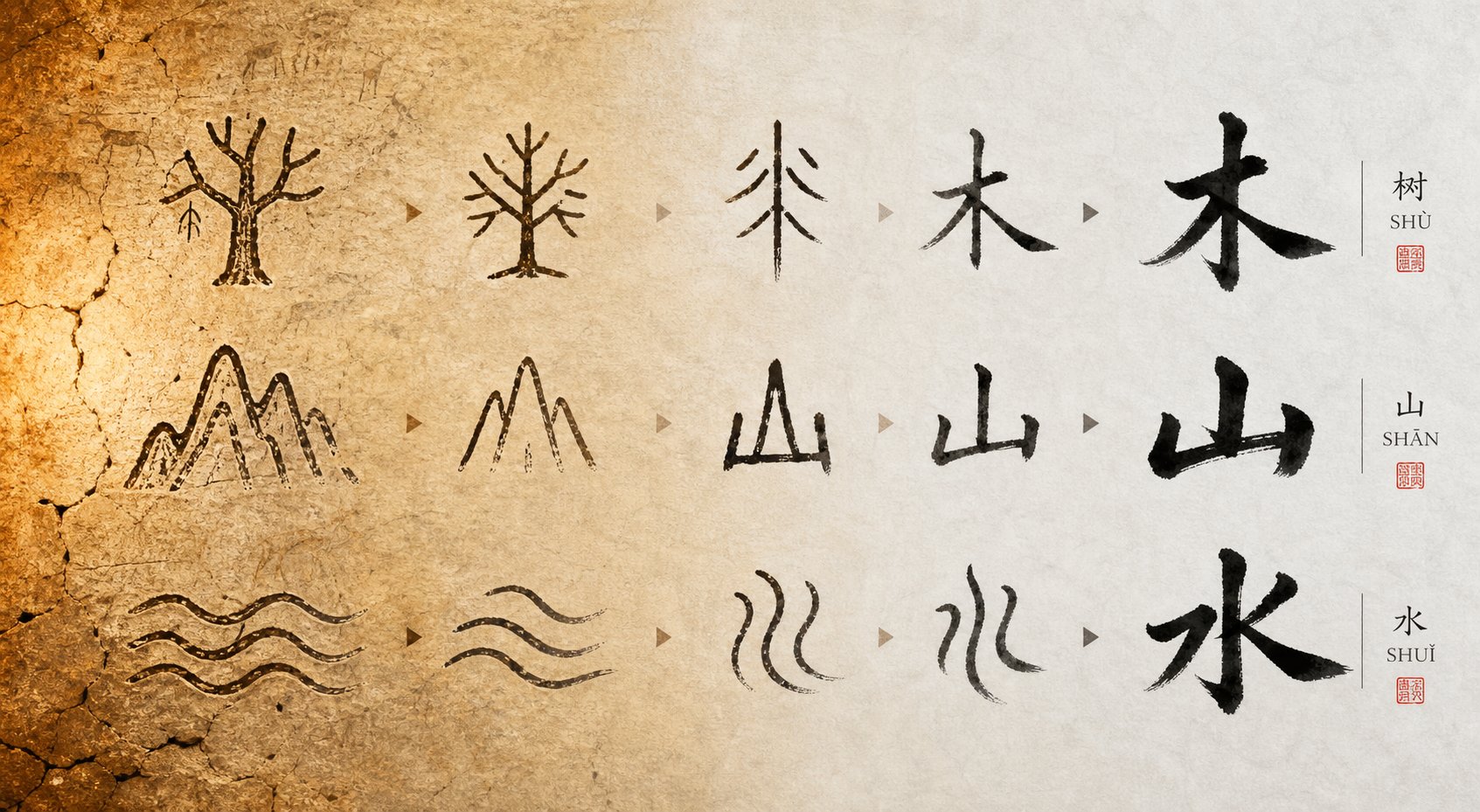
In English, a surname like "Brooks" or "Hill" hints at a landscape connection, but the link is abstract. You read the word. In Chinese, the connection is visual. The character 山 (shān) literally looks like a mountain range in its earliest pictographic form. The character 林 (lín) places two tree symbols side by side to depict a forest. When you see these characters, you do not just read "mountain" or "forest." You see them.
Chinese characters evolved from pictograms carved into oracle bones over 3,000 years ago. Though only about 4% of modern characters remain purely pictographic, those ancient visual roots still live inside radicals and components. Many nature-connected surnames preserve this pictographic DNA, making their chinese surnames and meanings inseparable from the visual form itself.
How Many People Carry Nature-Related Surnames
The scale is staggering. Consider that the surname Wang alone accounts for 7.65% of China's Han population, translating to well over 100 million bearers. Almost 86% of China's 1.4 billion citizens share just 100 surnames. Within that concentrated pool, nature-linked names appear repeatedly: 李 (plum tree), 林 (forest), 马 (horse), 叶 (leaf), 江 (river), 石 (stone), 田 (field), 龙 (dragon).
When you tally the bearers of chinese surnames meaning nature across China's population, the number reaches into the hundreds of millions, making this one of the largest living connections between human identity and the natural world anywhere on Earth.
Understanding the meaning of chinese last names rooted in nature requires more than a dictionary lookup. It requires tracing the philosophical traditions, geographic histories, and visual logic that made rivers, forests, and stone permanent fixtures in how Chinese families identify themselves.
Why Nature Became Central to Chinese Surname Formation
A surname does not appear from nowhere. It crystallizes from the world a people inhabit, the beliefs they hold, and the landscapes they depend on. In China, where philosophical traditions taught that humans are not separate from nature but woven into it, the leap from landscape to family identity was short and inevitable.
Several forces converged over millennia to make nature imagery the dominant thread in ancient chinese names. Philosophy provided the worldview. Geography provided the raw material. And political power sometimes sealed the connection through imperial decree.
Daoist and Confucian Roots of Nature Naming
Why would a family choose to name itself after a river or a tree rather than, say, a virtue or a profession? The answer lives in the philosophical soil of Chinese civilization. Two traditions in particular shaped how people understood their relationship to the natural world:
- Daoism (道家) taught that the Dao, the fundamental principle of the universe, manifests most purely in nature. Mountains, rivers, and forests were not just scenery. They were expressions of cosmic order. Naming a clan after a natural element was, in this framework, aligning the family with the Dao itself.
- Confucianism (儒家) emphasized harmony between human society and the natural world. Confucian values like benevolence and righteousness were often illustrated through natural metaphors: the steadfastness of mountains, the adaptability of water. Traditional chinese names frequently drew on these associations to encode moral aspirations.
- Buddhism (佛教) contributed a reverence for all living things, reinforcing the cultural weight of plant and animal imagery in naming practices.
- Yin-Yang cosmology (阴阳) framed nature as a system of complementary forces, encouraging families to seek balance by connecting their identity to specific natural elements.
These were not abstract philosophies locked in texts. They shaped daily life, ritual, and identity. When a family took the surname 林 (forest) or 江 (river), they were participating in a worldview where Daoist principles of harmony with nature and the pursuit of balance directly influenced how people named themselves and their children.
Geographic Origins and Agrarian Connections
Philosophy provided the framework, but geography provided the specifics. China's ancient surnames often trace back to a particular place, and in an agrarian society, places were defined by their natural features.
Imagine a clan living at the bend of a great river for generations. The river fed their crops, shaped their trade routes, and marked the boundary of their territory. When surname systems formalized, that clan became the river. Families near the Yellow River took names like 河 (Hé, river). Those dwelling in forested highlands became 林 (Lín, forest). Clans settled beside rocky outcrops adopted 石 (Shí, stone).
This pattern, where ancient last names derived from nearby geographic features, is well documented in historical sources. The Han dynasty text Fengsu Tong identifies "places of residence" as one of the primary origins of chinese dynasty names and family surnames. Modern scholars have expanded this to at least 24 distinct sources, with geographic and natural features ranking among the most common.
For farming communities, the connection ran even deeper. The surname 田 (Tián, field) did not just reference a landscape. It referenced a livelihood. The character itself is a pictogram of a plot of land divided by irrigation channels. When your survival depended on reading seasons, soil, and water, encoding nature into your family identity was not poetic. It was practical.
Imperial Grants and Totemic Clan Names
Not all nature surnames emerged organically from geography. Some were imposed from above, and others reach back to a time before written history.
In ancient China, each clan maintained its own totem, a spirit being or sacred symbol that served as the group's emblem. These totems frequently took animal forms: bears, horses, dragons, birds. As totemic clans evolved into settled communities, their animal symbols became ancient surnames. The surname 熊 (Xióng, bear) likely traces to such origins, as does 龙 (Lóng, dragon), connecting modern bearers to pre-literate clan identities thousands of years old.
Emperors also played a direct role. Chinese rulers sometimes bestowed surnames on subjects as honors or political tools. During the Tang dynasty, the imperial Li (李, plum tree) surname was granted to loyal generals and officials. Other rulers assigned surnames referencing natural landmarks near a recipient's territory. A general who defended a mountain pass might receive a mountain-related surname. A governor who tamed a river's flooding might carry that river forward in his family name.
These chinese family names and meanings, whether rooted in philosophy, geography, or political power, share a common thread. They reflect a civilization that never drew a hard line between human identity and the natural world. The forest was not just where you lived. It was who you were.
That identity was not only spoken. It was written, and the way Chinese characters encode nature visually adds another layer entirely to how these surnames carry meaning across generations.
How Chinese Characters Visually Encode Nature in Surnames
Most writing systems hide their meanings behind arbitrary symbols. The letter "B" does not look like anything in particular. But Chinese characters work differently. They carry visual clues, small building blocks called radicals, that tell you what category of meaning a character belongs to. For chinese names and characters tied to nature, this means you can literally see the river, the tree, or the mountain inside the written surname itself.
Understanding how radicals function is the key to unlocking any chinese name definition rooted in the natural world. A radical acts as a semantic signpost. When you spot the three-stroke water radical on the left side of a character, you know the word relates to liquid, flow, or bodies of water. When you see the wood radical, you are in the territory of trees, forests, and timber. This system makes chinese name interpretation far more transparent than it might first appear to non-readers.
Reading Nature Through Character Radicals
Think of radicals as the DNA of a character. Each one encodes a core meaning, and when combined with other elements, it produces a specific word while retaining that foundational nature connection. Here are the radicals most relevant to nature-linked surnames:
| Radical | Pinyin | Nature Meaning | Example Surnames | Visual Description |
|---|---|---|---|---|
| 木 | mu | Wood / Tree | 林 (Lin, forest), 李 (Li, plum tree), 柳 (Liu, willow) | Depicts a tree with branches above and roots below |
| 氵 | shui | Water | 江 (Jiang, river), 海 (Hai, sea), 池 (Chi, pond) | Three drops of water flowing downward on the left side |
| 山 | shan | Mountain | 山 (Shan, mountain), 岳 (Yue, peak) | Three vertical strokes resembling rocky peaks of a mountain range |
| 石 | shi | Stone / Rock | 石 (Shi, stone) | Originally depicted a stone beneath a cliff face |
| 土 | tu | Earth / Soil | 田 (Tian, field), 丘 (Qiu, hill) | A lump of earth sitting on the ground, representing soil as building material |
| 艹 | cao | Grass / Plants | 叶 (Ye, leaf), 梅 (Mei, plum blossom) | Two strands of grass sprouting upward, always positioned at the top of a character |
You will notice that some surnames, like 林 (Lin), are built entirely from a nature radical repeated. Two wood radicals 木 placed side by side form 林, turning a single tree into a forest. Stack three together and you get 森 (sen), meaning dense woodland. The logic is additive and visual: more trees, more forest.
Others combine a nature radical with a phonetic element. In 江 (Jiang, river), the water radical 氵 signals the meaning while the right-side component 工 provides a pronunciation hint. This structure, called phono-semantic compounding, accounts for the majority of Chinese characters. The nature radical stays visible, anchoring the word's meaning even as the phonetic component guides how it sounds.
From Oracle Bone Pictographs to Modern Characters
Where did these radicals come from? They trace back over 3,000 years to the oracle bone script of the Shang Dynasty, the oldest confirmed Chinese writing. Discovered in Anyang around 1895, these inscriptions on ox bones and turtle shells contain over 30,000 distinct character forms. Scholars can read roughly 1,500 to 2,000 of them, and many are recognizably pictographic.
The oracle bone version of 山 (mountain) looked like three pointed peaks. The early form of 木 (tree) showed a trunk with branches spreading upward and roots reaching down. Water was drawn as a flowing stream with ripples. These were not abstract symbols. They were sketches of the natural world, carved with bronze pins into bone.
Over centuries, the script evolved through several stages: oracle bone inscriptions gave way to bronze vessel inscriptions during the Zhou Dynasty, then to seal script during the Qin unification, and finally to the clerical and regular scripts used today. At each stage, characters became more standardized and angular, losing some pictographic clarity but retaining their radical structure. The mountain still has its peaks. The water still has its drops. The tree still has its trunk.
When you write a last name in chinese like 林 or 江 today, you are using a character whose visual logic was established in the Bronze Age. The strokes are neater, the curves are gone, but the nature meaning encoded in the radical has survived intact for over three millennia.
Simplified vs Traditional Forms and Meaning Transparency
Here is where things get interesting for modern readers. In the 1950s and 1960s, the People's Republic of China introduced simplified characters to improve literacy rates. Many characters lost strokes. Some lost entire components. And in a few cases, the simplification obscured the nature connection that was clearer in the traditional form.
For most nature-related surnames, simplification changed little. 林 (forest), 山 (mountain), 石 (stone), and 田 (field) look identical in both systems because they were already simple. The surname 叶 (Ye, leaf), however, tells a different story. Its traditional form 葉 prominently displays the grass radical 艹 at the top and the wood radical 木 at the bottom, visually reinforcing the botanical meaning. The simplified 叶 retains the mouth radical 口 and a different phonetic element, making the plant connection less immediately visible.
Similarly, the surname 龙 (Long, dragon) in its traditional form 龍 is a far more elaborate pictograph, with components suggesting a horned, serpentine creature. The simplified version compresses this into fewer strokes, trading visual richness for writing speed.
For anyone studying names in chinese and meanings, traditional characters often reward closer inspection. They preserve more of the original pictographic architecture, the layered radicals and semantic components that make the nature connection self-evident on the page. Simplified forms prioritize efficiency, which is why both systems coexist across Chinese-speaking communities worldwide.
This visual encoding is not just an academic curiosity. It shapes how bearers of these surnames experience their own names. When someone writes 海 (Hai, sea) and sees the water radical on the left, the ocean is not just a meaning looked up in a dictionary. It is present in every stroke. That tangible, visible connection between identity and nature carries forward into specific surname categories, starting with the element that flows through more Chinese family names than any other: water.
Water Element Surnames From Rivers to Seas
Water is everywhere in Chinese surname culture. Not as a single name, but as a family of names, each capturing a different form of water: the rushing current of a great river, the stillness of a pond, the vastness of the open sea. These distinctions matter. A chinese last name meaning "river" carries different connotations than one meaning "lake," and the geographic roots behind each tell distinct stories about where families originated and why they chose water as their identity.
What connects all of them is the water radical 氵, those three small strokes on the left side of the character. When you spot it in a surname, you know immediately: this family's name flows.
River Surnames and Their Geographic Roots
Two surnames dominate the river category, and they are not interchangeable. Each points to a different waterway and a different origin story.
江 (Jiāng) means river, but not just any river. In Chinese, 江 specifically refers to large, southward-flowing rivers, and its most famous association is the Yangtze (长江, Cháng Jiāng). As a surname, 江 traces back to the ancient State of Jiang (江国), an autonomous kingdom during the Shang and Western Zhou dynasties with its capital near modern Zhengyang County in Henan Province. After the state was destroyed by Chu in 623 BC, its surviving inhabitants took the kingdom's name as their clan name. Today, 江 is the 52nd most common chinese last name and accounts for roughly 0.26% of the Han Chinese population.
河 (Hé) also means river, but carries a northern orientation. In classical Chinese, 河 without any qualifier refers specifically to the Yellow River (黄河, Huáng Hé), the cradle of Chinese civilization. Families bearing this surname often trace their ancestry to communities that lived along the Yellow River's banks in what is now Henan and Shaanxi. The character itself combines the water radical with a phonetic component, but its cultural weight is enormous: to carry the surname 河 is to carry the river that fed the earliest Chinese dynasties.
The distinction between 江 and 河 reflects a geographic reality. Southern rivers earned the label 江. Northern rivers earned 河. Two surnames, both meaning "river," yet pointing to entirely different landscapes and lineage histories.
Sea and Lake Surnames
Move beyond rivers and you find chinese last names and meanings tied to larger, stiller bodies of water.
海 (Hǎi) means sea or ocean. As a surname, it is less common than the river names but carries powerful symbolism. Families with this name often have roots in coastal regions or, in some cases, trace their origins to ethnic minorities in northwestern China where the character was adopted during periods of cultural exchange. The figurative meaning extends to anything vast and boundless, giving the name an aspirational quality: broad-minded, limitless.
池 (Chí) means pond or pool, a contained body of water. This is a quieter name than 江 or 海, suggesting stillness and depth rather than force. Historically, the surname connects to families who lived near notable ponds or reservoirs. Some genealogical records trace it to the ancient state of Chi during the Western Zhou period. The character pairs the water radical with a phonetic element meaning "to hold" or "to contain," reinforcing the image of water gathered in one place.
湖 (Hú) means lake. Like 池, it suggests a bounded body of water, but on a grander scale. Families bearing this surname often originated near one of China's famous lakes, such as Dongting Lake or Poyang Lake. The character combines the water radical with 胡 (hú), which serves as the phonetic component but also carries associations with vastness and antiquity.
| Character | Pinyin | Literal Meaning | Figurative Meaning | Notable Geographic Connection |
|---|---|---|---|---|
| 江 | Jiāng | Large river | Grandeur, continuous flow, unstoppable progress | State of Jiang (modern Henan); associated with the Yangtze River |
| 河 | Hé | River (northern) | Civilization's source, nourishment, endurance | Yellow River basin in Henan and Shaanxi provinces |
| 海 | Hǎi | Sea / Ocean | Vastness, boundlessness, open-mindedness | Coastal regions; also adopted in northwestern ethnic communities |
| 池 | Chí | Pond / Pool | Stillness, depth, containment, reflection | Ancient state of Chi; families near reservoirs in central China |
| 湖 | Hú | Lake | Calm abundance, gathered resources, tranquility | Dongting Lake and Poyang Lake regions |
How Water Symbolism Extends Beyond Literal Meaning
Here is what makes chinese surname meanings tied to water especially rich: in Chinese philosophy, water is never just water. Laozi famously wrote that "the highest good is like water," praising its ability to benefit all things without competing. Confucius stood by a river and reflected on the relentless passage of time. Water in Chinese thought represents adaptability, persistence, humility, and quiet strength.
When someone carries the surname 江 or 海, these philosophical layers travel with them. The name does not merely record an ancestor's address near a riverbank. It encodes a set of values: flow around obstacles rather than crash into them, gather strength quietly before moving with force, nourish what surrounds you without demanding recognition.
This layered quality is what separates chinese last name meanings from simple translations. A dictionary gives you "river." Culture gives you an entire philosophy of how to live. And for the millions who bear water-element surnames today, that philosophy is written into every form they sign and every introduction they make.
Water flows, but it is not the only element that shaped Chinese family identity. Rooted in the earth and reaching toward the sky, plant and wood surnames carry their own weight, wrapped in centuries of poetry and literary symbolism that give botanical names a resonance far beyond the garden.
Plant and Wood Surnames With Deep Literary Symbolism
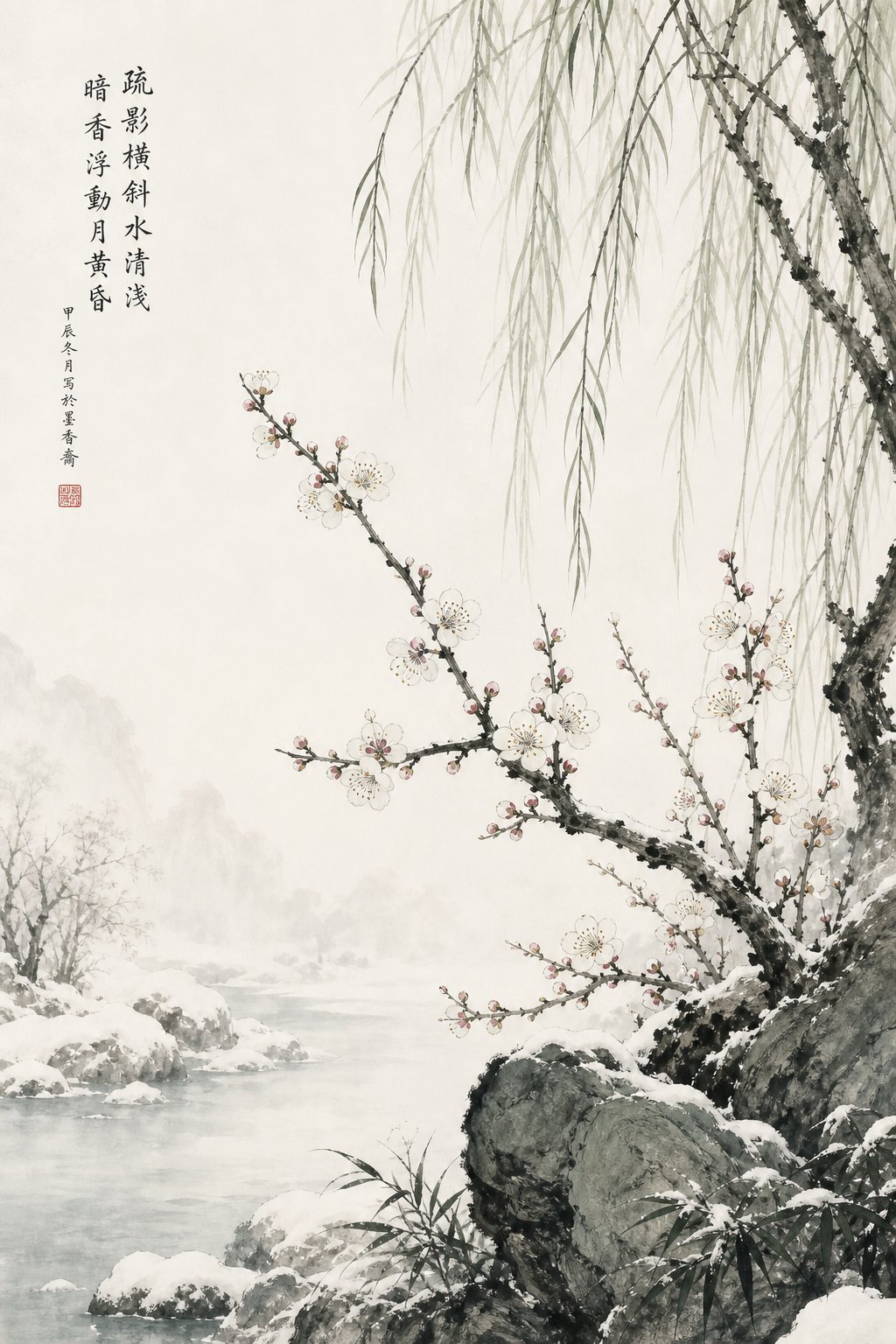
Trees outlast the people who plant them. Maybe that is why so many Chinese families chose botanical names as their permanent identity. Plant and wood surnames are not just common. They are among the most popular chinese last names in existence, carried by hundreds of millions of people whose ancestors saw something enduring in a forest, a plum tree, or a single leaf.
What sets these surnames apart from water or stone names is their deep entanglement with Chinese literary tradition. Every tree, flower, and plant in Chinese culture carries poetic associations built up over centuries of verse. When you bear a botanical surname, you carry not just a nature meaning but an entire library of cultural symbolism.
Tree and Forest Surnames
林 (Lin, forest) is one of the most visually intuitive surnames in the Chinese writing system. Take the character for tree, 木, and place two side by side. You get 林: a forest. The logic is elegant and immediate. As a surname, 林 ranks among the most common in southern China, particularly in Fujian and Guangdong provinces. Its meaning extends beyond a literal grove of trees to suggest abundance, community, and shelter, qualities any family would want encoded in their name.
李 (Li, plum tree) is the most common last name in China, shared by nearly 100 million people. That is close to a third of the entire U.S. population carrying a single surname. The character combines 木 (wood/tree) on top with 子 (seed/child) below, depicting a fruit-bearing tree. Its origins trace back to a dramatic survival story: after a minister named Li Zheng was executed for opposing the Shang dynasty tyrant King Zhou, his wife and son fled west and survived by eating wild plums. In gratitude, the son changed the family name to 李, the character for plum.
The surname's dominance exploded during the Tang Dynasty (618-907 AD), when all twenty emperors bore the Li name and frequently bestowed it upon loyal generals and officials as an imperial honor. Today, 李 is not just the most common chinese last name. It is arguably the most historically layered, connecting bearers to Daoist philosophy (Laozi's birth name was Li Er), imperial power, and the resilient plum tree itself.
Flower and Plant Surnames in Poetry and Culture
Smaller, more delicate plant surnames carry outsized cultural weight. Each one arrives wrapped in centuries of poetic meaning that Chinese readers recognize instantly.
- 叶 (Ye, leaf) - Meaning "leaf," this surname evokes impermanence and seasonal change. In poetry, falling leaves signal autumn's arrival and the passage of time. The traditional form 葉 displays both the grass radical and wood radical, making its botanical identity unmistakable.
- 梅 (Mei, plum blossom) - The plum blossom is one of the "Four Gentlemen of Flowers" in Chinese art, celebrated for blooming in the dead of winter when all other flowers have retreated. It symbolizes resilience, purity, and renewal against adversity. Together with pine and bamboo, plum blossoms form the "Three Companions of the Winter" (岁寒三友), plants that endure cold seasons with integrity intact. Carrying 梅 as a surname means carrying that defiance of hardship in your identity.
- 柳 (Liu, willow) - The willow tree in Chinese poetry symbolizes grace, flexibility, and parting. Ancient travelers would break a willow branch to give to departing friends, since the word 柳 (liu) sounds like 留 (liu, "to stay"). The liu last name origin connects to the ancient state of Liu during the Spring and Autumn period, but its poetic resonance, bending without breaking, swaying with the wind rather than resisting it, gives the name an emotional depth that transcends geography.
- 桂 (Gui, osmanthus/cassia) - The osmanthus tree blooms in autumn with intensely fragrant golden flowers. In Chinese mythology, a cassia tree grows on the moon, linking this surname to celestial imagery. Historically, "plucking the cassia branch" (折桂) was a metaphor for passing the imperial examinations, making 桂 a name associated with scholarly achievement and sweet success.
The Literary Weight of Botanical Names
What makes these plant surnames culturally distinct is how deeply Chinese poetry has shaped their meaning. In Western naming traditions, a surname like "Rose" carries some floral association, but it does not arrive with a thousand years of specific literary references that every educated person recognizes.
In Chinese culture, the plum blossom is not generically "pretty." It is specifically the flower that blooms when ice still covers the ground, making it a symbol of perseverance that Confucius himself referenced. The pine tree stands straight against winter storms, representing unswerving determination. As Confucius noted in The Analects: "Only in the cold winter does one know that the pine and the cypress are the last to shed their leaves." These associations are not obscure. They are foundational cultural knowledge, taught in schools and referenced in everyday conversation.
This is why chinese names popular across centuries tend to cluster around plants with strong literary identities. Parents choosing given names and families preserving surnames gravitate toward characters that carry this poetic weight. The most popular chinese names, whether surnames or given names, often draw from the same botanical vocabulary that poets have been refining for millennia.
When someone introduces themselves as 梅 or 柳, they are not just stating a family name. They are invoking a tradition where plants stand for human virtues: resilience, grace, integrity, quiet strength. The botanical world becomes a moral vocabulary, and the surname becomes a one-character poem.
Plants grow from the earth, and the earth itself, along with the animals that roam it and the sky that stretches above, forms another vast category of nature surnames with origins reaching back to China's earliest totemic clans.
Earth Animals and Sky in Chinese Surname Traditions
Beneath the forests and beyond the rivers, the ground itself shaped Chinese family identity. Stone outcrops, terraced hillsides, open valleys, and plowed fields gave clans their names just as readily as water did. And above the earth, animals that roamed the land and weather that ruled the sky contributed another layer of surnames, some common, some among the most rare chinese surnames still carried today.
These three categories, earth, animal, and celestial, span the full vertical range of the natural world. From the soil underfoot to the thunder overhead, they represent a chinese surnames list that reads like a map of the ancient landscape itself.
Mountain and Earth Surnames
Picture a clan whose village sits at the base of a granite cliff. Generations farm the same terraced hillside, quarry the same stone, and orient their lives around the same valley. When that clan needs a surname, what could be more natural than the ground they stand on?
石 (Shi, stone) is one of the most direct nature surnames in Chinese. The character originally depicted a rock beneath a cliff overhang, and its meaning has never shifted. Families bearing this surname often trace their roots to rocky, mountainous terrain in northern China. Some genealogical records connect the name to the ancient Wey State (卫国), where a noble lineage adopted 石 after an ancestor's given name. The surname carries connotations of solidity, permanence, and unyielding strength, qualities that made it appealing as a family identity.
山 (Shan, mountain) is the pictograph that still looks like what it means: three peaks rising from the earth. As a surname, 山 is relatively rare chinese last names territory compared to giants like 李 or 王, but its bearers carry one of the most visually powerful characters in the writing system. Origin stories vary, with some tracing the name to officials who governed mountain regions and others linking it to families who simply lived in highland areas where mountains defined daily life.
丘 (Qiu, hill) represents a gentler elevation, a mound or hillock rather than a towering peak. The character's oracle bone form showed two small rises side by side. Confucius himself bore this character in his given name (孔丘, Kong Qiu), lending the surname scholarly prestige. Families with this name often originated in gently rolling terrain rather than dramatic mountain ranges.
田 (Tian, field) is among the most common earth-related surnames, ranking in the top 60 nationally. The character is a perfect pictogram: a square plot of land divided by irrigation channels into four sections. This is not wilderness. It is cultivated earth, land shaped by human hands. Families bearing 田 were often landowners or farming communities whose identity was inseparable from the soil they worked.
谷 (Gu, valley) completes the terrain picture by naming the space between mountains. A valley is where water collects, crops grow, and settlements form. The surname suggests shelter, fertility, and the practical wisdom of choosing protected ground. Some lineages trace it to the ancient state of Gu, while others adopted it simply because their ancestral village sat in a notable valley.
Animal Surnames and Ancient Totemic Clans
Animal surnames reach back further than geography-based names. They connect to a pre-literate era when clans identified themselves through totemic animals, sacred creatures believed to be ancestors or spiritual protectors of the group. When writing systems developed, these totemic identities crystallized into characters and became permanent family names.
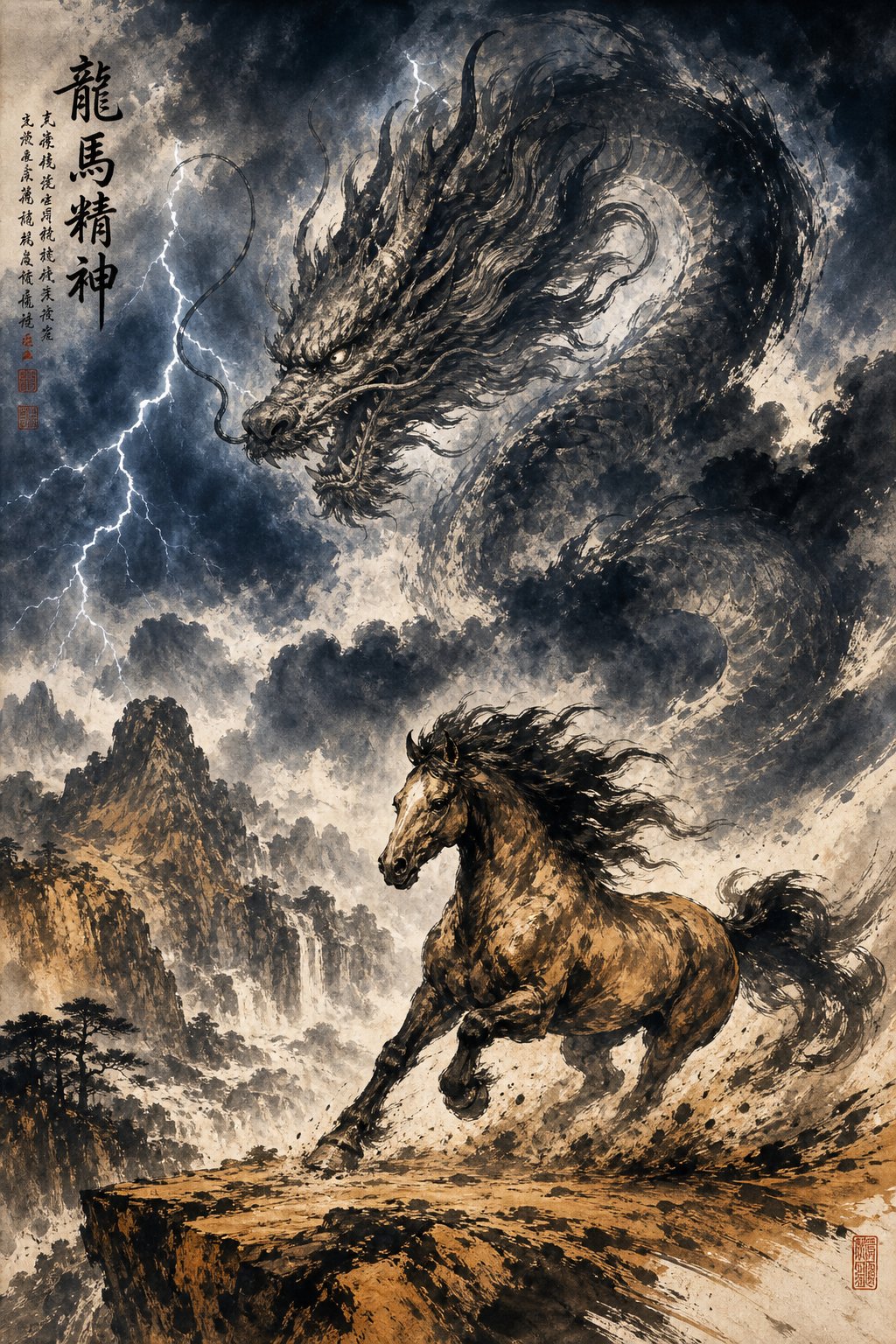
马 (Ma, horse) is the most widespread animal surname in China, carried by over 17 million people. The horse was central to warfare, trade, and communication in ancient China, and surnames that mean power often trace to military or nomadic origins. The Ma surname has multiple origin stories: some branches descend from the Warring States general Zhao She, whose descendants took 马服 (Ma Fu, "horse tamer") as their clan name before shortening it to 马. Other branches entered Chinese culture through Central Asian and Muslim communities where Ma became a common sinification of Arabic names like Muhammad.
龙 (Long, dragon) carries mythological weight unlike any other surname. The dragon in Chinese culture is not a fearsome beast to be slain. It is a symbol of imperial authority, cosmic power, and auspicious fortune. As a surname, 龙 likely traces to ancient clans who venerated the dragon as their totemic ancestor. Some scholars connect it to the legendary Dong Fu, who was appointed "dragon tamer" by Emperor Shun. Among chinese warrior names and surnames that mean power, 龙 stands apart for its association with supreme authority.
熊 (Xiong, bear) connects directly to one of China's oldest known totemic traditions. The bear was the totem of the Chu kingdom (楚国), a powerful state during the Spring and Autumn and Warring States periods. Chu's ruling family bore the surname 熊 for generations, and their descendants spread the name across southern China. The bear symbolized raw strength and protective ferocity, qualities a ruling clan would want associated with their lineage.
Sky and Weather Surnames
Look up from the earth and the animals, and you find a final category of nature surnames drawn from the sky itself. These names connect to weather phenomena, atmospheric forces, and celestial observations that governed agricultural life for millennia.
雷 (Lei, thunder) is a surname that sounds like what it means. Thunder in agrarian China was not just noise. It signaled the arrival of spring rains, the awakening of insects from hibernation, and the start of planting season. The character combines the rain radical 雨 on top with 田 (field) below, visually linking thunder to its agricultural significance. Families bearing this surname may trace their origins to ancient rain-worship clans or to officials responsible for weather observation and calendar-keeping.
云 (Yun, cloud) carries associations of freedom, transformation, and lofty aspiration. Clouds shift shape constantly, travel without boundaries, and bring life-giving rain. In Daoist imagery, clouds represent the wandering sage unbound by worldly concerns. The surname appears in records dating to the legendary period, with some genealogies tracing it to Zhuan Xu, one of the mythical Five Emperors.
风 (Feng, wind) is among the rarest and oldest surnames in Chinese tradition. Some scholars consider it one of the most ancient chinese surnames, predating even the Hundred Family Surnames text. Wind in Chinese cosmology is a primal force, one of the fundamental energies that shapes the world. The legendary emperor Fu Xi is said to have borne the surname 风, placing this name at the very origin of Chinese civilization in mythological accounts.
| Category | Character | Pinyin | Meaning | Origin Story |
|---|---|---|---|---|
| Earth/Stone | 石 | Shi | Stone | Nobles of Wey State; families in rocky northern terrain |
| Earth/Stone | 山 | Shan | Mountain | Officials governing mountain regions; highland communities |
| Earth/Stone | 丘 | Qiu | Hill | Families in rolling terrain; shared by Confucius (孔丘) |
| Earth/Stone | 田 | Tian | Field | Landowners and farming clans; pictogram of irrigated plots |
| Earth/Stone | 谷 | Gu | Valley | Ancient state of Gu; settlements in sheltered lowlands |
| Animal | 马 | Ma | Horse | General Zhao She's descendants; Central Asian Muslim communities |
| Animal | 龙 | Long | Dragon | Dragon-totem clans; legendary "dragon tamer" Dong Fu |
| Animal | 熊 | Xiong | Bear | Totemic ruling family of the Chu kingdom |
| Celestial | 雷 | Lei | Thunder | Rain-worship clans; agricultural weather observers |
| Celestial | 云 | Yun | Cloud | Traced to mythical emperor Zhuan Xu |
| Celestial | 风 | Feng | Wind | Attributed to legendary emperor Fu Xi; one of the oldest surnames |
What emerges from this full survey, water, wood, earth, animal, and sky, is a naming system that mirrors the entire natural world. Chinese families did not pick nature references at random. They mapped themselves onto a cosmos where every element had its place, its meaning, and its relationship to every other element. That cosmological framework has a name: the Five Elements system, and it provides the organizing logic that ties all these nature surnames together into a coherent cultural philosophy.
The Five Elements Framework and Nature Surname Classification
Every nature surname explored so far, from rivers to bears to thunder, fits within a single cosmological system that Chinese thinkers developed thousands of years ago. The Five Elements (五行, Wǔxíng) framework organizes all natural phenomena into five categories: Wood, Fire, Earth, Metal, and Water. These are not static labels. They describe a cycle of generation and control, where each element produces the next and restrains another, forming a dynamic loop that governs everything from medicine to architecture to naming.
For families choosing names, this was not philosophy in the abstract. It was a practical tool. A person's BaZi birth chart reveals which elements are strong and which are deficient. If a child's chart lacked Water, parents might select given-name characters containing the water radical to restore balance. If Metal was excessive, they might avoid metallic associations entirely. The goal was harmony, not decoration.
The Five Elements as a Naming Framework
How does this connect to surnames? Unlike given names, surnames are inherited rather than chosen. But the Five Elements framework still provides the most culturally authentic way to classify nature surnames, grouping them by elemental identity rather than by arbitrary alphabetical order. Here is how the mandarin surnames tied to nature map onto each element:
- Wood (木, Mù) — Growth, vitality, and flexibility. Associated nature surnames: 林 (Lin, forest), 李 (Li, plum tree), 柳 (Liu, willow), 叶 (Ye, leaf), 梅 (Mei, plum blossom), 桂 (Gui, osmanthus), 杨 (Yang, poplar). Wood surnames cluster around trees, forests, and flowering plants. 李 alone is the most common chinese surname in the world, carried by nearly 100 million people.
- Fire (火, Huǒ) — Passion, warmth, and energy. Associated nature surnames: 雷 (Lei, thunder), 夏 (Xia, summer). Fire-element surnames are rarer in the nature category, since fire is more often encoded in given-name characters than in inherited family names.
- Earth (土, Tǔ) — Stability, nourishment, and grounding. Associated nature surnames: 田 (Tian, field), 山 (Shan, mountain), 石 (Shi, stone), 丘 (Qiu, hill), 谷 (Gu, valley). These represent the solid, enduring foundation beneath all other elements.
- Metal (金, Jīn) — Strength, clarity, and discipline. Associated nature surnames: 金 (Jin, gold/metal). Metal appears less frequently as a standalone nature surname, though the element influences countless given-name characters containing the metal radical 钅.
- Water (水, Shuǐ) — Fluidity, adaptability, and wisdom. Associated nature surnames: 江 (Jiang, river), 河 (He, river), 海 (Hai, sea), 池 (Chi, pond), 湖 (Hu, lake). Water claims the largest cluster of nature surnames, reflecting how central rivers and seas were to settlement patterns.
This elemental mapping also shaped generational naming practices. In many Chinese families, successive generations would cycle through the Five Elements in their given names, with each generation's characters sharing a common radical tied to one element. A grandfather's generation might use Wood-radical characters, the father's generation Fire-radical characters, and the son's generation Earth-radical characters, following the productive cycle where Wood feeds Fire, Fire creates Earth, and so on. The surname remained fixed, but the given names rotated through the cosmos.
Nature Surnames in the Hundred Family Surnames Text
The most famous list of chinese surnames is the Hundred Family Surnames (百家姓, Bǎi Jiā Xìng), a Song Dynasty text compiled around 960 AD. Despite its name, it actually contains over 400 surnames and was used as an educational primer for children learning to read. The text's opening line, "Zhao, Qian, Sun, Li" (赵钱孙李), placed the Song imperial surname first as a political gesture.
Scan this chinese surname list and nature meanings appear throughout. 李 (plum) sits at position two in the original text. 杨 (poplar) appears early. 马 (horse), 林 (forest), 田 (field), 石 (stone), 龙 (dragon), 叶 (leaf), 熊 (bear), 金 (gold), 江 (river), and 雷 (thunder) all feature within the top 100 most common chinese surnames by modern frequency. The Hundred Family Surnames represents approximately 85% of China's population, and nature-linked entries account for a striking share of that coverage.
What the Five Elements framework reveals is that these surnames are not scattered randomly across the natural world. They cluster into elemental families with their own internal logic, their own cycles of generation and restraint. A surname is fixed at birth, but understanding its elemental identity helps explain why certain given-name characters pair naturally with certain family names, and why the common chinese surnames tied to nature continue to resonate within a cosmological system that has organized Chinese thinking for over two millennia.
That cosmological system traveled wherever Chinese communities settled. And as these nature surnames crossed oceans and dialect boundaries, they transformed in spelling while preserving their elemental core, producing a fascinating web of romanization variants that connect Lin to Lim to Lam to Hayashi across the global diaspora.
Nature Surnames Across the Chinese Diaspora
A single character. One meaning. But spell it out in Roman letters and suddenly you have three, four, even five different versions depending on where in the world the family settled. Nature-linked Chinese surnames did not stay in China. They traveled with merchants to Southeast Asia, with laborers to California, with students to London. And at every stop, dialect and romanization systems reshaped how these names appear on passports, storefronts, and school rosters.
The character never changed. 林 still means forest whether you are in Fuzhou or San Francisco. But the sounds that different Chinese dialect groups attach to that character, and the romanization systems used to capture those sounds, produced a web of spelling variants that can make the same family name look entirely unrelated on paper.
Regional Romanization Differences for Nature Surnames
Two major forces drive the variation. The first is dialect. Mandarin, Cantonese, Hokkien, Teochew, and Hakka all pronounce the same characters differently, sometimes radically so. The second is romanization system. Mainland China adopted Hanyu Pinyin in 1958 as its official standard. But millions of Chinese emigrants left before that date, carrying older systems like Wade-Giles or informal dialect-based spellings that became permanent legal names in their new countries.
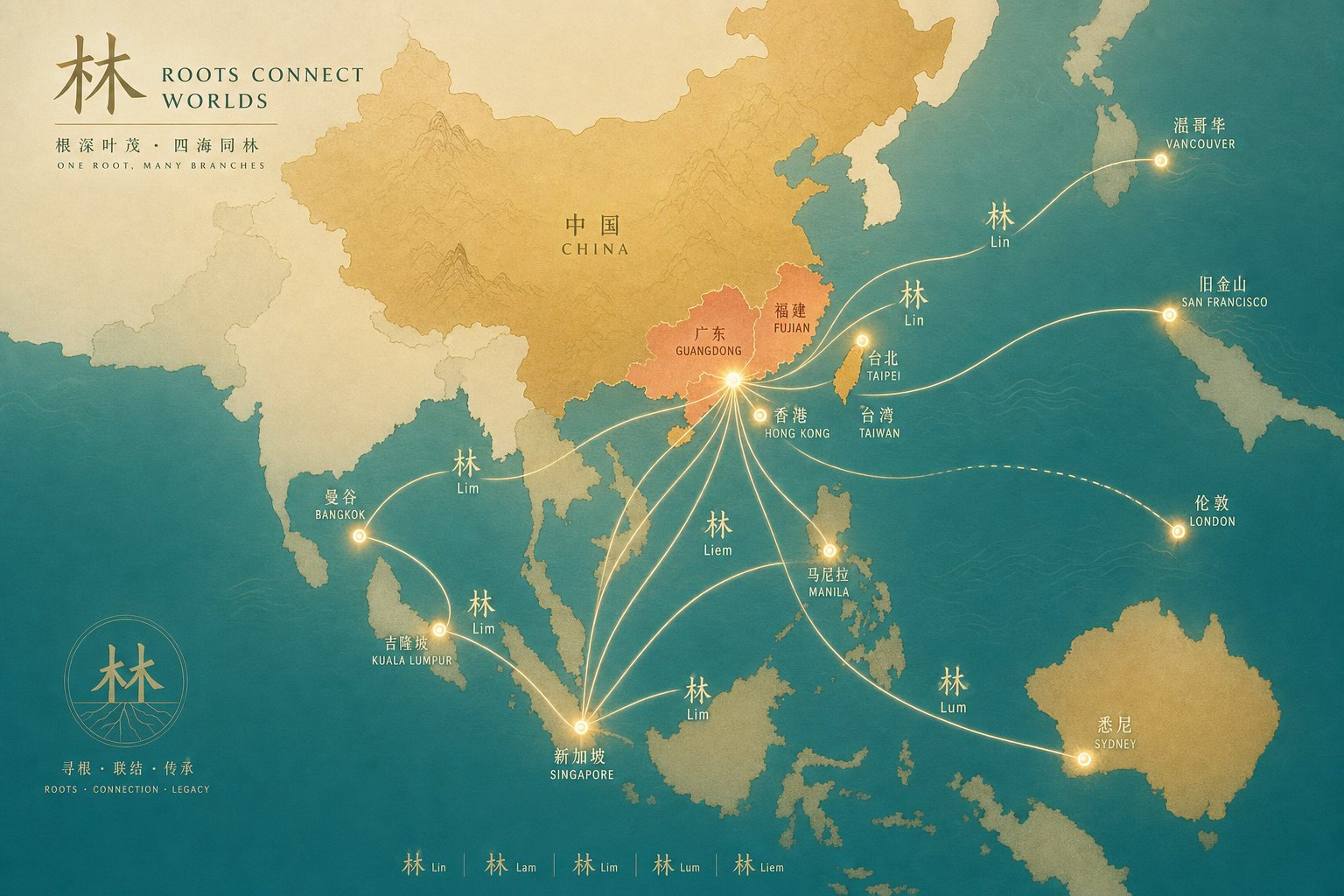
Consider 林 (forest). In Mandarin Pinyin, it is Lin. In Cantonese-speaking Hong Kong, it becomes Lam. Cross the South China Sea to Singapore or Penang, where Hokkien and Teochew speakers dominate, and the same character is romanized as Lim. Travel to Japan, where the character was borrowed into the writing system centuries ago, and it reads as Hayashi. Same forest. Same character. Four completely different spellings.
This is not a quirk. It is the norm for cantonese surnames, taiwanese last names, and singaporean last names alike. Every nature surname undergoes this multiplication the moment it leaves a Mandarin-only context.
Cantonese and Hokkien Spelling Variations
Cantonese last names tend to look quite different from their Pinyin equivalents because Cantonese preserves ancient Chinese pronunciation features that Mandarin has lost, including certain final consonants and tonal distinctions. If you have ever wondered about the chan last name origin, it traces to the character 陈 (Chen in Pinyin), which means "ancient" or "to display." In Cantonese, the same character is pronounced Chan, and in Hokkien-speaking communities across Southeast Asia, it becomes Tan. The character 陈 traces its roots to the ancient State of Chen and is especially common in southern China, Taiwan, and Singapore.
The leung last name origin follows a similar pattern. The character 梁 (Liang in Pinyin) means "bridge" or "beam," a structural element drawn from the natural world of wood and construction. In Cantonese, it becomes Leung. Hokkien speakers in Malaysia and Singapore may spell it Leong or Neo, depending on sub-dialect. Among chinese american surnames, you will find all these variants coexisting in the same city, sometimes in the same family, depending on which generation immigrated and which dialect they spoke.
Wade-Giles romanization adds another layer. This system, developed by British diplomats in the 19th century, uses apostrophes to mark aspirated consonants and produces spellings like Ch'en instead of Chen, Lin instead of Lin (identical in this case), and Chiang instead of Jiang. Many taiwanese surnames still follow Wade-Giles conventions because Taiwan never adopted Pinyin as its official system. A family surnamed 江 (river) might be Chiang in Taipei but Jiang in Beijing and Kong in Hong Kong.
| Character | Meaning | Pinyin (Mandarin) | Cantonese | Hokkien/Teochew | Wade-Giles |
|---|---|---|---|---|---|
| 林 | Forest | Lin | Lam | Lim | Lin |
| 江 | River | Jiang | Kong | Kang | Chiang |
| 梁 | Bridge/Beam | Liang | Leung | Leong/Neo | Liang |
| 陈 | Ancient/Display | Chen | Chan | Tan | Ch'en |
| 黄 | Yellow | Huang | Wong | Ng/Oei | Huang |
| 马 | Horse | Ma | Ma | Beh | Ma |
How Diaspora Communities Preserve Nature Meanings
Here is what matters most: the spelling changes, but the meaning does not. A family named Lim in Singapore and a family named Lam in Hong Kong and a family named Lin in Shanghai all carry the same forest in their name. They share the same ancestral character, the same wood-element classification, and often the same genealogical roots tracing back to Fujian province.
Diaspora communities preserve these nature meanings through clan associations, ancestral halls, and genealogical records that use the original Chinese character regardless of how the name appears in English. A Lim Association in Penang and a Lin Association in Taipei both organize around 林, the forest character. The romanization is a surface-level adaptation to local phonetics and colonial-era spelling conventions. Underneath, the nature connection remains intact and legible to anyone who reads the character.
This resilience is what makes cantonese last names, taiwanese surnames, and singaporean last names so fascinating as a group. They demonstrate that nature-encoded identity survives translation, migration, and centuries of linguistic drift. The forest does not disappear when you cross an ocean. It just sounds different on the other shore.
With so many nature surnames scattered across dialects and continents, a natural question emerges: how do these botanical, aquatic, and geological names stack up against other categories of Chinese surnames, and what does their collective prevalence reveal about the culture that created them?
How Nature Surnames Compare to Other Chinese Naming Traditions
Not every Chinese surname points to a river, a tree, or a mountain. Some record what an ancestor did for a living. Others encode a moral aspiration. When you step back and look at the full landscape of common chinese last names, three broad semantic categories emerge: nature-based, occupation-based, and virtue-based. Understanding how they compare in frequency and cultural weight puts the dominance of nature surnames into sharper perspective.
Nature vs Occupation and Virtue Surnames in Modern China
Occupation-based surnames work the same way they do in English. A family of potters became 陶 (Tao, potter). A family of butchers became 屠 (Tu, butcher). Blacksmiths, weavers, and officials all left traces in the surname record. But here is the key difference: occupation surnames are relatively rare in modern frequency rankings. 陶 sits around position 85 on the national surname population ranking, and 屠 falls well outside the top 200. These names exist, but they do not dominate.
Virtue-based surnames tell a similar story. 安 (An, peace), 常 (Chang, constancy), and 程 (Cheng, order/rule) encode moral qualities rather than natural elements. They carry aspirational weight, but collectively they account for a smaller slice of the population than nature names do.
Compare that to the nature category. 李 (plum tree) alone accounts for roughly 7% of China's Han population, nearly 100 million people. 林 (forest) ranks 16th nationally. 马 (horse) sits at 14th. 田 (field) holds position 36. 叶 (leaf) ranks 41st. 龙 (dragon) appears at 85th. When you tally the most common chinese last names that carry nature meanings, water, wood, earth, animal, and sky combined, they collectively represent hundreds of millions of bearers. No other semantic category comes close to that scale.
Why the imbalance? Occupations change. A potter's grandson might become a merchant, making the surname feel disconnected within a generation or two. But a forest does not stop being a forest. A river does not stop flowing. Nature surnames retain their relevance across centuries because the natural world they reference is permanent. The chinese names and meanings tied to landscapes, plants, and animals never become outdated the way a craft-based name might.
The Enduring Cultural Power of Nature Names
There is something else at work beyond frequency. Nature surnames carry a kind of cultural resonance that occupation and virtue names struggle to match. When someone introduces themselves as 江 (river) or 梅 (plum blossom), they invoke an entire tradition of poetry, philosophy, and cosmology. The Five Elements framework gives their name a place in the cosmic order. Classical verse gives it emotional depth. Geographic history gives it roots in a specific landscape.
Occupation surnames reference a task. Virtue surnames reference an ideal. Nature surnames reference the world itself, the rivers that fed civilizations, the mountains that sheltered villages, the animals that inspired awe. That breadth of association is why chinese name meanings rooted in nature continue to feel alive rather than archival. They connect bearers not just to an ancestor's profession or aspiration, but to the physical earth their entire lineage emerged from.
Even in modern urban China, where most people live far from the forests and rivers their surnames reference, the connection persists. A person named 林 may never live near a forest, but the character on their ID card still shows two trees standing side by side. A person named 海 may never see the ocean, but the water radical flows through every signature they write. The most popular chinese last names tied to nature function as portable landscapes, carrying the natural world into office buildings, subway cars, and digital screens.
Nature surnames are not relics of an agrarian past. They are living bridges between Chinese identity and the physical world, carried by hundreds of millions of people who write rivers, forests, and mountains into existence every time they sign their name.
Across nine centuries since the Hundred Family Surnames was first compiled, and across oceans that carried these names to every continent, the pattern holds. Chinese families chose nature. And nature, encoded in radicals and strokes and elemental cycles, chose them back.
Frequently Asked Questions About Chinese Surnames Meaning Nature
1. What is the most common Chinese surname with a nature meaning?
Li (李), meaning plum tree, is the most common nature-related Chinese surname, carried by nearly 100 million people. The character combines the wood radical (木) on top with the seed radical (子) below, depicting a fruit-bearing tree. Its dominance grew during the Tang Dynasty when all twenty emperors bore this surname and frequently bestowed it upon loyal officials as an imperial honor.
2. How can you tell if a Chinese surname has a nature meaning from the character itself?
Chinese characters contain small building blocks called radicals that signal meaning categories. The water radical (氵) appears in river and sea surnames like Jiang (江) and Hai (海). The wood radical (木) appears in tree surnames like Lin (林) and Liu (柳). The mountain radical (山) and earth radical (土) mark terrain-related names. Spotting these radicals lets you identify nature connections visually, even without knowing the full character.
3. Why do Chinese surnames like Lin have different spellings such as Lim and Lam?
The spelling differences come from dialect pronunciation and romanization systems. Lin is the Mandarin Pinyin spelling, Lam is Cantonese (common in Hong Kong), and Lim is Hokkien (common in Singapore and Malaysia). All three represent the same character 林 meaning forest. Families who emigrated before China adopted Pinyin in 1958 often kept older dialect-based spellings as their permanent legal names in new countries.
4. How does the Five Elements system relate to Chinese nature surnames?
The Five Elements (Wuxing) framework classifies all natural phenomena into Wood, Fire, Earth, Metal, and Water. Nature surnames map onto this system: forest and tree names belong to Wood, river and sea names to Water, stone and mountain names to Earth. Historically, families used this framework for generational naming, cycling given-name characters through elemental radicals across successive generations to maintain cosmological balance.
5. Are animal-based Chinese surnames connected to real animals or mythology?
Both. Some animal surnames trace to pre-literate totemic clans that venerated specific creatures as spiritual ancestors. The surname Xiong (熊, bear) connects to the ruling family of the ancient Chu kingdom, which used the bear as its clan totem. Ma (马, horse) links to military and nomadic origins. Long (龙, dragon) bridges mythology and identity, connecting bearers to clans that worshipped the dragon as a symbol of cosmic power and imperial authority.