The Philosopher Known by a Name He Never Heard
Imagine spending your entire life teaching, traveling, and shaping a philosophy that would influence billions of people for over two thousand years. Then imagine that the world remembers you by a name you never once heard spoken aloud. That is exactly what happened to the man we call Confucius.
The Latin Name That Hides a Chinese Meaning
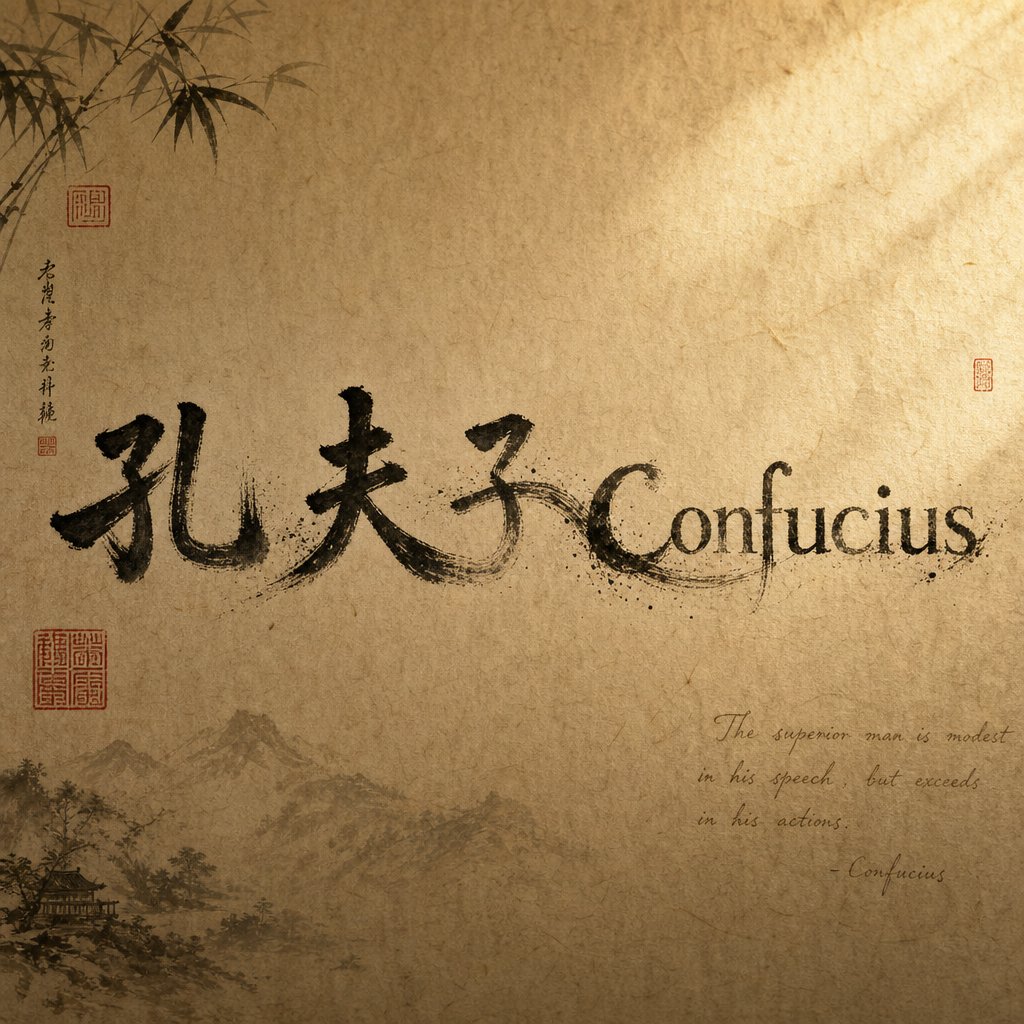
So what does Confucius mean? The short answer: it is a 17th-century Latinization of the Chinese honorific Kong Fuzi, meaning "Master Kong." The name first appeared in a Latin publication of Chinese works in Paris in 1687, crafted by Jesuit missionaries who needed a way to introduce Chinese philosophy to European readers. The philosopher himself, born around 551 BCE, never encountered this word. He lived and died as Kong Qiu, or by his courtesy name Zhongni, in the ancient State of Lu.
Billions recognize the name Confucius, yet it is a European invention that completely obscures the original Chinese characters and their meaning.
This gap between the familiar English term and its buried Chinese roots is precisely why a confucius name meaning analysis matters. The definition of Confucius most people carry in their heads is simply "ancient Chinese philosopher." But each layer of his actual name, from surname to honorific suffix, tells a story about family lineage, birth legends, and cultural reverence.
Why a Name Analysis Matters for Understanding Confucius
When you ask what is the meaning of Confucius, you are really asking about a chain of linguistic transformations spanning continents and centuries. Understanding confucianism, what is it at its core, requires grasping how naming itself functioned in classical China. You cannot fully define confucianism as a religion or philosophy without first understanding the man behind the label and the meaning of Confucius as encoded in Chinese characters.
Think of this article as linguistic archaeology. We will dig backward through modern English, through Latin missionary texts, and into the classical Chinese naming system to uncover what each character meant and why it was chosen. By the end, the name Confucius will no longer be an opaque label but a window into identity, family, and philosophy.
Understanding the Chinese Naming Convention System
In English, a person typically has a first name, maybe a middle name, and a surname. That is about it. In classical China, a single individual could carry five or more distinct name forms, each used in different social contexts and carrying different weight. This is why the Confucius name appears in so many variations across historical texts. It is not confusion or inconsistency. It is a system.
How Chinese Names Work Differently from Western Names
Chinese names place the surname first, followed by the given name. A person named Kong Qiu is Mr. Kong with the personal name Qiu, not the other way around. But the real complexity lies beyond this structural flip. In dynastic China, a man's birth name was considered intimate, used only by family and close friends. Once he reached adulthood around age twenty, he received a courtesy name that peers and colleagues would use instead. Calling someone by their birth name in public was either a sign of deep familiarity or outright disrespect.
On top of this, honorific titles could be added during a person's lifetime by students or admirers, and posthumous titles were granted after death by imperial decree. Each layer signals a different relationship between the speaker and the person being named.
The Five Layers of a Classical Chinese Name
To understand the Confucius full name in all its forms, you need to see how each layer functions. Here is the complete breakdown:
| Naming Layer | Chinese Term | Function | Confucius's Name at This Layer |
|---|---|---|---|
| Surname | Xing (姓) | Hereditary family identifier, placed first | Kong (孔) |
| Given Name | Ming (名) | Personal name bestowed at birth, used by family | Qiu (丘) |
| Courtesy Name | Zi (字) | Adult name used by peers and in polite address | Zhongni (仲尼) |
| Honorific Title | Zunhao (尊号) | Title of respect added by students or later generations | Kongzi (孔子) / Kong Fuzi (孔夫子) |
| Posthumous Title | Shi hao (谥号) | Title granted after death reflecting legacy and virtue | Various imperial titles, e.g., "Supreme Sage First Teacher" |
Notice how the Confucius real name, Kong Qiu, sits at just the second layer. His students would never have used it. They called him Kongzi, "Master Kong." Later generations elevated him further to Kong Fuzi, "Grand Master Kong." And European missionaries, encountering that final honorific form, Latinized it into the word we use today.
Each of these layers carries distinct social meaning and historical context. Collapsing them all into the single English word "Confucius" is like compressing an entire biography into a bumper sticker. The next step is to unpack the earliest and most personal layer: the birth name Kong Qiu and the stories embedded in those two characters.

Birth Name Kong Qiu and Its Hidden Meanings
Two characters. That is all it takes to encode family heritage, geography, and legend into a single name. Kong Qiu (孔丘) is what was Confucius's real name, the one his parents chose, the one his mother called him as a child in the ancient State of Lu. Strip away the honorifics, the Latin adaptation, and the imperial titles, and you arrive here: a surname and a given name, each carrying meaning that reaches back centuries before the philosopher himself was born.
Kong (孔) as a Surname and Its Ancient Origins
The character Kong (孔, pinyin: kǒng) functions as the family surname. Its literal meaning is "opening," "hole," or "hollow." In classical Chinese, it can also carry the sense of "great" or "very," though as a surname it primarily traces back to its original semantic root of an aperture or passage.
Where does this surname come from? The Kong family lineage descends from the royal house of the Shang dynasty (商, c. 1600-1046 BCE) through the rulers of the State of Song (宋). When you ask during which dynasty was Confucius born, the answer is the Zhou dynasty (周, 1046-256 BCE), but his family roots stretch much further back. His ancestors were displaced nobles from Song who fled internal political turmoil and resettled in the State of Lu (鲁), located in what is now Shandong province. The Kong surname crystallized from this aristocratic lineage several generations before the philosopher's birth.
What makes this surname extraordinary is not just its etymology but its living continuity. The Kong family tree is recognized as the longest recorded extant family lineage in the world, spanning more than 2,500 years and over 80 documented generations. The descendants still live in Qufu (曲阜), the same city where Confucius was born. Among famous Chinese people throughout history, few can claim a family record this unbroken. The surname Kong is not merely a linguistic artifact. It is a living thread connecting a modern Chinese family directly to a philosopher born in 551 BCE.
Qiu (丘) and the Legend Behind His Given Name
The given name Qiu (丘, pinyin: qiū) means "hill" or "mound." It refers to a raised area of earth, something rounded and elevated from the surrounding landscape. Why would parents name a child after a hill?
Two traditional accounts explain this choice. The first connects the name to the physical appearance of the infant. According to the Shiji (史记), the grand historical record compiled by Sima Qian, Confucius was born with a distinctive concave indentation on the top of his skull, making the crown of his head resemble a hill or mound with a depressed center. The character 丘 captured this unusual physical feature.
The second account ties the name to sacred geography. Confucius's parents reportedly prayed for a child at Mount Ni (尼丘山,Níqiū Shān), a hill near their home in Lu. When their prayers were answered, they named the boy Qiu after the mountain itself, embedding gratitude and spiritual significance directly into his identity. This connection between the given name and Mount Ni also resurfaces in his courtesy name, Zhongni, which we will explore shortly.
When and where was Confucius born? Traditional sources place his birth in 551 BCE in Zou (陬邑), a district within the house of Lu. His father, Shuliang He (叔梁纥), was an aging military officer who served the dukes of Lu. He died when Confucius was only about three years old, leaving the boy to grow up in modest circumstances despite his noble ancestry.
Together, the two characters tell a compact story. Kong anchors the child in a displaced aristocratic lineage stretching back to the Shang royal house. Qiu marks him with the physical and spiritual circumstances of his arrival into the world. The birth name is intimate, personal, and loaded with context that the Latinized "Confucius" completely erases.
Yet Kong Qiu is a name that peers would have stopped using once the philosopher reached adulthood. At around age twenty, a new name entered the picture, one designed specifically for social interaction among equals: the courtesy name Zhongni.
The Courtesy Name Zhongni and Its Significance
A child's birth name belongs to the family. But in classical China, adulthood demanded a new identity for the outside world. When Confucius reached approximately twenty years of age, he received his courtesy name: Zhongni (仲尼, pinyin: Zhòngní). This is the name his peers, colleagues, and fellow scholars would have used in conversation. If you met Confucius in the streets of Lu as an adult and addressed him politely, you would call him Zhongni, never Qiu. Using his birth name to his face would have been either an act of intimacy reserved for close family or a deliberate insult.
Zhong (仲) and What Birth Order Reveals
The first character, Zhong (仲, pinyin: zhòng), means "second" or "second-born." In the ancient Chinese system of ranking siblings, four characters indicated birth order among brothers: Bo (伯) for the eldest, Zhong (仲) for the second, Shu (叔) for the third, and Ji (季) for the youngest. Zhong placed Confucius squarely as the second son in his family.
This detail aligns with what historical sources tell us. Confucius's father, Shuliang He, had an older son named Meng Pi (孟皮) from a previous marriage. Meng Pi reportedly had a disability that prevented him from fulfilling certain ceremonial roles, which partly motivated Shuliang He's later union with Confucius's mother, Yan Zhengzai (颜徵在). The character Zhong in the courtesy name is not decorative. It is a factual marker, a biographical stamp encoding family structure directly into the name itself.
You will notice this pattern across classical Chinese names. Birth-order characters appear frequently in courtesy names because they immediately communicate where a person stands within the family hierarchy. For a culture built on filial piety and respect for seniority, this information mattered in every social interaction.
Ni (尼) and the Sacred Mountain Connection
The second character, Ni (尼, pinyin: ní), links directly back to Mount Ni (尼丘山, Níqiū Shān), the sacred hill where Confucius's parents prayed for a child. Remember that his birth name Qiu (丘) already referenced this mountain. The courtesy name echoes and reinforces that connection, pulling the same geographic and spiritual thread into a second name layer.
According to traditional accounts, the character Ni in the courtesy name expresses the expectation of growth and achievement that his parents attached to the prayer site. Mount Ni was not just a location. It was a symbol of the answered prayer, the fulfilled hope. By embedding Ni into the courtesy name alongside the birth-order marker Zhong, the name Zhongni carries a compact message: "second son, born through the blessing of Mount Ni."
This pairing between birth name and courtesy name follows a common classical convention. The ming (given name) and the zi (courtesy name) were often designed to complement, contrast, or elaborate on each other. In Confucius's case, both names point to the same mountain, reinforcing the origin story from two angles. Qiu names the hill directly. Ni names the spiritual site where the prayer happened. Together, they form a coherent narrative pair.
How Courtesy Names Shaped Social Interaction
Why did this system exist at all? In ancient China, a person's birth name was considered deeply personal, almost sacred. The Book of Rites (《礼记》) records that courtesy names were bestowed when men reached the age of majority, around twenty, during a capping ceremony that marked their entry into adult society. From that point forward, the courtesy name became the standard form of address in all polite, professional, and public contexts.
Consider what this means for how Confucius was actually addressed during his lifetime:
- Family members called him Qiu (丘), his intimate birth name
- Peers and colleagues called him Zhongni (仲尼), his courtesy name
- Students called him Kongzi (孔子) or Fuzi (夫子), honorific titles meaning "Master Kong" or simply "Master"
Each form signals a different relationship. Hearing which name someone used for Confucius would immediately tell you whether the speaker was a relative, an equal, or a disciple. The Confucius nickname that most people carried in daily life was, in fact, Zhongni. It is the name that would have filled the air in scholarly gatherings across the State of Lu during the 5th century BCE.
For anyone studying Confucius in Chinese, the spelling and characters of Zhongni (仲尼) appear constantly in classical texts, particularly in the Analerta and in the writings of later Confucian scholars like Mencius. It is arguably the most "personal" name by which educated contemporaries knew him, sitting in that middle ground between family intimacy and public reverence.
But reverence, once it begins, tends to grow. As Confucius's reputation expanded from respected teacher to cultural sage, even the courtesy name started to feel insufficient. His students had already begun elevating him with honorific titles during his own lifetime, a process that would continue for centuries after his death, layering title upon title in an ever-rising arc of veneration.
How Honorific Titles Grew with His Legacy
Reverence does not stay still. It accumulates. During Confucius's own lifetime, his students already felt that calling him by his courtesy name Zhongni placed him on the same level as any other educated man. He was not just a peer. He was their teacher, their moral guide. So they reached for something higher: an honorific title that would mark the distance between student and master. That small linguistic shift set off a chain of escalating titles that would stretch across two and a half millennia.
From Master Kong to Grand Master Kong
The progression from personal name to honorific title followed a clear pattern. Each step reflected a widening circle of respect, from family to classroom to empire:
- Kong Qiu (孔丘) — Birth name, used only by family members and close relatives. Intimate, personal, and increasingly avoided as his reputation grew.
- Zhongni (仲尼) — Courtesy name, used by peers and colleagues during his adult life. The standard polite form of address among equals.
- Kongzi (孔子) — "Master Kong." Used by his students during his lifetime. The suffix Zi (子) was the standard honorific for learned men and philosophers across classical China.
- Kong Fuzi (孔夫子) — "Grand Master Kong." A more elevated form that emerged in later centuries as veneration deepened. The addition of Fu (夫) before Zi intensifies the respect.
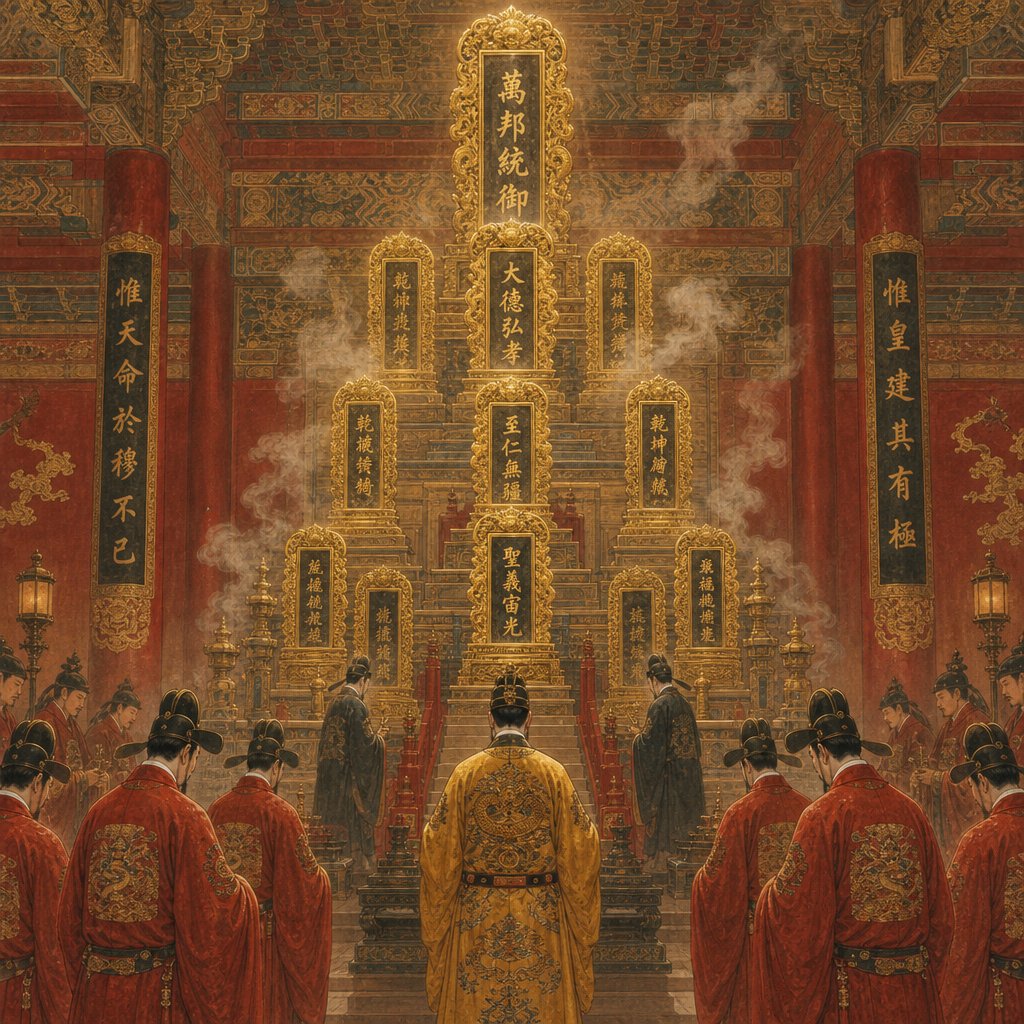
- Imperial posthumous titles — Granted by emperors over successive dynasties, culminating in titles like "Great Completer, Ultimate Sage, Exalted First Teacher of Culture" (大成至圣文宣先师) in 1645.
The key distinction between Kongzi and Kong Fuzi (孔夫子) comes down to a single character. Fu (夫) denotes an adult male of standing, a man of substance and authority. Adding it before Zi transforms "Master Kong" into something closer to "Grand Master Kong" or "The Venerable Master Kong." It is a subtle but meaningful elevation, like the difference between calling someone "professor" versus "distinguished professor."
When people ask who founded Confucianism, the answer depends on which name form you use. His students, the ones who actually built the school of thought around his teachings, knew him as Master Kong. They would not have recognized the word "Confucius" any more than he would have. The philosophical tradition that bears his Latinized name was built by people who called him Kongzi.
Imperial Posthumous Titles and Growing Reverence
After Confucius's death in 479 BCE, the title inflation truly began. Duke Ai of Lu (鲁哀公) was the first to confer a posthumous honor, calling him "Venerable Ni" (尼父). From there, each dynasty added grander language. In 1 CE, Emperor Ping of the Han dynasty bestowed the title "Exalted Ni Duke of Consummate Perfection." By the Tang dynasty in 739 CE, he had been elevated to "Exalted King of Culture" (文宣王), a royal title for a man who never held political power in life.
The house of Kong benefited directly from this escalating reverence. Confucius's descendants received hereditary noble titles, eventually holding the rank of duke from the Song dynasty onward, a position maintained until the 1940s. The family estate in Qufu, Shandong, became a site of imperial pilgrimage and state sacrifice. The philosopher who wandered from state to state seeking employment became, in death, more powerful than the rulers who once turned him away.
In modern Chinese, these name forms still carry distinct weight. Academic writing and textbooks use Kongzi (孔子) as the standard neutral reference. More reverential or traditional contexts, particularly in temple ceremonies and formal cultural events, favor Kong Fuzi (孔夫子). And Kong Qiu? You will rarely see it used in Chinese writing outside of direct historical narration. Referring to a sage by his birth name feels presumptuous, as if you are claiming the intimacy of a family member or the authority of a superior. Even today, the naming hierarchy holds.
This layered system of titles raises a natural question. If Chinese speakers had multiple precise terms for the philosopher, each calibrated to a specific level of respect, what exactly happened when European missionaries encountered this naming system and tried to compress it into a single Latin word?
Morpheme Breakdown of Kong Fuzi Character by Character
The previous section traced how titles grew over time, from the simple Kongzi to the grander Kong Fuzi. But what does each character in Kong Fuzi (孔夫子) actually mean on its own? This is the heart of the matter. When someone searches for what is the definition of Confucius, they are really asking about three Chinese characters, each carrying its own semantic weight, stacked together to form a title that has shaped global intellectual history.
Let's pull the name apart, morpheme by morpheme.
Breaking Down Each Character in Kong Fuzi
Kong Fuzi is not a single indivisible word. It is a compound of three distinct characters, each functioning as an independent unit of meaning. Here is the full breakdown:
| Character | Pinyin | Literal Meaning | Function in the Name |
|---|---|---|---|
| 孔 (Kong) | kǒng | Opening, hollow, aperture; also "great" | Hereditary surname identifying the family lineage |
| 夫 (Fu) | fū | Adult man, man of standing, husband | Honorific intensifier elevating the title from "master" to "grand master" |
| 子 (Zi) | zǐ | Son, child; teacher, philosopher, master | Classical honorific suffix denoting a learned man or sage |
Each character does specific work. Kong identifies who. Fu signals elevated status. Zi confers the title of philosopher-teacher. Together, they produce something like "The Venerable Master of the Kong family" or, more compactly, "Grand Master Kong."
The character Fu (夫) deserves particular attention. In ancient Chinese, it represents a man who has reached full adulthood, someone who has undergone the capping ceremony and taken on social responsibilities. As Keats Chinese explains, the character originally depicted a standing man with a horizontal stroke on top representing the hair clasp worn after age twenty, symbolizing maturity and readiness for marriage. When placed before Zi in a title, Fu adds a layer of gravitas. It transforms a standard honorific into something weightier, distinguishing Kong Fuzi from the simpler Kongzi the way "distinguished professor" differs from "professor."
Why This Morpheme Analysis Answers the Core Query
The character Zi (子) is the key to understanding not just this name but an entire naming convention across Chinese philosophy. Zi appears as a suffix in the names of nearly every major classical Chinese thinker:
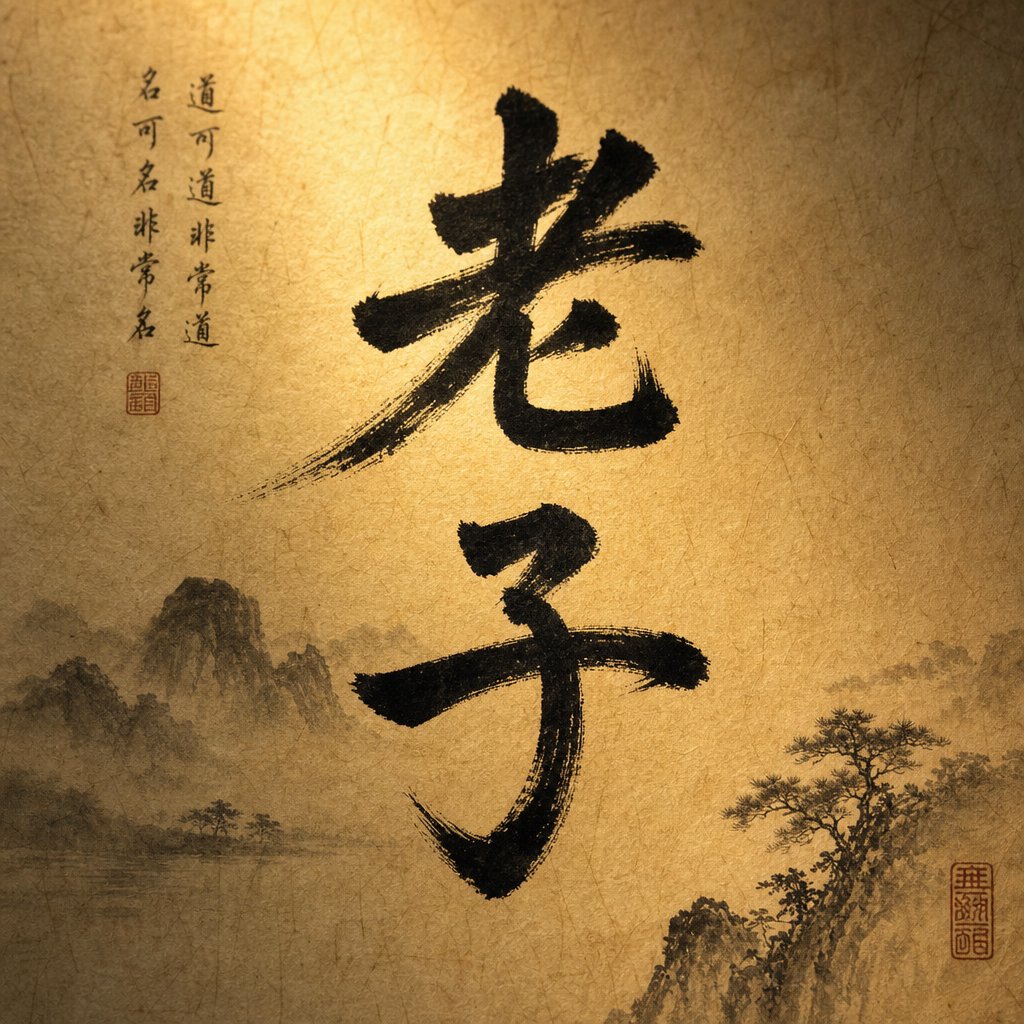
- Laozi (老子) — "Old Master," the legendary founder of Daoism
- Mengzi (孟子) — "Master Meng," known in English as Mencius
- Zhuangzi (庄子) — "Master Zhuang," the Daoist philosopher
- Mozi (墨子) — "Master Mo," the utilitarian thinker
- Xunzi (荀子) — "Master Xun," the Confucian realist
In every case, Zi functions identically: it marks the person as a thinker worthy of respect, a teacher whose words carry authority. The Stanford Encyclopedia of Philosophy confirms this pattern, noting that "Confucius" is "a Latinized combination of the surname Kong 孔 with an honorific suffix 'Master' (fuzi 夫子)." The suffix was not unique to Confucius. It was a standard cultural marker applied to any philosopher whose teachings attracted a following. What made Kong Fuzi exceptional was not the title itself but the scale of influence that eventually attached to it.
This is also where the meaning of Confucian as a descriptor comes into focus. When we confucian define as an adjective, we are pointing back to this three-character title. The entire tradition labeled "Confucianism" in English derives its name from the Latinized form of Kong Fuzi. The definition of Confucianism, in other words, is linguistically rooted in a title meaning "the philosophical tradition of Grand Master Kong." The philosophy did not name itself. European translators named it by converting a Chinese honorific into a Latin proper noun and then appending "-ism."
Sounds abstract? Consider it this way. Imagine if Western philosophy were called "Socratism" based on a Chinese transliteration of the Greek word for Socrates. That is roughly what happened in reverse. The definition of Confucianism as a term is inseparable from this act of linguistic transformation, a transformation that began with three characters, 孔夫子, and ended with a six-syllable English word that obscures all three.
What the morpheme breakdown reveals is that "Confucius" is not a name in the way English speakers understand names. It is a compressed title of respect. There is no personal name in it. There is no birth name, no courtesy name, no individual identity. Only a family marker (Kong), a status word (Fu), and a generic honorific (Zi). The man himself disappears behind the reverence.
That disappearance happened in stages. First, Chinese culture replaced his personal name with an honorific. Then European missionaries replaced the Chinese honorific with a Latin approximation. Each step moved further from the individual and closer to the symbol. The next layer of this story is how, exactly, that Latin approximation was constructed, and what was lost in the phonological translation from Chinese to European tongues.

How Jesuit Missionaries Transformed Kong Fuzi into Confucius
Three Chinese characters became six Latin letters. That transformation did not happen overnight. It took nearly a century of missionary scholarship, linguistic improvisation, and cross-cultural negotiation before Kong Fuzi (孔夫子) emerged on the other side of the world as "Confucius." The story of how that happened reveals as much about European intellectual history as it does about Chinese philosophy.
Jesuit Missionaries and the Birth of a Latin Name
The process began in the 1580s when Jesuit pioneers Matteo Ricci and Michele Ruggieri started translating Confucian classics into Latin while living in Zhaoqing, southern China. They needed to refer to the philosopher in their correspondence and scholarly notes, and they needed a name that European readers could pronounce. The spoken Chinese form they encountered was "Kong Fuzi," sometimes compressed in colloquial speech into something closer to "Kongfuzi." As scholar Lionel Jensen has argued, this compressed spoken form, while rare in written Chinese, was what the missionaries actually heard in conversation.
Ricci's early transliterations experimented with various spellings, but the form that stuck emerged through a collaborative, multi-generational effort. The landmark moment came in 1687 with the publication of Confucius Sinarum Philosophus ("Confucius, Philosopher of the Chinese") in Paris. This volume, the product of a century of diligent translation by multiple Jesuit missionaries, presented the major Confucian texts in Latin for the first time. It also cemented the spelling "Confucius" as the standard Western reference. Before this publication, as one scholar notes, "nobody had heard of Confucius" in Europe, even though the philosopher had been revered in China for over two thousand years.
Linguistic Mechanics of the Chinese-to-Latin Adaptation
So how do you spell Confucius, and why does it look nothing like "Kong Fuzi"? The answer lies in the phonological constraints of Latin. Here is what happened at each stage:
- Kong Fu became Confu — Latin phonology lacks the velar nasal ending (the "ng" sound at the end of "Kong"). Missionaries approximated it by dropping the final "g" and softening "K" to "C," which are equivalent in Latin. The result, "Confu," preserved the approximate sound while fitting Latin pronunciation rules.
- Zi became -cius — The honorific suffix Zi (子) was Latinized using "-cius," a standard suffix that missionaries applied to Chinese names to give them a classical Latin appearance. This parallels how other Chinese names were adapted into Latin scholarly texts of the period.
The combination produced "Confucius": a word that sounds vaguely authoritative in Latin, sits comfortably alongside names like Horatius or Lucius, and yet bears almost no phonetic resemblance to the original Chinese. The Confucius pronunciation in English (kuhn-FYOO-shuhs) drifts even further from the Mandarin "Kong Foo-dzuh." In Portuguese-speaking contexts, the adaptation became Confúcio, following that language's own phonological patterns. Each European language bent the Latin form to fit its own mouth.
The Latinization of Kong Fuzi into Confucius did not merely translate a name. It repackaged an entire philosophical tradition into a form that Europeans could categorize alongside their own classical thinkers, permanently shaping how the West perceived Chinese thought.
This repackaging had consequences. By giving the philosopher a Latin name that echoed Greek and Roman naming conventions, the Jesuits made him legible to European intellectuals. Voltaire and Leibniz engaged with the Confucius Sinarum Philosophus precisely because it presented Chinese wisdom in a familiar linguistic wrapper. The Latin name signaled: this is a philosopher of the same stature as your own ancients. Take him seriously.
The first recorded use of "Confucius" in English dates to around 1724, though the Latin form had circulated in European scholarly networks for decades before crossing into vernacular English. Once it entered the language, it never left. Today, if you ask how to spell Confucius in any English dictionary, you get those same ten letters the Jesuits assembled three centuries ago. No alternative has gained traction. The Latin invention became permanent.
What is remarkable is how thoroughly this single act of transliteration erased the original meaning. "Kong Fuzi" is transparent in Chinese: everyone hearing it knows it means "Grand Master Kong." "Confucius" is opaque in English: it sounds like a proper name, not a title. The honorific structure, the family surname, the philosophical suffix — all vanish into a smooth Latin surface. Yet across East Asia, where Chinese characters remained the shared written medium, the original meaning was never lost. Japanese, Korean, and Vietnamese scholars continued reading the same characters, hearing different sounds but preserving the same semantic content that "Confucius" obscured.
Confucius Across East Asian Languages
The Latin name "Confucius" severed the link between sound and meaning. But travel east instead of west from China, and you find something different. In Japan, Korea, and Vietnam, the philosopher's name kept its original characters intact. The sounds changed. The meaning did not.
Japanese, Korean, and Vietnamese Renderings
When Chinese script spread across East Asia over two thousand years ago, it carried more than just a writing system. It carried an entire intellectual vocabulary. As Zev Handel of the University of Washington explains, literate people in neighboring cultures learned to read Chinese characters complete with pronunciation and meaning, then adapted those characters to represent their own spoken languages. The result? The same characters, read aloud differently depending on which country you are standing in.
The Confucius name in Chinese is most commonly written as Kong Zi (孔子) in academic contexts. Japanese, Korean, and Vietnamese scholars read those exact same two characters but pronounce them according to their own phonological systems. Here is how it breaks down:
| Language | Characters Used | Romanization | Approximate Pronunciation |
|---|---|---|---|
| Mandarin Chinese | 孔子 / 孔夫子 | Kongzi / Kong Fuzi | kohng-dzuh / kohng foo-dzuh |
| Japanese | 孔子 / 孔夫子 | Koshi / Kofushi | koh-shi / koh-foo-shi |
| Korean | 공자 (孔子) / 공부자 (孔夫子) | Gongja / Gongbuja | gohng-jah / gohng-boo-jah |
| Vietnamese | 孔子 / 孔夫子 | Khong Tu / Khong Phu Tu | kohng tuh / kohng foo tuh |
Notice the pattern. Every East Asian rendering preserves the two-character or three-character structure. The Korean 공자 (Gongja) maps directly onto 孔子, with "Gong" being the Korean pronunciation of 孔 and "ja" being the Korean reading of 子. Vietnamese Khong Tu follows the same logic. Even the fuller form Kong Fuzi appears in each language: Japanese Kofushi (孔夫子), Korean Gongbuja (공부자), and Vietnamese Khong Phu Tu (孔夫子).
Shared Characters with Different Sounds
What makes this remarkable is the contrast with the Western tradition. When you encounter "Konfucius" with a K in German or Swedish, or "Confucio" in Spanish, these are all descendants of the same Latin coinage. They trace back to the Jesuit transliteration, not to the original Chinese characters. The meaning embedded in those characters, the surname Kong, the honorific Zi, is invisible in every European variant.
In East Asian languages, the opposite is true. A Japanese reader seeing 孔子 immediately recognizes the surname character and the philosopher-suffix character. The semantic transparency remains intact. A Korean student reading 공자 in hangul script can trace it back to the underlying Chinese characters 孔子 because Korean vocabulary is saturated with Sino-Korean readings. Vietnamese, before adopting the Latin alphabet in the 20th century, wrote these same characters directly in its traditional chu Nom and chu Han scripts.
This is not coincidence. It is the legacy of a shared literary culture that stretched across East Asia for millennia. As Handel notes, "for a long time, Chinese characters were the only writing system in that area." The intellectual vocabulary of philosophy, governance, and ethics was built in Chinese characters first, then read aloud in local pronunciations. Confucius's name traveled this same path: one written form, many spoken forms, zero loss of meaning.
The Western path was fundamentally different. Latin stripped the characters away entirely, replacing them with phonetic approximation. The result is that English speakers say "Confucius" without any access to the meaning inside the name. East Asian speakers say their own local version of Kong Zi and still hear "Master Kong" every time. The philosopher himself would not have recognized any pronunciation outside his own dialect of Old Chinese, but he would have recognized the characters in Tokyo, Seoul, or Hanoi. He would not have recognized a single letter in "Confucius."
This split between meaning-preserving and meaning-erasing transmission raises a philosophical question that Confucius himself would have found deeply relevant. He had, after all, an entire doctrine about what happens when names fail to reflect reality.
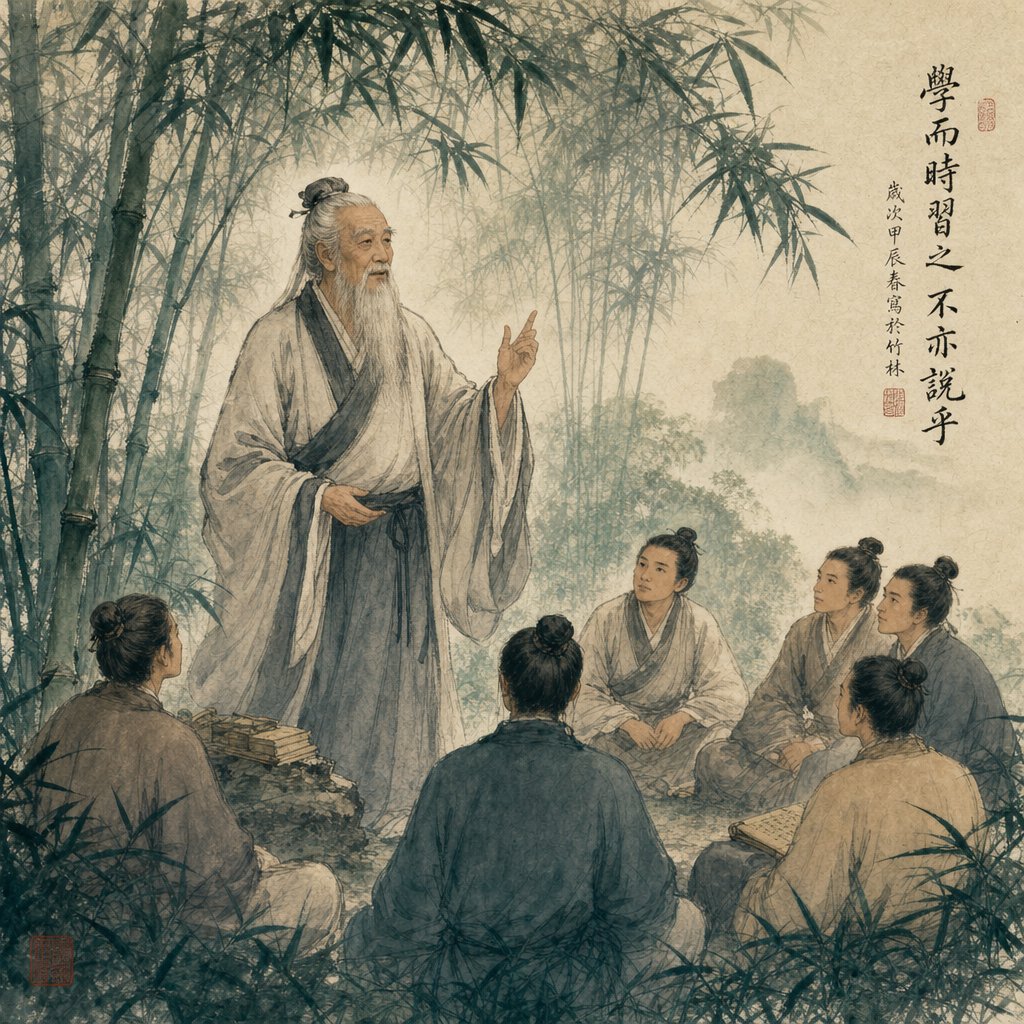
Naming Philosophy and the Legacy of Confucius
The doctrine is called the Rectification of Names (zhengming, 正名), and it sits at the core of what was Confucius famous for as a political and moral thinker. The idea is deceptively simple: social harmony depends on things being called by their proper names. When a ruler is called a ruler, he must act like one. When a father is called a father, he must fulfill that role. If names drift from reality, language breaks down, and society follows.
Rectification of Names as Confucian Philosophy
In the Confucius Analects, Book XIII, Chapter 3, a student asks what the Master would do first if given political authority. His answer is not about taxes, armies, or laws. It is about language:
If names be not correct, language is not in accordance with the truth of things. If language be not in accordance with the truth of things, affairs cannot be carried on to success.
That passage, translated by James Legge, captures one of the most distinctive Confucian values: the belief that words are not mere labels but moral instruments. When Confucius says names must be rectified, he means that the gap between what something is called and what it actually is creates disorder. A prince who does not govern is not truly a prince. A teacher who does not teach is not truly a teacher. The name must match the reality, or the entire social fabric unravels.
This is why Confucius is significant beyond his role as an ethical teacher. He was among the earliest thinkers to articulate a philosophy of language itself, arguing that correct naming is not a scholarly nicety but a political necessity. The Confucius Analects, often called a confucianism sacred text in Western scholarship, returns to this theme repeatedly. Even the famous golden rule passage, one of the most widely shared "do unto others" quotes in world literature, rests on the assumption that words carry binding moral weight.
The Irony of a Philosopher Misnamed by History
Here is where the meta-narrative becomes impossible to ignore. The philosopher who insisted that correct naming is the foundation of moral order is himself known worldwide by a name that obscures his identity. "Confucius" erases the surname, flattens the honorific, and replaces Chinese meaning with Latin sound. By his own doctrine, this matters. A name disconnected from its referent is not merely inaccurate. It is a source of confusion.
Consider what each name form actually communicates:
- Kong Qiu (孔丘) — the man, born to the Kong family, named for a sacred hill
- Zhongni (仲尼) — the second son, marked by the mountain where his parents prayed
- Kongzi (孔子) — the teacher, honored by students as Master Kong
- Kong Fuzi (孔夫子) — the sage, elevated by later generations to Grand Master
- Confucius — the Latin symbol, stripped of all internal meaning
Each form tells a different story. Each belongs to a different relationship and a different era. When Confucius says, in the Analects, that a superior man "considers it necessary that the names he uses may be spoken appropriately," he is describing exactly what was lost when his own name crossed into European languages. The appropriateness, the layered social meaning, the embedded biography, all of it vanished into six Latin syllables.
Does this mean we should stop using the name Confucius? Not necessarily. Language evolves, and the Latin form has served for over three centuries as a bridge between cultures. But understanding what lies beneath it changes how you read the philosophy. When you know that "Confucius" is really Kong Fuzi, that Fuzi means "Grand Master," that Kong traces back to displaced Shang dynasty nobility, and that his birth name Qiu references a hill where his parents prayed for a child, the name stops being a flat label and becomes a story. The philosopher who taught that names must match reality would likely appreciate that effort, even if the name itself never reaches his ears.
Frequently Asked Questions About the Meaning of Confucius's Name
1. What was Confucius's real name in Chinese?
Confucius's birth name was Kong Qiu (孔丘). Kong is the hereditary surname meaning 'opening' or 'hollow,' tracing back to Shang dynasty nobility. Qiu means 'hill' or 'mound,' reportedly referencing either the shape of his skull at birth or Mount Ni where his parents prayed for a child. His peers called him by his courtesy name Zhongni (仲尼), meaning 'second-born son of Mount Ni,' while students addressed him as Kongzi or Kong Fuzi, meaning Master Kong or Grand Master Kong.
2. How did the name Confucius come from Kong Fuzi?
Jesuit missionaries in the 16th and 17th centuries needed to present Chinese philosophy to European readers. They adapted the honorific Kong Fuzi (孔夫子) into Latin by dropping the velar nasal 'ng' ending (which Latin lacks), softening 'K' to 'C,' and appending the Latinizing suffix '-cius' to the honorific Zi. The result, 'Confucius,' first appeared in the 1687 publication Confucius Sinarum Philosophus in Paris and became the permanent Western standard.
3. What does each character in Kong Fuzi mean individually?
Kong (孔) is the family surname meaning 'opening' or 'hollow.' Fu (夫) means 'adult man of standing' and serves as an honorific intensifier that elevates the title. Zi (子) means 'master' or 'philosopher' and is the standard classical suffix for learned men. Together they form 'Grand Master Kong,' a title of deep respect rather than a personal name. The same Zi suffix appears in Laozi, Mengzi, Zhuangzi, and other Chinese philosopher names.
4. Why is Confucius called Master Kong instead of his birth name?
In classical Chinese culture, using a sage's birth name was considered disrespectful. Birth names were intimate, reserved for family use only. After age twenty, peers used the courtesy name (Zhongni), and students used honorific titles (Kongzi or Kong Fuzi). Even today in modern Chinese writing, referring to Confucius as Kong Qiu feels presumptuous. Academic texts use Kongzi, while more reverential contexts favor Kong Fuzi. This naming hierarchy reflects Confucian values of respect and proper social relationships.
5. How is Confucius's name written in Japanese, Korean, and Vietnamese?
All three languages preserved the original Chinese characters 孔子 but applied their own pronunciations. Japanese reads it as Koshi, Korean as Gongja (공자), and Vietnamese as Khong Tu. Unlike the Western 'Confucius,' which lost all connection to the original meaning through Latin transliteration, East Asian renderings maintain semantic transparency. Readers in these languages still recognize the surname character and the philosopher-suffix character, keeping the meaning of 'Master Kong' intact across cultures.