What Laozi Actually Means in Chinese
When you search for the laozi meaning, you'll find a quick two-word answer everywhere: "Old Master." That translation is accurate, but it barely scratches the surface. The name Laozi (老子) operates on multiple levels at once, carrying literal, cultural, philosophical, and historical weight that a simple English gloss can never fully capture.
The Direct Answer to What Laozi Means
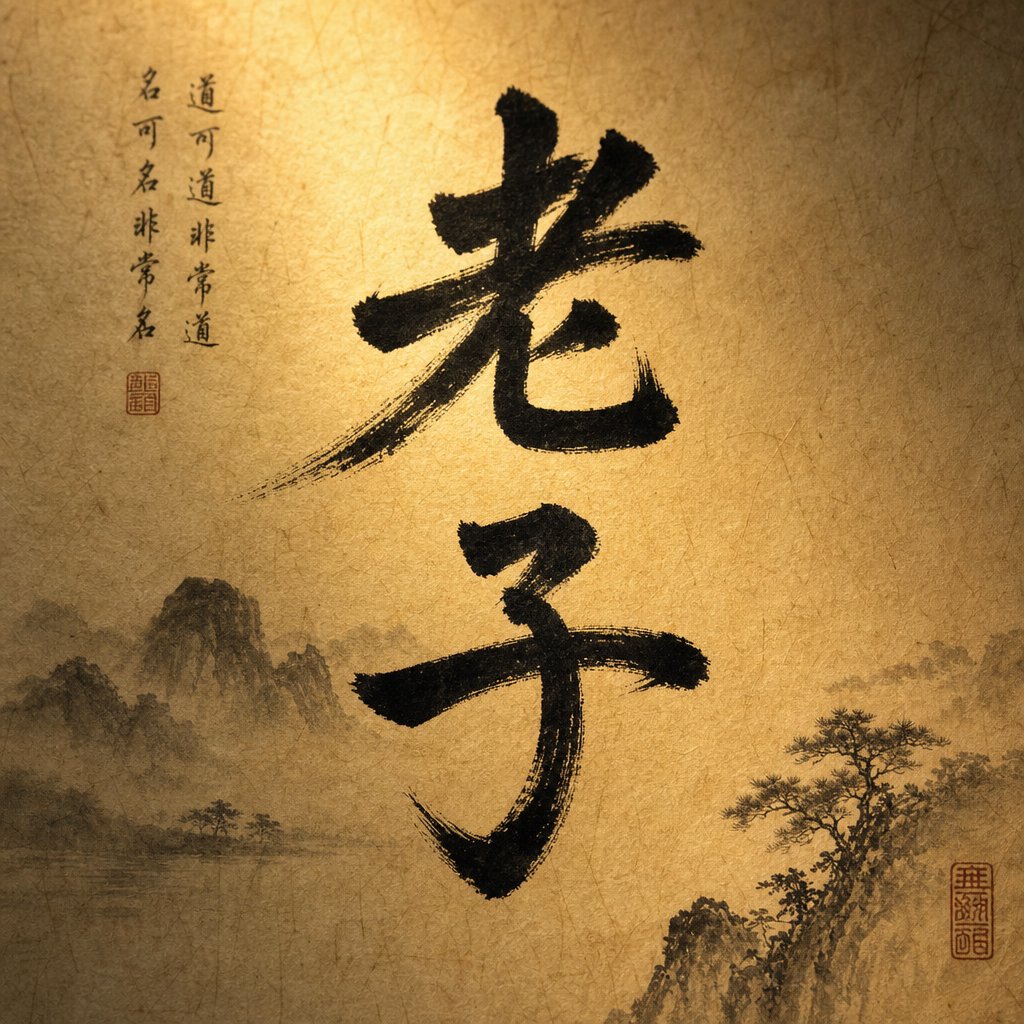
Laozi (老子), pronounced Lǎozǐ in Mandarin Chinese, is an honorific title meaning "Old Master" or, in an alternative reading, "Old Child." It refers to the ancient philosopher whose name means old master, the legendary author of the Daodejing (Tao Te Ching), and one of the most influential thinkers in Chinese history.
The name is composed of two characters: 老 (lǎo), meaning old or venerable, and 子 (zǐ), meaning master or child. As the Internet Encyclopedia of Philosophy confirms, "Laozi" is the pinyin romanization for the Chinese characters which mean "Old Master." The Lao Tzu meaning remains the same regardless of which romanization system you encounter, whether it appears as Lao Tzu, Lao Tse, or Laozi.
Why the Name Carries More Depth Than a Simple Translation
Here's what makes this name so fascinating. Unlike most Chinese philosopher names from the same era, "Laozi" doesn't follow the standard surname-plus-honorific pattern. It uses an adjective, "old," where you'd normally expect a family name. That structural oddity has fueled centuries of scholarly debate: was this a proper name, an honorific title bestowed on a respected philosopher old master, or a generic label for an anonymous wisdom tradition?
The historian Sima Qian, writing in the Shiji (Records of the Grand Historian) around 100 BCE, already expressed uncertainty about who Laozi really was. He recorded a personal name, Li Er, but also noted competing candidates and conflicting accounts. The 1993 discovery of the Guodian bamboo slips complicated the picture further, suggesting the Daodejing may have been compiled by multiple hands over time. If the text had multiple authors, did "Laozi" refer to one person or an entire school of thought?
Understanding the laozi name meaning requires peeling back four distinct layers: the literal translation of each character, the cultural connotations those characters carried in ancient China, the philosophical significance embedded in the name's ambiguity, and the historical function the title served as it gradually eclipsed any personal identity behind it. Each layer reveals something the others miss.
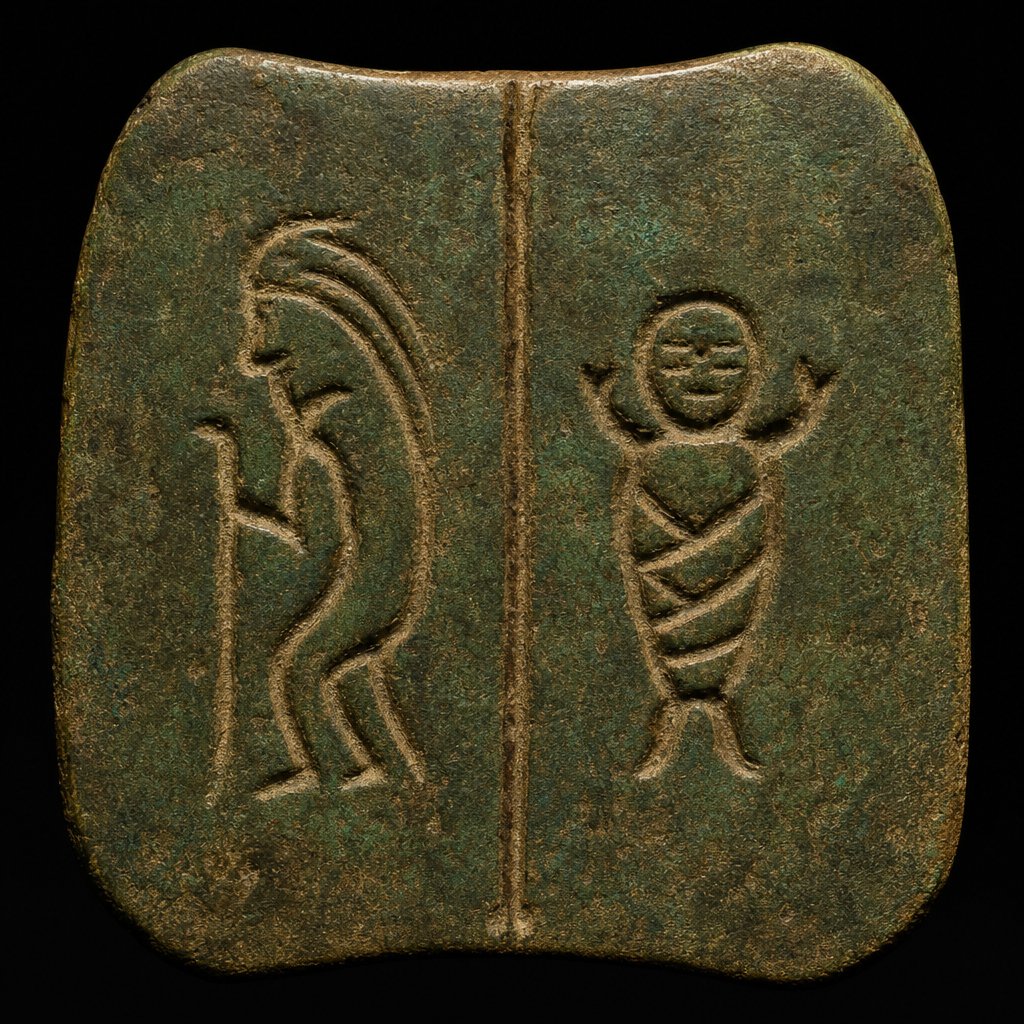
Breaking Down the Chinese Characters 老 and 子
Two characters. Four strokes in one, three in the other. Yet these seven brushstrokes contain an entire worldview. To grasp the laozi name meaning at its roots, you need to understand what each character brings to the table individually, because neither 老 nor 子 behaves the way English speakers might expect.
The full pronunciation in Mandarin is Lǎozǐ. Both syllables carry the third tone, a dipping tone that falls and then rises. In natural speech, tone sandhi applies: the first third tone shifts upward to a second tone, so it sounds closer to "Laozǐ" with a rising-then-dipping pattern. Think of the "ao" as rhyming with "ow" in "cow," and the "zi" as a soft "dz" sound followed by a short vowel.
The Character 老 and Its Cultural Weight Beyond Simple Age
In English, calling someone "old" can feel dismissive, even rude. Imagine introducing a colleague as "the old one." It lands differently in Chinese. The character 老 (lǎo) carries connotations of venerability, accumulated wisdom, authority earned through long experience, and deep respect. When Chinese speakers prefix someone's surname with 老, as in 老王 (Lao Wang), it signals warmth and familiarity rather than decline.
The Shuowen Jiezi, China's earliest systematic character dictionary compiled by Xu Shen around 100 CE, provides the etymological foundation. It defines 老 as meaning "aged" and states: "Seventy years is old. The character is composed of the characters 'man' (人), 'hair' (毛), and 'change' (𠤎), saying that beard and hair have become white." The pictographic origins are even more vivid. Oracle-bone and bronze-script forms show a stooped figure with long, disheveled hair, sometimes leaning on a staff. The image captures not frailty but gravitas: a person who has accumulated so much experience that even the body bows under its weight.
This cultural loading matters enormously for understanding the "lao" in Laozi. The lao chinese character functions as a radical, a building block for related characters, and the family it generates tells you everything about its semantic range. Characters built on 老 include 考 (kǎo, meaning "to examine" or "deceased father"), 孝 (xiào, meaning "filial piety," literally an elder supported by a child), and 耆 (qí, meaning "venerable elder"). The concept of oldness in Chinese is inseparable from authority, from the well-tested and the fundamental.
Even in modern Mandarin, 老 functions as a prefix of mastery. The word 老手 (lǎoshǒu) means "expert" or "old hand." The word laoshi (老师, lǎoshī), the standard term for teacher in mandarin, literally combines "old/venerable" with "master/expert." A teacher for a day is a father for life, as the proverb goes. When you hear 老 attached to a philosopher in chinese thought, you're hearing a culture declare: this person's knowledge has been tested by time.
The Character 子 and Its Dual Identity as Master and Child
The second character is where things get philosophically interesting. The words zi (子, zǐ) carries two distinct meanings that exist in productive tension: "child" or "son" on one hand, and "master" or "teacher" on the other.
The Shuowen Jiezi traces the character's origins to a pictograph of an infant. Xu Shen writes that 子 depicts a baby in swaddling, feet side by side, and connects it to the idea of nourishment and natural growth. The character literally shows a child with outstretched arms. Ancient script variants even depict hair on the fontanelle and limbs resting on a small table. At its most basic level, 子 means offspring, the young, the newly born.
Yet this same character became the most prestigious honorific in classical Chinese philosophy. As a suffix attached to a thinker's name, 子 elevates that person to the status of "Master." The People's Daily explains that the use of 子 as a suffix to a surname became an honorific indicating "a person of profound knowledge and moral virtue," and the names of philosophers across the Hundred Schools of Thought were created by this method. Confucius is Kongzi. Mencius is Mengzi. Sun Tzu is Sunzi. And the Old Master is Laozi.
This dual identity, child and master contained in a single character, is not a coincidence or a quirk of linguistic evolution. It reflects something deep in Chinese thought about the relationship between simplicity and wisdom. The child represents uncarved potential, naturalness, openness. The master represents refined understanding, earned authority, the capacity to guide others. That one character holds both meanings creates a philosophical ambiguity that sits at the heart of Daoism itself: the wisest sage returns to the simplicity of a child.
When you combine 老 and 子, you get a name that vibrates between "Old Master" and "Old Child," between venerable authority and infant simplicity. That ambiguity is not a translation problem to solve. It is the point.
The Zi Honorific Across Chinese Philosophy
That honorific suffix 子 didn't belong to Laozi alone. It was the standard marker of intellectual authority during the Warring States period (480-221 BCE), a turbulent era when competing thinkers vied to convince rulers their philosophy could restore order. Every major school of thought produced a "zi" figure, a master whose name became synonymous with an entire tradition. Placing Laozi alongside these other philosopher-masters reveals something striking about how the old master philosopher's name actually works.
How the Zi Honorific Worked Across Ancient Chinese Thinkers
In ancient Chinese, 子 (zǐ) with the third tone functioned as an expression of respect for honorable people. The pattern was simple: take a thinker's surname, attach 子, and you have a title that elevates them from ordinary person to revered teacher. Kongzi (孔子) is Master Kong. Mengzi (孟子) is Master Meng. Sunzi (孙子) is Master Sun. The formula worked like clockwork across the Hundred Schools of Thought.
You'll notice the structure is consistent: a one-syllable family name plus the honorific. This is how Lao Tzu and Confucius both entered history, each carrying the same suffix of intellectual authority. The table below maps out how this naming convention played out across the major thinkers:
| Name | Characters | Structure | Literal Meaning | Primary Contribution |
|---|---|---|---|---|
| Kongzi (Confucius) | 孔子 | Surname + Zi | Master Kong | Ethics, ritual propriety, social harmony |
| Mengzi (Mencius) | 孟子 | Surname + Zi | Master Meng | Human goodness, benevolent governance |
| Sunzi (Sun Tzu) | 孙子 | Surname + Zi | Master Sun | Military strategy, tactical philosophy |
| Zhuangzi | 庄子 | Surname + Zi | Master Zhuang | Relativism, spiritual freedom, paradox |
| Xunzi | 荀子 | Surname + Zi | Master Xun | Human nature as needing cultivation |
| Laozi | 老子 | Adjective + Zi | Old/Venerable Master | Dao, naturalness, nonaction |
What Makes Laozi Unique Among the Philosopher-Masters
See the pattern break? Every other chinese philosopher tzu follows the surname-plus-honorific formula. Kong is a family name. Meng is a family name. Zhuang is a family name. But 老 (lǎo) is not a surname. It's an adjective meaning old or venerable. The old master ancient philosopher stands alone in using a descriptive word where every peer uses a clan name.
This structural anomaly is precisely what fuels the scholarly debate. As the Stanford Encyclopedia of Philosophy notes, although most scholars accept "Laozi" to mean "Old Master" as a title of respect, some believe that "Lao" is in fact a surname, reading it as "Master Lao" in parallel with "Master Kong." The Zhuangzi and other early texts consistently refer to "Lao Dan" but never "Li Er," which complicates the picture further.
The difference matters. If Kongzi means "Master Kong," you know a person named Kong existed and earned that honorific. If Laozi means "Old Master" or "Venerable Master," you might be looking at a title that could apply to anyone, or to no one specific at all. The name tells you about a quality rather than an identity. It describes what the figure represents rather than who he was. And that slippage between personal name and philosophical title opens a question that has occupied scholars for over two thousand years.
Was Laozi a Name or a Title
That structural oddity, an adjective where a surname should be, isn't just a linguistic curiosity. It sits at the center of one of the longest-running debates in Chinese intellectual history. Scholars have argued for centuries over how to define Laozi: was this a real person's identifier, a respectful title bestowed by followers, or a collective label for an anonymous tradition? The answer you choose reshapes everything about how you read the Daodejing.
The Title Hypothesis and Its Supporting Evidence
The most widely held position among modern scholars treats "Laozi" as an honorific meaning "Old Master" or "Venerable Master," not a personal name at all. The Stanford Encyclopedia of Philosophy states directly that most scholars accept "Laozi" to mean "Old Master, a title of respect." On this reading, a philosopher known as Lao Dan attracted a following, and his disciples deferentially referred to him as "Laozi" in the same way students might call a beloved teacher "the Old Master" without it being his birth name.
Supporting evidence comes from the naming pattern itself. As we've seen, every other philosopher of the era used a surname plus 子. The use of an adjective breaks the mold, suggesting a descriptive title rather than a proper name. The Internet Encyclopedia of Philosophy reinforces this view, noting that Daoism "does not name a tradition constituted by a founding thinker" and that the common belief in a teacher named Laozi who originated the school remains just that: a belief, not established fact.
The Proper Name Theory and Why Some Scholars Defend It
A minority position holds that "Lao" is actually a surname, making "Laozi" parallel to "Kongzi" in structure: Master Lao. This isn't as far-fetched as it sounds. The surname Lao (老) does exist in Chinese, and the Stanford Encyclopedia of Philosophy acknowledges that some scholars read it exactly this way. On this view, just as Confucius was "Kong zi" (Master Kong) after his family name, "Lao zi" should be read as "Master Lao."
The Shiji (Records of the Grand Historian) by Sima Qian, written around 100 BCE, provides the earliest biographical account. It records that Laozi's family name was Li, his given name was Er, and he was also called Dan. But Sima Qian himself seems uncertain. His account notes multiple candidates for the identity of Laozi and concludes with what amounts to a historian's shrug: no one knew where Laozi had gone after his legendary disappearance of Laozi through the western pass. The question of when was Laozi born remains equally murky. Sima Qian places him as a senior contemporary of Confucius, which would put him in the sixth century BCE, but the historian also mentions a later figure from the Warring States period as a possible candidate. Scholars who ask when was Lao Tzu born and died find no firm dates, only competing traditions and educated guesses.
The influential scholar Fung Yu-lan argued that Sima Qian had "confused" the legendary Lao Dan with a later historical figure named Li Er who flourished during the Warring States period. A.C. Graham, in a landmark 1986 essay, proposed that the Laozi story reflects a conflation of different legends, the earliest strand revolving around meetings between Confucius and a figure called Lao Dan, current by the fourth century BCE.
The Composite Figure Argument
The third position is the most radical: "Laozi" never referred to a single individual at all. Instead, it was a label attached to a school of thought, a collective wisdom tradition that produced the Daodejing over generations. What was Laozi, on this view? Not a who but a what: a tradition, a lineage, a body of teachings that accumulated over time.
The 1993 discovery of the Guodian bamboo slips gave this argument fresh ammunition. Excavated from a tomb sealed around 300 BCE in Hubei province, these slips contain roughly 2,000 characters that match portions of the received Daodejing. But the material appears in three distinct groups that may have come from different sources. One telling detail: two of the groups contain different versions of what is now chapter 64, suggesting they were copied from separate originals.
As D.C. Lau proposed, the Daodejing may be best understood as an "anthology," the product of many hands over a long period. If the text itself was composite, then "Laozi" may have functioned less as a personal name and more as a brand, a way of attributing accumulated wisdom to a single authoritative source. The Stanford Encyclopedia of Philosophy summarizes the evidence carefully: bodies of sayings attributed to Laozi were likely committed to writing from the second half of the fifth century BCE, resulting in different collections with overlapping contents that grew, competed, and gradually consolidated during the fourth century BCE.
The honest answer? We don't know which position is correct. And that uncertainty itself tells us something important. By 100 BCE, Laozi was already shrouded in legend, and Sima Qian could only exercise his judgment as a historian to assemble a report from competing sources. The name had already outgrown any single person it might once have belonged to. It had become something larger: a symbol, a philosophical identity, a way of pointing toward wisdom that resists being pinned down.

The Old Child Interpretation and Daoist Philosophy
"Old Master" gets all the attention. But there's a second reading of the name hiding in plain sight, one that flips the meaning on its head. If 子 (zǐ) is taken in its literal sense of "child" rather than its honorific sense of "master," then Laozi doesn't mean "Old Master" at all. It means "Old Child." And that paradox, an elder who is simultaneously an infant, turns out to be the philosophical heart of Daoism itself.
The Birth Legend and the Old Child Paradox
Imagine being born already old. According to the Classic of the Inner Explanation of the Three Heavens (Santian neijie jing), a Celestial Master text dated around 420 CE, Laozi's mother carried him for eighty-one years before he emerged from her left armpit. At birth, he already had white hair. The Internet Encyclopedia of Philosophy records this tradition directly: "At birth he had white hair and so he was called laozi (here meaning something more like lao haizi or Old Child)."
The phrase "lao haizi" (老孩子) makes the alternative reading explicit. This wasn't a venerable teacher earning a title through decades of instruction. This was a baby born ancient, a child who arrived in the world already carrying the weight of ages. The number eighty-one itself is significant: it's nine times nine, a number of cosmic completeness in Chinese numerology, and it matches the eighty-one chapters of the Daodejing.
Is the legend historically true? Almost certainly not. But that's beside the point. The birth narrative functions as a philosophical parable, encoding a core lao tzu principle directly into the origin story of the taoist sage. The name becomes a teaching before a single word of the Daodejing is read. Old and young collapse into one figure. Wisdom and innocence share the same body. The very identity of the philosopher embodies the paradox his philosophy explores.
How the Old Child Reading Connects to Daoist Return to Simplicity
This isn't just a colorful legend. The "Old Child" reading maps directly onto one of the most persistent themes in Daoist thought: the return to an infant-like state of naturalness. The Chinese concept is pu (朴), often translated as "the uncarved block," representing raw simplicity before human interference shapes and limits it. According to Laozi, what is the Dao? It is, among other things, the process of returning to origins, of shedding accumulated artifice to recover something primal and whole.
Chapter 28 of the Daodejing makes this connection unmistakable. Across dozens of translations, the same image recurs: the sage who knows strength but keeps to gentleness, who knows glory but embraces humility, and who through this reversal returns to the state of a newborn child.
"Know the male, yet keep to the female: receive the world in your arms. If you receive the world, the Tao will never leave you and you will be like a little child."
The passage doesn't describe regression or naivety. It describes a conscious return, a movement forward that circles back to the beginning. The sage accumulates knowledge and then transcends it, arriving at a simplicity that lies on the far side of complexity. This is the lao tzu philosophy in life distilled to its essence: true mastery looks like effortlessness, and the deepest wisdom resembles the openness of a child who has not yet learned to divide the world into categories.
Chapter 55 reinforces the point even more directly, comparing the person filled with virtue to an infant whose bones are soft, whose grip is firm without effort, and who can cry all day without growing hoarse. The infant represents a state of complete harmony with natural forces, a condition the Daoist practitioner seeks to recover through the discipline of "unlearning."
The concept of reversal, fan (反), runs through the entire Daodejing. "Reversal is the movement of the Way" (反者道之動), Laozi writes in Chapter 40. Everything in nature moves toward its opposite. The hard becomes soft. The full empties. And the old, paradoxically, returns to the young. The name "Old Child" encodes this principle of reversal at the most fundamental level: the philosopher's identity is itself a demonstration of the philosophy.
What makes this reading so powerful is that it doesn't cancel the "Old Master" interpretation. Both meanings coexist. The name holds wisdom and innocence, authority and simplicity, age and youth in a single expression. That coexistence mirrors the Daoist understanding of reality as the interplay of apparent opposites: yin and yang, being and non-being, the determinate and the indeterminate flowing into each other without resolution into a fixed state.
The ambiguity is not a flaw in translation. It is the teaching. A name that means both "Old Master" and "Old Child" simultaneously performs the very unity of opposites that Daoism describes. The sage who has mastered everything returns to knowing nothing. The elder becomes the infant. The teacher teaches without words. In this light, the laozi name meaning isn't a puzzle to solve but a paradox to inhabit, one that points toward a way of being where accumulated wisdom and childlike openness are not opposites but two faces of the same reality.
That paradox raises a practical question. If "Laozi" was always more title than name, more philosophical statement than personal identifier, then what happened to the actual person behind it? The relationship between the title "Laozi" and the alleged personal name "Li Er" opens yet another layer of the mystery.
Laozi Versus Li Er and the Two-Name Mystery
If "Laozi" is a title meaning "Old Master" or "Old Child," then who was the person behind it? The historical record offers a name: Li Er (李耳). But the relationship between these two identifiers is far stranger than a simple case of "real name versus nickname." Understanding why two names exist, and which one came first, reveals how differently Chinese naming conventions work from Western assumptions, and why the lao zi meaning as a philosophical title ultimately swallowed whatever personal identity once stood beneath it.
What the Shiji Records About Laozi's Personal Identity
The earliest attempt at a biography comes from Sima Qian's Shiji (Records of the Grand Historian), written around 100 BCE. Britannica summarizes the key details: Laozi's family name was Li, his proper name was Er, and his appellation (courtesy name) was Dan. He was a native of Quren, a village in the state of Chu, corresponding to modern Luyi in Henan province. He held the position of shi at the royal court of the Zhou dynasty, a role involving the care of sacred books and matters like astrology and divination.
So we have a full identity on paper: Li Er, courtesy name Dan, from Chu, working as an archivist. Sounds definitive. But Sima Qian himself wasn't confident. After laying out this biography, he immediately introduced alternative candidates. One was Lao Laizi, a Daoist contemporary of Confucius. Another was a grand astrologer named Dan who lived much later. The historian then added that some said Laozi lived 150 years, others claimed more than 200. His concluding assessment is remarkably candid for an official history: "No one knows what has become of him."
The Internet Encyclopedia of Philosophy notes that Sima Qian's biography "conforms closely to passages contained in Zhuangzi Chapters 11-14," suggesting the historian may have drawn his information primarily from that philosophical text rather than from independent historical records. If the Zhuangzi was Sima Qian's ultimate source, then the "biography" may rest on literary tradition rather than documented fact.
Why Li Er and Laozi May Not Refer to the Same Person
Here's where Western readers often stumble. In English-speaking cultures, a person has one legal name. You might have a nickname, but your "real" name is fixed at birth and recorded on documents. Chinese naming conventions work differently. As the Cultural Atlas explains, Chinese people may have several names used interchangeably across different circumstances: a social name, a courtesy name, a school name, even a posthumous name. Multiple identifiers for one person is normal, not suspicious.
But the problem with Li Er and Laozi runs deeper than multiple naming conventions. The most common Western misconception is treating "Lao" as a surname, reading the name as "Mr. Lao" in parallel with "Mr. Kong" (Confucius). This feels intuitive to English speakers accustomed to the pattern [Last Name] [Title]. But 老 is not a family name here. It's an adjective meaning old or venerable. Lao tzu means "Old Master," not "Master Lao." The difference is the difference between a description and an identity.
Consider an analogy. Imagine future historians finding references to someone called "the Professor" and separately discovering records of a person named "John Smith" who taught at a university. Are they the same person? Maybe. But "the Professor" could also be a generic label applied to several teachers over time, or a literary device used to give authority to a body of teachings. That's essentially the situation scholars face with Laozi and Li Er.
The Zhuangzi, written in the late fourth century BCE, is the earliest text to use "Laozi" as a personal name and to identify Laozi with Lao Dan. Across seventeen passages, the Zhuangzi presents Laozi as a wisdom figure who instructs Confucius, rebukes his pride, and models effortless alignment with the Dao. In these dialogues, Lao Dan addresses Confucius by his personal name "Qiu," a liberty only someone with seniority and authority would take. The text treats "Laozi" not as a mysterious unknown but as an established identifier for a recognized sage, someone whose authority Confucius himself acknowledged.
Yet the Zhuangzi never mentions "Li Er." That name appears only in Sima Qian's account, written roughly two centuries later. The gap matters. It suggests that "Laozi" and "Lao Dan" were the names that circulated in philosophical communities, while "Li Er" may have been a later biographical addition, perhaps supplied by a Li family claiming descent from the sage. Sima Qian himself records such a genealogy, which the Britannica entry notes "can hardly be considered as historical" and "proves only that at the time of Sima Qian a certain Li family pretended to be descended from the Daoist sage."
The relationship between daoism and Laozi as its founding figure was cemented precisely through this naming process. As the philosophical tradition grew, it needed an origin point, a founding master. The title "Laozi" served that function perfectly. It was authoritative without being specific, venerable without being verifiable. The title absorbed and replaced whatever personal name may have existed, because the title carried philosophical weight that "Li Er" simply could not. "Li Er" tells you about a man from Chu. "Laozi" tells you about a way of understanding the world.
This is why daoism Laozi became inseparable as a pairing in Chinese intellectual history. The name didn't just label the philosophy's founder. It became the philosophy's first statement: that true wisdom belongs to the venerable and the ancient, that the deepest teachings come from a source so old its personal identity has dissolved into something universal. The title eclipsed the man because the title was already doing philosophical work that no birth name could accomplish.
Of course, the confusion doesn't end with two names. Western readers encounter the same figure spelled half a dozen different ways, from Lao Tzu to Lao-tse to Laozi, each variant a product of different romanization systems applied across different centuries. Untangling those spellings is its own puzzle.

Every Spelling of Laozi Explained
Six different spellings. One philosopher. If you've ever searched for information on the author of the Daodejing and found yourself bouncing between "Lao Tzu," "Lao-tse," "Laotse," and "Laozi," you're not dealing with different people or competing traditions. You're seeing the same two Chinese characters filtered through 150 years of Western attempts to write Chinese sounds using the Roman alphabet. Each variant tells a story about when and where a translator was working.
A Complete Guide to Every Spelling of the Name
The confusion traces back to a fundamental challenge: Chinese is not an alphabetic language. When European scholars first needed to represent Chinese sounds in writing, they invented romanization systems, standardized methods for converting characters into Latin letters. Different countries and different eras produced different systems, and each one rendered 老子 slightly differently.
The Library of Congress documents the key distinctions between the two most influential systems: Wade-Giles and Pinyin. Wade-Giles, developed by Thomas Wade in 1859 and refined by Herbert Giles in 1892, dominated English-language scholarship for over a century. It gave us "Lao Tzu" with its characteristic hyphenated syllables and apostrophe-marked aspirations. Pinyin, officially adopted by the People's Republic of China in 1958 and recognized as the international standard by the ISO in 1982, produces "Laozi" with its joined syllables and absence of hyphens or apostrophes.
German scholars working in the late nineteenth and early twentieth centuries used their own transliteration conventions, producing forms like "Lao-tse" and "Laotse" that reflect German phonetic intuitions. The "tse" ending approximates how a German speaker would naturally voice the "zi" sound. These variants dominated European philosophy departments for decades and still appear in older translations.
Here's how each spelling maps to its source system:
| Spelling | Romanization System | Era of Common Usage | Still Standard? |
|---|---|---|---|
| Lao Tzu | Wade-Giles | 1890s-1970s (English) | No, but widely recognized |
| Lao-tse | Early German transliteration | 1870s-1950s (German) | No |
| Lao Tze | Informal Wade-Giles variant | Early 20th century | No |
| Laotse | German convention (no hyphen) | 1900s-1960s | No |
| Lao Zi | Pinyin (spaced) | 1980s-present | Acceptable variant |
| Laozi | Pinyin (standard) | 1980s-present | Yes, international standard |
The key visual markers that distinguish these systems are straightforward. Wade-Giles uses hyphens between syllables and apostrophes to mark aspiration (as in "Ts'ui" versus "Tsui"). Pinyin joins syllables together and never uses hyphens for personal names. As the Library of Congress FAQ explains, "individual syllables of multi-syllabic place names or names of geographic features were hyphenated in WG romanization; they will be joined together in PY." The same principle applies to personal names: "Mao Tse-tung" in Wade-Giles becomes "Mao Zedong" in Pinyin.
If you're reading a book published before the 1980s, you'll almost certainly encounter "Lao Tzu." Anything published after 2000 in an academic context will likely use "Laozi." Both refer to the same figure, the same characters, and the same name meaning. The lao tzu pronunciation hasn't changed; only the letters used to approximate it on the page have shifted.
How to Pronounce Laozi Correctly
So how do you actually say it? This is where most English speakers run into trouble, because neither "Lao Tzu" nor "Laozi" looks the way it sounds to someone reading with English phonetic assumptions.
Here's a practical breakdown:
- The "L" sounds like a normal English L.
- The "ao" rhymes with "ow" in "cow" or "how." It does not rhyme with "ay-oh" or "ah-oh." Think of it as a single diphthong: one smooth glide from "ah" to "oh."
- The "z" in Pinyin is closer to "dz" than to the English "z" in "zoo." Your tongue touches the ridge behind your upper teeth briefly before releasing.
- The "i" after the "z" is not a full vowel. It's a very short, almost buzzing sound, like holding the "dz" slightly longer. Some linguists describe it as a "syllabic fricative."
Put it together and you get something close to "Laow-dzuh," spoken quickly as two syllables. If someone asks you how do you pronounce Lao Tzu, that approximation will get you close enough for any English-language conversation.
The tones add another layer. In Mandarin, both syllables carry the third tone, a dipping tone that falls low and then rises. But here's the catch: when two third tones appear in sequence, a rule called tone sandhi kicks in. The first third tone shifts to a second tone (a rising tone). So in natural speech, "Lǎozǐ" is actually pronounced more like "Laozǐ" with a rising first syllable followed by a dipping second syllable. You'll hear native speakers say it with a gentle lift on "Lao" and a low dip on "zi."
The most common mispronunciations English speakers make:
- Saying "Lay-oh-zee" (treating each letter as a separate English sound)
- Pronouncing the "tz" in "Lao Tzu" like the "tz" in "pretzel" (too sharp and Germanic)
- Rhyming "Lao" with "law" (the vowel should be "ow" as in "cow," not "aw" as in "saw")
- Stressing the first syllable heavily (Mandarin doesn't use stress the way English does; tones carry the work instead)
If you're wondering how do you say Lao Tzu in a way that a Mandarin speaker would recognize, aim for even weight on both syllables, get the "ow" vowel right, soften the "dz" onset, and let the tones do their work. Perfect tones aren't expected from non-native speakers, but getting the vowels and consonants in the right neighborhood makes a real difference.
One final note: the Wade-Giles spelling "Tzu" actually represents the same sound as Pinyin "zi." The "Tz" was Wade and Giles's way of capturing that initial "dz" quality, and the "u" represented the short buzzing vowel. So "Lao Tzu" and "Laozi" are not two different pronunciations. They're two different attempts to spell the same sound. The laozi pronounce question and the lao tzu pronunciation question have the same answer.
Regardless of which spelling you encounter on a book spine or in a search result, the sound is the same, the characters are the same, and the meaning is the same. What changes is only the historical moment in which a Western writer picked up a pen and tried to capture Chinese sounds in Roman letters. The name itself, and the philosophy it carries, remains untouched by the alphabet used to approximate it.
The Name Meaning Reflected in the Daodejing
The spelling may vary, but the text attributed to this figure never changes its core identity. What is the Daodejing? At its simplest, it's a short book of roughly five thousand Chinese characters divided into eighty-one chapters, concerned with the nature of reality and how to live in harmony with it. But the relationship between the book and its attributed author runs deeper than authorship. The text was originally called simply "the Laozi," the name of the philosopher and the name of the work treated as one and the same. Person and teaching collapsed into a single identifier, as if the message and the messenger could not be separated.
How the Daodejing Title Mirrors the Author's Name
The title Daodejing (Tao Te Ching) translates as "The Classic of the Way and Virtue." It breaks into three components: Dao (道, the Way), De (德, virtue or power), and Jing (经, classic or scripture). The dao de jing meaning, in other words, points to a text about how the fundamental principle of reality expresses itself through inherent virtue or potency in all things.
That title wasn't original. As the Stanford Encyclopedia of Philosophy explains, the work was first known simply as "the Laozi." It only acquired the more exalted title Daodejing when it was recognized as a "classic" (jing), a work of such profound insight as to merit canonical status. The Laozi Daodejing pairing, author-name and book-title, thus represents two stages in the text's reception: first a teacher's collected wisdom, then a scripture of universal truth.
Consider what this means. The dao de jing was named after its content, not its author. And the author was named after his quality, not his birth identity. Neither label functions like a normal proper noun. Both describe what they point to rather than simply tagging it. "Old Master" tells you what kind of figure produced the teaching. "Classic of the Way and Virtue" tells you what kind of teaching the figure produced. Name and title mirror each other: one points inward toward the source, the other outward toward the expression.
Core Teachings That Reflect the Old Master Identity
The philosophy inside the Daodejing doesn't just happen to share thematic ground with the name "Laozi." It actively embodies the meaning of that name at every turn. A figure called "Old Master" or "Old Child" writes a text that prizes softness over hardness, emptiness over fullness, and the wisdom of returning to origins. The name predicts the content.
The Stanford Encyclopedia of Philosophy identifies the Daodejing's central concerns as "the Way" (Dao) and how it finds expression in "virtue" (de), especially through "naturalness" (ziran) and "nonaction" (wuwei). Each of these concepts connects directly to what the name "Laozi" encodes:
- Return to origins: The Daodejing repeatedly urges a return to the root, the source, the beginning. Chapter 16 speaks of "returning to the root" as stillness, and stillness as "returning to destiny." The "Old" in Laozi points to this same impulse: what is oldest is closest to the source, and what is closest to the source is most real.
- Reverence for natural wisdom over acquired knowledge: The text values what comes naturally over what is learned through effort. Chapter 48 states that pursuing the Dao means "decreasing day by day," stripping away accumulated artifice. The "Master" who teaches this way doesn't add information. He removes obstructions.
- The teacher who teaches without words: Chapter 2 introduces the sage who "carries out a teaching that uses no words." Chapter 56 declares, "Those who know do not speak; those who speak do not know." The Old Master's authority rests not on eloquence but on embodiment. His name is his teaching, and his teaching is silence.
- Softness and yielding as strength: Water, the softest substance, overcomes the hardest stone (Chapter 78). The infant, the weakest creature, possesses the fullest vitality (Chapter 55). An "Old Child" who combines age with infancy mirrors this exact principle: apparent weakness contains hidden power.
- Emptiness as fullness: The Daodejing compares the Dao to an empty vessel that is never exhausted (Chapter 4), a valley that receives everything (Chapter 6). The "Old Master" doesn't fill students with knowledge. He empties them of false certainty, creating space for understanding to arise on its own.
The daodejing meaning, then, isn't separate from the laozi name meaning. They're two expressions of the same insight. The text teaches what the name already says: that true mastery looks like simplicity, that the deepest authority comes from alignment with what is natural and ancient, and that the greatest teacher is the one whose personal identity dissolves into the teaching itself. When the book swallowed the author's name and the author's name became the book's original title, that merger enacted the very philosophy both contain: the dissolution of boundaries between the knower and the known.

The Enduring Power of a Philosophical Name
Strip away the romanization debates, the competing biographies, and the scholarly arguments, and what remains is a name that functions as philosophy before a single page of text is opened. The laozi name meaning isn't a trivia answer. It's a compressed worldview, a two-character statement about what wisdom looks like and where it comes from.
Layers of Meaning From Literal to Philosophical
Everything explored across this article stacks into four distinct layers, each one building on the last:
- Literal translation: Old Master or Old Child. Two characters, two possible readings, both accurate. The surface meaning gives you a starting point but not a destination.
- Cultural connotation: A venerable sage worthy of the deepest reverence. In the context of daoism in ancient China, where age signaled authority and the zi suffix marked intellectual mastery, the name declared its bearer the most respected kind of teacher.
- Philosophical meaning: An embodiment of the Daoist return to origins. The paradox of old and young, master and child, held in a single name mirrors the unity of opposites that runs through every chapter of the Daodejing.
- Historical function: A title that absorbed and replaced personal identity. Whatever individual once stood behind the name dissolved into it, until "Laozi" referred not to a man but to a tradition, a text, and eventually a deity.
Why the Name Endures as a Symbol of Daoist Thought
People often ask how old is Daoism, looking for a clean beginning date of daoism they can pin to a timeline. The honest answer is that the daoism origins stretch back to at least the sixth century BCE, making the tradition roughly 2,500 years old. But the question itself bumps against the same problem as the name. Daoism didn't begin with a founding declaration or a single founder's birth. It emerged gradually, the way water carves a valley: without a fixed starting point.
The figure recognized as the founder of Taoism carries a name that resists the very act of pinning things down. "Laozi" doesn't tell you who he was. It tells you what he represented. And that slippage between identity and meaning, between a person and a principle, is itself the most Daoist thing about the entire tradition. The taoist founder is known by a title that could belong to anyone or no one, a name that points away from the individual and toward the universal.
Chapter 1 of the Daodejing opens with a warning: "The name that can be named is not the enduring name." The very uncertainty surrounding the daoism founding figure, whether he was real, symbolic, or collective, performs that principle. Naming limits understanding. Fixing an identity constrains what it can mean. By remaining permanently ambiguous, the name "Laozi" stays alive in a way that a settled biography never could. It keeps asking its question rather than delivering a final answer, and in that open space between Old Master and Old Child, between title and name, between one person and many, the philosophy continues to breathe.
Frequently Asked Questions About Laozi's Name
1. What does Laozi literally translate to in English?
Laozi (老子) literally translates to either 'Old Master' or 'Old Child' in English. The first character 老 (lao) means old or venerable, carrying connotations of wisdom and respect rather than decline. The second character 子 (zi) has a dual meaning: it serves as an honorific suffix meaning 'master' or 'teacher,' but its original meaning is 'child' or 'son.' This ambiguity is philosophically intentional, reflecting the Daoist principle that true wisdom involves returning to childlike simplicity.
2. Is Laozi a real name or a title?
Most scholars consider 'Laozi' to be an honorific title meaning 'Old Master' rather than a personal name. Unlike other Chinese philosopher names from the same era (Kongzi, Mengzi, Sunzi), which follow a surname-plus-honorific pattern, Laozi uses an adjective where a family name should appear. The Stanford Encyclopedia of Philosophy confirms that the majority of scholars read it as a title of respect. However, a minority position holds that 'Lao' could be an actual surname, and a third theory suggests it was a collective label for an anonymous wisdom tradition rather than referring to any single individual.
3. How do you correctly pronounce Laozi?
In Mandarin, Laozi is pronounced approximately as 'Laow-dzuh' in two syllables. The 'ao' sounds like 'ow' in 'cow,' not like 'ay-oh.' The 'z' is closer to a 'dz' sound than the English 'z' in 'zoo.' Both syllables carry the third tone (a dipping tone), but due to tone sandhi rules, the first syllable shifts to a rising tone in natural speech. Common mispronunciations include saying 'Lay-oh-zee' or rhyming 'Lao' with 'law' instead of 'cow.'
4. Why are there so many different spellings of Laozi?
The multiple spellings (Lao Tzu, Lao-tse, Laotse, Lao Zi, Laozi) result from different romanization systems used across different eras and countries. Wade-Giles, developed in the 1800s, produced 'Lao Tzu.' German transliteration gave us 'Lao-tse.' Pinyin, adopted as the international standard in 1982, produces 'Laozi.' All spellings represent the same Chinese characters 老子 and the same pronunciation. Modern academic writing uses the Pinyin form 'Laozi,' though 'Lao Tzu' remains widely recognized in popular usage.
5. What is the connection between Laozi's name and the Daodejing?
The Daodejing was originally called simply 'the Laozi,' making the author's name and the book's title interchangeable. This merger reflects the philosophy itself: the name 'Old Master' describes the source of wisdom, while the title 'Classic of the Way and Virtue' describes what that wisdom contains. The text's core themes, including returning to origins, valuing softness over hardness, and teaching without words, directly embody what the name 'Laozi' encodes. Neither the author's name nor the book's title functions as a simple label; both describe what they point to rather than merely tagging it.