Understanding the Earth Sheep Sign and Why Names Matter
Imagine choosing a name that does more than sound pleasant. In Chinese culture, a name carries weight, intention, and even cosmic alignment. For babies born under the Earth Sheep sign, that alignment runs especially deep. The name becomes a bridge between a child's innate temperament and the life their parents envision for them.
What Is the Earth Sheep in Chinese Astrology
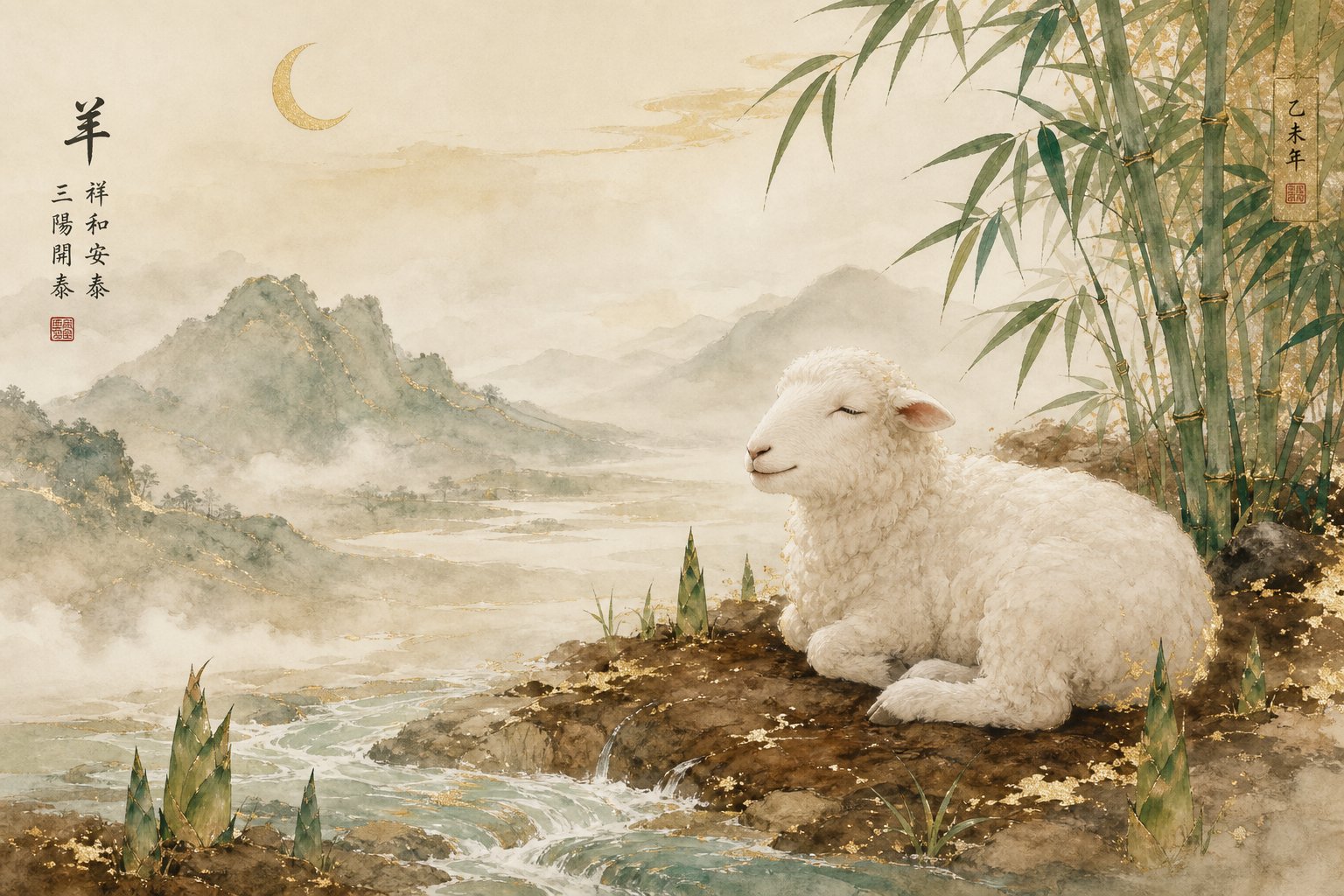
The Sheep is the eighth animal in the Chinese zodiac cycle, and within the traditional Chinese naming framework, the zodiac sign shapes how parents select characters for their child. The chinese zodiac sheep corresponds to the Earthly Branch Wei (未), and it cycles through five elemental variations: Wood, Fire, Earth, Metal, and Water. When the Heavenly Stem Ji (己) pairs with Wei, you get the Earth Sheep, known as Ji Wei (己未) in the sexagenary calendar system.
This combination appears in specific years on the sheep chinese calendar, most notably 1919, 1979, and 2039. Each Ji Wei year produces children whose birth charts carry a double dose of Earth energy, since both the Heavenly Stem and the Earthly Branch belong to the Earth element. That doubled energy has direct implications for naming, because traditional Chinese philosophy uses name characters to restore elemental balance.
The year of the sheep meaning centers on gentleness, creativity, and a nurturing spirit. These qualities define the sheep zodiac archetype, and the Earth element grounds them further, adding patience and reliability but also a tendency toward excessive caution.
The Earth Sheep child arrives with a spirit that is soft yet steady, creative yet grounded. A well-chosen name honors that gentle nature while introducing the energetic spark needed to move through life with confidence.
Sheep Goat or Ram Understanding the Translation
You'll notice English sources can't seem to agree. Is it the year of the sheep goat, or the ram? The confusion stems from the Chinese character 羊 (yang), which refers broadly to the animal family without distinguishing between sheep, goats, or rams. In Mandarin, the word covers all three. Western translators simply picked different English equivalents over the decades.
For naming purposes, the distinction doesn't matter. Whether you call it the Sheep, Goat, or Ram zodiac, the astrological properties remain identical. The same elemental associations, personality traits, and naming principles apply regardless of which English word you prefer. Throughout this guide, we'll use "Sheep" as the primary term while acknowledging that all three translations point to the same zodiac animal.
What does matter is how these zodiac qualities translate into actionable naming choices. The Five Elements theory (Wu Xing), radical selection, stroke count, and tonal harmony all play roles in crafting a name that complements an Earth Sheep child's destiny. Each of these layers builds on the foundational understanding of who this child is, energetically speaking, at the moment of birth.
Earth Sheep Personality Traits and Naming Philosophy
Every zodiac sign carries a temperamental blueprint, and in Chinese astrology sheep children wear theirs close to the surface. The sheep zodiac personality is defined by emotional depth, artistic sensitivity, and a quiet warmth that draws people in without demanding attention. Add the Earth element to that mix, and you get a child who is deeply grounded in feeling but sometimes too rooted to take risks.
This is exactly where naming philosophy enters the picture. Traditional Chinese naming isn't about labeling. It's about calibrating. A name acts as a subtle counterweight or amplifier, depending on what the child's innate energy needs most.
Core Personality Traits of Earth Sheep Children
The sheep zodiac sign is ruled by the moon in Chinese astrology, which governs sensitivity, emotions, and receptivity. Earth Sheep children inherit that lunar influence and filter it through the stabilizing lens of the Earth element. The result is a personality that feels deeply but expresses cautiously.
Here are the defining year of the sheep characteristics, paired with what each trait suggests for name selection:
- Compassion - Earth Sheep children feel others' pain as their own. They're natural caretakers. Naming principle: reinforce inner boundaries with Metal element characters that add clarity and self-definition.
- Creativity - Vivid imaginations come standard with this sign. Art, music, and storytelling feel like native languages. Naming principle: support this gift with Wood element characters that encourage growth and outward expression.
- Sensitivity - Emotional radar runs high, making these children perceptive but also vulnerable to overwhelm. Naming principle: introduce Water element characters that promote adaptability and flow rather than rigidity.
- Loyalty - Once bonded, Earth Sheep children are devoted and steadfast. Naming principle: honor this quality with characters that carry meanings of trust and endurance without adding more Earth (which could tip into stubbornness).
- Caution - The double-Earth influence makes hesitation a default setting. These children think before acting, sometimes to the point of paralysis. Naming principle: counter with characters carrying dynamic energy, particularly those associated with movement, courage, or brightness.
The year of the sheep meaning points toward gentleness and nurturing, but the Earth variation amplifies the inward-turning quality. These children may isolate themselves from the wider world or hide behind a quieter persona when feeling uncertain. A name that introduces energizing elements can gently counterbalance that tendency without overriding who they are.
Connecting Temperament to Name Selection
In Chinese naming tradition, the goal is never to erase a child's nature. It's to round out the edges. Think of it like tuning an instrument. The sheep zodiac personality already produces beautiful notes of empathy and imagination. The name fine-tunes the resonance so those notes carry further and don't get lost in self-doubt.
For Earth Sheep babies who lean heavily toward introversion and passivity, parents might choose characters with radicals tied to Water or Metal. Water introduces fluidity and intellectual sharpness. Metal adds decisiveness and the courage to act. Both elements drain excess Earth in the productive cycle, creating natural balance without conflict.
For those whose charts already show warmth and artistic confidence, the naming strategy shifts. Here, characters emphasizing stability, wisdom, or moral grounding work well. Wood element characters can gently control Earth while encouraging upward growth, like a tree pushing through soil toward sunlight.
The practical takeaway is straightforward: identify which traits dominate, then select characters whose elemental and semantic qualities fill the gaps. A child brimming with creative fire but lacking follow-through benefits from Metal's discipline. A child who is steady but timid benefits from Water's adaptability or Wood's ambition.
This interplay between personality and character selection is what separates thoughtful Chinese naming from simply picking pleasant-sounding syllables. The elements aren't abstract philosophy here. They're a practical framework for giving your child a name that works with their nature rather than against it, shaping how that gentle Earth Sheep energy moves through the world.
Five Elements Balancing for Earth Sheep Names
Identifying personality traits is one thing. Knowing which elemental forces to introduce through a name is another. The Wu Xing (Five Elements) system provides the structural logic behind those choices, and for Earth Sheep babies, the math is unusually clear: there's too much Earth in the equation, and the name needs to restore equilibrium.
The Double Earth Problem in Ji Wei Births
Here's the core issue. The Sheep's Earthly Branch, Wei (未), is classified as Earth. The Heavenly Stem Ji (己) is also Earth. When a child is born in a Ji Wei year, both pillars of the year column carry the same element. This creates what practitioners call a "double-Earth" condition.
If you're looking at the 1979 chinese zodiac element, it's Earth. The chinese zodiac 1979 animal and element combination is the Earth Sheep. The same applies to other Ji Wei years in the sixty-year cycle. The chinese horoscope 1979 element confirms this doubled energy, and similar elemental stacking occurs in other Sheep years where Earth dominates the chart.
What does excess Earth look like in a person's energetic profile? In traditional Chinese medicine and five element theory, Earth types who carry too much of their native element can become immovable, stubborn, or overbearing. For children, this might manifest as overthinking, resistance to change, excessive worry, or emotional stagnation. The child may be caring and giving but struggle to adapt when circumstances shift. The energy gets stuck rather than flowing.
This is why balancing elements aren't optional for earth sheep chinese baby names. They're essential. The name becomes a corrective instrument, introducing elemental energies that drain, control, or redirect the surplus Earth.
Productive and Destructive Cycles for Naming
The Wu Xing operates through two primary cycles that determine how elements interact. Understanding both is critical for making informed naming decisions.
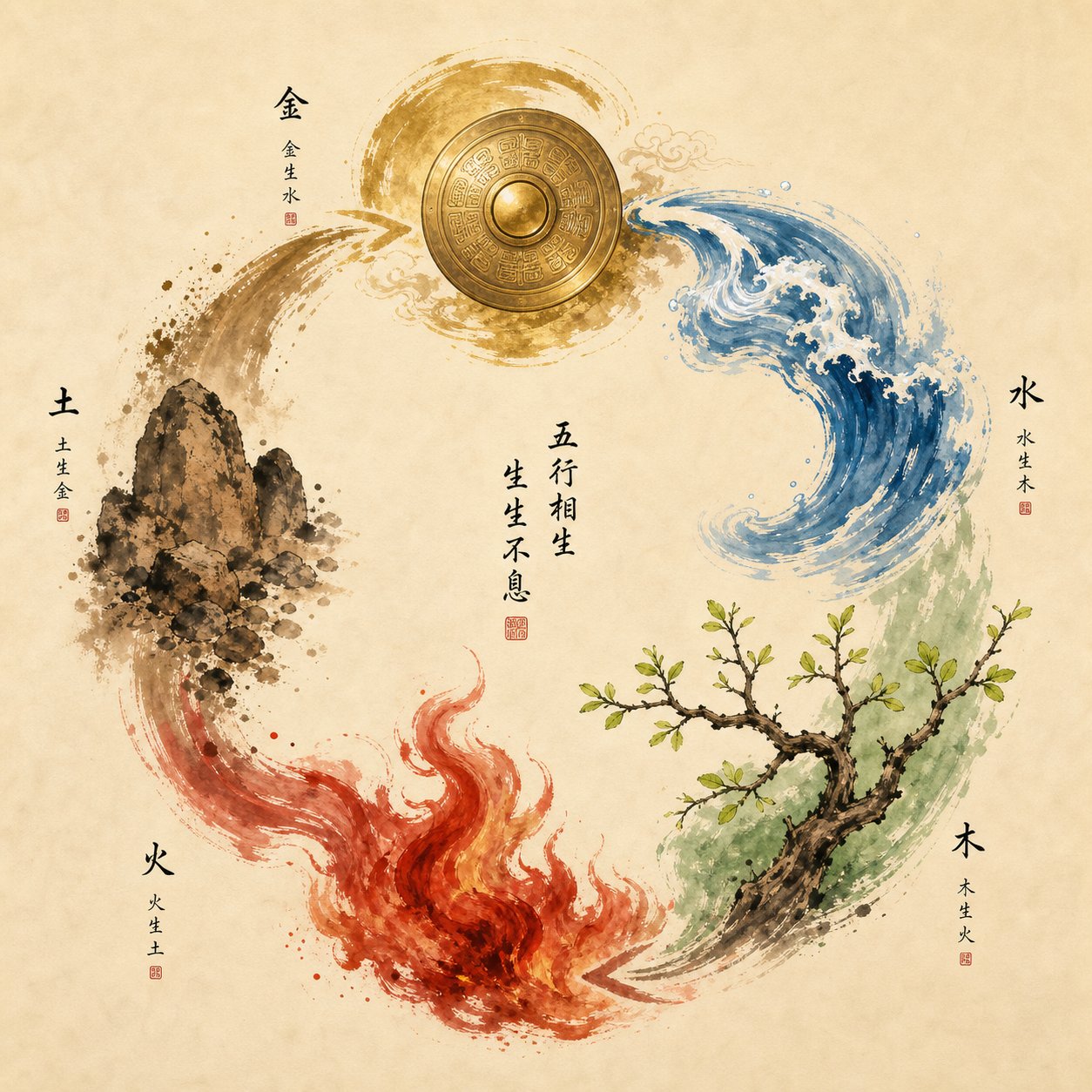
The generating (productive) cycle works like a parent-child relationship. Each element produces the next:
- Wood feeds Fire
- Fire generates Earth
- Earth produces Metal
- Metal generates Water
- Water nourishes Wood
For Earth Sheep naming, the productive cycle tells you that Earth naturally produces Metal. Choosing Metal element characters in a name gives the excess Earth somewhere to go. The Earth "spends" its energy creating Metal, which drains the surplus. This is a gentle, non-conflicting form of balance.
The controlling (destructive) cycle works differently. Here, one element restrains another:
- Wood controls Earth
- Earth controls Water
- Fire controls Metal
- Metal controls Wood
- Water controls Fire
Wood directly controls Earth, meaning Wood element characters in a name actively restrain the excess. Think of tree roots breaking through compacted soil. This is a stronger intervention. It works well when the double-Earth energy is particularly dominant in the full birth chart.
Water, meanwhile, is controlled by Earth. Adding Water element characters introduces fluidity and adaptability, qualities the Earth Sheep child needs, while also requiring the excess Earth to "work" at controlling it rather than sitting stagnant.
The problematic additions? Fire and more Earth. Fire produces Earth in the generating cycle, meaning Fire element characters would feed the already-excessive Earth energy. Adding more Earth characters simply compounds the imbalance. Both should be used sparingly or avoided entirely unless the child's full BaZi chart reveals a specific deficiency.
Which Elements to Prioritize in Name Characters
For parents researching the 2003 chinese zodiac element or the chinese horoscope 1991 element for older children or adults revisiting their names, the same logic applies whenever Earth dominates the chart. The balancing strategy remains consistent across cycles.
Here's a clear breakdown of each element's relationship to the Earth Sheep and its naming implications:
| Element | Relationship to Earth | Effect on Excess Earth | Naming Recommendation |
|---|---|---|---|
| Metal (金) | Earth produces Metal (child element) | Drains Earth gently by giving it an outlet | Seek - adds decisiveness and clarity |
| Water (水) | Earth controls Water | Gives Earth a purpose; introduces flow and adaptability | Seek - adds intelligence and flexibility |
| Wood (木) | Wood controls Earth (restraining element) | Directly reduces excess Earth energy | Seek - adds growth, ambition, and vitality |
| Fire (火) | Fire produces Earth (parent element) | Feeds and increases Earth energy further | Avoid or limit - amplifies the imbalance |
| Earth (土) | Same element | Compounds the existing excess | Avoid - worsens stagnation and rigidity |
The priority order for most Earth Sheep babies is Metal first (gentle drainage), then Water (introduces movement), then Wood (active control). This ranking assumes a standard double-Earth chart. A child born at an Earth-heavy hour or in an Earth month would lean even more heavily toward Wood characters for stronger correction.
Sounds technical? It is, but the practical application is simpler than it appears. When browsing characters for your child's name, look at the radical. Characters containing the metal radical (钅), water radical (氵), or wood radical (木) carry those elemental associations inherently. The radical acts as an elemental signature embedded in the character itself, making it possible to balance a birth chart through the very strokes of a name.
The question then becomes: which specific radicals and characters carry the most auspicious energy for Sheep zodiac names? That's where zodiac-specific symbolism layers on top of elemental theory, adding another dimension to the selection process.
The BaZi Framework and Traditional Naming Process
Elemental balancing through radicals gives you a solid starting point, but here's the thing: the year pillar is only one piece of a much larger puzzle. A child's full energetic profile depends on four pillars, not one. Two Earth Sheep babies born in the same year but at different times can have dramatically different elemental needs. This is where BaZi, the Four Pillars of Destiny, brings precision to what would otherwise be a generalized approach.
Beyond the Year Pillar and the Four Pillars Framework
BaZi (八字) translates literally to "eight characters" because the system assigns a Heavenly Stem and an Earthly Branch to each of four time units: year, month, day, and hour. Each pair carries its own elemental signature. The year pillar, which we've been discussing, represents ancestry and broad generational energy. But three other pillars shape the child's individual chart:
- Month Pillar - reflects career potential, wealth capacity, and the seasonal energy present at birth. A child born in a Wood-heavy spring month already has natural Wood in the chart, which changes the naming calculus.
- Day Pillar - represents the child's core self and inner nature. The Day Master (the Heavenly Stem of the day pillar) is the single most important element in the entire chart because it defines who the child fundamentally is.
- Hour Pillar - reveals how the child expresses themselves later in life and what their future trajectory looks like energetically.
Imagine two babies both born in a Ji Wei year. One arrives on a Water day in a Metal month during a Wood hour. The other is born on a Fire day in an Earth month during an Earth hour. The first child already has Water, Metal, and Wood represented across the chart. The double-Earth from the year pillar is naturally offset. The second child? Earth dominates three of four pillars, making the need for balancing elements far more urgent.
This is why the chinese calendar 1979 year pillar alone can't tell the whole story. Parents who relied solely on the year of birth when the 1979 chinese new year ushered in the Earth Sheep generation may have missed critical nuances in their children's charts. The lunar new year 1979 marked the start of a Ji Wei year, but each child born within that year carried a unique four-pillar configuration depending on their exact birth date and time.
For parents seeking true precision in earth sheep chinese baby names, the full BaZi chart is indispensable. The year pillar provides a useful general direction, and the guidance in this article applies broadly to all Earth Sheep births. But the difference between a good name and a perfectly calibrated one lies in those other three pillars.
How a Naming Master Selects Characters
So how does a traditional naming practitioner actually work? The process is more systematic than most people expect. It's not about flipping through a book of nice-sounding characters. A BaZi naming master follows a structured methodology that moves from cosmic analysis down to the individual strokes of each character.
Here's the step-by-step process a practitioner typically follows:
- Collect exact birth details - The baby's birth year, month, day, and hour are gathered, along with the birthplace to confirm time zone accuracy. Even a one-hour difference can shift the Hour Pillar and change the chart's elemental composition entirely.
- Calculate the full BaZi chart - All four pillars are mapped out, revealing eight characters total. Each Heavenly Stem and Earthly Branch is assigned its element, creating a complete picture of the child's energetic makeup. For a baby born during a chinese calendar for 1979 Ji Wei year, the year pillar is fixed as Earth-Earth, but the remaining six characters vary.
- Identify the Day Master - The Heavenly Stem of the day pillar becomes the reference point for the entire analysis. Everything else in the chart is read in relation to this element. A Water Day Master in an Earth Sheep year has very different needs than a Fire Day Master in the same year.
- Assess elemental balance - The practitioner counts which elements are present, which are excessive, and which are missing or weak. They identify the favorable element (xi shen/喜神) that supports the Day Master and the unfavorable element (ji shen/忌神) that undermines it.
- Determine the naming direction - Based on the chart analysis, the master establishes which elements the name should introduce. This isn't always about adding what's missing. Sometimes a present-but-weak element needs reinforcement. Sometimes the chart needs an element that controls an overly dominant force.
- Select characters with appropriate radicals - Characters are chosen whose radicals carry the needed elemental energy. The master also evaluates each character's meaning, ensuring it conveys positive imagery such as wisdom, strength, grace, or prosperity.
- Check stroke count for numerological harmony - The total number of strokes in the full name (surname plus given name) is calculated against traditional numerological grids. Certain stroke counts are considered auspicious, while others carry less favorable associations.
- Test tonal harmony and pronunciation - The name is spoken aloud to check whether the tones flow naturally. Mandarin's four tones create melodic patterns, and a name that sounds awkward or creates unintended homophones gets revised. The full name should sound natural with the family surname and avoid accidental meanings when read together.
- Validate against family conventions - Generation characters, clan naming rules, taboo characters (those shared with living elders), and sibling naming patterns are all cross-referenced. A technically perfect name that violates family tradition won't serve the child well in practice.
- Finalize and confirm alignment - The completed name is reviewed holistically. Does it balance the chart? Does it sound pleasing? Does it carry a meaningful blessing? Is it practical for daily use in school records, official documents, and digital systems? Only when all layers align does the name receive approval.
This process reveals something important: a name chosen purely by elemental formula can still miss the mark. Stroke count might be off. The tones might clash with the surname. The character might be so rare that it causes problems on government forms. Traditional naming masters hold all these variables simultaneously, which is why the practice remains valued even in an era of online BaZi calculators.
For parents who want to apply these principles themselves, the year-pillar approach covered in this article gives you a strong foundation. You'll know which elements to prioritize and which radicals to seek. The full BaZi consultation adds surgical precision on top of that foundation, tailoring the name to your specific child rather than to Earth Sheep babies as a group.
With the framework clear, the next practical question becomes: which specific radicals and characters carry the most favorable energy for Sheep zodiac names? The zodiac animal itself introduces another layer of symbolism, one rooted in what the Sheep eats, where it shelters, and which other animals it harmonizes with.
Favorable Radicals and Characters for Sheep Names
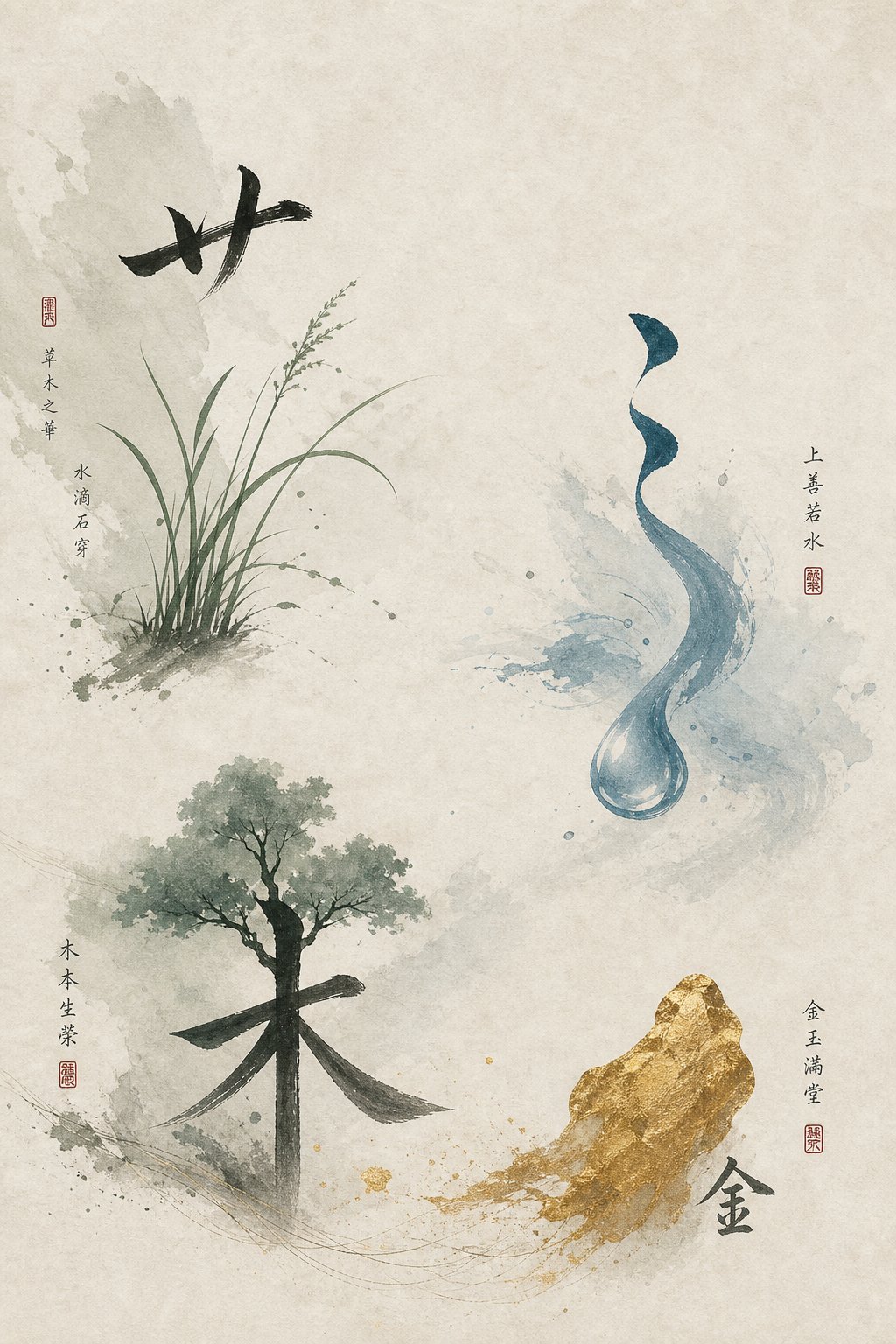
Elemental theory tells you which forces to introduce. Radicals tell you how to embed those forces directly into the strokes of a character. In Chinese writing, every character contains a radical (bu shou/部首), a structural component that signals meaning and, in naming philosophy, elemental energy. For the chinese zodiac animal sheep, certain radicals carry deep symbolic resonance because they connect to what the Sheep needs to thrive: nourishment, shelter, movement, and balance.
Think of it this way. The Sheep is a grazing animal. It eats grass, rests under trees, and drinks from streams. Characters whose radicals evoke these natural elements aren't just elementally appropriate. They're symbolically aligned with the Sheep's nature, creating a double layer of auspiciousness that practitioners prize.
Auspicious Radicals for Sheep Zodiac Names
The year of the sheep chinese zodiac tradition identifies several radical families as particularly favorable. Each one connects to the Sheep's lifestyle, elemental needs, or zodiac compatibility. Here's a breakdown of the most recommended radicals, along with example characters you can use in naming:
| Radical | Meaning | Example Characters (Pinyin) | Character Meanings | Elemental Benefit |
|---|---|---|---|---|
| 艹 (grass) | Grass, vegetation | 芳 (fang), 萱 (xuan), 茗 (ming), 莉 (li), 蓉 (rong) | Fragrant; daylily; tea; jasmine; lotus | Wood - controls excess Earth; symbolizes abundant nourishment for the grazing Sheep |
| 木 (wood) | Wood, trees | 梓 (zi), 森 (sen), 枫 (feng), 杰 (jie), 楚 (chu) | Catalpa tree; forest; maple; outstanding; clear and distinct | Wood - provides shelter and protection; directly restrains Earth energy |
| 氵 (water) | Water, liquid | 涵 (han), 泓 (hong), 淑 (shu), 润 (run), 澜 (lan) | Contain; clear deep pool; virtuous; moist; rippling waves | Water - introduces flow and adaptability; balances Earth's rigidity |
| 钅/金 (metal/gold) | Metal, gold | 铭 (ming), 锦 (jin), 钰 (yu), 鑫 (xin), 锐 (rui) | Inscribe; brocade; precious jade; prosperity; sharp | Metal - drains excess Earth gently; adds decisiveness and resolve |
| 口 (mouth/enclosure) | Opening, shelter | 容 (rong), 宏 (hong), 安 (an), 家 (jia), 富 (fu) | Tolerant; grand; peaceful; home; abundant | Neutral - represents a safe resting place for the Sheep; emotional security |
| 禾/米 (grain) | Millet, rice, cereals | 秀 (xiu), 秋 (qiu), 稻 (dao), 科 (ke), 粟 (su) | Elegant; autumn; rice paddy; branch of study; grain | Wood/Earth neutral - symbolizes the five cereals that nourish the Sheep |
Notice how several of these radicals serve double duty. The grass radical (艹) is both elementally Wood, which controls excess Earth, and symbolically tied to the Sheep's food source. A character like 萱 (xuan, meaning daylily) simultaneously introduces Wood energy and evokes abundance for the chinese animal sheep. That layered significance is what makes radical-based naming so effective.
Year of the sheep compatibility principles also influence radical selection. The Sheep harmonizes with the Rabbit (卯), Horse (午), and Pig (亥) in the Chinese zodiac. Characters containing radicals or components associated with these compatible animals are considered auspicious. For example, characters with the 马 (horse) component like 骏 (jun, meaning fine steed) or 驰 (chi, meaning gallop) carry favorable zodiac energy because the Horse and Sheep form one of the six harmonies (liu he) in Chinese astrology.
The foot radical (足) also deserves mention. Because the Sheep is an active, leaping animal, characters like 跃 (yue, meaning leap) carry positive connotations of vitality and forward movement, qualities that counterbalance the Earth Sheep's tendency toward hesitation.
Radicals and Characters to Avoid
Just as certain radicals attract favorable energy, others create friction with the Sheep's zodiac nature. Avoiding these is as important as seeking the auspicious ones.
The most critical avoidances relate to zodiac conflict. In the ram chinese horoscope system, the Sheep clashes with the Ox (丑) and is harmed by the Rat (子). Characters containing these Earthly Branch components or their associated animal radicals introduce disharmony into the name. Specifically:
- 丑/牛 (Ox) radicals - Characters like 牡 (mu), 牲 (sheng), or 特 (te) contain the Ox component. The Ox and Sheep sit directly opposite each other on the zodiac wheel, creating a clash (chong) that traditional practitioners consider seriously inauspicious.
- 子/鼠 (Rat) radicals - Characters like 孔 (kong), 学 (xue), or 存 (cun) contain the Rat's Earthly Branch. The Rat harms the Sheep in the six harms relationship, making these characters energetically unfavorable.
- 巾/衣/糸 (clothing) radicals - This one surprises many parents. Characters related to colorful clothing or decoration, such as 彩 (cai, meaning colorful), 裕 (yu, meaning abundant), or 彰 (zhang, meaning manifest), are traditionally avoided. The reasoning? In ancient Chinese culture, sheep were adorned before being offered as sacrifices. Clothing radicals symbolically echo that fate.
- 大/王/君 (greatness/king) radicals - Characters like 天 (tian), 奇 (qi), or 琦 (qi) carry associations with royalty and grandeur. Because the Sheep was historically one of the three sacrificial animals, characters suggesting prominence could symbolize being "chosen" for sacrifice rather than for glory.
- 刀/皿 (knife/vessel) radicals - These directly evoke slaughter and ritual vessels. Characters like 刚 (gang) or 利 (li, when written with the knife radical prominent) carry sharp, cutting energy that conflicts with the Sheep's gentle nature.
Fire-heavy radicals also warrant caution for Earth Sheep babies specifically. While the zodiac Sheep doesn't inherently conflict with Fire, the elemental reality of a Ji Wei birth means Fire characters like 炎 (yan), 焱 (yan), or 烨 (ye) feed more energy into an already-overloaded Earth system. Use them only if the child's full BaZi chart reveals a genuine Fire deficiency.
Year of the sheep compatibility extends beyond animal relationships into elemental ones. A name that respects both the zodiac symbolism and the Five Elements framework gives the child the strongest possible foundation. The radicals you choose aren't just aesthetic decisions. They're energetic ones, shaping how the child's name interacts with their birth chart for a lifetime.
With these radical principles established, the next step is applying them to actual name combinations. The characters that work best differ depending on whether you're naming a boy or a girl, not because of elemental rules, but because of the cultural conventions and aspirational meanings parents traditionally encode into gendered names.
Boy Names Curated for Earth Sheep Babies
Chinese naming conventions for boys traditionally lean toward characters that convey strength, ambition, moral integrity, and intellectual achievement. For Earth Sheep sons, that cultural expectation creates an interesting tension. The child's innate energy is gentle and creative, yet the name is expected to project confidence and capability. The solution? Choose characters that introduce balancing elements while simultaneously carrying meanings associated with masculine virtue.
The metal sheep chinese zodiac combination already tells us what these boys need energetically: characters that drain excess Earth through Metal, introduce movement through Water, or actively control stagnation through Wood. Each name below was selected for both its elemental function and its cultural resonance as a boy's name. Cantonese pronunciations are included for diaspora families who celebrate the lunar new year year of the sheep tradition across different dialect communities.
Water Element Boy Names for Earth Sheep Babies
Water characters introduce fluidity, intelligence, and adaptability. For Earth Sheep boys who tend toward overthinking and rigidity, Water names encourage the mind to flow rather than freeze. These characters carry the water radical (氵) or belong to the Water element by traditional classification.
| Character | Pinyin (Mandarin) | Cantonese | Meaning | Element Added |
|---|---|---|---|---|
| 涵 | han2 | haam4 | To contain; refinement and patience; vast knowledge | Water |
| 泽 | ze2 | zaak6 | Marsh; grace; benevolence that nourishes others | Water |
| 浩 | hao4 | hou6 | Vast; grand like an ocean; expansive spirit | Water |
| 润 | run4 | jeon6 | Moist; to enrich; smooth and polished | Water |
| 澄 | cheng2 | cing4 | Clear water; purity; transparent and honest | Water |
| 瀚 | han4 | hon6 | Vast like a desert sea; boundless ambition | Water |
A name like 浩泽 (Hao Ze) combines two Water characters, creating a powerful image of vast benevolence. For a boy born in a sheep chinese zodiac years cycle with heavy Earth, this double-Water approach provides strong counterbalance while projecting the grandeur parents traditionally seek in a son's name.
Metal Element Boy Names for Balance
Metal characters add decisiveness, clarity, and the courage to act. Because Earth naturally produces Metal in the generative cycle, these names create a gentle drainage effect rather than a forceful correction. For Earth Sheep boys, Metal names build the inner steel that complements their soft exterior.
| Character | Pinyin (Mandarin) | Cantonese | Meaning | Element Added |
|---|---|---|---|---|
| 铭 | ming2 | ming4 | To inscribe; a motto engraved in memory; wisdom | Metal |
| 锐 | rui4 | jeoi6 | Sharp; keen-witted; aggressively forward-moving | Metal |
| 钧 | jun1 | gwan1 | An ancient unit of weight; authority and balance | Metal |
| 锦 | jin3 | gam2 | Brocade; splendid fabric; nobility and grandeur | Metal |
| 铮 | zheng1 | zaang1/zang1 | Clang of metal; unyielding integrity | Metal |
| 钰 | yu4 | juk6 | Precious jade and metal; firm yet refined | Metal |
铭 (Ming) is particularly well-suited for Earth Sheep boys. It carries the metal radical (钅) while meaning "to inscribe" or "a guiding motto." The character suggests someone whose words and principles are etched permanently, projecting intellectual strength without aggression. Paired with a surname, it sounds distinguished across both Mandarin and Cantonese-speaking communities.
Wood Element Boy Names for Grounding
Wood characters introduce growth, ambition, and upward momentum. In the controlling cycle, Wood breaks through Earth the way roots crack stone. For Earth Sheep boys who struggle with passivity or excessive caution, Wood names inject the drive to push forward and reach higher. These characters often carry meanings tied to forests, growth, and moral uprightness.
| Character | Pinyin (Mandarin) | Cantonese | Meaning | Element Added |
|---|---|---|---|---|
| 梓 | zi3 | zi2 | Catalpa tree; hometown; craftsmanship and legacy | Wood |
| 杰 | jie2 | git6 | Outstanding; distinguished; a person of great talent | Wood |
| 楷 | kai3 | kaai2 | Model; standard of excellence; upright character | Wood |
| 森 | sen1 | sam1 | Forest; abundance; vitality and depth | Wood |
| 彬 | bin1 | ban1 | Refined; cultured; elegant balance of substance and style | Wood |
| 荣 | rong2 | wing4 | Glory; prosperity; flourishing honor | Wood |
杰 (Jie) stands out as a classic choice. It means "outstanding" or "distinguished" and carries the wood radical (木) at its base. For generations, parents marking the chinese calendar year of the sheep have chosen this character to counterbalance the Sheep's gentle passivity with an aspirational push toward excellence. The character works equally well as a standalone given name or as part of a two-character combination like 俊杰 (Jun Jie, meaning "talented and outstanding").
When combining characters into a two-character given name, you can mix elements for layered balance. A name like 泽楷 (Ze Kai) pairs Water (泽, grace and benevolence) with Wood (楷, model of excellence), addressing both the need for flow and the need for active growth. Or consider 铭森 (Ming Sen), which blends Metal's clarity with Wood's vitality, giving the Earth Sheep boy both decisiveness and ambition in a single name.
For families who celebrate the lunar new year sheep tradition and want names that honor heritage while functioning internationally, characters like 浩 (Hao), 杰 (Jie), and 铭 (Ming) offer a practical advantage: their Mandarin pronunciations map easily to English-friendly sounds, making them accessible in bilingual contexts without sacrificing elemental purpose.
The same elemental logic applies to girl names, though the cultural conventions around meaning and aspiration shift in ways that open up a different palette of characters entirely.

Girl Names Curated for Earth Sheep Babies
Chinese girl names traditionally emphasize grace, beauty, wisdom, and virtue. Characters evoking flowers, jade, moonlight, and gentle waters have dominated for centuries. But here's what makes naming Earth Sheep daughters particularly rewarding: many of the most aesthetically beautiful girl name characters happen to carry exactly the elemental energy these babies need. A character like 淑 (shu, meaning virtuous and gentle) is both culturally ideal for a girl's name and elementally Water, making it a perfect dual-purpose choice.
Modern trends are also shifting the landscape. Parents celebrating the year of the sheep chinese new year increasingly choose characters that project strength and independence alongside traditional femininity. Names like 梓萌 (zi meng), which implies bravery and leadership, reflect this evolution. For Earth Sheep girls, that modern impulse aligns beautifully with elemental needs, since characters conveying ambition and decisiveness often belong to Wood or Metal.
The chinese zodiac water sheep combination tells us these girls benefit most from characters that introduce flow, sharpness, or growth. Below you'll find curated options organized by element, each selected for both its naming beauty and its energetic function.
Water Element Girl Names for Earth Sheep Babies
Water characters for girls often carry imagery of clarity, depth, and emotional intelligence. They introduce adaptability into the double-Earth chart while sounding melodic and graceful. Many of the most beloved chinese new year animals sheep-cycle girl names draw from this element.
| Character | Pinyin (Mandarin) | Cantonese | Meaning | Element Added |
|---|---|---|---|---|
| 淑 | shu1 | suk6 | Virtuous; gentle and refined; clear water | Water |
| 滢 | ying2 | jing4 | Crystal-clear water; pure and luminous | Water |
| 涵 | han2 | haam4 | To contain; cultivated depth; inclusive wisdom | Water |
| 澜 | lan2 | laan4 | Rippling waves; grand and expansive | Water |
| 溪 | xi1 | kai1 | Mountain stream; natural purity and flow | Water |
| 沁 | qin4 | sam3 | To permeate; refreshing like spring water | Water |
溪瑶 (Xi Yao) pairs the Water element stream character with 瑶 (precious jade), creating a name that sounds like a poem while actively balancing Earth energy. 滢 (Ying) works beautifully as a standalone given name or combined with characters like 嘉 (jia, meaning excellent) to form 嘉滢, a name that Chinese teachers describe as representing a girl with a pure heart.
Metal Element Girl Names for Clarity
Metal characters for girls often connect to jade, precious stones, and musical instruments. These carry connotations of refinement and inner strength rather than aggression. For Earth Sheep daughters born during chinese zodiac sheep years, Metal names drain excess Earth gently while projecting elegance and resolve.
| Character | Pinyin (Mandarin) | Cantonese | Meaning | Element Added |
|---|---|---|---|---|
| 锦 | jin3 | gam2 | Brocade; splendid and gorgeous | Metal |
| 钰 | yu4 | juk6 | Precious jade; firm yet beautiful | Metal |
| 铃 | ling2 | ling4 | Bell; clear and melodious sound | Metal |
| 瑾 | jin3 | gan2 | Fine jade; moral beauty and warmth | Metal |
| 锐 | rui4 | jeoi6 | Sharp; keen-minded; perceptive | Metal |
| 鑫 | xin1 | jam1 | Triple gold; prosperity and abundance | Metal |
锦瑶 (Jin Yao) is a standout combination. 锦 means bright and gorgeous brocade while carrying the metal radical (钅), and 瑶 means pure and lively jade. Together they form a name that's both visually striking in written form and elementally purposeful. For families who mark the chinese sheep new year with traditional naming ceremonies, this pairing honors heritage while addressing the double-Earth imbalance.
瑾 (Jin) deserves special attention. While classified under the jade/king radical (王), it's traditionally associated with Metal energy because jade itself is considered a Metal-element substance in Wu Xing theory. The character means "fine jade with a warm luster," making it ideal for Earth Sheep girls who need Metal's clarity wrapped in warmth rather than coldness. 瑾琳 (Jin Lin) combines two jade characters for a name that Chinese naming experts describe as representing someone pure and beautiful.
Wood Element Girl Names for Growth
Wood characters for girls draw on imagery of flowers, trees, and springtime vitality. They directly control excess Earth while carrying meanings of growth, resilience, and natural beauty. The chinese new year year of the sheep tradition values these characters because they symbolize nourishment for the grazing Sheep.
| Character | Pinyin (Mandarin) | Cantonese | Meaning | Element Added |
|---|---|---|---|---|
| 萱 | xuan1 | hyun1 | Daylily; the flower of forgetting worries | Wood |
| 芮 | rui4 | jeoi6 | Young grass; vitality and freshness | Wood |
| 梓 | zi3 | zi2 | Catalpa tree; growth and self-expression | Wood |
| 茗 | ming2 | ming4 | Tea leaves; elegance and quiet refinement | Wood |
| 桐 | tong2 | tung4 | Paulownia tree; perseverance and momentum | Wood |
| 莉 | li4 | lei6 | Jasmine; fragrant and graceful | Wood |
萱 (Xuan) is one of the most beloved Wood characters for girls. The daylily it represents is traditionally called the "mother's flower" in Chinese culture, symbolizing a carefree spirit and the release of worry. For an Earth Sheep daughter prone to overthinking, this character introduces lightness and upward growth. Combined as 梓萱 (Zi Xuan), it creates a name that implies both rootedness (the catalpa tree) and joyful blossoming (the daylily).
诗桐 (Shi Tong) offers another compelling pairing. 诗 (poetry, great literary achievement) combined with 桐 (paulownia tree, perseverance) creates a name that Chinese teachers describe as lively, ambitious, and innovative. The Wood element in 桐 actively controls Earth while the character's meaning projects the kind of forward momentum Earth Sheep girls benefit from most.
You'll notice that many of these characters serve triple duty: they're elementally corrective, symbolically aligned with the Sheep's grazing nature through the grass radical (艹), and culturally appropriate for a girl's name. That convergence is what makes naming Earth Sheep daughters so satisfying. The most beautiful characters are often the most functional ones.
For families navigating both Chinese tradition and international contexts, characters like 莉 (Li), 萱 (Xuan), and 沁 (Qin) offer pronunciation patterns that translate smoothly into English-speaking environments. This cross-cultural flexibility becomes especially important for diaspora parents who want a name that honors the chinese zodiac water sheep principles while functioning seamlessly in daily life abroad.
Modern Naming for Diaspora and Bilingual Families
Cross-cultural flexibility isn't a bonus feature for diaspora families. It's a daily reality. A child whose chinese sign sheep chart calls for Water or Metal characters still needs a name that teachers in Toronto, Sydney, or London can pronounce without wincing. Parents navigating this space face a layered challenge: honor the elemental logic of the birth chart, respect family tradition, and produce something that works on a school roster in two languages.
Research into multilingual naming and identity shows that names function as vehicles of meaning, transmitting messages to both the bearer and the people around them. For bilingual children, a name that flows naturally across languages reinforces a unified sense of self rather than splitting identity into separate compartments. The goal isn't compromise. It's coherence.
Names That Bridge Chinese and English Pronunciation
The most elegant solution for families asking "what is my sign in the chinese zodiac and how do I honor it internationally?" is phonetic bridging. You choose Chinese characters that carry genuine meaning and elemental value while approximating the sound of a recognizable English name. The child introduces themselves once, and both worlds hear something familiar.
Here are Earth Sheep-appropriate examples that balance elemental function with cross-linguistic pronunciation:
| English Name | Chinese Characters | Pinyin | Meaning | Element |
|---|---|---|---|---|
| Lily | 莉莉 | Li Li | Jasmine (doubled) | Wood |
| Lynn | 霖 | Lin | Continuous nourishing rain | Water |
| Hale | 海乐 | Hai Le | Ocean joy | Water |
| Jace | 杰森 | Jie Sen | Outstanding forest | Wood |
| Mina | 铭娜 | Ming Na | Inscribed grace | Metal |
| Serena | 思润娜 | Si Run Na | Thoughtful, enriching, graceful | Water |
Notice that each Chinese version isn't just a phonetic transliteration. The characters were chosen because they carry the Water, Metal, or Wood energy that Earth Sheep babies need. A name like 霖 (Lin) sounds close to "Lynn" while introducing Water through its rain radical. That's the difference between a thoughtful bilingual name and a hollow sound-alike picked from a transliteration chart.
Two cautions apply here. First, avoid characters selected purely for phonetic approximation that carry weak or awkward meanings. Second, check how the full name sounds in Cantonese, Hokkien, or whichever dialect the extended family speaks. A name that works in Mandarin and English but sounds unfortunate in Grandma's dialect will get quietly corrected at every family dinner.
Thematic Pairing Strategies for Dual Names
Not every family wants a single name that spans both languages. Many prefer separate Chinese and English names that share thematic resonance rather than phonetic overlap. This approach gives parents full creative freedom in each language while maintaining a conceptual thread between the two identities.
For parents wondering what year is the year of the sheep and how to carry its gentle, creative energy into an English name, thematic pairing works like this: identify the core meaning of the Chinese name, then find an English name that echoes that meaning or feeling. A girl named 萱 (Xuan, daylily, the flower of forgetting worries) might carry the English name Joy or Serene. A boy named 浩 (Hao, vast ocean) might go by Ocean or even Kai, which means sea in Hawaiian.
The chinese star sign sheep is associated with creativity, gentleness, and artistic sensitivity. English names that evoke those same qualities create invisible harmony between the two names even when they sound nothing alike. The child grows up understanding both names as expressions of the same intention.
Here are practical tips for diaspora families navigating dual-language naming:
- Test pronunciation across dialects - Say the Chinese name in Mandarin, Cantonese, and any family dialect. Then say it with an English-speaking accent. If it survives all three without becoming unrecognizable or embarrassing, it passes.
- Check for unintended meanings - Search the Chinese characters' pinyin in English slang dictionaries and vice versa. A name that sounds fine in isolation can carry unfortunate associations in another language's playground culture.
- Prioritize the first syllable - English speakers anchor on the first syllable of unfamiliar names. Choose a Chinese name whose opening sound maps to something intuitive in English. Characters starting with L, M, J, S, or K tend to cross over smoothly.
- Keep stroke count practical - A child writing their Chinese name on international school forms benefits from characters under 15 strokes each. Elegant but complex characters like 馨 (xin, 20 strokes) become a burden in bilingual paperwork.
- Decide on legal name strategy early - Some families register the English name legally and keep the Chinese name for family use. Others register the Chinese name in pinyin as the legal first name and use the English name socially. Either works, but consistency across passports, school records, and medical files prevents headaches later.
- Involve elders in both directions - Let grandparents weigh in on the Chinese name's tonal flow and meaning, and let English-speaking family members test whether the name feels natural in conversation. Both perspectives catch problems the other might miss.
The underlying principle is respect for both linguistic worlds without forcing one to submit to the other. A well-chosen Earth Sheep name can carry elemental balance, zodiac harmony, and cultural meaning while still letting your child introduce themselves confidently on the first day of school anywhere in the world. The name doesn't have to do everything in one breath. It just has to feel like it belongs to the same person in every room they enter.
Earth Sheep Naming Across Cycles and Final Guidance
A name built for one Earth Sheep child should, in theory, work for any Earth Sheep child. But does the same Ji Wei energy repeat identically every sixty years? The answer matters for families revisiting naming principles across generations, whether for a grandparent born in 1919, a parent whose 1979 zodiac sign is the Earth Sheep, or a baby expected in 2039.
Naming Across Different Earth Sheep Cycles
The Chinese sexagenary calendar repeats every sixty years. Each Ji Wei year carries the same Heavenly Stem (Ji/己, Yin Earth) and Earthly Branch (Wei/未, Earth). The 1979 zodiac is identical in its pillar structure to 1919 and 2039. People born in 1979 share the same year-pillar elemental signature as those born in any other Ji Wei cycle. The 1979 chinese horoscope sign is Earth Sheep, and that classification doesn't shift with the decades.
So what changes? Some practitioners argue that the broader cosmic context surrounding each sixty-year cycle introduces subtle energetic differences. The prevailing social energy of 1919 (post-World War I upheaval) differs vastly from 1979 in chinese calendar terms (China's reform era beginning) or 2039 (a future we can only speculate about). These macro-level forces don't alter the Ji Wei pillar itself, but they may influence how that energy expresses in a person's life.
For naming purposes, the practical impact is minimal. The double-Earth condition remains constant across all year of the sheep years that carry the Ji Wei designation. The elemental imbalance is structural, not contextual. Whether you're choosing a name for a 1979 year of what animal baby (Earth Sheep) or planning ahead for 2039, the core strategy holds: drain excess Earth through Metal, introduce flow through Water, and control stagnation through Wood.
What does shift meaningfully is the child's month, day, and hour pillars, which vary with every birth regardless of the year cycle. Two Earth Sheep babies born sixty years apart on the same calendar date would still have different hour pillars if born at different times. That individual variation matters far more than any generational energy difference between cycles.
Key Takeaways for Choosing the Perfect Name
A name for an Earth Sheep child is not decoration. It is calibration, a deliberate act of balancing cosmic forces so that gentleness becomes strength and caution becomes wisdom.
Whether you're honoring what is the chinese sign for 1979 in a family legacy name or selecting fresh characters for a newborn, these principles remain your guide:
- Do prioritize Water, Metal, and Wood element characters to counterbalance the double-Earth energy in the Ji Wei year pillar.
- Do seek characters with the grass radical (艹), wood radical (木), and water radical (氵) for both elemental and symbolic alignment with the Sheep's nature.
- Do include characters associated with zodiac allies: Rabbit, Horse, and Pig components carry harmonious energy.
- Do test the full name for tonal flow, stroke count balance, and cross-dialect pronunciation if your family spans multiple Chinese-speaking communities.
- Don't add more Earth or Fire element characters unless the full BaZi chart reveals a specific deficiency in those areas.
- Don't use characters containing Ox (丑/牛) or Rat (子) components, which clash with or harm the Sheep zodiac.
- Don't select characters with knife, vessel, or elaborate clothing radicals that carry sacrificial symbolism for the Sheep.
- Don't rely solely on the year pillar. Consult the complete Four Pillars chart for precision tailored to your specific child's birth time.
The 1979 in chinese calendar Ji Wei year, like every Earth Sheep cycle before and after it, produces children whose gentle spirits benefit from names that introduce movement, clarity, and growth. The philosophy is consistent across generations. Only the individual chart adds nuance. Trust the framework, honor the tradition, and give your Earth Sheep child a name that carries them forward with both roots and wings.
Frequently Asked Questions About Earth Sheep Chinese Baby Names
1. What element should Earth Sheep baby names include?
Earth Sheep babies carry a double-Earth condition because both the Heavenly Stem (Ji) and Earthly Branch (Wei) belong to Earth. Names should prioritize Metal characters (which drain Earth gently), Water characters (which introduce adaptability and flow), and Wood characters (which actively control excess Earth). Avoid adding more Earth or Fire characters, as Fire feeds Earth in the productive cycle and worsens the imbalance. The priority order is typically Metal first, then Water, then Wood, unless the full BaZi chart indicates otherwise.
2. Which Chinese zodiac years are Earth Sheep years?
Earth Sheep (Ji Wei) years occur every 60 years in the Chinese sexagenary calendar. The most relevant cycles are 1919, 1979, and 2039. Each carries the identical Heavenly Stem and Earthly Branch pairing of Ji (己, Yin Earth) and Wei (未, Earth), producing the same double-Earth elemental signature. The core naming principles remain consistent across all these cycles, though each child's individual month, day, and hour pillars create unique variations that affect specific character choices.
3. What radicals are lucky for Sheep zodiac baby names?
The most auspicious radicals for Sheep zodiac names include the grass radical (艹), which symbolizes abundant nourishment for the grazing Sheep while carrying Wood energy; the wood radical (木), representing shelter and directly restraining Earth; the water radical (氵), introducing flow and balance; and the metal radical (钅), adding decisiveness. The grain radical (禾/米) and enclosure radical (口) are also favorable as they represent food and safe shelter for the Sheep. Avoid radicals associated with the Ox, Rat, knives, vessels, and elaborate clothing.
4. Is the Chinese zodiac Sheep the same as Goat or Ram?
Yes, all three English translations refer to the same zodiac animal. The Chinese character 羊 (yang) encompasses sheep, goats, and rams without distinguishing between them. Western translators chose different English equivalents over the decades, creating confusion. For naming purposes, the distinction is irrelevant because the astrological properties, elemental associations, personality traits, and naming principles remain identical regardless of which English term you use.
5. How do I choose an Earth Sheep name that works in both Chinese and English?
Two main strategies work for bilingual families. Phonetic bridging selects Chinese characters with genuine elemental value whose sounds approximate recognizable English names, like 霖 (Lin, continuous rain, Water element) mapping to Lynn. Thematic pairing uses separate Chinese and English names that share conceptual meaning rather than sound, such as pairing 萱 (Xuan, daylily, the flower of forgetting worries) with the English name Joy. In both cases, test pronunciation across family dialects, check for unintended meanings in other languages, and prioritize characters under 15 strokes for practical use on international forms.