Why Gold Holds Deep Power in Chinese Names
When Chinese parents choose a name for their child, they are doing far more than picking something that sounds pleasant. They are encoding hope, fortune, and identity into a handful of carefully selected characters. Few symbols carry as much weight in this process as gold. The concept of gold in Chinese culture stretches back thousands of years, tied to imperial authority, spiritual balance, and enduring prosperity. It is a symbol of status and permanence, a representation of heavenly and earthly harmony, and a store of meaning intended to transcend generations.
Chinese names with meaning rooted in gold draw on this deep well of cultural significance. A name is not a label in Chinese tradition. It is an intentional act of bestowing fortune and character traits upon a child, a declaration of what the family hopes that person will embody throughout life. Gold, with its associations of purity, resilience, and nobility, becomes a natural vessel for those aspirations.
Philosophical Roots of Gold Symbolism
The power of gold Chinese philosophy assigns to this element runs through both Confucian and Taoist thought. In Confucianism, gold represents righteousness and moral clarity. It is the metal that does not corrode, the substance that endures trial without losing its essence. Taoist alchemists pursued gold not merely as material wealth but as a metaphor for spiritual refinement, the transformation of the self into something incorruptible.
In Chinese philosophy, gold represents both material abundance and the refinement of character. To place gold in a name is to wish for a life that is both prosperous and morally enduring.
This dual nature is what makes gold in Chinese naming so potent. It speaks simultaneously to worldly success and inner virtue. Parents who choose gold-related characters are not simply wishing their child wealth. They are expressing a desire for permanence, for a life that shines with integrity as much as with fortune.
Understanding this philosophical depth transforms how you read and select gold-meaning names. What follows is not just a list of characters but a guide to the cultural logic behind them, from the ancient Five Elements system that governs character selection to the practical steps of building a balanced, meaningful name.
The Character 金 and Its Ancient Origins
Every gold-meaning name in Chinese begins with a single building block: the character 金. Before you can appreciate how this character functions inside a name, you need to understand what it actually is, how it sounds, and where it came from. This character has been in continuous use for over three thousand years, and its visual form tells a story about how ancient Chinese people understood metal itself.
How to Pronounce 金 and Why Tone Matters
The gold Chinese character 金 is pronounced jīn in Mandarin. For English speakers, imagine saying the word "jean" but shorter and crisper, with the vowel sound closer to "in" as in "pin." The key difference from English is the tone. Mandarin uses four tones, and 金 carries the first tone, a high, flat pitch held steady, like sustaining a musical note at the top of your comfortable range.
Why does tone matter for names? Because in Mandarin, changing the tone changes the meaning entirely. The syllable jīn (first tone) means gold or metal. But jìn (fourth tone) means "near" or "to advance" depending on the character. When you say someone's name aloud, the wrong tone can accidentally invoke a completely different word. Parents consider tonal flow carefully, ensuring the name sounds harmonious when spoken across all its syllables.
You'll also encounter 金 romanized without tone marks as "jin" in surnames like Jin or Kim (the Korean reading of the same character). In Cantonese, it is pronounced gam, and in Hokkien, kim. These regional pronunciations explain why the same gold character appears in names across East Asia with different romanized spellings.
Character Origins from Oracle Bone to Modern Script
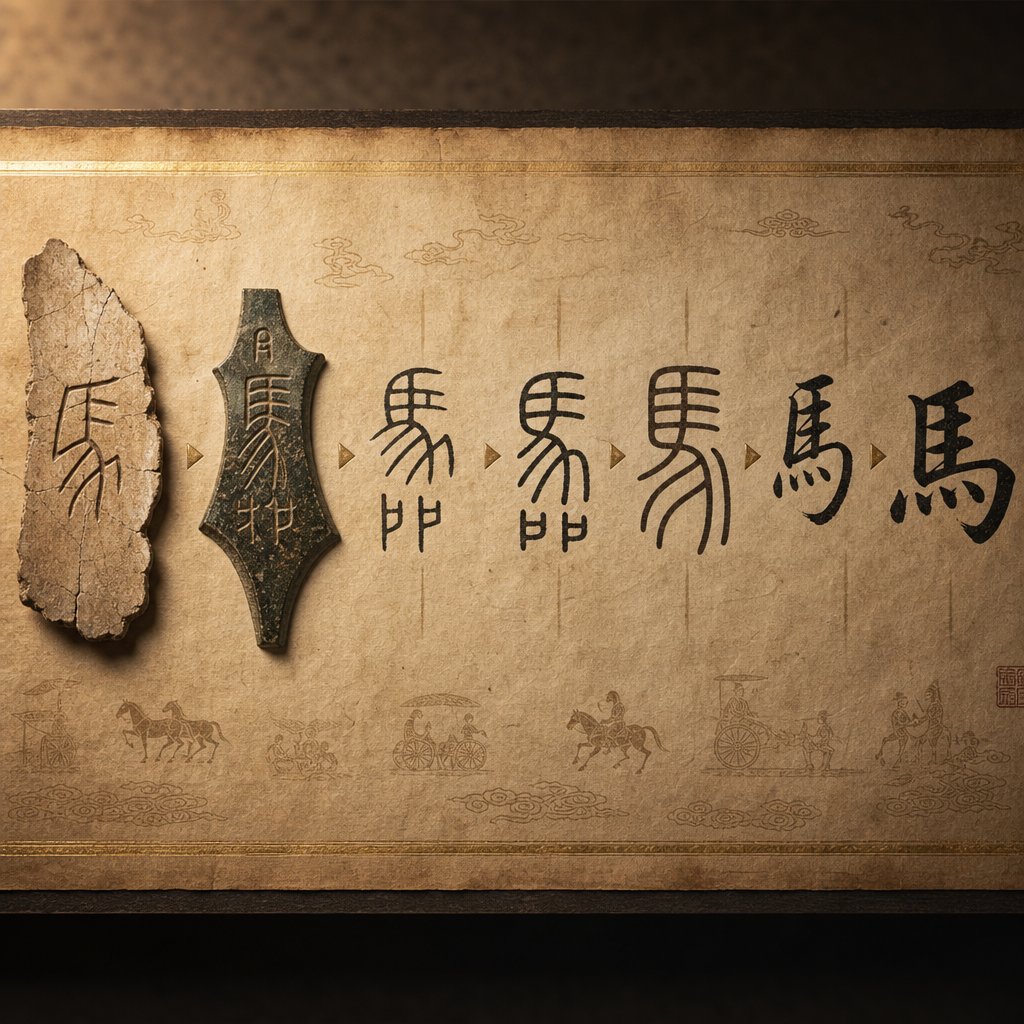
The Chinese character gold has one of the more visually intuitive origin stories in the writing system. In its earliest known form, carved into oracle bones during the Shang dynasty (roughly 1600-1046 B.C.), 金 was a pictograph of copper ore cast in a mould, with small dots representing nuggets of metal buried beneath the earth. The character depicted what miners actually saw: lumps of raw metal embedded in the ground.
As the writing system evolved through the Western Zhou dynasty (1046-771 B.C.), the character appeared frequently on bronze vessels in what is called jinwen (金文), literally "text on metal." These bronze-inscription forms show oblong dots on both sides of the main body, imitating the elliptical shape of copper lumps. Bronze was the most precious metal in ancient China, and the character 金 was inscribed on vessels given as gifts between rulers and officials.
The character originally meant "metal" in a general sense. The ancient text Shuowen Jiezi (説文解字), compiled by the Han dynasty philologist Xu Shen around the 2nd century C.E., describes five metals of five colors: yellow metal (gold), white metal (platinum), red metal (copper), black metal (iron), and blue metal (lead). Over centuries, the meaning of 金 narrowed to emphasize gold specifically, and eventually expanded again to include "money."
| Script Form | Period | Visual Description |
|---|---|---|
| Oracle Bone Script (甲骨文) | c. 1600-800 B.C. | Pictograph showing metal nuggets beside or beneath earth; angular, carved strokes |
| Bronze Inscription (金文) | c. 1046-256 B.C. | Rounder forms with oblong dots representing copper lumps on both sides of the character body |
| Seal Script (篆書) | c. 221 B.C. onward | Standardized, flowing form; nuggets stylized into symmetrical strokes beneath a roof-like top |
| Clerical Script (隷書) | c. 200 B.C.-200 C.E. | Flattened, angular strokes; the character takes on a more geometric, horizontal emphasis |
| Modern Standard (楷書) | c. 200 C.E.-present | Eight strokes; top section resembles 人 (person) over horizontal strokes, bottom section has two dots flanking a vertical |
The modern form of 金 is written in eight strokes. Its structure can be broken down visually: the top portion suggests a canopy or covering (related to the idea of earth concealing metal), while the lower dots preserve the ancient reference to nuggets hidden underground. According to Written Chinese, the character represents a mine shaft, with the two dot marks showing nuggets of gold under the ground (土).
金 as a Radical: The Root of Hundreds of Characters
Here is where the gold in Chinese character systems becomes especially relevant for naming. The character 金 does not just stand alone. It functions as one of the 218 radicals in the Chinese writing system, appearing as a component inside hundreds of other characters. When 金 appears on the left side of a compound character, it takes a compressed form written as 钅 (in simplified Chinese) and is called jin zi pang (金字旁), meaning "gold character on the side."
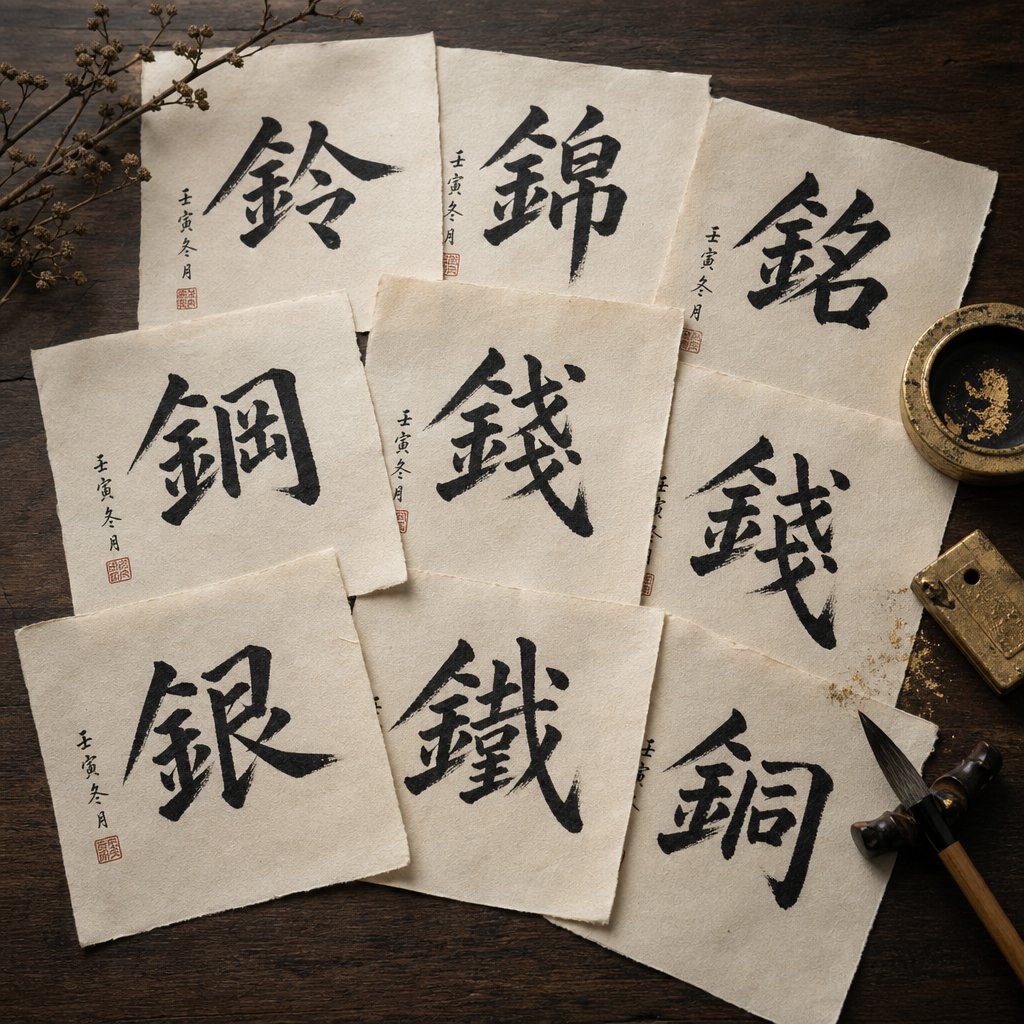
Characters built with this metal radical almost always relate to metals, metalwork, or objects made from metal. Think of 银 (silver), 铁 (iron), 铜 (copper), 钟 (bell/clock), 镜 (mirror), and 针 (needle). For naming purposes, this radical connection is powerful. Parents can choose characters that carry the elemental energy of gold and metal without using the character 金 directly. Characters like 铭 (inscribed), 锦 (brocade), and 钰 (precious jade-metal) all contain the gold radical, linking them to the metal element while offering distinct poetic meanings.
This radical system is what gives Chinese naming its remarkable depth. A single character can simultaneously invoke the metal element for cosmological balance, carry a specific poetic meaning for personal aspiration, and contribute a pleasing sound to the full name. The gold radical acts as an invisible thread connecting dozens of naming characters back to the same elemental source, each one refracting the idea of gold through a different lens of meaning.
The Five Elements System and Gold in Name Selection
That invisible thread connecting gold-radical characters to a shared elemental source is not just a linguistic curiosity. It is part of a much larger cosmological framework that has guided Chinese naming for over two thousand years. The system is called Wuxing (五行), and it governs which characters parents select, why they select them, and what kind of balance they are trying to achieve in a child's life.
Imagine you are building a house. You would not construct it entirely from one material. You need flexibility, strength, insulation, and flow. The Five Elements system works on the same principle, except the house is a human life, and the materials are five phases of cosmic energy. Gold in Mandarin, 金 (jīn), represents one of those five phases, and its presence or absence in a person's birth chart can directly determine whether gold-radical characters appear in their name.
How the Metal Element Shapes Name Selection
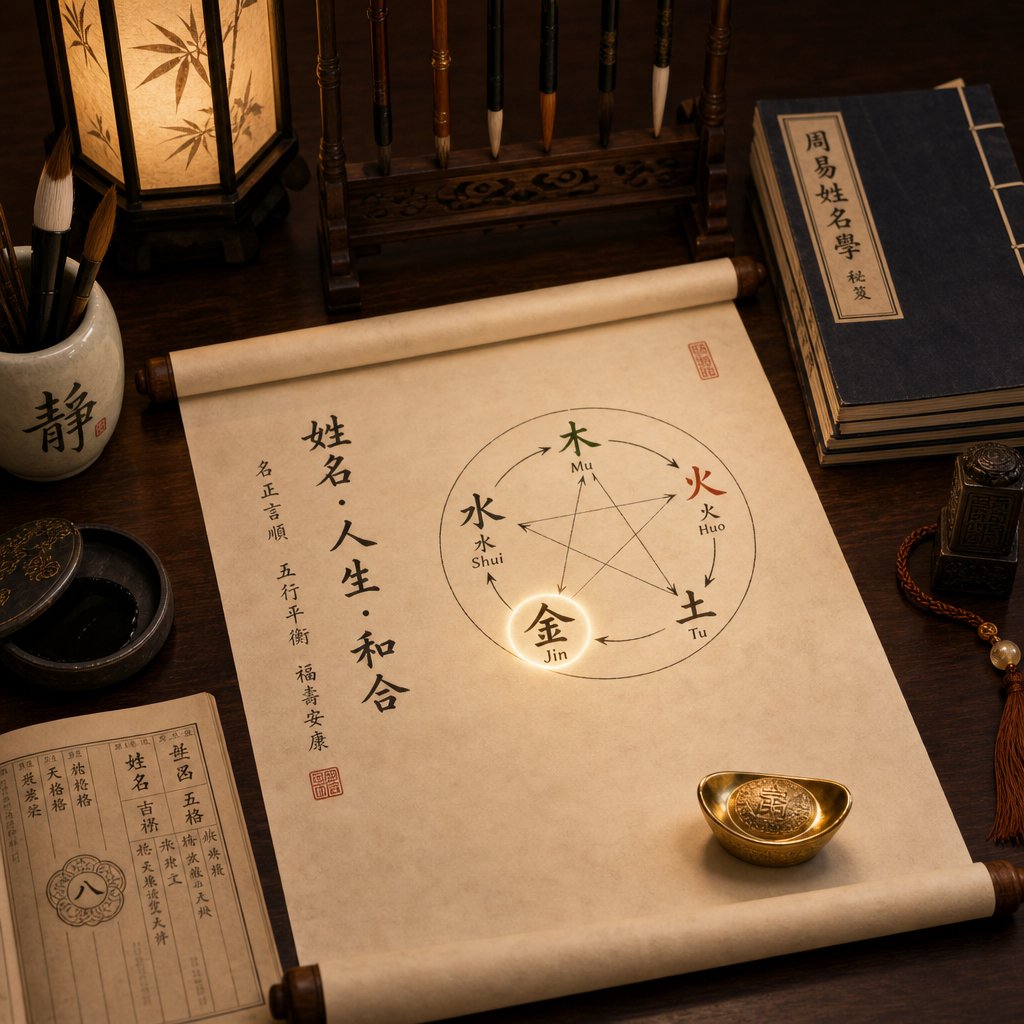
Wuxing is often translated as "Five Elements," but this is slightly misleading. The character 行 (xíng) means "movement" or "phase," not "element" in the chemical sense. As MingShu explains, Wuxing is better understood as Five Movements, five fundamental patterns of energy describing how the universe transforms. These five phases are Wood (木), Fire (火), Earth (土), Metal (金), and Water (水). They are not static building blocks but dynamic, interacting forces that generate and regulate each other in continuous cycles.
Each phase carries a distinct set of associations that extend far beyond its literal material. The metal element chinese names draw upon connects to a rich web of correspondences developed over millennia of Chinese cosmological thought. Here are the key associations of the Metal/Gold element:
- Season: Autumn, the time of harvest and letting go
- Direction: West
- Color: White and metallic tones
- Virtue: Righteousness (义, yì) and moral clarity
- Planet: Venus (金星, jīnxīng, literally "gold star")
- Organ: Lungs and large intestine
- Quality: Contracting, refining, precision, decisiveness
- Energy: Cutting away excess, honing to clarity
Notice how these associations paint a personality profile. A person with strong Metal energy is decisive, principled, and precise. They set clear boundaries and refine their character with discipline. When parents choose metal element chinese names, they are not just invoking wealth. They are wishing for a child who embodies righteousness, who can cut through confusion, and who possesses the inner strength to stand firm in their convictions.
The metal phase also exists in dynamic relationship with the other four. In the Generating Cycle (相生), Earth bears Metal, meaning Earth energy supports and creates Metal energy. Metal in turn generates Water. In the Controlling Cycle (相克), Metal cuts Wood, while Fire melts Metal. These relationships matter for naming because a child's chart must balance all five phases. Too much of one element without its natural regulator creates imbalance.
Birth Charts and Elemental Balance in Naming
So how do parents actually determine whether their child needs gold in their name? The answer lies in the BaZi (八字) system, literally meaning "Eight Characters." This is the birth chart method that has guided chinese five elements naming for centuries.
A BaZi chart is calculated from four data points: the baby's birth year, month, day, and hour. Each of these four time units produces a "pillar" consisting of two characters, one Heavenly Stem and one Earthly Branch, giving eight characters total. Every one of these eight characters carries elemental associations, creating a unique map of the five phases present at the moment of birth.
A naming specialist reads this chart looking for three things, as outlined by ShenShu's naming guide:
- The Day Master: The core element representing the child's self, which anchors the entire analysis
- Dominant elements: Energies that are overly abundant and may need to be drained or controlled
- Missing or weak elements: Phases of energy that are absent or insufficient, potentially requiring supplementation through name characters
Here is where gold in the Chinese language becomes a practical naming tool rather than just a symbol. If a child's birth chart reveals a deficiency in Metal energy, the child might struggle with discipline, boundary-setting, or decisiveness as they grow. To address this, parents introduce characters carrying Metal energy into the name. Characters with the gold radical (金 or 钅) are the most direct way to do this, though the character's meaning, sound, and calligraphic balance must also align.
A common scenario: imagine a baby with a Wood Day Master born in autumn. Autumn is Metal season, and Metal controls Wood in the Controlling Cycle. If the chart already has strong Metal pressure bearing down on a weak Wood Day Master, adding more Metal through the name would actually harm the child's chart balance. In that case, the naming direction might lean toward Water or Wood characters instead, to support and nourish the Day Master.
This is why experienced naming practitioners emphasize that a missing element is only useful when it genuinely supports the whole chart. Simply patching in whatever is absent can create new imbalances. The process requires reading the full picture, not just checking boxes.
Chinese astrology adds another layer. The child's birth year animal interacts with elemental associations too. A child born in a Metal year (such as years ending in 0 or 1 in the Gregorian calendar) already carries Metal energy from their year pillar. Doubling down with heavy Metal characters in the name might tip the balance toward rigidity rather than strength. Conversely, a child born in a Wood or Fire year might benefit greatly from Metal supplementation, since Fire melts Metal and Wood is cut by Metal, creating complex interactions that a skilled practitioner navigates carefully.
The practical takeaway? Gold-meaning characters in Chinese names are not decorative choices. They are functional components in an elemental architecture designed to give a child the best possible energetic foundation. The beauty of this system is that it transforms naming from a matter of personal taste into a deliberate act of cosmic alignment, where every stroke of the brush carries intention rooted in thousands of years of observation about how natural forces shape human lives.
With this elemental framework in place, the question becomes: which specific characters carry this Metal energy, and how do their individual meanings refine the broad symbolism of gold into something personal and precise?
Chinese Characters That Carry Gold Meaning in Names
The answer is not a single character but an entire family of them. Chinese for gold extends well beyond 金 itself. Because the gold radical (钅 or 金) appears inside hundreds of characters, parents have a rich palette of options, each one channeling Metal energy through a distinct shade of meaning. Some evoke raw prosperity. Others suggest refinement, permanence, or moral strength. The character you choose shapes not just the elemental balance of a name but its poetic resonance.
Think of it this way: 金 is the root note, and every gold-radical character is a chord built on top of it. Each chord carries a different emotional color while remaining anchored to the same elemental foundation. Below is a breakdown of the most commonly used gold chinese symbol characters in naming, with pronunciation guides designed for English speakers.
Characters with the Gold Radical for Names
The 金字旁 (jīn zì páng), or "gold character on the side," is the compressed form of 金 that appears as a left-side component in compound characters. When you see 钅 tucked into the left of a character, you know it belongs to the metal family. For naming purposes, these gold radical chinese characters carry the elemental weight of Metal while offering meanings far more specific than "gold" alone.
Here is a reference table of the most popular chinese characters meaning gold used in personal names:
| Character | Pinyin | English Pronunciation Guide | Meaning | Naming Connotation |
|---|---|---|---|---|
| 金 | jīn | Sounds like "jean" but shorter, with a high flat tone | Gold, metal | Direct invocation of wealth, permanence, and noble character; used in both given names and surnames |
| 鑫 | xīn | Sounds like "shin" without the h, high flat tone | Prosperous, flourishing (triple gold) | Intensified prosperity; suggests abundance multiplied threefold; popular in business names and given names alike |
| 铭 | míng | Sounds like "ming" as in "flamingo," rising tone | Inscribed, engraved | Something worth remembering forever; suggests a person whose words and deeds leave lasting marks |
| 锦 | jǐn | Sounds like "jean" but with a dipping tone | Brocade, splendid | Elegance, a beautiful and colorful life; evokes fine silk woven with gold thread |
| 钰 | yù | Sounds like "you" but shorter, with a falling tone | Precious metal, treasure | Something rare and cherished; combines the preciousness of jade with the strength of metal |
| 銮 | luán | Sounds like "lwan" with a rising tone | Imperial bells, imperial carriage bells | Regal authority and grace; historically associated with the emperor's procession |
| 镇 | zhèn | Sounds like "jun" with a falling tone, tongue curled back | Stabilize, guard, town | Steadiness and protective strength; a person who anchors and calms those around them |
| 钊 | zhāo | Sounds like "jow" (rhymes with "cow"), high flat tone | Encourage, urge forward | Motivation and drive; suggests someone who inspires others to action |
You'll notice that each character carries a personality. 铭 is contemplative and lasting. 钊 is active and forward-driving. 锦 is aesthetic and graceful. This range allows parents to match the gold element to the specific qualities they hope their child will embody, rather than defaulting to a generic wish for wealth.
Compound Gold Characters and Intensified Meaning
Among all gold chinese symbol characters used in names, 鑫 (xīn) deserves special attention. Look at its structure: it is literally three 金 characters stacked together, two on the bottom and one on top, like a pyramid of gold. This visual tripling is not accidental. In Chinese character construction, repeating a component intensifies its meaning. Just as 木 (wood) becomes 森 (forest) when tripled, 金 becomes 鑫 when stacked three times, transforming simple "gold" into "overflowing prosperity."
The character 鑫 appears frequently in business names across China, from restaurants to investment firms, because its visual structure literally looks like gold piling up. In personal names, it carries the same energy: abundance that builds upon itself, wealth that generates more wealth. Parents choosing 鑫 are making a bold statement. They are not wishing for modest comfort but for prosperity that compounds and grows.
The metal radical also appears in characters that might surprise you. 错 (cuò, mistake) contains the gold radical because it originally referred to the craft of inlaying gold or silver onto bronze surfaces. 镜 (jìng, mirror) has it because ancient Chinese mirrors were made from polished copper. These etymological connections reveal how deeply metal permeated daily life in ancient China, but for naming purposes, parents focus on characters whose meanings carry positive weight.
A few practical notes on selecting from this palette:
- Stroke count matters. Characters like 鑫 (24 strokes) and 銮 (traditional form, 22 strokes) are calligraphically complex. Some parents prefer simpler characters like 铭 (11 strokes) or 钊 (7 strokes) for ease of writing.
- Simplified vs. traditional forms differ. In mainland China, the gold radical appears as 钅 (simplified). In Taiwan and Hong Kong, it retains its full form 釒. This affects how the character looks on paper and how many strokes a child will need to write their name.
- Sound combinations require care. A character's tone must harmonize with the surname and any other given-name character. Two consecutive first-tone characters (like 金 + 鑫) can sound monotonous in Mandarin, so parents often pair gold characters with characters in different tones.
Each of these characters functions as a building block. On its own, a single character carries meaning. But Chinese given names typically combine two characters (or pair one character with a surname), creating layered significance where the gold element interacts with other qualities like ambition, wisdom, or beauty. How those combinations play out depends heavily on whether the name is intended for a son or a daughter, a distinction shaped by centuries of gendered naming conventions.
Male Names Meaning Gold and Their Significance
Those gendered naming conventions run deep. In Chinese tradition, characters chosen for boys tend to emphasize strength, ambition, moral fortitude, and enduring value. Gold-radical characters fit this mold naturally. Metal is hard. It endures. It cuts through obstacles. Characters like 鑫, 铭, 钊, and 金 itself are traditionally favored for male names because they project exactly the qualities parents hope a son will carry into the world: resilience, drive, and a life that holds its value over time.
This does not mean these characters are exclusively male. But understanding the traditional logic helps you see why certain combinations appear again and again in boy names that mean gold across generations of Chinese naming.
Traditional Boy Names with Gold Characters
The convention works like this: a gold-radical character provides the elemental and symbolic foundation, while a second character adds direction, specifying what kind of strength or ambition the parents envision. Think of the gold character as the material and the companion character as the shape. Together, they create something more precise than either could alone.
For example, pairing 金 (gold) with 鹏 (péng, the mythical roc bird) creates 金鹏 (Jīnpéng). The roc is a legendary bird known for its ability to fly high and travel great distances, symbolizing someone with the strength and vision to achieve great things. Adding 金 in front intensifies this: a golden roc, ambition made precious and enduring. The name suggests not just lofty goals but the substance to back them up.
Similarly, 铭志 (Míngzhì) combines "inscribed" with "purpose" or "will." The result is a name meaning "purpose engraved in metal," a determination so deep it cannot be erased. The metal radical in 铭 does double duty here, providing both elemental balance and a metaphor for permanence.
Here is a curated list of male names meaning gold, with pronunciation guides and meaning breakdowns:
- 金鹏 (Jīnpéng) - Pronounced "jean-pung" (high flat tone + rising tone). Meaning: golden roc. Connotation: soaring ambition backed by enduring substance. The roc represents fearless upward progress.
- 铭志 (Míngzhì) - Pronounced "ming-jir" (rising tone + falling tone). Meaning: inscribed purpose. Connotation: unshakeable determination, a will carved into metal that time cannot wear away.
- 鑫磊 (Xīnlěi) - Pronounced "shin-lay" (high flat tone + dipping tone). Meaning: triple gold + stacked stones. Connotation: prosperity built on a rock-solid foundation, wealth that is both abundant and stable.
- 金辉 (Jīnhuī) - Pronounced "jean-hway" (high flat tone + high flat tone). Meaning: golden radiance. Connotation: a person whose brilliance and honor shine outward, bringing light to those around them.
- 钊勇 (Zhāoyǒng) - Pronounced "jow-yong" (high flat tone + dipping tone). Meaning: encourage + courage. Connotation: someone who inspires bravery in others while embodying it themselves. Double forward energy.
- 铭哲 (Míngzhé) - Pronounced "ming-juh" (rising tone + rising tone). Meaning: inscribed wisdom. Connotation: deep intelligence that leaves a lasting mark, a thinker whose insights endure.
- 金瑞 (Jīnruì) - Pronounced "jean-ray" (high flat tone + falling tone). Meaning: golden auspiciousness. Connotation: good fortune made tangible and lasting, a life blessed with both luck and substance.
- 鑫宇 (Xīnyǔ) - Pronounced "shin-you" (high flat tone + dipping tone). Meaning: triple prosperity + universe. Connotation: boundless abundance, wealth as expansive as the cosmos itself.
Modern Male Gold Names Gaining Popularity
Contemporary parents are not abandoning gold characters, but they are pairing them differently. Where older generations might have chosen bold, declarative combinations like 金龙 (Golden Dragon) or 金刚 (Diamond/Indestructible), modern naming trends lean toward subtlety. Characters like 铭 and 钰 are gaining ground over 金 used directly, because they carry the metal element without the overt "gold" meaning that some younger parents find too literal.
Names like 铭轩 (Míngxuān, "inscribed elegance," pronounced "ming-shwen") and 钰辰 (Yùchén, "precious treasure + celestial," pronounced "you-chun") reflect this shift. They embed the gold radical quietly, letting the Metal energy work beneath the surface while the overall name projects sophistication rather than raw wealth. The metal element in naming still represents nobility and prosperity, but the expression has become more refined.
You'll also notice that male names meaning golden increasingly combine gold-radical characters with nature imagery. 铭泽 (Míngzé, "inscribed + marshland/grace") pairs metal permanence with water nourishment. 鑫林 (Xīnlín, "triple gold + forest") balances metal abundance with wood vitality. These combinations show parents thinking in Five Elements terms, using the name itself to create internal elemental harmony rather than relying solely on a single dominant element.
The key principle across both traditional and modern approaches remains the same: a gold character provides the anchor of strength and value, while the companion character gives that strength a specific direction. Whether the direction is ambition, wisdom, courage, or grace depends entirely on what the parents envision for their son's life.
This gendered logic has a counterpart. The same gold-radical characters take on different resonances when paired with characters traditionally associated with femininity, elegance, and beauty, creating an entirely different set of naming possibilities for daughters.
Female Gold Names and Gender Traditions
Where male gold names lean toward force and forward motion, girl names meaning gold tend to channel the element's other face: its luster, its preciousness, its association with things rare and beautiful. The same metal radical carries a completely different emotional register when paired with characters evoking grace, elegance, or delicate beauty. This is not a lesser use of gold. It is a different facet of the same gem, one that emphasizes refinement over raw power and treasured rarity over sheer endurance.
Traditional Chinese naming conventions draw a clear line here. Characters like 锦 (brocade), 钰 (precious treasure), and 銮 (imperial bells) gravitate toward female names because their meanings align with qualities historically prized in daughters: elegance, inner worth, and a beauty that carries cultural weight. The chinese symbol for golden, when filtered through these characters, becomes less about conquest and more about something worth cherishing.
Gold Characters Traditionally Used for Girls
The logic is rooted in what each character evokes beyond its elemental classification. Consider 锦 (jǐn). Its literal meaning is brocade, the richly patterned silk fabric woven with gold and silver thread that was once reserved for royalty. A name containing 锦 does not say "strong as metal." It says "a life as beautiful and intricate as the finest silk," a wish for a daughter whose existence is colorful, layered, and splendid. The gold radical sits inside the character quietly, providing Metal energy without announcing it.
钰 (yù) works differently. It combines the gold radical with 玉 (jade), creating a character that means "precious metal" or "treasure." Jade already carries enormous weight in Chinese culture as a symbol of virtue and beauty. Fusing it with the metal radical produces something doubly precious: a treasure that is both beautiful and strong, delicate in appearance but enduring in substance. Parents choosing 钰 for a daughter are saying she is valuable in every sense.
銮 (luán) carries imperial resonance. It refers to the bells hung on the emperor's carriage, which rang with a clear, musical tone as the procession moved. For a girl's name, it suggests regal grace and a voice or presence that commands attention through beauty rather than volume. The sound itself is melodic in Mandarin, making it phonetically pleasing in name combinations.
Here are female names meaning golden that illustrate how these characters work in practice:
- 锦瑶 (Jǐnyáo) - Pronounced "jean-yow" (dipping tone + rising tone). Meaning: splendid brocade + precious jade. A name suggesting a life of beauty and rare worth, like a tapestry woven with jewels.
- 钰琳 (Yùlín) - Pronounced "you-lin" (falling tone + rising tone). Meaning: precious treasure + fine jade. Doubles down on preciousness, emphasizing that the bearer is something rare and irreplaceable.
- 銮凤 (Luánfèng) - Pronounced "lwan-fung" (rising tone + falling tone). Meaning: imperial bells + phoenix. Combines regal authority with the mythical bird symbolizing feminine power and renewal.
- 锦萱 (Jǐnxuān) - Pronounced "jean-shwen" (dipping tone + high flat tone). Meaning: brocade + daylily (the "forget-worry" flower). A wish for a beautiful life free from sorrow.
- 钰涵 (Yùhán) - Pronounced "you-hahn" (falling tone + rising tone). Meaning: precious metal + contain/encompass. Suggests inner depth and the capacity to hold wisdom gracefully.
- 金萍 (Jīnpíng) - Pronounced "jean-ping" (high flat tone + rising tone). Meaning: gold + duckweed. A traditional name evoking golden beauty that moves freely and gracefully through life.
- 铭珊 (Míngshān) - Pronounced "ming-shahn" (rising tone + high flat tone). Meaning: inscribed + coral. Something precious from the deep, permanently etched in memory.
- 鑫怡 (Xīnyí) - Pronounced "shin-ee" (high flat tone + rising tone). Meaning: triple prosperity + joy. Abundant happiness, a life overflowing with contentment.
Notice the pattern. The companion characters lean toward nature imagery (flowers, jade, coral), emotional qualities (joy, containment), or mythical femininity (phoenix). The gold-radical character provides the elemental backbone while the second character sets the aesthetic tone.
Breaking Gender Conventions in Modern Naming
These traditional boundaries are shifting. Research on Chinese naming trends shows that popular characters for men and women have become more gender-neutral over time, particularly after the 1980s. Daughters are increasingly given characters once reserved for sons, including those suggesting ambition, strength, and intellectual achievement. The reverse is slower but happening too.
For gold-radical characters specifically, this means 铭 (inscribed) and 鑫 (triple prosperity) now appear regularly in female names. A generation ago, 铭 was considered firmly masculine because of its association with lasting achievement and public legacy. Today, names like 铭萱 (Míngxuān) and 铭雅 (Míngyǎ, "inscribed elegance") use it comfortably for girls, reframing "lasting inscription" as wisdom and grace rather than conquest.
Regional differences accelerate this blurring. In Taiwan, where naming conventions tend to be slightly more fluid, characters like 鑫 appear in female names more frequently than in mainland China. Diaspora communities in Southeast Asia, North America, and Australia often select gold characters based on meaning and sound alone, with less attention to traditional gender coding. A character considered strongly masculine in Beijing might carry no gendered weight for a family in Vancouver choosing a Chinese middle name for their daughter.
Gender prediction research confirms this complexity. A study analyzing over 30 million Chinese names found that while certain characters remain strongly gendered, a growing proportion of names fall into gender-neutral territory, with between 40% and 60% female usage. Gold-radical characters sit in an interesting position within this spectrum: some (like 钰) lean female, others (like 钊) lean male, and several (like 铭 and 鑫) are moving toward the center.
The practical implication? If you are choosing a gold-meaning name for a daughter, you are not limited to the traditionally feminine options. The full palette of gold-radical characters is available. What matters more than gender convention is whether the character's meaning resonates with your hopes for your child, whether its tone harmonizes with the surname, and whether it provides the elemental balance the birth chart requires.
Gold characters in female names carry one additional layer of meaning worth noting. In a culture where daughters were historically undervalued, naming a girl with characters meaning "precious," "treasure," or "splendid" is itself a statement. It declares that this child is golden, that her worth is self-evident and enduring. The metal radical does not just balance elements. It asserts value.
Of course, not everyone encounters 金 as a given-name character. For millions of people across East Asia, 金 is the first thing anyone sees in their name because it is their surname, carrying a completely different set of historical and cultural implications.
The Surname 金 Jin and Its Distinct Story
For millions of people across East Asia, 金 is not a character they choose. It is the character they inherit. The jin chinese surname meaning is "gold," and it ranks among the most common family names in the Chinese-speaking world, listed 29th in the classical Hundred Family Surnames text and currently ranked around the 64th most common Chinese surname. But the gold surname chinese origin story is not a single thread. It is a braid of multiple lineages, dynasties, and even ethnic groups that converged on the same character across thousands of years.
Origins and History of the Surname 金
The oldest origin legend traces the surname back over 4,000 years to Shao Hao (少昊), a son of the Yellow Emperor. According to tradition, on the day Shao Hao was installed as leader, a golden phoenix descended and perched on a nearby rooftop. His followers took this as an auspicious sign and adopted gold as their tribal emblem, renaming him Jin Tian Shi ("golden skies"). Some of his descendants later shortened this to Jin as their surname, establishing the earliest known branch of the family in what is now Qufu, Shandong province.
But the surname did not stay confined to one lineage. Multiple historical events fed new branches into the Jin family tree:
- The Xiongnu connection: During the Han dynasty, Jin Midi (金日磾), a Xiongnu prince, received the surname 金 from Emperor Wu as a mark of imperial favor. His descendants carried the name forward for generations.
- The Jurchen Jin dynasty (1115-1234): After the fall of this dynasty, some descendants of the ruling Wanyan clan adopted 金 as their Chinese surname, directly referencing their dynastic name.
- The Manchu Aisin Gioro clan: Following the collapse of the Qing dynasty in 1912, members of the imperial Aisin Gioro family adopted 金 as their surname because "Aisin" means "gold" in the Manchu language.
- Korean-Chinese families: The Korean surname Kim (김) uses the identical character 金. Kim is the most common surname in Korea, carried by roughly 20% of South Korea's population, making 金 one of the most widely held surnames in all of East Asia.
When the Qing dynasty fell in 1912, the imperial Aisin Gioro clan needed Chinese surnames. They chose 金 because their Manchu clan name "Aisin" had always meant gold, turning a dynastic identity into a family name that millions now carry.
This layered history means that two people surnamed 金 may share no ancestral connection whatsoever. One family's gold surname might trace to ancient Shandong, another to Manchu royalty, and a third to Korean heritage. The chinese gold symbol 金 serves as a meeting point for vastly different histories.
How Surname Gold Differs from Given Name Gold
Here is where the distinction matters for naming. When 金 sits in the surname position, it already saturates the name with Metal energy and gold symbolism. A person named 金鑫 (Jīn Xīn) would have gold in their surname and triple-gold in their given name, creating what naming practitioners consider redundant and potentially imbalanced. The elemental architecture becomes lopsided, like building a house entirely from steel with no flexibility or warmth.
Families surnamed 金 typically steer their children's given names toward complementary elements rather than doubling down on metal. Water characters (润, 泽, 涵) nourish without clashing. Wood characters (林, 森, 萱) provide growth energy that Metal can shape. This is not a rigid rule, but experienced naming consultants note that pairing a given name with the 金 surname requires careful attention to sound flow against the level first tone and stroke-count balance with the surname's eight strokes.
Notable bearers illustrate the range. Jin Yong (金庸), the pen name of Louis Cha, became the most widely read Chinese-language fiction author of the 20th century. Jin Xing (金星) is a celebrated dancer and television host. The physicist Deborah Jin (金秀兰) made groundbreaking contributions to quantum physics. Across literature, science, and performance, the surname carries its golden weight without needing reinforcement in the given name.
The surname also sounds different depending on where you are. In Cantonese-speaking Hong Kong, it becomes Kam. In Hokkien-speaking communities across Southeast Asia, it is Kim. In Korea, it is Kim as well, though the cultural context shifts entirely. These regional pronunciations shape how diaspora families experience the name and how they pair it with given-name characters that must sound right in their local dialect, not just in Mandarin.
This regional dimension extends far beyond surnames. How gold-meaning names are perceived, selected, and used varies dramatically depending on whether you are in Beijing, Taipei, Singapore, or San Francisco, each community bringing its own conventions and pressures to the naming process.
Modern Usage Across Regions and Diaspora Communities
That regional dimension is not just a footnote. It reshapes everything about how chinese gold names modern families choose actually function in daily life. A name that sounds prestigious in Shanghai might feel old-fashioned in Taipei. A character considered perfectly balanced in Singapore might carry unintended associations in Hong Kong. And for families living outside Asia entirely, the question becomes even more layered: how do you honor the chinese symbol gold carries while navigating a world where your child's name will be spoken, spelled, and understood in English most of the time?
The answer depends on where you are, which script system you use, and how your community relates to tradition itself.
Regional Differences Across Chinese-Speaking Communities
Chinese naming traditions today vary more than outsiders might expect. The language may share a common written root, but naming conventions have diverged significantly across political and cultural boundaries over the past century. Gold-radical characters sit at an interesting crossroads in this divergence: universally understood in meaning, but perceived differently in terms of style, formality, and generational appropriateness.
Here is how gold-meaning names land in each major Chinese-speaking region:
- Mainland China: Gold-radical characters remain widely used but have shifted in style. Direct use of 金 in given names is now considered somewhat traditional, even old-fashioned, among urban parents. Characters like 铭 (inscribed) and 锦 (brocade) are far more popular because they carry the metal element subtly. The name "Jincheng" (锦程), rooted in the idiom meaning "splendid prospects," appeared on trending newborn name lists across multiple provinces recently, showing that gold-radical characters thrive when wrapped in literary allusion rather than stated directly. Post-1990s parents increasingly draw from classical poetry and philosophy when selecting names, preferring characters that feel cultured rather than bluntly aspirational.
- Taiwan: Traditional characters remain standard, meaning the full-form gold radical (釒) appears in names rather than the simplified 钅. This affects visual aesthetics and stroke count. Taiwanese naming tends to favor softer, more literary gold characters like 錦 (brocade) and 鈺 (precious). The naming culture here leans slightly more gender-fluid, with characters like 鑫 appearing in both male and female names more freely than on the mainland. Five Elements consultation remains common but is often blended with Taiwanese folk religion practices.
- Hong Kong: Cantonese pronunciation reshapes which gold characters feel natural in names. 金 becomes "Gam" and 鑫 becomes "Yam" in Cantonese, producing different phonetic textures than Mandarin. Hong Kong naming conventions tend toward practicality, with parents considering how a name will sound in both Cantonese and English. Gold-radical characters are neither trendy nor outdated here; they occupy a stable middle ground. The traditional script is standard, and naming professionals remain widely consulted.
- Singapore and Malaysia: These communities switched to simplified Chinese characters as China's global influence grew, aligning their written standard with the mainland. However, naming practices blend Chinese, Malay, and English conventions. Many Singaporean Chinese families give children both a Chinese name and an English name at birth, with the Chinese name sometimes appearing only on official documents. Gold-radical characters carry strong positive associations here, particularly 鑫, which is extremely popular in business-oriented families.
A pattern emerges across all these regions: the raw character 金 used directly in given names feels increasingly dated, while gold-radical characters embedded in poetic or literary combinations feel contemporary. The metal element itself has not lost its appeal. The delivery method has simply grown more sophisticated.
Gold Names in the Chinese Diaspora
For Chinese-heritage families in North America, Europe, and Australia, the calculus shifts again. You are no longer just choosing a name that works within Chinese phonetics and cosmology. You are choosing a name that will exist in two linguistic worlds simultaneously, often spoken aloud in English far more than in Mandarin or Cantonese.
This creates a set of practical questions that families inside Asia rarely face:
- Dual naming: Many diaspora families give their child a legal English first name and a Chinese name that functions as a middle name or exists only within the family. The Chinese name might carry the gold radical for elemental balance while the English name handles daily social interactions. This approach preserves cultural meaning without forcing a child to navigate constant mispronunciation.
- Transliteration choices: If the Chinese name is the legal name, how it romanizes matters enormously. 金 becomes "Jin" in pinyin, which English speakers can pronounce reasonably well. But 鑫 becomes "Xin," which many English speakers struggle with (the "x" in pinyin sounds like "sh" to untrained ears). Some families choose gold-radical characters partly based on how their pinyin transliteration will sound in English-speaking contexts.
- Identity and belonging: Research on Asian students in Western universities shows that many adopt English names to avoid repeated mispronunciation, while others deliberately reclaim their Chinese names as expressions of cultural identity. For diaspora families choosing gold-meaning names, this tension is present from birth. A name like 铭 (Míng) transliterates cleanly and sounds familiar to English ears. A name like 銮 (Luán) does not, which may influence character selection for families anticipating a bilingual life.
The generational dynamic matters too. First-generation immigrants often prioritize elemental balance and traditional meaning, consulting naming professionals just as they would in China. Second and third-generation families may select gold characters primarily for their meaning and family resonance, with less emphasis on birth chart calculations. The cultural knowledge does not disappear, but it becomes one factor among many rather than the governing framework.
Sounds complex? It is. But the complexity itself reflects something meaningful about how chinese naming traditions today adapt rather than vanish. Gold-radical characters have survived script reforms, political upheavals, and transoceanic migration. They persist because the underlying wish they encode, that a child's life will hold enduring value, translates across every context. The character system may shift between simplified and traditional forms, the pronunciation may change from Mandarin to Cantonese to English approximation, but the intention remains legible.
What all these regional and diaspora considerations point toward is a practical question: given everything you now understand about elemental balance, character meaning, gender conventions, and regional context, how do you actually make the decision? How do you move from cultural knowledge to a specific, balanced name that works for your child's life?
How to Choose the Right Gold Name
You have the cultural context, the elemental logic, and the character palette. The question is how to assemble all of it into a single name that actually works. Choosing a gold-meaning Chinese name is not about picking the prettiest character from a list. It is a process of elimination and alignment, where each decision narrows the field until one combination satisfies sound, meaning, element, and form simultaneously.
Think of it as tuning an instrument. Each string must be adjusted in relation to the others. A character that sounds perfect might clash elementally. One that balances the birth chart might create an unfortunate homophone. The goal is harmony across all dimensions at once.
Steps to Choose a Balanced Gold-Meaning Name
Here is a practical chinese gold name meaning guide that walks through the process from start to finish:
- Determine elemental needs from the birth chart. Before selecting any characters, calculate the child's BaZi (Eight Characters) chart using their birth year, month, day, and hour. Identify whether Metal is weak, absent, or already abundant. If the chart already has strong Metal energy, adding gold-radical characters may create imbalance rather than support. This step determines whether you should use the chinese symbol for gold at all.
- Identify the Day Master and supporting elements. The Day Master reveals which elements help and which hinder. A weak Day Master might need Metal as a resource, or it might need Metal controlled. Consult a Wu Xing chart calculator or a naming professional to interpret the relationships correctly.
- Select candidate gold characters based on meaning and intent. Once you confirm Metal is beneficial, choose from the gold-radical character palette. Consider what qualities you want the name to express. Strength and drive? Look at 钊 or 铭. Elegance and preciousness? Consider 锦 or 钰. Abundant prosperity? 鑫 makes a bold statement. Match the character's connotation to your hopes for the child.
- Check tonal harmony with the surname. Write out the full name in pinyin with tone marks. Read it aloud multiple times. A well-crafted name moves through different tones, creating a natural melodic flow that carries clearly when spoken. Avoid stacking three characters in the same tone, which sounds flat and monotonous. For example, if the surname is first tone, pair it with a rising or dipping tone gold character rather than another first-tone character.
- Screen for homophones and unintended meanings. Say the full name aloud quickly. Does it sound like any common word or phrase with negative connotations? Chinese is rich in homophones, and a name that looks elegant on paper can sound like "death" or "loss" when spoken carelessly. Test the name with native speakers from the relevant dialect region.
- Evaluate visual and calligraphic balance. Write the full name by hand. Are the characters visually balanced in stroke density? A surname with three strokes paired with a 24-stroke character like 鑫 can look lopsided. Consider how the name will appear on documents, business cards, and formal seals.
- Confirm the name works across contexts. If the child will live in a bilingual environment, check how the pinyin romanization reads in English. Test whether the name is easy to pronounce for non-Chinese speakers if that matters for your family's situation.
Common Mistakes to Avoid in Gold Name Selection
Even with a clear process, certain pitfalls catch people repeatedly. Here are the ones that matter most when working with gold-radical characters:
| Mistake | Why It Happens | How to Avoid It |
|---|---|---|
| Doubling gold with a 金 surname | Parents want to reinforce prosperity | If the surname is already 金, choose complementary elements (Water, Wood) for the given name to avoid elemental overload |
| Choosing characters solely for meaning | Ignoring sound and element dimensions | Always verify tonal flow and birth chart alignment before committing to a character based on its dictionary definition alone |
| Ignoring stroke count practicality | Complex characters look impressive | Remember your child will write this name thousands of times. A 24-stroke character is a daily burden for a six-year-old learning to write |
| Using outdated or overly literal gold names | Older naming guides suggest combinations like 金财 (gold wealth) | Modern naming favors subtlety. Embed the metal element through radical-bearing characters rather than stating "gold" directly |
| Skipping the homophone check | The name looks fine in writing | Always speak the full name aloud rapidly and ask native speakers if it sounds like anything unfortunate |
One more consideration that reference materials consistently emphasize: never rely on automated translation tools alone. A name generated by software might satisfy one dimension, typically sound, while ignoring elemental balance, calligraphic form, and cultural connotation entirely. If you are serious about how to choose a chinese name gold characters will anchor, consult someone who understands all four dimensions working together.
Professional naming consultants, character dictionaries like the Kangxi Zidian, and Five Elements calculators are all useful tools. But the most important resource is understanding. When you grasp why the metal element matters, what each gold-radical character actually means, and how sound and form interact with meaning, you stop choosing names blindly and start choosing them with intention.
That intention is what separates a name from a label. Every gold-radical character in the Chinese writing system carries thousands of years of accumulated meaning, from oracle bone carvings of metal nuggets to modern birth announcements. When you choose one of these characters for a name, you are not just picking a symbol. You are placing your child within a tradition that believes names shape destiny, that the right combination of strokes can orient a life toward strength, clarity, and enduring worth. The gold does not guarantee fortune. But it encodes a wish, and in Chinese naming, a well-encoded wish is where everything begins.
Frequently Asked Questions About Gold in Chinese Names
1. What does the character 金 mean in a Chinese name?
The character 金 (jin) means gold or metal and is one of the most symbolically rich characters used in Chinese naming. When placed in a name, it invokes wishes for prosperity, permanence, moral clarity, and enduring value. It also represents the Metal element in the Five Elements (Wuxing) system, meaning it can serve a cosmological balancing function in a child's birth chart. Parents may use 金 directly or choose from dozens of characters containing the gold radical (钅) to embed Metal energy more subtly.
2. How do Chinese parents decide to use gold-related characters in a name?
The decision typically begins with a BaZi (Eight Characters) birth chart analysis. This chart maps the five elemental energies present at the child's exact time of birth. If the chart reveals a deficiency in Metal energy, parents may introduce gold-radical characters to restore balance. However, simply adding Metal is not always beneficial. A skilled naming practitioner evaluates whether Metal supports or hinders the child's Day Master element before recommending gold characters. Beyond elemental needs, parents also consider the character's meaning, tonal harmony with the surname, stroke count, and cultural connotations.
3. What are popular Chinese boy names that mean gold?
Popular male gold-meaning names include 金鹏 (Jinpeng, golden roc symbolizing soaring ambition), 铭志 (Mingzhi, inscribed purpose suggesting unshakeable determination), 鑫磊 (Xinlei, triple gold plus stacked stones for stable prosperity), and 钊勇 (Zhaoyong, encourage plus courage). Modern trends favor subtler gold-radical characters like 铭 and 钰 over direct use of 金, pairing them with characters suggesting wisdom, nature, or expansiveness to create layered meaning.
4. Can gold-radical characters be used in female Chinese names?
Yes, and they are widely used. Characters like 锦 (jin, brocade/splendid), 钰 (yu, precious treasure), and 銮 (luan, imperial bells) traditionally appear in female names because they evoke elegance, rarity, and refined beauty rather than raw strength. Modern naming trends are also breaking traditional gender boundaries, with characters like 铭 and 鑫 now appearing regularly in girls' names across Taiwan, diaspora communities, and increasingly in mainland China. The key is pairing the gold character with companions that express the qualities parents hope their daughter will embody.
5. Is 金 (Jin) also used as a Chinese surname, and what is its origin?
Yes, 金 is a common Chinese surname ranking around 64th most common today. It has multiple origin stories: the oldest traces to Shao Hao, a legendary son of the Yellow Emperor, over 4,000 years ago. Later branches include descendants of the Jurchen Jin dynasty, Manchu Aisin Gioro clan members who adopted 金 after the Qing dynasty fell (since 'Aisin' means gold in Manchu), and Korean-Chinese families where Kim (김) uses the same character. Families with the 金 surname typically avoid doubling gold in given names, instead choosing complementary elements for balance.