What Guai Guai Really Means in Mandarin Chinese
You hear a Chinese parent gently say "guai guai" to a toddler at the park. Five minutes later, a college student blurts out the exact same phrase after seeing a shocking price tag. Same word, completely different energy. So what does guai mean in Chinese, and why does this two-syllable phrase pull double duty in such wildly different situations?
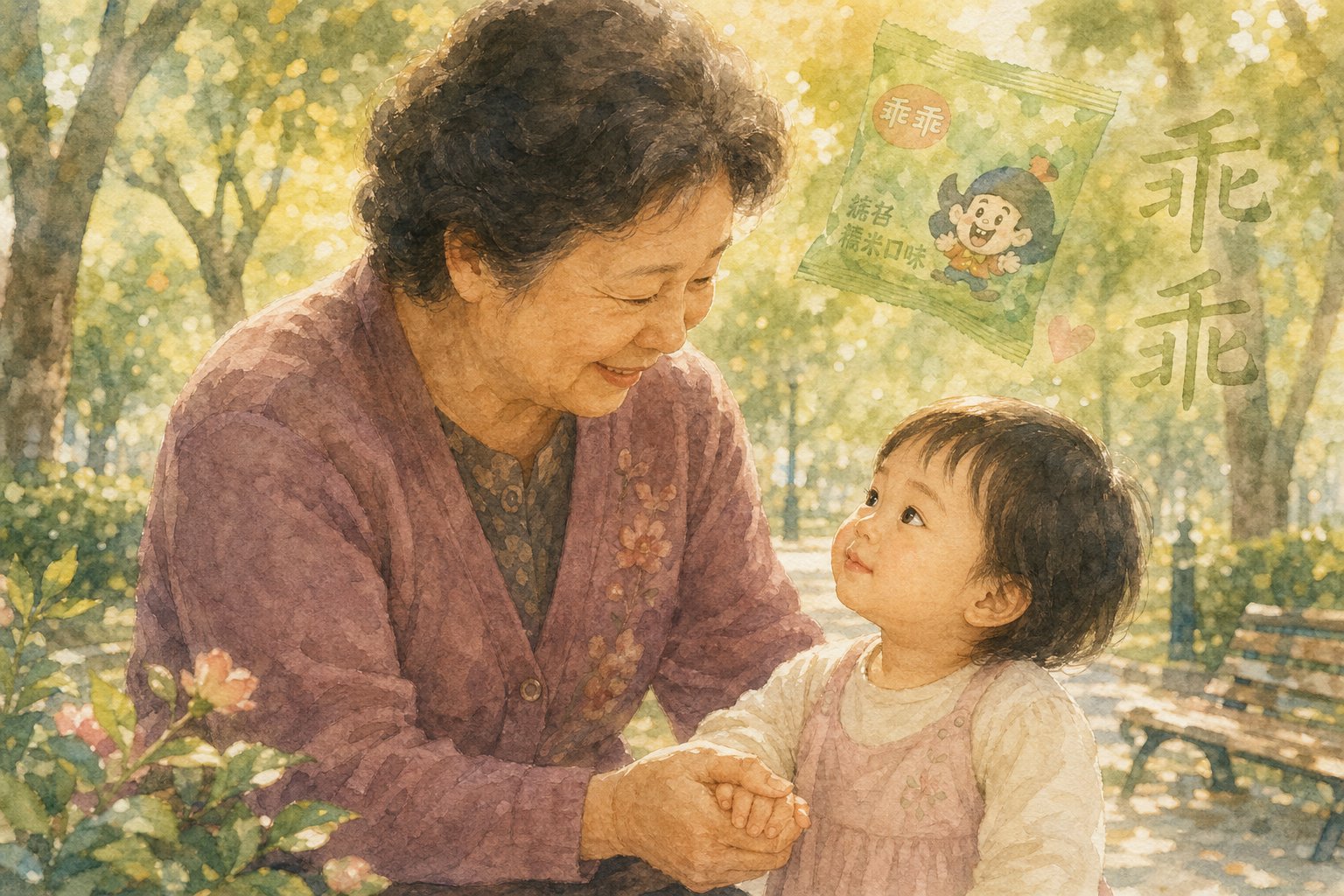
Guai guai (乖乖, guai guai) is a reduplicated Mandarin Chinese word with two core uses: (1) as an adjective meaning "well-behaved" or "obedient," often used as a term of endearment for children, and (2) as an exclamation expressing surprise or disbelief, similar to "oh my goodness" or "wow" in English.
What Does Guai Guai Mean in Chinese
At its most basic level, the guai guai meaning centers on good behavior. When a parent says it to a child, it works as both praise and instruction: "you're being good" and "be good" rolled into one soft, affectionate phrase. The ChinesePod dictionary lists its primary definitions as "well-behaved," "obediently," "darling," and "sweetie" when pronounced with two full first tones (guai guai). Shift the second syllable to a neutral tone (guai guai), and it becomes an interjection: "goodness gracious" or "oh my lord."
This dual nature makes the guai guai Chinese meaning surprisingly hard to pin down with a single English translation. Imagine a word that functions like "good girl" in one breath and "holy cow" in the next. That range is exactly what makes it fascinating for language learners and cultural observers alike.
Why This Word Carries More Weight Than Its Translation
A dictionary entry only scratches the surface here. In practice, 乖乖 is woven into the fabric of Chinese family life, carrying expectations about how children should behave, how love gets expressed, and what obedience looks like across generations. It shows up in lullabies, in scoldings, and in moments of genuine tenderness between parent and child.
Beyond the home, this word has taken on a life of its own. It's the name of one of Taiwan's most iconic snack brands. It's at the center of a workplace superstition where engineers place green snack packets on servers to keep machines "well-behaved." And in everyday conversation, it punctuates moments of shock the way "wow" or "no way" might in English.
A single reduplicated character, 乖 doubled into 乖乖, manages to encode cultural values about childhood, express raw human surprise, and even brand a corn puff snack. The guai meaning stretches far beyond what any one-word translation can capture. Understanding it means stepping into the emotional logic of Mandarin itself, where tone, context, and repetition reshape a word's entire personality.
That personality shift starts, quite literally, with tone.
Tones and Characters That Change the Meaning Entirely
In Mandarin, a single syllable can wear many masks. The romanization "guai" maps to at least three completely different characters, each with its own tone and meaning. If you've encountered this word without tone marks, like in a subtitle or a casual text message, you might have no idea whether someone is calling a child sweet or describing something monstrous. That tonal difference is everything.
First Tone Guai vs Fourth Tone Guai
The most important distinction for learners searching for the guai meaning in English comes down to two characters: 乖 (guai, first tone) and 怪 (guai, fourth tone). They share the same base romanization, but their meanings sit at opposite ends of the emotional spectrum.
乖 (guai, first tone) describes someone who is obedient, well-behaved, or sensible. According to the Mengdian Mandarin Chinese Dictionary, it can also carry older literary meanings like "contrary to" or "to separate," but in modern spoken Mandarin, it overwhelmingly means "good" in the behavioral sense. When you double it into 乖乖 (guai guai), you get the affectionate term of endearment or the exclamation of surprise covered earlier.
怪 (guai, fourth tone) is a different animal entirely. It means strange, odd, or uncanny. As a noun, it refers to monsters and demons, the kind you find in myths and ghost stories. As a verb, it means to blame someone. And as an adverb, it intensifies adjectives the way "quite" or "very" does in English. The Wisdomlib dictionary notes its Sanskrit equivalent in Buddhist texts is "vismaya," meaning wonder or astonishment.
So when someone writes "guai" without tones, you could be looking at "good child" or "strange monster." Context is your only lifeline.
How Tones Change Everything About This Word
The reduplicated forms make the contrast even sharper. 乖乖 (guai guai, both first tone) is warm and familiar. 怪怪的 (guai guai de, both fourth tone) means "kind of weird" or "a bit off," often used colloquially in Taiwan to describe something that feels slightly unsettling. Same syllable repeated, completely different vibe.
There's also a third character worth knowing: 夬 (guai, fourth tone). This one belongs to classical Chinese and appears in the I Ching (Yi Jing) as Hexagram 43, symbolizing decisiveness and breakthrough. The phrase 夬夬 (guai guai) shows up in the hexagram's line texts, where it describes resolute determination. One passage reads: "The wise with great resolution (君子夬夬) proceed alone into the rain." This usage is entirely separate from both the "obedient" and "strange" meanings, living in the domain of ancient divination rather than everyday speech.
For anyone trying to understand guais meaning across different texts, here's a side-by-side breakdown:
| Character | Pinyin | Tone | Core Meaning | Reduplicated Form | Usage Context |
|---|---|---|---|---|---|
| 乖 | guai | 1st (flat) | Obedient, well-behaved | 乖乖 (guai guai) - darling; wow | Parenting, daily speech |
| 怪 | guai | 4th (falling) | Strange, monster, to blame | 怪怪的 (guai guai de) - kind of weird | Description, mythology |
| 夬 | guai | 4th (falling) | Decisive, breakthrough | 夬夬 (guai guai) - resolutely | I Ching / classical texts |
| 拐 | guai | 3rd (dipping) | To turn, to swindle | N/A | Directions, warnings |
Notice how the third tone introduces yet another meaning: 拐 (guai) means to turn a corner or, more darkly, to kidnap or swindle. The phrase "guai tai meaning" sometimes confuses learners who mix up these tonal variants when encountering unfamiliar compounds.
The takeaway? Mandarin packs an enormous amount of semantic range into a single syllable. Four tones, four completely unrelated characters, four different worlds of meaning. When you see "guai guai" written in pinyin without diacritics, you're essentially looking at a word that could mean "good baby," "kinda creepy," or "with firm resolve," depending on which characters and tones the speaker intended.
This tonal complexity is exactly why 乖 carries such emotional weight in family settings. The word itself demands precision, and the meaning parents pour into that careful first tone shapes how children understand praise, love, and expectation from their earliest years.
Guai Guai in Chinese Parenting and Family Life
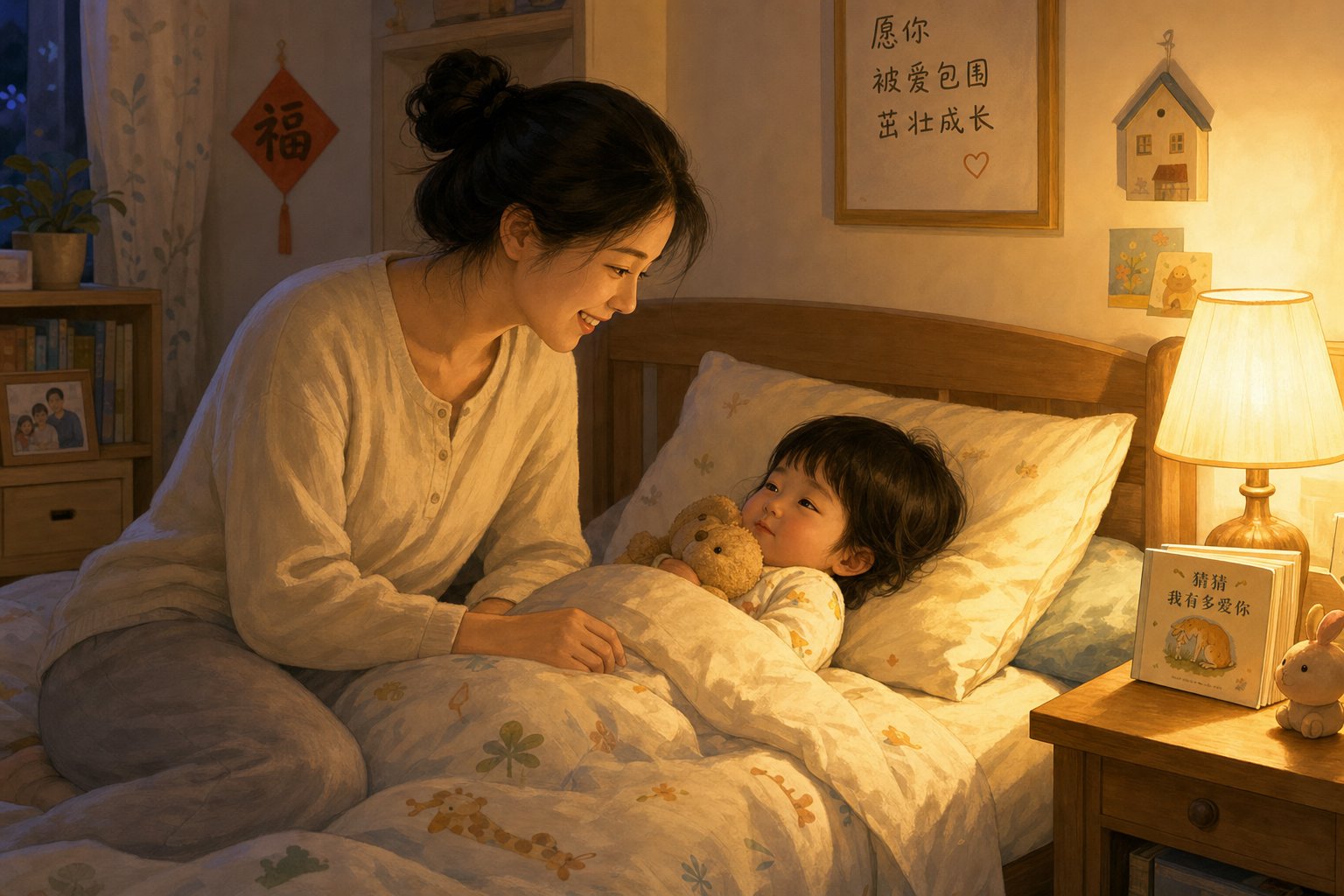
Imagine a grandmother soothing a crying toddler, a father praising his daughter for finishing homework without being asked, or a mother coaxing a reluctant child into bed. In each of these moments, the same word appears: 乖 (guai). It's the Swiss Army knife of Chinese parenting vocabulary, functioning as praise, comfort, instruction, and affection all at once.
How Chinese Parents Use Guai Guai Every Day
In Chinese-speaking households, calling a child "guai" is the most natural form of positive reinforcement. It doesn't just describe behavior; it rewards it. A child who sits quietly at dinner, shares toys without fussing, or listens to a teacher without interrupting earns this label. The word works as both an adjective ("you are guai") and a gentle command ("be guai").
Several related phrases build on this foundation, each adding a slightly different shade of meaning:
- 乖宝宝 (guai bao bao) - "good baby" or "well-behaved little one." The guai bao bao meaning combines obedience with deep affection. Parents and grandparents use it for young children who behave sweetly, and it carries a warmth that "obedient child" in English simply cannot match.
- 乖乖听话 (guai guai ting hua) - "be good and listen." The guai guai ting hua meaning is both a request and an expectation. Parents say this before leaving a child with a babysitter, at the doctor's office, or any time cooperation matters.
- 小乖乖 (xiao guai guai) - "little darling" or "little good one." The xiao guai guai meaning is purely affectionate, a pet name that wraps love and behavioral approval into three syllables. It's the kind of thing a parent whispers while tucking a child in at night.
- 小乖 (xiao guai) - a shortened, casual form. The xiao guai meaning works like a nickname, often used for the youngest child in a family or as a playful term between close relatives.
Here are real-world sentences you'd hear in any Chinese household:
- 宝贝,乖乖睡觉。(Baobei, guai guai shuijiao.) - "Sweetheart, be good and go to sleep."
- 你今天真乖!妈妈很开心。(Ni jintian zhen guai! Mama hen kaixin.) - "You were so good today! Mom is really happy."
- 乖乖坐好,不要乱跑。(Guai guai zuo hao, buyao luan pao.) - "Sit nicely, don't run around."
- 来,做个乖宝宝,把药吃了。(Lai, zuo ge guai baobao, ba yao chi le.) - "Come on, be a good baby and take your medicine."
If you've ever searched for the xiao guai Chinese meaning, you'll notice it overlaps heavily with this parenting context. The "xiao" (small) prefix softens the word further, turning behavioral praise into pure endearment.
The Emotional Weight Behind Being Called Guai
Here's where the cultural depth runs deeper than any dictionary entry suggests. In Chinese families, being called "guai" isn't just about following rules. It signals that a child is fulfilling their role within the family hierarchy, showing respect to elders, and maintaining harmony. As WildChina's cultural blog explains, there is no direct English equivalent for this concept because English-speaking cultures lack a single praise word that specifically rewards obedience as a virtue.
The word encodes expectations rooted in filial piety. A "guai" child doesn't challenge authority, doesn't create conflict, and prioritizes the family's collective peace over individual desires. When a parent says "ni zhen guai" (you're so good), they're affirming that the child has met an unspoken social contract: behave well, and you'll receive love and approval in return.
This creates a powerful emotional dynamic. Children learn early that "guai" equals loved, and "bu guai" (not guai) equals disappointing. The praise feels warm, but it also carries weight. It shapes how kids understand their worth within the family, tying good behavior directly to emotional acceptance.
That emotional charge doesn't stay confined to the home. It spills into everyday speech, where 乖乖 takes on a completely different life as a spontaneous exclamation, stripped of all parenting context and loaded instead with pure surprise.
When Guai Guai Means Wow or Oh My Goodness
Picture this: a Taiwanese office worker opens a delivery box, sees the bill inside, and mutters "guai guai" under their breath. No children are present. Nobody is being praised for good behavior. The word has shed its parenting skin entirely and become something raw and instinctive, a verbal gasp that escapes before the brain catches up.
This exclamatory function of 乖乖 is one of the most common yet least documented uses of the phrase. Textbooks rarely cover it. Translation apps often miss it. But spend any time around native Mandarin speakers, especially in Taiwan, and you'll hear it constantly.
Guai Guai as an Exclamation of Surprise
When 乖乖 works as an interjection, it drops all connection to obedience or children. Instead, it expresses a spectrum of surprise, from mild "oh wow" to full-blown "are you kidding me." The tone shifts slightly: the second syllable often lands on a neutral tone rather than a full first tone, giving it a breathier, more spontaneous quality.
Think of it as the Mandarin equivalent of "goodness gracious," "holy cow," or "oh my god," depending on intensity. It's informal, conversational, and carries zero vulgarity, which makes it safe for any audience. Grandmothers say it. Teenagers say it. News anchors occasionally let it slip on live TV.
This dual-role pattern isn't unique to 乖乖. Mandarin has several words that moonlight as interjections. 天哪 (tian na, "heavens") works similarly, as does 我的妈呀 (wo de ma ya, "oh my mother"). What makes 乖乖 distinctive is how far its exclamatory meaning has drifted from its literal one. There's no logical bridge between "well-behaved child" and "wow" unless you understand the cultural reflex: the surprise is so great that all you can do is call out to something innocent and familiar, like invoking a child's name in a moment of shock.
Related expressions follow a similar logic. The phrase 乖不得 (guai bu de), sometimes written 怪不得 with the fourth-tone character, means "no wonder" or "so that's why." The guai bu de meaning captures that moment when something puzzling suddenly clicks into place. And 奇怪 (qi guai), using the fourth-tone 怪, means "strange" or "weird." If you've wondered what does qi guai mean in Chinese, it's the go-to word for anything odd or unexpected. The qi guai meaning sits in the same emotional neighborhood as exclamatory 乖乖, both responding to something that breaks from the expected, but qi guai labels the strangeness while 乖乖 expresses the speaker's gut reaction to it.
Example Sentences You Will Actually Hear in Conversation
Here's how the exclamatory 乖乖 sounds in real life, arranged from mild surprise to full astonishment:
- Mild surprise: 乖乖,今天好热。(Guai guai, jintian hao re.) - "Wow, it's really hot today." Said casually, like noticing something slightly beyond expectations.
- Moderate disbelief: 乖乖,这个包要三万块?(Guai guai, zhege bao yao san wan kuai?) - "Oh my, this bag costs thirty thousand?" The speaker is taken aback but not completely floored.
- Strong amazement: 乖乖,你一个人把整个项目做完了?(Guai guai, ni yi ge ren ba zhengge xiangmu zuo wan le?) - "Goodness, you finished the entire project by yourself?" Genuine admiration mixed with shock.
- Full-blown shock: 乖乖不得了!他居然考上了哈佛!(Guai guai bu de liao! Ta juran kao shang le Hafo!) - "Oh my god! He actually got into Harvard!" The extended form 乖乖不得了 (guai guai bu de liao) cranks the intensity to maximum, roughly equivalent to "unbelievable" or "this is insane."
You'll notice the word appears at the start of the sentence, functioning exactly like English interjections that front-load the emotional reaction before delivering the content. It's never buried mid-sentence. It's always the first thing out of the speaker's mouth, a reflexive burst that frames everything that follows.
This exclamatory usage thrives in spoken Taiwanese Mandarin especially, where it carries a slightly folksy, down-to-earth charm. Younger speakers in Mainland China might lean toward 天哪 or 我去 for the same function, but 乖乖 remains universally understood across all Mandarin-speaking regions.
The word's ability to toggle between tender parenting language and spontaneous exclamation hints at something broader: 乖乖 belongs to the emotional vocabulary of Chinese speakers in a way that transcends any single definition. And that emotional range doesn't stop at national borders. Across different Chinese-speaking communities, the word picks up local flavors, regional slang, and even entirely new meanings shaped by dialect and geography.
Regional Differences Across Chinese-Speaking Communities
A word that means "good child" in a Beijing living room can mean something wildly vulgar in a Singapore hawker center. Chinese is not one monolithic language but a family of dialects and regional varieties, and "guai" travels through each of them picking up new baggage along the way. If you only know the standard Mandarin definition, you're missing half the story.
Guai Guai in Taiwan vs Mainland China
In both Taiwan and Mainland China, 乖乖 retains its core meaning of "well-behaved" and its exclamatory function. The differences are subtle but real. Taiwanese Mandarin speakers use the exclamatory 乖乖 more frequently and with a warmer, folksy tone. It's common across all age groups in Taiwan, from grandparents to college students. In Mainland China, younger urban speakers tend to reach for alternatives like 天哪 (tian na) or internet slang for expressing surprise, though 乖乖 remains perfectly understood.
Taiwan also has a unique cultural layer: the 乖乖 snack brand and its associated tech superstition give the word a pop-culture presence that simply doesn't exist on the mainland. When a Taiwanese person hears "guai guai," they might picture a green corn puff packet sitting on a server rack just as easily as they picture a well-behaved child. That brand association is distinctly Taiwanese.
The parenting usage, however, is nearly identical across the strait. Both Taiwanese and Mainland parents use 乖乖听话, 乖宝宝, and 小乖乖 in the same affectionate, expectation-setting way. The emotional weight of being called "guai" transcends political boundaries because it's rooted in shared Confucian family values.
Hokkien and Cantonese Variations You Should Know
Step outside standard Mandarin and into the dialect landscape, and "guai" transforms dramatically. In Singapore and Malaysia, where Hokkien, Teochew, and Cantonese mix freely with English and Malay to form local creoles, the guai meaning in Singlish carries associations that would surprise a Mandarin-only speaker.
The most straightforward crossover is guai kia. The guai kia meaning is simply "good child" or "obedient kid," combining Mandarin/Hokkien 乖 with the Hokkien word 囝 (kia, meaning child). In Singaporean English, calling someone a "guai kia" describes a rule-follower, someone who never skipped school, always did their homework, and stayed out of trouble. As The Smart Local's Singlish guide puts it, if you never ponned (skipped) class, "you were probably a real guai kia growing up." It's used with a mix of mild teasing and grudging respect.
Far less innocent is guai lan. The guai lan meaning in Hokkien is vulgar and has nothing to do with being well-behaved. According to Learn Dialect SG, guai lan (怪𡳞) literally translates to "strange penis" and is used to describe someone who is deliberately difficult, contrary, or impossible to get along with. It's the kind of word reserved for a nightmare neighbor or an aggressive driver who cuts into your lane. The guai lan Hokkien meaning sits firmly in the category of vulgarities, so using it in polite company will raise eyebrows fast. A related compound, guai lan kia meaning "difficult person" (literally "strange-penis child"), adds the Hokkien suffix 囝 to create a noun describing someone with a persistently antagonistic personality.
In Cantonese-speaking communities, particularly Hong Kong, the relevant term shifts to 鬼佬 (gwai lo). The guai lo meaning in English is "ghost man" or "foreign devil," historically used to refer to Western foreigners. A Hong Kong District Court case examined whether workplace use of "gweilo" constituted racial discrimination, noting that the term translates to "white devil" or "white ghost" but has been widely used in Hong Kong as casual shorthand for any Westerner. The court found that context determines whether the term carries derogatory intent. While some expats in Hong Kong use it self-referentially with humor, others consider it offensive. The bac guai meaning (白鬼, literally "white ghost") is a variant spelling of the same concept, sometimes romanized differently depending on the Cantonese romanization system used.
Here's a quick-reference table showing how "guai" shifts across regions:
| Term | Region | Language/Dialect | Meaning | Tone/Register |
|---|---|---|---|---|
| 乖乖 (guai guai) | Mainland China, Taiwan | Mandarin | Well-behaved; wow/oh my | Affectionate / Informal |
| 乖囝 (guai kia) | Singapore, Malaysia | Hokkien / Singlish | Good, obedient child | Casual, mildly teasing |
| 怪𡳞 (guai lan) | Singapore, Malaysia, Taiwan | Hokkien | Difficult person (vulgar) | Crude / Offensive |
| 鬼佬 (gwai lo) | Hong Kong, Guangdong | Cantonese | Foreigner (esp. Westerner) | Informal, potentially offensive |
| 白鬼 (bac guai) | Hong Kong, Cantonese diaspora | Cantonese | White foreigner | Informal, potentially offensive |
Notice the pattern: the Mandarin 乖 (first tone, obedient) and the Hokkien/Cantonese 鬼/怪 (ghost/strange) are completely different words that happen to share similar romanizations. This is exactly the kind of confusion that trips up learners who encounter "guai" in mixed-dialect environments like Singapore, where Mandarin, Hokkien, Cantonese, and English collide in a single conversation.
The regional picture reveals something important about how language communities reshape borrowed words. A term of pure tenderness in one dialect becomes a slur in another, and a casual descriptor in a third. For anyone navigating Chinese-speaking spaces beyond the textbook, knowing which "guai" you're dealing with isn't just a vocabulary exercise. It's a social survival skill.
That same adaptability shows up in one of the most unexpected places: a Taiwanese snack brand that turned the word 乖乖 into a workplace ritual practiced by engineers across the island.

The Guai Guai Snack and Taiwan's Strangest Tech Superstition
What happens when a word meaning "be good" gets printed on a bag of corn puffs and placed next to a server rack? In Taiwan, it becomes a nationwide ritual. The 乖乖 (Guai Guai) snack brand has transcended its identity as a children's treat and become something closer to a technological talisman, a good-luck charm that IT professionals, hospital technicians, and factory workers swear by.
The Guai Guai Snack Brand and Its Origin
The Guai Guai company was established in 1968 by Liao Jing Gang and his son Spencer. The family's main business was pharmaceutical importing and manufacturing, but during slow periods they needed a way to keep operations busy. So they started making snacks and confectionery. The coconut-flavored corn puffs were specifically created to be sold to children, and the name was chosen deliberately: 乖乖 means "behave" or "be good" in both Mandarin and Taiwanese, making it a playful instruction wrapped in a brand identity.
The guai meaning in Chinese, obedient and well-behaved, was baked right into the product's DNA. Parents could hand their kids a bag of Guai Guai and the name itself reinforced the message: be good. It was clever marketing for the 1960s. Nobody could have predicted what the brand would become decades later.
Today, Guai Guai corn puffs come in several flavors. The green packets are coconut butter, the yellow packets are five-spice, and seasonal varieties include chocolate, strawberry, and oolong tea. You can find them in every convenience store and supermarket across Taiwan for around NT$30 a packet. But a significant portion of the bags sold never get eaten at all.
Why Taiwanese Engineers Put Snacks on Their Servers
Here's where the guai guai meaning takes a turn nobody expected. Sometime in the early 2000s, a graduate student working on his thesis kept experiencing computer crashes. According to Irene Liao, Spencer's daughter and the company's current general manager, the student decided his device needed a talisman. Lucky charms still play a significant role in Taiwanese society regardless of industry, so the impulse was natural. He grabbed a green bag of Guai Guai, placed it on his computer, and the machine started working normally. He finished his thesis on time.
The logic was simple and linguistically elegant: the name means "be good" or "obey," so placing the bag on a machine is like telling it to behave. Green was the color of choice because, like a traffic light, green means "go." The student was in IT, his story spread by word of mouth, and the Guai Guai legend was born.
The practice spread rapidly through Taiwan's tech sector. BBC Worklife reports that green Guai Guai bags now appear on cash machines, office servers, copying machines, radio transmission towers, and hospital ventilators. Lionel Leng, an engineer at International Community Radio Taipei, described the reasoning plainly: "I saw what they did with the bags, and then I'd ask the other engineers what they were, and they would say, 'oh those are Kuai Kuai', which means 'listen to me' or 'obey', so the machines would do that."
The superstition comes with strict rules:
- Only green packets work. Yellow and red signal caution and alarm, so they're considered bad luck for electronics. The guai de meaning (乖的, "the obedient one") only transfers properly through the green packaging.
- Expired bags lose their power. Most workers swap their Guai Guai twice a year, once during Lunar New Year in February and again during Ghost Festival in July.
- Don't eat the snacks. Opening the bag or consuming the contents voids the protective warranty. The puffs must remain sealed and intact.
- The bag must be placed on or near the machine. Proximity matters. A bag in a desk drawer doesn't count.
Ting Jen-Chieh, a research fellow at Academia Sinica specializing in social psychology, confirmed that the institute's own technicians have been laying out bags of Guai Guai since 2002. His explanation cuts to the heart of why rational engineers participate in something that sounds irrational: "Some people may believe it, some may not, but we believe there is plenty of ambiguity between what is believable and what isn't, which is why it continues to be done."
The guai Chinese meaning, that core sense of obedience and good behavior, has been transferred from children to machines. It's a kind of linguistic magic: if the word can make a child behave, maybe it can make a server behave too. The company says it never promoted this use. The phenomenon grew organically, which allowed different industries to develop their own interpretations. Performing artists even bring bags overseas to protect their equipment during international tours.
In a shrewd response to the trend, Guai Guai redesigned their packaging to include a blank area where workers could write messages to their machines. They also suggested that yellow packets might be better suited for banks and financial institutions, encouraging good fortune with money. The brand has become so iconic that you can buy Guai Guai merchandise: EasyCards shaped like miniature packets, branded tote bags, and even Guai Guai wet wipes sold at Watsons pharmacy stores.
As Irene Liao put it: "This is the only place in the world where a snack brand can become a cultural phenomenon. I cannot see that happening anywhere else."
The Guai Guai superstition reveals something fascinating about how language shapes belief. A word's meaning doesn't just describe reality; it can be deployed to influence it, or at least to comfort people who fear they can't control it. That same principle, words carrying power beyond their dictionary definitions, runs through every compound and phrase built on the 乖 and 怪 characters.
Essential Guai Compounds From Yao Guai to Qi Guai
The characters 乖 and 怪 don't just stand alone. They anchor dozens of compound words that stretch across mythology, daily conversation, pop culture, and even children's safety warnings. If you've been building your understanding of the guai guai meaning from the ground up, these compounds are where the vocabulary really starts branching out.
Yao Guai and the Monster Connection
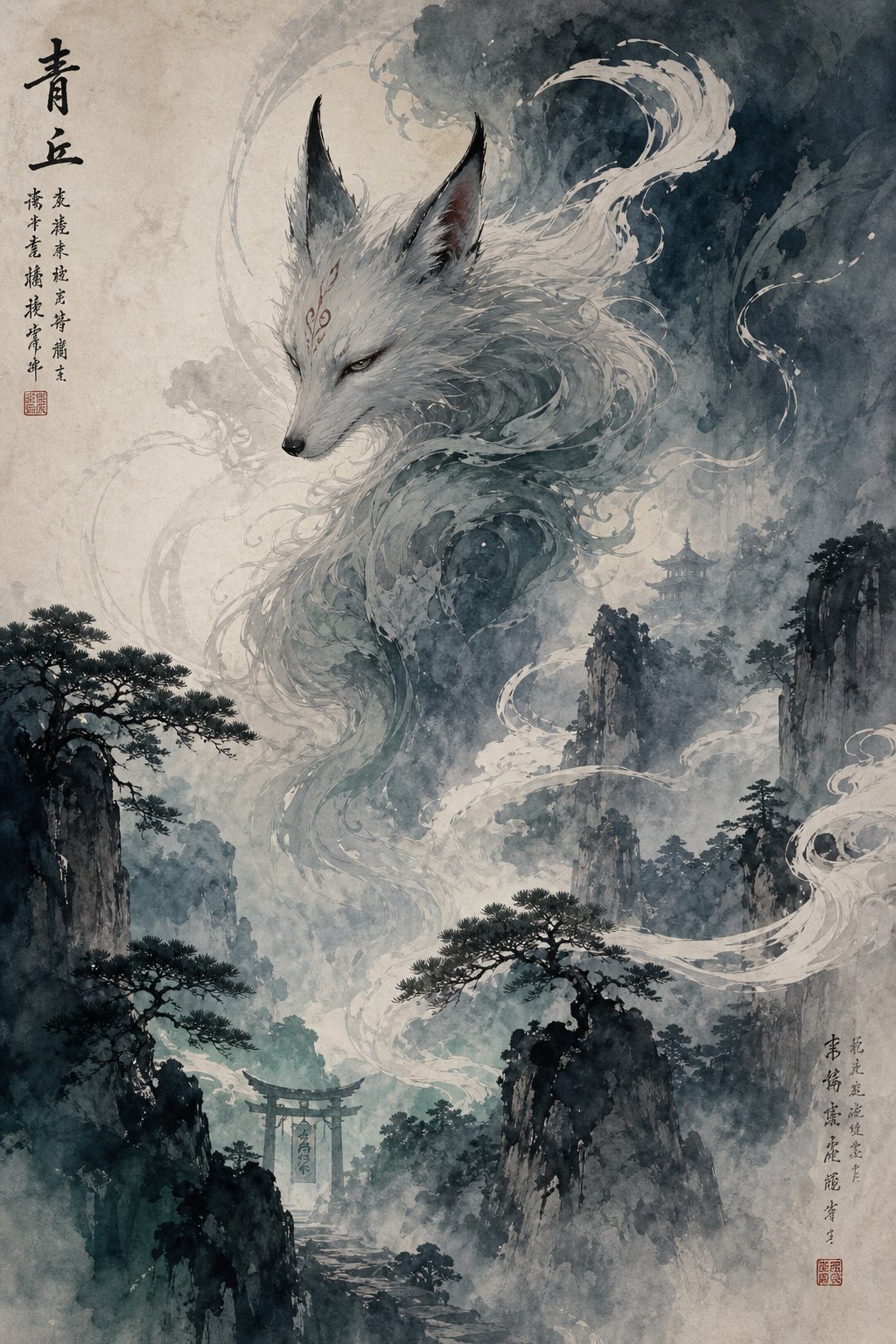
So what does yao guai mean? The compound 妖怪 (yao guai, first tone on yao, fourth tone on guai) refers to supernatural creatures, monsters, or demons in Chinese folklore. It's one of the most culturally loaded terms in the language, appearing in literature that spans over a thousand years.
The yao guai meaning in Chinese breaks down neatly into its two components: 妖 (yao) carries connotations of the uncanny, the seductive, and the supernaturally powerful, while 怪 (guai) means strange or monstrous. Together they describe beings that possess supernatural abilities and exist outside the normal order of nature. According to Wikipedia's entry on Yaoguai, these creatures "represent a broad and diverse class of ambiguous creatures in Chinese folklore" defined by supernatural powers and attributes that partake of "the weird, the strange or the unnatural."
The classical home of the yao guai is Journey to the West (西游记), the 16th-century novel where the monk Tang Sanzang travels to India guarded by Sun Wukong (the Monkey King) and encounters dozens of these beings along the way. In that text, yaoguai are often animals or objects that have cultivated supernatural power over centuries, gaining the ability to shapeshift into human form. Fox spirits, spider demons, skeleton witches, and bull demon kings all fall under this umbrella. Sun Wukong himself is sometimes called a yaoguai by his enemies, despite being the hero.
The meaning of yao guai isn't "evil" in the Western demonic sense. These creatures can feel love, show remorse, and even achieve redemption. They're closer to the fae of Irish legend than to Christian devils. The distinction matters: in Chinese, the word for religious demons is 魔 (mo), not 妖 (yao). A yaoguai is strange and dangerous, but not necessarily damned.
Modern pop culture has carried the term far beyond classical literature. The Fallout video game series features mutated American black bears called "Yao Guai" that roam post-apocalyptic wastelands. They appear in Fallout 3, Fallout 4, and Fallout 76. In the game's lore, the creatures were named by descendants of Chinese internment camp prisoners, a detail that grounds the fantasy term in a specific cultural memory. The 2024 game Black Myth: Wukong draws directly from Journey to the West, featuring a wide variety of yaoguai inspired by traditional Chinese mythology.
Another compound worth knowing is 丑八怪 (chou ba guai), which literally translates to "ugly eight monsters." The chou ba guai meaning in everyday speech is simply "ugly person" or "ugly thing," used as a blunt insult. The chou ba guai English meaning is essentially "hideous" or "grotesque," though the phrase carries a folksy, almost nursery-rhyme quality in Chinese that makes it sound less clinical than those English equivalents. Kids use it on playgrounds. Adults use it when complaining about bad design choices.
Common Guai Compounds Every Learner Needs
Beyond the mythological, both 乖 and 怪 generate everyday vocabulary that you'll encounter in conversation, news, and media. Here's a practical list:
- 奇怪 (qi guai) - strange, weird, odd. The qi guai Chinese meaning is the most common way to express that something feels off or unexpected. "这很奇怪" (zhe hen qi guai) means "this is really strange." The qi guai meaning in Chinese covers everything from a suspicious noise at night to a friend's unusual behavior.
- 妖怪 (yao guai) - monster, supernatural creature, demon. Used in mythology, literature, and modern fantasy media.
- 怪物 (guai wu) - monster, creature. More general than 妖怪; can describe any strange or frightening being, including fictional ones without supernatural powers.
- 怪不得 (guai bu de) - no wonder, so that explains it. Used when something puzzling suddenly makes sense. "怪不得他今天没来,原来生病了" means "No wonder he didn't come today, turns out he's sick."
- 小乖乖 (xiao guai guai) - little darling, little sweetheart. A purely affectionate diminutive used for children or between romantic partners.
- 乖巧 (guai qiao) - clever and well-behaved, docile in a charming way. Often used to describe children who are both obedient and smart.
- 怪兽叔叔 (guai shou shu shu) - "monster uncle." A term used in child safety education across Chinese-speaking communities to teach kids about stranger danger. The phrase makes the concept of a dangerous stranger concrete and memorable for young children without being overly frightening.
- 古怪 (gu guai) - eccentric, peculiar. Describes people or things that are odd in a slightly unsettling way, stronger than 奇怪.
- 怪兽 (guai shou) - monster, beast. Common in children's media, video games, and kaiju-style entertainment. Think Godzilla-type creatures.
- 作怪 (zuo guai) - to cause trouble, to act up. Often used for machines malfunctioning or stomachs acting up: "我的电脑又作怪了" means "my computer is acting up again."
- 乖乖牌 (guai guai pai) - a "good-kid type" person. Taiwanese slang for someone who always follows rules and never rebels. Can be complimentary or slightly teasing.
Notice how the first-tone 乖 compounds cluster around obedience and sweetness, while the fourth-tone 怪 compounds orbit strangeness and monstrosity. The two characters share a sound but inhabit completely different emotional territories. Learning to sort them quickly is one of those small skills that makes a big difference in reading comprehension.
The yao guai meaning also connects to a broader cultural conversation about what Chinese society considers monstrous versus what it considers virtuous. In classical thought, the yaoguai emerged when the natural order was disturbed, when people "abandoned constancy," as the ancient text Zuo Zhuan puts it. Monsters weren't random; they were symptoms of moral imbalance. That same logic, the idea that behavior has cosmic consequences, runs through the seemingly innocent word 乖 as well. Being "guai" maintains harmony. Being "bu guai" invites chaos. The vocabulary of obedience and the vocabulary of monstrosity are two sides of the same cultural coin, both rooted in a worldview where order must be actively maintained.
That worldview doesn't just shape vocabulary. It shapes how entire generations understand their role within the family, the classroom, and society at large.
Cultural Values Hidden Inside a Simple Word
A word that tells children to "be good" might seem harmless enough. But zoom out from the individual household and look at the system that word belongs to, and you'll find something much larger at work. The concept of being "guai" doesn't exist in a vacuum. It's embedded in a philosophical tradition that has shaped East Asian societies for over two thousand years, one where obedience isn't just preferred behavior but a moral obligation.
Guai and the Confucian Ideal of Obedience
Confucian thought places filial piety (孝, xiao) at the center of all social relationships. Children owe respect and obedience to parents. Students owe deference to teachers. Citizens owe loyalty to rulers. This hierarchy isn't arbitrary; it's understood as the foundation of social harmony. When everyone fulfills their role, society functions smoothly. When someone steps out of line, the whole structure trembles.
The word 乖 plugs directly into this framework. A child who is "guai" isn't just following house rules. They're participating in a moral order. Research on Chinese parenting confirms that filial precepts include "obeying and honouring one's parents" and "conducting oneself so as to bring honour and not disgrace to the family name." Children in Chinese culture are traditionally expected to listen to adults, follow rules, self-monitor, and remain sensitive to other people's evaluations and criticisms. It is the responsibility of parents to train and discipline children to feel ashamed when they fail to obey.
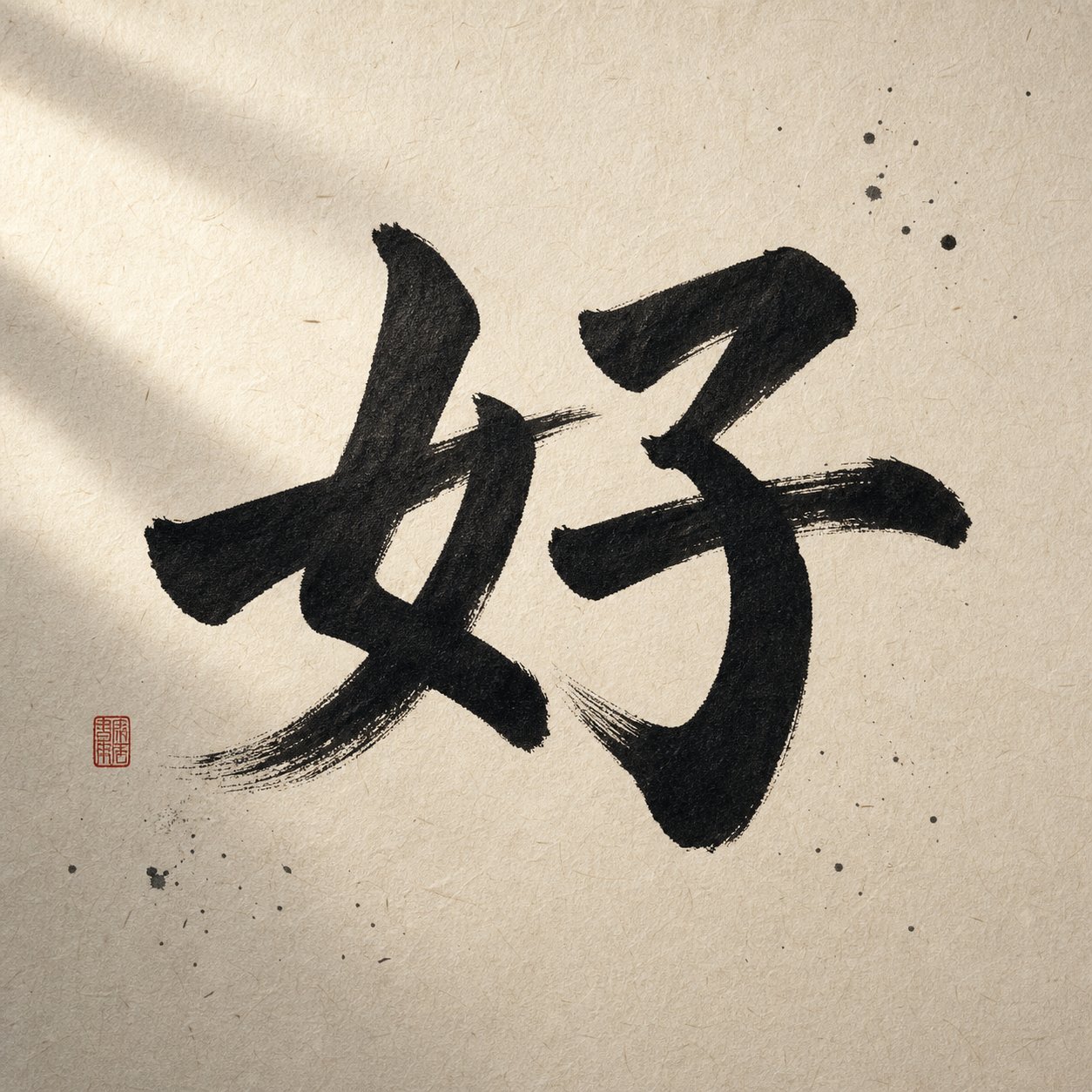
This is where the hao guai meaning becomes culturally significant. When a parent says 好乖 (hao guai, "so well-behaved"), they're not just offering casual praise. They're affirming that the child has met a deep cultural expectation, one that connects their behavior to family honor, social harmony, and moral development all at once. The phrase carries the weight of centuries.
The flip side is equally powerful. 你不乖 (ni bu guai, "you're not being good") isn't a neutral observation. The ni bu guai meaning lands as a moral judgment, a signal that the child has broken the social contract. In families where this framework runs deep, hearing "ni bu guai" can feel less like a correction and more like a withdrawal of love. The child learns: obedience equals belonging, disobedience equals rejection.
In Chinese, the word for praising a child's behavior and the word for affirming their moral worth are the same word. This linguistic overlap means that from the earliest age, children absorb the message that who they are and how they behave are inseparable.
Chinese-specific parenting dimensions identified by researchers reinforce this pattern. A cross-cultural study of Chinese mothers in the US, UK, and Taiwan found five culturally distinct parenting constructs: encouragement of modest behavior, protection, shaming/love withdrawal, directiveness, and maternal involvement. These dimensions emphasize training children to behave in a "quiet, socially conforming and self-controlled way." The study noted that Chinese mothers scored significantly higher on these culture-specific dimensions than their US counterparts, and that immigrant mothers continued endorsing these practices even after years abroad.
The concept of "training" (教训, chiao shun) is particularly relevant. It involves guiding children through continuous monitoring of their behavior while providing care and support. Like authoritarian parenting, training emphasizes obedience and adherence to a set standard of conduct. But unlike Western authoritarianism, it's understood as an expression of love rather than control. A parent who demands their child be "guai" isn't being cold. In this cultural logic, they're fulfilling their deepest parental duty.
Even the term 乖孙 (guai sun), meaning "good grandchild" or "obedient grandchild," reflects how this expectation extends across generations. The guai sun meaning captures the special bond between grandparents and grandchildren in Chinese families, where being called "guai sun" by a grandparent is one of the highest forms of affection. It signals that the child has earned their place in the family lineage through proper behavior.
Modern Pushback Against the Pressure to Be Guai
Something is shifting. Across China, Taiwan, and the Chinese diaspora, younger generations are asking uncomfortable questions about what the relentless pressure to be "guai" actually does to a person's sense of self.
The critique goes something like this: if a child's worth is measured by compliance, what happens to their ability to think independently? If disagreeing with a parent is framed as moral failure, how does that child learn to set boundaries as an adult? If "guai" is the highest praise, does that mean curiosity, assertiveness, and creative rebellion are inherently bad?
These aren't hypothetical concerns. Mental health professionals in Taiwan and Mainland China increasingly point to the "good child" expectation as a source of anxiety, people-pleasing behavior, and difficulty expressing authentic emotions in adulthood. The phrase 乖乖牌 (guai guai pai, "good-kid type") has taken on a slightly ironic edge among younger Taiwanese speakers, describing someone who followed all the rules but may have lost themselves in the process.
Research supports this tension. The same cross-cultural parenting study found that Chinese immigrant mothers in the United States reported significantly lower authoritarian parenting than Taiwanese mothers who remained in Taiwan, suggesting that exposure to different cultural values reshapes how parents deploy obedience-based expectations. Immigrant parents increasingly adopt autonomy-promoting practices while retaining some heritage-culture beliefs, creating a hybrid approach that neither fully embraces nor fully rejects the "guai" ideal.
Contemporary Chinese parenting discourse reflects this evolution. Popular parenting books in China now discuss the difference between 乖 (obedient) and 独立 (independent), arguing that raising a truly capable child means tolerating some disobedience. Social media conversations in Taiwan debate whether telling children to be "guai" teaches them to suppress their needs for the comfort of adults. The word hasn't lost its warmth, but it's gained a shadow.
None of this means "guai" is disappearing from Chinese family life. Parents still say it dozens of times a day. Grandparents still beam when a grandchild is called 乖孙. The word remains one of the most emotionally charged terms in the language. What's changing is the awareness that a single word can carry both love and limitation, that praise and pressure sometimes wear the same face.
For Mandarin learners watching this cultural conversation unfold, the takeaway is clear: understanding the guai guai meaning requires more than a dictionary. It requires recognizing the values, tensions, and generational shifts that give the word its emotional gravity. And it requires knowing when and how to use it yourself, which is its own kind of cultural navigation.
A Practical Guide to Using Guai Guai Correctly
Knowing what a word means and knowing when to say it are two very different skills. You could memorize every definition of 乖乖 and still land in an awkward moment if you use it with the wrong person, in the wrong setting, or with the wrong tone. Register matters enormously in Mandarin, and as Polyglottist Language Academy notes, being grammatically correct isn't enough in Chinese. Politeness is woven into every syllable and social choice.
When Guai Guai Sounds Natural vs Awkward
The parenting use of 乖乖 works beautifully when speaking to young children, pets, or in playful romantic contexts between couples who've established that dynamic. The exclamatory use fits any casual conversation among friends, family, or colleagues you're comfortable with. Problems arise when you cross those boundaries.
Calling an adult "guai" in a professional setting sounds patronizing, like patting a coworker on the head and saying "good boy." Using the exclamatory 乖乖 in a formal business meeting or academic presentation comes across as too folksy, similar to blurting "holy moly" during a board presentation in English. Mandarin speakers naturally adjust register based on context, and 乖乖 belongs firmly in the informal tier.
Here's a quick-reference guide:
- Do use 乖乖 as praise when speaking to children under ten or to pets.
- Do use exclamatory 乖乖 among friends, family, or casual acquaintances to express surprise.
- Do feel free to use it in text messages and social media posts for a warm, relatable tone.
- Don't call an adult colleague or stranger "guai" unless you want to sound condescending.
- Don't use exclamatory 乖乖 in formal speeches, job interviews, or academic writing.
- Don't say it to someone older than you as a term of address. The power dynamic flows downward: elders call children guai, not the reverse.
- Don't assume the parenting meaning translates across all Chinese dialects. As covered earlier, regional variants carry very different connotations.
Avoiding Common Mistakes With This Word
One source of confusion comes from outside Chinese entirely. If you speak Italian or Spanish, you've likely encountered "guai" in those languages and wondered about the overlap. The guai meaning in Italian refers to trouble, misfortune, or woe. "Guai a te" means "woe to you" in Italian, a warning or threat. The guai meaning in Spanish follows a similar path: what does guai mean in Spanish? It doesn't exist as a standard word, though some Spanish speakers use "guay" (a near-homophone) as slang for "cool" or "awesome." Neither has any etymological connection to the Chinese character. The similarity is pure coincidence.
Japanese learners sometimes encounter a different false friend. The phrase "guai ga warui desu" doesn't exist in standard Japanese. You might be thinking of 具合が悪いです (guai ga warui desu meaning "feeling unwell" or "something is wrong"), where 具合 (guai) refers to condition or state. The guai meaning in Japanese is completely unrelated to the Chinese 乖. Similarly, if you've searched for "guaio meaning" hoping to find a Chinese connection, that term belongs to Italian (meaning "trouble" or "mishap") and shares no linguistic DNA with Mandarin.
The real mistake most learners make isn't linguistic but cultural: treating 乖乖 as a simple vocabulary word rather than a window into how Chinese families express love, set expectations, and navigate the tension between closeness and control. When you understand why this word carries so much emotional weight, you stop translating it and start feeling it. That shift, from dictionary knowledge to cultural intuition, is where real fluency lives. And 乖乖, in all its layered complexity, is one of the best doorways into that deeper understanding of Chinese emotional life.
Frequently Asked Questions About Guai Guai Meaning
1. What does guai guai mean in Chinese?
Guai guai (乖乖) has two primary meanings in Mandarin Chinese. As an adjective, it means 'well-behaved' or 'obedient' and is commonly used as a term of endearment for children, similar to calling someone 'darling' or 'sweetie.' As an interjection, it expresses surprise or disbelief, functioning like 'oh my goodness' or 'wow' in English. The difference depends on tonal emphasis: two full first tones convey the affectionate meaning, while a neutral second syllable signals the exclamatory use.
2. What is the difference between guai (乖) and guai (怪) in Chinese?
These are completely different words distinguished by tone. 乖 (guai, first tone) means obedient or well-behaved and carries positive, affectionate connotations in family settings. 怪 (guai, fourth tone) means strange, monstrous, or to blame, and appears in words like 妖怪 (yao guai, monster) and 奇怪 (qi guai, weird). Despite sharing the same romanization without tone marks, they sit at opposite ends of the emotional spectrum and should never be confused.
3. Why do Taiwanese engineers put Guai Guai snacks on their servers?
Taiwanese tech workers place green packets of Guai Guai corn puff snacks on servers, routers, and other equipment as a superstition to keep machines running smoothly. The logic is linguistic: since 乖乖 means 'be good' or 'obey,' placing the named snack on a device is like telling it to behave. Only green packets are used because green signals 'go,' and the bags must remain sealed and unexpired. This practice started in the early 2000s and has spread to hospitals, factories, radio stations, and offices across Taiwan.
4. What does yao guai mean and where does the term come from?
Yao guai (妖怪) means monster, demon, or supernatural creature in Chinese. The term originates from classical Chinese folklore and features prominently in the 16th-century novel Journey to the West, where it describes animals or objects that gained supernatural powers over centuries. Unlike Western demons, yaoguai are morally ambiguous and capable of redemption. The term entered Western pop culture through the Fallout video game series, where mutated bears are named 'Yao Guai' after the Chinese word.
5. Is guai guai only used for children or can adults use it too?
The parenting form of guai guai should only be directed at young children, pets, or used playfully between romantic partners. Calling an adult 'guai' in professional or formal settings sounds patronizing. However, the exclamatory form works freely among adults in casual conversation, similar to saying 'wow' or 'oh my' in English. It fits naturally in text messages, chats with friends, and informal settings but should be avoided in formal speeches, interviews, or academic contexts where it sounds too folksy.