Why Li and Lee Are Actually the Same Chinese Surname
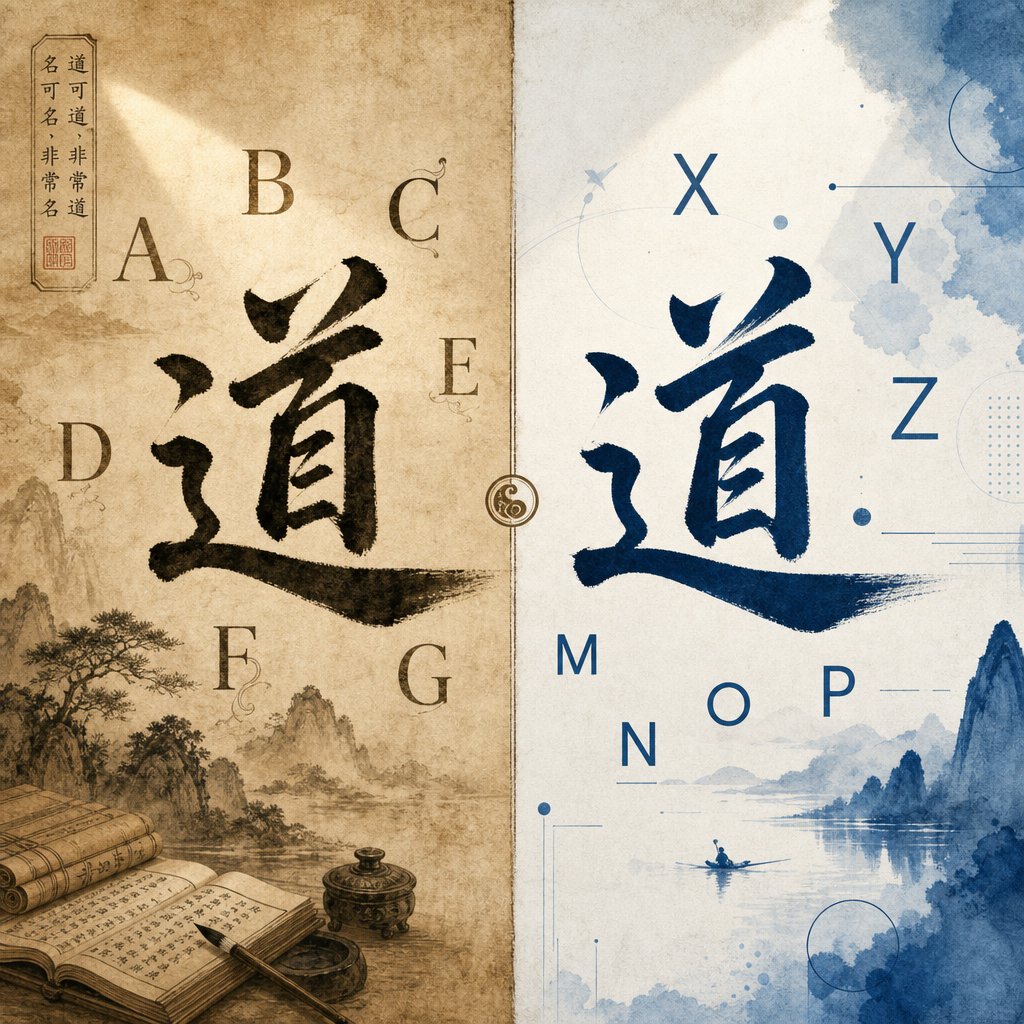
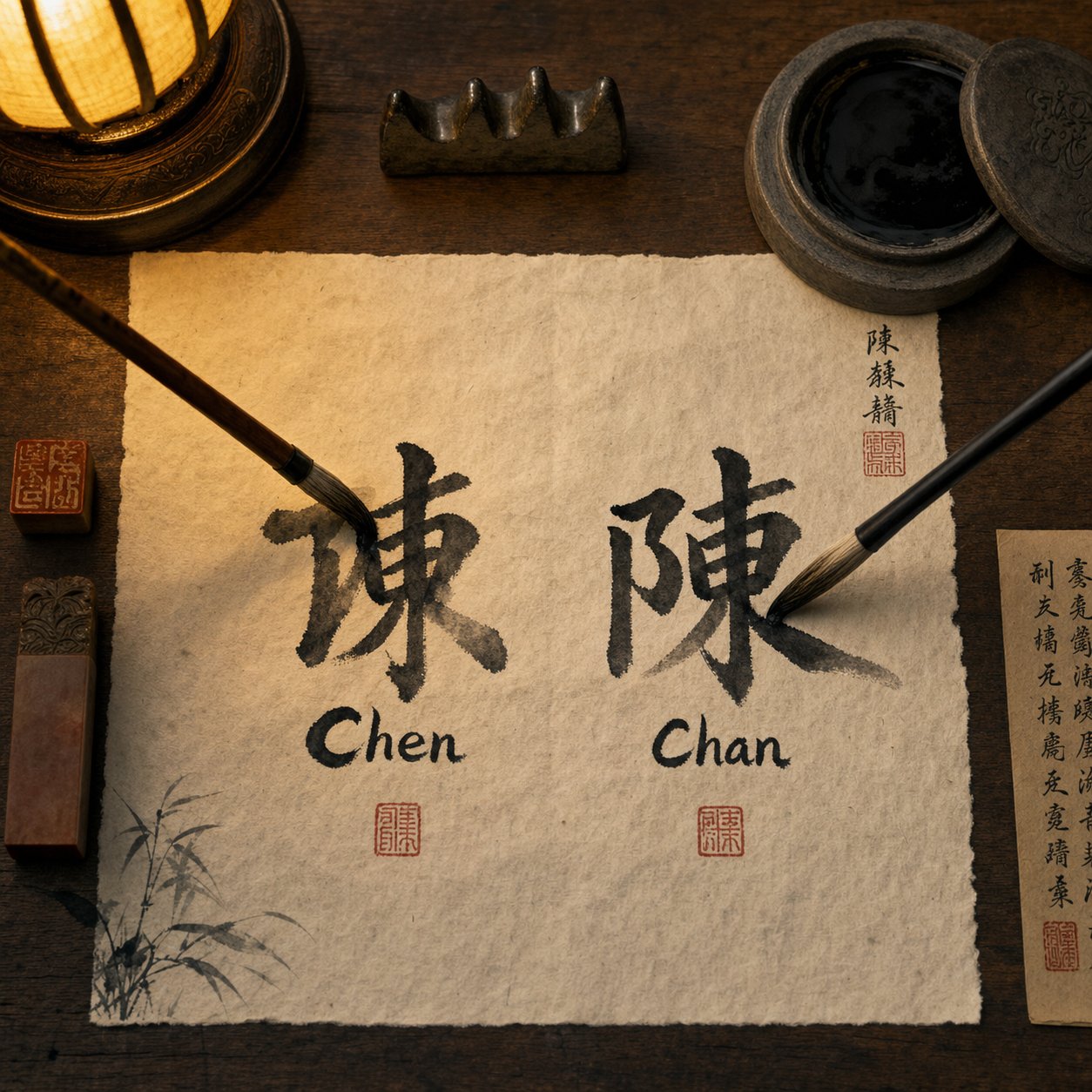
You have probably noticed that some people spell their last name Li while others spell it Lee, and you are wondering: are these the same name? The short answer is yes. Both spellings represent the exact same Chinese character, 李. The difference has nothing to do with separate family lines or different origins. It comes down to how that single character gets written in the Latin alphabet.
The Short Answer to Li vs Lee
Li and Lee are two romanizations of the same Chinese surname 李. When someone asks "is Lee a Chinese last name?" the answer is almost always yes, it is the same name that others spell as Li. The spelling a family uses depends on which region they came from, which dialect they speak, and which romanization system was standard when their name was first written in English. The li surname and the lee chinese spelling share identical roots, identical meaning, and identical ancestry.
李 is shared by over 100 million people across Asia, making it one of the most common surnames on Earth and the second most common in China alone.
Why This Question Matters to Millions
With over 93 million bearers in China and millions more across Korea, Vietnam, and diaspora communities worldwide, the chinese surname li touches a staggering number of families. Yet no single resource clearly explains all the reasons behind the spelling variations. That gap leads to confusion at family reunions, on genealogy sites, and in everyday introductions.
This guide ranks the most important facts you need to understand about the li chinese surname and its many spellings. Each section covers a key piece of the puzzle, from romanization systems and dialect differences to immigration history and cross-cultural connections, so you can finally see the full picture of why your family spells 李 the way it does.
How We Ranked These Key Surname Facts
Not every piece of information about the li last name carries the same weight for someone trying to figure out why their family spells it one way while a cousin spells it another. So rather than dumping everything into a random list, we organized these facts by three criteria:
- How many people it affects - Facts relevant to tens of millions of surname bearers rank higher than niche edge cases.
- How commonly misunderstood the point is - If a fact trips up most people researching their lee last name or li name, it deserves a top spot.
- How practically useful the information is - Can you actually use this fact to trace your family history or explain your spelling to someone else?
What We Evaluated for This List
The sections ahead cover romanization systems, historical context behind each spelling, regional dialects that shift pronunciation, immigration patterns that locked in certain spellings, and cross-cultural connections between Chinese, Korean, and Vietnamese families. Each topic was chosen because it answers a real question people have when they encounter different versions of the li last name in their own family tree or social circle.
Who This Guide Helps Most
This guide is written from a practical, searcher-first perspective rather than an academic one. If you are a diaspora family member trying to understand what your spelling reveals about your ancestors, a genealogy researcher connecting branches across countries, or simply someone curious about why a coworker's li name looks different from another friend's, you will find direct answers here. Every fact ties back to something you can use, whether that is identifying your dialect group, understanding a relative's migration path, or recognizing shared heritage across different spellings.

#1 Same Character 李 With Different Latin Spellings
Every spelling variation you have ever seen, whether Li, Lee, Lim, or Ly, traces back to one single Chinese character: 李. The character itself never changes. What changes is the system used to represent its sound in the Latin alphabet. Think of it like the word "color" in American English and "colour" in British English. Same word, same meaning, different conventions for writing it down.
One Character 李 With Many Spellings
So what does li mean when you see it as a surname? It means the person's family name is written with the character 李, regardless of how that character gets spelled in English. The romanization depends on dialect, country of origin, and the era when the family first registered their name in a Latin-alphabet system. Here are the most common romanizations of 李 you will encounter around the world:
- Li - Mandarin Pinyin (mainland China)
- Lee - Cantonese romanization (Hong Kong, Guangdong) and Hokkien/Teochew (Singapore, Malaysia)
- Lei - alternative Cantonese romanization
- Lim - Hokkien and Teochew dialects (Southeast Asia)
- Ly / Ly - Vietnamese romanization
- Yi - Korean Revised Romanization
- Ri - Japanese reading of the same character
- Lee - common English spelling for Korean surname 이
Every single one of these represents the same 李. The character on a family's ancestral tablet, clan registry, or official Chinese-language documents is identical whether the English passport reads Li, Lee, or Lim.
The Plum Tree Meaning Behind the Name
The li meaning chinese speakers recognize immediately is "plum" or "plum tree." The character 李 is a phono-semantic compound built from two components: 木 (mu, meaning tree or wood) on top and 子 (zi, meaning child or seed) on the bottom. Together they paint a picture of a tree bearing fruit, specifically the plum tree.
The meaning of name li carries real historical weight. According to Chinese legend, the surname was originally written as the homophone 理 (meaning reason or logic) and traces back to descendants of the mythical Yellow Emperor. The story goes that during the fall of the Shang dynasty, a minister named Li Zheng was executed by the cruel King Zhou. His son escaped with his mother, and they survived by eating wild plums. In gratitude, the family changed their surname character to 李, the plum tree that saved their lives.
The first historically documented bearer of the 李 surname is Li Er (李耳), better known as Laozi, the philosopher who founded Taoism in the 6th century BCE. Centuries later, 李 became the imperial surname of the Tang dynasty (618-907 AD), one of China's most culturally influential periods. That imperial connection spread the surname dramatically across the population, which is a major reason li means something familiar to so many people today.
Why Romanization Creates Confusion
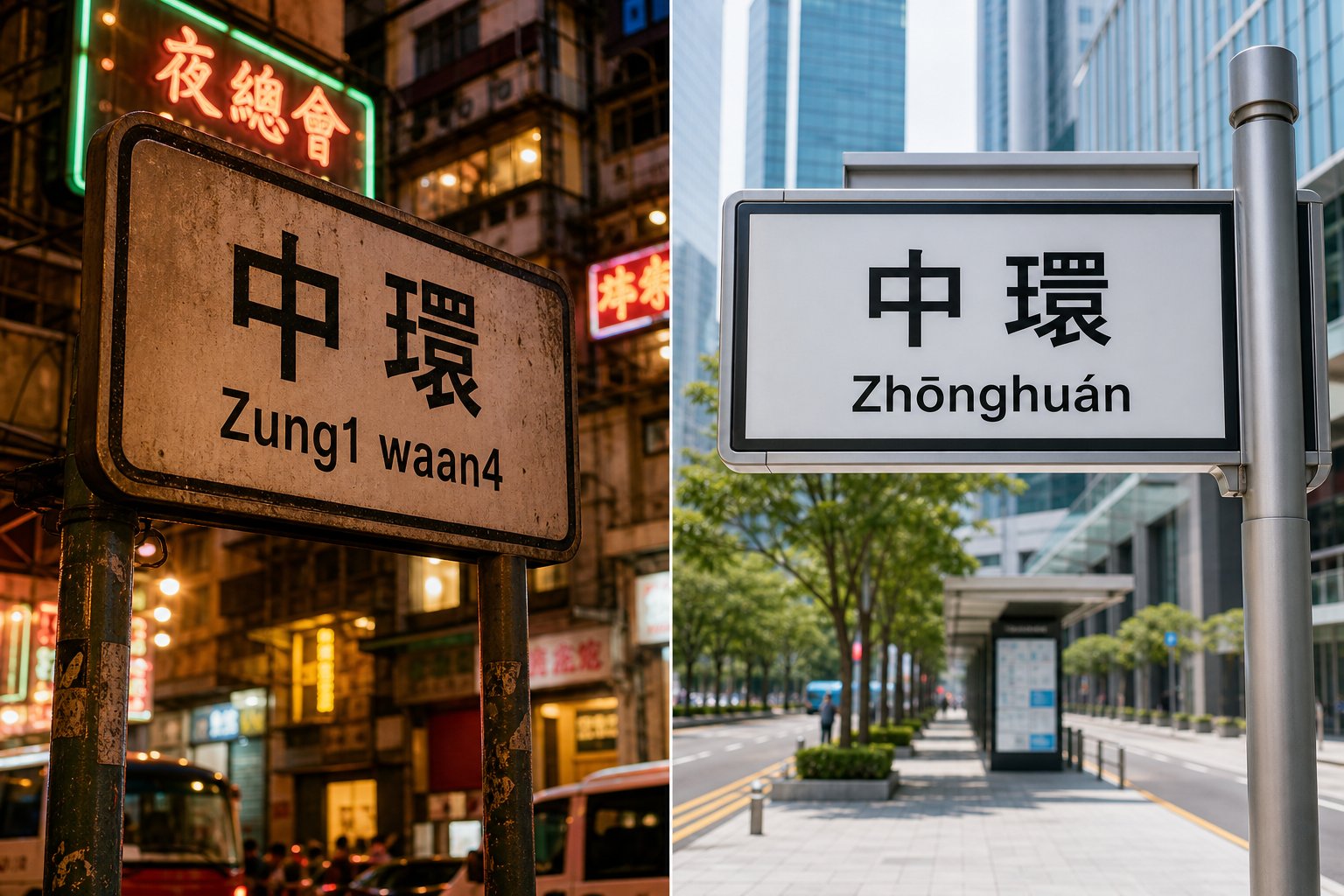
The confusion exists because Chinese is not an alphabetic language. There is no single "correct" way to spell 李 in English, only different conventions adopted by different regions at different times. Mainland China standardized Pinyin in 1958, producing "Li." Hong Kong used its own Cantonese-based system, producing "Lee." Singapore and Malaysia followed Hokkien dialect conventions, also producing "Lee" or sometimes "Lim." None of these spellings is more authentic than another. They are all approximations of how 李 sounds in a particular dialect, frozen into a particular romanization system.
This is why two cousins from the same 李 clan can have completely different passport spellings. One family emigrated through Hong Kong and became Lee. Another stayed in mainland China and became Li under Pinyin. The ancestral character on their shared family genealogy book remains 李 either way.
The romanization system a family uses, then, is not random. It is a fingerprint of geography, dialect, and timing, which is exactly what the next section breaks down system by system.
#2 Romanization Systems That Create Li and Lee
Each spelling of 李 you encounter in English is the product of a specific romanization system tied to a specific region and era. These systems were not designed to confuse you. They were created by linguists, colonial administrators, and governments trying to solve the same problem: how do you write a Chinese sound using Latin letters? The answer depended on who was doing the writing, where they were, and when they did it.
Understanding which system produced which spelling gives you a direct line from any li chinese name back to its geographic and historical roots. Here is how each major system handles the character 李.
Pinyin and Why Mainland Chinese Use Li
Pinyin is the official romanization system of the People's Republic of China, formally adopted in 1958 and internationally recognized by the ISO in 1982. Under Pinyin, 李 is spelled "Li" (with a third-tone mark: Li). This is the system taught in every mainland Chinese school and used on all Chinese passports issued by the PRC.
If you meet someone whose last name is spelled Li with no extra letters or accents, there is a strong chance their family comes from mainland China or emigrated after Pinyin became the standard. The system was designed to be intuitive for international readers, which is why "Li" looks clean and simple. It represents the Mandarin pronunciation of 李 as closely as possible using familiar Latin letters.
Because China's population is so large, Pinyin "Li" is now the single most common spelling of this surname worldwide. Over 93 million people in mainland China alone carry the name, and most official documents render it as Li.
Cantonese Romanization and the Lee Spelling
The lee surname origin in English traces directly to Cantonese-speaking regions, primarily Hong Kong and Guangdong province. In Cantonese, 李 is pronounced closer to "lei" (Jyutping: Lei5), with a vowel sound that English speakers naturally approximate as "Lee."
Hong Kong developed its own romanization conventions during the British colonial period, and these conventions stuck. There was no single standardized system like Pinyin. Instead, government clerks transliterated names based on how they sounded in Cantonese, producing spellings like Lee, Lei, and occasionally Lay for the same character. The lee name origin in places like Macau follows a similar pattern, where Portuguese-influenced romanization produced "Lei" as the preferred spelling.
This is why the spelling "Lee" dominates among Chinese communities in Hong Kong, Macau, and older diaspora populations that emigrated from southern China. When you see chinese lee as a surname, you are almost certainly looking at a Cantonese-origin romanization of 李.
How Taiwan and Hong Kong Differ from Mainland China
Taiwan historically used the Wade-Giles romanization system, developed by British diplomats Thomas Wade and Herbert Giles in the 19th century. Under Wade-Giles, the Mandarin pronunciation of 李 is also spelled "Li," identical to Pinyin in this particular case. However, many Taiwanese people choose to romanize their names as "Lee" instead, following local convention and personal preference rather than strict Wade-Giles rules.
As the Cultural Atlas notes, some of the most common family names in Taiwan include "Li or Lee" (李), and the transcription system widely used there results in spelling variations from mainland China. Taiwan officially adopted a modified version of Tongyong Pinyin in 2002, then switched to Hanyu Pinyin for some official uses in 2009, but personal names remain largely a matter of individual choice. This means two Taiwanese siblings could theoretically spell their li name in chinese differently on their passports.
Hong Kong, meanwhile, never adopted Pinyin at all. Even after the 1997 handover to China, Hong Kong residents continue using Cantonese-based romanization on identity documents. This is why a family that has lived in Hong Kong for generations spells it "Lee," while their relatives who moved to Shenzhen (just across the border) spell it "Li."
The Korean dimension adds another layer. The Korean surname 이, written with the same character 李 in traditional Hanja script, is most commonly romanized as "Lee" in English. The official Revised Romanization of Korean renders it as "I" or "Yi," but almost no one uses those spellings in everyday life. "Lee" became the dominant English spelling through long convention, making the lee surname origin in Korea a matter of historical habit rather than phonetic accuracy.
Here is a complete comparison of how each system handles 李:
| Romanization System | Region | Resulting Spelling | Era of Adoption |
|---|---|---|---|
| Hanyu Pinyin | Mainland China | Li | 1958 |
| Wade-Giles | Taiwan (historical) | Li | 1892 |
| Cantonese (Hong Kong Government) | Hong Kong | Lee | Colonial era |
| Jyutping | Hong Kong, Guangdong | Lei | 1993 |
| Portuguese-influenced | Macau | Lei | Colonial era |
| Hokkien (Pe̍h-oe-ji) | Taiwan, Southeast Asia | Li | 19th century |
| Korean Revised Romanization | South Korea | I / Yi (Lee in practice) | 2000 |
| Vietnamese Quoc Ngu | Vietnam | Ly | 17th century |
Notice something interesting in this table: the li in chinese Mandarin and the Wade-Giles version produce the same spelling. That is a coincidence of this particular syllable. For most other Chinese surnames, Pinyin and Wade-Giles produce noticeably different results (think Zhang vs. Chang, or Xu vs. Hsu). With 李, the Mandarin sound happens to be simple enough that both systems land on "Li." The real divergence comes from Cantonese and other southern dialects, where the vowel shifts enough to produce "Lee" or "Lei" instead.
This system-by-system breakdown explains the mechanics. But romanization systems only tell you which spelling a government or institution would assign. The actual spelling on your family's documents was often determined by something more personal: when and where your ancestors emigrated, and which dialect they spoke to the immigration clerk who wrote their name down for the first time.

#3 Immigration History Behind Your Surname Spelling
Romanization systems explain which spelling a government would assign, but immigration history explains which spelling actually ended up on your family's documents. The era your ancestors left China, the port they departed from, and the dialect they spoke to the clerk at their destination all played a role. In many cases, the spelling was decided in a single moment at a customs desk and then passed down for generations.
Why Earlier Immigrants Tend to Spell It Lee
If your family spells it Lee, there is a good chance your ancestors emigrated before the 1970s. The last name lee origin for most Chinese-American and Chinese-Canadian families traces back to Cantonese-speaking regions, particularly Guangdong province and Hong Kong. These areas dominated Chinese emigration to the West for over a century.
Chinese migration to the United States picked up during the mid-19th century, when laborers from southern China arrived on the West Coast for mining, railroad construction, and agricultural work. Nearly all of these early immigrants spoke Cantonese or related southern dialects. When officials recorded their names, they wrote what they heard: "Lee," the natural English approximation of the Cantonese pronunciation of 李.
Even after the Chinese Exclusion Act of 1882 severely limited immigration, the pattern held. Hong Kong residents, who were not subject to the same restrictions as mainland Chinese citizens, continued moving to the United States from the late 1960s onward. By 1980, there were 85,000 Hong Kong-born immigrants in the U.S., and by 2016 that number had grown to 212,000. Almost all of them carried the "Lee" spelling on their documents.
The result is striking: over 30% of people with the surname Lee in America identify as Asian or Pacific Islander in origin, making it the most common Chinese surname in the United States and the 22nd most common surname overall. The lee last name origin in the U.S. is overwhelmingly Cantonese.
Post-Reform Mainland Immigrants and the Li Spelling
The li last name origin story in Western countries looks very different. After China loosened emigration controls in 1978 and the U.S. normalized relations with Beijing in 1979, a new wave of immigrants arrived, this time predominantly from mainland China and carrying Pinyin-based passports.
The numbers tell the story clearly. The mainland Chinese immigrant population in the United States nearly doubled from 299,000 in 1980 to 536,000 in 1990, doubled again to 989,000 by 2000, and reached 2.1 million by 2016. Unlike the earlier Cantonese-speaking wave, these immigrants came from all over China, spoke Mandarin as their common language, and had their names romanized under the Pinyin system. Their passports read "Li," not "Lee."
This is why you will notice a generational and geographic split in Chinese communities abroad. Older Chinatown families, established restaurants, and community associations often use "Lee." Newer arrivals, international students, and tech professionals who came after the 1980s tend to use "Li." Both groups share the same character 李, but their spelling reflects which wave of immigration brought their family to the West.
What Your Spelling Reveals About Family History
Your particular spelling works like a timestamp and a geographic marker rolled into one. Here is what each common variant suggests about your family's migration path:
- Lee - Family likely emigrated from Cantonese-speaking areas (Guangdong, Hong Kong, Macau) or Taiwan, often before the 1980s.
- Li - Family likely came from mainland China after Pinyin standardization, especially post-1978 reform era.
- Lim - The lim last name origin points to Hokkien or Teochew dialect speakers, typically from Fujian province or via Southeast Asian countries like Singapore, Malaysia, or the Philippines.
- Ly or Lý - Family emigrated from Vietnam, where the surname has been used for over 2,000 years and was carried by the royal Lý dynasty.
- Lei - Family likely came from Macau, where Portuguese-influenced romanization produced this variant.
In Singapore, you can see this generational shift happening in real time. Older generations registered their names as "Lee" under dialect-based conventions, while newer identity cards often show "Li" under Hanyu Pinyin. Same family, same character, different eras of documentation.
The spelling on your passport is not just a bureaucratic detail. It is a compressed record of where your branch of the 李 family tree was standing when it first encountered the Latin alphabet. And that encounter was shaped not only by dialect and timing, but also by whether the people writing down your ancestor's name recognized 李 as the character in question, or confused it with one of several other Chinese characters that sound nearly identical.

#4 The Korean Lee Connection and How It Differs
Here is a fact that catches many people off guard: not every person named Lee in English has a Chinese surname. Millions of people spelled Lee are Korean, and while the name shares deep historical roots with the Chinese 李, it represents a distinct cultural identity that diverged centuries ago. So is Lee a Korean last name? Absolutely. It is the second most common Korean surname, carried by over 7.3 million people in South Korea alone, roughly 14.7% of the population.
Understanding this cross-cultural overlap matters because it is one of the biggest sources of confusion when people encounter the lee surname in English-speaking countries. Two coworkers both named Lee might share zero cultural or linguistic heritage beyond a character that traveled between civilizations over two thousand years ago.
Korean 이 and Chinese 李 Share Ancient Roots
The Korean surname written as 이 (or 리 in North Korea) uses the same Chinese character 李 in its traditional Hanja script. This is not a coincidence. The character was adopted into Korean naming conventions during the early Three Kingdoms period (57 BCE - 668 CE), when Chinese cultural influence shaped much of Korean aristocratic life. The Gyeongju Yi clan, one of the two most prominent Lee lineages in Korea, traces its founding to Yi Al-pyeong, a village headman who helped choose the first king of Silla. The Yi name was officially bestowed on his family by King Yuri around 9 CE.
The more famous branch is the Jeonju Yi clan, the royal family of the Joseon dynasty. Yi Seong-gye founded Joseon in 1392, and the House of Yi ruled Korea for 518 years until 1910. That half-millennium of royal association cemented Lee in korean culture as deeply as the Tang dynasty cemented 李 in Chinese culture. Both surnames gained massive populations partly because of imperial prestige, but they did so independently, in separate civilizations, across different centuries.
Why Korean Lee Is Not the Same as Chinese Lee
Despite sharing the character 李, Korean Lee and Chinese Lee represent fundamentally different naming traditions. The pronunciation is different: Korean speakers say "ee" (이) with no initial consonant in South Korea, or "ri" (리) in North Korea. The cultural framework is different: Korean surnames operate within a clan system called bon-gwan, where each Lee family belongs to a specific patrilineal lineage traced to a geographic ancestral seat. There are approximately 241 such Lee clans in South Korea, most belonging to either the Jeonju or Gyeongju branches.
The romanization history also diverged completely. The official Revised Romanization of Korean renders 이 as "I" or recommends "Yi," but 98.5% of South Koreans with this surname spell it "Lee" on their passports. That overwhelming preference for "Lee" is a matter of long-standing convention, not phonetic logic. Other historical spellings include Rhee (as in South Korea's first president Syngman Rhee), Ri (standard in North Korea), and Yi (used in academic and historical contexts).
The result is that "Lee" in English could be Chinese Cantonese, Chinese Taiwanese, Korean, or even Vietnamese in origin. The spelling alone cannot tell you which.
How to Tell If Lee Is Chinese or Korean
When you encounter someone with the lee surname and want to understand their background, several contextual clues help distinguish Chinese from Korean origins:
- Given name structure - Korean given names are typically two syllables (e.g., Lee Min-ho, Lee Jae-yong), while Chinese given names can be one or two syllables (e.g., Lee Ka-shing, Li Wei).
- Middle generation names - Many Korean families use a shared generational character (dollimja) among siblings and cousins of the same generation, a practice less common in modern Chinese naming.
- Clan and registry traditions - Korean families often know their specific bon-gwan (ancestral seat), such as Jeonju Lee or Gyeongju Lee. Chinese families may reference their ancestral province or village instead.
- Surname-given name spacing - Korean names in English often hyphenate or capitalize the given name differently (Lee Sun-young vs. Lee Shuwen).
- Cultural context - If the person identifies with Korean food, holidays, or language, the surname is almost certainly Korean 이 rather than Chinese 李, even though both historically use the same character.
Is Lee an Asian or white name? It is both. Lee exists as an English, Scottish, and Irish surname completely unrelated to any Asian origin. The English Lee derives from Old English "leah" meaning meadow or clearing. So in multicultural societies, the same three letters can represent Chinese 李, Korean 이, Vietnamese Lý, or Anglo-Saxon heritage with zero connection to East Asia.
This layered ambiguity is exactly why understanding the character behind the spelling matters so much. Two people named Lee might share a 2,000-year-old ancestral character, or they might have nothing in common beyond an English spelling coincidence. The character 李 connects Chinese and Korean bearers at a deep historical level, but their cultural identities, clan structures, and naming conventions have been distinct for well over a millennium.
The Korean dimension is the most visible cross-cultural overlap, but it is not the only source of confusion. Even within Chinese culture alone, the spelling "Li" or "Lee" can represent entirely different characters with different meanings, a problem that trips up genealogy researchers constantly.
#5 Multiple Chinese Characters Behind the Same Spelling
Here is a fact that trips up countless people doing family research: not every person with the last name Li or Lee carries the character 李. Multiple completely different Chinese characters produce the exact same English spelling. They have different meanings, different tones, different origins, and different ancestral lineages. Yet on a passport or immigration form, they all collapse into the same three or two letters.
Imagine two families both named Li sitting next to each other at a community event. One family's character means plum tree. The other's means chestnut. They share no common ancestor, no overlapping clan history, and no genetic connection through the surname. But in English, they look identical. This is not a minor footnote. It is a fundamental challenge for anyone trying to trace the last name li origin back to a specific lineage.
Characters Beyond 李 That Produce Lee or Li
The reason this happens is straightforward: Mandarin Chinese has only about 400 distinct syllables (around 1,200 when you count tonal variations), but thousands of characters. Multiple characters inevitably share the same pronunciation or near-identical pronunciations, differing only in tone. Since most English romanization systems drop tone marks in everyday use, these distinct surnames merge into one spelling.
According to Wikipedia's list of surnames romanized as Li, at least nine separate Chinese characters are commonly rendered as "Li" in English. Here are the ones you are most likely to encounter:
| Character | Pinyin (with tone) | Meaning | Ranking in China | Common Regions |
|---|---|---|---|---|
| 李 | Lǐ (3rd tone) | Plum / plum tree | 2nd most common | All of China, Korea, Vietnam, Southeast Asia |
| 黎 | Lí (2nd tone) | Dawn / dark / numerous | 84th most common | Guangdong, Guangxi, Hainan |
| 利 | Lì (4th tone) | Sharp / profit / advantage | 299th most common | Guangdong, Zhejiang |
| 栗 | Lì (4th tone) | Chestnut | 249th most common | Henan, Hebei, Shanxi |
| 厉 (厲) | Lì (4th tone) | Strict / severe | Rare (below 300th) | Zhejiang, Jiangsu |
| 理 | Lǐ (3rd tone) | Reason / logic | Very rare | Scattered |
| 郦 (酈) | Lì (4th tone) | Proper name only | Very rare | Henan, historical |
| 力 | Lì (4th tone) | Power / strength | Very rare | Scattered, minority groups |
| 莉 | Lì (4th tone) | Jasmine | Very rare | Hui communities |
Notice the enormous gap in frequency. 李 is carried by over 93 million people in China. 黎, the next most common, is the 84th most common surname, shared by a few million. After that, the numbers drop sharply. So if you are researching the li name origin for your family, the odds strongly favor 李. But "strongly favor" is not the same as "guaranteed," especially if your family comes from specific regions where the rarer surnames cluster.
How to Identify Which Character Is Your Surname
So how do you figure out which character your family actually uses? Is li a word you can just look up and get a definitive answer? Unfortunately, no. The English spelling alone cannot tell you. You need at least one of the following:
- A document with the Chinese character - Old immigration papers, birth certificates from China, ancestral tablets, or grave markers will show the actual character. Even if you cannot read Chinese, you can compare the shape to the characters in the table above.
- A family member who knows - An elder relative who reads Chinese can confirm which character belongs to your family. Get them to write it down or type it so you have a digital copy for research.
- Regional clues - If your family comes from Guangdong and the surname is pronounced "Lai" or "Lye" in Cantonese rather than "Lei," you may have 黎 rather than 李. The Cantonese pronunciations differ noticeably between these characters even though the Mandarin romanizations look similar.
- Clan genealogy books - Chinese clan associations (宗亲会) maintain records organized by character, not by English spelling. Connecting with the right association requires knowing your actual character.
- Tone awareness - If any family member remembers the tone used when saying the surname in Chinese, that narrows the field significantly. A second-tone pronunciation points to 黎. A fourth-tone pronunciation could be 利, 栗, or 厉. A third-tone pronunciation almost certainly means 李.
The Vietnamese surname Lê, worth noting, derives from 黎 rather than 李. The Lê dynasty ruled Vietnam for centuries, and the surname remains one of the most common in the country. So if your Vietnamese family spells it Lê (with the accent), your character is likely 黎, not 李. Meanwhile, Vietnamese families spelling it Lý trace back to 李.
Why This Matters for Genealogy Research
Getting the character wrong does not just create a minor inconvenience. It sends your entire genealogy search down the wrong path. Chinese genealogy records, clan registries, and ancestral halls are all organized by character. If your family is actually 黎 but you search under 李, you will find millions of results that have nothing to do with your ancestors. You might connect with the wrong clan association, trace the wrong migration pattern, or build a family tree attached to someone else's lineage entirely.
This confusion also explains why some families discover surprising disconnects at reunions or through DNA testing. Two families both named "Li" in English who assumed they were distantly related may carry completely different characters and share no patrilineal connection whatsoever. What does li mean for your specific family? The answer depends entirely on which of these characters sits behind your English spelling.
The good news is that 李 is so overwhelmingly dominant, accounting for the vast majority of all people named Li or Lee worldwide, that most searchers will confirm it is indeed their character. But if your family comes from a region where 黎 or 栗 clusters, or if the Cantonese pronunciation does not match the expected sound for 李, it is worth investigating further before building your family tree on an assumption.
The character question applies within a single dialect. But 李 itself sounds dramatically different across dialects, which is why the same character produced not just Li and Lee, but also Lim, Ly, and Le in different parts of Asia.
#6 Regional Variants Including Lim, Ly, and Le
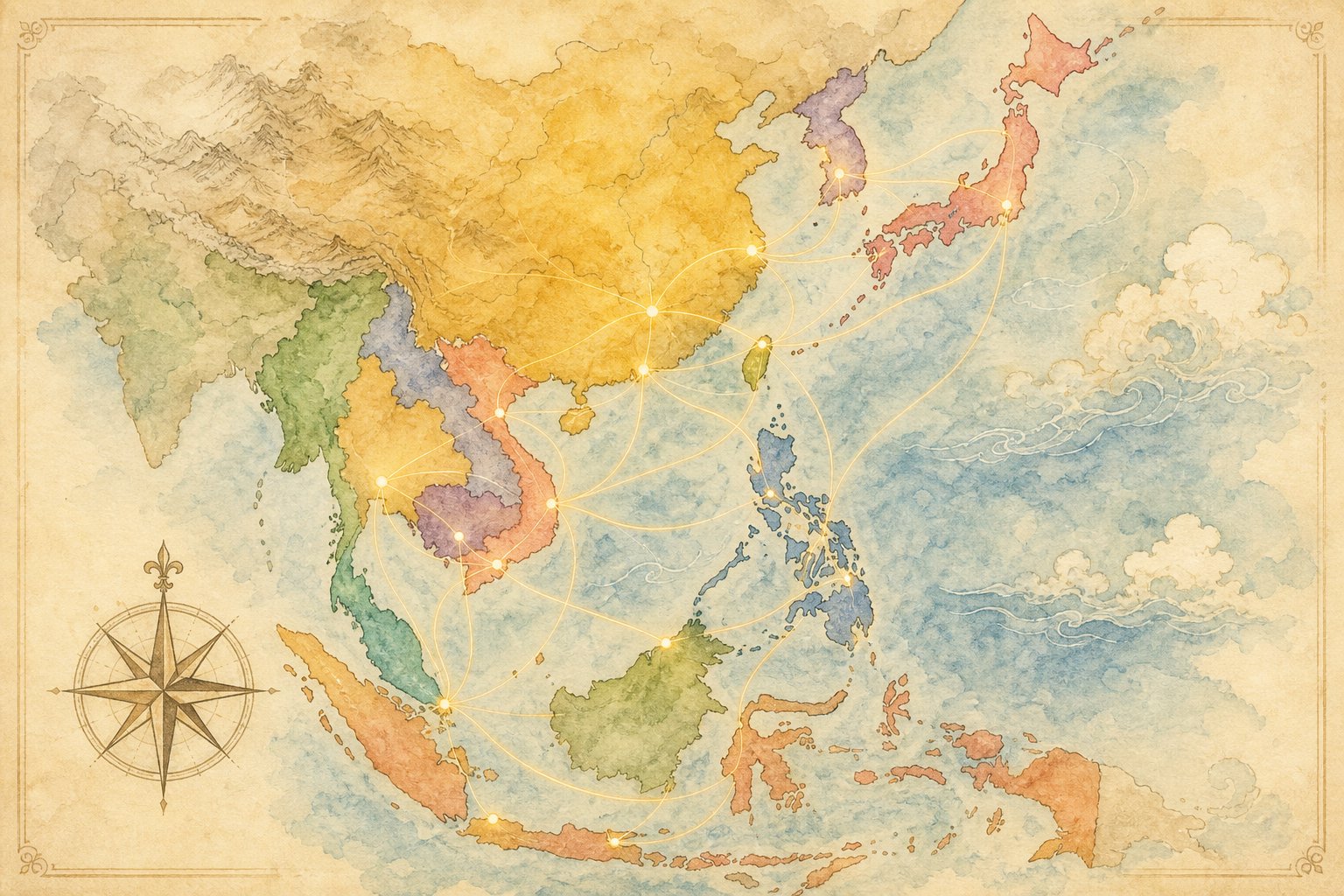
Dialect does not just shift a vowel or soften a consonant. In the case of 李, it can transform the surname into something that looks and sounds like a completely different name. A person named Lim in Singapore, a person named Ly in Vietnam, and a person named Lee in Hong Kong all carry the same ancestral character. Yet if you lined up their surnames in English, you would never guess they belong to the same clan without knowing the linguistic backstory.
Each of these regional variants reflects a specific dialect group and migration corridor. Here is how 李 traveled across Asia and picked up different spellings along the way.
Lim From Hokkien and Teochew Speakers
The lim surname origin traces to the Hokkien and Teochew dialect groups, both of which are Southern Min Chinese languages spoken in Fujian province, eastern Guangdong, and across Southeast Asia. In these dialects, 李 is pronounced something close to "Lee" or "Li" in Hokkien (Pe̍h-oe-ji: Li), but the confusion arises because many Hokkien and Teochew speakers romanized 李 as "Lee" while romanizing the character 林 (meaning forest) as "Lim."
However, in certain Teochew sub-dialects and older romanization conventions used in Malaysia and Singapore, 李 itself can appear as "Lee" or occasionally be confused with "Lim" in community records. The key distinction: if your family speaks Hokkien or Teochew and your ly last name or surname is "Lim," you most likely carry the character 林 (forest), not 李 (plum). True Hokkien speakers with 李 typically spell it "Lee" or "Li" in Southeast Asia.
That said, the broader point holds: most Lis who left China and settled overseas in the past 400 years came from Guangdong and Fujian provinces, the heartlands of Cantonese, Hokkien, and Teochew speakers. The dialect your ancestors spoke determined which English spelling got stamped on their documents at the port of arrival.
Vietnamese Ly and the Ly Dynasty
The ly surname in Vietnam, spelled Ly (with the accent mark as Ly in modern Vietnamese orthography), has been part of Vietnamese culture for over 2,000 years. The character 李 entered Vietnam during the Han dynasty, when northern Vietnam was administered as a Chinese province. Over the centuries, it became thoroughly Vietnamese while retaining its connection to the original character.
The ly family name carries extraordinary historical weight in Vietnam. In 544 CE, Ly Nam De founded the Early Ly dynasty, establishing Vietnam's temporary independence from China. Then in 1009, Ly Thai To established the Later Ly dynasty, which ruled Vietnam for more than 200 years and is credited with moving the capital to Hanoi, building the Temple of Literature, and shaping Vietnamese national identity during a formative period.
The ly last name remains common in Vietnam today, though its numbers were reduced by a historical event: after the Tran dynasty replaced the Ly dynasty in 1232, the powerful regent Tran Thu Do forced many Ly descendants to change their surname to Nguyen. This political suppression explains why Nguyen is now Vietnam's most common surname while Ly, despite its royal pedigree, is less prevalent than you might expect.
For diaspora families, the spelling "Ly" without the accent mark is standard in countries like the United States, France, and Australia, where Vietnamese communities settled after the Vietnam War. If your family spells it Ly and has Vietnamese heritage, you are almost certainly carrying 李 with a royal lineage stretching back over a millennium.
Other Regional Spellings of 李 Across Asia
Beyond the major variants, 李 appears in a surprising number of forms depending on the country and dialect. Here is a comprehensive list grouped by region:
- Mandarin Chinese (Mainland China) - Li
- Cantonese (Hong Kong) - Lee
- Cantonese (Macau) - Lei
- Hokkien (Taiwan, Southeast Asia) - Li, Lee
- Teochew (Southeast Asia) - Lee
- Hakka (Southeast Asia) - Li, Lee
- Vietnamese - Ly
- Korean (South Korea) - Lee, Yi, I
- Korean (North Korea) - Ri
- Korean (historical/academic) - Rhee, Rhie, Reeh
- Japanese (reading of 李) - Ri
- Indonesian - Lie
- Filipino (Philippine Hokkien) - Dy, Lee
- Thai - Lee (หลี่)
- Hmong - Ly
A few of these deserve extra context. The Indonesian spelling "Lie" reflects Dutch colonial romanization conventions, since Indonesia was governed by the Netherlands for centuries. The Filipino spelling "Dy" comes from Philippine Hokkien pronunciation, where the initial consonant shifted over generations of local adaptation. And the le surname origin question comes up frequently: "Le" without an accent typically represents the Vietnamese character 黎 (a different surname entirely), while "Le" as a variant of 李 is rare and usually a simplified or informal spelling in Cantonese contexts.
The Korean variants alone could fill a page. "Lee" dominates in everyday English usage, but official systems have produced Yi, I, Ri, Rhee, and Rhie at various points in history. The first president of South Korea spelled it Rhee (Syngman Rhee), while the Samsung founding family uses Lee (Lee Byung-chul). Same character, same Korean pronunciation, different romanization choices made decades apart.
What ties all these variants together is the character 李 itself. Whether your family says "Lee" in Cantonese, "Ly" in Vietnamese, "Ri" in Japanese, or "Dy" in Filipino Hokkien, the ancestral character written in the clan genealogy book is the same one. The sound shifted as 李 traveled across languages and dialects. The meaning, plum tree, stayed constant. And the shared ancestry connecting over 100 million people across Asia remains intact regardless of which three or two letters ended up on a passport.
Complete Li vs Lee Comparison and Final Verdict
All the romanization systems, dialect shifts, immigration patterns, and cross-cultural overlaps covered above come down to one practical question: what does your specific spelling tell you, and how do you connect with others who share the same ancestral character? This final comparison pulls everything into a single reference you can bookmark and return to.
Complete Comparison of All Li and Lee Variants
The table below maps each common spelling to its romanization system, region, dialect, and whether it represents 李 or a potentially different character. Use it as a starting point to identify where your branch of the li family name fits in the broader picture.
| Spelling | Romanization System | Typical Region | Dialect | Character |
|---|---|---|---|---|
| Li | Hanyu Pinyin | Mainland China | Mandarin | 李 (almost always) |
| Lee | Cantonese / Convention | Hong Kong, Guangdong, Taiwan | Cantonese / Mandarin | 李 (usually) |
| Lee | Korean convention | South Korea | Korean (이) | 李 (Hanja origin) |
| Lei | Jyutping / Portuguese | Hong Kong, Macau | Cantonese | 李 or 黎 |
| Lim | Hokkien / Teochew | Singapore, Malaysia, Philippines | Southern Min | 林 (not 李) |
| Lý / Ly | Quốc Ngữ | Vietnam | Vietnamese | 李 |
| Lê / Le | Quốc Ngữ | Vietnam | Vietnamese | 黎 (not 李) |
| Yi / I | Revised Romanization | South Korea | Korean | 李 (Hanja origin) |
| Ri | McCune-Reischauer | North Korea, Japan | Korean / Japanese | 李 |
| Rhee | Older Korean convention | South Korea (historical) | Korean | 李 |
| Lie | Dutch colonial | Indonesia | Hokkien | 李 |
One important note on this table: the lee family name origin can point to Chinese, Korean, or even English/Irish heritage depending on context. The origins of the surname lee in English-speaking countries are genuinely ambiguous without knowing the character or cultural background behind it. If you are researching the origin of name lee for your own family, the character is the key that unlocks everything else.
Quick Reference for Identifying Your Surname Origin
If your surname is spelled Lee, Li, Ly, Lei, or Lie and represents the character 李, you share the same ancestral surname regardless of spelling. You belong to a clan of over 100 million people stretching across China, Korea, Vietnam, and diaspora communities worldwide.
For anyone actively researching their family history, here is practical advice to move forward:
- Confirm your character first. Before building a family tree, verify whether your last name li or Lee corresponds to 李, 黎, 林, or another character entirely. One elder relative or one old document can settle this immediately.
- Use your spelling as a geographic clue. Your romanization narrows down the dialect group and migration era. That information helps you target the right clan associations, genealogy databases, and regional archives.
- Connect across spellings. The family name lee in Hong Kong and the family name li in Beijing represent the same lineage. Clan associations like the World Li Clan Association (世界李氏宗亲总会) welcome members regardless of how their passport spells it.
- Check dialect pronunciation. If you can ask a family elder how they pronounce the surname in their native dialect, that single data point often confirms both the character and the region of origin more reliably than any English spelling can.
The lee family name and the li family name are not two different surnames competing for legitimacy. They are one surname, 李, wearing different coats depending on which language, dialect, and era dressed it in Latin letters. Your spelling is a piece of family history worth understanding, but it has never changed what the character means: plum tree, Tang dynasty prestige, and a shared identity connecting millions of people who might never realize they are kin until they look past the English letters and find the same 李 waiting underneath.
Frequently Asked Questions About Li vs Lee Chinese Surname
1. Is Lee a Chinese or Korean last name?
Lee can be both Chinese and Korean. The Chinese version comes from the character 李 romanized through Cantonese pronunciation, common among families from Hong Kong and Guangdong. The Korean version derives from the surname 이, which also uses the character 李 in traditional Hanja script but represents a distinct cultural lineage. About 14.7% of South Koreans carry this surname. Context clues like given name structure, dialect background, and family heritage help distinguish between the two origins.
2. Why do some Chinese people spell their last name Li and others spell it Lee?
The spelling depends on three factors: dialect, region of origin, and the romanization system used when the name was first written in English. Mandarin speakers from mainland China use Pinyin, which produces 'Li.' Cantonese speakers from Hong Kong and Guangdong use local romanization conventions that produce 'Lee.' Neither spelling is more correct than the other. Both represent the identical character 李 and share the same ancestral meaning of plum tree.
3. What does the Chinese surname Li mean?
The character 李 means plum or plum tree. It combines two components: 木 (tree) on top and 子 (child or seed) on the bottom. According to Chinese legend, the surname was originally written as 理 (meaning reason), but a family changed it to 李 after surviving on wild plums during a period of persecution. The character gained widespread prominence as the imperial surname of the Tang dynasty from 618 to 907 AD.
4. Are Li, Lee, Lim, and Ly all the same surname?
Li, Lee, and Ly all represent the character 李 through different romanization systems and dialects. However, Lim typically represents a different character, 林 (meaning forest), used by Hokkien and Teochew speakers in Southeast Asia. The Vietnamese Ly also traces to 李 and was carried by the royal Ly dynasty that ruled Vietnam for over 200 years. Always confirm the underlying Chinese character rather than assuming shared ancestry based on English spelling alone.
5. How can I find out which Chinese character my surname Li or Lee represents?
The most reliable methods include checking old immigration documents, birth certificates, ancestral tablets, or grave markers that show the actual Chinese character. Asking an elder family member who reads Chinese is another direct approach. Regional clues also help: if your family comes from Guangdong and pronounces the name differently from standard Cantonese 'Lei,' you may carry 黎 rather than 李. Connecting with a Chinese clan association organized by character can also confirm your lineage.