What Is Pinyin Name Calligraphy and Why It Matters
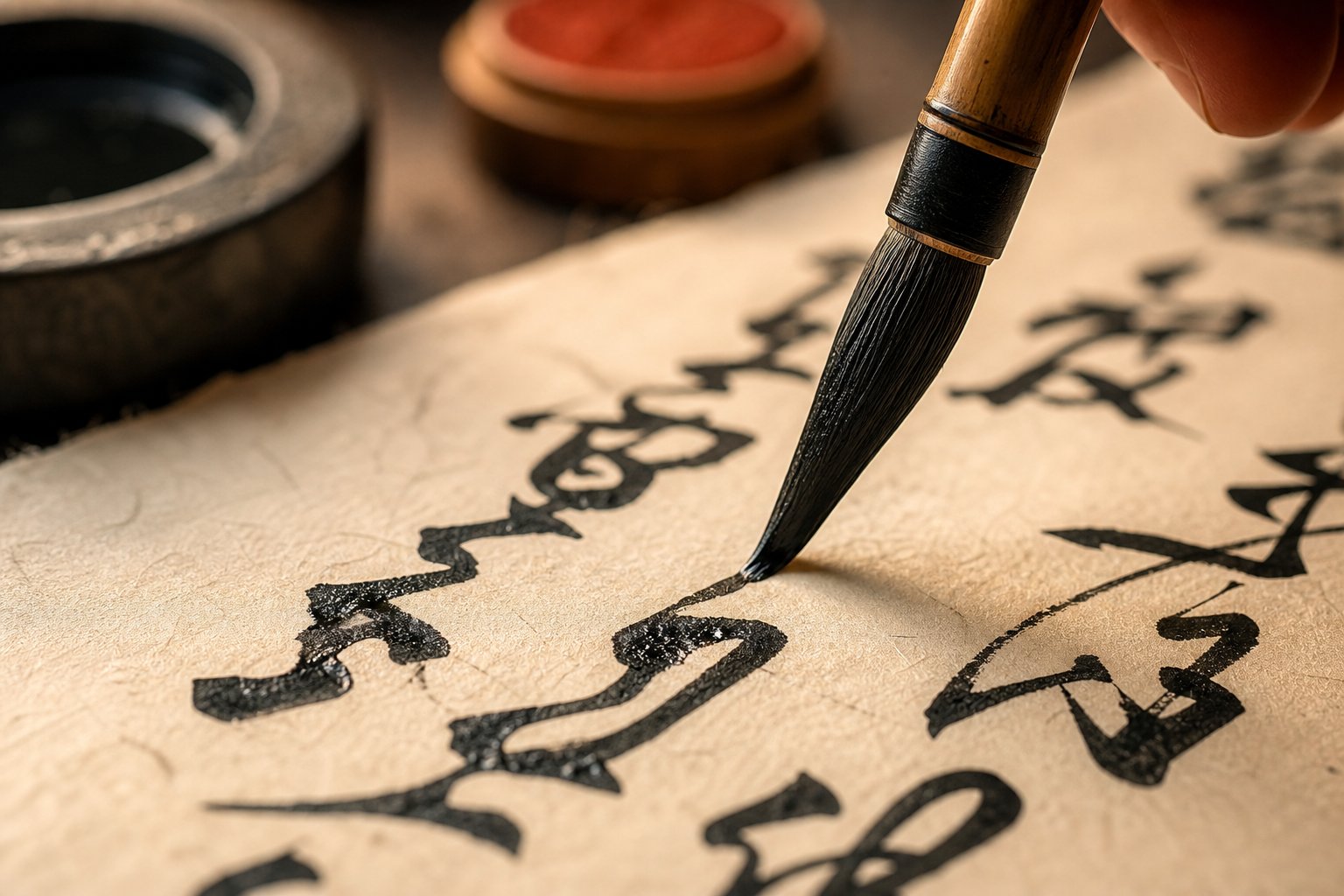
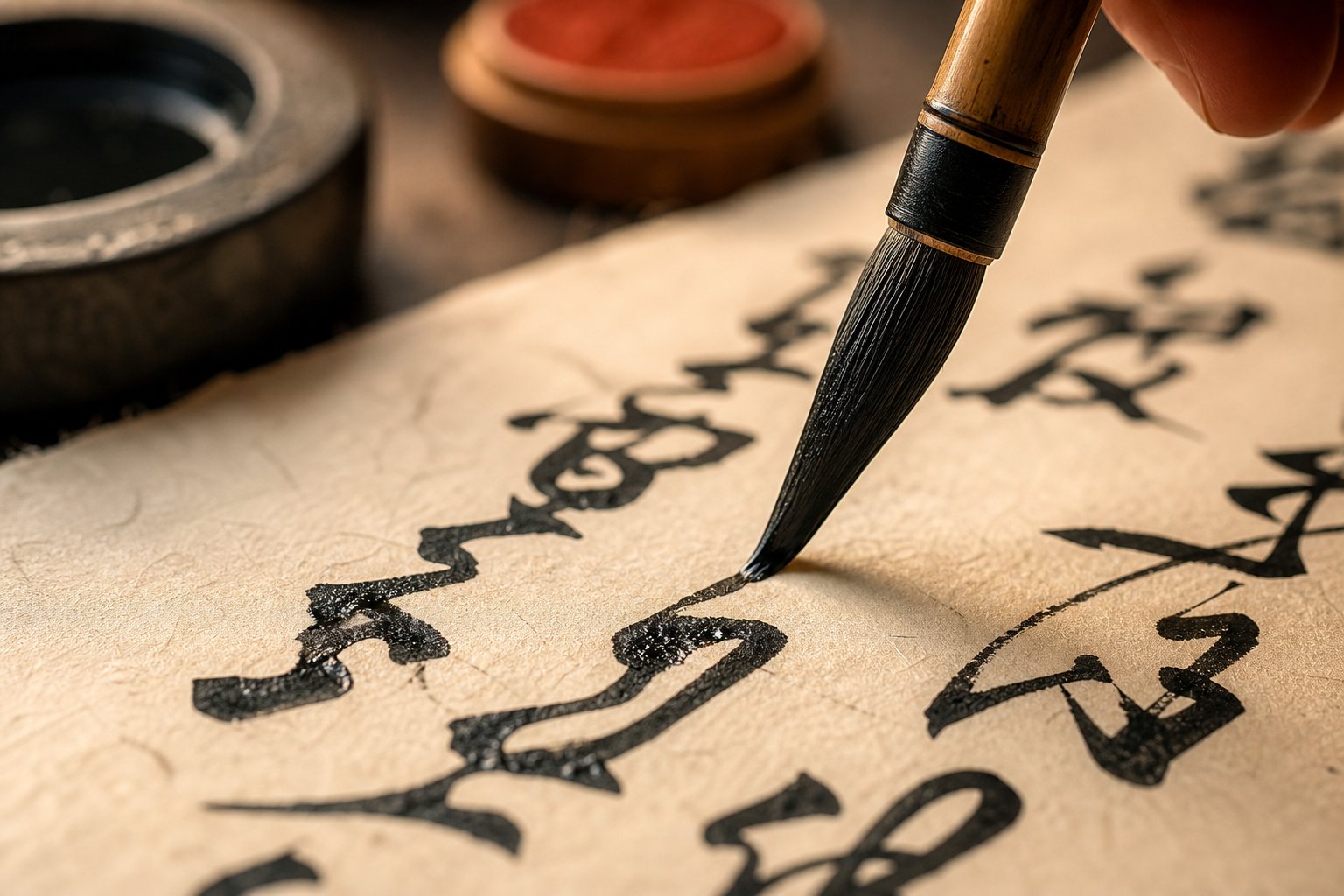
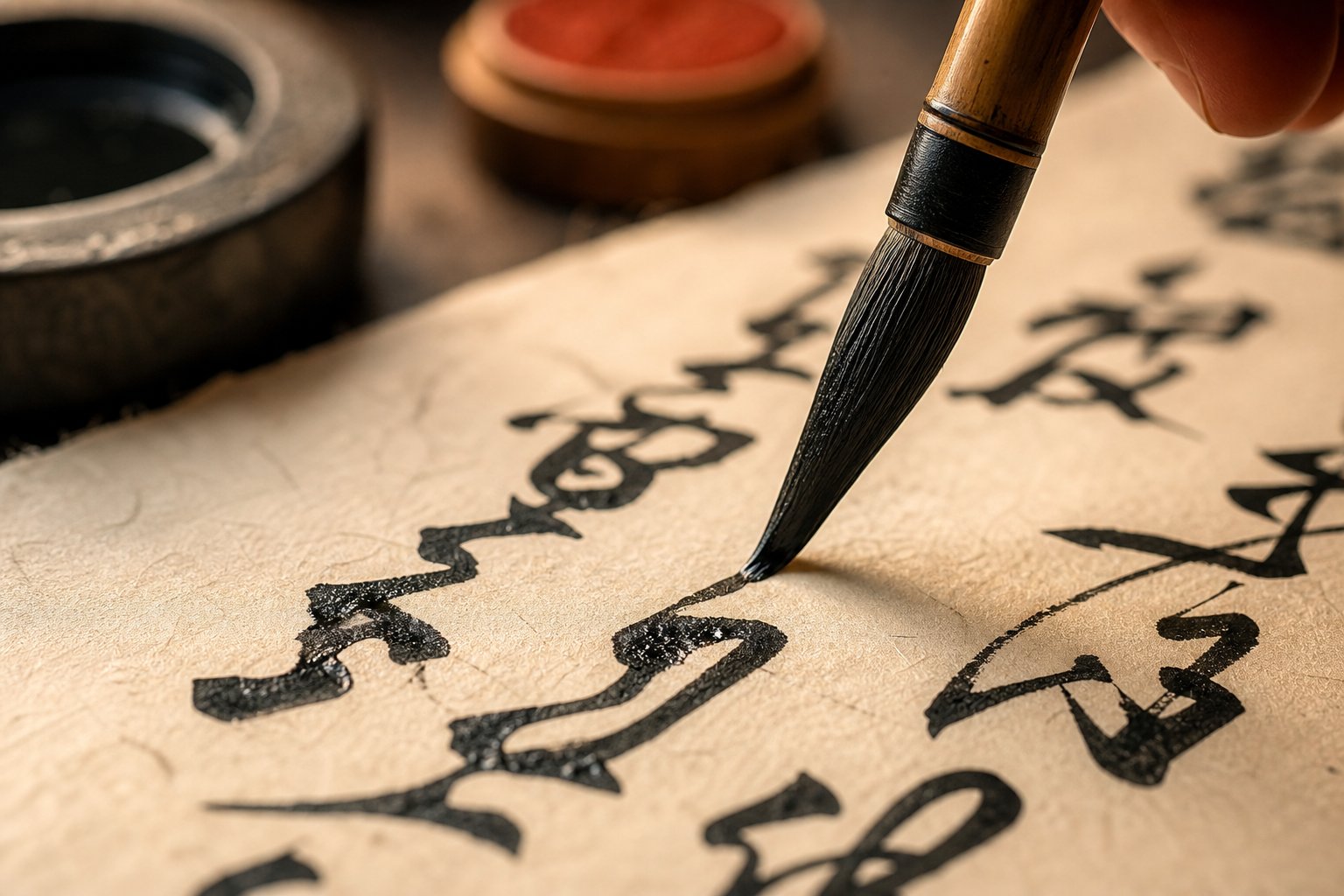
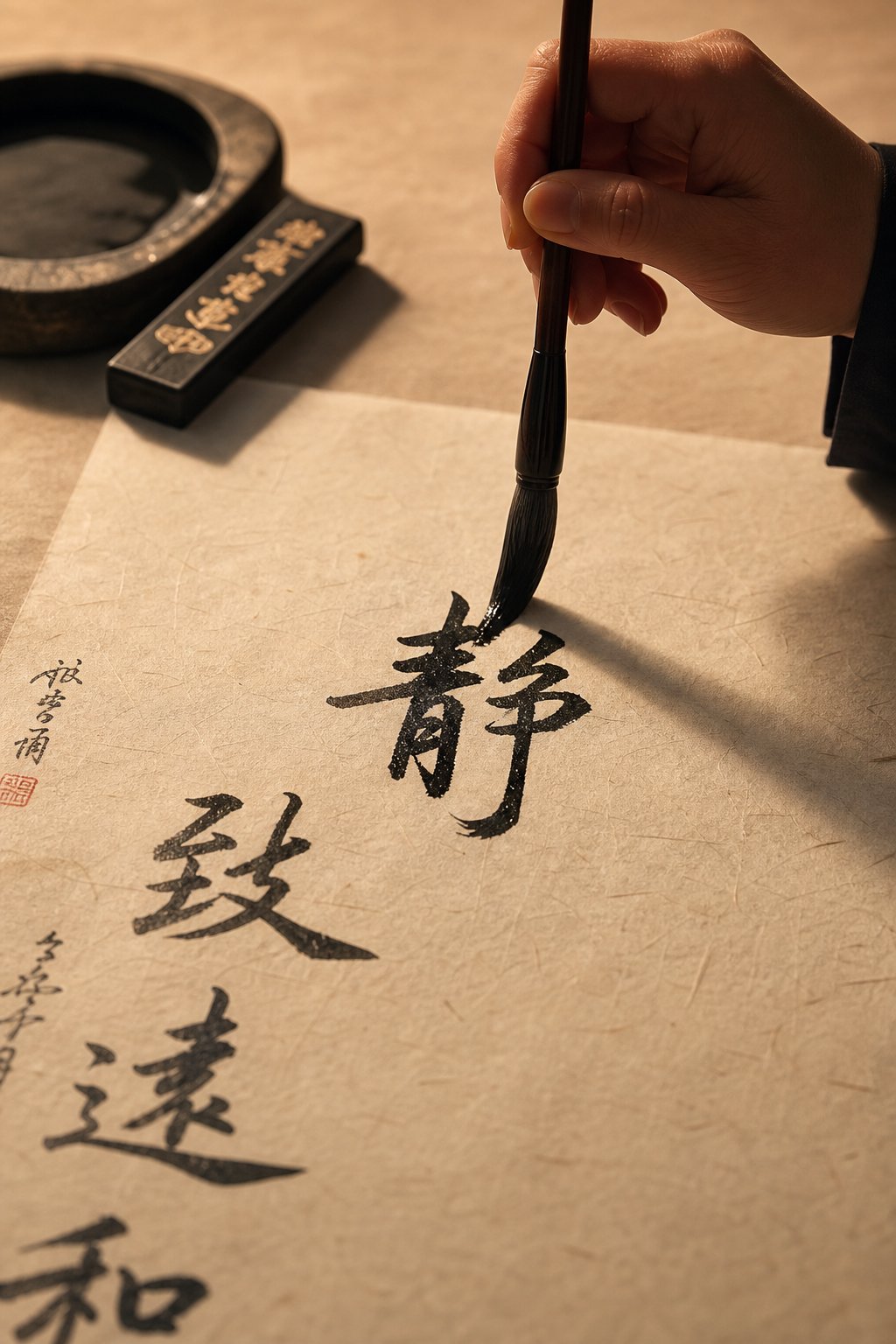
Imagine hearing your own name spoken in Mandarin for the first time, each syllable carrying a tone that gives it melody, then watching those sounds take shape as ink flows across rice paper in elegant brushstrokes. That experience sits at the heart of pinyin name calligraphy, a practice that transforms a person's name into Chinese characters through phonetic romanization and renders those characters in traditional brush art.
The process works like this: pinyin, the official romanization system for Mandarin Chinese, maps Latin letters to Chinese syllables. Your name gets broken into sounds that match existing pinyin syllables, each syllable points to a set of possible characters, and a calligrapher brings the chosen characters to life with brush and ink. The name Anna, for instance, becomes 安娜 (Anna), where each character was selected to mirror the original pronunciation while carrying positive meaning.
Pinyin is the phonetic bridge that lets any Western name cross into the world of Chinese brushwork, turning familiar sounds into visual art without losing the identity behind the name.
What Pinyin Name Calligraphy Means
This art form lives at a rare intersection of linguistics, visual art, and cultural exchange. It asks you to think about your name in chinese language terms, considering how sound, tone, and meaning interact within a single character. When you wonder "what is my name in chinese," you are really asking a layered question that involves phonetics, aesthetics, and cultural context all at once. A chinese calligraphy name is never just a translation. It is a creative interpretation shaped by centuries of brushwork tradition.
Why This Art Form Is Growing in Popularity
Most online resources treat pinyin lessons, name translation tools, and calligraphy tutorials as entirely separate subjects. You can find guides on how to get your name in chinese, dictionaries that list character options, and videos on brush technique, but rarely does a single resource walk you through the complete journey from sound to stroke. That gap is exactly what this article fills. Whether you want a chinese name calligraphy piece for your wall, a personal seal, or simply a deeper understanding of how your name sounds and looks in another writing system, the workflow ahead connects every step into one coherent path. The growing interest in name in chinese language art reflects a broader desire for meaningful cross-cultural connection, one that goes far beyond novelty and into genuine appreciation.
The real magic, though, depends on understanding how your name's sounds map to specific characters, and that choice between phonetic accuracy and deeper meaning is where the creative decisions begin.
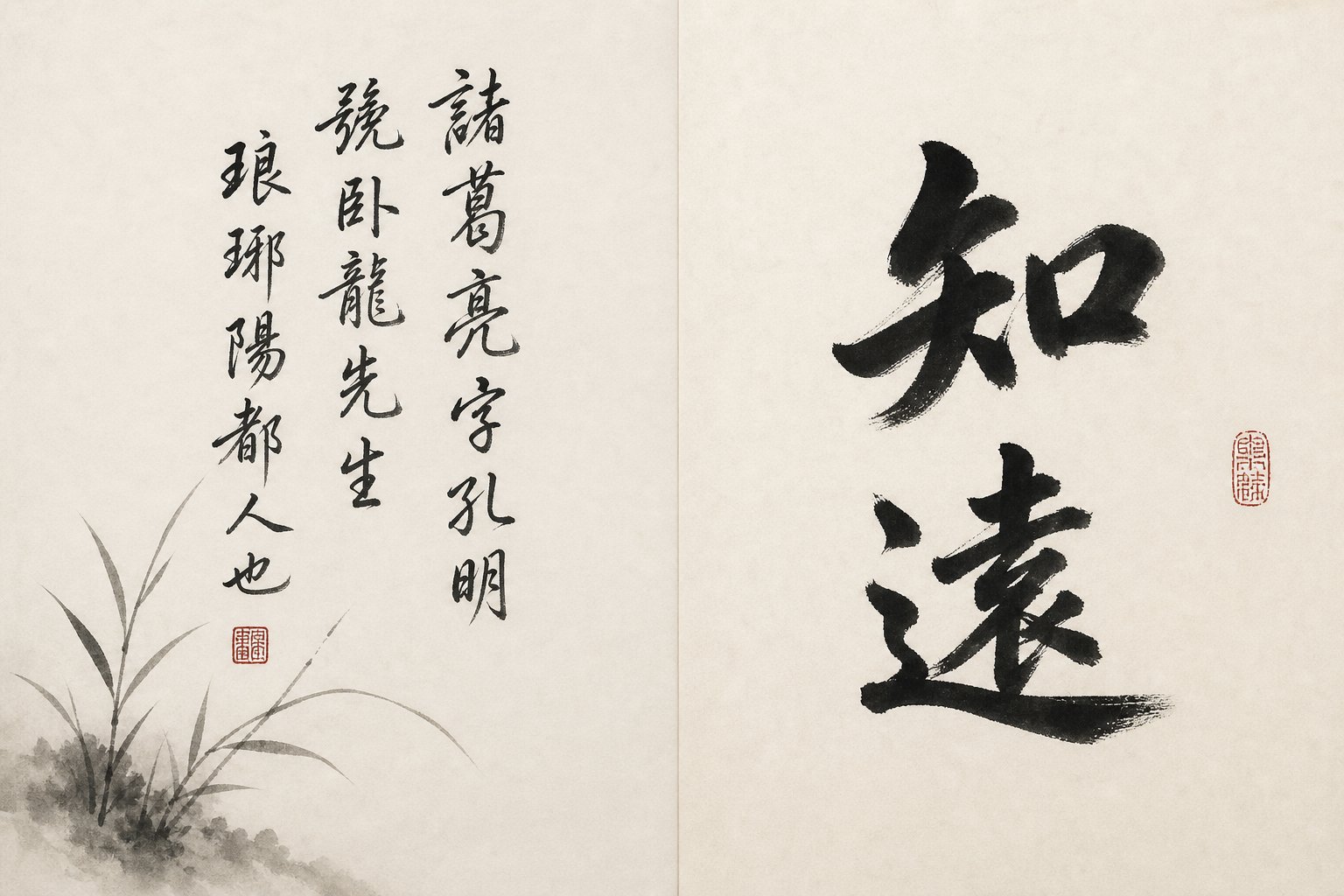
Phonetic Transliteration Versus Semantic Translation
Every Western name that enters the Chinese writing system faces a fork in the road. Do you keep the sound of your name, or do you capture its meaning? This single decision shapes everything that follows in the calligraphy process, from character count to visual complexity to the emotional weight of the final brushwork.
Phonetic Transliteration Through Pinyin Syllables
Phonetic transliteration is the most common method used to translate english to chinese names. It works by selecting characters whose pronunciations approximate the sounds of the original name, syllable by syllable. The characters are chosen primarily for how they sound, though skilled translators also consider the visual appeal and connotations of each character.
Take the name "Grace" as an example. A phonetic rendering breaks it into pinyin syllables that mirror the English pronunciation: Geleiси (格蕾丝), written as Gélèisī. Each character, 格 (ge), 蕾 (lei), and 丝 (si), was picked because it sounds close to the original, not because of its individual meaning. This approach preserves the recognizability of your name. Someone hearing "Gélèisī" can connect it back to "Grace" relatively quickly.
As research on CJV name handling notes, ideally the characters chosen should carry attractive meanings even in phonetic transliteration. The character 丽 (li, meaning "pretty") might be preferred over another li character with a neutral or negative connotation. This is where a chinese name translation becomes more art than science.
Semantic Translation for Meaningful Character Choices
Semantic translation takes the opposite path. Instead of mimicking how your name sounds, it asks: what does your name mean? Then it finds Chinese characters that express that meaning directly.
"Grace" carries the meaning of elegance, charm, and divine favor. A semantic rendering might produce 优雅 (Yōuyǎ), which translates directly to "elegance" or "gracefulness." The result sounds nothing like the English name, but it carries the same spirit. You'll notice this approach produces shorter, more natural-sounding Chinese names, often just two characters, which feel closer to how native Chinese names actually work.
This method is less common for personal names in everyday use but appears frequently in literature. Translators sometimes convert name to chinese semantically when the meaning is central to the story or identity, such as "Cinderella" becoming 灰姑娘 (Huī gūniang, "ash girl").
Choosing the Right Approach for Your Purpose
When you translate name into chinese for calligraphy, the choice between these methods depends on what you want the piece to communicate. A phonetic version keeps your identity audibly intact. A semantic version creates something that feels culturally rooted and visually concise.
For calligraphy specifically, fewer characters often mean larger, more dramatic brushwork on a given surface. A two-character semantic name allows bold strokes and generous spacing. A three- or four-character phonetic name offers more visual rhythm and complexity. Neither is inherently better. The right english to chinese name converter approach depends on your intended use.
| Criteria | Phonetic Transliteration | Semantic Translation |
|---|---|---|
| Accuracy to original name sound | High - preserves pronunciation | Low - sounds completely different |
| Meaning connection | Indirect (characters chosen for pleasant connotations) | Direct (characters express the name's meaning) |
| Character count | Typically 3-5 characters | Typically 2-3 characters |
| Aesthetic flexibility in calligraphy | More strokes create visual density and rhythm | Fewer strokes allow bolder, larger compositions |
| Cultural authenticity | Recognizably foreign in structure | Closer to native Chinese name patterns |
| Suitability for formal calligraphy styles | Works well in kaishu and xingshu | Suits all styles, especially seal script |
Some people choose both, using a phonetic version for formal contexts and a semantic chinese name from english name for artistic pieces. A calligrapher might even combine the approaches, selecting phonetic characters that also hint at the name's deeper meaning. That layered creativity is part of what makes this process so rewarding.
Whichever path you choose, the next challenge is the same: mapping your name's sounds to actual pinyin syllables, where tones quietly reshape everything about which characters become available to you.
How Pinyin Tones Shape Your Chinese Name Characters
Your name carries sounds you have never had to think twice about. But the moment you ask "how do I write my name in chinese," those familiar sounds become a puzzle. English phonemes do not map one-to-one onto pinyin syllables, and the tones layered on top of each syllable open up entirely different character options. This is where the process gets both tricky and creatively rich.
Breaking Your Name Into Pinyin Syllables
Pinyin contains roughly 400 unique syllables. English has over 15,000 possible syllable combinations. That mismatch means compromises are inevitable when you try to spell your name in Chinese sounds. Some English phonemes simply do not exist in Mandarin. The "th" in "Heather," the "v" in "David," and the short "a" in "Patrick" all require approximation.
The trick is finding the closest pinyin syllable for each chunk of your name. "Michael," for example, breaks into mai-ke-er (迈克尔), because Mandarin lacks a direct match for the "-chael" ending. "Jessica" becomes jie-xi-ka (杰西卡), swapping the soft "s" for "xi" since that pinyin syllable sits closer to the original sound. When you learn how to write your name in mandarin, you quickly realize that approximation is not a flaw in the system. It is the system.
How Tones Change Everything About Character Selection
Here is where things get fascinating. Every pinyin syllable can be spoken in four tones plus a neutral tone, and each tone points to completely different characters. The syllable "ma" alone demonstrates this dramatically:
- First tone (mā) - 妈 meaning "mother"
- Second tone (má) - 麻 meaning "hemp"
- Third tone (mǎ) - 马 meaning "horse"
- Fourth tone (mà) - 骂 meaning "to scold"
Imagine choosing the wrong tone for a syllable in your name and ending up with a character that means something unfortunate. This is why tone selection is not purely linguistic. It is a creative and cultural decision. A skilled translator considers how tones flow together, whether the tonal pattern sounds melodic in Mandarin, and which characters within each tone carry the most visually appealing brushwork. When figuring out how to write my name in mandarin, the tone you assign to each syllable determines the entire character palette available to you.
The Complete Conversion Workflow
Wondering how to write your name in chinese from start to finish? The process follows a clear sequence, though each step involves judgment calls that benefit from cultural knowledge:
- Write out your full name and identify its natural syllable breaks based on pronunciation, not spelling.
- Match each syllable to the closest available pinyin sound, noting where approximations are needed.
- Assign a tone to each pinyin syllable, prioritizing pleasant-sounding tonal combinations and positive character options.
- Review all available characters for each toned syllable, filtering for meaning, visual complexity, and cultural connotation.
- Test the full name in mandarin by reading it aloud to check rhythmic flow and tonal balance.
- Verify your selections with a native Mandarin speaker before moving to the calligraphy stage.
This workflow applies whether you are exploring how to write my name in chinese for a personal art piece or preparing characters for a formal seal. The syllable-breaking and tone-assignment steps are where most of the creative latitude lives. Two translators given the same Western name might produce different but equally valid results, each reflecting different aesthetic priorities.
Your name in mandarin is not a fixed equation with one correct answer. It is a curated selection shaped by sound, meaning, visual weight, and cultural awareness. That visual weight becomes especially important when you consider how different calligraphy scripts transform the same characters into wildly different artistic expressions.
Five Calligraphy Script Styles for Personal Names
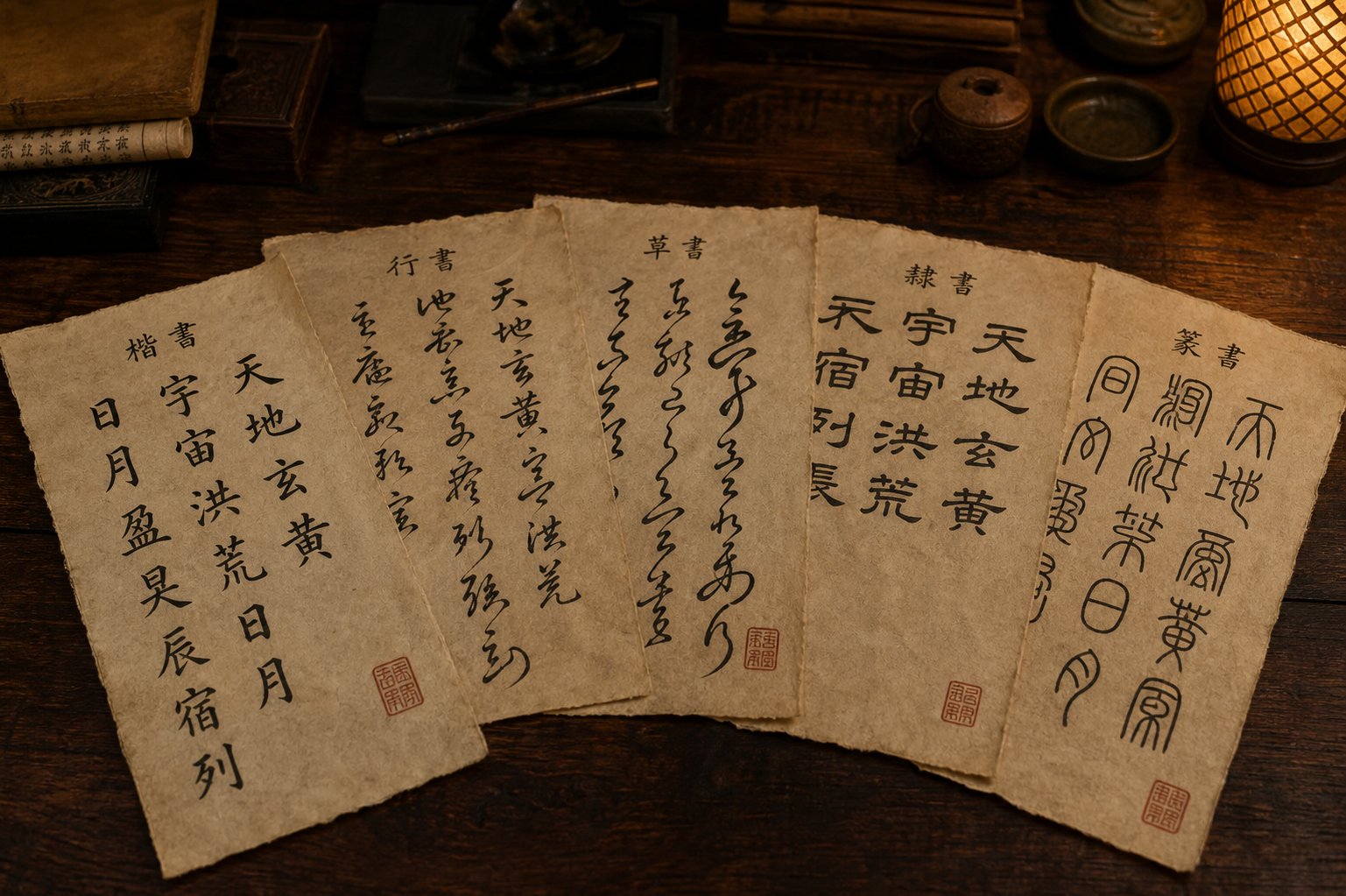
The same two or three characters that form your Chinese name can look like five entirely different pieces of art depending on which calligraphy script you choose. Each of the five major chinese script styles carries its own rhythm, stroke logic, and visual personality. Picking the right one for your name is not just an aesthetic preference. It shapes the mood, formality, and cultural resonance of the finished piece.
The Chinese tradition calls these the "Five Scripts" or 五体 (wǔ tǐ). As Skritter's calligraphy overview explains, all other styles branch from these five pillars. Think of them as a spectrum running from rigid structure to fluid expression, each training a different relationship between brush, ink, and paper.
Kaishu and Xingshu for Readable Name Art
Kaishu (楷书, regular script) is the style you probably picture when you imagine Chinese writing. Every stroke sits upright and square, with clear beginnings and endings. The brush moves deliberately, pausing at corners, pressing down for thickness, and lifting for thin trailing strokes. For personal names, kaishu delivers immediate legibility. Anyone who reads Chinese can identify your characters at a glance, making it ideal for business cards, formal gifts, or any context where clarity matters. If you have ever seen a standard chinese calligraphy font on a printed document, that typeface draws directly from kaishu's structured DNA.
Xingshu (行书, running script) loosens that structure just enough to feel alive. The famous Song Dynasty calligrapher Su Shi described it perfectly: "Standard Script is like standing, Running Script is like walking." Strokes begin to connect, the brush lifts less often, and the overall rhythm picks up speed. Your name in xingshu feels personal and warm, like a handwritten letter rather than a typed document. This calligraphy script is the most commonly used in daily life among native writers, which gives it an authentic, lived-in quality that many people find appealing for wall art and personal pieces.
Caoshu and Lishu for Expressive Styles
Caoshu (草书, cursive script) is where chinese cursive reaches its most dramatic form. The brush barely lifts from the paper. Characters compress, merge, and abstract into flowing gestures that prioritize energy over readability. Even native speakers often struggle to decipher cursive chinese without specialized training. For name calligraphy, caoshu works best as pure visual art, a piece where the emotional force of the brushwork matters more than instant recognition. The strokes feel explosive, improvisational, almost musical in their rhythm.
Lishu (隶书, clerical script) takes a completely different path. Its strokes spread horizontally with a distinctive wave-like flick at the end of each horizontal line. The overall shape of characters becomes wider and flatter, giving name pieces a stately, decorative presence. There is a Chinese saying that captures the contrast: "Seal script is like a painting, Clerical script is like a wave." If you want a mandarin calligraphy font feel that balances readability with artistic flair, lishu offers that middle ground beautifully.
Zhuanshu and the Tradition of Name Seals
Zhuanshu (篆书, seal script) is the oldest of the five styles and the one most closely tied to personal identity. Its rounded, symmetrical strokes look almost like abstract drawings. Characters in seal script emphasize curves and dots with no sharp corners, creating forms that feel ancient and ceremonial. This is the style carved into personal seals, or chops, which function as signature equivalents in Chinese culture. A china calligraphy font based on zhuanshu looks nothing like modern printed text, which is precisely why it carries such visual weight as a name piece. The chinese calligraphy typeface you see on traditional red seal impressions draws from this script's timeless geometry.
| Script Style | Formality Level | Legibility | Artistic Expression | Best Use for Personal Names |
|---|---|---|---|---|
| Kaishu (Regular) | High | Excellent - every stroke is clear | Moderate - structured and disciplined | Business cards, formal gifts, documents |
| Xingshu (Running) | Medium | Good - slightly connected strokes | High - fluid and personal | Wall art, personal pieces, signatures |
| Caoshu (Cursive) | Low | Poor - highly abstracted forms | Very high - emotional and dynamic | Abstract art pieces, expressive displays |
| Lishu (Clerical) | Medium-High | Good - wide, wave-like strokes | High - decorative and rhythmic | Decorative plaques, display pieces |
| Zhuanshu (Seal) | Ceremonial | Low for modern readers | High - ancient and symbolic | Personal seals, chops, formal stamps |
Each style transforms identical characters into something that communicates a different intention. A name rendered in kaishu says "I respect tradition and clarity." The same name in caoshu says "I value artistic energy and movement." Choosing your script is choosing the voice your name speaks in.
That voice, however, only resonates if the underlying characters are correct. And character selection is exactly where well-meaning Westerners most often stumble, sometimes with consequences that are difficult to undo.
Common Mistakes to Avoid With Chinese Name Calligraphy
A beautifully brushed name piece loses all its power the moment a native speaker spots an error. And errors in this space are surprisingly easy to make. The gap between what a character looks like to a non-reader and what it communicates to a fluent speaker can be enormous. Some mistakes are mildly embarrassing. Others end up as permanent chinese writing tattoos that say something the wearer never intended.
The good news is that nearly every common mistake follows a predictable pattern, which means they are avoidable if you know where to look.
Characters With Hidden Negative Meanings
Chinese characters carry layers of meaning that extend far beyond their dictionary definitions. A character might look elegant and sound correct for your name, yet carry cultural baggage that makes native speakers wince. The character 死 (sǐ, death) is an obvious one to avoid, but subtler traps exist everywhere. Some characters are associated with bad luck, illness, or moral failings through centuries of literary and colloquial use.
Consider how certain chinese words symbols function in context. The character 蝶 (dié, butterfly) seems poetic, but in some regional traditions it carries associations with early death. The character 梅 (méi, plum blossom) is beautiful on its own, yet when paired with certain other characters it can sound like 没 (méi, "to lack" or "without"), creating unintended wordplay. These connotations are invisible to someone using a basic chinese character translator without cultural context.
Overly complex characters present a separate problem. A character with 20 or more strokes might look impressive in large format, but when scaled down for a seal, business card, or tattoo, the strokes blur together and legibility collapses. Simpler characters with 8 to 12 strokes tend to hold their structure across sizes.
Tonal Combinations That Sound Wrong
Even when individual characters are well-chosen, the way they sound together matters. Mandarin speakers are sensitive to tonal flow. A name where every syllable carries the fourth tone (the sharp, falling tone) sounds aggressive and choppy. Three consecutive third tones create an awkward pronunciation pattern because Mandarin's tone sandhi rules force the first two to shift, making the name sound different from what you intended.
Worse, some character combinations are homophones for unfortunate words or phrases. A two-character name that accidentally sounds like a common insult or a bodily function will get noticed immediately. This is why treating chinese name letters as purely visual elements, without considering their spoken dimension, leads to problems. The characters exist in a living language where people hear them, not just see them.
Mixing simplified and traditional character sets is another frequent misstep. StudyCLI's guide on Chinese tattoos specifically warns that tattoo artists unfamiliar with the difference may combine elements from both systems, producing characters that look wrong to native speakers. If you want a classical or calligraphic aesthetic, traditional characters (繁体字) are generally the better choice. If you prefer the modern mainland standard, stick consistently with simplified (简体字). Never mix them.
Verification Steps Before Permanent Use
The stakes rise dramatically when your name calligraphy is heading toward something permanent, whether that is chinese tattoo characters inked on skin, a carved seal, or a commissioned art piece. A few verification steps can save you from regret:
- Have at least two native Mandarin speakers review your characters independently. One person might miss something the other catches.
- Ask your reviewers to read the name aloud and note any awkward tonal patterns or unintended homophones.
- Verify that all characters belong to the same system, either all traditional or all simplified, with no mixing.
- Check chinese character stroke order for each character in your name. Incorrect stroke order affects the aesthetic balance of brushwork, even if the final shape looks roughly correct to untrained eyes.
- Test the characters at the intended final size. Print them at tattoo scale or seal scale and confirm legibility.
- Research each character's cultural connotations beyond its primary meaning. Look for literary associations, slang usage, and regional interpretations.
- Confirm the correct orientation. Traditional calligraphy reads top to bottom, right to left. A single-column vertical name is standard for scrolls and tattoos. Horizontal left-to-right orientation works for modern contexts but changes the visual composition entirely.
When you chinese character write in brush calligraphy, stroke order is not just academic. It determines how ink distributes across the paper, where thick meets thin, and how energy flows through each character. A character written with incorrect stroke order may end up with the right shape but the wrong internal rhythm, something a trained eye spots immediately.
Orientation mistakes deserve special attention. Vertical text flows from top to bottom, with columns moving right to left. A name written vertically as a single column is the traditional format for personal calligraphy and seals. Placing characters horizontally is not wrong in modern usage, but it changes the aesthetic relationship between strokes and the surrounding space. For tattoos especially, vertical orientation respects the traditional format and tends to complement the body's natural lines more gracefully.
These pitfalls might sound intimidating, but they share a common solution: slow down, consult knowledgeable people, and treat the process with the same care you would give any permanent artistic decision. The characters are worth getting right, and the tools you use to bring them to life on paper matter just as much as the characters themselves.
The Four Treasures of the Study for Name Practice
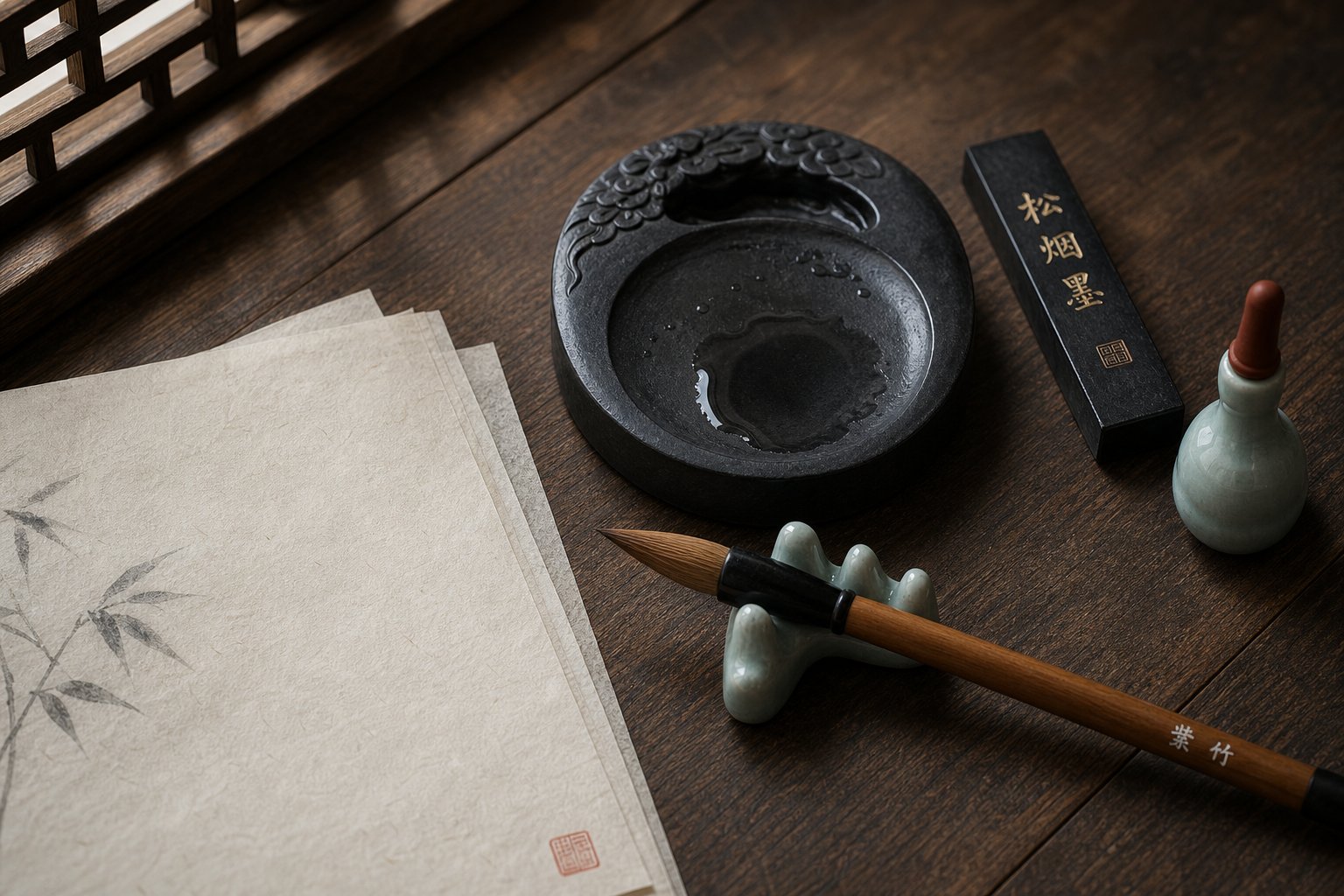
Getting your characters right is only half the equation. The physical tools you use to bring those characters to life determine whether your brushwork looks confident or clumsy, whether strokes carry weight or bleed into shapelessness. Chinese calligraphy has relied on the same four core instruments for over two thousand years, and they remain the foundation for anyone wanting to create chinese calligraphy by hand today.
These four tools are collectively known as the Four Treasures of the Study, or 文房四宝 (wenfang sibao). They are the brush 笔 (bi), ink 墨 (mo), paper 纸 (zhi), and inkstone 砚 (yan). Each one plays a specific role in shaping how your name appears on the page, and understanding their interaction helps you practice with intention rather than guesswork.
Brush and Ink Essentials for Name Practice
The chinese paint brush is nothing like a Western watercolor brush. Its thick body tapers to a fine point, allowing a single tool to produce both broad sweeping strokes and hairline details within the same character. For name practice specifically, you want a medium-sized brush, one with a tip length of roughly 3 to 4 centimeters. This size handles characters written at about 5 to 7 centimeters tall, which is a comfortable learning scale that lets you see stroke structure clearly without requiring oversized paper.
Brush hair type matters too. A combination brush (兼毫, jian hao) blends stiff weasel hair with softer goat hair, giving you enough spring to control strokes while still allowing the flexibility needed for flowing transitions. Pure wolf-hair brushes offer more precision but less forgiveness. Pure goat-hair brushes produce beautiful ink variation but demand more skill to control. For someone learning to chinese handwrite their own name, the combination brush strikes the right balance.
Ink consistency directly affects how your name characters look. Thicker ink produces darker, more defined strokes with crisp edges, ideal for kaishu (regular script) name pieces. Thinner ink creates softer gradations and a more painterly feel, which suits xingshu (running script) or expressive styles. Traditional inksticks ground fresh on an inkstone give you full control over this consistency. Bottled ink works for practice sessions but offers less nuance.
Paper and Inkstone Selection
Xuanzhi (宣纸), commonly called rice paper in the West, behaves completely differently from any Western paper you have used. Its plant fibers absorb ink on contact, spreading it outward in a soft feathering effect. This means every hesitation, every pause, every moment of excess ink shows up immediately. There is no erasing, no going back. That unforgiving quality is precisely what trains your brush control.
For name practice, unsized xuan paper (生宣, sheng xuan) gives you the full traditional experience, but it is challenging for beginners because ink spreads fast. Half-sized paper (半熟宣, ban shu xuan) absorbs more slowly, giving you an extra fraction of a second to complete each stroke cleanly. Start with half-sized paper for your first few weeks, then graduate to unsized once your stroke speed improves.
The inkstone (砚, yan) is where ink preparation becomes a meditative ritual. You add a few drops of water to the stone's flat grinding surface, then move the inkstick in slow, steady circles. The friction gradually releases pigment into the water, building ink density over several minutes. This unhurried process is not inefficiency. It is a deliberate transition from daily distraction into focused creative attention. By the time your ink reaches the right consistency, your mind has settled into the calm concentration that brushwork demands.
Building a Starter Practice Kit
You do not need professional-grade calligraphy tools to begin practicing your name. A functional starter kit costs far less than most people expect. Here is what to look for:
- Combination brush (兼毫) - medium size with 3-4 cm tip length. Suitable for characters at standard practice scale.
- Inkstick or bottled ink - a basic pine-soot inkstick works well for beginners. Bottled calligraphy ink is acceptable for early practice sessions when convenience matters.
- Half-sized xuan paper - more forgiving than raw xuan, with enough absorbency to teach proper ink control without punishing every small hesitation.
- Practice paper with grid lines - printed grids help you maintain consistent character proportions while learning stroke placement.
- Small inkstone or ceramic dish - if using bottled ink, a shallow dish works. If grinding from a stick, even a modest inkstone teaches the ritual.
- Felt mat (毛毡) - placed under your paper to absorb excess ink and prevent slipping.
- Paperweight (镇纸) - holds paper flat while you work. Any smooth, heavy object serves the purpose.
Professional chinese calligraphy writer tools, like hand-carved She inkstones or aged inksticks, can cost hundreds of dollars. They produce noticeably finer results, but the difference matters most at advanced skill levels. For someone learning to write their own name, a modest kit in the $30 to $60 range provides everything needed to develop solid fundamentals.
Digital alternatives exist too. If you want to generate chinese calligraphy previews before committing brush to paper, online tools let you type pinyin or characters and see them rendered in various script styles. A chinese calligraphy maker tool can help you visualize how your name looks in kaishu versus xingshu before you pick up a brush. These digital previews are useful for planning, but they cannot replace the tactile learning that comes from feeling how ink flows from bristle to fiber.
The real value of practicing with physical tools is the feedback loop. Paper shows you exactly where your brush hesitated, where pressure was uneven, where speed dropped. Each attempt at your name teaches your hand something new. And once you can write your characters with confidence, the question becomes: what do you do with that skill? The answer stretches from personal art pieces to professional applications that carry real cultural weight.
Practical Uses From Tattoos to Seals and Gifts
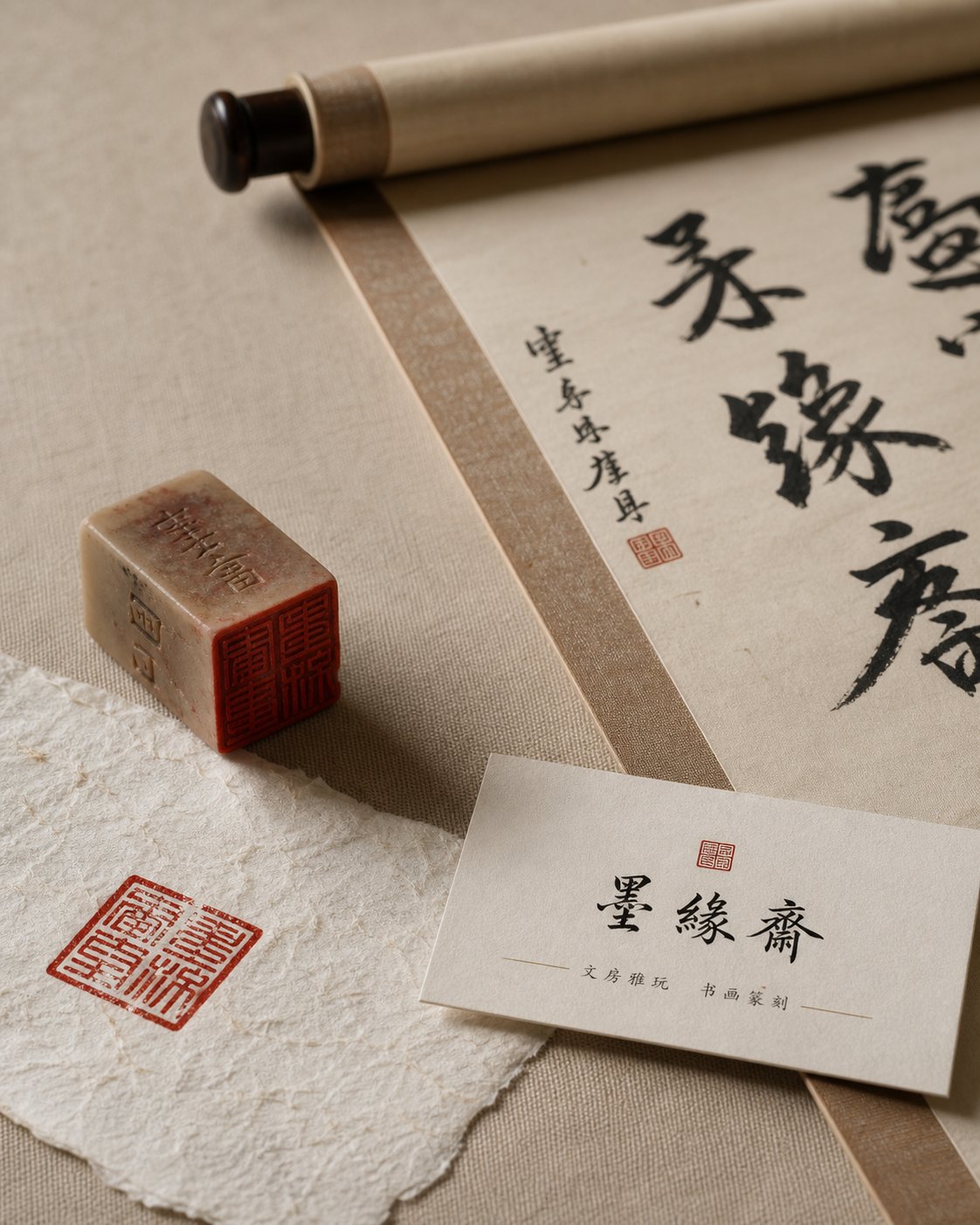
Your characters are chosen, your script style is decided, and your brush control is improving. The natural next question is: where does this calligraphy actually live? Pinyin name calligraphy finds its way into surprisingly diverse contexts, from skin to stone to silk. Each application carries its own rules about style, orientation, and cultural weight. Getting those details right is the difference between a piece that resonates and one that misses the mark.
Tattoo Guidelines and Cultural Sensitivity
A chinese letter tattoo is one of the most permanent decisions you can make with your Chinese name characters. It is also one of the most common reasons people seek out tattoo chinese writing in the first place. The appeal is clear: a name rendered in elegant brushstrokes carries a visual gravity that Latin letters simply cannot match. But permanence demands extra care.
Orientation comes first. Traditional Chinese calligraphy reads vertically, top to bottom. A single-column vertical arrangement is the standard format for name pieces, and it tends to follow the natural lines of the body, whether placed along the forearm, spine, or ribcage. Horizontal placement works in modern contexts, but it shifts the aesthetic away from classical calligraphy and toward a more contemporary graphic feel. If your goal is traditional chinese tattoos that honor the art form, vertical is the stronger choice.
Script style matters for legibility at tattoo scale. Kaishu (regular script) holds up best because each stroke is distinct and clearly separated. Xingshu (running script) works for slightly larger pieces where the flowing connections between strokes have room to breathe. Caoshu (cursive) looks dramatic but risks becoming an unreadable blur at smaller sizes, especially as skin ages and ink spreads slightly over the years. For anyone considering tattoo cursive names in Chinese, sizing up generously is essential.
Cultural sensitivity deserves honest attention. That's Mandarin's tattoo guide emphasizes that characters should always face the correct direction, as mirrored characters are a surprisingly common mistake when non-Chinese tattoo artists work from reference images. They also recommend confirming your design with a native speaker before the needle touches skin. Chinese words tattoo designs that look beautiful as images can carry unintended meanings, awkward tonal combinations, or mixed character sets that native readers notice immediately.
A few practical rules for chinese letters tattoo work:
- Print your characters at the exact intended tattoo size and confirm every stroke remains legible.
- Provide your tattoo artist with a clear reference showing correct stroke direction and character orientation.
- Choose traditional characters (繁体字) for a classical aesthetic that aligns with calligraphic tradition.
- Avoid placing characters upside down relative to how the body naturally presents them to viewers.
- Have at least two native speakers verify the final design independently.
Personal Seals and Art Display Pieces
Long before signatures existed in Chinese culture, personal seals served as proof of identity. A carved stone stamp pressed into red cinnabar paste and applied to paper, this is the chinese signature in its oldest and most enduring form. The tradition stretches back over three thousand years, and it remains alive today. Artists sign paintings with their seal. Business documents in East Asia still carry seal impressions alongside written signatures.
For personal name calligraphy, a seal carved in zhuanshu (seal script) connects your name to this deep tradition. The rounded, symmetrical strokes of seal script fit naturally within the square or rectangular boundaries of a carved stone. A chinese seal script generator can help you preview how your characters look in this ancient style, but the final carving should be done by a skilled seal carver who understands how negative and positive space interact at small scale.
Seals come in two formats: relief carving (朱文, zhuwen) where the characters appear in red against a white background, and intaglio carving (白文, baiwen) where the characters appear white against a red field. Relief seals feel lighter and more elegant. Intaglio seals feel bolder and more authoritative. Either works for a personal name, and the choice is largely aesthetic.
Framed calligraphy for home display opens up the full range of script styles. A name piece brushed in xingshu on quality xuan paper, mounted on a silk scroll or framed behind glass, becomes a statement of cross-cultural identity. The vertical scroll format (立轴, lizhou) is traditional for single-column name pieces. Horizontal formats work for names paired with a short phrase or blessing. Display pieces benefit from larger character sizes, typically 10 centimeters or more per character, where brush texture and ink gradation become visible from across a room.
Business Cards and Gift Applications
In Chinese-speaking business environments, presenting a card that includes your name in Chinese characters signals respect and cultural awareness. The standard approach is to print your Western name on one side and your Chinese name on the reverse, using kaishu or a clean printed font derived from it. This is not the place for expressive brushwork. Clarity and professionalism take priority. Your Chinese name on a business card should be immediately readable, correctly oriented, and printed in characters that match the region, simplified for mainland China, traditional for Taiwan and Hong Kong.
Personalized gifts represent perhaps the most meaningful application of name calligraphy. A hand-brushed name piece given as a wedding gift, a birth celebration, or a farewell present carries emotional weight that mass-produced items cannot replicate. The act of having someone's name carefully translated, the characters thoughtfully chosen, and the brushwork executed by hand communicates genuine care. For gifts, xingshu (running script) strikes the ideal balance between artistic beauty and readability. The recipient can appreciate both the visual art and the personal connection of seeing their name rendered in a centuries-old tradition.
Matching each use case to the right style, formality, and preparation level keeps the result appropriate for its context:
| Use Case | Recommended Script Style | Formality Level | Key Considerations |
|---|---|---|---|
| Tattoo | Kaishu (regular) or Xingshu (running) | Personal | Verify characters with native speakers; use vertical orientation; test at final size |
| Personal Seal | Zhuanshu (seal script) | Ceremonial | Professional carving recommended; choose relief or intaglio format |
| Wall Art / Scroll | Xingshu or Caoshu (cursive) | Medium to Low | Larger characters show brush texture; mount on silk or frame behind glass |
| Business Card | Kaishu or printed standard font | High | Match character set to region (simplified vs traditional); prioritize legibility |
| Personalized Gift | Xingshu (running script) | Medium | Pair with a blessing phrase; hand-brushed adds emotional value |
Each of these applications transforms the same set of characters into something that serves a different social and emotional purpose. A tattoo is deeply personal. A seal carries formal authority. A gift builds connection between people. The calligraphy adapts to each context not by changing the characters themselves, but by shifting the script style, scale, and presentation format.
What ties all these uses together is something less visible but equally important: the ability to say your Chinese name aloud, to pronounce it correctly, and to understand why those specific sounds were chosen. That spoken dimension completes the circle from visual art back to living language.
How to Pronounce and Practice Your Chinese Name
A name you cannot say aloud remains incomplete. You might have beautiful characters brushed on paper, but the moment someone asks "what is your chinese name?" and you hesitate, the connection between art and identity breaks. Pronunciation is what transforms your calligraphy from a visual object into a living part of how you introduce yourself.
The good news: pinyin was designed specifically to make Mandarin pronunciation accessible to people who read Latin letters. The challenge is that a handful of sounds and all four tones have no direct English equivalent. Learning them is not about perfection. It is about understanding why your characters sound the way they do and being able to speak your name with confidence.
Reading Pinyin Tone Marks on Your Name
Every syllable in your Chinese name carries a tone, marked by a small symbol above the vowel. These four tones are not optional flourishes. They are as fundamental to the word's identity as the consonants and vowels themselves. Here is how each one works:
- First tone (macron: ā) - High and flat, like holding a single musical note. Imagine the steady pitch of a doctor asking you to say "ahhh." Your voice stays level without rising or falling.
- Second tone (rising: á) - Starts at a middle pitch and climbs upward, like the inflection in English when you ask "What?" in surprise. The lift is smooth and deliberate.
- Third tone (dipping: ǎ) - Drops low and then rises slightly, like a grumble that turns into a question. In natural speech, most third-tone syllables simply stay low without the final rise, producing a short, gravelly sound.
- Fourth tone (falling: à) - Starts high and drops sharply, like saying "No!" with firm authority. It is quick and decisive.
As Glossika's pronunciation guide points out, English speakers can already produce all of Mandarin's tones naturally. We use rising pitch for questions and falling pitch for commands every day. The difference is that in Mandarin, these pitch patterns distinguish one word from another rather than conveying emotion. When you wonder how do you say my name in chinese, the answer depends as much on getting the tones right as it does on getting the consonants and vowels correct.
Sounds That Do Not Exist in English
Your Chinese name might contain pinyin syllables that use consonants with no English counterpart. Three groups cause the most trouble:
The retroflex consonants: zh, ch, sh. These sounds require curling the tip of your tongue backward toward the roof of your mouth, further back than any English sound demands. The "zh" in a name like Zhāng is not the English "j" sound. It is deeper, produced with the tongue tip raised and pulled back. Think of saying "jerk" but with your tongue pushed further up and back in your mouth.
The palatal consonants: j, q, x. These are produced by raising the middle of your tongue toward the hard palate, creating a "tent" shape. The pinyin "x" sounds similar to "sh" but is lighter and higher-pitched, made with the tongue flat and forward rather than curled back. The "q" sounds like "ch" in "cheap" but with that same forward tongue position. If your name contains these sounds, practice smiling while you say them. You should be able to grin comfortably, which confirms your tongue is in the right position.
The vowel u with umlaut (u). This sound combines the lip rounding of "oo" in "goose" with the tongue position of "ee" in "feet." Shape your lips into a small circle, then try to say "ee" without moving them. The result is the u sound that appears in names containing syllables like "lu," "yu," or "ju."
Knowing what is my name in chinese language terms means understanding these sounds well enough to produce them, even imperfectly. Native speakers appreciate the effort far more than they judge the accent.
Digital Tools for Exploration and Practice
Online pinyin resources let you hear each syllable spoken by native speakers, which accelerates learning dramatically. A calligraphy generator chinese tool can display your characters in multiple script styles while also providing audio pronunciation, connecting the visual and spoken dimensions of your name simultaneously. Many of these platforms function as both a chinese font generator and a pronunciation reference, letting you type romanized syllables and instantly see and hear the results.
A chinese text generator that supports pinyin input is especially useful for testing different character options. You can type your name's pinyin syllables, browse the available characters for each, and listen to how the full name flows when spoken aloud. Some chinese fonts generator tools even render characters in calligraphic styles, giving you a preview of how your name might look when brushed.
Here is a step-by-step pronunciation practice routine to build confidence with your Chinese name:
- Write out your full Chinese name in pinyin with tone marks above each vowel.
- Isolate each syllable and practice it individually, exaggerating the tone until the pitch pattern feels natural.
- Use an online pinyin audio tool to hear a native speaker say each syllable, then mimic the recording repeatedly.
- Pay special attention to any consonants that do not exist in English (zh, ch, sh, j, q, x), practicing tongue position before adding the vowel.
- Combine syllables into your full name, speaking slowly at first and focusing on smooth tonal transitions between characters.
- Record yourself and compare against native audio. Listen for tones that sound flat or vowels that drift toward English pronunciation habits.
- Practice introducing yourself using the phrase "我叫..." (wo jiao..., meaning "my name is...") followed by your Chinese name, until the full sentence flows without hesitation.
Pronunciation practice does something unexpected: it deepens your appreciation of the calligraphy itself. When you can hear why a particular character was chosen, when you feel the rising second tone on the first syllable of your name and understand that it points to a specific set of characters with specific meanings, the brushwork on paper stops being decoration. It becomes a visual record of sound, tone, and intention, all held together by the same phonetic bridge that started this entire journey.
Frequently Asked Questions About Pinyin Name Calligraphy
1. How do I convert my English name to Chinese characters using pinyin?
Start by breaking your name into syllables that match existing pinyin sounds, since not all English phonemes have direct equivalents. Then assign tones to each syllable, which determines which characters become available. For example, 'Michael' becomes mai-ke-er (迈克尔) because Mandarin lacks a direct match for the '-chael' ending. After selecting toned syllables, review available characters for positive meanings and visual appeal, then verify your choices with a native Mandarin speaker before using them in calligraphy.
2. What is the difference between phonetic transliteration and semantic translation for Chinese names?
Phonetic transliteration selects characters that approximate how your name sounds, preserving pronunciation recognition. A name like 'Grace' becomes Geleiси (格蕾丝). Semantic translation instead captures your name's meaning, so 'Grace' might become 优雅 (Youya, meaning elegance). Phonetic versions typically use 3-5 characters and sound recognizably foreign, while semantic versions use 2-3 characters and feel closer to native Chinese name patterns. Your choice depends on whether you prioritize sound recognition or cultural authenticity in the final calligraphy piece.
3. Which Chinese calligraphy script style is best for a name tattoo?
Kaishu (regular script) is the safest choice for tattoos because each stroke remains distinct and legible even at smaller sizes. Xingshu (running script) works well for slightly larger pieces where flowing connections between strokes have room to breathe. Avoid caoshu (cursive script) at small sizes, as it risks becoming unreadable as skin ages and ink spreads. Always use vertical top-to-bottom orientation for traditional authenticity, and test your design at the exact intended tattoo size before committing.
4. Why do pinyin tones matter when choosing Chinese characters for my name?
Each pinyin syllable can carry four different tones, and each tone points to entirely different characters with different meanings. The syllable 'ma' alone can mean mother (first tone), hemp (second tone), horse (third tone), or scold (fourth tone). Choosing the wrong tone could give your name an unfortunate meaning. Tone selection also affects how your full name sounds when spoken aloud, as certain tonal combinations sound choppy or accidentally create homophones for unpleasant words in Mandarin.
5. What tools do I need to practice writing my Chinese name in calligraphy?
A functional starter kit includes a medium-sized combination brush (兼毫) with a 3-4 cm tip, bottled calligraphy ink or a basic inkstick, half-sized xuan paper that is more forgiving for beginners, grid-lined practice paper for consistent proportions, a shallow dish or inkstone, a felt mat, and a paperweight. This setup costs roughly $30-60 and provides everything needed to develop solid fundamentals. Professional tools offer finer results but matter most at advanced skill levels.