What Makes Singapore Chinese Names Unique
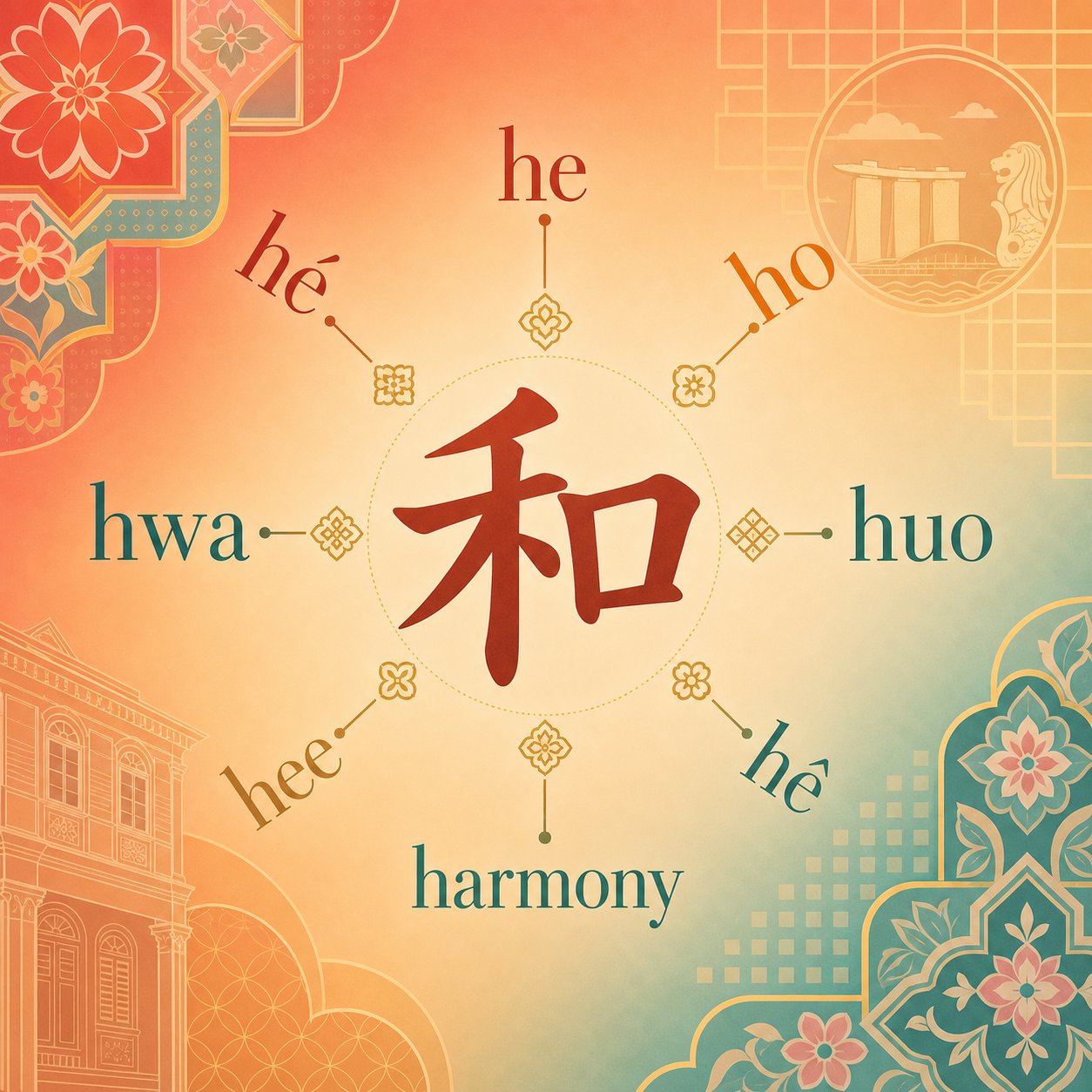
Imagine meeting four colleagues in Singapore named Tan, Chen, Chan, and Chin. They look unrelated on paper, yet all four share the exact same surname character: 陈. One person is Hokkien, another speaks Mandarin at home, the third has Cantonese roots, and the fourth comes from a Hakka family. Same character, four completely different English spellings.
This is the reality of the singapore chinese naming style, and it trips up newcomers constantly. Unlike mainland China, where Hanyu Pinyin standardises every character into one romanised form, Singapore never adopted a single system. The result? Chinese names in Singapore reflect a layered history of Southern Chinese dialect migration, British colonial registration practices, and post-independence multilingual policy. No other country produces this level of spelling variation for the same set of characters.
Why Singaporean Chinese Names Look Different from Mainland Chinese Names
In mainland China, 陈 is always "Chen." In Hong Kong, it is always "Chan." But singaporean chinese names draw from at least five major dialect groups, each with its own romanisation logic. A grandparent registered under Hokkien pronunciation and a grandchild registered under Mandarin pinyin can carry surnames that look entirely unrelated to outsiders, despite belonging to the same family lineage.
What This Guide Covers
This guide breaks down every layer of the system: surname structure, dialect romanisation tables, generational naming traditions, English name adoption, official formatting rules, and professional etiquette. Whether you are decoding a business card or choosing a name for a newborn, you will find your answer here.
A single Singaporean Chinese person may have multiple legitimate name spellings across their passport, birth certificate, school records, and bank accounts, all referring to the same individual.
The variation is not an error. It is a feature of a naming ecosystem shaped by five dialect traditions coexisting within one small nation. Understanding how each piece fits together starts with the basic anatomy of a chinese singaporean name itself.
The Complete Anatomy of a Singaporean Chinese Name
Every chinese name singapore residents carry follows a consistent internal logic, even when the romanised spelling looks unfamiliar. Strip away the dialect variation and formatting differences, and you will find the same core architecture underneath: a surname, an optional generational character, and a personal given name.
Surname Plus Given Name Structure
A singaporean chinese name is built from two or three components arranged in a fixed order when written in Chinese characters:
- Surname (xing, 姓) — The patrilineal family name, almost always a single character. It comes first in Chinese word order and is shared with siblings and the father's side of the family.
- Generational name (zi bei, 字辈) — An optional character shared by all members of the same generation within a clan. Not every family uses one, and the practice is declining.
- Given name (ming, 名) — The personal identifier chosen at birth. It can be one or two characters. When combined with a generational character, the given name portion is typically one character; without a generational character, it is often two.
Consider the name 陈昌伟 (CHEN Chang Wei). Here is how each piece functions:
| Component | Chinese Character | Romanised Form | Role |
|---|---|---|---|
| Surname (xing) | 陈 | Chen / Tan / Chan (varies by dialect) | Patrilineal family name |
| Generational name (zi bei) | 昌 | Chang | Shared by all same-generation siblings or cousins |
| Given name (ming) | 伟 | Wei | Personal identifier unique to the individual |
If this person belongs to a Hokkien-speaking family, the same name might be registered as TAN Chang Wei rather than Chen Chang Wei. The underlying characters remain identical; only the romanisation shifts.
How Names Appear on Official Documents
The singapore name format of chinese residents follows specific conventions depending on the document. On the National Registration Identity Card (NRIC), both the romanised name and the Chinese characters are displayed. The romanised version is the legally official spelling. Passports show only the romanised form, and given name characters are typically separated by a space: TAN Chang Wei, not TAN Changwei.
Here is where confusion creeps in. Chinese names singapore residents use always place the surname first. But in Western contexts, people sometimes reorder the name to fit the given-name-first convention. TAN Chang Wei might introduce himself as "Chang Wei Tan" in an international email, placing the surname last. Without context, a foreign colleague could easily mistake "Chang" for the surname and "Tan" for a middle name.
A practical rule: when you see a chinese names singapore format with the first word capitalised or written in all caps, that word is almost certainly the surname. Many Singaporeans deliberately capitalise their surname in professional correspondence to prevent exactly this kind of mix-up.
The structure itself is straightforward. The real complexity emerges when you realise that the same surname character produces wildly different romanised spellings depending on which dialect group a family belongs to.
Dialect Group Romanisation and Why Surnames Vary So Much
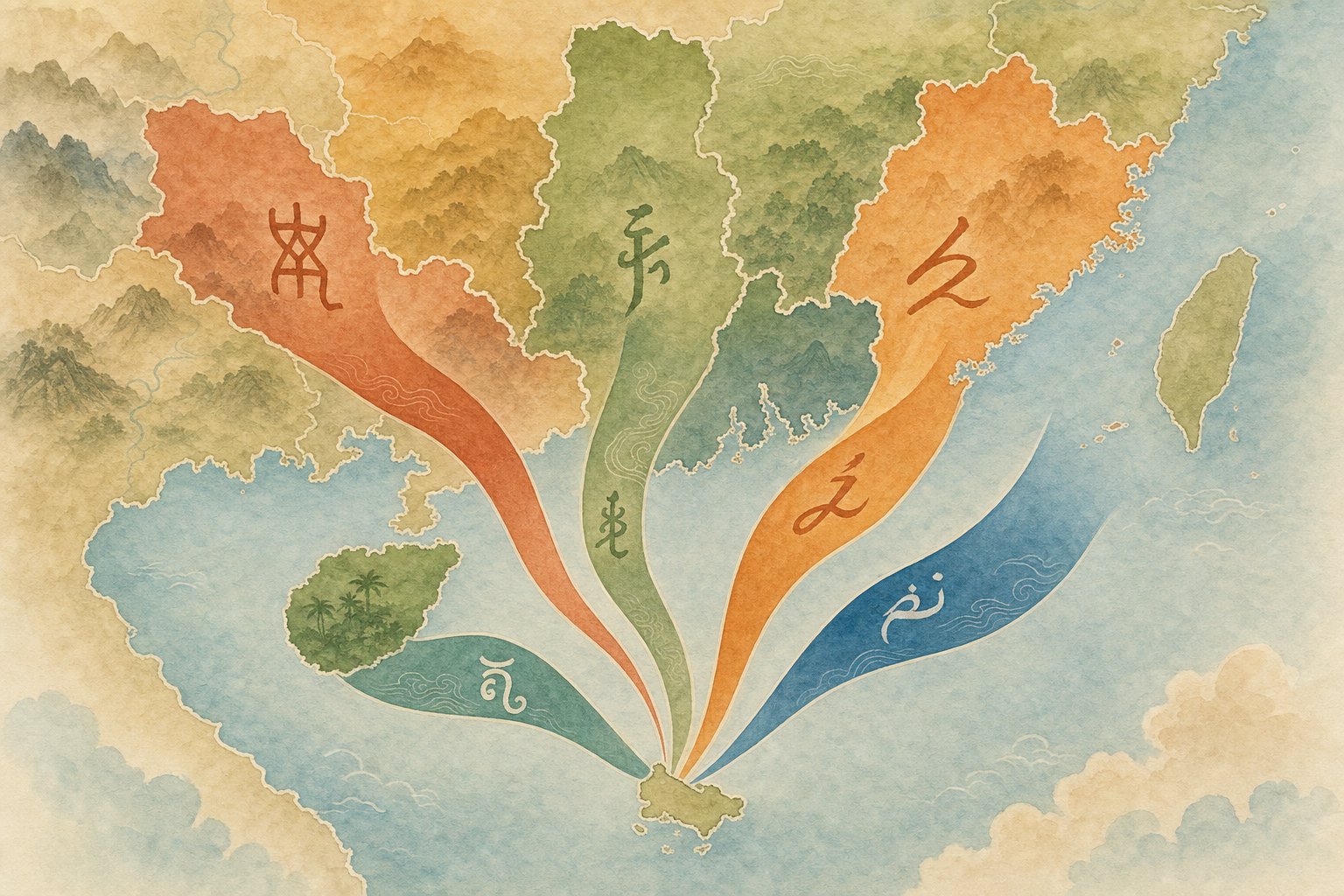
That wildly different romanisation is not random. It traces directly to the five major Southern Chinese dialect groups that settled in Singapore: Hokkien, Teochew, Cantonese, Hakka, and Hainanese. Each group pronounces the same Chinese character in its own way, and when British colonial clerks transcribed those pronunciations into English letters, they locked in dialect-specific spellings that persist on identity documents to this day.
Think of it this way. Mandarin is just one of many Chinese spoken languages. Before the Speak Mandarin Campaign standardised classroom instruction, most Chinese Singaporeans spoke their ancestral dialect at home and in the marketplace. When a baby's name was registered, the parents gave the pronunciation in their own dialect, and that pronunciation became the official English spelling. No central romanisation standard existed. The result is a naming landscape where the most common chinese names in singapore can look completely unrelated in English while sharing identical written characters.
How Dialect Groups Shape Surname Spelling
The mechanism is simple: different dialects have different sound systems. Hokkien and Teochew belong to the same Southern Min language family, so they often produce similar (sometimes identical) romanisations. Cantonese sits in a separate branch and generates distinctly different spellings. Hakka and Hainanese add further variation.
You will notice patterns once you know what to look for. Surnames starting with "T" in Singapore frequently signal Hokkien or Teochew roots. Surnames beginning with "Ch" or "W" often point to Cantonese heritage. And certain spellings like "Oei" or "Ooi" are almost exclusively Hokkien. LearnDialect.sg captures this neatly: "Meet a Wee, Oei or Ooi, Hokkiens fit the name nicely. Meet a Wong, a Cantonese possibly won't go wrong."
Here are some quick dialect-identification shortcuts:
- Tan, Lim, Ong, Goh, Koh, Teo — typically Hokkien or Teochew
- Chan, Wong, Lam, Ng (as a standalone surname) — often Cantonese
- Phang, Fong, Chong — frequently Hakka
- Foo, Heng (as a surname) — sometimes Hainanese or Teochew
But shortcuts only go so far. The real clarity comes from seeing the full picture side by side.
Common Surnames Across Hokkien, Teochew, Cantonese, and Hakka
The table below compares popular chinese names singapore families carry as surnames. These ten characters represent some of the most common chinese name in singapore directories, covering the majority of the Chinese Singaporean population. Use it as a practical lookup reference whenever you encounter an unfamiliar spelling and want to identify the likely dialect group or underlying character.
| Chinese Character | Hokkien | Teochew | Cantonese | Hakka | Hanyu Pinyin |
|---|---|---|---|---|---|
| 陈 | Tan | Tan | Chan | Chin / Ting | Chen |
| 林 | Lim | Lim | Lam / Lum | Lim | Lin |
| 黄 | Wee / Oei / Ooi / Ng | Ng | Wong | Vong / Wong | Huang |
| 王 | Ong | Heng | Wong | Vong | Wang |
| 李 | Lee | Lee | Lee / Lei | Lee / Li | Li |
| 张 | Teo / Teoh | Teo | Cheung / Cheong | Chong | Zhang |
| 吴 | Goh | Goh / Go | Ng | Ng | Wu |
| 刘 | Lau | Lau / Low | Lau | Liew / Liu | Liu |
| 杨 | Yeo / Yeoh | Yeo / Yeoh | Yeung / Young | Yong | Yang |
| 蔡 | Chua | Chua | Choi / Tsoi | Chai | Cai |
A few things stand out immediately. Hokkien and Teochew spellings overlap heavily because both belong to the Min Nan language family. The surname 李 (Lee) is one of the rare cases where all dialect groups converge on essentially the same English spelling. Meanwhile, 黄 and 王 both romanise as "Wong" in Cantonese despite being completely different characters, a source of confusion even among Singaporeans themselves.
Notice too that a single dialect group can produce multiple accepted spellings for the same character. Hokkien speakers romanise 黄 as Wee, Oei, Ooi, or Ng depending on sub-dialect and family convention. There was never a standardised Hokkien romanisation table enforced at the registry, so families simply wrote down what sounded right to the clerk at the time of registration.
This dialect-driven variation is the single biggest reason popular chinese names in singapore look so fragmented to outsiders. Two colleagues named "Goh" and "Ng" might share the exact same surname character (吴) but come from different dialect backgrounds. Without the Chinese characters as a reference point, you would never guess the connection.
The diversity captured in this table reflects a specific historical moment: the era before Mandarin became the dominant Chinese language in Singapore. A major government campaign in 1979 would begin reshaping how new generations registered their names, gradually pulling the system toward Hanyu Pinyin and creating a visible generational split in surname spellings within the same family.
How History Shaped Modern Naming Conventions
In 1979, the Singapore government launched a campaign that would permanently alter how every future singapore chinese name looked on paper. The Speak Mandarin Campaign, spearheaded by then-Prime Minister Lee Kuan Yew, urged Chinese Singaporeans to abandon their ancestral dialects in daily life and adopt Mandarin as a common language. The reasoning was pragmatic: unifying a fragmented Chinese-speaking population under one shared tongue would improve communication, strengthen national identity, and make Mandarin-medium education more effective.
The campaign did not directly mandate how parents should romanise their children's names. But its downstream effects on naming were enormous. As Mandarin replaced dialect in schools, media, and public life, younger parents increasingly thought of their children's names in Mandarin pronunciation rather than Hokkien, Teochew, or Cantonese. When they walked into the Registry of Births and Deaths to register a newborn, the romanised spelling they provided naturally reflected Hanyu Pinyin rather than dialect sounds.
The Speak Mandarin Campaign did not rewrite existing names, but it rewired how new names were conceived, effectively splitting Singapore's Chinese naming landscape into a pre-1979 dialect layer and a post-1979 Mandarin layer.
The Speak Mandarin Campaign and Its Impact on Names
Before 1979, registration clerks at the Registry of Births and Deaths simply transcribed whatever pronunciation parents gave. A Hokkien family registering the character 陈 would say "Tan," and that became the official spelling. A Cantonese family would say "Chan." No one questioned it because Mandarin was not yet the dominant spoken language among Chinese Singaporeans.
After the campaign took hold, Mandarin became the language of instruction in all Chinese-medium schools. Dialect programming was removed from television and radio. Within a single generation, most young Chinese Singaporeans grew up speaking Mandarin rather than their grandparents' dialect. When these Mandarin-educated parents named their own children, they naturally gravitated toward pinyin romanisation. The character 陈 became "Chen" on birth certificates instead of "Tan" or "Chan."
An interesting hybrid pattern also emerged. As CNA reported, many Generation Y Chinese Singaporeans carry names that mix both systems: the surname follows the dialect pronunciation inherited from the father, while the given name follows Hanyu Pinyin. A child might be registered as "Tan Wei Jie" rather than the fully dialect-based "Tan Wee Kiat" or the fully pinyin-based "Chen Wei Jie." The surname stays anchored to dialect tradition because it is a family identifier passed down, but the given name reflects the parents' Mandarin-speaking reality.
The Generational Divide in Name Romanisation
This shift created a visible generational split within families. Imagine a three-generation household:
- Grandfather, born in the 1940s: Tan Ah Kow (fully Hokkien romanisation)
- Father, born in the 1970s: Tan Cheng Huat (Hokkien surname, dialect-influenced given name)
- Grandchild, born in the 2000s: Tan Zi Xuan (Hokkien surname, Hanyu Pinyin given name)
All three share the surname character 陈 and the romanised spelling "Tan" because the surname passes down unchanged. But in some families, younger parents have gone a step further and registered their children's surnames in pinyin too. That grandchild might appear as Chen Zi Xuan on the birth certificate, making the family connection invisible to anyone reading English spellings alone.
This is why you can encounter a grandmother named "Tan" and her grandchild named "Chen" who share the exact same surname character. Neither spelling is wrong. They simply reflect different eras of Singapore's language policy. The older generation's singapore chinese name was shaped by dialect; the younger generation's was shaped by Mandarin standardisation.
Registration practices at the Registry of Births and Deaths evolved gradually rather than through a single rule change. There was no official cutoff date when dialect romanisation was banned. Parents retained the freedom to choose any romanisation they wished. But as dialect fluency declined among younger Singaporeans, fewer parents could even produce the dialect pronunciation confidently enough to register it. The shift was cultural and generational, not legislative.
For singapore chinese male names and singapore chinese female names alike, the pattern holds: names registered before the early 1980s tend toward dialect spellings, while those registered from the 1990s onward lean heavily toward pinyin. The transitional generation of the 1980s often carries that distinctive hybrid format, dialect surname paired with Mandarin given name, a linguistic timestamp of exactly when the campaign's influence reached their family.
This generational divide explains much of the surface-level confusion around the naming system. But beneath the romanisation question lies another tradition that once bound families together across generations: the practice of embedding a shared character into every name within the same generational cohort.
Generational Names and the Zi Bei Tradition
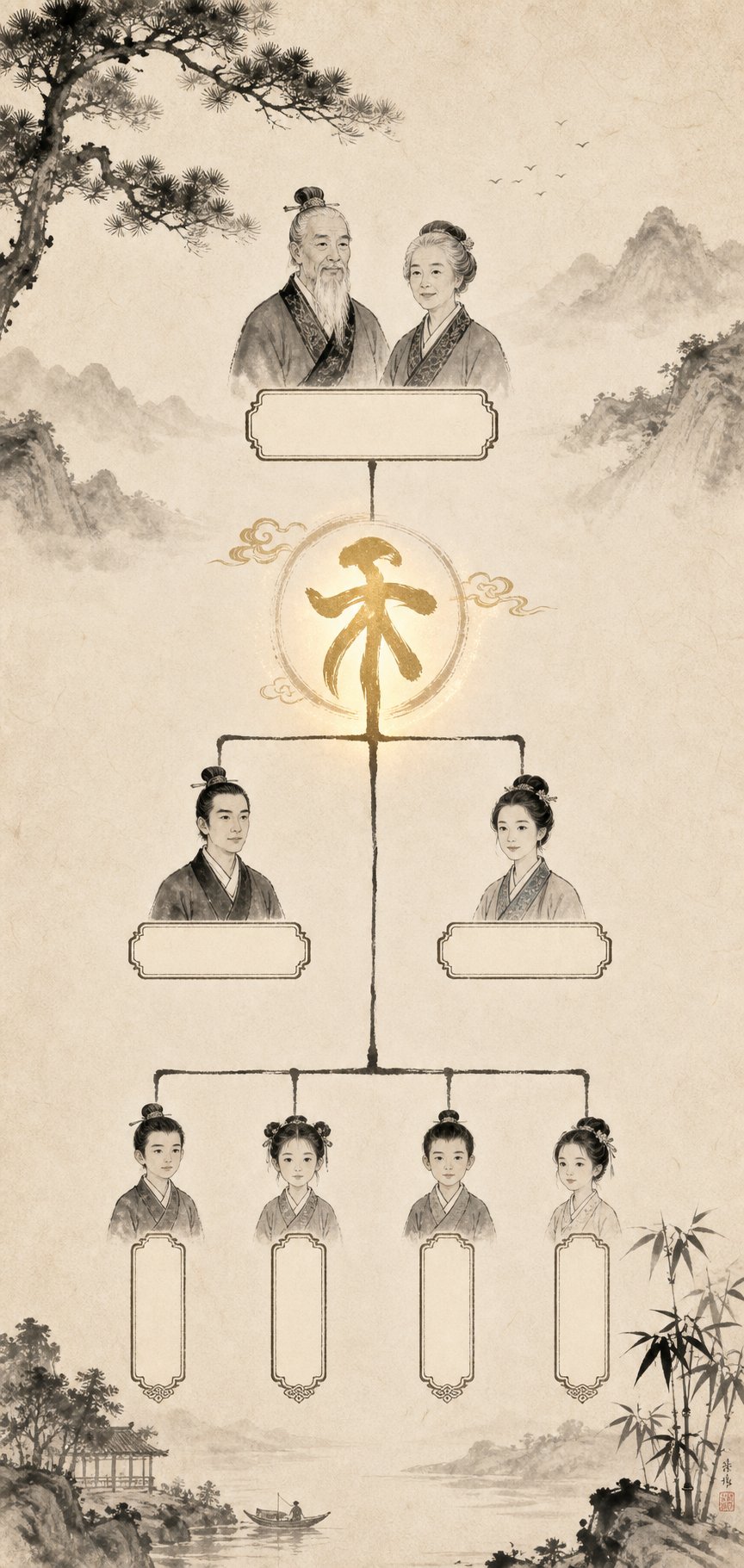
That shared character embedded in names across a generation is called zi bei (字辈), and it once served as a kind of invisible family map. If you knew someone's generational character, you could immediately determine their seniority within the clan, even if you had never met them before. It was a naming system designed for large, sprawling families where dozens of cousins might live across different villages or, eventually, different countries.
How Generational Characters Were Assigned by Clans
Here is how it worked. A clan association or family elder would compose a poem, sometimes four lines, sometimes longer, with each character in the poem assigned sequentially to a generation. The first character went to the first generation, the second character to the next, and so on. Every child born into that generation would carry the designated character as part of their given name, typically as the first of the two given-name characters.
Imagine three siblings in a family whose generational character is 昌 (chang, meaning "flourishing"). Their names might be:
- 陈昌伟 (Tan Chang Wei) — eldest son
- 陈昌明 (Tan Chang Ming) — second son
- 陈昌慧 (Tan Chang Hui) — daughter
All three share 昌 as their generational marker. Their cousins born in the same generation would also carry 昌, regardless of which branch of the family they belonged to. The next generation might receive the character 德 (de, meaning "virtue"), and so on through the poem's sequence.
These poems, known as zi bei shi or generation poems, were recorded in the family's jiapu (genealogy records). According to traditional practice, the characters chosen often reflected meritorious clan deeds or virtues valued by the family. A clan member could infer the seniority of another person simply by identifying where their generational character fell in the poem's sequence.
Among Singapore's dialect groups, Hokkien and Teochew clans historically practiced zi bei naming most rigorously. These communities maintained strong clan association networks in Singapore, with organisations like the Tan Clan Association or Lim Clan Association actively distributing generational poems to member families. Hakka families also followed the tradition closely, while Cantonese and Hainanese families practiced it with somewhat less consistency.
The system had a deeply practical function beyond sentimentality. In a society where extended families could span hundreds of members, zi bei naming made it immediately clear whether someone was your senior, peer, or junior within the clan hierarchy. You would know to address a stranger with the character two positions ahead of yours in the poem as "uncle" rather than "brother," even if they were younger in actual age. It structured respect and social conduct within the clan.
Why Zi Bei Naming Is Declining Today
Walk into any Singaporean primary school classroom today and you will find very few children carrying generational characters. Research by Associate Professor Lee Cher Leng at NUS Chinese Studies confirms this shift. In her undergraduate surveys, only a small handful of students had been named according to their family's genealogy books, and most were thoroughly unfamiliar with the practice altogether.
Several forces have driven this decline:
- Smaller families — With Singapore's low birth rate, many families have only one or two children. The zi bei system was designed for large clans with many branches. When a generation consists of just two or three cousins, the connective function of a shared character loses much of its practical value.
- Reduced clan association influence — Clan associations that once distributed generational poems and maintained jiapu records have seen membership drop over decades. Younger Singaporeans rarely interact with these organisations, and many families have lost track of their clan's poem sequence entirely.
- Preference for unique names — Modern parents want their child's name to stand out, not to share a character with every cousin. The desire for individuality runs counter to a system built on collective identity.
- Shift toward meaning-based naming over lineage-based naming — As A/P Lee notes, Chinese Singaporeans have turned to new naming conventions, choosing characters based on the values they want their children to embody rather than following a predetermined clan sequence. A daughter might be named 智慧 (zhi hui, "wisdom") because of what it represents, not because a poem dictated it.
- English-dominant households — Dr. Peter Tan of NUS observed that modern young parents in Singapore primarily speak English and may view long-term traditions like generation names as outdated. When parents think in English first, the Chinese generational system feels like an inherited obligation rather than a living practice.
The tradition has not vanished entirely. Some families adapt it in smaller ways, choosing a common character or even a common initial for siblings rather than following a formal clan poem. This micro-level version preserves the spirit of connection without requiring coordination across an entire extended family.
For singapore chinese names for male children especially, zi bei was once nearly universal among established clans. Singapore male chinese names from the 1950s and 1960s almost always contain a generational character if the family maintained any connection to a clan association. Singaporean chinese female names historically followed the same system in families that included daughters in the jiapu, though some conservative clans excluded girls from the generational sequence altogether.
The fading of zi bei reflects a broader truth about the singapore chinese naming style: it is a living system that responds to social change. Each generation's names carry the fingerprint of the era's values, whether that means clan loyalty, Mandarin standardisation, or individual expression. And as traditional naming frameworks loosen their hold, a different set of influences has stepped in to guide how parents select characters for their children today.
How Singaporean Parents Choose Chinese Names Today
Choosing a chinese name for baby singapore parents welcome into the world is rarely a casual decision. Even families who no longer follow zi bei traditions tend to approach naming with a mix of intuition, cultural inheritance, and, in many cases, metaphysical analysis. The process sits at an interesting crossroads: ancient systems of stroke counting and elemental balancing coexist with very modern concerns like how a name sounds in English or whether it will travel well internationally.
Stroke Count and Five Elements in Name Selection
At the heart of traditional chinese baby names singapore selection lies a numerological framework built on stroke counts. Each Chinese character has a fixed number of brush strokes, and these numbers are believed to carry specific energetic qualities. The total stroke count of a full name, broken into configurations called ge ju (格局), is analysed to determine whether the name produces auspicious or inauspicious numerical patterns.
Here is where it gets tricky. Simplified Chinese characters, used in Singapore's education system, often have fewer strokes than their traditional counterparts. The character 华 (hua) has six strokes in simplified form but fourteen in traditional. Many naming practitioners insist on using traditional character stroke counts for numerological analysis, arguing that the original form carries the true energetic signature. Others accept simplified counts. This disagreement means two practitioners can evaluate the same name and reach different conclusions, which is worth knowing if you are comparing recommendations.
Layered on top of stroke analysis is wu xing (五行), the five elements system: Wood, Fire, Earth, Metal, and Water. Each Chinese character is associated with one or more elements based on its radical, meaning, or stroke-count classification. The goal is to select name characters whose elements complement the child's Bazi (八字), or Four Pillars of Destiny, which is derived from the exact date and time of birth. If a child's Bazi reveals a deficiency in Water, for example, parents might choose characters containing the water radical (氵) or characters classified under the Water element to restore balance and support the child's life path.
Consulting a Chinese Name Master
Many Singaporean parents handle baby chinese name selection singapore style by consulting a professional. A chinese name master singapore families turn to will typically request the child's exact birth date and time, the parents' Chinese names, the child's gender, and any preferred characters or sounds. From there, the master analyses the Bazi chart, identifies elemental strengths and weaknesses, and proposes a shortlist of names that satisfy both numerological criteria and elemental balance.
The process is more personalised than many outsiders expect. A reputable baby chinese name master singapore practitioners recommend will spend hours cross-referencing stroke configurations, elemental interactions, character meanings, and phonetic harmony before presenting options. Pricing for such services typically ranges from $300 to $800, depending on the depth of analysis and whether a consultation session is included.
Choosing independently is the alternative. Parents who go this route often rely on online stroke-count calculators, family input, or personal research into character meanings. The trade-off is clear: independence offers creative freedom but lacks the systematic Bazi integration that a trained practitioner provides. Some families split the difference by choosing a name they love and then having a master evaluate it for compatibility, adjusting one character if needed.
Here is the typical sequence most parents follow when choosing chinese baby names singapore style, whether working with a master or independently:
- Record the baby's exact birth date and time to establish the Bazi chart.
- Identify which of the five elements are strong, weak, or missing in the chart.
- Determine the surname's stroke count and elemental classification (since the surname is fixed, it becomes the foundation for all calculations).
- Generate candidate characters for the given name that complement the Bazi's elemental needs.
- Check the total stroke-count configurations (tian ge, ren ge, di ge, wai ge, zong ge) for auspicious patterns.
- Evaluate pronunciation: does the full name flow smoothly in both Mandarin and the family's dialect? Are there unfortunate homophones?
- Assess meaning: do the characters together convey the values or aspirations the parents want?
- Test international usability: will the romanised version be easy to pronounce and spell in English-speaking contexts?
Balancing Tradition with Modern Preferences
What makes baby chinese name singapore decisions distinctive today is the tension between metaphysical tradition and global practicality. Parents who invest in chinese name feng shui singapore consultations still want a name that sounds pleasant, carries positive meaning, and works across languages. A name might score perfectly on stroke-count analysis but sound awkward when romanised, or it might contain a beautiful character that produces an unfortunate English homophone.
Modern parents also weigh factors that previous generations never considered. Will the pinyin romanisation be easy for non-Chinese colleagues to pronounce? Does the name pair well with an English first name the child might adopt later? Could the initials spell something embarrassing? These practical filters sit alongside traditional ones, creating a selection process that is both more complex and more intentional than it was a generation ago.
The result is a naming culture where ancient metaphysics and contemporary pragmatism coexist comfortably. A family might consult a master for elemental guidance, reject one proposed name because it sounds too similar to an English swear word, and ultimately choose a character set that satisfies both the Bazi chart and the parents' desire for international elegance. This layered decision-making is a hallmark of how the singapore chinese naming style continues to evolve.
Yet the Chinese name is only half the story for most Singaporean children born today. Alongside the carefully calibrated characters, the vast majority also receive an English first name, creating a dual-identity system that shapes how they present themselves across different social and professional contexts.

English Name Adoption and the Dual Identity System
That dual-identity system is not a quirk or an afterthought. For most Chinese Singaporeans, carrying both a Chinese name and an English name is as natural as switching between Mandarin and English mid-sentence. But the relationship between these two names is more nuanced than outsiders typically realise. One might be legally registered, the other purely social. One appears on your passport, the other only on your email signature. Understanding when and where each name surfaces is essential to navigating the singapore chinese naming style in practice.
When English Names Appear on Official Documents
Here is the first thing that surprises many people: not every Chinese Singaporean's English name is officially registered. Some parents include an English name on the birth certificate at registration, making it part of the child's legal identity from day one. Others never register one at all, and the person simply adopts an English name socially during school years or early career life.
When an English name is registered, it typically appears on the NRIC alongside the Chinese name. The Singapore government's promoted format arranges the components as: [SURNAME] [Chinese given name] [English given name]. So a woman whose Chinese name is 陈美玲 and whose English name is Emily would appear on official documents as TAN Mei Ling Emily. The surname anchors the front, the Chinese given name follows, and the English name sits at the end.
But this is not the only arrangement you will encounter. Depending on personal preference and the era of registration, the same person's name might appear as:
- Emily TAN Mei Ling — English name leading, common in Western-facing professional contexts
- TAN Mei Ling Emily — government-promoted order
- Emily Mei Ling TAN — fully Western order with surname last
- Mei Ling Emily TAN — Chinese given name first, English name as a middle name
When the English name is not registered on the birth certificate or NRIC, it exists only in social and professional usage. The person's legal name remains purely their Chinese name in romanised form. This is especially common among older Singaporeans who adopted English names later in life for workplace convenience rather than at birth.
The Social Function of English Names
So why do Chinese Singaporeans adopt English names at all? The reasons have shifted across generations. For older Singaporeans educated in English-medium schools during the colonial and early post-independence era, an English name often had Christian origins. Families who attended church chose biblical or traditional Western names like David, Grace, or Peter as part of baptism or simply as a marker of English-educated identity.
For younger generations, the motivation is more pragmatic. An English name serves as a social lubricant in Singapore's multilingual environment. It is easy to pronounce for non-Chinese colleagues, it avoids the surname-or-given-name confusion that plagues Chinese names in Western contexts, and it provides a casual mode of address that feels neither too formal nor too intimate. As the Cultural Atlas notes, many Chinese Singaporeans prefer to use their English name to introduce themselves on a casual basis, especially among the younger generation, because it is seen as the most convenient option in educational and commercial settings.
Gender patterns in English name adoption are worth noting. Chinese female names in singapore are sometimes phonetically linked to the English name chosen. A girl named 美雪 (Mei Xue) might become "Michelle" because the sounds echo each other. Singapore chinese girl names like 慧敏 (Hui Min) might pair with "Jasmine" for its similar ending. This sound-matching approach is common among singaporean chinese girl names, though it is by no means universal. Some families choose English names with no phonetic connection to the Chinese name at all, selecting purely on the basis of meaning, family tradition, or personal taste.
For males, the pattern is similar. A boy named 明轩 (Ming Xuan) might become "Max" or "Marcus" for the shared initial sound. But many families simply pick a name they like without any phonetic bridge.
To see how this dual system plays out in real life, consider a concrete example. Imagine a woman whose full registered name is TAN Mei Ling Emily. Here is how her name might appear across different contexts:
| Context | Name Format Used | Example |
|---|---|---|
| NRIC | [Surname] [Chinese given name] [English name] | TAN MEI LING EMILY |
| Passport | [Surname] [Full given names as registered] | TAN MEI LING EMILY |
| Business card | [English name] [Surname] or full name | Emily Tan |
| Email signature | [English name] [Surname] ([Chinese name]) | Emily Tan (陈美玲) |
| Social media | Varies widely by platform and preference | Emily Tan / Mei Ling / emilytml |
| Chinese-language contexts | [Surname][Given name] in characters | 陈美玲 |
Notice how the same person presents as "Emily Tan" in casual professional life, "TAN MEI LING EMILY" on government documents, and "陈美玲" when writing in Chinese. All three are legitimate representations of the same individual. A foreign colleague might know her only as Emily Tan and never encounter her Chinese name at all, while her grandmother calls her Mei Ling exclusively.
This fluidity is a defining feature of chinese girl names singapore families give their daughters, and chinese female names in singapore more broadly. The English name is not a replacement for the Chinese name but a parallel identity that activates in specific social contexts. Most Singaporeans switch between them effortlessly, choosing whichever version fits the situation.
The generational trend is clear: English name adoption has become nearly universal among Chinese Singaporeans born from the 1980s onward. Among those born before the 1960s, carrying an English name was less common unless the family was Christian or English-educated. Today, the question is rarely whether a child will have an English name, but whether it will be officially registered or remain an informal social name adopted later.
This dual-name reality creates a practical challenge that extends beyond social introductions. When the same person's name appears differently on their NRIC, passport, bank account, and airline booking, questions of formatting, hyphenation, and official registration become surprisingly consequential.
Name Formatting, Hyphenation, and Official Registration
That difference between how a name appears on an NRIC versus an airline ticket is not just a cosmetic issue. It can trigger rejected visa applications, frozen bank accounts, and hours spent at immigration counters explaining that yes, "Wei Ming" and "Weiming" refer to the same person. The singapore chinese name format carries real-world consequences precisely because no single standard governs how given-name characters are spaced, joined, or hyphenated across all documents and institutions.
Hyphenation Formats and Their Official Implications
You will encounter three main formatting variations for the same two-character Chinese given name in romanised form. Each appears in different contexts, and understanding which format shows up where saves considerable frustration:
- Separated by a space: Wei Ming — This is the standard format on Singapore NRICs and passports. The Immigration and Checkpoints Authority (ICA) treats each Chinese character as a separate word, separated by a space. Most Singaporeans carry this format on their official identity documents.
- Hyphenated: Wei-Ming — Less common on Singapore government documents but frequently seen on older passports, some birth certificates from earlier decades, and documents issued by institutions that follow different style conventions. Some families specifically request hyphenation at registration to signal that the two characters form a single given name rather than a first name plus middle name.
- Joined as one word: Weiming — This follows Hanyu Pinyin conventions used in mainland China, where multi-character given names are written as a single unit. You will see this format on Chinese passports, academic publications following pinyin standards, and occasionally on Singapore documents when parents specifically registered the name this way.
The space-separated format dominates in Singapore because the registration system historically treated each romanised syllable as a discrete unit. When a clerk typed "Wei Ming" into the system, those two words became the permanent legal spelling. There was no automatic rule converting them to "Weiming" or "Wei-Ming."
Sounds straightforward? The complications emerge when you cross borders or open accounts with international institutions. An airline booking system might strip the space and display "WEIMING" on a ticket, while the passport reads "WEI MING." A bank in Hong Kong might reject a wire transfer because the name on the receiving account does not match the name on the sending account character for character. These mismatches are not hypothetical. They are routine headaches for Singaporeans who travel or bank internationally.
The practical rule most frequent travellers follow: ensure your name appears identically across your passport, bank accounts, and any visa applications. If your passport says "TAN WEI MING," your flight booking should read exactly the same, spaces included. Many Singaporeans have learned to avoid the joined format on bookings even if it looks cleaner, because the mismatch with official documents creates unnecessary friction at immigration checkpoints.
Simplified vs Traditional Characters in Name Registration
Singapore's education system uses simplified Chinese characters, and most names registered from the 1970s onward appear in simplified form on the NRIC. But this creates a recognition gap when dealing with regions that use traditional characters: Taiwan, Hong Kong, and many overseas Chinese communities.
The character 陈 (simplified) and 陳 (traditional) are the same surname, but they look different on paper. For most practical purposes, immigration authorities in Taiwan and Hong Kong recognise both forms. However, when it comes to legal documents like property deeds, inheritance claims, or cross-border business registrations, the character form can matter. Some Singaporeans maintain awareness of both their simplified and traditional character names for exactly this reason.
Name registration in Singapore does not require you to choose between simplified and traditional. The NRIC displays whichever form was provided at registration. Parents registering a newborn today will almost always provide simplified characters since that is what they learned in school. But older Singaporeans whose names were registered before the simplified character system was adopted in Singapore's schools may carry traditional characters on their original documents.
For those who commission a chinese name stamp singapore calligraphers and seal carvers produce, the choice between simplified and traditional characters is an aesthetic and cultural decision. A chinese name chop singapore residents use for formal documents, art, or personal correspondence often features traditional characters or seal script (zhuan shu) regardless of which form appears on the NRIC. The chinese name seal singapore artisans craft serves a different function from government identification. It is a personal cultural artifact, and many owners prefer the visual weight of traditional or archaic character forms for that purpose.
Changing Your Chinese Name Officially
What if your name's formatting or characters no longer serve you? Perhaps your parents chose characters you find inauspicious, or the romanisation creates constant confusion internationally. Singapore does allow citizens and permanent residents to change chinese name registrations through a formal legal process.
To singapore change chinese name details on your NRIC, you apply through the Immigration and Checkpoints Authority. The process involves submitting a deed poll, which is a legal declaration of your intention to abandon your former name and adopt a new one. For Singapore citizens aged 21 and above, the application is relatively straightforward. For minors, both parents must consent.
Key considerations before you change chinese name singapore records reflect:
- All downstream documents must be updated. A name change on your NRIC means updating your passport, bank accounts, insurance policies, property titles, educational certificates, and employment records. The administrative burden is significant.
- The old name does not disappear. Your previous name remains on historical records. Background checks and some official processes may still surface it, which can create confusion if not properly documented.
- Romanisation changes are treated the same as character changes. Whether you are changing the Chinese characters themselves or simply altering the romanised spelling (say, from "Tan" to "Chen" to align with pinyin), the legal process is identical. Both require a deed poll.
- Formatting changes may not require a full name change. If you simply want to add or remove a hyphen, or adjust spacing, check with ICA whether this constitutes a name change or a correction. Minor formatting adjustments are sometimes handled as administrative amendments rather than full deed poll applications.
- Timing matters for passports and travel. If you change your name close to a planned trip, ensure your new passport is issued before departure. Travelling with mismatched documents between your old passport and new NRIC creates exactly the kind of problems this section describes.
The fee for a deed poll in Singapore is modest, but the real cost is time and administrative effort. Most people who go through the process cite either persistent international document-matching problems or deeply personal reasons related to the characters' meaning or family circumstances.
Some Singaporeans also change their Chinese name after consulting a naming master who identifies inauspicious stroke counts or elemental imbalances in the original name. This is more common than you might expect. Adults in their 30s and 40s sometimes seek a name change after a run of perceived bad luck, treating the new characters as a fresh energetic foundation.
Whether you are navigating formatting mismatches across borders or considering a formal name change, the underlying challenge is the same: Singapore's naming system carries more variation and flexibility than most countries allow, and that flexibility demands active management. The payoff for understanding these mechanics goes beyond paperwork. It also shapes how you address Singaporean colleagues correctly in professional settings, where getting a name wrong can undermine a relationship before it begins.
Professional Etiquette for Using Singaporean Chinese Names
Getting a colleague's name wrong once is forgivable. Getting it wrong repeatedly signals carelessness, and in Singapore's relationship-driven business culture, that impression sticks. The challenge for expatriates and international contacts is real: when you see a name like "Goh Wei Lin Rachel" on a business card, which part is the surname? Do you call her Rachel, Ms Goh, or Wei Lin? The answer depends on context, seniority, and how well you know the person, but a few reliable principles will keep you on solid ground.
Business and Email Addressing Conventions
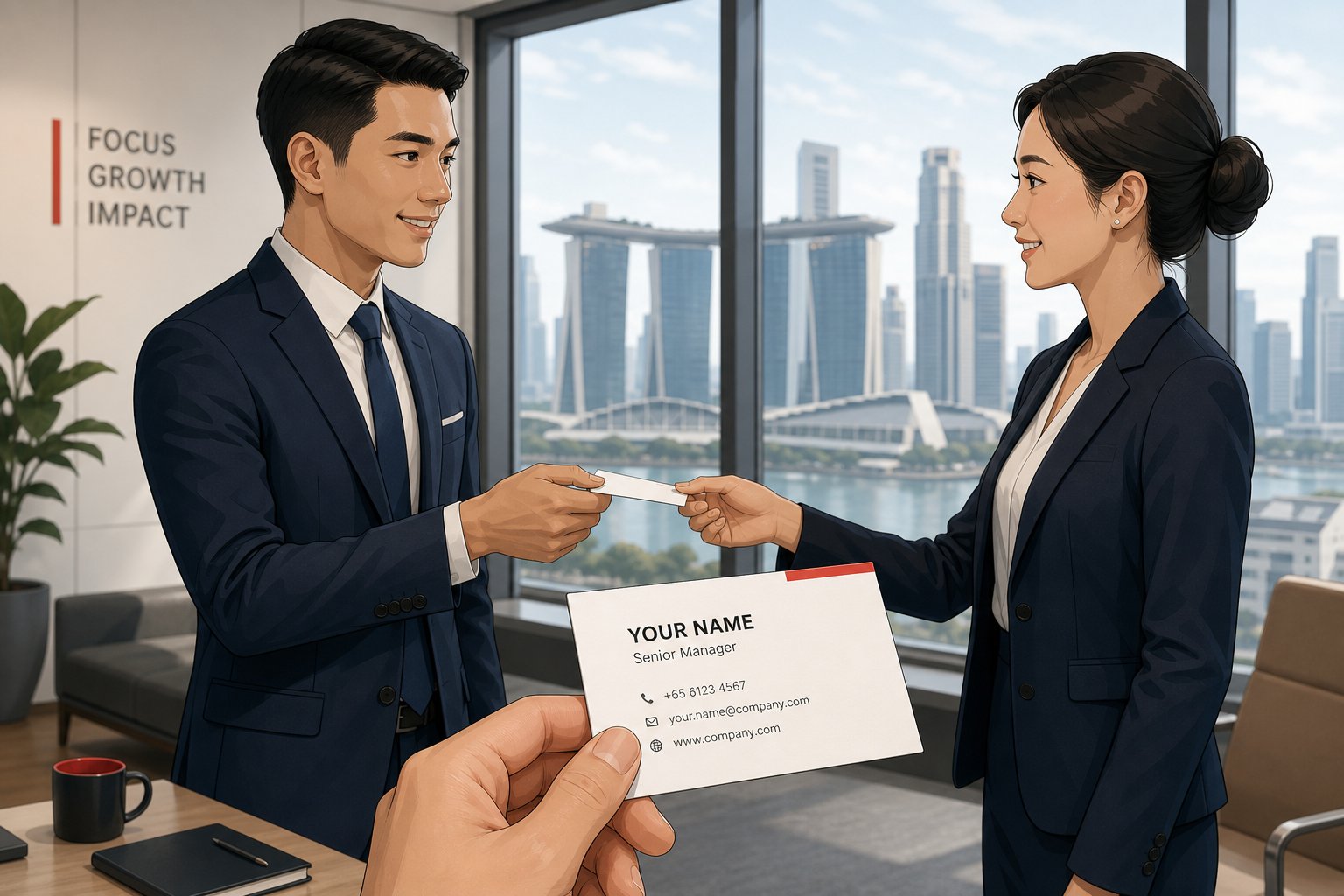
Business cards in Singapore often provide the clearest signal. Many Chinese Singaporeans deliberately format their cards to help international contacts parse the name correctly. You will frequently see the surname printed in all capitals (GOH Wei Lin Rachel) or placed on a separate line above the given name. When Chinese characters appear alongside the romanised name, the surname is always the first character on the left.
For email salutations, the safest default depends on formality level:
- First contact, formal: Use "Dear Ms Goh" or "Dear Mr Tan." The surname plus honorific is always appropriate and never offensive, even if the person prefers casual address. They will signal their preference in their reply.
- After introduction, casual: If the person signs off with their English name ("Regards, Rachel"), mirror that. Switch to "Hi Rachel" in subsequent emails.
- No English name available: Use the full given name: "Dear Wei Lin." Do not shorten a two-character Chinese given name to just the first syllable. "Wei" alone is not a name; "Wei Lin" is.
- Senior executives or government officials: Default to surname plus title until explicitly invited to do otherwise. "Mr Goh" or "Director Tan" maintains appropriate respect.
In social settings, most Chinese Singaporeans under 50 will introduce themselves by English name if they have one. Take the cue. If someone says "I'm Rachel," call them Rachel. If they introduce themselves as "Wei Lin," use the full two-syllable given name, not a truncated version.
Common Mistakes When Addressing Singaporean Chinese Names
Foreigners working in Singapore make a handful of predictable errors. Recognising them in advance saves awkward corrections later.
The most common mistake is misidentifying the surname. When you encounter a name written in Chinese order, the surname is the first element. But when a Singaporean rearranges their name into Western order for your benefit, the surname moves to the end. "Rachel Goh Wei Lin" and "GOH Wei Lin Rachel" refer to the same person, but the surname sits in different positions. If you are unsure, look for the capitalised word or the single-syllable element. Singaporean Chinese surnames are overwhelmingly one syllable: Tan, Lim, Goh, Ng, Lee, Ong, Chua. A monosyllabic word in the name is almost certainly the surname.
When in doubt, ask. A simple "How would you like me to address you?" is never rude in Singapore. It signals respect, not ignorance.
Here is a step-by-step approach for international professionals encountering an unfamiliar Singaporean Chinese name for the first time:
- Look for an English name. If present, it is usually the safest casual address option.
- Identify the surname by checking for capitalisation, a single-syllable element, or position (first word in Chinese order, last word in Western order).
- Cross-reference against common chinese female names in singapore or common male surnames. If you recognise "Tan," "Lim," "Wong," or "Ng," you have found the surname.
- In formal correspondence, default to "Mr/Ms [Surname]" until the person indicates otherwise.
- Never split a two-character given name. "Wei Lin" functions as a unit. Calling someone just "Wei" is like calling "Michael" just "Mich."
- If the person has no English name and you struggle with pronunciation, ask them directly. Most Singaporeans appreciate the effort and will offer guidance or a preferred short form.
A few other pitfalls worth flagging: do not assume two colleagues with the same romanised surname are related. "Tan" from a Hokkien family and "Tan" from a Teochew family share a spelling but may carry entirely different surname characters. Similarly, do not assume that colleagues with different surname spellings are unrelated. As this guide has shown, "Tan" and "Chen" can be the same family across generations.
For chinese names for girls singapore professionals carry, the same rules apply. Whether you are addressing a senior partner named Mdm Chua or a junior analyst who goes by "Jasmine Lim," the principle is consistent: follow the person's lead, default to formality when uncertain, and treat the full given name as indivisible.
Understanding these conventions is not just about avoiding embarrassment. In a city-state where business relationships are built on mutual respect and cultural fluency, getting someone's name right, every time, across every format, is one of the simplest ways to demonstrate that you take the relationship seriously. The singapore chinese naming style may be complex on paper, but in practice, a little attentiveness goes a long way.
Frequently Asked Questions About Singapore Chinese Naming Style
1. Why do Singaporean Chinese people with the same surname character have different English spellings?
Singapore never adopted a single romanisation standard for Chinese names. When families registered births during the colonial and early post-independence era, clerks transcribed the pronunciation in whatever dialect the parents spoke — Hokkien, Teochew, Cantonese, Hakka, or Hainanese. Each dialect pronounces the same character differently, so the surname character 陈 became Tan (Hokkien), Chan (Cantonese), Chin (Hakka), or Chen (Mandarin pinyin) depending on the family's linguistic background. These dialect-based spellings were locked into official documents and passed down through generations.
2. How do I identify which part of a Singaporean Chinese name is the surname?
In Chinese word order, the surname always comes first. On official Singapore documents, it is often written in full capitals (e.g., TAN Wei Ming). Singaporean Chinese surnames are almost always a single syllable — common examples include Tan, Lim, Goh, Ng, Lee, Ong, and Chua. If the name is rearranged into Western order with the surname last, look for the monosyllabic element. When uncertain, checking for capitalisation patterns on business cards or simply asking the person directly is perfectly acceptable in Singapore's multicultural business environment.
3. Can Singaporeans change their Chinese name officially?
Yes. Singapore citizens and permanent residents can change their Chinese name through the Immigration and Checkpoints Authority by filing a deed poll — a legal declaration to abandon the former name and adopt a new one. This applies whether you are changing the Chinese characters themselves or just the romanised spelling. The process requires updating all downstream documents including passport, bank accounts, insurance policies, and educational certificates. Adults aged 21 and above can apply independently, while minors need consent from both parents.
4. What is the difference between Wei Ming, Wei-Ming, and Weiming in Singaporean names?
These three formats represent the same two-character Chinese given name romanised differently. 'Wei Ming' with a space is the standard format on Singapore NRICs and passports, where each character is treated as a separate word. 'Wei-Ming' with a hyphen appears on some older documents and signals the two characters form one given name. 'Weiming' joined as one word follows mainland China's Hanyu Pinyin convention. The space-separated version dominates in Singapore, and travellers should ensure their name matches exactly across passport, bank accounts, and flight bookings to avoid document-matching issues.
5. How do Singaporean parents choose a Chinese name for their baby today?
Most parents follow a process that blends traditional metaphysics with modern practicality. They typically start by establishing the baby's Bazi (Four Pillars of Destiny) from the exact birth date and time, then identify which of the five elements need strengthening. Characters are selected based on stroke-count numerology, elemental balance, pleasant pronunciation in both Mandarin and English, positive meaning, and international usability. Many families consult a professional Chinese name master for systematic Bazi analysis, while others research independently using online tools and family input.