What Makes Naming a Dog Year Baby Special
Imagine you are expecting a baby in a Dog year. You want a name that sounds beautiful, carries deep meaning, and aligns with your child's zodiac destiny. In Chinese culture, choosing a baby chinese name is never just about aesthetics. It is a deliberate act of weaving fortune, identity, and cosmic harmony into a handful of carefully chosen characters.
The Dog holds the 11th position in the Chinese zodiac's 12-year cycle, with recent Dog years falling in 2006, 2018, and the upcoming 2030. People born under this sign are associated with loyalty, honesty, courage, and a protective nature. These core traits shape everything about how traditional families approach chinese baby names for Dog year children, from the radicals embedded in each character to the elemental balance of the full name.
Why Chinese Zodiac Naming Matters for Dog Year Babies
Selecting a chinese baby name for a Dog year child goes far beyond finding something pleasant to the ear. Traditional naming philosophy calls for characters containing specific radicals that resonate with the Dog's nature. For example, radicals related to people, shelter, and nourishment are considered auspicious because they reflect what a loyal dog thrives on: companionship, a stable home, and care. The right combination of characters can symbolically set a child up for prosperity, strong relationships, and inner balance.
This guide covers auspicious and inauspicious characters, Five Elements theory, pronunciation tips for non-native speakers, and practical advice for both traditional and bilingual families navigating the naming process.
Confirming Your Baby's Zodiac Year With the Lunar Calendar
Here is where many parents stumble. The Chinese zodiac follows the lunar calendar, not the Western one. Chinese New Year falls somewhere between January 21 and February 20 each year, and that date marks the true boundary between zodiac years.
A baby born in January or early February may actually belong to the previous zodiac year. For instance, a child born on January 25, 2018 arrived before Chinese New Year (February 16, 2018) and technically falls under the Rooster year, not the Dog. Always verify the exact Lunar New Year date for your baby's birth year before selecting zodiac-aligned characters.
Getting this detail right is the essential first step. Every naming decision that follows, from radical selection to elemental balancing, depends on correctly identifying whether your child truly belongs to the Dog year.
Understanding the Dog Zodiac Personality and Elements
Every zodiac sign carries a distinct emotional fingerprint, and the Dog's fingerprint runs deep. The traits associated with this sign do not just describe personality. They form the philosophical foundation for how Chinese parents name their baby when the child arrives in a Dog year. Think of it this way: the name is meant to echo and amplify the best qualities the zodiac promises, while softening potential challenges.
Core Traits of the Dog Zodiac and Their Naming Influence
The Dog zodiac sign is defined by loyalty, sincerity, courage, protectiveness, and a powerful sense of justice. Cross-cultural research shows that 68% of people associate dogs with steadfastness and moral courage, and these qualities translate directly into naming philosophy. Dog-year children are also rated significantly higher on conscientiousness and trustworthiness by educators and peers.
So how do these traits shape name selection? The zodiac logic works through symbolic association:
- Loyalty to humans: Dogs are faithful companions, so radicals related to people (亻) are considered highly favorable. Characters built on this radical symbolize a life surrounded by supportive relationships.
- Need for shelter: A dog thrives with a stable home, making roof-related radicals (宀) auspicious. These characters suggest security, belonging, and domestic fortune.
- Guardian energy: Dogs are protectors by nature. Characters evoking strength, integrity, and moral clarity align with the sign's core energy, reinforcing the child's innate sense of justice.
- Nourishment and care: A well-fed dog is a content dog. Radicals related to heart (忄/心) and sustenance (月) represent emotional and physical fulfillment.
You will notice that each radical category connects back to a real-world truth about dogs and their relationship with humans. The naming system is not arbitrary. It is built on centuries of symbolic reasoning about what helps a Dog-sign child flourish.
The Five Elemental Dog Types and Their Unique Qualities
Here is where baby chinese name feng shui gets more nuanced. The Chinese zodiac does not simply repeat every 12 years. It cycles through five elemental variations, meaning each Dog year carries a distinct elemental flavor that further refines which characters suit a child best.
| Elemental Dog Type | Year Examples | Associated Traits | Favorable Character Qualities |
|---|---|---|---|
| Wood Dog | 1934, 1994 | Generous, cooperative, growth-oriented | Characters suggesting vitality, kindness, and natural growth |
| Fire Dog | 1946, 2006 | Charismatic, bold, adventurous | Characters with radiant, warm, and courageous meanings |
| Earth Dog | 1958, 2018 | Grounded, patient, dependable | Characters conveying stability, wisdom, and endurance |
| Metal Dog | 1970, 2030 | Principled, determined, resilient | Characters reflecting strength, clarity, and precision |
| Water Dog | 1982, 2042 | Intuitive, adaptable, empathetic | Characters with flowing, gentle, and perceptive meanings |
A Water Dog baby, for instance, benefits from characters that carry softness and emotional depth, think of characters related to rivers, moonlight, or compassion. A Fire Dog child, on the other hand, suits bold and luminous characters that match their natural charisma. Parents seeking auspicious chinese names for dog babies 2018 would focus on Earth element qualities: groundedness, patience, and steady wisdom.
This elemental layer means two Dog year babies born 12 years apart may call for very different naming approaches, even though they share the same zodiac animal.
How Strictly Should Parents Follow Zodiac Naming Rules
This is where culture, generation, and geography all come into play. In traditional families, particularly in Taiwan, Hong Kong, and parts of Southeast Asia, zodiac naming rules carry serious weight. Grandparents may consult naming masters, cross-reference BaZi charts, and reject names that contain even one inauspicious radical. For these families, the process is as much spiritual practice as it is practical decision-making.
Modern households on the Chinese mainland are navigating a blend of old and new. As the South China Morning Post reports, contemporary Chinese parents increasingly embrace Five Elements balancing alongside modern naming sensibilities, mixing tradition with personal taste rather than following rigid rules.
Where does that leave you? Consider these general patterns:
- Traditional families: Full adherence to zodiac radicals, elemental balancing, stroke count numerology, and professional naming consultation.
- Moderate approach: Selecting characters with favorable radicals while prioritizing personal meaning and sound. Avoiding clearly inauspicious combinations without obsessing over every detail.
- Light consideration: Using zodiac traits as inspiration for the name's overall feeling, without strict radical analysis.
None of these approaches is wrong. The key is understanding the system well enough to make an informed choice, whether you follow it closely or simply let it guide your instincts. The Dog's qualities of loyalty, integrity, and warmth offer a rich foundation for naming regardless of how deeply you engage with the technical rules.
Of course, knowing which traits to amplify is only half the equation. The specific radicals and character components that carry these meanings, and the ones that work against them, form the practical toolkit every parent needs when building a name character by character.
Auspicious Radicals and Characters for Dog Year Names
Radicals are the building blocks of Chinese characters, and in zodiac naming, they function like hidden codes. Each radical carries symbolic weight that either harmonizes with or works against a child's zodiac sign. For Dog year babies, certain radical families unlock fortune, stability, and emotional fulfillment when woven into a name. Understanding these categories gives you a practical toolkit for baby chinese name selection that is both meaningful and zodiac-aligned.
The logic is rooted in observation: what does a dog need to thrive? A home, loyal human companions, nourishment, and dignity. Each auspicious radical category maps directly to one of these needs.
Radicals for Shelter and Home
A dog without a home is a stray. In zodiac naming philosophy, characters containing the roof radical (宀) or cover radical (冖) symbolize a life of security, belonging, and domestic prosperity. These radicals suggest that the child will always have a place where they are welcomed and protected.
Consider these examples:
- 安 (an1) - peace, tranquility. A woman under a roof represents settled contentment. For Dog year babies, it signals a life of emotional security.
- 宁 (ning2) - serenity, calm. Suggests a peaceful home environment where the child can flourish without turmoil.
- 家 (jia1) - family, home. Directly evokes the idea of belonging and domestic warmth, perfectly aligned with the Dog's need for a stable household.
- 富 (fu4) - wealth, abundance. Under the roof radical, this character promises material comfort and prosperity within the home.
- 守 (shou3) - to guard, to protect. Echoes the Dog's natural guardian instinct while the roof radical ensures that protective energy is directed toward a stable home.
These characters work especially well for families who value stability and want their child's name to reflect rootedness and belonging.
Radicals for Loyalty and Companionship
The Dog is the zodiac animal most closely bonded to humans. Characters built on the person radical (亻), the "person" character (人), or the "enter" radical (入) symbolize loyalty to career, love, and relationships. They suggest a life surrounded by supportive people and meaningful connections.
- 仁 (ren2) - benevolence, kindness. Two strokes beside the person radical, representing the relationship between people. It reflects the Dog's caring and compassionate nature.
- 伯 (bo2) - elder, chief. Implies respect and leadership within a community, suggesting the child will earn trust from others.
- 杰 (jie2) - outstanding, heroic. Contains the person element and conveys excellence, a child who rises above through integrity.
- 健 (jian4) - healthy, strong. Built on the person radical, it wishes for physical vitality and robust energy throughout life.
- 任 (ren4) - responsibility, to entrust. Reflects the Dog's dependable nature, someone others can rely on completely.
You will notice these characters all carry a social dimension. They are not about solitary achievement but about thriving through connection, which mirrors the Dog's fundamental need for human companionship.
Radicals for Prosperity and Nourishment
Two radical families fall into this category. First, the clothing-related radicals (纟, 彡, 巾, 衣) represent elevated status. In traditional symbolism, a dressed dog is one that has been honored and elevated beyond ordinary standing. Second, the heart and meat radicals (心, 忄, 月) represent being well-fed and emotionally fulfilled, since dogs are meat-eaters by nature.
Clothing and status characters:
- 彦 (yan4) - a person of virtue and talent. The 彡 radical here suggests refinement and cultural accomplishment.
- 彩 (cai3) - color, brilliance. Implies a vibrant and distinguished life, standing out with grace.
- 绅 (shen1) - gentleman, gentry. The silk radical (纟) conveys dignity and social standing.
- 珍 (zhen1) - precious, treasure. Suggests the child is valued and rare, carrying inherent worth.
Heart and nourishment characters:
- 慧 (hui4) - wisdom, intelligence. Built on the heart radical (心), it connects intellectual sharpness with emotional depth.
- 恒 (heng2) - perseverance, constancy. The heart radical (忄) paired with permanence suggests unwavering emotional strength.
- 忠 (zhong1) - loyalty, devotion. Heart radical at its core, this character directly embodies the Dog's most celebrated trait.
- 胜 (sheng4) - victory, excellence. The moon/flesh radical (月) signals nourishment and success, a child who will overcome challenges.
- 腾 (teng2) - to soar, to rise. With the 月 radical, it suggests upward momentum and abundant energy.
The table below consolidates these categories for quick reference during your baby chinese name selection process:
| Category | Radical | Symbolic Meaning | Example Characters | Pinyin | Character Meaning |
|---|---|---|---|---|---|
| Shelter and Home | 宀 / 冖 | Security, domestic fortune | 安, 宁, 家 | an1, ning2, jia1 | Peace, serenity, family |
| Shelter and Home | 宀 | Prosperity under a roof | 富, 守, 冠 | fu4, shou3, guan1 | Wealth, guard, champion |
| Loyalty and People | 亻 / 人 / 入 | Human connection, loyalty | 仁, 伯, 杰 | ren2, bo2, jie2 | Benevolence, elder, outstanding |
| Loyalty and People | 亻 | Strength through bonds | 健, 任, 仲 | jian4, ren4, zhong4 | Healthy, entrust, second-born |
| Clothing and Status | 纟 / 彡 / 巾 | Elevated position, refinement | 彦, 彩, 绅 | yan4, cai3, shen1 | Talent, brilliance, gentleman |
| Clothing and Status | 纟 / 衣 | Dignity, distinction | 珍, 维, 装 | zhen1, wei2, zhuang1 | Precious, maintain, adorn |
| Heart and Nourishment | 心 / 忄 | Emotional fulfillment | 慧, 恒, 忠 | hui4, heng2, zhong1 | Wisdom, perseverance, loyalty |
| Heart and Nourishment | 月 | Well-fed, vitality | 胜, 腾, 育 | sheng4, teng2, yu4 | Victory, soar, nurture |
Simplified vs Traditional Characters in Naming
One practical detail that affects baby chinese names across different Chinese-speaking communities: character form. Families from Mainland China use Simplified Chinese characters in official documents, birth certificates, and daily life. Families in Taiwan, Hong Kong, Macau, and many Southeast Asian Chinese communities use Traditional characters.
Why does this matter for naming? Some characters look quite different in their Simplified and Traditional forms, which can affect stroke count calculations and visual aesthetics. For example, the character 宁 (Simplified) appears as 寧 (Traditional), with significantly more strokes. If stroke count numerology is part of your naming process, you will need to calculate based on whichever form appears on your child's official documents.
Additionally, some families maintain Traditional characters for names even if they live in Simplified-character regions, viewing it as a way to preserve cultural heritage. There is no right or wrong choice here, but consistency matters. Decide early which character system your family will use, and ensure all your radical and stroke count analysis aligns with that decision.
With a clear picture of which radicals invite fortune, the natural next question becomes: which ones push it away? Certain character components carry zodiac conflicts that traditional naming wisdom warns against, and understanding these avoidances is just as important as knowing what to embrace.
Characters and Radicals to Avoid for Dog Year Babies
Knowing what to include in a name is only half the picture. Traditional Chinese naming wisdom places equal weight on what to avoid. Certain radicals and character components carry zodiac conflicts that can introduce disharmony into a Dog year child's life, at least according to centuries of BaZi (Eight Characters) analysis. Whether you follow these guidelines strictly or treat them as cultural context, understanding the reasoning helps you make informed choices.
Zodiac Clash Characters to Avoid
In Chinese astrology, certain zodiac animals stand in direct opposition to one another. The Dog's earthly branch is xu (戌), and specific branches create clash or punishment relationships with it. These conflicts translate directly into naming taboos.
- Dragon-related radicals (辰, 龙): The Dog and Dragon form a direct clash (chong, 冲) in the zodiac cycle. This is considered one of the most serious violations in Chinese name principles. Characters like 晨 (chen2, morning), 宸 (chen2, imperial), 震 (zhen4, shake), 龙 (long2, dragon), 麒 (qi2, mythical beast), and 丽 (li4, beautiful) all contain or symbolize the Dragon element. Naming practitioners note that this clash can lead to challenges in career, wealth, marriage, and health depending on where the character sits in the name.
- Rooster and Bird radicals (酉, 羽, 鸟): The Rooster's earthly branch (酉) forms a punishment relationship with the Dog. Characters carrying this radical or bird-related shapes are considered a serious concern. Avoid characters like 酉 itself, 鸿 (hong2, swan), 翁 (weng1, elderly man), 鹏 (peng2, roc), 燕 (yan4, swallow), 飞 (fei1, fly), and 翡 (fei3, jade). If such a character appears in the middle name, traditional belief holds it will strain marriage and peer relationships. In the last name position, it may affect finances and career. This is relevant context for parents researching auspicious chinese names for rooster babies or auspicious chinese names for dragon babies, since what works for those signs often conflicts with the Dog.
- Ox and Sheep radicals (丑, 牛, 未, 羊): The Dog forms a punishment triangle with the Ox and Sheep. Characters containing these elements, such as 妞 (niu1, girl), 牧 (mu4, shepherd), 善 (shan4, good), 美 (mei3, beautiful), and 群 (qun2, group), suggest tight encirclement and interpersonal friction.
Radicals That Symbolize Hardship for Dog Babies
Beyond zodiac clashes, certain radicals carry symbolic meanings that work against the Dog's nature and needs:
- Sun radicals (日, 口): One 口 (mouth) combined with a dog forms the character 吠 (bark). Two 口 radicals form 骂 (scold). Traditional analysis suggests that Dog year people with these combinations in their names tend to attract disputes, say the wrong things, and make unnecessary enemies. Characters to watch for include 晶 (jing1, crystal), 品 (pin3, quality), 昌 (chang1, prosperous), and 喜 (xi3, joy).
- Doubled-person radical (彳): While the single person radical (亻) is highly favorable, the doubled-person radical (彳) implies disloyalty, particularly in romantic relationships. It suggests wandering without commitment, the opposite of the Dog's faithful nature.
- Wood radicals (木): The Dog belongs to the Earth element, and in Five Elements theory, Wood controls Earth. Characters like 林 (lin2, forest), 森 (sen1, woods), 柳 (liu3, willow), and 栋 (dong4, pillar) may suppress the child's ability to fully express their potential.
- Field radicals (田): A dog in a field destroys crops, symbolizing waste and a lack of appreciation for blessings. Characters like 田 (tian2, field), 甲 (jia3, first), and 画 (hua4, painting) fall into this category.
- Grain radicals (禾, 米, 豆): Dogs are carnivores, not grain-eaters. When they encounter grain, they play with it rather than value it. Characters with these radicals, such as 秀 (xiu4, elegant), 香 (xiang1, fragrant), 科 (ke1, science), and 豆 (dou4, bean), may create a lack of perseverance or a frivolous attitude toward responsibilities.
- Mountain radicals (山): Mountains are not a dog's natural territory. Roaming in mountains implies danger and excessive effort without guaranteed reward. Avoid characters like 岳 (yue4, mountain peak), 峻 (jun4, steep), and 崇 (chong2, lofty).
Balancing Tradition With Personal Preference
These guidelines come from a long lineage of naming masters and BaZi practitioners. They are not superstition in the dismissive sense but rather a structured symbolic system that many Chinese families have relied on for generations. That said, modern parents weigh these rules differently.
Some families treat the clash characters as absolute deal-breakers, especially the Dragon conflict. Others view the softer avoidances, like grain or mountain radicals, as preferences rather than prohibitions. A practical middle ground: cross-reference your shortlisted names against the major clash categories (Dragon, Rooster, Ox/Sheep) and make conscious decisions about the rest based on how much the character's meaning resonates with your hopes for your child.
The character 丽 (beautiful) is a perfect example of this tension. It is one of the most popular characters in Chinese girl names, yet it contains a hidden Dragon element that clashes with the Dog. Parents who understand this can decide whether the character's beauty outweighs the traditional concern, or whether an equally lovely alternative with compatible radicals might serve their child better.
With a clear map of what to embrace and what to sidestep, the next step is putting these principles into action with real name options, starting with curated selections designed specifically for Dog year girls.
Auspicious Chinese Girl Names for Dog Year Babies
Choosing chinese baby girl names with meaning that also align with zodiac principles can feel like solving a puzzle with dozens of pieces. You want beauty, depth, cultural resonance, and zodiac compatibility all working together. The good news? The Dog year's auspicious radicals lend themselves naturally to elegant, feminine characters. Many of the most graceful characters in the Chinese language happen to contain the very radicals that bring fortune to Dog year children.
The names below are organized into thematic groups, each containing characters with favorable Dog year radicals like 宀 (shelter), 亻 (person), 心/忄 (heart), 月 (nourishment), and 纟/彡 (clothing and refinement). Every entry includes the character, pinyin with tone number, literal meaning, and a specific explanation of why it suits a Dog year girl.
Graceful and Beautiful Girl Names
These chinese baby names for girls emphasize elegance, poise, and visual beauty. Each one carries radicals that harmonize with the Dog's zodiac energy while evoking the kind of refined grace many parents hope their daughters will embody.
| Character | Pinyin | Meaning | Why It Suits Dog Year |
|---|---|---|---|
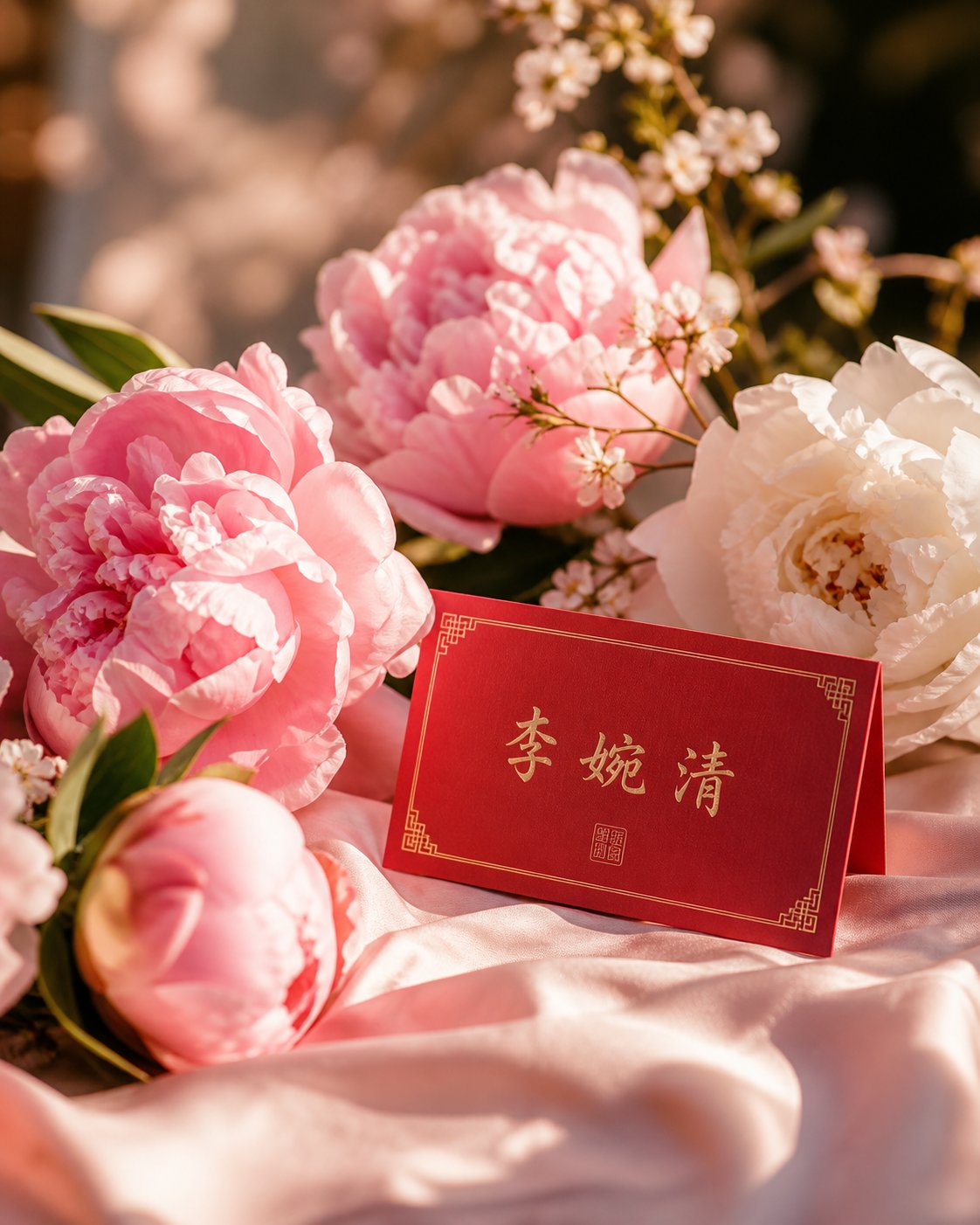
| 婉 (wan3) | wan3 | Graceful, gentle | Contains the 宀 roof element within its structure, symbolizing a graceful life within a secure home |
| 宛 (wan3) | wan3 | As if, winding beauty | Built directly on the 宀 radical, suggesting elegance rooted in domestic stability and belonging |
| 佳 (jia1) | jia1 | Good, beautiful | Contains the person radical (亻), indicating a life surrounded by people who appreciate her beauty and goodness |
| 彤 (tong2) | tong2 | Red, vermillion | The 彡 radical represents refinement and color, symbolizing elevated status and vibrancy for Dog year girls |
| 倩 (qian4) | qian4 | Pretty, graceful | Person radical (亻) combined with beauty, suggesting someone whose grace draws loyal companions |
| 依 (yi1) | yi1 | To rely on, graceful | Person radical (亻) paired with clothing element (衣), doubly auspicious for Dog year babies, representing both companionship and elevated dignity |
You will notice that characters like 依 carry double auspicious weight. The person radical signals loyal relationships, while the clothing component suggests the child will be honored and respected. For chinese girl baby names, this combination of softness and strength is particularly appealing.
Names Reflecting Wisdom and Virtue
Intelligence and moral character are deeply valued in Chinese naming traditions. These names pair intellectual sharpness with the Dog's innate sense of justice and integrity, using heart and person radicals to ground wisdom in emotional depth.
| Character | Pinyin | Meaning | Why It Suits Dog Year |
|---|---|---|---|
| 慧 (hui4) | hui4 | Wise, intelligent | Built on the heart radical (心), connecting wisdom to emotional fulfillment. A Dog year girl with this name is both clever and deeply caring |
| 恩 (en1) | en1 | Grace, kindness | Heart radical (心) at its base represents emotional nourishment. Suggests a child who both receives and gives generosity |
| 仪 (yi2) | yi2 | Ceremony, dignity | Person radical (亻) signals social grace and the respect of others, aligning with the Dog's loyal community bonds |
| 忆 (yi4) | yi4 | Memory, remembrance | Heart radical (忄) represents emotional depth and faithfulness, echoing the Dog's unwavering devotion to those they love |
| 宣 (xuan1) | xuan1 | To declare, to spread | Roof radical (宀) provides shelter and security, while the meaning suggests confidence and the ability to share wisdom from a place of stability |
| 惠 (hui4) | hui4 | Benevolent, favor | Contains the heart radical (心), representing a generous spirit that is emotionally grounded and well-nourished |
A name like 慧 (hui4) is one of the most enduringly popular chinese baby girl names across generations. Its appeal for Dog year babies is specific: the heart radical at its foundation means this wisdom is not cold or detached but warm and emotionally connected, exactly the kind of intelligence the Dog sign nurtures.
Nature-Inspired Girl Names for Dog Year Babies
Nature characters bring softness, poetry, and timelessness to a name. The key for Dog year compatibility is selecting nature-themed characters that still contain favorable radicals rather than problematic ones like 木 (wood, which controls Earth) or 山 (mountain, which implies danger for dogs).
| Character | Pinyin | Meaning | Why It Suits Dog Year |
|---|---|---|---|
| 宁 (ning2) | ning2 | Peaceful, serene | Roof radical (宀) directly provides shelter energy. Evokes the calm of a still lake, grounded in domestic security |
| 心怡 (xin1 yi2) | xin1 yi2 | Heart's delight | 心 (heart) radical nourishes emotionally, while 怡 adds joyful contentment. A two-character name suggesting a life of inner peace |
| 彩云 (cai3 yun2) | cai3 yun2 | Colorful clouds | 彩 contains the 彡 radical for refinement and elevated status. Clouds suggest freedom without the danger of mountain radicals |
| 悦 (yue4) | yue4 | Joy, delight | Heart radical (忄) ensures emotional fulfillment. A joyful name that promises contentment and inner warmth |
| 安澜 (an1 lan2) | an1 lan2 | Peaceful waves | 安 carries the roof radical (宀) for shelter, while 澜 evokes gentle water, favorable for Water Dog or as a balancing element |
| 佩 (pei4) | pei4 | Jade ornament, to admire | Person radical (亻) signals loyal companionship. Jade imagery adds preciousness and natural beauty |
Two-character given names like 心怡 or 安澜 reflect a strong modern trend. Many contemporary Chinese parents prefer these combinations because they create a three-character full name when paired with the surname, offering richer meaning and more melodic tonal flow than a single-character given name.
Pinyin Pronunciation Guide for Non-Native Speakers
If you are not a native Mandarin speaker, the tone marks in pinyin might look intimidating. Here is the essential framework: Mandarin Chinese has four tones, and each tone changes a syllable's meaning completely. Pronouncing a name with the wrong tone can accidentally turn a beautiful meaning into something unintended.
- Tone 1 (flat, high pitch): Marked with a macron (e.g., ma1). Hold a steady high note, like singing a single sustained pitch. Example: 安 (an1) sounds like "ahn" held at a high, even level.
- Tone 2 (rising): Marked with an acute accent (e.g., ma2). Your voice rises from middle to high, like asking a surprised question. Example: 宁 (ning2) rises at the end, similar to saying "ning?" with curiosity.
- Tone 3 (dipping): Marked with a caron (e.g., ma3). Your voice dips low and then rises slightly, creating a brief valley. Example: 婉 (wan3) dips down before lifting gently.
- Tone 4 (falling): Marked with a grave accent (e.g., ma4). A sharp, decisive drop from high to low, like giving a firm command. Example: 慧 (hui4) drops sharply and decisively.
When speaking a full Chinese name aloud, the tonal pattern between surname and given name creates a musical contour. Parents often test how the tones flow together. A name where all characters share the same tone can sound flat or monotonous, while a mix of tones creates a more pleasing rhythm. For instance, pairing a tone-2 surname like 陈 (Chen2) with a tone-4 given name like 慧 (hui4) produces a natural rise-then-fall that sounds confident and complete.
Many families also consider how the name sounds in their regional dialect, whether Cantonese, Hokkien, Teochew, or Hakka. A character that sounds elegant in Mandarin might carry an awkward homophone in another dialect, so testing across languages is a practical step that bilingual families should not skip.
These curated girl names represent just one side of the naming landscape. The same zodiac principles, favorable radicals, elemental balancing, and tonal harmony apply equally when selecting names for boys, though the thematic emphasis shifts toward strength, leadership, and scholarly achievement.
Auspicious Chinese Boy Names for Dog Year Babies
Traditional chinese baby boy names tend to carry a different emotional weight than girl names. Where girl names often lean toward beauty and gentleness, boy names in Chinese culture have historically emphasized ambition, moral backbone, and the capacity to lead. The Dog zodiac adds a specific layer to these aspirations: the best baby boy chinese names for this sign channel strength through loyalty, courage through integrity, and achievement through steadfast effort rather than flashy brilliance.
The same auspicious radicals apply here: person (亻), shelter (宀), heart (心/忄), nourishment (月), and clothing/refinement (纟/彡). What changes is the thematic direction. A boy name built on the heart radical might emphasize unwavering devotion rather than gentle compassion. A shelter radical might suggest the child will build a home worth protecting rather than simply finding one.
Names Conveying Strength and Courage
These chinese baby names boy options pair physical vitality with the Dog's natural protective instinct. Each character contains favorable radicals while evoking the kind of quiet, dependable strength the Dog sign is known for.
| Character | Pinyin | Meaning | Why It Suits Dog Year |
|---|---|---|---|
| 健恒 (jian4 heng2) | jian4 heng2 | Healthy and persevering | 健 carries the person radical (亻) for loyal bonds; 恒 contains the heart radical (忄) for emotional constancy. Together they suggest enduring strength rooted in faithful relationships |
| 俊 (jun4) | jun4 | Handsome, talented | Person radical (亻) signals a life surrounded by supportive people who recognize his abilities. A classic baby boy name in chinese naming tradition |
| 骏 (jun4) | jun4 | Fine steed, excellence | Contains the Horse earthly branch (午), which forms a harmonious trio with the Dog (戌) and Tiger (寅). This zodiac compatibility brings benefactor luck and momentum |
| 胜 (sheng4) | sheng4 | Victory, to surpass | The moon/flesh radical (月) represents nourishment and vitality. Suggests a boy who overcomes obstacles through well-sustained energy |
| 伟 (wei3) | wei3 | Great, mighty | Person radical (亻) grounds greatness in human connection. His strength serves others rather than standing alone |
| 守安 (shou3 an1) | shou3 an1 | Guardian of peace | Both characters contain the roof radical (宀), doubling the shelter energy. Evokes the Dog's protective nature directed toward creating security for others |
Notice how 骏 works through zodiac alliance rather than just radical meaning. The Dog, Tiger, and Horse form one of the zodiac's most powerful trios (san he, 三合), so characters containing Tiger or Horse elements bring natural benefactor luck to Dog year children.
Names for Integrity and Leadership
The Dog's sense of justice makes it a natural leader, not through dominance but through earned trust. These baby boy chinese names reflect that leadership style: principled, steady, and deeply respected.
| Character | Pinyin | Meaning | Why It Suits Dog Year |
|---|---|---|---|
| 忠 (zhong1) | zhong1 | Loyal, devoted | Heart radical (忄) at its core. This character is the Dog's signature virtue made visible, a name that directly amplifies the sign's greatest strength |
| 仁 (ren2) | ren2 | Benevolence, humanity | Person radical (亻) paired with the number two, representing the bond between people. A Confucian virtue that aligns perfectly with the Dog's compassionate justice |
| 天佑 (tian1 you4) | tian1 you4 | Blessed by heaven | 佑 contains the person radical (亻), suggesting divine protection channeled through human relationships. A name promising that loyal character attracts heavenly favor |
| 志恒 (zhi4 heng2) | zhi4 heng2 | Determined and constant | 志 contains the heart radical (心) for emotional depth; 恒 adds the heart radical (忄) for perseverance. Double heart energy means unwavering moral conviction |
| 冠宇 (guan1 yu3) | guan1 yu3 | Champion of the world | 冠 contains the cover radical (冖) for shelter and elevated status. 宇 carries the roof radical (宀) for cosmic scope grounded in domestic security |
| 信 (xin4) | xin4 | Trust, faith | Person radical (亻) combined with speech (言). A leader whose words match actions, embodying the Dog's fundamental honesty |
A name like 忠 might feel old-fashioned to some modern parents, but it remains one of the most zodiac-aligned choices possible for a Dog year boy. If you prefer something less traditional, 冠宇 offers the same radical benefits with a more contemporary, ambitious feel.
Scholar-Inspired Boy Names With Dog Year Radicals
Classical Chinese literature and philosophy offer a rich well of naming inspiration. These options draw from ancient texts while maintaining zodiac compatibility through their radical composition.
| Character | Pinyin | Meaning | Why It Suits Dog Year |
|---|---|---|---|
| 彦 (yan4) | yan4 | Man of virtue and talent | The 彡 radical represents refinement and cultural distinction. In classical usage, 彦 referred specifically to scholars of outstanding moral character, mirroring the Dog's integrity |
| 思恒 (si1 heng2) | si1 heng2 | Constant contemplation | 思 contains the heart radical (心) for deep reflection; 恒 adds perseverance through its heart radical (忄). A scholarly name suggesting disciplined, faithful thinking |
| 仲 (zhong4) | zhong4 | Second-born, middle | Person radical (亻) signals community bonds. Historically used for respected scholars like Confucius (仲尼), it carries literary weight and zodiac harmony |
| 慎 (shen4) | shen4 | Cautious, prudent | Heart radical (心) grounds this scholarly virtue in emotional intelligence. Reflects the Dog's careful, considered approach to decisions |
| 宏 (hong2) | hong2 | Grand, magnificent | Roof radical (宀) provides shelter energy while the meaning suggests expansive vision. A scholar whose ambitions are grounded in stable foundations |
| 恩泽 (en1 ze2) | en1 ze2 | Grace and benevolence | 恩 carries the heart radical (心) for emotional nourishment. Drawn from classical texts describing virtuous rulers who spread kindness, it suits the Dog's generous spirit |
Characters like 彦 and 仲 carry centuries of literary resonance. When a naming master or grandparent sees these characters, they immediately recognize the classical education and cultural depth behind the choice. For families who value heritage, these scholar-inspired options honor tradition while remaining fully compatible with Dog year radicals.
Stroke Count Harmony Between Surname and Given Name
Beyond meaning and radicals, the visual balance of a written name matters in Chinese culture. A baby boy chinese name should look harmonious when brushed in calligraphy or printed on official documents. The principle is straightforward: a surname with few strokes pairs best with a given name of moderate complexity, while a complex surname calls for simpler given name characters.
Consider practical examples. The surname 丁 (Ding, 2 strokes) looks visually sparse. Pairing it with a single-stroke given name would create an unbalanced, overly minimal appearance. A moderate-complexity name like 俊恒 (9 + 9 strokes) creates pleasing visual weight. Conversely, the surname 黄 (Huang, 11 strokes in Simplified) already carries substantial visual density, so a simpler given name like 安 (6 strokes) prevents the full name from feeling heavy.
The stroke count system goes deeper than aesthetics. In Chinese name numerology, the total stroke count of the full name (surname plus given name) corresponds to fortune categories. Certain totals, such as 3, 5, 6, 7, 8, 11, 13, 15, 16, 17, 18, 21, 23, 25, 29, 31, 32, 33, 37, 39, and others, are considered auspicious. Characters are also classified as Yin (even strokes) or Yang (odd strokes), and the three characters of a full name should follow balanced patterns like Yang-Yang-Yin or Yin-Yang-Yang.
For parents who want to apply this without consulting a professional, here is a simple approach:
- Count the strokes in your surname (add one stroke for the numerology calculation of the tian ge position)
- Select given name characters whose combined stroke count with the surname hits an auspicious total
- Check that the Yin/Yang pattern across all three characters follows one of the balanced arrangements
- Write the full name out by hand to confirm it looks visually proportionate
This stroke count layer is one reason many families consult naming professionals. Getting radicals, meaning, tonal flow, and stroke numerology all aligned simultaneously requires patience and expertise. But even a basic awareness of these principles helps you eliminate combinations that look or feel off-balance before investing emotional energy in a name that does not quite work on paper.
Of course, not every family wants a name that leans strongly masculine or feminine. A growing number of parents are seeking characters that transcend gender expectations entirely, and the Dog year's auspicious radicals offer plenty of room for beautifully neutral options.
Gender-Neutral and Modern Dog Year Name Options
Chinese characters do not inherently carry gender. Unlike English names where "James" reads male and "Emily" reads female almost universally, most Chinese characters sit comfortably in neutral territory. It is cultural convention, not linguistic structure, that assigns certain characters to boys or girls. This means parents looking for baby girl chinese names unique enough to break convention, or simply wanting a name that works beautifully for any child, have a wide field of zodiac-compatible options to explore.
The shift toward gender-neutral naming reflects something broader happening in Chinese-speaking communities worldwide. Families raising children in international contexts want names that do not box their child into assumptions before they have even spoken a word. When you combine this modern sensibility with Dog year zodiac principles, you get names that are both culturally grounded and refreshingly open.
Gender-Neutral Characters With Dog Year Radicals
The best unisex characters for Dog year babies contain the same favorable radicals discussed earlier: shelter (宀), person (亻), heart (心/忄), nourishment (月), and refinement (彡/纟). The difference is that these particular characters carry meanings related to wisdom, nature, light, and harmony rather than leaning toward traditionally masculine strength or feminine beauty.
Here are gender-neutral characters that work beautifully for any Dog year child:
- 安 (an1) - Peace, tranquility. Roof radical (宀) provides shelter energy. One of the most common gender-neutral Chinese baby names, it works equally well for boys and girls while promising a secure, settled life.
- 恒 (heng2) - Eternal, constant. Heart radical (忄) ensures emotional depth. Suggests perseverance and steadfastness without any gendered connotation, perfectly echoing the Dog's faithful nature.
- 宇 (yu3) - Universe, space. Roof radical (宀) grounds cosmic ambition in domestic security. A popular modern choice that feels expansive yet sheltered.
- 慧 (hui4) - Wisdom, intelligence. Heart radical (心) connects intellect to emotional fulfillment. While sometimes associated with girls, it appears frequently in boy names too and carries no inherent gender.
- 悦 (yue4) - Joy, delight. Heart radical (忄) promises emotional nourishment. A bright, warm character that suits any child whose parents wish them a contented life.
- 信 (xin4) - Trust, faith. Person radical (亻) signals loyal human bonds. Embodies the Dog's core virtue of honesty without leaning masculine or feminine.
- 宁 (ning2) - Serenity, calm. Roof radical (宀) provides shelter. Evokes quiet strength and inner peace, qualities that transcend gender entirely.
- 佑 (you4) - To bless, to protect. Person radical (亻) ensures companionship luck. Suggests divine guardianship channeled through human connection.
- 忻 (xin1) - Joyful, glad. Heart radical (忄) nourishes emotionally. A less common alternative to 欣 that carries the same brightness with added zodiac compatibility.
- 彦 (yan4) - Person of virtue and talent. The 彡 radical represents refinement. Historically used for male scholars, it has shifted toward neutral usage in modern naming and suits any child of strong character.
You will notice these characters share something beyond their radicals: they describe internal qualities rather than external appearances. Peace, constancy, wisdom, joy, trust. These are traits any parent might wish for their child regardless of gender, and they happen to align perfectly with what the Dog zodiac promises its children.
Modern Naming Trends Meeting Zodiac Tradition
Chinese baby names over time popularity data reveals a clear pattern: modern parents are moving away from heavily gendered characters and toward names that feel versatile across contexts. The 100 most common chinese baby names in recent years show increasing overlap between boy and girl lists, with characters like 宇, 安, and 诺 appearing for both genders.
Several trends are shaping how contemporary families approach Dog year naming:
- Shorter names gaining ground: Single-character given names (creating a two-character full name) are making a comeback among urban families who value simplicity. A name like 李安 (Li An) or 王宁 (Wang Ning) feels clean and modern while maintaining zodiac compatibility.
- Cross-cultural readability: Parents raising children in multilingual environments prefer characters whose pinyin transliterations sound natural in English or other languages. Characters like 安 (An), 宇 (Yu), and 信 (Xin) produce syllables that non-Chinese speakers can pronounce comfortably.
- Meaning over convention: Rather than choosing characters because they are "supposed to be" for boys or girls, modern parents select based purely on the meaning they want to embed in their child's identity. A girl named 彦 (virtuous talent) or a boy named 悦 (joy) breaks no rules and carries no awkwardness in contemporary Chinese society.
- Nature and philosophy themes: Characters drawn from natural phenomena or philosophical concepts tend to read as neutral. Think of light, water, sky, harmony, and truth. These themes pair naturally with Dog year radicals when chosen carefully.
The key insight? Zodiac tradition and modern naming sensibilities are not in conflict. The Dog's auspicious radicals produce characters that are inherently versatile. You do not need to sacrifice zodiac alignment to achieve a contemporary, gender-neutral name.
Tonal Harmony in Full Name Composition
Regardless of whether a name leans masculine, feminine, or neutral, it needs to sound right when spoken aloud. Tonal harmony between the surname and given name creates a musical quality that makes a name memorable and pleasant. This matters especially for gender-neutral names, where the sound itself carries the name's personality rather than gendered associations doing that work.
Imagine calling your child's name across a playground. Does it flow? Does it land with clarity? Here is how tonal pairing works in practice:
- Contrasting tones create energy: A tone-2 surname (rising) followed by a tone-4 given name (falling) produces a satisfying arc. Example: 陈信 (Chen2 Xin4) rises then drops decisively.
- Same-tone pairings feel flat: Two tone-1 characters in sequence (high-high) can sound monotonous. 张安 (Zhang1 An1) works because the consonant shift provides variety, but 高安 (Gao1 An1) might feel too level for some ears.
- Tone-3 combinations shift naturally: When two tone-3 characters appear together, the first automatically shifts to tone-2 in spoken Mandarin. 李宇 (Li3 Yu3) is actually pronounced "Li2 Yu3" in natural speech, creating an unintentional rise-dip pattern that sounds gentle and approachable.
- Three-character names offer more flexibility: With a two-character given name, you have three tones to arrange. The most pleasing patterns alternate between rising and falling energy. 王宇恒 (Wang2 Yu3 Heng2) creates a rise-dip-rise pattern that feels balanced and complete.
A practical test: say the full name five times quickly. If it trips your tongue or blurs together, the tonal combination may need adjustment. If it rolls out smoothly and each syllable remains distinct, you have found a harmonious pairing. This test works in any dialect, so families who speak Cantonese, Hokkien, or Hakka at home should run it in their primary language as well.
Gender-neutral naming opens doors, but for many families the naming challenge extends further. Children growing up between two languages need names that function in both worlds, and that bilingual dimension introduces its own set of creative possibilities and practical constraints.
Pairing Dog Year Chinese Names With English Names
A child growing up in Sydney, Toronto, or San Francisco will hear their name spoken in two languages every single day. Their teacher calls one name during roll call; their grandmother uses another at the dinner table. For bilingual families choosing chinese english baby names, the challenge is not just zodiac compatibility. It is finding a name, or a pair of names, that lets the child move between worlds without feeling fractured in either one.
This dual-language reality shapes how chinese american baby names are chosen from the very start. Parents want a Chinese name that honors zodiac tradition and carries deep meaning, but they also need something that functions smoothly in English-speaking classrooms, on resumes, and in casual introductions. The good news is that Dog year auspicious radicals produce many characters whose pinyin transliterations pair naturally with English sounds.
Phonetic Pairing Strategies for Dual-Language Names
When selecting american chinese baby names that work across both languages, phonetic compatibility is the first practical filter. A name might carry perfect zodiac radicals and beautiful meaning, but if it contains sounds that English speakers consistently mangle, the child will spend years correcting pronunciations. Here are the key phonetic factors to consider:
- Syllable count alignment: One or two-syllable Chinese given names pair most naturally with English names of similar length. A single-syllable name like 安 (An) sits comfortably beside "Anna" or "Andrew," while a two-syllable name like 佳慧 (Jia Hui) matches the rhythm of "Jamie" or "Julia."
- Shared consonant sounds: English and Mandarin share several consonant sounds: m, n, l, sh, and j (as in "jee"). Names beginning with these sounds feel intuitive to English speakers. Characters like 明 (Ming), 宁 (Ning), and 佳 (Jia) require minimal pronunciation coaching.
- Avoid Mandarin-specific sounds: The Mandarin "x" (as in 信, Xin), "q" (as in 琴, Qin), and "zh" (as in 忠, Zhong) have no direct English equivalents. These characters are zodiac-compatible but may cause friction in English contexts unless the family is comfortable with approximations.
- Vowel endings matter: Names ending in open vowels (a, i, o) or soft consonants (n, ng) tend to sound more melodic in English. Characters like 佑 (You), 悦 (Yue), and 恒 (Heng) produce endings that English speakers handle naturally.
Think of phonetic pairing as a bridge. You are not sacrificing one language for the other. You are finding the overlap where both languages feel at home.
Regional Naming Conventions for Diaspora Families
How a family structures their child's dual names depends heavily on where they live. Official document requirements, cultural norms, and community expectations vary significantly across diaspora communities.
In the United States and Canada, chinese american baby names typically appear as a legal first name (often English) with the Chinese name either as a middle name or used exclusively within the family. Birth certificates allow flexibility, so some families register the Chinese name as the legal first name and use the English name socially, while others do the reverse.
In Singapore and Malaysia, the convention is different. Many families of Chinese descent register a combined name: the English name followed by the Chinese name in its romanized form. A child might be officially "Rachel Tan Jia Hui" on all documents, with both names carrying equal legal weight. This integrated approach reflects decades of multicultural naming practice in these societies, where English names have been adopted and made distinctly local rather than simply borrowed from Western convention.
In the UK and Australia, anglo chinese baby names follow patterns similar to North America, though families from Hong Kong backgrounds often use Cantonese romanization (Jyutping or informal systems) rather than Mandarin pinyin. A name romanized as "Wai" in Cantonese would be "Wei" in Mandarin, and this distinction matters for consistency across documents.
Regardless of region, one practical rule applies everywhere: decide on your romanization system early and use it consistently. Mixing pinyin spellings with Wade-Giles or dialect romanizations across different documents creates administrative headaches that follow a child for years.
Families take three main approaches to structuring bilingual names:
- Separate names, separate functions: The child has a Chinese name (e.g., 守安, Shou An) used within the family and Chinese-speaking contexts, plus an unrelated English name (e.g., "Ethan") used at school and in professional life. This approach gives maximum freedom in both languages since neither name constrains the other. The tradeoff is that the child navigates two distinct identities.
- Phonetic bridge names: The English name is chosen as a phonetic approximation of the Chinese name, or vice versa. For example, 安 (An) becomes "Anna" or "Andrew"; 佳 (Jia) pairs with "Jay" or "Jaya"; 凯 (Kai) works identically in both languages. This creates a sense of unity between the two names, making transitions between contexts feel seamless.
- Single cross-cultural name: Some characters produce pinyin that already functions as an English name without modification. Names like 凯 (Kai), 美 (Mei/May), or 利 (Li/Lee) work in both languages as-is. For Dog year babies, characters like 安 (An) and 宁 (Ning) fall into this category, though parents should verify that the character also carries favorable zodiac radicals rather than choosing purely for cross-linguistic convenience.
No single approach is superior. The right choice depends on how your family navigates language in daily life, which community you are rooted in, and how much weight you place on the Chinese name being heard and used outside the home.
Practical Examples of Chinese-English Name Pairings
Here are Dog year-compatible Chinese names paired with English names that share phonetic DNA, giving you concrete starting points for american names for chinese babies that maintain zodiac integrity:
| Chinese Name | Pinyin | Dog Year Radical | Natural English Pairing | Pairing Logic |
|---|---|---|---|---|
| 安宁 | An1 Ning2 | 宀 (shelter) x2 | Anna, Andrew | "An" maps directly to the first syllable of both English names |
| 佳恩 | Jia1 En1 | 亻 (person) + 心 (heart) | Jay, Jane, Grace | "Jia" approximates "Jay"; 恩 (grace) translates directly to the English name Grace |
| 凯恒 | Kai3 Heng2 | 冖 (cover) + 忄 (heart) | Kai, Kyle | "Kai" is identical in both languages, a true cross-cultural name |
| 悦心 | Yue4 Xin1 | 忄 (heart) + 心 (heart) | Joy, Joyce | 悦 means joy, creating a direct meaning-based translation rather than phonetic match |
| 宇恒 | Yu3 Heng2 | 宀 (shelter) + 忄 (heart) | Eugene, Hugo | "Yu" echoes the opening sound of Eugene; Hugo shares the "u" vowel quality |
| 信宜 | Xin4 Yi2 | 亻 (person) + 宀 (shelter) | Cindy, Sydney | "Xin" approximates the "Sin/Cin" sound in English names |
| 俊彦 | Jun4 Yan4 | 亻 (person) + 彡 (refinement) | Justin, Ian | "Jun" maps to the opening of Justin; "Yan" echoes Ian |
| 佩宁 | Pei4 Ning2 | 亻 (person) + 宀 (shelter) | Paige, Penny | "Pei" shares the opening consonant and vowel quality with both English options |
Notice that some pairings work through sound (phonetic bridges) while others work through meaning (悦 to Joy). Both strategies are valid. Phonetic bridges make introductions smoother since people hear the connection immediately. Meaning-based pairings carry deeper cultural resonance since the child's two names tell the same story in different languages.
One important consideration: if your family speaks Cantonese, Hokkien, or another dialect at home, the phonetic pairing should be tested in that dialect too. A character that sounds like "Anna" in Mandarin might produce a completely different sound in Cantonese. Families in Hong Kong, for instance, would romanize 安 as "On" rather than "An," which pairs differently with English names.
Ultimately, the best chinese english baby names for Dog year children satisfy three criteria simultaneously: they contain auspicious zodiac radicals, they carry meaning the family connects with emotionally, and they function gracefully in every language the child will use throughout their life. Getting all three aligned takes patience, but the result is a name that never forces the child to choose between their identities.
Phonetic pairing and regional conventions address the surface layer of naming. Beneath it lies a deeper structural system that many families use to fine-tune their final choice: the Five Elements cycle and BaZi birth chart analysis, which reveal how a name's elemental composition interacts with the child's cosmic blueprint.

Five Elements and BaZi Principles in Dog Year Naming
Radicals and phonetic pairing handle the visible layers of a name. But underneath every well-chosen character sits an invisible architecture: the Five Elements system (Wu Xing, 五行) and the BaZi birth chart. These frameworks reveal whether a name's elemental energy strengthens or destabilizes the child's cosmic blueprint. For Dog year babies specifically, this analysis starts with one foundational fact: the Dog belongs to the Earth element.
Sounds complex? It does not need to be. Think of it this way: every child is born with a unique elemental fingerprint based on their exact birth year, month, day, and hour. Some elements in that fingerprint run strong, others run weak. A well-chosen name can compensate for what is missing, creating balance where the birth chart leaves gaps. This is the logic behind consulting a baby chinese name fortune teller or naming master, and it is the principle that drives every baby chinese name calculator you will find online.
Five Elements Theory for Dog Year Babies
The Wu Xing system describes five dynamic forces: Wood, Fire, Earth, Metal, and Water. These are not static categories but movements of energy that create, support, and control one another in fixed cycles. Two cycles govern all interactions:
- The Productive Cycle (sheng, 生): Each element feeds and creates the next. Wood fuels Fire. Fire produces Earth (ash). Earth yields Metal (minerals). Metal collects Water (condensation). Water nourishes Wood. The cycle is continuous.
- The Destructive Cycle (ke, 克): Each element controls and subdues another by skipping one step. Wood penetrates Earth (roots break soil). Earth dams Water. Water extinguishes Fire. Fire melts Metal. Metal cuts Wood.
Since the Dog is an Earth element sign, these cycles tell you exactly which elements support your child and which ones challenge them. Here is how Earth interacts with every other element:
| Element Relationship | Direction | What It Means for Dog (Earth) Babies | Naming Implication |
|---|---|---|---|
| Fire produces Earth | Productive (incoming) | Fire is the Dog's resource and support. It feeds Earth energy, strengthening the child's foundation | Fire-associated characters (light, warmth, brightness) nourish and empower Dog year babies |
| Earth produces Metal | Productive (outgoing) | Metal is Earth's natural output. It represents what the Dog creates and expresses in the world | Metal-associated characters (clarity, precision, strength) give Dog year babies a productive outlet for their energy |
| Wood controls Earth | Destructive (incoming) | Wood penetrates and destabilizes Earth. It represents challenge, pressure, and external control over the Dog's nature | Wood-heavy characters (forest, trees, growth) may suppress the child's ability to express their Earth qualities fully |
| Earth controls Water | Destructive (outgoing) | Earth dams and contains Water. The Dog naturally dominates Water energy | Water characters are neutral to mildly favorable, as the Dog can manage this element without being overwhelmed |
| Metal controls Wood | Indirect support | Metal subdues the element (Wood) that threatens Earth. It acts as a protective buffer | Metal characters can indirectly protect Dog year babies by weakening their primary elemental challenge |
The practical takeaway? When selecting characters for a Dog year baby's name, Fire and Metal elements tend to be supportive. Earth characters reinforce the child's innate nature. Water is generally manageable. Wood is the element to use cautiously, and only when the child's BaZi chart specifically shows Earth excess that needs tempering.
This is why the earlier chapter flagged Wood radicals (木) as potentially problematic for Dog year names. The Five Elements cycle provides the theoretical foundation for that guideline. It is not arbitrary superstition but a structured system of elemental physics applied to human destiny.
How BaZi Birth Charts Influence Name Selection
Here is where the system gets personal. The Dog's Earth element is just the starting point, determined by birth year alone. A complete BaZi (Eight Characters, 八字) chart factors in four pillars: the year, month, day, and hour of birth. Each pillar contains two characters, a Heavenly Stem and an Earthly Branch, producing eight characters total. Each of these eight characters carries its own elemental association.
Imagine two babies both born in 2018, an Earth Dog year. One arrives in June (a Fire month) at noon (a Fire hour) on a Fire day. This child's chart is saturated with Fire and Earth, potentially lacking Water or Metal. The other baby arrives in November (a Water month) at midnight (a Water hour) on a Water day. Despite sharing the same zodiac year, this child's chart is Water-heavy with relatively weak Earth.
These two children need very different names. The first baby, overloaded with Fire and Earth, might benefit from characters containing Water or Metal energy to restore balance. The second baby, whose Earth element is diluted by excessive Water, needs characters that reinforce Earth or introduce Fire (which produces Earth) to strengthen their foundational element.
This is the core logic behind baby chinese name selection singapore families rely on when consulting naming masters. A professional practitioner calculates the full BaZi chart, identifies which elements are excessive and which are deficient, then recommends characters whose elemental associations compensate for the imbalance.
Without professional consultation, parents can still apply basic principles:
- Summer-born Dog babies (May-July): Fire energy is already strong from the season. Consider Metal or Water characters to cool and balance the chart.
- Winter-born Dog babies (November-January): Water dominates the season, potentially weakening Earth. Fire characters (warmth, light, radiance) help restore the Dog's foundational element.
- Spring-born Dog babies (February-April): Wood energy peaks in spring, which controls Earth. Fire characters serve as a bridge, since Fire transforms Wood energy into Earth support through the productive cycle.
- Autumn-born Dog babies (August-October): Metal energy is strong, which is a natural and favorable output for Earth. These babies often have the most balanced charts and can tolerate a wider range of character elements.
A baby chinese name master singapore practitioners consult would go much deeper, analyzing the specific day and hour pillars to pinpoint exactly which element needs strengthening. But even this seasonal framework gives parents a meaningful starting point for narrowing their character choices.
Stroke Count Numerology in Chinese Naming
Beyond elemental balance, Chinese naming tradition layers in another numerical system: stroke count analysis (笔画, bihua). The total number of brush strokes in a full name, surname plus given name, corresponds to fortune categories in Chinese numerology. Certain totals are considered inherently auspicious, while others carry warnings.
The system divides a name into five numerical positions called ge (格):
- Tian Ge (天格, Heaven Position): Surname strokes plus one. Represents inherited fortune and family legacy.
- Ren Ge (人格, Person Position): Last stroke of surname plus first character of given name. Represents the individual's core personality and middle-age fortune.
- Di Ge (地格, Earth Position): Total strokes of the given name characters. Represents youth, health, and early relationships.
- Wai Ge (外格, Outer Position): Total name strokes minus Ren Ge strokes, plus one. Represents social relationships and external fortune.
- Zong Ge (总格, Total Position): All strokes in the full name combined. Represents overall life fortune and later years.
Each position's number is then evaluated against a traditional chart of auspicious and inauspicious totals. Numbers like 1, 3, 5, 6, 7, 8, 11, 13, 15, 16, 17, 18, 21, 23, 24, 25, 29, 31, 32, 33, 35, 37, 39, 41, 45, 47, and 48 are generally considered fortunate. Numbers like 2, 4, 9, 10, 12, 14, 19, 20, 22, 26, 27, 28, 34, 36, 38, 40, 42, 43, 44, and 46 carry more challenging associations.
For parents using a baby chinese name calculator, the tool typically automates this math. You input the surname and proposed given name characters, and the calculator returns the five ge positions with their fortune ratings. This saves considerable manual effort, especially when testing multiple name combinations.
Stroke count numerology uses the traditional (unsimplified) stroke count for each character, even if the family uses Simplified Chinese in daily life. This is a common source of confusion. The character 宁 has 5 strokes in Simplified form but 14 strokes in its Traditional form (寧), and numerology calculations use the Traditional count. Always verify which counting system your calculator or naming master applies.
Here is a simplified example. Suppose the surname is 王 (Wang, 4 strokes) and the proposed given name is 安恒 (An Heng, 6 + 10 strokes in traditional counting):
- Tian Ge: 4 + 1 = 5 (auspicious, associated with balanced fortune)
- Ren Ge: 4 + 6 = 10 (challenging, associated with emptiness and unfulfilled potential)
- Di Ge: 6 + 10 = 16 (auspicious, associated with leadership and noble assistance)
- Zong Ge: 4 + 6 + 10 = 20 (challenging, associated with obstacles)
In this example, the Ren Ge and Zong Ge positions raise concerns. A naming practitioner would suggest adjusting one character to shift these numbers into more favorable territory, perhaps swapping 安 for a character with a different stroke count that maintains the same radical benefits.
This is precisely why many families in Singapore, Taiwan, and Hong Kong consult a baby chinese name master. Getting radicals, elemental balance, tonal harmony, and stroke count numerology all aligned simultaneously is genuinely difficult. Each adjustment to fix one dimension can ripple through the others. A professional navigates these interdependencies with experience that no single article can fully replace.
That said, you do not need to master every layer to make a good choice. Understanding the principles helps you evaluate names with more confidence, ask better questions when consulting professionals, and recognize why certain combinations feel right while others feel off. The Five Elements cycle tells you which energies to seek. BaZi analysis tells you which specific gaps to fill. Stroke count numerology provides a final numerical check on the complete package.
With these deeper structural principles in hand, the remaining question is practical: how do you pull all of these threads together into a single, coherent decision? A step-by-step process that synthesizes radicals, elements, phonetics, and numerology into one clear workflow makes the difference between analysis paralysis and confident action.
How to Choose the Perfect Dog Year Baby Name
You have the radicals, the elemental theory, the clash characters to avoid, and a growing list of candidates. The question now is sequence. Which piece do you tackle first, and how do you keep all the moving parts from collapsing into overwhelm? A clear, repeatable process turns what feels like an impossible puzzle into a series of manageable decisions, each one narrowing the field until the right name emerges.
Step-by-Step Name Selection Process
Whether you are working with a baby chinese name app, consulting a professional, or building the name yourself from first principles, this workflow keeps every layer organized. Move through each step in order, since later steps depend on earlier decisions holding firm.
- Confirm the zodiac year via the lunar calendar. Check the exact Lunar New Year date for your baby's birth year. A child born in January or early February may belong to the previous zodiac year. This single verification prevents every subsequent decision from being built on the wrong foundation.
- Identify the elemental Dog type. Determine whether your child is a Wood Dog, Fire Dog, Earth Dog, Metal Dog, or Water Dog. This tells you which elemental flavor to lean into when selecting characters. An Earth Dog (2018) calls for grounded, stable characters. A Metal Dog (2030) suits precision and resilience.
- Assess elemental balance using BaZi basics. Note the birth season as a starting point. Summer babies already carry strong Fire energy and may benefit from Metal or Water characters. Winter babies often need Fire to warm and strengthen their Earth foundation. If you want deeper precision, a BaZi practitioner can identify the Yong Shen (useful element) from the full Four Pillars chart.
- Select characters with auspicious radicals. Draw from the favorable radical families: shelter (宀), person (亻), heart (心/忄), nourishment (月), and clothing/refinement (纟/彡). Build a longlist of 10 to 15 characters whose meanings resonate with your hopes for the child.
- Cross-reference against inauspicious radicals. Eliminate any candidates containing Dragon (辰), Rooster (酉/鸟), doubled-person (彳), sun/mouth (日/口), or Wood (木) radicals unless your BaZi analysis specifically calls for Wood energy. Pay special attention to the Dragon clash, the most serious conflict for Dog year babies.
- Check stroke count harmony. Calculate the five ge positions (Tian, Ren, Di, Wai, Zong) using traditional character stroke counts. A baby chinese name generator or calculator automates this math. Aim for auspicious numbers in at least the Ren Ge and Zong Ge positions, adjusting character choices if needed.
- Test tonal flow aloud. Say the full name, surname plus given name, at conversational speed five times. Listen for monotony (same tones repeating), tongue-tripping consonant clusters, or syllables that blur together. Alternate rising and falling tones for the most pleasing rhythm.
- Verify across all relevant contexts. Test pronunciation in your family's dialect (Cantonese, Hokkien, Hakka, Teochew). If the child will use an English name, confirm the pairing sounds natural. Check that the characters display correctly on official document systems in your country of residence.
Steps four through six often require cycling back and forth. Swapping one character to fix a stroke count issue might introduce an inauspicious radical, which sends you back to step four. This iterative loop is normal. Most families settle on a final name after three to five rounds of refinement.
Resources and Tools for Chinese Baby Naming
You do not have to navigate this process alone. Different resources serve different stages of the journey:
- Online name generators and calculators: A baby chinese name generator provides a useful starting point by filtering characters based on zodiac year, gender preference, and elemental needs. These tools handle stroke count math instantly and flag basic radical conflicts. They work best as brainstorming aids rather than final authorities, since they cannot account for family-specific context or dialect nuances.
- Naming masters and BaZi consultants: Professional practitioners, particularly popular in Singapore, Taiwan, Hong Kong, and Malaysia, offer the deepest analysis. A baby chinese name master singapore families consult will cast the full Four Pillars chart, identify the Yong Shen, recommend specific characters, and verify stroke count harmony across all five ge positions. Expect one to three sessions and a shortlist of two to five complete name options.
- Family elders as cultural consultants: Grandparents and older relatives carry generational naming knowledge that no app replicates. They know which characters have been used in the family lineage (and therefore should be avoided out of respect), which sounds carry unfortunate homophones in your specific dialect, and which naming conventions your extended family expects. Involve them early, even if you ultimately make the final decision independently.
- Baby chinese name apps: Mobile applications designed for Chinese naming often combine radical lookup, stroke counting, BaZi basics, and zodiac filtering into a single interface. They are especially helpful for diaspora families who may not have easy access to in-person naming masters. Look for apps that distinguish between Simplified and Traditional stroke counts, since this difference affects numerology calculations significantly.
The most effective approach combines multiple resources. Use a generator or app to build your initial longlist, consult family elders to eliminate culturally inappropriate options, and if budget allows, bring your top three candidates to a naming professional for final validation.
Finding the Balance Between Tradition and Meaning
Every naming system, zodiac radicals, Five Elements, BaZi, stroke numerology, exists to serve the child. Not the other way around. The most technically perfect name in the world falls flat if the parents feel no emotional connection to it, or if the child grows up unable to use it comfortably in daily life.
Practical usability matters as much as cosmic alignment. A name the child will actually use, one that teachers can pronounce, that fits on official forms, that sounds right when called across a crowded room, carries its own kind of fortune. The families who navigate this best treat zodiac principles as a powerful filter rather than an absolute constraint. They let tradition narrow the field, then choose from within that field based on personal meaning, family heritage, and the life they envision for their child.
The best Chinese name for a Dog year baby is not the one that scores perfectly on every traditional metric. It is the one where zodiac harmony, personal significance, family legacy, and everyday usability all meet, a name the child will carry with pride through every chapter of their life.
Start with the chart. Honor the radicals. Respect the elements. Then trust your instincts as a parent. The Dog's defining quality is loyalty, and a name chosen with genuine love and thoughtful intention already carries that energy forward, regardless of which specific characters you select.
Frequently Asked Questions About Year of the Dog Chinese Baby Names
1. What radicals are considered auspicious for Dog year baby names?
Four main radical families bring fortune to Dog year babies. The roof radical (宀) symbolizes shelter and domestic security. The person radical (亻) represents loyal human companionship. Heart and meat radicals (心/忄/月) signify emotional fulfillment and nourishment. Clothing-related radicals (纟/彡/巾) indicate elevated social status and dignity. Each category connects to what a dog needs to thrive: a home, faithful companions, sustenance, and respect. Parents should prioritize characters containing these radicals when building their shortlist.
2. Which characters should be avoided in Dog year baby names?
The most serious avoidance is Dragon-related radicals (辰, 龙), since Dog and Dragon form a direct zodiac clash that can affect career and relationships. Rooster and bird radicals (酉, 鸟, 羽) create a punishment relationship with the Dog. Sun and mouth radicals (日, 口) symbolize barking and disputes. Wood radicals (木) are problematic because Wood controls Earth in Five Elements theory, potentially suppressing the child's potential. Mountain (山), grain (禾/米), and field (田) radicals also carry unfavorable symbolism for Dog sign children.
3. How do I confirm whether my baby is actually born in the Year of the Dog?
The Chinese zodiac follows the lunar calendar, not the Western calendar. Chinese New Year falls between January 21 and February 20 each year, and that date marks the true zodiac year boundary. A baby born in January or early February might belong to the previous zodiac year. For example, a child born on January 25, 2018 falls under the Rooster year because Chinese New Year did not begin until February 16, 2018. Check the exact Lunar New Year date for your baby's birth year before making any zodiac-based naming decisions.
4. What is the difference between the five elemental Dog types in naming?
Each 12-year zodiac cycle carries a different elemental flavor that refines character selection. Wood Dogs (1994) suit characters about growth and kindness. Fire Dogs (2006) match bold, radiant characters. Earth Dogs (2018) benefit from stable, grounded characters conveying patience and wisdom. Metal Dogs (2030) align with characters reflecting determination and clarity. Water Dogs (1982) pair well with flowing, gentle, and empathetic character meanings. Two Dog year babies born 12 years apart may need very different naming approaches based on their elemental type.
5. Can I pair a Dog year Chinese name with an English name for my bilingual child?
Yes, and three main strategies work well. First, choose separate Chinese and English names that function independently in their respective contexts. Second, create a phonetic bridge where the English name approximates the Chinese name's sound, such as pairing 安 (An) with Anna or Andrew. Third, select cross-cultural characters whose pinyin already works as an English name, like 凯 (Kai). For best results, ensure the Chinese name still contains auspicious Dog year radicals rather than choosing purely for phonetic convenience, and test pronunciation in your family's dialect as well as Mandarin.